LIVE DEVELOPMENTS — updated Tuesday, October 27, 2026
Netanyahu Prays At Western Wall Hours Before Elections
LIVE
UPDATES
TRUSTED ANALYSIS
LIVE DEVELOPMENTS — updated Tuesday, October 27, 2026
Netanyahu Prays At Western Wall Hours Before Elections
LIVE UPDATES
TRUSTED ANALYSIS
- Since Oct. 7, over 1,600 Israelis (968 soldiers) have been killed, and 6,424 IDF soldiers wounded since the start of the war.
- On Oct. 7, 2023, one day after the 50th anniversary of the Yom Kippur War, thousands of Hamas gunmen invaded southern Israel, brutally murdering 1,200 Israelis and kidnapping 251 to the Gaza Strip.
- On Oct. 8, 2023, the Israel Security Cabinet voted to officially declare war for the first time since the 1973 Yom Kippur War.
- On Oct. 27, 2023, the IDF began its Ground Operation in Northern Gaza
- Between October 7th, 2023, and March 31, 2024, the IDF made approximately 100,000 phone calls, dropped 9.3 million leaflets, sent 15.5 million text messages, and 17 million voice recordings in efforts to get Gazan civilians out of harm’s way during military operations.
- Between October 7th, 2023, and August 18, 2025, Israel has allowed and facilitated the entry of over 1.9 million tons of aid into Gaza.
- On June 13th, 2025, the 12 Day War began between Israel and the Iranian regime. Israel conducted massive airstrikes targeting Iran’s military infrastructure and leadership, weapons stockpiles, and nuclear scientists—as the regime rained ballistic missiles down, targeting locations of Israel’s largest civilian populations.
- On June 22, 2025, under the orders of President Trump, B2 Bombers dropped bunker-buster bombs on Iran’s nuclear facilities, thwarting the imminent danger of Iran obtaining nuclear weapons.
- On October 10th, 2025, a fragile ceasefire agreement, brokered by the Trump Administration, came into effect between Israel and Hamas.
- On January 27, 2026, after numerous delays, the body of the last remaining Israeli hostage in the Gaza Strip was returned to Israel.
- On February 28th, 2026, the United States launched a large-scale joint military operation against the Iranian Regime, beginning with the elimination of the nation’s Supreme Leader.
Day 1,117 — Tuesday, October 27
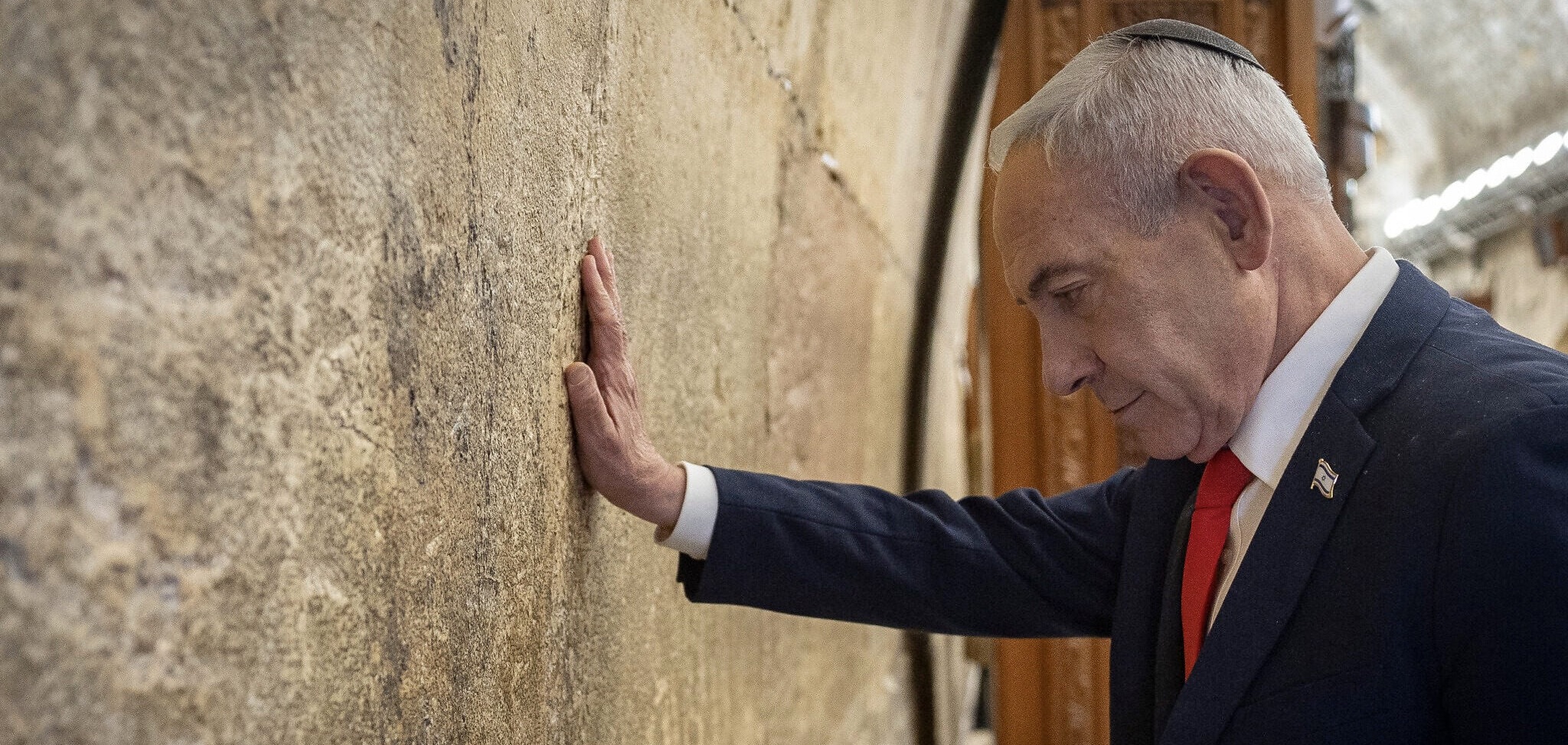 Prime Minister Benjamin Netanyahu visited the Western Wall on Monday evening, hours before polling stations opened for the Knesset elections, and placed a handwritten note between the ancient stones.
In the note, Netanyahu wrote, “For the lives of IDF soldiers, our heroes, for victory over our enemies, and for the success of our people.”
“The Eternal One of Israel does not lie,” his note concluded.
Netanyahu traditionally visits the Western Wall before every election to pray.
Ahead of the 2020 elections, he placed a note at the site that read: “I pray that with one final great effort, we will bring a good government to the people of Israel, the Land of Israel, and the State of Israel.”
Day 1,117 — Tuesday, October 27
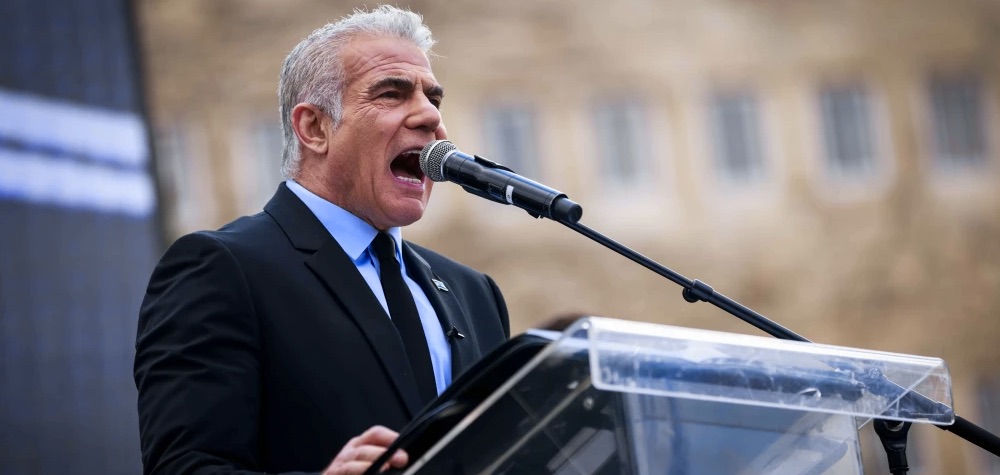 Israeli Foreign Minister Gideon Sa’ar on Monday criticized opposition leader Yair Lapid over a tweet seemingly celebrating the recent electoral losses of pro-Israel politicians in Brazil and Serbia.
For Lapid, the two “giant friends” of Israel—Brazil’s presidential candidate Flávio Bolsonaro and Serbia’s recently resigned President Aleksandar Vučić—are Israeli Prime Minister Benjamin Netanyahu’s “two associates,” Sa’ar wrote in Hebrew.
Brazilian President Luiz Inácio Lula da Silva, who defeated Bolsonaro on Sunday, has “accused Israel of committing genocide in Gaza, drawing a comparison to the murder of Jews in the Holocaust by Hitler,” said Sa’ar.
Lula “also claimed that 12.3 million (!) children were killed in the bombings during the war,” Sa’ar said in reference to the conflict sparked by the Hamas-led invasion of southern Israel on Oct. 7, 2023.
Sa’ar went on to criticize Lapid for “parroting” Lula’s campaign slogan, which translates roughly to, “We defend our sovereignty and we do not accept outside interests dictating our path.” This was stated in reference to alleged external interventions in Brazil’s politics from the likes of the United States.
Bolsonaro, by contrast, pledged to move Brazil’s embassy to Jerusalem as part of his election campaign, the foreign minister continued.
As for Vučić, whose political camp lost Sunday’s parliamentary election to a student-led opposition movement, Sa’ar noted: “I doubt whether Lapid has even the faintest idea of what Vučić did for Israel in the war.
“Turning one’s back on friends of Israel and fawning over those who act against it—this is a baseness of soul and a moral low, not to mention the level of foreign policy thinking on display here,” the Israeli minister added.
Earlier in the day, Lapid had posted a Hebrew-language message on X, saying, “Two more Netanyahu associates lost tonight in the elections due to a high voter turnout … Tomorrow the people of Israel begins the repair, returning Israel to a path of hope and success.”
Following the criticism, Lapid posted another tweet to clarify his position. He wrote, “I am very unhappy with Lula’s victory. I am always in favor of the pro-Israel candidate, that’s the most important criterion. But today, being close to Netanyahu is political damage everywhere in the world.”
Day 1,117 — Tuesday, October 27
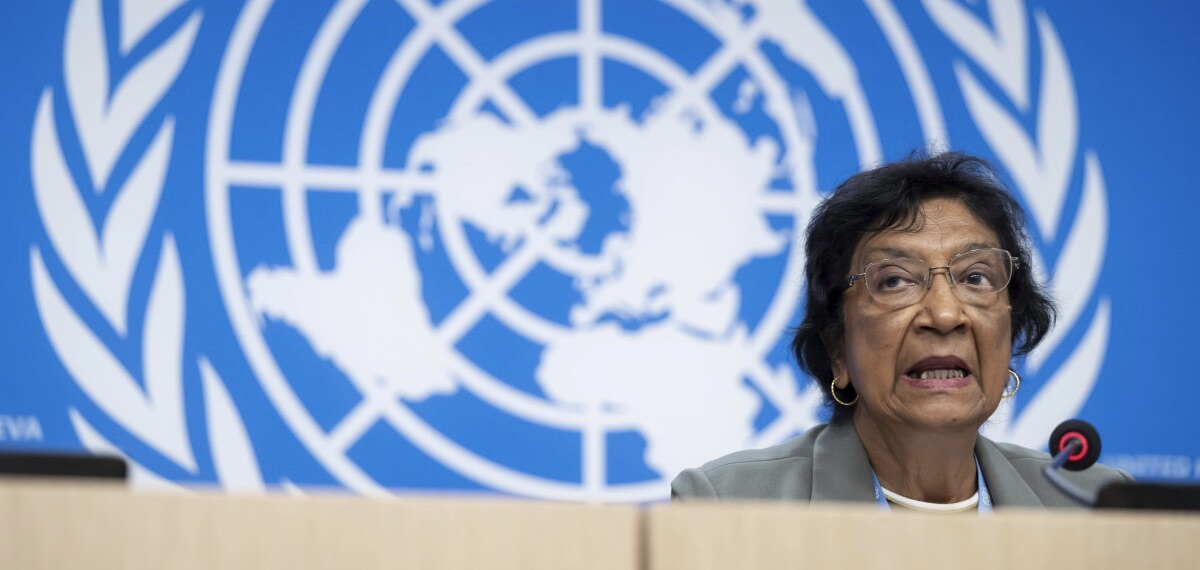 The Israeli Foreign Affairs Ministry on Monday rejected a United Nations commission report accusing Israel of genocide, war crimes and crimes against humanity, calling it a “propaganda document detached from reality, aimed at undermining Israel’s right to self-defense, delegitimizing the Jewish state, and legitimizing jihadist terrorism against its citizens.”
The UN Independent International Commission of Inquiry on the Occupied Palestinian Territory accused Israel of committing genocidal acts in Gaza during the war and following a ceasefire, as well as war crimes and crimes against humanity in Judea and Samaria.
The report cited nearly 500 Palestinian deaths annually in Judea and Samaria since 2022 and a sharp increase in deaths from Israeli airstrikes since Oct. 7, 2023, particularly during Operation Iron Wall.
It also examined statements by Finance Minister Bezalel Smotrich and IDF Central Command chief Maj.-Gen. Avi Bluth.
Commission investigators alleged that Palestinian detainees had been subjected to rape, torture and other sexual violence.
Israel has rejected previous similar allegations as unfounded.
The report also accused the Palestinian Authority of arbitrary arrests, detention and torture, as well as targeting journalists, activists and human rights defenders.
It cited deaths during October 2023 protests and the killing of a journalism student.
Critics pointed to the report’s focus on Israel while mentioning Hamas only twice and not accusing the terrorist group of wrongdoing, despite the October 7 massacre and documented abuses against Gazan civilians.
In its response, the Foreign Affairs Ministry said the commission, established in 2021, had been “flawed from the outset” and had “targeted Israel exclusively since day one.”
It accused the body of consuming extensive UN resources, funding and personnel to advance anti-Israel propaganda.
The ministry said the report reflected the commission’s political agenda rather than Israel’s conduct and accused it of parroting “the narrative of terrorist organizations word for word.”
“This is the shameful legacy of the UN Secretary-General and the High Commissioner for Human Rights,” the statement concluded.
Day 1,116 — Monday, October 26
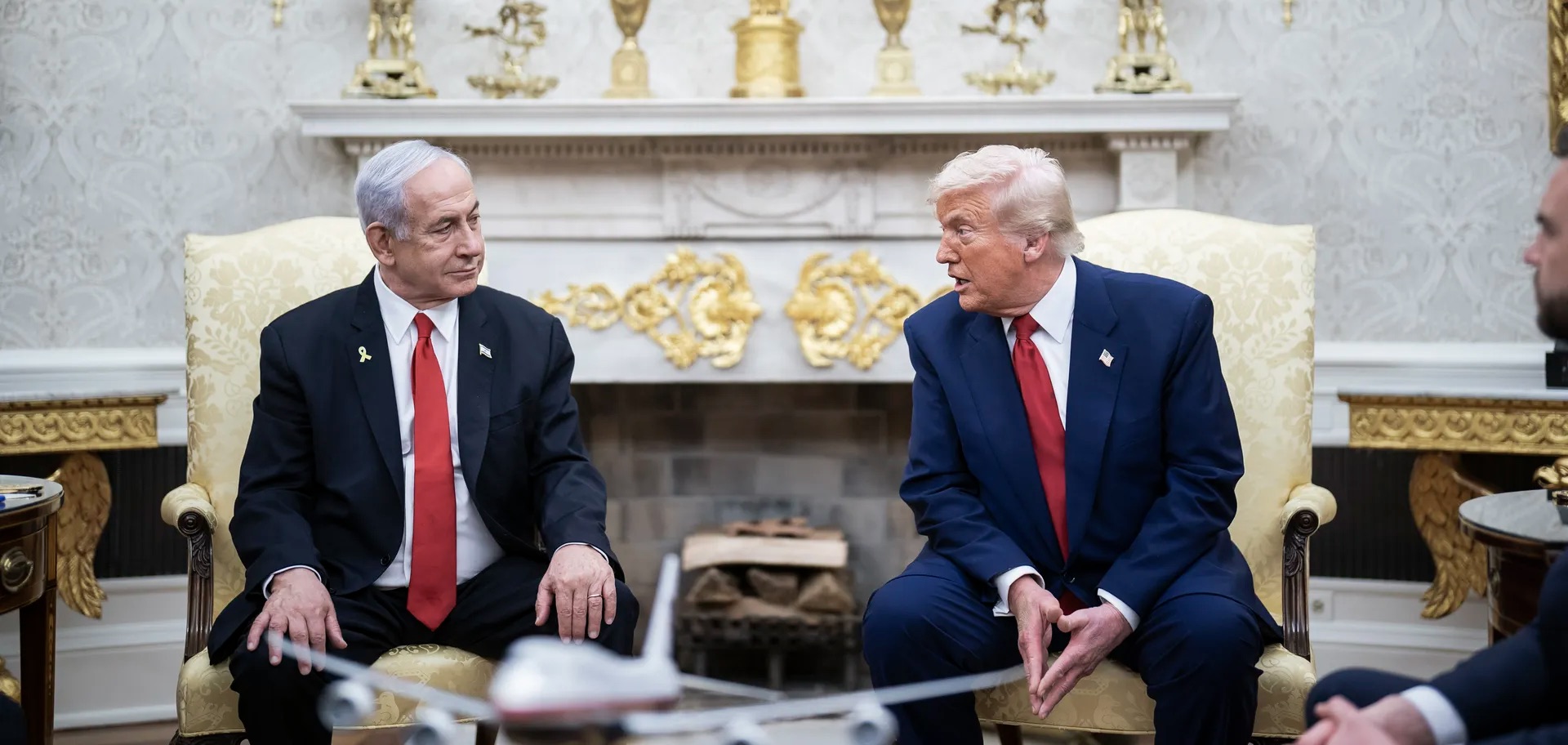 President Donald Trump renewed his endorsement of Israeli Prime Minister Benjamin Netanyahu on Sunday evening, urging Israelis to reelect him in Tuesday’s election with a renewed call to “finish the job” against Iran.
“Vote for Bibi Netanyahu for Prime Minister, we have to finish the job that we started!” Trump wrote on Truth Social.
In his renewed endorsement, Trump credited his partnership with Netanyahu for military successes against Iran, citing operations that targeted the regime’s nuclear facilities and devastated its armed forces.
“Bibi and I have had a great relationship in winning together,” Trump wrote, pointing to Operation Midnight Hammer, which targeted Iran’s nuclear facilities, and Operation Epic Fury, the broader U.S. military campaign against the regime.
“Then we did Operation Epic Fury, and Iran now has No Navy, No Air Force, and both their Military and Economy are in shambles,” he declared.
Trump also pointed to Iran’s economic devastation, claiming inflation had reached 301 percent and crediting the U.S. naval blockade with restricting its oil revenue. He cited the elimination of successive levels of the regime’s military and political leadership.
The president urged Israelis to remember Netanyahu’s record when voting Tuesday, calling him an “outstanding Warrior Prime Minister.”
Trump also invoked Iran’s longstanding threats against Israel and the United States, declaring that the chants of “Death to America, Death to Israel” could no longer be tolerated.
Day 1,116 — Monday, October 26
 The Israeli military launched large-scale domestic military exercises on Sunday to counter surprise border infiltrations and ground raids across northern and central Israel, mobilizing multiple divisions and air assets amid rising regional tensions.
The drills, set to continue over 48 hours, came as an Israeli security expert invoked the 1973 Yom Kippur War, when Egypt and Syria used exercises to disguise preparations for a surprise attack, warning that escalating tensions in the region could in fact trigger what he described as a “dangerous miscalculation.”
The large-scale maneuvers, the IDF said, involve the Northern Command’s 210th Division, the West Bank Division, and the Central Command’s 98th and 96th divisions, alongside the Israeli Air Force.
The exercise, scheduled just ahead of Israel’s elections Oct. 27, aims to “maintain the forces’ alertness and readiness, strengthen the ability to defend communities, and make full use of aerial capabilities for defense in the area,” according to the IDF.
On Friday, the IDF said troops would practice “a variety of scenarios, including a surprise attack and infiltration into Israeli territory by air and land,” incorporating lessons learned from the Oct. 7, 2023, Hamas-led attacks on Israel.
“This exercise is mostly about non-state actors with or without Iranian support,” Israeli national security analyst Dr. Ehud Eilam told Fox News Digital.
“It’s aimed at those in Syria, Lebanon, and Jordan who might try to infiltrate into Israel or send ground raids. Some are supported by Iran; others are not. It could be planned by Iran or be a local initiative.”
“This is a massive exercise, the biggest one in recent years, aimed at protecting the borders,” the former Israeli Ministry of Defense researcher added.
“It’s all about making sure that the election day on October 27 will run smoothly. It’s also a message to Iran and others: don’t try to provoke us during election day, so nothing will be disrupted.”
The Israeli drills followed a show of force by Tehran days earlier, during which the Islamic Revolutionary Guard Corps (IRGC) fired roughly 30 ballistic missiles across two distinct weapon classes, according to reports.
That live-fire display highlighted Iranian strike capabilities and sparked renewed alerts about commercial shipping in the Strait of Hormuz and prompted the Israeli military to heighten its alert level while maintaining maximum readiness for a targeted strike against Iran.
During a visit to the IDF’s Central Command on Wednesday, Chief of Staff Lt. Gen. Eyal Zamir warned that the risk of escalation was growing.
“Given the numerous warnings across all fronts and the sensitivity of the current period, the potential for escalation has increased,” Zamir said.
“To ensure better operational control on the ground, we have reinforced our troop deployments across all sectors, including moving the 98th Division into the area to strengthen security and stability.”
“Part of mutual deterrence: a few days ago, Iran had their own pretty big exercise, and that was actually more intimidating as far as Israel is concerned because they launched missiles and prepared for a war with Israel,” Eilam said.
“This exercise on Sunday and Monday is against Iran’s proxies and allies at the border of Israel.”
Sunday’s Israeli drill also followed an Oct. 19 mission in which Israeli fighter jets and aerial refueling tankers flew 800 miles across Syrian and Iraqi airspace to Iran’s border.
Washington was notified in advance and viewed the maneuver as a non-kinetic show of force following the postponement of a broader strike package earlier in the month.
Despite the deterrence signals, Eilam warned that large-scale military exercises carry the “risk of miscalculation” and particularly when troop movements could be mistaken for preparations for an attack.
“During the Cold War, every time the Soviet Union or NATO carried out a major drill, having so many troops in the field meant they might attack if that was the intention,” Eilam said.
He pointed to the 1973 Yom Kippur War, when Egypt and Syria used military exercises to help conceal troop buildups along Israel’s borders.
Israeli intelligence largely dismissed the movements as routine drills, allowing the two countries to achieve strategic surprise when they launched a coordinated, two-front attack on Yom Kippur.
“The classic example in Israel is 1973, when Egypt and Syria conducted a major exercise just before the war that turned into the actual attack,” the analyst said.
“Israel and Iran are now watching each other very closely and both sides suspect the other might strike first,” Eilam added before stating that there is the chance of what they call “miscalculation — that each side suspects the other and strikes first by mistake.”
“It’s all about sending messages to each other.”
“It remains uncertain whether there will eventually be an Israeli attack on Iran,” Eilam concluded.
“Right now, both sides are signaling: ‘We are ready, don’t mess with us, but we don’t want to start a war right now.'”
Day 1,115 — Sunday, October 25
 U.S. intelligence has concluded that Iran has “substantially increased” efforts to target American personnel abroad, with plots to kill U.S. citizens reaching “advanced stages” in the Middle East and other countries, according to an intelligence memo obtained by Fox News.
Jay Clayton, the director of national intelligence, summarized the assessment in a brief memo Friday to Secretary of State Marco Rubio.
“Specifically, through various channels, we have received intelligence that Iran has substantially increased efforts to target U.S. personnel,” the memo states.
“The lethal plotting efforts by the Iranians against U.S. citizens have reached advanced stages in both the Middle East and certain other countries.”
Intelligence officials will also seek to downgrade the classification of some intelligence so the information can be distributed and shared with State Department personnel, according to the memo.
A U.S. official told Fox News Digital that the government continually monitors and assesses changing security threats.
“When it comes to our staffing at embassies, we constantly evaluate new information about the security environment,” the official said. “The threat of Houthi attacks and of Iranian terror plots targeting U.S. officials are informing our decisions on staffing adjustments for embassies on RO Status in the region.”
Day 1,114 — Saturday, October 24
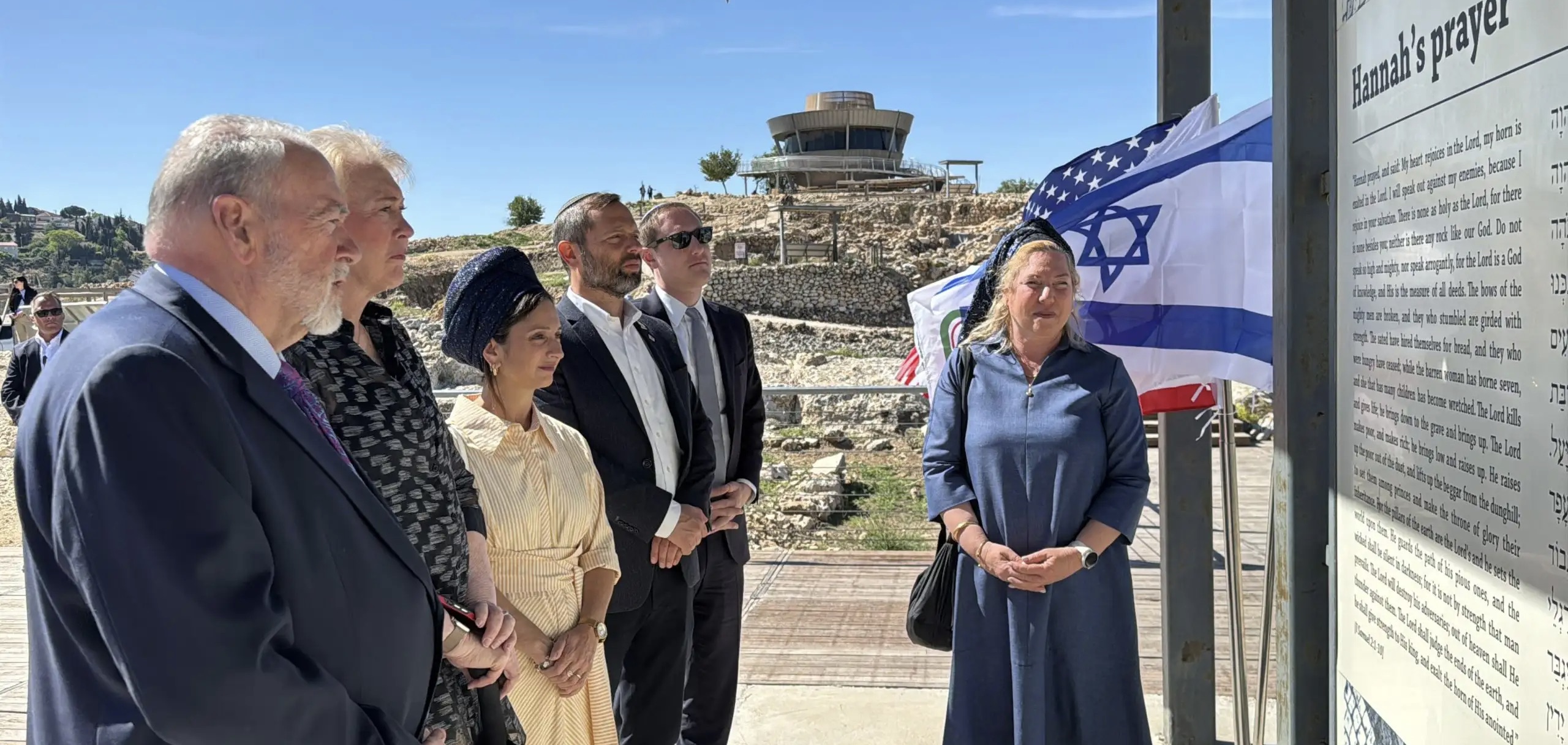 U.S. Ambassador to Israel Mike Huckabee visited Israel’s ancient Susya archeological site on Sunday in what local leaders described as a historic occasion, saying it marked the first time a sitting U.S. ambassador had visited the location.
Huckabee was in Susya to deliver the keynote address at the inaugural Judea Conference, hosted by the Hebron Hills Regional Council and its head, Eliram Azulay. The event drew government ministers, Knesset members and several hundred Israeli activists.
During his remarks the ambassador described his participation as “a great, great privilege.”
Huckabee emphasized the region’s central place in biblical history, calling Judea and Samaria “the heartland of Israel.”
“Eighty percent of the Bible took place” in Judea and Samaria, he said, adding that “it is impossible to even connect to the Scripture without connecting to Judea and Samaria.”
Huckabee added that he was particularly moved by Susya’s archaeological discoveries and biblical heritage, pointing to the ancient synagogue and a new visitor center expected to welcome thousands of guests from around the world. The site, he said, demonstrates that the region’s history stretches back some 1,500 years, with archaeological discoveries continually validating its biblical heritage.
“I love the history of it, but I love the fact that it is connected to the Bible, because I believe the Bible is the book that gives us our bearings. It points us true north,” Huckabee said, adding that the site gives Israelis reason to be grateful for their connection to the land.
During the conference, Israeli Diaspora Affairs and Combating Antisemitism Minister Amichai Chikli praised the organizers, telling JNS that Jewish residents of Judea had missed opportunities for many years to tell their story.
“So instead of our story going out, you had Masafer Yatta and all the BDS activists speaking,” he said.
He pointed to Israeli filmmaker Yuval Abraham, director of NAZA, which critics have characterized as anti-Israel propaganda, and co-director of the anti-Israel film No Other Land, noting that Abraham began his activities in the area.
Chikli described the region as a focal point for boycott activists, accusing some of orchestrating violent incidents targeting Jewish communities, particularly on weekends and during Shabbat.
The conference offered an opportunity to strengthen the public’s connection to Jewish communities across Judea by highlighting their biblical roots and introducing visitors to the communities themselves, he said. He noted that while many people are familiar with the Bible, they do not always connect its stories to the modern Jewish people and the Zionist movement.
“This is really the place where it all started,” Chikli said, pointing to the Cave of the Patriarchs in Hebron and the Kingdom of David. He said one of the conference’s most important missions was to bridge that gap while introducing visitors to the communities’ tourism, wineries, natural landscapes and archaeological sites.
Yigal Dilmoni, co-founder and CEO of American Friends of Judea and Samaria, used his remarks from the podium to describe what he sees as a shift in the relationship between Israel and its supporters in the United States. For years, he said, Israelis viewed American friends primarily as a source of financial assistance, diplomatic backing and support at the United Nations. Now, he argued, Israel has much to offer in return.
Speaking to JNS, Dilmoni elaborated that Israel, particularly Judea and Samaria, can share its biblical heritage, history and values with Americans and other supporters around the world.
“We are so powerful here in Israel, especially in Judea and Samaria, that we have a great deal to offer our friends around the world,” he said, explaining that Israel can help people better understand the Bible, learn about the biblical values that helped shape the United States, and find greater meaning in their faith.
Dilmoni added that Israel and its supporters can work together to defend Western values, which he said are challenged by radical Islamism and radical socialism.
He described the inaugural Judea Conference as an opportunity to share the Jewish people’s historical connection to Judea with an international audience.
Ayala Bar-On, director of the international desk for the Hebron Hills Regional Council and emcee of the event, told JNS that Huckabee’s visit was an important opportunity to spotlight Judea, a region many people around the world know little about. She emphasized the significance of the visit and the responsibility to raise awareness of the area.
Bar-On also spoke about the conference’s focus on combating antisemitism, saying that the suffering of Jewish communities abroad should not be viewed as a distant concern for Israelis.
“Antisemitism might sound far away, but if Jews are suffering, it’s not far away. We are all connected,” she said. “It’s our responsibility to be aware of that, and the discussion today is how do we change the paradigm and make us stronger and more helpful. Israelis are responsible for our brothers and sisters abroad.”
In addition to a roundtable on combating antisemitism, other sessions featured discussions on Zionist activism, Israeli sovereignty and efforts to strengthen Israel’s international standing. Participants also toured the ancient Susya heritage site.
Another one of the highlights was a special ceremony at ancient Susya’s approximately 1,500-year-old Byzantine-era mosaic-tiled synagogue, where Huckabee unveiled an ancient stone that once formed part of the façade of the synagogue’s Torah Ark. A choir dressed in garments modeled on ancient Levitical attire performed Psalms during the ceremony.
Inside the synagogue, Huckabee reflected on the historical connection between the United States and the Jewish people.
“America this summer celebrated 250 years of its history. We thought that was a pretty big deal. Two hundred and fifty years,” he said.
“This place [Susya] has been here nine times longer than that. And if you think about how long the nation of Israel has been here, and the city of Jerusalem—well over 3,000 years—and the Jewish people, 3,800 years, it’s a pretty extraordinary connection to the land and to God’s hand in maintaining the presence of His people in this very sacred, sacred place. Thank you for giving me the privilege of being here on this magnificent occasion. May God bless you all.”
Day 1,114 — Saturday, October 24
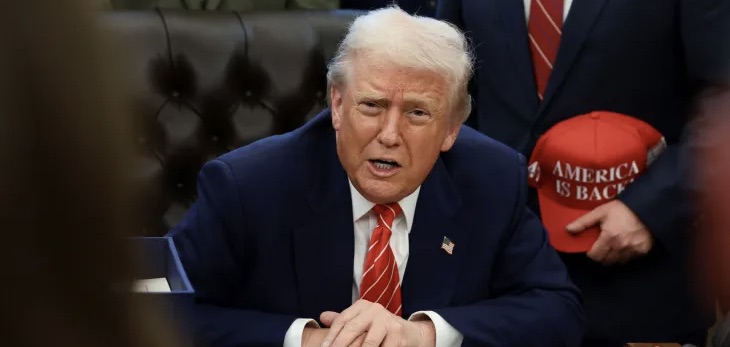 US President Donald Trump said Friday that Iran has been severely weakened economically and militarily, suggesting that Washington could either intensify its campaign against the Islamic Republic or allow continued economic pressure to further undermine the regime.
Speaking to reporters, Trump stated that the United States had achieved its objectives in the conflict and was now in a position to determine how to proceed.
“They have no money. The question is, do we want to finish it off or do we just want to let it wither? Because we are getting everything we want. We have more oil coming out of the Hormuz Strait today than they did a year ago,” Trump said.
The President also asserted that American forces had established complete control over the strategically important Strait of Hormuz, while suggesting that the United States possessed the military capability to seize Iranian territory and oil resources.
“Iran is not able to do much now,” he continued. “And we could, if we wanted to, just take all of the oil. We could take the whole country. And as you know, the Hormuz Strait is totally ours, and that’s the way we’ll keep it.”
Trump further pointed to Iran’s deteriorating economic situation, citing what he described as exceptionally high inflation.
“They have no money. They have inflation that’s 301 percent, that’s the highest in the world right now. So we’ll see,” Trump stated.
His comments followed remarks Thursday in which he indicated that additional American military operations against Iran remained under consideration.
Speaking outside the White House before traveling to a campaign rally in Iowa ahead of the November 3 midterm elections, Trump defended his decision to launch the military campaign, arguing that previous administrations had failed to address the Iranian threat.
He said he is “doing what should have been done by other presidents. There’s a price to pay, which I knew immediately when I did it.”
The President acknowledged that the war had generated differing opinions but reiterated that preventing Iran from developing nuclear weapons was a central objective of his administration.
“But we can’t let Iran have a nuclear weapon. I mean, in one way, people probably don’t love it. But many people, many great patriots really love it.”
Trump then suggested that the American military campaign might not yet be over.
“This should have been done a long time ago by other presidents, the Iran war. And we’ve knocked the hell out of them. And we may do it a little bit further.”
Day 1,114 — Saturday, October 24
 Pittsburgh Public Schools, which has about 18,000 students in about 55 schools, told JNS that it stands by its ethnic studies curriculum but didn’t comment on an assigned reading comparing Gaza and Judea and Samaria to the Warsaw Ghetto.
A syllabus for a college-credit course at Pittsburgh Science and Technology Academy, a public school in the district, assigns a 20-year-old academic article that suggests that Gazans are trapped in the Strip like Jews were in the Warsaw Ghetto during the Holocaust, JNS reported on Wednesday.
The North American Values Institute, which obtained materials from the district in a records request, told JNS that it was concerned about that article and about a unit titled “whiteness, privilege and antisemitism” and an assignment that says that “antisemitism, like other forms of racial oppression, has been used to divide marginalized communities and maintain systems of power.”
The public school district told JNS in a 550-word statement that it “strongly disputes the inaccurate and misleading characterizations of its ethnic-studies curriculum presented in a recent report by the North American Values Institute.”
Steve Rosenberg, Philadelphia regional director of NAVI, told JNS that “Pittsburgh Public Schools has issued a lengthy statement defending its Ethnic Studies program,” but “remarkably, it has managed to do so without meaningfully addressing the actual curriculum documents and syllabus uncovered by the North American Values Institute.”
Day 1,113 — Friday, October 23
 (Danny Danon) — As Israel prepares for elections, Iran, Hezbollah and other extremist forces may seek to undermine the democratic process itself.
More than 7 million Israelis are preparing to cast their ballots in national elections in a process that reflects one of Israel’s greatest strengths: its democracy.
This election is an important test for Israel. It is a test of whether democracy can thrive in a region where extremist movements seek to impose their will through violence, intimidation and fear.
So, as Israelis prepare to exercise their right to vote, we must issue a direct warning to Iran, Hezbollah and other radical elements in our region. Israel is aware of the reports that these extremists may seek to exploit the election period through provocative military activity, cyberattacks or disinformation campaigns.
Israel will not allow these forces to dictate the choices of its citizens. Anyone who attempts to threaten or attack the democratic process will face very serious consequences.
We already know the consequences of allowing extremist ideology to flourish. Three years after Oct. 7, the world should have no illusions about the threat posed by Hamas. That day, Hamas terrorists murdered 1,200 people, injured thousands and abducted 251 men, women, children, babies and elderly people into Gaza. Families were slaughtered in their homes. Civilians who believed in peace and coexistence were targeted simply because they were Israeli.
This is what happens when radical ideology takes hold. Three years later, Hamas remains active in Gaza. Its weapons and tunnels remain a threat, and its leaders continue to resist disarmament.
Last week, Hamas threatened to impose taxes on private sector humanitarian aid, another clear sign that they are seeking to reconstitute themselves in the Gaza Strip. A lasting future for Gaza cannot be built while an armed terrorist organization remains committed to destroying Israel.
But radicalization is not confined to Gaza. Hezbollah continues to threaten Lebanon and Israel. The Houthis disrupt international shipping in the Red Sea. Iran supports extremist forces across the region. These are not isolated problems. They are connected manifestations of an ideology that rejects peaceful coexistence and seeks to replace stability with intimidation.
The coming Israeli elections must be understood in this broader context. Extremist forces seek to intimidate voters, spread disinformation, provoke a security crisis and exploit divisions within society. Their objective is to weaken democratic institutions and convince citizens that they cannot determine their own future.
Israel’s response must be clear: Our democratic process will continue, and our citizens will make their choices freely. We will defend our security without surrendering our democratic character.
There is also an important contrast closer to home.
The Palestinian Authority recently announced another postponement of its elections. Its nearly 91-year-old leader, Mahmoud Abbas, will continue the four-year term that began in 2005. The last Palestinian legislative elections, held in 2006, resulted in a Hamas victory in Gaza, when the terrorist organization took over the Strip. The P.A. has not held national elections since.
Even though the P.A. tries to blame the delay on Israel, the real reason is clear: It is afraid that Hamas could win again. Indeed, the P.A. understands that Hamas’s radical ideology is taught in its own schools.
Palestinian children should not be taught that Israel has no right to exist or that terrorism offers a path to victory. The P.A. cannot credibly claim to promote peace while rewarding those who murder Israeli civilians.
Postponing elections does not eliminate extremism. Avoiding a confrontation with radical ideology does not make it disappear. It only allows the problem to grow.
Israel offers a different example. Elections are not a sign that we are free of political divisions or security threats. They demonstrate that even under extraordinary pressure, democratic institutions remain standing. The ability to disagree, campaign and choose new leadership is a source of national strength.
That is the future the Middle East needs more of, not less.
The Abraham Accords have shown that cooperation between Israel and regional partners, including the United Arab Emirates, Bahrain and Morocco, is possible. These agreements offer an alternative to the extremists’ vision: a region where countries pursue shared interests, economic opportunity and stability, rather than permanent conflict.
The choice facing the region is stark. We can confront radicalization, strengthen democratic institutions and build partnerships that create a better future. Or we can allow extremists to dictate the terms of our lives.
As Israel approaches its elections, our message to Iran, Hezbollah, Hamas and every other extremist force is unequivocal: You will not decide Israel’s future. That decision belongs to the Israeli people.
Our message to the international community is just as clear: Defending democracy requires more than praising it in speeches. It requires confronting those who threaten it, refusing to normalize terrorism and demanding accountability from leaders who deny their people the right to choose.
Israel will continue to defend its citizens, protect its democracy and pursue peace with those willing to build it. The radicals may try to test our resolve. They will not be allowed to determine our future.
Day 1,113 — Friday, October 23
 The IDF reported on Friday morning that five Israelis were injured, two critically, in a shooting attack near Judea Junction.
The victims received medical treatment from Magen David Adom (MDA) teams, with two of them in critical condition and two in moderate condition.
The injured were evacuated to Hadassah Ein Kerem and Shaare Zedek hospitals in Jerusalem. The two moderately injured were treated at Shaare Zedek Medical Center, which said: “The condition of the injured is moderate, they are conscious and stable. After an initial assessment, they were transferred for imaging tests and further treatment.”
An initial investigation into the attack indicates that the terrorists’ shooting continued for a long time until they were eliminated by a military force in the area. In footage from the scene of the incident, one of the rescue workers can be heard shouting: “There has been active shooting by a terrorist for over 20 minutes.”
MDA EMT Tzuriel Edri said: “We arrived at a difficult scene while gunfire was still ongoing. We entered the area in MDA’s bulletproof ambulance and immediately began assisting in evacuating the wounded. We loaded a man in his 20s, who was unconscious with gunshot wounds and in very serious condition, into the ambulance and provided him with medical treatment. We evacuated additional wounded people to MDA ambulances that had arrived at the scene and immediately began transporting them to hospitals. Another critically injured casualty was treated by IDF medical forces in a mobile intensive care unit.”
MDA Paramedic Hanan Meir stated: “A man in his 20s was brought into our mobile intensive care unit, fully conscious, with gunshot wounds to his lower limbs. We provided medical treatment, including stopping the bleeding, and transported him to the hospital in mild and stable condition. Another mildly injured casualty was brought to us as well. He was also a man in his 20s with gunshot wounds to his lower limbs.”
MDA EMT Avraham Eitan Stern added: “A man approximately 20 years old was brought to us, fully conscious, with minor facial injuries, apparently caused by bullet fragments. We transported him to the hospital in mild condition.”
The two terrorists were neutralized by security forces at the scene.
Large numbers of IDF troops were dispatched to the scene and launched a manhunt for two terrorists who fled the area. The troops exchanged fire with the terrorists and ultimately eliminated both of them.
The IDF Spokesperson’s Unit said, “Following the report of a shooting attack in the Judea Junction area, IDF soldiers eliminated two terrorists and continue searches in the area. A cordon was imposed in the area.”
Day 1,112 — Thursday, October 22
 On Oct. 27, Israelis head to the polls in the first election following the Hamas-led terrorist attacks in southern Israel on Oct. 7, 2023 that left 1,200 people dead, 251 taken hostage into the Gaza Strip and prompted a seven-front war against the Jewish state. Three years later, Israel has achieved stunning military accomplishments against Hamas in Gaza, Hezbollah in Lebanon, the Houthis in Yemen, militias in Syria, and, most notably, against the head of the terror proxy snake: Iran.
These pivotal elections, like the five consecutive elections between April 2019 and November 2022, are again a referendum on the continued governance of Israel’s longest-serving prime minister, Benjamin Netanyahu.
Netanyahu is presenting Israelis with a stark electoral choice: Renew his mandate to capitalize on Trump’s bold endorsement this past week or risk surrendering the strategic gains of a multi-pronged war.
Netanyahu argues that the campaign remains unfinished. Even after the blows that Israel and the United States have delivered together and apart, Tehran, he warns, could restart its nuclear program. He therefore frames Trump’s endorsement as a promise to finish what was started, contingent on his remaining in the top job.
In a wide-ranging pre-election interview with JNS, Netanyahu casts his partnership with Trump as the foundation for an ambitious agenda: to bring down Iran’s regime, further weakening its regional proxies; expand the Abraham Accords normalization agreements with Muslim-majority countries in the region; and prevent the creation of a Palestinian state anywhere within Israel’s current borders.
While the most urgent issues concern the military battlefield, Israel finds itself in a complex diplomatic position. Netanyahu relates to sanctions, restrictions on arms supplies and hostile international opinion with strategies for greater domestic weapons production, alternative partnerships and retaliation against outside pressure.
Day 1,112 — Thursday, October 22
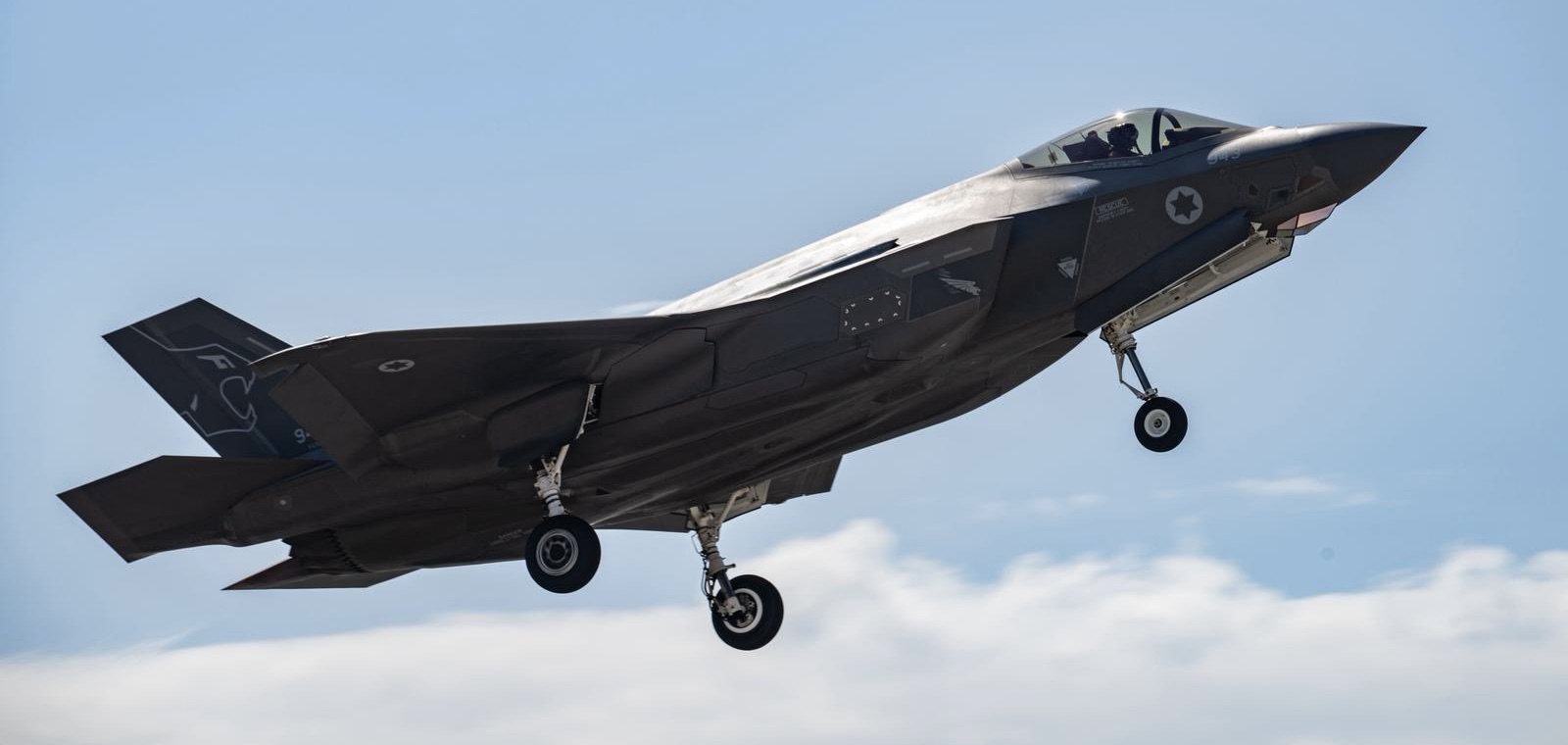 Israeli fighter jets flew toward Iran in a nighttime drill this week, Fox News reported Wednesday.
According to the report, the exercise took place overnight between Monday and Tuesday, as part of a series of drills in which Israeli warplanes were sent eastward, flying over Syria and Iraq and approaching the Iranian border.
Separately, Middle East Eye reported that Israeli fighter jets were spotted over southern and eastern Syria, as well as over the al-Muthanna province in southern Iraq.
It’s unclear whether the sightings were part of the same drill or a separate exercise.
The current reports come against the backdrop of concerns over a potential Iranian strike ahead of Israel’s Knesset elections, and amid assessments that the military confrontation between the US and Israel on one side and Iran on the other will resume soon.
Day 1,111 — Wednesday, October 21
 Secretary of State Marco Rubio called Iran’s attacks on commercial shipping in the Strait of Hormuz unseen since World War II, comparing them to “Nazi U-boats” that targeted Allied supply ships and civilians.
“What they really should be talking about is that we have a nation-state that is openly—openly—saying we are targeting commercial vessels; we are trying to kill sailors who have nothing to do with the war; we are trying to sink commercial ships,” he emphasized. “You haven’t seen that since the Second World War. They are doing Nazi U-Boat tactics. That is what the world should be rallying around and condemning.
Day 1,111 — Wednesday, October 21
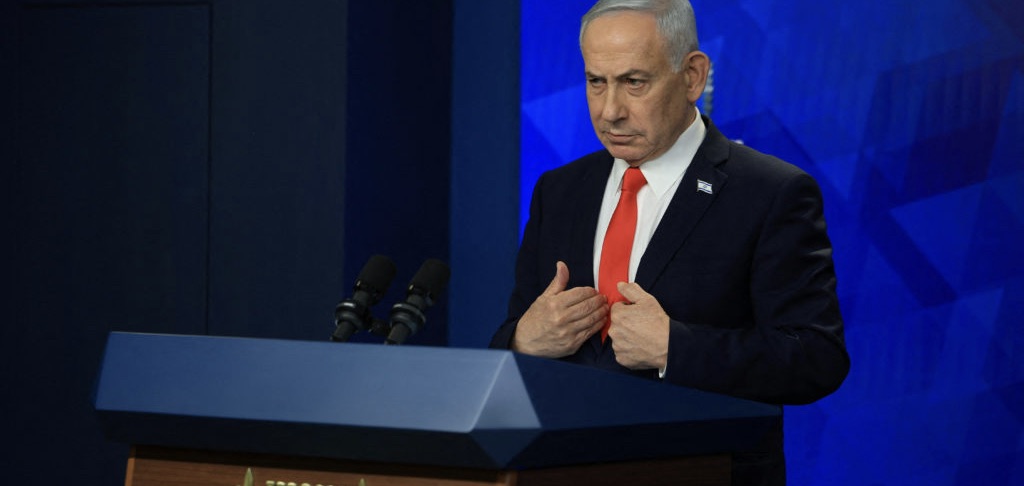 Prime Minister Benjamin Netanyahu warned Tuesday that Iran may attempt to interfere in Israel’s upcoming election through its proxy organizations, citing intelligence received by the Mossad.
In an interview with i24NEWS ahead of the October 27 election, Netanyahu addressed the Iranian threat, the political situation in Israel, and the violent unrest in France.
According to the Prime Minister, information obtained by the Mossad indicates that Tehran is likely to employ one of its proxy groups in an effort to disrupt the Israeli electoral process.
Netanyahu also accused Iran of using affiliated organizations to target Israel and spread hostile messages about the Jewish state online.
Turning to developments in France, Netanyahu expressed dismay at the widespread riots and sharply criticized French President Emmanuel Macron’s handling of radical Islam.
He described the scenes in France as “heartbreaking” and accused French authorities of failing to confront the threat.
“They didn’t prepare, and they simply gave up. They surrendered to the invasion of radical Islam.”
Netanyahu recalled a telephone conversation with Macron following the October 7 Hamas massacre, during which the French President informed him that France was pursuing a diplomatic solution.
The Prime Minister said he rejected that approach and warned Macron that Hamas posed a threat extending far beyond Israel.
“‘Emmanuel, that’s not going to happen. What you have here is ISIS. Hamas is ISIS, and in some ways, even worse. And if we don’t eliminate them here, you’ll have them in Paris.’ And that’s exactly what’s happening.”
Addressing the confrontation with Iran, Netanyahu reiterated his position that removing the Iranian regime from power is the only way to prevent the Islamic Republic from acquiring nuclear weapons.
“That’s the directive I gave to the Mossad and the IDF,” he said.
Netanyahu argued that regime change in Tehran would also have far-reaching consequences for Iranian-backed terrorist organizations, including Hezbollah and Hamas.
He predicted that both organizations would collapse following the fall of the Iranian government, “because neither of them will survive once this regime falls.”
The Prime Minister was also asked about reports that US Secretary of War Pete Hegseth had visited Israel on Monday. Netanyahu declined to confirm or discuss the reported visit.
“I didn’t say there was such a visit, and I don’t discuss visits, I’m not saying that,” he responded.
Netanyahu also addressed US President Donald Trump’s public endorsement of his reelection campaign, defending the American President’s decision to intervene in the Israeli political debate.
“At least he’s saying it honestly! What did Obama, Clinton, Biden do?” Netanyahu asked, referring to previous Democratic presidents.
Day 1,111 — Wednesday, October 21
 The Pentagon is sending the USS Theodore Roosevelt carrier strike group and the 13th Marine Expeditionary Unit to the Middle East, two US officials confirmed to Fox News on Tuesday.
This follows a US official telling The Jerusalem Post on October 1 that the aircraft carrier and a unit of US Marines would be sent to US Central Command (CENTCOM)’s sphere of operations.
The USS Makin Island amphibious ready group also departed San Diego, carrying the 13th Marine Expeditionary Unit, the Post reported at the time.
According to Fox’s report, the aircraft carrier group is due to arrive in the Middle East by the end of November.
Currently, two other US aircraft carriers are deployed in the region, namely the USS George H. W. Bush, which arrived in April, and the USS George Washington, which arrived in August to replace the USS Abraham Lincoln.
“This will provide more options for the US as President [Donald] Trump is reportedly considering ramping up strikes on Iran after the [November 3] Midterms,” Fox News’s Chief National Security Correspondent Jennifer Griffen wrote.
The Jerusalem Post also assessed on October 1 that, after this latest deployment, Trump will have significantly greater military capabilities and a wider range of options to act against Iran.
Day 1,110 — Tuesday, October 20
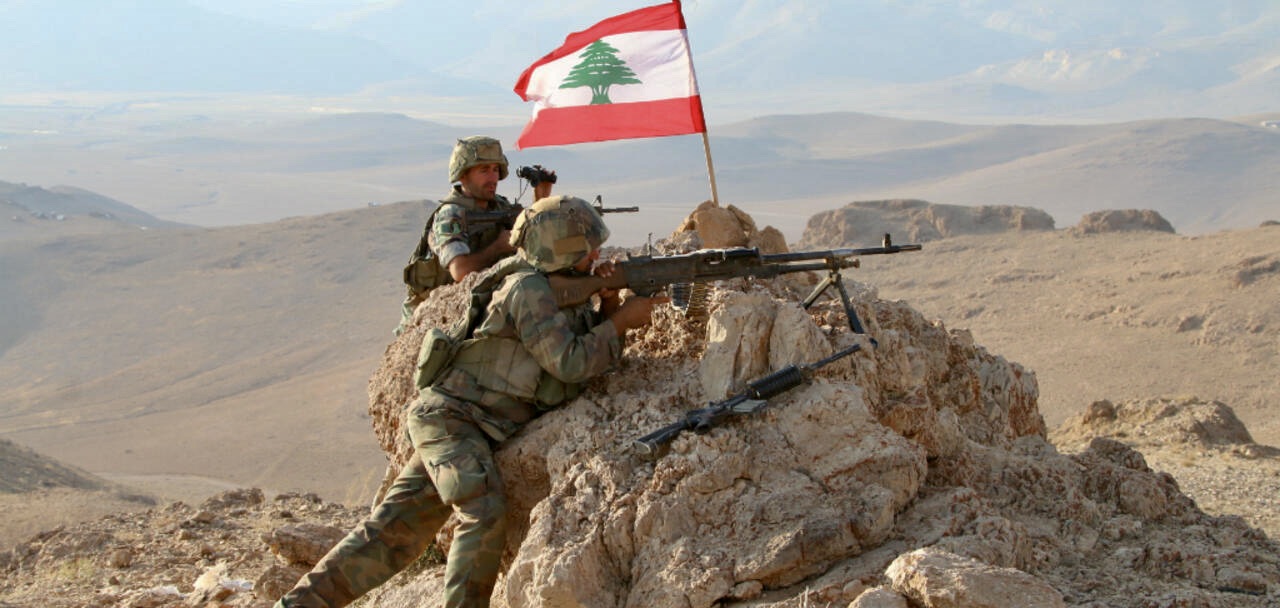 The IDF said earlier today that Hezbollah continues to operate in southern Lebanon despite the obligations of the Lebanese Army to remove them.
“Under the 2024 understandings, which guided Israeli and Lebanese actions until Operation Roaring Lion, the Lebanese Army was responsible for acting against the presence of weapons and military infrastructure belonging to the Hezbollah terrorist organization in southern Lebanon. However, this responsibility was not fulfilled as required, allowing Hezbollah to continue entrenching itself, arming itself, and building military infrastructure in the area. Even during the Lebanese Army’s 2025 Operation Homeland Shield, a significant gap remained between statements and the reality on the ground, and the operation did not dismantle the terrorist organization’s military capabilities or prevent it from continuing its activities and buildup,” the IDF stated.
“In December 2025, a military asset in the Kfarra area of southern Lebanon, which Hezbollah had used to store weapons, was referred to the Lebanese Army for handling through the U.S.-led monitoring mechanism. The Lebanese Army subsequently stated that the asset had been addressed. Several months after this statement, it was discovered that Hezbollah had continued operating at the site and had even independently removed weapons and military equipment to preserve them as part of the terrorist organization’s capabilities. Several months after the Lebanese Army had already declared that it had addressed the asset, Hezbollah was still able to use it for its own purposes.”
The IDF accompanied the statement with footage showing Hezbollah operatives loading weapons stored at the site onto a truck in an attempt to remove them and preserve them as part of the terrorist organization’s capabilities.
“After the activity was identified, IDF troops struck the truck carrying the weapons removed from the site. The footage indicates that, after the site was reported as having been addressed, Hezbollah activity was identified there in an attempt to remove and preserve weapons and military equipment.”
“The Intelligence Directorate has identified instances in which elements within the Lebanese Army coordinated with Hezbollah regarding enforcement activities. This coordination assisted efforts to prevent, delay, or thwart enforcement operations and enabled Hezbollah to prepare in advance to remove and transfer weapons from the area. The Lebanese Army is responsible for ensuring the full and thorough implementation of all tasks assigned to it.”
“The IDF emphasizes that it expects the Lebanese Army to act more decisively and effectively to fulfill its responsibilities and prevent the presence of weapons and military infrastructure belonging to the Hezbollah terrorist organization in southern Lebanon. The IDF and the Intelligence Directorate, continue to monitor Hezbollah’s attempts to rebuild and strengthen its capabilities and will not allow any violation that poses a threat to the State of Israel and its civilians.”
“The Hezbollah terrorist organization dragged Lebanon and its residents into a war in service of Iran during Operation Roaring Lion, launching thousands of rockets, including from areas south of the Litani River, where no armed elements, assets, or weapons belonging to anyone other than the Lebanese government or UNIFIL should be present.”
Day 1,110 — Tuesday, October 20
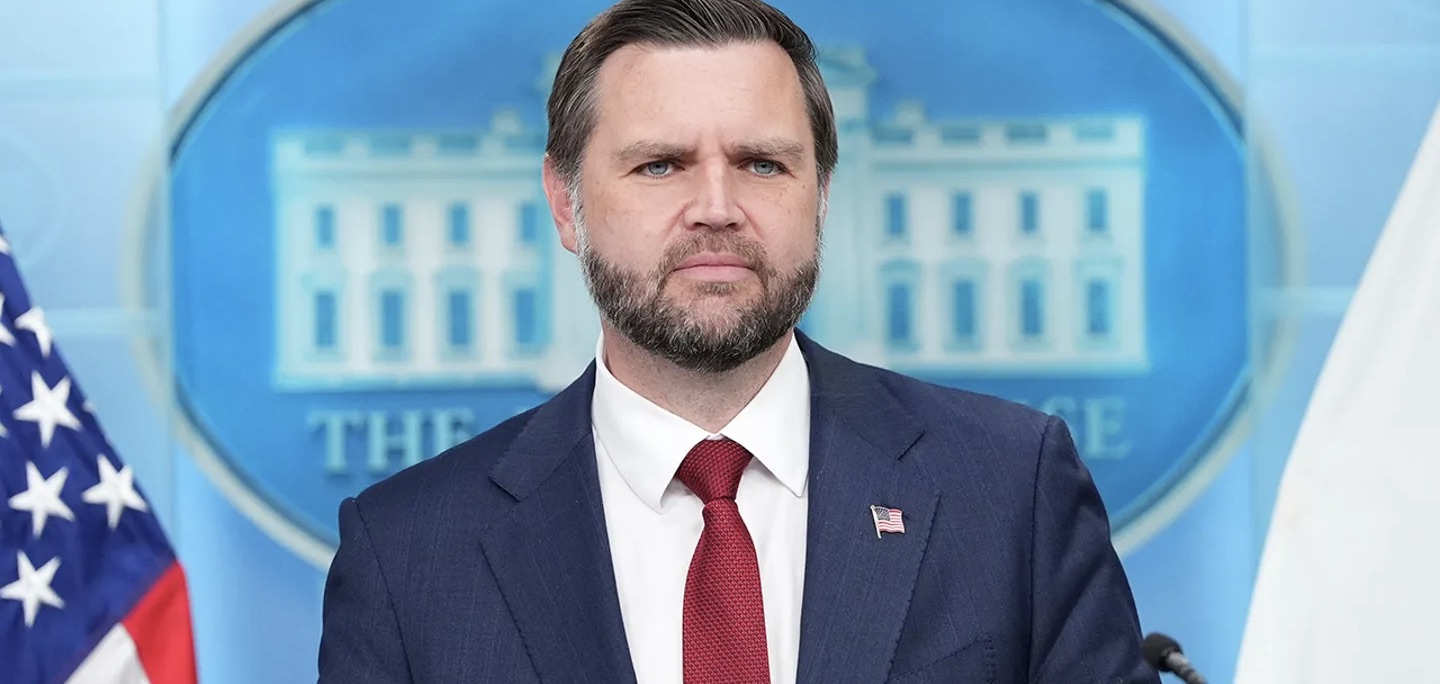 Vice President JD Vance declined to endorse Israeli Prime Minister Benjamin Netanyahu’s reelection bid, saying he intends to stay out of Israel’s election despite President Donald Trump throwing his support behind the Israeli leader.
During an interview Monday with Mark Halperin on “2WAY Tonight,” Vance said his focus remains on U.S. candidates ahead of the midterms, Politico reported.
“The president has the most effective endorsement in American or international political history,” Vance said. “I endorse American candidates, and that’s where I’m focused on in the midterms. So I’m not getting involved in Israeli elections.”
However, Vance made clear that his decision should not be interpreted as opposition to Netanyahu.
“I’m not anti-endorsing him. I’m not pro-endorsing him. I’m not getting involved in Israeli elections,” the vice president added.
The comments come one day after Trump gave Netanyahu his “Complete and Total Endorsement” in a lengthy Truth Social post, praising the prime minister as a key U.S. ally and partner in confronting Iran.
“Bibi Netanyahu has been a Great Warrior Prime Minister, and an even greater Partner for Peace in combatting the Islamic Republic of Iran,” Trump wrote.
Day 1,110 — Tuesday, October 20
 As Americans’ favorability toward the modern state of Israel continues to wax and wane, as antisemitism swells, and as allegations of genocide ring out, author and commentator Dinesh D’Souza is making the case that history is on the side of the Jewish state.
Biblical archaeology, D’Souza recently told CBN News, “irrefutably shows the presence of the Jews in their ancient homeland.”
D’Souza’s comments, as well as the release of his new book, The Stones Cry Out: Biblical Archaeology, Prophecy, and the Last Days, come at a time when U.S. citizens are deeply divided — even in conservative and Christian circles — over Israel.
Data from the Pew Research Center shows Americans’ favorability toward both the Israeli government and its people is on the decline, with 62% holding unfavorable views toward the Jewish state’s government. Additionally, antisemitism has been on the rise in the U.S. since the Hamas-led attack against Israel in October 2023.
The Anti-Defamation League tracked a huge spike in antisemitic attacks in 2024 and, while those numbers fell somewhat in 2025, they have remained historically high. For context, the ADL recorded 6,274 incidents last year, a 33% drop from 2024 but still the third-highest total since the organization began tracking such incidents in 1979.
It’s not only an issue in America, either. Just this week, news broke of a hotel in Dublin reportedly canceling a reservation for 70 rooms for delegates attending an international conference on combating antisemitism after its administrators learned the purpose of their visit. Maurice Cohen, chairman of the Jewish Representative Council of Ireland, told The Times of Israel that Herbert Park Hotel initially green-lit the booking for delegates representing the European Union’s 27 member states but later reneged after a phone call with the hotel’s general manager.
Cohen told the outlet he noticed a “manner change” in the manager after telling her the purpose of the meeting in Dublin. He recalled a “tension that had not been there before” when, upon learning the purpose of the event, the general manager asked Cohen if the Israel Defense Forces would be involved in the gathering.
“We were talking about a conference in Dublin on antisemitism, attended by Jewish community representatives, diplomats, civil servants and government officials,” he told The Times. “Nothing I had said had anything whatsoever to do with the Israeli army, yet, somehow, that was where the conversation had gone.”
The manager then purportedly told Cohen she’d have to check with the owners to determine whether the reservation could remain. Apparently, it could not: the rooms were canceled.
Danny Danon, Israel’s ambassador to the United Nations, told Fox News the incident “is a disgraceful example of the very antisemitism the conference was organized to combat.”
Much of the hostility toward Israel centers on the claim the Jewish state is committing genocide against Palestinians, a leftist talking point becoming less defensible as new data from the Palestinian Ministry of Health shows the population in Gaza actually grew significantly in 2025. Nevertheless, as CBN News reported, Israel remains on high alert against attacks ahead of its Oct. 27 elections.
D’Souza, for his part, made the case this week that it’s “very odd” to accuse Israelis of seeking to take land that does not belong to them when there is a breadth of archaeological history proving Jewish presence in the land dating back centuries.
“It really irrefutably shows the presence of the Jews in their ancient homeland, going back 3,000, even more than 3,000 years,” he said. “And so the familiar accusation that the Jews are colonizers immediately becomes very odd, right? Because it’s like accusing the Indians of colonizing India or the Irish of colonizing Ireland. How do you colonize your own ancestral homeland?”
To make his case, D’Souza pointed to a 2,000-year-old, 25-ton Jewish ritual bath, known as a mikveh, discovered this summer by the Israel Antiquities Authority. The relic, which was excavated nearly totally intact, provides evidence of a previously unknown Jewish settlement between the Judean Lowlands and the northern Negev, according to the IAA.
“[T]hese ritual baths were used by Jews to kind of cleanse themselves before they went to the temple,” D’Souza explained. “So there is a political significance, I think, to these archaeological exhibits coming out of the ground.”
Day 1,109 — Monday, October 19
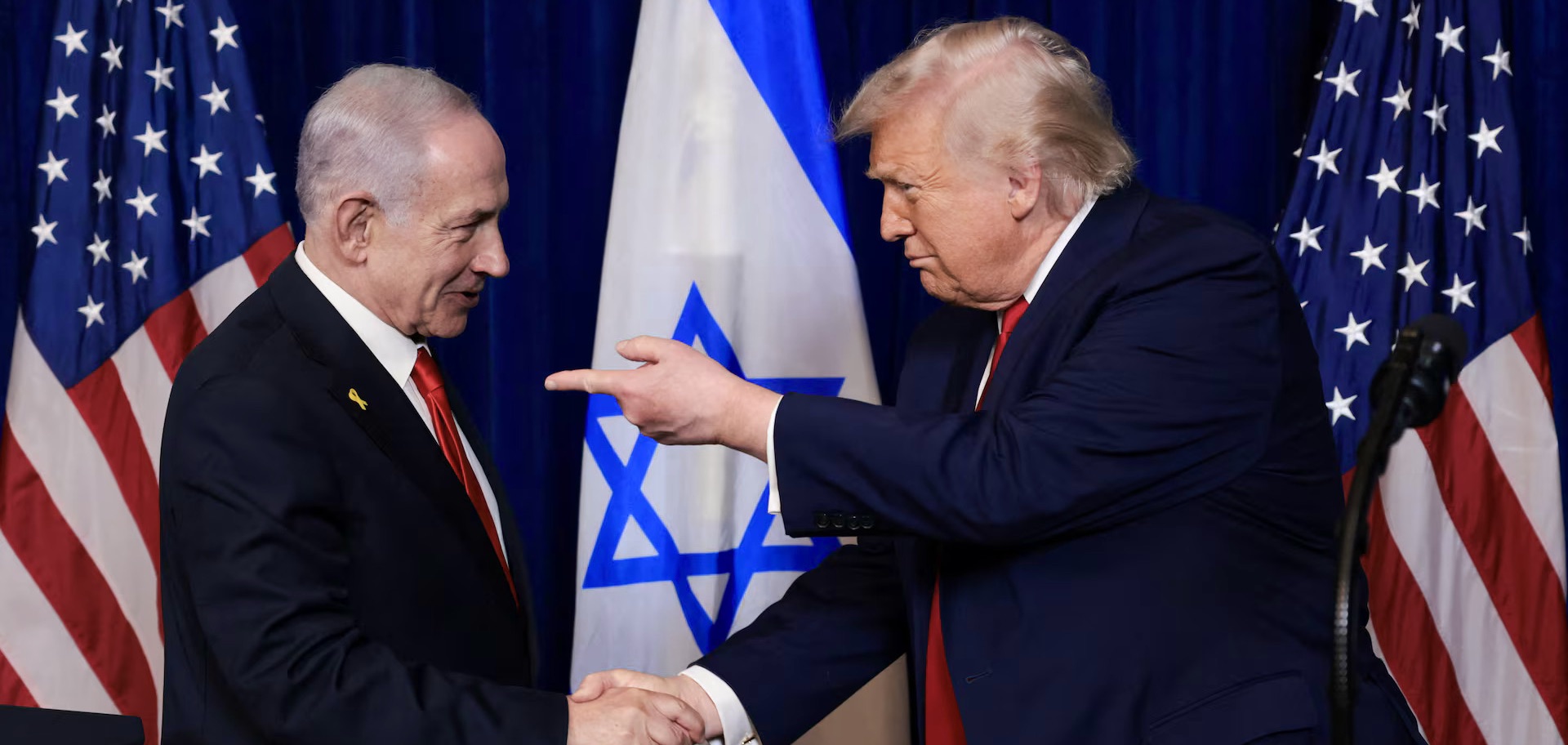 Prime Minister Benjamin Netanyahu on Sunday thanked U.S. President Donald Trump for endorsing his reelection ahead of Israel’s Oct. 27 national vote, saying Jerusalem “has never had a greater friend in the White House.”
Trump on Sunday gave Netanyahu his “complete and total endorsement,” praising his leadership against Iran in a Truth Social post.
“This is the kind of partner that the United States of America is demanding of Israel,” Trump wrote, calling Netanyahu “strong, brave, and brilliant.”
In an English-language post and accompanying video statement on X, Netanyahu thanked Trump for his “extraordinary endorsement.”
“Together we will never let Iran’s regime get nuclear weapons,” Netanyahu said.
Addressing Trump as “my friend Donald,” Netanyahu also thanked the U.S. president for his “clarity, courage and unwavering support.”
Defense Minister Israel Katz on Sunday night welcomed Trump’s endorsement.
Katz said Trump issued his “unequivocal statement of support” on the grounds that “only Netanyahu can continue the historic cooperation between them, and between the Israel Defense Forces and the U.S. military—in order to complete the goals of the campaign against Iran.
“This is an extremely important strategic message regarding Israel’s security in the future,” the defense minister added.
Finance Minister Bezalel Smotrich also welcomed Trump’s endorsement, calling him Israel’s greatest friend in the world and praising the achievements of U.S.-Israeli cooperation.
“We—the citizens of Israel—will decide Israel’s election. But we would do well to listen to the president of the world’s greatest power, simply because he is right,” Smotrich wrote on X.
“The national camp must continue to lead the State of Israel” and maintain cooperation with the United States to strengthen Israel’s security and future, he added.
A senior Israeli official highlighted the cooperation between the two leaders.
“There has never been greater cooperation and coordination between an American wartime president and an Israeli wartime prime minister,” the official told JNS. “Trump and Netanyahu are an epic tag team who have achieved unprecedented achievements in war and peace. That has, of course, translated into unprecedented cooperation between our great armed forces. Israel is America’s model ally, and America is Israel’s indispensable ally. Iran and its proxies are weaker than ever, and the American-Israeli alliance is stronger than ever.
“We have two years of Trump-Netanyahu to win the war and win the peace,” the official said.
Day 1,109 — Monday, October 19
 A wave of unrest that erupted across France over the weekend was accompanied by antisemitic incitement and conspiracy theories on X/Twitter, accusing Israel, Mossad, and Jews of responsibility for the violence and destruction in the streets, according to a report published Sunday by the Combat Antisemitism Movement (CAM).
The study, conducted by CAM’s Antisemitism Research Center (ARC), examined activity on X between October 16 and 18 and identified 1,384 posts linking the riots to Jews or Israel. According to the organization, the posts included conspiracy theories alongside calls for physical violence, expulsion, and extermination.
According to the findings, influential social media accounts spread claims that “Mossad is burning France right now” and described the unrest as a “civil war orchestrated by Jewish elites.”
Other accounts linked French President Emmanuel Macron to the Rothschild family, while far-right activists with hundreds of thousands of followers circulated the message: “The Jews did this to France. Don’t let them do it to America.”
CAM said this was the fourth time in less than three months that its research center had identified a similar pattern of antisemitic conspiracy theories spreading in response to major news events. The report cited the migrant crisis in Ceuta, the anniversary of the September 11 attacks, and an attempted hijacking of a plane bound for Ben-Gurion Airport.
The study also found that accounts subscribed to X Premium, identified by blue verification checkmarks, were among those spreading some of the most extreme messages.
According to CAM, the content received millions of views, with the organization arguing that the platform’s amplification mechanisms helped spread the messages.
CAM CEO Sacha Roytman warned of the connection between online incitement and violence in public spaces.
“Once again, we are witnessing the same distorted pattern in which hatred of Jews and Israel becomes the automatic explanation for every national crisis,” Roytman said. “Worse still, social media platforms are incentivizing those who spread hatred instead of stopping them.”
Roytman called on French authorities and social media companies to take action against violence and incitement.
“French law enforcement authorities must take firm action against the rioters, and platform executives must put an end to this lawlessness before lives are lost,” he said.
The Combat Antisemitism Movement is an international, nonpartisan coalition dedicated to combating antisemitism and protecting Jewish communities. Its work includes researching and monitoring antisemitic content online, conducting public awareness campaigns, and promoting policy initiatives with governments and international institutions.
Day 1,108 — Sunday, October 18
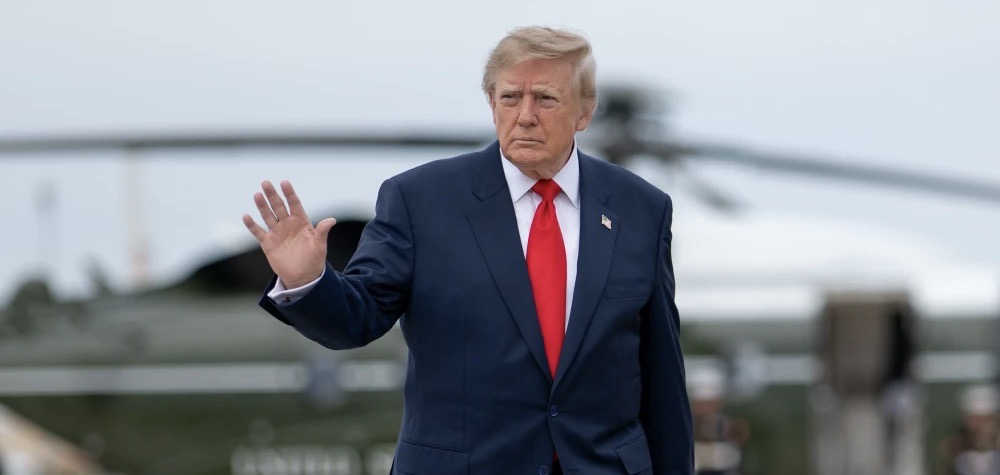 U.S. President Donald Trump expressed optimism Friday about the possible revival of talks on Saudi Arabia normalizing relations with the Jewish state.
“Israel has been very helpful to Saudi Arabia,” Trump told reporters on the White House lawn on Friday, after being asked about Riyadh’s conflict with the Iranian-backed Houthis.
A reporter asked the president whether Saudi Arabia should accept assistance from Israel in fighting Yemen’s Houthi rebels, to which Trump replied, “Yeah, I do. I think they will, sure.”
He went on to say that Jerusalem has already assisted Riyadh, without specifying how.
Trump was then asked whether the idea of Saudi Arabia joining the Abraham Accords was back on the table. He answered, “Yeah, I think so. Maybe more than ever.”
On Tuesday, Prime Minister Benjamin Netanyahu said that nearly every country in the Middle East and the West seeks Israeli assistance, including governments that publicly criticize the Jewish state.
“There is almost no country in the Middle East that doesn’t ask us for help. And I’ll surprise you: There is almost no Western country that doesn’t ask us for help,” he told Channel 14‘s “The Patriots” program on Oct. 13.
Following last week’s Houthi terrorist attack on King Khalid International Airport in Riyadh, Netanyahu condemned the assault that claimed the lives of at least 13 people and wounded 300 more.
“On behalf of the people of Israel, I extend our deepest condolences to the families of those murdered and our wishes for a full recovery to the injured,” Netanyahu said. He called for a Middle East that “stands united against threats, protects its people, and builds a future of security, cooperation and prosperity for all the peoples of our region.”
The Iranian-backed terrorist army in Yemen on Sunday claimed responsibility for the missile strike on Oct. 10.
Houthi military spokesman Yahya Saree said the group also struck the airport in Dammam, in Saudi Arabia’s Eastern Province, and two facilities belonging to oil giant Saudi Aramco.
The military confrontation between the Saudis and the Iranian-backed jihadist organization escalated after the latter took control last month of a long stretch of territory along the Red Sea coast in Yemen, including several islands in the strategic choke point of the Bab el-Mandab Strait.
The civil war in Yemen has claimed the lives of hundreds of thousands of people since 2014.
The Saudis entered the war the following year at the request of the U.N.-recognized Yemeni government, joined by forces from eight other countries from West Asia and North Africa in an attempt to repel the Houthi rebels.
A fragile ceasefire signed in 2022 began to unravel in July, with the Houthis firing missiles at Saudi airports, oil facilities and tankers in the Red Sea.
Meanwhile, Israeli President Isaac Herzog met on Wednesday with Bahraini Foreign Minister Abdullatif bin Rashid Al Zayan in Baku, Azerbaijan, to discuss strengthening the Abraham Accords and expanding regional peace and cooperation.
According to his office, Herzog emphasized the importance Israel attaches to its relations with Bahrain and praised the leadership of King Hamad bin Isa Al Khalifa and the Bahraini government. He also conveyed his best wishes to the king and the Bahraini people.
The meeting took place during Herzog’s visit to Azerbaijan for the seventh summit of the Conference on Interaction and Confidence Building Measures in Asia, known as CICA.
The Israeli president had also met with Kazakh President Kassym-Jomart Tokayev on Thursday on the sidelines of the security summit, according to the Kazakh Presidency.
The two men discussed expanding cooperation, focusing on trade, economic and investment ties, according to Astana’s readout. Tokayev said Herzog’s April visit to the Kazakh capital had given “significant impetus” to bilateral relations.
They also talked about tensions in the Middle East, with Tokayev reaffirming Kazakhstan’s “principled position on the need to de-escalate tensions and resolve conflicts exclusively through diplomatic means.”
Day 1,107 — Saturday, October 17
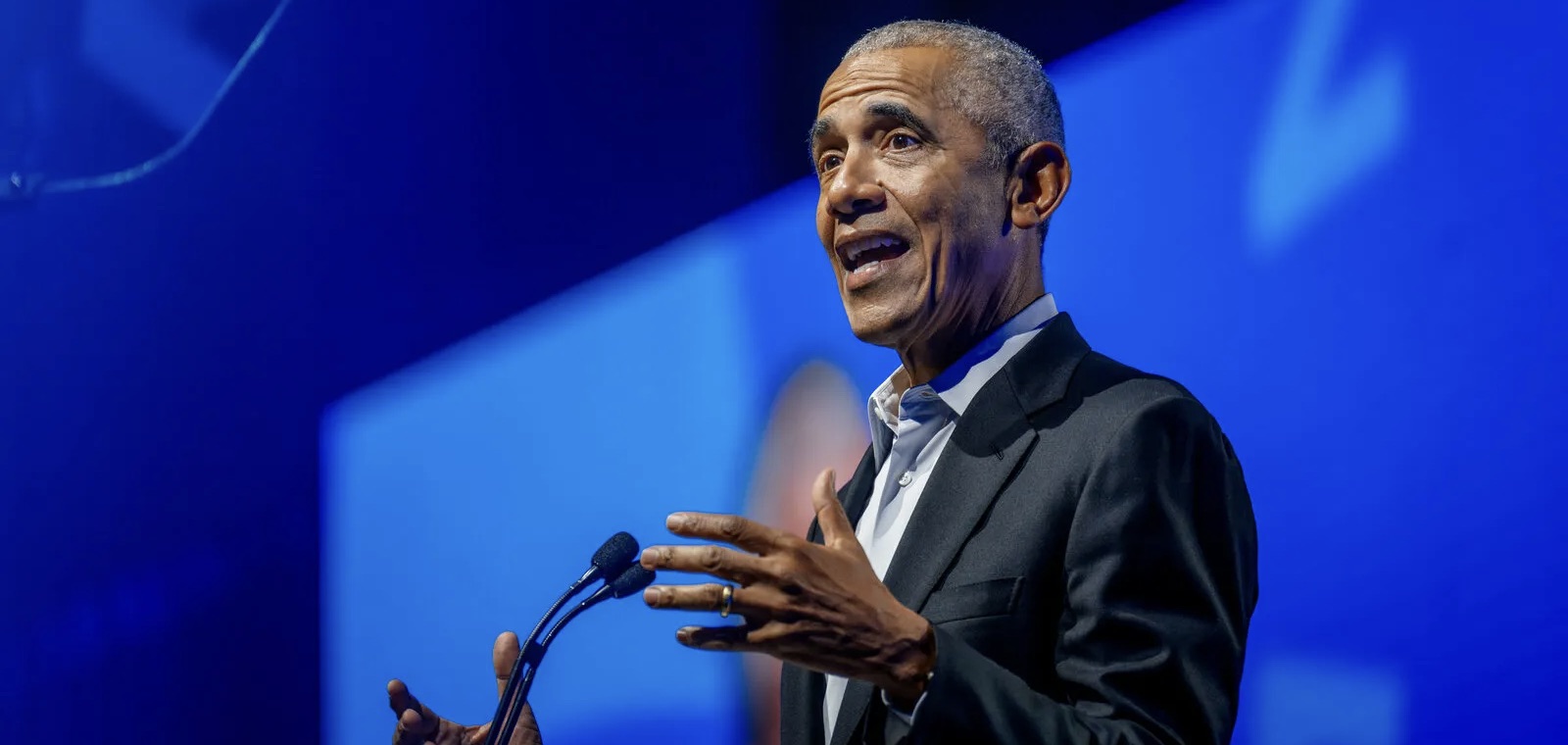 Prime Minister Benjamin Netanyahu fired back at former President Barack Obama on Friday after Obama accused Israel of taking Palestinian land, declaring: “Our land is not stolen land. This is our homeland.”
“We’re not the Dutch in Indonesia. We’re not the Belgians in the Congo. We’re Jews in Judea,” Netanyahu said in a blistering video response.
The clash erupted after Obama told an audience in Northern Ireland that Israelis “took land off people and they were excessive,” arguing that Palestinians were justified in demanding their land back.
Obama made the remarks Tuesday while receiving an honorary doctorate at Queen’s University Belfast. Netanyahu called his comments “regrettable” and rejected the suggestion that the Jewish state was a colonial enterprise.
During his Belfast appearance, Obama argued that Israel’s military and technological superiority could not provide a lasting solution to the Israeli-Palestinian conflict.
He warned against an approach in which Israel relies on its strength to take whatever measures it considers necessary for its security without making concessions to Palestinians.
Such a strategy might succeed in the short term, Obama said, but would come at a moral cost.
“You have ceded moral ground if that is the position you take,” he warned.
Obama accused Netanyahu’s government of embracing that approach and argued that Israel must recognize that millions of Palestinians will remain in the region.
He specifically cited the presence of seven million Palestinians, saying they were “not going anywhere.”
Netanyahu rejected the suggestion that Israeli policies were the central barrier to resolving the conflict.
Instead, he pointed to the refusal of Israel’s enemies to recognize Jewish sovereignty, regardless of where the country’s borders might be drawn.
“The obstacle to peace is not Israel,” Netanyahu said, arguing that the fundamental problem is the rejection of the Jewish people’s right to a state of their own.
He also linked Israel’s struggle for security to the broader confrontation between the United States and hostile regimes in the Middle East.
Pointing to chants of “Death to Israel” and “Death to America,” Netanyahu said the hostility directed at the Jewish state is part of a wider campaign against the West.
“We are the ‘Little Satan,’ you are the ‘Great Satan,’” he said, referring to the labels used by Iran’s leadership for Israel and the United States.
Both countries, he argued, are defending a shared civilization against common enemies.
The prime minister concluded with a warning against diplomatic arrangements that fail to account for the threats Israel faces.
“A peace built on illusions will crash against the rocks of Middle Eastern reality,” Netanyahu said.
He insisted that Israel would not compromise its security simply to satisfy international demands or reach an agreement with adversaries unwilling to recognize its legitimacy.
“Israel will not gamble with its survival to accommodate those who refuse to accept the facts of history, to accept our right to exist, or who wish to appease terror.”
The exchange marks another public disagreement between Netanyahu and Obama, whose relationship was frequently strained during Obama’s presidency, particularly over Israeli settlements, Palestinian statehood and the 2015 Iran nuclear agreement.
- Since Oct. 7, over 1,600 Israelis (968 soldiers) have been killed, and 6,424 IDF soldiers wounded since the start of the war.
- On Oct. 7, 2023, one day after the 50th anniversary of the Yom Kippur War, thousands of Hamas gunmen invaded southern Israel, brutally murdering 1,200 Israelis and kidnapping 251 to the Gaza Strip.
- On Oct. 8, 2023, the Israel Security Cabinet voted to officially declare war for the first time since the 1973 Yom Kippur War.
- On Oct. 27, 2023, the IDF began its Ground Operation in Northern Gaza
- Between October 7th, 2023, and March 31, 2024, the IDF made approximately 100,000 phone calls, dropped 9.3 million leaflets, sent 15.5 million text messages, and 17 million voice recordings in efforts to get Gazan civilians out of harm’s way during military operations.
- Between October 7th, 2023, and August 18, 2025, Israel has allowed and facilitated the entry of over 1.9 million tons of aid into Gaza.
- On June 13th, 2025, the 12 Day War began between Israel and the Iranian regime. Israel conducted massive airstrikes targeting Iran’s military infrastructure and leadership, weapons stockpiles, and nuclear scientists— the regime rained ballistic missiles down, targeting locations of Israel’s largest civilian populations.
- On June 22, 2025, under the orders of President Trump, B2 Bombers dropped bunker-buster bombs on Iran’s nuclear facilities, thwarting the imminent danger of Iran obtaining nuclear weapons.
- On October 10th, 2025, a fragile ceasefire agreement, brokered by the Trump Administration, came into effect between Israel and Hamas.
- On January 27, 2026, after numerous delays, the body of the last remaining Israeli hostage in the Gaza Strip was returned to Israel.
- On February 28th, 2026, the United States launched a large-scale joint military operation against the Iranian Regime, beginning with the elimination of the nation’s Supreme Leader.

YOU CARE ABOUT BIBLICAL TRUTH. SO DO WE.
Together, We Can Deliver A Biblical Understanding Of News Events Around The World.
YOU CARE ABOUT BIBLICAL TRUTH. SO DO WE.
Together, We Can Deliver A Biblical Understanding Of News Events Around The World.
Day 1,117 — Tuesday, October 27
Prime Minister Benjamin Netanyahu visited the Western Wall on Monday evening, hours before polling stations opened for the Knesset elections, and placed a handwritten note between the ancient stones.
In the note, Netanyahu wrote, “For the lives of IDF soldiers, our heroes, for victory over our enemies, and for the success of our people.”
“The Eternal One of Israel does not lie,” his note concluded.
Netanyahu traditionally visits the Western Wall before every election to pray.
Ahead of the 2020 elections, he placed a note at the site that read: “I pray that with one final great effort, we will bring a good government to the people of Israel, the Land of Israel, and the State of Israel.”
Day 1,117 — Tuesday, October 27
Israeli Foreign Minister Gideon Sa’ar on Monday criticized opposition leader Yair Lapid over a tweet seemingly celebrating the recent electoral losses of pro-Israel politicians in Brazil and Serbia.
For Lapid, the two “giant friends” of Israel—Brazil’s presidential candidate Flávio Bolsonaro and Serbia’s recently resigned President Aleksandar Vučić—are Israeli Prime Minister Benjamin Netanyahu’s “two associates,” Sa’ar wrote in Hebrew.
Brazilian President Luiz Inácio Lula da Silva, who defeated Bolsonaro on Sunday, has “accused Israel of committing genocide in Gaza, drawing a comparison to the murder of Jews in the Holocaust by Hitler,” said Sa’ar.
Lula “also claimed that 12.3 million (!) children were killed in the bombings during the war,” Sa’ar said in reference to the conflict sparked by the Hamas-led invasion of southern Israel on Oct. 7, 2023.
Sa’ar went on to criticize Lapid for “parroting” Lula’s campaign slogan, which translates roughly to, “We defend our sovereignty and we do not accept outside interests dictating our path.” This was stated in reference to alleged external interventions in Brazil’s politics from the likes of the United States.
Bolsonaro, by contrast, pledged to move Brazil’s embassy to Jerusalem as part of his election campaign, the foreign minister continued.
As for Vučić, whose political camp lost Sunday’s parliamentary election to a student-led opposition movement, Sa’ar noted: “I doubt whether Lapid has even the faintest idea of what Vučić did for Israel in the war.
“Turning one’s back on friends of Israel and fawning over those who act against it—this is a baseness of soul and a moral low, not to mention the level of foreign policy thinking on display here,” the Israeli minister added.
Earlier in the day, Lapid had posted a Hebrew-language message on X, saying, “Two more Netanyahu associates lost tonight in the elections due to a high voter turnout … Tomorrow the people of Israel begins the repair, returning Israel to a path of hope and success.”
Following the criticism, Lapid posted another tweet to clarify his position. He wrote, “I am very unhappy with Lula’s victory. I am always in favor of the pro-Israel candidate, that’s the most important criterion. But today, being close to Netanyahu is political damage everywhere in the world.”
Day 1,117 — Tuesday, October 27
The Israeli Foreign Affairs Ministry on Monday rejected a United Nations commission report accusing Israel of genocide, war crimes and crimes against humanity, calling it a “propaganda document detached from reality, aimed at undermining Israel’s right to self-defense, delegitimizing the Jewish state, and legitimizing jihadist terrorism against its citizens.”
The UN Independent International Commission of Inquiry on the Occupied Palestinian Territory accused Israel of committing genocidal acts in Gaza during the war and following a ceasefire, as well as war crimes and crimes against humanity in Judea and Samaria.
The report cited nearly 500 Palestinian deaths annually in Judea and Samaria since 2022 and a sharp increase in deaths from Israeli airstrikes since Oct. 7, 2023, particularly during Operation Iron Wall.
It also examined statements by Finance Minister Bezalel Smotrich and IDF Central Command chief Maj.-Gen. Avi Bluth.
Commission investigators alleged that Palestinian detainees had been subjected to rape, torture and other sexual violence.
Israel has rejected previous similar allegations as unfounded.
The report also accused the Palestinian Authority of arbitrary arrests, detention and torture, as well as targeting journalists, activists and human rights defenders.
It cited deaths during October 2023 protests and the killing of a journalism student.
Critics pointed to the report’s focus on Israel while mentioning Hamas only twice and not accusing the terrorist group of wrongdoing, despite the October 7 massacre and documented abuses against Gazan civilians.
In its response, the Foreign Affairs Ministry said the commission, established in 2021, had been “flawed from the outset” and had “targeted Israel exclusively since day one.”
It accused the body of consuming extensive UN resources, funding and personnel to advance anti-Israel propaganda.
The ministry said the report reflected the commission’s political agenda rather than Israel’s conduct and accused it of parroting “the narrative of terrorist organizations word for word.”
“This is the shameful legacy of the UN Secretary-General and the High Commissioner for Human Rights,” the statement concluded.
Day 1,116 — Monday, October 26
President Donald Trump renewed his endorsement of Israeli Prime Minister Benjamin Netanyahu on Sunday evening, urging Israelis to reelect him in Tuesday’s election with a renewed call to “finish the job” against Iran.
“Vote for Bibi Netanyahu for Prime Minister, we have to finish the job that we started!” Trump wrote on Truth Social.
In his renewed endorsement, Trump credited his partnership with Netanyahu for military successes against Iran, citing operations that targeted the regime’s nuclear facilities and devastated its armed forces.
“Bibi and I have had a great relationship in winning together,” Trump wrote, pointing to Operation Midnight Hammer, which targeted Iran’s nuclear facilities, and Operation Epic Fury, the broader U.S. military campaign against the regime.
“Then we did Operation Epic Fury, and Iran now has No Navy, No Air Force, and both their Military and Economy are in shambles,” he declared.
Trump also pointed to Iran’s economic devastation, claiming inflation had reached 301 percent and crediting the U.S. naval blockade with restricting its oil revenue. He cited the elimination of successive levels of the regime’s military and political leadership.
The president urged Israelis to remember Netanyahu’s record when voting Tuesday, calling him an “outstanding Warrior Prime Minister.”
Trump also invoked Iran’s longstanding threats against Israel and the United States, declaring that the chants of “Death to America, Death to Israel” could no longer be tolerated.
Day 1,116 — Monday, October 26
The Israeli military launched large-scale domestic military exercises on Sunday to counter surprise border infiltrations and ground raids across northern and central Israel, mobilizing multiple divisions and air assets amid rising regional tensions.
The drills, set to continue over 48 hours, came as an Israeli security expert invoked the 1973 Yom Kippur War, when Egypt and Syria used exercises to disguise preparations for a surprise attack, warning that escalating tensions in the region could in fact trigger what he described as a “dangerous miscalculation.”
The large-scale maneuvers, the IDF said, involve the Northern Command’s 210th Division, the West Bank Division, and the Central Command’s 98th and 96th divisions, alongside the Israeli Air Force.
The exercise, scheduled just ahead of Israel’s elections Oct. 27, aims to “maintain the forces’ alertness and readiness, strengthen the ability to defend communities, and make full use of aerial capabilities for defense in the area,” according to the IDF.
On Friday, the IDF said troops would practice “a variety of scenarios, including a surprise attack and infiltration into Israeli territory by air and land,” incorporating lessons learned from the Oct. 7, 2023, Hamas-led attacks on Israel.
“This exercise is mostly about non-state actors with or without Iranian support,” Israeli national security analyst Dr. Ehud Eilam told Fox News Digital.
“It’s aimed at those in Syria, Lebanon, and Jordan who might try to infiltrate into Israel or send ground raids. Some are supported by Iran; others are not. It could be planned by Iran or be a local initiative.”
“This is a massive exercise, the biggest one in recent years, aimed at protecting the borders,” the former Israeli Ministry of Defense researcher added.
“It’s all about making sure that the election day on October 27 will run smoothly. It’s also a message to Iran and others: don’t try to provoke us during election day, so nothing will be disrupted.”
The Israeli drills followed a show of force by Tehran days earlier, during which the Islamic Revolutionary Guard Corps (IRGC) fired roughly 30 ballistic missiles across two distinct weapon classes, according to reports.
That live-fire display highlighted Iranian strike capabilities and sparked renewed alerts about commercial shipping in the Strait of Hormuz and prompted the Israeli military to heighten its alert level while maintaining maximum readiness for a targeted strike against Iran.
During a visit to the IDF’s Central Command on Wednesday, Chief of Staff Lt. Gen. Eyal Zamir warned that the risk of escalation was growing.
“Given the numerous warnings across all fronts and the sensitivity of the current period, the potential for escalation has increased,” Zamir said.
“To ensure better operational control on the ground, we have reinforced our troop deployments across all sectors, including moving the 98th Division into the area to strengthen security and stability.”
“Part of mutual deterrence: a few days ago, Iran had their own pretty big exercise, and that was actually more intimidating as far as Israel is concerned because they launched missiles and prepared for a war with Israel,” Eilam said.
“This exercise on Sunday and Monday is against Iran’s proxies and allies at the border of Israel.”
Sunday’s Israeli drill also followed an Oct. 19 mission in which Israeli fighter jets and aerial refueling tankers flew 800 miles across Syrian and Iraqi airspace to Iran’s border.
Washington was notified in advance and viewed the maneuver as a non-kinetic show of force following the postponement of a broader strike package earlier in the month.
Despite the deterrence signals, Eilam warned that large-scale military exercises carry the “risk of miscalculation” and particularly when troop movements could be mistaken for preparations for an attack.
“During the Cold War, every time the Soviet Union or NATO carried out a major drill, having so many troops in the field meant they might attack if that was the intention,” Eilam said.
He pointed to the 1973 Yom Kippur War, when Egypt and Syria used military exercises to help conceal troop buildups along Israel’s borders.
Israeli intelligence largely dismissed the movements as routine drills, allowing the two countries to achieve strategic surprise when they launched a coordinated, two-front attack on Yom Kippur.
“The classic example in Israel is 1973, when Egypt and Syria conducted a major exercise just before the war that turned into the actual attack,” the analyst said.
“Israel and Iran are now watching each other very closely and both sides suspect the other might strike first,” Eilam added before stating that there is the chance of what they call “miscalculation — that each side suspects the other and strikes first by mistake.”
“It’s all about sending messages to each other.”
“It remains uncertain whether there will eventually be an Israeli attack on Iran,” Eilam concluded.
“Right now, both sides are signaling: ‘We are ready, don’t mess with us, but we don’t want to start a war right now.'”
Day 1,115 — Sunday, October 25
U.S. intelligence has concluded that Iran has “substantially increased” efforts to target American personnel abroad, with plots to kill U.S. citizens reaching “advanced stages” in the Middle East and other countries, according to an intelligence memo obtained by Fox News.
Jay Clayton, the director of national intelligence, summarized the assessment in a brief memo Friday to Secretary of State Marco Rubio.
“Specifically, through various channels, we have received intelligence that Iran has substantially increased efforts to target U.S. personnel,” the memo states.
“The lethal plotting efforts by the Iranians against U.S. citizens have reached advanced stages in both the Middle East and certain other countries.”
Intelligence officials will also seek to downgrade the classification of some intelligence so the information can be distributed and shared with State Department personnel, according to the memo.
A U.S. official told Fox News Digital that the government continually monitors and assesses changing security threats.
“When it comes to our staffing at embassies, we constantly evaluate new information about the security environment,” the official said. “The threat of Houthi attacks and of Iranian terror plots targeting U.S. officials are informing our decisions on staffing adjustments for embassies on RO Status in the region.”
Day 1,114 — Saturday, October 24
U.S. Ambassador to Israel Mike Huckabee visited Israel’s ancient Susya archeological site on Sunday in what local leaders described as a historic occasion, saying it marked the first time a sitting U.S. ambassador had visited the location.
Huckabee was in Susya to deliver the keynote address at the inaugural Judea Conference, hosted by the Hebron Hills Regional Council and its head, Eliram Azulay. The event drew government ministers, Knesset members and several hundred Israeli activists.
During his remarks the ambassador described his participation as “a great, great privilege.”
Huckabee emphasized the region’s central place in biblical history, calling Judea and Samaria “the heartland of Israel.”
“Eighty percent of the Bible took place” in Judea and Samaria, he said, adding that “it is impossible to even connect to the Scripture without connecting to Judea and Samaria.”
Huckabee added that he was particularly moved by Susya’s archaeological discoveries and biblical heritage, pointing to the ancient synagogue and a new visitor center expected to welcome thousands of guests from around the world. The site, he said, demonstrates that the region’s history stretches back some 1,500 years, with archaeological discoveries continually validating its biblical heritage.
“I love the history of it, but I love the fact that it is connected to the Bible, because I believe the Bible is the book that gives us our bearings. It points us true north,” Huckabee said, adding that the site gives Israelis reason to be grateful for their connection to the land.
During the conference, Israeli Diaspora Affairs and Combating Antisemitism Minister Amichai Chikli praised the organizers, telling JNS that Jewish residents of Judea had missed opportunities for many years to tell their story.
“So instead of our story going out, you had Masafer Yatta and all the BDS activists speaking,” he said.
He pointed to Israeli filmmaker Yuval Abraham, director of NAZA, which critics have characterized as anti-Israel propaganda, and co-director of the anti-Israel film No Other Land, noting that Abraham began his activities in the area.
Chikli described the region as a focal point for boycott activists, accusing some of orchestrating violent incidents targeting Jewish communities, particularly on weekends and during Shabbat.
The conference offered an opportunity to strengthen the public’s connection to Jewish communities across Judea by highlighting their biblical roots and introducing visitors to the communities themselves, he said. He noted that while many people are familiar with the Bible, they do not always connect its stories to the modern Jewish people and the Zionist movement.
“This is really the place where it all started,” Chikli said, pointing to the Cave of the Patriarchs in Hebron and the Kingdom of David. He said one of the conference’s most important missions was to bridge that gap while introducing visitors to the communities’ tourism, wineries, natural landscapes and archaeological sites.
Yigal Dilmoni, co-founder and CEO of American Friends of Judea and Samaria, used his remarks from the podium to describe what he sees as a shift in the relationship between Israel and its supporters in the United States. For years, he said, Israelis viewed American friends primarily as a source of financial assistance, diplomatic backing and support at the United Nations. Now, he argued, Israel has much to offer in return.
Speaking to JNS, Dilmoni elaborated that Israel, particularly Judea and Samaria, can share its biblical heritage, history and values with Americans and other supporters around the world.
“We are so powerful here in Israel, especially in Judea and Samaria, that we have a great deal to offer our friends around the world,” he said, explaining that Israel can help people better understand the Bible, learn about the biblical values that helped shape the United States, and find greater meaning in their faith.
Dilmoni added that Israel and its supporters can work together to defend Western values, which he said are challenged by radical Islamism and radical socialism.
He described the inaugural Judea Conference as an opportunity to share the Jewish people’s historical connection to Judea with an international audience.
Ayala Bar-On, director of the international desk for the Hebron Hills Regional Council and emcee of the event, told JNS that Huckabee’s visit was an important opportunity to spotlight Judea, a region many people around the world know little about. She emphasized the significance of the visit and the responsibility to raise awareness of the area.
Bar-On also spoke about the conference’s focus on combating antisemitism, saying that the suffering of Jewish communities abroad should not be viewed as a distant concern for Israelis.
“Antisemitism might sound far away, but if Jews are suffering, it’s not far away. We are all connected,” she said. “It’s our responsibility to be aware of that, and the discussion today is how do we change the paradigm and make us stronger and more helpful. Israelis are responsible for our brothers and sisters abroad.”
In addition to a roundtable on combating antisemitism, other sessions featured discussions on Zionist activism, Israeli sovereignty and efforts to strengthen Israel’s international standing. Participants also toured the ancient Susya heritage site.
Another one of the highlights was a special ceremony at ancient Susya’s approximately 1,500-year-old Byzantine-era mosaic-tiled synagogue, where Huckabee unveiled an ancient stone that once formed part of the façade of the synagogue’s Torah Ark. A choir dressed in garments modeled on ancient Levitical attire performed Psalms during the ceremony.
Inside the synagogue, Huckabee reflected on the historical connection between the United States and the Jewish people.
“America this summer celebrated 250 years of its history. We thought that was a pretty big deal. Two hundred and fifty years,” he said.
“This place [Susya] has been here nine times longer than that. And if you think about how long the nation of Israel has been here, and the city of Jerusalem—well over 3,000 years—and the Jewish people, 3,800 years, it’s a pretty extraordinary connection to the land and to God’s hand in maintaining the presence of His people in this very sacred, sacred place. Thank you for giving me the privilege of being here on this magnificent occasion. May God bless you all.”
Day 1,114 — Saturday, October 24
US President Donald Trump said Friday that Iran has been severely weakened economically and militarily, suggesting that Washington could either intensify its campaign against the Islamic Republic or allow continued economic pressure to further undermine the regime.
Speaking to reporters, Trump stated that the United States had achieved its objectives in the conflict and was now in a position to determine how to proceed.
“They have no money. The question is, do we want to finish it off or do we just want to let it wither? Because we are getting everything we want. We have more oil coming out of the Hormuz Strait today than they did a year ago,” Trump said.
The President also asserted that American forces had established complete control over the strategically important Strait of Hormuz, while suggesting that the United States possessed the military capability to seize Iranian territory and oil resources.
“Iran is not able to do much now,” he continued. “And we could, if we wanted to, just take all of the oil. We could take the whole country. And as you know, the Hormuz Strait is totally ours, and that’s the way we’ll keep it.”
Trump further pointed to Iran’s deteriorating economic situation, citing what he described as exceptionally high inflation.
“They have no money. They have inflation that’s 301 percent, that’s the highest in the world right now. So we’ll see,” Trump stated.
His comments followed remarks Thursday in which he indicated that additional American military operations against Iran remained under consideration.
Speaking outside the White House before traveling to a campaign rally in Iowa ahead of the November 3 midterm elections, Trump defended his decision to launch the military campaign, arguing that previous administrations had failed to address the Iranian threat.
He said he is “doing what should have been done by other presidents. There’s a price to pay, which I knew immediately when I did it.”
The President acknowledged that the war had generated differing opinions but reiterated that preventing Iran from developing nuclear weapons was a central objective of his administration.
“But we can’t let Iran have a nuclear weapon. I mean, in one way, people probably don’t love it. But many people, many great patriots really love it.”
Trump then suggested that the American military campaign might not yet be over.
“This should have been done a long time ago by other presidents, the Iran war. And we’ve knocked the hell out of them. And we may do it a little bit further.”
Day 1,114 — Saturday, October 24
Pittsburgh Public Schools, which has about 18,000 students in about 55 schools, told JNS that it stands by its ethnic studies curriculum but didn’t comment on an assigned reading comparing Gaza and Judea and Samaria to the Warsaw Ghetto.
A syllabus for a college-credit course at Pittsburgh Science and Technology Academy, a public school in the district, assigns a 20-year-old academic article that suggests that Gazans are trapped in the Strip like Jews were in the Warsaw Ghetto during the Holocaust, JNS reported on Wednesday.
The North American Values Institute, which obtained materials from the district in a records request, told JNS that it was concerned about that article and about a unit titled “whiteness, privilege and antisemitism” and an assignment that says that “antisemitism, like other forms of racial oppression, has been used to divide marginalized communities and maintain systems of power.”
The public school district told JNS in a 550-word statement that it “strongly disputes the inaccurate and misleading characterizations of its ethnic-studies curriculum presented in a recent report by the North American Values Institute.”
Steve Rosenberg, Philadelphia regional director of NAVI, told JNS that “Pittsburgh Public Schools has issued a lengthy statement defending its Ethnic Studies program,” but “remarkably, it has managed to do so without meaningfully addressing the actual curriculum documents and syllabus uncovered by the North American Values Institute.”
Day 1,113 — Friday, October 23
(Danny Danon) — As Israel prepares for elections, Iran, Hezbollah and other extremist forces may seek to undermine the democratic process itself.
More than 7 million Israelis are preparing to cast their ballots in national elections in a process that reflects one of Israel’s greatest strengths: its democracy.
This election is an important test for Israel. It is a test of whether democracy can thrive in a region where extremist movements seek to impose their will through violence, intimidation and fear.
So, as Israelis prepare to exercise their right to vote, we must issue a direct warning to Iran, Hezbollah and other radical elements in our region. Israel is aware of the reports that these extremists may seek to exploit the election period through provocative military activity, cyberattacks or disinformation campaigns.
Israel will not allow these forces to dictate the choices of its citizens. Anyone who attempts to threaten or attack the democratic process will face very serious consequences.
We already know the consequences of allowing extremist ideology to flourish. Three years after Oct. 7, the world should have no illusions about the threat posed by Hamas. That day, Hamas terrorists murdered 1,200 people, injured thousands and abducted 251 men, women, children, babies and elderly people into Gaza. Families were slaughtered in their homes. Civilians who believed in peace and coexistence were targeted simply because they were Israeli.
This is what happens when radical ideology takes hold. Three years later, Hamas remains active in Gaza. Its weapons and tunnels remain a threat, and its leaders continue to resist disarmament.
Last week, Hamas threatened to impose taxes on private sector humanitarian aid, another clear sign that they are seeking to reconstitute themselves in the Gaza Strip. A lasting future for Gaza cannot be built while an armed terrorist organization remains committed to destroying Israel.
But radicalization is not confined to Gaza. Hezbollah continues to threaten Lebanon and Israel. The Houthis disrupt international shipping in the Red Sea. Iran supports extremist forces across the region. These are not isolated problems. They are connected manifestations of an ideology that rejects peaceful coexistence and seeks to replace stability with intimidation.
The coming Israeli elections must be understood in this broader context. Extremist forces seek to intimidate voters, spread disinformation, provoke a security crisis and exploit divisions within society. Their objective is to weaken democratic institutions and convince citizens that they cannot determine their own future.
Israel’s response must be clear: Our democratic process will continue, and our citizens will make their choices freely. We will defend our security without surrendering our democratic character.
There is also an important contrast closer to home.
The Palestinian Authority recently announced another postponement of its elections. Its nearly 91-year-old leader, Mahmoud Abbas, will continue the four-year term that began in 2005. The last Palestinian legislative elections, held in 2006, resulted in a Hamas victory in Gaza, when the terrorist organization took over the Strip. The P.A. has not held national elections since.
Even though the P.A. tries to blame the delay on Israel, the real reason is clear: It is afraid that Hamas could win again. Indeed, the P.A. understands that Hamas’s radical ideology is taught in its own schools.
Palestinian children should not be taught that Israel has no right to exist or that terrorism offers a path to victory. The P.A. cannot credibly claim to promote peace while rewarding those who murder Israeli civilians.
Postponing elections does not eliminate extremism. Avoiding a confrontation with radical ideology does not make it disappear. It only allows the problem to grow.
Israel offers a different example. Elections are not a sign that we are free of political divisions or security threats. They demonstrate that even under extraordinary pressure, democratic institutions remain standing. The ability to disagree, campaign and choose new leadership is a source of national strength.
That is the future the Middle East needs more of, not less.
The Abraham Accords have shown that cooperation between Israel and regional partners, including the United Arab Emirates, Bahrain and Morocco, is possible. These agreements offer an alternative to the extremists’ vision: a region where countries pursue shared interests, economic opportunity and stability, rather than permanent conflict.
The choice facing the region is stark. We can confront radicalization, strengthen democratic institutions and build partnerships that create a better future. Or we can allow extremists to dictate the terms of our lives.
As Israel approaches its elections, our message to Iran, Hezbollah, Hamas and every other extremist force is unequivocal: You will not decide Israel’s future. That decision belongs to the Israeli people.
Our message to the international community is just as clear: Defending democracy requires more than praising it in speeches. It requires confronting those who threaten it, refusing to normalize terrorism and demanding accountability from leaders who deny their people the right to choose.
Israel will continue to defend its citizens, protect its democracy and pursue peace with those willing to build it. The radicals may try to test our resolve. They will not be allowed to determine our future.
Day 1,113 — Friday, October 23
The IDF reported on Friday morning that five Israelis were injured, two critically, in a shooting attack near Judea Junction.
The victims received medical treatment from Magen David Adom (MDA) teams, with two of them in critical condition and two in moderate condition.
The injured were evacuated to Hadassah Ein Kerem and Shaare Zedek hospitals in Jerusalem. The two moderately injured were treated at Shaare Zedek Medical Center, which said: “The condition of the injured is moderate, they are conscious and stable. After an initial assessment, they were transferred for imaging tests and further treatment.”
An initial investigation into the attack indicates that the terrorists’ shooting continued for a long time until they were eliminated by a military force in the area. In footage from the scene of the incident, one of the rescue workers can be heard shouting: “There has been active shooting by a terrorist for over 20 minutes.”
MDA EMT Tzuriel Edri said: “We arrived at a difficult scene while gunfire was still ongoing. We entered the area in MDA’s bulletproof ambulance and immediately began assisting in evacuating the wounded. We loaded a man in his 20s, who was unconscious with gunshot wounds and in very serious condition, into the ambulance and provided him with medical treatment. We evacuated additional wounded people to MDA ambulances that had arrived at the scene and immediately began transporting them to hospitals. Another critically injured casualty was treated by IDF medical forces in a mobile intensive care unit.”
MDA Paramedic Hanan Meir stated: “A man in his 20s was brought into our mobile intensive care unit, fully conscious, with gunshot wounds to his lower limbs. We provided medical treatment, including stopping the bleeding, and transported him to the hospital in mild and stable condition. Another mildly injured casualty was brought to us as well. He was also a man in his 20s with gunshot wounds to his lower limbs.”
MDA EMT Avraham Eitan Stern added: “A man approximately 20 years old was brought to us, fully conscious, with minor facial injuries, apparently caused by bullet fragments. We transported him to the hospital in mild condition.”
The two terrorists were neutralized by security forces at the scene.
Large numbers of IDF troops were dispatched to the scene and launched a manhunt for two terrorists who fled the area. The troops exchanged fire with the terrorists and ultimately eliminated both of them.
The IDF Spokesperson’s Unit said, “Following the report of a shooting attack in the Judea Junction area, IDF soldiers eliminated two terrorists and continue searches in the area. A cordon was imposed in the area.”
Day 1,112 — Thursday, October 22
On Oct. 27, Israelis head to the polls in the first election following the Hamas-led terrorist attacks in southern Israel on Oct. 7, 2023 that left 1,200 people dead, 251 taken hostage into the Gaza Strip and prompted a seven-front war against the Jewish state. Three years later, Israel has achieved stunning military accomplishments against Hamas in Gaza, Hezbollah in Lebanon, the Houthis in Yemen, militias in Syria, and, most notably, against the head of the terror proxy snake: Iran.
These pivotal elections, like the five consecutive elections between April 2019 and November 2022, are again a referendum on the continued governance of Israel’s longest-serving prime minister, Benjamin Netanyahu.
Netanyahu is presenting Israelis with a stark electoral choice: Renew his mandate to capitalize on Trump’s bold endorsement this past week or risk surrendering the strategic gains of a multi-pronged war.
Netanyahu argues that the campaign remains unfinished. Even after the blows that Israel and the United States have delivered together and apart, Tehran, he warns, could restart its nuclear program. He therefore frames Trump’s endorsement as a promise to finish what was started, contingent on his remaining in the top job.
In a wide-ranging pre-election interview with JNS, Netanyahu casts his partnership with Trump as the foundation for an ambitious agenda: to bring down Iran’s regime, further weakening its regional proxies; expand the Abraham Accords normalization agreements with Muslim-majority countries in the region; and prevent the creation of a Palestinian state anywhere within Israel’s current borders.
While the most urgent issues concern the military battlefield, Israel finds itself in a complex diplomatic position. Netanyahu relates to sanctions, restrictions on arms supplies and hostile international opinion with strategies for greater domestic weapons production, alternative partnerships and retaliation against outside pressure.
Day 1,112 — Thursday, October 22
Israeli fighter jets flew toward Iran in a nighttime drill this week, Fox News reported Wednesday.
According to the report, the exercise took place overnight between Monday and Tuesday, as part of a series of drills in which Israeli warplanes were sent eastward, flying over Syria and Iraq and approaching the Iranian border.
Separately, Middle East Eye reported that Israeli fighter jets were spotted over southern and eastern Syria, as well as over the al-Muthanna province in southern Iraq.
It’s unclear whether the sightings were part of the same drill or a separate exercise.
The current reports come against the backdrop of concerns over a potential Iranian strike ahead of Israel’s Knesset elections, and amid assessments that the military confrontation between the US and Israel on one side and Iran on the other will resume soon.
Day 1,111 — Wednesday, October 21
Secretary of State Marco Rubio called Iran’s attacks on commercial shipping in the Strait of Hormuz unseen since World War II, comparing them to “Nazi U-boats” that targeted Allied supply ships and civilians.
“What they really should be talking about is that we have a nation-state that is openly—openly—saying we are targeting commercial vessels; we are trying to kill sailors who have nothing to do with the war; we are trying to sink commercial ships,” he emphasized. “You haven’t seen that since the Second World War. They are doing Nazi U-Boat tactics. That is what the world should be rallying around and condemning.
Day 1,111 — Wednesday, October 21
Prime Minister Benjamin Netanyahu warned Tuesday that Iran may attempt to interfere in Israel’s upcoming election through its proxy organizations, citing intelligence received by the Mossad.
In an interview with i24NEWS ahead of the October 27 election, Netanyahu addressed the Iranian threat, the political situation in Israel, and the violent unrest in France.
According to the Prime Minister, information obtained by the Mossad indicates that Tehran is likely to employ one of its proxy groups in an effort to disrupt the Israeli electoral process.
Netanyahu also accused Iran of using affiliated organizations to target Israel and spread hostile messages about the Jewish state online.
Turning to developments in France, Netanyahu expressed dismay at the widespread riots and sharply criticized French President Emmanuel Macron’s handling of radical Islam.
He described the scenes in France as “heartbreaking” and accused French authorities of failing to confront the threat.
“They didn’t prepare, and they simply gave up. They surrendered to the invasion of radical Islam.”
Netanyahu recalled a telephone conversation with Macron following the October 7 Hamas massacre, during which the French President informed him that France was pursuing a diplomatic solution.
The Prime Minister said he rejected that approach and warned Macron that Hamas posed a threat extending far beyond Israel.
“‘Emmanuel, that’s not going to happen. What you have here is ISIS. Hamas is ISIS, and in some ways, even worse. And if we don’t eliminate them here, you’ll have them in Paris.’ And that’s exactly what’s happening.”
Addressing the confrontation with Iran, Netanyahu reiterated his position that removing the Iranian regime from power is the only way to prevent the Islamic Republic from acquiring nuclear weapons.
“That’s the directive I gave to the Mossad and the IDF,” he said.
Netanyahu argued that regime change in Tehran would also have far-reaching consequences for Iranian-backed terrorist organizations, including Hezbollah and Hamas.
He predicted that both organizations would collapse following the fall of the Iranian government, “because neither of them will survive once this regime falls.”
The Prime Minister was also asked about reports that US Secretary of War Pete Hegseth had visited Israel on Monday. Netanyahu declined to confirm or discuss the reported visit.
“I didn’t say there was such a visit, and I don’t discuss visits, I’m not saying that,” he responded.
Netanyahu also addressed US President Donald Trump’s public endorsement of his reelection campaign, defending the American President’s decision to intervene in the Israeli political debate.
“At least he’s saying it honestly! What did Obama, Clinton, Biden do?” Netanyahu asked, referring to previous Democratic presidents.
Day 1,111 — Wednesday, October 21
The Pentagon is sending the USS Theodore Roosevelt carrier strike group and the 13th Marine Expeditionary Unit to the Middle East, two US officials confirmed to Fox News on Tuesday.
This follows a US official telling The Jerusalem Post on October 1 that the aircraft carrier and a unit of US Marines would be sent to US Central Command (CENTCOM)’s sphere of operations.
The USS Makin Island amphibious ready group also departed San Diego, carrying the 13th Marine Expeditionary Unit, the Post reported at the time.
According to Fox’s report, the aircraft carrier group is due to arrive in the Middle East by the end of November.
Currently, two other US aircraft carriers are deployed in the region, namely the USS George H. W. Bush, which arrived in April, and the USS George Washington, which arrived in August to replace the USS Abraham Lincoln.
“This will provide more options for the US as President [Donald] Trump is reportedly considering ramping up strikes on Iran after the [November 3] Midterms,” Fox News’s Chief National Security Correspondent Jennifer Griffen wrote.
The Jerusalem Post also assessed on October 1 that, after this latest deployment, Trump will have significantly greater military capabilities and a wider range of options to act against Iran.
Day 1,110 — Tuesday, October 20
The IDF said earlier today that Hezbollah continues to operate in southern Lebanon despite the obligations of the Lebanese Army to remove them.
“Under the 2024 understandings, which guided Israeli and Lebanese actions until Operation Roaring Lion, the Lebanese Army was responsible for acting against the presence of weapons and military infrastructure belonging to the Hezbollah terrorist organization in southern Lebanon. However, this responsibility was not fulfilled as required, allowing Hezbollah to continue entrenching itself, arming itself, and building military infrastructure in the area. Even during the Lebanese Army’s 2025 Operation Homeland Shield, a significant gap remained between statements and the reality on the ground, and the operation did not dismantle the terrorist organization’s military capabilities or prevent it from continuing its activities and buildup,” the IDF stated.
“In December 2025, a military asset in the Kfarra area of southern Lebanon, which Hezbollah had used to store weapons, was referred to the Lebanese Army for handling through the U.S.-led monitoring mechanism. The Lebanese Army subsequently stated that the asset had been addressed. Several months after this statement, it was discovered that Hezbollah had continued operating at the site and had even independently removed weapons and military equipment to preserve them as part of the terrorist organization’s capabilities. Several months after the Lebanese Army had already declared that it had addressed the asset, Hezbollah was still able to use it for its own purposes.”
The IDF accompanied the statement with footage showing Hezbollah operatives loading weapons stored at the site onto a truck in an attempt to remove them and preserve them as part of the terrorist organization’s capabilities.
“After the activity was identified, IDF troops struck the truck carrying the weapons removed from the site. The footage indicates that, after the site was reported as having been addressed, Hezbollah activity was identified there in an attempt to remove and preserve weapons and military equipment.”
“The Intelligence Directorate has identified instances in which elements within the Lebanese Army coordinated with Hezbollah regarding enforcement activities. This coordination assisted efforts to prevent, delay, or thwart enforcement operations and enabled Hezbollah to prepare in advance to remove and transfer weapons from the area. The Lebanese Army is responsible for ensuring the full and thorough implementation of all tasks assigned to it.”
“The IDF emphasizes that it expects the Lebanese Army to act more decisively and effectively to fulfill its responsibilities and prevent the presence of weapons and military infrastructure belonging to the Hezbollah terrorist organization in southern Lebanon. The IDF and the Intelligence Directorate, continue to monitor Hezbollah’s attempts to rebuild and strengthen its capabilities and will not allow any violation that poses a threat to the State of Israel and its civilians.”
“The Hezbollah terrorist organization dragged Lebanon and its residents into a war in service of Iran during Operation Roaring Lion, launching thousands of rockets, including from areas south of the Litani River, where no armed elements, assets, or weapons belonging to anyone other than the Lebanese government or UNIFIL should be present.”
Day 1,110 — Tuesday, October 20
Vice President JD Vance declined to endorse Israeli Prime Minister Benjamin Netanyahu’s reelection bid, saying he intends to stay out of Israel’s election despite President Donald Trump throwing his support behind the Israeli leader.
During an interview Monday with Mark Halperin on “2WAY Tonight,” Vance said his focus remains on U.S. candidates ahead of the midterms, Politico reported.
“The president has the most effective endorsement in American or international political history,” Vance said. “I endorse American candidates, and that’s where I’m focused on in the midterms. So I’m not getting involved in Israeli elections.”
However, Vance made clear that his decision should not be interpreted as opposition to Netanyahu.
“I’m not anti-endorsing him. I’m not pro-endorsing him. I’m not getting involved in Israeli elections,” the vice president added.
The comments come one day after Trump gave Netanyahu his “Complete and Total Endorsement” in a lengthy Truth Social post, praising the prime minister as a key U.S. ally and partner in confronting Iran.
“Bibi Netanyahu has been a Great Warrior Prime Minister, and an even greater Partner for Peace in combatting the Islamic Republic of Iran,” Trump wrote.
However, Vance made clear that his decision should not be interpreted as opposition to Netanyahu.
“I’m not anti-endorsing him. I’m not pro-endorsing him. I’m not getting involved in Israeli elections,” the vice president added.
The comments come one day after Trump gave Netanyahu his “Complete and Total Endorsement” in a lengthy Truth Social post, praising the prime minister as a key U.S. ally and partner in confronting Iran.
“Bibi Netanyahu has been a Great Warrior Prime Minister, and an even greater Partner for Peace in combatting the Islamic Republic of Iran,” Trump wrote.
Day 1,110 — Tuesday, October 20
As Americans’ favorability toward the modern state of Israel continues to wax and wane, as antisemitism swells, and as allegations of genocide ring out, author and commentator Dinesh D’Souza is making the case that history is on the side of the Jewish state.
Biblical archaeology, D’Souza recently told CBN News, “irrefutably shows the presence of the Jews in their ancient homeland.”
D’Souza’s comments, as well as the release of his new book, The Stones Cry Out: Biblical Archaeology, Prophecy, and the Last Days, come at a time when U.S. citizens are deeply divided — even in conservative and Christian circles — over Israel.
Data from the Pew Research Center shows Americans’ favorability toward both the Israeli government and its people is on the decline, with 62% holding unfavorable views toward the Jewish state’s government. Additionally, antisemitism has been on the rise in the U.S. since the Hamas-led attack against Israel in October 2023.
The Anti-Defamation League tracked a huge spike in antisemitic attacks in 2024 and, while those numbers fell somewhat in 2025, they have remained historically high. For context, the ADL recorded 6,274 incidents last year, a 33% drop from 2024 but still the third-highest total since the organization began tracking such incidents in 1979.
It’s not only an issue in America, either. Just this week, news broke of a hotel in Dublin reportedly canceling a reservation for 70 rooms for delegates attending an international conference on combating antisemitism after its administrators learned the purpose of their visit. Maurice Cohen, chairman of the Jewish Representative Council of Ireland, told The Times of Israel that Herbert Park Hotel initially green-lit the booking for delegates representing the European Union’s 27 member states but later reneged after a phone call with the hotel’s general manager.
Cohen told the outlet he noticed a “manner change” in the manager after telling her the purpose of the meeting in Dublin. He recalled a “tension that had not been there before” when, upon learning the purpose of the event, the general manager asked Cohen if the Israel Defense Forces would be involved in the gathering.
“We were talking about a conference in Dublin on antisemitism, attended by Jewish community representatives, diplomats, civil servants and government officials,” he told The Times. “Nothing I had said had anything whatsoever to do with the Israeli army, yet, somehow, that was where the conversation had gone.”
The manager then purportedly told Cohen she’d have to check with the owners to determine whether the reservation could remain. Apparently, it could not: the rooms were canceled.
Danny Danon, Israel’s ambassador to the United Nations, told Fox News the incident “is a disgraceful example of the very antisemitism the conference was organized to combat.”
Much of the hostility toward Israel centers on the claim the Jewish state is committing genocide against Palestinians, a leftist talking point becoming less defensible as new data from the Palestinian Ministry of Health shows the population in Gaza actually grew significantly in 2025. Nevertheless, as CBN News reported, Israel remains on high alert against attacks ahead of its Oct. 27 elections.
D’Souza, for his part, made the case this week that it’s “very odd” to accuse Israelis of seeking to take land that does not belong to them when there is a breadth of archaeological history proving Jewish presence in the land dating back centuries.
“It really irrefutably shows the presence of the Jews in their ancient homeland, going back 3,000, even more than 3,000 years,” he said. “And so the familiar accusation that the Jews are colonizers immediately becomes very odd, right? Because it’s like accusing the Indians of colonizing India or the Irish of colonizing Ireland. How do you colonize your own ancestral homeland?”
To make his case, D’Souza pointed to a 2,000-year-old, 25-ton Jewish ritual bath, known as a mikveh, discovered this summer by the Israel Antiquities Authority. The relic, which was excavated nearly totally intact, provides evidence of a previously unknown Jewish settlement between the Judean Lowlands and the northern Negev, according to the IAA.
“[T]hese ritual baths were used by Jews to kind of cleanse themselves before they went to the temple,” D’Souza explained. “So there is a political significance, I think, to these archaeological exhibits coming out of the ground.”
Day 1,109 — Monday, October 19
Prime Minister Benjamin Netanyahu on Sunday thanked U.S. President Donald Trump for endorsing his reelection ahead of Israel’s Oct. 27 national vote, saying Jerusalem “has never had a greater friend in the White House.”
Trump on Sunday gave Netanyahu his “complete and total endorsement,” praising his leadership against Iran in a Truth Social post.
“This is the kind of partner that the United States of America is demanding of Israel,” Trump wrote, calling Netanyahu “strong, brave, and brilliant.”
In an English-language post and accompanying video statement on X, Netanyahu thanked Trump for his “extraordinary endorsement.”
“Together we will never let Iran’s regime get nuclear weapons,” Netanyahu said.
Addressing Trump as “my friend Donald,” Netanyahu also thanked the U.S. president for his “clarity, courage and unwavering support.”
Defense Minister Israel Katz on Sunday night welcomed Trump’s endorsement.
Katz said Trump issued his “unequivocal statement of support” on the grounds that “only Netanyahu can continue the historic cooperation between them, and between the Israel Defense Forces and the U.S. military—in order to complete the goals of the campaign against Iran.
“This is an extremely important strategic message regarding Israel’s security in the future,” the defense minister added.
Finance Minister Bezalel Smotrich also welcomed Trump’s endorsement, calling him Israel’s greatest friend in the world and praising the achievements of U.S.-Israeli cooperation.
“We—the citizens of Israel—will decide Israel’s election. But we would do well to listen to the president of the world’s greatest power, simply because he is right,” Smotrich wrote on X.
“The national camp must continue to lead the State of Israel” and maintain cooperation with the United States to strengthen Israel’s security and future, he added.
A senior Israeli official highlighted the cooperation between the two leaders.
“There has never been greater cooperation and coordination between an American wartime president and an Israeli wartime prime minister,” the official told JNS. “Trump and Netanyahu are an epic tag team who have achieved unprecedented achievements in war and peace. That has, of course, translated into unprecedented cooperation between our great armed forces. Israel is America’s model ally, and America is Israel’s indispensable ally. Iran and its proxies are weaker than ever, and the American-Israeli alliance is stronger than ever.
“We have two years of Trump-Netanyahu to win the war and win the peace,” the official said.
Day 1,109 — Monday, October 19
A wave of unrest that erupted across France over the weekend was accompanied by antisemitic incitement and conspiracy theories on X/Twitter, accusing Israel, Mossad, and Jews of responsibility for the violence and destruction in the streets, according to a report published Sunday by the Combat Antisemitism Movement (CAM).
The study, conducted by CAM’s Antisemitism Research Center (ARC), examined activity on X between October 16 and 18 and identified 1,384 posts linking the riots to Jews or Israel. According to the organization, the posts included conspiracy theories alongside calls for physical violence, expulsion, and extermination.
According to the findings, influential social media accounts spread claims that “Mossad is burning France right now” and described the unrest as a “civil war orchestrated by Jewish elites.”
Other accounts linked French President Emmanuel Macron to the Rothschild family, while far-right activists with hundreds of thousands of followers circulated the message: “The Jews did this to France. Don’t let them do it to America.”
CAM said this was the fourth time in less than three months that its research center had identified a similar pattern of antisemitic conspiracy theories spreading in response to major news events. The report cited the migrant crisis in Ceuta, the anniversary of the September 11 attacks, and an attempted hijacking of a plane bound for Ben-Gurion Airport.
The study also found that accounts subscribed to X Premium, identified by blue verification checkmarks, were among those spreading some of the most extreme messages.
According to CAM, the content received millions of views, with the organization arguing that the platform’s amplification mechanisms helped spread the messages.
CAM CEO Sacha Roytman warned of the connection between online incitement and violence in public spaces.
“Once again, we are witnessing the same distorted pattern in which hatred of Jews and Israel becomes the automatic explanation for every national crisis,” Roytman said. “Worse still, social media platforms are incentivizing those who spread hatred instead of stopping them.”
Roytman called on French authorities and social media companies to take action against violence and incitement.
“French law enforcement authorities must take firm action against the rioters, and platform executives must put an end to this lawlessness before lives are lost,” he said.
The Combat Antisemitism Movement is an international, nonpartisan coalition dedicated to combating antisemitism and protecting Jewish communities. Its work includes researching and monitoring antisemitic content online, conducting public awareness campaigns, and promoting policy initiatives with governments and international institutions.
Day 1,108 — Sunday, October 18
U.S. President Donald Trump expressed optimism Friday about the possible revival of talks on Saudi Arabia normalizing relations with the Jewish state.
“Israel has been very helpful to Saudi Arabia,” Trump told reporters on the White House lawn on Friday, after being asked about Riyadh’s conflict with the Iranian-backed Houthis.
A reporter asked the president whether Saudi Arabia should accept assistance from Israel in fighting Yemen’s Houthi rebels, to which Trump replied, “Yeah, I do. I think they will, sure.”
He went on to say that Jerusalem has already assisted Riyadh, without specifying how.
Trump was then asked whether the idea of Saudi Arabia joining the Abraham Accords was back on the table. He answered, “Yeah, I think so. Maybe more than ever.”
On Tuesday, Prime Minister Benjamin Netanyahu said that nearly every country in the Middle East and the West seeks Israeli assistance, including governments that publicly criticize the Jewish state.
“There is almost no country in the Middle East that doesn’t ask us for help. And I’ll surprise you: There is almost no Western country that doesn’t ask us for help,” he told Channel 14‘s “The Patriots” program on Oct. 13.
Following last week’s Houthi terrorist attack on King Khalid International Airport in Riyadh, Netanyahu condemned the assault that claimed the lives of at least 13 people and wounded 300 more.
“On behalf of the people of Israel, I extend our deepest condolences to the families of those murdered and our wishes for a full recovery to the injured,” Netanyahu said. He called for a Middle East that “stands united against threats, protects its people, and builds a future of security, cooperation and prosperity for all the peoples of our region.”
The Iranian-backed terrorist army in Yemen on Sunday claimed responsibility for the missile strike on Oct. 10.
Houthi military spokesman Yahya Saree said the group also struck the airport in Dammam, in Saudi Arabia’s Eastern Province, and two facilities belonging to oil giant Saudi Aramco.
The military confrontation between the Saudis and the Iranian-backed jihadist organization escalated after the latter took control last month of a long stretch of territory along the Red Sea coast in Yemen, including several islands in the strategic choke point of the Bab el-Mandab Strait.
The civil war in Yemen has claimed the lives of hundreds of thousands of people since 2014.
The Saudis entered the war the following year at the request of the U.N.-recognized Yemeni government, joined by forces from eight other countries from West Asia and North Africa in an attempt to repel the Houthi rebels.
A fragile ceasefire signed in 2022 began to unravel in July, with the Houthis firing missiles at Saudi airports, oil facilities and tankers in the Red Sea.
Meanwhile, Israeli President Isaac Herzog met on Wednesday with Bahraini Foreign Minister Abdullatif bin Rashid Al Zayan in Baku, Azerbaijan, to discuss strengthening the Abraham Accords and expanding regional peace and cooperation.
According to his office, Herzog emphasized the importance Israel attaches to its relations with Bahrain and praised the leadership of King Hamad bin Isa Al Khalifa and the Bahraini government. He also conveyed his best wishes to the king and the Bahraini people.
The meeting took place during Herzog’s visit to Azerbaijan for the seventh summit of the Conference on Interaction and Confidence Building Measures in Asia, known as CICA.
The Israeli president had also met with Kazakh President Kassym-Jomart Tokayev on Thursday on the sidelines of the security summit, according to the Kazakh Presidency.
The two men discussed expanding cooperation, focusing on trade, economic and investment ties, according to Astana’s readout. Tokayev said Herzog’s April visit to the Kazakh capital had given “significant impetus” to bilateral relations.
They also talked about tensions in the Middle East, with Tokayev reaffirming Kazakhstan’s “principled position on the need to de-escalate tensions and resolve conflicts exclusively through diplomatic means.”
Day 1,107 — Saturday, October 17
Prime Minister Benjamin Netanyahu fired back at former President Barack Obama on Friday after Obama accused Israel of taking Palestinian land, declaring: “Our land is not stolen land. This is our homeland.”
“We’re not the Dutch in Indonesia. We’re not the Belgians in the Congo. We’re Jews in Judea,” Netanyahu said in a blistering video response.
The clash erupted after Obama told an audience in Northern Ireland that Israelis “took land off people and they were excessive,” arguing that Palestinians were justified in demanding their land back.
Obama made the remarks Tuesday while receiving an honorary doctorate at Queen’s University Belfast. Netanyahu called his comments “regrettable” and rejected the suggestion that the Jewish state was a colonial enterprise.
During his Belfast appearance, Obama argued that Israel’s military and technological superiority could not provide a lasting solution to the Israeli-Palestinian conflict.
He warned against an approach in which Israel relies on its strength to take whatever measures it considers necessary for its security without making concessions to Palestinians.
Such a strategy might succeed in the short term, Obama said, but would come at a moral cost.
“You have ceded moral ground if that is the position you take,” he warned.
Obama accused Netanyahu’s government of embracing that approach and argued that Israel must recognize that millions of Palestinians will remain in the region.
He specifically cited the presence of seven million Palestinians, saying they were “not going anywhere.”
Netanyahu rejected the suggestion that Israeli policies were the central barrier to resolving the conflict.
Instead, he pointed to the refusal of Israel’s enemies to recognize Jewish sovereignty, regardless of where the country’s borders might be drawn.
“The obstacle to peace is not Israel,” Netanyahu said, arguing that the fundamental problem is the rejection of the Jewish people’s right to a state of their own.
He also linked Israel’s struggle for security to the broader confrontation between the United States and hostile regimes in the Middle East.
Pointing to chants of “Death to Israel” and “Death to America,” Netanyahu said the hostility directed at the Jewish state is part of a wider campaign against the West.
“We are the ‘Little Satan,’ you are the ‘Great Satan,’” he said, referring to the labels used by Iran’s leadership for Israel and the United States.
Both countries, he argued, are defending a shared civilization against common enemies.
The prime minister concluded with a warning against diplomatic arrangements that fail to account for the threats Israel faces.
“A peace built on illusions will crash against the rocks of Middle Eastern reality,” Netanyahu said.
He insisted that Israel would not compromise its security simply to satisfy international demands or reach an agreement with adversaries unwilling to recognize its legitimacy.
“Israel will not gamble with its survival to accommodate those who refuse to accept the facts of history, to accept our right to exist, or who wish to appease terror.”
The exchange marks another public disagreement between Netanyahu and Obama, whose relationship was frequently strained during Obama’s presidency, particularly over Israeli settlements, Palestinian statehood and the 2015 Iran nuclear agreement.