LIVE DEVELOPMENTS — updated Monday, October 19, 2026
‘Strong, Brave, And Brilliant’: Netanyahu Thanks Trump For ‘Extraordinary Endorsement’
LIVE
UPDATES
LIVE DEVELOPMENTS — updated Monday, October 19, 2026
‘Strong, Brave, And Brilliant’: Netanyahu Thanks Trump For ‘Extraordinary Endorsement’
LIVE UPDATES
- Since Oct. 7, over 1,600 Israelis (968 soldiers) have been killed, and 6,424 IDF soldiers wounded since the start of the war.
- On Oct. 7, 2023, one day after the 50th anniversary of the Yom Kippur War, thousands of Hamas gunmen invaded southern Israel, brutally murdering 1,200 Israelis and kidnapping 251 to the Gaza Strip.
- On Oct. 8, 2023, the Israel Security Cabinet voted to officially declare war for the first time since the 1973 Yom Kippur War.
- On Oct. 27, 2023, the IDF began its Ground Operation in Northern Gaza
- Between October 7th, 2023, and March 31, 2024, the IDF made approximately 100,000 phone calls, dropped 9.3 million leaflets, sent 15.5 million text messages, and 17 million voice recordings in efforts to get Gazan civilians out of harm’s way during military operations.
- Between October 7th, 2023, and August 18, 2025, Israel has allowed and facilitated the entry of over 1.9 million tons of aid into Gaza.
- On June 13th, 2025, the 12 Day War began between Israel and the Iranian regime. Israel conducted massive airstrikes targeting Iran’s military infrastructure and leadership, weapons stockpiles, and nuclear scientists—as the regime rained ballistic missiles down, targeting locations of Israel’s largest civilian populations.
- On June 22, 2025, under the orders of President Trump, B2 Bombers dropped bunker-buster bombs on Iran’s nuclear facilities, thwarting the imminent danger of Iran obtaining nuclear weapons.
- On October 10th, 2025, a fragile ceasefire agreement, brokered by the Trump Administration, came into effect between Israel and Hamas.
- On January 27, 2026, after numerous delays, the body of the last remaining Israeli hostage in the Gaza Strip was returned to Israel.
- On February 28th, 2026, the United States launched a large-scale joint military operation against the Iranian Regime, beginning with the elimination of the nation’s Supreme Leader.
Day 1,109 — Monday, October 19
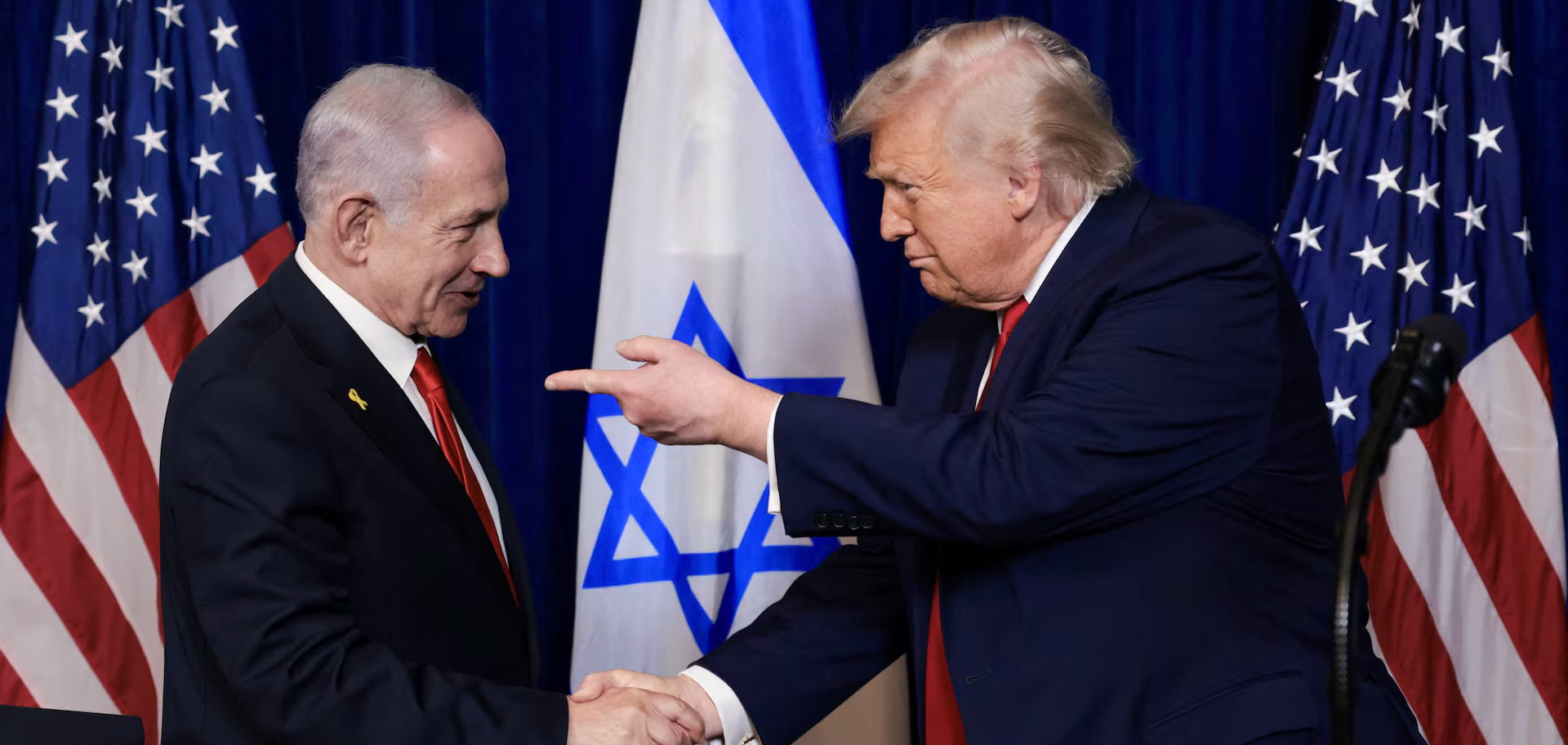 Prime Minister Benjamin Netanyahu on Sunday thanked U.S. President Donald Trump for endorsing his reelection ahead of Israel’s Oct. 27 national vote, saying Jerusalem “has never had a greater friend in the White House.”
Trump on Sunday gave Netanyahu his “complete and total endorsement,” praising his leadership against Iran in a Truth Social post.
“This is the kind of partner that the United States of America is demanding of Israel,” Trump wrote, calling Netanyahu “strong, brave, and brilliant.”
In an English-language post and accompanying video statement on X, Netanyahu thanked Trump for his “extraordinary endorsement.”
“Together we will never let Iran’s regime get nuclear weapons,” Netanyahu said.
Addressing Trump as “my friend Donald,” Netanyahu also thanked the U.S. president for his “clarity, courage and unwavering support.”
Defense Minister Israel Katz on Sunday night welcomed Trump’s endorsement.
Katz said Trump issued his “unequivocal statement of support” on the grounds that “only Netanyahu can continue the historic cooperation between them, and between the Israel Defense Forces and the U.S. military—in order to complete the goals of the campaign against Iran.
“This is an extremely important strategic message regarding Israel’s security in the future,” the defense minister added.
Finance Minister Bezalel Smotrich also welcomed Trump’s endorsement, calling him Israel’s greatest friend in the world and praising the achievements of U.S.-Israeli cooperation.
“We—the citizens of Israel—will decide Israel’s election. But we would do well to listen to the president of the world’s greatest power, simply because he is right,” Smotrich wrote on X.
“The national camp must continue to lead the State of Israel” and maintain cooperation with the United States to strengthen Israel’s security and future, he added.
A senior Israeli official highlighted the cooperation between the two leaders.
“There has never been greater cooperation and coordination between an American wartime president and an Israeli wartime prime minister,” the official told JNS. “Trump and Netanyahu are an epic tag team who have achieved unprecedented achievements in war and peace. That has, of course, translated into unprecedented cooperation between our great armed forces. Israel is America’s model ally, and America is Israel’s indispensable ally. Iran and its proxies are weaker than ever, and the American-Israeli alliance is stronger than ever.
“We have two years of Trump-Netanyahu to win the war and win the peace,” the official said.
Day 1,109 — Monday, October 19
 A wave of unrest that erupted across France over the weekend was accompanied by antisemitic incitement and conspiracy theories on X/Twitter, accusing Israel, Mossad, and Jews of responsibility for the violence and destruction in the streets, according to a report published Sunday by the Combat Antisemitism Movement (CAM).
The study, conducted by CAM’s Antisemitism Research Center (ARC), examined activity on X between October 16 and 18 and identified 1,384 posts linking the riots to Jews or Israel. According to the organization, the posts included conspiracy theories alongside calls for physical violence, expulsion, and extermination.
According to the findings, influential social media accounts spread claims that “Mossad is burning France right now” and described the unrest as a “civil war orchestrated by Jewish elites.”
Other accounts linked French President Emmanuel Macron to the Rothschild family, while far-right activists with hundreds of thousands of followers circulated the message: “The Jews did this to France. Don’t let them do it to America.”
CAM said this was the fourth time in less than three months that its research center had identified a similar pattern of antisemitic conspiracy theories spreading in response to major news events. The report cited the migrant crisis in Ceuta, the anniversary of the September 11 attacks, and an attempted hijacking of a plane bound for Ben-Gurion Airport.
The study also found that accounts subscribed to X Premium, identified by blue verification checkmarks, were among those spreading some of the most extreme messages.
According to CAM, the content received millions of views, with the organization arguing that the platform’s amplification mechanisms helped spread the messages.
CAM CEO Sacha Roytman warned of the connection between online incitement and violence in public spaces.
“Once again, we are witnessing the same distorted pattern in which hatred of Jews and Israel becomes the automatic explanation for every national crisis,” Roytman said. “Worse still, social media platforms are incentivizing those who spread hatred instead of stopping them.”
Roytman called on French authorities and social media companies to take action against violence and incitement.
“French law enforcement authorities must take firm action against the rioters, and platform executives must put an end to this lawlessness before lives are lost,” he said.
The Combat Antisemitism Movement is an international, nonpartisan coalition dedicated to combating antisemitism and protecting Jewish communities. Its work includes researching and monitoring antisemitic content online, conducting public awareness campaigns, and promoting policy initiatives with governments and international institutions.
Day 1,108 — Sunday, October 18
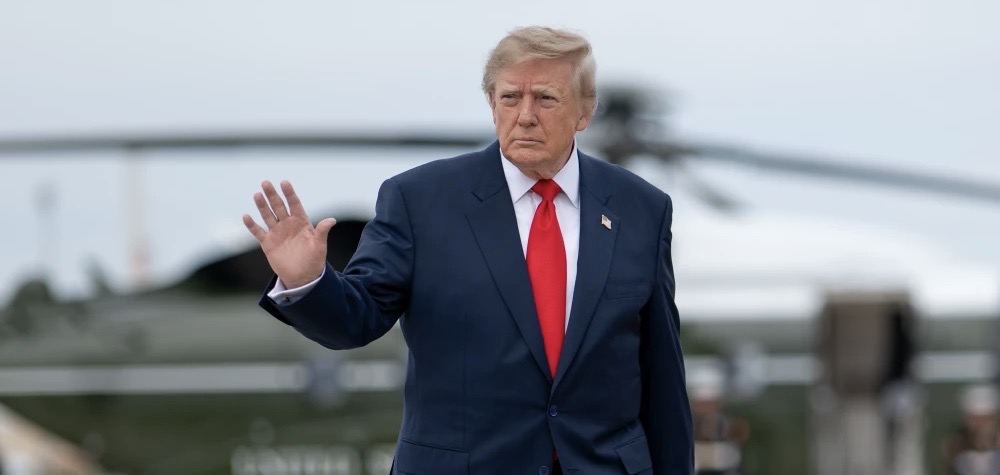 U.S. President Donald Trump expressed optimism Friday about the possible revival of talks on Saudi Arabia normalizing relations with the Jewish state.
“Israel has been very helpful to Saudi Arabia,” Trump told reporters on the White House lawn on Friday, after being asked about Riyadh’s conflict with the Iranian-backed Houthis.
A reporter asked the president whether Saudi Arabia should accept assistance from Israel in fighting Yemen’s Houthi rebels, to which Trump replied, “Yeah, I do. I think they will, sure.”
He went on to say that Jerusalem has already assisted Riyadh, without specifying how.
Trump was then asked whether the idea of Saudi Arabia joining the Abraham Accords was back on the table. He answered, “Yeah, I think so. Maybe more than ever.”
On Tuesday, Prime Minister Benjamin Netanyahu said that nearly every country in the Middle East and the West seeks Israeli assistance, including governments that publicly criticize the Jewish state.
“There is almost no country in the Middle East that doesn’t ask us for help. And I’ll surprise you: There is almost no Western country that doesn’t ask us for help,” he told Channel 14‘s “The Patriots” program on Oct. 13.
Following last week’s Houthi terrorist attack on King Khalid International Airport in Riyadh, Netanyahu condemned the assault that claimed the lives of at least 13 people and wounded 300 more.
“On behalf of the people of Israel, I extend our deepest condolences to the families of those murdered and our wishes for a full recovery to the injured,” Netanyahu said. He called for a Middle East that “stands united against threats, protects its people, and builds a future of security, cooperation and prosperity for all the peoples of our region.”
The Iranian-backed terrorist army in Yemen on Sunday claimed responsibility for the missile strike on Oct. 10.
Houthi military spokesman Yahya Saree said the group also struck the airport in Dammam, in Saudi Arabia’s Eastern Province, and two facilities belonging to oil giant Saudi Aramco.
The military confrontation between the Saudis and the Iranian-backed jihadist organization escalated after the latter took control last month of a long stretch of territory along the Red Sea coast in Yemen, including several islands in the strategic choke point of the Bab el-Mandab Strait.
The civil war in Yemen has claimed the lives of hundreds of thousands of people since 2014.
The Saudis entered the war the following year at the request of the U.N.-recognized Yemeni government, joined by forces from eight other countries from West Asia and North Africa in an attempt to repel the Houthi rebels.
A fragile ceasefire signed in 2022 began to unravel in July, with the Houthis firing missiles at Saudi airports, oil facilities and tankers in the Red Sea.
Meanwhile, Israeli President Isaac Herzog met on Wednesday with Bahraini Foreign Minister Abdullatif bin Rashid Al Zayan in Baku, Azerbaijan, to discuss strengthening the Abraham Accords and expanding regional peace and cooperation.
According to his office, Herzog emphasized the importance Israel attaches to its relations with Bahrain and praised the leadership of King Hamad bin Isa Al Khalifa and the Bahraini government. He also conveyed his best wishes to the king and the Bahraini people.
The meeting took place during Herzog’s visit to Azerbaijan for the seventh summit of the Conference on Interaction and Confidence Building Measures in Asia, known as CICA.
The Israeli president had also met with Kazakh President Kassym-Jomart Tokayev on Thursday on the sidelines of the security summit, according to the Kazakh Presidency.
The two men discussed expanding cooperation, focusing on trade, economic and investment ties, according to Astana’s readout. Tokayev said Herzog’s April visit to the Kazakh capital had given “significant impetus” to bilateral relations.
They also talked about tensions in the Middle East, with Tokayev reaffirming Kazakhstan’s “principled position on the need to de-escalate tensions and resolve conflicts exclusively through diplomatic means.”
Day 1,107 — Saturday, October 17
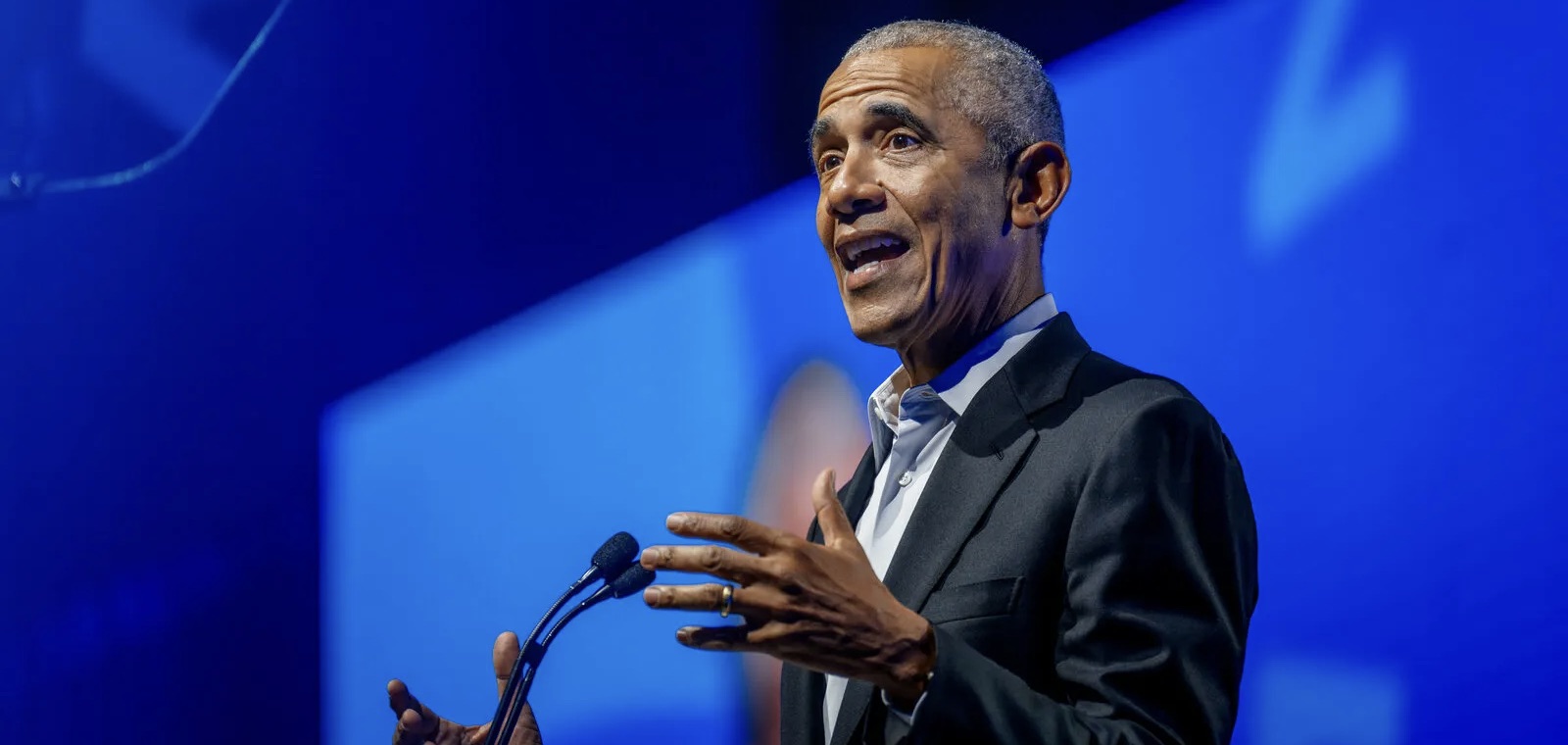 Prime Minister Benjamin Netanyahu fired back at former President Barack Obama on Friday after Obama accused Israel of taking Palestinian land, declaring: “Our land is not stolen land. This is our homeland.”
“We’re not the Dutch in Indonesia. We’re not the Belgians in the Congo. We’re Jews in Judea,” Netanyahu said in a blistering video response.
The clash erupted after Obama told an audience in Northern Ireland that Israelis “took land off people and they were excessive,” arguing that Palestinians were justified in demanding their land back.
Obama made the remarks Tuesday while receiving an honorary doctorate at Queen’s University Belfast. Netanyahu called his comments “regrettable” and rejected the suggestion that the Jewish state was a colonial enterprise.
During his Belfast appearance, Obama argued that Israel’s military and technological superiority could not provide a lasting solution to the Israeli-Palestinian conflict.
He warned against an approach in which Israel relies on its strength to take whatever measures it considers necessary for its security without making concessions to Palestinians.
Such a strategy might succeed in the short term, Obama said, but would come at a moral cost.
“You have ceded moral ground if that is the position you take,” he warned.
Obama accused Netanyahu’s government of embracing that approach and argued that Israel must recognize that millions of Palestinians will remain in the region.
He specifically cited the presence of seven million Palestinians, saying they were “not going anywhere.”
Netanyahu rejected the suggestion that Israeli policies were the central barrier to resolving the conflict.
Instead, he pointed to the refusal of Israel’s enemies to recognize Jewish sovereignty, regardless of where the country’s borders might be drawn.
“The obstacle to peace is not Israel,” Netanyahu said, arguing that the fundamental problem is the rejection of the Jewish people’s right to a state of their own.
He also linked Israel’s struggle for security to the broader confrontation between the United States and hostile regimes in the Middle East.
Pointing to chants of “Death to Israel” and “Death to America,” Netanyahu said the hostility directed at the Jewish state is part of a wider campaign against the West.
“We are the ‘Little Satan,’ you are the ‘Great Satan,’” he said, referring to the labels used by Iran’s leadership for Israel and the United States.
Both countries, he argued, are defending a shared civilization against common enemies.
The prime minister concluded with a warning against diplomatic arrangements that fail to account for the threats Israel faces.
“A peace built on illusions will crash against the rocks of Middle Eastern reality,” Netanyahu said.
He insisted that Israel would not compromise its security simply to satisfy international demands or reach an agreement with adversaries unwilling to recognize its legitimacy.
“Israel will not gamble with its survival to accommodate those who refuse to accept the facts of history, to accept our right to exist, or who wish to appease terror.”
The exchange marks another public disagreement between Netanyahu and Obama, whose relationship was frequently strained during Obama’s presidency, particularly over Israeli settlements, Palestinian statehood and the 2015 Iran nuclear agreement.
Day 1,107 — Saturday, October 17
 The Binyamin Regional Council spokesperson issued a statement regarding the Arab footage of the incident in Abu Falah revealing a gap between the claims being circulated and the images from the scene.
Hundreds of terrorists, backed by anarchists and accompanied by international media, arrived in the Abu Falah area this morning, claiming they had come for an “olive harvest.” In practice, they approached an Israeli hilltop community in an attempt to drag its residents into a confrontation, then began throwing stones and firing fireworks directly at Israelis, who responded by throwing stones.
Since the incident, Arabs and far-left activists have been spreading claims that Washington Post photographer Heidi Levine was seriously injured by “settler violence.” However, footage filmed by the Arab side itself raises questions about the version being circulated.
The video shows Levine entering the confrontation and being knocked to the ground by an Israeli. In the background, a foreign activist claims that an Israeli is kicking her and “killing her,” while the camera is not pointed at the location. When the camera returns to the scene, he continues shouting, “He’s killing her,” as the Israeli youths are seen helping her to her feet.
A further claim circulated afterward alleged that “hilltop youth kicked Heidi Levine 50 times and broke her legs.” In footage from the hospital, she is seen with a bandage on one finger, with no visual evidence supporting the claim that her legs were broken.
Day 1,107 — Saturday, October 17
 Colombia said on Thursday that it is withdrawing from the anti-Israel coalition of the Hague Group, where it has served as co-chair.
“Colombia officially requested its withdrawal from the Hague Group, a body formed to isolate and target Israel,” stated Omar Bula, Colombian foreign minister. “We reject this approach.”
The announcement came days after Bula inaugurated the Colombian embassy in Jerusalem, alongside Israeli Foreign Minister Gideon Sa’ar.
It also follows Honduras and Bolivia’s departure from the Hague Group in March. Like Colombia, both countries came under new leadership recently and have established warmer ties with Israel than their predecessors.
Neither Tegucigalpa nor La Paz cited Israel in their respective withdrawal announcements. Both governments instead emphasized national sovereignty and autonomy, as well as the importance of addressing international issues through the proper forums.
Marta Lucía Ramírez, a former vice president of Colombia, said in Spanish that it was a “positive decision and consistent with Colombia’s national interests.”
The Hague Group formed on Jan. 31, 2025, to bring the Global South together to take “coordinated legal and diplomatic measures” against “Israel’s violations of international law.”
It now includes Cuba, Malaysia, Namibia, Senegal and South Africa. Its website still lists Colombia as one of its chairs. Belize, one of the group’s founding members, quietly withdrew in February 2025 reportedly to avoid diplomatic pressure from the Trump administration.
The group has attracted dozens of states to various forums, including on the sidelines of the United Nations General Assembly last month.
It has announced a series of measures, including preventing weapons transfers to Israel, that it said will end the war in Gaza.
Weeks ago, Colombia also withdrew its declaration of intervention in South Africa’s “genocide” case against Israel at the International Court of Justice, the principal United Nations judicial arm, which is located in The Hague.
In August, Colombia restored full diplomatic relations with Israel under its new president, Abelardo de la Espriella.
His predecessor, Gustavo Petro, cut ties with Jerusalem over Israel’s prosecution of the war against Hamas.
Day 1,106 — Friday, October 16
 Speaking at the United Nations Israel’s Ambassador Danny Danon warned Hezbollah and Iran: “Do not attempt to exploit Israel’s election period.”
“In 12 days, over seven million voters will cast their ballots in Israel’s elections. This morning, even I cast my ballot at our mission, only a few minutes ago. But today, we must address an alarming reality,” he added.
“We have seen the reports that Iran, Hezbollah and other extremists in our region are conspiring to take advantage of the election period in Israel. It doesn’t matter if it’s a provocative ballistic missile exercise, a cyber attack or a disinformation campaign.”
“We are issuing a clear warning. Anyone who attempts to threaten or attack Israel will face devastating consequences,” Danon concluded.
Day 1,106 — Friday, October 16
 An Italian mayor has walked back an attempt by municipal officials to get Jewish-American and Israeli educators to sign a declaration criticizing Israel, the U.S. government’s top envoy for fighting antisemitism said on Wednesday.
“We welcome Reggio Emilia Mayor Marco Massari’s reaffirmation that American Jewish educators are welcome in his city, regardless of their identity or beliefs,” Rabbi Yehuda Kaploun wrote in a statement on X.
The statement concerned a document that members of a planned delegation of Jewish educators received ahead of a study trip to Italy’s Reggio Emilia, which is renowned for pedagogical approaches developed there. The trip was scheduled to take place earlier this month but was canceled after would-be participants were sent a document to sign or endorse, condemning Israel’s actions in Gaza, as one educator wrote in an op-ed published Tuesday in JNS.
The document read: “I distance myself from the occupation of Gaza and the violation of children’s and human beings’ rights in the occupied territories as well as in every place in the world,” the educator, Casey Weiss, head of school at Community Day School in Pittsburgh, wrote in the op-ed. That school’s director of early-childhood education, Katie Riggs, was supposed to go on the trip.
Kaploun said Massari had expressed a “desire to resume the educational exchange.” Kaploun added: “We appreciate the strong cooperation with local law enforcement to help ensure visiting educators can participate safely, free from intimidation or political pressure. I thank our embassy and consulate for working with my office to address this issue.”
On Sunday, Walker Meghnagi, the president of the Jewish Community of Milan, condemned the municipality in a harsh-worded statement.
“It is a principle of racial profiling. The methods and climate established by certain municipalities in Emilia strongly remind me of Goebbels and of what the Fascist leader Roberto Farinacci wrote: ‘Jews, a filthy race, to be buried as such’,” Meghnagi wrote.
The mayor, Massari, said in a speech on Monday that the affair was a “misunderstanding” and that his municipality “has not asked and does not ask those who work in schools around the world to undergo political or religious examinations.”
He also accused Israel of committing genocide in the speech, in which he rejected allegations of antisemitism.
Day 1,105 — Thursday, October 15
 Colombia opened its new embassy in Jerusalem, Israel, on Wednesday thus fulfilling one of the campaign promises of conservative President Abelardo de la Espriella.
The opening of the facility restores Colombia’s decades-old friendly relations with Israel — undoing the unilateral rupture of diplomatic ties ordered by Marxist former President Gustavo Petro in 2024. Colombia has now become the tenth country to open its embassy in Jerusalem.
The ceremony took place on Wednesday morning (local Jerusalem time) and was presided over by Colombian Foreign Minister Omar Bula alongside his Israeli counterpart Gideon Sa’ar, who described Wednesday as an important day not just for Jerusalem, but for Israel and Colombia’s relations.
Sa’ar, in a social media post, thanked President de la Espriella and recounted a past interaction that both shared in Buenos Aires in the past, when de la Espriella told him, “if I am elected President of the Republic, I will immediately move the Colombian embassy to Jerusalem.”
“He promised, and he delivered,” Sa’ar wrote.
“This is the tenth embassy to open in Jerusalem. Since I took office less than two years ago, the number of embassies in Jerusalem has doubled,” he added. “There will be more, God willing, and soon.”
The Colombian Foreign Ministry detailed that its diplomatic presence in Israel will help foster cooperation in security, trade, investment, agriculture, science and technology, as well as provide support to Colombian nationals living in the Middle Eastern nation.
“Under the leadership of Ambassador Tania Gilinski, the Embassy will work to turn the opportunities offered by this strategic alliance into concrete results for Colombians,” the Ministry said.
The restoration of Colombia’s diplomatic ties with Israel, and the opening of an embassy in Jerusalem, are part of a broader foreign policy and diplomatic presence realignment by Colombia conducted by the conservative government of President de la Espriella. In June, just days after becoming elected president, de la Espriella affirmed that Colombia will strengthen its ties with Israel “like never before.” De la Espriella took office on August 7.
For decades, Colombia and Israel maintained uninterrupted friendly relations ever since both countries established ties in 1957. However, the historically friendly relations between both countries were singlehandedly and unilaterally strained by Marxist former President Gustavo Petro, de la Espriella’s predecessor. Petro, in the immediate aftermath of Hamas’ October 7, 2023, terrorist attack on Israel, began a widespread international condemnation campaign against Israel and the government of Prime Minister Benjamin Netanyahu, accusing it of turning Gaza into a “concentration camp” to the likes of Nazi Germany’s Auschwitz during World War II.
In May 2024, Petro announced the unilateral rupture of Colombia’s ties with Israel and, weeks later, Petro ordered his government to replace the Colombian embassy in Tel Aviv with a new one in the West Bank city of Ramallah, an act that, former Foreign Minister Luis Murillo affirmed, would facilitate Colombia’s recognition of “Palestine” as a state. Israeli diplomat Gali Dagan, who had been serving as his country’s ambassador to Colombia, left the South American nation in late June 2024.
Petro nevertheless maintained his campaign against Israel after the official rupture of diplomatic ties, further straining the relationship between the two historically-friendly nations. In July 2025, over a year after the rupture of diplomatic ties with Israel, Petro claimed that “whites, descendants of slave owners,” had allegedly defied his orders to stop exporting Colombian coal to Israel. At the time, the then-Colombian president accused Israel of allegedly using the imported mineral to make bombs and “kill Palestinian babies.” Colombian experts refuted the claim and explained that the exported Colombian coal was used by Israel for energy generation, including providing power to the Gaza strip.
In September 2025, just days after his final — and highly unhinged — U.N. General Assembly speech, Petro accused President Donald Trump of allegedly aiding “genocide” in Gaza and announced the unilateral rupture of Colombia’s Free Trade Agreement (FTA) deal with Israel. Per The Jerusalem Post, Colombia officially restored the FTA with Israel on Tuesday.
“In just two months, we have reversed most of the negative consequences of the Petro administration for Israel-Colombia relations and have even broken new ground,” Sa’ar reportedly said on Wednesday. “I thank Abelardo de la Espriella for his determination to bring Israel-Colombia relations to an all-time high.”
Day 1,105 — Thursday, October 15
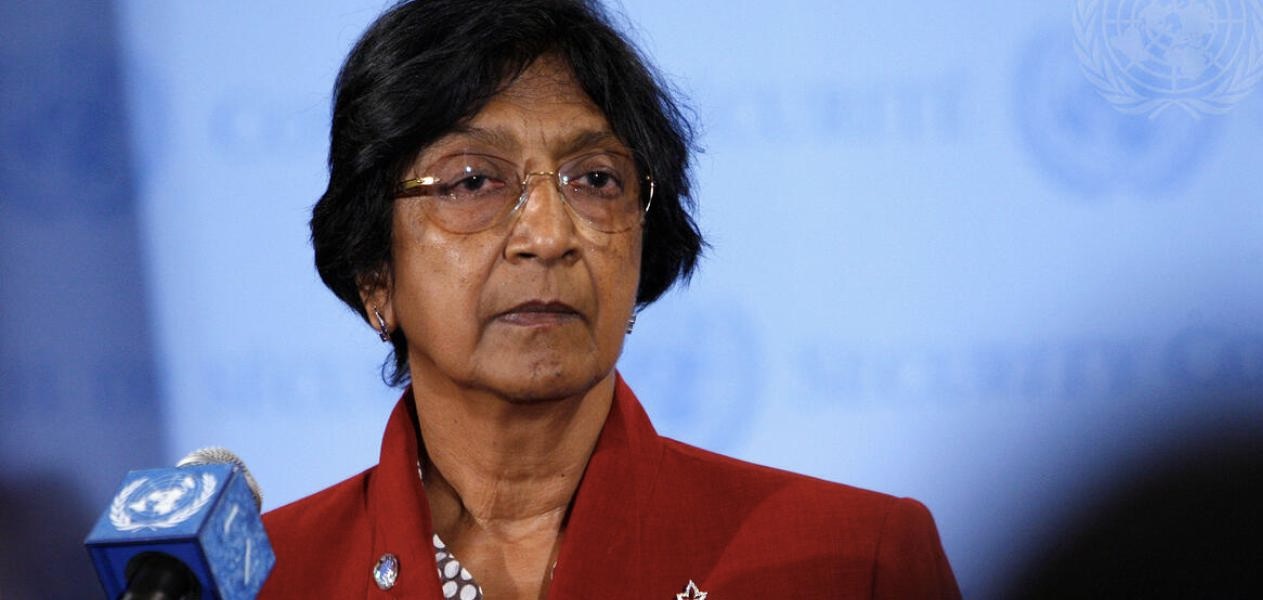 Navi Pillay, the South African judge named the latest Nobel Peace Prize laureate, said Wednesday that Prime Minister Benjamin Netanyahu should face prosecution for alleged war crimes, expressing confidence that he would eventually stand trial before the International Criminal Court (ICC).
Pillay, a longtime critic of Israel, made the remarks days after receiving the prestigious award, a decision that prompted strong condemnation from Netanyahu and Israel’s Foreign Ministry.
Following Friday’s announcement, Netanyahu accused the Nobel Committee of honoring an individual who had spent years advancing accusations against the Jewish state.
“The Nobel Prize committee has lost its moral compass. It has awarded its highest honor to a bigot who built her career around inventing and propagating blood libels against the one and only Jewish state,” Netanyahu said.
Israel’s Foreign Ministry issued a separate condemnation, declaring that Nazi propaganda minister Joseph Goebbels would be “applauding from hell”.
In an interview with The Telegraph on Wednesday, Pillay rejected the comparison to Goebbels and described the Israeli criticism as offensive.
“I think it’s very hurtful and insulting. Goebbels had blood on his hands … responsible for the death of thousands of people. Not only Jews, but people of color like me,” she said.
Pillay acknowledged that there was currently little political willingness to arrest Netanyahu and bring him before the ICC.
Nevertheless, she expressed confidence that the political obstacles could eventually be overcome.
“But all my life I’ve seen people get around difficulties, so I’m confident that it will happen,” she said when asked whether Netanyahu would ever appear before the court.
In a separate interview with Sky News, Pillay reiterated her demand for legal proceedings against Israeli leaders, referring to a controversial report in which she concluded that Israeli military operations in Gaza had disproportionately targeted civilians, including children.
“Our recommendation, our finding, is that the president, prime minister Netanyahu, and the former minister of defense should be put on trial,” she said.
“They should be prosecuted either by national courts or by the International Criminal Court, the most likely international court that would be able to put these individuals on trial.”
Pillay’s latest statements follow more than a decade of public criticism of Israeli military operations and government policies, particularly during conflicts with Hamas in Gaza.
In 2014, while serving as the United Nations High Commissioner for Human Rights, she accused Israel of “targeting” UN-operated schools and hospitals during the fighting in Gaza.
Her criticism did not address the discovery that three UN-run schools had been used to store rockets, an action that constituted a serious violation of international law and could potentially amount to a war crime.
Earlier during the same conflict, Pillay convened an emergency UN debate on Gaza and warned of a “strong possibility” that Israeli military operations had violated international law and could constitute war crimes.
She also questioned whether Israel had taken adequate precautions to protect civilians, particularly children, and whether its military operations complied with the international legal principle of proportionality.
Pillay subsequently assumed another prominent role in UN investigations concerning Israel.
In 2021, following renewed fighting between Israel and Hamas, the UN Human Rights Council appointed her to chair a commission investigating allegations of “systematic” abuses in Israel and Palestinian Authority territories.
Israel refused to cooperate with the investigation, citing Pillay’s previous statements and what Israeli officials regarded as her longstanding bias against the country.
Among the positions highlighted by Israeli authorities were Pillay’s endorsement of “the shameful libel” characterizing Israel as an apartheid state and her support for the international boycott movement targeting Israel.
Day 1,105 — Thursday, October 15
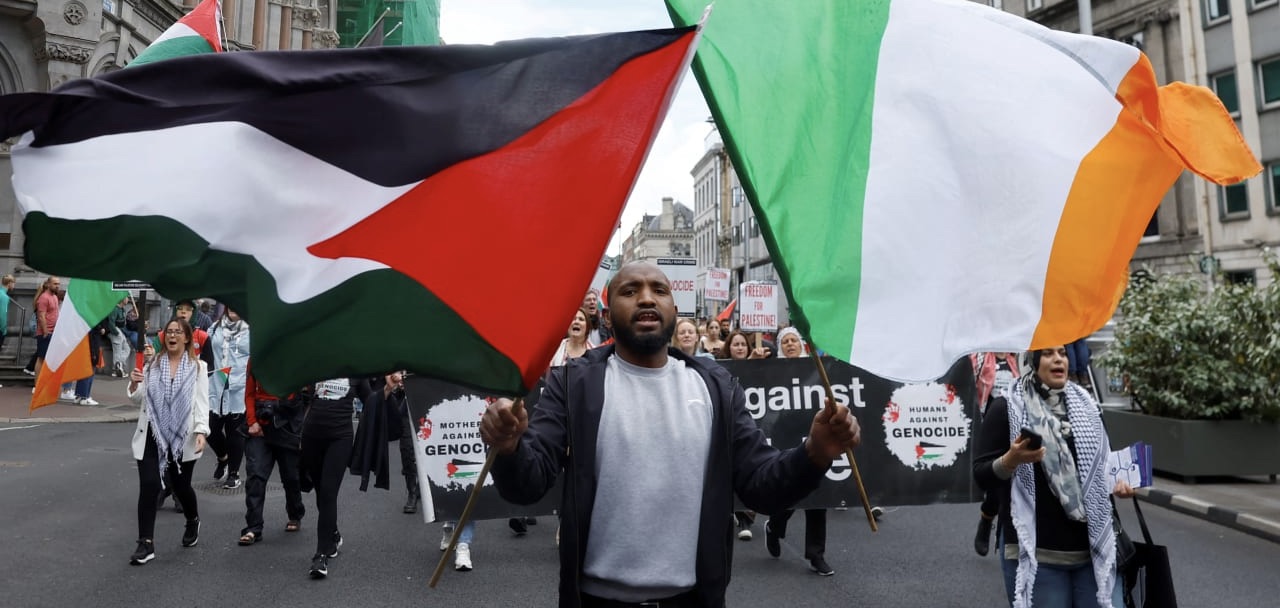 A four-star hotel in Dublin, Ireland, in May canceled the local Jewish community’s reservation of 70 rooms for a conference on combating antisemitism, in what the country’s chief rabbi, Yoni Wieder, called an apparent “disgrace.”
The Herbert Park Hotel gave organizers no reason for declining to host the Special Envoys and Coordinators Combating Antisemitism (SECCA) conference, which ended on Wednesday in Dublin, according to Alan Shatter, a former justice minister of Ireland.
Shatter told JNS that the hotel had confirmed accommodation for 70 delegates in April. Organizers met with hotel management on May 7 to discuss conference facilities, he said. The cancellation was an ”example of the escalating antisemitism in Ireland,” Shatter said. An alternative venue was found, he said.
In his speech to the SECCA forum on Tuesday, Cohen said he explained to the hotel’s general manager that the gathering would bring together Jewish community leaders and government-appointed officials responsible for combating antisemitism, most of whom were not Jewish. He also outlined its association with Ireland’s Presidency of the Council of the European Union and the planned participation of government ministers.
“As I spoke, I noticed her manner change. There was a tension that had not been there before,” Cohen said. “Then she asked me a question I simply was not prepared for.” The question, Cohen said, was: “Will the IDF be involved?” referring to the Israel Defense Forces.
“I remember looking at her and wondering whether I had heard correctly,” he said.
Shatter did not attend that meeting but said Cohen briefed him immediately afterward. Organizers explained that the conference had no connection to the IDF, said Shatter, who is Jewish.
In a May 8 email reviewed by JNS, the hotel wrote: “Further to our meeting and after careful consideration, I’m afraid higher management had decided that we won’t be able to host the event at the hotel on this occasion.” The email gave no reason for the decision.
When organizers asked whether their confirmed reservation for 70 rooms remained valid, the hotel said it had released the bedrooms because they had not supplied credit-card details, Shatter told JNS. He said the hotel had raised no such issue during the preceding correspondence or at the May 7 meeting.
“This was a retrospective excuse for canceling the bookings, basically,” he said.
Organizers subsequently secured another hotel and conference venue. They initially withheld the incident from public discussion to avoid jeopardizing the gathering.
“We didn’t want a controversy to possibly sabotage the holding of the conference,” Shatter told JNS. Cohen disclosed the affair on Tuesday at a reception for delegates at Ireland’s Department of Foreign Affairs, presenting it as an example of escalating antisemitism, Shatter said.
Day 1,104 — Wednesday, October 14
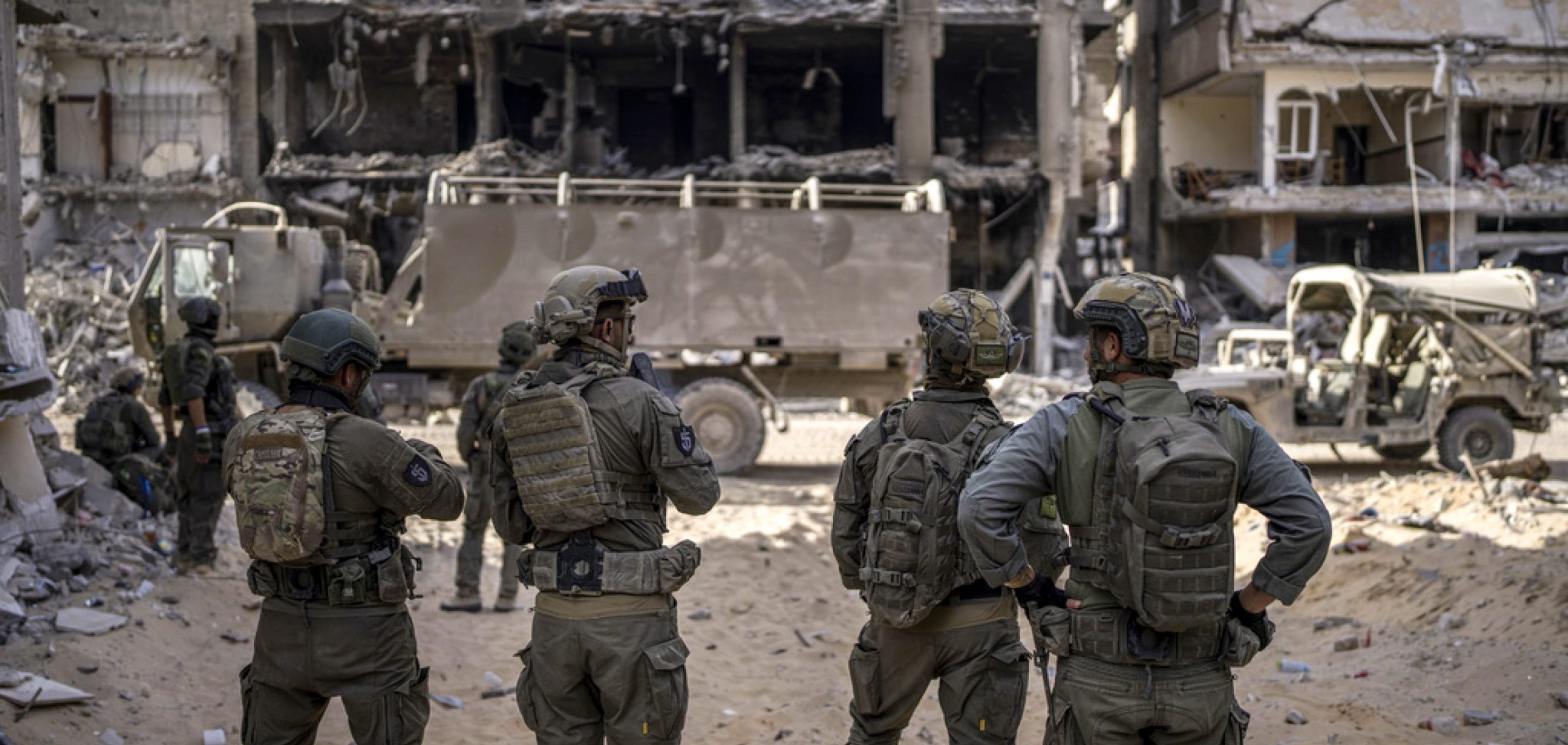 Retired U.S. military officer and author John Spencer has spent years studying the world’s most destructive urban battles, from Stalingrad to Baghdad. After traveling to Gaza seven times with the Israel Defense Forces, Spencer tells CBN News that Israel faced a battlefield unlike anything ever seen in modern warfare.
“Hamas had 20 years documented and billions of dollars invested into every inch of the Gaza Strip, preparing it for war,” Spencer explained.
He points to the scale of the group’s underground tunnel network hundreds of miles beneath one of the world’s most politically scrutinized battlefields. He noted that Hamas spent years, even decades, preparing tunnels, explosives, and fighting positions throughout Gaza.
“Today’s estimate is over 600 miles of tunnels… It’s massive. It’s just unique in the history of war,” he said.
Another critical factor: civilians trapped inside the battlefield. Spencer witnessed IDF forces taking extraordinary measures to protect civilians during his trips inside the Gaza Strip.
“The IDF actions that I’ve observed seven times personally, deep in Gaza City with the IDF formations, not asking them what they’re doing, watching what they’ve done, have executed the operation with greater care for civilian life than they’ll ever get credit for,” he insisted.
Those actions included advance warnings, tracking civilian movement, evacuation efforts, and restrictions on the use of certain weapons.
Spencer made a telling statement based on his study of urban warfare: “Israel has implemented more civilian harm measures…than any military in the history of war. That’s a fact.”
Despite Spencer’s conclusion, Israel faces perhaps the most damaging accusation – genocide – a charge Spencer rejects.
“I think it’s one of the biggest lies ever propagated and spread around the world that we’ve seen in the last 75 years,” he asserted.
Under international law, genocide requires specific intent to destroy, in whole or in substantial part, a protected group. Spencer argues that Israel’s conduct which he has documented, points in the opposite direction.
He explained, “Genocide requires there to be an intent to destroy… It’s anti-intellectual in this very specific case to say that Israel is trying to commit a genocide, has committed a genocide.”
One image, though, has shaped perceptions perhaps more than any other: the destruction of Gaza. As an urban warfare expert, Spencer contends that while the devastation is undeniable, the destruction alone doesn’t explain how or why it happened.
He told us, “Having studied war, urban warfare specifically, over a decade, I know what it looks like when there is an urban defender that you have to go in and dig out.”
Spencer compares Gaza with battles against ISIS in places such as Mosul and Fallujah in Iraq, where entrenched fighters turned civilian neighborhoods into battlefields. Plus, he adds, Hamas had something ISIS did not: two decades to prepare.
The terror group in Gaza, says, is “very unique in the amount of explosives that Hamas embedded into every structure, into the tunnels.”
Their preparations included weaponized civilian infrastructure, putting entrances beneath or near buildings with weapons and explosives placed throughout the urban landscape.
Spencer believes those factors help explain why photographs of destruction, amply shared by global media outlets, cannot by themselves tell the story of what happened.
“Everybody sees it and says that there was a bomb dropped on that building,” he remarked. “That’s actually not the truth. There’s a long list of reasons when the fighting was happening in those different neighborhoods and those different cities.”
That points to another element Israel has struggled to fight against: the battle over narrative.
Spencer cites the explosion at Gaza’s al-Ahli Hospital early in the war as an example of how an accusation can spread worldwide before facts are established.
“You have to communicate daily. You have to fight disinformation… You have to put out information every day… that can fight the lie,” he emphasized.
For Spencer, that battle isn’t simply about Israel. It’s about whether facts still matter.
When we asked what he would say to Christians trying to sort through competing claims about Gaza, his answer came back as a biblical principle.
“I think that even the Bible has some very powerful quotes about the truth and the devil’s tongue. We have to… really do critical thinking today… Who gave us that information? What are they not telling us? What’s the context that they’re leaving out to try to convince us, to invoke our emotion, and to flip the world where evil is good and good is evil?” he asked.
Spencer believes the lesson of Gaza is not for Christians to ignore difficult questions or civilian suffering. It’s that those questions should be asked with facts, context, and determination to discover the truth.
That’s because in modern warfare, the battle goes beyond soldiers, rockets, and bombs. It’s also fought over what the world believes happened.
Day 1,104 — Wednesday, October 14
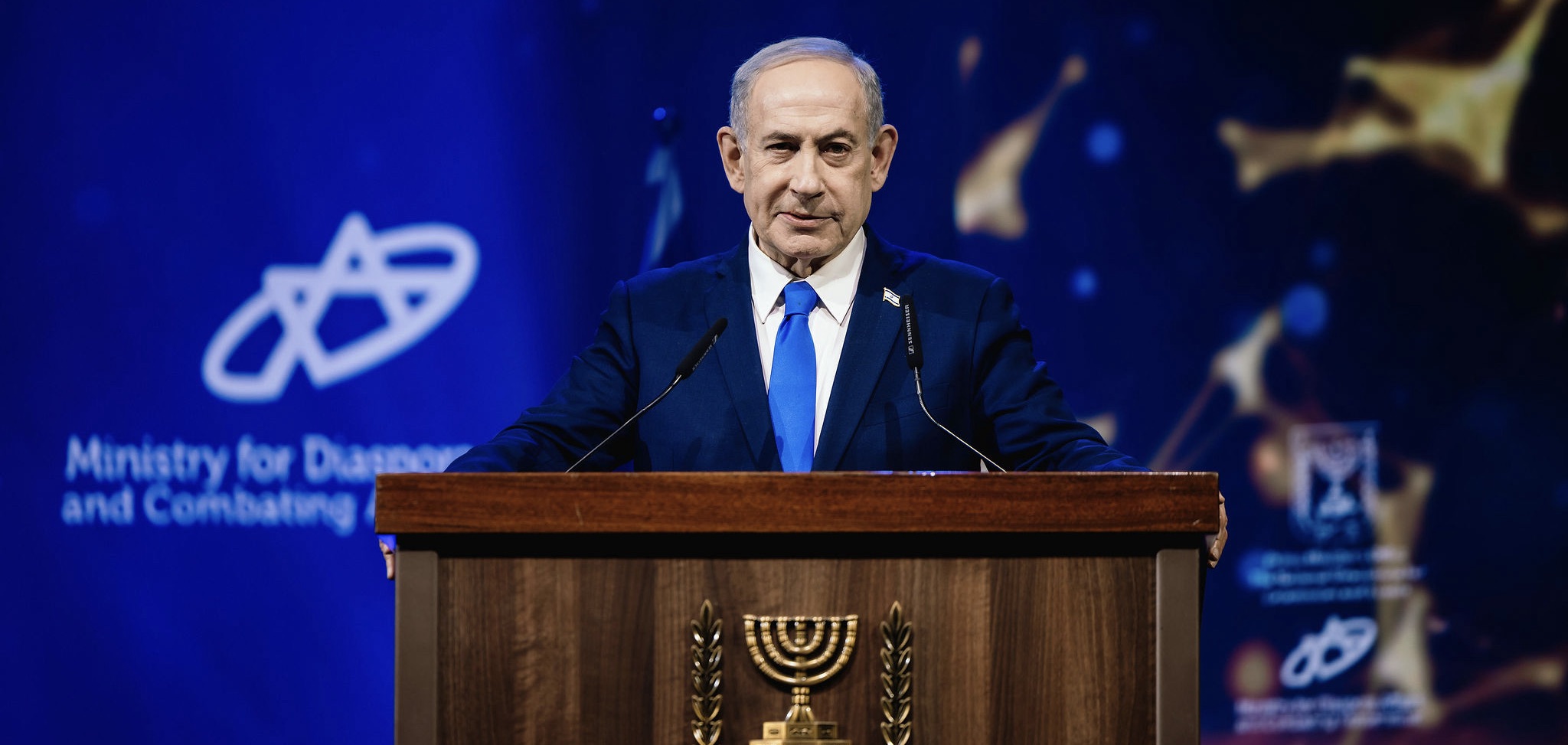 Israeli Prime Minister Benjamin Netanyahu said on Tuesday that Israel is prepared for any scenario, including what he called a “turning of barrels” by the Palestinian Authority. He warned enemies not to test the Jewish state.
“Our enemies are thinking of testing us these days ahead of the elections,” Netanyahu said during a visit to the seam line area of the Samaria security barrier, referring to the Oct. 27 Knesset vote.
“I do not advise our enemies to test us,” the premier said. “You will encounter a force here that you never dreamed of.”
Standing with the former Tulkarem “refugee” camp behind him, Netanyahu noted that the city had once been a terrorist stronghold before the IDF “cleared it under our direction.”
“You have to understand, we are minutes away from Netanya, minutes away from the coastline. Israel’s narrow waistline will no longer be narrow,” he continued. “We maintain security from the Jordan River to the sea—our country, our control.
“There will be no Arab army west of the Jordan River; there will be the Israel Defense Forces,” Netanyahu vowed.
Finance Minister Bezalel Smotrich on Monday called on Netanyahu and Defense Minister Israel Katz to instruct the IDF not to cooperate with the High Court of Justice over the possible return of displaced Palestinians to camps in northern Samaria, or allow what he called “terror camps” to be reestablished.
The court on Sunday requested timelines for measures that could allow residents to return to the Jenin, Tulkarem and Nur Shams camps following extensive Israeli counterterrorism operations. It gave the state until Nov. 23 to respond and did not order residents’ immediate return.
Meanwhile, police said on Tuesday that they had arrested a 32-year-old Palestinian suspected of involvement in past terror attacks after he was spotted filming inside Bnei Brak’s Aharonovich light-rail station on Monday. The man, a resident of Judea and Samaria who was in Israel illegally, falsely claimed to be an Israeli from Tayibe, police said.
Separately, the IDF said on Tuesday that troops had arrested four Palestinian Islamic Jihad terrorists planning an attack in northern Samaria. The arrests in Qabatiya and Arraba, near Jenin, were based on Israel Security Agency (Shin Bet) intelligence.
Day 1,103 — Tuesday, October 13
 Houthi rebels threatened a “swift and painful” response against U.S. interests across the Middle East on Monday if President Donald Trump joins Saudi military strikes against the group, AFP reported.
“If the US becomes involved in the aggression against Yemen, we will not deliberate over the decision to respond, rather, there will be a swift and painful response targeting the US and all its interests in the region,” Houthi political bureau member Mohammed Al Bukhaiti told the European news agency.
Bukhaiti also warned “all employees and workers at Saudi oil facilities and airports to stay away from these sites, as they have become legitimate targets“.
The threats followed the group’s deadly attack on King Khalid International Airport in Riyadh, which killed at least 13 people and wounded hundreds more.
Trump condemned the Riyadh attack Monday, stating it was unacceptable.
“The Houthis are misbehaving very badly. They’re misbehaving very badly. No good,” the president told reporters at the White House.
Trump, who described the airport attack as “not acceptable,” also confirmed that he had spoken with Saudi Crown Prince Mohammed bin Salman.
Meanwhile, explosions were again reported over Riyadh on Monday night, with the Saudi-led coalition saying it had intercepted a Houthi missile. The Houthis claimed another attack on the airport.
Bukhaiti had also told AFP the attacks were intended to warn the crown prince “that he can no longer wage aggression against Yemen from a safe position.”
Day 1,103 — Tuesday, October 13
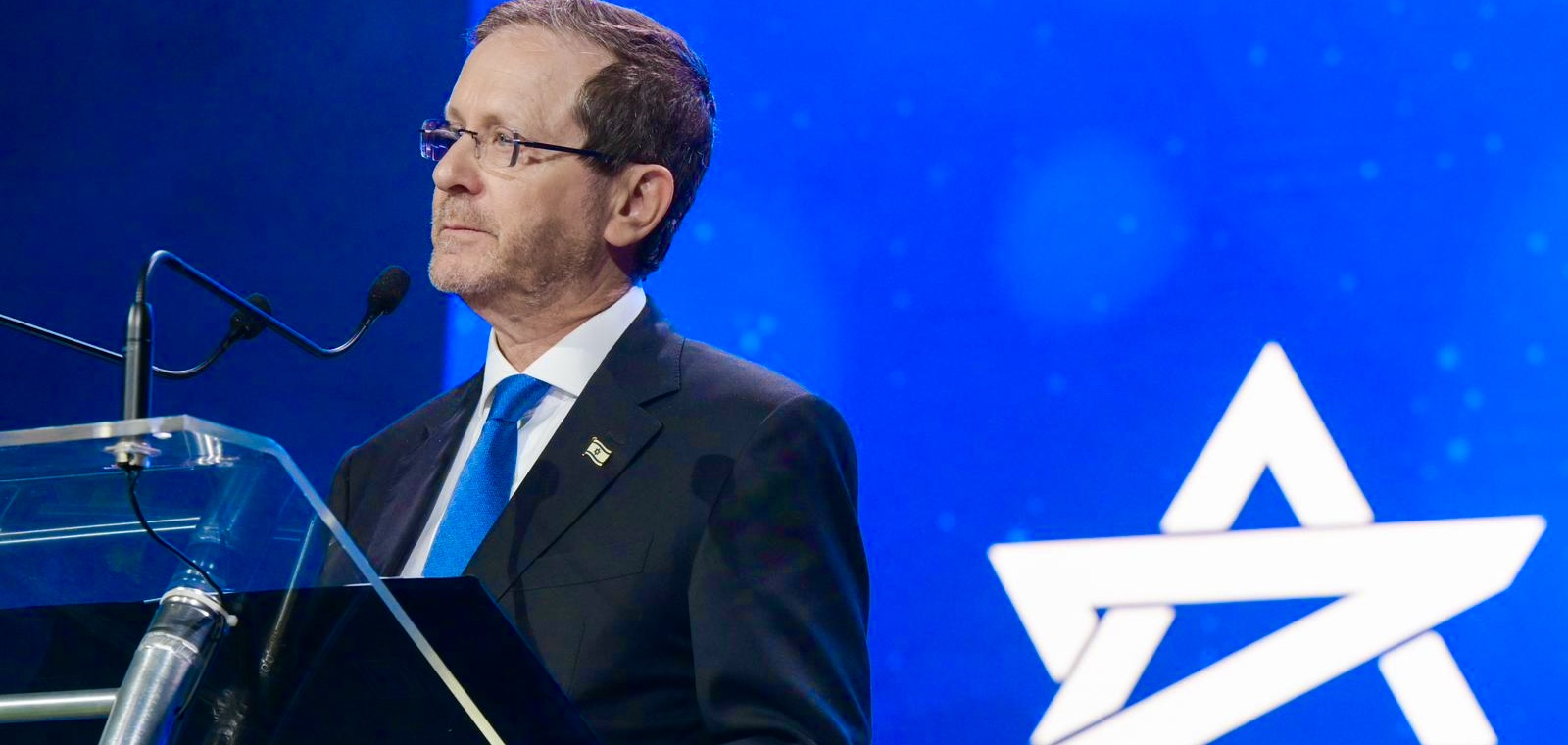 Israeli President Isaac Herzog on Sunday criticized Europe for once again fostering an inhospitable environment for Jews, with communities shrinking amid fear and insecurity as Israel is scapegoated and portrayed as evil.
“In a Europe that not so long ago turned on its Jews and on itself, today Israel is demonized, while its Jewish communities contract in fear, forced—once again—into a defensive posture between two identities, and denied—once again—simple, safe belonging,” said Herzog.
“Disagreeing with Israel on its strategy or on its political venue is legitimate debate. Constructive disagreement in goodwill can serve the goals we share,” he continued. “But that is not what’s going on in Europe and in France. What we are seeing in Europe today is pure scapegoating. What we are seeing in Europe today is that blaming the Jews has become, once again, the default mode, the easiest solution, a cathartic and satisfying disguise for the anger and disappointment over Europe’s own failings and fears.
“This is dangerous territory. And it works against Europe’s own goals,” added Herzog.
The president made the remarks in Jerusalem to a visiting delegation from the Consistoire central israélite de France, the central religious institution of French Jewry. The delegation, led by Consistoire President Élie Korchia, included community leaders, public officials and France’s Chief Rabbi Haïm Korsia.
Herzog said any blanket rejection of Israel, efforts to isolate it and portray it as evil, and the failure to recognize the very real threats facing the country and its critical role in defending Europe against similar dangers amounted to a “grave error.”
“Calling for boycotts and sanctions is not simply morally wrong. It reflects a deep alienation from Europe’s own intellectual inheritance while speaking to the darkest shadows of its past,” he said.
“And let’s be clear: they serve no one. Boycotts and sanctions harm, first and foremost, the Palestinians, robbing them of jobs and income. At the same time, they absolve corrupt Hamas leadership of any responsibility for their rabid antisemitism or for their crimes against their own people,” he added.
Despite his criticism, Herzog expressed optimism about the future, calling for greater cooperation between Israel and France across a range of fields, and urged companies in both countries to deepen their collaboration.
“Across culture, academia and science, there is so much for us to exchange—so much goodness we can bring to the world. I believe in this with my whole heart,” he said.
Day 1,103 — Tuesday, October 13
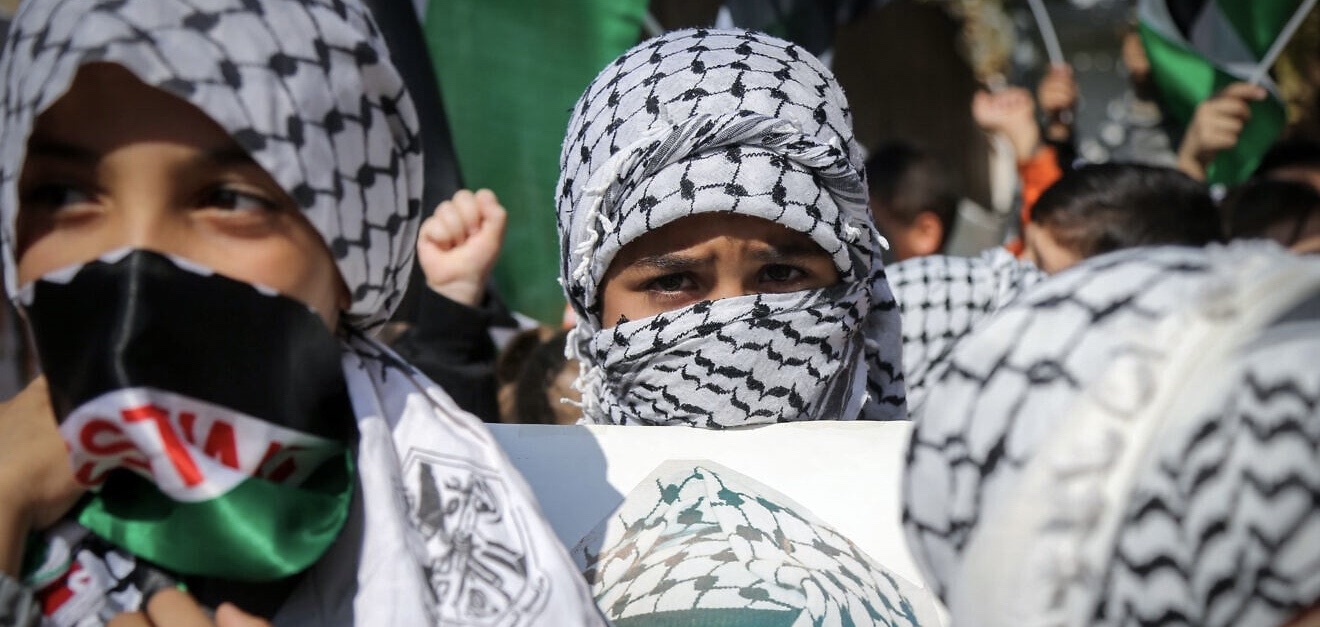 “We know the trap we have set for Israel by demanding a two-state solution,” Basel Abu Shahab, secretary of the Fatah movement in the Burj al-Shemali refugee camp in Lebanon, told Palestine TV, adding that Israel “has reason to fear us.”
Abu Shahab, the son of Fatah Maj.-Gen. Jalal Abu Shehab, widely known as Abu Basel, said in the interview over the weekend that within 20 years of a Palestinian state being established, it could develop an aircraft industry and an industrial sector capable of rivaling Israel’s, giving it the “components of a state capable of confronting Israel.”
“We know the trap we have set for Israel by demanding a two-state solution. But Israel understands why it does not want to give us a state: it knows what the future could hold,” he continued.
“In my view, the establishment of a Palestinian state would mean the disappearance of the Israeli entity and the end of global Zionism.”
Throughout the interview, Abu Shahab glorified the fida’i (Palestinian fighter) and portrayed past terrorist operations in a positive light, particularly Fatah’s abduction of Israeli watchman Shmuel Rosenwasser in 1969.
Fatah terrorists crossed into Israel from Lebanon and abducted Rosenwasser from his night-watch post in Metulla on December 31, 1969. He was held captive for over a year in Jordan before being released in March 1971 in exchange for Mahmoud Hijazi, a Fatah terrorist serving a life sentence in an Israeli prison.
Day 1,102 — Monday, October 12
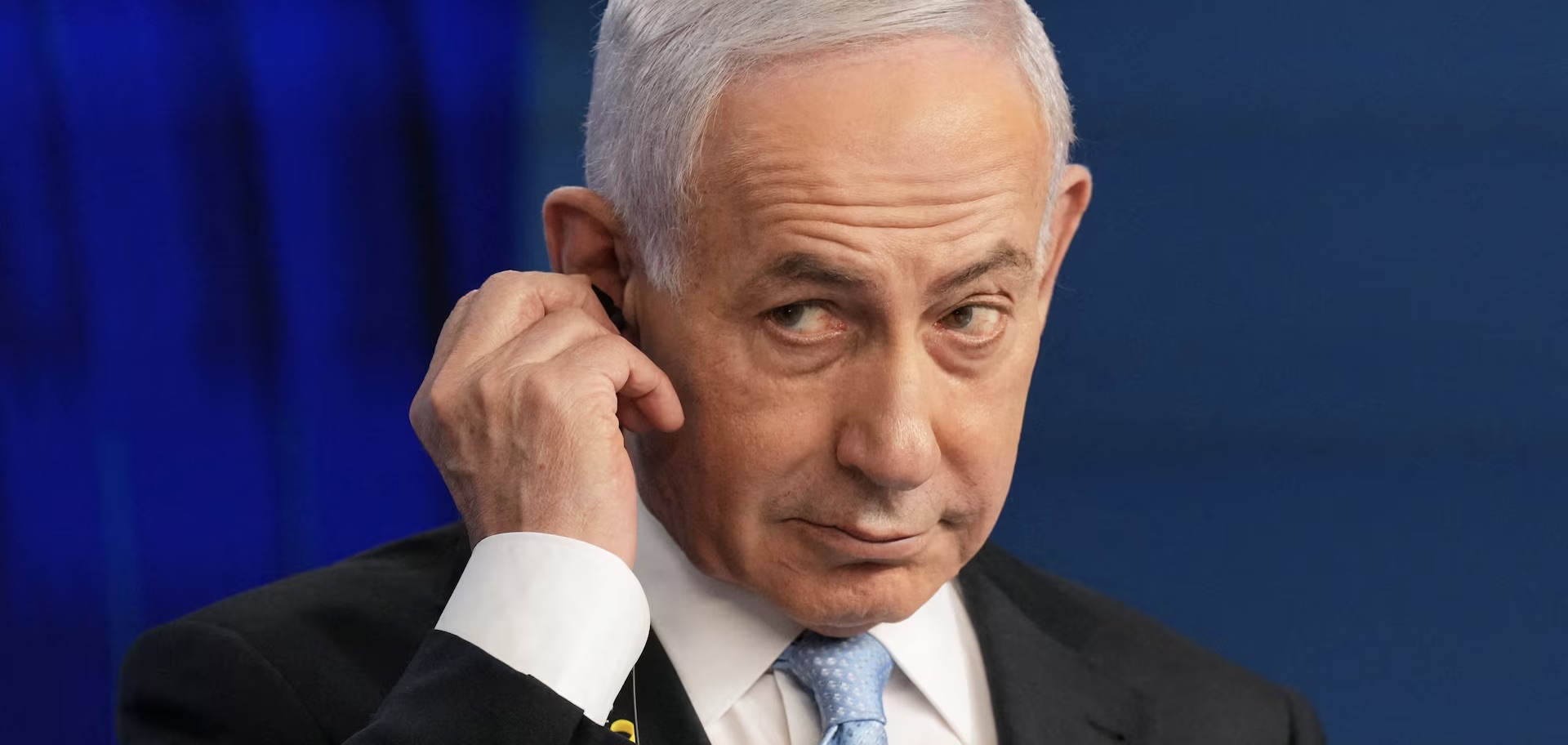 Prime Minister Benjamin Netanyahu on Sunday evening called on the IDF Chief of Staff, the head of the Shin Bet, and the Attorney General to launch a comprehensive investigation into participants in the film “NAZA” and take steps to prosecute them.
Netanyahu demanded that the participants be investigated on suspicion of serious information security offenses, criminal defamation, and harming Israel’s diplomatic and security interests.
The Prime Minister sharply criticized the film, arguing that it presents a false portrayal of Israel and the IDF that damages the country’s international standing.
“The film presents a false, misleading, and biased narrative that defames the State of Israel and the IDF around the world and seriously damages Israel’s standing,” Netanyahu stated.
A week and a half ago, the IDF Spokesperson’s Unit issued a strongly worded response to the anti-Israel film, accusing it of presenting a distorted, misleading, and unrealistic portrayal of how the IDF plans and carries out strikes against military targets.
According to the military, the film’s narrative “is based on major factual errors resulting from a distorted and manipulative presentation.”
The IDF emphasized that, contrary to the film’s claims, its binding procedures explicitly distinguish between terrorists and uninvolved civilians in Gaza. Strike-planning procedures are based on this distinction, prohibit directing attacks at civilians and require commanders to minimize the possibility of civilian casualties as much as possible.
The military also rejected claims that it planned, approved or carried out an attack in Gaza in which 500 civilians, or anything approaching that number, were expected to be killed. It added that there has never been a serious allegation that an IDF strike caused casualties on such a scale.
The IDF further denied that artificial intelligence independently selects targets for attack.
“AI has never independently selected targets for attack in the IDF,” the military said. Targets are identified by qualified intelligence officers, while strike planning is carried out by the relevant professional bodies and the decision to strike is made by operational commanders.
The IDF accused the filmmakers of failing to carry out sufficient fact-checking and cross-checking of sources before producing the film.
According to the military, many of the interviewees presented as former members of the IDF Intelligence Directorate discuss only limited, preliminary stages of the intelligence process rather than the much broader process of planning and approving strikes.
The latter process, the IDF said, involves operational bodies responsible for planning and carrying out attacks. In some cases, the military claimed, interviewees in the film expressed assumptions and impressions that had no factual basis.
The filmmakers also chose not to show many of the other officials involved in the full targeting process, including professionals responsible for planning measures to reduce civilian harm, legal advisers who review planned strikes, and commanders who ultimately approve or reject them.
The IDF said this omission creates a “very inaccurate and misleading” picture of reality.
Day 1,102 — Monday, October 12
 Two additional Flydubai pilots have been arrested in the United Arab Emirates, Adhadhu reported, as authorities investigate the attempted hijacking of a passenger aircraft bound for Israel on September 30, raising new questions about whether the suspected terrorist acted alone.
The two pilots, both citizens of the Maldives, were taken into custody on October 3, according to reports from the island nation.
Their families were initially unable to obtain information about their whereabouts, but were subsequently notified by the Maldivian Embassy in the UAE that they were being held by Emirati police.
The men are reportedly among six Maldivian nationals employed as pilots by Flydubai and were the most recently recruited members of that group.
Both had professional contact with Hamam al-Hammami, the 29-year-old Omani co-pilot accused of attempting to crash Flydubai flight FZ1073 into Ben Gurion Airport.
The two were initially questioned as part of a wider investigation into airline employees who had interacted with al-Hammami.
“The information available at this moment is that the two individuals have been summoned for questioning,” Maldivian government spokesman Mohamed Hussain Shareef said on October 3.
A subsequent report on October 8 indicated that the pilots remained in police custody. Neither Shareef nor a spokesman for the Maldivian Foreign Ministry would comment on the reported arrests.
Emirati authorities have not publicly identified the two men as suspects or disclosed whether they are accused of participating in the attempted attack.
The reported detentions come as UAE prosecutors continue investigating the September 30 incident, which they have characterized as a premeditated terrorist attack.
In a statement issued Friday, UAE Attorney General Hamad Saif Al Shamsi said investigators had established that al-Hammami intended to seize control of the Boeing 737 and deliberately crash it into the passenger terminal at Ben Gurion Airport, causing mass casualties.
According to prosecutors, al-Hammami had been radicalized while studying in Australia in 2017 and had become inspired by the September 11, 2001 terrorist attacks in the US.
Investigators said the suspect deliberately pursued a career in aviation as part of his preparations and had used two previous flights to Tel Aviv to familiarize himself with the route and airport.
During the September 30 flight, al-Hammami allegedly attacked the aircraft’s Indian captain, Smit Machchhar, with an emergency axe, inflicting serious head injuries before attempting to take control of the aircraft.
Despite his injuries, Machchhar resisted the attacker. Another pilot aboard the aircraft, assisted by crew members and passengers, intervened and helped overpower al-Hammami.
The aircraft plunged thousands of feet during the struggle before two reserve pilots regained control and diverted it to Tabuk, Saudi Arabia, where it landed safely. All passengers survived.
In Friday’s statement, UAE prosecutors said al-Hammami had provided a detailed confession in the presence of his lawyer and admitted that he had “acted alone, without the involvement of others.”
However, authorities emphasized that they were continuing to investigate the veracity of that claim, including the possibility that additional individuals were involved in planning or facilitating the attack.
Day 1,102 — Monday, October 12
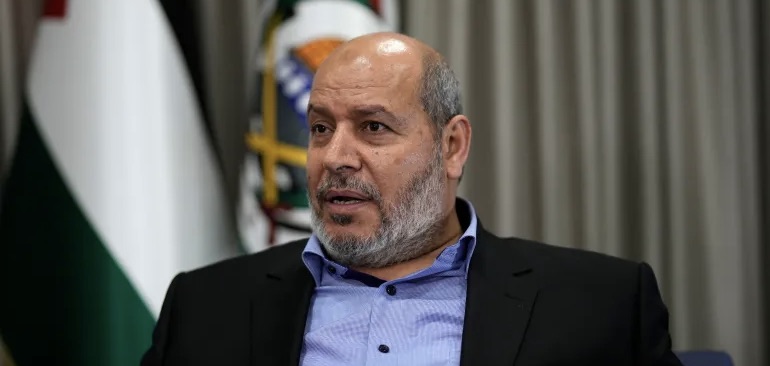 Israeli Defense Minister Israel Katz vowed on Sunday to eliminate current Hamas leader Khalil al-Hayya.
“We eliminated the heads of Hamas in Gaza, and al-Hayya’s turn will also come,” Katz wrote in a Hebrew-language post on X.
He said al-Hayya would “be sent to meet [Ismail] Haniyeh and his friends in the depths of hell,” referring to the former Hamas leader who was eliminated in Tehran in 2024.
Katz’s post came two days after Turkish Foreign Minister Hakan Fidan reportedly met with al-Hayya and other Hamas terrorists in Ankara.
Turkish President Recep Tayyip Erdoğan “continues to roll out a red carpet for the murderers and rapists of Hamas,” the defense minister tweeted.
Katz said Erdoğan continued “to support the terror activity they promote from Turkey together with the Muslim Brotherhood against Israel and against important Muslim countries in the region.”
Meanwhile in Gaza, the Israel Defense Forces and the Israeli Security Agency (Shin Bet) last week eliminated a platoon commander in Hamas’s Nukhba Forces, the security bodies said on Sunday.
Hisham Jamal Muhammad Abu Ghala was among the Hamas leaders who participated in the raid on the Kissufim military outpost and in abducting Israelis during the Oct. 7, 2023, massacre in the northwestern Negev, according to the IDF and ISA.
Abu Ghala was eliminated in an airstrike in the Khan Younis area on Oct. 5, after he engaged in advancing attacks against IDF soldiers in violation of the ceasefire, the agencies noted.
“Prior to the strike, steps were taken to mitigate harm to civilians, including the use of precise munitions and aerial surveillance,” they added.
Israeli forces continued to carry out strikes against terrorist infrastructure sites in Gaza over the weekend. The IDF and ISA struck five Hamas terrorist sites across the Strip over a 24-hour period, including three weapons storage facilities, a rocket launch site and an observation command center, the agencies said in a joint statement on Sunday.
The weapons facilities contained dozens of rockets, explosive devices, mortars, assault rifles and other military equipment, according to the statement. The observation command center in the Daraj Tuffah area was used to direct activities against Israeli troops, while the rocket launch site was located in Al-Furqan, the agencies said.
The military said it issued advance warnings to civilians and used precision munitions and aerial surveillance to reduce the risk of civilian casualties.
Also on Sunday, the IDF revealed footage showing armed Hamas men operating within the Kamal Adwan Hospital in the city of Jabalia in the northern Gaza Strip, exploiting the presence of patients, medical staff, and civilians as human shields, in violation of international law.
The footage shows how Hamas continues to use the hospital and its surrounding area to advance terrorist plots and rebuild the organization’s capabilities, the military said.
This is not the first time Gazan terrorist groups have exploited the hospital for their operations.
In December 2024, IDF soldiers operated in the area of the hospital, located extensive military equipment and weapons, and arrested more than 240 Hamas and Palestinian Islamic Jihad terrorists, along with additional operatives suspected of being terrorists, according to the IDF.
Day 1,101 — Sunday, October 11
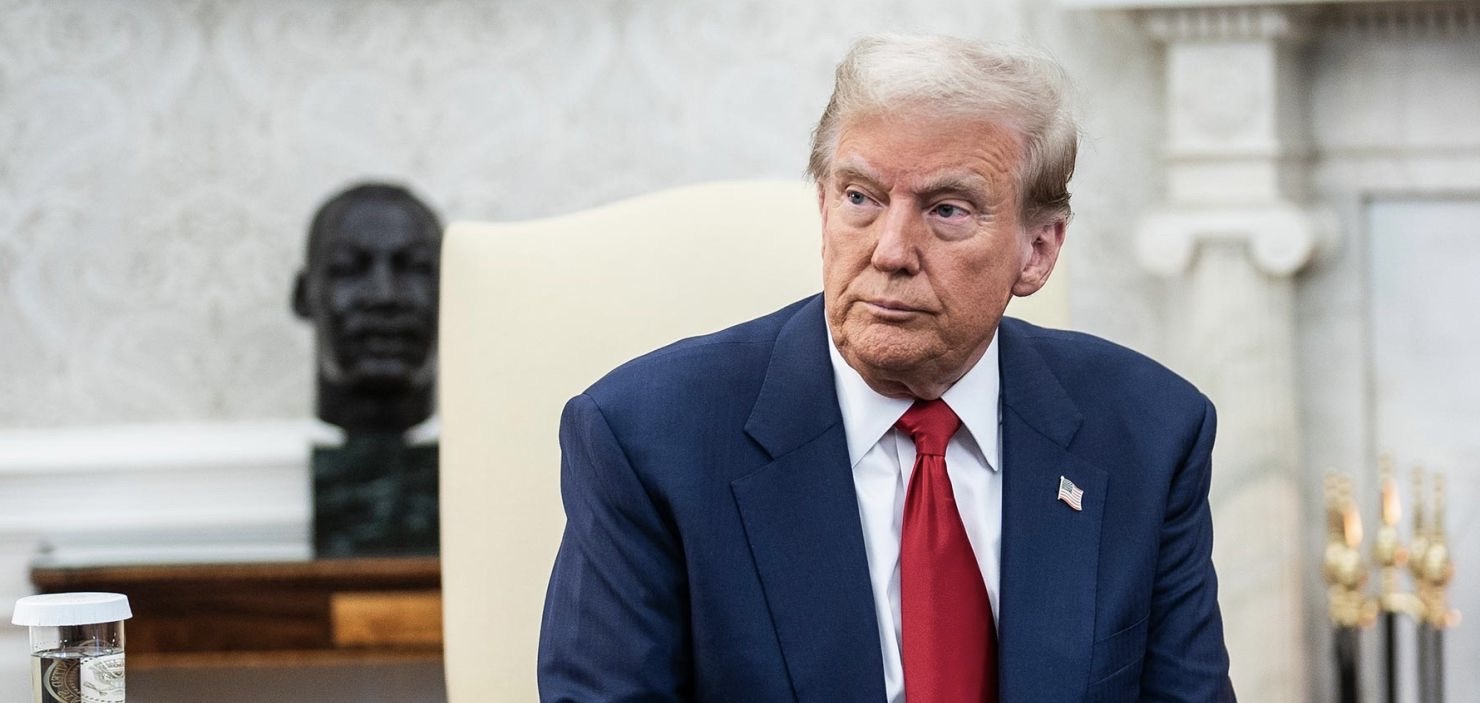 President Donald Trump said Saturday he is considering whether the United States should join Saudi Arabia’s military campaign against Iran-backed Houthi rebels in Yemen, raising the possibility of direct American involvement as attacks on the kingdom intensify.
“We may. We’re going to look at it,” Trump told reporters when asked whether the United States could participate in Saudi strikes, according to The Associated Press. “We just found out about the recent attack. So we’ll make a decision. We move very quickly.”
The remarks signal that Washington could reconsider its approach to the conflict. The Trump administration has provided intelligence and targeting assistance to Saudi Arabia but has not committed American forces to offensive operations against the Houthis.
Saudi Crown Prince Mohammed bin Salman sought direct U.S. military assistance during conversations with Trump in September, Reuters reported. Washington declined at the time, instead offering intelligence sharing and targeting support.
Trump’s comments followed another attack Saturday on King Khalid International Airport in Riyadh, where a missile struck a passenger terminal [killing an American citizen].
The airport was evacuated, flights were diverted, or canceled and numerous injuries were reported. Saudi authorities had not immediately confirmed a casualty toll.
The attack came two days after strikes at the airport killed three Saudi citizens, including an airline pilot. The Houthis claimed responsibility for earlier attacks on the airport, but there was no immediate claim for Saturday’s strike.
The latest violence has brought renewed attention to Washington’s military relationship with Saudi Arabia, a longtime U.S. security partner.
Day 1,100 — Saturday, October 10
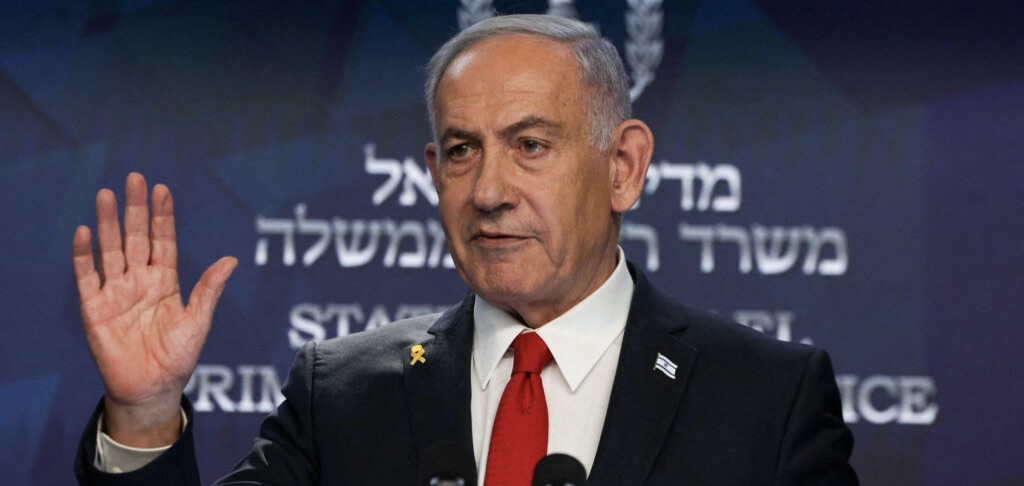 Prime Minister Benjamin Netanyahu on Friday strongly condemned the decision to award the Nobel Peace Prize to South African jurist Navi Pillay, accusing the Nobel Committee of honoring a figure who has spent years promoting allegations against Israel.
Pillay, a former UN human rights official who has repeatedly criticized Israel, also drew sharp condemnation from the Israeli Foreign Ministry, which described the award as an endorsement of anti-Israel prejudice.
“The Nobel Prize committee has lost its moral compass. It has awarded its highest honor to a bigot who built her career around inventing and propagating blood libels against the one and only Jewish state,” Netanyahu said.
The Prime Minister also accused Pillay of providing the foundation for International Criminal Court (ICC) prosecutor Karim Khan’s case against Israel, linking her allegations to accusations of sexual misconduct against Khan.
He added, “Navi Pillay’s proudest achievement was to legitimize a corrupt prosecutor who turned to her fabrications against Israel hoping that by joining her bigoted lynch mob, he would beat a rape charge. Karim Khan, who was accused by his own ICC employees of raping and sexually molesting them, used Pillay’s lies to build a fake case against Israel.”
Netanyahu continued his criticism of both Pillay and the Nobel Committee, accusing the former of spreading false allegations and the latter of legitimizing them through the prestigious award.
“Pillay supplied the lies. Khan weaponized them. And now the misguided members of the Nobel Committee are honoring the woman who propagated this demonization of the Jews and this travesty of justice,” stated Netanyahu.
Earlier Friday, Israel’s Foreign Ministry issued its own statement attacking the decision.
The ministry said that “if there were an award for lies, hatred, and blood libels,” Pillay “wouldn’t just be a contender. She’d be a frontrunner.”
It pointed to what it described as Pillay’s longstanding involvement in the “relentless, politically motivated demonization of Israel and promotion of the ‘genoLIE’ speaks volumes.”
The ministry argued that the Nobel Committee’s decision should not be regarded as recognition of Pillay’s commitment to justice.
Instead, it declared that the award represented “It’s the grotesque weaponization of an award to legitimize anti-Israel hatred and prejudice.”
The statement concluded with an unusually severe comparison to Nazi propaganda minister Joseph Goebbels.
“Now that the Nobel commission has rewarded the biggest lie of the 21st century, Joseph Goebbels is certainly applauding from hell.”
Pillay has a lengthy history of public criticism of Israel, including during previous military confrontations with Hamas in Gaza.
In 2014, she accused Israel of “targeting” United Nations-operated schools and hospitals in Gaza. Her criticism did not address the discovery that three UN-run schools had been used to store rockets, a serious violation of international law that could constitute a war crime.
Several weeks earlier, Pillay opened an emergency United Nations debate on Gaza by warning of a “strong possibility” that Israeli military operations violated international law and could amount to war crimes.
She also argued that civilian deaths in Gaza, particularly those involving children, raised questions about whether Israel was taking sufficient precautions and complying with the principle of proportionality.
Pillay’s involvement in investigations concerning Israel continued in 2021, when the UN Human Rights Council appointed her to lead a commission examining allegations of “systematic” abuses in Israel and Palestinian Authority territories following another round of fighting between Israel and Hamas.
Israel subsequently announced that it would refuse to cooperate with the commission, citing concerns about Pillay’s previous statements and positions.
Israeli officials pointed to her endorsement of “the shameful libel” portraying Israel as an apartheid state, as well as her support for the boycott movement targeting Israel.
Day 1,100 — Saturday, October 10
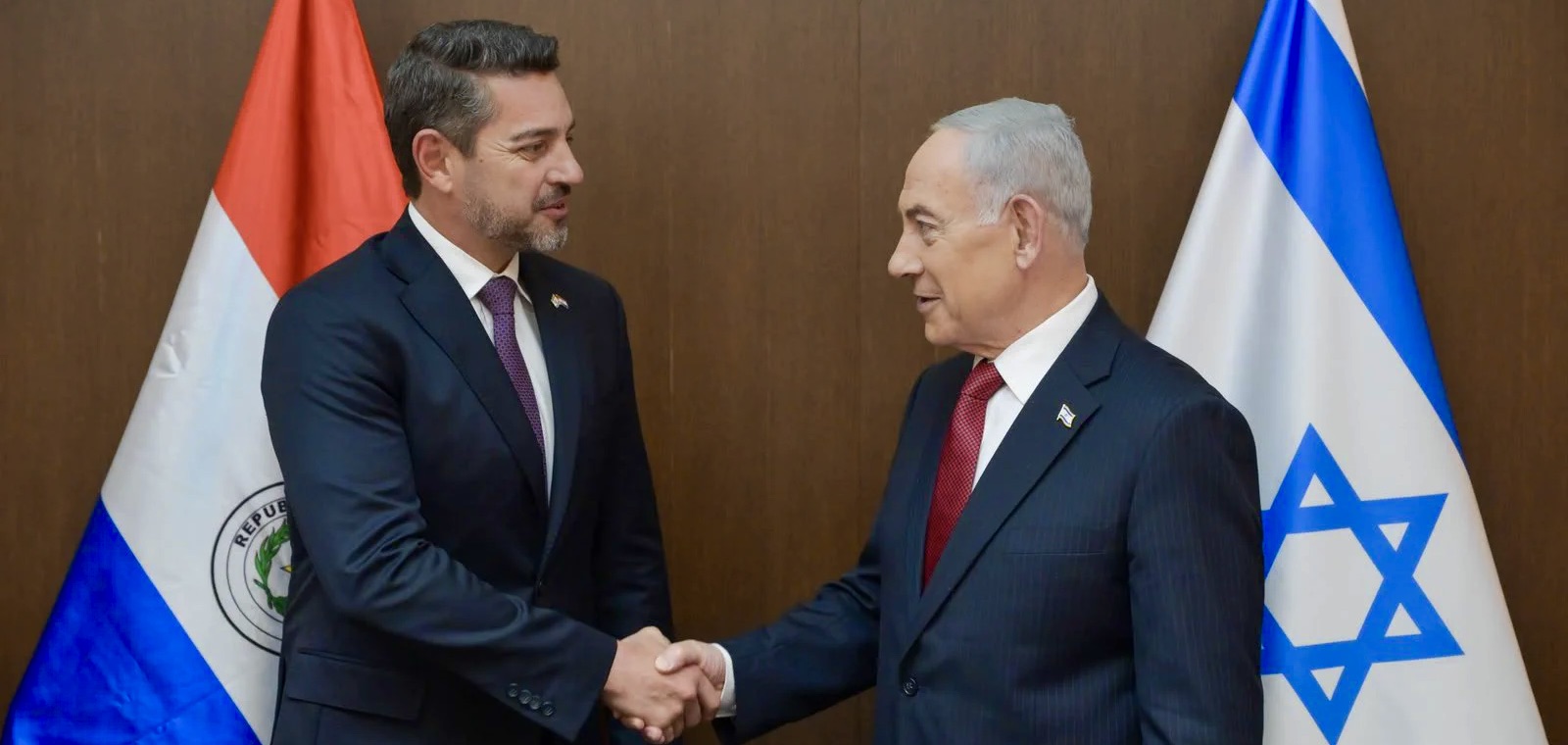 For a country separated from Israel by more than 11,000 kilometers, Paraguay has proved an unusually close friend over the Jewish state’s history.
While governments across the world have spent the past three years disassociating themselves from Israel’s war against Hamas, Hezbollah, and Iran, the South American nation has taken a different course, restoring its embassy to Israel’s capital, deepening security cooperation, and defending the Jewish state’s right to protect itself.
That friendship was on display yet again this week, when Paraguayan Vice President Pedro Alliana arrived in Israel alongside Foreign Minister Rubén Ramírez Lezcano and Environment Minister Rolando de Barros Barreto, and the timing of the delegation’s visit was intentional. Three years after the Hamas massacres of October 7, 2023, Paraguay wanted to make clear where it stood.
For Alliana, who sat exclusively with The Jerusalem Post during his visit, the relationship extends well beyond diplomatic gestures.
“Paraguay is building a strategic alliance with Israel in which we share values and principles of democracy, the rule of law, human rights, and freedom,” he told the Post. “Our relationship with Israel is founded on these values and principles, and we also defend Israel’s right to defend its territory.”
On Wednesday, Alliana and Ramírez met with Foreign Minister Gideon Sa’ar in Jerusalem, where the two sides discussed expanding cooperation in healthcare, technology, security, and other fields. Meetings with Israel’s prime minister and president followed on Thursday.
The Paraguayan delegation also visited Yad Vashem, laying a wreath in the Hall of Remembrance, before participating in commemorations marking the anniversary of October 7.
“Since the October 7 massacre, Paraguay has stood firmly by our side,” Sa’ar said following the meeting. “We remember who stands with us in difficult times, and Paraguay has proven itself to be a true friend.”
Alliana was equally emphatic, stating, “Three years ago, Hamas carried out brutal acts of terrorism. The terrorist organization murdered, raped and kidnapped innocent Israelis.”
The Paraguayan delegation also visited Yad Vashem, laying a wreath in the Hall of Remembrance, before participating in commemorations marking the anniversary of October 7.
“Since the October 7 massacre, Paraguay has stood firmly by our side,” Sa’ar said following the meeting. “We remember who stands with us in difficult times, and Paraguay has proven itself to be a true friend.”
Alliana was equally emphatic, stating, “Three years ago, Hamas carried out brutal acts of terrorism. The terrorist organization murdered, raped and kidnapped innocent Israelis.”
Paraguay’s support has not always been without consequences. Asked whether standing so firmly alongside Israel had carried a diplomatic or political cost, Alliana acknowledged that it had, telling the Post, “There are, evidently, political costs on many occasions. However, above the circumstances of the moment and any tensions that may arise are these values and principles, which Paraguay will not renounce.”
The relationship between Israel and Paraguay stretches back to the earliest years of the Jewish state. Paraguay voted in favor of the United Nations partition plan in November 1947, supporting the proposal to establish Jewish and Arab states in British Mandatory Palestine. Formal diplomatic relations followed in 1949.
Day 1,099 — Friday, October 9
 A new State Department Trafficking in Persons report has held Iran at Tier 3, finding that Tehran does not meet minimum standards for eliminating human trafficking and is not making significant efforts to do so.
The report, released Thursday, accused Iranian officials of perpetrating and condoning trafficking crimes with impunity and maintaining a policy or pattern of forcibly recruiting children into armed groups.
According to the report, the Islamic Revolutionary Guard Corps and Basij militia recruit Iranian children, as well as vulnerable Afghan, Pakistani and Syrian migrants. The IRGC announced a recruitment campaign in March 2026 that set the minimum age at 12 for certain security activities.
Iran also provides material support to Yemen’s Houthi rebels, a non-state armed group that uses child soldiers, the report said.
Day 1,099 — Friday, October 9
 The State Attorney’s Office filed a severe indictment Thursday in the Jerusalem District Court against Mohammed Shalabi, 22, a resident of Beit Hanina in Jerusalem and a third-year pharmacy student, on charges of preparing to commit an act of terror, murder, and receiving training for terror purposes.
According to the indictment, Shalabi planned to carry out attacks against security forces and Jewish civilians using explosive devices and lethal poisons, with the aim of causing mass casualties.
The prosecution is asking the court to order Shalabi’s detention until the conclusion of legal proceedings against him. The indictment was filed by attorney Amihai Marx of the Jerusalem District Attorney’s Office.
The indictment states that Shalabi underwent a process of ideological radicalization, in part following the events of October 7 and the Swords of Iron war.
As part of this, he systematically consumed content associated with the Hamas and ISIS terror organizations and decided to exploit the knowledge he had acquired in his studies and his access to chemical materials for the purpose of carrying out lethal attacks.
In early 2025, angered by parking tickets issued to worshippers near a mosque in the Beit Hanina neighborhood, Shalabi planned to plant an explosive device at the location where enforcement officials typically stood.
To this end, he tracked their activity for about two months and downloaded manuals from the internet on preparing explosives.
The plan was not carried out after enforcement officials stopped coming to the location.
Shalabi subsequently planned a large-scale attack in which, according to his own words, he sought to kill “a lot of Jews.”
He joined Telegram groups associated with terror organizations, including a group identified with ISIS, and downloaded dozens of files containing instructions for preparing explosive devices, explosives, and lethal poisons.
In addition, he copied into a notebook recipes for preparing poisons capable of causing death by touch, inhalation, or drinking, and documented materials that could be used to prepare explosives.
According to the indictment, Shalabi even moved from the planning stage to concrete preparatory actions.
On two occasions, he traveled to Ramallah, purchased chemical materials and suitable equipment, splitting the purchases so as not to arouse suspicion, and stored them in his room at home.
He later conducted a chemical experiment in the bathroom at his home, during which he ignited a mixture he had prepared in order to test the materials.
Shalabi also deleted files and search history from his phone in an attempt to obscure his actions.
The indictment charges Shalabi with preparing to commit an act of terror, murder, and receiving training for terror purposes.
Day 1,098 — Thursday, October 8
 Foreign Minister Gideon Sa’ar announced Thursday morning that the British Consulate in eastern Jerusalem has ceased operations.
He noted that the Consul General and 19 additional diplomats will end their assignments and leave Israel. The building that housed the consulate, which is owned by the British government, will continue to be used by a reduced staff of just seven diplomats.
According to the Foreign Minister, the staff will operate on a very limited basis, and the building will no longer serve as a consulate. At the same time, the two countries agreed to continue a dialogue in which each government will be able to raise issues of importance to it.
In London, the understandings were presented differently. British Foreign Secretary Ed Miliband maintained that the consulate would not be closed.
“Following discussions with the Government of Israel, our Consulate General building will not be closing, and will be known as the UK Mission, Jerusalem from today,” Miliband stated.
“The UK Mission, Jerusalem is independent, operational, and will continue to deliver vital services and our work with the Palestinian people.”
The British Foreign Secretary announced that his country would not take retaliatory measures at this stage as long as discussions with Israel continued.
“Without an understanding, we would not have the necessary assurances for the security and protections of our staff and premises. Accordingly, the UK has temporarily withdrawn a number of staff and families to ensure their safety and security,” Miliband explained.
“We will work in the coming months to build back up our presence, and we will not take reciprocal action while such discussions are underway and credible.”
The understandings come after Sa’ar announced four retaliatory measures against Britain last month: the removal of British representatives from the international aid coordination center for Gaza in Kiryat Gat, the termination of British activities to train Palestinian Authority forces in Judea and Samaria, a ban on entry to Israel for 12 British elected officials and other British citizens, and the closure of the consulate in eastern Jerusalem.
Sa’ar explained that the measures were taken in response to the Labour government’s policies toward Israel.
Among the steps he cited were Britain’s recognition of a Palestinian state, the resumption of funding for UNRWA, the suspension of defense export licenses to Israel, sanctions against Israeli ministers, individuals, and organizations, the suspension of negotiations on a free trade agreement, and the freezing of military dialogue and security cooperation.
Sa’ar also mentioned restrictions on Israel’s official participation in an international defense equipment exhibition in Britain and the decision to prevent IDF officers from participating in a training program at the Royal College of Defence Studies.
According to Sa’ar, the latest step that led to the escalation was the British government’s decision to advance additional sanctions against Jewish communities in Judea and Samaria and expand the suspension of defense export licenses to Israel.
“We believe in dialogue, and we will continue to believe in dialogue,” Sa’ar said.
However, he added that Israel’s policy toward measures taken against it has changed.
“Every country that acts against Israel must know that there will be a price.”
Day 1,098 — Thursday, October 8
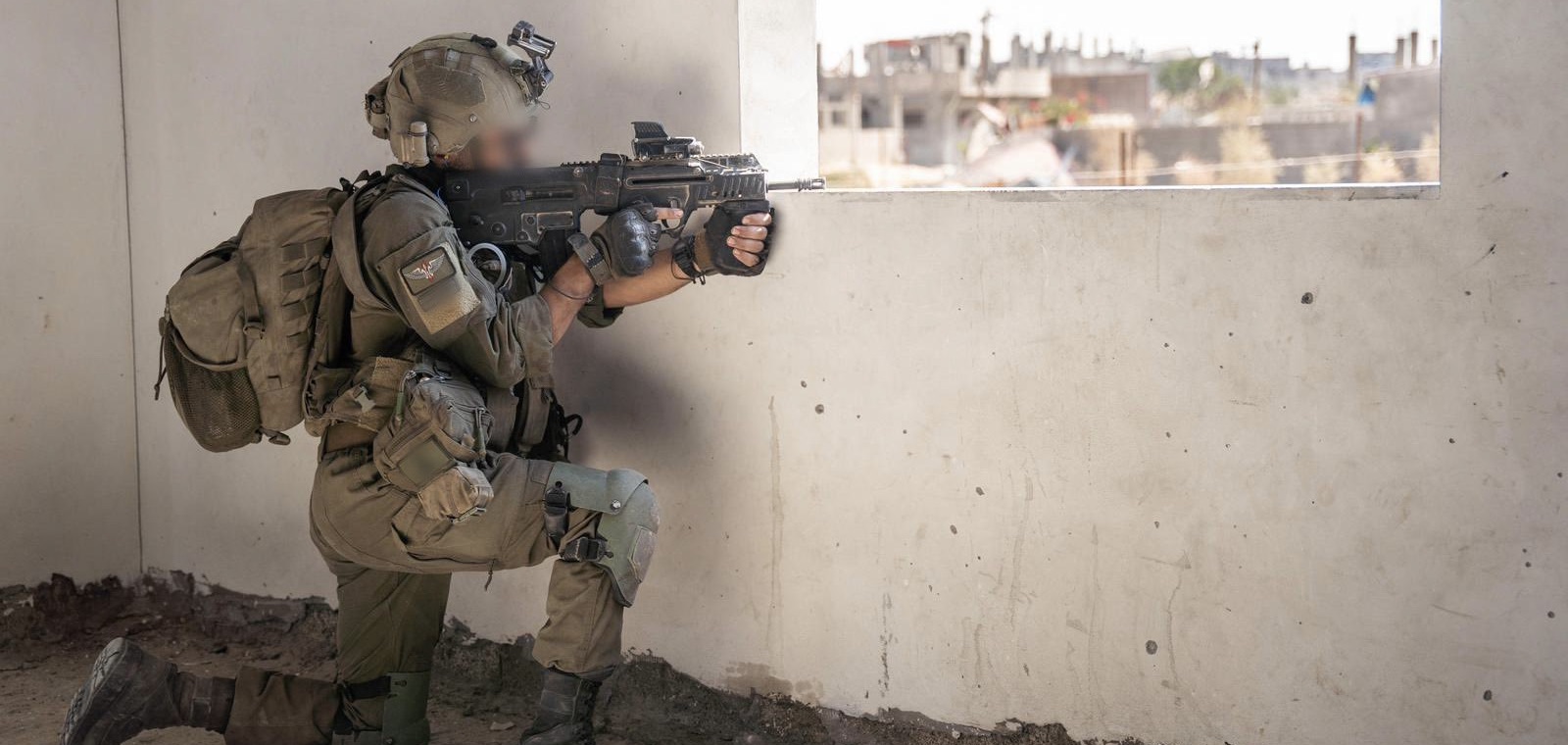 The Israel Defense Forces said on Wednesday that it killed two Hamas terrorists after they were seen leaving Kamal Adwan Hospital in Beit Lahia, northern Gaza, one of whom planted explosives the military said had been stored inside the hospital.
The terrorist planted the IEDs near the ceasefire line in attempt to harm IDF soldiers, according to the statement.
The second terrorist, identified as Muhammad Tammous, was a sniper in Hamas’s “military wing.” He also worked as a “civil defense” worker in the Strip, the IDF said.
“In recent days, the terrorists advanced attacks from within the hospital and operated to restore Hamas’s capabilities, in systematic violation of the ceasefire agreement,” it added.
The IDF accused Hamas of “cynically” exploiting hospitals and other medical infrastructure in Gaza for terrorism, thus endangering the civilian population.
In late 2024, the IDF arrested 240 Palestinian terrorists during an operation inside Kamal Adwan Hospital.
Anas Muhammad Faiz al-Sharif, one of the Hamas members arrested in the raid, subsequently told interrogators that the terrorist organization sees the facility as “a safe haven for them because the [Israeli] military cannot directly target it.”
Also on Wednesday, the IDF killed a terrorist after he crossed the ceasefire line in southern Gaza and tried to sabotage “operational infrastructure,” the military said on Thursday.
The terrorist posed an immediate threat and the IDF struck him right after he was identified near the Yellow Line, according to the statement.
IDF soldiers remain deployed to the Strip in accordance with the U.S.-brokered ceasefire agreement “and will continue to act to remove any immediate threat,” the army added.
The truce went into effect in the Gaza Strip on Oct. 10, 2025, ending the two-year war that began when Hamas, other Palestinian terrorist groups and Gazan “civilians” invaded the northwestern Negev on Oct. 7, 2023, killing approximately 1,200 people, primarily civilians, and taking 251 hostages.
The terms of the ceasefire leave the IDF in control of approximately half of Gaza.
Day 1,097 — Wednesday, October 7
 Israeli President Isaac Herzog and first lady Michal Herzog opened Wednesday’s commemorations marking three years since the Oct. 7, 2023, massacre by lighting a memorial candle at the President’s Residence in Jerusalem at 6:29 a.m., the time the Hamas-led attack began.
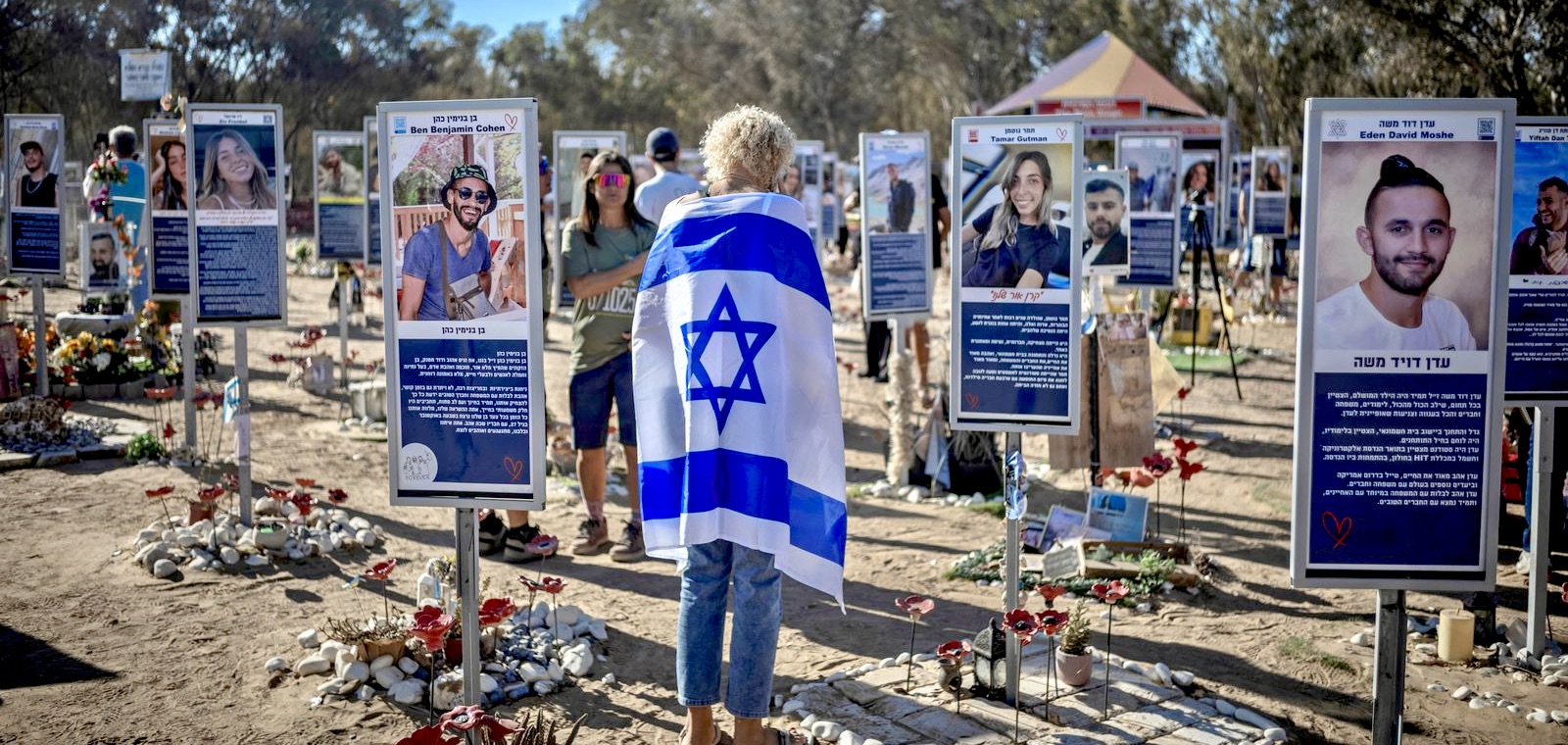
At the Knesset, relatives of victims and hostages recited “Yizkor,” a Jewish memorial prayer. In southern Israel, survivors and bereaved families gathered at the former site of the Nova music festival near Kibbutz Re’im, where 378 people were killed and 44 abducted to Gaza.
The U.S. Embassy in Jerusalem on Wednesday vowed to stand with Israel, saying in a post on X it remembers “the innocent lives murdered by Hamas terrorists.” It also honored “the heroes who risked everything to save others.”
“We remember. We stand with Israel,” the post concluded.
Official state commemorations for Oct. 7 were held in Israel on Monday, according to the Hebrew calendar date established by the government, separate from the national events being held on the Gregorian anniversary on Wednesday.
Some 6,000 terrorists from Hamas, Palestinian Islamic Jihad and Fatah, along with unaffiliated Gazans, crossed into southern Israel on Oct. 7, 2023, murdering some 1,200 people, wounding thousands and kidnapping 251.
Israel launched its ground offensive in Gaza on Oct. 27, 2023, with the stated goals of destroying Hamas’s military and governing capabilities, returning the hostages and ensuring Gaza could no longer threaten Israel.
The conflict subsequently expanded across the region, with Israel fighting Hezbollah in Lebanon, terrorist groups in Judea and Samaria, conducting operations in Syria, confronting Houthi attacks from Yemen, striking targets in Iran and responding to attacks from Iranian-backed militias in Iraq.
The Israel Defense Forces said on Tuesday that it struck approximately 100,000 targets across multiple fronts over the three years since Oct. 7. More than 31,500 projectiles were launched at Israel during the same period.
The military said 970 personnel were killed in operational circumstances during the war. More than 70% of wounded soldiers returned to service, while the IDF reserve force grew by approximately 36% as the military established a series of new combat, defense and support formations.
On Wednesday, Israel Police Commissioner Daniel Levi and the force’s senior command saluted and observed a minute of silence at 6:29 a.m. at sites where officers fell on Oct. 7, the Israel Police said.
The main ceremony took place at the site of the former police station in Sderot, where terrorists seized the building, killed 11 officers and fought Israeli security forces for hours until the station was demolished.
Memorial ceremonies were also held at other sites where police and Border Police officers were killed defending civilians. A commemorative convoy was set to leave for Re’im as part of the senior command’s visit to southern Israel.
“The Israel Police bows its head in memory of its fallen, and continues to carry their memory and legacy. We stand with and support the bereaved families and the police officers who were wounded in the battles defending the State of Israel and its citizens,” the statement said.
Iran’s Islamic Revolutionary Guard Corps (IRGC) on Tuesday night marked the third anniversary of the massacre by calling it the “beginning of the end for Zionism” and claiming the terrorist assault “shattered” the image of the Israeli military’s “invincibility.”
The IRGC statement claimed that regional strategic conditions had shifted in favor of Tehran and its allies and warned that any new military action against the Islamic Republic would draw a “painful and devastating response.”
Israel’s National Security Council on Tuesday warned that terror organizations, including Iran, its proxies and other global jihadist groups, view the anniversary as a significant milestone, adding that public disturbances are also expected to increase worldwide.
The council advised Israelis not to post travel plans on social media in advance and to avoid destinations under Israel’s highest, Level 4 travel warning: Jordan, Qatar, Somaliland and Egypt, including the Sinai Peninsula.
In destinations under Level 3 warnings, including South Africa, Thailand and Morocco, Israelis were advised to minimize speaking Hebrew in crowded areas, stay away from demonstrations and avoid large gatherings.
According to a report released Monday by Israel’s Diaspora Affairs and Combating Antisemitism Ministry, 262 pro-Palestinian protests in 37 countries are scheduled between Oct. 1 and Oct. 14, with the largest concentration expected during the weekend following Oct. 7. The ministry classified 87 of the events—about one-third—as posing a medium or high level of risk.
The United States has the most identified events, with 45, followed by Spain with 40, Australia with 21, the United Kingdom with 19 and Italy with 16. Germany and Canada each have 14 events, while France has 10 and the Netherlands eight.
The ministry classified New York, Los Angeles, Montreal, Toronto, Ottawa, Melbourne, Sydney, London, Berlin, Amsterdam, Athens, Milan, Rome, Barcelona, Paris, Istanbul, Bangkok, Bogotá and Santiago as the highest-risk locations.
Day 1,097 — Wednesday, October 7
 Jewish New Yorkers accounted for 245 of the 463 confirmed hate crimes recorded in New York City during the first nine months of 2026, according to NYPD statistics released Tuesday. The figure represents 53% of all confirmed hate crimes and is 1.2% higher than the 242 anti-Jewish incidents recorded during the same period in 2025.
The NYPD estimates that Jews comprise roughly 10% of New York City’s population, meaning they have been targeted in hate crimes at a rate approximately 10 times higher than their share of the city’s population.
“The most striking trend continues to be antisemitic hate crimes,” New York City Police Commissioner Jessica Tisch said at a Tuesday press conference, as quoted by JNS.
“So far this year, 53% of all confirmed hate crimes have targeted Jewish New Yorkers, despite Jews making up only roughly 10% of the city’s population,” she said. “Those numbers are deeply concerning.”
“On the eve of the third anniversary of Oct. 7, we renew our pledge to Jewish institutions that they will not be left to protect themselves without a strong partner in the NYPD,” she added.
During the third quarter, from July through September, 59 of the 125 confirmed hate crimes targeted Jews, accounting for approximately 47% of the total. That marked a decline from the 68 anti-Jewish hate crimes recorded during the third quarter of 2025.
While the NYPD did not publish a separate September breakdown, the available figures indicate that 16 of the 38 confirmed hate crimes recorded in the city that month involved Jewish victims, or roughly 42%. By comparison, 30 of the 47 hate crimes recorded in September 2025 targeted Jews, representing 64%.
The figures also indicate that Jewish New Yorkers were the targets of 31 of 69 hate crimes reported during the final month of the third quarter, or approximately 45%, based on comparisons with previously released NYPD data covering July and August.
“Our Hate Crime Task Force continues to aggressively investigate these incidents, while we deploy additional resources to protect Jewish communities,” Tisch said.
“This year, during the High Holy Days, we deployed an unprecedented number of officers to cover virtually every synagogue across the city,” she said.
The statistics come amid a series of antisemitic incidents across New York City. In September, a 48-year-old Bronx man was arrested and charged with a hate crime after allegedly pursuing a Jewish man in Brooklyn with a knife while shouting, “Heil f—— Hitler.”
In August, a worshipper was injured and property was damaged during an attack at Manhattan’s Central Synagogue while Shabbat services were underway. That same month, six local youths allegedly attacked a haredi Jewish man in Borough Park and threw eggs at him.
In July, a Jewish man was stabbed outside a synagogue on Tisha B’Av.
Day 1,096 — Tuesday, October 6
 The Israel Defense Forces (IDF) is pushing back against claims that it purposely targets journalists in Gaza, stating that individuals “presented as innocent journalists” were actually in Hamas, Palestinian Islamic Jihad (PIJ) and other terrorist organizations.
“They presented themselves as legitimate media professionals while serving terrorist organizations that regularly use propaganda and psychological warfare,” the IDF stated on its website.
“Journalists are expected to report the unbiased truth,” the IDF continued. “Yet these individuals concealed a fundamental truth about themselves: their own roles within military wings of terrorist organizations.”
The IDF noted that targeting journalists is a violation of international law, but said that many articles, opinion pieces and reports have misled the public.
As a result, the IDF launched an “in-depth investigation based on a wide range of intelligence sources, including open-source information, documents gathered in the field, interrogations of military operatives by Israeli intelligence bodies,” to determine that claims the group violated international law do not tell the full story.
The IDF listed 170 alleged military operatives who were reportedly working as journalists. For each person, the IDF lists the news outlet where the individual claimed to work, including some Western media organizations, while also listing the terror organization they have been linked to.
For example, a person called Yaqoub Anan Mohammed Al-Barsh reportedly worked as a journalist for Gaza’s Namaa Radio but allegedly also held a position as a squad commander in the Military Propaganda Department of Hamas.
Another person, Maysara Ahmed Salah Salah, reportedly worked as a journalist for Quds News Network but was allegedly also a military operative for Hamas. Many of the 170 alleged military operatives identified by the IDF are seen in pictures wearing both press badges and holding weapons.
Of the 170 individuals identified, 118 were operatives in Hamas, 49 in the Islamic Jihad’s military wing, one in the Lords of the Desert Terrorist Organization and two in the Popular Resistance Committees. All 170 have been killed.
Hamas launched a war with an unprecedented Oct. 7, 2023, terror attack on Israel that resulted in the deaths of approximately 1,200 people, with Israeli civilians among those targeted. Hundreds of civilians were massacred at an outdoor music festival, others were slaughtered inside their homes, and Hamas took over 250 hostages in the worst attack on Jews since the Holocaust.
At least 17 of the individuals named by the IDF as terrorists masquerading as journalists were part of the group that infiltrated Israel during the Oct. 7 attacks, according to an IDF official.
Other alleged terrorists posing as journalists have been honored by Reporters Without Borders, been named in complaints to the International Criminal Court and even used by the United Nations to condemn Israel, according to the IDF.
“Over the past several months, a recurring pattern has been identified in which the Hamas and the Islamic Jihad terrorist organizations published information indicating, after the fact, that some of those killed who had been presented to the world as journalists and media personnel were in fact military operatives in the military wings of terrorist organizations. This information emerged after the false narrative that the IDF deliberately targets journalists had already taken hold internationally,” the IDF official told Fox News Digital.
“Throughout the war, this narrative became one of the most frequently cited arguments against Israel,” the continued. “It appeared in reports by international media outlets, human rights organizations, international institutions, and politicians, without distinguishing between journalists carrying out their professional duties and those who simultaneously operated as military operatives in terrorist organizations.”
Day 1,096 — Tuesday, October 6
 Israeli President Isaac Herzog told Fox News on Monday that the entire region believes Iran and its “jihadist regime” cannot be allowed to develop nuclear weapons.
“One thing that President Trump repeats all the time correctly is that we are dealing with an empire of evil,” Herzog told Dana Perino, host of “America’s Newsroom.”
The Israeli head of state said Tehran seeks to “radicalize the world” and “get all the way to Europe and the United States,” adding that “they must not have any access to nuclear capabilities at all.”
Herzog said the entire region shares that view, though not always openly. “Under the surface there is an effort to cooperate and prevent this empire of proxies from tilting the balance,” he said.
The president pointed to Yemen, where “a small tribe,” meaning Iranian-backed Houthi terrorists, are “blocking a main artery of world trade.”
“Are we going to cave in to terror, harassment, blackmail or not? That’s why the war with Iran is so essential,” Herzog said.
Day 1,095 — Monday, October 5
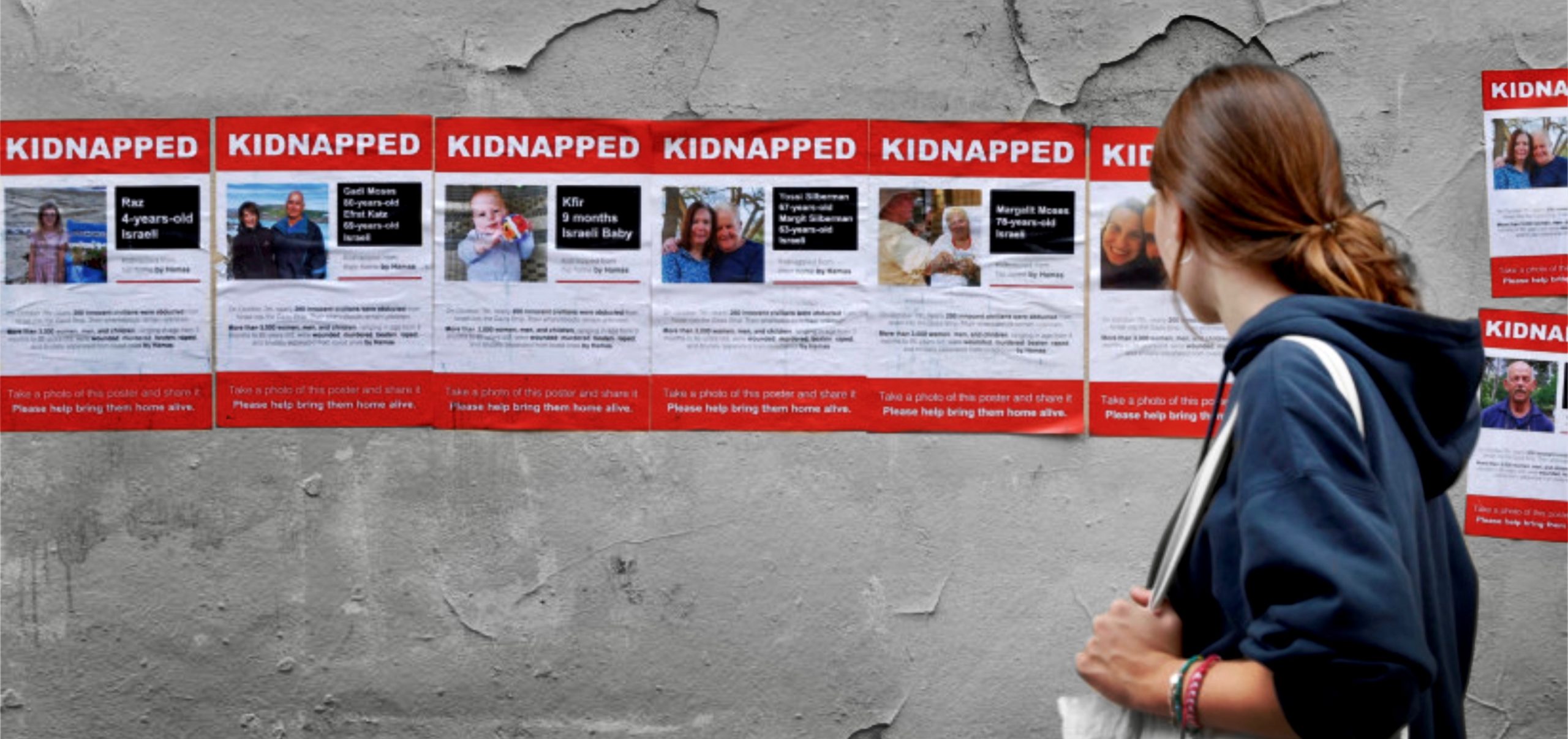 Israeli President Isaac Herzog opened the national day of remembrance for Oct. 7, 2023, by lowering the Israeli flag to half-mast at 6:29 a.m.—the exact minute the attack began—at the President’s Residence in Jerusalem.
Day 1,095 — Monday, October 5
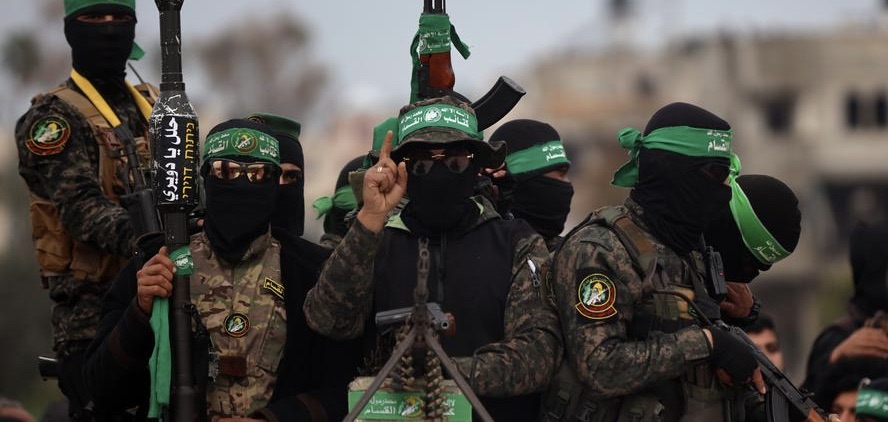 Of the 6,000 people who crossed the border from Gaza and infiltrated Israel on October 7, 4,000 have been killed, an Israeli source told The Jerusalem Post on Monday, citing data shared by Maj.-Gen. Shlomi Binder, head of the IDF’s Military Intelligence, during a security cabinet meeting on Sunday evening.
Since the start of the Israel-Hamas War on October 7, 2023, 1,318 members of Israel’s security forces have fallen in the conflict, according to data published by the Families, Commemoration, and Heritage Department of the Defense Ministry on Sunday.
Day 1,094 — Sunday, October 4
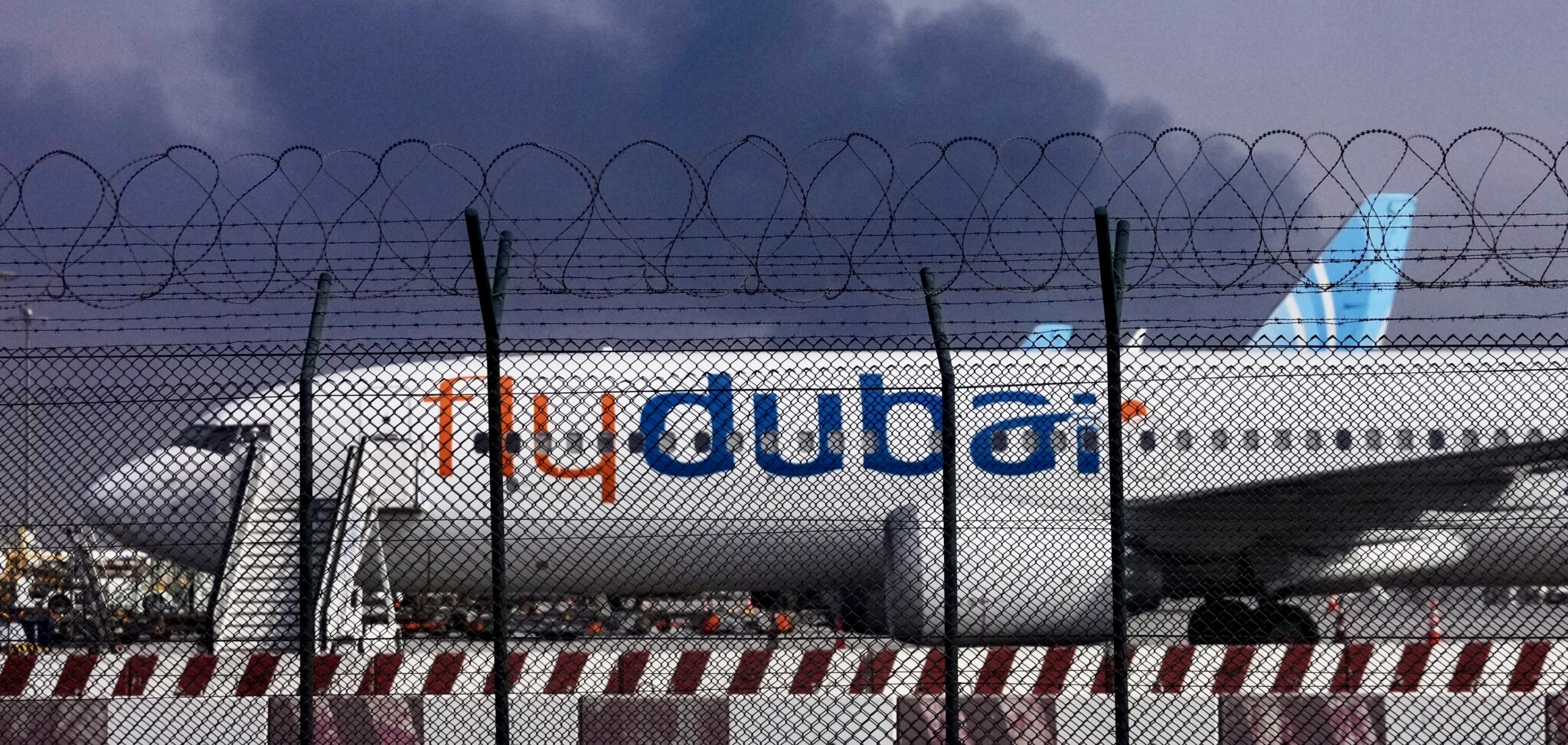 We are now learning that the Omani co-pilot who tried to hijack a plane bound for Tel Aviv on Wednesday had talked openly on social media about “killing Jews.”
Day 1,093 — Saturday, October 3
 Seattle Mayor Katie Wilson hosted authors Naomi Klein and Astra Taylor at Town Hall Seattle on Sept. 24, praising their new book and calling the war in Gaza a “genocide.”
During the event, which was recorded by the Seattle Channel and uploaded on Thursday, Wilson interviewed Klein and Taylor about their book, End Times Fascism: And the Fight for the Living World. The book examines what the authors describe as an alliance among religious fundamentalists, Silicon Valley technologists and ethno-nationalists who share apocalyptic visions of the future.
“Your work is so important to the left, and I am proud to share a stage with you tonight as we build power not only to defend against fascism, but to create a better world,” Wilson said.
The mayor cited “that juxtaposition of the genocide in Gaza with that AI-generation paradise where someone’s obviously going to make a lot of money selling condos,” referring to the plan to redevelop Gaza.
During a discussion of “religious end-timers,” Klein, 56, a Montreal-born Jewish Canadian author who lives in Vancouver and supports Jewish Voice for Peace, said U.S. President Trump had appointed “Mike Huckabee, who is a Christian Zionist, to be the ambassador to Israel.”
Trump nominated Huckabee, a former Arkansas governor, for the post, and the Senate confirmed him in April 2025. Huckabee has publicly identified as a Christian Zionist and has expressed support for Israel and its claims to Judea and Samaria.
According to Klein, evangelical Christian support of Israeli “incursions onto Al-Aqsa are lighting a match in an already very volatile region,” for the purpose of triggering “World War III with nukes. So they have the power to create an Armageddon that we are all in.”
She said she and Taylor, 46, a Winnipeg-born Canadian American writer and activist, had studied the significance that some Christian Zionists attach to “spotless red heifers” and animal sacrifices in connection with end-times beliefs.
“Astra and I, unfortunately, had to learn about spotless red heifers and all kinds of animal sacrifices, and, you know, we wish we didn’t,” she said. “But we decided that they had become powerful enough, both within the Israeli government—not to say they control the whole government, but they control more parts of the government than has ever happened before in the history of the country, and more parts of the U.S. government.”
“We think they’re wrong, that this isn’t gonna bring the Messiah, but that doesn’t mean they can’t trigger the Armageddon, right?” Klein said.
Taylor encouraged audience members to join the Democratic Socialists of America or participate in an electoral campaign.
“Join something, because this is too much for us to take on alone,” she said. “We really have to take it on together.”
“I totally agree with that,” Wilson replied.
Day 1,093 — Saturday, October 3
 Two Iranian men accused of plotting a terrorist attack against Manchester’s Jewish community entered the UK by small boat in 2020 and 2023, the British government said Friday.
Salam Ahmadyan, 36, and Rahman Salehi, 34, were charged with preparing terrorist acts. One was granted asylum, while the other has a pending asylum claim.
British counterterrorism police said the suspects allegedly communicated with an overseas third party who may be in Iran and researched potential targets while obtaining materials and instructions related to making an explosive device.
Police said the alleged plot had been disrupted and that they do not believe there is an ongoing threat to the public.
Day 1,092 — Friday, October 2
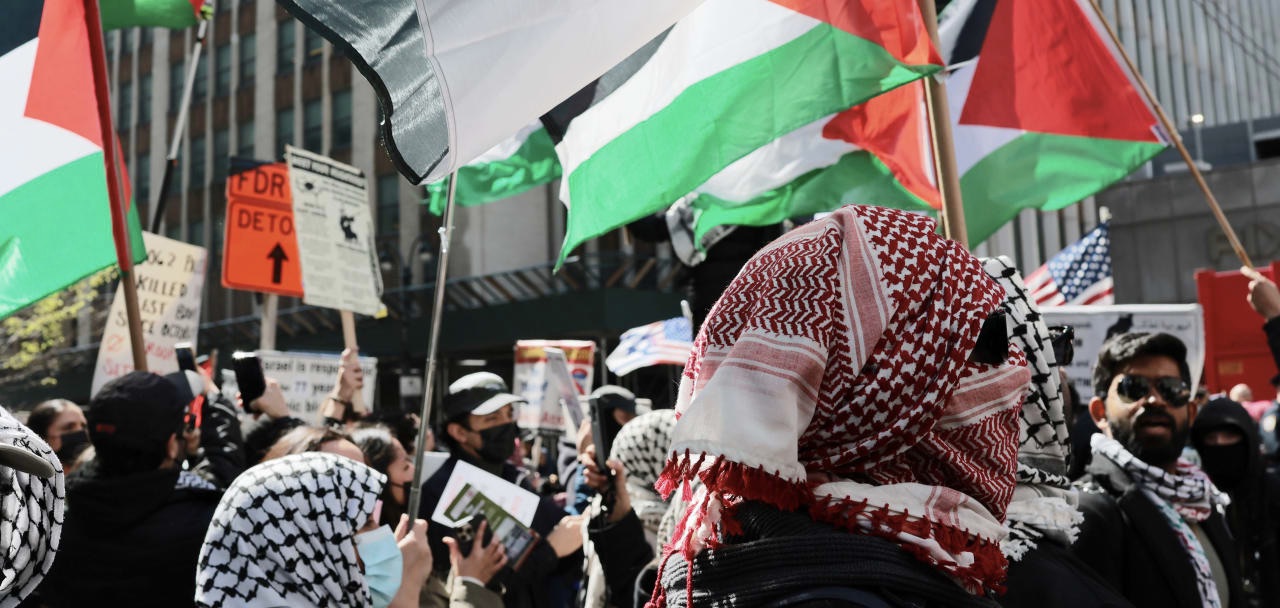 A federal judge dismissed the U.S. Justice Department’s complaint accusing anti-Israel protesters of attacking and obstructing Jews at a New Jersey synagogue, suggesting that two men, whom the department identified as victims, may have interfered with a protester’s rights.
Katharine Hayden, of the U.S. District Court for the District of New Jersey, dismissed the claim against American Muslims for Palestine New Jersey, the Party for Socialism and Liberation New Jersey, Tova Fry, Altaf Sharif, Matt Dragon and Eric Camins in her Sept. 30 ruling.
The Justice Department alleged that Moshe Glick and David Silberberg were assaulted outside Congregation Ohr Torah, an Orthodox synagogue in West Orange, N.J., on Nov. 13, 2024.
At the time, there was an Israeli real estate fair at the synagogue, which Glick organized and which Silberberg attended. There were also religious activites taking place at the time, when protesters gathered outside the synagogue.
Protesters made threats and tried to obstruct Jews from entering a house of worship, violating the 1994 Freedom of Access to Clinic Entrances Act, also known as the FACE Act.
Hayden wrote that “arguably these facts just as easily support the inference that Glick and Silberberg interfered with Sharif’s First Amendment right to be part of the protest.”
She warned that treating every physical confrontation during a demonstration as a statutory violation “would demonize protesters, who exercise their own First Amendment rights as being part of a mob.”
Hayden found insufficient facts connecting each defendant to the FACE Act and wrote that for Sharif, the complaint did not adequately connect his alleged violence to intentional interference with religious exercise.
“Getting into a scuffle during a protest, a scuffle that took place somewhere on the grounds of the place of worship, definitely away from its entrance, does not mean that person’s conduct falls under FACE Act interdiction,” she wrote.
Hayden also found that though the complaint alleged that the protesters “made passage to or from the synagogue unreasonably difficult or hazardous,” the court “does not decide whether the crowd-level allegations concerning the sidewalk, synagogue grounds or noise may establish physical obstruction or another statutory violation.”
“More to the point, were the court to decide that the described obstruction was a sufficient allegation to satisfy the FACE Act, then every protester there would be a defendant,” she ruled.
Addressing allegations that Camins pointed at Silberberg and said “the Jew is here” in order to get Sharif to “beat him up,” the judge found that “context is missing.”
“He could just as easily be warning Sharif that Silberberg was threatening violence against Sharif,” Hayden wrote.
The Justice Department has 30 days to amend its complaint.
Glick, who faced state charges stemming from the confrontation, received a pardon from New Jersey Gov. Phil Murphy in January just before Murphy left office.
Day 1,092 — Friday, October 2
 A source in the United Arab Emirates revealed to i24NEWS new details on the Omani co-pilot who tried to crash a plane with around 170 Israelis aboard.
The source added that the co-pilot had previously expressed hostility toward Israel.
“Among the Omani pilot’s belongings were leaflets and publications from Free Palestine organizations, as well as pro-Palestinian materials,” the source told i24NEWS.
According to the source, “The pilot had spoken in support of the Palestinians on several occasions and expressed hostility toward Israel.”
The revelations add to the suspicions surrounding the co-pilot’s motives after he attacked the captain of flight FZ1073, which was traveling from Dubai to Tel Aviv with 174 passengers and eight crew members on board.
During the incident, an emergency code indicating unlawful interference with the flight was activated. Israeli authorities treated the incident as an emergency and scrambled fighter jets. The aircraft rapidly lost altitude before eventually landing at Tabuk Airport in Saudi Arabia.
According to passenger accounts, after the aircraft began tilting and plunging, several Israelis rushed into the cockpit, where they found the captain injured and bleeding, and subdued the attacker.
Yaniv Hayun, who was among the first to reach the cockpit, recounted struggling with the attacker and later briefly taking hold of the aircraft’s controls for several seconds until a crew member took control of the flight.
The captain, Indian national Smit Machchhar, received medical treatment aboard the aircraft. After landing, he was taken to a hospital and subsequently flown to Abu Dhabi for further treatment, along with the co-pilot who carried out the stabbing. India’s Foreign Ministry said the captain’s condition was good.
The Saudi Interior Ministry confirmed in its preliminary investigation that the captain had been attacked by his co-pilot and that both men were injured. However, the Saudi statement did not mention that the aircraft had been traveling to Israel, that most of the passengers were Israeli, or the possibility that the incident was an act of terrorism.
Authorities are also investigating the possibility that additional parties were involved.
Day 1,091 — Thursday, October 1
 Republicans on the House Ways and Means Committee urged the IRS to revoke the tax-exempt status of the nonprofit Middle East Children’s Alliance on Monday, alleging that the group’s foreign grants may have benefitted a foreign terrorist organization.
In a letter to Frank Bisignano, CEO of the IRS, the Republican committee members said that the nonprofit “has ties to foreign actors that raise concerns, including the Popular Front for the Liberation of Palestine,” a U.S.-designated foreign terrorist organization.
“For several years, MECA reported their work with Afaq Jadeeda and Never Stop Dreaming in Gaza, organizations assessed by researchers as connected to the PFLP’s military and political wings,” the committee wrote.
“MECA has also been linked to the Freedom Theatre in Jenin which was cofounded and led by Zakaria Zubeidi, a former commander of Fatah’s al-Aqsa Martyrs’ Brigades who oversaw terror attacks against Israelis during the Second Intifada and was responsible for numerous acts of terrorism, including a suicide bombing in the heart of Tel Aviv that killed an Israeli woman,” the lawmakers stated.
MECA is a Berkeley, Calif.-based charity that describes itself as working “to protect the rights and improve the lives of children” in “Palestine, Iraq and Lebanon.”
It routinely accuses Israel of committing “genocide” in Gaza and has alleged that the Jewish state imposed famine on the enclave. (JNS sought comment from the charity.)
According to the House Ways and Means Committee, the group’s foreign grantees became substantially more opaque after Oct. 7.
“In fiscal year 2024, MECA also carried approximately $3,010,000 on a single Schedule F line described only as ‘stipend and expenses for work in Gaza,’ with no beneficiaries named, an amount roughly thirty‑six times the prior annual maximum for the same purpose,” the Republican congressmen said.
“It appears that often, MECA’s largest disbursements contain the least amount of information related to the grantee and purported use of the funding,” they said.
The congressmen called for the IRS to closely examine “MECA’s foreign grant recipients to ensure that taxpayer dollars are not flowing out of the United States to benefit the PFLP.”
Day 1,091 — Thursday, October 1
 President Isaac Herzog said Thursday that he intends to recommend four Israelis who helped prevent a disaster aboard a flydubai flight from Dubai to Israel for the President’s Medal for Civilian Heroism.
Herzog spoke with Yaniv Hayoun, Dr. Shota Musayev, Tzvika Mans, and Asaf Rejwan, who took part in the response to the violent incident aboard flydubai flight FZ1073 on Wednesday.
After one of the pilots stabbed the other and the aircraft began losing altitude, the passengers and crew acted to regain control of the plane.
Indian Capt. Smit Machchhar fought the attacker and opened the cockpit door, allowing others to intervene. Tali Mans alerted those around her that something was wrong, after which Hayoun, Mans, and Rejwan rushed to help, entered the cockpit, and subdued the attacker while putting their own lives at risk.
Hayoun then helped stabilize the aircraft’s controls, according to the account provided by the President’s Residence.
After the attacker was neutralized, Musayev provided emergency medical treatment to the badly wounded captain and helped stabilize his condition until the aircraft made an emergency landing in Saudi Arabia. Machchhar’s actions while wounded were also credited with enabling passengers to reach the cockpit and intervene. Reports on Machchhar’s actions after he was stabbed said he managed to unlock the cockpit before losing consciousness.
Herzog told the four Israelis that he intended to present their actions to the advisory committee for the President’s Medal for Civilian Heroism and recommend the award.
“At a moment when the lives of so many people were in danger, you acted without hesitation, with courage, resourcefulness and extraordinary mutual responsibility,” Herzog told them. “You risked yourselves to save others and prevented a major disaster. The entire world saw the beautiful and courageous face of Israeli society.
“I intend to bring the story of your heroism before the advisory committee for the President’s Medal for Civilian Heroism and recommend that it award you the medal. In addition, I extend my deep thanks and appreciation, on behalf of the State of Israel, to the Indian pilot, Capt. Smit Machchhar, whose determination and actions made it possible to neutralize the attacker and saved many lives.”
Day 1,090 — Wednesday, September 30
 A flydubai flight was diverted Wednesday morning to Saudi Arabia after the pilots clashed in the cockpit, the airline confirmed.
During the fight, the pilot activated a distress code used to signal unlawful interference with a flight, which may be used in cases of a suspected aircraft hijacking.
Flight FZ1073, which had been en route from Dubai to Tel Aviv with 180 Israelis on board, turned around while flying over Jordan and changed course. A few minutes after the distress code was activated, the pilot signaled that it was on its way to Israel, and once again changed direction.
Data from the Flightradar24 flight-tracking app shows that during the incident, the aircraft made an unusually rapid descent from an altitude of approximately 34,000 feet to around 14,000 feet.
According to the data, at one point the aircraft registered an instantaneous descent rate of approximately 30,976 feet per minute. Sharp changes were also recorded in the aircraft’s ground speed.
Israeli Air Force fighter jets were scrambled toward the aircraft, and Prime Minister Benjamin Netanyahu and Defense Minister Israel Katz held an urgent meeting to discuss the situation.
The IDF said: “Following reports, the IDF Chief of the General Staff conducted a situational assessment in recent minutes with the Commander of the Israeli Air Force, the Head of the Operations Directorate, the Head of Military Intelligence, and additional commanders.”
However, the plane’s pilots did not contacted control towers, and the flight disappeared from Flightradar24 and other flight-tracking apps.
Soon afterwards, the plane contacted Saudi authorities, and safely landed in Saudi Arabia.
A passenger who was aboard the flight told i24NEWS that during the unusual incident, an attempt was made to stab the pilot.
“The entire cockpit was covered in blood. The Israeli guys took control of the situation and caught the attacker,” the passenger said, adding, “We were either going to crash or be murdered. It was like a terrorist attack in mid-air.”
Passengers aboard the flight said that one of the pilots was stabbed with a penknife and that they noticed a large amount of blood. According to them, the pilot lost control of the flight for several minutes, and the Israeli passengers helped regain control of the situation.
According to a passenger, “There were moments when we were sure this was the end. We heard screaming and yelling and then we saw them open the cockpit and that there was blood there.”
Authorities are investigating suspicions that one of the pilots attempted to take his own life and crash the plane, which later made an emergency landing in Saudi Arabia. The second pilot, together with Israeli passengers on board, reportedly prevented the suspected attempt.
Following the incident, flydubai’s CEO informed Israeli transportation authorities that a plane will soon be sent from Dubai to Saudi Arabia, and will continue from there to Israel.
The Prime Minister’s Office stated: “Following concerns of an aviation incident, Prime Minister Netanyahu held discussions on the matter and followed the developments.”
“The incident is under control, and we are now using all means available to bring the Israeli passengers safely to Israel.”
“Following situation assessments and passenger testimony, Israeli authorities are treating the incident as a terror attack in every respect,” a statement read. “It appears that the copilot repeatedly stabbed the captain.”
“Once the incident began, crew members and numerous passengers managed to breach the cockpit door and overpower the terrorist.”
A senior Israeli official said that a much greater disaster was prevented. The copilot is now being questioned, and indications are mounting that he intended to take control of the aircraft and crash it with the passengers on board.
Another senior Israeli official stated that there was an additional crew of pilots on the plane as part of a routine procedure, and they took over. “The flight was lucky they were there – otherwise we would have had another 9/11.”
Day 1,090 — Wednesday, September 30
 Florida Gov. Ron DeSantis, a Republican, and the Florida Cabinet voted to designate the Council on American-Islamic Relations, the Muslim Brotherhood, and more than 90 other organizations as terror groups on Tuesday.
In a more-than-400-page agenda document for the vote, the state alleged that “there is substantial evidence that CAIR is engaging in terrorist activity” and accused the group of having connections to Hamas and Palestinian Islamic Jihad, including as an unindicted co-conspirator in the 2008 Holyland Foundation terrorism financing trial.
In the same vote, Florida applied foreign terrorist designations to groups already listed by the State Department as terrorist groups, including al-Qaeda, the Houthis, and the Continuity Irish Republican Army.
CAIR bills itself as “America’s largest Muslim civil liberties organization” and notes on its website that it has never been charged with a crime.
DeSantis signed an executive order in December designating CAIR as a foreign terrorist organization, which a federal judge blocked in March.
In July, DeSantis signed a bill granting him and the state Cabinet new powers to designate groups as terrorist organizations and recommended that CAIR, the Muslim Brotherhood, and the other groups designated on Tuesday be the first to be so sanctioned.
The bill, which DeSantis has described as an “anti-Sharia law” measure, allows the state to legally dissolve groups designated as terrorists and creates criminal penalties for those that fail to do so.
It also allows for the expulsion of any students in the Florida university system who promote the groups and bars the groups from certain other state funding, including contracts.
The American Civil Liberties Union, which represented CAIR in its lawsuit against DeSantis’s executive order, is also suing the state to stop the implementation of the terrorism designation law.
“Gov. DeSantis’s use of Florida’s dangerous new ‘terrorism’ designation regime against CAIR and its Florida chapter is baseless and unconstitutional,” Hina Shamsi, director of ACLU’s national security project, stated on Tuesday.
“There are simply no legitimate grounds to brand our clients with a reviled label, impose crippling criminal penalties and force them to shut their doors in Florida,” Shamsi said.
Florida state attorney general James Uthmeier said that the designation “drew a line on terrorism.”
“The free state of Florida will not launder terrorism through our schools,” he said. “We will name these groups, cut off the money and hold those who bankroll them accountable.”
According to the ACLU, the designations will take effect on Nov. 5 if they are not blocked in court.
Day 1,089 — Tuesday, September 29
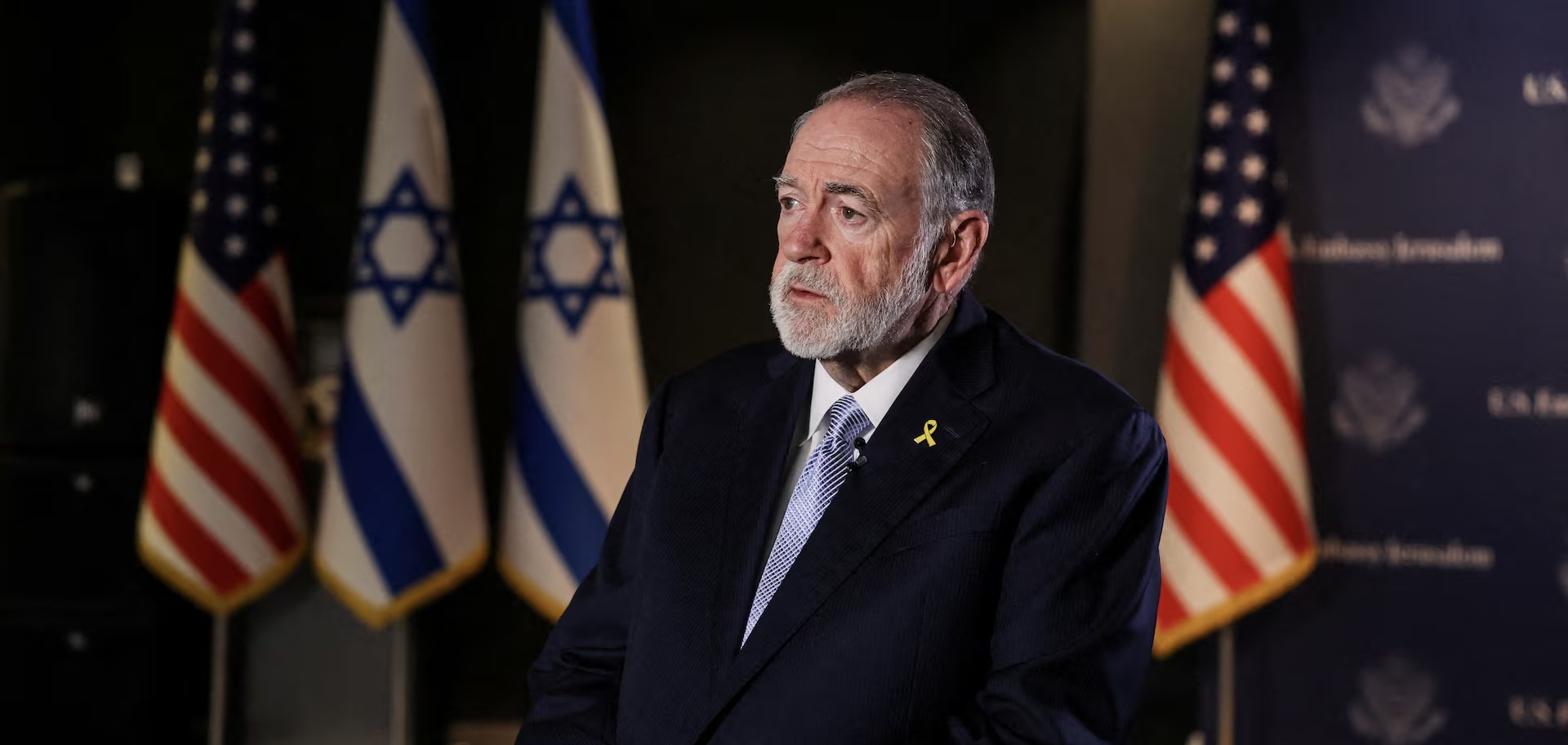 The United States will soon break ground on a permanent embassy in Jerusalem, marking what Mike Huckabee, U.S. ambassador to Israel, described as a long-term American commitment to the Israeli capital.
The U.S. operates its embassy at a former U.S. consular site that was redesignated after President Donald Trump recognized Jerusalem as Israel’s capital in 2017 and moved the embassy from Tel Aviv in 2018.
“We will soon be breaking ground on our property to begin the construction of the U.S. embassy that will be our permanent home rather than being spread out all over the country,” Huckabee said Sunday, according to The Jerusalem Post.
Huckabee spoke at a Sukkot gathering for foreign diplomats hosted by Jerusalem Mayor Moshe Lion at Safra Square. The ambassador acknowledged that construction could take years.
“It is our commitment as the United States of America and a partner of Israel to say that we are going to put a permanent imprint in this city,” he said.
On July 1, the United States and Israel signed an agreement allocating the Allenby Compound in southern Jerusalem for the permanent embassy, according to the Post. Israel had approved the site in March.
Huckabee said the permanent embassy would make the American presence in Jerusalem harder to reverse.
“There is no way that in the future someone would ever come and try to move us out of Jerusalem, where we belong,” he said.
Lion and his wife, Stavit, hosted the diplomatic corps in the municipality’s roughly 8,600-square-foot sukkah. It can accommodate about 650 people at a time and is billed by the city as the world’s largest.
Day 1,089 — Tuesday, September 29
 More than 40 countries boycotted a U.N. event on Monday marking 25 years since the 2001 anti-Israel Durban Conference. That set a new record, surpassing the previous high of 38 countries that skipped the event in 2021, according to the Israeli delegation to the United Nations.
The boycott followed a diplomatic campaign led by the Israeli Foreign Ministry, which encouraged countries around the world to avoid the event.
The anniversary should serve as a reminder of what happens when the fight against racism is politicized, according to Danny Danon, Israeli ambassador to the global body.
“The lesson of Durban is that a noble cause can lose all credibility when it is hijacked by hatred and political agendas,” Danon told JNS. “The fight against racism must never become a vehicle for antisemitism or for singling out the Jewish state.”
“Twenty-five years later, the growing number of countries boycotting the event shows that many members of the international community understand where Durban went wrong,” he said.
“The United Nations must now demonstrate that it understands as well,” he told JNS. “That means confronting antisemitism with the same seriousness as every other form of racism, rather than providing it with a platform and calling it human rights.”
The 2001 World Conference Against Racism took place in Durban, South Africa, under U.N. auspices. It was intended to address racism, racial discrimination, xenophobia and related intolerance but drew criticism from Israel, the United States and Jewish organizations over antisemitic and anti-Israel rhetoric at a parallel nongovernmental-organization forum.
A U.S. State Department report to Congress said anti-Israel rhetoric at the conference was “pervasive” and cited South Africa’s then-deputy foreign minister, Aziz Pahad, as acknowledging that the forum had been “hijacked” by participants with an anti-Israel agenda and turned into an antisemitic event.
Then-U.S. secretary of state Colin Powell said that the United States was withdrawing from the conference on Sept. 3, 2001, since its declarations contained “hateful language,” revived the discredited “Zionism equals racism” formulation, suggested that apartheid existed in Israel and singled out Israel for condemnation.
Evan R. Bernstein, CEO of B’nai B’rith International, which sent a large delegation to the 2001 conference, told JNS on Monday that B’nai B’rith representatives witnessed firsthand “how a United Nations conference meant to fight racism became a platform for the very hatred it was supposed to confront.”
“Durban’s legacy is 25 years of legitimizing the demonization of Israel and the Jewish people, and the record boycott shows much of the world is finally refusing to celebrate it,” Bernstein said.
The conference’s legacy continues to affect perceptions of Israel and Jews internationally, according to the B’nai B’rith leader.
“That is the real legacy of Durban,” he told JNS. “It did not advance the fight against racism. Instead, it gave international cover to the modern demonization of Israel and the Jewish people.”
A spokesman for the American Jewish Committee also criticized the U.N. commemoration.
“At a time when antisemitic incidents have reached record levels and anti-Zionist invective is leading to horrific violence against Jews, the world cannot afford to see the toxicity of the Durban conference repeated yet again,” the group told JNS.
“AJC will continue to stress to governments that they must not tolerate an approach to mobilizing global support for combating racism that has repeatedly provided a pretext for bad actors to demonize and delegitimize Israel and invite and legitimize hatred of and violence against Jews,” the spokesman said.
Day 1,088 — Monday, September 28
 British counter-terrorism police are investigating whether Iran was connected to a suspected bomb plot targeting RAF Fairford, a military base used by US bombers in operations against Iran, after five men were arrested near the installation early Sunday.
The suspects were detained after police received a report shortly before 1 am of three suspicious vehicles apparently traveling toward the Gloucestershire air base.
Armed officers intercepted the vehicles in the nearby Whelford area and initially arrested the five men on suspicion of offenses under the Explosives Act.
They were subsequently arrested on suspicion of preparing a terrorist act and remained in custody as counter-terrorism investigators examined the circumstances surrounding the incident.
Investigators are considering several possible motives, including Iranian involvement, Russian sabotage or an Islamist plot, The Telegraph reported.
An Iran-linked operation is currently regarded by investigators as the leading possibility, according to a source familiar with the investigation citing by the report, though British authorities have not publicly attributed the suspected plot to Tehran.
“We are in the early stages of an investigation, and five men remain in custody,” Counter Terrorism Policing Senior National Coordinator Vicki Evans said.
“As you would expect we are working closely with our partners to understand the circumstances of the incident.”
An Army explosive ordnance disposal team was brought in to inspect the three vehicles, prompting authorities to establish a 400-meter security cordon and evacuate approximately 85 nearby households as a precaution.
Images from the scene showed bomb-disposal equipment operating around three white vans while armed police sealed roads surrounding the area.
The operation began after a local resident reported seeing the vehicles and several men behaving suspiciously near the base during the early-morning hours. The witness said some of the men appeared to be wearing masks or balaclavas and scattered after being seen.
US President Donald Trump said American and British authorities had worked together on the case and claimed the suspects had been under surveillance before their arrests.
“They were looking to do big damage,” Trump said.
“We had them under view for a long time, and we got them.”
Trump praised the cooperation between the two countries, calling the operation “an amazing job.”
His account appeared to suggest that authorities possessed intelligence about the suspects before the public report that triggered the police response. British officials have not publicly detailed what intelligence, if any, existed beforehand.
RAF Fairford has assumed heightened strategic importance during the war with Iran. The Gloucestershire installation has hosted US Air Force B-1 and B-52 bombers and has been used to support American military operations against Iranian targets.
Its role previously drew explicit warnings from Tehran.
Iran’s Islamic Revolutionary Guard Corps said in July that bases used to support attacks against Iranian territory could be subjected to retaliation.
“Any base used for aggression against Iranian territory is a legitimate target for us,” the IRGC said at the time.
The warning prompted Britain to declare that its armed forces were prepared to defend the country against potential attacks.
Security around Fairford had already been strengthened before Sunday’s incident, with additional surveillance and protective measures introduced as US bomber activity at the installation increased.
The suspected plot has now led to further security precautions at Fairford and other British bases hosting US forces.
Day 1,088 — Monday, September 28
 As tensions rise in Judea and Samaria, i24NEWS spoke with security experts about the growing threat posed by armed Palestinian Authority forces, and the critical threat of their weapons being turned against Israel.
Lt. Col. (Res.) Maurice Hirsch, former Director of the Military Prosecution for Judea and Samaria, told i24NEWS, “We see the Palestinian police participating and instigating terror. They are the terrorists.”
“And here they are building a state, with an army, this Palestinian state, which is sending representatives to train in Qatar, to train in Pakistan — against whom they are fighting exactly?”
Ro’i Drucker, Judea and Samaria Coordinator for Regavim, explained, “Every road in Judea and Samaria is under siege, and they are just waiting for the day they get their orders. The Palestinian Authority, for years, has been conducting a deep process of occupying the area, controlling all the roads and the main buildings in Judea and Samaria.”
“Their weapons have been trained against us since the day the Palestinian police were created, since the day they received weapons. You can remember the demonstrations at the Western Wall, right? In 1996, just days after the signing of the Oslo Accords, [late Palestinian Authority leader Yasser] Arafat commands the officers in the Palestinian Authority to “fight the Zionist enemy because they are operating in our sacred lands”.
“And from then on, from the first day that the Palestinian Authority received weapons, it turned them against us. The story does not end here, but is a question of when this event will be used against us.”
Hirsch explained, “I was here in this division for five years, 1998-2003. The first two years, were peacekeeping, the Oslo Accords, the implementation of these things.”
“What did the vision of peace bring us?” he asked. “Tens of thousands were killed, Israelis were murdered, thousands, and also on the Palestinian side, people were killed. So what, are we going to continue on the same path?”
Drucker added, “In the Oslo Accords it was about 12,000 weapons that the Palestinian Authority could hold, for the use of law enforcement. Since then the numbers grew, we know that today, the Palestinian Authority security system has about 65,000 people on salary.”
“That is, even if not all of them are officers, fighters, you can say that at least 30,000-35,000 are trained soldiers. They have several places in Judea and Samaria, in the north, the main place is the General Artillery University in Jericho. It is a complete training base, like the IDF.
“They learn how to occupy positions and how to occupy settlements. They train in the north, in the open area. They train on artillery fire, they train on sniping, invading, attacking, they train on forces that operate at night, with means of night vision, aiming at civilians.
“I don’t think that a police force needs all of this,” he emphasized.
Maj. Gen. (res.) Eitan Dangot, former Coordinator of Government Activities in the Territories (COGAT), told i24NEWS, “The military’s readiness for their turning their weapons on us is a capability that must be thorough and long-term, including how to deal with it, to differentiate and determine priorities and decide what goals are most necessary.”
“We also defused a few myths in the light of operations we carried out recently, and there are no words to describe the destruction of terrorist enclaves, especially in northern Samaria.”
Last year, a full 150 Palestinian Authority police officers took their weapons to carry out terror attacks – a hint of what could happen in the event of a large-scale attack, with tens of thousands of hostile “police officers” operating.
“How can we have let this grow from 12,000 people to what is now estimated as 67,000 to 70,000 fighters?” Hirsch demanded.
Concluding the interview, Drucker warned, “The State of Israel is today in a problematic situation – it’s a ticking time bomb.”
Day 1,087 — Sunday, September 27
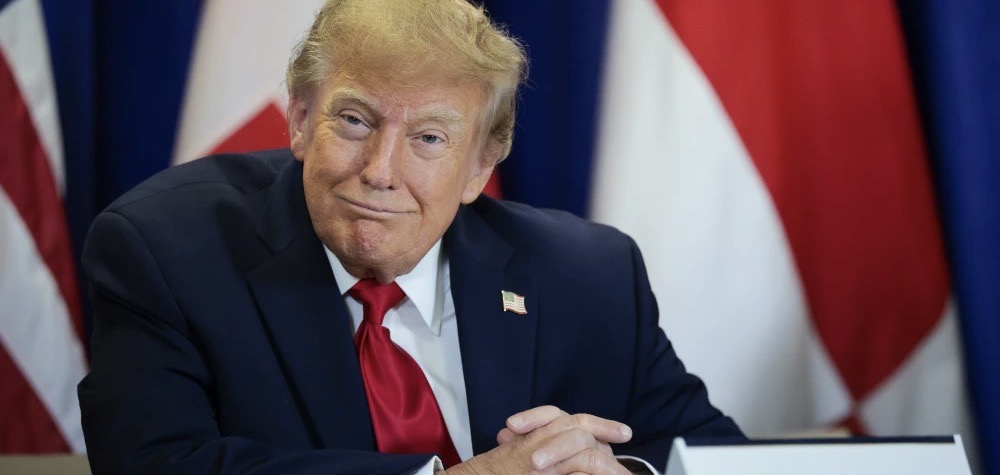 U.S. President Donald Trump on Saturday rejected Iran’s latest proposal of a seven-day ceasefire made earlier in the week on the sidelines of the United Nations General Assembly annual General Debate in New York, calling it unacceptable.
“I’ve rejected their deal,” the president told reporters.
“They want to make a deal where they open the strait immediately because they’re losing so badly. … You don’t see that in the fake news,” he continued.
“But we’re winning tremendously; we have total control of the Hormuz Strait, massive amounts of oil coming out. … Last night we had 29 ships come out. They want a make a deal, and I think that’s fine. I like making a deal too, but that deal would not be acceptable,” said Trump.
He said the blockade is choking Iran financially, “so they outsmarted themselves. They said, ‘Let’s close it, and cause a problem for the world.’ And then I came along. And we put up the greatest blockade ever in military history. It’s a wall of steel. … And guess what? They don’t have any money now, because they wanted to close the strait and I said, that’s fine, we’re going to close it on you—but everybody else is able to use it.”
Iranian Foreign Minister Abbas Araghchi on Friday told reporters, “If the necessary conditions are met, the strait can be reopened and normal maritime passage restored within seven days,” according to the Associated Press.
The seven-day period would start when the Trump administration accepts the plan, Araghchi continued. “The choice now rests with the United States.”
The U.S. president on Friday night reiterated his view on Truth Social that Iran must not have nuclear weapons, followed by another post showing a map of the Strait of Hormuz in which it is renamed, “Trump Strait.”
Meanwhile, U.S. Central Command said that as of Sept. 25, its forces have redirected 122 commercial vessels in the Strait of Hormuz “to ensure strict compliance” with the naval blockade reimposed on Iran on July 14.
Day 1,086 — Saturday, September 26
 The United Nations human rights office has expanded its controversial database of companies operating in Jewish communities in Judea and Samaria, adding 61 firms to the list, Reuters reported Friday.
The database, first released in 2020, now contains 214 companies. Most are Israeli, while firms from 10 other countries are also included, among them France, Germany, China and the United States. The list was condemned by the US during the first Trump administration.
Among the companies newly included are Israeli pesticide manufacturer ADAMA, which is owned by China’s Syngenta Group, Israeli real estate investment company Alony Hetz and Spain-based Salvat Logistica. They join businesses already on the database, including travel company Expedia and home-rental platform Airbnb.
Israel rejected the latest additions. In a statement issued Friday, it said, “This is a distorted mechanism – created by a deeply flawed body with an automatic majority against Israel.”
The UN rights office said it examined companies involved in sectors including energy, food, hospitality, transportation and agriculture. Its assessments were based on confidential information submitted to the office.
Around 60 additional companies were reviewed but ultimately excluded because the UN determined they did not satisfy its criteria for involvement in activities it considers violations of the Palestinian Arab right to self-determination.
The database has also been reduced in some cases. British-registered online travel company Opodo and Spain-based online travel agency eDreams were removed after requesting reassessments. According to Reuters, the UN concluded there were reasonable grounds to believe the companies were no longer engaged in the activities that had previously led to their inclusion.
Expedia has previously defended its listings in areas it calls “disputed areas,” saying they are clearly identified, comply with international laws and sanctions, and are subject to enhanced due diligence based on UN standards.
Day 1,086 — Saturday, September 26
 Rep. Ro Khanna (D-CA) called Friday for Israel to free Marwan Barghouti, who is serving five life sentences for attacks that killed Israelis, as the midterm elections approach.
“I am calling for the release of Marwan Barghouti from Israeli prison,” Khanna wrote on X.
In a video accompanying the post, Khanna said Palestinians should choose their own leaders and argued that Barghouti could help bring about a Palestinian state living in peace with Israel.
“Palestinians must choose their own leaders. Barghouti has a unique standing among all Palestinian factions,” Khanna said. “He’s seen as non-corrupt, a strong leader, and secular. Barghouti could deliver a Palestinian state living in peace with Israel.”
An Israeli court convicted Barghouti in 2004 on five counts of murder and one count of attempted murder for attacks that killed a Greek Orthodox monk and four other people. The court sentenced him to five consecutive life terms plus additional prison time.
Khanna acknowledged the case against Barghouti but argued that Israel should free him anyway.
“Releasing Barghouti does not provide him with a pardon or moral absolution of crimes he may have committed,” Khanna said. “In fact, a number of human rights groups say he did not even receive a fair trial. But the release is needed to move peace forward, just like Arafat and Rabin worked for peace despite their pasts.”
Khanna then compared Barghouti’s release to allowing members of the Irish Republican Army to take part in politics.
“The Irish Republic Army, the IRA, did terrible things in its war against British and Protestant domination,” he said. “But when the IRA said they had a vision of equality and coexistence, letting them participate in politics was the right decision. Barghouti has said exactly that, repeatedly.”
Day 1,085 — Friday, September 25
 New York City Mayor Zohran Mamdani repeatedly branded Israeli Prime Minister Benjamin Netanyahu a “war criminal,” but faced criticism for remaining largely tight-lipped about Iranian President Masoud Pezeshkian’s visit to New York for the United Nations General Assembly.
While Mamdani has labeled the Iranian government “brutal” and cited its “systematic repression of its own people,” critics railed against him for declining to use similar language about Pezeshkian, who arrived in the city on Wednesday.
“Mayor Mamdani, you said war criminals who set foot in New York should be arrested. Good news. One is in New York city this week,” said Iranian-born journalist Masih Alinejad, who was subjected to an assassination attempt near her Brooklyn home while Ayatollah Ali Hosseini Khamenei was still alive.
“If you have the courage to talk about arresting those responsible for crimes against humanity, start with the man sleeping five miles from your office,” Alinejad tweeted.
She invited Mamdani to view the FBI files about her case, in which several men attempted to kidnap her in Brooklyn.
Director of National Intelligence Walter “Jay” Clayton said in January that the Iranian regime coordinated a murder-for-hire plot against Alinejad because of her efforts to speak out against its human rights abuses, while federal authorities sentenced one U.S.-based conspirator to 15 years.
“The government of Iran, a sponsor of terrorism, assassination, and espionage around the globe, has engaged in a campaign of assassination plots in the United States and abroad targeting those who oppose the regime,” Clayton said in a statement.
Meanwhile, Mamdani has said Netanyahu is not welcome in New York City and has called him an “architect” of “genocide.” No similar statements about Pezeshkian could be found.
Fox News Digital reached out to Mamdani for comment.
National security expert and ACT For America founder Brigitte Gabriel also criticized the mayor over the discrepancy.
Gabriel, who has said she survived a terror attack during the 1975 Lebanese Civil War in Lebanon, now lives in the U.S.
“[The] Iranian President on American soil — while we are still in open conflict with Iran. 18 Americans dead. Thousands of Iranians slaughtered. And he’s getting a visa, a hotel, and a UN microphone in New York,” Gabriel fumed on X.
“Where are the war crimes charges? Where’s Mamdani to arrest him while he’s in NYC?”
Israeli U.N. Ambassador Danny Danon told reporters Tuesday that Mamdani should stop attacking his nation’s government and turn his attention to Pezeshkian’s administration.
“Focus on the problems of the City of New York and stop with promoting anti-Semitism, stop supporting Hamas, and stop engaging with the Iranian regime,” Danon said.
Those comments came weeks after Mamdani’s international affairs liaison sought to arrange a meeting with Iranian U.N. Ambassador Amir-Saeid Iravani.
Senate Intelligence Committee Chairman Tom Cotton told Fox News the disparity in Mamdani’s rhetoric is stark.
“Is Zohran Mamdani threatening to arrest butchers from Iran who have killed tens of thousands of their own people, or genuine war criminals from other countries?” Cotton, R-Ark., asked.
“No. The one person he cites is the leader of the Jewish State of Israel.”
While Mamdani met with President Donald Trump on Tuesday, he said afterward the two leaders will continue to have radically different views on Israel and the conflict in Iran.
Day 1,085 — Friday, September 25
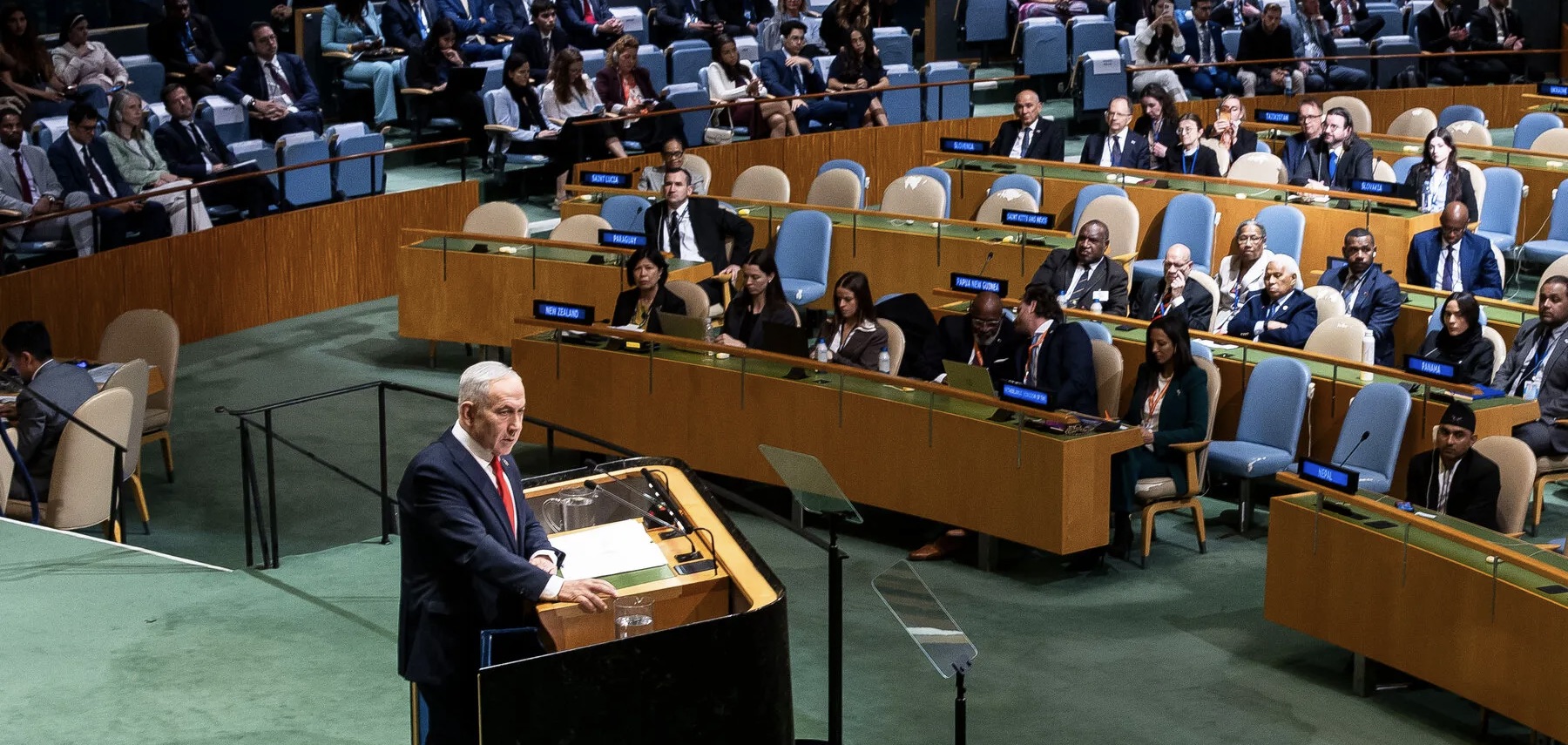 Prime Minister Benjamin Netanyahu said that the genocide claim against Israel was “the lie of the century, while adding that the Iranian regime’s toppling was “only a matter of time,” during his Thursday address to the United Nations General Assembly.
One of the main topics in Netanyahu’s speech was the different fronts that the country is fighting, with the prime minister explaining that Israel is also fighting on the information front against countries that push for antisemitic narratives and spread lies “such as the genocide claim.”
“What genocidal regime gives millions of polio vaccines to the enemy population? What genocidal regime enables the distribution of two million tons of food to Gaza, a ton per person?” Netanyahu asked the assembly, adding that a majority of the fighting was done in the social media sphere.
Netanyahu also said that there were several countries in the region actively financing information campaigns against Israel, with Qatar being the first one to hold these sorts of policies and Turkey being the last one.
“Years ago, Qatar started financing universities and the toxic media outlet Al Jazeera. They did the same in Europe, by the way. And their goal was clear. Brainwash young minds to hate Israel, America, and the West. This is the same Qatar that holds the Hamas butchers of October 7,” he said.
“Now the last country to become an antisemitic spreader of lies is Turkey. [Turkish President Recep Tayip] Erdogan is a tyrant who also hosts the Hamas terror chiefs,” he added.
Netanyahu also explained that the Turkish leader has “murdered thousands of Kurdish civilians, denies the Armenian genocide, has jailed thousands of journalists, and in fact, he holds the world record for this, and illegally occupies northern Cyprus and regularly trespasses into Greece, a NATO member.”
He said that it was no surprise that now Erdogan was “attempting to trespass into Syria, and that’s not surprising. Because he called for Israel’s destruction almost every single day. He says he is going to be the ruler of Jerusalem. No sir, you won’t.”
In another moment of his speech, Netanyahu recounted the recent rise in West Bank violence, saying that the settler population can’t be represented by 150 youngsters who “throw rocks and burn down olive trees.”
“I can’t stand for vigilantes, and that’s why we are looking for them with the Shin Bet,” he continued, adding that there is no comparison between settler violence and the terror attack perpetrated by Palestinians against Israeli civilians in [Judea and Samaria].
“Three days ago, an Israeli-French citizen was shot by a Hamas terrorist in a lake in Judea and Samaria. Two days ago, a reservist was run over by a terrorist while in Judea and Samaria,” he recounted, then explaining that the victim of the car ramming was Neria Leiter, an American citizen who serves as an IDF reservist and is the son of Ambassador to the US Yechiel Leiter.
“In a recent post, before he was attacked, Neria wrote this: We have no country; it is a privilege to defend it. To Neira, and to all the heroes of Israel, I pledge: Your sacrifice won’t be in vain. We will continue to fight and to win, because we have no other choice,” Netanyahu said.
jerusalem post
Day 1,084 — Thursday, September 24
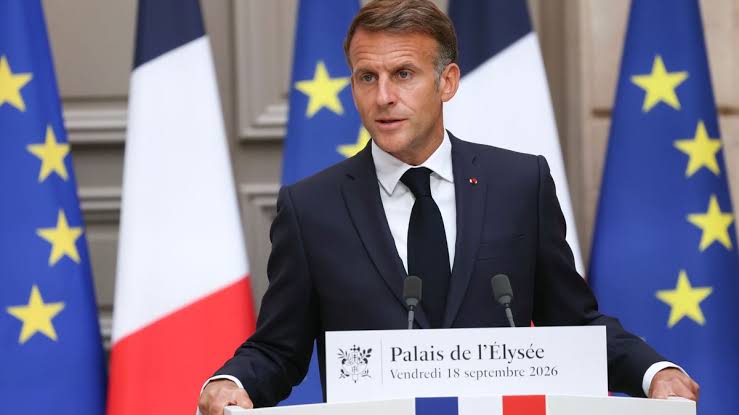 Israeli Prime Minister Benjamin Netanyahu sharply rebuked French President Emmanuel Macron after the French leader told the United Nations General Assembly that Hamas had “never been active” in Judea and Samaria, also known as the West Bank — remarks that came just days after a French-Israeli father of six was murdered in a shooting attack carried out by a reported Hamas operative.
Speaking before the UN General Assembly on Tuesday, Macron criticized Israeli actions in Judea and Samaria, asking, “In the name of what?” before adding that “Hamas has never been active in the West Bank.” Hamas does not govern the territory, which is administered in part by the Palestinian Authority, but the terrorist organization has maintained cells and operatives there for years.
Netanyahu responded with unusually forceful language.
“The grotesque absurdity of Emmanuel Macron’s statement is staggering,” Netanyahu’s office said.
The prime minister pointed directly to the murder of Netanel Shukrun, a French citizen and father of six who was shot Sunday near the Ein Raya spring outside Neve Tzuf as he visited the site with his 16-year-old son ahead of Yom Kippur. Israeli reports identified the suspected gunman, Qadri Samara, as a Hamas operative. Shukrun reportedly warned his son to flee moments before he was fatally shot.
“On Sunday, the eve of Yom Kippur, just two days ago, Netanel Shukrun — a FRENCH CITIZEN and father of six — was murdered in his car by a Hamas terrorist in Judea and Samaria,” Netanyahu’s office said. “With his final breath, he told his son to run.”
Netanyahu added that Hamas terrorists have repeatedly carried out attacks in Judea and Samaria, declaring, “Ignorance is NO EXCUSE for erasing their blood.”
The murder was not the only recent evidence of Hamas activity in the territory. On August 28, Israeli forces carried out a rare airstrike near Jenin that killed Qais Bitawi, whom the Shin Bet identified as the head of Hamas activity in the Jenin refugee camp. Hamas itself acknowledged Bitawi as one of its operatives. Israeli security officials said he had been involved in planning and carrying out attacks against Israeli civilians and security forces.
Day 1,084 — Thursday, September 24
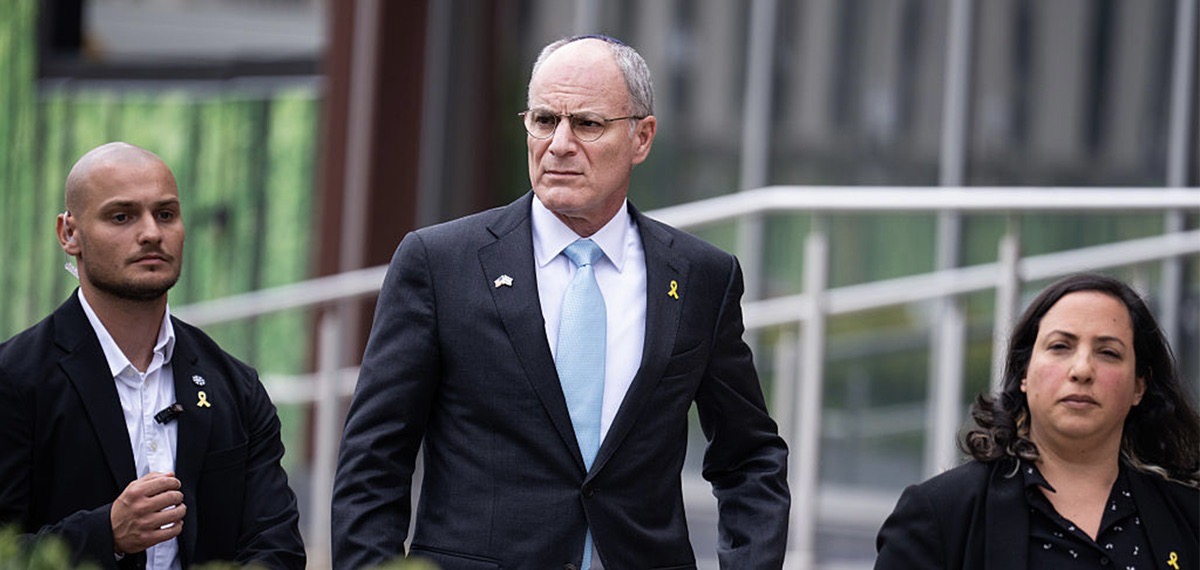 Israeli Ambassador to the United States Yechiel Leiter is abruptly returning to Israel ahead of Prime Minister Benjamin Netanyahu’s address to the United Nations General Assembly (UNGA) after learning that his son, IDF reservist Neria Leiter, was critically wounded in a Palestinian terrorist attack.
The ambassador revealed on social media that doctors are “fighting to save the life” of his son after a car ramming at the Maccabim (Bell) checkpoint in Samaria earlier in the day.
“I am grateful to the IDF, to the medical team at Shaare Zedek who are now fighting to save the life of Neria Dov ben Chana [Leiter], and for the prayers of the people of Israel,” he wrote.
“I believe in the power of prayer, and I believe that when the people of Israel unite, miracles happen,” Leiter underscored. “Neria needs a miracle.”
Israeli Prime Minister Benjamin Netanyahu visited the Leiter family at the hospital before departing for New York to speak at the UNGA on Thursday.
Video footage of the attack showed a white vehicle accelerating rapidly, directly striking Neria Leiter, who was thrown several feet. The terrorist was shot dead shortly after by IDF forces, identified as Mahmoud Mohammad Sliman, who lived in the nearby Arab village Beit Ur al-Tahta.
Neria Leiter arrived at the Shaare Zedek Medical Center trauma unit in Jerusalem, receiving hours-long emergency brain surgery. Doctor Alon Schwartz, in a statement, detailed that the most severe injury was to Leiter’s head, adding that while his condition has been stabilized by multiple medical teams, his life is “still in danger.”
The Ambassador’s eldest son, Moshe Yedidya Leiter, was killed in combat in Gaza on November 10th 2023, one month after the October 7th Hamas massacre that ignited the war.
“Neria continued to serve in the reserves after losing his older brother, Moshe Yedidya Leiter, of blessed memory. Since October 7th, he has served hundreds of days in the reserves on multiple fronts,” the ambassador highlighted on Wednesday. “Palestinian terrorism seeks to uproot the people of Israel from their land. They choose death – we choose life.”
Following the death of his eldest son in 2023, Leiter recounted telling the Prime Minister: “Bibi, my son’s blood was not shed in vain. Finish this job. Don’t let any pressure in the world stop you. Because the only consolation of this loss is banishing evil.”
Erick Stakelbeck, host of The Watchman Newscast and Stakelbeck Tonight, issued an urgent prayer request in response to the news of the car-ramming attack that seriously injured Neria Leiter.
“Please, everyone, stop what you’re doing for just a few seconds and say a prayer for Neria Leiter,” he said in a short video message. “He is the son of Israel’s ambassador to the United States, my friend, Yechiel Leiter.”
“Yechiel is a great man. His son is an IDF soldier, bravely serving his country,” Stakelbeck noted. “He was critically wounded today in a car ramming by a Palestinian terrorist at a checkpoint in Judea and Samaria. He’s fighting for his life right now.”
“Yechiel was supposed to attend the speech of Prime Minister Netanyahu at the United Nations General Assembly in New York. He’s now flying back to Israel, rushing back to be by his son’s side,” he detailed. “His condition is very grave, folks. He needs your prayers.”
“We serve a God of miracles,” Stakelbeck underscored. “Lift him up to the God of Abraham, Isaac, and Jacob right now.”
US Ambassador to Israel Mike Huckabee, wrote, “Pray for Yechiel Leiter & entire family. They lost a son in Gaza killed by Hamas. Now a Palestinian terrorist attempts to murder IDF soldiers at a checkpoint.”
Huckabee’s daughter, Arkansas Governor Sarah Huckabee Sanders, added: “We serve a powerful God who is capable of performing miracles. This family has endured unspeakable tragedy since the death of Neria’s older brother several years ago, and our prayers are with them.”
Day 1,083 — Wednesday, September 23
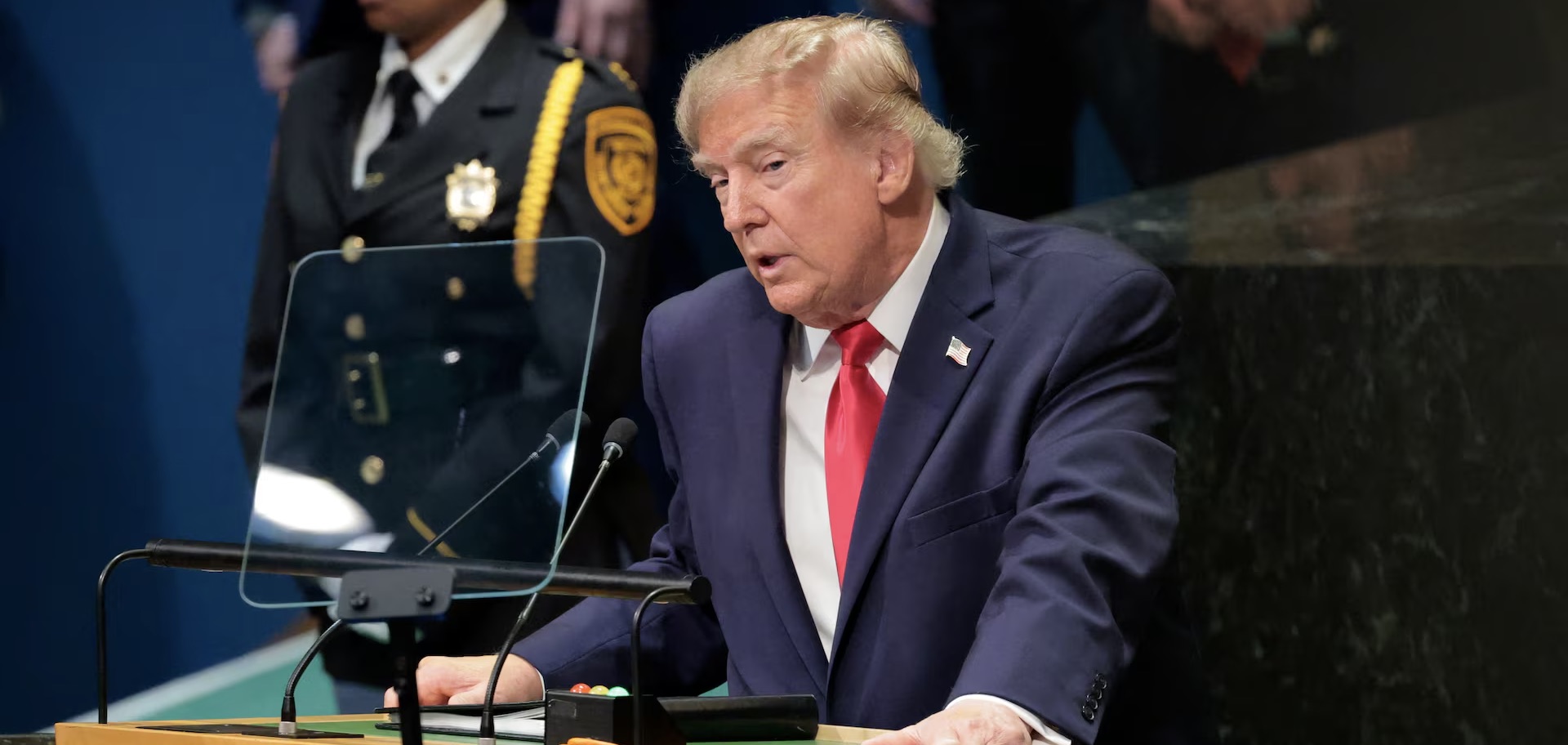 President Donald Trump issued a stern warning Tuesday for Iran to make a deal soon or face severe consequences for its pursuit of a nuclear weapon.
“I have a big decision to make: Will a deal be made with Iran that lets them rebuild and create a far greater country than it ever was before – maybe one of the greatest in the Middle East or even the world?” Trump told the United Nations General Assembly address.
“Or do I annihilate the Islamic Republic and do it quickly, never giving them a chance to kill and destroy people and countries again? Do I drive them into hell with no chance of survival and no hope of future greatness or generations?”
Trump expressed hope that a deal with the “cowards and traitors” of Iran will come “right after the election, because it doesn’t make sense for them not to.”
“They’re waiting to see how I do in the midterm election,” he continued. “What they don’t realize is that I’m not running.”
The midterm election result “doesn’t even enter my mind,” Trump stressed, adding “the only thing that does is that Iran will never have a nuclear weapon.”
Not acting now against the threat of a nuclear Iran would ultimately leave “unfinished business” and “intractable challenges” for the future.
“As president of the most extraordinary nation in history, I have no interest in leaving dangers to grow for another day,” he said. “I do not believe in letting problems fester. They only become harder to solve.”
“Ignored threats, I have confronted them. While others have talked of courage, America has shown it,” Trump continued. “While others have promised strength, I have used it to make America the most powerful country in the world. Working with many nations in this room, we are solving decades of intractable challenges, and we are settling years of unfinished business. And we’re doing it well.”
Trump opened with a repeat of his policy of American leadership on the global stage.
“I can report to you with pride that America is back, and our country is stronger today than ever before,” Trump said at the start of his remarks. “Our economy is the envy of the world. Our military is the most powerful on earth. Our technology is second to none, and we are leading in virtually everything.
“Our energy is fueling the planet. America is rising. Our nation is growing. Our power is expanding. Our country is doing better than ever before, and our future is very, very bright.”
Trump said a rising America lifts all boats around the world.
“The entire world is being lifted by the wealth, strength, spirit and momentum of a newly energized and a very powerful United States of America,” he added. “And just as we moved quickly to address problems we inherited at home, we have acted with decisiveness and speed to reshape the world stage and solve problems that have plagued us for far too long.”
Trump took pointed aim at Iran amid the conflict that has roiled the Strait of Hormuz and global oil supply lines, denouncing “brazen acts of terrorism against civilian ships.”
“I hope the Europeans realize that Iran’s goal was to complete their mad dash to a nuclear bomb from behind this conventional ballistic missile shield,” he said. “If they had succeeded, that wicked regime would have been free to spread terror and death forever, knowing that any attempt to stop them would face an arsenal of nuclear annihilation.”
Day 1,083 — Wednesday, September 23
 U.S. President Donald Trump spoke with “moral clarity” at the opening of the high-level debate at the 81st United Nations General Assembly in New York City on Tuesday, according to Danny Danon, Israeli ambassador to the global body.
“We are grateful for President Trump, for his moral clarity,” the Israeli envoy told JNS. “He touched on the main issues regarding Iran. He spoke about Oct. 7, and I think today the entire world saw that the leader in the White House was willing to lead and show the direction, and I’m sure we will see action, not only the words from the president.”
Danon told JNS that the Israeli delegation won’t miss António Guterres, the outgoing U.N. secretary-general.
“Anyone would be better than Secretary-General Guterres,” the Israeli envoy said. “We have seen the lack of leadership and the fact that he didn’t even visit Israel once after Oct. 7 and equated the IDF to Hamas.”
“His time is running out as the head of the United Nations, and there’s a lot of talk behind closed doors this week about who comes next,” Danon told JNS.
No candidate has yet been able to pull away from the field of those seeking to replace Guterres. Jewish economist Rebeca Grynspan, of Costa Rica, has won two of three straw polls, but hasn’t been able to shake the competition.
The Israeli delegation and its envoy haven’t said publicly whom the Jewish state favors in the upcoming election. Guterres is slated to depart at year’s end.
“We are following the race very carefully, and we want to see a strong leader that will come and change this institution,” Danon told JNS. “You have to reform this place. Look how much time they spend bashing Israel, obsessing with Israel.”
Israeli Prime Minister Benjamin Netanyahu, who is scheduled to address the General Assembly on Thursday, is scheduled to spend just a matter of hours in New York City.
“First, there will be surprises. I can guarantee that,” Danon told JNS, of Netanyahu’s address.
The premier has often used props at prior U.N. speeches or unveiled major policy goals.
“It’s not an easy week for him. We have the High Holidays. We have the campaign,” Danon said, of Israeli elections, explaining why the prime minister’s visit is to be so quick.
“I’m sure he will speak about Iran, about the Abraham Accords, about the opportunities in the region, and I think that the combination of the leadership of President Trump and Prime Minister Netanyahu, we can achieve a lot more in the region,” Danon told JNS.
JNS asked if Israel plans to meet this week on issues like the Board of Peace, Iran and the Houthis.
“I’m happy that we are not in the center,” the envoy said. “It’s a good sign usually here at the United Nations.”
Jordanian King Abdullah and Turkish President Recep Tayyip Erdoğan, per usual, have been taking aim at Israel at the global body.
“They speak about Gaza and blame us for a lot of things they shouldn’t blame us for,” Danon told JNS.
“I heard the speech of Mr. Erdoğan,” he said. “It’s horrible the way he speaks.”
Danon accused the Turkish leader of “using the Palestinians in order to attack Israel.”
“I would say that he doesn’t really care about the Palestinians,” he told JNS. “You can read between the lines. It’s a campaign of hate, of incitement.”
Day 1,083 — Wednesday, September 23
 The Ministry of Diaspora Affairs and Combating Antisemitism and the National Public Diplomacy Directorate in the Prime Minister‘s Office are launching The UN’s Lie Industry, an exposé of the “systematic and false bias against Israel” as the United Nations kicks off its first day of the General Assembly.
The campaign video depicts the UN General Assembly hall populated by parrots representing various countries, the organizations said in a statement. “The parrots repeat the same message one after another: ‘Blame Israel.’”
The call duplicates as the video progresses, with echoes heard throughout the hall until it becomes a choir repeating the same accusation.
The video concludes with the message: “Repeating lies doesn’t make them true.”
Diaspora Affairs and Combating Antisemitism Minister Amichai Chikli said, “Time and again, the UN General Assembly hall has turned into an echo chamber for libels against Israel. The same lies pass from mouth to mouth, report to report, and speech to speech, until an attempt is made to present them as an agreed-upon truth.”
“The new video sharply underscores this culture of repetition. Even 1,000 repetitions of a lie will not make it true, and we will continue to expose the facts behind the anti-Israel choir,” he concluded.
The Diaspora Ministry also launched a website tied to the campaign and exposing the “lies and biases in UN publications,” according to the statement.
The website was made in cooperation with the National Security Council (NCS), and contains “comprehensive research sources documenting how biased information about Israel has been gathered, given institutional endorsement, and distributed worldwide since the October 7 attacks,” according to the statement.
It addresses topics such as information manipulation, an organized culture based on hostility towards Israel, false claims of starvation in Gaza, Hamas infiltration into UNRWA, and the fabrication of a “genocide” narrative, among others.
“The site also includes testimonies from UN personnel regarding internal silencing and persecution,” the statement added.
“A large portion of the false blood libels against Israel come from the workshop of UN reports,” National Public Diplomacy Directorate Head Tzipi Hotovely alleged.
He also said that the “false starvation campaign in Gaza is just one example of this machinery of lies.”
“Facing this propaganda, we are putting forward the truth and the facts to shatter the industry of lies against Israel.”
The organization described the video as illustrating “one of the central mechanisms exposed on the website: An international system that echoes itself. Claims against Israel pass between bodies, countries, UN agencies, and media outlets, are cited repeatedly, and are given the appearance of an accepted fact, even when their source has not been checked or verified.”
The campaign, which focuses primarily on US and European capitals’ policies on Israel, was produced via the Government Advertising Agency (Lapam).
Day 1,082 — Tuesday, September 22
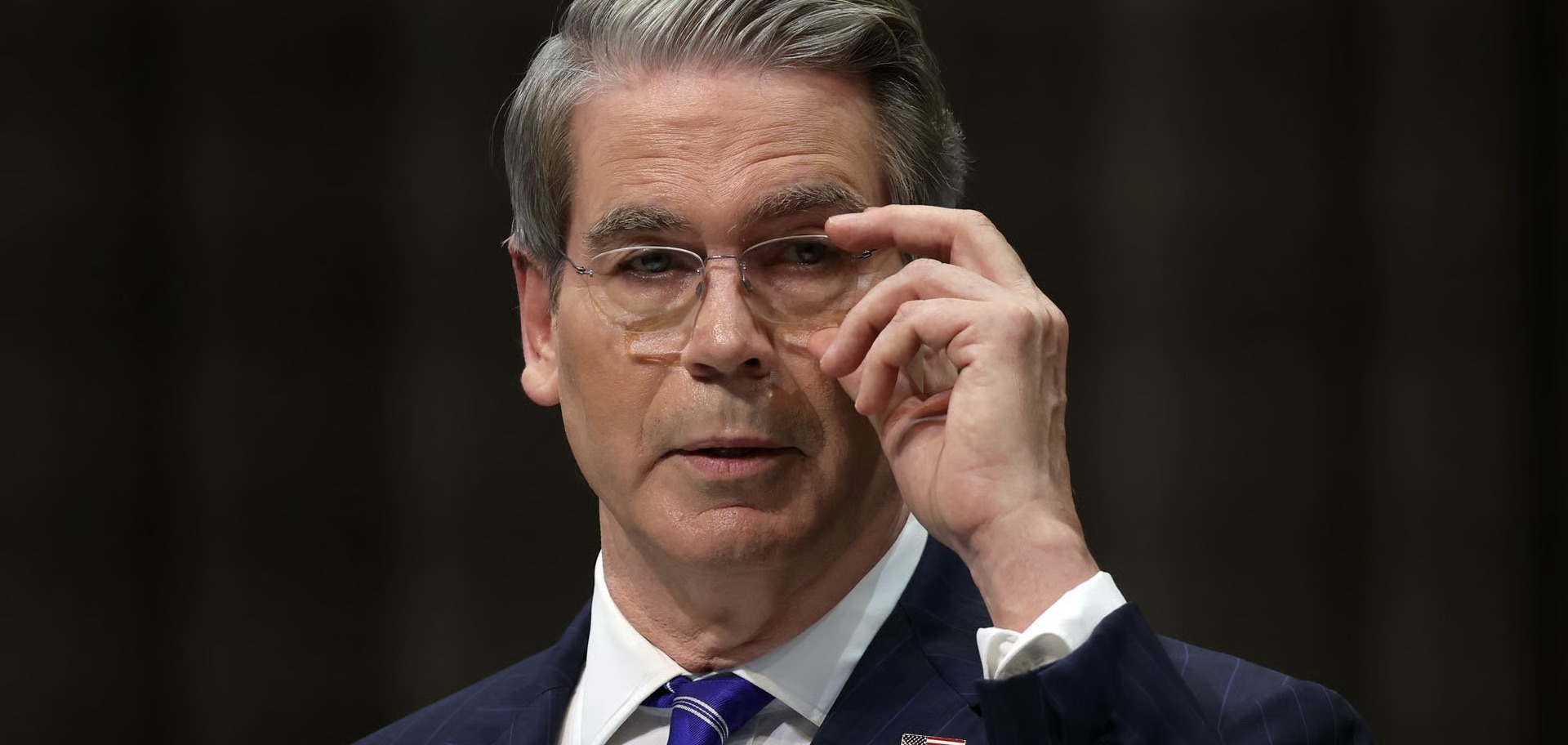 Foreign companies continuing to provide services to Iranian airlines will risk facing US secondary sanctions starting on Wednesday, US Treasury Secretary Scott Bessent announced on Monday.
“On September 23, all Iranian airlines will be grounded globally,” Bessent told CNBC.
The move could effectively prevent Iranian carriers from operating at airports worldwide.
He noted that the US threat applies not only to the airlines themselves but also to airports, fuel suppliers, ticketing agencies, and other service providers.
“If they land, they cannot be supplied with fuel or landing services, nor can tickets be sold for them; otherwise, you will be cut off from the dollar system,” he said.
Earlier this month, the US Treasury Department imposed sanctions on all active Iranian airlines not previously included on sanctions lists, warning that foreign companies assisting them could be barred from the global financial system.
The move is part of the Trump administration’s Operation Economic Outcast, designed to ramp up economic pressure on Tehran alongside the conflict with Iran.
Day 1,082 — Tuesday, September 22
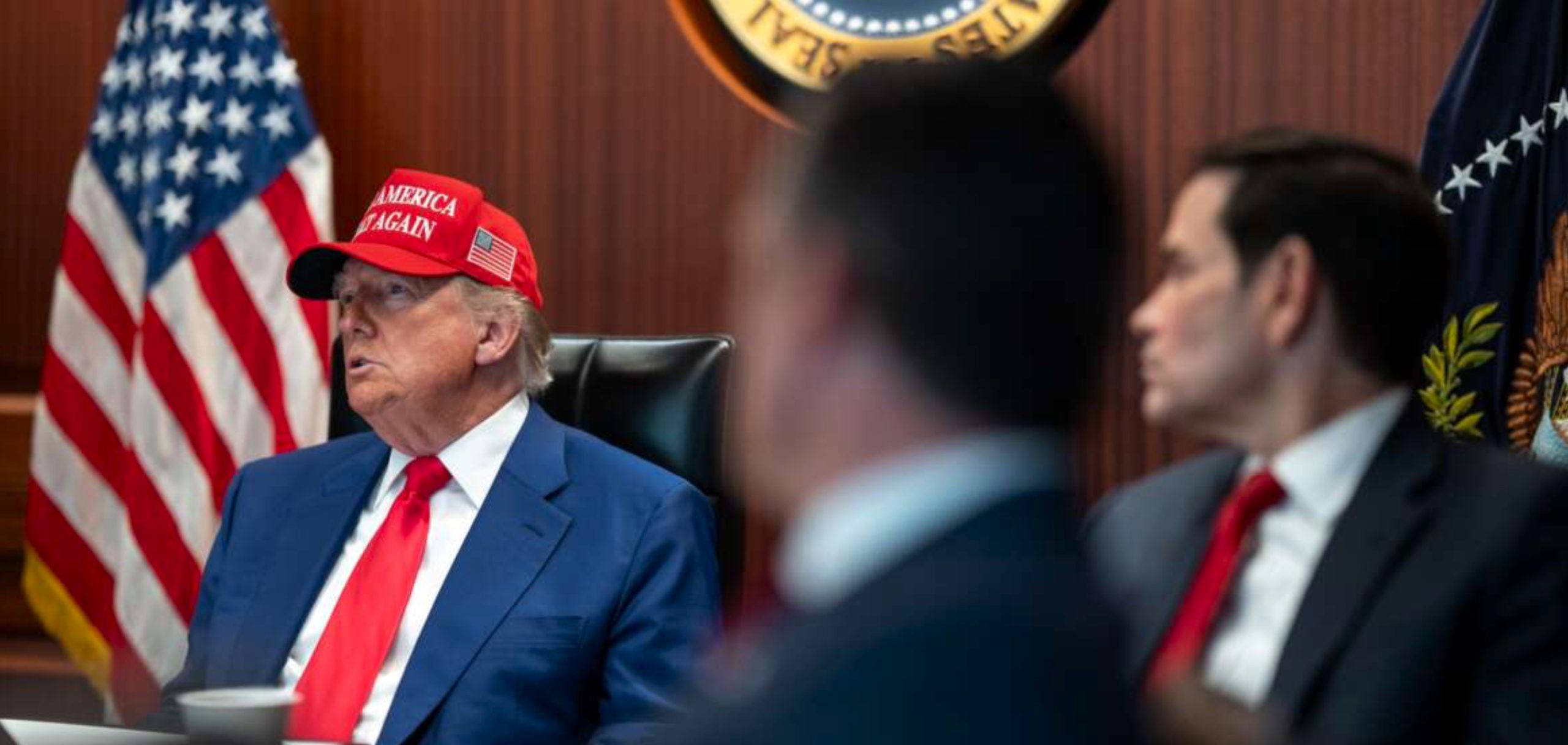 President Trump is weighing his next move in the war with Iran, while the Tehran regime is rebuilding a nuclear site previously targeted by Israel. Iran’s president, meanwhile, is preparing to come to New York for the United Nations General Assembly.
Trump is considering whether to launch another major military campaign against Iran. He told Axios, “I have a big decision coming up: do I want to go in and annihilate them, or do I not?”
He added, “Anything could happen with me.”
The president is set to meet next Tuesday in New York with the leaders of Saudi Arabia, the United Arab Emirates, Qatar, Kuwait, and Oman. He revealed that he wants their views before deciding how Washington will proceed.
He has not said whether he will decide before or after the U.S. midterm elections. He also claims that Iran remains interested in an agreement.
According to experts, Iran is rapidly rebuilding the Taleghan 2 Nuclear Facility, about 20 miles southeast of Tehran. Israel has targeted the site multiple times, including twice during the recent conflict.
Satellite images from September 13 show Iran adding reinforced concrete around the underground site, potentially increasing its protection from another airstrike.
A large tarp covers the facility, which the Institute for Science and International Security says is apparently designed to conceal the reconstruction from satellite and aerial surveillance.
The International Atomic Energy Agency (IAEA) has referred Iran to the United Nations Security Council for failing to provide inspectors the access and information needed to account for its nuclear material.
Iranian regime leaders today orchestrated hundreds of thousands to turn out for a pro-government demonstration and parade. It was the largest such gathering since the war broke out in February.
The United States has approved visas for Iranian President Masoud Pezeshkian and Foreign Minister Abbas Araghchi to attend the U.N. General Assembly, even as the two countries remain at war.
After Washington barred Palestinian Authority President Mahmoud Abbas from entering the country, the General Assembly voted to allow him to address the gathering virtually.
Israeli Prime Minister Benjamin Netanyahu is also slated to meet in New York with Secretary of State Marco Rubio. An uncomfortable meeting with Trump could follow on Thursday after the prime minister meets with Elon Musk in Texas.
Speaking Thursday at the Israeli President’s Residence, Netanyahu laid out an uncompromising endgame for Israel’s war against Iran and its proxies. “We have to complete the mission to the end,” Netanyahu insisted.
He stated that Israel is settling accounts with the Hamas terrorists responsible for murdering Israelis on October 7th, 2023, as well as those who remain.
Regarding Iran, the prime minister admitted that Israel has made significant progress but still has work to complete.
“We must, first and foremost, topple the Iranian regime; this is my directive, and this is our top mission. And we also have to eliminate Hezbollah and eliminate Hamas,” he insisted.
Day 1,081 — Monday, September 21
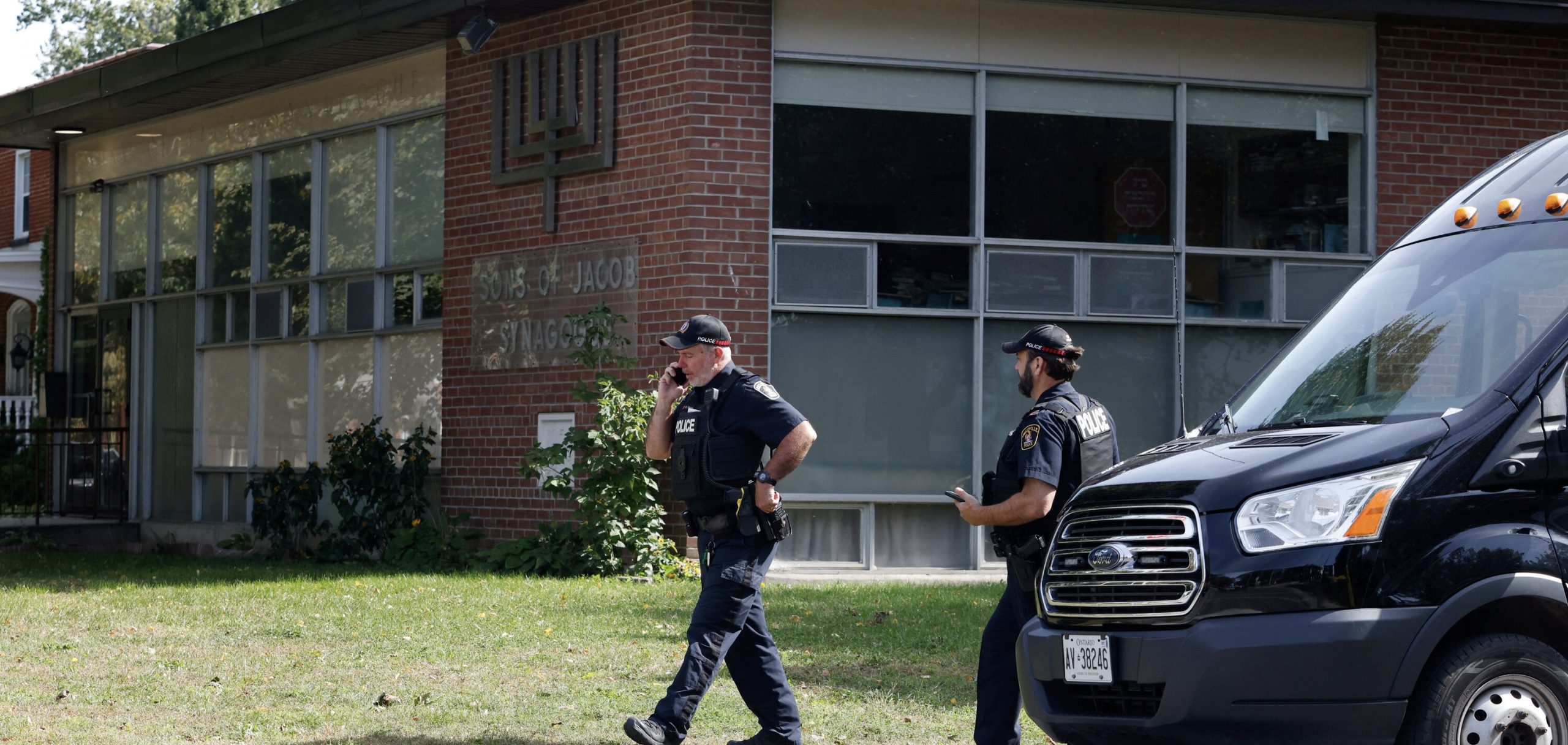 The officer who was shot outside a Belleville, Ontario synagogue on Sunday has been identified as Const. Jeff Smith.
He is recovering in hospital and is in critical but stable condition, according to Belleville Police Service’s Deputy Chief Sheri Meeks, who spoke to media on Monday.
“While he continues to face a significant road to recovery, his condition has stabilized, and we remain hopeful and encouraged by his progress,” she said. “Our thoughts are with Const. Smith, his family, his friends, and his colleagues. Supporting them has been our top priority.”
Smith was stationed outside the Sons of Jacob Synagogue on Yom Kippur, the holiest day in the Jewish calendar. The officer was present because of safety concerns, especially on a night where there would be many congregants in attendance, the synagogue’s president Norman Weddum told National Post.
Weddum said that before entering the building, he thanked Smith for being there. Soon after the evening prayer service started, around 7 p.m., dozens of shots rang out.
A 29-year-old suspect armed with a shotgun opened fire at Smith, who then is believed to have shot back, said Kristy Denette on Monday. She is a spokesperson for the Special Investigations Unit (SIU), the province’s police watchdog that is leading the investigation.
Denette said it is currently believed that the man drove to the area in a truck. A second officer got to the scene shortly after and fired back at the suspected shooter before more officers arrived.
During the incident, Smith sustained serious injuries, said Meeks.
Smith joined the Belleville Police Service on Dec. 27, 2013. Meeks said he served the community with distinction for nearly 13 years.
“He is a longstanding and highly respected member of our emergency response unit, known by his colleagues as a dedicated officer, trusted teammate, and committed public servant,” she said.
The suspect was hospitalized in life-threatening condition. There were an estimated 25 people gathered inside the synagogue, Weddum told National Post, but no one in the congregation was injured.
While the SIU is involved because police officers discharged weapons at a person, the Belleville police are leading the criminal side of the investigation.
Meeks said the Belleville police are “committed to being as transparent as possible and keeping our community informed” but would not be commenting on the investigation further at this time.
Day 1,081 — Monday, September 21
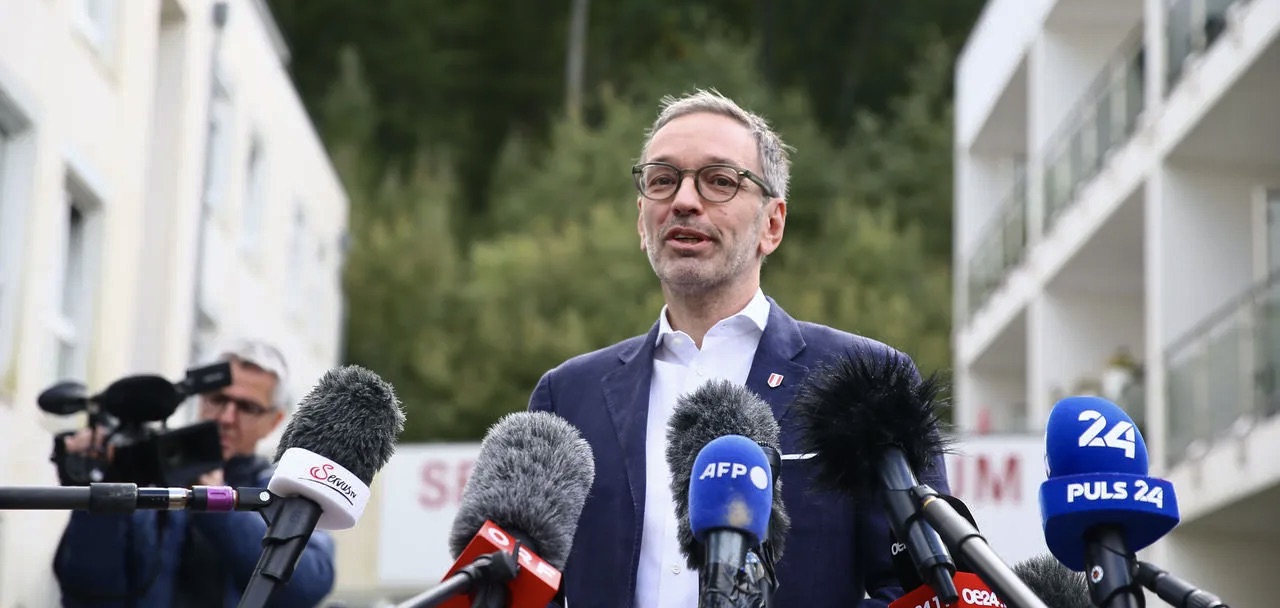 Israel is moving toward a historic rapprochement with Austria’s Freedom Party after its leader, Herbert Kickl, apologized for Austria’s role in the Holocaust, strongly condemned the Oct. 7 Hamas attacks, and pledged to move Austria’s Embassy to Jerusalem if his party takes power.
Israeli Foreign Minister Gideon Sa’ar called Kickl’s remarks an “important and positive development,” signaling that Israel is prepared to begin a substantive dialogue with the Freedom Party, or FPÖ, despite the party’s controversial history.
“Building trust also requires translating commitments into actions,” Sa’ar said, adding that Kickl’s statements make possible a “substantive, open, and sincere dialogue” to better understand the Austrian leader’s positions and commitments.
The development represents a significant change in Israeli policy toward the FPÖ, which was founded in 1956 and whose first leader, Anton Reinthaller, was a former SS officer and Nazi government minister. Israel has historically kept the party at arm’s length.
Speaking at a European Parliament conference in Strasbourg attended by representatives of Israeli Prime Minister Benjamin Netanyahu’s Likud party, Kickl said Austria and his party must confront their history and pledged to fight antisemitism.
“Oct. 7 was the deadliest day for Jews since the Holocaust,” Kickl said. “It was a crime against humanity, not resistance.”
He also affirmed Israel’s right to exist and defend itself and backed adoption of the International Holocaust Remembrance Alliance’s definition of antisemitism.
Kickl went further on Israeli territorial and diplomatic issues, recognizing what he called the Jewish people’s historic connection to Judea and Samaria and promising that, if he becomes chancellor, relocating Austria’s Embassy from Tel Aviv to Jerusalem would be of “great importance.”
Israeli Diaspora Affairs Minister Amichai Chikli described the development as more than a turning point — a “crossing of the Rubicon” — following what he said had been a lengthy process of trust-building and cooperation between Israel and the FPÖ.
He called the Strasbourg gathering a “historic turning point” in relations between the party, Israel and the Jewish people.
Day 1,081 — Monday, September 21
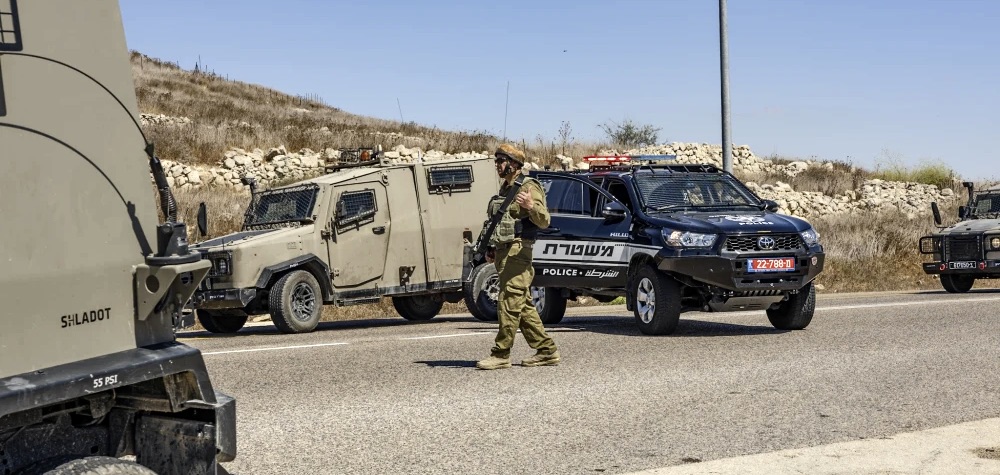 A Palestinian terrorist shot and killed Netanel Shakron, a father of six, near Neveh Tzuf in the Binyamin region of Samaria on Sunday, on the eve of Yom Kippur, the holiest day on the Jewish calendar, the Israeli Foreign Ministry said.
“Today, six young Israeli children lost their father to heinous terrorism,” the ministry stated, of the attack in the area which is also known as Halamish. “May his memory be a blessing.”
Shakron was reportedly in his 40s.
In the past, news outlets, international organizations and Palestinian leaders have highlighted what they say is Israeli aggression on and leading up to Muslim holidays and holy months. The Oct. 7 terror attack took place on a Jewish holiday.
The gunman reportedly shot at Israeli civilians from a vehicle near a natural spring in the area. The victim’s son saw him get shot, according to reports. Shakron was later pronounced dead at Beilinson Hospital in Petach Tikvah.
Minutes after the shooting, an Israeli soldier near the scene arrived and shot at the attacker, injuring the latter, who fled, the Israeli military said.
Israeli troops later caught the terrorist after he sought treatment at a nearby hospital, according to the Israel Defense Forces. Israeli special forces assisted in the search, and Israeli Air Force craft were deployed to support the operation.
“No terrorist is immune, nor are those who aided them. We will settle the score with all of them. In Gaza, in Lebanon and in Judea and Samaria,” Israeli Prime Minister Benjamin Netanyahu stated on Sunday.
Day 1,079 — Saturday, September 19
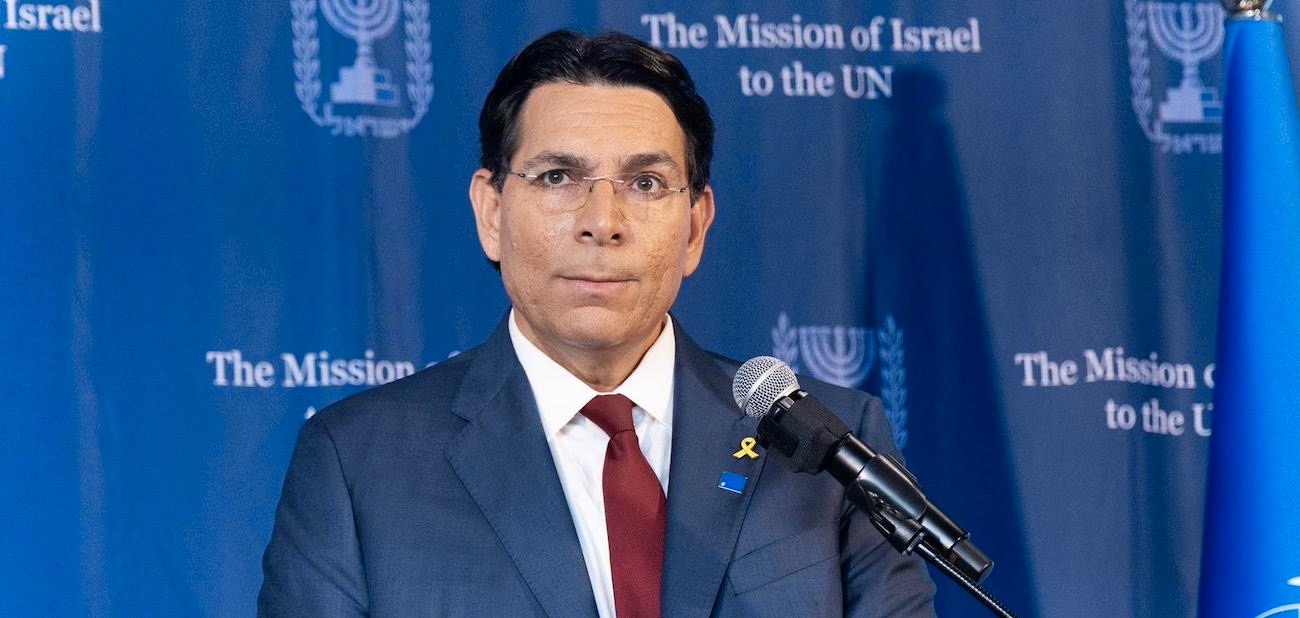 Israel’s ambassador to the United Nations, Danny Danon, said Saturday that Iran is seeking to spread its ideology across the Middle East as he argued the country poses a threat beyond Israel.
Danon told Aishah Hasnie on “Fox News Live” that Israel could eventually resume regional diplomatic efforts that were disrupted by the Oct. 7, 2023, Hamas attacks.
“On the contrary, I think, you know, we had negotiations with many countries. October 7th happened three years ago. It pushed us back. But now I think we can go back on track and continue where we stopped.“
“We have to face the brutality of Iran, the threat of the Iranians,” Danon said. “They want to expand their radical ideas to the region.“
“We will not allow them to take over the Middle East.“
Danon also cited Iran’s attacks on the United Arab Emirates and Saudi Arabia while arguing Tehran’s conflict with Israel is not rooted in a territorial dispute.
Day 1,079 — Saturday, September 19
US Denies Visa To Mahmoud Abbas For Terror Payments; United Nations Secretary-General Slams Decision
 UN Secretary-General Antonio Guterres on Friday criticized the US decision to deny Palestinian Authority (PA) chairman Mahmoud Abbas a visa for the second year in a row, preventing him from attending next week’s UN General Assembly in person.
Guterres “deeply regrets” Washington’s decision, his spokesman Stephane Dujarric said. “The Secretary-General is concerned about the impact of this decision on the ability of the State of Palestine to participate fully in the work of the United Nations,” Dujarric said in a statement.
The State Department announced Wednesday that visa sanctions against Palestine Liberation Organization (PLO) members and PA officials would be extended, meaning Abbas will again be unable to attend the General Assembly in person.
Washington said the decision was based on the PA’s failure to fulfill commitments it had made to the United States. The administration cited US laws prohibiting the PA from using international organizations to target Israel, seeking unilateral recognition of a Palestinian state, paying stipends to terrorists and glorifying violence.
“As a consequence of their failure to reform, contrary to their commitments to the United States, and their ongoing activities that undermine the prospects for peace, the United States will extend sanctions that deny visas to PLO members and PA officials,” the State Department said.
The US nevertheless said it would maintain a waiver permitting staff from the PA Mission to the UN to continue operating in New York despite the wider visa restrictions.
In response to Washington’s decision, the UN General Assembly voted Thursday to permit Abbas to deliver his address to next week’s high-level session remotely. The measure passed by a vote of 152-3, with four countries abstaining. The United States, Paraguay and Israel voted against it.
Israel’s Ambassador to the United Nations, Danny Danon, criticized the decision and said Abbas bears responsibility for changing the Palestinian Authority’s policies.
“As long as Abbas continues his policy of making payments to terrorists and their families, he cannot expect the international community to simply ignore it. Instead of coming to New York, he will send videos. The responsibility for changing this policy is in his hands.”
Day 1,079 — Saturday, September 19
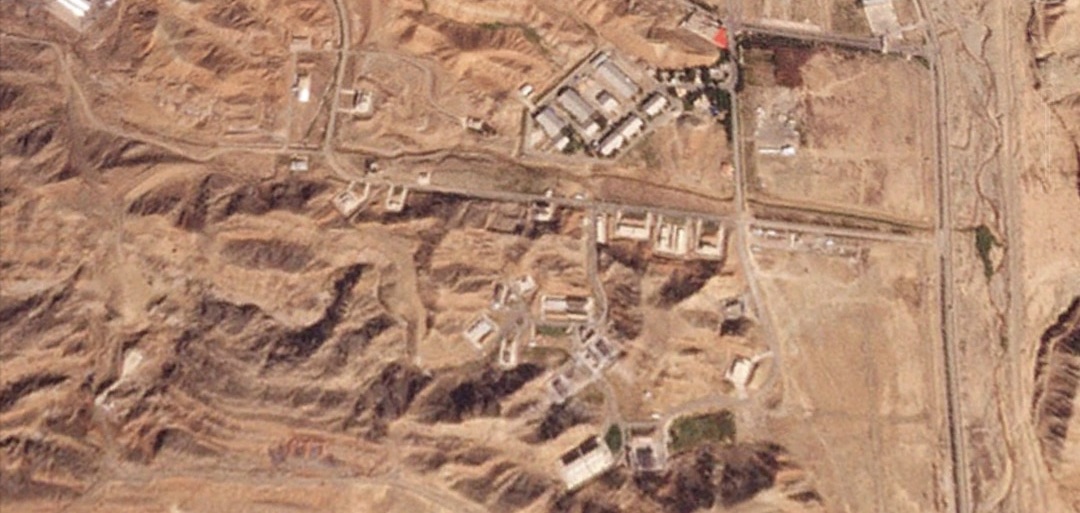 Iran is carrying out extensive reconstruction at Taleghan 2, a nuclear-related facility near Tehran damaged in strikes by Israel, with new satellite imagery showing heavy construction equipment and measures to strengthen the site against future aerial attacks.
Vantor Technologies imagery from September 13 shows construction underway at Taleghan 2 inside the Parchin military complex, approximately 30 kilometers southeast of Tehran, the Institute for Science and International Security said Thursday.
Iran has placed a large tarp over the damaged underground structure, blocking satellites and aerial reconnaissance from observing activity beneath it, according to the institute.
Elsewhere at the site, satellite images show bulldozers, dump trucks, cranes, concrete mixers and concrete pump trucks.
New concrete reinforcement has been installed along one side of the facility.
A similar structure observed in July on the opposite side now appears complete. The institute said the additions would increase protection against aerial blasts.
Reconstruction began in June, when work concentrated on three penetration holes left by bunker-buster weapons used three months earlier.
Satellite imagery examined in June and July showed workers excavating around the holes, installing reinforcing steel and preparing them for permanent concrete caps.
Taleghan 2 was first destroyed in Israeli strikes in October 2024. Reconstruction began in May 2025 before Israel struck the facility again in March 2026 during Operation Roaring Lion, leaving it heavily damaged.
The latest construction represents Iran’s second attempt to rebuild the facility in less than two years.
Taleghan 2 was used during Iran’s AMAD Plan, which Western governments and nuclear experts have linked to work on a nuclear explosive device in the early 2000s. The institute’s reconstruction of information from Iran’s nuclear archive found that the facility previously contained a specially designed high-explosive chamber and flash X-ray equipment for studying explosive compression.
IAEA Director General Rafael Grossi said this week that inspectors have conducted almost no in-field verification in Iran for more than six months, apart from an inspection of the Bushehr nuclear power plant in June.
For more than a year, the IAEA has also been unable to maintain continuity of knowledge over previously declared enriched uranium stocks at facilities affected by military strikes.
Before access was lost, the agency estimated Iran held 440.9 kilograms of uranium enriched to as much as 60% purity.
Day 1,078 — Friday, September 18
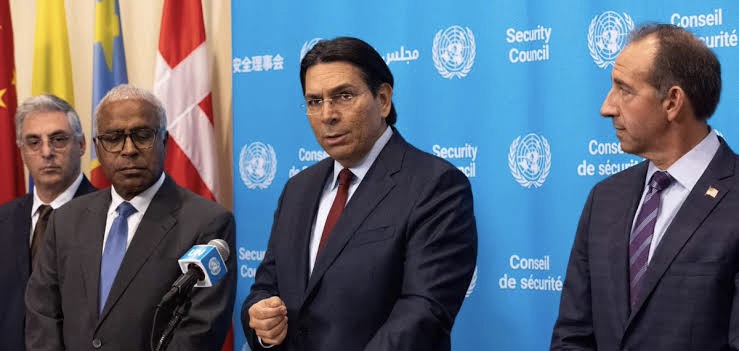 Israel’s ambassador to the United Nations said Thursday that New York City Mayor Zohran Mamdani — not Israeli Prime Minister Benjamin Netanyahu — should be arrested ahead of Netanyahu’s visit next week for the U.N. General Assembly.
Mamdani first called for Netanyahu’s arrest during his mayoral campaign last year because of an International Criminal Court warrant accusing the Israeli leader of war crimes and crimes against humanity in Gaza. Mamdani pledged to order New York City police to arrest Netanyahu, even though the U.S. is not a member of the ICC.
In July, Mamdani said his administration’s legal department was reviewing whether the city had independent authority to execute the warrant, issued in November 2024. He later said in a video posted on X that city officials determined they did not have the “independent legal authority” to do so.
Danny Danon, Israel’s ambassador to the U.N., criticized Mamdani’s rhetoric toward Israel during a news conference in New York.
“I think he already incited by putting the ridiculous claim that he can or he should arrest the prime minister,” Danon told reporters.
“If someone should be arrested, it’s Mayor Mamdani for inciting, for actually collaborating with the enemy of the United States. He sends these officials to meet with the Iranian ambassador here at the U.N.”
Danon was referring to an attempted meeting in July between Mamdani’s international affairs commissioner and Iran’s permanent representative to the U.N. amid the U.S. conflict with Iran. The meeting was canceled after the State Department intervened.
“I hope that he realizes he has a responsibility,” Danon said of Mamdani, “not to call for people to demonstrate but to take care of the city and to make sure that next week will be a quiet, functioning week for the thousands of people that will come from all around the world to participate in the U.N. high-level week.”
Netanyahu is set to address the General Assembly on Sept. 24, two days after President Donald Trump’s scheduled address.
Day 1,078 — Friday, September 18
 U.S. Ambassador to Israel Mike Huckabee called out Macklemore for antisemitism on Thursday, saying he supports NFL owners pushing to cancel Macklemore’s performances.
Huckabee made the statement in an interview with Fox News Digital, saying his time living in Israel has shown him the vast majority of criticisms against Israel are misguided and unfounded.
“It’s really unfortunate that Malcklemore has decided that he’s going to become the voice, if you will, of Jew hatred, and I don’t understand why it’s entertainers like him think that it is entertaining to go and take a pro-Hamas position, a position that supports people that viciously raped, beheaded babies, burned elderly people in their wheelchairs and did unthinkable and unspeakable things to innocent civilians as Hamas came across the border from Gaza and butchered, massacred 1,200 people, and then took 251 people hostage, including many Americans,” Huckabee said.
“The fact that there’s a pushback against that, why not? I think most of us would say that, you know, you have free speech, but that doesn’t mean that you can say anything you want anytime you want, anywhere you want without consequences. The people that own these stadiums, the people that have promoted the concerts, weren’t promoting a pro-Hamas rally,” he added.
Huckabee went on to address reports of rising antisemitism in Canada and calls for President Donald Trump’s administration to take on the issue.
Huckabee referenced a letter sent to Trump by the National Association of Christian Lawmakers earlier this month calling on the administration to allow Jewish Canadians to more easily obtain visas to enter the U.S.
“I think we’ve all seen and, frankly, been quite alarmed at some of the extraordinary Jew hatred that is taking place in Canada, and many Canadian Jewish people are really concerned and afraid for their lives,” Huckabee said.
“And they fear that they might be the subject of some violent attack or a terror attack. The rhetoric in the country has gotten very, very harsh, and President Trump, as you may remember, took the letter from the NACL, and he published it and said that he would certainly look into it.”
The ambassador also addressed the latest developments in the conflict with Iran, namely the Iran-backed Houthi offensive against Saudi-backed government forces in Yemen.
Asked whether Israel may be interested in assisting Saudi forces in the conflict, Huckabee said Israel has made it clear it wants to improve relations with all of its close neighbors in the Middle East.
“Would Israel be willing to bring some assistance? I think they would. Whether they have been asked? That’s something to ask the Saudis or to ask the Israelis. Wouldn’t be for me to say what has been done or what has been requested. But there is a growing sense that Israel isn’t the problem over here. Israel isn’t trying to take anybody else’s land,” he said.
Day 1,077 — Thursday, September 17
 The New York Times removed a sentence from an article about the anti-Israel documentary “NAZA” after the wording sparked criticism over its characterization of Israelis’ status as victims of the October 7 Hamas massacre.
The sentence appeared in a Monday article by Times reporter Isabel Kershner. The story, which discussed the controversial film after it received the Special Jury Prize at this year’s Venice Film Festival, initially stated that “Israelis are deeply divided over how to apportion blame for the policy, military and intelligence failures that preceded the attack and the war,” before adding: “But Israelis still largely view themselves as the victims of Oct. 7.”
Journalist and former IDF serviceman Eitan Fischberger criticized the wording, arguing that it appeared to frame the fact that Israelis were victims of the attack as a matter of perception.
“What’s so grotesque about this sentence is that it portrays an objective fact as some sort of Israeli victimhood mentality. Imagine the Times writing that Americans ‘still largely view themselves as the victims of 9/11,’ or that Americans ‘still largely view themselves as the victims of Pearl Harbor,'” Fischberger told Fox News Digital.
“Whatever one thinks about the war that followed, Israelis were absolutely the victims of horrific atrocities on October 7,” he continued. “Just like Americans were the victims of 9/11 and the attack on Pearl Harbor.”
Tamar Sternthal, Israel director of the media watchdog CAMERA, also objected to the passage. “Wait, what? That Israelis are victims of the Oct. 7 massacre is a matter of Israeli ‘perception’ and not simply fact?” she wrote on social media. “If they’re not the victims, then what are they? The perpetrators?”
CNN correspondent Scott Jennings likewise criticized the wording, writing: “No words for this abomination,” alongside a screenshot of the passage.
In response to an inquiry from Fox News Digital, the newspaper said the sentence resulted from an “editing error” and was subsequently removed. The newspaper also added an editors’ note to the online article explaining the change.
“Because of an editing error, an earlier version of this article included a statement that was intended to convey Israelis’ perception of the government’s military response to the Oct. 7 terror attack in relation to the attacks, but inadvertently suggested that Israelis’ experience as terror victims was a matter of perception. It has been removed from the article,” the note states.
The controversy is the latest involving the Times and its coverage of Israel. Earlier this month, Edieal Pinker of the Yale School of Management reviewed the newspaper’s coverage during the early months of the Israel-Gaza war and found a clear bias against Israel.
The newspaper also faced criticism in May over a column by Nick Kristof that accused Israel of the mass rape of Arab prisoners and included a claim that dogs had allegedly been trained to rape detainees. Critics challenged the piece over its evidentiary basis, its reliance on anonymous testimony and its use of sources they described as unreliable, including an NGO accused of promoting false conspiracy theories about alleged Israeli crimes.
The Israeli government subsequently announced that it would sue The New York Times over the column.
Day 1,077 — Thursday, September 17
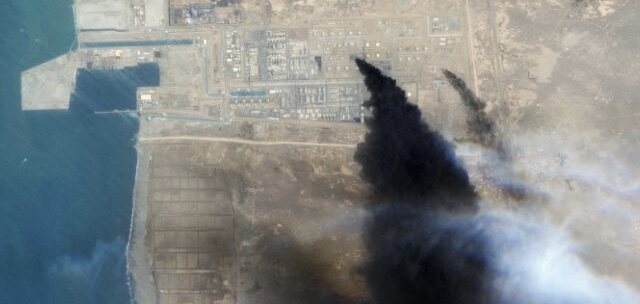 Israel has begun providing intelligence to Saudi Arabia through the United States as Riyadh battles an escalating Houthi offensive that has struck deep inside the kingdom and threatened the strategic Bab el-Mandeb Strait, according to multiple Israeli reports Tuesday.
Saudi Arabia initially turned to the United States for assistance, prompting Washington to approach Israel, which began transferring intelligence to Riyadh through U.S. Central Command (CENTCOM), Israel’s Kan News reported, citing a diplomat from a regional country.
The Saudi request included intelligence and other assistance aimed at preventing the Iran-backed Houthis from blocking Bab el-Mandeb, the critical waterway connecting the Red Sea with the Gulf of Aden, according to Israel Hayom, which reported that Crown Prince Mohammed bin Salman approached Israel indirectly through CENTCOM while seeking assistance from other regional countries.
The cooperation comes as the Houthis have expanded their campaign against Saudi Arabia, launching missiles and drones deep into the kingdom while advancing along Yemen’s Red Sea coast and around Bab el-Mandeb.
Warning sirens sounded Tuesday in Mecca, Jeddah and Taif as the confrontation escalated, while Saudi and Yemeni forces continued striking Houthi positions in Yemen. Houthi military spokesman Yahya Saree claimed Saudi warplanes carried out 52 strikes over the previous 24 hours and warned that the attacks “will not go unanswered.”
The intelligence cooperation appears to be part of a broader U.S.-led effort to coordinate a regional response to the Houthi threat.
CENTCOM commander Adm. Brad Cooper met with bin Salman in Jeddah on Monday, where the two discussed regional developments amid the escalating Houthi campaign.
The U.S. command’s involvement extended to Cairo on Tuesday, according to Kan News, which reported that CENTCOM representatives participated in security discussions surrounding bin Salman’s meeting with Egyptian President Abdel Fattah al-Sisi and proposed establishing a joint regional mechanism to assist Saudi Arabia against the Houthis.
Day 1,076 — Wednesday, September 16
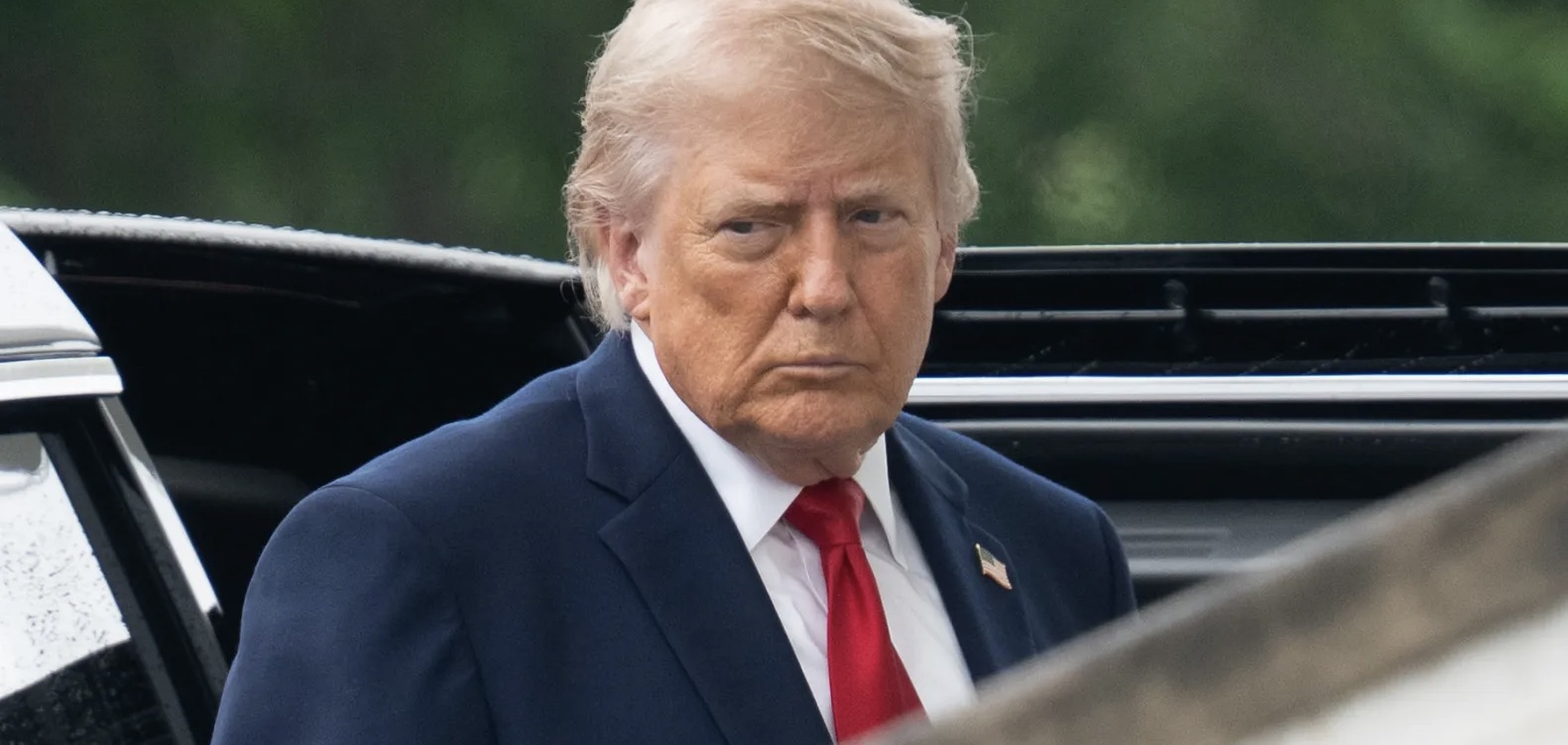 A handful of House Republicans rebuked President Donald Trump’s operation in Iran on Tuesday, joining Democrats to pass a resolution aimed at reining in the commander-in-chief’s war powers.
Rep. Seth Moulton, D-Mass., introduced the war powers resolution that was backed by 14 of his fellow House Democrats, including Reps. Jason Crow, D-Colo, and Pramila Jayapal, D-Wash. But it was Republicans who helped put the legislation over the edge.
Seven House Republicans joined all 213 voting Democrats to pass the measure in a 220 to 204 vote late on Tuesday night. Opponents of the bill were 203 House Republicans and Rep. Kevin Kiley, I-Calif., who caucuses with the GOP.
“I’ve been consistent on that since the war powers provision expired after 60 days of engagement,” Rep. Tom Barrett, R-Mich., told Fox News Digital on Tuesday morning ahead of the vote.
Republicans who voted to withdraw U.S. forces from Iran have long argued that it’s on Congress to declare war, not the White House. The War Powers Resolution of 1973 generally allows a president to engage U.S. forces in hostilities for up to 60 days without congressional authorization, with an additional 30-day withdrawal period under certain circumstances. Supporters of the resolution argue that period has already expired.
The Trump administration has argued the president is acting within his constitutional authority as commander in chief and has defended the continued military operation against Iran, saying the resolution would improperly restrict the president’s ability to protect U.S. forces and national security interests.
The war in Iran has become a political lightning rod in the current midterm election season, dividing Republicans and providing political fodder for Democrats who have accused Trump of getting into another “forever war.”
The conflict has also been blamed by some lawmakers and analysts for higher prices at the gas pump, which is expected to be a top issue for voters.
It also pushed Rep. Thomas Massie, R-Ky., a well-known critic of Trump’s foreign entanglements, to try to force a vote on impeaching Secretary of War Pete Hegseth.
But the vast majority of Republicans still stand by the president and insist he is well within his authority.
“The president has done a good job managing all this,” Rep. Marlin Stutzman, R-Ind., told Fox News Digital. “We need to stand with the president right now and with the Iranian people. And the president’s done what he promised the American people, that he wasn’t going to let them have a nuclear weapon.”
The Senate passed a similar resolution in June of this year, also with several Republicans defecting against Trump.
But even if an identical bill passes both chambers, Trump has indicated he opposes such legislation, meaning it would likely face a presidential veto if it gets to his desk.
Day 1,076 — Wednesday, September 16
 Labour MP Tahir Ali has called for Britain to take “military action” against the State of Israel, intervening during a House of Commons debate in which lawmakers clashed over Hamas disarmament, sanctions on Israel, and the future of the Israeli-Palestinian conflict.
Ali, who represents Birmingham Hall Green and Moseley, made the intervention Monday evening as Liberal Democrat MP Richard Foord was arguing that Hamas must give up its weapons as part of any lasting political settlement.
Foord said Hamas remained a terrorist organization and that its continued ability to threaten Israeli civilians posed an obstacle to peace.
He said the group’s “disarmament and disbandment must be part of any lasting solution.”
Ali responded by questioning why disarmament demands should be confined to Hamas and pointed to previous British military interventions in the Middle East.
“Is it not about time that military action was taken against Israel as well?” Ali asked.
He did not specify whether he was proposing strikes, the deployment of British forces or some other form of military intervention.
Foord rejected drawing an equivalence between Israel and Hamas, saying Britain regards the latter as a proscribed terrorist organization.
He said the peace framework required Israeli forces to withdraw from Gaza as Hamas disarmed, distinguishing between those obligations rather than calling for the Israeli state itself to be disarmed.
The intervention came during a lengthy Commons debate on Israel and the Palestinians following a significant shift in British policy announced by Foreign Secretary Ed Miliband the previous week.
The government said September 8 that it would introduce a ban on imports from Israeli communities in Judea and Samaria and create new powers to sanction companies and individuals involved in settlement activity. Miliband also announced that Britain would refuse export-license applications for weapons and other goods judged to materially contribute to Israel’s presence in the territories.
The government has stressed that those measures are directed at settlement activity and Israeli government policies rather than Israel as a country.
Opening Monday’s Commons debate, Middle East Minister Stephen Doughty said Britain continued to have an “important security, intelligence and defense relationship” with Israel, while maintaining that London had serious disagreements with the Israeli government over its conduct in Gaza and Judea and Samaria. He also reiterated that Hamas could have no role in a future Palestinian government and “must disarm.”
Doughty said the government had already suspended or refused more than 80 export licenses connected to Gaza and would additionally reject licenses for exports materially contributing to Israel’s presence in Judea and Samaria.
At the same time, he emphasized that Britain was not imposing a general trade embargo on Israel and continued to oppose the broader Boycott, Divestment and Sanctions movement.
Ali’s call for military action went considerably further than the measures announced by the government.
It was also not the first time the Labour MP had raised the possibility of deploying British armed forces in connection with Israel.
During a Commons exchange with then-foreign secretary David Lammy in July 2025, Ali accused Israel of committing “genocide” in Gaza and asked whether Britain would “send military personnel to protect Palestinians.”
Ali has also previously argued that Israel should be required to relinquish its nuclear weapons.
During a May 2026 Commons exchange, he questioned why Britain was demanding that Iran not obtain nuclear weapons without applying the same principle to Israel, asking whether Israel should also disarm.
Monday’s debate exposed broader disagreement in Parliament over how much further Britain should go in putting pressure on Jerusalem.
Labour MP Imran Hussain called for the government to end all remaining arms sales to Israel and specifically demanded an end to Britain’s participation in the F-35 supply chain where components may ultimately reach Israeli aircraft.
Hussain accused the Netanyahu government of genocide in Gaza, a characterization the British government has not itself adopted and says should be determined through appropriate legal processes.
Other MPs questioned the government from the opposite direction.
DUP MP Jim Shannon warned of a possible diplomatic clash with Israel and the United States and raised concerns from Jewish constituents about the government’s newly announced measures.
Doughty responded that Britain’s dispute was with the actions of the Israeli government and not with Israel or the Israeli people.
Day 1,075 — Tuesday, September 15
 Nearly three-quarters of Israeli Jews say they would reject a complete Israeli withdrawal from the Gaza Strip, according to a new Jewish People Policy Institute survey.
The September 2026 Israeli Society Index found that 72% of Jewish respondents would not accept a withdrawal to the Gaza border without retaining an Israeli security perimeter “under any circumstances,” up from 68% when JPPI asked the same question a year ago.
Among Israelis overall, 59% rejected such a withdrawal outright.
The findings indicate that Jewish Israeli opinion on Gaza has hardened over the past year even after the end of the main war and the return of the hostages.
Arab Israelis expressed a sharply different view. Forty-nine percent supported an Israeli withdrawal to the Gaza border without retaining a security perimeter, up from 36% in September 2025.
Support has also increased for the more far-reaching option of Israel taking full control of the Gaza Strip and administering it directly through the IDF for at least several years.
Among Jewish Israelis, 36% now generally support full occupation of Gaza, compared with 27% a year ago. Among Israelis overall, support rose from 24% to 30%. At the same time, the share categorically opposed to full occupation remained essentially unchanged, indicating that much of the shift came from respondents who had previously been undecided or willing to consider the possibility.
Among respondents identifying with the right, 62% supported full occupation of Gaza, compared with 32% of the center-right. Opposition reached 66% in the center, 88% among the center-left and 91% on the left. Only 9% of right-wing respondents rejected occupation under any circumstances.
Religious identification produced a similarly wide gap.
Sixty-four percent of secular Jews opposed occupation under any circumstances, compared with 16% of religious Jews and 13% of ultra-Orthodox Jews.
The latest findings follow an August JPPI survey that found widespread skepticism that a US-backed agreement for Hamas to disarm and Israel to withdraw fully from Gaza would ever be carried out.
In that survey, 58% of Israelis said they expected the existing situation in Gaza to remain largely unchanged, while only 3% believed Hamas would completely disarm and Israel would withdraw from the entire Strip.
Among Jewish respondents, virtually none expected that full scenario to materialize.
JPPI said the latest responses should therefore be understood in a context in which most Israelis do not regard complete withdrawal and Hamas disarmament as an imminent outcome.
The September poll also found that Israelis remain sharply divided over whether the country can consider itself victorious in the multi-front war that began with the Hamas-led October 7, 2023 attack.
Forty percent of Israelis rated their sense that Israel is winning or has won the war at four or five on a five-point scale, compared with 37% who gave the two lowest ratings. The positive figure stood at 43% in September 2025.
Among right-wing respondents, 77% gave Israel’s victory a rating of four or five, compared with 44% in the center-right and 16% in the center.
Just 7% of center-left respondents gave one of the two highest ratings, while no respondents identifying with the left did so.
JPPI noted that the overall rise in the sense of victory from 37% in August to 40% in September was concentrated almost entirely among right-wing respondents, whose positive assessment jumped from 67% to 77%.
The September index additionally found significant differences between Jewish and Arab Israelis over the relationship between Israeli policy and rising antisemitism abroad.
Forty-four percent of Jewish Israelis said the increase in global antisemitism was “not at all” caused by Israeli policy, up from 38% last year. Fifty-seven percent of Jewish respondents said Israel should make no policy changes because of increasing antisemitism.
JPPI conducted the survey from September 1-3.
The Jewish sample included 663 respondents from the Madad.com panel, while 206 Arab Israelis were surveyed by Afkar Research, approximately half online and half by telephone.
Day 1,075 — Tuesday, September 15
 The U.S. Treasury Department said on Monday that it designated the Russian financial institution VTB Bank for its involvement in evading Iranian sanctions, including forming relationships with Iranian banks.
The department “will continue to target and disrupt those who provide material, technological or financial support that allows the Iranian regime to sustain its terrorist enterprise,” stated Scott Bessent, the U.S. treasury secretary. “Treasury will not tolerate any support to the regime and will continue to identify, expose and isolate Iran’s enablers.”
The department “has mapped the networks, facilitators and financial channels that Iran uses to smuggle oil, evade sanctions and fund terror,” it said. “Working with partners across the U.S. government, the European Union, United Kingdom, Gulf partners and others, Treasury is targeting any source of the regime’s illicit revenue.”
The department is targeting five channels, through which aid is being supplied to Iran: cryptocurrencies and digital financial exchanges, technology, gold (used to bypass currency controls), Iranian airlines and related transportation networks, and the “shadow fleet” of oil tankers and maritime transport facilitators used to ship Iranian material, the Trump administration said.
Russia’s VTB is now “among the most comprehensively sanctioned financial institutions in the world,” the department said.
The U.S. federal operation has “introduced greater secondary sanctions risk and an accelerated pace of enforcement for those who continue to do business with the Iranian regime,” the department said. “Foreign financial institutions that continued to deal with VTB following its designation under OFAC’s Iran sanctions authorities are exposed to even more sanctions risk than before and should cut off those relationships immediately.”
Day 1,074 — Monday, September 14
 Iran is rebuilding parts of its ballistic missile program after U.S. and Israeli strikes damaged key facilities earlier in the conflict. At the same time, a suspected nuclear site and a major Houthi advance in Yemen are raising new concerns across the region.
Tehran’s missile production involves using stockpiled components and underground facilities while attempting to build new assembly sites designed to make future production harder to target.
U.S. and Israeli strikes had destroyed the facilities needed to make missile components, while the current blockade is making it harder for Iran to import the parts it needs.
At Jerusalem’s Western Wall on Thursday night, ahead of the Jewish New Year, Rosh Hashanah, Israeli Prime Minister Benjamin Netanyahu warned that Iran is rebuilding its nuclear capability.
“President Trump announced this evening that Iran is attempting to rearm… This is true,” Netanyahu stated.
He stressed that Israel continues to target Iran and its regional allies, including Hamas and Hezbollah.
“We are … delivering heavy blows not only in the Gaza Strip but also in Lebanon. We … are now dealing with the Ali Taher Ridge (in southern Lebanon).”
The prime minister also indicated that more military activity is coming.
His warnings come as the International Atomic Energy Agency (IAEA) reports construction at Iran’s Pickaxe Mountain, a site potentially connected to nuclear material.
IAEA inspectors have been denied access to sites affected by the June 2025 strikes and can’t verify the current status of Iran’s nuclear weapons-grade uranium stockpile.
President Trump, addressing the GOP Midterm Convention in Dallas, said his administration is watching the site.
“We can read it from space,” he told the crowd. “We notice there’s a little activity at Pickaxe. I would advise Iran not to get cute because we will have to hit them very hard. We have no choice, right?”
On the Arabian Peninsula, the Iranian-backed Houthis have seized control of Yemen’s port city of Mocha, which strengthened their chokehold on the Bab el-Mandeb Strait, a key shipping route connecting the Red Sea with the Gulf of Aden.
U.S. officials indicate that Iran has directed the Houthis to intensify attacks on Saudi Arabia and promised additional funding, weapons, and senior officers.
At the same time, approximately 100 U.S. military personnel are now operating in Saudi Arabia, part of a newly established Joint Forces Command that shares intelligence to support Saudi attacks on the Houthis.
Washington, meanwhile, is tightening economic pressure on Iran with new sanctions targeting supporters of Hezbollah and other Iranian proxies in Iraq, Lebanon, and Turkey.
In southern Lebanon, Israel claims to have destroyed a major Hezbollah underground network approximately four miles from Israel’s border. More than 1,100 tons of explosives demolished eight tunnels spanning more than a mile.
The complex included command centers, Iranian-made weapons and rockets, and storage rooms and living quarters that allowed fighters to remain underground for long periods.
Israeli Defense Minister Israel Katz released a video statement ahead of the Jewish New Year, 5787, saying, “To the people of Iran, I wish, next year, a Tehran liberated from oppression and tyranny…”
He told Iran’s leadership that any attack during the holidays would bring a powerful response, warning, “A blow would set Iran back decades and further destabilize the Ayatollahs’ regime – a regime the Iranian people loathe so deeply and whose downfall they fervently desire.”
Day 1,074 — Monday, September 14
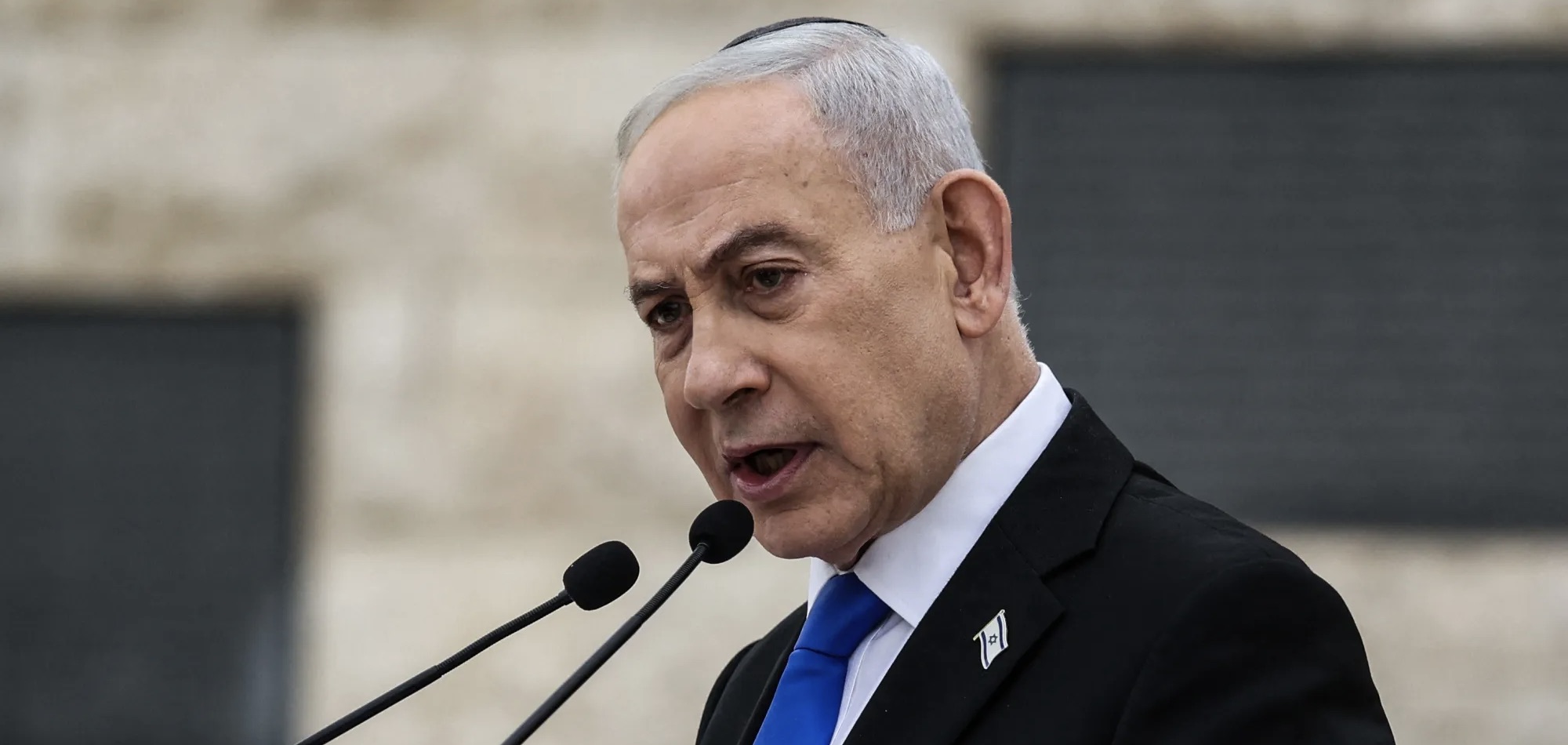 Prime Minister Benjamin Netanyahu instructed his lawyers to file a defamation suit against Israeli outlet Haaretz, journalist Shlomi Eldar, and additional parties, in response to a report published Tuesday alleging that Netanyahu spoke by phone with United Arab Emirates President Mohammed bin Zayed in September 2023, who allegedly warned him of a “formidable” attack being planned by Yahya Sinwar, one of Hamas’ former senior leaders.
“The prime minister has instructed his lawyers to file a libel suit against the leftist newspaper Haaretz, Shlomi Eldar, and additional parties who concocted a false libel against the prime minister that never happened and was never created,” read a post on the prime minister’s X account. “Contrary to what was claimed, no conversation whatsoever took place between the prime minister and the president of the UAE from the start of September until October 7.”
The post added that the Prime Minister’s Office, the National Security Council, and the Military Secretariat thoroughly examined the prime minister’s call log for that period and found no trace of the alleged conversation. “As a rule, diplomatic conversations between the prime minister and the president of the UAE take place solely at the Prime Minister’s Office, through an Emirati representative who arrives at the office with a special encrypted device. All these conversations are documented.”
Haaretz’s investigation, published Tuesday morning, alleged that Prime Minister Netanyahu had received a major warning on Oct. 7 from a regional leader but chose to ignore it, which has ignited a full-blown firestorm in Israel’s opposition. The report claims that UAE President Mohammed bin Zayed warned Netanyahu 10 days before October 7 that Hamas was preparing a major move.
The warning arrived in an unusual 45-minute phone call at the end of September 2023, a week and a half before the war erupted. Details of the conversation are based on the book “Hostages: 843 Days of Abandonment,” by Shlomi Eldar and Ruth Yuval. In the call, the UAE president cautioned that Hamas leader Yahya Sinwar was planning a significant event and urged Israel to prepare. The warning followed a message Sinwar had relayed to a mediator saying he was preparing an “earthquake.”
According to the exposé by Shlomi Eldar and Ruth Yuval, Netanyahu reassured bin Zayed in their conversation, assessed that Hamas had its sights on Judea and Samaria, and kept the information from major decision-makers.
Day 1,074 — Monday, September 14
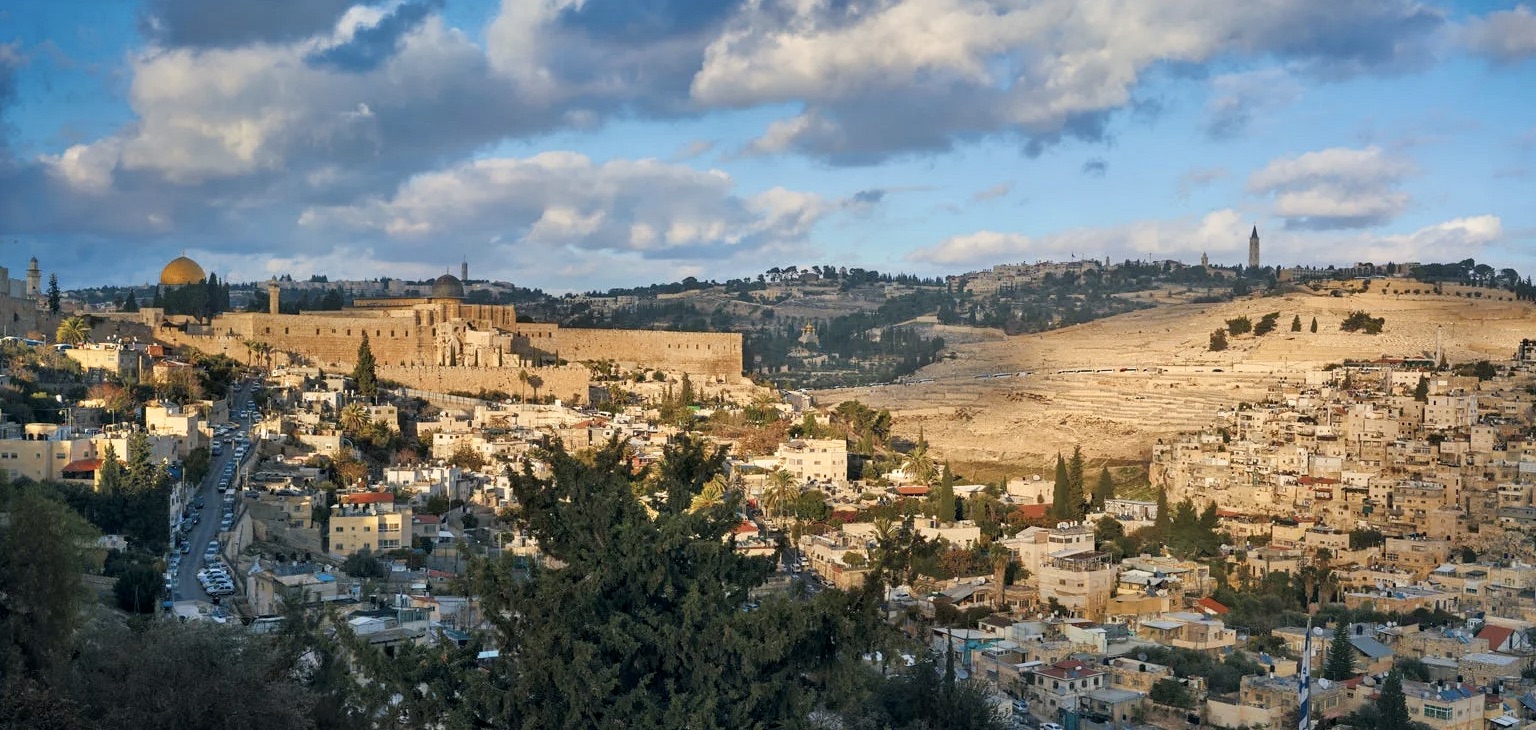 Jewish organizations from around the world signed the J50 Declaration on Zionism and Antisemitism in Jerusalem on Thursday, which states unequivocally that “Zionism is part of Jewish identity.”
William Daroff, CEO of the Conference of Presidents of Major American Jewish Organizations, chaired the J50 Forum gathering, saying that the declaration “affirms Zionism as the national movement of the Jewish people and the expression of our right to self-determination in our ancient homeland, Israel.”
The document calls for anti-Zionism “to be recognized and confronted when it is used to marginalize, exclude, or discriminate against Jews.”
It further states, “Anti-Zionism, as manifested today through efforts to deny the Jewish people their right to self-determination, or demand that Jews renounce Zionism as the price of acceptance in political, academic, professional, or cultural life, is antisemitic.”
The declaration ends by stressing, “Zionism is part of Jewish identity. We will not allow others to define it for us.”
The declaration, endorsed by 59 signatories, says that the erosion the right of the Jewish people to self-determination is “increasingly challenged and denied,” adding that “Governments, international institutions, municipalities and political parties, media and cultural institutions, universities and educational institutions, professional associations, and civil society are increasingly becoming arenas for the delegitimization and distortion of Zionism, serving to marginalize and exclude Jews.
“Anti-Zionism, as manifested today through efforts to deny the Jewish people their right to self-determination, or demand that Jews renounce Zionism as the price of acceptance in political, academic, professional, or cultural life, is antisemitic,” it holds.
Israeli Foreign Minister Gideon Sa’ar hosted the third meeting of the J50 Forum in Jerusalem on Sept. 1. The assembly composed of 50 core Jewish organizations focused on the worldwide rise in antisemitism and the connection between obsessive anti-Israel rhetoric and increasing attacks against Jewish communities in the Diaspora.
Organized by Israel’s Foreign Ministry, the forum includes presidents of Jewish communities, CEOs, chief rabbis and other senior Jewish leaders, from organizations such as the Conference of Presidents, the Jewish Federations of North America, B’nai B’rith International, the Anti-Defamation League, the Conference of European Rabbis, the Board of Deputies of British Jews, including leading Jewish organizations from Europe, North and South America, Australia and South Africa.
Sa’ar founded the J50 Forum in May 2025 at the International Conference against Antisemitism held at the ministry in Jerusalem. The forum receives regular briefings from the foreign minister and ongoing updates, and maintains daily contact with ministry officials.
Day 1,073 — Sunday, September 13
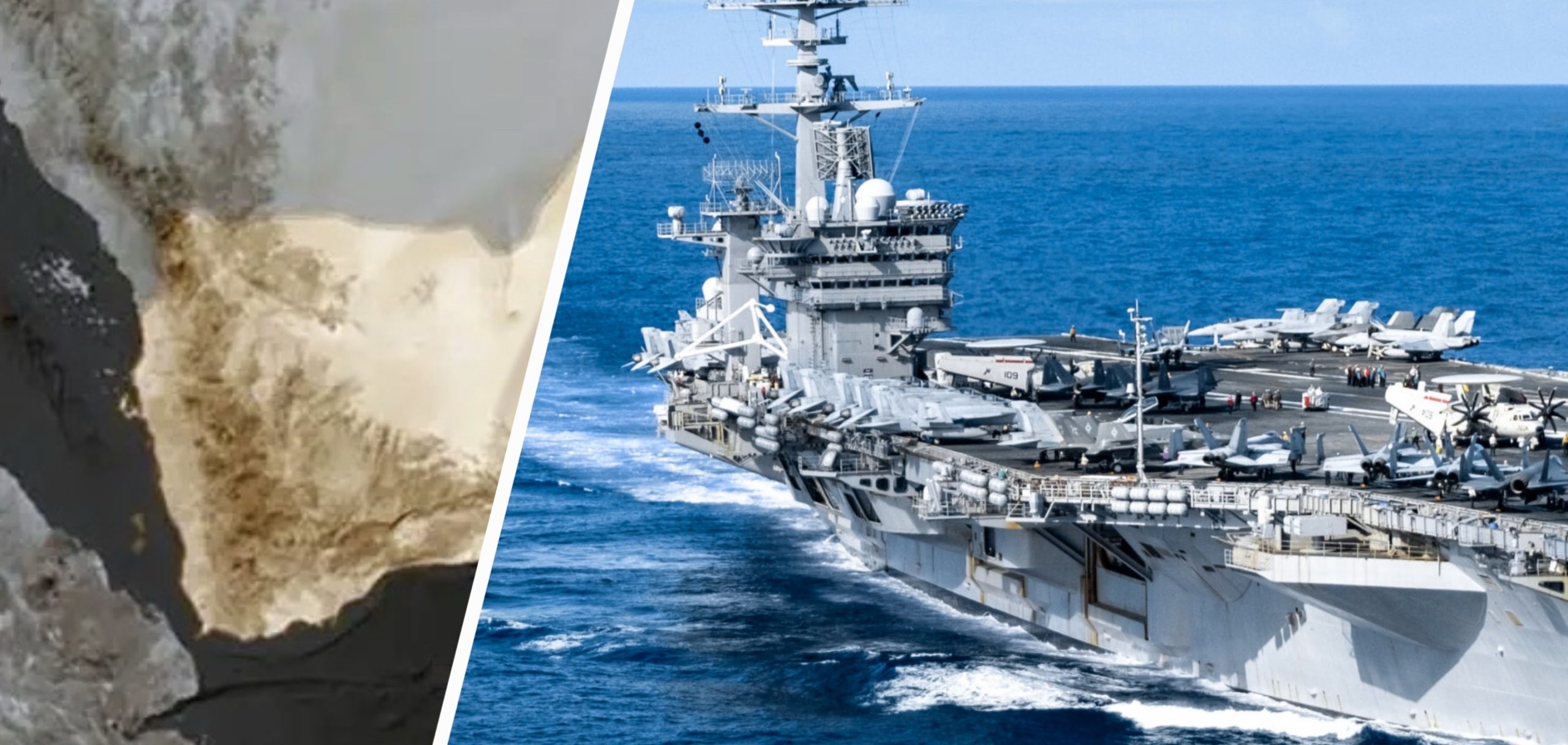 Sailors aboard the USS George Washington are on high alert in the Arabian Sea as Iran-backed Houthi forces advance along Yemen’s coast toward the Bab el-Mandeb Strait, a critical gateway to the Red Sea.
Fox News chief foreign correspondent Trey Yingst reported Saturday from aboard the aircraft carrier, where more than 5,000 sailors are supporting Operation Epic Fury amid continuing threats from Iran and its regional allies.
“The U.S. Navy remains on alert here aboard the USS George Washington,” Yingst said, noting that American warships in the region remain under threat from Iran.
Yingst also visited the guided-missile destroyer USS Shoup, one of several ships helping protect the carrier. The destroyer carries Tomahawk missiles and helps coordinate the strike group’s defenses against incoming threats.
“The crew is ready and equipped to respond as quickly as necessary,” a Navy officer aboard the Shoup said. “We stand ready to continue to do so.”
The heightened posture comes as Houthi forces have pushed toward positions near the Bab el-Mandeb, threatening another major global shipping chokepoint as traffic through the Strait of Hormuz remains disrupted.
Day 1,073 — Sunday, September 13
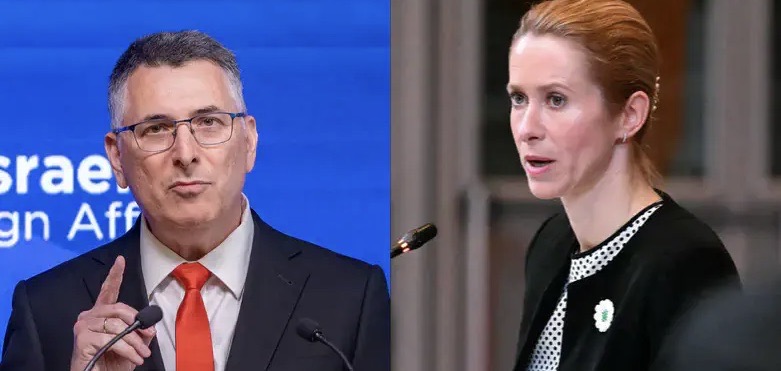 Foreign Minister Gideon Sa’ar on Friday sharply criticized European Union (EU) foreign policy chief Kaja Kallas after she called for the European Union to impose a trade ban on goods from Jewish communities in Judea and Samaria and compared their status to that of Crimea following Russia’s 2014 invasion.
In an interview with The Irish Times, Kallas urged European governments to adopt what she described as a “principled stance” and support an EU-wide ban on trade originating from “Israeli settlements in Occupied Palestinian Territories.” She also said there was broad agreement among EU member states that the Jewish communities in Judea and Samaria are illegal under international law.
Kallas pointed to the EU’s response to Russia’s annexation of Crimea as a model. “The question is what do we do about this? If we take the example when Crimea was occupied, then it was very clear, it’s illegal, we don’t recognize this, which means that we stop the trade with any products that come from Crimea,” she told the newspaper.
“We should have the same principled stance – you know this is illegal, everybody agrees – so we should stop trading with Occupied [Palestinian] Territories.”
Sa’ar rejected the comparison in a social media post, writing, “The comparison drawn by Kaja Kallas has no factual or legal basis whatsoever and is completely unacceptable.”
He continued, “The Jewish people’s connection and right to Judea and Samaria and the Land of Israel are more extensively documented than those of any other people in human history. Contrary to the comparisons drawn by Ms. Kallas, Judea and Samaria have never belonged to a Palestinian state, which never existed. Even the Palestinians themselves signed on a negotiated solution for the disputed territories.”
“And finally – what does the high representative for foreign affairs and security policy is trying to do? Comparing the only democracy in the Middle East, that contributes in so many ways to Europe’s defence and security, to Russia? Did she stop to think about what she was actually saying?” concluded Sa’ar.
The dispute comes days after British Foreign Secretary Ed Miliband announced new measures targeting Israeli communities in Judea and Samaria. Britain said it would prohibit imports of goods produced in those communities, while France and Canada joined the announcement and said they would also “bring forward national measures to ban trade in settlement goods.”
Israel responded with countermeasures announced by Sa’ar. Jerusalem said it would close the British Consulate in Jerusalem, remove British representatives from the International Gaza Support Center in Kiryat Gat and end British training for Palestinian Authority forces in Judea and Samaria through the “British Support Team in Ramallah.”
Israel also said 12 British elected officials and other British nationals would be barred from entering the country over what Jerusalem described as antisemitic and anti-Israel activity or denial of Israel’s existence.
Day 1,072 — Saturday, September 12
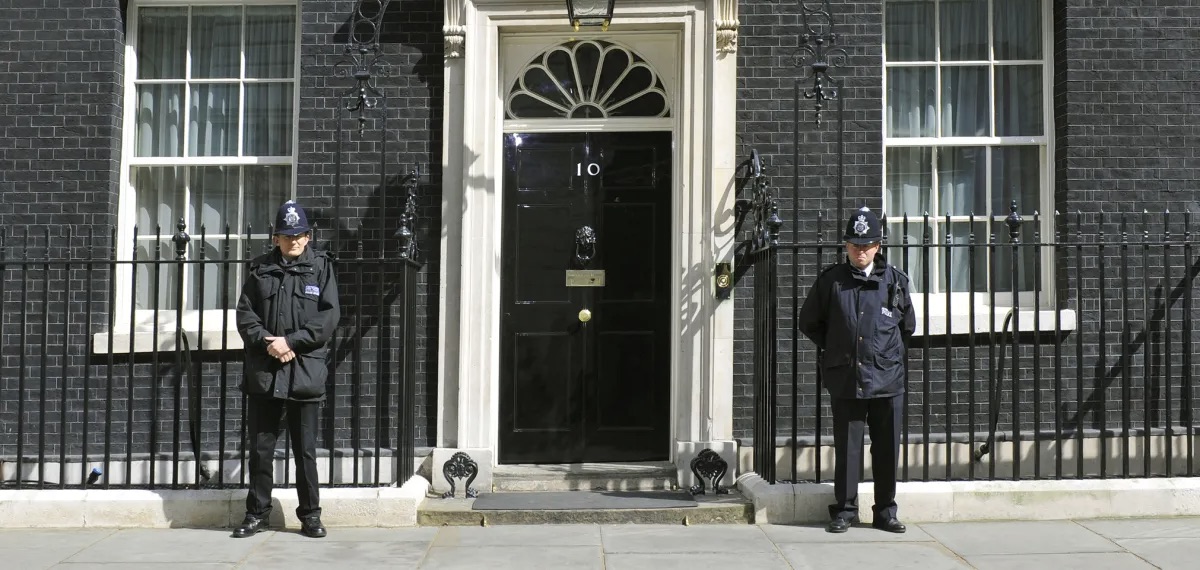 Demonstrators gathered outside 10 Downing Street in London on Wednesday to protest British sanctions targeting Israeli individuals and organizations connected to Judea and Samaria, accusing the government of penalizing Israel rather than confronting terrorism.
Activists and Jewish-led campaign groups, including Stop the Hate UK, rallied under the slogan “Sanction terror, not Judea and Samaria.” Protesters carried signs bearing the slogan as well as “Israel is an ally, not an enemy.”
Member of Parliament Richard Tice addressed the demonstration, criticizing the British government for singling out Judea and Samaria for broad boycotts.
He argued that the measures embolden antisemites and harm important strategic relationships with Israel and the United States, describing the government’s approach as a grave mistake.
Other speakers included Mark Birbeck, founder of the grassroots campaign Our Fight; comedian Josh Howie; and Stop the Hate UK founder and CEO Itai Galmudy.
“What makes those measures so deeply frustrating is the undeniable double standard. Where is the same sweeping economic approach when it comes to other conflict zones, rife with terror?” Galmudy asked the crowd.
Birbeck said that this ideology has “made its way into Number 10 and it’s made its way into Parliament,” adding that “the technocrats have become dangerous because they are now the instigators and the propagators of the most dangerous idea in British politics now, that Israel is the source of the world’s problems, and that to be virtuous and to be good and to be moral, you need to be against Israel.”
The demonstration followed the announcement of restrictions targeting Israeli settlements.
Protesters argued that sanctions imposed by Western governments unfairly penalize Israeli settlers and civil society organizations instead of focusing on terrorism in the region.
Following recent UK sanctions against Israeli citizens and organizations in Judea and Samaria, Israeli Foreign Minister Gideon Sa’ar announced countermeasures against Britain.
The Israeli measures included closing the British Consulate in Jerusalem and ending specific British training activities in the region.
Wednesday’s protesters called on the British government to reverse its approach toward Israeli individuals and organizations in Judea and Samaria and direct punitive measures toward terrorist groups instead.
Day 1,072 — Saturday, September 12
 A new report from Anthropic reveals how Yemeni terrorists, Iran and other actors have attempted to use the company’s artificial intelligence tools to develop weapons of mass destruction and to carry out attacks against the United States.
One section of the report, which was released on Thursday, described a “cell of threat actors based in northern Yemen” trying to use the company’s Claude AI to create a ballistic missile guidance system.
“The actors used Claude Code in place of human software engineers to develop the guidance, navigation and control software that steers and stabilizes a flying vehicle,” the company wrote. “For example, they used Claude to integrate an open-source autopilot onto a phone-class flight computer, writing the control and position estimation software, tuning the control settings, running a firmware build pipeline and performing a flight simulation.”
Using large language models like Claude to write functional software code without knowing how to write a programming language is commonly known as “vibecoding” and has been one of the revolutionary developments driving Anthropic’s rise to what is likely to be the largest initial public offering in history later this year.
The report did not name the Yemeni “threat actors,” but its description of their development of “a multi-stage ballistic missile with a stated range goal above 2,000 kilometers” likely refers to the Iran-backed Houthis, who have used ballistic missiles to attack Israel, Saudi Arabia and other regional targets.
Anthropic said that it “disrupted” the Yemeni cell and informed “public- and private-sector partners to mitigate risks.” But the group used Claude to make progress in its weapons development programs, Anthropic said.
“We do not have evidence the actors succeeded in fielding an operational device, but they did test-fire a guided rocket,” the company said. “This field test appears to have failed: within hours, the actors returned to Claude to work out why it failed.”
The company says it banned the accounts, but “we have evidence that the actors had already built an offline simulation toolkit that does not rely on Claude or other engineering computing environments” to carry out the work.
In another case study, Anthropic said that “an Iran-nexus threat actor” used Claude to collect open-source data to generate targeting recommendations against U.S. Navy facilities in the Middle East.
“The compiled material included a roster of U.S. personnel scraped from captions on public military photographs, publicly accessible ship and aircraft transponder identifiers, commercial satellite-imagery query scripts and an inventory of public websites that exposed U.S. naval movements,” the company said.
The 154-page security report from the AI company also warned of suspected attempts to carry out biological weapons development and to use its models to support a propaganda campaign from Iran’s Ministry of Culture and Islamic Guidance to wage “explanatory jihad.”
“We’re publishing this work because we believe we have a responsibility to disclose malicious misuse of our services,” the company said. “As models become increasingly capable, their risks will increase, unless AI developers and society’s defenders act to make them safer.”
Day 1,072 — Saturday, September 12
 Israel’s Ambassador to the United States Yechiel Leiter on Friday issued a Rosh Hashanah message reflecting on the Jewish New Year, the painful memories surrounding this year’s holiday and the shared responsibility to defend freedom and work toward a better future.
“We are on the eve of Rosh Hashanah, the Jewish New Year. These are days of reflection and repentance, days when we look back at the year that has passed and look ahead to the year that is beginning. They are also days when, according to Jewish tradition, we stand before God in judgment and are called to account for our actions,” Leiter said.
He noted that this year’s Rosh Hashanah carries particular significance because of its proximity to the 25th anniversary of the September 11 terrorist attacks in the United States and the anniversary of the murder of Charlie Kirk.
“This year, Rosh Hashanah comes with a particularly powerful symbolism. It falls in close proximity to September 11th, the day America suffered the most horrific terrorist attack in its history, and to the anniversary of the murder of Charlie Kirk, who meant so much to so many. Two deeply painful events, two events that have left a profound mark on the American people.”
Leiter said the two events serve as reminders of the challenges facing Israel and the United States, as well as the need to protect the freedoms enjoyed by both societies.
“They are reminders of the forces we are up against and of the values we must be prepared to defend. They remind us that the lives and freedoms that we enjoy are not something we can take for granted. As we begin the new year with the special prayers of Rosh Hashanah, we can carry these painful memories with us and determine what we can do better, how we can make our world and the world around us a better place.”
Turning to Israel’s experience of war, Leiter said the country’s population understands the burden of painful memories and the challenges faced by the American people.
“Having experienced war for nearly three years against Iran and its proxy intent on our destruction, the people of Israel have lost many loved ones and understand only too well the big challenges the American people have in dealing with painful memory. So let us pray together for a year of peace, a year of resilience, a year of freedom, and a year of life. Shana Tova,” he concluded.
Day 1,071 — Friday, September 11
 Using 1,100 tons of explosives, the Israeli military said on Thursday that it had demolished a “strategic” underground facility belonging to the Hezbollah terror group beneath a mountainous ridge in southern Lebanon.
The Ali Taher Ridge is located within Israel’s southern Lebanon buffer zone, near Nabatieh. According to the Israel Defense Forces, the tunnel systems under Ali Taher served as the “nerve center” of the terror group’s Badr regional division — a unit tasked with the area of southern Lebanon that is north of the Litani River.
Last week, the military said it had completed capturing and clearing out the tunnel system of Hezbollah operatives, killing some of them while others fled.
Iran ostensibly warned the US that it would respond to any Israeli offensive against the Hezbollah facility beneath the hill, according to a report by Reuters last week, although that came after the IDF had already captured and cleared the site.
A military official said after the tunnels had been blown up that “the IDF is prepared for a variety of scenarios, including multi-arena scenarios.”
A massive blast was heard throughout the region as the IDF demolished the two tunnel routes under the hill with 1,100 tons of explosives. Footage showed a massive fireball erupting above the mountain. Seismic systems also detected the explosion as a 4.1-magnitude earthquake, the United States Geological Survey said.
The IDF described the facility as a “strategic infrastructure that was built over two decades,” an activity it said was financed and planned by Iran. Dozens of Hezbollah operatives were believed to be holed up under Ali Taher when a new ceasefire took effect in June.
Inside the two tunnels — spanning over two kilometers — troops found dozens of Iranian-made rockets, missiles and drones, along with firearms, anti-tank missiles, and hundreds of mines and other explosives, the military said.
The tunnel also featured “command centers, weapons rooms, generator rooms, living quarters, showers, and a kitchen,” which the IDF said enabled Hezbollah operatives “to conduct fighting and remain there for extended periods.”
In a separate joint statement, Prime Minister Benjamin Netanyahu and Defense Minister Israel Katz said that the underground facility was destroyed following their directive, and the IDF has now “completed the organization of the security zone in southern Lebanon.”
“The terror infrastructure and headquarters under the ridge were intended to serve as a base for the conquest of the Galilee, and surveillance and fire over Metula and Kiryat Shmona,” Netanyahu and Katz said.
Netanyahu and Katz said that following the blast, the IDF is “preparing for defense in the area and to prevent the enemy from returning to the territory.”
Hezbollah drew Lebanon into the broader Middle East conflict in March by launching rockets at Israel in support of its sponsor Iran, which had come under attack by a US-Israeli air campaign. Israel responded to the Hezbollah attacks with a heavy air campaign and ground invasion.
Fighting has persisted despite the ceasefire declared in Lebanon in April, but at a reduced rate. Israeli forces continue to operate inside a self-declared “security zone,” which runs around 10 kilometers (six miles) deep inside Lebanese territory along the border.
In June, Israel and Lebanon signed a framework agreement committing Lebanon to restoring sovereignty over its territory through the “verified disarmament of non-state armed groups,” which would in turn enable a progressive Israeli withdrawal. The State of Lebanon, along with Israel and the US, signed the agreement, but Hezbollah and its allies are opposed to it.
Israel pulled forces out of three pilot zones into which the Lebanese army entered, but has said it will not carry out any further withdrawals before Hezbollah is disarmed.
Israel and Lebanon have been holding negotiations to advance the framework deal since April, and an Israeli official told The Times of Israel on Thursday that the next round of talks will take place next week in Rome.
The talks will take place over two days, but it has not yet been finalized whether they will begin on Tuesday or Wednesday, the official said.
Meanwhile, a US State Department official says in a statement to querying reporters that Washington is closely monitoring “calls from Southern Lebanon, where people are demanding their government assert sovereignty and stop Hezbollah from firing and storing weapons in their communities.”
“We applaud those communities and support the Government of Lebanon’s receptiveness to their requests,” the official continued. “We urge the Government of Lebanon to formulate a plan for disarmament in all Lebanese territory, as laid out in the Trilateral Framework.”
Day 1,071 — Friday, September 11
 The U.S. Department of the Treasury announced sanctions on Thursday against individuals and businesses supporting or linked to the Iranian-backed terrorist groups Hezbollah and Kata’ib Hezbollah.
“Operation Economic Outcast is targeting those who continue to stand with the failing Iranian regime,” Scott Bessent, the U.S. treasury secretary, stated. “Whether they finance terror, launder money or help Iran evade sanctions, we will find them, cut them off from the U.S. financial system and dismantle the networks keeping the regime afloat.”
Treasury sanctioned four members of Kata’ib Hezbollah, including senior commander Ali Hasan Farhan Al-Lami. The other three are Hussein Ahmed Hussein Al-Dhuhaibawi, Mohamed Ameen Fadhil Ali Al-Shaikhli and Karrar Mohammed Qasim Al-Hraishawi.
The department also sanctioned three people and two businesses tied to Iraq’s Popular Mobilization Forces, a militia umbrella organization heavily influenced by Iran. Kata’ib Hezbollah is the PMF’s most influential faction, according to Treasury, and is a major beneficiary of the more than $2.6 billion in annual funding that the Iraqi government allocates to the force.
The sanctions come months after the U.S. Department of Justice announced the May 16 arrest of a senior Kata’ib Hezbollah commander accused of attempting to arrange the bombing of a New York synagogue and additional Jewish institutions in Los Angeles and Scottsdale, Ariz. Treasury also said Kata’ib Hezbollah and other Iranian-aligned Iraqi militias have carried out hundreds of attacks against U.S. and coalition forces in Iraq and elsewhere in the region since February.
The department separately sanctioned five people and two businesses for supporting Hezbollah through a cash-smuggling network that Treasury said transferred hundreds of millions of dollars from Iran’s Islamic Revolutionary Guard Corps-Quds Force to the Lebanese terror group between May and September 2025. Hezbollah uses the funds to purchase weapons, manufacture equipment and pay its members, according to Treasury.
“The United States is taking action through Operation Economic Outcast to target Kata’ib Hezbollah, Hezbollah and the financial networks fueling Iran’s regional and global destabilization,” Tommy Pigott, a spokesman for the U.S. State Department, stated. “We stand with Iraq and Lebanon against Tehran’s terrorist proxies.”
Day 1,070 — Thursday, September 10
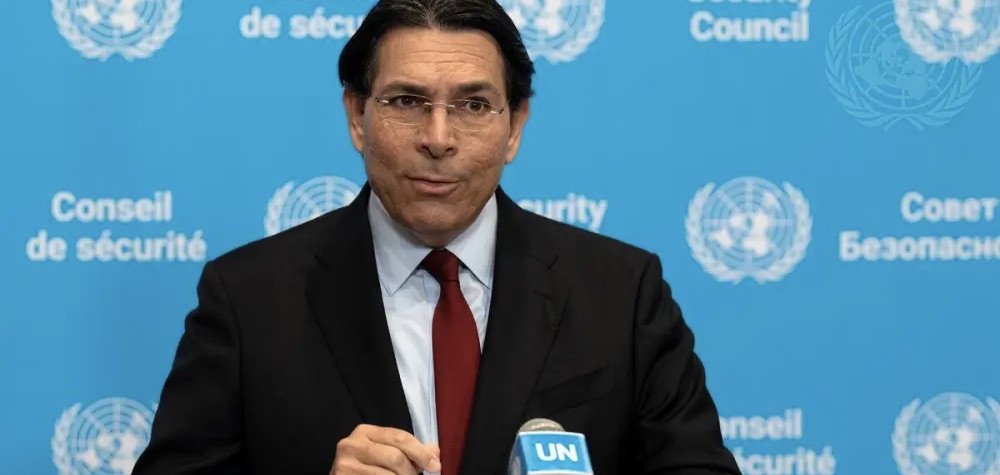 Danny Danon, Israeli ambassador to the United Nations, was motivated to launch a U.N. Task Force on Combating Antisemitism due to growing concern about Jew-hatred worldwide and a disconnect between governments expressing concern publicly and following that up with action.
“Nobody will make a commitment, but we see the gap between the declaration and the action,” Danon told JNS after he launched the task force during an event in Turtle Bay on Wednesday. “That’s exactly what we were trying to do—to close that gap.”
The Jewish state has been working on the initiative for several months and wanted other countries to help shape the panel’s eventual recommendations. “It’s a team effort,” Danon told JNS.
Representatives of dozens of countries, including the United Kingdom, Australia, Argentina and Slovakia, attended the task force launch and its first meeting, according to the Israeli mission to the global body. JNS also attended.
Danon shared a video collage of antisemitic attacks and news reports documenting anti-Jewish hatred around the world. Attendees faced each other at a round table, with the phrase “no to hate” displayed in front of each participant.
“The words ‘Never Again’ were not meant to be a slogan,” he told journalists during a U.N. Security Council stakeout announcing the panel. “They were meant to be a commitment.”
The Israeli envoy said that there has been a 136% increase in Jew-hatred across the seven countries with the largest Jewish populations outside Israel since before Oct. 7.
“Today, we issue a warning,” he said. “This has become an international problem. This demands an international response.”
At the meeting, Danon said that antisemitism has taken increasingly visible forms across the world, including online, on college campuses and within international institutions.
The United Nations must confront Jew-hatred not only in the international arena but “right here within the walls” of the organization, he said.
The coalition of U.N. member states is intended to identify emerging threats, develop policies and tools to combat them and coordinate diplomatic action, according to Danon.
“That’s why we coordinate government efforts, provide guidance and learn from each other,” he said at the meeting.
The task force will develop and issue concrete recommendations and “measurable” results rather than symbolic statements, according to the Israeli envoy. He added that the panel will address Jew-hatred within the United Nations and that rising antisemitism is “not only outside in the street but also inside.”
At the task force meeting, Katharina von Schnurbein, European Union coordinator on combating antisemitism, told attendees that “it is fully unacceptable that Jews in many regions of the world look across their shoulder in public or even hide their identity.”
“There can be no excuse for antisemitism,” she said. “It cannot be tolerated anytime or any place.”
Mark Goldfeder, an Orthodox rabbi and director of the National Jewish Advocacy Center, called on governments and international institutions to move beyond decrying Jew-hatred and to focus on enforcement.
“Condemnation can be filed away, but the subpoena can’t,” he told attendees. “The difference between the two is the burden of proof.”
“Count your prosecutions, not just your statements,” Goldfeder said.
Goldfeder told JNS that “the honest answer to ‘why now’ is that we have run out of road on words.”
“Every government in that room has condemned antisemitism, most of them more than once, and last year 20 Jews were murdered anyway, the most in more than 30 years,” he said. “So a task force is only worth launching if it exists for the step after the condemnation, and as the ambassador explained, he wants action.”
Jeff Bartos, U.S. representative to the United Nations for management and reform, described antisemitism as a global “pandemic” and criticized what he said is longstanding U.N. institutional bias against Israel.
The U.N. has a choice,” Bartos told attendees. “It’s time for choosing.”
Confronting antisemitism is necessary for the long-term viability of the global body, Bartos said.
Danon said that words alone would not address the problem of Jew-hatred.
“Words, declarations and statements are not enough to fight the rising antisemitism on the streets, in synagogues, in universities and even here at the United Nations,” he said. “It’s time for action.”
Day 1,070 — Thursday, September 10
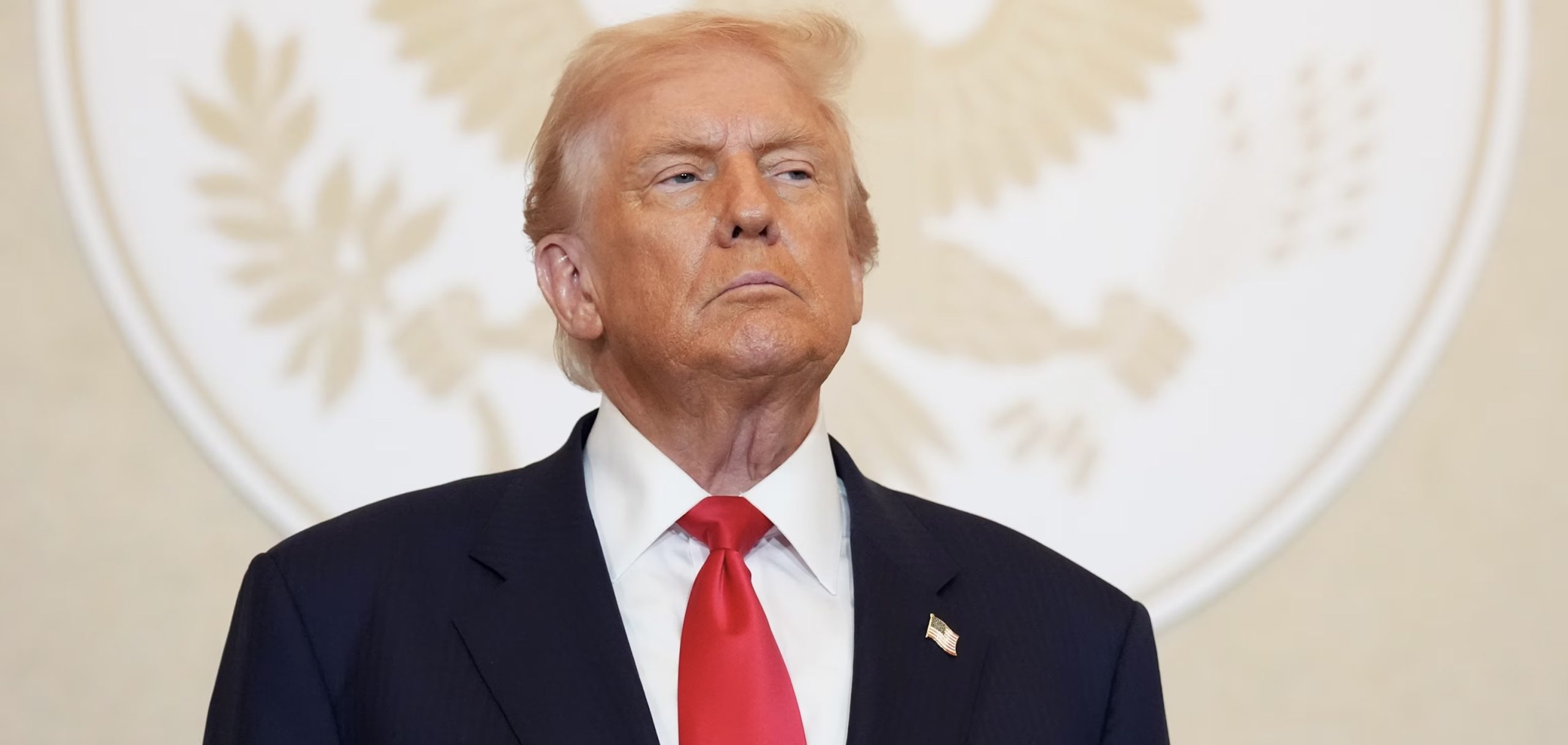 US President Donald Trump discussed the ongoing conflict with Iran at a rally in Texas on Wednesday night, warning the Islamic Republic against carrying out nuclear activity at the heavily fortified Pickaxe Mountain facility.
“We notice there’s a little activity at Pickaxe. I would advise Iran not to get cute, because we will have to hit them very hard,” he said.
Noting that the war against Iran is necessary in order to prevent it from acquiring a nuclear weapon, Trump continued, “For 51 years, people have been trying to, and other Presidents have been trying to talk them out of it, but they don’t understand talk, these people. They only understand one thing, and that’s they’re getting plenty of it.”
Trump recently similarly warned that the United States could soon strike Pickaxe Mountain.
“Iran will not have a nuclear weapon,” he told reporters at the Oval Office last week, before adding, “We may hit Pickaxe very soon…if there was anything going on with Pickaxe.”
At the same rally on Wednesday night, Trump joked that the strategically vital Strait of Hormuz should be renamed in his honor.
Trump said he expects oil prices to fall once the United States prevails in the conflict, declaring that they “will be going down as soon as we win the war with Iran, which is taking place right now.”
Earlier Wednesday, Trump had told reporters that he expects the conflict to conclude following the US midterm elections in November.
“I think the war will end immediately after the election,” he said, arguing that Iran “can’t hold out any longer.”
Trump also accused Tehran of attempting to prolong the conflict in order to influence the elections. “They’re desperate to try and affect the election so that we could get a nice, weak group of people in there and leave them alone and let them have their nuclear weapon.”
Day 1,069 — Wednesday, September 9
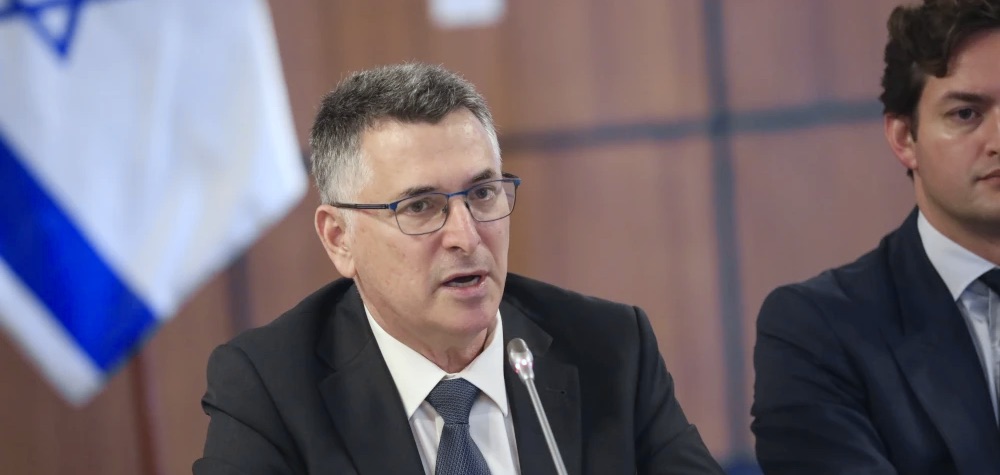 Israeli Foreign Minister Gideon Sa’ar declared “countermeasures” against the United Kingdom following Tuesday’s announcement by his British counterpart, Ed Miliband, that the United Kingdom would ban products from Judea and Samaria.
“The accusations made today by the Foreign Secretary of the Labour government in the British Parliament were outrageous lies,” said Sa’ar.
“A boycott of goods from Judea and Samaria is a despicable practice that harms hard-working, law-abiding citizens. The Labour Government has decided to employ this practice of boycotts and BDS only against the Jewish state,” he continued.
The measures Sa’ar imposed include closing the British Consulate in Jerusalem; removing British representatives from the International Gaza Support Center, an organization established to coordinate stabilization and relief efforts in the aftermath of the Gaza war and headquartered in Israel; terminating British training of Palestinian Authority forces in Judea and Samaria; and denying entry to Israel to 12 British elected representatives and other British nationals involved in antisemitic or anti-Israel activity. (Among them is former Labour Party leader Jeremy Corbyn.)
U.K. Foreign Secretary Miliband told the British Parliament on Tuesday that “the government believes the unlawfulness of the occupation should be reflected in the economic relationship we choose to have with the occupied territories.” The ban is set to come into effect within six months.
Describing the British move as “morally distorted,” Sa’ar called Labour’s actions “blatant interference in the affairs of a sovereign state and in its electoral process … [a] completely unacceptable attempt by a foreign government to exert external influence in the midst of an election campaign.”
Israel’s national election is set to take place on Oct. 27.
The United Kingdom on Tuesday also joined 11 other countries in announcing that they would sanction, or consider sanctioning, goods from Judea and Samaria in response to what they said were Israeli government actions undermining the “two-state solution.”
Sa’ar accused Miliband and the Labour government of imposing sanctions for “domestic political reasons,” noting his counterpart made the move ahead of the Labour Party Conference (Sept. 27-30).
Israel’s foreign minister also addressed the pretexts cited by Miliband for the sanctions, namely that they were in protest against Israel’s announcement that it would market tenders for 1,400 housing units in Israel’s strategic E1 corridor.
“Contrary to the false claims of the Labour government, no new decisions have been made regarding development in E1. … The tender process has been underway for many months,” said Sa’ar.
“The claims regarding the severing of potential Palestinian territorial contiguity are also baseless. The decision of the government of Israel, taken more than a year ago, stipulated that two roads would be built: the first, Road 80, which will serve as a major transportation route from the Bethlehem area to the Ramallah area; the second, known as the ‘Fabric of Life’ Road, between a-Za’im and al-Ezariya.”
Sa’ar added that the Israeli public overwhelmingly supports the Jewish communities in Judea and Samaria and just as overwhelmingly opposes the creation of a Palestinian state in its heartland. “This is something that the Labour government is attempting, through measures that are doomed to fail, to force upon Israel. It will not work,” he said.
“The Israeli-Palestinian conflict is an age-old conflict. Unfortunately, the Palestinians have always rejected proposals to resolve it and have never abandoned terrorism and incitement. This conflict will not be resolved through declarations from London or Paris, and a one-sided, anti-Israel approach only pushes the possibility of reaching a solution further away rather than bringing it closer,” he said.
It is “particularly astonishing” that the Labour government hasn’t considered imposing sanctions on the Palestinian Authority, which continues to fuel terrorism through its “pay-for-slay” program, which financially rewards terror acts, Sa’ar added.
He noted the Labour government’s decision is the latest in an “increasingly escalating series of unilateral measures against Israel” since it took office in July 2024.
Among those actions are the recognition of a non-existent “State of Palestine,” the renewal of funding for UNRWA, some of whose employees took part in the Oct. 7, 2023, massacre, and sanctions imposed on Israeli ministers.
“These measures by the Labour Government in Britain, along with biased and one-sided anti-Israel rhetoric, have already contributed significantly to the unprecedented rise in antisemitic attacks, including violent attacks against British Jews,” he said.
Sa’ar’s statement was bolstered by the U.K.’s shadow foreign secretary Tom Tugendhat, who protested Labour’s move, which he said risked “encouraging sectarianism and antisemitism at home.”
Sa’ar posted to X that he spoke with Tugendhat and U.K. opposition leader Kemi Badenoch Tuesday evening, thanking them for their firm opposition to the Labour government’s actions and welcoming their friendship with Israel.
“We know that we have many friends in the U.K., but unfortunately we are faced with the ongoing hostility of the current Labour government. I also thanked Kemi for her warm wishes ahead of the Jewish New Year,” said Sa’ar.
Israeli coalition members also expressed their dissatisfaction with Labour.
Bezalel Smotrich, Israel’s finance minister, called for the British ambassador to be “expelled” immediately, adding: “We will not be a doormat trampled by an antisemitic government, in a country conquered by radical Islam, trying to save itself from economic and social decline by attacking Jews and the State of Israel.”
Itamar Ben-Gvir, Israel’s national security minister, in a Spanish-language post, called for Israel to recognize “that the Malvinas Islands are Argentine territory under occupation, which the British are violently stealing from the Argentine people,” a reference to the decades-long British-Argentine dispute over the Falklands.
The British decision also brought condemnation from U.K. Chief Rabbi Sir Ephraim Mirvis and the Board of Deputies of British Jews, a representative body of the community.
In an X post on Tuesday, Mirvis wrote: “This is truly a dark day for British Jews. Today our Government has chosen to ignore the deep concerns expressed by so many of us. The measures announced amount to little more than political flag-bearing for mendacious anti-Israel rhetoric and those who harbour a dangerous obsession with the Jewish State. These measures will succeed only in bolstering the very extremism they seek to target.”
The Board of Deputies said it “felt a deep sense of anguish about this breakdown in relations” and warned that the Labour government’s decision risked “perverse consequences which go against the U.K.’s stated objectives.”
However, the organization also appeared to blame Israel, saying “intolerable settler violence” and “provocative measures” undermine Israel’s international reputation. It claimed that both governments appeared to be pursuing party interests over national interests.
U.S. Secretary of State Marco Rubio, questioned by the press about the U.K.’s decision, said the United States would not make any move similar to London’s, but that Washington didn’t want to see any “destabilizing moves” in Judea and Samaria that could jeopardize progress with the 20-point plan announced by U.S. President Donald Trump to bring about a long-term resolution to the war Hamas launched with the Oct. 7, 2023, massacre.
Day 1,069 — Wednesday, September 9
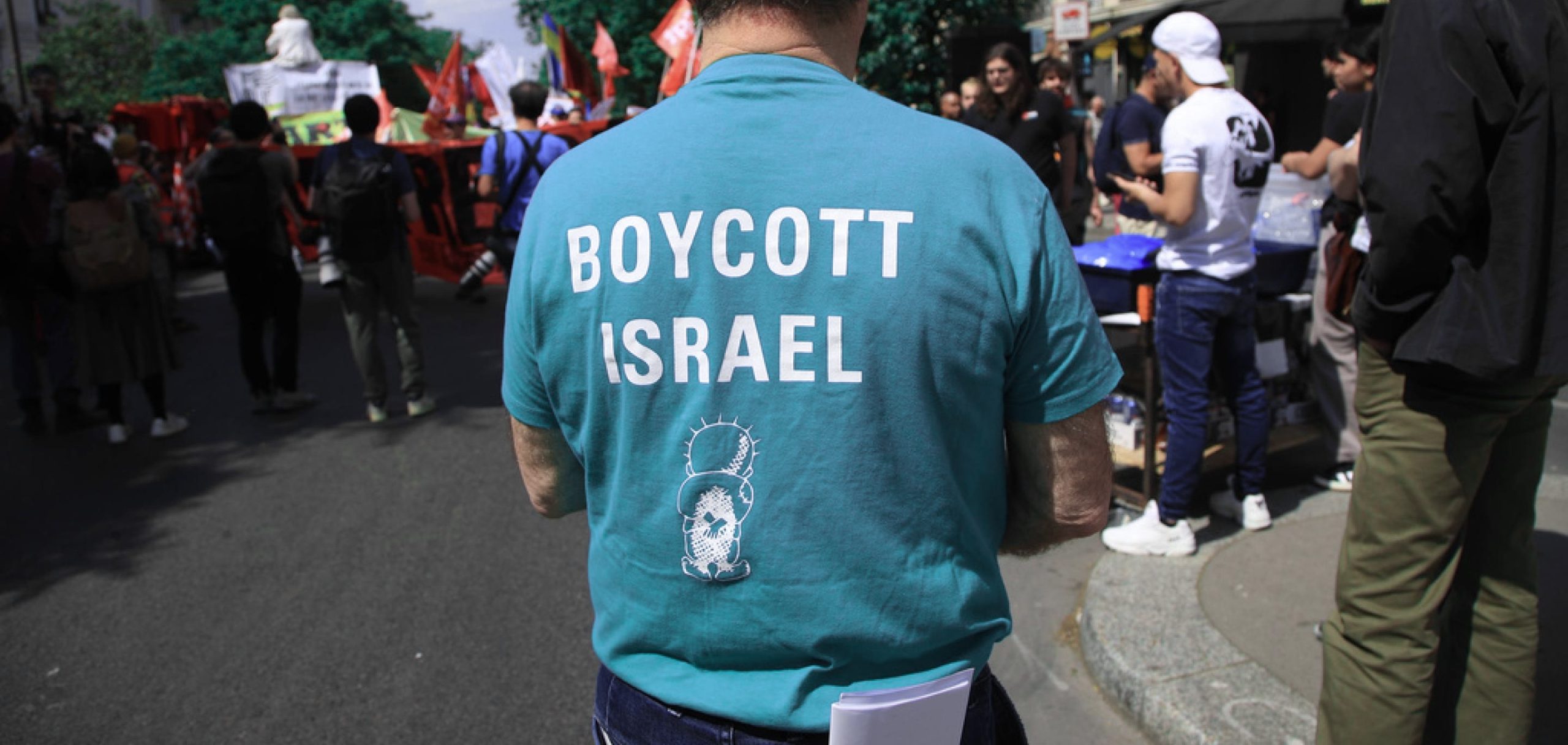 The Boycott, Divestment and Sanctions movement (BDS) has gone on for decades. It’s an effort to put the squeeze on Israel and cause real economic pain. It’s gone from a rallying cry on college campuses to governments around the world. And, while political pressure is growing, the Jewish state’s economy tells a different story.
At a grocery store in the U.K. recently, protesters moved down the aisles, removing Israeli products. One protester explained, “Today, we went into this ASDA supermarket, and we took the Israeli goods and the Coca-Cola products from the shelves.”
From Europe to the United States, the campaign against Israel is increasingly becoming an economic one. Several countries have moved to restrict trade specifically with Israeli communities in Judea and Samaria.
In New York City, Mayor Zohran Mamdani has said he won’t continue the New York-Israel Economic Council created under former Mayor Eric Adams. Mamdani publicly supports the Boycott, Divestment, and Sanctions movement.
Mamdani said at one rally, “We want to let them know that there are three letters that we have as an answer to what is happening in Palestine: And it’s B-D-S!”
The political debate isn’t limited to New York. The Democrats’ nominee for the U.S. Senate in Michigan, Abdul El-Sayed, is targeting American financial support for Israel.
He commented, “The question about whether Israel has a right to exist is actually quite secondary to whether or not they have a right to our tax dollars.”
Dr. Charles Asher Small is executive director of the Institute for the Study of Global Antisemitism and Policy. He sees the campaign against Israel as part of a much larger information battle.
He told CBN News, “The demonization of Jews, the demonization now of Israel, has a deep pedigree.”
Small notes that as this persecution spreads across media, culture, and Western universities, he’s most concerned about what’s happening on college campuses.
“Qatar is a small country in the Middle East of only 300,000 people, and they give more money to American universities than any other country in the world,” he explained. “And revolutionaries know, if you want to change the society, you start at the universities. You start with young people who go to school to learn to be citizens.”
The anti-Israel movement took hold on college campuses and made its way into politics. Now the question is: will it reach the boardroom and threaten the international investment that has boosted the Israeli start-up economy?
Venture capitalist Michael Fertik contends that it’s already happening.
He told us, “For reasons of political bent, propaganda, antisemitism, or otherwise, or just a mistake, there are people who want to put the brakes on anything to do with Israel. And that could be academic research or collaboration; that could be investment.”
And there’s another side to that equation. Gabe Groisman works with Israeli companies entering the American market. He points out those companies don’t just sell to America; they also start U.S. operations and hire American workers.
“You can’t help but understand the economic diplomacy aspect of Israeli companies opening entities in the U.S. to serve the U.S. market: what that does, how many people, how many Americans that employs, how many dollars it actually brings to the pockets of Americans, how the products and services that they’re creating help improve American lives?
Groisman believes it’s a relationship that runs both ways. He made a recent visit to Tel Aviv, where each company he met with was developing technology for the U.S. market.
Fertik says that when business leaders look past the politics, the economic case for Israel is hard to ignore.
“I think that among people who care about business first, the information war is being won by the people sympathetic to Israel, because the business case for Israel is inarguable,” he remarked.
He’s also putting his own money behind that conclusion.
“We at Verdict have been deploying Verdict Fund One, and we expect to deploy approximately 15 percent – 15 percent of the fund – into Israeli startups,” he revealed.
This represents a ten-fold increase in his financial commitment to the Israeli economy, which continues to persevere.
“Well, I’m very excited to see that, in spite of all the naysayers, wherever they may come from, Israel seems to go from strength to strength,” Fertik declared.
Even after years of war and disruption, the Bank of Israel forecasts 4 percent growth this year and 5.5 percent in 2027.
U.S. Ambassador to Israel Mike Huckabee sees that resilience when he walks the streets of Jerusalem.
“The GDP has grown in Israel in the midst of wars. The stock market, since October the 7th, is up 100 percent,” Huckabee observed.
He added, “It’s a very vibrant economy, and if one just goes to a high point of lookout in Jerusalem and looks out, you will see 300 cranes building things around Jerusalem. Now, if your country is dying and falling apart, the cranes aren’t gonna be there building anything. You’ll see big wrecking balls tearing stuff down.”
Israel has faced economic boycotts before. Still, despite efforts to isolate Israel, the economy continues to grow. A nation under pressure, yet still innovating. And for those of us who see through a biblical lens, demonstrating remarkable resilience.
Day 1,068 — Tuesday, September 8
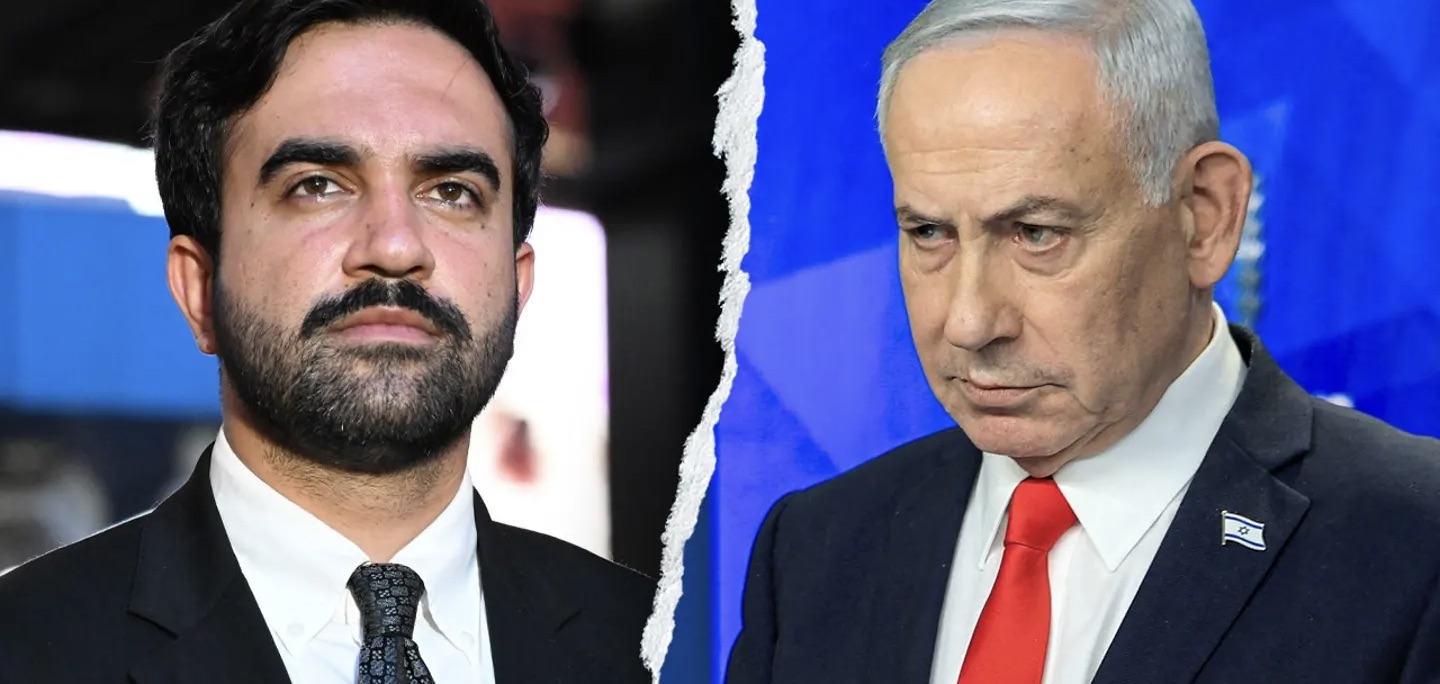 Israeli Ambassador to the United Nations Danny Danon told Fox News Digital that New York City Mayor Zohran Mamdani is “sowing chaos” ahead of Israeli Prime Minister Benjamin Netanyahu’s visit to the U.N. General Assembly later this month.
Danon made the remark after Mamdani called on New Yorkers in July to protest when Netanyahu arrives to speak at the general debate at U.N. headquarters on Sept. 24.
“No one can ignore Mayor Mamdani, you know, instead of actually welcoming all world leaders and making sure that the city will function properly, he is doing exactly the opposite,” Danon said.
“He is inciting, he is sowing chaos into the city. So this year, unfortunately, it will be harder for every New Yorker or every visitor because the mayor is actually calling for people to go out, to demonstrate and it will not deter us. The prime minister will come, will speak and will represent our nation,” the ambassador added.
Mamdani’s office, when asked by Fox News Digital if he had any plans to meet with Netanyahu while he is in town, did not immediately respond to a request for comment.
“I don’t think the prime minister wants to meet with him,” Danon said.
Mamdani previously called Netanyahu a “war criminal” and “architect of a horrific genocide against the Palestinian people.” The Democratic socialist also acknowledged that he can’t have Netanyahu arrested despite promising to do so during his mayoral campaign.
When asked by a reporter in July about “What do you think that these people who are frustrated with Netanyahu should do when he arrives in New York City for the United Nations meeting,” Mamdani said, “One of the bedrocks of our city is protest.”
“It is something that has been a part of what makes our city so special, that New Yorkers can express themselves whether they are in support or in opposition no matter on whatever topic,” the Democratic socialist mayor said during the press conference on July 22. “And I’ve always said that when we respect our Constitution, we also respect our First Amendment. And here in New York City it will always be a place where you can exercise that.”
Netanyahu told Fox News “Hannity” around a week later that, “I’m going to New York,” and, “I’m going to speak the truth in front of this hate-spewing elected official who’s pitting one group of New Yorkers against the others.”
Danon told Fox News Digital that “we have been involved in a war, a difficult one, a long one, and I think now we have a lot of opportunities ahead of us.”
“So the prime minister would also speak about what we achieved, but also about the opportunities,” he said.
Danon also said Israel has to “finish the job” in Gaza.
“Hamas is still there. They are supposed to disarm, according to the president’s plan. I hope it will take place. I hope that it will happen sooner than later because if it will not happen, we will have to do the job ourselves. But we cannot leave a terrorist organization in Gaza. There will be no future for the people of Gaza or for us if Hamas will stay in power,” he continued.
“I think we can be very proud of our achievements. Israel is being criticized, but we walk very proud at the U.N. because we know that what we did, fighting evil, fighting Iran, fighting Hezbollah, fighting Hamas, it wasn’t only our fight. We fought for the Western societies, for the Western democracies,” Danon also said.
Day 1,068 — Tuesday, September 8
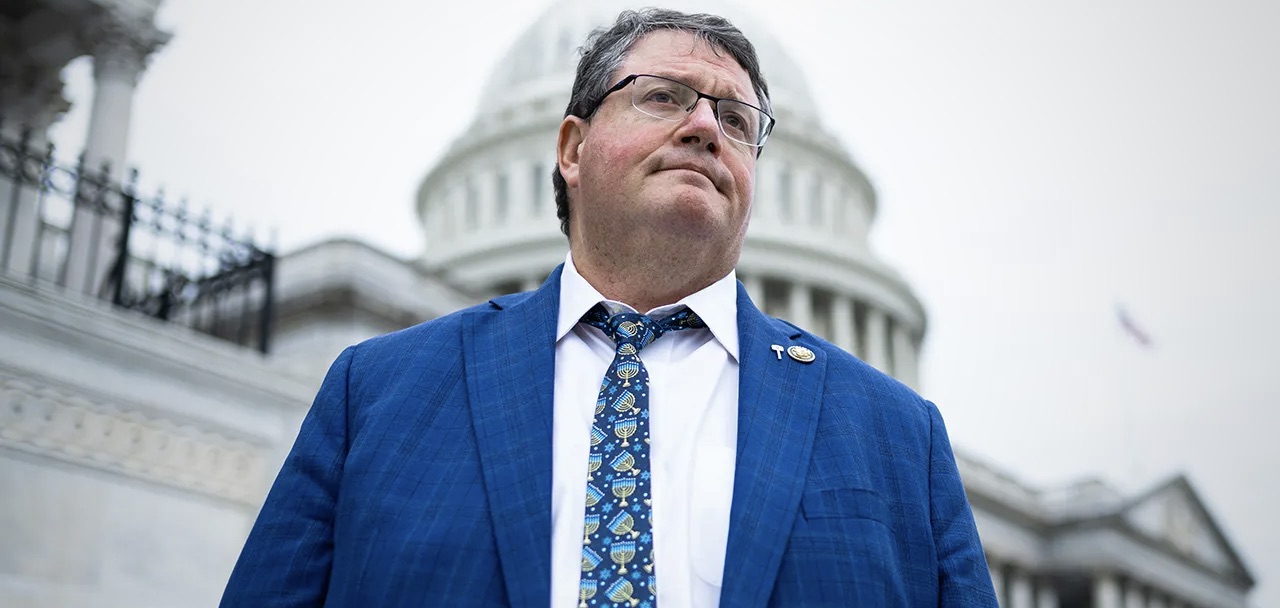 Florida Congressman Randy Fine (R-FL) warned Britain on Monday that companies complying with reported British sanctions targeting Jewish communities in Judea and Samaria could be barred from doing business with state and local governments in Florida.
“As the British government considers forcing British companies to boycott portions of Israel, it should be aware that a Florida law that I passed as a member of the Legislature would ban any British company forced to comply from doing business with any state or local government in Florida,” Fine wrote on social media.
He added that the legislation “would also end any British business participating in that boycott from doing any business in Florida if it needed any official interaction with state or local government to operate (permits, tax collection).”
Fine stated that the potential consequences for Britain would be substantial. “Florida is one of Britain’s largest trading partners. They should understand that their vanity project in support of Muslim terror could cost them billions of dollars,” he wrote.
“And for those who doubt the power of this policy,” continued Fine, “it was this same law that broke Airbnb’s misguided effort to boycott portions of Israel in 2019. They realized that this law would have bankrupted their company.”
“Florida has made it clear. Any company – or nation – that boycotts Israel is boycotted by Florida,” he concluded.
Fine was responding to a report in The New York Times that Britain is preparing to announce expanded economic measures against Jewish communities in Judea and Samaria. The reported measures could include prohibiting trade in goods produced in the communities and imposing sanctions on companies involved in construction there.
Three officials cited by the newspaper said Britain is also considering sanctions against companies that assist construction in Jewish communities. Such steps would broaden previous British sanctions related to Judea and Samaria, which have largely targeted individuals.
The reported plans come after Britain condemned Israel’s plans for construction in the E1 area between Jerusalem and Ma’ale Adumim. Israel recently issued a tender covering seven residential compounds in E1 with 1,234 housing units, following approval last year of approximately 3,400 units in the area.
British Foreign Secretary Ed Miliband has called on Israel to withdraw the tender, describing the project as “an unacceptable and destructive act” and arguing that construction in E1 would undermine the possibility of establishing a future Palestinian state.
Foreign Minister Gideon Sa’ar said last week that Israel would respond to British measures.
Finance Minister Bezalel Smotrich called Monday for action against Britain before the expected sanctions are announced Tuesday, including the expulsion of Britain’s ambassador.
“The British ambassador should be expelled this evening. We will not be a doormat for an antisemitic government in a country that has been conquered by radical Islam and is trying to save itself from economic and social decline by attacking Jews and the State of Israel. The British Mandate in the Land of Israel is over,” Smotrich said.
Day 1,068 — Tuesday, September 8
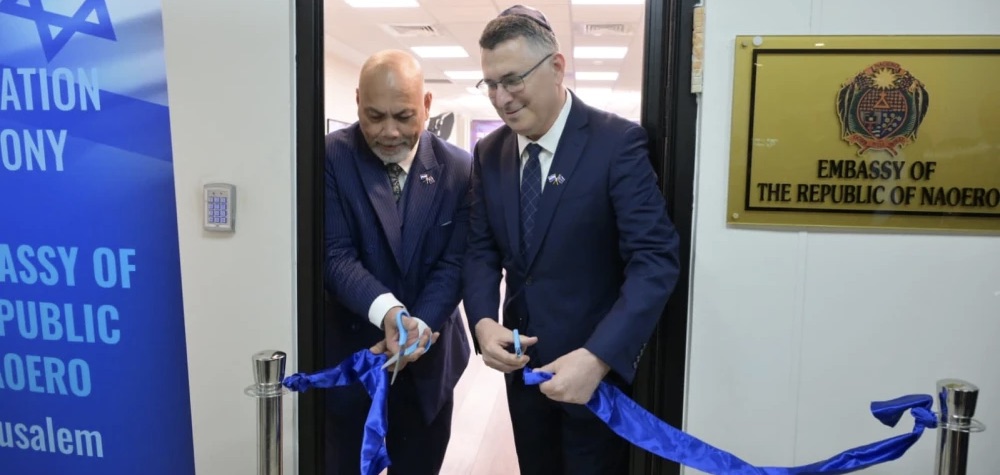 The Pacific nation of Naoero (formerly known as Nauru) opened an embassy in Jerusalem on Monday, becoming the ninth country to locate its diplomatic mission in Israel’s capital.
“Israel’s relations with the nations of the South Pacific are advancing tremendously,” Israeli Foreign Minister Gideon Sa’ar said at the event. “Today two ancient peoples stand together in Jerusalem, proud of our identity, our heritage and our friendship.”
Linking the Pacific nation’s reclaimed indigenous name to Jewish history, Sa’ar added that “we, too, are the indigenous people of this land” and that “Jews are called Jews because we are from Judea.”
“Our support for Israel has been unwavering,” said Naoero’s Foreign Minister Lionel Aingimea. “Naoero is historically one of Israel’s most reliable and consistent diplomatic allies at the United Nations.”
He continued: “We see opening an embassy here in Jerusalem not only as strengthening our ties with Israel, but also as a message to the world of where we stand. Our motto is God first, and Israel always has a special place in our hearts.”
Aingimea noted that the “easy decision” to establish the mission in Jerusalem came after discussions with Sa’ar in Fiji and received full endorsement from Naoero’s Cabinet.
The island nation is one of the smallest countries in the world, with a population of about 12,000 people.
Nine countries now have embassies in Israel’s capital: the United States, Fiji, Guatemala, Honduras, Kosovo, Naoero, Papua New Guinea, Paraguay and Somaliland.
All the other nations that have diplomatic relations with Israel maintain their embassies in Tel Aviv or its suburbs.
U.S. President Donald Trump’s decision to move the American embassy to Jerusalem during his first term set the stage for other countries to follow suit.
The leaders of Argentina and Colombia have pledged to relocate their embassies to Jerusalem.
Day 1,067 — Monday, September 7
 Israeli Prime Minister Benjamin Netanyahu issued a fresh warning to Iran on Sunday, saying Tehran would face a devastating response if it attacks Israel as he vowed to complete the mission of toppling the Iranian regime.
“That regime in Iran, its end is near,” Netanyahu said at a government Rosh Hashanah toast in Jerusalem, according to a translation from Hebrew. “It is weak. It is fighting for its life. It is faltering. There is another mission to complete, and we are determined to achieve it.
“This will permanently change the face of the Middle East and the history of our people. We know we are determined to do it, and we know we are capable of doing it.”
Israel is “stronger than ever,” he hailed, claiming the military campaign, carried out with U.S. support, has removed the threat posed by Iran’s nuclear program and ballistic missiles.
“We are determined to defend ourselves,” Netanyahu continued. “We are determined to strike our enemies. They are not attacking us. Iran is refraining from doing so, and it knows why.
“Of course, it could make the mistake of attacking us. If it does, it will suffer a blow beyond anything it can even imagine.”
Netanyahu’s remarks came as he praised Israeli forces and security services for ongoing operations in Lebanon, Gaza and the West Bank, and told his enemies: “Do not mess with us.”
Day 1,067 — Monday, September 7
 The Israel Defense Forces launched an unannounced nationwide readiness drill early on Sunday morning to test its preparedness for a sudden, large-scale multi-front conflict ahead of the upcoming High Holidays, according to an army statement.
Under the direction of the IDF Chief of Staff Lt. Gen. Eyal Zamir, the General Staff surprise exercise—dubbed “Breaking Dawn 2.0″—evaluates the military headquarters, command decision-making and rapid deployment capabilities across multiple operational sectors.
As part of the drill, senior commanders throughout regional commands, branches and directorates were summoned, while standby forces mobilized and reserve readiness underwent review. Zamir observed operations from both the military’s underground Supreme Command Post and positions in the field.
The IDF noted that the public may observe increased movement of ground security forces and aircraft nationwide during the drill, emphasizing that the maneuvers do not stem from an active security emergency.
Conducted under the Operations Directorate’s scheduled training program, the exercise tests updated operational plans and incorporates tactical lessons learned from combat across various fronts following the Oct. 7, 2023, Hamas-led massacre.
IDF Comptroller officers in both active-duty and reserve service are actively inspecting units and headquarters throughout the country to review compliance and operational readiness.
The military is facing a “tense and volatile period” on all war fronts, Zamir said on Sunday during a situational assessment held as part of the exercise.
“We are preparing for the upcoming holiday period,” Zamir said, referring to Rosh Hashanah, which will be celebrated on Sept. 12–13. He noted that the military continues to draw lessons from the war, adding that “the baseline posture of the entire IDF is readiness for a surprise attack.”
The nationwide exercise tests readiness across every branch and echelon, from the General Staff to tactical field units, and ensures operational orders remain up to date, the chief of staff said. The assessment also evaluated how commands handle an emerging multi-front scenario under diverse operational conditions.
Hanan Gefen, a former commander of the Israel Defense Forces’ Unit 8200 signals intelligence unit, told JNS that there is a need for closer coordination not only among military forces but also with police, first responders and emergency services that would be called upon during a major terrorist attack.
He said areas such as Eilat and other parts of southern Israel that were not directly exposed on Oct. 7 must also be incorporated into such coordination efforts, particularly given their long and remote borders and relatively sparse population centers.
Gefen said that the Oct. 7 attack exposed a total collapse of Israel’s defense systems. For two or three days, he said, defensive efforts did not come through the traditional command-and-control structure but instead relied on local initiatives, including those led by civilians who played a critical role.
“Even today, we cannot appreciate or understand the full extent of these local initiatives. This is the major lesson learned,” he said.
Gefen emphasized that Sunday’s drill sends a broader message to Israel’s enemies, including Hezbollah, against which Israel is operating covertly on the ground and dismantling strategic strongholds; Hamas, whose head of internal security was recently captured; and Iran, a major state sponsor of terrorism.
“These messages hit very hard. The main overall message, though, is that Israel is acting thoroughly and regrouping,” he said.
Nitzan Nuriel, former director of the Counter-Terrorism Bureau in the Prime Minister’s Office, told JNS that any military exercise that is publicized is intended to send a message, demonstrate power and showcase capabilities.
“It’s not only about us, it’s about our neighbors. In every exercise we publish, there are messages to our allies and enemies,” he said.
To Israel’s allies, Nuriel said, the message is that over the past three years, Israel has achieved significant military accomplishments, and it continues to improve its capabilities, making it a powerful partner.
“To our enemies, the message is: Yes, we have been fighting for three years, but we know what we are fighting for. We are not tired, and we feel capable of taking care of our security if needed,” he said.
“I believe that the Syrian regime may be eyeing more options in case talks between us do not move forward. Hezbollah and many other players, even Turkey, need to receive those messages from us,” Nuriel said.
In addition to the nationwide readiness check, the military announced on Sunday that it will launch a large-scale exercise in the Eilat region and the Jordan Valley.
The drill, led by the 80th “Edom” Division, begins on Monday and will run for several days. Starting Sunday, residents may notice heavy movement of security forces, aircraft and naval vessels, according to the IDF.
Soldiers will rehearse scenarios including a surprise attack and infiltrations of Israeli territory by air, sea and land. The exercise will test the defense of border communities, including the resort city of Eilat, along with force readiness and air and naval integration.
Troops will also drill operational coordination with the Israeli Air Force and Israeli Navy, as well as the Israel Police and the Magen David Adom emergency response organization.
Zamir said on Sept. 3 that Israel “fundamentally changed” its security doctrine during the three-year war that followed the “failure” of the Oct. 7 attacks.
There is no more “ignoring and no containment; there is the removal of threats before they materialize. We are engaged in a continuous process of learning, drawing lessons and implementing them,” Zamir said at a recognition event for IDF troops and security forces, organized by the State Employees’ Union, according to the IDF Spokesperson’s Unit, which did not specify the location of the conference.
“For more than a thousand days, the State of Israel has been engaged in a prolonged, unprecedented and multi-front campaign for our existence and our homeland,” the military chief was quoted as saying.
Zamir stressed that over the course of the war, Israel’s security forces “have removed real existential threats that had been built up against us for years. We have proven that the IDF’s long arm is powerful, determined and capable of reaching anywhere to strike those who seek to harm us.”
He went on to say that the military must be expanded with the necessary manpower and equipped with advanced capabilities to meet its evolving missions, while at the same time, the state’s “highest obligation” is to care for those who serve in the IDF.
These include mandatory service personnel, career service personnel, reservists and IDF employees, “who are the foundation of our strength and the secret to our power,” Zamir said.
“This is a generation of courageous and fearless troops whose achievements will be recorded in the annals of Jewish history,” he continued.
Upon receiving an award of appreciation, the military chief stated, “I stand here solely as the commander of hundreds of thousands of troops and officers—both in mandatory service and the reserves—who carry the security of the state on their shoulders every day, hour by hour.”
This award “belongs to the reservists who left behind their homes, families and careers and reported for duty out of a profound sense of mission; it belongs to the families who provide them with unwavering support, and to the fallen and wounded who have paid the highest price. I am merely the representative of an entire military that operates with dedication, determination and humility, and I accept this recognition in their name and because of them.”
Day 1,067 — Monday, September 7
 Lebanese MP Fouad Makhzoumi said Lebanon could establish peace with Israel and join the Abraham Accords if Hezbollah is fully disarmed and armed groups are prevented from dragging the country into future conflicts.
“I don’t see any reason why we cannot sign peace with Israel,” Makhzoumi said in an interview with Middle East 24, adding that Lebanon could “achieve” membership in the Abraham Accords.
Makhzoumi said normalization with Israel would benefit Lebanon but maintained that diplomatic relations and trade could move forward only once “our side, as Lebanese, disarms the militias.”
He said Lebanon must ensure armed groups are no longer able to use the country as a base for attacks or involve it in conflicts based on their own ideological objectives.
Makhzoumi said the country needs to disarm Hezbollah and “make sure that there is no opportunity for somebody to take me to a war under ideological reasons.”
In addition to addressing armed groups, Makhzoumi said Lebanon would need to establish a strong banking system that complies with international regulations and “have peace with Israel.”
The Lebanese lawmaker has previously called on the country’s military to demonstrate its willingness to confront Hezbollah’s weapons trafficking.
He urged the military to establish a checkpoint in Beirut’s Dahieh neighborhood as part of those efforts.
Makhzoumi’s comments come as regional and US officials have held broader discussions about possible changes in regional alliances and greater economic cooperation. Recent investments from the UAE have also been part of developments surrounding economic cooperation in the region.
Day 1,066 — Sunday, September 6
 Iran‘s Foreign Ministry on Saturday condemned the U.S. strikes on three Iranian oil tankers as a “war crime,” warning Washington and its allies they would bear responsibility for any further escalation.
The statement came hours after U.S. Central Command said American forces struck the tankers in response to what it said was an Iranian missile attack targeting two U.S. Navy warships patrolling regional waters.
In its statement, the ministry accused the United States of carrying out a broader campaign of military and economic pressure against Iran and claimed the strikes violated Article 2(4) of the U.N. Charter.
The ministry also said Iran would continue defending its sovereignty and national interests against what it characterized as U.S. aggression.
Iranian state media aired what it said was audio of the U.S. Navy warning one of the Iranian oil tankers to evacuate before it was struck, according to Fox News chief foreign correspondent Trey Yingst.
Reporting from the Gulf region on “Fox Report,” Yingst said the reported communication instructed those aboard to evacuate part of the vessel before the attack.
Yingst said the reported warning suggested the U.S. military sought to avoid civilian casualties while still delivering what he described as “a very clear message of force” to Iran.
“It’s an indication that the U.S. military wants to send a very clear message of force to the Iranians, but they’re not looking to kill civilians in the process,” Yingst said.
The United States has not publicly confirmed the reported communication.
Day 1,065 — Saturday, September 5
 The U.S. Department of the Treasury sanctioned on Friday a Turkish investment bank and two subsidiaries for allegedly helping Iran move tens of millions of dollars internationally on behalf of the Islamic Revolutionary Guard Corps-Quds Force.
The department designated Istanbul-based Golden Global Yatirim Bankasi Anonim Sirketi, or Golden Global Bank, accusing it of providing Iran with critical correspondent banking access and facilitating transactions for the IRGC-QF, the Islamic Revolutionary Guard Corps’ foreign-operations arm.
Treasury said Golden Global Bank was established to help Iran’s so-called rahbar network transfer oil revenue from China to Turkey, where it could be converted into cash and gold through rahbar money exchangers.
Scott Bessent, the U.S. treasury secretary, stated that “financial institutions continue to find out the hard way that we are serious about Operation Economic Outcast,” the Trump administration’s campaign aimed at cutting off the networks and financial channels Iran uses to smuggle oil, evade sanctions and fund terrorist proxies.
“While we hope no more banks will need to be sanctioned, that ultimately depends on how quickly the international community comes to its senses and ceases support of the murderous Iranian regime,” he said. “We know who you are, we know where you are and we will continue to take action together with our allies and partners until we have buried the head of the Iranian snake.”
According to Treasury, Golden Global knowingly provided correspondent banking services to Iranian financial institutions, allowing transactions through accounts controlled by the IRGC-QF and its proxies. Those included accounts linked to Turkish businessman Sitki Ayan and his companies, which the department sanctioned in 2022 for facilitating hundreds of millions of dollars in Iranian oil sales for the IRGC-QF.
Treasury also sanctioned two Turkey-based subsidiaries controlled by Golden Global Bank: Golden Global Varlik Kiralama Anonim Sirketi and Golden Global Portfoy Yonetimi Anonim Sirketi.
Iran relies on multinational shadow-banking networks to move money abroad and access U.S. dollar correspondent banking relationships, Treasury said. The networks help Iran launder funds, procure weapons and finance regional terrorist proxy groups.
Day 1,065 — Saturday, September 5
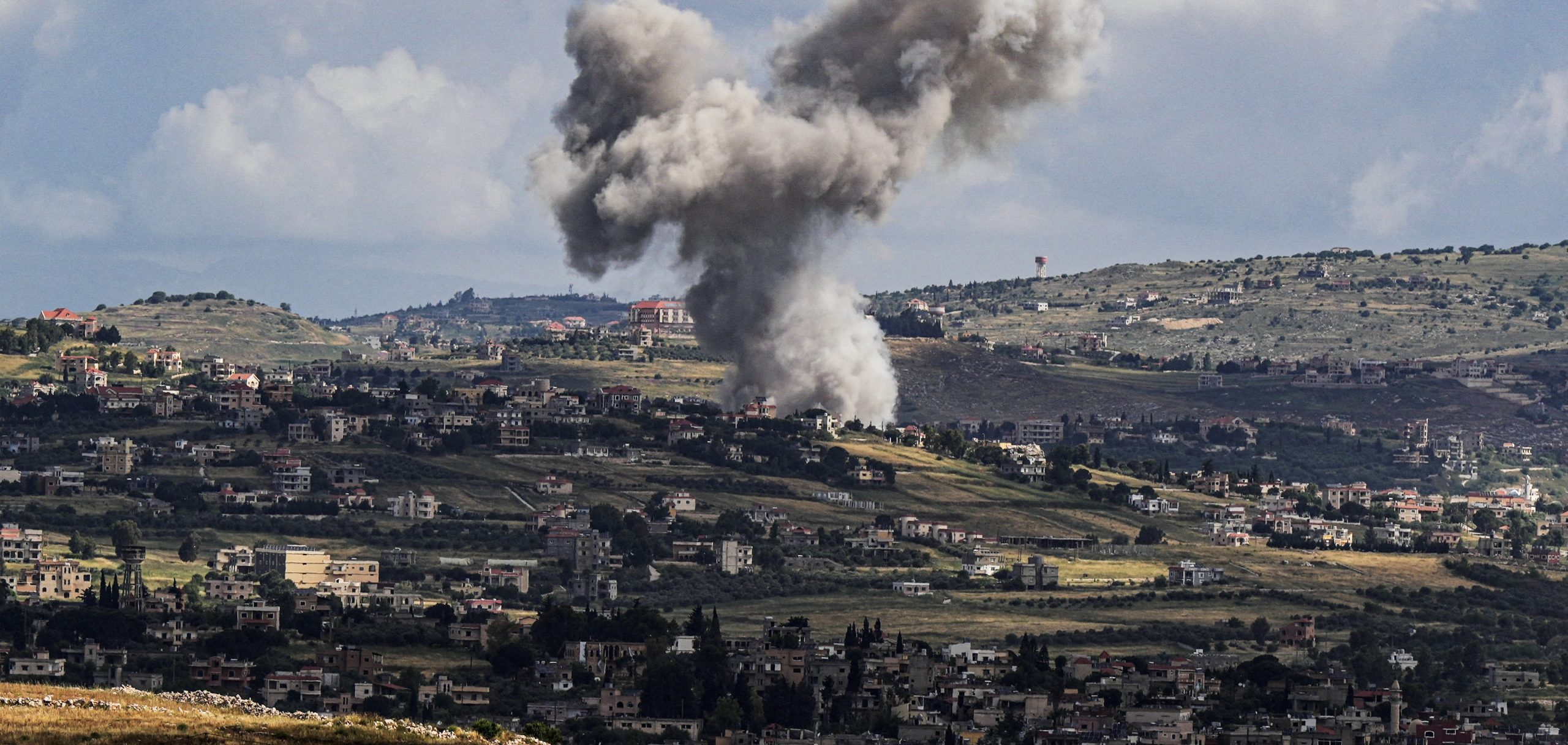 Israel will not withdraw from Southern Lebanon until Hezbollah is disarmed throughout the country and the danger posed by attacks from the Land of the Cedars is neutralized, Defense Minister Israel Katz said on Friday.
“Prime Minister Netanyahu and I are leading a clear and uncompromising policy, implemented every day by the IDF: Israel will not withdraw from the security zone in Lebanon until Hezbollah is disarmed throughout Lebanon and the threats to the residents of the Galilee are removed,” Katz said.
“The capture of Ali al-Taher is an important step toward achieving this goal,” he added.
Katz said the IDF’s capture of the Ali al-Taher Ridge in southeastern Lebanon marked the completion of a phase in consolidating Israel’s hold on the security zone.
The decision to advance toward the ridge was made after intelligence indicated the presence of Hezbollah command-and-control tunnels there, according to the defense minister.
The tunnels served as a command center for attacks on IDF troops and the Galilee, while the ridge constituted Hezbollah’s last commanding position protecting the Nabatieh area, giving it strategic importance, Katz said.
The IDF operated in difficult terrain during both offensive and defensive operations on the ridge.
“I closely followed the activity on the ridge, including maintaining contact with the forces in the field, and I was deeply impressed by their commitment to the mission,” Katz said.
He noted that to protect Israeli troops, a strict information blackout had been imposed on details of the operation.
“In a complex and systematic operation, the mission was completed and the tunnels were cleared of terrorists,” Katz said. “I salute the determination of the IDF command and the courage of the fighters.”
The IDF said earlier on Friday that troops from the 36th Division had operated in recent weeks to clear and neutralize two underground routes in the Ali al-Taher Ridge area.
The troops established operational control of the ridge both above and below ground and cleared the area of Hezbollah terrorists. Some were killed, while others fled, according to the military.
The operation to neutralize the underground infrastructure is continuing. Once it is completed, the IDF will adjust its defensive posture based on its assessment of the situation.
The underground network contained command centers, weapons-storage rooms, generator rooms, living quarters, showers and a kitchen, enabling Hezbollah terrorists to conduct operations and remain underground for extended periods.
The IDF described it as a strategic underground network built over two decades with Iranian funding and planning.
The IDF said its operations over recent weeks had neutralized the enemy’s ability to launch attacks from the underground routes.
Katz said the IDF would now complete the neutralization of the tunnels and deploy tactically to maintain control of the ridge and prevent Hezbollah from reestablishing itself there.
The military said it would continue operating in the security zone and would respond to any attempt by Hezbollah to attack Israeli troops, while remaining committed to the ceasefire agreement.
Day 1,064 — Friday, September 4
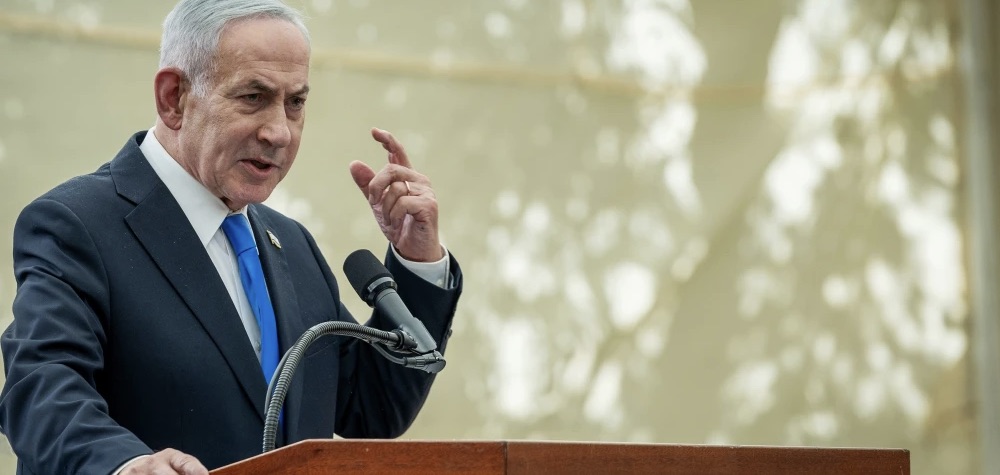 Israeli Prime Minister Benjamin Netanyahu said in Tel Aviv that overthrowing Iran’s government has become a central Israeli objective and is within reach as Tehran faces growing economic and military pressure.
Netanyahu made the remarks during a toast ahead of Rosh Hashanah, which begins next week. Defense Minister Israel Katz, Chief of Staff Lt. Gen. Eyal Zamir, and members of the IDF General Staff Forum attended the gathering at the Kirya.
“This regime is currently crumbling. It is weaker than ever. Overthrowing the regime is the central mission still before us, but it is near. It is not impossible, and it is within reach,” Netanyahu said.
The prime minister also said Israel has the ability to eliminate the threat posed by Iran and bring down its government.
“I am convinced of our ability to remove the threat once and for all and overthrow the Iranian regime that is fighting for its life. I say to our enemies – don’t mess with us. We have the power, the determination and the internal unity to overcome you.”
Netanyahu’s comments come as Iran confronts severe economic difficulties. The Iranian rial has fallen to more than 2 million per US dollar, while sharply rising inflation has driven up the prices of food and other essential goods.
The US has imposed sanctions, frozen assets, and taken additional financial measures designed to limit Tehran’s ability to participate in international trade and obtain foreign currency.
Iran has also faced military pressure from both Israel and the US. Strikes carried out by the two countries have damaged Iranian military infrastructure, including missile-related facilities and other military assets.
Day 1,064 — Friday, September 4
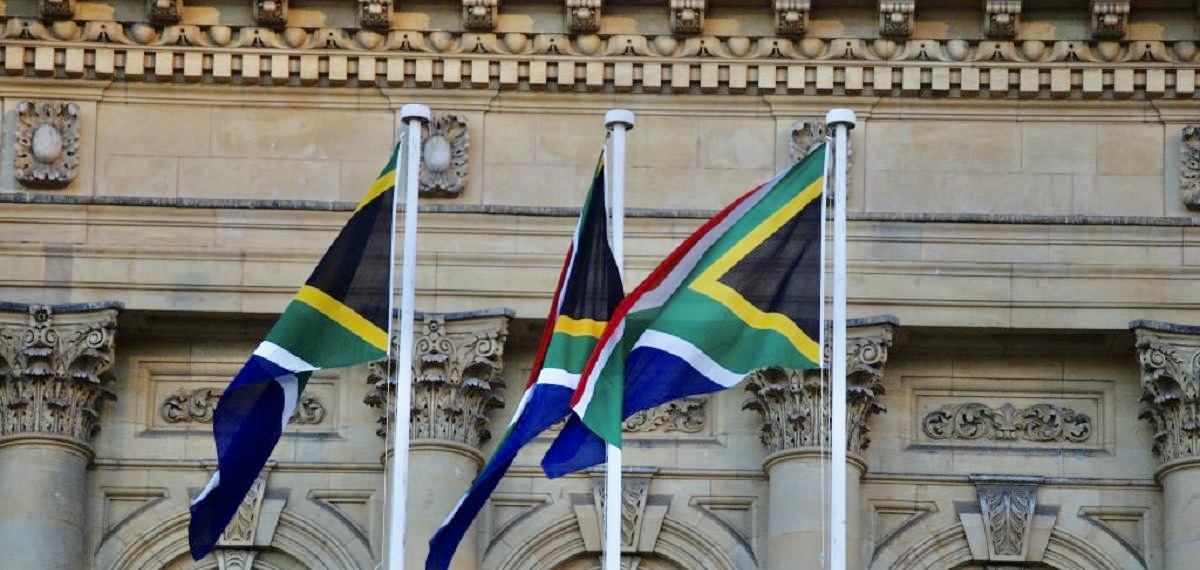 At a time when official relations between Jerusalem and Pretoria remain deeply strained, a royal delegation from South Africa came to Israel for a weeklong visit that ended on Thursday with a very different message: one of love, dialogue and “building bridges” between the two peoples.
The 12-member delegation was composed of Queen Sinokuhle Matiwane of the AmaMpondomise Kingdom; eight princesses, including Princess Lerato Mabalane of Baphiring ba Mabalane in North West Province and Princess Esihle Ntola of the AmaNtshangase Kingdom; and two princes, including Prince Litha Dalindyebo of the AbaThembu Kingdom in the Eastern Cape.
Princess Fundiswa Zote, who also represented the AbaThembu Kingdom, said before departing that although King Buyelekhaya Dalindyebo had come to Israel in December 2025, this visit by a group of mostly female traditional leaders representing various South African kingdoms was “awesome,” even during what she referred to as “this hard, hard, hard period” in the country.
“It’s been exciting; it’s been awesome,” she told JNS on Thursday. “We are truly grateful. We’re thankful for the relationship. We’re thankful for the friendship and we hope that this extends beyond, beyond, beyond.”
Zote said the trip had focused on “showing our women what Israel is all about” and involved high-level meetings and visits around the country. Highlights included Christian holy sites—her favorite was Magdala on the western shore of the Sea of Galilee—as well as the City of David and the Museum of Tolerance Jerusalem.
She said one of her people’s main concerns was water, a problem they were addressing with the help of Israel and particularly Innovation: Africa, an Israeli-founded nonprofit that uses Israeli solar and water technology to provide clean drinking water and electricity to African communities.
“There’s no water in our communities and we’ve been speaking to Innovation: Africa to see how we can work together and collaborate and use some of the Israeli technology to bring water to our people,” she said.
Zote concluded the interview by saying, “May God bless the city of Jerusalem. May God keep her. May God bless Israel and keep Israel in perfect peace. We love you.”
Day 1,063 — Thursday, September 3
 Let’s call it what it was: masked settlers ambushing an NBC News crew and local Palestinians in the West Bank village of Jalud is an indefensible, unacceptable criminal act. This wasn’t a “clash.” It was an assault on journalists doing their jobs and people going about their daily lives.
Prime Minister Netanyahu condemned the attack, calling it a “criminal act of violence” committed by “a handful of rioters” who “harm Israel’s standing in the world.” Israeli security forces have confiscated three vehicles and opened an investigation — as Netanyahu called upon them to arrest those involved and deal with them to the full extent of the law. Sadly, this is not the first time, and Israel must show zero tolerance for such behavior by a lawless fringe — with arrests, prosecutions and prison sentences.
But there’s another important story here, and it’s about the press itself. For over two years, Hamas and Gaza dominated nearly every broadcast, every U.N. session, every campus protest. That unparalleled coverage eclipsed the humanitarian crisis in Sudan, where the number of people in dire need of help is estimated at over 33 million (!) with close to 12 million people displaced from their homes.
However, even as the war in Gaza came to an end, global newsrooms didn’t move on. They moved over. Judea and Samaria, also known as the West Bank, became the new venue of choice, the fresh well of footage and outrage needed to keep the anti-Israel narrative running at full volume. The war may be winding down. The narrative apparatus built around it is more active than ever.
Acts of violence, such as the one in Jalud, are real and deserve coverage — but so does an enormous amount of violence elsewhere that never gets a fraction of this attention. Attacks on religious minorities across Africa, Asia and the Middle East routinely go unreported by the very same networks now camped out on the West Bank. Meanwhile, an isolated incident involving Israel — even one carried out by a small band of extremists the Israeli government itself condemns — has dominated the media for days.
The lesson audiences absorb, whether intended or not, is that violence only matters when Jews or Israel are on one side of it. That selective spotlight doesn’t stay contained to foreign policy debates. It filters into U.N. resolutions, into government statements, into placards at protests and finally into open hostility toward Jews who have nothing to do with those acts at all.
The pipeline runs from social media to the newsroom to the street with disturbing speed, and it demands the media’s accountability.
Lost in all of this is scale. The extremists carrying out these attacks are a minority of the minority, the very fringe among more than 500,000 Jewish residents living peacefully in Judea and Samaria, the biblical heartland of the Jewish State. The “unsettlers” was how U.S. Ambassador to Israel Mike Huckabee recently described them in an X post, “The ‘unsettlers’ betray the State of Israel, Judea/Samaria residents, civil law & the Torah.”
The overwhelming majority of Jews living on the West Bank are ordinary families: teachers, farmers, students, commuters who live under the daily threat of stabbings, shootings, and car-rammings that rarely make headlines anywhere. For example, only last week, a 16-year-old Palestinian jumped from behind and stabbed, moderately injuring a 24-year-old Israeli who stopped to shop near the village of Auja in the Jordan Valley. Where was this victim or his family interviewed? What coverage was given to the hateful education that propels a 16-year-old to viciously attack another person with a knife?!
The media’s insistence on treating a fringe group as representative of that entire population — while ignoring the terror those same families face — isn’t just lazy. It’s a distortion that criminalizes an entire community and propels hatred and acts of violence on a global scale.
Antisemitism doesn’t erupt in a vacuum. It needs a story, a grievance, a reason for outrage and there is no easier vehicle to manufacture one than the Israeli-Palestinian conflict. Under the political charade, the ugliness under the cloak is clear: Israel is the Jew among the nations, and what is disguised as “political reporting” is really a biased attack on that Jew, the one and only Jewish state in the world.
When newsrooms chase Judea and Samaria the way they chased Gaza, amplifying the fringe, ignoring real terror and ignoring the peaceful majority, they aren’t just shaping coverage, they’re feeding the oldest hatred with the newest headlines.
No Jews, no news has ever been truer, or more dangerous.
Day 1,063 — Thursday, September 3
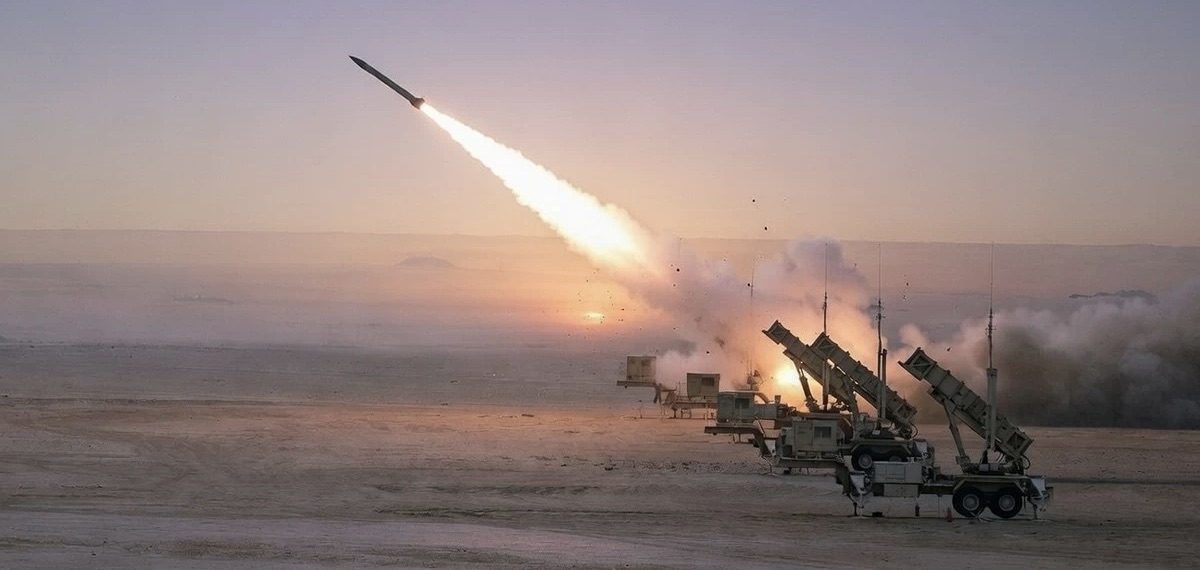 Kuwaiti air defenses are confronting hostile missile and drone attacks from Iran, the Kuwait Armed Forces confirmed in a post on X/Twitter on Thursday morning.
“Everyone is requested to adhere to the security and safety instructions issued by the competent authorities,” the post added.
The Iranian attack on Kuwait targeted US military bases in the country, Iranian state media IRIB reported.
Local sources told IRIB that a US base in Kuwait had been struck, claiming that smoke was rising from the site. Neither the US nor Kuwait have confirmed such reports.
The Kuwait Armed Forces said in their post on X, “If explosion sounds are heard, they are the result of air defense systems intercepting the hostile attacks.”
Day 1,062 — Wednesday, September 2
 US Central Command (CENTCOM) announced that it completed a wave of strikes against Islamic Revolutionary Guard Corps (IRGC) targets in Iran early on Wednesday.
According to CENTCOM, the strikes were carried out in retaliation for Iranian attacks on commercial shipping in the Strait of Hormuz and the recent attack on US troops stationed in the region.
“US forces struck Islamic Revolutionary Guard Corps (IRGC) targets including air defense sites, radar systems, maritime assets and facilities, mine laying capabilities, and communications sites,” CENTCOM said in a post on X/Twitter.
“The strikes follow recent attempted attacks by the IRGC against commercial shipping in the Strait of Hormuz and against American service members.”
Iranian state media reported that several explosions were heard in the cities of Bandar Abbas, Ahvaz, and Sirik.
Following the strikes, electrical power to several parts of the Hormozgan province was lost, Iranian state media IRIB reported. Power has been restored to Qeshm county in Hormozgan, the area’s governor announced on Wednesday morning.
IRIB claimed that a US airstrike on Sirik hit a wedding, killing four and injuring 63. The US did not immediately respond to the allegations.
Air defenses were also reportedly activated in eastern Tehran, Iran’s semi-official Tasnim News Agency said.
The US military attacked two Iranian government tankers during Tuesday’s strikes on Iran, US officials told Axios.
This is the first time that the US has struck an Iranian tanker under a new “tanker for tanker” policy rather than to stop a ship violating the naval blockade. The policy, which Axios said was approved by US President Donald Trump, aims to deter Iranian attacks on tankers traveling through the Strait of Hormuz.
US President Donald Trump later confirmed the strikes in a post to Truth Social, echoing CENTCOM’s reasoning for the strikes.
“The United States is, as we speak, striking Iranian Targets near the Strait of Hormuz,” he wrote. “The strikes are large and powerful, and in retaliation for the Iranians’ failed attempt at adding sea mines to the Strait, which currently has no mines (They have been completely removed or detonated!), and the Iranians shooting eight missiles, all successfully knocked down, at our Military Base in Jordan.”
Trump threatened Iran that, should it respond to the “very justified attack,” it will be hit “again at a much harder and higher level, but it will not be the biggest attack of them all, that is waiting in the wings and, when it is over, there will be very little left of the Islamic Republic of Iran!”
Day 1,062 — Wednesday, September 2
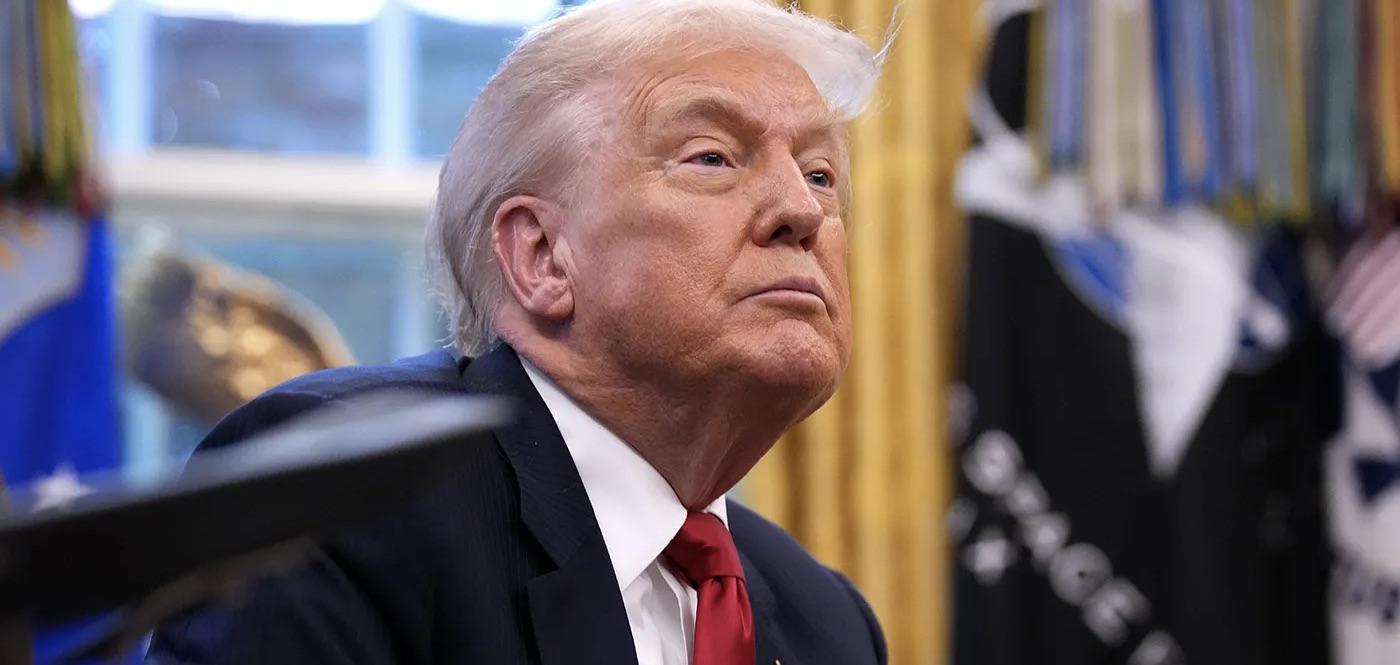 US President Donald Trump on Tuesday rejected reports that he is trying to force Iran to resume talks with the US.
“I’m not trying to force Iran to the bargaining table, as ABC Fake News reported. I couldn’t care less if they sign a worthless, to them, agreement. I like our position now much better, with almost total control of the Hormuz Strait, and their economy totally collapsing,” Trump wrote in a post on Truth Social.
He added, “They are just playing out the inevitable. When are the Iranian people going to rise up and fight?”
The post followed the launch of US strikes against IRGC targets in Iran. Initial reports said Qeshm Island and Chabahar were among the areas targeted, with explosions reported at both locations.
US Central Command (CENTCOM) announced that its forces successfully completed the wave of strikes against Iranian military targets.
“US forces struck Islamic Revolutionary Guard Corps (IRGC) targets including air defense sites, radar systems, maritime assets and facilities, mine laying capabilities, and communications sites,” it said.
“The strikes follow recent attempted attacks by the IRGC against commercial shipping in the Strait of Hormuz and against American service members,” added CENTCOM.
Trump said earlier that the American strikes were carried out in response to Iranian activity in the Strait of Hormuz and an earlier missile attack against a US military base in Jordan, warning Iran of more powerful strikes if it retaliated.
Day 1,061 — Tuesday, September 1
 President Donald Trump declared Iran a “Failed Nation” on Monday and called for its leaders to face prosecution over the killing of anti-government protesters, issuing the broadside as direct fighting between the US and Iran resumed after a roughly month-long lull.
In a Truth Social post Monday morning, Trump described Iran as being militarily shattered and economically devastated after six months of war, while accusing its government of killing over 100,000 protesters.
“Iran is officially a Failed Nation,” the president wrote. “IT IS DEAD! They have no Navy, they have no Air Force, they have no currency, they are not paying their soldiers or police, Inflation is at 300%, and their leadership is in total disarray and incapable of properly representing the country.”
“The only thing they have is FAKE NEWS from the USA, a willingness to kill their protesters (now over 100,000 people dead. They must be tried for war crimes against humanity!), and a good line of ‘BULLS***.’”
The post was published Monday morning, hours after Iran fired ballistic missiles at US military facilities in Jordan in retaliation for an American strike on Iranian military equipment on Larak Island in the Strait of Hormuz.
US forces struck two Iranian launchers on Larak after Ame
rican officials said Islamic Revolutionary Guard Corps personnel were preparing to use them to deploy naval mines into the Strait of Hormuz.
Iran subsequently launched missiles at two American bases in Jordan, with nearly all of the incoming missiles intercepted and no significant damage initially reported.
Trump separately warned Monday that the US would retaliate against the Iranian attack, saying Washington was “going to hit them hard,” while suggesting the latest exchange did not necessarily signal a return to the most intense phase of the war. He also ruled out using nuclear weapons against Iran, saying Tehran had already been defeated militarily.
Iran’s economy has also deteriorated sharply during the war.
The rial fell to a record low of roughly 2 million to the US dollar in late August, compared with about 1.53 million in early March, as sanctions, damage to infrastructure and restrictions on Iranian trade intensified pressure on the economy.
Trump’s claim of 300% inflation is substantially higher than available estimates of Iran’s annual inflation rate. Recent reporting put annual inflation at approximately 66%, while projections indicated inflation could average around 70% during 2026.
Iranian President Masoud Pezeshkian has said the country’s foreign trade has fallen by approximately 35% amid sanctions and the US blockade.
Trump has repeatedly claimed in recent weeks that Iran has been unable to pay portions of its military and security forces.
Reports from inside Iran have also described labor protests and demonstrations over unpaid wages amid worsening shortages and declining purchasing power.
Day 1,061 — Tuesday, September 1
 Israeli Foreign Minister Gideon Sa’ar accused Spanish Prime Minister Pedro Sanchez on Monday of “lying shamelessly” about Israel’s role in the Ceuta crisis, which broke out on July 30 when tens of thousands of migrants from Morocco flooded into the North African Spanish enclave.
“In an interview with Cadena SER today, he lied again, astonishingly accusing Israel of disseminating misleading information regarding the events in Ceuta,” Sa’ar wrote. “This is a brazen lie. Continuing to spread defamatory lies will not distract from Sánchez’s disgraceful failure to manage his country’s affairs.”
Sánchez, speaking to host Aimar Bretos on Cadena SER’s “Hoy por Hoy,” said the causes of the crisis remain under investigation but blamed “rumors and disinformation” spread through social media accounts “linked both to Russia and to Israel, and to an international far-right” movement that he said exploits migration to attack Spain and Europe.
The crisis erupted on July 30 and 31, when tens of thousands of migrants crossed or attempted to cross into Ceuta from neighboring Morocco. Spanish officials have put the number at roughly 70,000, with most subsequently returning to Morocco. About 5,000 migrants, including 1,200 minors, remained in Ceuta as of Monday, according to Sánchez.
Sánchez said there is no evidence that Moroccan authorities were involved in the mass crossing and credited Rabat with cooperating with Madrid during the crisis. He attributed the surge in part to false claims circulating online after a Spanish Supreme Court ruling concerning the return of migrants who enter Ceuta by sea.
The episode has fueled conspiracy theories in Spain, including claims that Israel benefited from or helped engineer the crisis. Spanish actor Javier Bardem shared social-media posts alleging that Israel and Western far-right groups benefited from a weakened Spain.
The speculation intensified after Danny Danon, Israel’s ambassador to the United Nations, criticized Spain’s handling of the crisis on July 30, writing that Madrid should explain why it maintains “colonial enclaves” in Africa before continuing to lecture Israel. Spain’s Transport Minister Óscar Puente responded, “Well, it’s all starting to become quite clear,” in an apparent reference to the suggestion of Israeli involvement.
Israel’s Foreign Ministry subsequently distanced itself from Danon’s remarks. Dana Erlich, Israel’s ambassador to Spain, wrote on July 31 that Israel was “closely monitoring the situation in Ceuta” and that “the comment made by Israel’s Ambassador to the UN on the issue does not represent the position of the State of Israel.”
Day 1,060 — Monday, August 31
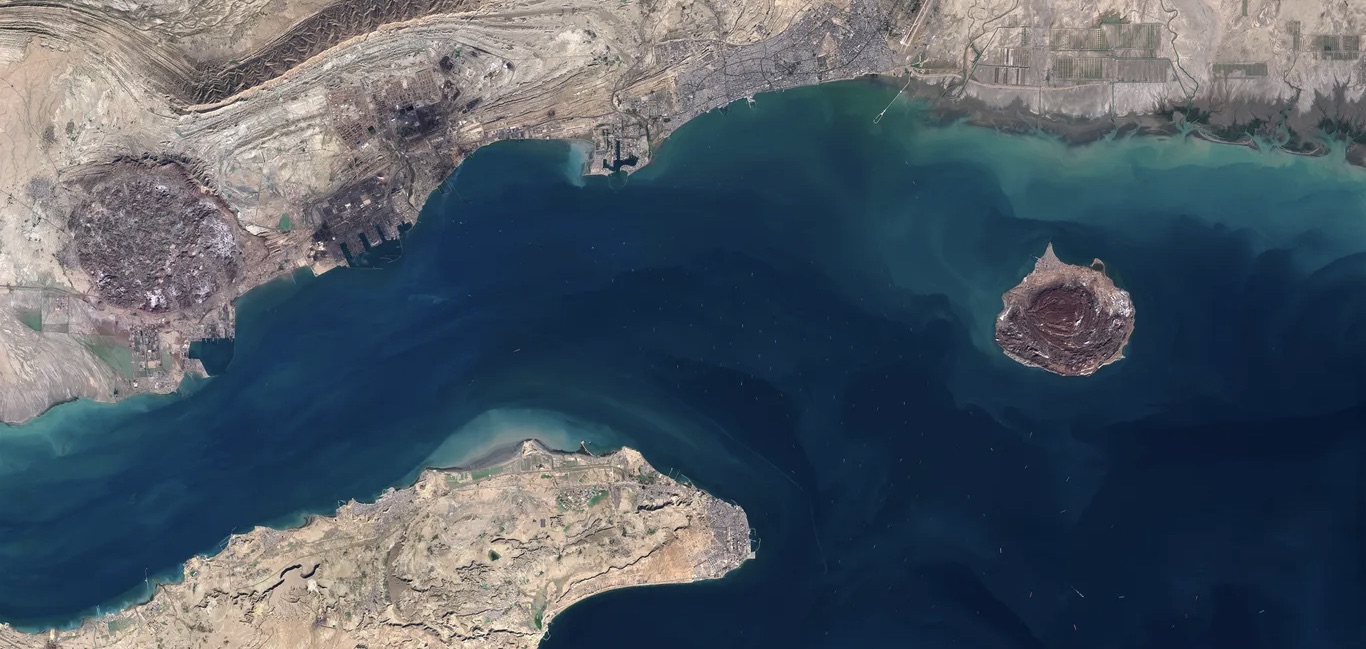 U.S. forces struck Iranian missile launchers on Larak Island on Sunday after intelligence indicated Tehran was preparing to fire rockets carrying sea mines into the Strait of Hormuz, Fox News chief foreign correspondent Trey Yingst reported.
The plan to launch rockets with sea mines was designed to redeploy the explosives in the strait after U.S. forces demined the area, he said on “The Big Weekend Show.”
President Donald Trump had said Aug. 25 that the U.S. Navy had informed him that all mines had been removed from the strait’s waters.
Trump also warned Iran that any vessel caught laying new ones would be “immediately and systematically destroyed.”
The developments came as U.S. forces in Jordan faced missile attacks Sunday in retaliation for the strikes on Larak Island.
Yingst said American forces stationed in Jordan had multiple air-defense systems to counter such threats, including Patriot and THAAD missile-defense systems deployed in the region.
“At this point, there are no significant impacts, and nearly all of the incoming missiles have been intercepted,” Yingst said.
“These are serious attacks,” he added.
On Sunday evening, the IRGC threatened retaliation following a US strike on Iranian military targets on Larak Island that reportedly killed two people and wounded two others.
A US official confirmed to Axios that American forces carried out the strike to prevent Iranian forces from deploying sea mines in the Strait of Hormuz. The operation marked the first known US strike inside Iran since late July, when President Donald Trump paused a two-week US military campaign in the strategic waterway.
“Earlier today US forces struck two Iranian launchers on Larak Island. Islamic Revolutionary Guard Corps forces were observed preparing to launch rockets with sea mines into the Strait of Hormuz,” a US official told Axios.
The official added that US forces are “monitoring the area closely and remain prepared to protect the free flow of commerce” through the strait.
Tasnim, an Iranian news agency affiliated with the IRGC, reported that the attack was carried out by a drone and that two people were killed and two others wounded.
In a statement quoted by Iran’s IRNA news agency, the IRGC vowed retaliation, saying, “The terrorist enemy’s aggression on Larak Island will be met with punishment for the aggressor.”
The IRGC further accused the United States and Israel of attempting to reassert their influence in the region.
“The American-Zionist adversary, once more acting out of frustration over its domestic challenges and waning influence in the region, aims to resurrect its malevolent presence and sway public perception. “In an act of aggression, it attacked Larak Island, resulting in the martyrdom and injury of several citizens.”
The US strike comes amid heightened tensions surrounding the Strait of Hormuz, a key route for international commercial shipping and energy supplies.
Last week, Trump said that the US Navy had cleared all mines from the international waters of the Strait of Hormuz.
“I have just been informed by the United States Navy that all mines have been removed and/or detonated from within the International Waters of the Strait of Hormuz. Iran has been notified that any ship or boat placing new mines will be immediately and systematically destroyed,” Trump wrote on Truth Social.
He added, “Through Space Force, we are watching every square inch of the Strait, as we are, also, with Pickaxe Mountain and the already destroyed three other Nuclear sites. There is a Zero Tolerance policy on mine placement in full force and effect.”
Later, Iranian Deputy Foreign Minister Kazem Gharibabadi said that Tehran considers itself to still be at war and warned that the Strait of Hormuz will not reopen until several conditions are met.
“We are still in a state of war, and the Strait of Hormuz will remain closed,” Gharibabadi said, in comments quoted by Iranian media, while stressing that reopening the strategic waterway would require an end to the conflict on all fronts, the lifting of the blockade and a resolution of the situation in Yemen.
“The reopening of the Strait of Hormuz will only happen in exchange for ending the war on all fronts, lifting the blockade, and resolving the situation in Yemen.”
He also linked the reopening of the strait to commitments made by Washington under the memorandum of understanding signed by the sides in June.
“We told Pakistan’s Army Chief that reopening the Strait of Hormuz depends on America fulfilling its commitments under the memorandum of understanding.”
Gharibabadi further warned that Iran could take military action before being attacked.
“Why should we always wait for America to attack? We can take preemptive action.”
Day 1,060 — Monday, August 31
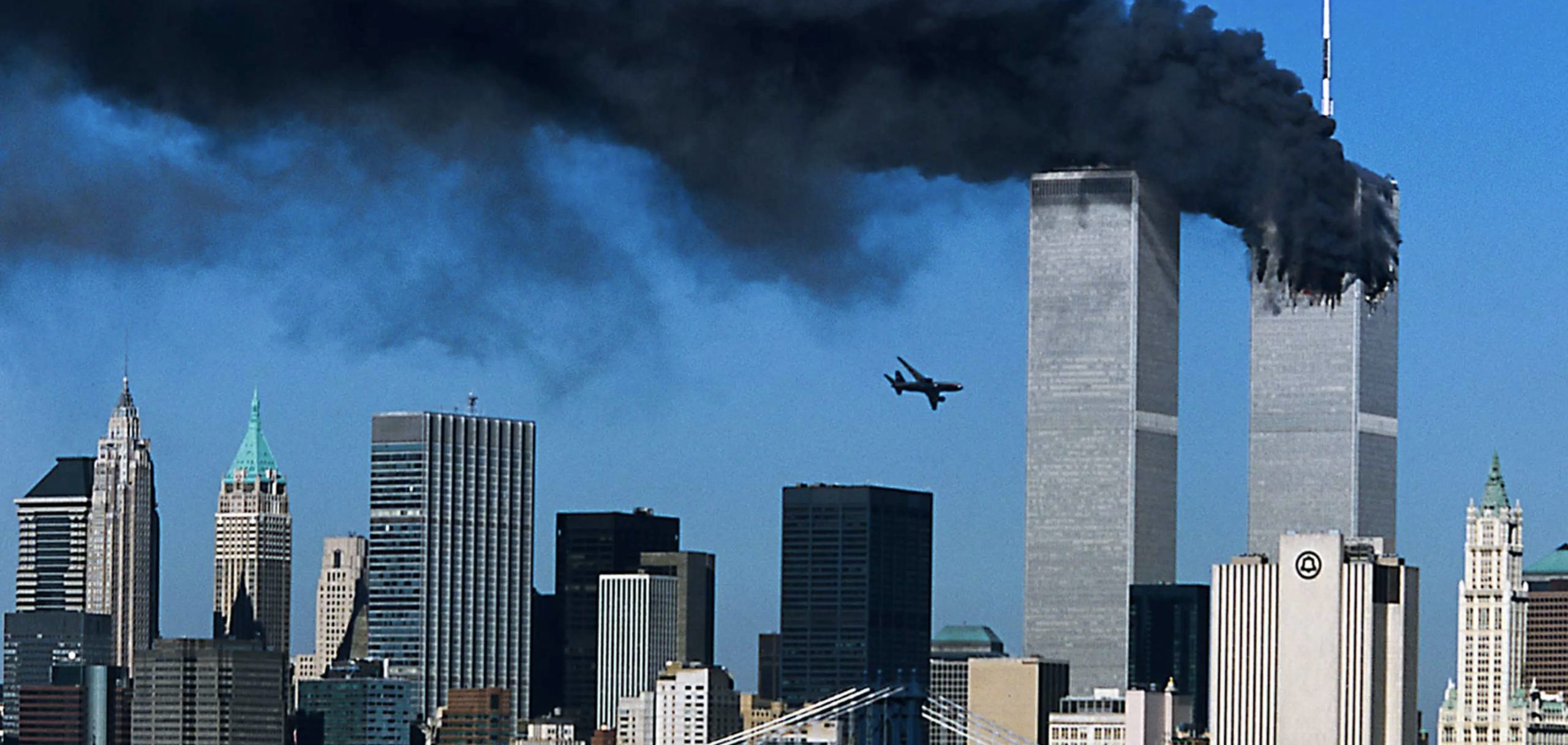 The Council on American-Islamic Relations (CAIR) removed a link from its annual back-to-school guide after the linked curriculum blamed US support for Israel for the Sept. 11, 2001, attacks and recommended Osama bin Laden’s “Letter to America” as a student resource.
CAIR released its “Back to school resource guide” for K-12 students Monday, but the link was removed a day later.
The 16-page guide directed readers to a “Muslim Studies Curriculum,” a collaborative project between CAIR-NJ and Teaching While Muslim.
The curriculum described the nearly 3,000 deaths on 9/11 as the work of a “group self-identifying as Al Quaeda hailing from the mountains of Afghanistan.”
It attributed the attack in part to US “support of Israel,” American involvement in the Persian Gulf War and the “vast presence” of US forces across the Middle East.
Among its recommended resources was bin Laden’s “Letter to America,” which contains antisemitic claims about Jewish control over US politics, media and the economy.
The curriculum also presented bin Laden as among the Afghan “rebels” fighting the Soviet Union during the 1980s.
The material focused heavily on the consequences of 9/11 for Muslims, including increased hate crimes and discrimination.
CAIR said lessons about the attacks can be “a particularly dangerous time for Muslim students,” who “often experience a surge in bullying during school lessons about 9/11.”
The curriculum also described the post-9/11 period as producing an “aggressive shift in US domestic and foreign policy” and an “erosion of civil liberties of many Americans.”
Nicholas Haros Jr., whose mother, Frances, was killed on 9/11, criticized the curriculum.
“Israel had nothing to do with 9/11,” Haros said. “The further we get from 9/11, this new generation of kids will learn to blame our country. These kids are going to be poisoned – and that’s the intent.”
When contacted by The New York Post, CAIR did not deny removing the link and referred the newspaper to a note explaining changes to an earlier document.
Day 1,059 — Sunday, August 30
 Ejecting representatives of the U.K. or of other countries from the U.S.-led International Gaza Support Center in the southern Israeli city of Kiryat Gat would undermine efforts to improve Gaza’s future, the British embassy in Israel tweeted on Friday.
Reports emerged over the past week that Israel was planning to evict British personnel from the multinational hub, which is meant to oversee post-war Gaza stabilization efforts. The Israeli plans come in response to the British government’s intention to impose “robust” sanctions targeting Israeli communities in Judea and Samaria, in connection with Israel’s planned development of the E1 area in Ma’aleh Adumim, east of Jerusalem.
“The U.K. is committed to the implementation of the 20-Point Plan in Gaza and playing our part in improving the situation on the ground, at the request of the United States and the Board of Peace,” the embassy added, referring to the original Trump administration’s peace plan for Gaza, advanced alongside the hostage-terrorist swap agreement that took effect from January to March 2025.
On Tuesday, Israeli Foreign Minister Gideon Sa’ar said that the Jewish state was evicting the Dutch from the IGSC (previously known as the Civil-Military Coordination Center).
Israel is responding to “a series of anti-Israel measures taken by the Dutch government,” specifically a Dutch law set to take effect next month that will ban trade of products made in Judea and Samaria, eastern Jerusalem and the Golan Heights, Sa’ar said.
The Netherlands is joining other European nations, including Belgium, Ireland and Spain, in restricting trade with Jewish communities in those areas.
Israel long ago annexed eastern Jerusalem and extended Israeli law to the Golan Heights after liberating them in a defensive war in 1967.
Sa’ar gave Dutch representatives at the center a week to depart Israel, and the expulsion from the center took effect immediately, he said.
The Times of London reported on Tuesday that Britain’s new prime minister, Andy Burnham, wants to take a stronger position on Israel than his predecessor, Keir Starmer, according to a government source who was not identified by name.
The source expected that a trade ban, as well as sanctions on individuals, will be implemented.
More than 140 Labour MPs, comprising roughly a third of the party, wrote an open letter to U.K. Foreign Secretary Yvette Cooper in June calling to expand the sanctions regime on Israel in response to Jerusalem’s decision to approve construction in E1, connecting the capital to the developed part of Ma’ale Adumim.
“We believe ending trade with settlements is a vital next step and urge you to initiate proceedings to put such a ban into place as soon as possible,” the letter read.
Other Labour Party legislators, however, expressed opposition to the letter.
Labour Friends of Israel released a statement on July 30 warning the British government against taking “any further untargeted steps” beyond sanctioning “violent extremist settlers and organisations.”
It warned that a sweeping trade ban on Israeli communities in Judea and Samaria would affect all Israeli businesses operating in the area, “adversely affecting Israelis living within the state’s borders” and thus de facto becoming a boycott of all of Israel.
It moreover said that the measure could weaken Israel’s opposition parties ahead of the Oct. 27 general election, while also harming the Palestinian Authority economy, which is “inextricably linked” to the Israeli communities in Judea and Samaria.
Day 1,058 — Saturday, August 29
 During their White House meeting last month, Israeli Prime Minister Benjamin Netanyahu says he presented President Trump with three options for dealing with Iran: a good agreement, military action, or tightening the economic siege.
Speaking in Jerusalem, Netanyahu praised the Trump administration’s latest economic pressure plan against Tehran, calling it a “very powerful move.”
“What President Trump did yesterday was to tighten the siege on Iran, not only by tightening the siege on Iran itself, but by tightening the siege on those who aid this regime, this terrible dictatorship. This is a very important step,” he said.
Netanyahu also cautioned that Israel’s struggle against Iran and its regional allies is far from finished. “We still have challenges ahead of us. The Iran challenge is not yet over. We need to bring to an end also the challenge in Gaza, in Lebanon, and also other arenas, and we are determined to do so.”
The prime minister delivered the remarks before leaders from Judea and Samaria, where he boasted of the dramatic expansion of Jewish communities in Israel’s biblical heartland, despite ongoing opposition from critics.
“I know that we are not only ensuring our existence in the present, we are ensuring the existence of the people of Israel in the future. One hundred sixty farms, 104 settlements that we established and regularized. And it is not easy. It is never easy.”
Netanyahu added, “We do not give up. We have a vision. This is our land, and it will remain ours.”
Day 1,057 — Friday, August 28
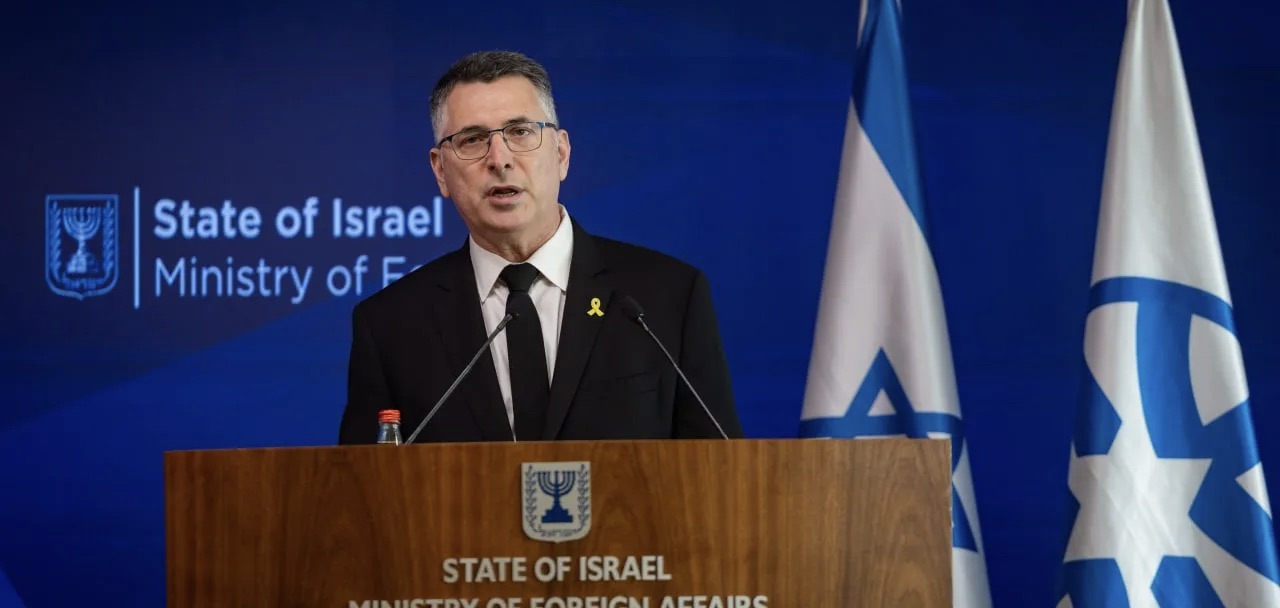 The Foreign Ministry on Thursday sharply criticized a joint statement by 15 countries and the European Union condemning Israel’s entry into a UNRWA training center in Kalandia and the seizure of the agency’s facilities in eastern Jerusalem two days earlier.
The countries called on Israel to “honor its commitments” and immediately stop what they described as interference with UNRWA’s operations.
The statement, signed by the UK, France, Germany, Canada, Italy, Spain, Japan, and other countries, reaffirmed their support for UNRWA and argued that Israel’s entry into the facilities was illegal. They said UN facilities are protected under international law and called on Israel to allow UNRWA to carry out its work without obstruction.
In response, the Israeli Foreign Ministry said: “Your facts are wrong. You support an organization that is a breeding ground for terrorism, and you prefer to attack Israel with baseless accusations instead of acting for the benefit of Arab children in Kafr Akab. This is a disgrace.”
The ministry also claimed that, according to a report by the USAID Office of Inspector General, which US President Donald Trump referenced on Thursday, more than 100 UNRWA employees participated in the October 7 Hamas attack.
“UNRWA employees served as terror operatives, and UNRWA facilities were systematically used for terror purposes,” the ministry said.
The Foreign Ministry said this was the reason UNRWA operations in Israel were banned, adding that “all Israeli actions were carried out in accordance with Israeli law and international law.”
The ministry further claimed that UNRWA never had property rights over the compound and that the organization had been using the site unlawfully. According to the ministry, the compound is planned to become a school and community center for children in the Kafr Akab neighborhood.
The dispute comes two days after police forces raided a UNRWA training compound in Kafr Akab , following an announcement by Prime Minister Benjamin Netanyahu that “in accordance with my directive and following the law we passed, the evacuation of the UNRWA compound in Kafr Akab in Jerusalem begins today.”
Netanyahu later clarified: “The State of Israel will not allow an organization whose employees were involved in terrorism and the October 7 massacre to operate in its territory and will act against it using all available tools.”
According to statements from both sides, the compound targeted in the raid was a “training compound.” UNRWA said the site housed refugees and hosted workshops and classes. Following the raid, the Israeli Foreign Ministry said the Jerusalem Municipality had already begun work at the site to convert it into an educational center.
The Knesset Foreign Affairs and Defense Committee previously approved legislation aimed at ending UNRWA’s operations in Israel. The laws stipulate, among other measures, that UNRWA will not be permitted to operate a representative office, provide services, or conduct activities within Israel’s sovereign territory.
The legislation also calls for revoking the organization’s diplomatic status and canceling diplomatic visas for UNRWA personnel.
jpost
Day 1,057 — Friday, August 28
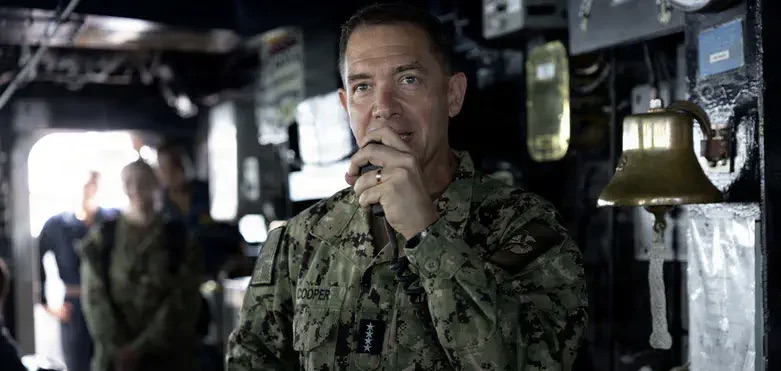 US Central Command (CENTCOM) Commander Adm. Brad Cooper said Thursday that American forces have completed the clearance of Iranian-laid sea mines from internationally recognized shipping lanes in the Strait of Hormuz, describing the operation as a major milestone.
In an operational update, Cooper said thousands of US servicemembers are simultaneously enforcing a naval blockade against Iran while helping maintain the flow of commercial shipping through the strategically important waterway.
“We have successfully cleared sea mines in the Strait’s international shipping lanes that were laid months ago by Iran’s Islamic Revolutionary Guard Corps,” Cooper said. “Internationally recognized transit routes in the Strait are free of Iranian sea mines thanks to the incredible work of the US military.”
According to Cooper, the mine-clearing operation involved Navy divers, Navy SEALs and air assets from the Army, Navy, Air Force and Marine Corps. He described the mission as difficult and dangerous but said the forces involved had successfully completed their task.
“The circumstances were challenging and dangerous to say the least, but we got the job done,” he said. “Bottom line, today, international shipping lanes are open and momentum is building.”
Cooper explained that the cleared routes form part of the Strait’s internationally recognized traffic separation scheme, which directs vessels traveling in opposite directions through the narrow waterway.
Over recent months, US forces have helped nearly 1,500 commercial vessels pass through the Strait under coordinated protection, Cooper said. Those ships transported nearly 750 million barrels of crude oil to global markets.
At the same time, he said, Iran has been unable to export oil from its shores since the US naval blockade resumed in mid-July.
“And while American forces have supported 750 million barrels of crude oil leaving the Gulf, Iran has exported zero oil from its shores since we resumed the naval blockade in mid-July. We have been highly effective,” Cooper said.
He added that no vessels had entered or departed Iranian ports without US authorization, with exceptions made only for humanitarian reasons.
Since the blockade resumed, thousands of American servicemembers operating more than 20 warships and hundreds of aircraft have supported the mission, according to Cooper. He said US forces have turned around 75 vessels that attempted to breach the blockade and disabled three that failed to comply with orders.
Cooper praised the personnel carrying out the operation and said CENTCOM remained focused on its mission.
Day 1,056 — Thursday, August 27
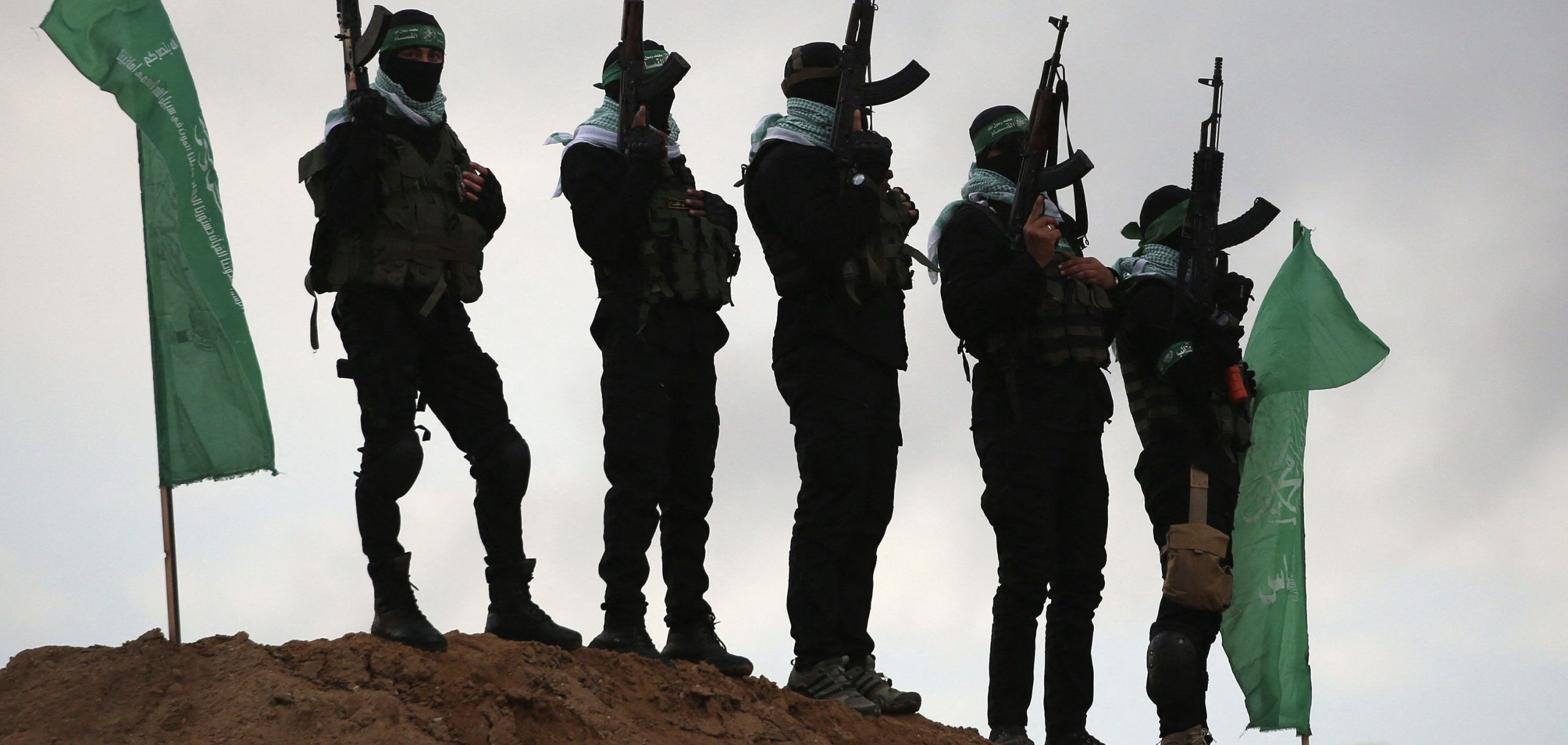 Hamas and other Palestinian terror organizations must end extrajudicial executions of Palestinians suspected of collaborating with the Israeli government, Amnesty International said in a recent article published to its website.
“Authorities and forces affiliated with Hamas in the occupied Gaza Strip must put an end to extrajudicial executions of suspected collaborators with Israel, carried out in the absence of any judicial proceedings,” the human rights organization said in a statement.
Amnesty cited a June 2026 UN report, which it said found “249 cases of extrajudicial executions and severe physical violence in Gaza between August 2024 and early 2026.”
Many of these cases were carried out directly by Hamas forces, Amnesty claimed.
Despite calling out Hamas for “extrajudicial executions and unlawful killings,” Amnesty still blamed Israel for “the collapse of law and order in Gaza and the extreme state of deprivation,” saying they were a result of “Israel’s ongoing genocide.”
“The Hamas authorities must immediately halt all unlawful killings, acts of vigilantism, and arbitrary arrests,” Amnesty International’s Senior Director for Research, Advocacy, Policy and Campaign Erika Guevara-Rosas said.
“Restoring law and order must never serve as a cover to commit grave human rights violations, carry out reprisals or to collectively punish entire families,” she said.
On its Telegram channel, Hamas has publicly confirmed the executions of several Gaza Palestinians, calling them “collaborators.”
Before the October 2025 ceasefire, a Telegram channel affiliated with Hamas published several documented killings of so-called “collaborators,” along with threats to hunt down any Gaza citizen passing information to Israel.
In its report, Amnesty said it documented nine extrajudicial executions and one unlawful killing, all of which came after the October 2025 ceasefire-hostage deal.
Several of those killed were members of the Dughmush family from western Gaza City, with which Hamas engaged in a battle for control over Al-Sabra neighborhood, following the ceasefire declaration.
Hamas also publicly executed “eight unarmed members of the Dughmush family,” accusing them of collaborating with Israel.
A Palestinian woman who spoke with Amnesty International on condition of anonymity, to protect her safety, said the eight family members “turned themselves in after being promised a fair trial, only to be publicly executed two hours later.”
At the same time, the Center for Peace Communications, a New York-based nonprofit dedicated to fostering reconciliation and reducing identity-based conflicts in the region, said that Hamas has created a culture of militancy in the Gaza Strip.
Citing several testimonials shared with Jusoor News by local Gazans, the Center for Peace Communications described a broad “proliferation of weapons beyond militant ranks.”
It referenced a recent video published by Jusoor News, in which armed Gaza men can be seen shouting to Hamas, “We have guns just like you!”
“Anyone who feels they or their family has been insulted grabs a gun,” an older man told Jusoor News. “The leaders don’t treat people with respect, and regular people don’t respect the leaders or each other.”
Moumen Al-Natour, a political activist who fled Hamas’s rule in Gaza during the war, told the Center for Peace Communications that the Hamas’ ideology created a culture of violence that needs to be uprooted.
“When I was a child, I remember my Islamic studies teacher telling us, ‘Kill a Jew and you will enter paradise,’” Al-Natour recalled. “If we do not replace these ideas with new ones, we will accomplish nothing.”
Day 1,056 — Thursday, August 27
 The US State Department has instructed nearly all of its diplomatic missions worldwide to urge local governments to strengthen security for Jewish communities ahead of the upcoming High Holidays, according to a diplomatic cable obtained by JNS.
The cable calls on US missions to provide host governments with basic information about the Jewish holidays as well as the anniversary of the October 7 attacks, which occurred during Simchat Torah in 2023. It also notes that other terrorist attacks have taken place on or around Jewish holidays.
“We urge your government to deploy law enforcement, counterterrorism or military forces, as appropriate, to synagogues and other locations hosting services or events,” the cable states, as quoted by JNS.
US diplomatic missions were instructed to deliver the message to the highest available levels of government in their respective countries.
The cable also calls for increased security in residential areas with Jewish populations, noting that worshippers often travel along predictable routes at predictable times while wearing identifiable religious clothing.
Host governments are further urged to provide security briefings and establish coordination channels with Jewish institutions, security organizations and businesses ahead of the holidays.
This year, the two-day observance of Rosh Hashanah begins at sundown on Friday, September 11, which also marks the beginning of Shabbat, and ends after sundown on Sunday, September 13.
The State Department also encouraged governments to increase patrols in crowded areas. The cable points out that religious Jews generally do not use electronic communications during nearly all of the holidays and therefore recommends establishing a system capable of delivering direct warnings about sudden threats.
There has been no official comments from the State Department on the reported cable.
Day 1,055 — Wednesday, August 26
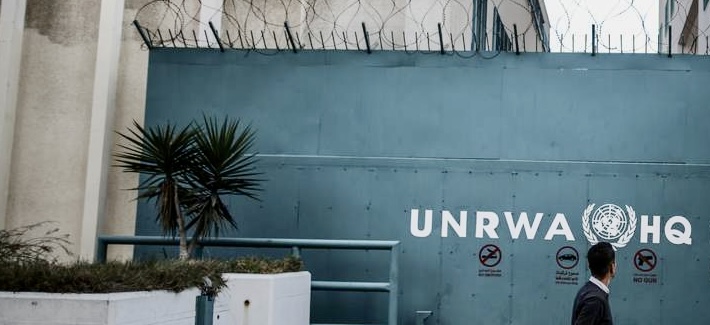 UN Secretary-General Antonio Guterres on Tuesday condemned Israel’s evacuation and takeover of a UNRWA vocational training center in eastern Jerusalem, warning that the move would disrupt educational opportunities for young people.
“The Secretary-General is greatly alarmed at this development, as it will deprive young people of the vocational education they were receiving,” Guterres’ spokesman Stephane Dujarric said.
Dujarric emphasized that the facility, like other UNRWA properties, is protected under the UN’s legal status. The training center “and other UNRWA premises are premises of the United Nations. They are inviolable and immune from any form of interference.”
The statement followed an operation by the IDF, Israel Police and Jerusalem Municipality to evacuate the UNRWA compound in Kafr Aqab, in the northern part of the capital.
National Security Minister Itamar Ben Gvir welcomed the operation, saying Israeli authorities were enforcing legislation against the agency.
“This morning, Israel Police forces are working with the relevant authorities to enforce the law and remove UNRWA from the premises. An organization whose employees were involved in terrorism and that repeatedly served as a cover for Hamas has no right to exist for even one more second, and has no place in Jerusalem or the State of Israel,” he stated.
“My policy is clear: Sovereignty is not something you talk about – it is something you exercise. The Israel Police will continue to act resolutely to enforce the law, strengthen governance and make it clear that Jerusalem is the capital of the State of Israel, and so it will remain. Anyone who establishes terrorist nests there will be removed,” Ben Gvir added.
Prime Minister Benjamin Netanyahu also addressed the evacuation, saying it followed legislation passed by the Knesset and his directive.
“In accordance with my directive and following the law we passed, the evacuation of the UNRWA compound in Kafr Aqab, Jerusalem, began today. The State of Israel will not allow an organization whose employees were complicit in terrorism and the October 7 massacre to operate within its territory, and will act against it by all means at its disposal.”
UNRWA has faced sustained Israeli criticism over ties between its employees and the Hamas terrorist organization. The criticism intensified in 2024 after Israel presented evidence that UNRWA personnel had participated in the October 7, 2023 attack.
The UN subsequently established a review group headed by former French Foreign Minister Catherine Colonna to examine the allegations. Its report identified “neutrality-related issues” within UNRWA, while also stating that Israel had not provided evidence supporting claims that a significant number of agency employees belonged to terrorist organizations.
In October 2024, the Knesset approved legislation prohibiting UNRWA from operating in Israel and preventing Israeli officials from maintaining contact with the agency. The legislation was later amended to prohibit the provision of electricity and water to UNRWA facilities.
Guterres has upped his criticism of Israel since the October 7 Hamas attack. Several weeks afterward, he said the attack “did not happen in a vacuum” and appeared to blame Israel, remarks that drew widespread condemnation. He subsequently claimed his comments had been misunderstood and reiterated that he had condemned Hamas.
Tensions between Israel and Guterres’s office increased further in May after the UN chief placed Israeli entities on a blacklist concerning sexual violence in conflict zones. Israel’s UN ambassador, Danny Danon, responded by announcing that Israel would freeze relations with the Secretary-General’s office.
“We are done with this UN Secretary-General. Guterres has put Israel on the same blacklist along with Hamas, ISIS and the most depraved terrorist organizations in the world. This is a moral disgrace that proves that Guterres has lost all credibility,” Danon stated at the time.
Day 1,055 — Wednesday, August 26
 The U.S. Secret Service said it was aware of a video aired on Iranian state media threatening President Trump’s youngest son, Barron Trump.
“The U.S. Secret Service is aware of the video and investigates anything that can be perceived as a threat toward our protectees,” Nate Herring, a Secret Service spokesperson, told Fox News Digital.
“Out of concern for operational security, we do not discuss matters of protective intelligence,” Herring added.
The video depicts locations associated with the younger Trump’s whereabouts. It ends with a suggested $10 million reward for his location.
Iranian state media has aired content on multiple occasions threatening Trump and his family following the assassination of Iran’s Ayatollah Ali Khamenei, which came at the start of the war between the United States and Iran, as well as the U.S. airstrike that killed Iranian General Qasem Soleimani in 2020.
“I don’t think it’s any secret, it’s been in the media, that Iran has publicly said they want to kill President Trump,” Deputy Director of the U.S. Secret Service Matt Quinn told reporters at an event last month.
The video came amid threats from the Trump administration to nations that fail to sever their economic ties with Tehran and an ongoing naval blockade of the Strait of Hormuz.
In July, Trump secretly switched planes from Air Force One to another aircraft in Turkey via a catering truck due to a credible Iranian surface-to-air missile threat.
Day 1,054 — Tuesday, August 25
 U.S. Treasury Secretary Scott Bessent announced an “economic onslaught” against Iran’s global trade partners on Monday as part of the financial “D-Day” that U.S. President Donald Trump declared last week.
Bessent said that the sanctions program, “Operation Economic Outcast,” was an “unprecedented, whole-of-government” campaign to “collapse every last option for Iran.”
“For decades, this regime has drawn strength from a calculus that regards Iranian retaliation as certain and American enforcement as negotiable,” Bessent told reporters. “That era is over.”
Iran’s economy has long been subject to primary economic sanctions aimed at hindering its ability to trade oil, fund terrorist groups around the region and finance its missile, drone and nuclear programs.
Successive administrations have declined, however, to impose secondary sanctions on many countries and companies that do business with Iran. Many of the countries that retain economic ties with Iran are close partners of the United States, including many of the Arab countries in the Persian Gulf.
The department has also generally refrained from imposing sanctions on Chinese banks and oil refineries that transact business with Iran in apparent fear of economic retaliation.
Though he declined to “name names,” Bessent suggested that those secondary sanctions would finally be imposed.
“We want to make clear here today that no one is above the reach of U.S. sanctions,” Bessent said in response to a question about the potential sanctioning of Chinese entities. “We find that the best way to engage with countries is through quiet diplomacy, and we are level-setting with every country to tell them our expectations.”
“We know who they are. They know who they are,” he said. “When the hammer of U.S. Treasury actions falls upon them, they will have no one to blame but themselves.”
Bessent said that teams from the U.S. military and Treasury and State Departments were meeting with counterparts around the world to explain the new policy.
Day 1,054 — Tuesday, August 25
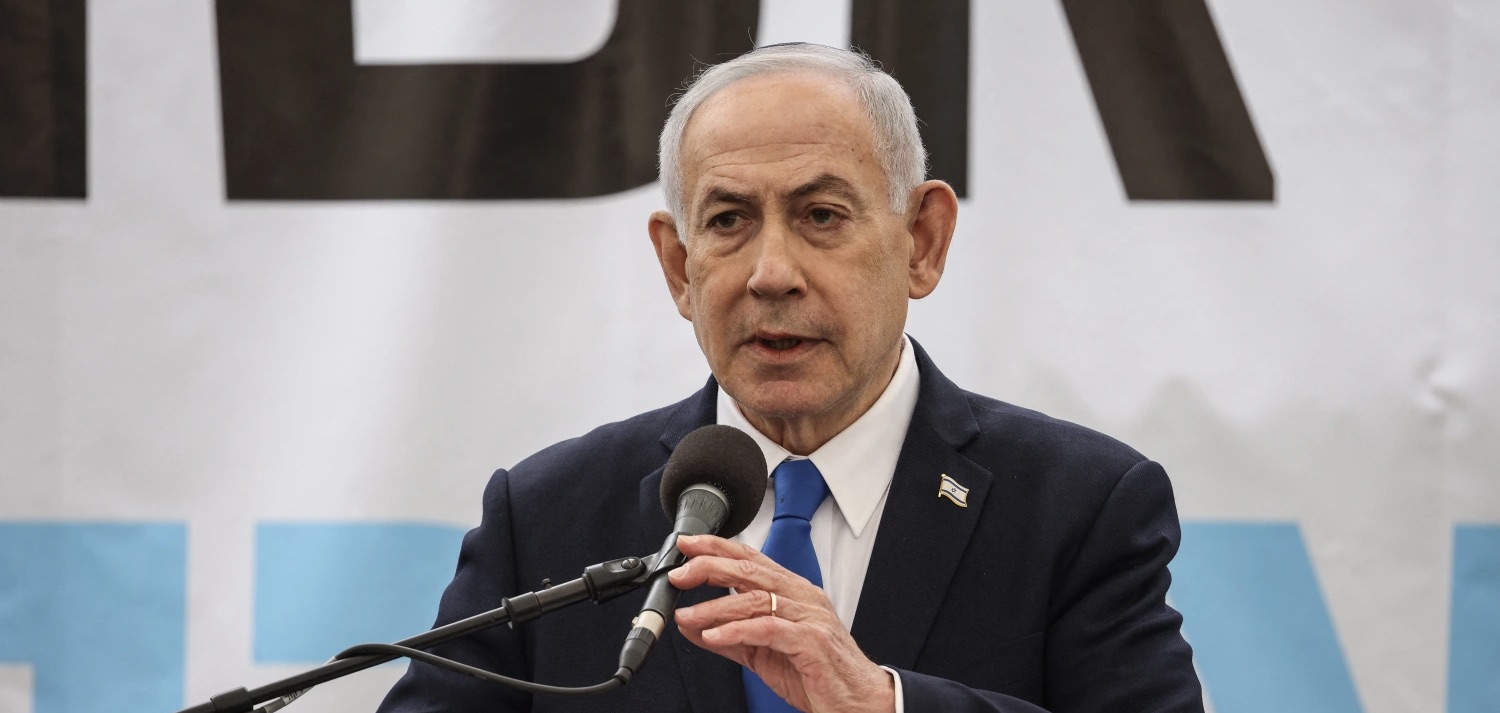 Israeli Prime Minister Benjamin Netanyahu revealed this evening (Monday) that Iran has attempted to assassinate one of his children. The information was previously prohibited from being published.
In a conversation with Channel 14 News, Netanyahu said, “There is something here that is unbelievable. Iran targeted one of my children. Iran tried to murder one of my children.”
When asked whether this was intelligence information that was presented to him, Netanyahu did not elaborate and repeated his words: “Iran tried to assassinate one of my children.” According to him, security for his children is not a luxury: “It is something without which this attempt will simply succeed.”
The Ministerial Committee for Shin Bet Affairs approved on July 16th granting Netanyahu security for life, and his wife Sara will be secured for the rest of her husband’s life. The Prime Minister’s sons will be secured, even if he does not continue for another term, for five years.
The Shin Bet and the Mossad determined before the decision that Netanyahu and his family were at a high level of threat for their entire lives due to the desire of Israel’s enemies to avenge the assassinations of senior Iranian officials during the war.
Two years ago, it was revealed that the Shin Bet and the police arrested Motti Maman, a 73-year-old resident of Ashkelon, who had been recruited by intelligence officials in Iran for the purpose of assassinating Israeli figures. Among the targets were Prime Minister Benjamin Netanyahu, Defense Minister Yoav Galant, and Shin Bet head Ronen Bar.
According to the security establishment, Maman was smuggled into Iranian territory twice and received payment for carrying out missions. The background to the Israeli’s actions is an attempt to obtain “easy money” after he got into debt.
Netanyahu’s statement follows reports that Iranian state television aired a video threatening Barron Trump, the 20-year-old son of US President Donald Trump.
The video, titled “Where and How Barron Trump Should Be Killed,” claims that Barron Trump’s movements have been “fully monitored” and that the information obtained includes the location of the university he attends, the vehicles accompanying him, and the locations of the Secret Service personnel protecting him. The video also claims that a $10 million bounty has been offered for him, although that claim had not been independently verified at the time of publication.
Day 1,053 — Monday, August 24
 Treasury Secretary Scott Bessent said Sunday the U.S. is entering an “endgame” against Iran, pledging an unprecedented financial campaign to cut off the regime’s remaining economic lifelines and avert the need for more military action.
“At dawn begins an economic D-Day — the single greatest financial offensive ever marshaled against an adversary,” Bessent wrote in an opinion piece in the Financial Times.
He also argued that President Donald Trump was confronting a threat previous administrations had sought only to manage.
Bessent said the campaign would target countries and entities that buy or transport Iranian oil, facilitate financial transactions, host Iranian flights, maintain ship registries or enable ship-to-ship fuel transfers.
He warned that governments maintaining ties with Tehran risked sharing its economic isolation.
The Treasury chief said the aim was to sever every economic lifeline supporting the Islamic Republic until it is left in “total financial isolation.”
Day 1,053 — Monday, August 24
 Israeli authorities are examining a series of kite launches from Gaza after at least four crossed into Israel over two days, prompting Defense Minister Israel Katz to order the IDF to respond forcefully to any further launches toward southern communities.
The devices crossed the Gaza border Friday and Saturday and came down in several Israeli communities, among them Nahal Oz.
Investigators have not established who was responsible, but are examining possible Hamas involvement, N12 reported.
Katz called for military action against the practice rather than allowing it to develop further.
“I instructed the IDF to act immediately and forcefully against any phenomenon of launches from Gaza toward the communities of the western Negev,” Katz said in statement.
While the IDF determined that the kites recovered so far were harmless, security officials are investigating the purpose of the launches. “No suspicious findings were identified on the kites,” the military said, adding that “at no stage was there any danger to the public.”
One focus of the investigation is the length of the strings found attached to the kites, with some stretching several kilometers.
N12 reported that officials are considering several possibilities, including that the devices were being used to gather intelligence or experiment with technology that could later be incorporated into fiber-optic drones. Such drones have recently been used on the northern front with Lebanon.
The appearance of kites from Gaza has particular significance for border communities because of their use during the 2018 protests.
What initially appeared to be a simple tactic later developed into the use of kites and balloons carrying incendiary devices that set fire to fields in southern Israel.
The latest incidents led at least one community to caution residents against handling unidentified objects because they could potentially carry explosives or incendiary materials.
Residents and regional officials urged authorities not to allow the launches to become routine.
“This is exactly how escalation begins again — we must not ignore it and contain it again,” residents warned.
The head of the Sha’ar HaNegev Regional Council similarly urged action at an early stage.
“If we want to put an end to the phenomenon when it is just beginning, we must cut it off at the initial stage and strike with force over every kite,” he said.
Day 1,052 — Sunday, August 23
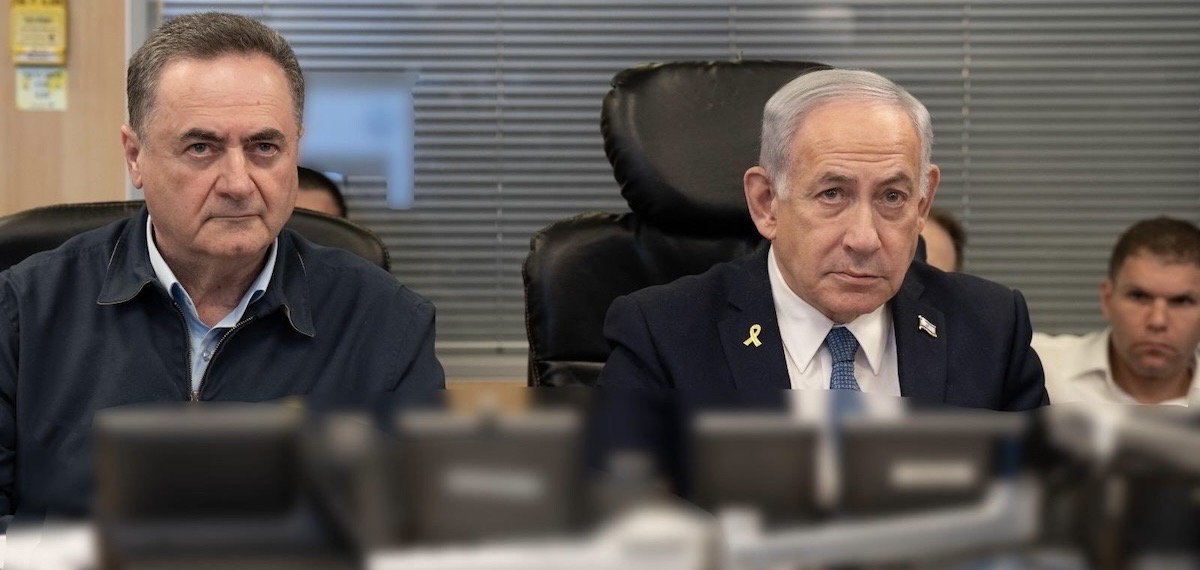 The IDF hit the Abu al-Duhur military air base after it received intelligence that Turkey was seeking to station a radar and an air defense system manned by Turkish troops there, sources confirmed to The Jerusalem Post.
Israel told the US that intelligence suggested that Turkey was set to dispatch radar, troops, and air defense systems to a base in Syria, KAN News reported on Saturday.
While the IDF did not detail when the Turkish military systems were set to arrive, officials pointed to the Abu al-Duhur base as a possible target due to its proximity to the Turkish border.
Israeli sources also told KAN News that the four IDF strikes were aimed at the base’s runway to prevent Turkish troops from landing.
“Since the diplomatic message did not get through, Israel delivered it through a targeted warning strike,” one official said.
Defense Minister Israel Katz had said earlier on Saturday that the army issued a direct warning to senior Syrian officials before the strikes on the Abu al-Duhur air base “in an attempt to prevent the move.”
“Following several discussions that Prime Minister [Benjamin Netanyahu] and I held with the IDF and the various security officials, it was agreed that before approval was given, a direct warning would be issued to the Syrian regime at the highest levels first in an attempt to prevent the move, and that is what was done,” Katz said.
“After the request went unanswered, the prime minister and I authorized the IDF to carry out the strike, which commenced successfully. [Turkish President Recep Tayyip] Erdogan was caught with his hand in the cookie jar and was forced to back down,” the defense minister said.
Day 1,051 — Saturday, August 22
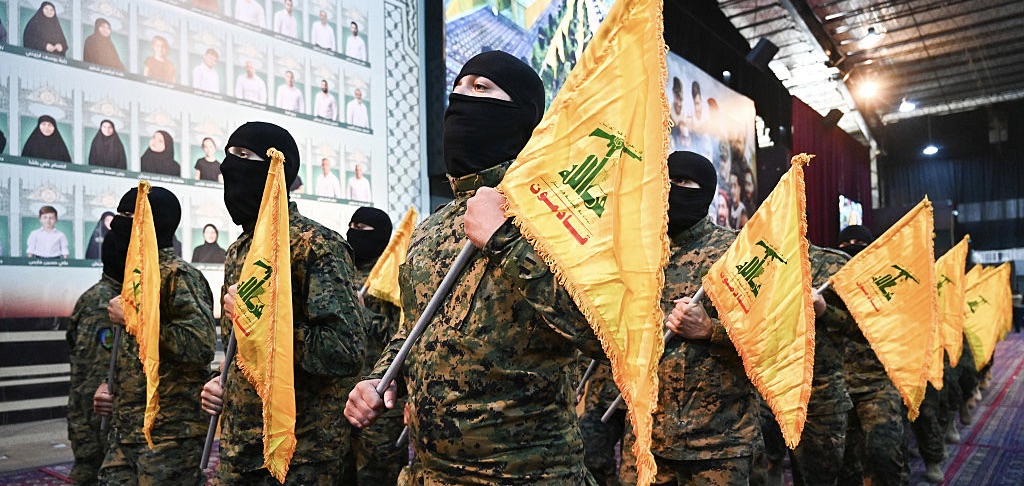 Hezbollah, the Iran-backed terrorist group that has controlled southern Lebanon for decades, “operates with little to no regard for Lebanese sovereignty, the Lebanese people or the Lebanese state,” a U.S. State Department official said on Thursday, as the Trump administration again sanctioned Hezbollah “for service to the Iranian regime.”
“The United States will not relent in targeting Iran’s financial support networks, including those enabling Hezbollah to threaten peace, undermine the sovereignty of the Lebanese state and endanger the security of our regional allies,” wrote Tommy Pigott, spokesman for the State Department.
The official said that Hezbollah, which has long been sanctioned as a foreign terrorist organization, is being re-designated “an Iranian proxy, not a stand-alone operation as implied by the previous designation.”
The action on Thursday “builds on years of U.S. designations that have repeatedly documented the operational, financial and logistical integration” between Hezbollah and the Islamic Revolutionary Guard Corps-Quds Force, which is Iran’s elite military wing specializing in unconventional warfare, foreign intelligence and management of Iran’s network of terrorist proxies throughout the Middle East.
Thursday’s determination “formally recognizes” Hezbollah’s activities “as an extension of the IRGC-QF” and “not a Lebanese resistance movement.”
Jointly, the U.S. Treasury Department sanctioned 10 people, who it said take part in a network that helps move hundreds of millions of dollars of sanctions-evading cash transfers between the Quds Force and Hezbollah, using commercial flights between Lebanon, Turkey, the United Arab Emirates and Iran.
“The investigation and disruption of this network are the result of close coordination and collaboration with our Turkish partners,” Pigott wrote.
The State Department official said that Hezbollah has “twice dragged Lebanon into devastating wars, subordinating the country’s interests to Tehran’s regional agenda and leaving the Lebanese people to bear the consequences.” He called the terror group “the obstacle to Lebanon’s sovereignty, stability and economic recovery.”
The United States, Israel and Lebanon have developed a trilateral framework to help restore Lebanese sovereignty to the southern part of the country, which Hezbollah has long used to launch attacks on Israel.
As part of that pact, Israel and Lebanon are coordinating on so-called “pilot zones,” and Hezbollah, either voluntarily or by force, is to exit designated areas and relocate further north.
At the same time, the Lebanese Armed Forces will take over and Israeli forces will withdraw.
State Department officials have expressed optimism about the trajectory of ongoing talks between Israel and Lebanon to implement the agreement.
Day 1,051 — Saturday, August 22
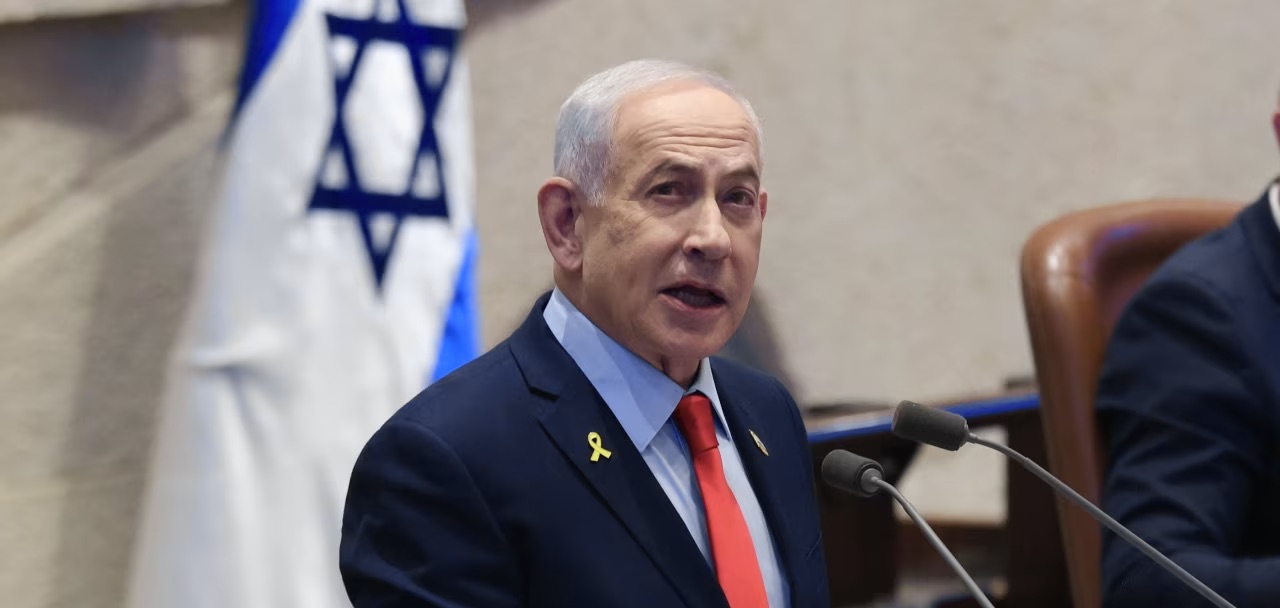 Recep Tayyip Erdogan’s government on Friday issued another arrest warrant for Prime Minister Benjamin Netanyahu, amid spiking tensions between the two countries over an Israeli strike in Syria.
Turkey has already issued warrants against Netanyahu and other top officials for “genocide” over Israel’s actions in the war against Hamas in Gaza. Israel firmly denies accusations of genocide.
The new warrant accuses Netanyahu of “genocide” over the interception in May of a flotilla carrying some 430 activists to the Hamas-ruled Gaza Strip.
Turkey’s Justice Minister Akin Gurlek said on X that his ministry had asked the interior ministry to issue Interpol red notice alerts for Netanyahu and another Israeli, named as Afek Moskovitch, as part of a larger case against 35 people.
A red notice is a request to police forces worldwide to locate and provisionally arrest a person pending extradition. Interpol reviews requests submitted by member states before deciding whether to issue red notices.
“As part of the judicial proceedings concerning the attack in international waters on the Flotilla activists (…) and in accordance with the arrest warrants issued on July 14, 2026, against Benjamin Netanyahu and Afek Moskovitch for ‘genocide,’ the ministry of justice has requested that the ministry of the interior issue red notices for their international arrest,” Gurlek stated.
Netanyahu and Moskovitch are being prosecuted for “crimes against humanity, genocide, aggravated deprivation of liberty, ‘intentional assault and battery,’ torture, destruction of property, aggravated looting, and hijacking of transport vehicles,” the ministry said.
The Turkish statement didn’t provide any additional details about Moskovitch and no additional information about him could be found.
In response, Netanyahu’s office said that Erdogan “now seeks to extend his aggression against Israel into Syria. Israel will not tolerate it.” The Israeli statement reiterated past accusations by Jerusalem against Erdogan, calling him “an antisemitic dictator who has massacred Kurds, harbors Hamas terrorists, occupies half of Cyprus, and jails record numbers of journalists and politicians who oppose him.”
“Erdogan’s pathetic attempt to intimidate the leaders and soldiers of Israel, the only true democracy in the Middle East, will go nowhere,” the statement added.
In a separate Hebrew-language statement, the Prime Minister’s Office asserted that “Israel will continue to act forcefully against Turkey’s attempts to destabilize the region and against any threat to its security.”
Day 1,050 — Friday, August 21
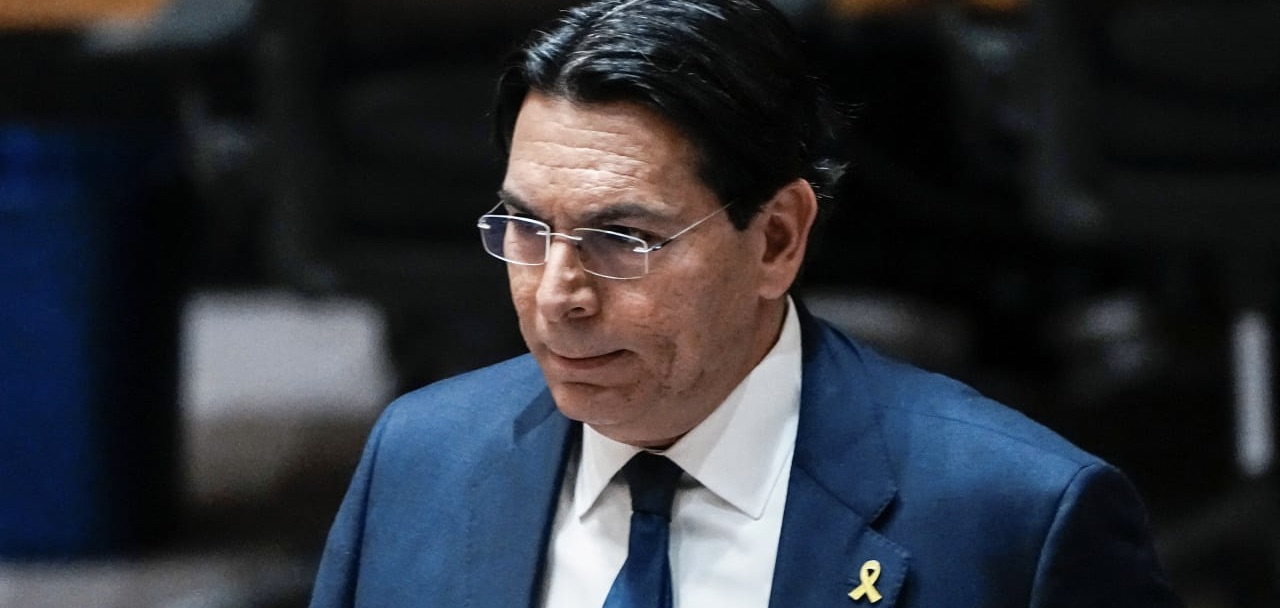 Israeli Ambassador to the United Nations Danny Danon called on Wednesday for changes to the U.N. Security Council’s process for convening emergency meetings, which he said has become a political tool used disproportionately against the Jewish state.
“It shouldn’t be that you just send a fax or email and you have a session,” Danon told JNS, ahead of his remarks. “It should be not only one country, maybe three countries, and actually use it when it’s needed, not for political usage.”
Danon spoke to JNS in the Qatari lounge shortly before addressing the Security Council on Wednesday afternoon.
He proposed requiring the support of three council members to convene an emergency meeting, rather than allowing a single member to request one, and to establish clearer criteria for what constitutes an “emergency.”
The Security Council has held about 100 meetings about Israel over the past four years, including at least 17 “emergency” sessions, according to the envoy.
Iranian aggression, Houthi attacks on international shipping routes, Hamas’s holding of hostages and Turkey’s military entrenchment in Syria have rarely prompted emergency meetings, he told JNS.
“Today, the debate is more about procedure in the Security Council,” he said. “For a change, it’s not about us. I will focus my speech on the fact that the U.N. Council is not focusing on the right issues. They focus on Israel.”
Whenever council members want to criticize the Jewish state, they simply “call for an emergency session, but there is no emergency,” Danon said.
“The entire U.N. today—they focus their energy not in the right places,” he told JNS. “It’s more about the debate. It’s more about bashing Israel, less about concrete efforts, practical solutions and confronting the bad guys.”
He pointed to recent “emergency” meetings over Israel’s recognition of Somaliland and what he said was “so-called settler violence.” Those sessions came in addition to the council’s regular monthly discussions on Israel, he said.
“When we recognized Somaliland, we had to come to an emergency session, and they blamed us for wanting to expel the Palestinians, which is a joke,” he told JNS.
The emergency sessions, Danon added, take time away from what he sees as more pressing action against terrorist groups.
“They were not able to designate Hamas. They were not able to designate Hezbollah, the Houthis,” he told JNS. “So instead of doing those things, they are putting the time on us.”
In his formal remarks, Danon said that the council had become “very good at holding meetings but very bad at making a difference.”
“Instead of focusing its time on Iran, Hamas, Hezbollah and the Houthis, it is repeatedly drawn into political theater,” he told the council.
“The Security Council was not created to hold fruitless meetings,” he said. “It was created to prevent wars. It is time to return to the mission for which it was established.”
Day 1,050 — Friday, August 21
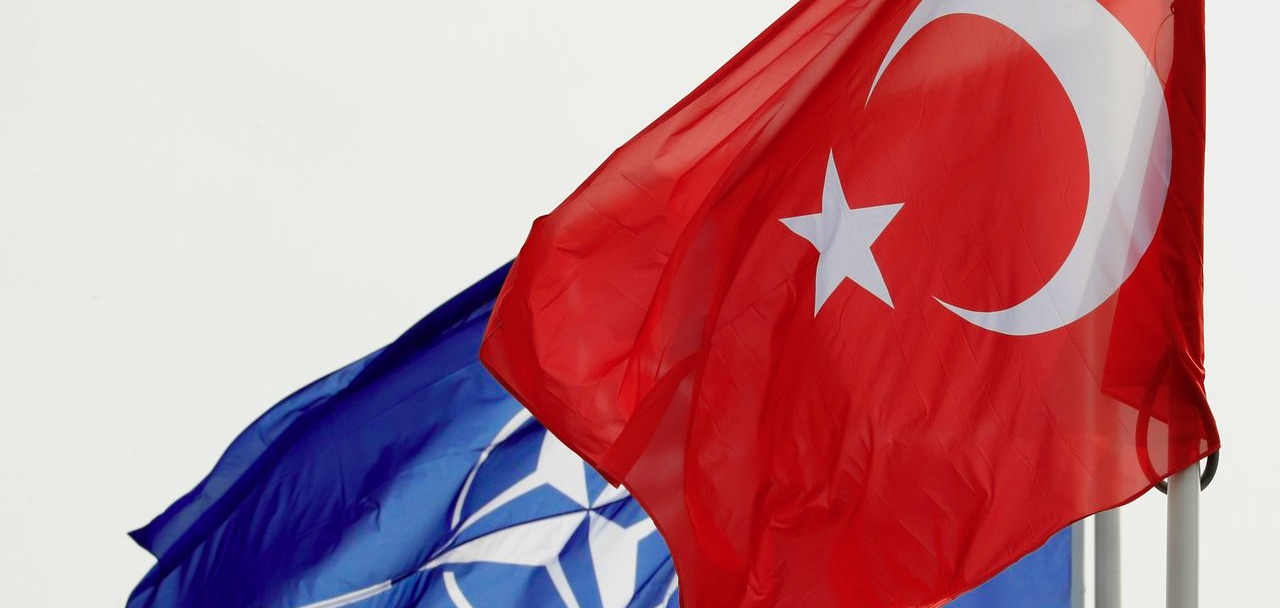 Israeli Defense Minister Israel Katz issued a stark warning to Turkish President Recep Tayyip Erdoğan early Thursday, accusing him of dragging Turkey into “dangerous adventures in Syria” and warning the Turkish leader not to test Israel’s resolve.
“Israel will not allow any actor to threaten its security,” Katz wrote on X. “It would be better for Erdoğan to continue his detached-from-reality, fanciful rhetoric against Israel in the Turkish Grand National Assembly than to attempt to test Israel’s determination to defend itself.”
The warning comes two days after Israel struck Syria’s Abu al-Duhur Airbase. The increasingly heated rhetoric has put Washington in the position of trying to contain tensions between Turkey, a NATO member, and Israel, Washington’s closest security partners in the Middle East. Israel said Syria was on the verge of breaching a security understanding by allowing Turkish troops to deploy there, while Ankara rejected Israel’s account.
On Wednesday, Turkey called these allegations from Israel “untenable,” arguing that they are “intended to legitimize Israel’s unlawful airstrikes targeting Syria’s sovereignty and territorial integrity. … The imputations voiced stem from Netanyahu’s intent to pursue expansionist and destabilizing policies in the region ahead of the elections in Israel,” Turkey’s government said in a social media post.
U.S. Ambassador to Israel Mike Huckabee told Reuters Thursday that Washington was working on “a de-escalation process” that was already in place but still needed to be refined. Asked whether the dispute could lead to a direct Israeli-Turkish confrontation, Huckabee said, “I don’t think we’re even close to that.” He said Israel viewed Turkey as “moving further south” in Syria and perceived that as potentially threatening.
Day 1,049 — Thursday, August 20
 Israeli Foreign Minister Gideon Sa’ar on Thursday morning rejected his British Foreign Secretary Ed Miliband’s demand that Israel scrap plans for construction in the E1 area between Jerusalem and Maaleh Adumum.
Miliband became Britain’s Foreign Secretary last month after newly installed Prime Minister Andy Burnham carried out a major Cabinet reshuffle.
“I reject outright the statement of the UK Foreign Secretary and the patronising tone of his words,” Sa’ar wrote on X.
“The Jewish people have the right to live throughout the Land of Israel, just as the British have the right to live in London and throughout the United Kingdom. More than a century ago, the Balfour Declaration formally recognised the historic right of the Jewish people to re-establish their national home in the Land of Israel – including in the area in question.”
Sa’ar also called out British hypocrisy, noting, “Britain itself still controls colonial territories thousands of miles from its shores. It is absurd for Britain to lecture the Jewish people about where they may live in their historic tiny homeland, when the Jewish people’s connection and right to this land is the most extensively documented of any people in human history.”
“There have been no new decisions regarding development in E1. The decision was made in 2025.
“The tender process has been underway for several months, with certain tender documents published only in recent days.”
He blasted, “The British Foreign Secretary’s statement is entirely one-sided.”
“It condemns Israel while turning a blind eye to Palestinian terrorism, incitement and the Palestinian Authority’s continued financial support for terror – the ‘pay for slay’ policy.
“The UK Government’s systematic policy of blaming only Israel while ignoring Palestinian extremism has already contributed to a massive wave of antisemitic hatred and attacks against the British Jewish community. Continuing down this path will only make the situation worse.
“The UK Government’s decision to damage the relationship between our countries is deeply unfortunate. But Israel will not be a passive victim of this policy.
“Israel will defend its rights, its interests and its people.”
Day 1,049 — Thursday, August 20
 U.S. President Donald Trump announced on Wednesday an “economic D-Day” to financially strangle Iran.
The Iranian “navy is gone, their air force is destroyed, their military factories are now rubble, their currency is worthless and their country is hanging by a thread,” he wrote on Truth Social.
No one has given the Iranian regime a better chance to make a deal than he, Trump wrote.
“Tragically, for them, they have failed to take it. Therefore, today, I am announcing the most crushing economic operation ever taken against any country,” he continued.
The president further threatened “tremendous economic consequences” for any country that lets its “financial institutions, businesses, airports or government entities to provide any type of lifeline to Iran.”
“Oil smuggling, swap lines, cash transfers, exchange houses, ship registries, front companies—it all needs to stop now,” he stated. “You know who you are. This will be an economic D-Day.”
He called on all U.S. allies to “isolate and defeat the Iran threat.”
“These maniacs are on the ropes,” he said. “These historic measures will cripple them and their ability to project terror worldwide. Iran will never have a nuclear weapon.”
Also on Wednesday, U.S. Ambassador to Israel Mike Huckabee warned that the possibility of a return to open conflict with Iran was very real.
The diplomat noted that Tehran has already faced U.S. military action twice and should understand that Trump is serious about using force if necessary.
“I think the Iranians should understand that President Trump is not bluffing,” he told Al Arabiya English, a Saudi state-owned broadcaster.
Huckabee was referring to two U.S. military operations carried out against Iran over the past two years. The first, “Operation Midnight Hammer,” was a one-night aerial campaign on June 22, 2025, that targeted three nuclear facilities in Iran. The second, “Operation Epic Fury,” was a heavy aerial bombardment campaign launched on Feb. 28 and lasted 40 days before a ceasefire was announced.
Day 1,049 — Thursday, August 20
 The Turkish government publicly denounced Israeli Prime Minister Benjamin Netanyahu for allegedly pursuing “expansionist and destabilizing policies” after Israel launched airstrikes on a Syrian airbase this week.
Netanyahu’s office took responsibility for the Tuesday morning strike on the Abu al-Duhur airbase the next day, saying Syria was on the verge of breaching a security agreement by allowing Turkish troops to deploy from the base, which is near Aleppo.
“Israel repeatedly warned Syria that such a deployment would pose a threat to Israel’s security,” Netanyahu’s office said Tuesday night. “Syria chose to ignore these warnings. Israel will not tolerate threats to its security, and would welcome a return to the status quo.”
On Wednesday, Turkey called these allegations from Israel “untenable,” arguing that they are “intended to legitimize Israel’s unlawful airstrikes targeting Syria’s sovereignty and territorial integrity.”
“The imputations voiced stem from Netanyahu’s intent to pursue expansionist and destabilizing policies in the region ahead of the elections in Israel,” Turkey’s government said in a social media post.
“Türkiye, like the vast majority of the international community, stands for the consolidation of lasting peace in our region. The sole path to this objective lies in Netanyahu’s abandonment of his aggressive and coercive policies and in his respect for international law,” it continued.
“Türkiye will resolutely continue to cooperate with the Syrian Government on a legitimate basis for the establishment of peace, stability, and prosperity in Syria, and will never allow the destabilization of Syria,” the statement concluded.
The strike on the Syrian airbase, which caused damage but no casualties, also drew criticism from U.S. Ambassador to Turkey Tom Barrack, despite a senior Israeli official telling Fox News that “highly sensitive intelligence was shared with the United States in advance” of the attack.
But Turkey, which has been training Syria’s soldiers to rebuild the country’s armed forces, has routinely accused Israel of trying to destabilize the region.
Since al-Assad was deposed in December 2024, Israel has repeatedly struck targets within Syria seeking to prevent the new government from building up its military capabilities near the border.
Netanyahu reiterated in July that he wants the region south of Damascus to remain demilitarized, while also professing a desire to protect the Druze population, an ethnoreligious minority that lives in Syria.
Day 1,048 — Wednesday, August 19
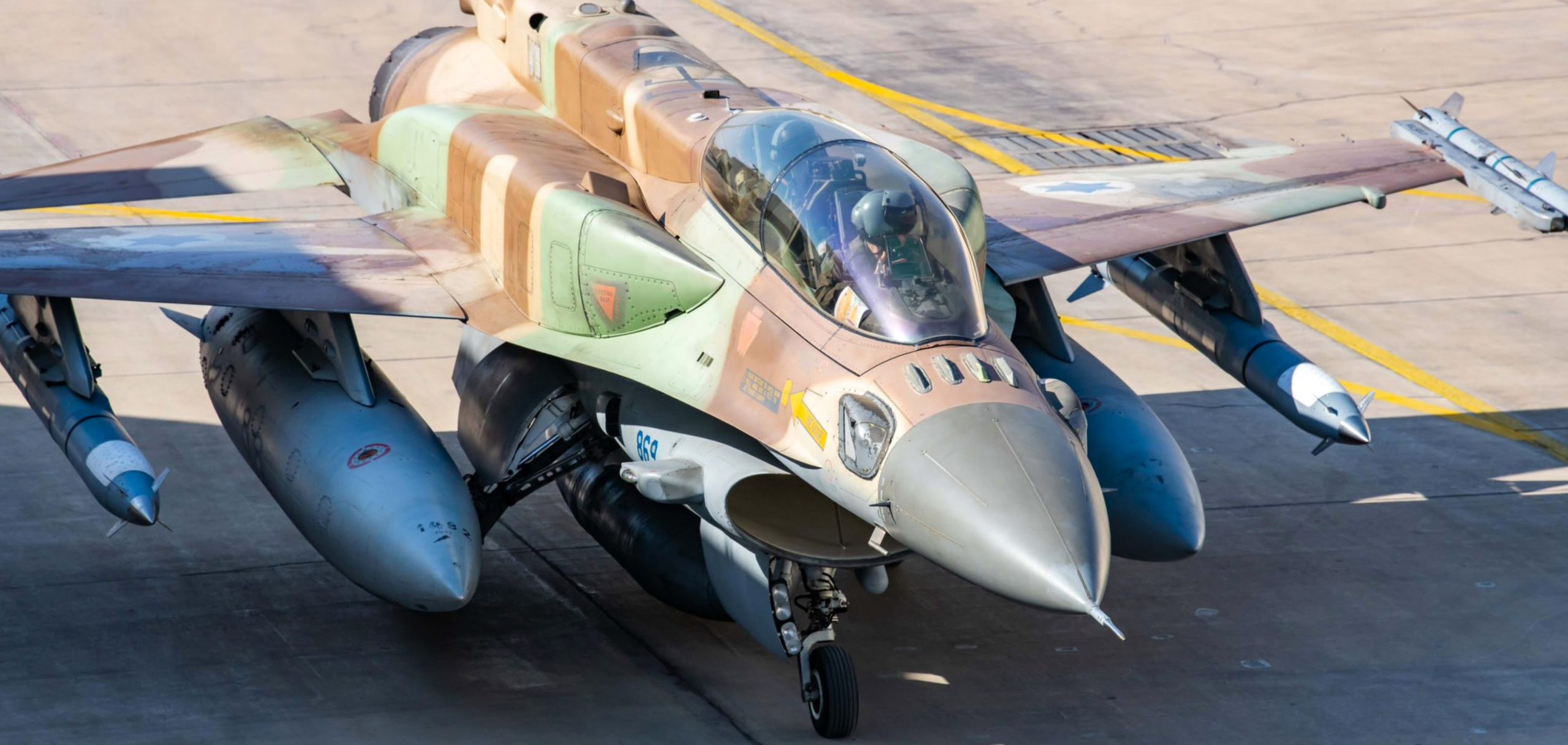 After months of relative quiet, the Syrian front came back into focus in Israel in recent days, as Jerusalem confirmed having struck an airport in northern Syria on Tuesday to prevent Turkey’s military from establishing itself there, rejecting criticism from the United States.
At the same time, the government in Damascus announced its intention to retain nuclear material left over from the Assad regime, asserting its right to pursue a civilian nuclear power program. The announcement came shortly after new video footage emerged showing Syrian military units chanting antisemitic slogans.
These recent incidents highlight Israel’s concern that the new Syrian government of former terrorist Ahmad al-Sharaa continues to pose a serious threat, particularly because its close ties to the Turkish government, despite American efforts to legitimize the government and integrate it into its regional alliance system.
Following the unusual public criticism from the U.S. Ambassador to Turkey Tom Barrack, the Israeli Prime Minister’s Office (PMO) responded late on Tuesday: “Israel will not tolerate threats to its security,” accusing Syria and Turkey of trying to breach the status quo.
“Israel and Syria agreed to a status quo in security matters, which Syria was on the verge of breaching by permitting Turkish troops to deploy at an airbase near Aleppo. Israel repeatedly warned Syria that such a deployment would pose a threat to Israel’s security. Syria chose to ignore these warnings,” the PMO stated, adding that Jerusalem would “welcome a return to the status quo.”
Early on Tuesday, Israeli fighters had reportedly bombed Syrian targets in the Abu al-Duhur Airbase in Idlib province, some 300 kilometers (188 miles) from the Israeli border.
Targets reportedly included the runway and several warehouses. Israeli security think tank Alma Research Center assessed that “the objective was to strike advanced equipment or weapons with potential threat capabilities. In addition, the purpose of striking the runway would be to temporarily prevent its use and, in any event, to send a message to the al-Sharaa regime – and possibly also to a third country – that their actions cannot be tolerated.”
In its analysis, Alma also noted, “reports of Turkish plans to deploy air defense systems in Syria, such as the Hisar system. Israel was previously reported to have warned Turkey against transferring advanced military capabilities to Syria that could disrupt the Israeli Air Force’s freedom of operation. It was also reported in April 2025 that Israel had struck the T4 airbase to prevent Turkey from establishing capabilities there.”
Barrack later argued that the Israeli strikes raised a significant danger of a direct confrontation with the Turkish military. Speaking to Reuters, he said Turkey “observed the aircraft heading north toward its territory and therefore could have reasonably prepared its own response.”
“Thankfully, calm heads were able to prevent the situation from deteriorating further,” Barrack said, stressing that this incident “underscores the need for a deconfliction mechanism involving Israel, Syria and Türkiye. That is something we are actively working on to establish in order to prevent future miscommunication.”
“Turkey knew full well that it was provoking Israel,” assessed Dr. David Wurmser, a fellow at the Jerusalem Center for Foreign Affairs and Security.
“Turkey was the party responsible for what can only be seen as an escalation that it itself sought to provoke,” he argued, adding that Barrack should condemn the Turkish government instead of encouraging “Turkey’s imperial and destabilizing ambitions.”
On Sunday, footage showing troops from the new Syrian military chanting threats against Israel and the Jewish people went viral on social media.
The Foreign Ministry retweeted one news report, commenting, “Outside the historic Damascus Citadel last Saturday, Syrian soldiers chanted: ‘I am coming for you, Jew. I will make your blood flow in rivers.’ This is Syria’s new army. Same old antisemitic bloodlust.”
Day 1,048 — Wednesday, August 19
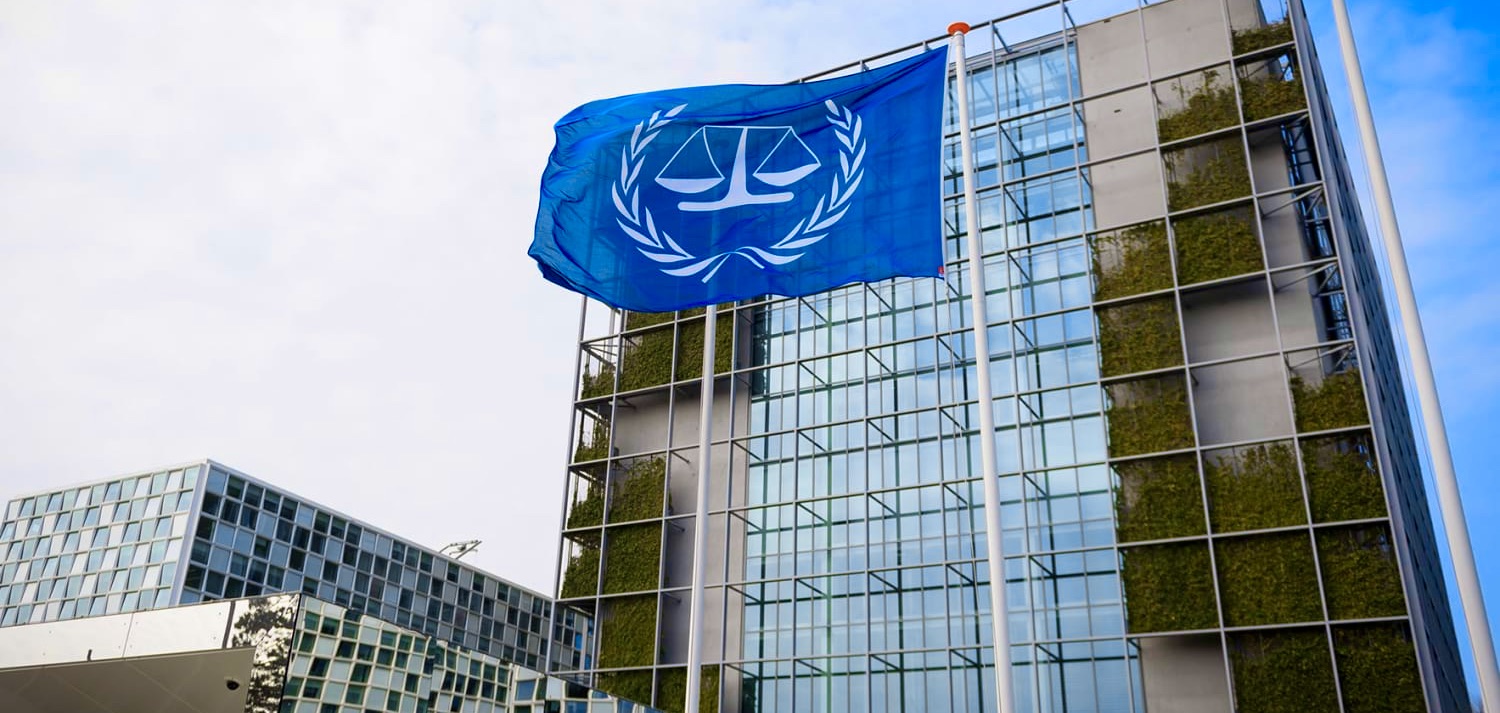 The United States on Tuesday imposed sanctions on Tomoko Akane, a Japanese judge who is president of the International Criminal Court, according to the US Treasury Department website.
The move is the latest escalation in the Trump administration’s campaign against The Hague-based court, which was established in 2002 by the international community to prosecute war crimes, genocide and crimes against humanity. The US is not a member of the court.
Rubio said in a statement that he was imposing sanctions on Akane as well as Abdoulaye Seye, a senior trial lawyer and a Senegalese national, under a Trump executive order last year authorizing sanctions against the court.
“These individuals have directly engaged in efforts by the ICC to investigate, arrest, detain, or prosecute officials whose government has not consented to ICC jurisdiction,” Rubio said.
The ICC condemned the move, saying in a statement that the measures undermine the rule of law.
“When judicial actors are threatened for applying the law, it is the international legal order itself that is placed at risk,” the ICC said.
Japan’s foreign ministry said on Wednesday that US sanctions on the International Criminal Court and its president, Judge Tomoko Akane, were “very unfortunate.”
In a statement, the ministry said: “Japan has consistently supported the ICC … in its efforts to prosecute and punish the most serious crimes of concern to the international community and to uphold the rule of law.” It added that Japan would remain committed to strengthening the rule of law in the international community while maintaining communication with related countries.
Seye is a senior trial lawyer on the prosecution team that sought an arrest warrant for Israeli Prime Minister Benjamin Netanyahu, and has been nominated for election as an ICC judge.
Day 1,047 — Tuesday, August 18
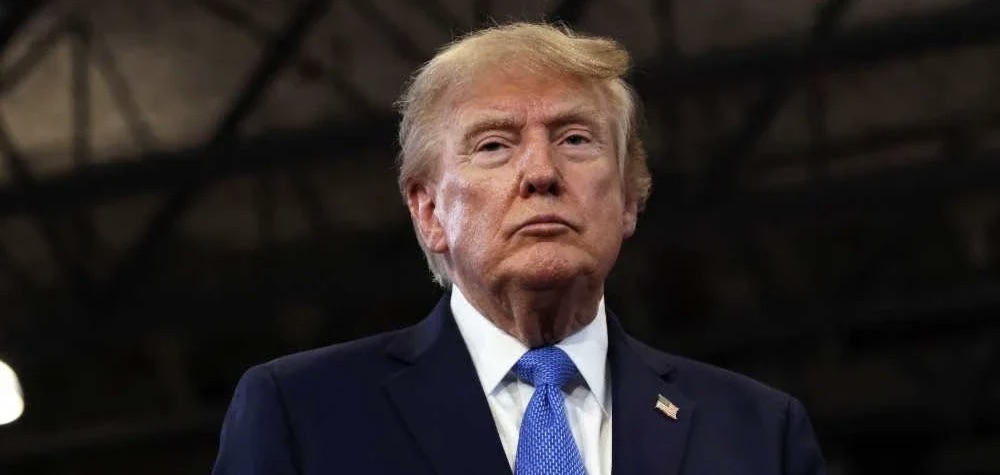 After the Memorandum of Understanding with Iran expired on Monday, U.S. President Donald Trump said the Islamic Republic should “put up the white flag of surrender.”
In a phone conversation with Fox News’ Try Yingst, the president reiterated that the number one goal for his administration is preventing the Islamic Republic from obtaining nuclear weapons.
“The number one Goal is, and always will be, that Iran cannot have, in any way, shape, or form, a Nuclear Weapon,” Trump wrote on his Truth Social account shortly before the phone call with Yingst.
Despite upcoming elections in the United States, the president said he feels no pressure to alter his current course of continued economic sanctions and a blockade on the Strait of Hormuz for Iranian traffic.
“I have no time schedule,” President Trump told Yingst during the call. “I’m not in a hurry.”
“Midterms have nothing to do with my thinking,” he added.
While Hormuz remains a highly contested issue in the negotiations, President Trump issued an odd warning to Oman, which has been negotiating with Iran over the strait for the past several weeks.
“If Oman gets in the way, we’ll bomb the [expletive] out of them,” Trump was reported by Yingst as saying.
“I don’t think they [Oman] behaved very well, but we’d handle them very easily, just like we do others,” the president told reporters in the Oval Office hours later.
Day 1,047 — Tuesday, August 18
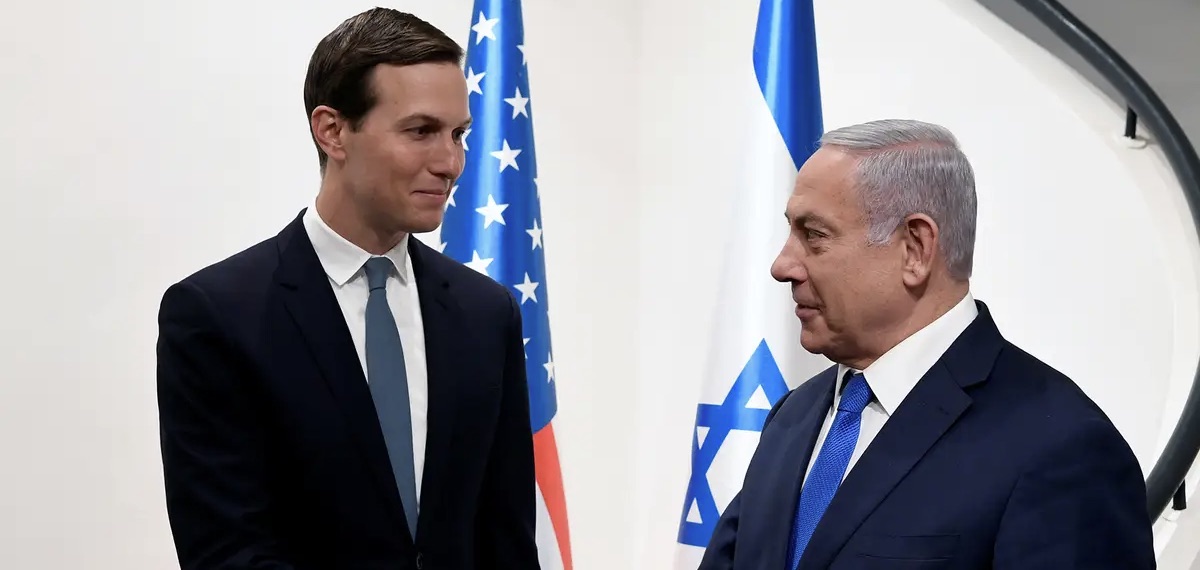 U.S. special envoy Jared Kushner delivered a stark ultimatum to Hamas on Monday, warning that the terrorist group must honor its commitments to disarm in Gaza or face an Israeli military operation to “finish the job.“
Speaking exclusively to Fox News chief foreign correspondent Trey Yingst, Kushner also detailed high-stakes diplomatic meetings in Egypt and Israel over the last 48 hours aimed at advancing President Donald Trump’s Gaza peace roadmap as fighting and disagreements between Israel and Hamas persists.
“Time will tell whether [Hamas disarmament is] going to be implemented,” he added, before stating that Washington feels it could be “very close to knowing, and we’re making a lot of progress towards trying to get to the next steps.“
“If they don’t follow through now on their commitment, everyone will see that they’re not genuine about peace, and then Israel will have a lot more support from the U.S. and others to go and finish the job in the appropriate way,” Kushner also told Yingst of the militant group.
The warning from Trump’s son-in-law followed the rare face-to-face meeting — only Kushner’s second known meeting with the group.
“They said all the right things, but obviously, it’s very, very hard to trust, you know, a terrorist organization that committed these terrible atrocities,” Kushner continued. “But we had a very cordial meeting, and they said all the right things, and so we’re going to give them a chance to perform.
“It’s going to have to be based on actions and steps, and I hope it will be true.“
Day 1,046 — Monday, August 17
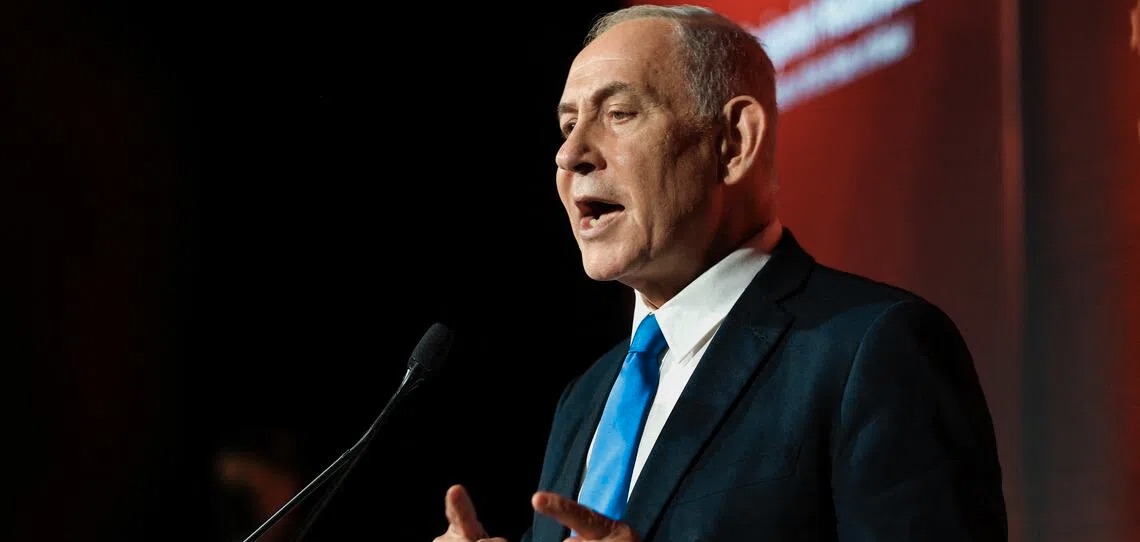 Prime Minister Benjamin Netanyahu refered to Britain as an “Islamic republic” during a lengthy podcast interview with Army Radio.
Discussing Winston Churchill’s son Randolph Churchill and grandson Winston Spencer Churchill, who like the World War II-era UK prime minister were journalists, Netanyahu says the pair “came here and covered the Six Day War in a very positive way for us.”
“Try to find that now in Britain, which you could call the Islamic republic of Britain,” Netanyahu chuckles.
He then responds “yes” when the interviewer asks “if all of Europe isn’t already like that, no?” apparently referring to Muslim communities in countries there and many European governments’ increasingly critical postures toward Israel in recent years.
“The first nuclear Islamic republic will be the Islamic republic of Britain,” Netanyahu further stated. “We’re making sure there won’t be another one in Iran.”
Day 1,046 — Monday, August 17
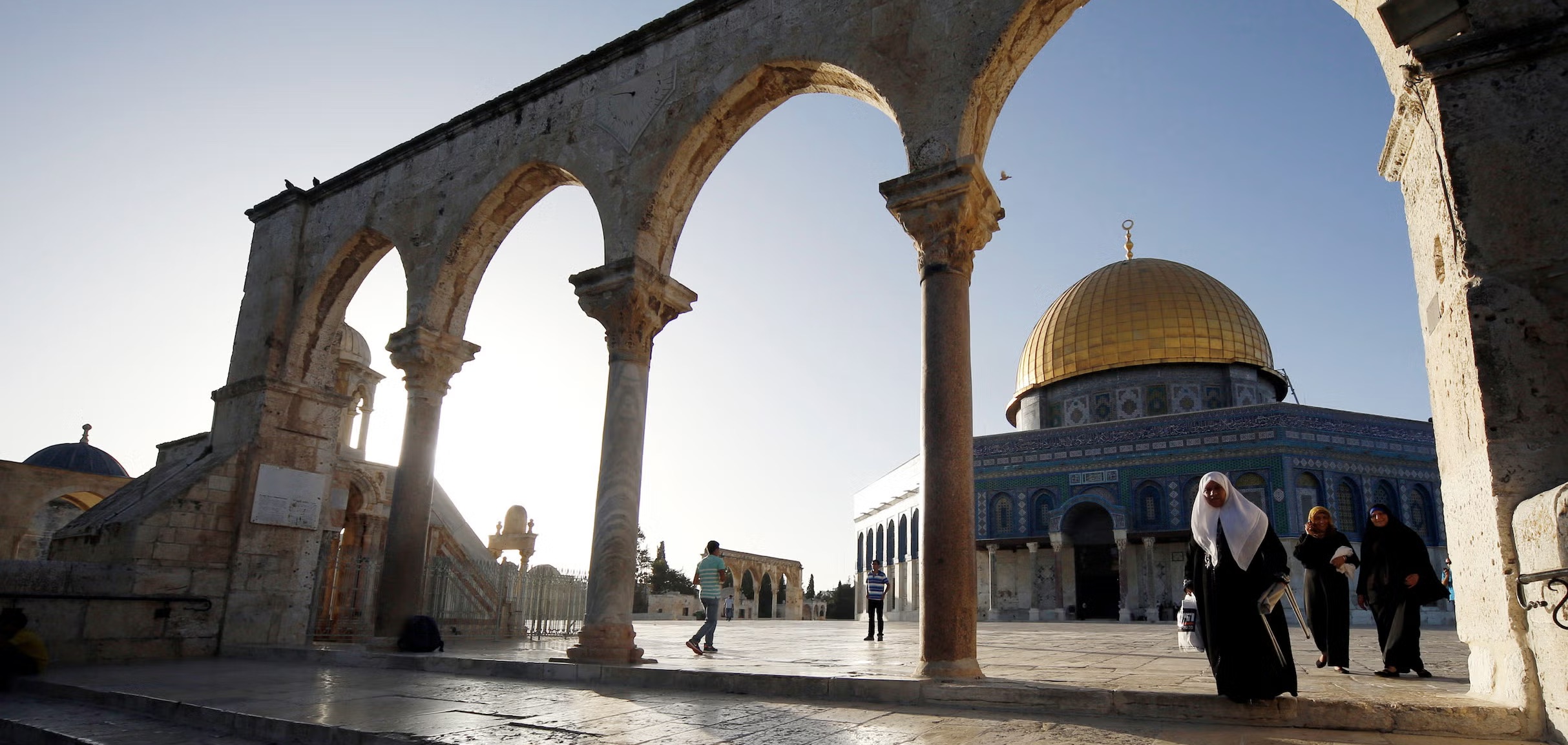 Jewish men were permitted to bring prayer books onto the Temple Mount on Sunday, National Security Minister Itamar Ben-Gvir confirmed to The Jerusalem Post, after right-wing journalist Arnon Segal shared a photo of Jewish men praying and reading from prayer books, claiming the photo was taken from the Temple Mount.
“Still no blanket permit, but an initial experiment aimed at ensuring the Middle East doesn’t lose its mind over this,” Segal claimed in his post. “History.”
“The Israel Police operates on the Temple Mount in accordance with the directives of the political echelon, the established rules governing the site, and operational assessments, with the aim of safeguarding public safety, security, and public order,” Israel Police said in response to the Post’s request for comment.
Under the longstanding status quo, Jews and Christians are permitted to visit the Temple Mount but are generally prohibited from praying there, while Muslims are permitted to worship.
In January, Israel Police began relaxing some restrictions on Jewish prayer at the site, according to the Jewish Telegraphic Agency. Jewish visitors may now enter with a single printed prayer page prepared in advance, although prayer books remain prohibited.
Day 1,046 — Monday, August 17
 Hengli Group, a Chinese company that employs over 300,000 people and earns over $100 billion per year, is a primary importer of Iranian crude oil, The Wall Street Journal reported on Saturday, citing industry analysts, shipping brokers, and the US Treasury.
Hengli is one of the largest companies in a network of “teapot” refineries in China that purchase sanctioned oil, according to the officials cited by WSJ.
Since 2023, Hengli has received at least five million barrels of Iranian oil from multiple ships sanctioned by the United States, the US Treasury and shipping brokers claimed.
Hengli Group, a Chinese company that employs over 300,000 people and earns over $100 billion per year, is a primary importer of Iranian crude oil, The Wall Street Journal reported on Saturday, citing industry analysts, shipping brokers, and the US Treasury.
Hengli is one of the largest companies in a network of “teapot” refineries in China that purchase sanctioned oil, according to the officials cited by WSJ.
Since 2023, Hengli has received at least five million barrels of Iranian oil from multiple ships sanctioned by the United States, the US Treasury and shipping brokers claimed.
Iran has been evading US sanctions and the blockade using a system of ship-to-ship transfers in which sanctioned ships laden with Iranian oil offload their cargo onto another ship in the water before it is sent to China, the WSJ reported in May.
The ships receiving the oil are often part of Iran’s “shadow fleet,” a fleet of old, rusting tankers that obscure their owners and may switch their flags to those of countries with little shipping oversight to conceal their identities. Ships will often turn off their tracking device and may paint over identity numbers.
Day 1,045 — Sunday, August 16
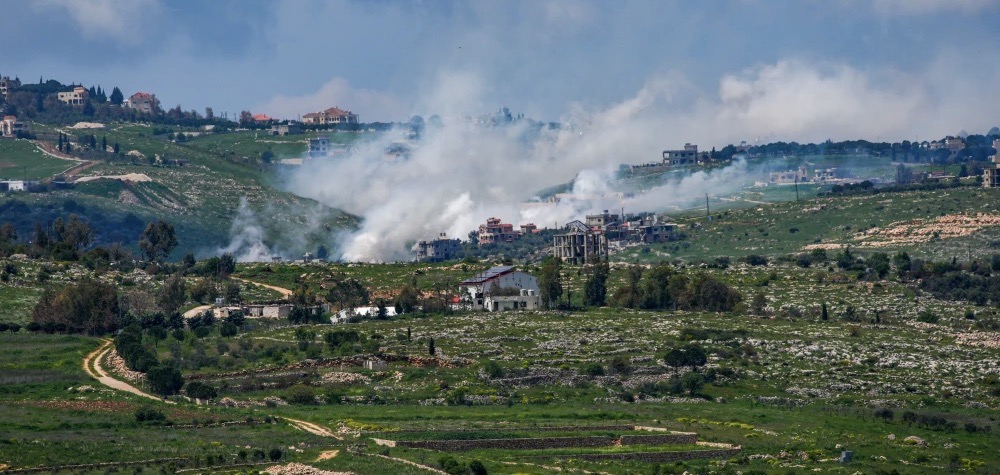 The Israel Defense Forces killed overnight Friday a commander of Hezbollah’s elite Radwan Force in the Ansar area in southwestern Lebanon, the military said.
The strike came in response to an attack earlier in the day on Israeli troops operating in the Security Zone in Southern Lebanon in accordance with the ceasefire agreement, the IDF said.
An IDF officer and two enlisted men were “severely injured” as a result of an explosive drone hit in Southern Lebanon, the military said later on Saturday.
The three were evacuated to a hospital and their families have been notified.
The military identified Ali Samir al-Haj Hassan as a battalion commander in the Radwan Force. Several other terrorists were killed in the IDF strike as well, the army continued.
The Israeli military addressed reports that the commander’s family members were harmed in the attack as well.
Hassan was targeted inside a military headquarters used to command Hezbollah’s operations in the area, the IDF said. “The strike was specifically directed at Hassan, who was a lawful target under international law,” the army emphasized.
“The terrorist used his family as human shields, hiding alongside them inside the military headquarters,” it added.
The Prime Minister’s Office said that the attack on the three soldiers was ordered from this headquarters, and that only later did the IDF learn that Hezbollah “deliberately” placed civilians inside it.
Lebanese media reported that Israeli strikes in the areas of Ali al-Taher Ridge, Ansar, and Nabatieh al-Fawqa killed nine people, among them women and children, according to Ynet.
Lebanon’s Prime Minister Nawaf Salam on Saturday slammed Israel’s retaliation, saying on X in Arabic that it “undermines efforts to stabilize the situation in the south.”
He further stated that the responsibility for dealing with terrorist infrastructure, “if it exists,” on the Lebanese side lies with the Lebanese state.
Meanwhile, U.S Ambassador to Lebanon Michel Issa told reporters in Arabic that while no date for further Israeli-Lebanese negotiations has been set, “they will continue,” LBCI, the Lebanese Broadcasting Corporation International, reported.
Asked whether Washington supports Israel’s latest round of strikes, Issa replied, “I don’t know. You know more than I do.” Israeli operations in Southern Lebanon will stop when Hezbollah lays down its weapons, he continued. “Everything will stop,” he added.
Issa spoke with reporters after meeting with Lebanese Parliament Speaker Nabih Berri in Beirut.
U.S. Ambassador to Israel Mike Huckabee lashed out at Hezbollah, calling it “pure evil.”
Hezbollah wounds Israeli troops, then “rounds up children” in a military compound knowing that Israel will retaliate because Iran’s proxy group “want[s] them to be in harm’s way,” he said.
He equated Hezbollah’s conduct with that of Hamas.
Day 1,044 — Saturday, August 15
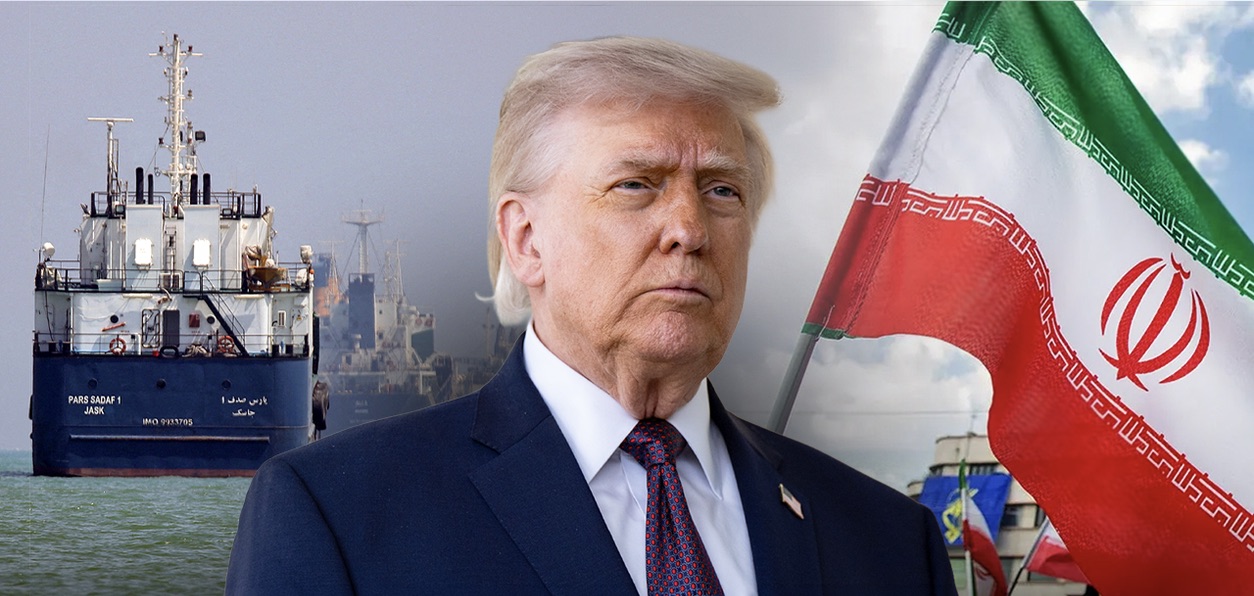 An Iranian official fired back Friday after President Donald Trump said he may eventually declare the Strait of Hormuz “territory of the United States,” insisting Tehran will continue enforcing its blockade of the strategic waterway.
“The Strait of Hormuz cannot be seized by tweet, nor by aircraft carrier, nor by issuing an order, nor by an election speech,” Iranian Deputy Foreign Minister for Legal and International Affairs Kazem Gharibabadi wrote on X. “Iran neither fears threats nor cowers before displays of power.”
Gharibabadi then claimed the U.S. has suffered “strategic and heavy defeats” and asserted that “the Strait of Hormuz has been Iranian, is Iranian, and will remain Iranian.”
“This strait will only be closed and opened under Iran’s command,” he continued, adding that Tehran would maintain the blockade until the U.S. accepts what he characterized as the “reality of defeat.”
Trump said during remarks in Nassau County, New York, earlier Friday that after Iran is defeated, “pretty soon I’ll be declaring the Hormuz Strait a territory of the United States,” while touting the U.S. blockade and saying no ships pass through unless Washington allows it.
The Islamic Republic of Iran’s Foreign Ministry has previously publicly identified Gharibabadi’s X account among its official government accounts.
Day 1,044 — Saturday, August 15
 Israeli Consul General in New York, Ofir Akunis spoke at an event for young Jewish community leaders in New York and addressed the sharp rise in antisemitic hate crimes in New York City since Mayor Zohran Mamdani took office.
“The mayor is busy inciting against and promoting a boycott of the Jewish state. His method is the ‘well-known’ antisemitic one: ‘No matter what – blame the Jews.’ This is exactly the same method that was used a century ago by the Third Reich,” Akunis said.
He stated: “Data released by the New York Police Department points to a sharp increase in antisemitic hate crimes since he took office. This is further proof of his failure to protect the city’s Jewish community. Mamdani continues to incite and fuel his supporters to attack the State of Israel and its Prime Minister. This must stop before it is too late!”
His comments follow the release of the NYPD’s hate crime statistics for the month of July, which show that antisemitic hate crimes in New York City rose sharply in July, accounting for nearly 70% of all confirmed hate crimes reported during the month.
The NYPD recorded 33 confirmed hate crimes in July, including 23 targeting Jews, up 53.3% from the 15 anti-Jewish incidents recorded in July 2025. Muslims were the targets of five confirmed hate crimes, compared with two during the same month last year.
So far this year, the department has recorded 360 confirmed hate crimes, a 9.4% increase from the 329 reported during the same period in 2025. Of those incidents, 205 targeted Jews, 56.9% of the total, while 26 targeted Muslims. Anti-Jewish hate crimes have increased 8.5% year over year, while anti-Muslim incidents have risen 62.5%.
Day 1,043 — Friday, August 14
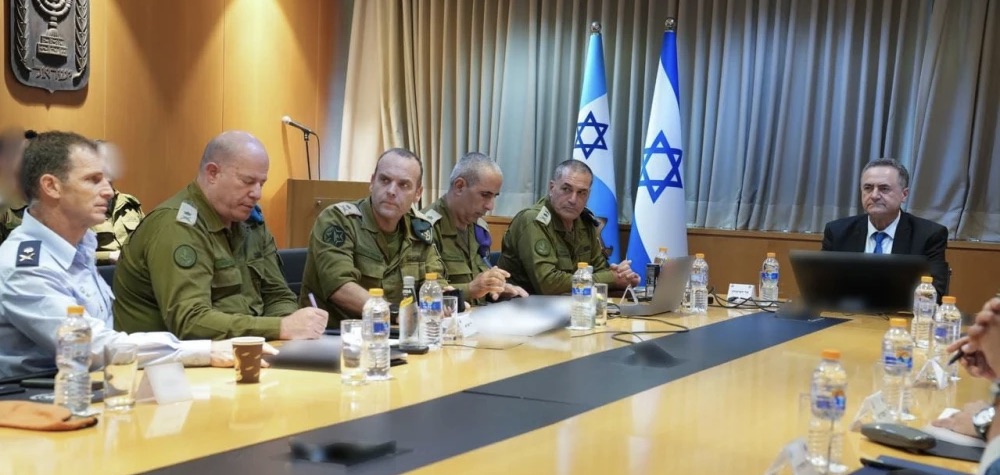 Defense Minister Israel Katz has instructed the military to prepare a plan to transfer all civilian law-enforcement responsibilities in Judea and Samaria to the Israel Police, his office said on Friday.
Katz issued the directive following a meeting on Thursday with IDF Chief of Staff Lt. Gen. Eyal Zamir, the heads of the IDF’s Operations Directorate and Military Intelligence and other senior commanders.
Under the proposed plan, which is to be drawn up in coordination with the Israel Police and other relevant authorities, civilian law enforcement in Judea and Samaria would be transferred from the IDF to the police, as is the case elsewhere in Israel.
The police would establish a dedicated force to handle civilian matters and receive the necessary authority and funding, according to Katz’s office.
The IDF would continue to combat Palestinian terrorism and focus on defending Israeli communities and borders.
“It is not the IDF’s role, nor does it have the capacity, to deal with the enforcement of civilian matters in Judea and Samaria, given the welcome expected increase in the number of residents in Judea and Samaria following the decisions to establish 104 new communities and formalize the agricultural farms, on the one hand, and the growing security threats and challenges that the IDF is facing and is expected to face on the central front, on the other,” Katz said.
“The IDF’s role is to fight Palestinian terrorism, focus on defending the borders and communities against threats, deal with the borders and the territory itself, and address security threats to the communities and the State of Israel—not to chase teenagers on the hilltops. All responsibility for handling and enforcing matters relating to the communities, residents and civilian issues will be transferred to the Israel Police, which will be required to prepare accordingly.”
Katz described the move as “a significant step toward strengthening governance and enforcing law and order throughout Judea and Samaria,” while freeing the military to concentrate on its primary missions.
“The Israeli government and the IDF will delegate to the police all the powers necessary to carry out these missions,” he said.
The announcement came a day after Israeli security forces dismantled two unauthorized outposts near the Palestinian villages of Qusra and Jalud in Samaria.
Israeli forces overnight Thursday cleared Israelis from an unauthorized outpost and sheep pen next to Qusra and dismantled a second unauthorized outpost near Jalud. Both had been established in Area B, where the Palestinian Authority exercises administrative control and Israel retains security responsibility. One Israeli was detained during the operation.
The IDF had previously received reports of Israelis entering Palestinian homes and areas near the villages. The military described the activity as “illegal, obscene and unacceptable” and declared the area a closed military zone, barring anyone who was not a local resident.
The military said it “strongly condemns” such incidents and that those involved would be dealt with in cooperation with the security forces.
Yisrael Gantz, chairman of the Yesha Council, an umbrella organization representing Israeli communities in Judea and Samaria, also condemned the actions.
He described the incidents as “serious and not our way,” saying, “There is no place to privately decide on establishing a hilltop in the yard of a house. There is no justification for violence against uninvolved parties or against security forces.”
U.S. Ambassador to Israel Mike Huckabee also issued a condemnation, saying Israeli security forces had arrived at the scene at the request of the United States. “The actions of those who attacked this family’s home are criminal,” Huckabee said, describing the incident as “a shocking act of terrorism designed to intimidate and harass this family.”
In a subsequent post, Huckabee adopted a more conciliatory tone, stressing that a small minority carried out the actions and should not be attributed to Israeli residents of Judea and Samaria as a whole.
“‘Settlers’ are not the problem in Judea/Samaria. ‘Unsettlers’ are,” the ambassador wrote on X. “Very small minority who do great damage to Palestinian families & to Israel.”
He added, “Real settlers like Ysrael Ganz, Governor of Judea/Samaria condemn the actions of the few,” Huckabee wrote, using an alternate spelling of Gantz’s name. “Let’s hope the media gives attention to this & balances their stories.”
Day 1,043 — Friday, August 14
 US Treasury Secretary Scott Bessent said on Thursday that the United States is going to apply measures that have “never been seen” on Iran.
“Watch this space for more announcements coming next week because we are going to apply measures like have never been seen in the history of economic isolation on a country,” Bessent said in an interview on on Newsmax’s “Rob Schmitt Tonight” program.
“It will be a combination of economic isolation like the world has never seen before, and the continued blockade in the Strait of Hormuz that will keep anything from going in or out of the Iranian ports,” Bessent said.
Day 1,042 — Thursday, August 13
 The co-chair of the Democratic Socialists of America (DSA) group is receiving sharp backlash for saying on Friday that the Hamas-led Oct. 7 massacre in Israel was mostly “inevitable.”
During an interview with The New Yorker’s David Remnick, DSA co-chair Megan Romer was questioned about democratic socialist Darializa Avila Chevalier, who attended an anti-Israel, pro-Hamas rally the day after the Oct. 7 terrorist attack in 2023, and was pressed on whether she would have attended if she were in her position.
“You would have gone to that rally, had you been able?” Remnick asked.
“That’s a good question. I probably would have,” Romer replied. “Yeah, yeah. I don’t live in New York City, so I wouldn’t have —”
Remnick pressed further, asking, “One day after the slaughter of 1,200 people and taking of over 200 hostages, you would have come and rallied behind Hamas?”
“I think that Oct. 7 was largely inevitable,” she replied. “If you put people in an open-air concentration camp and you deprive them of rights, of dignity, of food, of the ability to live in safety, you have to expect that they are going to not take that for that long. And that is not defending any harm of civilians or of non-combatants —”
When Remnick accused her remark of being an expression of support for the violence, she pushed back and said “I’m saying that I think it was inevitable.”
Pro-Israel groups condemned her comments.
“I agree with DSA Co-chair Megan Romer that the October 7 attacks were in many ways inevitable — but not for the libelous reasons she cited,” Zionist Organization of America National President Morton A. Klein told Fox News Digital.
“When Gazans elected Hamas – a terror organization whose charter calls for murdering every Jew and destroying Israel, October 7 was the result,” he added. “When Qatar and Iran gave arms and hundreds of millions of dollars to Hamas and Palestinian Islamic Jihad, gave sanctuary to Hamas leaders, and helped terror groups plan attacks on Israel, October 7 was the result.”
“When UNRWA (UN Relief and Works Agency) teaches children to hate and murder Jews, employs Hamas terrorists as teachers and principals, stores weapons for Hamas, and provides communications centers for Hamas, October 7 is the result. When Israel, under pressure from the Biden administration, issued thousands of work permits to enter Israel to Hamas terrorists and scouts, October 7 was the result,” he continued.
He warned that there may be even more October 7th-style violence in the future.
“And now, when Hamas is refusing to really disarm, and is vowing to commit more and more October 7ths, we must enable Israel to ensure its safety by retaining a buffer zone in Gaza and insisting on Hamas’ disarmament prior to any other peace plan steps,” he said. “Or else another October 7 will be the result. Regarding Romer’s lies, the parties ‘imprisoning’ Gaza are Hamas, PIJ and other terror groups. By contrast, Israel facilitated tons of food, water, medical and other supplies into Gaza — while Hamas and Palestinian Islamic Jihad launched 30,000 rockets at Israeli civilians.”
Day 1,042 — Thursday, August 13
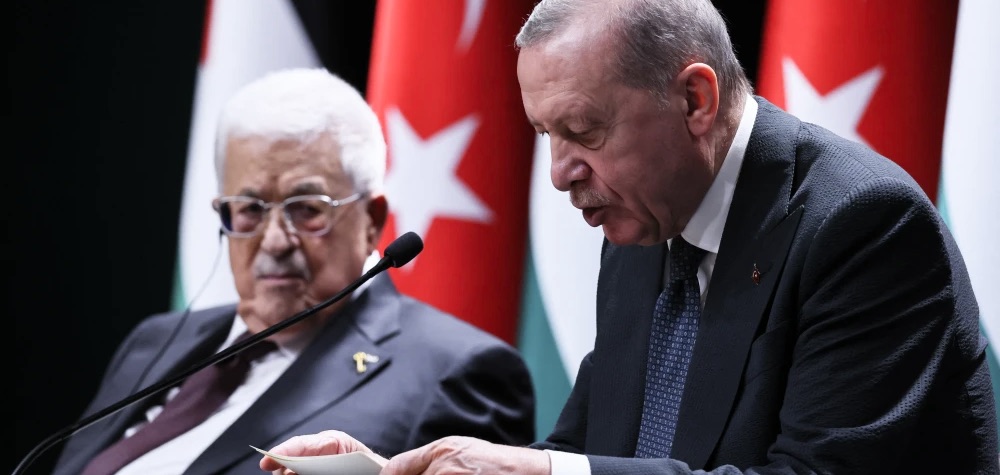 Turkish President Recep Tayyip Erdoğan on Wednesday vowed to “resolutely” work toward a “sovereign and geographically contiguous” Palestinian state with eastern Jerusalem as its capital, Turkish state-run news channel TRT reported.
Speaking at a joint news conference in Ankara with Palestinian Authority chief Mahmoud Abbas, Erdoğan accused Israeli Prime Minister Benjamin Netanyahu of seeking to “remove Palestine from the common agenda of humanity by profiting from chaos and new conflicts in the region.”
“They will not succeed,” he added.
Erdoğan said Ankara “strongly opposes” what he denounced as provocations aimed at changes to the status quo at the Al-Aqsa Mosque and other Jerusalem holy sites, and accused the Jewish state of “unlawful actions” in Judea and Samaria.
The Turkish leader also called for establishing conditions for Gaza’s reconstruction and vowed to continue efforts “to support the Palestinian people and defend their rights.”
Abbas arrived in Ankara on Tuesday afternoon for a two-day visit, Ramallah’s official Wafa agency reported.
Abbas was met at the airport by Turkish Trade Minister Ömer Bolat and the P.A.’s envoy to Ankara, Nasri Abu Jaish, according to the report.
Wafa said the P.A. delegation includes PLO Executive Committee member Ziad Abu Amr; Fatah Central Committee member Maj. Gen. Majed Faraj, who also heads Ramallah’s General Intelligence Service; and Abbas advisers Majdi al-Khaldi and Mahmoud al-Habbash.
Israeli Finance Minister Bezalel Smotrich condemned Abbas’s visit, describing the P.A. leader as “an enemy at the head of a terror authority that encourages and funds terror against the State of Israel.”
Smotrich called on Israeli Prime Minister Benjamin Netanyahu to prevent Abbas from returning to Israel and Judea and Samaria, adding that the Palestinian Authority “must be dismantled.”
Israel’s Foreign Ministry on Tuesday accused Erdoğan of military aggression “that knows no borders,” saying Ankara occupies roughly 36% of Cyprus, 5% of Syria and 2,000 square kilometers of Iraq, with thousands of Turkish troops stationed across the three countries.
The ministry made the comparison amid Turkish criticism of Israel, writing on X, “Turkey has the audacity to criticize Israel. But what are the facts on the ground?”
Israel, by contrast, “temporarily controls merely 0.1% of Syria,” the ministry said, describing it as “a buffer zone to protect its citizens from proven security threats.”
Day 1,041 — Wednesday, August 12
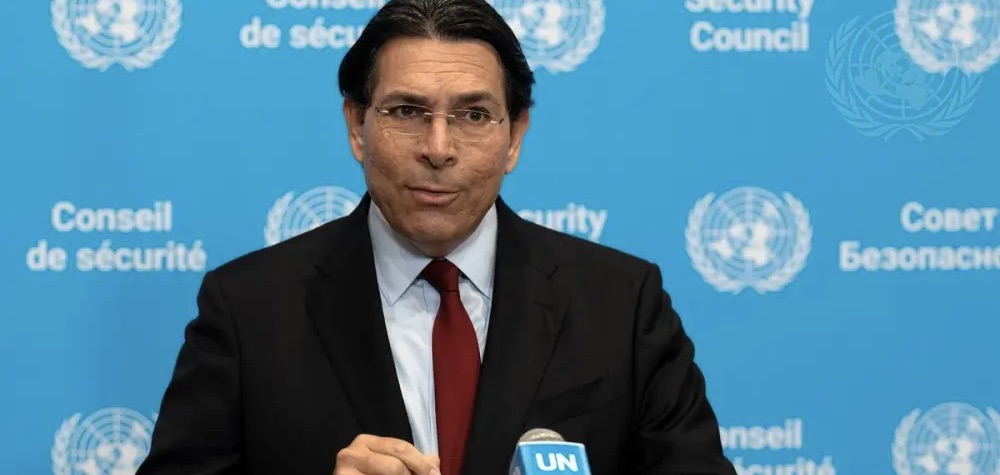 Israel’s United Nations envoy told the U.N. Security Council on Tuesday the facts regarding violence in Judea and Samaria contradict the “rising settler violence” narrative.
The council held a briefing on Judea and Samaria, as requested by European members Denmark, France, Greece, Latvia and the United Kingdom, collectively known as the “E5.”
The briefing was purportedly to condemn the alleged rise of violence by Jewish residents in the region, which the United Nations refers to as “settlers.”
“This May, there were 348 Palestinian terrorist attacks in Judea and Samaria. Eight pipe bomb attacks, 282 stone-throwing incidents, 32 fire bomb attacks, 24 arson incidents and two serious car ramming attacks,” said Danny Danon, Israel’s U.N. ambassador, noting that the high figure was higher than even the 325 recorded attacks in April. Over 400 more attacks were stopped by Israeli security forces preemptively, Danon said.
“How many of you have condemned these terrorist attacks against Jews? None of these numbers were reported by the briefers, and none of these attacks were mentioned by any of you,” he continued. “This is the bias we are confronting today.”
Meanwhile, Danon said Israel is cracking down on attacks by Jews against Palestinians, with 354 investigations opened, 20 indictments filed and 35 residents arrested through the first quarter of this year.
“This has led to a decrease in extremist violence,” said Danon. “That is why calling it ‘settler violence’ is a provocation. It denies our connection to the land of Israel. It distracts from constant terrorist attacks against Israelis and it collectively labels entire innocent communities for the crimes of the marginal extremist minority.
He drew attention to the flow of Iranian weapons and funding into Judea and Samaria, and the Palestinian Authority’s dishonesty about its so-called pay-for-slay program, which rewards terrorists on a sliding scale based on the severity of their crimes.
“The Palestinian Authority is supposed to help us to mitigate this problem,” said Danon, while the U.S. State Department told Congress that the Palestinian Authority continues to administer the program, even as Ramallah said it was converted into a broader social welfare initiative.
Washington’s representative on Tuesday said that the United States “appreciates the Israeli government’s condemnation of, and the increased actions to counter, violence in” Judea and Samaria.
“Israel has taken specific steps, such as increasing law enforcement actions, to boosting the IDF presence and to allocating significant financial resources to counter the violence,” said Jennifer Locetta, U.S. alternative representative for special political affairs.
She doubled down on Danon’s pay-for-slay criticism, telling the council that Washington “will not accept compensation for terrorism under the guise of ‘welfare’ or through any other attempts to evade detection under a different name.”
But, Locetta took a veiled shot at Israel’s approval this week of the advancement of plans to build housing units in areas between northern Jerusalem and the P.A. cities of Ramallah and el-Bireh.
“The United States reiterates its opposition to annexation,” in the area, she said.
Day 1,041 — Wednesday, August 12
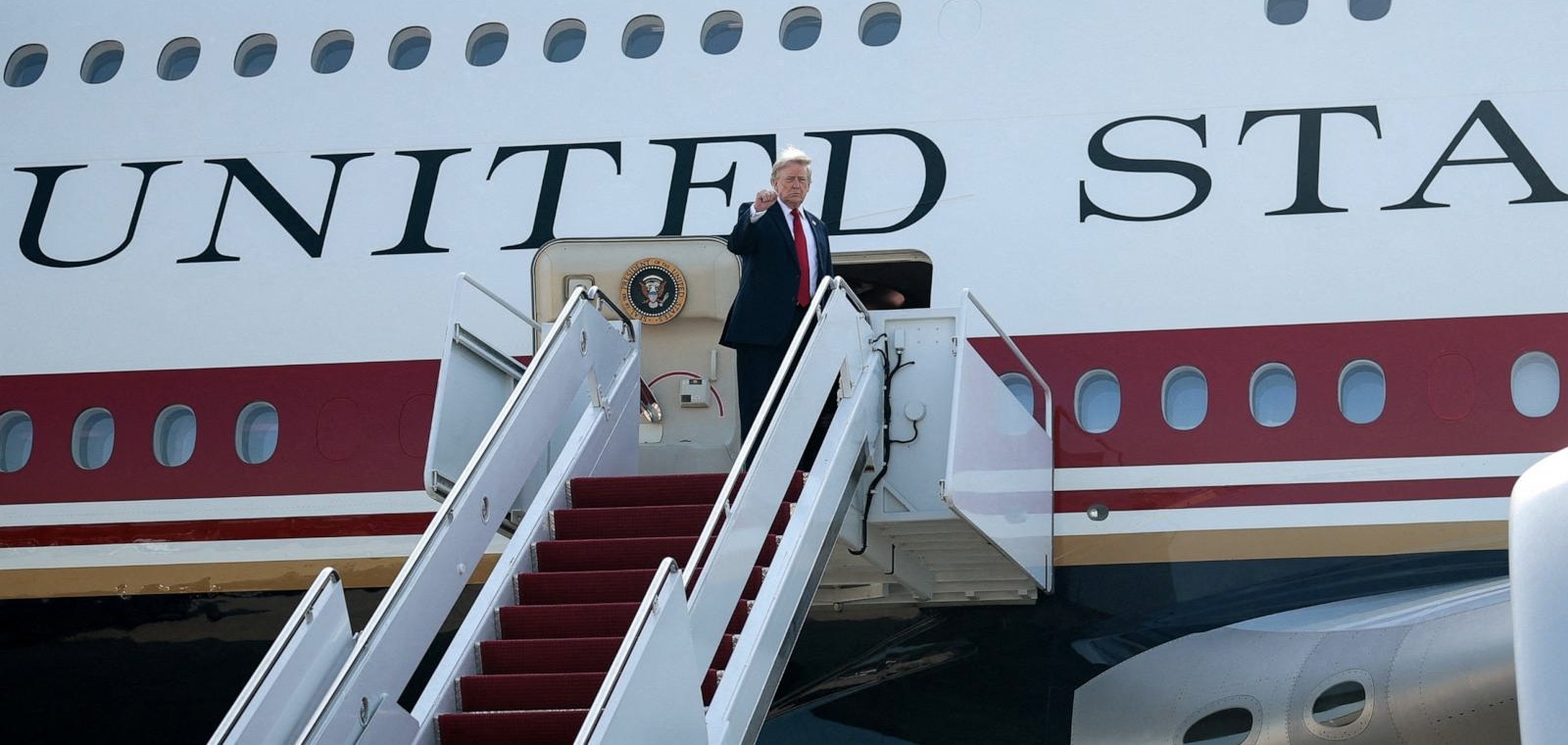 A credible Iranian assassination threat led the U.S. Secret Service to use an elaborate deception to get President Trump safely out of Turkey after the NATO Summit last month.
Trump was taken to an alternate military aircraft while the White House made it appear that he was flying on Air Force One, according to a new report from The Washington Post.
The operation involved a ruse where journalists and some White House staff believed they were on the same plane as Trump. But after boarding Air Force One, Trump was secretly transferred to a smaller Air Force C-32A via an airport catering truck.
The Post said it had reviewed material related to the operation and had confirmed it through a U.S. official with inside knowledge, as well as another person who knew about the president’s travel.
The White House did not directly address the report, but issued a statement highlighting that it uses every tool at its disposal to address threats to the president. The Secret Service declined to comment.
Prime Minister Benjamin Netanyahu instructed his lawyers to file a defamation suit against Israeli outlet Haaretz, journalist Shlomi Eldar, and additional parties, in response to a report published Tuesday alleging that Netanyahu spoke by phone with United Arab Emirates President Mohammed bin Zayed in September 2023, who allegedly warned him of a “formidable” attack being planned by Yahya Sinwar, one of Hamas’ former senior leaders.
“The prime minister has instructed his lawyers to file a libel suit against the leftist newspaper Haaretz, Shlomi Eldar, and additional parties who concocted a false libel against the prime minister that never happened and was never created,” read a post on the prime minister’s X account. “Contrary to what was claimed, no conversation whatsoever took place between the prime minister and the president of the UAE from the start of September until October 7.”
The post added that the Prime Minister’s Office, the National Security Council, and the Military Secretariat thoroughly examined the prime minister’s call log for that period and found no trace of the alleged conversation. “As a rule, diplomatic conversations between the prime minister and the president of the UAE take place solely at the Prime Minister’s Office, through an Emirati representative who arrives at the office with a special encrypted device. All these conversations are documented.”
Haaretz’s investigation, published Tuesday morning, alleged that Prime Minister Netanyahu had received a major warning on Oct. 7 from a regional leader but chose to ignore it, which has ignited a full-blown firestorm in Israel’s opposition. The report claims that UAE President Mohammed bin Zayed warned Netanyahu 10 days before October 7 that Hamas was preparing a major move.
The warning arrived in an unusual 45-minute phone call at the end of September 2023, a week and a half before the war erupted. Details of the conversation are based on the book “Hostages: 843 Days of Abandonment,” by Shlomi Eldar and Ruth Yuval. In the call, the UAE president cautioned that Hamas leader Yahya Sinwar was planning a significant event and urged Israel to prepare. The warning followed a message Sinwar had relayed to a mediator saying he was preparing an “earthquake.”
According to the exposé by Shlomi Eldar and Ruth Yuval, Netanyahu reassured bin Zayed in their conversation, assessed that Hamas had its sights on Judea and Samaria, and kept the information from major decision-makers.
- Since Oct. 7, over 1,600 Israelis (968 soldiers) have been killed, and 6,424 IDF soldiers wounded since the start of the war.
- On Oct. 7, 2023, one day after the 50th anniversary of the Yom Kippur War, thousands of Hamas gunmen invaded southern Israel, brutally murdering 1,200 Israelis and kidnapping 251 to the Gaza Strip.
- On Oct. 8, 2023, the Israel Security Cabinet voted to officially declare war for the first time since the 1973 Yom Kippur War.
- On Oct. 27, 2023, the IDF began its Ground Operation in Northern Gaza
- Between October 7th, 2023, and March 31, 2024, the IDF made approximately 100,000 phone calls, dropped 9.3 million leaflets, sent 15.5 million text messages, and 17 million voice recordings in efforts to get Gazan civilians out of harm’s way during military operations.
- Between October 7th, 2023, and August 18, 2025, Israel has allowed and facilitated the entry of over 1.9 million tons of aid into Gaza.
- On June 13th, 2025, the 12 Day War began between Israel and the Iranian regime. Israel conducted massive airstrikes targeting Iran’s military infrastructure and leadership, weapons stockpiles, and nuclear scientists— the regime rained ballistic missiles down, targeting locations of Israel’s largest civilian populations.
- On June 22, 2025, under the orders of President Trump, B2 Bombers dropped bunker-buster bombs on Iran’s nuclear facilities, thwarting the imminent danger of Iran obtaining nuclear weapons.
- On October 10th, 2025, a fragile ceasefire agreement, brokered by the Trump Administration, came into effect between Israel and Hamas.
- On January 27, 2026, after numerous delays, the body of the last remaining Israeli hostage in the Gaza Strip was returned to Israel.
- On February 28th, 2026, the United States launched a large-scale joint military operation against the Iranian Regime, beginning with the elimination of the nation’s Supreme Leader.

YOU CARE ABOUT BIBLICAL TRUTH. SO DO WE.
Together, We Can Deliver A Biblical Understanding Of News Events Around The World.
YOU CARE ABOUT BIBLICAL TRUTH. SO DO WE.
Together, We Can Deliver A Biblical Understanding Of News Events Around The World.
Day 1,109 — Monday, October 19
Prime Minister Benjamin Netanyahu on Sunday thanked U.S. President Donald Trump for endorsing his reelection ahead of Israel’s Oct. 27 national vote, saying Jerusalem “has never had a greater friend in the White House.”
Trump on Sunday gave Netanyahu his “complete and total endorsement,” praising his leadership against Iran in a Truth Social post.
“This is the kind of partner that the United States of America is demanding of Israel,” Trump wrote, calling Netanyahu “strong, brave, and brilliant.”
In an English-language post and accompanying video statement on X, Netanyahu thanked Trump for his “extraordinary endorsement.”
“Together we will never let Iran’s regime get nuclear weapons,” Netanyahu said.
Addressing Trump as “my friend Donald,” Netanyahu also thanked the U.S. president for his “clarity, courage and unwavering support.”
Defense Minister Israel Katz on Sunday night welcomed Trump’s endorsement.
Katz said Trump issued his “unequivocal statement of support” on the grounds that “only Netanyahu can continue the historic cooperation between them, and between the Israel Defense Forces and the U.S. military—in order to complete the goals of the campaign against Iran.
“This is an extremely important strategic message regarding Israel’s security in the future,” the defense minister added.
Finance Minister Bezalel Smotrich also welcomed Trump’s endorsement, calling him Israel’s greatest friend in the world and praising the achievements of U.S.-Israeli cooperation.
“We—the citizens of Israel—will decide Israel’s election. But we would do well to listen to the president of the world’s greatest power, simply because he is right,” Smotrich wrote on X.
“The national camp must continue to lead the State of Israel” and maintain cooperation with the United States to strengthen Israel’s security and future, he added.
A senior Israeli official highlighted the cooperation between the two leaders.
“There has never been greater cooperation and coordination between an American wartime president and an Israeli wartime prime minister,” the official told JNS. “Trump and Netanyahu are an epic tag team who have achieved unprecedented achievements in war and peace. That has, of course, translated into unprecedented cooperation between our great armed forces. Israel is America’s model ally, and America is Israel’s indispensable ally. Iran and its proxies are weaker than ever, and the American-Israeli alliance is stronger than ever.
“We have two years of Trump-Netanyahu to win the war and win the peace,” the official said.
Day 1,109 — Monday, October 19
A wave of unrest that erupted across France over the weekend was accompanied by antisemitic incitement and conspiracy theories on X/Twitter, accusing Israel, Mossad, and Jews of responsibility for the violence and destruction in the streets, according to a report published Sunday by the Combat Antisemitism Movement (CAM).
The study, conducted by CAM’s Antisemitism Research Center (ARC), examined activity on X between October 16 and 18 and identified 1,384 posts linking the riots to Jews or Israel. According to the organization, the posts included conspiracy theories alongside calls for physical violence, expulsion, and extermination.
According to the findings, influential social media accounts spread claims that “Mossad is burning France right now” and described the unrest as a “civil war orchestrated by Jewish elites.”
Other accounts linked French President Emmanuel Macron to the Rothschild family, while far-right activists with hundreds of thousands of followers circulated the message: “The Jews did this to France. Don’t let them do it to America.”
CAM said this was the fourth time in less than three months that its research center had identified a similar pattern of antisemitic conspiracy theories spreading in response to major news events. The report cited the migrant crisis in Ceuta, the anniversary of the September 11 attacks, and an attempted hijacking of a plane bound for Ben-Gurion Airport.
The study also found that accounts subscribed to X Premium, identified by blue verification checkmarks, were among those spreading some of the most extreme messages.
According to CAM, the content received millions of views, with the organization arguing that the platform’s amplification mechanisms helped spread the messages.
CAM CEO Sacha Roytman warned of the connection between online incitement and violence in public spaces.
“Once again, we are witnessing the same distorted pattern in which hatred of Jews and Israel becomes the automatic explanation for every national crisis,” Roytman said. “Worse still, social media platforms are incentivizing those who spread hatred instead of stopping them.”
Roytman called on French authorities and social media companies to take action against violence and incitement.
“French law enforcement authorities must take firm action against the rioters, and platform executives must put an end to this lawlessness before lives are lost,” he said.
The Combat Antisemitism Movement is an international, nonpartisan coalition dedicated to combating antisemitism and protecting Jewish communities. Its work includes researching and monitoring antisemitic content online, conducting public awareness campaigns, and promoting policy initiatives with governments and international institutions.
Day 1,108 — Sunday, October 18
U.S. President Donald Trump expressed optimism Friday about the possible revival of talks on Saudi Arabia normalizing relations with the Jewish state.
“Israel has been very helpful to Saudi Arabia,” Trump told reporters on the White House lawn on Friday, after being asked about Riyadh’s conflict with the Iranian-backed Houthis.
A reporter asked the president whether Saudi Arabia should accept assistance from Israel in fighting Yemen’s Houthi rebels, to which Trump replied, “Yeah, I do. I think they will, sure.”
He went on to say that Jerusalem has already assisted Riyadh, without specifying how.
Trump was then asked whether the idea of Saudi Arabia joining the Abraham Accords was back on the table. He answered, “Yeah, I think so. Maybe more than ever.”
On Tuesday, Prime Minister Benjamin Netanyahu said that nearly every country in the Middle East and the West seeks Israeli assistance, including governments that publicly criticize the Jewish state.
“There is almost no country in the Middle East that doesn’t ask us for help. And I’ll surprise you: There is almost no Western country that doesn’t ask us for help,” he told Channel 14‘s “The Patriots” program on Oct. 13.
Following last week’s Houthi terrorist attack on King Khalid International Airport in Riyadh, Netanyahu condemned the assault that claimed the lives of at least 13 people and wounded 300 more.
“On behalf of the people of Israel, I extend our deepest condolences to the families of those murdered and our wishes for a full recovery to the injured,” Netanyahu said. He called for a Middle East that “stands united against threats, protects its people, and builds a future of security, cooperation and prosperity for all the peoples of our region.”
The Iranian-backed terrorist army in Yemen on Sunday claimed responsibility for the missile strike on Oct. 10.
Houthi military spokesman Yahya Saree said the group also struck the airport in Dammam, in Saudi Arabia’s Eastern Province, and two facilities belonging to oil giant Saudi Aramco.
The military confrontation between the Saudis and the Iranian-backed jihadist organization escalated after the latter took control last month of a long stretch of territory along the Red Sea coast in Yemen, including several islands in the strategic choke point of the Bab el-Mandab Strait.
The civil war in Yemen has claimed the lives of hundreds of thousands of people since 2014.
The Saudis entered the war the following year at the request of the U.N.-recognized Yemeni government, joined by forces from eight other countries from West Asia and North Africa in an attempt to repel the Houthi rebels.
A fragile ceasefire signed in 2022 began to unravel in July, with the Houthis firing missiles at Saudi airports, oil facilities and tankers in the Red Sea.
Meanwhile, Israeli President Isaac Herzog met on Wednesday with Bahraini Foreign Minister Abdullatif bin Rashid Al Zayan in Baku, Azerbaijan, to discuss strengthening the Abraham Accords and expanding regional peace and cooperation.
According to his office, Herzog emphasized the importance Israel attaches to its relations with Bahrain and praised the leadership of King Hamad bin Isa Al Khalifa and the Bahraini government. He also conveyed his best wishes to the king and the Bahraini people.
The meeting took place during Herzog’s visit to Azerbaijan for the seventh summit of the Conference on Interaction and Confidence Building Measures in Asia, known as CICA.
The Israeli president had also met with Kazakh President Kassym-Jomart Tokayev on Thursday on the sidelines of the security summit, according to the Kazakh Presidency.
The two men discussed expanding cooperation, focusing on trade, economic and investment ties, according to Astana’s readout. Tokayev said Herzog’s April visit to the Kazakh capital had given “significant impetus” to bilateral relations.
They also talked about tensions in the Middle East, with Tokayev reaffirming Kazakhstan’s “principled position on the need to de-escalate tensions and resolve conflicts exclusively through diplomatic means.”
Day 1,107 — Saturday, October 17
Prime Minister Benjamin Netanyahu fired back at former President Barack Obama on Friday after Obama accused Israel of taking Palestinian land, declaring: “Our land is not stolen land. This is our homeland.”
“We’re not the Dutch in Indonesia. We’re not the Belgians in the Congo. We’re Jews in Judea,” Netanyahu said in a blistering video response.
The clash erupted after Obama told an audience in Northern Ireland that Israelis “took land off people and they were excessive,” arguing that Palestinians were justified in demanding their land back.
Obama made the remarks Tuesday while receiving an honorary doctorate at Queen’s University Belfast. Netanyahu called his comments “regrettable” and rejected the suggestion that the Jewish state was a colonial enterprise.
During his Belfast appearance, Obama argued that Israel’s military and technological superiority could not provide a lasting solution to the Israeli-Palestinian conflict.
He warned against an approach in which Israel relies on its strength to take whatever measures it considers necessary for its security without making concessions to Palestinians.
Such a strategy might succeed in the short term, Obama said, but would come at a moral cost.
“You have ceded moral ground if that is the position you take,” he warned.
Obama accused Netanyahu’s government of embracing that approach and argued that Israel must recognize that millions of Palestinians will remain in the region.
He specifically cited the presence of seven million Palestinians, saying they were “not going anywhere.”
Netanyahu rejected the suggestion that Israeli policies were the central barrier to resolving the conflict.
Instead, he pointed to the refusal of Israel’s enemies to recognize Jewish sovereignty, regardless of where the country’s borders might be drawn.
“The obstacle to peace is not Israel,” Netanyahu said, arguing that the fundamental problem is the rejection of the Jewish people’s right to a state of their own.
He also linked Israel’s struggle for security to the broader confrontation between the United States and hostile regimes in the Middle East.
Pointing to chants of “Death to Israel” and “Death to America,” Netanyahu said the hostility directed at the Jewish state is part of a wider campaign against the West.
“We are the ‘Little Satan,’ you are the ‘Great Satan,’” he said, referring to the labels used by Iran’s leadership for Israel and the United States.
Both countries, he argued, are defending a shared civilization against common enemies.
The prime minister concluded with a warning against diplomatic arrangements that fail to account for the threats Israel faces.
“A peace built on illusions will crash against the rocks of Middle Eastern reality,” Netanyahu said.
He insisted that Israel would not compromise its security simply to satisfy international demands or reach an agreement with adversaries unwilling to recognize its legitimacy.
“Israel will not gamble with its survival to accommodate those who refuse to accept the facts of history, to accept our right to exist, or who wish to appease terror.”
The exchange marks another public disagreement between Netanyahu and Obama, whose relationship was frequently strained during Obama’s presidency, particularly over Israeli settlements, Palestinian statehood and the 2015 Iran nuclear agreement.
Day 1,107 — Saturday, October 17
The Binyamin Regional Council spokesperson issued a statement regarding the Arab footage of the incident in Abu Falah revealing a gap between the claims being circulated and the images from the scene.
Hundreds of terrorists, backed by anarchists and accompanied by international media, arrived in the Abu Falah area this morning, claiming they had come for an “olive harvest.” In practice, they approached an Israeli hilltop community in an attempt to drag its residents into a confrontation, then began throwing stones and firing fireworks directly at Israelis, who responded by throwing stones.
Since the incident, Arabs and far-left activists have been spreading claims that Washington Post photographer Heidi Levine was seriously injured by “settler violence.” However, footage filmed by the Arab side itself raises questions about the version being circulated.
The video shows Levine entering the confrontation and being knocked to the ground by an Israeli. In the background, a foreign activist claims that an Israeli is kicking her and “killing her,” while the camera is not pointed at the location. When the camera returns to the scene, he continues shouting, “He’s killing her,” as the Israeli youths are seen helping her to her feet.
A further claim circulated afterward alleged that “hilltop youth kicked Heidi Levine 50 times and broke her legs.” In footage from the hospital, she is seen with a bandage on one finger, with no visual evidence supporting the claim that her legs were broken.
Day 1,107 — Saturday, October 17
Colombia said on Thursday that it is withdrawing from the anti-Israel coalition of the Hague Group, where it has served as co-chair.
“Colombia officially requested its withdrawal from the Hague Group, a body formed to isolate and target Israel,” stated Omar Bula, Colombian foreign minister. “We reject this approach.”
The announcement came days after Bula inaugurated the Colombian embassy in Jerusalem, alongside Israeli Foreign Minister Gideon Sa’ar.
It also follows Honduras and Bolivia’s departure from the Hague Group in March. Like Colombia, both countries came under new leadership recently and have established warmer ties with Israel than their predecessors.
Neither Tegucigalpa nor La Paz cited Israel in their respective withdrawal announcements. Both governments instead emphasized national sovereignty and autonomy, as well as the importance of addressing international issues through the proper forums.
Marta Lucía Ramírez, a former vice president of Colombia, said in Spanish that it was a “positive decision and consistent with Colombia’s national interests.”
The Hague Group formed on Jan. 31, 2025, to bring the Global South together to take “coordinated legal and diplomatic measures” against “Israel’s violations of international law.”
It now includes Cuba, Malaysia, Namibia, Senegal and South Africa. Its website still lists Colombia as one of its chairs. Belize, one of the group’s founding members, quietly withdrew in February 2025 reportedly to avoid diplomatic pressure from the Trump administration.
The group has attracted dozens of states to various forums, including on the sidelines of the United Nations General Assembly last month.
It has announced a series of measures, including preventing weapons transfers to Israel, that it said will end the war in Gaza.
Weeks ago, Colombia also withdrew its declaration of intervention in South Africa’s “genocide” case against Israel at the International Court of Justice, the principal United Nations judicial arm, which is located in The Hague.
In August, Colombia restored full diplomatic relations with Israel under its new president, Abelardo de la Espriella.
His predecessor, Gustavo Petro, cut ties with Jerusalem over Israel’s prosecution of the war against Hamas.
Day 1,106 — Friday, October 16
Speaking at the United Nations Israel’s Ambassador Danny Danon warned Hezbollah and Iran: “Do not attempt to exploit Israel’s election period.”
“In 12 days, over seven million voters will cast their ballots in Israel’s elections. This morning, even I cast my ballot at our mission, only a few minutes ago. But today, we must address an alarming reality,” he added.
“We have seen the reports that Iran, Hezbollah and other extremists in our region are conspiring to take advantage of the election period in Israel. It doesn’t matter if it’s a provocative ballistic missile exercise, a cyber attack or a disinformation campaign.”
“We are issuing a clear warning. Anyone who attempts to threaten or attack Israel will face devastating consequences,” Danon concluded.
Day 1,106 — Friday, October 16
An Italian mayor has walked back an attempt by municipal officials to get Jewish-American and Israeli educators to sign a declaration criticizing Israel, the U.S. government’s top envoy for fighting antisemitism said on Wednesday.
“We welcome Reggio Emilia Mayor Marco Massari’s reaffirmation that American Jewish educators are welcome in his city, regardless of their identity or beliefs,” Rabbi Yehuda Kaploun wrote in a statement on X.
The statement concerned a document that members of a planned delegation of Jewish educators received ahead of a study trip to Italy’s Reggio Emilia, which is renowned for pedagogical approaches developed there. The trip was scheduled to take place earlier this month but was canceled after would-be participants were sent a document to sign or endorse, condemning Israel’s actions in Gaza, as one educator wrote in an op-ed published Tuesday in JNS.
The document read: “I distance myself from the occupation of Gaza and the violation of children’s and human beings’ rights in the occupied territories as well as in every place in the world,” the educator, Casey Weiss, head of school at Community Day School in Pittsburgh, wrote in the op-ed. That school’s director of early-childhood education, Katie Riggs, was supposed to go on the trip.
Kaploun said Massari had expressed a “desire to resume the educational exchange.” Kaploun added: “We appreciate the strong cooperation with local law enforcement to help ensure visiting educators can participate safely, free from intimidation or political pressure. I thank our embassy and consulate for working with my office to address this issue.”
On Sunday, Walker Meghnagi, the president of the Jewish Community of Milan, condemned the municipality in a harsh-worded statement.
“It is a principle of racial profiling. The methods and climate established by certain municipalities in Emilia strongly remind me of Goebbels and of what the Fascist leader Roberto Farinacci wrote: ‘Jews, a filthy race, to be buried as such’,” Meghnagi wrote.
The mayor, Massari, said in a speech on Monday that the affair was a “misunderstanding” and that his municipality “has not asked and does not ask those who work in schools around the world to undergo political or religious examinations.”
He also accused Israel of committing genocide in the speech, in which he rejected allegations of antisemitism.
Day 1,105 — Thursday, October 15
Colombia opened its new embassy in Jerusalem, Israel, on Wednesday thus fulfilling one of the campaign promises of conservative President Abelardo de la Espriella.
The opening of the facility restores Colombia’s decades-old friendly relations with Israel — undoing the unilateral rupture of diplomatic ties ordered by Marxist former President Gustavo Petro in 2024. Colombia has now become the tenth country to open its embassy in Jerusalem.
The ceremony took place on Wednesday morning (local Jerusalem time) and was presided over by Colombian Foreign Minister Omar Bula alongside his Israeli counterpart Gideon Sa’ar, who described Wednesday as an important day not just for Jerusalem, but for Israel and Colombia’s relations.
Sa’ar, in a social media post, thanked President de la Espriella and recounted a past interaction that both shared in Buenos Aires in the past, when de la Espriella told him, “if I am elected President of the Republic, I will immediately move the Colombian embassy to Jerusalem.”
“He promised, and he delivered,” Sa’ar wrote.
“This is the tenth embassy to open in Jerusalem. Since I took office less than two years ago, the number of embassies in Jerusalem has doubled,” he added. “There will be more, God willing, and soon.”
The Colombian Foreign Ministry detailed that its diplomatic presence in Israel will help foster cooperation in security, trade, investment, agriculture, science and technology, as well as provide support to Colombian nationals living in the Middle Eastern nation.
“Under the leadership of Ambassador Tania Gilinski, the Embassy will work to turn the opportunities offered by this strategic alliance into concrete results for Colombians,” the Ministry said.
The restoration of Colombia’s diplomatic ties with Israel, and the opening of an embassy in Jerusalem, are part of a broader foreign policy and diplomatic presence realignment by Colombia conducted by the conservative government of President de la Espriella. In June, just days after becoming elected president, de la Espriella affirmed that Colombia will strengthen its ties with Israel “like never before.” De la Espriella took office on August 7.
For decades, Colombia and Israel maintained uninterrupted friendly relations ever since both countries established ties in 1957. However, the historically friendly relations between both countries were singlehandedly and unilaterally strained by Marxist former President Gustavo Petro, de la Espriella’s predecessor. Petro, in the immediate aftermath of Hamas’ October 7, 2023, terrorist attack on Israel, began a widespread international condemnation campaign against Israel and the government of Prime Minister Benjamin Netanyahu, accusing it of turning Gaza into a “concentration camp” to the likes of Nazi Germany’s Auschwitz during World War II.
In May 2024, Petro announced the unilateral rupture of Colombia’s ties with Israel and, weeks later, Petro ordered his government to replace the Colombian embassy in Tel Aviv with a new one in the West Bank city of Ramallah, an act that, former Foreign Minister Luis Murillo affirmed, would facilitate Colombia’s recognition of “Palestine” as a state. Israeli diplomat Gali Dagan, who had been serving as his country’s ambassador to Colombia, left the South American nation in late June 2024.
Petro nevertheless maintained his campaign against Israel after the official rupture of diplomatic ties, further straining the relationship between the two historically-friendly nations. In July 2025, over a year after the rupture of diplomatic ties with Israel, Petro claimed that “whites, descendants of slave owners,” had allegedly defied his orders to stop exporting Colombian coal to Israel. At the time, the then-Colombian president accused Israel of allegedly using the imported mineral to make bombs and “kill Palestinian babies.” Colombian experts refuted the claim and explained that the exported Colombian coal was used by Israel for energy generation, including providing power to the Gaza strip.
In September 2025, just days after his final — and highly unhinged — U.N. General Assembly speech, Petro accused President Donald Trump of allegedly aiding “genocide” in Gaza and announced the unilateral rupture of Colombia’s Free Trade Agreement (FTA) deal with Israel. Per The Jerusalem Post, Colombia officially restored the FTA with Israel on Tuesday.
“In just two months, we have reversed most of the negative consequences of the Petro administration for Israel-Colombia relations and have even broken new ground,” Sa’ar reportedly said on Wednesday. “I thank Abelardo de la Espriella for his determination to bring Israel-Colombia relations to an all-time high.”
Day 1,105 — Thursday, October 15
Navi Pillay, the South African judge named the latest Nobel Peace Prize laureate, said Wednesday that Prime Minister Benjamin Netanyahu should face prosecution for alleged war crimes, expressing confidence that he would eventually stand trial before the International Criminal Court (ICC).
Pillay, a longtime critic of Israel, made the remarks days after receiving the prestigious award, a decision that prompted strong condemnation from Netanyahu and Israel’s Foreign Ministry.
Following Friday’s announcement, Netanyahu accused the Nobel Committee of honoring an individual who had spent years advancing accusations against the Jewish state.
“The Nobel Prize committee has lost its moral compass. It has awarded its highest honor to a bigot who built her career around inventing and propagating blood libels against the one and only Jewish state,” Netanyahu said.
Israel’s Foreign Ministry issued a separate condemnation, declaring that Nazi propaganda minister Joseph Goebbels would be “applauding from hell”.
In an interview with The Telegraph on Wednesday, Pillay rejected the comparison to Goebbels and described the Israeli criticism as offensive.
“I think it’s very hurtful and insulting. Goebbels had blood on his hands … responsible for the death of thousands of people. Not only Jews, but people of color like me,” she said.
Pillay acknowledged that there was currently little political willingness to arrest Netanyahu and bring him before the ICC.
Nevertheless, she expressed confidence that the political obstacles could eventually be overcome.
“But all my life I’ve seen people get around difficulties, so I’m confident that it will happen,” she said when asked whether Netanyahu would ever appear before the court.
In a separate interview with Sky News, Pillay reiterated her demand for legal proceedings against Israeli leaders, referring to a controversial report in which she concluded that Israeli military operations in Gaza had disproportionately targeted civilians, including children.
“Our recommendation, our finding, is that the president, prime minister Netanyahu, and the former minister of defense should be put on trial,” she said.
“They should be prosecuted either by national courts or by the International Criminal Court, the most likely international court that would be able to put these individuals on trial.”
Pillay’s latest statements follow more than a decade of public criticism of Israeli military operations and government policies, particularly during conflicts with Hamas in Gaza.
In 2014, while serving as the United Nations High Commissioner for Human Rights, she accused Israel of “targeting” UN-operated schools and hospitals during the fighting in Gaza.
Her criticism did not address the discovery that three UN-run schools had been used to store rockets, an action that constituted a serious violation of international law and could potentially amount to a war crime.
Earlier during the same conflict, Pillay convened an emergency UN debate on Gaza and warned of a “strong possibility” that Israeli military operations had violated international law and could constitute war crimes.
She also questioned whether Israel had taken adequate precautions to protect civilians, particularly children, and whether its military operations complied with the international legal principle of proportionality.
Pillay subsequently assumed another prominent role in UN investigations concerning Israel.
In 2021, following renewed fighting between Israel and Hamas, the UN Human Rights Council appointed her to chair a commission investigating allegations of “systematic” abuses in Israel and Palestinian Authority territories.
Israel refused to cooperate with the investigation, citing Pillay’s previous statements and what Israeli officials regarded as her longstanding bias against the country.
Among the positions highlighted by Israeli authorities were Pillay’s endorsement of “the shameful libel” characterizing Israel as an apartheid state and her support for the international boycott movement targeting Israel.
Day 1,105 — Thursday, October 15
A four-star hotel in Dublin, Ireland, in May canceled the local Jewish community’s reservation of 70 rooms for a conference on combating antisemitism, in what the country’s chief rabbi, Yoni Wieder, called an apparent “disgrace.”
The Herbert Park Hotel gave organizers no reason for declining to host the Special Envoys and Coordinators Combating Antisemitism (SECCA) conference, which ended on Wednesday in Dublin, according to Alan Shatter, a former justice minister of Ireland.
Shatter told JNS that the hotel had confirmed accommodation for 70 delegates in April. Organizers met with hotel management on May 7 to discuss conference facilities, he said. The cancellation was an ”example of the escalating antisemitism in Ireland,” Shatter said. An alternative venue was found, he said.
In his speech to the SECCA forum on Tuesday, Cohen said he explained to the hotel’s general manager that the gathering would bring together Jewish community leaders and government-appointed officials responsible for combating antisemitism, most of whom were not Jewish. He also outlined its association with Ireland’s Presidency of the Council of the European Union and the planned participation of government ministers.
“As I spoke, I noticed her manner change. There was a tension that had not been there before,” Cohen said. “Then she asked me a question I simply was not prepared for.” The question, Cohen said, was: “Will the IDF be involved?” referring to the Israel Defense Forces.
“I remember looking at her and wondering whether I had heard correctly,” he said.
Shatter did not attend that meeting but said Cohen briefed him immediately afterward. Organizers explained that the conference had no connection to the IDF, said Shatter, who is Jewish.
In a May 8 email reviewed by JNS, the hotel wrote: “Further to our meeting and after careful consideration, I’m afraid higher management had decided that we won’t be able to host the event at the hotel on this occasion.” The email gave no reason for the decision.
When organizers asked whether their confirmed reservation for 70 rooms remained valid, the hotel said it had released the bedrooms because they had not supplied credit-card details, Shatter told JNS. He said the hotel had raised no such issue during the preceding correspondence or at the May 7 meeting.
“This was a retrospective excuse for canceling the bookings, basically,” he said.
Organizers subsequently secured another hotel and conference venue. They initially withheld the incident from public discussion to avoid jeopardizing the gathering.
“We didn’t want a controversy to possibly sabotage the holding of the conference,” Shatter told JNS. Cohen disclosed the affair on Tuesday at a reception for delegates at Ireland’s Department of Foreign Affairs, presenting it as an example of escalating antisemitism, Shatter said.
Day 1,104 — Wednesday, October 14
Retired U.S. military officer and author John Spencer has spent years studying the world’s most destructive urban battles, from Stalingrad to Baghdad. After traveling to Gaza seven times with the Israel Defense Forces, Spencer tells CBN News that Israel faced a battlefield unlike anything ever seen in modern warfare.
“Hamas had 20 years documented and billions of dollars invested into every inch of the Gaza Strip, preparing it for war,” Spencer explained.
He points to the scale of the group’s underground tunnel network hundreds of miles beneath one of the world’s most politically scrutinized battlefields. He noted that Hamas spent years, even decades, preparing tunnels, explosives, and fighting positions throughout Gaza.
“Today’s estimate is over 600 miles of tunnels… It’s massive. It’s just unique in the history of war,” he said.
Another critical factor: civilians trapped inside the battlefield. Spencer witnessed IDF forces taking extraordinary measures to protect civilians during his trips inside the Gaza Strip.
“The IDF actions that I’ve observed seven times personally, deep in Gaza City with the IDF formations, not asking them what they’re doing, watching what they’ve done, have executed the operation with greater care for civilian life than they’ll ever get credit for,” he insisted.
Those actions included advance warnings, tracking civilian movement, evacuation efforts, and restrictions on the use of certain weapons.
Spencer made a telling statement based on his study of urban warfare: “Israel has implemented more civilian harm measures…than any military in the history of war. That’s a fact.”
Despite Spencer’s conclusion, Israel faces perhaps the most damaging accusation – genocide – a charge Spencer rejects.
“I think it’s one of the biggest lies ever propagated and spread around the world that we’ve seen in the last 75 years,” he asserted.
Under international law, genocide requires specific intent to destroy, in whole or in substantial part, a protected group. Spencer argues that Israel’s conduct which he has documented, points in the opposite direction.
He explained, “Genocide requires there to be an intent to destroy… It’s anti-intellectual in this very specific case to say that Israel is trying to commit a genocide, has committed a genocide.”
One image, though, has shaped perceptions perhaps more than any other: the destruction of Gaza. As an urban warfare expert, Spencer contends that while the devastation is undeniable, the destruction alone doesn’t explain how or why it happened.
He told us, “Having studied war, urban warfare specifically, over a decade, I know what it looks like when there is an urban defender that you have to go in and dig out.”
Spencer compares Gaza with battles against ISIS in places such as Mosul and Fallujah in Iraq, where entrenched fighters turned civilian neighborhoods into battlefields. Plus, he adds, Hamas had something ISIS did not: two decades to prepare.
The terror group in Gaza, says, is “very unique in the amount of explosives that Hamas embedded into every structure, into the tunnels.”
Their preparations included weaponized civilian infrastructure, putting entrances beneath or near buildings with weapons and explosives placed throughout the urban landscape.
Spencer believes those factors help explain why photographs of destruction, amply shared by global media outlets, cannot by themselves tell the story of what happened.
“Everybody sees it and says that there was a bomb dropped on that building,” he remarked. “That’s actually not the truth. There’s a long list of reasons when the fighting was happening in those different neighborhoods and those different cities.”
That points to another element Israel has struggled to fight against: the battle over narrative.
Spencer cites the explosion at Gaza’s al-Ahli Hospital early in the war as an example of how an accusation can spread worldwide before facts are established.
“You have to communicate daily. You have to fight disinformation… You have to put out information every day… that can fight the lie,” he emphasized.
For Spencer, that battle isn’t simply about Israel. It’s about whether facts still matter.
When we asked what he would say to Christians trying to sort through competing claims about Gaza, his answer came back as a biblical principle.
“I think that even the Bible has some very powerful quotes about the truth and the devil’s tongue. We have to… really do critical thinking today… Who gave us that information? What are they not telling us? What’s the context that they’re leaving out to try to convince us, to invoke our emotion, and to flip the world where evil is good and good is evil?” he asked.
Spencer believes the lesson of Gaza is not for Christians to ignore difficult questions or civilian suffering. It’s that those questions should be asked with facts, context, and determination to discover the truth.
That’s because in modern warfare, the battle goes beyond soldiers, rockets, and bombs. It’s also fought over what the world believes happened.
Day 1,104 — Wednesday, October 14
Israeli Prime Minister Benjamin Netanyahu said on Tuesday that Israel is prepared for any scenario, including what he called a “turning of barrels” by the Palestinian Authority. He warned enemies not to test the Jewish state.
“Our enemies are thinking of testing us these days ahead of the elections,” Netanyahu said during a visit to the seam line area of the Samaria security barrier, referring to the Oct. 27 Knesset vote.
“I do not advise our enemies to test us,” the premier said. “You will encounter a force here that you never dreamed of.”
Standing with the former Tulkarem “refugee” camp behind him, Netanyahu noted that the city had once been a terrorist stronghold before the IDF “cleared it under our direction.”
“You have to understand, we are minutes away from Netanya, minutes away from the coastline. Israel’s narrow waistline will no longer be narrow,” he continued. “We maintain security from the Jordan River to the sea—our country, our control.
“There will be no Arab army west of the Jordan River; there will be the Israel Defense Forces,” Netanyahu vowed.
Finance Minister Bezalel Smotrich on Monday called on Netanyahu and Defense Minister Israel Katz to instruct the IDF not to cooperate with the High Court of Justice over the possible return of displaced Palestinians to camps in northern Samaria, or allow what he called “terror camps” to be reestablished.
The court on Sunday requested timelines for measures that could allow residents to return to the Jenin, Tulkarem and Nur Shams camps following extensive Israeli counterterrorism operations. It gave the state until Nov. 23 to respond and did not order residents’ immediate return.
Meanwhile, police said on Tuesday that they had arrested a 32-year-old Palestinian suspected of involvement in past terror attacks after he was spotted filming inside Bnei Brak’s Aharonovich light-rail station on Monday. The man, a resident of Judea and Samaria who was in Israel illegally, falsely claimed to be an Israeli from Tayibe, police said.
Separately, the IDF said on Tuesday that troops had arrested four Palestinian Islamic Jihad terrorists planning an attack in northern Samaria. The arrests in Qabatiya and Arraba, near Jenin, were based on Israel Security Agency (Shin Bet) intelligence.
Day 1,103 — Tuesday, October 13
Houthi rebels threatened a “swift and painful” response against U.S. interests across the Middle East on Monday if President Donald Trump joins Saudi military strikes against the group, AFP reported.
“If the US becomes involved in the aggression against Yemen, we will not deliberate over the decision to respond, rather, there will be a swift and painful response targeting the US and all its interests in the region,” Houthi political bureau member Mohammed Al Bukhaiti told the European news agency.
Bukhaiti also warned “all employees and workers at Saudi oil facilities and airports to stay away from these sites, as they have become legitimate targets“.
The threats followed the group’s deadly attack on King Khalid International Airport in Riyadh, which killed at least 13 people and wounded hundreds more.
Trump condemned the Riyadh attack Monday, stating it was unacceptable.
“The Houthis are misbehaving very badly. They’re misbehaving very badly. No good,” the president told reporters at the White House.
Trump, who described the airport attack as “not acceptable,” also confirmed that he had spoken with Saudi Crown Prince Mohammed bin Salman.
Meanwhile, explosions were again reported over Riyadh on Monday night, with the Saudi-led coalition saying it had intercepted a Houthi missile. The Houthis claimed another attack on the airport.
Bukhaiti had also told AFP the attacks were intended to warn the crown prince “that he can no longer wage aggression against Yemen from a safe position.”
Day 1,103 — Tuesday, October 13
Israeli President Isaac Herzog on Sunday criticized Europe for once again fostering an inhospitable environment for Jews, with communities shrinking amid fear and insecurity as Israel is scapegoated and portrayed as evil.
“In a Europe that not so long ago turned on its Jews and on itself, today Israel is demonized, while its Jewish communities contract in fear, forced—once again—into a defensive posture between two identities, and denied—once again—simple, safe belonging,” said Herzog.
“Disagreeing with Israel on its strategy or on its political venue is legitimate debate. Constructive disagreement in goodwill can serve the goals we share,” he continued. “But that is not what’s going on in Europe and in France. What we are seeing in Europe today is pure scapegoating. What we are seeing in Europe today is that blaming the Jews has become, once again, the default mode, the easiest solution, a cathartic and satisfying disguise for the anger and disappointment over Europe’s own failings and fears.
“This is dangerous territory. And it works against Europe’s own goals,” added Herzog.
The president made the remarks in Jerusalem to a visiting delegation from the Consistoire central israélite de France, the central religious institution of French Jewry. The delegation, led by Consistoire President Élie Korchia, included community leaders, public officials and France’s Chief Rabbi Haïm Korsia.
Herzog said any blanket rejection of Israel, efforts to isolate it and portray it as evil, and the failure to recognize the very real threats facing the country and its critical role in defending Europe against similar dangers amounted to a “grave error.”
“Calling for boycotts and sanctions is not simply morally wrong. It reflects a deep alienation from Europe’s own intellectual inheritance while speaking to the darkest shadows of its past,” he said.
“And let’s be clear: they serve no one. Boycotts and sanctions harm, first and foremost, the Palestinians, robbing them of jobs and income. At the same time, they absolve corrupt Hamas leadership of any responsibility for their rabid antisemitism or for their crimes against their own people,” he added.
Despite his criticism, Herzog expressed optimism about the future, calling for greater cooperation between Israel and France across a range of fields, and urged companies in both countries to deepen their collaboration.
“Across culture, academia and science, there is so much for us to exchange—so much goodness we can bring to the world. I believe in this with my whole heart,” he said.
Day 1,103 — Tuesday, October 13
“We know the trap we have set for Israel by demanding a two-state solution,” Basel Abu Shahab, secretary of the Fatah movement in the Burj al-Shemali refugee camp in Lebanon, told Palestine TV, adding that Israel “has reason to fear us.”
Abu Shahab, the son of Fatah Maj.-Gen. Jalal Abu Shehab, widely known as Abu Basel, said in the interview over the weekend that within 20 years of a Palestinian state being established, it could develop an aircraft industry and an industrial sector capable of rivaling Israel’s, giving it the “components of a state capable of confronting Israel.”
“We know the trap we have set for Israel by demanding a two-state solution. But Israel understands why it does not want to give us a state: it knows what the future could hold,” he continued.
“In my view, the establishment of a Palestinian state would mean the disappearance of the Israeli entity and the end of global Zionism.”
Throughout the interview, Abu Shahab glorified the fida’i (Palestinian fighter) and portrayed past terrorist operations in a positive light, particularly Fatah’s abduction of Israeli watchman Shmuel Rosenwasser in 1969.
Fatah terrorists crossed into Israel from Lebanon and abducted Rosenwasser from his night-watch post in Metulla on December 31, 1969. He was held captive for over a year in Jordan before being released in March 1971 in exchange for Mahmoud Hijazi, a Fatah terrorist serving a life sentence in an Israeli prison.
Day 1,102 — Monday, October 12
Prime Minister Benjamin Netanyahu on Sunday evening called on the IDF Chief of Staff, the head of the Shin Bet, and the Attorney General to launch a comprehensive investigation into participants in the film “NAZA” and take steps to prosecute them.
Netanyahu demanded that the participants be investigated on suspicion of serious information security offenses, criminal defamation, and harming Israel’s diplomatic and security interests.
The Prime Minister sharply criticized the film, arguing that it presents a false portrayal of Israel and the IDF that damages the country’s international standing.
“The film presents a false, misleading, and biased narrative that defames the State of Israel and the IDF around the world and seriously damages Israel’s standing,” Netanyahu stated.
A week and a half ago, the IDF Spokesperson’s Unit issued a strongly worded response to the anti-Israel film, accusing it of presenting a distorted, misleading, and unrealistic portrayal of how the IDF plans and carries out strikes against military targets.
According to the military, the film’s narrative “is based on major factual errors resulting from a distorted and manipulative presentation.”
The IDF emphasized that, contrary to the film’s claims, its binding procedures explicitly distinguish between terrorists and uninvolved civilians in Gaza. Strike-planning procedures are based on this distinction, prohibit directing attacks at civilians and require commanders to minimize the possibility of civilian casualties as much as possible.
The military also rejected claims that it planned, approved or carried out an attack in Gaza in which 500 civilians, or anything approaching that number, were expected to be killed. It added that there has never been a serious allegation that an IDF strike caused casualties on such a scale.
The IDF further denied that artificial intelligence independently selects targets for attack.
“AI has never independently selected targets for attack in the IDF,” the military said. Targets are identified by qualified intelligence officers, while strike planning is carried out by the relevant professional bodies and the decision to strike is made by operational commanders.
The IDF accused the filmmakers of failing to carry out sufficient fact-checking and cross-checking of sources before producing the film.
According to the military, many of the interviewees presented as former members of the IDF Intelligence Directorate discuss only limited, preliminary stages of the intelligence process rather than the much broader process of planning and approving strikes.
The latter process, the IDF said, involves operational bodies responsible for planning and carrying out attacks. In some cases, the military claimed, interviewees in the film expressed assumptions and impressions that had no factual basis.
The filmmakers also chose not to show many of the other officials involved in the full targeting process, including professionals responsible for planning measures to reduce civilian harm, legal advisers who review planned strikes, and commanders who ultimately approve or reject them.
The IDF said this omission creates a “very inaccurate and misleading” picture of reality.
Day 1,102 — Monday, October 12
Two additional Flydubai pilots have been arrested in the United Arab Emirates, Adhadhu reported, as authorities investigate the attempted hijacking of a passenger aircraft bound for Israel on September 30, raising new questions about whether the suspected terrorist acted alone.
The two pilots, both citizens of the Maldives, were taken into custody on October 3, according to reports from the island nation.
Their families were initially unable to obtain information about their whereabouts, but were subsequently notified by the Maldivian Embassy in the UAE that they were being held by Emirati police.
The men are reportedly among six Maldivian nationals employed as pilots by Flydubai and were the most recently recruited members of that group.
Both had professional contact with Hamam al-Hammami, the 29-year-old Omani co-pilot accused of attempting to crash Flydubai flight FZ1073 into Ben Gurion Airport.
The two were initially questioned as part of a wider investigation into airline employees who had interacted with al-Hammami.
“The information available at this moment is that the two individuals have been summoned for questioning,” Maldivian government spokesman Mohamed Hussain Shareef said on October 3.
A subsequent report on October 8 indicated that the pilots remained in police custody. Neither Shareef nor a spokesman for the Maldivian Foreign Ministry would comment on the reported arrests.
Emirati authorities have not publicly identified the two men as suspects or disclosed whether they are accused of participating in the attempted attack.
The reported detentions come as UAE prosecutors continue investigating the September 30 incident, which they have characterized as a premeditated terrorist attack.
In a statement issued Friday, UAE Attorney General Hamad Saif Al Shamsi said investigators had established that al-Hammami intended to seize control of the Boeing 737 and deliberately crash it into the passenger terminal at Ben Gurion Airport, causing mass casualties.
According to prosecutors, al-Hammami had been radicalized while studying in Australia in 2017 and had become inspired by the September 11, 2001 terrorist attacks in the US.
Investigators said the suspect deliberately pursued a career in aviation as part of his preparations and had used two previous flights to Tel Aviv to familiarize himself with the route and airport.
During the September 30 flight, al-Hammami allegedly attacked the aircraft’s Indian captain, Smit Machchhar, with an emergency axe, inflicting serious head injuries before attempting to take control of the aircraft.
Despite his injuries, Machchhar resisted the attacker. Another pilot aboard the aircraft, assisted by crew members and passengers, intervened and helped overpower al-Hammami.
The aircraft plunged thousands of feet during the struggle before two reserve pilots regained control and diverted it to Tabuk, Saudi Arabia, where it landed safely. All passengers survived.
In Friday’s statement, UAE prosecutors said al-Hammami had provided a detailed confession in the presence of his lawyer and admitted that he had “acted alone, without the involvement of others.”
However, authorities emphasized that they were continuing to investigate the veracity of that claim, including the possibility that additional individuals were involved in planning or facilitating the attack.
Day 1,102 — Monday, October 12
Israeli Defense Minister Israel Katz vowed on Sunday to eliminate current Hamas leader Khalil al-Hayya.
“We eliminated the heads of Hamas in Gaza, and al-Hayya’s turn will also come,” Katz wrote in a Hebrew-language post on X.
He said al-Hayya would “be sent to meet [Ismail] Haniyeh and his friends in the depths of hell,” referring to the former Hamas leader who was eliminated in Tehran in 2024.
Katz’s post came two days after Turkish Foreign Minister Hakan Fidan reportedly met with al-Hayya and other Hamas terrorists in Ankara.
Turkish President Recep Tayyip Erdoğan “continues to roll out a red carpet for the murderers and rapists of Hamas,” the defense minister tweeted.
Katz said Erdoğan continued “to support the terror activity they promote from Turkey together with the Muslim Brotherhood against Israel and against important Muslim countries in the region.”
Meanwhile in Gaza, the Israel Defense Forces and the Israeli Security Agency (Shin Bet) last week eliminated a platoon commander in Hamas’s Nukhba Forces, the security bodies said on Sunday.
Hisham Jamal Muhammad Abu Ghala was among the Hamas leaders who participated in the raid on the Kissufim military outpost and in abducting Israelis during the Oct. 7, 2023, massacre in the northwestern Negev, according to the IDF and ISA.
Abu Ghala was eliminated in an airstrike in the Khan Younis area on Oct. 5, after he engaged in advancing attacks against IDF soldiers in violation of the ceasefire, the agencies noted.
“Prior to the strike, steps were taken to mitigate harm to civilians, including the use of precise munitions and aerial surveillance,” they added.
Israeli forces continued to carry out strikes against terrorist infrastructure sites in Gaza over the weekend. The IDF and ISA struck five Hamas terrorist sites across the Strip over a 24-hour period, including three weapons storage facilities, a rocket launch site and an observation command center, the agencies said in a joint statement on Sunday.
The weapons facilities contained dozens of rockets, explosive devices, mortars, assault rifles and other military equipment, according to the statement. The observation command center in the Daraj Tuffah area was used to direct activities against Israeli troops, while the rocket launch site was located in Al-Furqan, the agencies said.
The military said it issued advance warnings to civilians and used precision munitions and aerial surveillance to reduce the risk of civilian casualties.
Also on Sunday, the IDF revealed footage showing armed Hamas men operating within the Kamal Adwan Hospital in the city of Jabalia in the northern Gaza Strip, exploiting the presence of patients, medical staff, and civilians as human shields, in violation of international law.
The footage shows how Hamas continues to use the hospital and its surrounding area to advance terrorist plots and rebuild the organization’s capabilities, the military said.
This is not the first time Gazan terrorist groups have exploited the hospital for their operations.
In December 2024, IDF soldiers operated in the area of the hospital, located extensive military equipment and weapons, and arrested more than 240 Hamas and Palestinian Islamic Jihad terrorists, along with additional operatives suspected of being terrorists, according to the IDF.
Day 1,101 — Sunday, October 11
President Donald Trump said Saturday he is considering whether the United States should join Saudi Arabia’s military campaign against Iran-backed Houthi rebels in Yemen, raising the possibility of direct American involvement as attacks on the kingdom intensify.
“We may. We’re going to look at it,” Trump told reporters when asked whether the United States could participate in Saudi strikes, according to The Associated Press. “We just found out about the recent attack. So we’ll make a decision. We move very quickly.”
The remarks signal that Washington could reconsider its approach to the conflict. The Trump administration has provided intelligence and targeting assistance to Saudi Arabia but has not committed American forces to offensive operations against the Houthis.
Saudi Crown Prince Mohammed bin Salman sought direct U.S. military assistance during conversations with Trump in September, Reuters reported. Washington declined at the time, instead offering intelligence sharing and targeting support.
Trump’s comments followed another attack Saturday on King Khalid International Airport in Riyadh, where a missile struck a passenger terminal [killing an American citizen].
The airport was evacuated, flights were diverted, or canceled and numerous injuries were reported. Saudi authorities had not immediately confirmed a casualty toll.
The attack came two days after strikes at the airport killed three Saudi citizens, including an airline pilot. The Houthis claimed responsibility for earlier attacks on the airport, but there was no immediate claim for Saturday’s strike.
The latest violence has brought renewed attention to Washington’s military relationship with Saudi Arabia, a longtime U.S. security partner.
Day 1,100 — Saturday, October 10
Prime Minister Benjamin Netanyahu on Friday strongly condemned the decision to award the Nobel Peace Prize to South African jurist Navi Pillay, accusing the Nobel Committee of honoring a figure who has spent years promoting allegations against Israel.
Pillay, a former UN human rights official who has repeatedly criticized Israel, also drew sharp condemnation from the Israeli Foreign Ministry, which described the award as an endorsement of anti-Israel prejudice.
“The Nobel Prize committee has lost its moral compass. It has awarded its highest honor to a bigot who built her career around inventing and propagating blood libels against the one and only Jewish state,” Netanyahu said.
The Prime Minister also accused Pillay of providing the foundation for International Criminal Court (ICC) prosecutor Karim Khan’s case against Israel, linking her allegations to accusations of sexual misconduct against Khan.
He added, “Navi Pillay’s proudest achievement was to legitimize a corrupt prosecutor who turned to her fabrications against Israel hoping that by joining her bigoted lynch mob, he would beat a rape charge. Karim Khan, who was accused by his own ICC employees of raping and sexually molesting them, used Pillay’s lies to build a fake case against Israel.”
Netanyahu continued his criticism of both Pillay and the Nobel Committee, accusing the former of spreading false allegations and the latter of legitimizing them through the prestigious award.
“Pillay supplied the lies. Khan weaponized them. And now the misguided members of the Nobel Committee are honoring the woman who propagated this demonization of the Jews and this travesty of justice,” stated Netanyahu.
Earlier Friday, Israel’s Foreign Ministry issued its own statement attacking the decision.
The ministry said that “if there were an award for lies, hatred, and blood libels,” Pillay “wouldn’t just be a contender. She’d be a frontrunner.”
It pointed to what it described as Pillay’s longstanding involvement in the “relentless, politically motivated demonization of Israel and promotion of the ‘genoLIE’ speaks volumes.”
The ministry argued that the Nobel Committee’s decision should not be regarded as recognition of Pillay’s commitment to justice.
Instead, it declared that the award represented “It’s the grotesque weaponization of an award to legitimize anti-Israel hatred and prejudice.”
The statement concluded with an unusually severe comparison to Nazi propaganda minister Joseph Goebbels.
“Now that the Nobel commission has rewarded the biggest lie of the 21st century, Joseph Goebbels is certainly applauding from hell.”
Pillay has a lengthy history of public criticism of Israel, including during previous military confrontations with Hamas in Gaza.
In 2014, she accused Israel of “targeting” United Nations-operated schools and hospitals in Gaza. Her criticism did not address the discovery that three UN-run schools had been used to store rockets, a serious violation of international law that could constitute a war crime.
Several weeks earlier, Pillay opened an emergency United Nations debate on Gaza by warning of a “strong possibility” that Israeli military operations violated international law and could amount to war crimes.
She also argued that civilian deaths in Gaza, particularly those involving children, raised questions about whether Israel was taking sufficient precautions and complying with the principle of proportionality.
Pillay’s involvement in investigations concerning Israel continued in 2021, when the UN Human Rights Council appointed her to lead a commission examining allegations of “systematic” abuses in Israel and Palestinian Authority territories following another round of fighting between Israel and Hamas.
Israel subsequently announced that it would refuse to cooperate with the commission, citing concerns about Pillay’s previous statements and positions.
Israeli officials pointed to her endorsement of “the shameful libel” portraying Israel as an apartheid state, as well as her support for the boycott movement targeting Israel.
Day 1,100 — Saturday, October 10
For a country separated from Israel by more than 11,000 kilometers, Paraguay has proved an unusually close friend over the Jewish state’s history.
While governments across the world have spent the past three years disassociating themselves from Israel’s war against Hamas, Hezbollah, and Iran, the South American nation has taken a different course, restoring its embassy to Israel’s capital, deepening security cooperation, and defending the Jewish state’s right to protect itself.
That friendship was on display yet again this week, when Paraguayan Vice President Pedro Alliana arrived in Israel alongside Foreign Minister Rubén Ramírez Lezcano and Environment Minister Rolando de Barros Barreto, and the timing of the delegation’s visit was intentional. Three years after the Hamas massacres of October 7, 2023, Paraguay wanted to make clear where it stood.
For Alliana, who sat exclusively with The Jerusalem Post during his visit, the relationship extends well beyond diplomatic gestures.
“Paraguay is building a strategic alliance with Israel in which we share values and principles of democracy, the rule of law, human rights, and freedom,” he told the Post. “Our relationship with Israel is founded on these values and principles, and we also defend Israel’s right to defend its territory.”
On Wednesday, Alliana and Ramírez met with Foreign Minister Gideon Sa’ar in Jerusalem, where the two sides discussed expanding cooperation in healthcare, technology, security, and other fields. Meetings with Israel’s prime minister and president followed on Thursday.
The Paraguayan delegation also visited Yad Vashem, laying a wreath in the Hall of Remembrance, before participating in commemorations marking the anniversary of October 7.
“Since the October 7 massacre, Paraguay has stood firmly by our side,” Sa’ar said following the meeting. “We remember who stands with us in difficult times, and Paraguay has proven itself to be a true friend.”
Alliana was equally emphatic, stating, “Three years ago, Hamas carried out brutal acts of terrorism. The terrorist organization murdered, raped and kidnapped innocent Israelis.”
The Paraguayan delegation also visited Yad Vashem, laying a wreath in the Hall of Remembrance, before participating in commemorations marking the anniversary of October 7.
“Since the October 7 massacre, Paraguay has stood firmly by our side,” Sa’ar said following the meeting. “We remember who stands with us in difficult times, and Paraguay has proven itself to be a true friend.”
Alliana was equally emphatic, stating, “Three years ago, Hamas carried out brutal acts of terrorism. The terrorist organization murdered, raped and kidnapped innocent Israelis.”
Paraguay’s support has not always been without consequences. Asked whether standing so firmly alongside Israel had carried a diplomatic or political cost, Alliana acknowledged that it had, telling the Post, “There are, evidently, political costs on many occasions. However, above the circumstances of the moment and any tensions that may arise are these values and principles, which Paraguay will not renounce.”
The relationship between Israel and Paraguay stretches back to the earliest years of the Jewish state. Paraguay voted in favor of the United Nations partition plan in November 1947, supporting the proposal to establish Jewish and Arab states in British Mandatory Palestine. Formal diplomatic relations followed in 1949.
Day 1,099 — Friday, October 9
A new State Department Trafficking in Persons report has held Iran at Tier 3, finding that Tehran does not meet minimum standards for eliminating human trafficking and is not making significant efforts to do so.
The report, released Thursday, accused Iranian officials of perpetrating and condoning trafficking crimes with impunity and maintaining a policy or pattern of forcibly recruiting children into armed groups.
According to the report, the Islamic Revolutionary Guard Corps and Basij militia recruit Iranian children, as well as vulnerable Afghan, Pakistani and Syrian migrants. The IRGC announced a recruitment campaign in March 2026 that set the minimum age at 12 for certain security activities.
Iran also provides material support to Yemen’s Houthi rebels, a non-state armed group that uses child soldiers, the report said.
Day 1,099 — Friday, October 9
The State Attorney’s Office filed a severe indictment Thursday in the Jerusalem District Court against Mohammed Shalabi, 22, a resident of Beit Hanina in Jerusalem and a third-year pharmacy student, on charges of preparing to commit an act of terror, murder, and receiving training for terror purposes.
According to the indictment, Shalabi planned to carry out attacks against security forces and Jewish civilians using explosive devices and lethal poisons, with the aim of causing mass casualties.
The prosecution is asking the court to order Shalabi’s detention until the conclusion of legal proceedings against him. The indictment was filed by attorney Amihai Marx of the Jerusalem District Attorney’s Office.
The indictment states that Shalabi underwent a process of ideological radicalization, in part following the events of October 7 and the Swords of Iron war.
As part of this, he systematically consumed content associated with the Hamas and ISIS terror organizations and decided to exploit the knowledge he had acquired in his studies and his access to chemical materials for the purpose of carrying out lethal attacks.
In early 2025, angered by parking tickets issued to worshippers near a mosque in the Beit Hanina neighborhood, Shalabi planned to plant an explosive device at the location where enforcement officials typically stood.
To this end, he tracked their activity for about two months and downloaded manuals from the internet on preparing explosives.
The plan was not carried out after enforcement officials stopped coming to the location.
Shalabi subsequently planned a large-scale attack in which, according to his own words, he sought to kill “a lot of Jews.”
He joined Telegram groups associated with terror organizations, including a group identified with ISIS, and downloaded dozens of files containing instructions for preparing explosive devices, explosives, and lethal poisons.
In addition, he copied into a notebook recipes for preparing poisons capable of causing death by touch, inhalation, or drinking, and documented materials that could be used to prepare explosives.
According to the indictment, Shalabi even moved from the planning stage to concrete preparatory actions.
On two occasions, he traveled to Ramallah, purchased chemical materials and suitable equipment, splitting the purchases so as not to arouse suspicion, and stored them in his room at home.
He later conducted a chemical experiment in the bathroom at his home, during which he ignited a mixture he had prepared in order to test the materials.
Shalabi also deleted files and search history from his phone in an attempt to obscure his actions.
The indictment charges Shalabi with preparing to commit an act of terror, murder, and receiving training for terror purposes.
Day 1,098 — Thursday, October 8
Foreign Minister Gideon Sa’ar announced Thursday morning that the British Consulate in eastern Jerusalem has ceased operations.
He noted that the Consul General and 19 additional diplomats will end their assignments and leave Israel. The building that housed the consulate, which is owned by the British government, will continue to be used by a reduced staff of just seven diplomats.
According to the Foreign Minister, the staff will operate on a very limited basis, and the building will no longer serve as a consulate. At the same time, the two countries agreed to continue a dialogue in which each government will be able to raise issues of importance to it.
In London, the understandings were presented differently. British Foreign Secretary Ed Miliband maintained that the consulate would not be closed.
“Following discussions with the Government of Israel, our Consulate General building will not be closing, and will be known as the UK Mission, Jerusalem from today,” Miliband stated.
“The UK Mission, Jerusalem is independent, operational, and will continue to deliver vital services and our work with the Palestinian people.”
The British Foreign Secretary announced that his country would not take retaliatory measures at this stage as long as discussions with Israel continued.
“Without an understanding, we would not have the necessary assurances for the security and protections of our staff and premises. Accordingly, the UK has temporarily withdrawn a number of staff and families to ensure their safety and security,” Miliband explained.
“We will work in the coming months to build back up our presence, and we will not take reciprocal action while such discussions are underway and credible.”
The understandings come after Sa’ar announced four retaliatory measures against Britain last month: the removal of British representatives from the international aid coordination center for Gaza in Kiryat Gat, the termination of British activities to train Palestinian Authority forces in Judea and Samaria, a ban on entry to Israel for 12 British elected officials and other British citizens, and the closure of the consulate in eastern Jerusalem.
Sa’ar explained that the measures were taken in response to the Labour government’s policies toward Israel.
Among the steps he cited were Britain’s recognition of a Palestinian state, the resumption of funding for UNRWA, the suspension of defense export licenses to Israel, sanctions against Israeli ministers, individuals, and organizations, the suspension of negotiations on a free trade agreement, and the freezing of military dialogue and security cooperation.
Sa’ar also mentioned restrictions on Israel’s official participation in an international defense equipment exhibition in Britain and the decision to prevent IDF officers from participating in a training program at the Royal College of Defence Studies.
According to Sa’ar, the latest step that led to the escalation was the British government’s decision to advance additional sanctions against Jewish communities in Judea and Samaria and expand the suspension of defense export licenses to Israel.
“We believe in dialogue, and we will continue to believe in dialogue,” Sa’ar said.
However, he added that Israel’s policy toward measures taken against it has changed.
“Every country that acts against Israel must know that there will be a price.”
Day 1,098 — Thursday, October 8
The Israel Defense Forces said on Wednesday that it killed two Hamas terrorists after they were seen leaving Kamal Adwan Hospital in Beit Lahia, northern Gaza, one of whom planted explosives the military said had been stored inside the hospital.
The terrorist planted the IEDs near the ceasefire line in attempt to harm IDF soldiers, according to the statement.
The second terrorist, identified as Muhammad Tammous, was a sniper in Hamas’s “military wing.” He also worked as a “civil defense” worker in the Strip, the IDF said.
“In recent days, the terrorists advanced attacks from within the hospital and operated to restore Hamas’s capabilities, in systematic violation of the ceasefire agreement,” it added.
The IDF accused Hamas of “cynically” exploiting hospitals and other medical infrastructure in Gaza for terrorism, thus endangering the civilian population.
In late 2024, the IDF arrested 240 Palestinian terrorists during an operation inside Kamal Adwan Hospital.
Anas Muhammad Faiz al-Sharif, one of the Hamas members arrested in the raid, subsequently told interrogators that the terrorist organization sees the facility as “a safe haven for them because the [Israeli] military cannot directly target it.”
Also on Wednesday, the IDF killed a terrorist after he crossed the ceasefire line in southern Gaza and tried to sabotage “operational infrastructure,” the military said on Thursday.
The terrorist posed an immediate threat and the IDF struck him right after he was identified near the Yellow Line, according to the statement.
IDF soldiers remain deployed to the Strip in accordance with the U.S.-brokered ceasefire agreement “and will continue to act to remove any immediate threat,” the army added.
The truce went into effect in the Gaza Strip on Oct. 10, 2025, ending the two-year war that began when Hamas, other Palestinian terrorist groups and Gazan “civilians” invaded the northwestern Negev on Oct. 7, 2023, killing approximately 1,200 people, primarily civilians, and taking 251 hostages.
The terms of the ceasefire leave the IDF in control of approximately half of Gaza.
Day 1,097 — Wednesday, October 7
Israeli President Isaac Herzog and first lady Michal Herzog opened Wednesday’s commemorations marking three years since the Oct. 7, 2023, massacre by lighting a memorial candle at the President’s Residence in Jerusalem at 6:29 a.m., the time the Hamas-led attack began.
At the Knesset, relatives of victims and hostages recited “Yizkor,” a Jewish memorial prayer. In southern Israel, survivors and bereaved families gathered at the former site of the Nova music festival near Kibbutz Re’im, where 378 people were killed and 44 abducted to Gaza.
The U.S. Embassy in Jerusalem on Wednesday vowed to stand with Israel, saying in a post on X it remembers “the innocent lives murdered by Hamas terrorists.” It also honored “the heroes who risked everything to save others.”
“We remember. We stand with Israel,” the post concluded.
Official state commemorations for Oct. 7 were held in Israel on Monday, according to the Hebrew calendar date established by the government, separate from the national events being held on the Gregorian anniversary on Wednesday.
Some 6,000 terrorists from Hamas, Palestinian Islamic Jihad and Fatah, along with unaffiliated Gazans, crossed into southern Israel on Oct. 7, 2023, murdering some 1,200 people, wounding thousands and kidnapping 251.
Israel launched its ground offensive in Gaza on Oct. 27, 2023, with the stated goals of destroying Hamas’s military and governing capabilities, returning the hostages and ensuring Gaza could no longer threaten Israel.
The conflict subsequently expanded across the region, with Israel fighting Hezbollah in Lebanon, terrorist groups in Judea and Samaria, conducting operations in Syria, confronting Houthi attacks from Yemen, striking targets in Iran and responding to attacks from Iranian-backed militias in Iraq.
The Israel Defense Forces said on Tuesday that it struck approximately 100,000 targets across multiple fronts over the three years since Oct. 7. More than 31,500 projectiles were launched at Israel during the same period.
The military said 970 personnel were killed in operational circumstances during the war. More than 70% of wounded soldiers returned to service, while the IDF reserve force grew by approximately 36% as the military established a series of new combat, defense and support formations.
On Wednesday, Israel Police Commissioner Daniel Levi and the force’s senior command saluted and observed a minute of silence at 6:29 a.m. at sites where officers fell on Oct. 7, the Israel Police said.
The main ceremony took place at the site of the former police station in Sderot, where terrorists seized the building, killed 11 officers and fought Israeli security forces for hours until the station was demolished.
Memorial ceremonies were also held at other sites where police and Border Police officers were killed defending civilians. A commemorative convoy was set to leave for Re’im as part of the senior command’s visit to southern Israel.
“The Israel Police bows its head in memory of its fallen, and continues to carry their memory and legacy. We stand with and support the bereaved families and the police officers who were wounded in the battles defending the State of Israel and its citizens,” the statement said.
Iran’s Islamic Revolutionary Guard Corps (IRGC) on Tuesday night marked the third anniversary of the massacre by calling it the “beginning of the end for Zionism” and claiming the terrorist assault “shattered” the image of the Israeli military’s “invincibility.”
The IRGC statement claimed that regional strategic conditions had shifted in favor of Tehran and its allies and warned that any new military action against the Islamic Republic would draw a “painful and devastating response.”
Israel’s National Security Council on Tuesday warned that terror organizations, including Iran, its proxies and other global jihadist groups, view the anniversary as a significant milestone, adding that public disturbances are also expected to increase worldwide.
The council advised Israelis not to post travel plans on social media in advance and to avoid destinations under Israel’s highest, Level 4 travel warning: Jordan, Qatar, Somaliland and Egypt, including the Sinai Peninsula.
In destinations under Level 3 warnings, including South Africa, Thailand and Morocco, Israelis were advised to minimize speaking Hebrew in crowded areas, stay away from demonstrations and avoid large gatherings.
According to a report released Monday by Israel’s Diaspora Affairs and Combating Antisemitism Ministry, 262 pro-Palestinian protests in 37 countries are scheduled between Oct. 1 and Oct. 14, with the largest concentration expected during the weekend following Oct. 7. The ministry classified 87 of the events—about one-third—as posing a medium or high level of risk.
The United States has the most identified events, with 45, followed by Spain with 40, Australia with 21, the United Kingdom with 19 and Italy with 16. Germany and Canada each have 14 events, while France has 10 and the Netherlands eight.
The ministry classified New York, Los Angeles, Montreal, Toronto, Ottawa, Melbourne, Sydney, London, Berlin, Amsterdam, Athens, Milan, Rome, Barcelona, Paris, Istanbul, Bangkok, Bogotá and Santiago as the highest-risk locations.
Day 1,097 — Wednesday, October 7
Jewish New Yorkers accounted for 245 of the 463 confirmed hate crimes recorded in New York City during the first nine months of 2026, according to NYPD statistics released Tuesday. The figure represents 53% of all confirmed hate crimes and is 1.2% higher than the 242 anti-Jewish incidents recorded during the same period in 2025.
The NYPD estimates that Jews comprise roughly 10% of New York City’s population, meaning they have been targeted in hate crimes at a rate approximately 10 times higher than their share of the city’s population.
“The most striking trend continues to be antisemitic hate crimes,” New York City Police Commissioner Jessica Tisch said at a Tuesday press conference, as quoted by JNS.
“So far this year, 53% of all confirmed hate crimes have targeted Jewish New Yorkers, despite Jews making up only roughly 10% of the city’s population,” she said. “Those numbers are deeply concerning.”
“On the eve of the third anniversary of Oct. 7, we renew our pledge to Jewish institutions that they will not be left to protect themselves without a strong partner in the NYPD,” she added.
During the third quarter, from July through September, 59 of the 125 confirmed hate crimes targeted Jews, accounting for approximately 47% of the total. That marked a decline from the 68 anti-Jewish hate crimes recorded during the third quarter of 2025.
While the NYPD did not publish a separate September breakdown, the available figures indicate that 16 of the 38 confirmed hate crimes recorded in the city that month involved Jewish victims, or roughly 42%. By comparison, 30 of the 47 hate crimes recorded in September 2025 targeted Jews, representing 64%.
The figures also indicate that Jewish New Yorkers were the targets of 31 of 69 hate crimes reported during the final month of the third quarter, or approximately 45%, based on comparisons with previously released NYPD data covering July and August.
“Our Hate Crime Task Force continues to aggressively investigate these incidents, while we deploy additional resources to protect Jewish communities,” Tisch said.
“This year, during the High Holy Days, we deployed an unprecedented number of officers to cover virtually every synagogue across the city,” she said.
The statistics come amid a series of antisemitic incidents across New York City. In September, a 48-year-old Bronx man was arrested and charged with a hate crime after allegedly pursuing a Jewish man in Brooklyn with a knife while shouting, “Heil f—— Hitler.”
In August, a worshipper was injured and property was damaged during an attack at Manhattan’s Central Synagogue while Shabbat services were underway. That same month, six local youths allegedly attacked a haredi Jewish man in Borough Park and threw eggs at him.
In July, a Jewish man was stabbed outside a synagogue on Tisha B’Av.
Day 1,096 — Tuesday, October 6
The Israel Defense Forces (IDF) is pushing back against claims that it purposely targets journalists in Gaza, stating that individuals “presented as innocent journalists” were actually in Hamas, Palestinian Islamic Jihad (PIJ) and other terrorist organizations.
“They presented themselves as legitimate media professionals while serving terrorist organizations that regularly use propaganda and psychological warfare,” the IDF stated on its website.
“Journalists are expected to report the unbiased truth,” the IDF continued. “Yet these individuals concealed a fundamental truth about themselves: their own roles within military wings of terrorist organizations.”
The IDF noted that targeting journalists is a violation of international law, but said that many articles, opinion pieces and reports have misled the public.
As a result, the IDF launched an “in-depth investigation based on a wide range of intelligence sources, including open-source information, documents gathered in the field, interrogations of military operatives by Israeli intelligence bodies,” to determine that claims the group violated international law do not tell the full story.
The IDF listed 170 alleged military operatives who were reportedly working as journalists. For each person, the IDF lists the news outlet where the individual claimed to work, including some Western media organizations, while also listing the terror organization they have been linked to.
For example, a person called Yaqoub Anan Mohammed Al-Barsh reportedly worked as a journalist for Gaza’s Namaa Radio but allegedly also held a position as a squad commander in the Military Propaganda Department of Hamas.
Another person, Maysara Ahmed Salah Salah, reportedly worked as a journalist for Quds News Network but was allegedly also a military operative for Hamas. Many of the 170 alleged military operatives identified by the IDF are seen in pictures wearing both press badges and holding weapons.
Of the 170 individuals identified, 118 were operatives in Hamas, 49 in the Islamic Jihad’s military wing, one in the Lords of the Desert Terrorist Organization and two in the Popular Resistance Committees. All 170 have been killed.
Hamas launched a war with an unprecedented Oct. 7, 2023, terror attack on Israel that resulted in the deaths of approximately 1,200 people, with Israeli civilians among those targeted. Hundreds of civilians were massacred at an outdoor music festival, others were slaughtered inside their homes, and Hamas took over 250 hostages in the worst attack on Jews since the Holocaust.
At least 17 of the individuals named by the IDF as terrorists masquerading as journalists were part of the group that infiltrated Israel during the Oct. 7 attacks, according to an IDF official.
Other alleged terrorists posing as journalists have been honored by Reporters Without Borders, been named in complaints to the International Criminal Court and even used by the United Nations to condemn Israel, according to the IDF.
“Over the past several months, a recurring pattern has been identified in which the Hamas and the Islamic Jihad terrorist organizations published information indicating, after the fact, that some of those killed who had been presented to the world as journalists and media personnel were in fact military operatives in the military wings of terrorist organizations. This information emerged after the false narrative that the IDF deliberately targets journalists had already taken hold internationally,” the IDF official told Fox News Digital.
“Throughout the war, this narrative became one of the most frequently cited arguments against Israel,” the continued. “It appeared in reports by international media outlets, human rights organizations, international institutions, and politicians, without distinguishing between journalists carrying out their professional duties and those who simultaneously operated as military operatives in terrorist organizations.”
Day 1,096 — Tuesday, October 6
Israeli President Isaac Herzog told Fox News on Monday that the entire region believes Iran and its “jihadist regime” cannot be allowed to develop nuclear weapons.
“One thing that President Trump repeats all the time correctly is that we are dealing with an empire of evil,” Herzog told Dana Perino, host of “America’s Newsroom.”
The Israeli head of state said Tehran seeks to “radicalize the world” and “get all the way to Europe and the United States,” adding that “they must not have any access to nuclear capabilities at all.”
Herzog said the entire region shares that view, though not always openly. “Under the surface there is an effort to cooperate and prevent this empire of proxies from tilting the balance,” he said.
The president pointed to Yemen, where “a small tribe,” meaning Iranian-backed Houthi terrorists, are “blocking a main artery of world trade.”
“Are we going to cave in to terror, harassment, blackmail or not? That’s why the war with Iran is so essential,” Herzog said.
Day 1,095 — Monday, October 5
Israeli President Isaac Herzog opened the national day of remembrance for Oct. 7, 2023, by lowering the Israeli flag to half-mast at 6:29 a.m.—the exact minute the attack began—at the President’s Residence in Jerusalem.Day 1,095 — Monday, October 5
Of the 6,000 people who crossed the border from Gaza and infiltrated Israel on October 7, 4,000 have been killed, an Israeli source told The Jerusalem Post on Monday, citing data shared by Maj.-Gen. Shlomi Binder, head of the IDF’s Military Intelligence, during a security cabinet meeting on Sunday evening.Since the start of the Israel-Hamas War on October 7, 2023, 1,318 members of Israel’s security forces have fallen in the conflict, according to data published by the Families, Commemoration, and Heritage Department of the Defense Ministry on Sunday.
Day 1,094 — Sunday, October 4
We are now learning that the Omani co-pilot who tried to hijack a plane bound for Tel Aviv on Wednesday had talked openly on social media about “killing Jews.”Day 1,093 — Saturday, October 3
Seattle Mayor Katie Wilson hosted authors Naomi Klein and Astra Taylor at Town Hall Seattle on Sept. 24, praising their new book and calling the war in Gaza a “genocide.”
During the event, which was recorded by the Seattle Channel and uploaded on Thursday, Wilson interviewed Klein and Taylor about their book, End Times Fascism: And the Fight for the Living World. The book examines what the authors describe as an alliance among religious fundamentalists, Silicon Valley technologists and ethno-nationalists who share apocalyptic visions of the future.
“Your work is so important to the left, and I am proud to share a stage with you tonight as we build power not only to defend against fascism, but to create a better world,” Wilson said.
The mayor cited “that juxtaposition of the genocide in Gaza with that AI-generation paradise where someone’s obviously going to make a lot of money selling condos,” referring to the plan to redevelop Gaza.
During a discussion of “religious end-timers,” Klein, 56, a Montreal-born Jewish Canadian author who lives in Vancouver and supports Jewish Voice for Peace, said U.S. President Trump had appointed “Mike Huckabee, who is a Christian Zionist, to be the ambassador to Israel.”
Trump nominated Huckabee, a former Arkansas governor, for the post, and the Senate confirmed him in April 2025. Huckabee has publicly identified as a Christian Zionist and has expressed support for Israel and its claims to Judea and Samaria.
According to Klein, evangelical Christian support of Israeli “incursions onto Al-Aqsa are lighting a match in an already very volatile region,” for the purpose of triggering “World War III with nukes. So they have the power to create an Armageddon that we are all in.”
She said she and Taylor, 46, a Winnipeg-born Canadian American writer and activist, had studied the significance that some Christian Zionists attach to “spotless red heifers” and animal sacrifices in connection with end-times beliefs.
“Astra and I, unfortunately, had to learn about spotless red heifers and all kinds of animal sacrifices, and, you know, we wish we didn’t,” she said. “But we decided that they had become powerful enough, both within the Israeli government—not to say they control the whole government, but they control more parts of the government than has ever happened before in the history of the country, and more parts of the U.S. government.”
“We think they’re wrong, that this isn’t gonna bring the Messiah, but that doesn’t mean they can’t trigger the Armageddon, right?” Klein said.
Taylor encouraged audience members to join the Democratic Socialists of America or participate in an electoral campaign.
“Join something, because this is too much for us to take on alone,” she said. “We really have to take it on together.”
“I totally agree with that,” Wilson replied.
Day 1,093 — Saturday, October 3
Two Iranian men accused of plotting a terrorist attack against Manchester’s Jewish community entered the UK by small boat in 2020 and 2023, the British government said Friday.
Salam Ahmadyan, 36, and Rahman Salehi, 34, were charged with preparing terrorist acts. One was granted asylum, while the other has a pending asylum claim.
British counterterrorism police said the suspects allegedly communicated with an overseas third party who may be in Iran and researched potential targets while obtaining materials and instructions related to making an explosive device.
Police said the alleged plot had been disrupted and that they do not believe there is an ongoing threat to the public.
Day 1,092 — Friday, October 2
A federal judge dismissed the U.S. Justice Department’s complaint accusing anti-Israel protesters of attacking and obstructing Jews at a New Jersey synagogue, suggesting that two men, whom the department identified as victims, may have interfered with a protester’s rights.
Katharine Hayden, of the U.S. District Court for the District of New Jersey, dismissed the claim against American Muslims for Palestine New Jersey, the Party for Socialism and Liberation New Jersey, Tova Fry, Altaf Sharif, Matt Dragon and Eric Camins in her Sept. 30 ruling.
The Justice Department alleged that Moshe Glick and David Silberberg were assaulted outside Congregation Ohr Torah, an Orthodox synagogue in West Orange, N.J., on Nov. 13, 2024.
At the time, there was an Israeli real estate fair at the synagogue, which Glick organized and which Silberberg attended. There were also religious activites taking place at the time, when protesters gathered outside the synagogue.
Protesters made threats and tried to obstruct Jews from entering a house of worship, violating the 1994 Freedom of Access to Clinic Entrances Act, also known as the FACE Act.
Hayden wrote that “arguably these facts just as easily support the inference that Glick and Silberberg interfered with Sharif’s First Amendment right to be part of the protest.”
She warned that treating every physical confrontation during a demonstration as a statutory violation “would demonize protesters, who exercise their own First Amendment rights as being part of a mob.”
Hayden found insufficient facts connecting each defendant to the FACE Act and wrote that for Sharif, the complaint did not adequately connect his alleged violence to intentional interference with religious exercise.
“Getting into a scuffle during a protest, a scuffle that took place somewhere on the grounds of the place of worship, definitely away from its entrance, does not mean that person’s conduct falls under FACE Act interdiction,” she wrote.
Hayden also found that though the complaint alleged that the protesters “made passage to or from the synagogue unreasonably difficult or hazardous,” the court “does not decide whether the crowd-level allegations concerning the sidewalk, synagogue grounds or noise may establish physical obstruction or another statutory violation.”
“More to the point, were the court to decide that the described obstruction was a sufficient allegation to satisfy the FACE Act, then every protester there would be a defendant,” she ruled.
Addressing allegations that Camins pointed at Silberberg and said “the Jew is here” in order to get Sharif to “beat him up,” the judge found that “context is missing.”
“He could just as easily be warning Sharif that Silberberg was threatening violence against Sharif,” Hayden wrote.
The Justice Department has 30 days to amend its complaint.
Glick, who faced state charges stemming from the confrontation, received a pardon from New Jersey Gov. Phil Murphy in January just before Murphy left office.
Day 1,092 — Friday, October 2
A source in the United Arab Emirates revealed to i24NEWS new details on the Omani co-pilot who tried to crash a plane with around 170 Israelis aboard.
The source added that the co-pilot had previously expressed hostility toward Israel.
“Among the Omani pilot’s belongings were leaflets and publications from Free Palestine organizations, as well as pro-Palestinian materials,” the source told i24NEWS.
According to the source, “The pilot had spoken in support of the Palestinians on several occasions and expressed hostility toward Israel.”
The revelations add to the suspicions surrounding the co-pilot’s motives after he attacked the captain of flight FZ1073, which was traveling from Dubai to Tel Aviv with 174 passengers and eight crew members on board.
During the incident, an emergency code indicating unlawful interference with the flight was activated. Israeli authorities treated the incident as an emergency and scrambled fighter jets. The aircraft rapidly lost altitude before eventually landing at Tabuk Airport in Saudi Arabia.
According to passenger accounts, after the aircraft began tilting and plunging, several Israelis rushed into the cockpit, where they found the captain injured and bleeding, and subdued the attacker.
Yaniv Hayun, who was among the first to reach the cockpit, recounted struggling with the attacker and later briefly taking hold of the aircraft’s controls for several seconds until a crew member took control of the flight.
The captain, Indian national Smit Machchhar, received medical treatment aboard the aircraft. After landing, he was taken to a hospital and subsequently flown to Abu Dhabi for further treatment, along with the co-pilot who carried out the stabbing. India’s Foreign Ministry said the captain’s condition was good.
The Saudi Interior Ministry confirmed in its preliminary investigation that the captain had been attacked by his co-pilot and that both men were injured. However, the Saudi statement did not mention that the aircraft had been traveling to Israel, that most of the passengers were Israeli, or the possibility that the incident was an act of terrorism.
Authorities are also investigating the possibility that additional parties were involved.
Day 1,091 — Thursday, October 1
Republicans on the House Ways and Means Committee urged the IRS to revoke the tax-exempt status of the nonprofit Middle East Children’s Alliance on Monday, alleging that the group’s foreign grants may have benefitted a foreign terrorist organization.
In a letter to Frank Bisignano, CEO of the IRS, the Republican committee members said that the nonprofit “has ties to foreign actors that raise concerns, including the Popular Front for the Liberation of Palestine,” a U.S.-designated foreign terrorist organization.
“For several years, MECA reported their work with Afaq Jadeeda and Never Stop Dreaming in Gaza, organizations assessed by researchers as connected to the PFLP’s military and political wings,” the committee wrote.
“MECA has also been linked to the Freedom Theatre in Jenin which was cofounded and led by Zakaria Zubeidi, a former commander of Fatah’s al-Aqsa Martyrs’ Brigades who oversaw terror attacks against Israelis during the Second Intifada and was responsible for numerous acts of terrorism, including a suicide bombing in the heart of Tel Aviv that killed an Israeli woman,” the lawmakers stated.
MECA is a Berkeley, Calif.-based charity that describes itself as working “to protect the rights and improve the lives of children” in “Palestine, Iraq and Lebanon.”
It routinely accuses Israel of committing “genocide” in Gaza and has alleged that the Jewish state imposed famine on the enclave. (JNS sought comment from the charity.)
According to the House Ways and Means Committee, the group’s foreign grantees became substantially more opaque after Oct. 7.
“In fiscal year 2024, MECA also carried approximately $3,010,000 on a single Schedule F line described only as ‘stipend and expenses for work in Gaza,’ with no beneficiaries named, an amount roughly thirty‑six times the prior annual maximum for the same purpose,” the Republican congressmen said.
“It appears that often, MECA’s largest disbursements contain the least amount of information related to the grantee and purported use of the funding,” they said.
The congressmen called for the IRS to closely examine “MECA’s foreign grant recipients to ensure that taxpayer dollars are not flowing out of the United States to benefit the PFLP.”
Day 1,091 — Thursday, October 1
President Isaac Herzog said Thursday that he intends to recommend four Israelis who helped prevent a disaster aboard a flydubai flight from Dubai to Israel for the President’s Medal for Civilian Heroism.
Herzog spoke with Yaniv Hayoun, Dr. Shota Musayev, Tzvika Mans, and Asaf Rejwan, who took part in the response to the violent incident aboard flydubai flight FZ1073 on Wednesday.
After one of the pilots stabbed the other and the aircraft began losing altitude, the passengers and crew acted to regain control of the plane.
Indian Capt. Smit Machchhar fought the attacker and opened the cockpit door, allowing others to intervene. Tali Mans alerted those around her that something was wrong, after which Hayoun, Mans, and Rejwan rushed to help, entered the cockpit, and subdued the attacker while putting their own lives at risk.
Hayoun then helped stabilize the aircraft’s controls, according to the account provided by the President’s Residence.
After the attacker was neutralized, Musayev provided emergency medical treatment to the badly wounded captain and helped stabilize his condition until the aircraft made an emergency landing in Saudi Arabia. Machchhar’s actions while wounded were also credited with enabling passengers to reach the cockpit and intervene. Reports on Machchhar’s actions after he was stabbed said he managed to unlock the cockpit before losing consciousness.
Herzog told the four Israelis that he intended to present their actions to the advisory committee for the President’s Medal for Civilian Heroism and recommend the award.
“At a moment when the lives of so many people were in danger, you acted without hesitation, with courage, resourcefulness and extraordinary mutual responsibility,” Herzog told them. “You risked yourselves to save others and prevented a major disaster. The entire world saw the beautiful and courageous face of Israeli society.
“I intend to bring the story of your heroism before the advisory committee for the President’s Medal for Civilian Heroism and recommend that it award you the medal. In addition, I extend my deep thanks and appreciation, on behalf of the State of Israel, to the Indian pilot, Capt. Smit Machchhar, whose determination and actions made it possible to neutralize the attacker and saved many lives.”
Day 1,090 — Wednesday, September 30
A flydubai flight was diverted Wednesday morning to Saudi Arabia after the pilots clashed in the cockpit, the airline confirmed.
During the fight, the pilot activated a distress code used to signal unlawful interference with a flight, which may be used in cases of a suspected aircraft hijacking.
Flight FZ1073, which had been en route from Dubai to Tel Aviv with 180 Israelis on board, turned around while flying over Jordan and changed course. A few minutes after the distress code was activated, the pilot signaled that it was on its way to Israel, and once again changed direction.
Data from the Flightradar24 flight-tracking app shows that during the incident, the aircraft made an unusually rapid descent from an altitude of approximately 34,000 feet to around 14,000 feet.
According to the data, at one point the aircraft registered an instantaneous descent rate of approximately 30,976 feet per minute. Sharp changes were also recorded in the aircraft’s ground speed.
Israeli Air Force fighter jets were scrambled toward the aircraft, and Prime Minister Benjamin Netanyahu and Defense Minister Israel Katz held an urgent meeting to discuss the situation.
The IDF said: “Following reports, the IDF Chief of the General Staff conducted a situational assessment in recent minutes with the Commander of the Israeli Air Force, the Head of the Operations Directorate, the Head of Military Intelligence, and additional commanders.”
However, the plane’s pilots did not contacted control towers, and the flight disappeared from Flightradar24 and other flight-tracking apps.
Soon afterwards, the plane contacted Saudi authorities, and safely landed in Saudi Arabia.
Later, flydubai confirmed that the distress signal had been entered due to the violent flight between the pilots. Channel 12 News reported that the pilot is Russian, and the copilot is Ukrainian.
A passenger who was aboard the flight told i24NEWS that during the unusual incident, an attempt was made to stab the pilot.
“The entire cockpit was covered in blood. The Israeli guys took control of the situation and caught the attacker,” the passenger said, adding, “We were either going to crash or be murdered. It was like a terrorist attack in mid-air.”
Passengers aboard the flight said that one of the pilots was stabbed with a penknife and that they noticed a large amount of blood. According to them, the pilot lost control of the flight for several minutes, and the Israeli passengers helped regain control of the situation.
According to a passenger, “There were moments when we were sure this was the end. We heard screaming and yelling and then we saw them open the cockpit and that there was blood there.”
Authorities are investigating suspicions that one of the pilots attempted to take his own life and crash the plane, which later made an emergency landing in Saudi Arabia. The second pilot, together with Israeli passengers on board, reportedly prevented the suspected attempt.
Following the incident, flydubai’s CEO informed Israeli transportation authorities that a plane will soon be sent from Dubai to Saudi Arabia, and will continue from there to Israel.
The Prime Minister’s Office stated: “Following concerns of an aviation incident, Prime Minister Netanyahu held discussions on the matter and followed the developments.”
“The incident is under control, and we are now using all means available to bring the Israeli passengers safely to Israel.”
“Following situation assessments and passenger testimony, Israeli authorities are treating the incident as a terror attack in every respect,” a statement read. “It appears that the copilot repeatedly stabbed the captain.”
“Once the incident began, crew members and numerous passengers managed to breach the cockpit door and overpower the terrorist.”
A senior Israeli official said that a much greater disaster was prevented. The copilot is now being questioned, and indications are mounting that he intended to take control of the aircraft and crash it with the passengers on board.
Another senior Israeli official stated that there was an additional crew of pilots on the plane as part of a routine procedure, and they took over. “The flight was lucky they were there – otherwise we would have had another 9/11.”
Day 1,090 — Wednesday, September 30
Florida Gov. Ron DeSantis, a Republican, and the Florida Cabinet voted to designate the Council on American-Islamic Relations, the Muslim Brotherhood, and more than 90 other organizations as terror groups on Tuesday.
In a more-than-400-page agenda document for the vote, the state alleged that “there is substantial evidence that CAIR is engaging in terrorist activity” and accused the group of having connections to Hamas and Palestinian Islamic Jihad, including as an unindicted co-conspirator in the 2008 Holyland Foundation terrorism financing trial.
In the same vote, Florida applied foreign terrorist designations to groups already listed by the State Department as terrorist groups, including al-Qaeda, the Houthis, and the Continuity Irish Republican Army.
CAIR bills itself as “America’s largest Muslim civil liberties organization” and notes on its website that it has never been charged with a crime.
DeSantis signed an executive order in December designating CAIR as a foreign terrorist organization, which a federal judge blocked in March.
In July, DeSantis signed a bill granting him and the state Cabinet new powers to designate groups as terrorist organizations and recommended that CAIR, the Muslim Brotherhood, and the other groups designated on Tuesday be the first to be so sanctioned.
The bill, which DeSantis has described as an “anti-Sharia law” measure, allows the state to legally dissolve groups designated as terrorists and creates criminal penalties for those that fail to do so.
It also allows for the expulsion of any students in the Florida university system who promote the groups and bars the groups from certain other state funding, including contracts.
The American Civil Liberties Union, which represented CAIR in its lawsuit against DeSantis’s executive order, is also suing the state to stop the implementation of the terrorism designation law.
“Gov. DeSantis’s use of Florida’s dangerous new ‘terrorism’ designation regime against CAIR and its Florida chapter is baseless and unconstitutional,” Hina Shamsi, director of ACLU’s national security project, stated on Tuesday.
“There are simply no legitimate grounds to brand our clients with a reviled label, impose crippling criminal penalties and force them to shut their doors in Florida,” Shamsi said.
Florida state attorney general James Uthmeier said that the designation “drew a line on terrorism.”
“The free state of Florida will not launder terrorism through our schools,” he said. “We will name these groups, cut off the money and hold those who bankroll them accountable.”
According to the ACLU, the designations will take effect on Nov. 5 if they are not blocked in court.
Day 1,089 — Tuesday, September 29
The United States will soon break ground on a permanent embassy in Jerusalem, marking what Mike Huckabee, U.S. ambassador to Israel, described as a long-term American commitment to the Israeli capital.
The U.S. operates its embassy at a former U.S. consular site that was redesignated after President Donald Trump recognized Jerusalem as Israel’s capital in 2017 and moved the embassy from Tel Aviv in 2018.
“We will soon be breaking ground on our property to begin the construction of the U.S. embassy that will be our permanent home rather than being spread out all over the country,” Huckabee said Sunday, according to The Jerusalem Post.
Huckabee spoke at a Sukkot gathering for foreign diplomats hosted by Jerusalem Mayor Moshe Lion at Safra Square. The ambassador acknowledged that construction could take years.
“It is our commitment as the United States of America and a partner of Israel to say that we are going to put a permanent imprint in this city,” he said.
On July 1, the United States and Israel signed an agreement allocating the Allenby Compound in southern Jerusalem for the permanent embassy, according to the Post. Israel had approved the site in March.
Huckabee said the permanent embassy would make the American presence in Jerusalem harder to reverse.
“There is no way that in the future someone would ever come and try to move us out of Jerusalem, where we belong,” he said.
Lion and his wife, Stavit, hosted the diplomatic corps in the municipality’s roughly 8,600-square-foot sukkah. It can accommodate about 650 people at a time and is billed by the city as the world’s largest.
Day 1,089 — Tuesday, September 29
More than 40 countries boycotted a U.N. event on Monday marking 25 years since the 2001 anti-Israel Durban Conference. That set a new record, surpassing the previous high of 38 countries that skipped the event in 2021, according to the Israeli delegation to the United Nations.
The boycott followed a diplomatic campaign led by the Israeli Foreign Ministry, which encouraged countries around the world to avoid the event.
The anniversary should serve as a reminder of what happens when the fight against racism is politicized, according to Danny Danon, Israeli ambassador to the global body.
“The lesson of Durban is that a noble cause can lose all credibility when it is hijacked by hatred and political agendas,” Danon told JNS. “The fight against racism must never become a vehicle for antisemitism or for singling out the Jewish state.”
“Twenty-five years later, the growing number of countries boycotting the event shows that many members of the international community understand where Durban went wrong,” he said.
“The United Nations must now demonstrate that it understands as well,” he told JNS. “That means confronting antisemitism with the same seriousness as every other form of racism, rather than providing it with a platform and calling it human rights.”
The 2001 World Conference Against Racism took place in Durban, South Africa, under U.N. auspices. It was intended to address racism, racial discrimination, xenophobia and related intolerance but drew criticism from Israel, the United States and Jewish organizations over antisemitic and anti-Israel rhetoric at a parallel nongovernmental-organization forum.
A U.S. State Department report to Congress said anti-Israel rhetoric at the conference was “pervasive” and cited South Africa’s then-deputy foreign minister, Aziz Pahad, as acknowledging that the forum had been “hijacked” by participants with an anti-Israel agenda and turned into an antisemitic event.
Then-U.S. secretary of state Colin Powell said that the United States was withdrawing from the conference on Sept. 3, 2001, since its declarations contained “hateful language,” revived the discredited “Zionism equals racism” formulation, suggested that apartheid existed in Israel and singled out Israel for condemnation.
Evan R. Bernstein, CEO of B’nai B’rith International, which sent a large delegation to the 2001 conference, told JNS on Monday that B’nai B’rith representatives witnessed firsthand “how a United Nations conference meant to fight racism became a platform for the very hatred it was supposed to confront.”
“Durban’s legacy is 25 years of legitimizing the demonization of Israel and the Jewish people, and the record boycott shows much of the world is finally refusing to celebrate it,” Bernstein said.
The conference’s legacy continues to affect perceptions of Israel and Jews internationally, according to the B’nai B’rith leader.
“That is the real legacy of Durban,” he told JNS. “It did not advance the fight against racism. Instead, it gave international cover to the modern demonization of Israel and the Jewish people.”
A spokesman for the American Jewish Committee also criticized the U.N. commemoration.
“At a time when antisemitic incidents have reached record levels and anti-Zionist invective is leading to horrific violence against Jews, the world cannot afford to see the toxicity of the Durban conference repeated yet again,” the group told JNS.
“AJC will continue to stress to governments that they must not tolerate an approach to mobilizing global support for combating racism that has repeatedly provided a pretext for bad actors to demonize and delegitimize Israel and invite and legitimize hatred of and violence against Jews,” the spokesman said.
Day 1,088 — Monday, September 28
British counter-terrorism police are investigating whether Iran was connected to a suspected bomb plot targeting RAF Fairford, a military base used by US bombers in operations against Iran, after five men were arrested near the installation early Sunday.
The suspects were detained after police received a report shortly before 1 am of three suspicious vehicles apparently traveling toward the Gloucestershire air base.
Armed officers intercepted the vehicles in the nearby Whelford area and initially arrested the five men on suspicion of offenses under the Explosives Act.
They were subsequently arrested on suspicion of preparing a terrorist act and remained in custody as counter-terrorism investigators examined the circumstances surrounding the incident.
Investigators are considering several possible motives, including Iranian involvement, Russian sabotage or an Islamist plot, The Telegraph reported.
An Iran-linked operation is currently regarded by investigators as the leading possibility, according to a source familiar with the investigation citing by the report, though British authorities have not publicly attributed the suspected plot to Tehran.
“We are in the early stages of an investigation, and five men remain in custody,” Counter Terrorism Policing Senior National Coordinator Vicki Evans said.
“As you would expect we are working closely with our partners to understand the circumstances of the incident.”
An Army explosive ordnance disposal team was brought in to inspect the three vehicles, prompting authorities to establish a 400-meter security cordon and evacuate approximately 85 nearby households as a precaution.
Images from the scene showed bomb-disposal equipment operating around three white vans while armed police sealed roads surrounding the area.
The operation began after a local resident reported seeing the vehicles and several men behaving suspiciously near the base during the early-morning hours. The witness said some of the men appeared to be wearing masks or balaclavas and scattered after being seen.
US President Donald Trump said American and British authorities had worked together on the case and claimed the suspects had been under surveillance before their arrests.
“They were looking to do big damage,” Trump said.
“We had them under view for a long time, and we got them.”
Trump praised the cooperation between the two countries, calling the operation “an amazing job.”
His account appeared to suggest that authorities possessed intelligence about the suspects before the public report that triggered the police response. British officials have not publicly detailed what intelligence, if any, existed beforehand.
RAF Fairford has assumed heightened strategic importance during the war with Iran. The Gloucestershire installation has hosted US Air Force B-1 and B-52 bombers and has been used to support American military operations against Iranian targets.
Its role previously drew explicit warnings from Tehran.
Iran’s Islamic Revolutionary Guard Corps said in July that bases used to support attacks against Iranian territory could be subjected to retaliation.
“Any base used for aggression against Iranian territory is a legitimate target for us,” the IRGC said at the time.
The warning prompted Britain to declare that its armed forces were prepared to defend the country against potential attacks.
Security around Fairford had already been strengthened before Sunday’s incident, with additional surveillance and protective measures introduced as US bomber activity at the installation increased.
The suspected plot has now led to further security precautions at Fairford and other British bases hosting US forces.
Day 1,088 — Monday, September 28
As tensions rise in Judea and Samaria, i24NEWS spoke with security experts about the growing threat posed by armed Palestinian Authority forces, and the critical threat of their weapons being turned against Israel.
Lt. Col. (Res.) Maurice Hirsch, former Director of the Military Prosecution for Judea and Samaria, told i24NEWS, “We see the Palestinian police participating and instigating terror. They are the terrorists.”
“And here they are building a state, with an army, this Palestinian state, which is sending representatives to train in Qatar, to train in Pakistan — against whom they are fighting exactly?”
Ro’i Drucker, Judea and Samaria Coordinator for Regavim, explained, “Every road in Judea and Samaria is under siege, and they are just waiting for the day they get their orders. The Palestinian Authority, for years, has been conducting a deep process of occupying the area, controlling all the roads and the main buildings in Judea and Samaria.”
“Their weapons have been trained against us since the day the Palestinian police were created, since the day they received weapons. You can remember the demonstrations at the Western Wall, right? In 1996, just days after the signing of the Oslo Accords, [late Palestinian Authority leader Yasser] Arafat commands the officers in the Palestinian Authority to “fight the Zionist enemy because they are operating in our sacred lands”.
“And from then on, from the first day that the Palestinian Authority received weapons, it turned them against us. The story does not end here, but is a question of when this event will be used against us.”
Hirsch explained, “I was here in this division for five years, 1998-2003. The first two years, were peacekeeping, the Oslo Accords, the implementation of these things.”
“What did the vision of peace bring us?” he asked. “Tens of thousands were killed, Israelis were murdered, thousands, and also on the Palestinian side, people were killed. So what, are we going to continue on the same path?”
Drucker added, “In the Oslo Accords it was about 12,000 weapons that the Palestinian Authority could hold, for the use of law enforcement. Since then the numbers grew, we know that today, the Palestinian Authority security system has about 65,000 people on salary.”
“That is, even if not all of them are officers, fighters, you can say that at least 30,000-35,000 are trained soldiers. They have several places in Judea and Samaria, in the north, the main place is the General Artillery University in Jericho. It is a complete training base, like the IDF.
“They learn how to occupy positions and how to occupy settlements. They train in the north, in the open area. They train on artillery fire, they train on sniping, invading, attacking, they train on forces that operate at night, with means of night vision, aiming at civilians.
“I don’t think that a police force needs all of this,” he emphasized.
Maj. Gen. (res.) Eitan Dangot, former Coordinator of Government Activities in the Territories (COGAT), told i24NEWS, “The military’s readiness for their turning their weapons on us is a capability that must be thorough and long-term, including how to deal with it, to differentiate and determine priorities and decide what goals are most necessary.”
“We also defused a few myths in the light of operations we carried out recently, and there are no words to describe the destruction of terrorist enclaves, especially in northern Samaria.”
Last year, a full 150 Palestinian Authority police officers took their weapons to carry out terror attacks – a hint of what could happen in the event of a large-scale attack, with tens of thousands of hostile “police officers” operating.
“How can we have let this grow from 12,000 people to what is now estimated as 67,000 to 70,000 fighters?” Hirsch demanded.
Concluding the interview, Drucker warned, “The State of Israel is today in a problematic situation – it’s a ticking time bomb.”
Day 1,087 — Sunday, September 27
U.S. President Donald Trump on Saturday rejected Iran’s latest proposal of a seven-day ceasefire made earlier in the week on the sidelines of the United Nations General Assembly annual General Debate in New York, calling it unacceptable.
“I’ve rejected their deal,” the president told reporters.
“They want to make a deal where they open the strait immediately because they’re losing so badly. … You don’t see that in the fake news,” he continued.
“But we’re winning tremendously; we have total control of the Hormuz Strait, massive amounts of oil coming out. … Last night we had 29 ships come out. They want a make a deal, and I think that’s fine. I like making a deal too, but that deal would not be acceptable,” said Trump.
He said the blockade is choking Iran financially, “so they outsmarted themselves. They said, ‘Let’s close it, and cause a problem for the world.’ And then I came along. And we put up the greatest blockade ever in military history. It’s a wall of steel. … And guess what? They don’t have any money now, because they wanted to close the strait and I said, that’s fine, we’re going to close it on you—but everybody else is able to use it.”
Iranian Foreign Minister Abbas Araghchi on Friday told reporters, “If the necessary conditions are met, the strait can be reopened and normal maritime passage restored within seven days,” according to the Associated Press.
The seven-day period would start when the Trump administration accepts the plan, Araghchi continued. “The choice now rests with the United States.”
The U.S. president on Friday night reiterated his view on Truth Social that Iran must not have nuclear weapons, followed by another post showing a map of the Strait of Hormuz in which it is renamed, “Trump Strait.”
Meanwhile, U.S. Central Command said that as of Sept. 25, its forces have redirected 122 commercial vessels in the Strait of Hormuz “to ensure strict compliance” with the naval blockade reimposed on Iran on July 14.
Day 1,086 — Saturday, September 26
The United Nations human rights office has expanded its controversial database of companies operating in Jewish communities in Judea and Samaria, adding 61 firms to the list, Reuters reported Friday.
The database, first released in 2020, now contains 214 companies. Most are Israeli, while firms from 10 other countries are also included, among them France, Germany, China and the United States. The list was condemned by the US during the first Trump administration.
Among the companies newly included are Israeli pesticide manufacturer ADAMA, which is owned by China’s Syngenta Group, Israeli real estate investment company Alony Hetz and Spain-based Salvat Logistica. They join businesses already on the database, including travel company Expedia and home-rental platform Airbnb.
Israel rejected the latest additions. In a statement issued Friday, it said, “This is a distorted mechanism – created by a deeply flawed body with an automatic majority against Israel.”
The UN rights office said it examined companies involved in sectors including energy, food, hospitality, transportation and agriculture. Its assessments were based on confidential information submitted to the office.
Around 60 additional companies were reviewed but ultimately excluded because the UN determined they did not satisfy its criteria for involvement in activities it considers violations of the Palestinian Arab right to self-determination.
The database has also been reduced in some cases. British-registered online travel company Opodo and Spain-based online travel agency eDreams were removed after requesting reassessments. According to Reuters, the UN concluded there were reasonable grounds to believe the companies were no longer engaged in the activities that had previously led to their inclusion.
Expedia has previously defended its listings in areas it calls “disputed areas,” saying they are clearly identified, comply with international laws and sanctions, and are subject to enhanced due diligence based on UN standards.
Day 1,086 — Saturday, September 26
Rep. Ro Khanna (D-CA) called Friday for Israel to free Marwan Barghouti, who is serving five life sentences for attacks that killed Israelis, as the midterm elections approach.
“I am calling for the release of Marwan Barghouti from Israeli prison,” Khanna wrote on X.
In a video accompanying the post, Khanna said Palestinians should choose their own leaders and argued that Barghouti could help bring about a Palestinian state living in peace with Israel.
“Palestinians must choose their own leaders. Barghouti has a unique standing among all Palestinian factions,” Khanna said. “He’s seen as non-corrupt, a strong leader, and secular. Barghouti could deliver a Palestinian state living in peace with Israel.”
An Israeli court convicted Barghouti in 2004 on five counts of murder and one count of attempted murder for attacks that killed a Greek Orthodox monk and four other people. The court sentenced him to five consecutive life terms plus additional prison time.
Khanna acknowledged the case against Barghouti but argued that Israel should free him anyway.
“Releasing Barghouti does not provide him with a pardon or moral absolution of crimes he may have committed,” Khanna said. “In fact, a number of human rights groups say he did not even receive a fair trial. But the release is needed to move peace forward, just like Arafat and Rabin worked for peace despite their pasts.”
Khanna then compared Barghouti’s release to allowing members of the Irish Republican Army to take part in politics.
“The Irish Republic Army, the IRA, did terrible things in its war against British and Protestant domination,” he said. “But when the IRA said they had a vision of equality and coexistence, letting them participate in politics was the right decision. Barghouti has said exactly that, repeatedly.”
Day 1,085 — Friday, September 25
New York City Mayor Zohran Mamdani repeatedly branded Israeli Prime Minister Benjamin Netanyahu a “war criminal,” but faced criticism for remaining largely tight-lipped about Iranian President Masoud Pezeshkian’s visit to New York for the United Nations General Assembly.
While Mamdani has labeled the Iranian government “brutal” and cited its “systematic repression of its own people,” critics railed against him for declining to use similar language about Pezeshkian, who arrived in the city on Wednesday.
“Mayor Mamdani, you said war criminals who set foot in New York should be arrested. Good news. One is in New York city this week,” said Iranian-born journalist Masih Alinejad, who was subjected to an assassination attempt near her Brooklyn home while Ayatollah Ali Hosseini Khamenei was still alive.
“If you have the courage to talk about arresting those responsible for crimes against humanity, start with the man sleeping five miles from your office,” Alinejad tweeted.
She invited Mamdani to view the FBI files about her case, in which several men attempted to kidnap her in Brooklyn.
Director of National Intelligence Walter “Jay” Clayton said in January that the Iranian regime coordinated a murder-for-hire plot against Alinejad because of her efforts to speak out against its human rights abuses, while federal authorities sentenced one U.S.-based conspirator to 15 years.
“The government of Iran, a sponsor of terrorism, assassination, and espionage around the globe, has engaged in a campaign of assassination plots in the United States and abroad targeting those who oppose the regime,” Clayton said in a statement.
Meanwhile, Mamdani has said Netanyahu is not welcome in New York City and has called him an “architect” of “genocide.” No similar statements about Pezeshkian could be found.
Fox News Digital reached out to Mamdani for comment.
National security expert and ACT For America founder Brigitte Gabriel also criticized the mayor over the discrepancy.
Gabriel, who has said she survived a terror attack during the 1975 Lebanese Civil War in Lebanon, now lives in the U.S.
“[The] Iranian President on American soil — while we are still in open conflict with Iran. 18 Americans dead. Thousands of Iranians slaughtered. And he’s getting a visa, a hotel, and a UN microphone in New York,” Gabriel fumed on X.
“Where are the war crimes charges? Where’s Mamdani to arrest him while he’s in NYC?”
Israeli U.N. Ambassador Danny Danon told reporters Tuesday that Mamdani should stop attacking his nation’s government and turn his attention to Pezeshkian’s administration.
“Focus on the problems of the City of New York and stop with promoting anti-Semitism, stop supporting Hamas, and stop engaging with the Iranian regime,” Danon said.
Those comments came weeks after Mamdani’s international affairs liaison sought to arrange a meeting with Iranian U.N. Ambassador Amir-Saeid Iravani.
Senate Intelligence Committee Chairman Tom Cotton told Fox News the disparity in Mamdani’s rhetoric is stark.
“Is Zohran Mamdani threatening to arrest butchers from Iran who have killed tens of thousands of their own people, or genuine war criminals from other countries?” Cotton, R-Ark., asked.
“No. The one person he cites is the leader of the Jewish State of Israel.”
While Mamdani met with President Donald Trump on Tuesday, he said afterward the two leaders will continue to have radically different views on Israel and the conflict in Iran.
Day 1,085 — Friday, September 25
Prime Minister Benjamin Netanyahu said that the genocide claim against Israel was “the lie of the century, while adding that the Iranian regime’s toppling was “only a matter of time,” during his Thursday address to the United Nations General Assembly.
One of the main topics in Netanyahu’s speech was the different fronts that the country is fighting, with the prime minister explaining that Israel is also fighting on the information front against countries that push for antisemitic narratives and spread lies “such as the genocide claim.”
“What genocidal regime gives millions of polio vaccines to the enemy population? What genocidal regime enables the distribution of two million tons of food to Gaza, a ton per person?” Netanyahu asked the assembly, adding that a majority of the fighting was done in the social media sphere.
Netanyahu also said that there were several countries in the region actively financing information campaigns against Israel, with Qatar being the first one to hold these sorts of policies and Turkey being the last one.
“Years ago, Qatar started financing universities and the toxic media outlet Al Jazeera. They did the same in Europe, by the way. And their goal was clear. Brainwash young minds to hate Israel, America, and the West. This is the same Qatar that holds the Hamas butchers of October 7,” he said.
“Now the last country to become an antisemitic spreader of lies is Turkey. [Turkish President Recep Tayip] Erdogan is a tyrant who also hosts the Hamas terror chiefs,” he added.
Netanyahu also explained that the Turkish leader has “murdered thousands of Kurdish civilians, denies the Armenian genocide, has jailed thousands of journalists, and in fact, he holds the world record for this, and illegally occupies northern Cyprus and regularly trespasses into Greece, a NATO member.”
He said that it was no surprise that now Erdogan was “attempting to trespass into Syria, and that’s not surprising. Because he called for Israel’s destruction almost every single day. He says he is going to be the ruler of Jerusalem. No sir, you won’t.”
In another moment of his speech, Netanyahu recounted the recent rise in West Bank violence, saying that the settler population can’t be represented by 150 youngsters who “throw rocks and burn down olive trees.”
“I can’t stand for vigilantes, and that’s why we are looking for them with the Shin Bet,” he continued, adding that there is no comparison between settler violence and the terror attack perpetrated by Palestinians against Israeli civilians in [Judea and Samaria].
“Three days ago, an Israeli-French citizen was shot by a Hamas terrorist in a lake in Judea and Samaria. Two days ago, a reservist was run over by a terrorist while in Judea and Samaria,” he recounted, then explaining that the victim of the car ramming was Neria Leiter, an American citizen who serves as an IDF reservist and is the son of Ambassador to the US Yechiel Leiter.
“In a recent post, before he was attacked, Neria wrote this: We have no country; it is a privilege to defend it. To Neira, and to all the heroes of Israel, I pledge: Your sacrifice won’t be in vain. We will continue to fight and to win, because we have no other choice,” Netanyahu said.
jerusalem post
Day 1,084 — Thursday, September 24
Israeli Prime Minister Benjamin Netanyahu sharply rebuked French President Emmanuel Macron after the French leader told the United Nations General Assembly that Hamas had “never been active” in Judea and Samaria, also known as the West Bank — remarks that came just days after a French-Israeli father of six was murdered in a shooting attack carried out by a reported Hamas operative.
Speaking before the UN General Assembly on Tuesday, Macron criticized Israeli actions in Judea and Samaria, asking, “In the name of what?” before adding that “Hamas has never been active in the West Bank.” Hamas does not govern the territory, which is administered in part by the Palestinian Authority, but the terrorist organization has maintained cells and operatives there for years.
Netanyahu responded with unusually forceful language.
“The grotesque absurdity of Emmanuel Macron’s statement is staggering,” Netanyahu’s office said.
The prime minister pointed directly to the murder of Netanel Shukrun, a French citizen and father of six who was shot Sunday near the Ein Raya spring outside Neve Tzuf as he visited the site with his 16-year-old son ahead of Yom Kippur. Israeli reports identified the suspected gunman, Qadri Samara, as a Hamas operative. Shukrun reportedly warned his son to flee moments before he was fatally shot.
“On Sunday, the eve of Yom Kippur, just two days ago, Netanel Shukrun — a FRENCH CITIZEN and father of six — was murdered in his car by a Hamas terrorist in Judea and Samaria,” Netanyahu’s office said. “With his final breath, he told his son to run.”
Netanyahu added that Hamas terrorists have repeatedly carried out attacks in Judea and Samaria, declaring, “Ignorance is NO EXCUSE for erasing their blood.”
The murder was not the only recent evidence of Hamas activity in the territory. On August 28, Israeli forces carried out a rare airstrike near Jenin that killed Qais Bitawi, whom the Shin Bet identified as the head of Hamas activity in the Jenin refugee camp. Hamas itself acknowledged Bitawi as one of its operatives. Israeli security officials said he had been involved in planning and carrying out attacks against Israeli civilians and security forces.
Day 1,084 — Thursday, September 24
Israeli Ambassador to the United States Yechiel Leiter is abruptly returning to Israel ahead of Prime Minister Benjamin Netanyahu’s address to the United Nations General Assembly (UNGA) after learning that his son, IDF reservist Neria Leiter, was critically wounded in a Palestinian terrorist attack.
The ambassador revealed on social media that doctors are “fighting to save the life” of his son after a car ramming at the Maccabim (Bell) checkpoint in Samaria earlier in the day.
“I am grateful to the IDF, to the medical team at Shaare Zedek who are now fighting to save the life of Neria Dov ben Chana [Leiter], and for the prayers of the people of Israel,” he wrote.
“I believe in the power of prayer, and I believe that when the people of Israel unite, miracles happen,” Leiter underscored. “Neria needs a miracle.”
Israeli Prime Minister Benjamin Netanyahu visited the Leiter family at the hospital before departing for New York to speak at the UNGA on Thursday.
Video footage of the attack showed a white vehicle accelerating rapidly, directly striking Neria Leiter, who was thrown several feet. The terrorist was shot dead shortly after by IDF forces, identified as Mahmoud Mohammad Sliman, who lived in the nearby Arab village Beit Ur al-Tahta.
Neria Leiter arrived at the Shaare Zedek Medical Center trauma unit in Jerusalem, receiving hours-long emergency brain surgery. Doctor Alon Schwartz, in a statement, detailed that the most severe injury was to Leiter’s head, adding that while his condition has been stabilized by multiple medical teams, his life is “still in danger.”
The Ambassador’s eldest son, Moshe Yedidya Leiter, was killed in combat in Gaza on November 10th 2023, one month after the October 7th Hamas massacre that ignited the war.
“Neria continued to serve in the reserves after losing his older brother, Moshe Yedidya Leiter, of blessed memory. Since October 7th, he has served hundreds of days in the reserves on multiple fronts,” the ambassador highlighted on Wednesday. “Palestinian terrorism seeks to uproot the people of Israel from their land. They choose death – we choose life.”
Following the death of his eldest son in 2023, Leiter recounted telling the Prime Minister: “Bibi, my son’s blood was not shed in vain. Finish this job. Don’t let any pressure in the world stop you. Because the only consolation of this loss is banishing evil.”
Erick Stakelbeck, host of The Watchman Newscast and Stakelbeck Tonight, issued an urgent prayer request in response to the news of the car-ramming attack that seriously injured Neria Leiter.
“Please, everyone, stop what you’re doing for just a few seconds and say a prayer for Neria Leiter,” he said in a short video message. “He is the son of Israel’s ambassador to the United States, my friend, Yechiel Leiter.”
“Yechiel is a great man. His son is an IDF soldier, bravely serving his country,” Stakelbeck noted. “He was critically wounded today in a car ramming by a Palestinian terrorist at a checkpoint in Judea and Samaria. He’s fighting for his life right now.”
“Yechiel was supposed to attend the speech of Prime Minister Netanyahu at the United Nations General Assembly in New York. He’s now flying back to Israel, rushing back to be by his son’s side,” he detailed. “His condition is very grave, folks. He needs your prayers.”
“We serve a God of miracles,” Stakelbeck underscored. “Lift him up to the God of Abraham, Isaac, and Jacob right now.”
US Ambassador to Israel Mike Huckabee, wrote, “Pray for Yechiel Leiter & entire family. They lost a son in Gaza killed by Hamas. Now a Palestinian terrorist attempts to murder IDF soldiers at a checkpoint.”
Huckabee’s daughter, Arkansas Governor Sarah Huckabee Sanders, added: “We serve a powerful God who is capable of performing miracles. This family has endured unspeakable tragedy since the death of Neria’s older brother several years ago, and our prayers are with them.”
Day 1,083 — Wednesday, September 23
President Donald Trump issued a stern warning Tuesday for Iran to make a deal soon or face severe consequences for its pursuit of a nuclear weapon.
“I have a big decision to make: Will a deal be made with Iran that lets them rebuild and create a far greater country than it ever was before – maybe one of the greatest in the Middle East or even the world?” Trump told the United Nations General Assembly address.
“Or do I annihilate the Islamic Republic and do it quickly, never giving them a chance to kill and destroy people and countries again? Do I drive them into hell with no chance of survival and no hope of future greatness or generations?”
Trump expressed hope that a deal with the “cowards and traitors” of Iran will come “right after the election, because it doesn’t make sense for them not to.”
“They’re waiting to see how I do in the midterm election,” he continued. “What they don’t realize is that I’m not running.”
The midterm election result “doesn’t even enter my mind,” Trump stressed, adding “the only thing that does is that Iran will never have a nuclear weapon.”
Not acting now against the threat of a nuclear Iran would ultimately leave “unfinished business” and “intractable challenges” for the future.
“As president of the most extraordinary nation in history, I have no interest in leaving dangers to grow for another day,” he said. “I do not believe in letting problems fester. They only become harder to solve.”
“Ignored threats, I have confronted them. While others have talked of courage, America has shown it,” Trump continued. “While others have promised strength, I have used it to make America the most powerful country in the world. Working with many nations in this room, we are solving decades of intractable challenges, and we are settling years of unfinished business. And we’re doing it well.”
Trump opened with a repeat of his policy of American leadership on the global stage.
“I can report to you with pride that America is back, and our country is stronger today than ever before,” Trump said at the start of his remarks. “Our economy is the envy of the world. Our military is the most powerful on earth. Our technology is second to none, and we are leading in virtually everything.
“Our energy is fueling the planet. America is rising. Our nation is growing. Our power is expanding. Our country is doing better than ever before, and our future is very, very bright.”
Trump said a rising America lifts all boats around the world.
“The entire world is being lifted by the wealth, strength, spirit and momentum of a newly energized and a very powerful United States of America,” he added. “And just as we moved quickly to address problems we inherited at home, we have acted with decisiveness and speed to reshape the world stage and solve problems that have plagued us for far too long.”
Trump took pointed aim at Iran amid the conflict that has roiled the Strait of Hormuz and global oil supply lines, denouncing “brazen acts of terrorism against civilian ships.”
“I hope the Europeans realize that Iran’s goal was to complete their mad dash to a nuclear bomb from behind this conventional ballistic missile shield,” he said. “If they had succeeded, that wicked regime would have been free to spread terror and death forever, knowing that any attempt to stop them would face an arsenal of nuclear annihilation.”
Day 1,083 — Wednesday, September 23
U.S. President Donald Trump spoke with “moral clarity” at the opening of the high-level debate at the 81st United Nations General Assembly in New York City on Tuesday, according to Danny Danon, Israeli ambassador to the global body.
“We are grateful for President Trump, for his moral clarity,” the Israeli envoy told JNS. “He touched on the main issues regarding Iran. He spoke about Oct. 7, and I think today the entire world saw that the leader in the White House was willing to lead and show the direction, and I’m sure we will see action, not only the words from the president.”
Danon told JNS that the Israeli delegation won’t miss António Guterres, the outgoing U.N. secretary-general.
“Anyone would be better than Secretary-General Guterres,” the Israeli envoy said. “We have seen the lack of leadership and the fact that he didn’t even visit Israel once after Oct. 7 and equated the IDF to Hamas.”
“His time is running out as the head of the United Nations, and there’s a lot of talk behind closed doors this week about who comes next,” Danon told JNS.
No candidate has yet been able to pull away from the field of those seeking to replace Guterres. Jewish economist Rebeca Grynspan, of Costa Rica, has won two of three straw polls, but hasn’t been able to shake the competition.
The Israeli delegation and its envoy haven’t said publicly whom the Jewish state favors in the upcoming election. Guterres is slated to depart at year’s end.
“We are following the race very carefully, and we want to see a strong leader that will come and change this institution,” Danon told JNS. “You have to reform this place. Look how much time they spend bashing Israel, obsessing with Israel.”
Israeli Prime Minister Benjamin Netanyahu, who is scheduled to address the General Assembly on Thursday, is scheduled to spend just a matter of hours in New York City.
“First, there will be surprises. I can guarantee that,” Danon told JNS, of Netanyahu’s address.
The premier has often used props at prior U.N. speeches or unveiled major policy goals.
“It’s not an easy week for him. We have the High Holidays. We have the campaign,” Danon said, of Israeli elections, explaining why the prime minister’s visit is to be so quick.
“I’m sure he will speak about Iran, about the Abraham Accords, about the opportunities in the region, and I think that the combination of the leadership of President Trump and Prime Minister Netanyahu, we can achieve a lot more in the region,” Danon told JNS.
JNS asked if Israel plans to meet this week on issues like the Board of Peace, Iran and the Houthis.
“I’m happy that we are not in the center,” the envoy said. “It’s a good sign usually here at the United Nations.”
Jordanian King Abdullah and Turkish President Recep Tayyip Erdoğan, per usual, have been taking aim at Israel at the global body.
“They speak about Gaza and blame us for a lot of things they shouldn’t blame us for,” Danon told JNS.
“I heard the speech of Mr. Erdoğan,” he said. “It’s horrible the way he speaks.”
Danon accused the Turkish leader of “using the Palestinians in order to attack Israel.”
“I would say that he doesn’t really care about the Palestinians,” he told JNS. “You can read between the lines. It’s a campaign of hate, of incitement.”
Day 1,083 — Wednesday, September 23
The Ministry of Diaspora Affairs and Combating Antisemitism and the National Public Diplomacy Directorate in the Prime Minister‘s Office are launching The UN’s Lie Industry, an exposé of the “systematic and false bias against Israel” as the United Nations kicks off its first day of the General Assembly.
The campaign video depicts the UN General Assembly hall populated by parrots representing various countries, the organizations said in a statement. “The parrots repeat the same message one after another: ‘Blame Israel.’”
The call duplicates as the video progresses, with echoes heard throughout the hall until it becomes a choir repeating the same accusation.
The video concludes with the message: “Repeating lies doesn’t make them true.”
Diaspora Affairs and Combating Antisemitism Minister Amichai Chikli said, “Time and again, the UN General Assembly hall has turned into an echo chamber for libels against Israel. The same lies pass from mouth to mouth, report to report, and speech to speech, until an attempt is made to present them as an agreed-upon truth.”
“The new video sharply underscores this culture of repetition. Even 1,000 repetitions of a lie will not make it true, and we will continue to expose the facts behind the anti-Israel choir,” he concluded.
The Diaspora Ministry also launched a website tied to the campaign and exposing the “lies and biases in UN publications,” according to the statement.
The website was made in cooperation with the National Security Council (NCS), and contains “comprehensive research sources documenting how biased information about Israel has been gathered, given institutional endorsement, and distributed worldwide since the October 7 attacks,” according to the statement.
It addresses topics such as information manipulation, an organized culture based on hostility towards Israel, false claims of starvation in Gaza, Hamas infiltration into UNRWA, and the fabrication of a “genocide” narrative, among others.
“The site also includes testimonies from UN personnel regarding internal silencing and persecution,” the statement added.
“A large portion of the false blood libels against Israel come from the workshop of UN reports,” National Public Diplomacy Directorate Head Tzipi Hotovely alleged.
He also said that the “false starvation campaign in Gaza is just one example of this machinery of lies.”
“Facing this propaganda, we are putting forward the truth and the facts to shatter the industry of lies against Israel.”
The organization described the video as illustrating “one of the central mechanisms exposed on the website: An international system that echoes itself. Claims against Israel pass between bodies, countries, UN agencies, and media outlets, are cited repeatedly, and are given the appearance of an accepted fact, even when their source has not been checked or verified.”
The campaign, which focuses primarily on US and European capitals’ policies on Israel, was produced via the Government Advertising Agency (Lapam).
Day 1,082 — Tuesday, September 22
Foreign companies continuing to provide services to Iranian airlines will risk facing US secondary sanctions starting on Wednesday, US Treasury Secretary Scott Bessent announced on Monday.
“On September 23, all Iranian airlines will be grounded globally,” Bessent told CNBC.
The move could effectively prevent Iranian carriers from operating at airports worldwide.
He noted that the US threat applies not only to the airlines themselves but also to airports, fuel suppliers, ticketing agencies, and other service providers.
“If they land, they cannot be supplied with fuel or landing services, nor can tickets be sold for them; otherwise, you will be cut off from the dollar system,” he said.
Earlier this month, the US Treasury Department imposed sanctions on all active Iranian airlines not previously included on sanctions lists, warning that foreign companies assisting them could be barred from the global financial system.
The move is part of the Trump administration’s Operation Economic Outcast, designed to ramp up economic pressure on Tehran alongside the conflict with Iran.
Day 1,082 — Tuesday, September 22
President Trump is weighing his next move in the war with Iran, while the Tehran regime is rebuilding a nuclear site previously targeted by Israel. Iran’s president, meanwhile, is preparing to come to New York for the United Nations General Assembly.
Trump is considering whether to launch another major military campaign against Iran. He told Axios, “I have a big decision coming up: do I want to go in and annihilate them, or do I not?”
He added, “Anything could happen with me.”
The president is set to meet next Tuesday in New York with the leaders of Saudi Arabia, the United Arab Emirates, Qatar, Kuwait, and Oman. He revealed that he wants their views before deciding how Washington will proceed.
He has not said whether he will decide before or after the U.S. midterm elections. He also claims that Iran remains interested in an agreement.
According to experts, Iran is rapidly rebuilding the Taleghan 2 Nuclear Facility, about 20 miles southeast of Tehran. Israel has targeted the site multiple times, including twice during the recent conflict.
Satellite images from September 13 show Iran adding reinforced concrete around the underground site, potentially increasing its protection from another airstrike.
A large tarp covers the facility, which the Institute for Science and International Security says is apparently designed to conceal the reconstruction from satellite and aerial surveillance.
The International Atomic Energy Agency (IAEA) has referred Iran to the United Nations Security Council for failing to provide inspectors the access and information needed to account for its nuclear material.
Iranian regime leaders today orchestrated hundreds of thousands to turn out for a pro-government demonstration and parade. It was the largest such gathering since the war broke out in February.
The United States has approved visas for Iranian President Masoud Pezeshkian and Foreign Minister Abbas Araghchi to attend the U.N. General Assembly, even as the two countries remain at war.
After Washington barred Palestinian Authority President Mahmoud Abbas from entering the country, the General Assembly voted to allow him to address the gathering virtually.
Israeli Prime Minister Benjamin Netanyahu is also slated to meet in New York with Secretary of State Marco Rubio. An uncomfortable meeting with Trump could follow on Thursday after the prime minister meets with Elon Musk in Texas.
Speaking Thursday at the Israeli President’s Residence, Netanyahu laid out an uncompromising endgame for Israel’s war against Iran and its proxies. “We have to complete the mission to the end,” Netanyahu insisted.
He stated that Israel is settling accounts with the Hamas terrorists responsible for murdering Israelis on October 7th, 2023, as well as those who remain.
Regarding Iran, the prime minister admitted that Israel has made significant progress but still has work to complete.
“We must, first and foremost, topple the Iranian regime; this is my directive, and this is our top mission. And we also have to eliminate Hezbollah and eliminate Hamas,” he insisted.
Day 1,081 — Monday, September 21
The officer who was shot outside a Belleville, Ontario synagogue on Sunday has been identified as Const. Jeff Smith.
He is recovering in hospital and is in critical but stable condition, according to Belleville Police Service’s Deputy Chief Sheri Meeks, who spoke to media on Monday.
“While he continues to face a significant road to recovery, his condition has stabilized, and we remain hopeful and encouraged by his progress,” she said. “Our thoughts are with Const. Smith, his family, his friends, and his colleagues. Supporting them has been our top priority.”
Smith was stationed outside the Sons of Jacob Synagogue on Yom Kippur, the holiest day in the Jewish calendar. The officer was present because of safety concerns, especially on a night where there would be many congregants in attendance, the synagogue’s president Norman Weddum told National Post.
Weddum said that before entering the building, he thanked Smith for being there. Soon after the evening prayer service started, around 7 p.m., dozens of shots rang out.
A 29-year-old suspect armed with a shotgun opened fire at Smith, who then is believed to have shot back, said Kristy Denette on Monday. She is a spokesperson for the Special Investigations Unit (SIU), the province’s police watchdog that is leading the investigation.
Denette said it is currently believed that the man drove to the area in a truck. A second officer got to the scene shortly after and fired back at the suspected shooter before more officers arrived.
During the incident, Smith sustained serious injuries, said Meeks.
Smith joined the Belleville Police Service on Dec. 27, 2013. Meeks said he served the community with distinction for nearly 13 years.
“He is a longstanding and highly respected member of our emergency response unit, known by his colleagues as a dedicated officer, trusted teammate, and committed public servant,” she said.
The suspect was hospitalized in life-threatening condition. There were an estimated 25 people gathered inside the synagogue, Weddum told National Post, but no one in the congregation was injured.
While the SIU is involved because police officers discharged weapons at a person, the Belleville police are leading the criminal side of the investigation.
Meeks said the Belleville police are “committed to being as transparent as possible and keeping our community informed” but would not be commenting on the investigation further at this time.
Day 1,081 — Monday, September 21
Israel is moving toward a historic rapprochement with Austria’s Freedom Party after its leader, Herbert Kickl, apologized for Austria’s role in the Holocaust, strongly condemned the Oct. 7 Hamas attacks, and pledged to move Austria’s Embassy to Jerusalem if his party takes power.
Israeli Foreign Minister Gideon Sa’ar called Kickl’s remarks an “important and positive development,” signaling that Israel is prepared to begin a substantive dialogue with the Freedom Party, or FPÖ, despite the party’s controversial history.
“Building trust also requires translating commitments into actions,” Sa’ar said, adding that Kickl’s statements make possible a “substantive, open, and sincere dialogue” to better understand the Austrian leader’s positions and commitments.
The development represents a significant change in Israeli policy toward the FPÖ, which was founded in 1956 and whose first leader, Anton Reinthaller, was a former SS officer and Nazi government minister. Israel has historically kept the party at arm’s length.
Speaking at a European Parliament conference in Strasbourg attended by representatives of Israeli Prime Minister Benjamin Netanyahu’s Likud party, Kickl said Austria and his party must confront their history and pledged to fight antisemitism.
“Oct. 7 was the deadliest day for Jews since the Holocaust,” Kickl said. “It was a crime against humanity, not resistance.”
He also affirmed Israel’s right to exist and defend itself and backed adoption of the International Holocaust Remembrance Alliance’s definition of antisemitism.
Kickl went further on Israeli territorial and diplomatic issues, recognizing what he called the Jewish people’s historic connection to Judea and Samaria and promising that, if he becomes chancellor, relocating Austria’s Embassy from Tel Aviv to Jerusalem would be of “great importance.”
Israeli Diaspora Affairs Minister Amichai Chikli described the development as more than a turning point — a “crossing of the Rubicon” — following what he said had been a lengthy process of trust-building and cooperation between Israel and the FPÖ.
He called the Strasbourg gathering a “historic turning point” in relations between the party, Israel and the Jewish people.
Day 1,081 — Monday, September 21
A Palestinian terrorist shot and killed Netanel Shakron, a father of six, near Neveh Tzuf in the Binyamin region of Samaria on Sunday, on the eve of Yom Kippur, the holiest day on the Jewish calendar, the Israeli Foreign Ministry said.
“Today, six young Israeli children lost their father to heinous terrorism,” the ministry stated, of the attack in the area which is also known as Halamish. “May his memory be a blessing.”
Shakron was reportedly in his 40s.
In the past, news outlets, international organizations and Palestinian leaders have highlighted what they say is Israeli aggression on and leading up to Muslim holidays and holy months. The Oct. 7 terror attack took place on a Jewish holiday.
The gunman reportedly shot at Israeli civilians from a vehicle near a natural spring in the area. The victim’s son saw him get shot, according to reports. Shakron was later pronounced dead at Beilinson Hospital in Petach Tikvah.
Minutes after the shooting, an Israeli soldier near the scene arrived and shot at the attacker, injuring the latter, who fled, the Israeli military said.
Israeli troops later caught the terrorist after he sought treatment at a nearby hospital, according to the Israel Defense Forces. Israeli special forces assisted in the search, and Israeli Air Force craft were deployed to support the operation.
“No terrorist is immune, nor are those who aided them. We will settle the score with all of them. In Gaza, in Lebanon and in Judea and Samaria,” Israeli Prime Minister Benjamin Netanyahu stated on Sunday.
Day 1,080 — Sunday, September 20
Israel’s ambassador to the United Nations, Danny Danon, said Saturday that Iran is seeking to spread its ideology across the Middle East as he argued the country poses a threat beyond Israel.
Danon told Aishah Hasnie on “Fox News Live” that Israel could eventually resume regional diplomatic efforts that were disrupted by the Oct. 7, 2023, Hamas attacks.
“On the contrary, I think, you know, we had negotiations with many countries. October 7th happened three years ago. It pushed us back. But now I think we can go back on track and continue where we stopped.“
“We have to face the brutality of Iran, the threat of the Iranians,” Danon said. “They want to expand their radical ideas to the region.“
“We will not allow them to take over the Middle East.“
Danon also cited Iran’s attacks on the United Arab Emirates and Saudi Arabia while arguing Tehran’s conflict with Israel is not rooted in a territorial dispute.
Day 1,079 — Saturday, September 19
US Denies Visa To Mahmoud Abbas For Terror Payments; United Nations Secretary-General Slams Decision
UN Secretary-General Antonio Guterres on Friday criticized the US decision to deny Palestinian Authority (PA) chairman Mahmoud Abbas a visa for the second year in a row, preventing him from attending next week’s UN General Assembly in person.
Guterres “deeply regrets” Washington’s decision, his spokesman Stephane Dujarric said. “The Secretary-General is concerned about the impact of this decision on the ability of the State of Palestine to participate fully in the work of the United Nations,” Dujarric said in a statement.
The State Department announced Wednesday that visa sanctions against Palestine Liberation Organization (PLO) members and PA officials would be extended, meaning Abbas will again be unable to attend the General Assembly in person.
Washington said the decision was based on the PA’s failure to fulfill commitments it had made to the United States. The administration cited US laws prohibiting the PA from using international organizations to target Israel, seeking unilateral recognition of a Palestinian state, paying stipends to terrorists and glorifying violence.
“As a consequence of their failure to reform, contrary to their commitments to the United States, and their ongoing activities that undermine the prospects for peace, the United States will extend sanctions that deny visas to PLO members and PA officials,” the State Department said.
The US nevertheless said it would maintain a waiver permitting staff from the PA Mission to the UN to continue operating in New York despite the wider visa restrictions.
In response to Washington’s decision, the UN General Assembly voted Thursday to permit Abbas to deliver his address to next week’s high-level session remotely. The measure passed by a vote of 152-3, with four countries abstaining. The United States, Paraguay and Israel voted against it.
Israel’s Ambassador to the United Nations, Danny Danon, criticized the decision and said Abbas bears responsibility for changing the Palestinian Authority’s policies.
“As long as Abbas continues his policy of making payments to terrorists and their families, he cannot expect the international community to simply ignore it. Instead of coming to New York, he will send videos. The responsibility for changing this policy is in his hands.”
Day 1,079 — Saturday, September 19
Iran is carrying out extensive reconstruction at Taleghan 2, a nuclear-related facility near Tehran damaged in strikes by Israel, with new satellite imagery showing heavy construction equipment and measures to strengthen the site against future aerial attacks.
Vantor Technologies imagery from September 13 shows construction underway at Taleghan 2 inside the Parchin military complex, approximately 30 kilometers southeast of Tehran, the Institute for Science and International Security said Thursday.
Iran has placed a large tarp over the damaged underground structure, blocking satellites and aerial reconnaissance from observing activity beneath it, according to the institute.
Elsewhere at the site, satellite images show bulldozers, dump trucks, cranes, concrete mixers and concrete pump trucks.
New concrete reinforcement has been installed along one side of the facility.
A similar structure observed in July on the opposite side now appears complete. The institute said the additions would increase protection against aerial blasts.
Reconstruction began in June, when work concentrated on three penetration holes left by bunker-buster weapons used three months earlier.
Satellite imagery examined in June and July showed workers excavating around the holes, installing reinforcing steel and preparing them for permanent concrete caps.
Taleghan 2 was first destroyed in Israeli strikes in October 2024. Reconstruction began in May 2025 before Israel struck the facility again in March 2026 during Operation Roaring Lion, leaving it heavily damaged.
The latest construction represents Iran’s second attempt to rebuild the facility in less than two years.
Taleghan 2 was used during Iran’s AMAD Plan, which Western governments and nuclear experts have linked to work on a nuclear explosive device in the early 2000s. The institute’s reconstruction of information from Iran’s nuclear archive found that the facility previously contained a specially designed high-explosive chamber and flash X-ray equipment for studying explosive compression.
IAEA Director General Rafael Grossi said this week that inspectors have conducted almost no in-field verification in Iran for more than six months, apart from an inspection of the Bushehr nuclear power plant in June.
For more than a year, the IAEA has also been unable to maintain continuity of knowledge over previously declared enriched uranium stocks at facilities affected by military strikes.
Before access was lost, the agency estimated Iran held 440.9 kilograms of uranium enriched to as much as 60% purity.
Day 1,078 — Friday, September 18
Israel’s ambassador to the United Nations said Thursday that New York City Mayor Zohran Mamdani — not Israeli Prime Minister Benjamin Netanyahu — should be arrested ahead of Netanyahu’s visit next week for the U.N. General Assembly.
Mamdani first called for Netanyahu’s arrest during his mayoral campaign last year because of an International Criminal Court warrant accusing the Israeli leader of war crimes and crimes against humanity in Gaza. Mamdani pledged to order New York City police to arrest Netanyahu, even though the U.S. is not a member of the ICC.
In July, Mamdani said his administration’s legal department was reviewing whether the city had independent authority to execute the warrant, issued in November 2024. He later said in a video posted on X that city officials determined they did not have the “independent legal authority” to do so.
Danny Danon, Israel’s ambassador to the U.N., criticized Mamdani’s rhetoric toward Israel during a news conference in New York.
“I think he already incited by putting the ridiculous claim that he can or he should arrest the prime minister,” Danon told reporters.
“If someone should be arrested, it’s Mayor Mamdani for inciting, for actually collaborating with the enemy of the United States. He sends these officials to meet with the Iranian ambassador here at the U.N.”
Danon was referring to an attempted meeting in July between Mamdani’s international affairs commissioner and Iran’s permanent representative to the U.N. amid the U.S. conflict with Iran. The meeting was canceled after the State Department intervened.
“I hope that he realizes he has a responsibility,” Danon said of Mamdani, “not to call for people to demonstrate but to take care of the city and to make sure that next week will be a quiet, functioning week for the thousands of people that will come from all around the world to participate in the U.N. high-level week.”
Netanyahu is set to address the General Assembly on Sept. 24, two days after President Donald Trump’s scheduled address.
Day 1,078 — Friday, September 18
U.S. Ambassador to Israel Mike Huckabee called out Macklemore for antisemitism on Thursday, saying he supports NFL owners pushing to cancel Macklemore’s performances.
Huckabee made the statement in an interview with Fox News Digital, saying his time living in Israel has shown him the vast majority of criticisms against Israel are misguided and unfounded.
“It’s really unfortunate that Malcklemore has decided that he’s going to become the voice, if you will, of Jew hatred, and I don’t understand why it’s entertainers like him think that it is entertaining to go and take a pro-Hamas position, a position that supports people that viciously raped, beheaded babies, burned elderly people in their wheelchairs and did unthinkable and unspeakable things to innocent civilians as Hamas came across the border from Gaza and butchered, massacred 1,200 people, and then took 251 people hostage, including many Americans,” Huckabee said.
“The fact that there’s a pushback against that, why not? I think most of us would say that, you know, you have free speech, but that doesn’t mean that you can say anything you want anytime you want, anywhere you want without consequences. The people that own these stadiums, the people that have promoted the concerts, weren’t promoting a pro-Hamas rally,” he added.
Huckabee went on to address reports of rising antisemitism in Canada and calls for President Donald Trump’s administration to take on the issue.
Huckabee referenced a letter sent to Trump by the National Association of Christian Lawmakers earlier this month calling on the administration to allow Jewish Canadians to more easily obtain visas to enter the U.S.
“I think we’ve all seen and, frankly, been quite alarmed at some of the extraordinary Jew hatred that is taking place in Canada, and many Canadian Jewish people are really concerned and afraid for their lives,” Huckabee said.
“And they fear that they might be the subject of some violent attack or a terror attack. The rhetoric in the country has gotten very, very harsh, and President Trump, as you may remember, took the letter from the NACL, and he published it and said that he would certainly look into it.”
The ambassador also addressed the latest developments in the conflict with Iran, namely the Iran-backed Houthi offensive against Saudi-backed government forces in Yemen.
Asked whether Israel may be interested in assisting Saudi forces in the conflict, Huckabee said Israel has made it clear it wants to improve relations with all of its close neighbors in the Middle East.
“Would Israel be willing to bring some assistance? I think they would. Whether they have been asked? That’s something to ask the Saudis or to ask the Israelis. Wouldn’t be for me to say what has been done or what has been requested. But there is a growing sense that Israel isn’t the problem over here. Israel isn’t trying to take anybody else’s land,” he said.
Day 1,077 — Thursday, September 17
The New York Times removed a sentence from an article about the anti-Israel documentary “NAZA” after the wording sparked criticism over its characterization of Israelis’ status as victims of the October 7 Hamas massacre.
The sentence appeared in a Monday article by Times reporter Isabel Kershner. The story, which discussed the controversial film after it received the Special Jury Prize at this year’s Venice Film Festival, initially stated that “Israelis are deeply divided over how to apportion blame for the policy, military and intelligence failures that preceded the attack and the war,” before adding: “But Israelis still largely view themselves as the victims of Oct. 7.”
Journalist and former IDF serviceman Eitan Fischberger criticized the wording, arguing that it appeared to frame the fact that Israelis were victims of the attack as a matter of perception.
“What’s so grotesque about this sentence is that it portrays an objective fact as some sort of Israeli victimhood mentality. Imagine the Times writing that Americans ‘still largely view themselves as the victims of 9/11,’ or that Americans ‘still largely view themselves as the victims of Pearl Harbor,'” Fischberger told Fox News Digital.
“Whatever one thinks about the war that followed, Israelis were absolutely the victims of horrific atrocities on October 7,” he continued. “Just like Americans were the victims of 9/11 and the attack on Pearl Harbor.”
Tamar Sternthal, Israel director of the media watchdog CAMERA, also objected to the passage. “Wait, what? That Israelis are victims of the Oct. 7 massacre is a matter of Israeli ‘perception’ and not simply fact?” she wrote on social media. “If they’re not the victims, then what are they? The perpetrators?”
CNN correspondent Scott Jennings likewise criticized the wording, writing: “No words for this abomination,” alongside a screenshot of the passage.
In response to an inquiry from Fox News Digital, the newspaper said the sentence resulted from an “editing error” and was subsequently removed. The newspaper also added an editors’ note to the online article explaining the change.
“Because of an editing error, an earlier version of this article included a statement that was intended to convey Israelis’ perception of the government’s military response to the Oct. 7 terror attack in relation to the attacks, but inadvertently suggested that Israelis’ experience as terror victims was a matter of perception. It has been removed from the article,” the note states.
The controversy is the latest involving the Times and its coverage of Israel. Earlier this month, Edieal Pinker of the Yale School of Management reviewed the newspaper’s coverage during the early months of the Israel-Gaza war and found a clear bias against Israel.
The newspaper also faced criticism in May over a column by Nick Kristof that accused Israel of the mass rape of Arab prisoners and included a claim that dogs had allegedly been trained to rape detainees. Critics challenged the piece over its evidentiary basis, its reliance on anonymous testimony and its use of sources they described as unreliable, including an NGO accused of promoting false conspiracy theories about alleged Israeli crimes.
The Israeli government subsequently announced that it would sue The New York Times over the column.
Day 1,077 — Thursday, September 17
Israel has begun providing intelligence to Saudi Arabia through the United States as Riyadh battles an escalating Houthi offensive that has struck deep inside the kingdom and threatened the strategic Bab el-Mandeb Strait, according to multiple Israeli reports Tuesday.
Saudi Arabia initially turned to the United States for assistance, prompting Washington to approach Israel, which began transferring intelligence to Riyadh through U.S. Central Command (CENTCOM), Israel’s Kan News reported, citing a diplomat from a regional country.
The Saudi request included intelligence and other assistance aimed at preventing the Iran-backed Houthis from blocking Bab el-Mandeb, the critical waterway connecting the Red Sea with the Gulf of Aden, according to Israel Hayom, which reported that Crown Prince Mohammed bin Salman approached Israel indirectly through CENTCOM while seeking assistance from other regional countries.
The cooperation comes as the Houthis have expanded their campaign against Saudi Arabia, launching missiles and drones deep into the kingdom while advancing along Yemen’s Red Sea coast and around Bab el-Mandeb.
Warning sirens sounded Tuesday in Mecca, Jeddah and Taif as the confrontation escalated, while Saudi and Yemeni forces continued striking Houthi positions in Yemen. Houthi military spokesman Yahya Saree claimed Saudi warplanes carried out 52 strikes over the previous 24 hours and warned that the attacks “will not go unanswered.”
The intelligence cooperation appears to be part of a broader U.S.-led effort to coordinate a regional response to the Houthi threat.
CENTCOM commander Adm. Brad Cooper met with bin Salman in Jeddah on Monday, where the two discussed regional developments amid the escalating Houthi campaign.
The U.S. command’s involvement extended to Cairo on Tuesday, according to Kan News, which reported that CENTCOM representatives participated in security discussions surrounding bin Salman’s meeting with Egyptian President Abdel Fattah al-Sisi and proposed establishing a joint regional mechanism to assist Saudi Arabia against the Houthis.
Day 1,076 — Wednesday, September 16
A handful of House Republicans rebuked President Donald Trump’s operation in Iran on Tuesday, joining Democrats to pass a resolution aimed at reining in the commander-in-chief’s war powers.
Rep. Seth Moulton, D-Mass., introduced the war powers resolution that was backed by 14 of his fellow House Democrats, including Reps. Jason Crow, D-Colo, and Pramila Jayapal, D-Wash. But it was Republicans who helped put the legislation over the edge.
Seven House Republicans joined all 213 voting Democrats to pass the measure in a 220 to 204 vote late on Tuesday night. Opponents of the bill were 203 House Republicans and Rep. Kevin Kiley, I-Calif., who caucuses with the GOP.
“I’ve been consistent on that since the war powers provision expired after 60 days of engagement,” Rep. Tom Barrett, R-Mich., told Fox News Digital on Tuesday morning ahead of the vote.
Republicans who voted to withdraw U.S. forces from Iran have long argued that it’s on Congress to declare war, not the White House. The War Powers Resolution of 1973 generally allows a president to engage U.S. forces in hostilities for up to 60 days without congressional authorization, with an additional 30-day withdrawal period under certain circumstances. Supporters of the resolution argue that period has already expired.
The Trump administration has argued the president is acting within his constitutional authority as commander in chief and has defended the continued military operation against Iran, saying the resolution would improperly restrict the president’s ability to protect U.S. forces and national security interests.
The war in Iran has become a political lightning rod in the current midterm election season, dividing Republicans and providing political fodder for Democrats who have accused Trump of getting into another “forever war.”
The conflict has also been blamed by some lawmakers and analysts for higher prices at the gas pump, which is expected to be a top issue for voters.
It also pushed Rep. Thomas Massie, R-Ky., a well-known critic of Trump’s foreign entanglements, to try to force a vote on impeaching Secretary of War Pete Hegseth.
But the vast majority of Republicans still stand by the president and insist he is well within his authority.
“The president has done a good job managing all this,” Rep. Marlin Stutzman, R-Ind., told Fox News Digital. “We need to stand with the president right now and with the Iranian people. And the president’s done what he promised the American people, that he wasn’t going to let them have a nuclear weapon.”
The Senate passed a similar resolution in June of this year, also with several Republicans defecting against Trump.
But even if an identical bill passes both chambers, Trump has indicated he opposes such legislation, meaning it would likely face a presidential veto if it gets to his desk.
Day 1,076 — Wednesday, September 16
Labour MP Tahir Ali has called for Britain to take “military action” against the State of Israel, intervening during a House of Commons debate in which lawmakers clashed over Hamas disarmament, sanctions on Israel, and the future of the Israeli-Palestinian conflict.
Ali, who represents Birmingham Hall Green and Moseley, made the intervention Monday evening as Liberal Democrat MP Richard Foord was arguing that Hamas must give up its weapons as part of any lasting political settlement.
Foord said Hamas remained a terrorist organization and that its continued ability to threaten Israeli civilians posed an obstacle to peace.
He said the group’s “disarmament and disbandment must be part of any lasting solution.”
Ali responded by questioning why disarmament demands should be confined to Hamas and pointed to previous British military interventions in the Middle East.
“Is it not about time that military action was taken against Israel as well?” Ali asked.
He did not specify whether he was proposing strikes, the deployment of British forces or some other form of military intervention.
Foord rejected drawing an equivalence between Israel and Hamas, saying Britain regards the latter as a proscribed terrorist organization.
He said the peace framework required Israeli forces to withdraw from Gaza as Hamas disarmed, distinguishing between those obligations rather than calling for the Israeli state itself to be disarmed.
The intervention came during a lengthy Commons debate on Israel and the Palestinians following a significant shift in British policy announced by Foreign Secretary Ed Miliband the previous week.
The government said September 8 that it would introduce a ban on imports from Israeli communities in Judea and Samaria and create new powers to sanction companies and individuals involved in settlement activity. Miliband also announced that Britain would refuse export-license applications for weapons and other goods judged to materially contribute to Israel’s presence in the territories.
The government has stressed that those measures are directed at settlement activity and Israeli government policies rather than Israel as a country.
Opening Monday’s Commons debate, Middle East Minister Stephen Doughty said Britain continued to have an “important security, intelligence and defense relationship” with Israel, while maintaining that London had serious disagreements with the Israeli government over its conduct in Gaza and Judea and Samaria. He also reiterated that Hamas could have no role in a future Palestinian government and “must disarm.”
Doughty said the government had already suspended or refused more than 80 export licenses connected to Gaza and would additionally reject licenses for exports materially contributing to Israel’s presence in Judea and Samaria.
At the same time, he emphasized that Britain was not imposing a general trade embargo on Israel and continued to oppose the broader Boycott, Divestment and Sanctions movement.
Ali’s call for military action went considerably further than the measures announced by the government.
It was also not the first time the Labour MP had raised the possibility of deploying British armed forces in connection with Israel.
During a Commons exchange with then-foreign secretary David Lammy in July 2025, Ali accused Israel of committing “genocide” in Gaza and asked whether Britain would “send military personnel to protect Palestinians.”
Ali has also previously argued that Israel should be required to relinquish its nuclear weapons.
During a May 2026 Commons exchange, he questioned why Britain was demanding that Iran not obtain nuclear weapons without applying the same principle to Israel, asking whether Israel should also disarm.
Monday’s debate exposed broader disagreement in Parliament over how much further Britain should go in putting pressure on Jerusalem.
Labour MP Imran Hussain called for the government to end all remaining arms sales to Israel and specifically demanded an end to Britain’s participation in the F-35 supply chain where components may ultimately reach Israeli aircraft.
Hussain accused the Netanyahu government of genocide in Gaza, a characterization the British government has not itself adopted and says should be determined through appropriate legal processes.
Other MPs questioned the government from the opposite direction.
DUP MP Jim Shannon warned of a possible diplomatic clash with Israel and the United States and raised concerns from Jewish constituents about the government’s newly announced measures.
Doughty responded that Britain’s dispute was with the actions of the Israeli government and not with Israel or the Israeli people.
Day 1,075 — Tuesday, September 15
Nearly three-quarters of Israeli Jews say they would reject a complete Israeli withdrawal from the Gaza Strip, according to a new Jewish People Policy Institute survey.
The September 2026 Israeli Society Index found that 72% of Jewish respondents would not accept a withdrawal to the Gaza border without retaining an Israeli security perimeter “under any circumstances,” up from 68% when JPPI asked the same question a year ago.
Among Israelis overall, 59% rejected such a withdrawal outright.
The findings indicate that Jewish Israeli opinion on Gaza has hardened over the past year even after the end of the main war and the return of the hostages.
Arab Israelis expressed a sharply different view. Forty-nine percent supported an Israeli withdrawal to the Gaza border without retaining a security perimeter, up from 36% in September 2025.
Support has also increased for the more far-reaching option of Israel taking full control of the Gaza Strip and administering it directly through the IDF for at least several years.
Among Jewish Israelis, 36% now generally support full occupation of Gaza, compared with 27% a year ago. Among Israelis overall, support rose from 24% to 30%. At the same time, the share categorically opposed to full occupation remained essentially unchanged, indicating that much of the shift came from respondents who had previously been undecided or willing to consider the possibility.
Among respondents identifying with the right, 62% supported full occupation of Gaza, compared with 32% of the center-right. Opposition reached 66% in the center, 88% among the center-left and 91% on the left. Only 9% of right-wing respondents rejected occupation under any circumstances.
Religious identification produced a similarly wide gap.
Sixty-four percent of secular Jews opposed occupation under any circumstances, compared with 16% of religious Jews and 13% of ultra-Orthodox Jews.
The latest findings follow an August JPPI survey that found widespread skepticism that a US-backed agreement for Hamas to disarm and Israel to withdraw fully from Gaza would ever be carried out.
In that survey, 58% of Israelis said they expected the existing situation in Gaza to remain largely unchanged, while only 3% believed Hamas would completely disarm and Israel would withdraw from the entire Strip.
Among Jewish respondents, virtually none expected that full scenario to materialize.
JPPI said the latest responses should therefore be understood in a context in which most Israelis do not regard complete withdrawal and Hamas disarmament as an imminent outcome.
The September poll also found that Israelis remain sharply divided over whether the country can consider itself victorious in the multi-front war that began with the Hamas-led October 7, 2023 attack.
Forty percent of Israelis rated their sense that Israel is winning or has won the war at four or five on a five-point scale, compared with 37% who gave the two lowest ratings. The positive figure stood at 43% in September 2025.
Among right-wing respondents, 77% gave Israel’s victory a rating of four or five, compared with 44% in the center-right and 16% in the center.
Just 7% of center-left respondents gave one of the two highest ratings, while no respondents identifying with the left did so.
JPPI noted that the overall rise in the sense of victory from 37% in August to 40% in September was concentrated almost entirely among right-wing respondents, whose positive assessment jumped from 67% to 77%.
The September index additionally found significant differences between Jewish and Arab Israelis over the relationship between Israeli policy and rising antisemitism abroad.
Forty-four percent of Jewish Israelis said the increase in global antisemitism was “not at all” caused by Israeli policy, up from 38% last year. Fifty-seven percent of Jewish respondents said Israel should make no policy changes because of increasing antisemitism.
JPPI conducted the survey from September 1-3.
The Jewish sample included 663 respondents from the Madad.com panel, while 206 Arab Israelis were surveyed by Afkar Research, approximately half online and half by telephone.
Day 1,075 — Tuesday, September 15
The U.S. Treasury Department said on Monday that it designated the Russian financial institution VTB Bank for its involvement in evading Iranian sanctions, including forming relationships with Iranian banks.
The department “will continue to target and disrupt those who provide material, technological or financial support that allows the Iranian regime to sustain its terrorist enterprise,” stated Scott Bessent, the U.S. treasury secretary. “Treasury will not tolerate any support to the regime and will continue to identify, expose and isolate Iran’s enablers.”
The department “has mapped the networks, facilitators and financial channels that Iran uses to smuggle oil, evade sanctions and fund terror,” it said. “Working with partners across the U.S. government, the European Union, United Kingdom, Gulf partners and others, Treasury is targeting any source of the regime’s illicit revenue.”
The department is targeting five channels, through which aid is being supplied to Iran: cryptocurrencies and digital financial exchanges, technology, gold (used to bypass currency controls), Iranian airlines and related transportation networks, and the “shadow fleet” of oil tankers and maritime transport facilitators used to ship Iranian material, the Trump administration said.
Russia’s VTB is now “among the most comprehensively sanctioned financial institutions in the world,” the department said.
The U.S. federal operation has “introduced greater secondary sanctions risk and an accelerated pace of enforcement for those who continue to do business with the Iranian regime,” the department said. “Foreign financial institutions that continued to deal with VTB following its designation under OFAC’s Iran sanctions authorities are exposed to even more sanctions risk than before and should cut off those relationships immediately.”
Day 1,074 — Monday, September 14
Iran is rebuilding parts of its ballistic missile program after U.S. and Israeli strikes damaged key facilities earlier in the conflict. At the same time, a suspected nuclear site and a major Houthi advance in Yemen are raising new concerns across the region.
Tehran’s missile production involves using stockpiled components and underground facilities while attempting to build new assembly sites designed to make future production harder to target.
U.S. and Israeli strikes had destroyed the facilities needed to make missile components, while the current blockade is making it harder for Iran to import the parts it needs.
At Jerusalem’s Western Wall on Thursday night, ahead of the Jewish New Year, Rosh Hashanah, Israeli Prime Minister Benjamin Netanyahu warned that Iran is rebuilding its nuclear capability.
“President Trump announced this evening that Iran is attempting to rearm… This is true,” Netanyahu stated.
He stressed that Israel continues to target Iran and its regional allies, including Hamas and Hezbollah.
“We are … delivering heavy blows not only in the Gaza Strip but also in Lebanon. We … are now dealing with the Ali Taher Ridge (in southern Lebanon).”
The prime minister also indicated that more military activity is coming.
His warnings come as the International Atomic Energy Agency (IAEA) reports construction at Iran’s Pickaxe Mountain, a site potentially connected to nuclear material.
IAEA inspectors have been denied access to sites affected by the June 2025 strikes and can’t verify the current status of Iran’s nuclear weapons-grade uranium stockpile.
President Trump, addressing the GOP Midterm Convention in Dallas, said his administration is watching the site.
“We can read it from space,” he told the crowd. “We notice there’s a little activity at Pickaxe. I would advise Iran not to get cute because we will have to hit them very hard. We have no choice, right?”
On the Arabian Peninsula, the Iranian-backed Houthis have seized control of Yemen’s port city of Mocha, which strengthened their chokehold on the Bab el-Mandeb Strait, a key shipping route connecting the Red Sea with the Gulf of Aden.
U.S. officials indicate that Iran has directed the Houthis to intensify attacks on Saudi Arabia and promised additional funding, weapons, and senior officers.
At the same time, approximately 100 U.S. military personnel are now operating in Saudi Arabia, part of a newly established Joint Forces Command that shares intelligence to support Saudi attacks on the Houthis.
Washington, meanwhile, is tightening economic pressure on Iran with new sanctions targeting supporters of Hezbollah and other Iranian proxies in Iraq, Lebanon, and Turkey.
In southern Lebanon, Israel claims to have destroyed a major Hezbollah underground network approximately four miles from Israel’s border. More than 1,100 tons of explosives demolished eight tunnels spanning more than a mile.
The complex included command centers, Iranian-made weapons and rockets, and storage rooms and living quarters that allowed fighters to remain underground for long periods.
Israeli Defense Minister Israel Katz released a video statement ahead of the Jewish New Year, 5787, saying, “To the people of Iran, I wish, next year, a Tehran liberated from oppression and tyranny…”
He told Iran’s leadership that any attack during the holidays would bring a powerful response, warning, “A blow would set Iran back decades and further destabilize the Ayatollahs’ regime – a regime the Iranian people loathe so deeply and whose downfall they fervently desire.”
Day 1,074 — Monday, September 14
Prime Minister Benjamin Netanyahu instructed his lawyers to file a defamation suit against Israeli outlet Haaretz, journalist Shlomi Eldar, and additional parties, in response to a report published Tuesday alleging that Netanyahu spoke by phone with United Arab Emirates President Mohammed bin Zayed in September 2023, who allegedly warned him of a “formidable” attack being planned by Yahya Sinwar, one of Hamas’ former senior leaders.
“The prime minister has instructed his lawyers to file a libel suit against the leftist newspaper Haaretz, Shlomi Eldar, and additional parties who concocted a false libel against the prime minister that never happened and was never created,” read a post on the prime minister’s X account. “Contrary to what was claimed, no conversation whatsoever took place between the prime minister and the president of the UAE from the start of September until October 7.”
The post added that the Prime Minister’s Office, the National Security Council, and the Military Secretariat thoroughly examined the prime minister’s call log for that period and found no trace of the alleged conversation. “As a rule, diplomatic conversations between the prime minister and the president of the UAE take place solely at the Prime Minister’s Office, through an Emirati representative who arrives at the office with a special encrypted device. All these conversations are documented.”
Haaretz’s investigation, published Tuesday morning, alleged that Prime Minister Netanyahu had received a major warning on Oct. 7 from a regional leader but chose to ignore it, which has ignited a full-blown firestorm in Israel’s opposition. The report claims that UAE President Mohammed bin Zayed warned Netanyahu 10 days before October 7 that Hamas was preparing a major move.
The warning arrived in an unusual 45-minute phone call at the end of September 2023, a week and a half before the war erupted. Details of the conversation are based on the book “Hostages: 843 Days of Abandonment,” by Shlomi Eldar and Ruth Yuval. In the call, the UAE president cautioned that Hamas leader Yahya Sinwar was planning a significant event and urged Israel to prepare. The warning followed a message Sinwar had relayed to a mediator saying he was preparing an “earthquake.”
According to the exposé by Shlomi Eldar and Ruth Yuval, Netanyahu reassured bin Zayed in their conversation, assessed that Hamas had its sights on Judea and Samaria, and kept the information from major decision-makers.
Day 1,074 — Monday, September 14
Jewish organizations from around the world signed the J50 Declaration on Zionism and Antisemitism in Jerusalem on Thursday, which states unequivocally that “Zionism is part of Jewish identity.”
William Daroff, CEO of the Conference of Presidents of Major American Jewish Organizations, chaired the J50 Forum gathering, saying that the declaration “affirms Zionism as the national movement of the Jewish people and the expression of our right to self-determination in our ancient homeland, Israel.”
The document calls for anti-Zionism “to be recognized and confronted when it is used to marginalize, exclude, or discriminate against Jews.”
It further states, “Anti-Zionism, as manifested today through efforts to deny the Jewish people their right to self-determination, or demand that Jews renounce Zionism as the price of acceptance in political, academic, professional, or cultural life, is antisemitic.”
The declaration ends by stressing, “Zionism is part of Jewish identity. We will not allow others to define it for us.”
The declaration, endorsed by 59 signatories, says that the erosion the right of the Jewish people to self-determination is “increasingly challenged and denied,” adding that “Governments, international institutions, municipalities and political parties, media and cultural institutions, universities and educational institutions, professional associations, and civil society are increasingly becoming arenas for the delegitimization and distortion of Zionism, serving to marginalize and exclude Jews.
“Anti-Zionism, as manifested today through efforts to deny the Jewish people their right to self-determination, or demand that Jews renounce Zionism as the price of acceptance in political, academic, professional, or cultural life, is antisemitic,” it holds.
Israeli Foreign Minister Gideon Sa’ar hosted the third meeting of the J50 Forum in Jerusalem on Sept. 1. The assembly composed of 50 core Jewish organizations focused on the worldwide rise in antisemitism and the connection between obsessive anti-Israel rhetoric and increasing attacks against Jewish communities in the Diaspora.
Organized by Israel’s Foreign Ministry, the forum includes presidents of Jewish communities, CEOs, chief rabbis and other senior Jewish leaders, from organizations such as the Conference of Presidents, the Jewish Federations of North America, B’nai B’rith International, the Anti-Defamation League, the Conference of European Rabbis, the Board of Deputies of British Jews, including leading Jewish organizations from Europe, North and South America, Australia and South Africa.
Sa’ar founded the J50 Forum in May 2025 at the International Conference against Antisemitism held at the ministry in Jerusalem. The forum receives regular briefings from the foreign minister and ongoing updates, and maintains daily contact with ministry officials.
Day 1,073 — Sunday, September 13
Sailors aboard the USS George Washington are on high alert in the Arabian Sea as Iran-backed Houthi forces advance along Yemen’s coast toward the Bab el-Mandeb Strait, a critical gateway to the Red Sea.
Fox News chief foreign correspondent Trey Yingst reported Saturday from aboard the aircraft carrier, where more than 5,000 sailors are supporting Operation Epic Fury amid continuing threats from Iran and its regional allies.
“The U.S. Navy remains on alert here aboard the USS George Washington,” Yingst said, noting that American warships in the region remain under threat from Iran.
Yingst also visited the guided-missile destroyer USS Shoup, one of several ships helping protect the carrier. The destroyer carries Tomahawk missiles and helps coordinate the strike group’s defenses against incoming threats.
“The crew is ready and equipped to respond as quickly as necessary,” a Navy officer aboard the Shoup said. “We stand ready to continue to do so.”
The heightened posture comes as Houthi forces have pushed toward positions near the Bab el-Mandeb, threatening another major global shipping chokepoint as traffic through the Strait of Hormuz remains disrupted.
Day 1,073 — Sunday, September 13
Foreign Minister Gideon Sa’ar on Friday sharply criticized European Union (EU) foreign policy chief Kaja Kallas after she called for the European Union to impose a trade ban on goods from Jewish communities in Judea and Samaria and compared their status to that of Crimea following Russia’s 2014 invasion.
In an interview with The Irish Times, Kallas urged European governments to adopt what she described as a “principled stance” and support an EU-wide ban on trade originating from “Israeli settlements in Occupied Palestinian Territories.” She also said there was broad agreement among EU member states that the Jewish communities in Judea and Samaria are illegal under international law.
Kallas pointed to the EU’s response to Russia’s annexation of Crimea as a model. “The question is what do we do about this? If we take the example when Crimea was occupied, then it was very clear, it’s illegal, we don’t recognize this, which means that we stop the trade with any products that come from Crimea,” she told the newspaper.
“We should have the same principled stance – you know this is illegal, everybody agrees – so we should stop trading with Occupied [Palestinian] Territories.”
Sa’ar rejected the comparison in a social media post, writing, “The comparison drawn by Kaja Kallas has no factual or legal basis whatsoever and is completely unacceptable.”
He continued, “The Jewish people’s connection and right to Judea and Samaria and the Land of Israel are more extensively documented than those of any other people in human history. Contrary to the comparisons drawn by Ms. Kallas, Judea and Samaria have never belonged to a Palestinian state, which never existed. Even the Palestinians themselves signed on a negotiated solution for the disputed territories.”
“And finally – what does the high representative for foreign affairs and security policy is trying to do? Comparing the only democracy in the Middle East, that contributes in so many ways to Europe’s defence and security, to Russia? Did she stop to think about what she was actually saying?” concluded Sa’ar.
The dispute comes days after British Foreign Secretary Ed Miliband announced new measures targeting Israeli communities in Judea and Samaria. Britain said it would prohibit imports of goods produced in those communities, while France and Canada joined the announcement and said they would also “bring forward national measures to ban trade in settlement goods.”
Israel responded with countermeasures announced by Sa’ar. Jerusalem said it would close the British Consulate in Jerusalem, remove British representatives from the International Gaza Support Center in Kiryat Gat and end British training for Palestinian Authority forces in Judea and Samaria through the “British Support Team in Ramallah.”
Israel also said 12 British elected officials and other British nationals would be barred from entering the country over what Jerusalem described as antisemitic and anti-Israel activity or denial of Israel’s existence.
Day 1,072 — Saturday, September 12
Demonstrators gathered outside 10 Downing Street in London on Wednesday to protest British sanctions targeting Israeli individuals and organizations connected to Judea and Samaria, accusing the government of penalizing Israel rather than confronting terrorism.
Activists and Jewish-led campaign groups, including Stop the Hate UK, rallied under the slogan “Sanction terror, not Judea and Samaria.” Protesters carried signs bearing the slogan as well as “Israel is an ally, not an enemy.”
Member of Parliament Richard Tice addressed the demonstration, criticizing the British government for singling out Judea and Samaria for broad boycotts.
He argued that the measures embolden antisemites and harm important strategic relationships with Israel and the United States, describing the government’s approach as a grave mistake.
Other speakers included Mark Birbeck, founder of the grassroots campaign Our Fight; comedian Josh Howie; and Stop the Hate UK founder and CEO Itai Galmudy.
“What makes those measures so deeply frustrating is the undeniable double standard. Where is the same sweeping economic approach when it comes to other conflict zones, rife with terror?” Galmudy asked the crowd.
Birbeck said that this ideology has “made its way into Number 10 and it’s made its way into Parliament,” adding that “the technocrats have become dangerous because they are now the instigators and the propagators of the most dangerous idea in British politics now, that Israel is the source of the world’s problems, and that to be virtuous and to be good and to be moral, you need to be against Israel.”
The demonstration followed the announcement of restrictions targeting Israeli settlements.
Protesters argued that sanctions imposed by Western governments unfairly penalize Israeli settlers and civil society organizations instead of focusing on terrorism in the region.
Following recent UK sanctions against Israeli citizens and organizations in Judea and Samaria, Israeli Foreign Minister Gideon Sa’ar announced countermeasures against Britain.
The Israeli measures included closing the British Consulate in Jerusalem and ending specific British training activities in the region.
Wednesday’s protesters called on the British government to reverse its approach toward Israeli individuals and organizations in Judea and Samaria and direct punitive measures toward terrorist groups instead.
Day 1,072 — Saturday, September 12
A new report from Anthropic reveals how Yemeni terrorists, Iran and other actors have attempted to use the company’s artificial intelligence tools to develop weapons of mass destruction and to carry out attacks against the United States.
One section of the report, which was released on Thursday, described a “cell of threat actors based in northern Yemen” trying to use the company’s Claude AI to create a ballistic missile guidance system.
“The actors used Claude Code in place of human software engineers to develop the guidance, navigation and control software that steers and stabilizes a flying vehicle,” the company wrote. “For example, they used Claude to integrate an open-source autopilot onto a phone-class flight computer, writing the control and position estimation software, tuning the control settings, running a firmware build pipeline and performing a flight simulation.”
Using large language models like Claude to write functional software code without knowing how to write a programming language is commonly known as “vibecoding” and has been one of the revolutionary developments driving Anthropic’s rise to what is likely to be the largest initial public offering in history later this year.
The report did not name the Yemeni “threat actors,” but its description of their development of “a multi-stage ballistic missile with a stated range goal above 2,000 kilometers” likely refers to the Iran-backed Houthis, who have used ballistic missiles to attack Israel, Saudi Arabia and other regional targets.
Anthropic said that it “disrupted” the Yemeni cell and informed “public- and private-sector partners to mitigate risks.” But the group used Claude to make progress in its weapons development programs, Anthropic said.
“We do not have evidence the actors succeeded in fielding an operational device, but they did test-fire a guided rocket,” the company said. “This field test appears to have failed: within hours, the actors returned to Claude to work out why it failed.”
The company says it banned the accounts, but “we have evidence that the actors had already built an offline simulation toolkit that does not rely on Claude or other engineering computing environments” to carry out the work.
In another case study, Anthropic said that “an Iran-nexus threat actor” used Claude to collect open-source data to generate targeting recommendations against U.S. Navy facilities in the Middle East.
“The compiled material included a roster of U.S. personnel scraped from captions on public military photographs, publicly accessible ship and aircraft transponder identifiers, commercial satellite-imagery query scripts and an inventory of public websites that exposed U.S. naval movements,” the company said.
The 154-page security report from the AI company also warned of suspected attempts to carry out biological weapons development and to use its models to support a propaganda campaign from Iran’s Ministry of Culture and Islamic Guidance to wage “explanatory jihad.”
“We’re publishing this work because we believe we have a responsibility to disclose malicious misuse of our services,” the company said. “As models become increasingly capable, their risks will increase, unless AI developers and society’s defenders act to make them safer.”
Day 1,072 — Saturday, September 12
Israel’s Ambassador to the United States Yechiel Leiter on Friday issued a Rosh Hashanah message reflecting on the Jewish New Year, the painful memories surrounding this year’s holiday and the shared responsibility to defend freedom and work toward a better future.
“We are on the eve of Rosh Hashanah, the Jewish New Year. These are days of reflection and repentance, days when we look back at the year that has passed and look ahead to the year that is beginning. They are also days when, according to Jewish tradition, we stand before God in judgment and are called to account for our actions,” Leiter said.
He noted that this year’s Rosh Hashanah carries particular significance because of its proximity to the 25th anniversary of the September 11 terrorist attacks in the United States and the anniversary of the murder of Charlie Kirk.
“This year, Rosh Hashanah comes with a particularly powerful symbolism. It falls in close proximity to September 11th, the day America suffered the most horrific terrorist attack in its history, and to the anniversary of the murder of Charlie Kirk, who meant so much to so many. Two deeply painful events, two events that have left a profound mark on the American people.”
Leiter said the two events serve as reminders of the challenges facing Israel and the United States, as well as the need to protect the freedoms enjoyed by both societies.
“They are reminders of the forces we are up against and of the values we must be prepared to defend. They remind us that the lives and freedoms that we enjoy are not something we can take for granted. As we begin the new year with the special prayers of Rosh Hashanah, we can carry these painful memories with us and determine what we can do better, how we can make our world and the world around us a better place.”
Turning to Israel’s experience of war, Leiter said the country’s population understands the burden of painful memories and the challenges faced by the American people.
“Having experienced war for nearly three years against Iran and its proxy intent on our destruction, the people of Israel have lost many loved ones and understand only too well the big challenges the American people have in dealing with painful memory. So let us pray together for a year of peace, a year of resilience, a year of freedom, and a year of life. Shana Tova,” he concluded.
Day 1,071 — Friday, September 11
Using 1,100 tons of explosives, the Israeli military said on Thursday that it had demolished a “strategic” underground facility belonging to the Hezbollah terror group beneath a mountainous ridge in southern Lebanon.
The Ali Taher Ridge is located within Israel’s southern Lebanon buffer zone, near Nabatieh. According to the Israel Defense Forces, the tunnel systems under Ali Taher served as the “nerve center” of the terror group’s Badr regional division — a unit tasked with the area of southern Lebanon that is north of the Litani River.
Last week, the military said it had completed capturing and clearing out the tunnel system of Hezbollah operatives, killing some of them while others fled.
Iran ostensibly warned the US that it would respond to any Israeli offensive against the Hezbollah facility beneath the hill, according to a report by Reuters last week, although that came after the IDF had already captured and cleared the site.
A military official said after the tunnels had been blown up that “the IDF is prepared for a variety of scenarios, including multi-arena scenarios.”
A massive blast was heard throughout the region as the IDF demolished the two tunnel routes under the hill with 1,100 tons of explosives. Footage showed a massive fireball erupting above the mountain. Seismic systems also detected the explosion as a 4.1-magnitude earthquake, the United States Geological Survey said.
The IDF described the facility as a “strategic infrastructure that was built over two decades,” an activity it said was financed and planned by Iran. Dozens of Hezbollah operatives were believed to be holed up under Ali Taher when a new ceasefire took effect in June.
Inside the two tunnels — spanning over two kilometers — troops found dozens of Iranian-made rockets, missiles and drones, along with firearms, anti-tank missiles, and hundreds of mines and other explosives, the military said.
The tunnel also featured “command centers, weapons rooms, generator rooms, living quarters, showers, and a kitchen,” which the IDF said enabled Hezbollah operatives “to conduct fighting and remain there for extended periods.”
In a separate joint statement, Prime Minister Benjamin Netanyahu and Defense Minister Israel Katz said that the underground facility was destroyed following their directive, and the IDF has now “completed the organization of the security zone in southern Lebanon.”
“The terror infrastructure and headquarters under the ridge were intended to serve as a base for the conquest of the Galilee, and surveillance and fire over Metula and Kiryat Shmona,” Netanyahu and Katz said.
Netanyahu and Katz said that following the blast, the IDF is “preparing for defense in the area and to prevent the enemy from returning to the territory.”
Hezbollah drew Lebanon into the broader Middle East conflict in March by launching rockets at Israel in support of its sponsor Iran, which had come under attack by a US-Israeli air campaign. Israel responded to the Hezbollah attacks with a heavy air campaign and ground invasion.
Fighting has persisted despite the ceasefire declared in Lebanon in April, but at a reduced rate. Israeli forces continue to operate inside a self-declared “security zone,” which runs around 10 kilometers (six miles) deep inside Lebanese territory along the border.
In June, Israel and Lebanon signed a framework agreement committing Lebanon to restoring sovereignty over its territory through the “verified disarmament of non-state armed groups,” which would in turn enable a progressive Israeli withdrawal. The State of Lebanon, along with Israel and the US, signed the agreement, but Hezbollah and its allies are opposed to it.
Israel pulled forces out of three pilot zones into which the Lebanese army entered, but has said it will not carry out any further withdrawals before Hezbollah is disarmed.
Israel and Lebanon have been holding negotiations to advance the framework deal since April, and an Israeli official told The Times of Israel on Thursday that the next round of talks will take place next week in Rome.
The talks will take place over two days, but it has not yet been finalized whether they will begin on Tuesday or Wednesday, the official said.
Meanwhile, a US State Department official says in a statement to querying reporters that Washington is closely monitoring “calls from Southern Lebanon, where people are demanding their government assert sovereignty and stop Hezbollah from firing and storing weapons in their communities.”
“We applaud those communities and support the Government of Lebanon’s receptiveness to their requests,” the official continued. “We urge the Government of Lebanon to formulate a plan for disarmament in all Lebanese territory, as laid out in the Trilateral Framework.”
Day 1,071 — Friday, September 11
The U.S. Department of the Treasury announced sanctions on Thursday against individuals and businesses supporting or linked to the Iranian-backed terrorist groups Hezbollah and Kata’ib Hezbollah.
“Operation Economic Outcast is targeting those who continue to stand with the failing Iranian regime,” Scott Bessent, the U.S. treasury secretary, stated. “Whether they finance terror, launder money or help Iran evade sanctions, we will find them, cut them off from the U.S. financial system and dismantle the networks keeping the regime afloat.”
Treasury sanctioned four members of Kata’ib Hezbollah, including senior commander Ali Hasan Farhan Al-Lami. The other three are Hussein Ahmed Hussein Al-Dhuhaibawi, Mohamed Ameen Fadhil Ali Al-Shaikhli and Karrar Mohammed Qasim Al-Hraishawi.
The department also sanctioned three people and two businesses tied to Iraq’s Popular Mobilization Forces, a militia umbrella organization heavily influenced by Iran. Kata’ib Hezbollah is the PMF’s most influential faction, according to Treasury, and is a major beneficiary of the more than $2.6 billion in annual funding that the Iraqi government allocates to the force.
The sanctions come months after the U.S. Department of Justice announced the May 16 arrest of a senior Kata’ib Hezbollah commander accused of attempting to arrange the bombing of a New York synagogue and additional Jewish institutions in Los Angeles and Scottsdale, Ariz. Treasury also said Kata’ib Hezbollah and other Iranian-aligned Iraqi militias have carried out hundreds of attacks against U.S. and coalition forces in Iraq and elsewhere in the region since February.
The department separately sanctioned five people and two businesses for supporting Hezbollah through a cash-smuggling network that Treasury said transferred hundreds of millions of dollars from Iran’s Islamic Revolutionary Guard Corps-Quds Force to the Lebanese terror group between May and September 2025. Hezbollah uses the funds to purchase weapons, manufacture equipment and pay its members, according to Treasury.
“The United States is taking action through Operation Economic Outcast to target Kata’ib Hezbollah, Hezbollah and the financial networks fueling Iran’s regional and global destabilization,” Tommy Pigott, a spokesman for the U.S. State Department, stated. “We stand with Iraq and Lebanon against Tehran’s terrorist proxies.”
Day 1,070 — Thursday, September 10
Danny Danon, Israeli ambassador to the United Nations, was motivated to launch a U.N. Task Force on Combating Antisemitism due to growing concern about Jew-hatred worldwide and a disconnect between governments expressing concern publicly and following that up with action.
“Nobody will make a commitment, but we see the gap between the declaration and the action,” Danon told JNS after he launched the task force during an event in Turtle Bay on Wednesday. “That’s exactly what we were trying to do—to close that gap.”
The Jewish state has been working on the initiative for several months and wanted other countries to help shape the panel’s eventual recommendations. “It’s a team effort,” Danon told JNS.
Representatives of dozens of countries, including the United Kingdom, Australia, Argentina and Slovakia, attended the task force launch and its first meeting, according to the Israeli mission to the global body. JNS also attended.
Danon shared a video collage of antisemitic attacks and news reports documenting anti-Jewish hatred around the world. Attendees faced each other at a round table, with the phrase “no to hate” displayed in front of each participant.
“The words ‘Never Again’ were not meant to be a slogan,” he told journalists during a U.N. Security Council stakeout announcing the panel. “They were meant to be a commitment.”
The Israeli envoy said that there has been a 136% increase in Jew-hatred across the seven countries with the largest Jewish populations outside Israel since before Oct. 7.
“Today, we issue a warning,” he said. “This has become an international problem. This demands an international response.”
At the meeting, Danon said that antisemitism has taken increasingly visible forms across the world, including online, on college campuses and within international institutions.
The United Nations must confront Jew-hatred not only in the international arena but “right here within the walls” of the organization, he said.
The coalition of U.N. member states is intended to identify emerging threats, develop policies and tools to combat them and coordinate diplomatic action, according to Danon.
“That’s why we coordinate government efforts, provide guidance and learn from each other,” he said at the meeting.
The task force will develop and issue concrete recommendations and “measurable” results rather than symbolic statements, according to the Israeli envoy. He added that the panel will address Jew-hatred within the United Nations and that rising antisemitism is “not only outside in the street but also inside.”
At the task force meeting, Katharina von Schnurbein, European Union coordinator on combating antisemitism, told attendees that “it is fully unacceptable that Jews in many regions of the world look across their shoulder in public or even hide their identity.”
“There can be no excuse for antisemitism,” she said. “It cannot be tolerated anytime or any place.”
Mark Goldfeder, an Orthodox rabbi and director of the National Jewish Advocacy Center, called on governments and international institutions to move beyond decrying Jew-hatred and to focus on enforcement.
“Condemnation can be filed away, but the subpoena can’t,” he told attendees. “The difference between the two is the burden of proof.”
“Count your prosecutions, not just your statements,” Goldfeder said.
Goldfeder told JNS that “the honest answer to ‘why now’ is that we have run out of road on words.”
“Every government in that room has condemned antisemitism, most of them more than once, and last year 20 Jews were murdered anyway, the most in more than 30 years,” he said. “So a task force is only worth launching if it exists for the step after the condemnation, and as the ambassador explained, he wants action.”
Jeff Bartos, U.S. representative to the United Nations for management and reform, described antisemitism as a global “pandemic” and criticized what he said is longstanding U.N. institutional bias against Israel.
The U.N. has a choice,” Bartos told attendees. “It’s time for choosing.”
Confronting antisemitism is necessary for the long-term viability of the global body, Bartos said.
Danon said that words alone would not address the problem of Jew-hatred.
“Words, declarations and statements are not enough to fight the rising antisemitism on the streets, in synagogues, in universities and even here at the United Nations,” he said. “It’s time for action.”
Day 1,070 — Thursday, September 10
US President Donald Trump discussed the ongoing conflict with Iran at a rally in Texas on Wednesday night, warning the Islamic Republic against carrying out nuclear activity at the heavily fortified Pickaxe Mountain facility.
“We notice there’s a little activity at Pickaxe. I would advise Iran not to get cute, because we will have to hit them very hard,” he said.
Noting that the war against Iran is necessary in order to prevent it from acquiring a nuclear weapon, Trump continued, “For 51 years, people have been trying to, and other Presidents have been trying to talk them out of it, but they don’t understand talk, these people. They only understand one thing, and that’s they’re getting plenty of it.”
Trump recently similarly warned that the United States could soon strike Pickaxe Mountain.
“Iran will not have a nuclear weapon,” he told reporters at the Oval Office last week, before adding, “We may hit Pickaxe very soon…if there was anything going on with Pickaxe.”
At the same rally on Wednesday night, Trump joked that the strategically vital Strait of Hormuz should be renamed in his honor.
Trump said he expects oil prices to fall once the United States prevails in the conflict, declaring that they “will be going down as soon as we win the war with Iran, which is taking place right now.”
Earlier Wednesday, Trump had told reporters that he expects the conflict to conclude following the US midterm elections in November.
“I think the war will end immediately after the election,” he said, arguing that Iran “can’t hold out any longer.”
Trump also accused Tehran of attempting to prolong the conflict in order to influence the elections. “They’re desperate to try and affect the election so that we could get a nice, weak group of people in there and leave them alone and let them have their nuclear weapon.”
Day 1,069 — Wednesday, September 9
Israeli Foreign Minister Gideon Sa’ar declared “countermeasures” against the United Kingdom following Tuesday’s announcement by his British counterpart, Ed Miliband, that the United Kingdom would ban products from Judea and Samaria.
“The accusations made today by the Foreign Secretary of the Labour government in the British Parliament were outrageous lies,” said Sa’ar.
“A boycott of goods from Judea and Samaria is a despicable practice that harms hard-working, law-abiding citizens. The Labour Government has decided to employ this practice of boycotts and BDS only against the Jewish state,” he continued.
The measures Sa’ar imposed include closing the British Consulate in Jerusalem; removing British representatives from the International Gaza Support Center, an organization established to coordinate stabilization and relief efforts in the aftermath of the Gaza war and headquartered in Israel; terminating British training of Palestinian Authority forces in Judea and Samaria; and denying entry to Israel to 12 British elected representatives and other British nationals involved in antisemitic or anti-Israel activity. (Among them is former Labour Party leader Jeremy Corbyn.)
U.K. Foreign Secretary Miliband told the British Parliament on Tuesday that “the government believes the unlawfulness of the occupation should be reflected in the economic relationship we choose to have with the occupied territories.” The ban is set to come into effect within six months.
Describing the British move as “morally distorted,” Sa’ar called Labour’s actions “blatant interference in the affairs of a sovereign state and in its electoral process … [a] completely unacceptable attempt by a foreign government to exert external influence in the midst of an election campaign.”
Israel’s national election is set to take place on Oct. 27.
The United Kingdom on Tuesday also joined 11 other countries in announcing that they would sanction, or consider sanctioning, goods from Judea and Samaria in response to what they said were Israeli government actions undermining the “two-state solution.”
Sa’ar accused Miliband and the Labour government of imposing sanctions for “domestic political reasons,” noting his counterpart made the move ahead of the Labour Party Conference (Sept. 27-30).
Israel’s foreign minister also addressed the pretexts cited by Miliband for the sanctions, namely that they were in protest against Israel’s announcement that it would market tenders for 1,400 housing units in Israel’s strategic E1 corridor.
“Contrary to the false claims of the Labour government, no new decisions have been made regarding development in E1. … The tender process has been underway for many months,” said Sa’ar.
“The claims regarding the severing of potential Palestinian territorial contiguity are also baseless. The decision of the government of Israel, taken more than a year ago, stipulated that two roads would be built: the first, Road 80, which will serve as a major transportation route from the Bethlehem area to the Ramallah area; the second, known as the ‘Fabric of Life’ Road, between a-Za’im and al-Ezariya.”
Sa’ar added that the Israeli public overwhelmingly supports the Jewish communities in Judea and Samaria and just as overwhelmingly opposes the creation of a Palestinian state in its heartland. “This is something that the Labour government is attempting, through measures that are doomed to fail, to force upon Israel. It will not work,” he said.
“The Israeli-Palestinian conflict is an age-old conflict. Unfortunately, the Palestinians have always rejected proposals to resolve it and have never abandoned terrorism and incitement. This conflict will not be resolved through declarations from London or Paris, and a one-sided, anti-Israel approach only pushes the possibility of reaching a solution further away rather than bringing it closer,” he said.
It is “particularly astonishing” that the Labour government hasn’t considered imposing sanctions on the Palestinian Authority, which continues to fuel terrorism through its “pay-for-slay” program, which financially rewards terror acts, Sa’ar added.
He noted the Labour government’s decision is the latest in an “increasingly escalating series of unilateral measures against Israel” since it took office in July 2024.
Among those actions are the recognition of a non-existent “State of Palestine,” the renewal of funding for UNRWA, some of whose employees took part in the Oct. 7, 2023, massacre, and sanctions imposed on Israeli ministers.
“These measures by the Labour Government in Britain, along with biased and one-sided anti-Israel rhetoric, have already contributed significantly to the unprecedented rise in antisemitic attacks, including violent attacks against British Jews,” he said.
Sa’ar’s statement was bolstered by the U.K.’s shadow foreign secretary Tom Tugendhat, who protested Labour’s move, which he said risked “encouraging sectarianism and antisemitism at home.”
Sa’ar posted to X that he spoke with Tugendhat and U.K. opposition leader Kemi Badenoch Tuesday evening, thanking them for their firm opposition to the Labour government’s actions and welcoming their friendship with Israel.
“We know that we have many friends in the U.K., but unfortunately we are faced with the ongoing hostility of the current Labour government. I also thanked Kemi for her warm wishes ahead of the Jewish New Year,” said Sa’ar.
Israeli coalition members also expressed their dissatisfaction with Labour.
Bezalel Smotrich, Israel’s finance minister, called for the British ambassador to be “expelled” immediately, adding: “We will not be a doormat trampled by an antisemitic government, in a country conquered by radical Islam, trying to save itself from economic and social decline by attacking Jews and the State of Israel.”
Itamar Ben-Gvir, Israel’s national security minister, in a Spanish-language post, called for Israel to recognize “that the Malvinas Islands are Argentine territory under occupation, which the British are violently stealing from the Argentine people,” a reference to the decades-long British-Argentine dispute over the Falklands.
The British decision also brought condemnation from U.K. Chief Rabbi Sir Ephraim Mirvis and the Board of Deputies of British Jews, a representative body of the community.
In an X post on Tuesday, Mirvis wrote: “This is truly a dark day for British Jews. Today our Government has chosen to ignore the deep concerns expressed by so many of us. The measures announced amount to little more than political flag-bearing for mendacious anti-Israel rhetoric and those who harbour a dangerous obsession with the Jewish State. These measures will succeed only in bolstering the very extremism they seek to target.”
The Board of Deputies said it “felt a deep sense of anguish about this breakdown in relations” and warned that the Labour government’s decision risked “perverse consequences which go against the U.K.’s stated objectives.”
However, the organization also appeared to blame Israel, saying “intolerable settler violence” and “provocative measures” undermine Israel’s international reputation. It claimed that both governments appeared to be pursuing party interests over national interests.
U.S. Secretary of State Marco Rubio, questioned by the press about the U.K.’s decision, said the United States would not make any move similar to London’s, but that Washington didn’t want to see any “destabilizing moves” in Judea and Samaria that could jeopardize progress with the 20-point plan announced by U.S. President Donald Trump to bring about a long-term resolution to the war Hamas launched with the Oct. 7, 2023, massacre.
Day 1,069 — Wednesday, September 9
The Boycott, Divestment and Sanctions movement (BDS) has gone on for decades. It’s an effort to put the squeeze on Israel and cause real economic pain. It’s gone from a rallying cry on college campuses to governments around the world. And, while political pressure is growing, the Jewish state’s economy tells a different story.
At a grocery store in the U.K. recently, protesters moved down the aisles, removing Israeli products. One protester explained, “Today, we went into this ASDA supermarket, and we took the Israeli goods and the Coca-Cola products from the shelves.”
From Europe to the United States, the campaign against Israel is increasingly becoming an economic one. Several countries have moved to restrict trade specifically with Israeli communities in Judea and Samaria.
In New York City, Mayor Zohran Mamdani has said he won’t continue the New York-Israel Economic Council created under former Mayor Eric Adams. Mamdani publicly supports the Boycott, Divestment, and Sanctions movement.
Mamdani said at one rally, “We want to let them know that there are three letters that we have as an answer to what is happening in Palestine: And it’s B-D-S!”
The political debate isn’t limited to New York. The Democrats’ nominee for the U.S. Senate in Michigan, Abdul El-Sayed, is targeting American financial support for Israel.
He commented, “The question about whether Israel has a right to exist is actually quite secondary to whether or not they have a right to our tax dollars.”
Dr. Charles Asher Small is executive director of the Institute for the Study of Global Antisemitism and Policy. He sees the campaign against Israel as part of a much larger information battle.
He told CBN News, “The demonization of Jews, the demonization now of Israel, has a deep pedigree.”
Small notes that as this persecution spreads across media, culture, and Western universities, he’s most concerned about what’s happening on college campuses.
“Qatar is a small country in the Middle East of only 300,000 people, and they give more money to American universities than any other country in the world,” he explained. “And revolutionaries know, if you want to change the society, you start at the universities. You start with young people who go to school to learn to be citizens.”
The anti-Israel movement took hold on college campuses and made its way into politics. Now the question is: will it reach the boardroom and threaten the international investment that has boosted the Israeli start-up economy?
Venture capitalist Michael Fertik contends that it’s already happening.
He told us, “For reasons of political bent, propaganda, antisemitism, or otherwise, or just a mistake, there are people who want to put the brakes on anything to do with Israel. And that could be academic research or collaboration; that could be investment.”
And there’s another side to that equation. Gabe Groisman works with Israeli companies entering the American market. He points out those companies don’t just sell to America; they also start U.S. operations and hire American workers.
“You can’t help but understand the economic diplomacy aspect of Israeli companies opening entities in the U.S. to serve the U.S. market: what that does, how many people, how many Americans that employs, how many dollars it actually brings to the pockets of Americans, how the products and services that they’re creating help improve American lives?
Groisman believes it’s a relationship that runs both ways. He made a recent visit to Tel Aviv, where each company he met with was developing technology for the U.S. market.
Fertik says that when business leaders look past the politics, the economic case for Israel is hard to ignore.
“I think that among people who care about business first, the information war is being won by the people sympathetic to Israel, because the business case for Israel is inarguable,” he remarked.
He’s also putting his own money behind that conclusion.
“We at Verdict have been deploying Verdict Fund One, and we expect to deploy approximately 15 percent – 15 percent of the fund – into Israeli startups,” he revealed.
This represents a ten-fold increase in his financial commitment to the Israeli economy, which continues to persevere.
“Well, I’m very excited to see that, in spite of all the naysayers, wherever they may come from, Israel seems to go from strength to strength,” Fertik declared.
Even after years of war and disruption, the Bank of Israel forecasts 4 percent growth this year and 5.5 percent in 2027.
U.S. Ambassador to Israel Mike Huckabee sees that resilience when he walks the streets of Jerusalem.
“The GDP has grown in Israel in the midst of wars. The stock market, since October the 7th, is up 100 percent,” Huckabee observed.
He added, “It’s a very vibrant economy, and if one just goes to a high point of lookout in Jerusalem and looks out, you will see 300 cranes building things around Jerusalem. Now, if your country is dying and falling apart, the cranes aren’t gonna be there building anything. You’ll see big wrecking balls tearing stuff down.”
Israel has faced economic boycotts before. Still, despite efforts to isolate Israel, the economy continues to grow. A nation under pressure, yet still innovating. And for those of us who see through a biblical lens, demonstrating remarkable resilience.
Day 1,068 — Tuesday, September 8
Israeli Ambassador to the United Nations Danny Danon told Fox News Digital that New York City Mayor Zohran Mamdani is “sowing chaos” ahead of Israeli Prime Minister Benjamin Netanyahu’s visit to the U.N. General Assembly later this month.
Danon made the remark after Mamdani called on New Yorkers in July to protest when Netanyahu arrives to speak at the general debate at U.N. headquarters on Sept. 24.
“No one can ignore Mayor Mamdani, you know, instead of actually welcoming all world leaders and making sure that the city will function properly, he is doing exactly the opposite,” Danon said.
“He is inciting, he is sowing chaos into the city. So this year, unfortunately, it will be harder for every New Yorker or every visitor because the mayor is actually calling for people to go out, to demonstrate and it will not deter us. The prime minister will come, will speak and will represent our nation,” the ambassador added.
Mamdani’s office, when asked by Fox News Digital if he had any plans to meet with Netanyahu while he is in town, did not immediately respond to a request for comment.
“I don’t think the prime minister wants to meet with him,” Danon said.
Mamdani previously called Netanyahu a “war criminal” and “architect of a horrific genocide against the Palestinian people.” The Democratic socialist also acknowledged that he can’t have Netanyahu arrested despite promising to do so during his mayoral campaign.
When asked by a reporter in July about “What do you think that these people who are frustrated with Netanyahu should do when he arrives in New York City for the United Nations meeting,” Mamdani said, “One of the bedrocks of our city is protest.”
“It is something that has been a part of what makes our city so special, that New Yorkers can express themselves whether they are in support or in opposition no matter on whatever topic,” the Democratic socialist mayor said during the press conference on July 22. “And I’ve always said that when we respect our Constitution, we also respect our First Amendment. And here in New York City it will always be a place where you can exercise that.”
Netanyahu told Fox News “Hannity” around a week later that, “I’m going to New York,” and, “I’m going to speak the truth in front of this hate-spewing elected official who’s pitting one group of New Yorkers against the others.”
Danon told Fox News Digital that “we have been involved in a war, a difficult one, a long one, and I think now we have a lot of opportunities ahead of us.”
“So the prime minister would also speak about what we achieved, but also about the opportunities,” he said.
Danon also said Israel has to “finish the job” in Gaza.
“Hamas is still there. They are supposed to disarm, according to the president’s plan. I hope it will take place. I hope that it will happen sooner than later because if it will not happen, we will have to do the job ourselves. But we cannot leave a terrorist organization in Gaza. There will be no future for the people of Gaza or for us if Hamas will stay in power,” he continued.
“I think we can be very proud of our achievements. Israel is being criticized, but we walk very proud at the U.N. because we know that what we did, fighting evil, fighting Iran, fighting Hezbollah, fighting Hamas, it wasn’t only our fight. We fought for the Western societies, for the Western democracies,” Danon also said.
Day 1,068 — Tuesday, September 8
Florida Congressman Randy Fine (R-FL) warned Britain on Monday that companies complying with reported British sanctions targeting Jewish communities in Judea and Samaria could be barred from doing business with state and local governments in Florida.
“As the British government considers forcing British companies to boycott portions of Israel, it should be aware that a Florida law that I passed as a member of the Legislature would ban any British company forced to comply from doing business with any state or local government in Florida,” Fine wrote on social media.
He added that the legislation “would also end any British business participating in that boycott from doing any business in Florida if it needed any official interaction with state or local government to operate (permits, tax collection).”
Fine stated that the potential consequences for Britain would be substantial. “Florida is one of Britain’s largest trading partners. They should understand that their vanity project in support of Muslim terror could cost them billions of dollars,” he wrote.
“And for those who doubt the power of this policy,” continued Fine, “it was this same law that broke Airbnb’s misguided effort to boycott portions of Israel in 2019. They realized that this law would have bankrupted their company.”
“Florida has made it clear. Any company – or nation – that boycotts Israel is boycotted by Florida,” he concluded.
Fine was responding to a report in The New York Times that Britain is preparing to announce expanded economic measures against Jewish communities in Judea and Samaria. The reported measures could include prohibiting trade in goods produced in the communities and imposing sanctions on companies involved in construction there.
Three officials cited by the newspaper said Britain is also considering sanctions against companies that assist construction in Jewish communities. Such steps would broaden previous British sanctions related to Judea and Samaria, which have largely targeted individuals.
The reported plans come after Britain condemned Israel’s plans for construction in the E1 area between Jerusalem and Ma’ale Adumim. Israel recently issued a tender covering seven residential compounds in E1 with 1,234 housing units, following approval last year of approximately 3,400 units in the area.
British Foreign Secretary Ed Miliband has called on Israel to withdraw the tender, describing the project as “an unacceptable and destructive act” and arguing that construction in E1 would undermine the possibility of establishing a future Palestinian state.
Foreign Minister Gideon Sa’ar said last week that Israel would respond to British measures.
Finance Minister Bezalel Smotrich called Monday for action against Britain before the expected sanctions are announced Tuesday, including the expulsion of Britain’s ambassador.
“The British ambassador should be expelled this evening. We will not be a doormat for an antisemitic government in a country that has been conquered by radical Islam and is trying to save itself from economic and social decline by attacking Jews and the State of Israel. The British Mandate in the Land of Israel is over,” Smotrich said.
Day 1,068 — Tuesday, September 8
The Pacific nation of Naoero (formerly known as Nauru) opened an embassy in Jerusalem on Monday, becoming the ninth country to locate its diplomatic mission in Israel’s capital.
“Israel’s relations with the nations of the South Pacific are advancing tremendously,” Israeli Foreign Minister Gideon Sa’ar said at the event. “Today two ancient peoples stand together in Jerusalem, proud of our identity, our heritage and our friendship.”
Linking the Pacific nation’s reclaimed indigenous name to Jewish history, Sa’ar added that “we, too, are the indigenous people of this land” and that “Jews are called Jews because we are from Judea.”
“Our support for Israel has been unwavering,” said Naoero’s Foreign Minister Lionel Aingimea. “Naoero is historically one of Israel’s most reliable and consistent diplomatic allies at the United Nations.”
He continued: “We see opening an embassy here in Jerusalem not only as strengthening our ties with Israel, but also as a message to the world of where we stand. Our motto is God first, and Israel always has a special place in our hearts.”
Aingimea noted that the “easy decision” to establish the mission in Jerusalem came after discussions with Sa’ar in Fiji and received full endorsement from Naoero’s Cabinet.
The island nation is one of the smallest countries in the world, with a population of about 12,000 people.
Nine countries now have embassies in Israel’s capital: the United States, Fiji, Guatemala, Honduras, Kosovo, Naoero, Papua New Guinea, Paraguay and Somaliland.
All the other nations that have diplomatic relations with Israel maintain their embassies in Tel Aviv or its suburbs.
U.S. President Donald Trump’s decision to move the American embassy to Jerusalem during his first term set the stage for other countries to follow suit.
The leaders of Argentina and Colombia have pledged to relocate their embassies to Jerusalem.
Day 1,067 — Monday, September 7
Israeli Prime Minister Benjamin Netanyahu issued a fresh warning to Iran on Sunday, saying Tehran would face a devastating response if it attacks Israel as he vowed to complete the mission of toppling the Iranian regime.
“That regime in Iran, its end is near,” Netanyahu said at a government Rosh Hashanah toast in Jerusalem, according to a translation from Hebrew. “It is weak. It is fighting for its life. It is faltering. There is another mission to complete, and we are determined to achieve it.
“This will permanently change the face of the Middle East and the history of our people. We know we are determined to do it, and we know we are capable of doing it.”
Israel is “stronger than ever,” he hailed, claiming the military campaign, carried out with U.S. support, has removed the threat posed by Iran’s nuclear program and ballistic missiles.
“We are determined to defend ourselves,” Netanyahu continued. “We are determined to strike our enemies. They are not attacking us. Iran is refraining from doing so, and it knows why.
“Of course, it could make the mistake of attacking us. If it does, it will suffer a blow beyond anything it can even imagine.”
Netanyahu’s remarks came as he praised Israeli forces and security services for ongoing operations in Lebanon, Gaza and the West Bank, and told his enemies: “Do not mess with us.”
Day 1,067 — Monday, September 7
The Israel Defense Forces launched an unannounced nationwide readiness drill early on Sunday morning to test its preparedness for a sudden, large-scale multi-front conflict ahead of the upcoming High Holidays, according to an army statement.
Under the direction of the IDF Chief of Staff Lt. Gen. Eyal Zamir, the General Staff surprise exercise—dubbed “Breaking Dawn 2.0″—evaluates the military headquarters, command decision-making and rapid deployment capabilities across multiple operational sectors.
As part of the drill, senior commanders throughout regional commands, branches and directorates were summoned, while standby forces mobilized and reserve readiness underwent review. Zamir observed operations from both the military’s underground Supreme Command Post and positions in the field.
The IDF noted that the public may observe increased movement of ground security forces and aircraft nationwide during the drill, emphasizing that the maneuvers do not stem from an active security emergency.
Conducted under the Operations Directorate’s scheduled training program, the exercise tests updated operational plans and incorporates tactical lessons learned from combat across various fronts following the Oct. 7, 2023, Hamas-led massacre.
IDF Comptroller officers in both active-duty and reserve service are actively inspecting units and headquarters throughout the country to review compliance and operational readiness.
The military is facing a “tense and volatile period” on all war fronts, Zamir said on Sunday during a situational assessment held as part of the exercise.
“We are preparing for the upcoming holiday period,” Zamir said, referring to Rosh Hashanah, which will be celebrated on Sept. 12–13. He noted that the military continues to draw lessons from the war, adding that “the baseline posture of the entire IDF is readiness for a surprise attack.”
The nationwide exercise tests readiness across every branch and echelon, from the General Staff to tactical field units, and ensures operational orders remain up to date, the chief of staff said. The assessment also evaluated how commands handle an emerging multi-front scenario under diverse operational conditions.
Hanan Gefen, a former commander of the Israel Defense Forces’ Unit 8200 signals intelligence unit, told JNS that there is a need for closer coordination not only among military forces but also with police, first responders and emergency services that would be called upon during a major terrorist attack.
He said areas such as Eilat and other parts of southern Israel that were not directly exposed on Oct. 7 must also be incorporated into such coordination efforts, particularly given their long and remote borders and relatively sparse population centers.
Gefen said that the Oct. 7 attack exposed a total collapse of Israel’s defense systems. For two or three days, he said, defensive efforts did not come through the traditional command-and-control structure but instead relied on local initiatives, including those led by civilians who played a critical role.
“Even today, we cannot appreciate or understand the full extent of these local initiatives. This is the major lesson learned,” he said.
Gefen emphasized that Sunday’s drill sends a broader message to Israel’s enemies, including Hezbollah, against which Israel is operating covertly on the ground and dismantling strategic strongholds; Hamas, whose head of internal security was recently captured; and Iran, a major state sponsor of terrorism.
“These messages hit very hard. The main overall message, though, is that Israel is acting thoroughly and regrouping,” he said.
Nitzan Nuriel, former director of the Counter-Terrorism Bureau in the Prime Minister’s Office, told JNS that any military exercise that is publicized is intended to send a message, demonstrate power and showcase capabilities.
“It’s not only about us, it’s about our neighbors. In every exercise we publish, there are messages to our allies and enemies,” he said.
To Israel’s allies, Nuriel said, the message is that over the past three years, Israel has achieved significant military accomplishments, and it continues to improve its capabilities, making it a powerful partner.
“To our enemies, the message is: Yes, we have been fighting for three years, but we know what we are fighting for. We are not tired, and we feel capable of taking care of our security if needed,” he said.
“I believe that the Syrian regime may be eyeing more options in case talks between us do not move forward. Hezbollah and many other players, even Turkey, need to receive those messages from us,” Nuriel said.
In addition to the nationwide readiness check, the military announced on Sunday that it will launch a large-scale exercise in the Eilat region and the Jordan Valley.
The drill, led by the 80th “Edom” Division, begins on Monday and will run for several days. Starting Sunday, residents may notice heavy movement of security forces, aircraft and naval vessels, according to the IDF.
Soldiers will rehearse scenarios including a surprise attack and infiltrations of Israeli territory by air, sea and land. The exercise will test the defense of border communities, including the resort city of Eilat, along with force readiness and air and naval integration.
Troops will also drill operational coordination with the Israeli Air Force and Israeli Navy, as well as the Israel Police and the Magen David Adom emergency response organization.
Zamir said on Sept. 3 that Israel “fundamentally changed” its security doctrine during the three-year war that followed the “failure” of the Oct. 7 attacks.
There is no more “ignoring and no containment; there is the removal of threats before they materialize. We are engaged in a continuous process of learning, drawing lessons and implementing them,” Zamir said at a recognition event for IDF troops and security forces, organized by the State Employees’ Union, according to the IDF Spokesperson’s Unit, which did not specify the location of the conference.
“For more than a thousand days, the State of Israel has been engaged in a prolonged, unprecedented and multi-front campaign for our existence and our homeland,” the military chief was quoted as saying.
Zamir stressed that over the course of the war, Israel’s security forces “have removed real existential threats that had been built up against us for years. We have proven that the IDF’s long arm is powerful, determined and capable of reaching anywhere to strike those who seek to harm us.”
He went on to say that the military must be expanded with the necessary manpower and equipped with advanced capabilities to meet its evolving missions, while at the same time, the state’s “highest obligation” is to care for those who serve in the IDF.
These include mandatory service personnel, career service personnel, reservists and IDF employees, “who are the foundation of our strength and the secret to our power,” Zamir said.
“This is a generation of courageous and fearless troops whose achievements will be recorded in the annals of Jewish history,” he continued.
Upon receiving an award of appreciation, the military chief stated, “I stand here solely as the commander of hundreds of thousands of troops and officers—both in mandatory service and the reserves—who carry the security of the state on their shoulders every day, hour by hour.”
This award “belongs to the reservists who left behind their homes, families and careers and reported for duty out of a profound sense of mission; it belongs to the families who provide them with unwavering support, and to the fallen and wounded who have paid the highest price. I am merely the representative of an entire military that operates with dedication, determination and humility, and I accept this recognition in their name and because of them.”
Day 1,067 — Monday, September 7
Lebanese MP Fouad Makhzoumi said Lebanon could establish peace with Israel and join the Abraham Accords if Hezbollah is fully disarmed and armed groups are prevented from dragging the country into future conflicts.
“I don’t see any reason why we cannot sign peace with Israel,” Makhzoumi said in an interview with Middle East 24, adding that Lebanon could “achieve” membership in the Abraham Accords.
Makhzoumi said normalization with Israel would benefit Lebanon but maintained that diplomatic relations and trade could move forward only once “our side, as Lebanese, disarms the militias.”
He said Lebanon must ensure armed groups are no longer able to use the country as a base for attacks or involve it in conflicts based on their own ideological objectives.
Makhzoumi said the country needs to disarm Hezbollah and “make sure that there is no opportunity for somebody to take me to a war under ideological reasons.”
In addition to addressing armed groups, Makhzoumi said Lebanon would need to establish a strong banking system that complies with international regulations and “have peace with Israel.”
The Lebanese lawmaker has previously called on the country’s military to demonstrate its willingness to confront Hezbollah’s weapons trafficking.
He urged the military to establish a checkpoint in Beirut’s Dahieh neighborhood as part of those efforts.
Makhzoumi’s comments come as regional and US officials have held broader discussions about possible changes in regional alliances and greater economic cooperation. Recent investments from the UAE have also been part of developments surrounding economic cooperation in the region.
Day 1,066 — Sunday, September 6
Iran‘s Foreign Ministry on Saturday condemned the U.S. strikes on three Iranian oil tankers as a “war crime,” warning Washington and its allies they would bear responsibility for any further escalation.
The statement came hours after U.S. Central Command said American forces struck the tankers in response to what it said was an Iranian missile attack targeting two U.S. Navy warships patrolling regional waters.
In its statement, the ministry accused the United States of carrying out a broader campaign of military and economic pressure against Iran and claimed the strikes violated Article 2(4) of the U.N. Charter.
The ministry also said Iran would continue defending its sovereignty and national interests against what it characterized as U.S. aggression.
Iranian state media aired what it said was audio of the U.S. Navy warning one of the Iranian oil tankers to evacuate before it was struck, according to Fox News chief foreign correspondent Trey Yingst.
Reporting from the Gulf region on “Fox Report,” Yingst said the reported communication instructed those aboard to evacuate part of the vessel before the attack.
Yingst said the reported warning suggested the U.S. military sought to avoid civilian casualties while still delivering what he described as “a very clear message of force” to Iran.
“It’s an indication that the U.S. military wants to send a very clear message of force to the Iranians, but they’re not looking to kill civilians in the process,” Yingst said.
The United States has not publicly confirmed the reported communication.
Day 1,066 — Saturday, September 5
The U.S. Department of the Treasury sanctioned on Friday a Turkish investment bank and two subsidiaries for allegedly helping Iran move tens of millions of dollars internationally on behalf of the Islamic Revolutionary Guard Corps-Quds Force.
The department designated Istanbul-based Golden Global Yatirim Bankasi Anonim Sirketi, or Golden Global Bank, accusing it of providing Iran with critical correspondent banking access and facilitating transactions for the IRGC-QF, the Islamic Revolutionary Guard Corps’ foreign-operations arm.
Treasury said Golden Global Bank was established to help Iran’s so-called rahbar network transfer oil revenue from China to Turkey, where it could be converted into cash and gold through rahbar money exchangers.
Scott Bessent, the U.S. treasury secretary, stated that “financial institutions continue to find out the hard way that we are serious about Operation Economic Outcast,” the Trump administration’s campaign aimed at cutting off the networks and financial channels Iran uses to smuggle oil, evade sanctions and fund terrorist proxies.
“While we hope no more banks will need to be sanctioned, that ultimately depends on how quickly the international community comes to its senses and ceases support of the murderous Iranian regime,” he said. “We know who you are, we know where you are and we will continue to take action together with our allies and partners until we have buried the head of the Iranian snake.”
According to Treasury, Golden Global knowingly provided correspondent banking services to Iranian financial institutions, allowing transactions through accounts controlled by the IRGC-QF and its proxies. Those included accounts linked to Turkish businessman Sitki Ayan and his companies, which the department sanctioned in 2022 for facilitating hundreds of millions of dollars in Iranian oil sales for the IRGC-QF.
Treasury also sanctioned two Turkey-based subsidiaries controlled by Golden Global Bank: Golden Global Varlik Kiralama Anonim Sirketi and Golden Global Portfoy Yonetimi Anonim Sirketi.
Iran relies on multinational shadow-banking networks to move money abroad and access U.S. dollar correspondent banking relationships, Treasury said. The networks help Iran launder funds, procure weapons and finance regional terrorist proxy groups.
Day 1,066 — Saturday, September 5
Israel will not withdraw from Southern Lebanon until Hezbollah is disarmed throughout the country and the danger posed by attacks from the Land of the Cedars is neutralized, Defense Minister Israel Katz said on Friday.
“Prime Minister Netanyahu and I are leading a clear and uncompromising policy, implemented every day by the IDF: Israel will not withdraw from the security zone in Lebanon until Hezbollah is disarmed throughout Lebanon and the threats to the residents of the Galilee are removed,” Katz said.
“The capture of Ali al-Taher is an important step toward achieving this goal,” he added.
Katz said the IDF’s capture of the Ali al-Taher Ridge in southeastern Lebanon marked the completion of a phase in consolidating Israel’s hold on the security zone.
The decision to advance toward the ridge was made after intelligence indicated the presence of Hezbollah command-and-control tunnels there, according to the defense minister.
The tunnels served as a command center for attacks on IDF troops and the Galilee, while the ridge constituted Hezbollah’s last commanding position protecting the Nabatieh area, giving it strategic importance, Katz said.
The IDF operated in difficult terrain during both offensive and defensive operations on the ridge.
“I closely followed the activity on the ridge, including maintaining contact with the forces in the field, and I was deeply impressed by their commitment to the mission,” Katz said.
He noted that to protect Israeli troops, a strict information blackout had been imposed on details of the operation.
“In a complex and systematic operation, the mission was completed and the tunnels were cleared of terrorists,” Katz said. “I salute the determination of the IDF command and the courage of the fighters.”
The IDF said earlier on Friday that troops from the 36th Division had operated in recent weeks to clear and neutralize two underground routes in the Ali al-Taher Ridge area.
The troops established operational control of the ridge both above and below ground and cleared the area of Hezbollah terrorists. Some were killed, while others fled, according to the military.
The operation to neutralize the underground infrastructure is continuing. Once it is completed, the IDF will adjust its defensive posture based on its assessment of the situation.
The underground network contained command centers, weapons-storage rooms, generator rooms, living quarters, showers and a kitchen, enabling Hezbollah terrorists to conduct operations and remain underground for extended periods.
The IDF described it as a strategic underground network built over two decades with Iranian funding and planning.
The IDF said its operations over recent weeks had neutralized the enemy’s ability to launch attacks from the underground routes.
Katz said the IDF would now complete the neutralization of the tunnels and deploy tactically to maintain control of the ridge and prevent Hezbollah from reestablishing itself there.
The military said it would continue operating in the security zone and would respond to any attempt by Hezbollah to attack Israeli troops, while remaining committed to the ceasefire agreement.
Day 1,064 — Friday, September 4
Israeli Prime Minister Benjamin Netanyahu said in Tel Aviv that overthrowing Iran’s government has become a central Israeli objective and is within reach as Tehran faces growing economic and military pressure.
Netanyahu made the remarks during a toast ahead of Rosh Hashanah, which begins next week. Defense Minister Israel Katz, Chief of Staff Lt. Gen. Eyal Zamir, and members of the IDF General Staff Forum attended the gathering at the Kirya.
“This regime is currently crumbling. It is weaker than ever. Overthrowing the regime is the central mission still before us, but it is near. It is not impossible, and it is within reach,” Netanyahu said.
The prime minister also said Israel has the ability to eliminate the threat posed by Iran and bring down its government.
“I am convinced of our ability to remove the threat once and for all and overthrow the Iranian regime that is fighting for its life. I say to our enemies – don’t mess with us. We have the power, the determination and the internal unity to overcome you.”
Netanyahu’s comments come as Iran confronts severe economic difficulties. The Iranian rial has fallen to more than 2 million per US dollar, while sharply rising inflation has driven up the prices of food and other essential goods.
The US has imposed sanctions, frozen assets, and taken additional financial measures designed to limit Tehran’s ability to participate in international trade and obtain foreign currency.
Iran has also faced military pressure from both Israel and the US. Strikes carried out by the two countries have damaged Iranian military infrastructure, including missile-related facilities and other military assets.
Day 1,064 — Friday, September 4
At a time when official relations between Jerusalem and Pretoria remain deeply strained, a royal delegation from South Africa came to Israel for a weeklong visit that ended on Thursday with a very different message: one of love, dialogue and “building bridges” between the two peoples.
The 12-member delegation was composed of Queen Sinokuhle Matiwane of the AmaMpondomise Kingdom; eight princesses, including Princess Lerato Mabalane of Baphiring ba Mabalane in North West Province and Princess Esihle Ntola of the AmaNtshangase Kingdom; and two princes, including Prince Litha Dalindyebo of the AbaThembu Kingdom in the Eastern Cape.
Princess Fundiswa Zote, who also represented the AbaThembu Kingdom, said before departing that although King Buyelekhaya Dalindyebo had come to Israel in December 2025, this visit by a group of mostly female traditional leaders representing various South African kingdoms was “awesome,” even during what she referred to as “this hard, hard, hard period” in the country.
“It’s been exciting; it’s been awesome,” she told JNS on Thursday. “We are truly grateful. We’re thankful for the relationship. We’re thankful for the friendship and we hope that this extends beyond, beyond, beyond.”
Zote said the trip had focused on “showing our women what Israel is all about” and involved high-level meetings and visits around the country. Highlights included Christian holy sites—her favorite was Magdala on the western shore of the Sea of Galilee—as well as the City of David and the Museum of Tolerance Jerusalem.
She said one of her people’s main concerns was water, a problem they were addressing with the help of Israel and particularly Innovation: Africa, an Israeli-founded nonprofit that uses Israeli solar and water technology to provide clean drinking water and electricity to African communities.
“There’s no water in our communities and we’ve been speaking to Innovation: Africa to see how we can work together and collaborate and use some of the Israeli technology to bring water to our people,” she said.
Zote concluded the interview by saying, “May God bless the city of Jerusalem. May God keep her. May God bless Israel and keep Israel in perfect peace. We love you.”
Day 1,063 — Thursday, September 3
Let’s call it what it was: masked settlers ambushing an NBC News crew and local Palestinians in the West Bank village of Jalud is an indefensible, unacceptable criminal act. This wasn’t a “clash.” It was an assault on journalists doing their jobs and people going about their daily lives.
Prime Minister Netanyahu condemned the attack, calling it a “criminal act of violence” committed by “a handful of rioters” who “harm Israel’s standing in the world.” Israeli security forces have confiscated three vehicles and opened an investigation — as Netanyahu called upon them to arrest those involved and deal with them to the full extent of the law. Sadly, this is not the first time, and Israel must show zero tolerance for such behavior by a lawless fringe — with arrests, prosecutions and prison sentences.
But there’s another important story here, and it’s about the press itself. For over two years, Hamas and Gaza dominated nearly every broadcast, every U.N. session, every campus protest. That unparalleled coverage eclipsed the humanitarian crisis in Sudan, where the number of people in dire need of help is estimated at over 33 million (!) with close to 12 million people displaced from their homes.
However, even as the war in Gaza came to an end, global newsrooms didn’t move on. They moved over. Judea and Samaria, also known as the West Bank, became the new venue of choice, the fresh well of footage and outrage needed to keep the anti-Israel narrative running at full volume. The war may be winding down. The narrative apparatus built around it is more active than ever.
Acts of violence, such as the one in Jalud, are real and deserve coverage — but so does an enormous amount of violence elsewhere that never gets a fraction of this attention. Attacks on religious minorities across Africa, Asia and the Middle East routinely go unreported by the very same networks now camped out on the West Bank. Meanwhile, an isolated incident involving Israel — even one carried out by a small band of extremists the Israeli government itself condemns — has dominated the media for days.
The lesson audiences absorb, whether intended or not, is that violence only matters when Jews or Israel are on one side of it. That selective spotlight doesn’t stay contained to foreign policy debates. It filters into U.N. resolutions, into government statements, into placards at protests and finally into open hostility toward Jews who have nothing to do with those acts at all.
The pipeline runs from social media to the newsroom to the street with disturbing speed, and it demands the media’s accountability.
Lost in all of this is scale. The extremists carrying out these attacks are a minority of the minority, the very fringe among more than 500,000 Jewish residents living peacefully in Judea and Samaria, the biblical heartland of the Jewish State. The “unsettlers” was how U.S. Ambassador to Israel Mike Huckabee recently described them in an X post, “The ‘unsettlers’ betray the State of Israel, Judea/Samaria residents, civil law & the Torah.”
The overwhelming majority of Jews living on the West Bank are ordinary families: teachers, farmers, students, commuters who live under the daily threat of stabbings, shootings, and car-rammings that rarely make headlines anywhere. For example, only last week, a 16-year-old Palestinian jumped from behind and stabbed, moderately injuring a 24-year-old Israeli who stopped to shop near the village of Auja in the Jordan Valley. Where was this victim or his family interviewed? What coverage was given to the hateful education that propels a 16-year-old to viciously attack another person with a knife?!
The media’s insistence on treating a fringe group as representative of that entire population — while ignoring the terror those same families face — isn’t just lazy. It’s a distortion that criminalizes an entire community and propels hatred and acts of violence on a global scale.
Antisemitism doesn’t erupt in a vacuum. It needs a story, a grievance, a reason for outrage and there is no easier vehicle to manufacture one than the Israeli-Palestinian conflict. Under the political charade, the ugliness under the cloak is clear: Israel is the Jew among the nations, and what is disguised as “political reporting” is really a biased attack on that Jew, the one and only Jewish state in the world.
When newsrooms chase Judea and Samaria the way they chased Gaza, amplifying the fringe, ignoring real terror and ignoring the peaceful majority, they aren’t just shaping coverage, they’re feeding the oldest hatred with the newest headlines.
No Jews, no news has ever been truer, or more dangerous.
Day 1,063 — Thursday, September 3
Kuwaiti air defenses are confronting hostile missile and drone attacks from Iran, the Kuwait Armed Forces confirmed in a post on X/Twitter on Thursday morning.
“Everyone is requested to adhere to the security and safety instructions issued by the competent authorities,” the post added.
The Iranian attack on Kuwait targeted US military bases in the country, Iranian state media IRIB reported.
Local sources told IRIB that a US base in Kuwait had been struck, claiming that smoke was rising from the site. Neither the US nor Kuwait have confirmed such reports.
The Kuwait Armed Forces said in their post on X, “If explosion sounds are heard, they are the result of air defense systems intercepting the hostile attacks.”
Day 1,062 — Wednesday, September 2
US Central Command (CENTCOM) announced that it completed a wave of strikes against Islamic Revolutionary Guard Corps (IRGC) targets in Iran early on Wednesday.
According to CENTCOM, the strikes were carried out in retaliation for Iranian attacks on commercial shipping in the Strait of Hormuz and the recent attack on US troops stationed in the region.
“US forces struck Islamic Revolutionary Guard Corps (IRGC) targets including air defense sites, radar systems, maritime assets and facilities, mine laying capabilities, and communications sites,” CENTCOM said in a post on X/Twitter.
“The strikes follow recent attempted attacks by the IRGC against commercial shipping in the Strait of Hormuz and against American service members.”
Iranian state media reported that several explosions were heard in the cities of Bandar Abbas, Ahvaz, and Sirik.
Following the strikes, electrical power to several parts of the Hormozgan province was lost, Iranian state media IRIB reported. Power has been restored to Qeshm county in Hormozgan, the area’s governor announced on Wednesday morning.
IRIB claimed that a US airstrike on Sirik hit a wedding, killing four and injuring 63. The US did not immediately respond to the allegations.
Air defenses were also reportedly activated in eastern Tehran, Iran’s semi-official Tasnim News Agency said.
The US military attacked two Iranian government tankers during Tuesday’s strikes on Iran, US officials told Axios.
This is the first time that the US has struck an Iranian tanker under a new “tanker for tanker” policy rather than to stop a ship violating the naval blockade. The policy, which Axios said was approved by US President Donald Trump, aims to deter Iranian attacks on tankers traveling through the Strait of Hormuz.
US President Donald Trump later confirmed the strikes in a post to Truth Social, echoing CENTCOM’s reasoning for the strikes.
“The United States is, as we speak, striking Iranian Targets near the Strait of Hormuz,” he wrote. “The strikes are large and powerful, and in retaliation for the Iranians’ failed attempt at adding sea mines to the Strait, which currently has no mines (They have been completely removed or detonated!), and the Iranians shooting eight missiles, all successfully knocked down, at our Military Base in Jordan.”
Trump threatened Iran that, should it respond to the “very justified attack,” it will be hit “again at a much harder and higher level, but it will not be the biggest attack of them all, that is waiting in the wings and, when it is over, there will be very little left of the Islamic Republic of Iran!”
Day 1,062 — Wednesday, September 2
US President Donald Trump on Tuesday rejected reports that he is trying to force Iran to resume talks with the US.
“I’m not trying to force Iran to the bargaining table, as ABC Fake News reported. I couldn’t care less if they sign a worthless, to them, agreement. I like our position now much better, with almost total control of the Hormuz Strait, and their economy totally collapsing,” Trump wrote in a post on Truth Social.
He added, “They are just playing out the inevitable. When are the Iranian people going to rise up and fight?”
The post followed the launch of US strikes against IRGC targets in Iran. Initial reports said Qeshm Island and Chabahar were among the areas targeted, with explosions reported at both locations.
US Central Command (CENTCOM) announced that its forces successfully completed the wave of strikes against Iranian military targets.
“US forces struck Islamic Revolutionary Guard Corps (IRGC) targets including air defense sites, radar systems, maritime assets and facilities, mine laying capabilities, and communications sites,” it said.
“The strikes follow recent attempted attacks by the IRGC against commercial shipping in the Strait of Hormuz and against American service members,” added CENTCOM.
Trump said earlier that the American strikes were carried out in response to Iranian activity in the Strait of Hormuz and an earlier missile attack against a US military base in Jordan, warning Iran of more powerful strikes if it retaliated.
Day 1,061 — Tuesday, September 1
President Donald Trump declared Iran a “Failed Nation” on Monday and called for its leaders to face prosecution over the killing of anti-government protesters, issuing the broadside as direct fighting between the US and Iran resumed after a roughly month-long lull.
In a Truth Social post Monday morning, Trump described Iran as being militarily shattered and economically devastated after six months of war, while accusing its government of killing over 100,000 protesters.
“Iran is officially a Failed Nation,” the president wrote. “IT IS DEAD! They have no Navy, they have no Air Force, they have no currency, they are not paying their soldiers or police, Inflation is at 300%, and their leadership is in total disarray and incapable of properly representing the country.”
“The only thing they have is FAKE NEWS from the USA, a willingness to kill their protesters (now over 100,000 people dead. They must be tried for war crimes against humanity!), and a good line of ‘BULLS***.’”
The post was published Monday morning, hours after Iran fired ballistic missiles at US military facilities in Jordan in retaliation for an American strike on Iranian military equipment on Larak Island in the Strait of Hormuz.
US forces struck two Iranian launchers on Larak after Ame
rican officials said Islamic Revolutionary Guard Corps personnel were preparing to use them to deploy naval mines into the Strait of Hormuz.
Iran subsequently launched missiles at two American bases in Jordan, with nearly all of the incoming missiles intercepted and no significant damage initially reported.
Trump separately warned Monday that the US would retaliate against the Iranian attack, saying Washington was “going to hit them hard,” while suggesting the latest exchange did not necessarily signal a return to the most intense phase of the war. He also ruled out using nuclear weapons against Iran, saying Tehran had already been defeated militarily.
Iran’s economy has also deteriorated sharply during the war.
The rial fell to a record low of roughly 2 million to the US dollar in late August, compared with about 1.53 million in early March, as sanctions, damage to infrastructure and restrictions on Iranian trade intensified pressure on the economy.
Trump’s claim of 300% inflation is substantially higher than available estimates of Iran’s annual inflation rate. Recent reporting put annual inflation at approximately 66%, while projections indicated inflation could average around 70% during 2026.
Iranian President Masoud Pezeshkian has said the country’s foreign trade has fallen by approximately 35% amid sanctions and the US blockade.
Trump has repeatedly claimed in recent weeks that Iran has been unable to pay portions of its military and security forces.
Reports from inside Iran have also described labor protests and demonstrations over unpaid wages amid worsening shortages and declining purchasing power.
Day 1,061 — Tuesday, September 1
Israeli Foreign Minister Gideon Sa’ar accused Spanish Prime Minister Pedro Sanchez on Monday of “lying shamelessly” about Israel’s role in the Ceuta crisis, which broke out on July 30 when tens of thousands of migrants from Morocco flooded into the North African Spanish enclave.
“In an interview with Cadena SER today, he lied again, astonishingly accusing Israel of disseminating misleading information regarding the events in Ceuta,” Sa’ar wrote. “This is a brazen lie. Continuing to spread defamatory lies will not distract from Sánchez’s disgraceful failure to manage his country’s affairs.”
Sánchez, speaking to host Aimar Bretos on Cadena SER’s “Hoy por Hoy,” said the causes of the crisis remain under investigation but blamed “rumors and disinformation” spread through social media accounts “linked both to Russia and to Israel, and to an international far-right” movement that he said exploits migration to attack Spain and Europe.
The crisis erupted on July 30 and 31, when tens of thousands of migrants crossed or attempted to cross into Ceuta from neighboring Morocco. Spanish officials have put the number at roughly 70,000, with most subsequently returning to Morocco. About 5,000 migrants, including 1,200 minors, remained in Ceuta as of Monday, according to Sánchez.
Sánchez said there is no evidence that Moroccan authorities were involved in the mass crossing and credited Rabat with cooperating with Madrid during the crisis. He attributed the surge in part to false claims circulating online after a Spanish Supreme Court ruling concerning the return of migrants who enter Ceuta by sea.
The episode has fueled conspiracy theories in Spain, including claims that Israel benefited from or helped engineer the crisis. Spanish actor Javier Bardem shared social-media posts alleging that Israel and Western far-right groups benefited from a weakened Spain.
The speculation intensified after Danny Danon, Israel’s ambassador to the United Nations, criticized Spain’s handling of the crisis on July 30, writing that Madrid should explain why it maintains “colonial enclaves” in Africa before continuing to lecture Israel. Spain’s Transport Minister Óscar Puente responded, “Well, it’s all starting to become quite clear,” in an apparent reference to the suggestion of Israeli involvement.
Israel’s Foreign Ministry subsequently distanced itself from Danon’s remarks. Dana Erlich, Israel’s ambassador to Spain, wrote on July 31 that Israel was “closely monitoring the situation in Ceuta” and that “the comment made by Israel’s Ambassador to the UN on the issue does not represent the position of the State of Israel.”
Day 1,060 — Monday, August 31
U.S. forces struck Iranian missile launchers on Larak Island on Sunday after intelligence indicated Tehran was preparing to fire rockets carrying sea mines into the Strait of Hormuz, Fox News chief foreign correspondent Trey Yingst reported.
The plan to launch rockets with sea mines was designed to redeploy the explosives in the strait after U.S. forces demined the area, he said on “The Big Weekend Show.”
President Donald Trump had said Aug. 25 that the U.S. Navy had informed him that all mines had been removed from the strait’s waters.
Trump also warned Iran that any vessel caught laying new ones would be “immediately and systematically destroyed.”
The developments came as U.S. forces in Jordan faced missile attacks Sunday in retaliation for the strikes on Larak Island.
Yingst said American forces stationed in Jordan had multiple air-defense systems to counter such threats, including Patriot and THAAD missile-defense systems deployed in the region.
“At this point, there are no significant impacts, and nearly all of the incoming missiles have been intercepted,” Yingst said.
“These are serious attacks,” he added.
On Sunday evening, the IRGC threatened retaliation following a US strike on Iranian military targets on Larak Island that reportedly killed two people and wounded two others.
A US official confirmed to Axios that American forces carried out the strike to prevent Iranian forces from deploying sea mines in the Strait of Hormuz. The operation marked the first known US strike inside Iran since late July, when President Donald Trump paused a two-week US military campaign in the strategic waterway.
“Earlier today US forces struck two Iranian launchers on Larak Island. Islamic Revolutionary Guard Corps forces were observed preparing to launch rockets with sea mines into the Strait of Hormuz,” a US official told Axios.
The official added that US forces are “monitoring the area closely and remain prepared to protect the free flow of commerce” through the strait.
Tasnim, an Iranian news agency affiliated with the IRGC, reported that the attack was carried out by a drone and that two people were killed and two others wounded.
In a statement quoted by Iran’s IRNA news agency, the IRGC vowed retaliation, saying, “The terrorist enemy’s aggression on Larak Island will be met with punishment for the aggressor.”
The IRGC further accused the United States and Israel of attempting to reassert their influence in the region.
“The American-Zionist adversary, once more acting out of frustration over its domestic challenges and waning influence in the region, aims to resurrect its malevolent presence and sway public perception. “In an act of aggression, it attacked Larak Island, resulting in the martyrdom and injury of several citizens.”
The US strike comes amid heightened tensions surrounding the Strait of Hormuz, a key route for international commercial shipping and energy supplies.
Last week, Trump said that the US Navy had cleared all mines from the international waters of the Strait of Hormuz.
“I have just been informed by the United States Navy that all mines have been removed and/or detonated from within the International Waters of the Strait of Hormuz. Iran has been notified that any ship or boat placing new mines will be immediately and systematically destroyed,” Trump wrote on Truth Social.
He added, “Through Space Force, we are watching every square inch of the Strait, as we are, also, with Pickaxe Mountain and the already destroyed three other Nuclear sites. There is a Zero Tolerance policy on mine placement in full force and effect.”
Later, Iranian Deputy Foreign Minister Kazem Gharibabadi said that Tehran considers itself to still be at war and warned that the Strait of Hormuz will not reopen until several conditions are met.
“We are still in a state of war, and the Strait of Hormuz will remain closed,” Gharibabadi said, in comments quoted by Iranian media, while stressing that reopening the strategic waterway would require an end to the conflict on all fronts, the lifting of the blockade and a resolution of the situation in Yemen.
“The reopening of the Strait of Hormuz will only happen in exchange for ending the war on all fronts, lifting the blockade, and resolving the situation in Yemen.”
He also linked the reopening of the strait to commitments made by Washington under the memorandum of understanding signed by the sides in June.
“We told Pakistan’s Army Chief that reopening the Strait of Hormuz depends on America fulfilling its commitments under the memorandum of understanding.”
Gharibabadi further warned that Iran could take military action before being attacked.
“Why should we always wait for America to attack? We can take preemptive action.”
Day 1,060 — Monday, August 31
The Council on American-Islamic Relations (CAIR) removed a link from its annual back-to-school guide after the linked curriculum blamed US support for Israel for the Sept. 11, 2001, attacks and recommended Osama bin Laden’s “Letter to America” as a student resource.
CAIR released its “Back to school resource guide” for K-12 students Monday, but the link was removed a day later.
The 16-page guide directed readers to a “Muslim Studies Curriculum,” a collaborative project between CAIR-NJ and Teaching While Muslim.
The curriculum described the nearly 3,000 deaths on 9/11 as the work of a “group self-identifying as Al Quaeda hailing from the mountains of Afghanistan.”
It attributed the attack in part to US “support of Israel,” American involvement in the Persian Gulf War and the “vast presence” of US forces across the Middle East.
Among its recommended resources was bin Laden’s “Letter to America,” which contains antisemitic claims about Jewish control over US politics, media and the economy.
The curriculum also presented bin Laden as among the Afghan “rebels” fighting the Soviet Union during the 1980s.
The material focused heavily on the consequences of 9/11 for Muslims, including increased hate crimes and discrimination.
CAIR said lessons about the attacks can be “a particularly dangerous time for Muslim students,” who “often experience a surge in bullying during school lessons about 9/11.”
The curriculum also described the post-9/11 period as producing an “aggressive shift in US domestic and foreign policy” and an “erosion of civil liberties of many Americans.”
Nicholas Haros Jr., whose mother, Frances, was killed on 9/11, criticized the curriculum.
“Israel had nothing to do with 9/11,” Haros said. “The further we get from 9/11, this new generation of kids will learn to blame our country. These kids are going to be poisoned – and that’s the intent.”
When contacted by The New York Post, CAIR did not deny removing the link and referred the newspaper to a note explaining changes to an earlier document.
Day 1,059 — Sunday, August 30
Ejecting representatives of the U.K. or of other countries from the U.S.-led International Gaza Support Center in the southern Israeli city of Kiryat Gat would undermine efforts to improve Gaza’s future, the British embassy in Israel tweeted on Friday.
Reports emerged over the past week that Israel was planning to evict British personnel from the multinational hub, which is meant to oversee post-war Gaza stabilization efforts. The Israeli plans come in response to the British government’s intention to impose “robust” sanctions targeting Israeli communities in Judea and Samaria, in connection with Israel’s planned development of the E1 area in Ma’aleh Adumim, east of Jerusalem.
“The U.K. is committed to the implementation of the 20-Point Plan in Gaza and playing our part in improving the situation on the ground, at the request of the United States and the Board of Peace,” the embassy added, referring to the original Trump administration’s peace plan for Gaza, advanced alongside the hostage-terrorist swap agreement that took effect from January to March 2025.
On Tuesday, Israeli Foreign Minister Gideon Sa’ar said that the Jewish state was evicting the Dutch from the IGSC (previously known as the Civil-Military Coordination Center).
Israel is responding to “a series of anti-Israel measures taken by the Dutch government,” specifically a Dutch law set to take effect next month that will ban trade of products made in Judea and Samaria, eastern Jerusalem and the Golan Heights, Sa’ar said.
The Netherlands is joining other European nations, including Belgium, Ireland and Spain, in restricting trade with Jewish communities in those areas.
Israel long ago annexed eastern Jerusalem and extended Israeli law to the Golan Heights after liberating them in a defensive war in 1967.
Sa’ar gave Dutch representatives at the center a week to depart Israel, and the expulsion from the center took effect immediately, he said.
The Times of London reported on Tuesday that Britain’s new prime minister, Andy Burnham, wants to take a stronger position on Israel than his predecessor, Keir Starmer, according to a government source who was not identified by name.
The source expected that a trade ban, as well as sanctions on individuals, will be implemented.
More than 140 Labour MPs, comprising roughly a third of the party, wrote an open letter to U.K. Foreign Secretary Yvette Cooper in June calling to expand the sanctions regime on Israel in response to Jerusalem’s decision to approve construction in E1, connecting the capital to the developed part of Ma’ale Adumim.
“We believe ending trade with settlements is a vital next step and urge you to initiate proceedings to put such a ban into place as soon as possible,” the letter read.
Other Labour Party legislators, however, expressed opposition to the letter.
Labour Friends of Israel released a statement on July 30 warning the British government against taking “any further untargeted steps” beyond sanctioning “violent extremist settlers and organisations.”
It warned that a sweeping trade ban on Israeli communities in Judea and Samaria would affect all Israeli businesses operating in the area, “adversely affecting Israelis living within the state’s borders” and thus de facto becoming a boycott of all of Israel.
It moreover said that the measure could weaken Israel’s opposition parties ahead of the Oct. 27 general election, while also harming the Palestinian Authority economy, which is “inextricably linked” to the Israeli communities in Judea and Samaria.
Day 1,058 — Saturday, August 29
During their White House meeting last month, Israeli Prime Minister Benjamin Netanyahu says he presented President Trump with three options for dealing with Iran: a good agreement, military action, or tightening the economic siege.
Speaking in Jerusalem, Netanyahu praised the Trump administration’s latest economic pressure plan against Tehran, calling it a “very powerful move.”
“What President Trump did yesterday was to tighten the siege on Iran, not only by tightening the siege on Iran itself, but by tightening the siege on those who aid this regime, this terrible dictatorship. This is a very important step,” he said.
Netanyahu also cautioned that Israel’s struggle against Iran and its regional allies is far from finished. “We still have challenges ahead of us. The Iran challenge is not yet over. We need to bring to an end also the challenge in Gaza, in Lebanon, and also other arenas, and we are determined to do so.”
The prime minister delivered the remarks before leaders from Judea and Samaria, where he boasted of the dramatic expansion of Jewish communities in Israel’s biblical heartland, despite ongoing opposition from critics.
“I know that we are not only ensuring our existence in the present, we are ensuring the existence of the people of Israel in the future. One hundred sixty farms, 104 settlements that we established and regularized. And it is not easy. It is never easy.”
Netanyahu added, “We do not give up. We have a vision. This is our land, and it will remain ours.”
Day 1,057 — Friday, August 28
The Foreign Ministry on Thursday sharply criticized a joint statement by 15 countries and the European Union condemning Israel’s entry into a UNRWA training center in Kalandia and the seizure of the agency’s facilities in eastern Jerusalem two days earlier.
The countries called on Israel to “honor its commitments” and immediately stop what they described as interference with UNRWA’s operations.
The statement, signed by the UK, France, Germany, Canada, Italy, Spain, Japan, and other countries, reaffirmed their support for UNRWA and argued that Israel’s entry into the facilities was illegal. They said UN facilities are protected under international law and called on Israel to allow UNRWA to carry out its work without obstruction.
In response, the Israeli Foreign Ministry said: “Your facts are wrong. You support an organization that is a breeding ground for terrorism, and you prefer to attack Israel with baseless accusations instead of acting for the benefit of Arab children in Kafr Akab. This is a disgrace.”
The ministry also claimed that, according to a report by the USAID Office of Inspector General, which US President Donald Trump referenced on Thursday, more than 100 UNRWA employees participated in the October 7 Hamas attack.
“UNRWA employees served as terror operatives, and UNRWA facilities were systematically used for terror purposes,” the ministry said.
The Foreign Ministry said this was the reason UNRWA operations in Israel were banned, adding that “all Israeli actions were carried out in accordance with Israeli law and international law.”
The ministry further claimed that UNRWA never had property rights over the compound and that the organization had been using the site unlawfully. According to the ministry, the compound is planned to become a school and community center for children in the Kafr Akab neighborhood.
The dispute comes two days after police forces raided a UNRWA training compound in Kafr Akab , following an announcement by Prime Minister Benjamin Netanyahu that “in accordance with my directive and following the law we passed, the evacuation of the UNRWA compound in Kafr Akab in Jerusalem begins today.”
Netanyahu later clarified: “The State of Israel will not allow an organization whose employees were involved in terrorism and the October 7 massacre to operate in its territory and will act against it using all available tools.”
According to statements from both sides, the compound targeted in the raid was a “training compound.” UNRWA said the site housed refugees and hosted workshops and classes. Following the raid, the Israeli Foreign Ministry said the Jerusalem Municipality had already begun work at the site to convert it into an educational center.
The Knesset Foreign Affairs and Defense Committee previously approved legislation aimed at ending UNRWA’s operations in Israel. The laws stipulate, among other measures, that UNRWA will not be permitted to operate a representative office, provide services, or conduct activities within Israel’s sovereign territory.
The legislation also calls for revoking the organization’s diplomatic status and canceling diplomatic visas for UNRWA personnel.
jpost
Day 1,057 — Friday, August 28
US Central Command (CENTCOM) Commander Adm. Brad Cooper said Thursday that American forces have completed the clearance of Iranian-laid sea mines from internationally recognized shipping lanes in the Strait of Hormuz, describing the operation as a major milestone.
In an operational update, Cooper said thousands of US servicemembers are simultaneously enforcing a naval blockade against Iran while helping maintain the flow of commercial shipping through the strategically important waterway.
“We have successfully cleared sea mines in the Strait’s international shipping lanes that were laid months ago by Iran’s Islamic Revolutionary Guard Corps,” Cooper said. “Internationally recognized transit routes in the Strait are free of Iranian sea mines thanks to the incredible work of the US military.”
According to Cooper, the mine-clearing operation involved Navy divers, Navy SEALs and air assets from the Army, Navy, Air Force and Marine Corps. He described the mission as difficult and dangerous but said the forces involved had successfully completed their task.
“The circumstances were challenging and dangerous to say the least, but we got the job done,” he said. “Bottom line, today, international shipping lanes are open and momentum is building.”
Cooper explained that the cleared routes form part of the Strait’s internationally recognized traffic separation scheme, which directs vessels traveling in opposite directions through the narrow waterway.
Over recent months, US forces have helped nearly 1,500 commercial vessels pass through the Strait under coordinated protection, Cooper said. Those ships transported nearly 750 million barrels of crude oil to global markets.
At the same time, he said, Iran has been unable to export oil from its shores since the US naval blockade resumed in mid-July.
“And while American forces have supported 750 million barrels of crude oil leaving the Gulf, Iran has exported zero oil from its shores since we resumed the naval blockade in mid-July. We have been highly effective,” Cooper said.
He added that no vessels had entered or departed Iranian ports without US authorization, with exceptions made only for humanitarian reasons.
Since the blockade resumed, thousands of American servicemembers operating more than 20 warships and hundreds of aircraft have supported the mission, according to Cooper. He said US forces have turned around 75 vessels that attempted to breach the blockade and disabled three that failed to comply with orders.
Cooper praised the personnel carrying out the operation and said CENTCOM remained focused on its mission.
Day 1,056 — Thursday, August 27
Hamas and other Palestinian terror organizations must end extrajudicial executions of Palestinians suspected of collaborating with the Israeli government, Amnesty International said in a recent article published to its website.
“Authorities and forces affiliated with Hamas in the occupied Gaza Strip must put an end to extrajudicial executions of suspected collaborators with Israel, carried out in the absence of any judicial proceedings,” the human rights organization said in a statement.
Amnesty cited a June 2026 UN report, which it said found “249 cases of extrajudicial executions and severe physical violence in Gaza between August 2024 and early 2026.”
Many of these cases were carried out directly by Hamas forces, Amnesty claimed.
Despite calling out Hamas for “extrajudicial executions and unlawful killings,” Amnesty still blamed Israel for “the collapse of law and order in Gaza and the extreme state of deprivation,” saying they were a result of “Israel’s ongoing genocide.”
“The Hamas authorities must immediately halt all unlawful killings, acts of vigilantism, and arbitrary arrests,” Amnesty International’s Senior Director for Research, Advocacy, Policy and Campaign Erika Guevara-Rosas said.
“Restoring law and order must never serve as a cover to commit grave human rights violations, carry out reprisals or to collectively punish entire families,” she said.
On its Telegram channel, Hamas has publicly confirmed the executions of several Gaza Palestinians, calling them “collaborators.”
Before the October 2025 ceasefire, a Telegram channel affiliated with Hamas published several documented killings of so-called “collaborators,” along with threats to hunt down any Gaza citizen passing information to Israel.
In its report, Amnesty said it documented nine extrajudicial executions and one unlawful killing, all of which came after the October 2025 ceasefire-hostage deal.
Several of those killed were members of the Dughmush family from western Gaza City, with which Hamas engaged in a battle for control over Al-Sabra neighborhood, following the ceasefire declaration.
Hamas also publicly executed “eight unarmed members of the Dughmush family,” accusing them of collaborating with Israel.
A Palestinian woman who spoke with Amnesty International on condition of anonymity, to protect her safety, said the eight family members “turned themselves in after being promised a fair trial, only to be publicly executed two hours later.”
At the same time, the Center for Peace Communications, a New York-based nonprofit dedicated to fostering reconciliation and reducing identity-based conflicts in the region, said that Hamas has created a culture of militancy in the Gaza Strip.
Citing several testimonials shared with Jusoor News by local Gazans, the Center for Peace Communications described a broad “proliferation of weapons beyond militant ranks.”
It referenced a recent video published by Jusoor News, in which armed Gaza men can be seen shouting to Hamas, “We have guns just like you!”
“Anyone who feels they or their family has been insulted grabs a gun,” an older man told Jusoor News. “The leaders don’t treat people with respect, and regular people don’t respect the leaders or each other.”
Moumen Al-Natour, a political activist who fled Hamas’s rule in Gaza during the war, told the Center for Peace Communications that the Hamas’ ideology created a culture of violence that needs to be uprooted.
“When I was a child, I remember my Islamic studies teacher telling us, ‘Kill a Jew and you will enter paradise,’” Al-Natour recalled. “If we do not replace these ideas with new ones, we will accomplish nothing.”
Day 1,056 — Thursday, August 27
The US State Department has instructed nearly all of its diplomatic missions worldwide to urge local governments to strengthen security for Jewish communities ahead of the upcoming High Holidays, according to a diplomatic cable obtained by JNS.
The cable calls on US missions to provide host governments with basic information about the Jewish holidays as well as the anniversary of the October 7 attacks, which occurred during Simchat Torah in 2023. It also notes that other terrorist attacks have taken place on or around Jewish holidays.
“We urge your government to deploy law enforcement, counterterrorism or military forces, as appropriate, to synagogues and other locations hosting services or events,” the cable states, as quoted by JNS.
US diplomatic missions were instructed to deliver the message to the highest available levels of government in their respective countries.
The cable also calls for increased security in residential areas with Jewish populations, noting that worshippers often travel along predictable routes at predictable times while wearing identifiable religious clothing.
Host governments are further urged to provide security briefings and establish coordination channels with Jewish institutions, security organizations and businesses ahead of the holidays.
This year, the two-day observance of Rosh Hashanah begins at sundown on Friday, September 11, which also marks the beginning of Shabbat, and ends after sundown on Sunday, September 13.
The State Department also encouraged governments to increase patrols in crowded areas. The cable points out that religious Jews generally do not use electronic communications during nearly all of the holidays and therefore recommends establishing a system capable of delivering direct warnings about sudden threats.
There has been no official comments from the State Department on the reported cable.
Day 1,055 — Wednesday, August 26
UN Secretary-General Antonio Guterres on Tuesday condemned Israel’s evacuation and takeover of a UNRWA vocational training center in eastern Jerusalem, warning that the move would disrupt educational opportunities for young people.
“The Secretary-General is greatly alarmed at this development, as it will deprive young people of the vocational education they were receiving,” Guterres’ spokesman Stephane Dujarric said.
Dujarric emphasized that the facility, like other UNRWA properties, is protected under the UN’s legal status. The training center “and other UNRWA premises are premises of the United Nations. They are inviolable and immune from any form of interference.”
The statement followed an operation by the IDF, Israel Police and Jerusalem Municipality to evacuate the UNRWA compound in Kafr Aqab, in the northern part of the capital.
National Security Minister Itamar Ben Gvir welcomed the operation, saying Israeli authorities were enforcing legislation against the agency.
“This morning, Israel Police forces are working with the relevant authorities to enforce the law and remove UNRWA from the premises. An organization whose employees were involved in terrorism and that repeatedly served as a cover for Hamas has no right to exist for even one more second, and has no place in Jerusalem or the State of Israel,” he stated.
“My policy is clear: Sovereignty is not something you talk about – it is something you exercise. The Israel Police will continue to act resolutely to enforce the law, strengthen governance and make it clear that Jerusalem is the capital of the State of Israel, and so it will remain. Anyone who establishes terrorist nests there will be removed,” Ben Gvir added.
Prime Minister Benjamin Netanyahu also addressed the evacuation, saying it followed legislation passed by the Knesset and his directive.
“In accordance with my directive and following the law we passed, the evacuation of the UNRWA compound in Kafr Aqab, Jerusalem, began today. The State of Israel will not allow an organization whose employees were complicit in terrorism and the October 7 massacre to operate within its territory, and will act against it by all means at its disposal.”
UNRWA has faced sustained Israeli criticism over ties between its employees and the Hamas terrorist organization. The criticism intensified in 2024 after Israel presented evidence that UNRWA personnel had participated in the October 7, 2023 attack.
The UN subsequently established a review group headed by former French Foreign Minister Catherine Colonna to examine the allegations. Its report identified “neutrality-related issues” within UNRWA, while also stating that Israel had not provided evidence supporting claims that a significant number of agency employees belonged to terrorist organizations.
In October 2024, the Knesset approved legislation prohibiting UNRWA from operating in Israel and preventing Israeli officials from maintaining contact with the agency. The legislation was later amended to prohibit the provision of electricity and water to UNRWA facilities.
Guterres has upped his criticism of Israel since the October 7 Hamas attack. Several weeks afterward, he said the attack “did not happen in a vacuum” and appeared to blame Israel, remarks that drew widespread condemnation. He subsequently claimed his comments had been misunderstood and reiterated that he had condemned Hamas.
Tensions between Israel and Guterres’s office increased further in May after the UN chief placed Israeli entities on a blacklist concerning sexual violence in conflict zones. Israel’s UN ambassador, Danny Danon, responded by announcing that Israel would freeze relations with the Secretary-General’s office.
“We are done with this UN Secretary-General. Guterres has put Israel on the same blacklist along with Hamas, ISIS and the most depraved terrorist organizations in the world. This is a moral disgrace that proves that Guterres has lost all credibility,” Danon stated at the time.
Day 1,055 — Wednesday, August 26
The U.S. Secret Service said it was aware of a video aired on Iranian state media threatening President Trump’s youngest son, Barron Trump.
“The U.S. Secret Service is aware of the video and investigates anything that can be perceived as a threat toward our protectees,” Nate Herring, a Secret Service spokesperson, told Fox News Digital.
“Out of concern for operational security, we do not discuss matters of protective intelligence,” Herring added.
The video depicts locations associated with the younger Trump’s whereabouts. It ends with a suggested $10 million reward for his location.
Iranian state media has aired content on multiple occasions threatening Trump and his family following the assassination of Iran’s Ayatollah Ali Khamenei, which came at the start of the war between the United States and Iran, as well as the U.S. airstrike that killed Iranian General Qasem Soleimani in 2020.
“I don’t think it’s any secret, it’s been in the media, that Iran has publicly said they want to kill President Trump,” Deputy Director of the U.S. Secret Service Matt Quinn told reporters at an event last month.
The video came amid threats from the Trump administration to nations that fail to sever their economic ties with Tehran and an ongoing naval blockade of the Strait of Hormuz.
In July, Trump secretly switched planes from Air Force One to another aircraft in Turkey via a catering truck due to a credible Iranian surface-to-air missile threat.
Day 1,054 — Tuesday, August 25
U.S. Treasury Secretary Scott Bessent announced an “economic onslaught” against Iran’s global trade partners on Monday as part of the financial “D-Day” that U.S. President Donald Trump declared last week.
Bessent said that the sanctions program, “Operation Economic Outcast,” was an “unprecedented, whole-of-government” campaign to “collapse every last option for Iran.”
“For decades, this regime has drawn strength from a calculus that regards Iranian retaliation as certain and American enforcement as negotiable,” Bessent told reporters. “That era is over.”
Iran’s economy has long been subject to primary economic sanctions aimed at hindering its ability to trade oil, fund terrorist groups around the region and finance its missile, drone and nuclear programs.
Successive administrations have declined, however, to impose secondary sanctions on many countries and companies that do business with Iran. Many of the countries that retain economic ties with Iran are close partners of the United States, including many of the Arab countries in the Persian Gulf.
The department has also generally refrained from imposing sanctions on Chinese banks and oil refineries that transact business with Iran in apparent fear of economic retaliation.
Though he declined to “name names,” Bessent suggested that those secondary sanctions would finally be imposed.
“We want to make clear here today that no one is above the reach of U.S. sanctions,” Bessent said in response to a question about the potential sanctioning of Chinese entities. “We find that the best way to engage with countries is through quiet diplomacy, and we are level-setting with every country to tell them our expectations.”
“We know who they are. They know who they are,” he said. “When the hammer of U.S. Treasury actions falls upon them, they will have no one to blame but themselves.”
Bessent said that teams from the U.S. military and Treasury and State Departments were meeting with counterparts around the world to explain the new policy.
Day 1,054 — Tuesday, August 25
Israeli Prime Minister Benjamin Netanyahu revealed this evening (Monday) that Iran has attempted to assassinate one of his children. The information was previously prohibited from being published.
In a conversation with Channel 14 News, Netanyahu said, “There is something here that is unbelievable. Iran targeted one of my children. Iran tried to murder one of my children.”
When asked whether this was intelligence information that was presented to him, Netanyahu did not elaborate and repeated his words: “Iran tried to assassinate one of my children.” According to him, security for his children is not a luxury: “It is something without which this attempt will simply succeed.”
The Ministerial Committee for Shin Bet Affairs approved on July 16th granting Netanyahu security for life, and his wife Sara will be secured for the rest of her husband’s life. The Prime Minister’s sons will be secured, even if he does not continue for another term, for five years.
The Shin Bet and the Mossad determined before the decision that Netanyahu and his family were at a high level of threat for their entire lives due to the desire of Israel’s enemies to avenge the assassinations of senior Iranian officials during the war.
Two years ago, it was revealed that the Shin Bet and the police arrested Motti Maman, a 73-year-old resident of Ashkelon, who had been recruited by intelligence officials in Iran for the purpose of assassinating Israeli figures. Among the targets were Prime Minister Benjamin Netanyahu, Defense Minister Yoav Galant, and Shin Bet head Ronen Bar.
According to the security establishment, Maman was smuggled into Iranian territory twice and received payment for carrying out missions. The background to the Israeli’s actions is an attempt to obtain “easy money” after he got into debt.
Netanyahu’s statement follows reports that Iranian state television aired a video threatening Barron Trump, the 20-year-old son of US President Donald Trump.
The video, titled “Where and How Barron Trump Should Be Killed,” claims that Barron Trump’s movements have been “fully monitored” and that the information obtained includes the location of the university he attends, the vehicles accompanying him, and the locations of the Secret Service personnel protecting him. The video also claims that a $10 million bounty has been offered for him, although that claim had not been independently verified at the time of publication.
Day 1,053 — Monday, August 24
Treasury Secretary Scott Bessent said Sunday the U.S. is entering an “endgame” against Iran, pledging an unprecedented financial campaign to cut off the regime’s remaining economic lifelines and avert the need for more military action.
“At dawn begins an economic D-Day — the single greatest financial offensive ever marshaled against an adversary,” Bessent wrote in an opinion piece in the Financial Times.
He also argued that President Donald Trump was confronting a threat previous administrations had sought only to manage.
Bessent said the campaign would target countries and entities that buy or transport Iranian oil, facilitate financial transactions, host Iranian flights, maintain ship registries or enable ship-to-ship fuel transfers.
He warned that governments maintaining ties with Tehran risked sharing its economic isolation.
The Treasury chief said the aim was to sever every economic lifeline supporting the Islamic Republic until it is left in “total financial isolation.”
Day 1,053 — Monday, August 24
Israeli authorities are examining a series of kite launches from Gaza after at least four crossed into Israel over two days, prompting Defense Minister Israel Katz to order the IDF to respond forcefully to any further launches toward southern communities.
The devices crossed the Gaza border Friday and Saturday and came down in several Israeli communities, among them Nahal Oz.
Investigators have not established who was responsible, but are examining possible Hamas involvement, N12 reported.
Katz called for military action against the practice rather than allowing it to develop further.
“I instructed the IDF to act immediately and forcefully against any phenomenon of launches from Gaza toward the communities of the western Negev,” Katz said in statement.
While the IDF determined that the kites recovered so far were harmless, security officials are investigating the purpose of the launches. “No suspicious findings were identified on the kites,” the military said, adding that “at no stage was there any danger to the public.”
One focus of the investigation is the length of the strings found attached to the kites, with some stretching several kilometers.
N12 reported that officials are considering several possibilities, including that the devices were being used to gather intelligence or experiment with technology that could later be incorporated into fiber-optic drones. Such drones have recently been used on the northern front with Lebanon.
The appearance of kites from Gaza has particular significance for border communities because of their use during the 2018 protests.
What initially appeared to be a simple tactic later developed into the use of kites and balloons carrying incendiary devices that set fire to fields in southern Israel.
The latest incidents led at least one community to caution residents against handling unidentified objects because they could potentially carry explosives or incendiary materials.
Residents and regional officials urged authorities not to allow the launches to become routine.
“This is exactly how escalation begins again — we must not ignore it and contain it again,” residents warned.
The head of the Sha’ar HaNegev Regional Council similarly urged action at an early stage.
“If we want to put an end to the phenomenon when it is just beginning, we must cut it off at the initial stage and strike with force over every kite,” he said.
Day 1,052 — Sunday, August 23
The IDF hit the Abu al-Duhur military air base after it received intelligence that Turkey was seeking to station a radar and an air defense system manned by Turkish troops there, sources confirmed to The Jerusalem Post.
Israel told the US that intelligence suggested that Turkey was set to dispatch radar, troops, and air defense systems to a base in Syria, KAN News reported on Saturday.
While the IDF did not detail when the Turkish military systems were set to arrive, officials pointed to the Abu al-Duhur base as a possible target due to its proximity to the Turkish border.
Israeli sources also told KAN News that the four IDF strikes were aimed at the base’s runway to prevent Turkish troops from landing.
“Since the diplomatic message did not get through, Israel delivered it through a targeted warning strike,” one official said.
Defense Minister Israel Katz had said earlier on Saturday that the army issued a direct warning to senior Syrian officials before the strikes on the Abu al-Duhur air base “in an attempt to prevent the move.”
“Following several discussions that Prime Minister [Benjamin Netanyahu] and I held with the IDF and the various security officials, it was agreed that before approval was given, a direct warning would be issued to the Syrian regime at the highest levels first in an attempt to prevent the move, and that is what was done,” Katz said.
“After the request went unanswered, the prime minister and I authorized the IDF to carry out the strike, which commenced successfully. [Turkish President Recep Tayyip] Erdogan was caught with his hand in the cookie jar and was forced to back down,” the defense minister said.
Day 1,051 — Saturday, August 22
Hezbollah, the Iran-backed terrorist group that has controlled southern Lebanon for decades, “operates with little to no regard for Lebanese sovereignty, the Lebanese people or the Lebanese state,” a U.S. State Department official said on Thursday, as the Trump administration again sanctioned Hezbollah “for service to the Iranian regime.”
“The United States will not relent in targeting Iran’s financial support networks, including those enabling Hezbollah to threaten peace, undermine the sovereignty of the Lebanese state and endanger the security of our regional allies,” wrote Tommy Pigott, spokesman for the State Department.
The official said that Hezbollah, which has long been sanctioned as a foreign terrorist organization, is being re-designated “an Iranian proxy, not a stand-alone operation as implied by the previous designation.”
The action on Thursday “builds on years of U.S. designations that have repeatedly documented the operational, financial and logistical integration” between Hezbollah and the Islamic Revolutionary Guard Corps-Quds Force, which is Iran’s elite military wing specializing in unconventional warfare, foreign intelligence and management of Iran’s network of terrorist proxies throughout the Middle East.
Thursday’s determination “formally recognizes” Hezbollah’s activities “as an extension of the IRGC-QF” and “not a Lebanese resistance movement.”
Jointly, the U.S. Treasury Department sanctioned 10 people, who it said take part in a network that helps move hundreds of millions of dollars of sanctions-evading cash transfers between the Quds Force and Hezbollah, using commercial flights between Lebanon, Turkey, the United Arab Emirates and Iran.
“The investigation and disruption of this network are the result of close coordination and collaboration with our Turkish partners,” Pigott wrote.
The State Department official said that Hezbollah has “twice dragged Lebanon into devastating wars, subordinating the country’s interests to Tehran’s regional agenda and leaving the Lebanese people to bear the consequences.” He called the terror group “the obstacle to Lebanon’s sovereignty, stability and economic recovery.”
The United States, Israel and Lebanon have developed a trilateral framework to help restore Lebanese sovereignty to the southern part of the country, which Hezbollah has long used to launch attacks on Israel.
As part of that pact, Israel and Lebanon are coordinating on so-called “pilot zones,” and Hezbollah, either voluntarily or by force, is to exit designated areas and relocate further north.
At the same time, the Lebanese Armed Forces will take over and Israeli forces will withdraw.
State Department officials have expressed optimism about the trajectory of ongoing talks between Israel and Lebanon to implement the agreement.
Day 1,051 — Saturday, August 22
Recep Tayyip Erdogan’s government on Friday issued another arrest warrant for Prime Minister Benjamin Netanyahu, amid spiking tensions between the two countries over an Israeli strike in Syria.
Turkey has already issued warrants against Netanyahu and other top officials for “genocide” over Israel’s actions in the war against Hamas in Gaza. Israel firmly denies accusations of genocide.
The new warrant accuses Netanyahu of “genocide” over the interception in May of a flotilla carrying some 430 activists to the Hamas-ruled Gaza Strip.
Turkey’s Justice Minister Akin Gurlek said on X that his ministry had asked the interior ministry to issue Interpol red notice alerts for Netanyahu and another Israeli, named as Afek Moskovitch, as part of a larger case against 35 people.
A red notice is a request to police forces worldwide to locate and provisionally arrest a person pending extradition. Interpol reviews requests submitted by member states before deciding whether to issue red notices.
“As part of the judicial proceedings concerning the attack in international waters on the Flotilla activists (…) and in accordance with the arrest warrants issued on July 14, 2026, against Benjamin Netanyahu and Afek Moskovitch for ‘genocide,’ the ministry of justice has requested that the ministry of the interior issue red notices for their international arrest,” Gurlek stated.
Netanyahu and Moskovitch are being prosecuted for “crimes against humanity, genocide, aggravated deprivation of liberty, ‘intentional assault and battery,’ torture, destruction of property, aggravated looting, and hijacking of transport vehicles,” the ministry said.
The Turkish statement didn’t provide any additional details about Moskovitch and no additional information about him could be found.
In response, Netanyahu’s office said that Erdogan “now seeks to extend his aggression against Israel into Syria. Israel will not tolerate it.” The Israeli statement reiterated past accusations by Jerusalem against Erdogan, calling him “an antisemitic dictator who has massacred Kurds, harbors Hamas terrorists, occupies half of Cyprus, and jails record numbers of journalists and politicians who oppose him.”
“Erdogan’s pathetic attempt to intimidate the leaders and soldiers of Israel, the only true democracy in the Middle East, will go nowhere,” the statement added.
In a separate Hebrew-language statement, the Prime Minister’s Office asserted that “Israel will continue to act forcefully against Turkey’s attempts to destabilize the region and against any threat to its security.”
Day 1,050 — Friday, August 21
Israeli Ambassador to the United Nations Danny Danon called on Wednesday for changes to the U.N. Security Council’s process for convening emergency meetings, which he said has become a political tool used disproportionately against the Jewish state.
“It shouldn’t be that you just send a fax or email and you have a session,” Danon told JNS, ahead of his remarks. “It should be not only one country, maybe three countries, and actually use it when it’s needed, not for political usage.”
Danon spoke to JNS in the Qatari lounge shortly before addressing the Security Council on Wednesday afternoon.
He proposed requiring the support of three council members to convene an emergency meeting, rather than allowing a single member to request one, and to establish clearer criteria for what constitutes an “emergency.”
The Security Council has held about 100 meetings about Israel over the past four years, including at least 17 “emergency” sessions, according to the envoy.
Iranian aggression, Houthi attacks on international shipping routes, Hamas’s holding of hostages and Turkey’s military entrenchment in Syria have rarely prompted emergency meetings, he told JNS.
“Today, the debate is more about procedure in the Security Council,” he said. “For a change, it’s not about us. I will focus my speech on the fact that the U.N. Council is not focusing on the right issues. They focus on Israel.”
Whenever council members want to criticize the Jewish state, they simply “call for an emergency session, but there is no emergency,” Danon said.
“The entire U.N. today—they focus their energy not in the right places,” he told JNS. “It’s more about the debate. It’s more about bashing Israel, less about concrete efforts, practical solutions and confronting the bad guys.”
He pointed to recent “emergency” meetings over Israel’s recognition of Somaliland and what he said was “so-called settler violence.” Those sessions came in addition to the council’s regular monthly discussions on Israel, he said.
“When we recognized Somaliland, we had to come to an emergency session, and they blamed us for wanting to expel the Palestinians, which is a joke,” he told JNS.
The emergency sessions, Danon added, take time away from what he sees as more pressing action against terrorist groups.
“They were not able to designate Hamas. They were not able to designate Hezbollah, the Houthis,” he told JNS. “So instead of doing those things, they are putting the time on us.”
In his formal remarks, Danon said that the council had become “very good at holding meetings but very bad at making a difference.”
“Instead of focusing its time on Iran, Hamas, Hezbollah and the Houthis, it is repeatedly drawn into political theater,” he told the council.
“The Security Council was not created to hold fruitless meetings,” he said. “It was created to prevent wars. It is time to return to the mission for which it was established.”
Day 1,050 — Friday, August 21
Israeli Defense Minister Israel Katz issued a stark warning to Turkish President Recep Tayyip Erdoğan early Thursday, accusing him of dragging Turkey into “dangerous adventures in Syria” and warning the Turkish leader not to test Israel’s resolve.
“Israel will not allow any actor to threaten its security,” Katz wrote on X. “It would be better for Erdoğan to continue his detached-from-reality, fanciful rhetoric against Israel in the Turkish Grand National Assembly than to attempt to test Israel’s determination to defend itself.”
The warning comes two days after Israel struck Syria’s Abu al-Duhur Airbase. The increasingly heated rhetoric has put Washington in the position of trying to contain tensions between Turkey, a NATO member, and Israel, Washington’s closest security partners in the Middle East. Israel said Syria was on the verge of breaching a security understanding by allowing Turkish troops to deploy there, while Ankara rejected Israel’s account.
On Wednesday, Turkey called these allegations from Israel “untenable,” arguing that they are “intended to legitimize Israel’s unlawful airstrikes targeting Syria’s sovereignty and territorial integrity. … The imputations voiced stem from Netanyahu’s intent to pursue expansionist and destabilizing policies in the region ahead of the elections in Israel,” Turkey’s government said in a social media post.
U.S. Ambassador to Israel Mike Huckabee told Reuters Thursday that Washington was working on “a de-escalation process” that was already in place but still needed to be refined. Asked whether the dispute could lead to a direct Israeli-Turkish confrontation, Huckabee said, “I don’t think we’re even close to that.” He said Israel viewed Turkey as “moving further south” in Syria and perceived that as potentially threatening.
Day 1,049 — Thursday, August 20
Israeli Foreign Minister Gideon Sa’ar on Thursday morning rejected his British Foreign Secretary Ed Miliband’s demand that Israel scrap plans for construction in the E1 area between Jerusalem and Maaleh Adumum.
Miliband became Britain’s Foreign Secretary last month after newly installed Prime Minister Andy Burnham carried out a major Cabinet reshuffle.
“I reject outright the statement of the UK Foreign Secretary and the patronising tone of his words,” Sa’ar wrote on X.
“The Jewish people have the right to live throughout the Land of Israel, just as the British have the right to live in London and throughout the United Kingdom. More than a century ago, the Balfour Declaration formally recognised the historic right of the Jewish people to re-establish their national home in the Land of Israel – including in the area in question.”
Sa’ar also called out British hypocrisy, noting, “Britain itself still controls colonial territories thousands of miles from its shores. It is absurd for Britain to lecture the Jewish people about where they may live in their historic tiny homeland, when the Jewish people’s connection and right to this land is the most extensively documented of any people in human history.”
“There have been no new decisions regarding development in E1. The decision was made in 2025.
“The tender process has been underway for several months, with certain tender documents published only in recent days.”
He blasted, “The British Foreign Secretary’s statement is entirely one-sided.”
“It condemns Israel while turning a blind eye to Palestinian terrorism, incitement and the Palestinian Authority’s continued financial support for terror – the ‘pay for slay’ policy.
“The UK Government’s systematic policy of blaming only Israel while ignoring Palestinian extremism has already contributed to a massive wave of antisemitic hatred and attacks against the British Jewish community. Continuing down this path will only make the situation worse.
“The UK Government’s decision to damage the relationship between our countries is deeply unfortunate. But Israel will not be a passive victim of this policy.
“Israel will defend its rights, its interests and its people.”
Day 1,049 — Thursday, August 20
U.S. President Donald Trump announced on Wednesday an “economic D-Day” to financially strangle Iran.
The Iranian “navy is gone, their air force is destroyed, their military factories are now rubble, their currency is worthless and their country is hanging by a thread,” he wrote on Truth Social.
No one has given the Iranian regime a better chance to make a deal than he, Trump wrote.
“Tragically, for them, they have failed to take it. Therefore, today, I am announcing the most crushing economic operation ever taken against any country,” he continued.
The president further threatened “tremendous economic consequences” for any country that lets its “financial institutions, businesses, airports or government entities to provide any type of lifeline to Iran.”
“Oil smuggling, swap lines, cash transfers, exchange houses, ship registries, front companies—it all needs to stop now,” he stated. “You know who you are. This will be an economic D-Day.”
He called on all U.S. allies to “isolate and defeat the Iran threat.”
“These maniacs are on the ropes,” he said. “These historic measures will cripple them and their ability to project terror worldwide. Iran will never have a nuclear weapon.”
Also on Wednesday, U.S. Ambassador to Israel Mike Huckabee warned that the possibility of a return to open conflict with Iran was very real.
The diplomat noted that Tehran has already faced U.S. military action twice and should understand that Trump is serious about using force if necessary.
“I think the Iranians should understand that President Trump is not bluffing,” he told Al Arabiya English, a Saudi state-owned broadcaster.
Huckabee was referring to two U.S. military operations carried out against Iran over the past two years. The first, “Operation Midnight Hammer,” was a one-night aerial campaign on June 22, 2025, that targeted three nuclear facilities in Iran. The second, “Operation Epic Fury,” was a heavy aerial bombardment campaign launched on Feb. 28 and lasted 40 days before a ceasefire was announced.
Day 1,049 — Thursday, August 20
The Turkish government publicly denounced Israeli Prime Minister Benjamin Netanyahu for allegedly pursuing “expansionist and destabilizing policies” after Israel launched airstrikes on a Syrian airbase this week.
Netanyahu’s office took responsibility for the Tuesday morning strike on the Abu al-Duhur airbase the next day, saying Syria was on the verge of breaching a security agreement by allowing Turkish troops to deploy from the base, which is near Aleppo.
“Israel repeatedly warned Syria that such a deployment would pose a threat to Israel’s security,” Netanyahu’s office said Tuesday night. “Syria chose to ignore these warnings. Israel will not tolerate threats to its security, and would welcome a return to the status quo.”
On Wednesday, Turkey called these allegations from Israel “untenable,” arguing that they are “intended to legitimize Israel’s unlawful airstrikes targeting Syria’s sovereignty and territorial integrity.”
“The imputations voiced stem from Netanyahu’s intent to pursue expansionist and destabilizing policies in the region ahead of the elections in Israel,” Turkey’s government said in a social media post.
“Türkiye, like the vast majority of the international community, stands for the consolidation of lasting peace in our region. The sole path to this objective lies in Netanyahu’s abandonment of his aggressive and coercive policies and in his respect for international law,” it continued.
“Türkiye will resolutely continue to cooperate with the Syrian Government on a legitimate basis for the establishment of peace, stability, and prosperity in Syria, and will never allow the destabilization of Syria,” the statement concluded.
The strike on the Syrian airbase, which caused damage but no casualties, also drew criticism from U.S. Ambassador to Turkey Tom Barrack, despite a senior Israeli official telling Fox News that “highly sensitive intelligence was shared with the United States in advance” of the attack.
But Turkey, which has been training Syria’s soldiers to rebuild the country’s armed forces, has routinely accused Israel of trying to destabilize the region.
Since al-Assad was deposed in December 2024, Israel has repeatedly struck targets within Syria seeking to prevent the new government from building up its military capabilities near the border.
Netanyahu reiterated in July that he wants the region south of Damascus to remain demilitarized, while also professing a desire to protect the Druze population, an ethnoreligious minority that lives in Syria.
Day 1,048 — Wednesday, August 19
After months of relative quiet, the Syrian front came back into focus in Israel in recent days, as Jerusalem confirmed having struck an airport in northern Syria on Tuesday to prevent Turkey’s military from establishing itself there, rejecting criticism from the United States.
At the same time, the government in Damascus announced its intention to retain nuclear material left over from the Assad regime, asserting its right to pursue a civilian nuclear power program. The announcement came shortly after new video footage emerged showing Syrian military units chanting antisemitic slogans.
These recent incidents highlight Israel’s concern that the new Syrian government of former terrorist Ahmad al-Sharaa continues to pose a serious threat, particularly because its close ties to the Turkish government, despite American efforts to legitimize the government and integrate it into its regional alliance system.
Following the unusual public criticism from the U.S. Ambassador to Turkey Tom Barrack, the Israeli Prime Minister’s Office (PMO) responded late on Tuesday: “Israel will not tolerate threats to its security,” accusing Syria and Turkey of trying to breach the status quo.
“Israel and Syria agreed to a status quo in security matters, which Syria was on the verge of breaching by permitting Turkish troops to deploy at an airbase near Aleppo. Israel repeatedly warned Syria that such a deployment would pose a threat to Israel’s security. Syria chose to ignore these warnings,” the PMO stated, adding that Jerusalem would “welcome a return to the status quo.”
Early on Tuesday, Israeli fighters had reportedly bombed Syrian targets in the Abu al-Duhur Airbase in Idlib province, some 300 kilometers (188 miles) from the Israeli border.
Targets reportedly included the runway and several warehouses. Israeli security think tank Alma Research Center assessed that “the objective was to strike advanced equipment or weapons with potential threat capabilities. In addition, the purpose of striking the runway would be to temporarily prevent its use and, in any event, to send a message to the al-Sharaa regime – and possibly also to a third country – that their actions cannot be tolerated.”
In its analysis, Alma also noted, “reports of Turkish plans to deploy air defense systems in Syria, such as the Hisar system. Israel was previously reported to have warned Turkey against transferring advanced military capabilities to Syria that could disrupt the Israeli Air Force’s freedom of operation. It was also reported in April 2025 that Israel had struck the T4 airbase to prevent Turkey from establishing capabilities there.”
Barrack later argued that the Israeli strikes raised a significant danger of a direct confrontation with the Turkish military. Speaking to Reuters, he said Turkey “observed the aircraft heading north toward its territory and therefore could have reasonably prepared its own response.”
“Thankfully, calm heads were able to prevent the situation from deteriorating further,” Barrack said, stressing that this incident “underscores the need for a deconfliction mechanism involving Israel, Syria and Türkiye. That is something we are actively working on to establish in order to prevent future miscommunication.”
“Turkey knew full well that it was provoking Israel,” assessed Dr. David Wurmser, a fellow at the Jerusalem Center for Foreign Affairs and Security.
“Turkey was the party responsible for what can only be seen as an escalation that it itself sought to provoke,” he argued, adding that Barrack should condemn the Turkish government instead of encouraging “Turkey’s imperial and destabilizing ambitions.”
On Sunday, footage showing troops from the new Syrian military chanting threats against Israel and the Jewish people went viral on social media.
The Foreign Ministry retweeted one news report, commenting, “Outside the historic Damascus Citadel last Saturday, Syrian soldiers chanted: ‘I am coming for you, Jew. I will make your blood flow in rivers.’ This is Syria’s new army. Same old antisemitic bloodlust.”
Day 1,048 — Wednesday, August 19
The United States on Tuesday imposed sanctions on Tomoko Akane, a Japanese judge who is president of the International Criminal Court, according to the US Treasury Department website.
The move is the latest escalation in the Trump administration’s campaign against The Hague-based court, which was established in 2002 by the international community to prosecute war crimes, genocide and crimes against humanity. The US is not a member of the court.
Rubio said in a statement that he was imposing sanctions on Akane as well as Abdoulaye Seye, a senior trial lawyer and a Senegalese national, under a Trump executive order last year authorizing sanctions against the court.
“These individuals have directly engaged in efforts by the ICC to investigate, arrest, detain, or prosecute officials whose government has not consented to ICC jurisdiction,” Rubio said.
The ICC condemned the move, saying in a statement that the measures undermine the rule of law.
“When judicial actors are threatened for applying the law, it is the international legal order itself that is placed at risk,” the ICC said.
Japan’s foreign ministry said on Wednesday that US sanctions on the International Criminal Court and its president, Judge Tomoko Akane, were “very unfortunate.”
In a statement, the ministry said: “Japan has consistently supported the ICC … in its efforts to prosecute and punish the most serious crimes of concern to the international community and to uphold the rule of law.” It added that Japan would remain committed to strengthening the rule of law in the international community while maintaining communication with related countries.
Seye is a senior trial lawyer on the prosecution team that sought an arrest warrant for Israeli Prime Minister Benjamin Netanyahu, and has been nominated for election as an ICC judge.
Day 1,047 — Tuesday, August 18
After the Memorandum of Understanding with Iran expired on Monday, U.S. President Donald Trump said the Islamic Republic should “put up the white flag of surrender.”
In a phone conversation with Fox News’ Try Yingst, the president reiterated that the number one goal for his administration is preventing the Islamic Republic from obtaining nuclear weapons.
“The number one Goal is, and always will be, that Iran cannot have, in any way, shape, or form, a Nuclear Weapon,” Trump wrote on his Truth Social account shortly before the phone call with Yingst.
Despite upcoming elections in the United States, the president said he feels no pressure to alter his current course of continued economic sanctions and a blockade on the Strait of Hormuz for Iranian traffic.
“I have no time schedule,” President Trump told Yingst during the call. “I’m not in a hurry.”
“Midterms have nothing to do with my thinking,” he added.
While Hormuz remains a highly contested issue in the negotiations, President Trump issued an odd warning to Oman, which has been negotiating with Iran over the strait for the past several weeks.
“If Oman gets in the way, we’ll bomb the [expletive] out of them,” Trump was reported by Yingst as saying.
“I don’t think they [Oman] behaved very well, but we’d handle them very easily, just like we do others,” the president told reporters in the Oval Office hours later.
Day 1,047 — Tuesday, August 18
U.S. special envoy Jared Kushner delivered a stark ultimatum to Hamas on Monday, warning that the terrorist group must honor its commitments to disarm in Gaza or face an Israeli military operation to “finish the job.“
Speaking exclusively to Fox News chief foreign correspondent Trey Yingst, Kushner also detailed high-stakes diplomatic meetings in Egypt and Israel over the last 48 hours aimed at advancing President Donald Trump’s Gaza peace roadmap as fighting and disagreements between Israel and Hamas persists.
“Time will tell whether [Hamas disarmament is] going to be implemented,” he added, before stating that Washington feels it could be “very close to knowing, and we’re making a lot of progress towards trying to get to the next steps.“
“If they don’t follow through now on their commitment, everyone will see that they’re not genuine about peace, and then Israel will have a lot more support from the U.S. and others to go and finish the job in the appropriate way,” Kushner also told Yingst of the militant group.
The warning from Trump’s son-in-law followed the rare face-to-face meeting — only Kushner’s second known meeting with the group.
“They said all the right things, but obviously, it’s very, very hard to trust, you know, a terrorist organization that committed these terrible atrocities,” Kushner continued. “But we had a very cordial meeting, and they said all the right things, and so we’re going to give them a chance to perform.
“It’s going to have to be based on actions and steps, and I hope it will be true.“
Day 1,046 — Monday, August 17
Prime Minister Benjamin Netanyahu refered to Britain as an “Islamic republic” during a lengthy podcast interview with Army Radio.
Discussing Winston Churchill’s son Randolph Churchill and grandson Winston Spencer Churchill, who like the World War II-era UK prime minister were journalists, Netanyahu says the pair “came here and covered the Six Day War in a very positive way for us.”
“Try to find that now in Britain, which you could call the Islamic republic of Britain,” Netanyahu chuckles.
He then responds “yes” when the interviewer asks “if all of Europe isn’t already like that, no?” apparently referring to Muslim communities in countries there and many European governments’ increasingly critical postures toward Israel in recent years.
“The first nuclear Islamic republic will be the Islamic republic of Britain,” Netanyahu further stated. “We’re making sure there won’t be another one in Iran.”
Day 1,046 — Monday, August 17
Jewish men were permitted to bring prayer books onto the Temple Mount on Sunday, National Security Minister Itamar Ben-Gvir confirmed to The Jerusalem Post, after right-wing journalist Arnon Segal shared a photo of Jewish men praying and reading from prayer books, claiming the photo was taken from the Temple Mount.
“Still no blanket permit, but an initial experiment aimed at ensuring the Middle East doesn’t lose its mind over this,” Segal claimed in his post. “History.”
“The Israel Police operates on the Temple Mount in accordance with the directives of the political echelon, the established rules governing the site, and operational assessments, with the aim of safeguarding public safety, security, and public order,” Israel Police said in response to the Post’s request for comment.
Under the longstanding status quo, Jews and Christians are permitted to visit the Temple Mount but are generally prohibited from praying there, while Muslims are permitted to worship.
In January, Israel Police began relaxing some restrictions on Jewish prayer at the site, according to the Jewish Telegraphic Agency. Jewish visitors may now enter with a single printed prayer page prepared in advance, although prayer books remain prohibited.
Day 1,046 — Monday, August 17
Hengli Group, a Chinese company that employs over 300,000 people and earns over $100 billion per year, is a primary importer of Iranian crude oil, The Wall Street Journal reported on Saturday, citing industry analysts, shipping brokers, and the US Treasury.
Hengli is one of the largest companies in a network of “teapot” refineries in China that purchase sanctioned oil, according to the officials cited by WSJ.
Since 2023, Hengli has received at least five million barrels of Iranian oil from multiple ships sanctioned by the United States, the US Treasury and shipping brokers claimed.
Hengli Group, a Chinese company that employs over 300,000 people and earns over $100 billion per year, is a primary importer of Iranian crude oil, The Wall Street Journal reported on Saturday, citing industry analysts, shipping brokers, and the US Treasury.
Hengli is one of the largest companies in a network of “teapot” refineries in China that purchase sanctioned oil, according to the officials cited by WSJ.
Since 2023, Hengli has received at least five million barrels of Iranian oil from multiple ships sanctioned by the United States, the US Treasury and shipping brokers claimed.
Iran has been evading US sanctions and the blockade using a system of ship-to-ship transfers in which sanctioned ships laden with Iranian oil offload their cargo onto another ship in the water before it is sent to China, the WSJ reported in May.
The ships receiving the oil are often part of Iran’s “shadow fleet,” a fleet of old, rusting tankers that obscure their owners and may switch their flags to those of countries with little shipping oversight to conceal their identities. Ships will often turn off their tracking device and may paint over identity numbers.
Day 1,045 — Sunday, August 16
The Israel Defense Forces killed overnight Friday a commander of Hezbollah’s elite Radwan Force in the Ansar area in southwestern Lebanon, the military said.
The strike came in response to an attack earlier in the day on Israeli troops operating in the Security Zone in Southern Lebanon in accordance with the ceasefire agreement, the IDF said.
An IDF officer and two enlisted men were “severely injured” as a result of an explosive drone hit in Southern Lebanon, the military said later on Saturday.
The three were evacuated to a hospital and their families have been notified.
The military identified Ali Samir al-Haj Hassan as a battalion commander in the Radwan Force. Several other terrorists were killed in the IDF strike as well, the army continued.
The Israeli military addressed reports that the commander’s family members were harmed in the attack as well.
Hassan was targeted inside a military headquarters used to command Hezbollah’s operations in the area, the IDF said. “The strike was specifically directed at Hassan, who was a lawful target under international law,” the army emphasized.
“The terrorist used his family as human shields, hiding alongside them inside the military headquarters,” it added.
The Prime Minister’s Office said that the attack on the three soldiers was ordered from this headquarters, and that only later did the IDF learn that Hezbollah “deliberately” placed civilians inside it.
Lebanese media reported that Israeli strikes in the areas of Ali al-Taher Ridge, Ansar, and Nabatieh al-Fawqa killed nine people, among them women and children, according to Ynet.
Lebanon’s Prime Minister Nawaf Salam on Saturday slammed Israel’s retaliation, saying on X in Arabic that it “undermines efforts to stabilize the situation in the south.”
He further stated that the responsibility for dealing with terrorist infrastructure, “if it exists,” on the Lebanese side lies with the Lebanese state.
Meanwhile, U.S Ambassador to Lebanon Michel Issa told reporters in Arabic that while no date for further Israeli-Lebanese negotiations has been set, “they will continue,” LBCI, the Lebanese Broadcasting Corporation International, reported.
Asked whether Washington supports Israel’s latest round of strikes, Issa replied, “I don’t know. You know more than I do.” Israeli operations in Southern Lebanon will stop when Hezbollah lays down its weapons, he continued. “Everything will stop,” he added.
Issa spoke with reporters after meeting with Lebanese Parliament Speaker Nabih Berri in Beirut.
U.S. Ambassador to Israel Mike Huckabee lashed out at Hezbollah, calling it “pure evil.”
Hezbollah wounds Israeli troops, then “rounds up children” in a military compound knowing that Israel will retaliate because Iran’s proxy group “want[s] them to be in harm’s way,” he said.
He equated Hezbollah’s conduct with that of Hamas.
Day 1,044 — Saturday, August 15
An Iranian official fired back Friday after President Donald Trump said he may eventually declare the Strait of Hormuz “territory of the United States,” insisting Tehran will continue enforcing its blockade of the strategic waterway.
“The Strait of Hormuz cannot be seized by tweet, nor by aircraft carrier, nor by issuing an order, nor by an election speech,” Iranian Deputy Foreign Minister for Legal and International Affairs Kazem Gharibabadi wrote on X. “Iran neither fears threats nor cowers before displays of power.”
Gharibabadi then claimed the U.S. has suffered “strategic and heavy defeats” and asserted that “the Strait of Hormuz has been Iranian, is Iranian, and will remain Iranian.”
“This strait will only be closed and opened under Iran’s command,” he continued, adding that Tehran would maintain the blockade until the U.S. accepts what he characterized as the “reality of defeat.”
Trump said during remarks in Nassau County, New York, earlier Friday that after Iran is defeated, “pretty soon I’ll be declaring the Hormuz Strait a territory of the United States,” while touting the U.S. blockade and saying no ships pass through unless Washington allows it.
The Islamic Republic of Iran’s Foreign Ministry has previously publicly identified Gharibabadi’s X account among its official government accounts.
Day 1,044 — Saturday, August 15
Israeli Consul General in New York, Ofir Akunis spoke at an event for young Jewish community leaders in New York and addressed the sharp rise in antisemitic hate crimes in New York City since Mayor Zohran Mamdani took office.
“The mayor is busy inciting against and promoting a boycott of the Jewish state. His method is the ‘well-known’ antisemitic one: ‘No matter what – blame the Jews.’ This is exactly the same method that was used a century ago by the Third Reich,” Akunis said.
He stated: “Data released by the New York Police Department points to a sharp increase in antisemitic hate crimes since he took office. This is further proof of his failure to protect the city’s Jewish community. Mamdani continues to incite and fuel his supporters to attack the State of Israel and its Prime Minister. This must stop before it is too late!”
His comments follow the release of the NYPD’s hate crime statistics for the month of July, which show that antisemitic hate crimes in New York City rose sharply in July, accounting for nearly 70% of all confirmed hate crimes reported during the month.
The NYPD recorded 33 confirmed hate crimes in July, including 23 targeting Jews, up 53.3% from the 15 anti-Jewish incidents recorded in July 2025. Muslims were the targets of five confirmed hate crimes, compared with two during the same month last year.
So far this year, the department has recorded 360 confirmed hate crimes, a 9.4% increase from the 329 reported during the same period in 2025. Of those incidents, 205 targeted Jews, 56.9% of the total, while 26 targeted Muslims. Anti-Jewish hate crimes have increased 8.5% year over year, while anti-Muslim incidents have risen 62.5%.
Day 1,043 — Friday, August 14
Defense Minister Israel Katz has instructed the military to prepare a plan to transfer all civilian law-enforcement responsibilities in Judea and Samaria to the Israel Police, his office said on Friday.
Katz issued the directive following a meeting on Thursday with IDF Chief of Staff Lt. Gen. Eyal Zamir, the heads of the IDF’s Operations Directorate and Military Intelligence and other senior commanders.
Under the proposed plan, which is to be drawn up in coordination with the Israel Police and other relevant authorities, civilian law enforcement in Judea and Samaria would be transferred from the IDF to the police, as is the case elsewhere in Israel.
The police would establish a dedicated force to handle civilian matters and receive the necessary authority and funding, according to Katz’s office.
The IDF would continue to combat Palestinian terrorism and focus on defending Israeli communities and borders.
“It is not the IDF’s role, nor does it have the capacity, to deal with the enforcement of civilian matters in Judea and Samaria, given the welcome expected increase in the number of residents in Judea and Samaria following the decisions to establish 104 new communities and formalize the agricultural farms, on the one hand, and the growing security threats and challenges that the IDF is facing and is expected to face on the central front, on the other,” Katz said.
“The IDF’s role is to fight Palestinian terrorism, focus on defending the borders and communities against threats, deal with the borders and the territory itself, and address security threats to the communities and the State of Israel—not to chase teenagers on the hilltops. All responsibility for handling and enforcing matters relating to the communities, residents and civilian issues will be transferred to the Israel Police, which will be required to prepare accordingly.”
Katz described the move as “a significant step toward strengthening governance and enforcing law and order throughout Judea and Samaria,” while freeing the military to concentrate on its primary missions.
“The Israeli government and the IDF will delegate to the police all the powers necessary to carry out these missions,” he said.
The announcement came a day after Israeli security forces dismantled two unauthorized outposts near the Palestinian villages of Qusra and Jalud in Samaria.
Israeli forces overnight Thursday cleared Israelis from an unauthorized outpost and sheep pen next to Qusra and dismantled a second unauthorized outpost near Jalud. Both had been established in Area B, where the Palestinian Authority exercises administrative control and Israel retains security responsibility. One Israeli was detained during the operation.
The IDF had previously received reports of Israelis entering Palestinian homes and areas near the villages. The military described the activity as “illegal, obscene and unacceptable” and declared the area a closed military zone, barring anyone who was not a local resident.
The military said it “strongly condemns” such incidents and that those involved would be dealt with in cooperation with the security forces.
Yisrael Gantz, chairman of the Yesha Council, an umbrella organization representing Israeli communities in Judea and Samaria, also condemned the actions.
He described the incidents as “serious and not our way,” saying, “There is no place to privately decide on establishing a hilltop in the yard of a house. There is no justification for violence against uninvolved parties or against security forces.”
U.S. Ambassador to Israel Mike Huckabee also issued a condemnation, saying Israeli security forces had arrived at the scene at the request of the United States. “The actions of those who attacked this family’s home are criminal,” Huckabee said, describing the incident as “a shocking act of terrorism designed to intimidate and harass this family.”
In a subsequent post, Huckabee adopted a more conciliatory tone, stressing that a small minority carried out the actions and should not be attributed to Israeli residents of Judea and Samaria as a whole.
“‘Settlers’ are not the problem in Judea/Samaria. ‘Unsettlers’ are,” the ambassador wrote on X. “Very small minority who do great damage to Palestinian families & to Israel.”
He added, “Real settlers like Ysrael Ganz, Governor of Judea/Samaria condemn the actions of the few,” Huckabee wrote, using an alternate spelling of Gantz’s name. “Let’s hope the media gives attention to this & balances their stories.”
Day 1,043 — Friday, August 14
US Treasury Secretary Scott Bessent said on Thursday that the United States is going to apply measures that have “never been seen” on Iran.
“Watch this space for more announcements coming next week because we are going to apply measures like have never been seen in the history of economic isolation on a country,” Bessent said in an interview on on Newsmax’s “Rob Schmitt Tonight” program.
“It will be a combination of economic isolation like the world has never seen before, and the continued blockade in the Strait of Hormuz that will keep anything from going in or out of the Iranian ports,” Bessent said.
Day 1,042 — Thursday, August 13
The co-chair of the Democratic Socialists of America (DSA) group is receiving sharp backlash for saying on Friday that the Hamas-led Oct. 7 massacre in Israel was mostly “inevitable.”
During an interview with The New Yorker’s David Remnick, DSA co-chair Megan Romer was questioned about democratic socialist Darializa Avila Chevalier, who attended an anti-Israel, pro-Hamas rally the day after the Oct. 7 terrorist attack in 2023, and was pressed on whether she would have attended if she were in her position.
“You would have gone to that rally, had you been able?” Remnick asked.
“That’s a good question. I probably would have,” Romer replied. “Yeah, yeah. I don’t live in New York City, so I wouldn’t have —”
Remnick pressed further, asking, “One day after the slaughter of 1,200 people and taking of over 200 hostages, you would have come and rallied behind Hamas?”
“I think that Oct. 7 was largely inevitable,” she replied. “If you put people in an open-air concentration camp and you deprive them of rights, of dignity, of food, of the ability to live in safety, you have to expect that they are going to not take that for that long. And that is not defending any harm of civilians or of non-combatants —”
When Remnick accused her remark of being an expression of support for the violence, she pushed back and said “I’m saying that I think it was inevitable.”
Pro-Israel groups condemned her comments.
“I agree with DSA Co-chair Megan Romer that the October 7 attacks were in many ways inevitable — but not for the libelous reasons she cited,” Zionist Organization of America National President Morton A. Klein told Fox News Digital.
“When Gazans elected Hamas – a terror organization whose charter calls for murdering every Jew and destroying Israel, October 7 was the result,” he added. “When Qatar and Iran gave arms and hundreds of millions of dollars to Hamas and Palestinian Islamic Jihad, gave sanctuary to Hamas leaders, and helped terror groups plan attacks on Israel, October 7 was the result.”
“When UNRWA (UN Relief and Works Agency) teaches children to hate and murder Jews, employs Hamas terrorists as teachers and principals, stores weapons for Hamas, and provides communications centers for Hamas, October 7 is the result. When Israel, under pressure from the Biden administration, issued thousands of work permits to enter Israel to Hamas terrorists and scouts, October 7 was the result,” he continued.
He warned that there may be even more October 7th-style violence in the future.
“And now, when Hamas is refusing to really disarm, and is vowing to commit more and more October 7ths, we must enable Israel to ensure its safety by retaining a buffer zone in Gaza and insisting on Hamas’ disarmament prior to any other peace plan steps,” he said. “Or else another October 7 will be the result. Regarding Romer’s lies, the parties ‘imprisoning’ Gaza are Hamas, PIJ and other terror groups. By contrast, Israel facilitated tons of food, water, medical and other supplies into Gaza — while Hamas and Palestinian Islamic Jihad launched 30,000 rockets at Israeli civilians.”
Day 1,042 — Thursday, August 13
Turkish President Recep Tayyip Erdoğan on Wednesday vowed to “resolutely” work toward a “sovereign and geographically contiguous” Palestinian state with eastern Jerusalem as its capital, Turkish state-run news channel TRT reported.
Speaking at a joint news conference in Ankara with Palestinian Authority chief Mahmoud Abbas, Erdoğan accused Israeli Prime Minister Benjamin Netanyahu of seeking to “remove Palestine from the common agenda of humanity by profiting from chaos and new conflicts in the region.”
“They will not succeed,” he added.
Erdoğan said Ankara “strongly opposes” what he denounced as provocations aimed at changes to the status quo at the Al-Aqsa Mosque and other Jerusalem holy sites, and accused the Jewish state of “unlawful actions” in Judea and Samaria.
The Turkish leader also called for establishing conditions for Gaza’s reconstruction and vowed to continue efforts “to support the Palestinian people and defend their rights.”
Abbas arrived in Ankara on Tuesday afternoon for a two-day visit, Ramallah’s official Wafa agency reported.
Abbas was met at the airport by Turkish Trade Minister Ömer Bolat and the P.A.’s envoy to Ankara, Nasri Abu Jaish, according to the report.
Wafa said the P.A. delegation includes PLO Executive Committee member Ziad Abu Amr; Fatah Central Committee member Maj. Gen. Majed Faraj, who also heads Ramallah’s General Intelligence Service; and Abbas advisers Majdi al-Khaldi and Mahmoud al-Habbash.
Israeli Finance Minister Bezalel Smotrich condemned Abbas’s visit, describing the P.A. leader as “an enemy at the head of a terror authority that encourages and funds terror against the State of Israel.”
Smotrich called on Israeli Prime Minister Benjamin Netanyahu to prevent Abbas from returning to Israel and Judea and Samaria, adding that the Palestinian Authority “must be dismantled.”
Israel’s Foreign Ministry on Tuesday accused Erdoğan of military aggression “that knows no borders,” saying Ankara occupies roughly 36% of Cyprus, 5% of Syria and 2,000 square kilometers of Iraq, with thousands of Turkish troops stationed across the three countries.
The ministry made the comparison amid Turkish criticism of Israel, writing on X, “Turkey has the audacity to criticize Israel. But what are the facts on the ground?”
Israel, by contrast, “temporarily controls merely 0.1% of Syria,” the ministry said, describing it as “a buffer zone to protect its citizens from proven security threats.”
Day 1,041 — Wednesday, August 12
Israel’s United Nations envoy told the U.N. Security Council on Tuesday the facts regarding violence in Judea and Samaria contradict the “rising settler violence” narrative.
The council held a briefing on Judea and Samaria, as requested by European members Denmark, France, Greece, Latvia and the United Kingdom, collectively known as the “E5.”
The briefing was purportedly to condemn the alleged rise of violence by Jewish residents in the region, which the United Nations refers to as “settlers.”
“This May, there were 348 Palestinian terrorist attacks in Judea and Samaria. Eight pipe bomb attacks, 282 stone-throwing incidents, 32 fire bomb attacks, 24 arson incidents and two serious car ramming attacks,” said Danny Danon, Israel’s U.N. ambassador, noting that the high figure was higher than even the 325 recorded attacks in April. Over 400 more attacks were stopped by Israeli security forces preemptively, Danon said.
“How many of you have condemned these terrorist attacks against Jews? None of these numbers were reported by the briefers, and none of these attacks were mentioned by any of you,” he continued. “This is the bias we are confronting today.”
Meanwhile, Danon said Israel is cracking down on attacks by Jews against Palestinians, with 354 investigations opened, 20 indictments filed and 35 residents arrested through the first quarter of this year.
“This has led to a decrease in extremist violence,” said Danon. “That is why calling it ‘settler violence’ is a provocation. It denies our connection to the land of Israel. It distracts from constant terrorist attacks against Israelis and it collectively labels entire innocent communities for the crimes of the marginal extremist minority.
He drew attention to the flow of Iranian weapons and funding into Judea and Samaria, and the Palestinian Authority’s dishonesty about its so-called pay-for-slay program, which rewards terrorists on a sliding scale based on the severity of their crimes.
“The Palestinian Authority is supposed to help us to mitigate this problem,” said Danon, while the U.S. State Department told Congress that the Palestinian Authority continues to administer the program, even as Ramallah said it was converted into a broader social welfare initiative.
Washington’s representative on Tuesday said that the United States “appreciates the Israeli government’s condemnation of, and the increased actions to counter, violence in” Judea and Samaria.
“Israel has taken specific steps, such as increasing law enforcement actions, to boosting the IDF presence and to allocating significant financial resources to counter the violence,” said Jennifer Locetta, U.S. alternative representative for special political affairs.
She doubled down on Danon’s pay-for-slay criticism, telling the council that Washington “will not accept compensation for terrorism under the guise of ‘welfare’ or through any other attempts to evade detection under a different name.”
But, Locetta took a veiled shot at Israel’s approval this week of the advancement of plans to build housing units in areas between northern Jerusalem and the P.A. cities of Ramallah and el-Bireh.
“The United States reiterates its opposition to annexation,” in the area, she said.
Day 1,041 — Wednesday, August 12
A credible Iranian assassination threat led the U.S. Secret Service to use an elaborate deception to get President Trump safely out of Turkey after the NATO Summit last month.
Trump was taken to an alternate military aircraft while the White House made it appear that he was flying on Air Force One, according to a new report from The Washington Post.
The operation involved a ruse where journalists and some White House staff believed they were on the same plane as Trump. But after boarding Air Force One, Trump was secretly transferred to a smaller Air Force C-32A via an airport catering truck.
The Post said it had reviewed material related to the operation and had confirmed it through a U.S. official with inside knowledge, as well as another person who knew about the president’s travel.
The White House did not directly address the report, but issued a statement highlighting that it uses every tool at its disposal to address threats to the president. The Secret Service declined to comment.