Nuclear material has been discovered in Syria and placed under International Atomic Energy Agency oversight, reviving attention on a clandestine nuclear program that Israel destroyed nearly two decades ago.
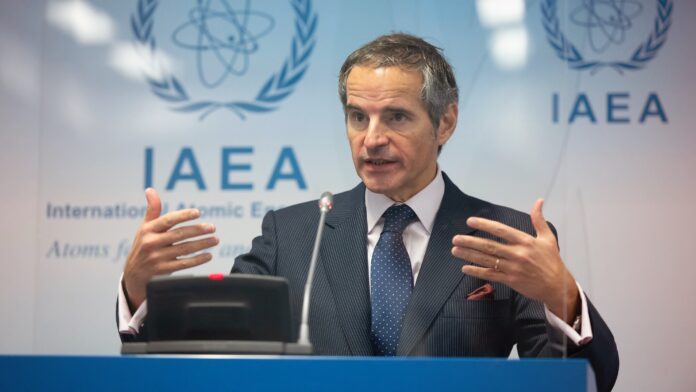
Syrian Foreign Minister Asaad al-Shaibani said the material would remain in Syrian custody under IAEA safeguards and insisted it could be used for peaceful civilian purposes. He made the remarks during a joint appearance in Damascus with IAEA Director-General Rafael Grossi.
The Jerusalem Post reported that the material was discovered in Syria’s Deir ez-Zor region, where Israel carried out one of the most consequential covert military operations in its history. Syria’s new government has opened previously restricted nuclear-related sites to international inspectors following the fall of Bashar Assad’s government in late 2024.
Grossi said Damascus had notified the IAEA and allowed inspectors access, marking a major departure from years of limited cooperation under Assad. Reuters reported that Syria is not known to possess an operational nuclear weapons stockpile.
Israel’s Secret 2007 Strike
The latest discovery points directly back to September 6, 2007, when Israeli warplanes destroyed a secret facility near Deir ez-Zor in eastern Syria.
The operation, later publicly acknowledged by Israel in 2018, targeted what Israeli intelligence concluded was a nearly completed nuclear reactor built with North Korean assistance.
For years, Israel refused to officially confirm responsibility for the strike, while Syria maintained that the destroyed structure was merely a conventional military installation.
The IAEA later reached a very different conclusion. In 2011, the agency assessed that the destroyed building was “very likely” an undeclared nuclear reactor that Syria was obligated to report under its international safeguards agreement. The IAEA subsequently found Syria in noncompliance with its nuclear safeguards obligations.
According to the IAEA, intelligence indicated that the reactor was a gas-cooled, graphite-moderated design similar to North Korea’s Yongbyon reactor and was not configured to generate electricity—raising concerns that its purpose may have been the production of plutonium.
After the Israeli strike, Syrian authorities rapidly cleared and leveled the site, removing or obscuring much of what remained. The IAEA spent years seeking greater access and documentation.
The Begin Doctrine in Action
The 2007 strike became another major application of what became known as the Begin Doctrine—Israel’s longstanding policy that hostile states in the region should not be permitted to acquire nuclear weapons capable of threatening the Jewish state.
That doctrine was first demonstrated in 1981, when Israeli aircraft destroyed Iraq’s Osirak nuclear reactor outside Baghdad.
More than 25 years later, Israel acted again in Syria before the suspected reactor became operational.
The operation was especially significant because Israel calculated that allowing the facility to become active could make a future strike far more dangerous, potentially spreading radioactive material across the region.
Israel eventually acknowledged the mission in March 2018, publicly confirming that its aircraft had destroyed the Deir ez-Zor facility in 2007.
The IAEA’s subsequent findings provided international confirmation that Israel’s concerns were well founded. The agency concluded that Syria’s undeclared construction of the reactor violated its safeguards obligations.
Now, nearly 19 years after Israeli aircraft destroyed the facility, international inspectors are once again examining Syria’s nuclear legacy.
The discovery of nuclear material does not itself demonstrate the existence of an active weapons program. But it underscores how much remains unresolved from Syria’s secretive nuclear activities during the Assad era—and why Israel acted before the suspected reactor could become operational.