The Internet has consistently been a breeding ground for antisemitism, with a particularly dramatic surge since the beginning of the Iran War in February 2026. But Jew-hatred is not confined to the comments sections of social media platforms. It is public, physical, and increasingly common.
Two Israeli Americans were beaten outside an upscale restaurant in San Jose, California, on March 8, 2026. Lior Zeevi, 47, and Daniel Levy, 48, friends originally from Haifa, Israel, were waiting for a table when three men walked by. Zeevi and Levy later told police that they had been speaking in Hebrew loudly as they waited.
One of the men approached them with a “very weird look.” Levy asked the man, “Do we know each other?” According to the police report, at least one suspect used an antisemitic slur before attacking Zeevi and Levy.
Zeevi, whose business had been vandalized with antisemitic graffiti five months earlier, told J. The Jewish News of Northern California that by the time he turned around to see who Levy was talking to, “It was already too late. They started punching, and it was brutal.”
Footage of the attack showed the three suspects—identified as Bruneil Henry Chamaki, 32, a local attorney; Roma Akoyans, 20; and his brother Ramon Akoyans, 18—repeatedly punching the victims before fleeing the scene.
The three men turned themselves in on March 17. Each of them was charged with assault and battery, but no hate crime charges were levied. Zeevi and Levy were treated for their injuries at a local hospital on the day of the attack and released later that day.
On March 19, a 4-year-old Hasidic boy was violently pushed to the ground by a U.S. Postal Service worker in a heavily Jewish neighborhood in Ramapo, New York.
Surveillance camera footage of the incident showed a postal worker standing in front of community mailboxes while a group of young Hasidic boys stood nearby. One of the small boys approached the mailbox area. The USPS worker suddenly lunged at the boy, forcefully pushing him to the ground. The boy landed on his back, his legs going up in the air as he fell. He then stood up, picked up his fallen kippah, and returned to the group.
The suspect was eventually identified as 39-year-old postal employee Gabriel Stan, but only after an outcry from concerned citizens on social media. Originally charged with misdemeanor endangering the welfare of a child and third-degree attempted assault, Stan later faced upgraded charges that included felony second-degree attempted assault, due to the age of the victim.
Local leaders condemned the incident. Assemblyman Aron Wieder called the attack “appalling and deeply troubling, never acceptable under any circumstances.” New York Congressman Mike Lawler posted on X, “There is zero justification for this type of violence and abuse towards a child—and can be zero tolerance. There must be a complete and thorough investigation by the police and the @USPS.” New York Senator Bill Weber called for Stan to be “prosecuted to the fullest extent of the law.”
The boy was not injured in the assault. Law enforcement did not deem the incident a hate crime.
These incidents are not isolated. They are part of a broader and deeply troubling pattern of rising, violent antisemitism in the United States. When individuals are attacked for speaking Hebrew or a child is targeted in a visibly Jewish community, it underscores how brazenly Jew-hatred is being expressed in public spaces.
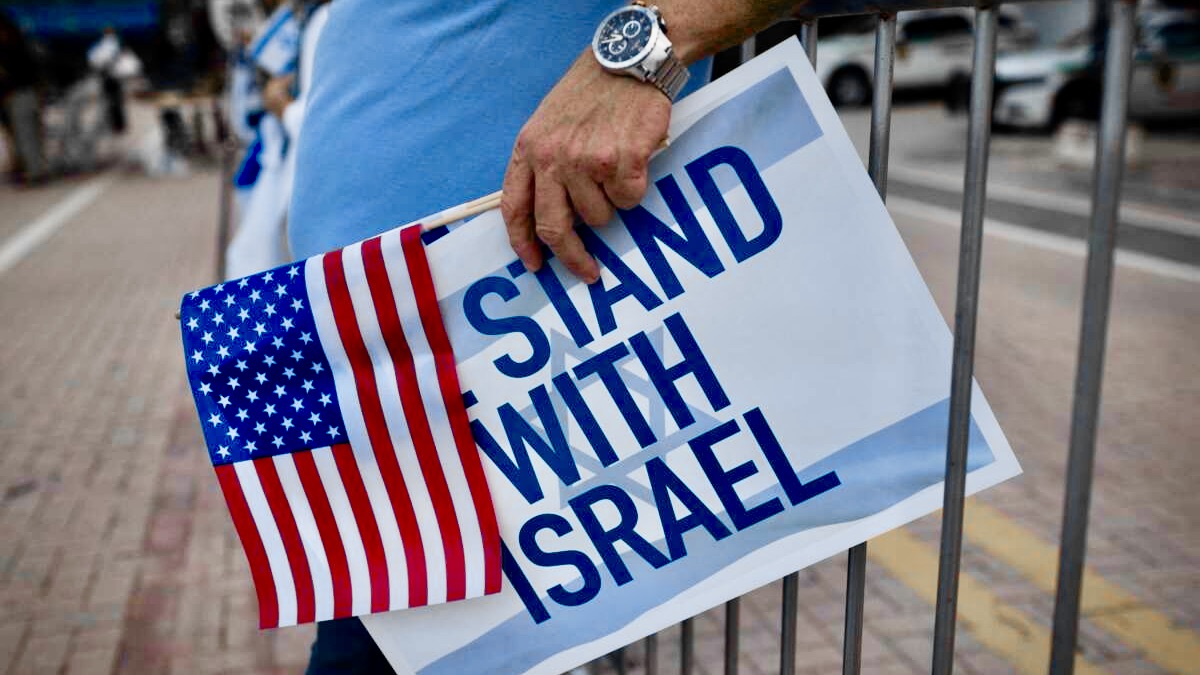
It is the duty of every American—and especially every follower of Jesus—to denounce such attacks and to stand with his or her local Jewish community in the face of ubiquitous Jew-hatred across the country.