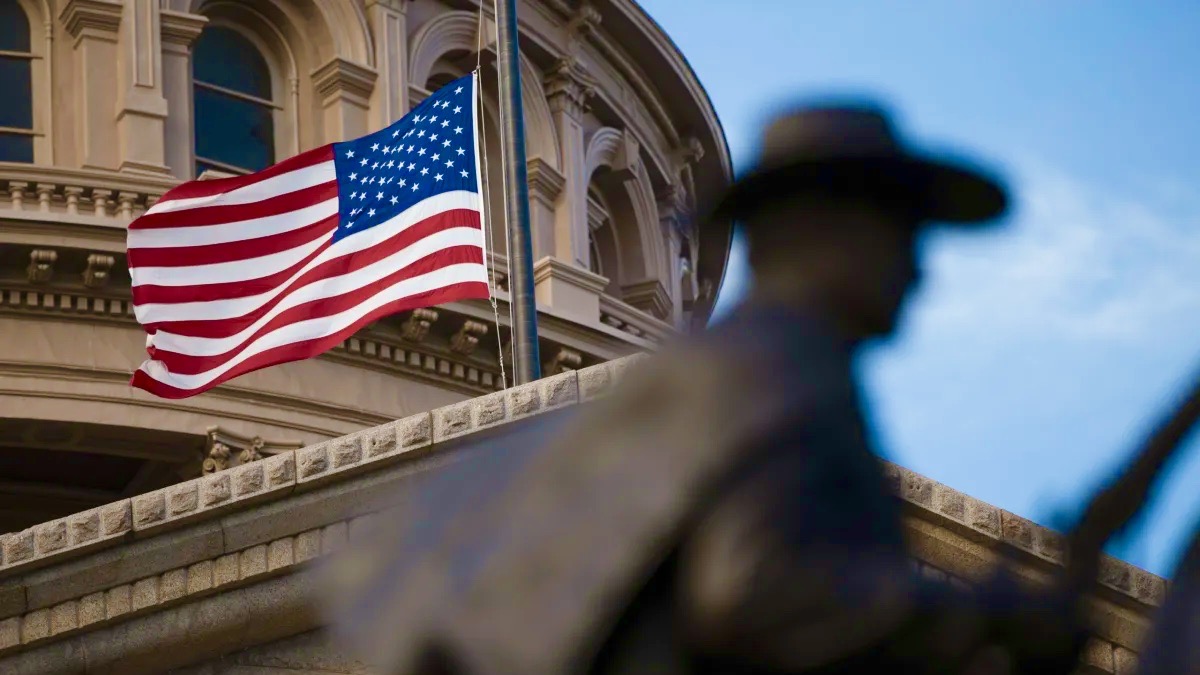

The 2026 midterm elections saw a “blue tsunami” crash across the nation, sweeping Democrats into power in numbers that stunned even the most optimistic liberal analysts. Long-held Republican bastions flipped overnight, but perhaps none sent a louder shockwave than Texas.
In the Lone Star State, Democrats swept every statewide office on the ballot for the first time since 1994, flipped the open U.S. Senate seat and the governorship, and captured control of the Texas House with an 83-67 majority after gaining roughly 21 seats, following more than two decades of GOP control of the chamber.
With the victories of Democratic candidates James Talarico (U.S. Senate), Gina Hinojosa (governor), Vikki Goodwin (lieutenant governor), Nathan Johnson (attorney general), and the full Democratic slate of statewide executives, Texas has turned blue. One question now sits front and center: What next for those who are fighting for Biblical truths?
The LGBT Front
In the realm of LGBT ideology, Texas Supreme Court Chief Justice-elect Maggie Ellis, who identifies as “openly LGBTQ+,” made one thing clear right off the bat: She does not believe in religious accommodations for judges who object to performing same-sex wedding ceremonies.
An October 2025 rule change allowed Texas judges to decline to perform a wedding ceremony if it violates their conscience. As the Texas Code of Judicial Conduct explicitly states: “It is not a violation of these canons for a judge to publicly refrain from performing a wedding ceremony based upon a sincerely held religious belief.” Ellis, however, wants to walk this back.
“One thing I’d like to do is work with the other justices to amend these orders to say either you perform all marriages, or none,” she told The Dallas Morning News in her first public statement since the election. “It’s really the wrong direction for our Supreme Court. It’s back-door discrimination.” According to the newspaper, it is part of what motivated her to run for the state’s highest court.
Critics have argued that Ellis’ objective, framed through the lens of “inclusion,” is to effectively strip religious freedom protections. “It’s sad that an incoming Justice’s first public statement is one against religious freedom,” said Kelly Shackelford, president, CEO and chief counsel of the First Liberty Institute law firm.
“We’ve won in litigation on this very issue,” he added. “Religious freedom and accommodation are fundamental rights rooted in the history and tradition of America. The new Chief Justice is off to a regrettable start. First Liberty stands ready to defend any judge affected by this policy.”
The Abortion Front
After decades of conservative leaders championing the sanctity of life, many of Texas’ newly elected officials have vowed to promote pro-abortion legislation, and some prefiling bills within days of the election aimed at dismantling the protections that have made Texas one of the safest states for the unborn.
Some of the bills Texas Democrats have already put forward include:
- House Bill 126, which seeks to abolish the state’s current bans on abortion (as well as repeal Texas’s ban on child mutilation procedures for minors).
- HB 987, which would maintain the state’s fetal heartbeat law but undo HB 1280 and the 1925 Texas abortion laws that criminalized abortions after a heartbeat is detectable.
- Senate Bill 231, which would legalize killing preborn children conceived in rape or incest without a police report or evidence.
- SB 243, which aims to legalize abortion when two doctors confirm a baby in utero has a “fatal condition,” requiring an ethics committee to review cases beyond 24 weeks gestation.
Other measures take narrower approaches—carving out exceptions or repealing only portions of existing law—but many argue the direction is clear: a concerted push to roll back the state’s pro-life framework.
With Democrats now holding the House, these bills face a smoother path through one chamber than they have in years. With Republicans still in control of the Texas Senate, many are hopeful the pro-abortion efforts can be stopped. Yet the volume and speed of these filings have caused many to wonder whether abortion policy will dominate the next legislative session.
The DEI Front
In 2023, Texas Gov. Greg Abbott signed a law that banned so-called diversity, equity, and inclusion (DEI) offices and programs at public universities. The impending blue wave, however, is bringing with it HB 358 and SB 125, both aimed at repealing that 2023 DEI law.
“With Republicans in firm control of the Texas state Senate, it’s highly unlikely that any bill seeking to bring back the corrosive and wasteful higher-ed DEI regime will make it to the Governor’s desk,” said Chuck DeVore, chief national initiatives officer for the Texas Public Policy Foundation. Yet “what will likely happen is that relabeled and disguised DEI programs and classes will make a comeback over the next four years as the Governor’s board of regents appointees gradually get a majority.”
The practical reality is more subtle than a clean repeal. Even if formal DEI offices remain barred, universities have already demonstrated an ability to rebrand programs under different titles, as DeVore alluded to. “We look forward to suing to ensure adherence to Texas law,” he concluded.
What Comes Next
Taken together, the early signals from the new Democratic majority paint a consistent picture: accelerated efforts to weaken religious accommodations, expand abortion access (including exceptions that remove safeguards), and reintroduce DEI frameworks through legislation, appointments and administrative workarounds.
Whether these moves ultimately take root depend on legislative negotiations, court challenges and the durability of the 2026 gains. For now, many say the political landscape of Texas has been fundamentally altered, and the policy fights over conscience, life and institutional identity are only beginning.