
September 5, 2026

September, 5, 2026
September 5, 2026

give

untitled artwork

untitled artwork

World news biblically understood

TRENDING:

Shifting Geopolitical Landscape: Examining The ‘Abraham Accords’ Through A Biblical Lens

“Father Abraham had many sons…” This beloved Christian children’s song recalls God’s promise in Genesis 12 to make Abraham a great nation and ultimately bless “all the families of the earth,” which was fulfilled through Jesus. Unfortunately, some mistakenly assume this blessing teaches God’s universal acceptance of all people regardless of faith. Scripture clarifies that spiritual sonship comes exclusively through faith in Christ, not ethnic background (Ga. 3:6-29).

This same misunderstanding of God’s covenant shows up in modern politics, most notably in the diplomatic agreements known as the “Abraham Accords.”

The Abraham Accords are a series of agreements intended to normalize diplomatic relations between Israel and its neighboring Arab and Islamic countries. Because Judaism, Christianity, and Islam all trace (or claim to trace) part of their religious heritage to Abraham, the Accords seek to encourage nations shaped by these traditions to pursue shared interests despite their political and religious differences. The hope for regional unity on diplomatic grounds may be politically pragmatic. However, it proceeds without regard for God’s purposes, promises, and prophetic plans for Israel as presented in Scripture.

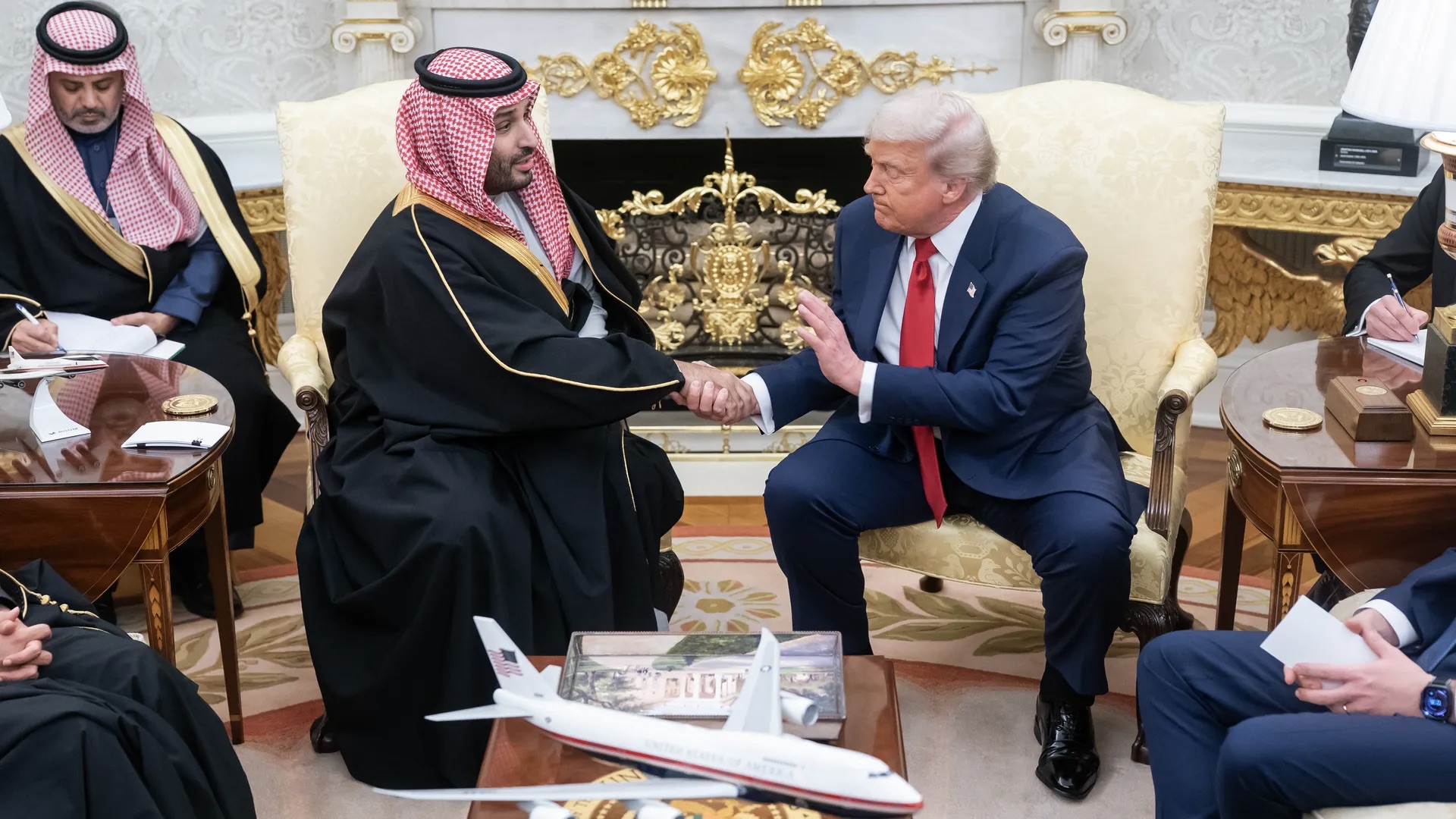
For the past several years, the Abraham Accords have been a recurring subject popping up in the news cycles, especially as significant events occur in the Middle East. They have remained an important piece of U.S. diplomacy in the Middle East under the Trump administration, given their intent as a vehicle for stabilizing relations between historically hostile Arab states and the nation of Israel. While not a solution to the Israeli-Palestinian conflict, the Abraham Accords provide a framework upon which future expansion and political momentum can be built with the ambition of bringing peace and stability in a region plagued by conflict.

Because they are frequently mentioned in the news, it’s likely that many people are aware of the Abraham Accords and generally understand their purpose. However, if you were to ask the average person to elaborate on what it means to “normalize relations” with Israel, or what realistically takes place when a country becomes a signatory to the Accords, it’s doubtful that most would be able to confidently answer the question. So, what exactly do these agreements do, and why should we, as Christians, pay attention to them?

What Does “Normalizing” Relations Mean?

Let’s start with the first question. The Abraham Accords’ goal of “normalizing” relations among participating countries means that these countries agree to treat each other as ordinary, peaceful states rather than adversaries. In doing so, it opens the door to diplomatic relations such as exchanging ambassadors and establishing embassies or consulates in each other’s capital. Commercial flights begin, trade expands, investments increase, and new business partnerships become possible. With these, collaboration in additional areas like culture and education eventually follows. The most important takeaway from all of this is that each of the participating nations acknowledge one another as actual, legitimate states. This has profound implications for Israel.

Since Israel’s rebirth in 1948, most Islamic countries have rejected Israel’s legitimacy and denounced its existence, referring to Israel’s statehood as “illegitimate,” its people as “occupiers,” and those who support them as “Zionists.” Many wars and skirmishes have been fought amongst these nations, beginning the day that Israel declared its independence. Among these conflicts, none have been fiercer than the battle over Gaza and Judea and Samaria (the so-called “West Bank”), commonly referred to by many as “Palestine.”

Joining the Abraham Accords does not require countries to agree on every political issue, become military allies, or surrender their support for their existing foreign policy positions. This is particularly true regarding the Israeli-Palestinian conflict. However, the acknowledgment of Israel as a valid and accepted state in the Middle East is a major shift from historically held positions, and differentiates nations that have agreed to the Accords from many of the neighboring countries that refuse to acknowledge Israel’s legitimacy.

Why Should Christians Pay Attention?

That brings us to the second question: Why should Christians pay attention to these agreements? For believers who take biblical prophecy seriously, the answer has less to do with diplomacy and more to do with Israel’s unique place in God’s prophetic program. The Bible predicts several things related to Israel as a whole and the city of Jerusalem, in particular.

Israel and the Prophetic Picture

One of the most significant prophetic events concerning Israel is described in Ezekiel 38. There, Gog of Magog, believed by many to be Russia, leads a coalition of nations, including Persia (modern-day Iran), Cush (Ethiopia), Put (Libya), and others believed correspond to modern Turkey, in an attack against Israel. Before this invasion occurs, Israel is described as dwelling securely in a land of “unwalled villages” (Eze. 38:11). Could it be that the reason Israel will be dwelling safely in the land is due to its formal recognition and friendly relations with neighboring countries which will join the Abraham Accords?

Zechariah also foretells a future in which Jerusalem becomes the focal point of international attention. The surrounding nations will eventually pursue control of the city with such determination that Scripture compares them to drunken men staggering toward their objective. Ultimately, all nations will gather against Jerusalem.

Yet, because of God’s protection, Jerusalem will be like a heavy stone for those who try to move it, a likely allusion to an attempt at changing its boundaries (Zec. 12:2-3). This concern over Jerusalem is accompanied by another prophecy. Joel warns that God will judge the nations because they divided His land and scattered His people among the nations (Jo. 3:2, 12-16). Is it possible that these prophecies are speaking of what is known in our day as the “two-state solution?”

The Two-State Question and the Abraham Accords

In light of the Abraham Accords, these prophecies begin to look quite relevant to the days in which we live. Several countries such as Qatar, Kuwait, Oman, and most significantly, Saudi Arabia, are viewed as potential candidates for normalization with Israel. As the birthplace of Islam, home to Mecca and Medina, and one of the Arab world’s most influential political and economic powers, Saudi Arabia occupies a unique position.

If it were to join the Abraham Accords, the implications would be enormous. But Saudi Arabia has repeatedly exercised caution in joining the Accords, viewing the Israeli-Palestinian conflict as an obstacle to joining, and requiring progress towards Palestinian statehood as a precondition. This is the same precondition desired by other countries.

The push for a “two-state solution” where Palestinian statehood is achieved represents the division of the land promised by God to Israel and would align with the prophetic warnings written about by Joel. If Joel’s prophecy refers to a future division of the land God promised Israel, then the modern push for a two-state solution deserves careful consideration. When viewed alongside Ezekiel’s description of Israel dwelling securely and Zechariah’s prophecy concerning Jerusalem, it appears that efforts to establish coexisting Israeli and Palestinian states may succeed…for a time. If that happens, the Abraham Accords may well provide the diplomatic framework that makes peace and security possible.

While the desire for stability and peace in the Middle East is an admirable goal, Scripture indicates that any peace ultimately achieved will be temporary. Ezekiel describes God intervening dramatically to destroy the invading coalition of nations that will assemble against Israel. His purpose is to magnify His own name and remind the nations that He alone is the Lord (Eze. 38:23). Some students of prophecy believe this event becomes the catalyst for the covenant described in Daniel 9. If that interpretation is correct, then the Abraham Accords may represent far more than a diplomatic achievement. They could form part of the geopolitical landscape upon which future prophetic events unfold.

Daniel’s Covenant and the Tribulation

Daniel 9 records the angel Gabriel’s prophecy concerning Israel’s future, including the coming of the Messiah, His sacrificial death, the rise of the Antichrist (“prince who is to come”), and the events leading to the end of the age (Da. 9:27). One of the most noteworthy details in this prophecy is the establishment of a firm covenant between the “prince to come” (Antichrist) and “the many,” an expression believed by many to refer to numerous peoples or nations.

This strong covenant could involve either the confirmation of an existing agreement or the enactment of a new and stronger arrangement designed to bring lasting stability between the peoples of the world and Israel.

This raises an intriguing question: Could the Abraham Accords provide the foundation for this future covenant, or even serve as a catalyst for a more comprehensive and forceful arrangement designed to bring the nations together? Only time will tell.

What we do know with certainty is that the enactment of the Antichrist’s covenant with the many initiates the seven-year Tribulation, which ultimately concludes with the armies of the earth assembled against Israel at the battle of Armageddon (Re. 16:12-16, 19:17-21, Zec. 14:1-4).

Watching Prophecy with Confidence

Granted, the thought that the Abraham Accords could be connected to the covenant in Daniel 9 is speculation. That said, watching current events reminds believers that God’s promises unfold exactly as He declared. At minimum, thinking about events like the Abraham Accords through a Biblical lens should serve as a reminder that the more time that passes before Christ’s return, the greater the likelihood prophetic events could occur in our lifetime.

God didn’t give prophecy to inspire curiosity; He gave it to strengthen faith, demonstrate His power, and prove His existence. The fulfillment of prophecy shows that it is God who governs history.

Whether or not the Abraham Accords ultimately prove to be prophetically significant, they remind believers that history is moving according to God’s sovereign plan. Because prophecy reveals where history is ultimately headed, it gives us a framework for understanding the world around us and recognizing that God’s Word continues to unfold exactly as He declared.

As we grow in our understanding of that plan, we can better discern how current events may fit within the broader story of redemption that Scripture reveals. Yet the true purpose of prophecy is not to satisfy our curiosity about future events, but to strengthen our confidence in the One who governs them.

From God’s promises to Abraham to the prophecies concerning Christ’s return and the consummation of His kingdom, every prophecy inevitably points to Jesus.

Watching the stage being set for the events Scripture foretells, our confidence grows… not in political agreements or our ability to identify prophetic signs, but in the certainty that Christ will fulfill every promise He has made. Our hope is not in the establishment of earthly peace, but in the coming of the Prince of Peace. Our confidence is in Christ alone. Pursuing unity will never find success by looking to a shared heritage in Father Abraham, but by faith in the One whose name is above all names: Jesus.



Millions Are Understanding The News Through A Biblical Worldview

THANKS TO YOUR PRAYER AND SUPPORT

Exposing A Culture That Has Renamed Evil As ‘Mercy’

What we discuss today should make you very upset. The Lindsay Clancy trial is not about whether or not a murderer is on trial. It’s a trial on “mental health,” something entirely different and completely divorced from reality. Let’s begin with an important fact: There aren't versions of the truth—”your truth” vs “my truth”—there is just the truth. Lindsay Clancy is responsible for the death of her children. End of story. Full stop. Videos across Social media are showing women holding plastic baby dolls, making light of casually harming their own children—moms tossing their fake babies over banisters, bashing their heads into doorposts, and putting them in dryers and dishwashers. The caption of one of the videos depicting the harming of infants reads: “postpartum depression got me like…”

Why Lasting Peace Is Out Of Reach: A Look At The Oslo Accords—And Why They Failed

The past often explains the present. This rings especially true in regards to the questions many have concerning Israel and the Palestinians. Where did the Palestinian Authority come from and when? How does Hamas feature in past attempts at peace negotiations between Israel and the Palestinians? What significance is attached to the areas of Gaza and the West Bank (Biblically known as Judea and Samaria)? To answer these questions and more, we need to examine a crucial period of negotiations for peace known as the Oslo Accords.

sign up

‘A Firm Reliance On The Protection Of Divine Providence’: Finding The Way Back As One Nation Under God

It is no secret that America has largely turned its back on God. Children are encouraged to find their own truth from a young age, and mentions of God in our public schools are brushed aside or removed. Church attendance is rapidly declining as self-help strategies promise the answers to life’s problems. We’ve traded Divine guidance for subjective truth—“it’s up to me decide what is right and wrong.” And even the concept of biological sex and gender is up to the preference of each individual. It is clear that secularism has infiltrated every aspect of society, and the results are catastrophic. The further we stray from God, the deeper we sink into hopelessness.

ABC's of Salvation

Decision

UTT

FOI

untitled artwork

Israel My Glory

“Father Abraham had many sons…” This beloved Christian children’s song recalls God’s promise in Genesis 12 to make Abraham a great nation and ultimately bless “all the families of the earth,” which was fulfilled through Jesus. Unfortunately, some mistakenly assume this blessing teaches God’s universal acceptance of all people regardless of faith. Scripture clarifies that spiritual sonship comes exclusively through faith in Christ, not ethnic background (Ga. 3:6-29).

This same misunderstanding of God’s covenant shows up in modern politics, most notably in the diplomatic agreements known as the “Abraham Accords.”

The Abraham Accords are a series of agreements intended to normalize diplomatic relations between Israel and its neighboring Arab and Islamic countries. Because Judaism, Christianity, and Islam all trace (or claim to trace) part of their religious heritage to Abraham, the Accords seek to encourage nations shaped by these traditions to pursue shared interests despite their political and religious differences. The hope for regional unity on diplomatic grounds may be politically pragmatic. However, it proceeds without regard for God’s purposes, promises, and prophetic plans for Israel as presented in Scripture.

For the past several years, the Abraham Accords have been a recurring subject popping up in the news cycles, especially as significant events occur in the Middle East. They have remained an important piece of U.S. diplomacy in the Middle East under the Trump administration, given their intent as a vehicle for stabilizing relations between historically hostile Arab states and the nation of Israel. While not a solution to the Israeli-Palestinian conflict, the Abraham Accords provide a framework upon which future expansion and political momentum can be built with the ambition of bringing peace and stability in a region plagued by conflict.

Because they are frequently mentioned in the news, it’s likely that many people are aware of the Abraham Accords and generally understand their purpose. However, if you were to ask the average person to elaborate on what it means to “normalize relations” with Israel, or what realistically takes place when a country becomes a signatory to the Accords, it’s doubtful that most would be able to confidently answer the question. So, what exactly do these agreements do, and why should we, as Christians, pay attention to them?

What Does “Normalizing” Relations Mean?

Let’s start with the first question. The Abraham Accords’ goal of “normalizing” relations among participating countries means that these countries agree to treat each other as ordinary, peaceful states rather than adversaries. In doing so, it opens the door to diplomatic relations such as exchanging ambassadors and establishing embassies or consulates in each other’s capital. Commercial flights begin, trade expands, investments increase, and new business partnerships become possible. With these, collaboration in additional areas like culture and education eventually follows. The most important takeaway from all of this is that each of the participating nations acknowledge one another as actual, legitimate states. This has profound implications for Israel.

Since Israel’s rebirth in 1948, most Islamic countries have rejected Israel’s legitimacy and denounced its existence, referring to Israel’s statehood as “illegitimate,” its people as “occupiers,” and those who support them as “Zionists.” Many wars and skirmishes have been fought amongst these nations, beginning the day that Israel declared its independence. Among these conflicts, none have been fiercer than the battle over Gaza and Judea and Samaria (the so-called “West Bank”), commonly referred to by many as “Palestine.”

Joining the Abraham Accords does not require countries to agree on every political issue, become military allies, or surrender their support for their existing foreign policy positions. This is particularly true regarding the Israeli-Palestinian conflict. However, the acknowledgment of Israel as a valid and accepted state in the Middle East is a major shift from historically held positions, and differentiates nations that have agreed to the Accords from many of the neighboring countries that refuse to acknowledge Israel’s legitimacy.

Why Should Christians Pay Attention?

That brings us to the second question: Why should Christians pay attention to these agreements? For believers who take biblical prophecy seriously, the answer has less to do with diplomacy and more to do with Israel’s unique place in God’s prophetic program. The Bible predicts several things related to Israel as a whole and the city of Jerusalem, in particular.

Israel and the Prophetic Picture

One of the most significant prophetic events concerning Israel is described in Ezekiel 38. There, Gog of Magog, believed by many to be Russia, leads a coalition of nations, including Persia (modern-day Iran), Cush (Ethiopia), Put (Libya), and others believed correspond to modern Turkey, in an attack against Israel. Before this invasion occurs, Israel is described as dwelling securely in a land of “unwalled villages” (Eze. 38:11). Could it be that the reason Israel will be dwelling safely in the land is due to its formal recognition and friendly relations with neighboring countries which will join the Abraham Accords?

Zechariah also foretells a future in which Jerusalem becomes the focal point of international attention. The surrounding nations will eventually pursue control of the city with such determination that Scripture compares them to drunken men staggering toward their objective. Ultimately, all nations will gather against Jerusalem.

Yet, because of God’s protection, Jerusalem will be like a heavy stone for those who try to move it, a likely allusion to an attempt at changing its boundaries (Zec. 12:2-3). This concern over Jerusalem is accompanied by another prophecy. Joel warns that God will judge the nations because they divided His land and scattered His people among the nations (Jo. 3:2, 12-16). Is it possible that these prophecies are speaking of what is known in our day as the “two-state solution?”

The Two-State Question and the Abraham Accords

In light of the Abraham Accords, these prophecies begin to look quite relevant to the days in which we live. Several countries such as Qatar, Kuwait, Oman, and most significantly, Saudi Arabia, are viewed as potential candidates for normalization with Israel. As the birthplace of Islam, home to Mecca and Medina, and one of the Arab world’s most influential political and economic powers, Saudi Arabia occupies a unique position.

If it were to join the Abraham Accords, the implications would be enormous. But Saudi Arabia has repeatedly exercised caution in joining the Accords, viewing the Israeli-Palestinian conflict as an obstacle to joining, and requiring progress towards Palestinian statehood as a precondition. This is the same precondition desired by other countries.

The push for a “two-state solution” where Palestinian statehood is achieved represents the division of the land promised by God to Israel and would align with the prophetic warnings written about by Joel. If Joel’s prophecy refers to a future division of the land God promised Israel, then the modern push for a two-state solution deserves careful consideration. When viewed alongside Ezekiel’s description of Israel dwelling securely and Zechariah’s prophecy concerning Jerusalem, it appears that efforts to establish coexisting Israeli and Palestinian states may succeed…for a time. If that happens, the Abraham Accords may well provide the diplomatic framework that makes peace and security possible.

While the desire for stability and peace in the Middle East is an admirable goal, Scripture indicates that any peace ultimately achieved will be temporary. Ezekiel describes God intervening dramatically to destroy the invading coalition of nations that will assemble against Israel. His purpose is to magnify His own name and remind the nations that He alone is the Lord (Eze. 38:23). Some students of prophecy believe this event becomes the catalyst for the covenant described in Daniel 9. If that interpretation is correct, then the Abraham Accords may represent far more than a diplomatic achievement. They could form part of the geopolitical landscape upon which future prophetic events unfold.

Daniel’s Covenant and the Tribulation

Daniel 9 records the angel Gabriel’s prophecy concerning Israel’s future, including the coming of the Messiah, His sacrificial death, the rise of the Antichrist (“prince who is to come”), and the events leading to the end of the age (Da. 9:27). One of the most noteworthy details in this prophecy is the establishment of a firm covenant between the “prince to come” (Antichrist) and “the many,” an expression believed by many to refer to numerous peoples or nations.

This strong covenant could involve either the confirmation of an existing agreement or the enactment of a new and stronger arrangement designed to bring lasting stability between the peoples of the world and Israel.

This raises an intriguing question: Could the Abraham Accords provide the foundation for this future covenant, or even serve as a catalyst for a more comprehensive and forceful arrangement designed to bring the nations together? Only time will tell.

What we do know with certainty is that the enactment of the Antichrist’s covenant with the many initiates the seven-year Tribulation, which ultimately concludes with the armies of the earth assembled against Israel at the battle of Armageddon (Re. 16:12-16, 19:17-21, Zec. 14:1-4).

Watching Prophecy with Confidence

Granted, the thought that the Abraham Accords could be connected to the covenant in Daniel 9 is speculation. That said, watching current events reminds believers that God’s promises unfold exactly as He declared. At minimum, thinking about events like the Abraham Accords through a Biblical lens should serve as a reminder that the more time that passes before Christ’s return, the greater the likelihood prophetic events could occur in our lifetime.

God didn’t give prophecy to inspire curiosity; He gave it to strengthen faith, demonstrate His power, and prove His existence. The fulfillment of prophecy shows that it is God who governs history.

Whether or not the Abraham Accords ultimately prove to be prophetically significant, they remind believers that history is moving according to God’s sovereign plan. Because prophecy reveals where history is ultimately headed, it gives us a framework for understanding the world around us and recognizing that God’s Word continues to unfold exactly as He declared.

As we grow in our understanding of that plan, we can better discern how current events may fit within the broader story of redemption that Scripture reveals. Yet the true purpose of prophecy is not to satisfy our curiosity about future events, but to strengthen our confidence in the One who governs them.

From God’s promises to Abraham to the prophecies concerning Christ’s return and the consummation of His kingdom, every prophecy inevitably points to Jesus.

Watching the stage being set for the events Scripture foretells, our confidence grows… not in political agreements or our ability to identify prophetic signs, but in the certainty that Christ will fulfill every promise He has made. Our hope is not in the establishment of earthly peace, but in the coming of the Prince of Peace. Our confidence is in Christ alone. Pursuing unity will never find success by looking to a shared heritage in Father Abraham, but by faith in the One whose name is above all names: Jesus.

Trusted Analysis From A Biblical Worldview

Help reach the lost and equip the church with the living and active truth of God's Word in our world today.

YOU CARE ABOUT

BIBLICAL TRUTH. SO DO WE.


Together, We Can Deliver A Biblical Understanding

Of News Events Around The World.

Exposing A Culture That Has Renamed Evil As ‘Mercy’

What we discuss today should make you very upset. The Lindsay Clancy trial is not about whether or not a murderer is on trial. It’s a trial on “mental health,” something entirely different and completely divorced from reality. Let’s begin with an important fact: There aren't versions of the truth—”your truth” vs “my truth”—there is just the truth. Lindsay Clancy is responsible for the death of her children. End of story. Full stop. Videos across Social media are showing women holding plastic baby dolls, making light of casually harming their own children—moms tossing their fake babies over banisters, bashing their heads into doorposts, and putting them in dryers and dishwashers. The caption of one of the videos depicting the harming of infants reads: “postpartum depression got me like…”

Why Lasting Peace Is Out Of Reach: A Look At The Oslo Accords—And Why They Failed

The past often explains the present. This rings especially true in regards to the questions many have concerning Israel and the Palestinians. Where did the Palestinian Authority come from and when? How does Hamas feature in past attempts at peace negotiations between Israel and the Palestinians? What significance is attached to the areas of Gaza and the West Bank (Biblically known as Judea and Samaria)? To answer these questions and more, we need to examine a crucial period of negotiations for peace known as the Oslo Accords.

untitled artwork 6391

‘A Firm Reliance On The Protection Of Divine Providence’: Finding The Way Back As One Nation Under God

It is no secret that America has largely turned its back on God. Children are encouraged to find their own truth from a young age, and mentions of God in our public schools are brushed aside or removed. Church attendance is rapidly declining as self-help strategies promise the answers to life’s problems. We’ve traded Divine guidance for subjective truth—“it’s up to me decide what is right and wrong.” And even the concept of biological sex and gender is up to the preference of each individual. It is clear that secularism has infiltrated every aspect of society, and the results are catastrophic. The further we stray from God, the deeper we sink into hopelessness.

ABC's of Salvation

TV AD

worldview matters

Decision Magazine V AD

Decision

Jan Markell

Israel My Glory

Erick Stakelbeck

untitled artwork

YOU CARE ABOUT

BIBLICAL TRUTH.

SO DO WE.

Together, We Can Deliver A Biblical Understanding Of News Events Around The World And Equip The Church To Stand With A Biblical Worldview.

untitled artwork

Israel My Glory

YOU CARE ABOUT

BIBLICAL TRUTH.

SO DO WE.


Together, We Can Deliver A Biblical Understanding Of News Events Around The World And Equip The Church To Stand With A Biblical Worldview.