LIVE DEVELOPMENTS — updated Monday, November 16, 2026
‘A Failure Of A News Organization’: BBC Arabic’s New Chief Referred To Israeli Cities As ‘Occupied’
LIVE
UPDATES
TRUSTED ANALYSIS
LIVE DEVELOPMENTS — updated Monday, November 16, 2026
‘A Failure Of A News Organization’: BBC Arabic’s New Chief Referred To Israeli Cities As ‘Occupied’
LIVE UPDATES
TRUSTED ANALYSIS
- Since Oct. 7, over 1,600 Israelis (968 soldiers) have been killed, and 6,424 IDF soldiers wounded since the start of the war.
- On Oct. 7, 2023, one day after the 50th anniversary of the Yom Kippur War, thousands of Hamas gunmen invaded southern Israel, brutally murdering 1,200 Israelis and kidnapping 251 to the Gaza Strip.
- On Oct. 8, 2023, the Israel Security Cabinet voted to officially declare war for the first time since the 1973 Yom Kippur War.
- On Oct. 27, 2023, the IDF began its Ground Operation in Northern Gaza
- Between October 7th, 2023, and March 31, 2024, the IDF made approximately 100,000 phone calls, dropped 9.3 million leaflets, sent 15.5 million text messages, and 17 million voice recordings in efforts to get Gazan civilians out of harm’s way during military operations.
- Between October 7th, 2023, and August 18, 2025, Israel has allowed and facilitated the entry of over 1.9 million tons of aid into Gaza.
- On June 13th, 2025, the 12 Day War began between Israel and the Iranian regime. Israel conducted massive airstrikes targeting Iran’s military infrastructure and leadership, weapons stockpiles, and nuclear scientists—as the regime rained ballistic missiles down, targeting locations of Israel’s largest civilian populations.
- On June 22, 2025, under the orders of President Trump, B2 Bombers dropped bunker-buster bombs on Iran’s nuclear facilities, thwarting the imminent danger of Iran obtaining nuclear weapons.
- On October 10th, 2025, a fragile ceasefire agreement, brokered by the Trump Administration, came into effect between Israel and Hamas.
- On January 27, 2026, after numerous delays, the body of the last remaining Israeli hostage in the Gaza Strip was returned to Israel.
- On February 28th, 2026, the United States launched a large-scale joint military operation against the Iranian Regime, beginning with the elimination of the nation’s Supreme Leader.
Day 1,137 — Monday, November 16
 BBC News Arabic, already under fire for anti-Israel bias, hired a new chief to clean up its act who is herself guilty of said bias. Mayssaloun Nassar, a French-Lebanese journalist, took charge of the BBC’s Arabic language service in early October.
On Saturday, The Telegraph disclosed a series of social media posts that Nassar made at France 24 indicating she considers all of Israel “occupied.”
On Nov. 15, 2012, Nassar posted to X that Palestinian Islamic Jihad’s Al-Quds Brigades shelled “the occupied city of Beersheba.” Beersheva is a southern city located within an area universally considered part of Israel.
Six days later, on Nov. 21, 2012, Nassar again posted to X employing language used by opponents of Israel’s existence when she wrote that a rocket fired from Lebanon hit in Metulla, which she described as “inside the occupied territories.” Metulla in the Upper Galilee is Israel’s northernmost city, in part of the country not within a disputed zone.
On Nov. 15, 2012, she posted that “Israel acknowledges that 100 rockets have fallen and 28 settlers have been injured.”
“Contemporary reports placed the rocket attacks in southern Israeli towns within Israel’s pre-1967 borders, rather than in settlements in the occupied West Bank,” The Telegraph reported.
In her profile bio on X, Nassar writes: “I have opinions, I keep them to myself.”
On Nov. 13, a spokesman for media watchdog group CAMERA, the Committee for Accuracy in Middle East Reporting and Analysis, said it had “no confidence” in Nassar’s ability “to finally bring BBC Arabic under control,” The Telegraph reported.
The spokesman said the wording in Nassar’s social media posts was “false and delegitimizing,” and the kind that BBC Arabic had been obliged to correct in the past.
“BBC Arabic was forced to make 34 corrections in the first five months of the Gaza war after wrongly describing Israeli towns as ‘settlements’ or their residents as ‘settlers,’ including references to Metulla,” The Telegraph said.
The BBC defended its new appointment when asked whether it had seen her posts before giving her the position, and whether her descriptions of Israeli towns fit its editorial guidelines.
Ignoring the direct questions, a BBC spokesman told The Telegraph: “Mayssaloun Nassar was recently appointed editor of BBC News Arabic and was the outstanding candidate for the role. She brings a wealth of experience in journalism and a strong record of leadership.”
Jonathan Sacerdoti, a British broadcaster, journalist and TV producer, told JNS: “The BBC has had so many opportunities to deal with this problem. The fact that it not only does not do so but actually frequently argues to justify its journalists’ slurs against Israel or deny their relevance, often before having to admit them and apologize, makes many of us think it isn’t even trying.
“If it wanted to solve the problem it could. Why not hire the experts at CAMERA Arabic as consultants to help them detect and eliminate these failures in their content, seeing as they are doing that work anyway?” he said.
The Telegraph also revealed that Nassar, while serving as deputy editor-in-chief of France 24, introduced a September 2016 report featuring the wife of Ahed Abu Ghoulmeh, the head of the operational arm of the Popular Front for the Liberation of Palestine (PFLP), who was serving a life sentence in Israeli prison for directing the 2001 assassination of Israeli Tourism Minister Rehavam Ze’evi.
Nassar made no mention of Abu Ghoulmeh’s role in the assassination, the paper reported.
The BBC had promised to overhaul its Arabic-language service after The Telegraph reported last November on the findings of an internal memo by former BBC editorial standards adviser Michael Prescott.
Among its disclosures, the report revealed that BBC Arabic repeatedly featured antisemitic figures as on-air contributors, including Samer Elzaenen, who “called on social media for Jews to be burnt as ‘Hitler did.’” He appeared on BBC Arabic 244 times between November 2023 and April 2025, according to the memo.
The problems extend beyond its Arabic service, Sacerdoti said.
“The BBC’s English content is full of anti-Israel calumnies and deceptions as well. They literally paid a Hamas minister’s family in Gaza to feature the minister’s son as a narrator and lead character in a manipulative documentary without declaring who the child actor was,” he said, referring to the hour-long documentary film “Gaza: How to Survive a War Zone,” which was broadcast on Feb. 17, 2025.
“It also featured non-sequential editing dressed up as a chronological sequence of actuality footage telling a specific but false story attached to a single day of the war. The child in it had different length hair and different shoes in several shots. These deceptions are not explainable as accidents,” Sacerdoti added.
“Their senior reporter admitted he was wrong on a key story but also that he didn’t regret it. The list is extensive now and they never seem able to fix it. They’ve even replaced their head of news and director general over it. But nothing changes. They are a failure of a news organization,” he said.
Day 1,137 — Monday, November 16
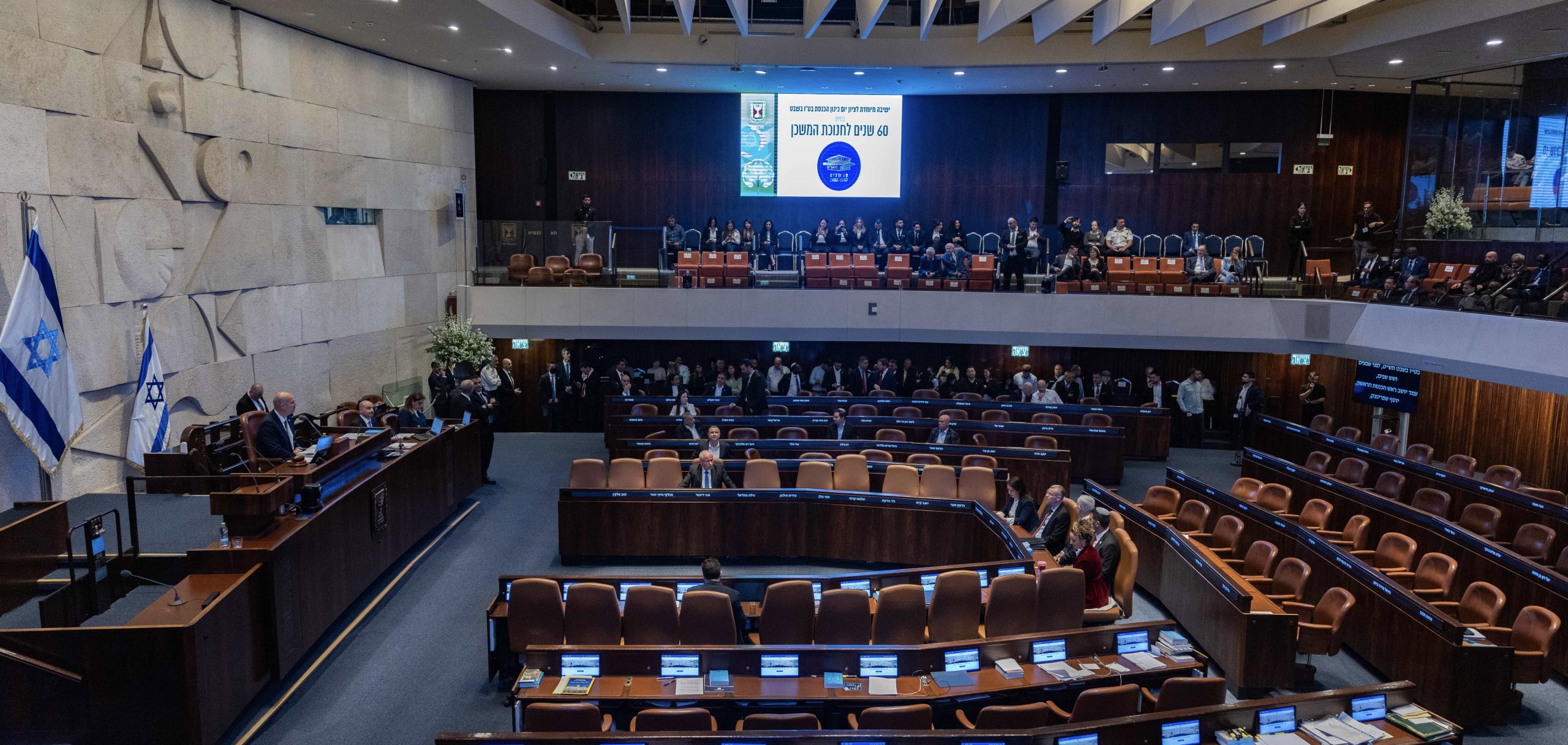 Originally adopted by the Zionist movement, “Hatikvah” expresses the Jewish people’s enduring hope for freedom in their homeland, with references to Zion and Jerusalem.
Joint List Member of Knesset Dr. Faten Ghattas has called for reconsideration of legislation governing Israel’s national anthem, “Hatikvah,” after Arab lawmakers walked out during the opening session of the 26th Knesset on November 10, 2026.
The controversy began when several Joint List lawmakers left the parliamentary chamber as the anthem was played during the swearing-in ceremony following the October 27 election.
Their departure was a protest against the anthem’s Zionist character, which reflects the Jewish people’s historical connection to Israel.
Ghattas subsequently suggested that the legislation establishing the anthem’s status be revisited.
However, replacing “Hatikvah” would require amending Israel’s Nation-State Basic Law, which explicitly recognizes it as the national anthem. Such a change would need the backing of at least 61 members of the 120-seat Knesset.
Originally adopted by the Zionist movement, “Hatikvah” expresses the Jewish people’s enduring hope for freedom in their homeland, with references to Zion and Jerusalem.
The walkout did not include all Arab representatives. Ra’am leader Mansour Abbas remained standing throughout the anthem alongside his party colleague, Jewish lawmaker Yoav Segalovitz, although Abbas did not join in singing.
The protest drew criticism from Prime Minister Benjamin Netanyahu and National Security Minister Itamar Ben Gvir, who cited the incident in questioning whether Arab parties could serve as coalition partners.
Their criticism was directed in part at opposition figures Gadi Eisenkot and Avigdor Liberman, whose efforts to form a government have raised questions about potential cooperation with Arab factions [who oppose the very existence of Israel].
Day 1,136 — Sunday, November 15
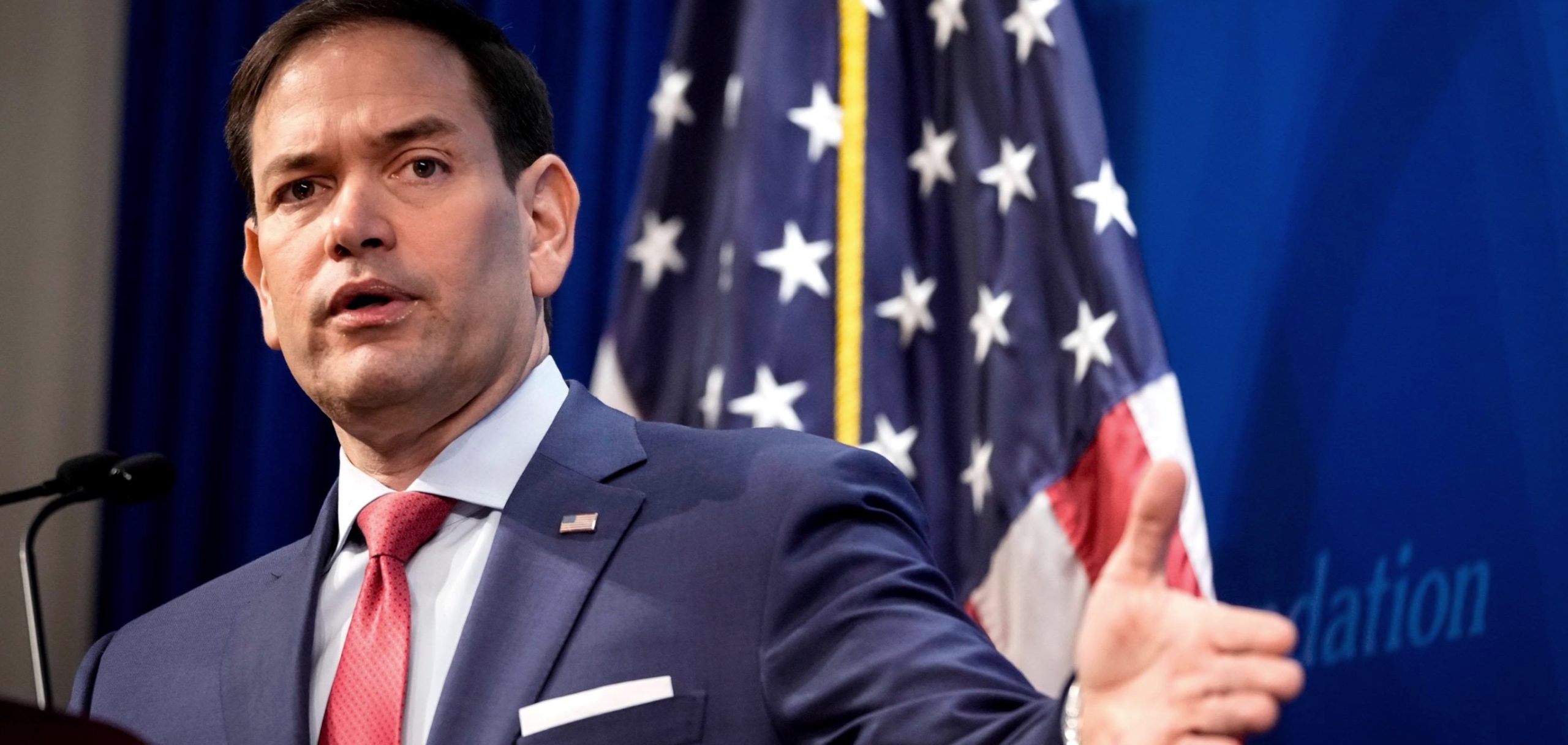 US Secretary of State Marco Rubio issued a sharp warning to the International Criminal Court (ICC) on Friday, accusing the Hague-based tribunal of attempting to impose legal authority on the United States without its consent.
Speaking at the Federalist Society National Lawyers Convention and quoted by AFP, Rubio condemned what he described as the “weaponization of international law,” arguing that international legal institutions have become instruments for advancing the interests of global elites.
Rubio’s remarks came approximately one month after Washington announced additional sanctions targeting the ICC, intensifying the Trump administration’s campaign against the court.
The Secretary of State argued that international law had been used to challenge “nearly every major foreign policy decision” made by the administration, including American strikes against vessels in the Caribbean and the capture of Venezuelan leader Nicolas Maduro.
Rubio rejected the notion that international legal mechanisms operate impartially, describing them instead as an “instrument” used by influential international figures to advance their agendas.
Turning specifically to the ICC, Rubio accused the institution of exercising sweeping powers without democratic accountability.
He described the court as “armed with the power to investigate, to prosecute, to persecute and to jail our citizens, according to laws we neither consent nor control.“
Rubio then invoked a historical warning attributed to the Roman general Pompey to illustrate how Washington might respond to attempts to enforce ICC rulings against Americans.
“If they’re foolish enough to try to enforce their paper decrees on Americans, our answer will probably be the same as the Roman general Pompey when he said to those who were trying to invoke their city’s charters against his legions.“
“He said: ‘Stop quoting laws to men with swords.‘“
The United States signed the Rome Statute establishing the ICC but never ratified the agreement and is therefore not a member of the court. Israel, Russia and China are also outside its jurisdiction as member states.
The ICC was established to prosecute individuals accused of serious international crimes, particularly in cases where national judicial systems are unable to provide accountability.
Washington’s confrontation with the tribunal has intensified following the issuance of an arrest warrant for Prime Minister Benjamin Netanyahu over alleged crimes committed in Gaza.
The Trump administration has pledged to undermine the court’s operations, with Rubio previously announcing restrictions on financial transactions involving what he called a “rogue court.“
In February of 2025, President Donald Trump signed an executive order authorizing sanctions against the ICC.
The administration subsequently sanctioned four ICC judges in June 2025, citing what Washington characterized as the tribunal’s “illegitimate actions” against Israel and the United States.
Two of those judges had been involved in authorizing arrest warrants issued in November 2024 against Netanyahu and former Defense Minister Yoav Gallant.
The other two judges had approved an investigation into allegations involving American military personnel in Afghanistan.
Washington broadened the sanctions in August 2025, targeting four senior ICC officials connected to proceedings involving American and Israeli figures.
Further restrictions were announced in December, when Rubio imposed sanctions on two additional ICC judges over their involvement in cases concerning Israel.
Day 1,135 — Saturday, November 14
 US President Donald Trump said Thursday that antisemitism in the United States was at levels “like Germany in 1938,” at the beginning of the Holocaust.
The president was asked by conservative radio host Hugh Hewitt about the recent rise in antisemitism in the US and what his administration was doing to combat it.
“I’m amazed to see it,” Trump said. “This is like Germany in 1938. It’s crazy what’s going on. When you look at the attacks on people, the racial attacks and the attacks, they’re, I guess, 57 percent on Jewish people, and you wouldn’t believe it.”
FBI statistics show that Jews were targeted in 63% of all religion-based hate crimes in the United States last year, down from 70% in 2024.
Trump spoke days after the 88th anniversary of Kristallnacht, or the “Night of Broken Glass,” the Nazi pogrom of 1938 widely seen as a turning point in the persecution of Jews and a prelude to the Holocaust. By then, Jews had already been stripped of their citizenship and subjected to severe restrictions, boycotts and discrimination by Adolf Hitler’s regime.
On the eve of the anniversary, pro-Palestinian activists in Philadelphia held a bicycle ride promoting a boycott of Jewish-owned businesses they accused of complicity in Israeli military actions. Jewish groups in the city called the event blatantly antisemitic, citing both its timing and its focus on Jewish-owned businesses.
toi
Day 1,135 — Saturday, November 14
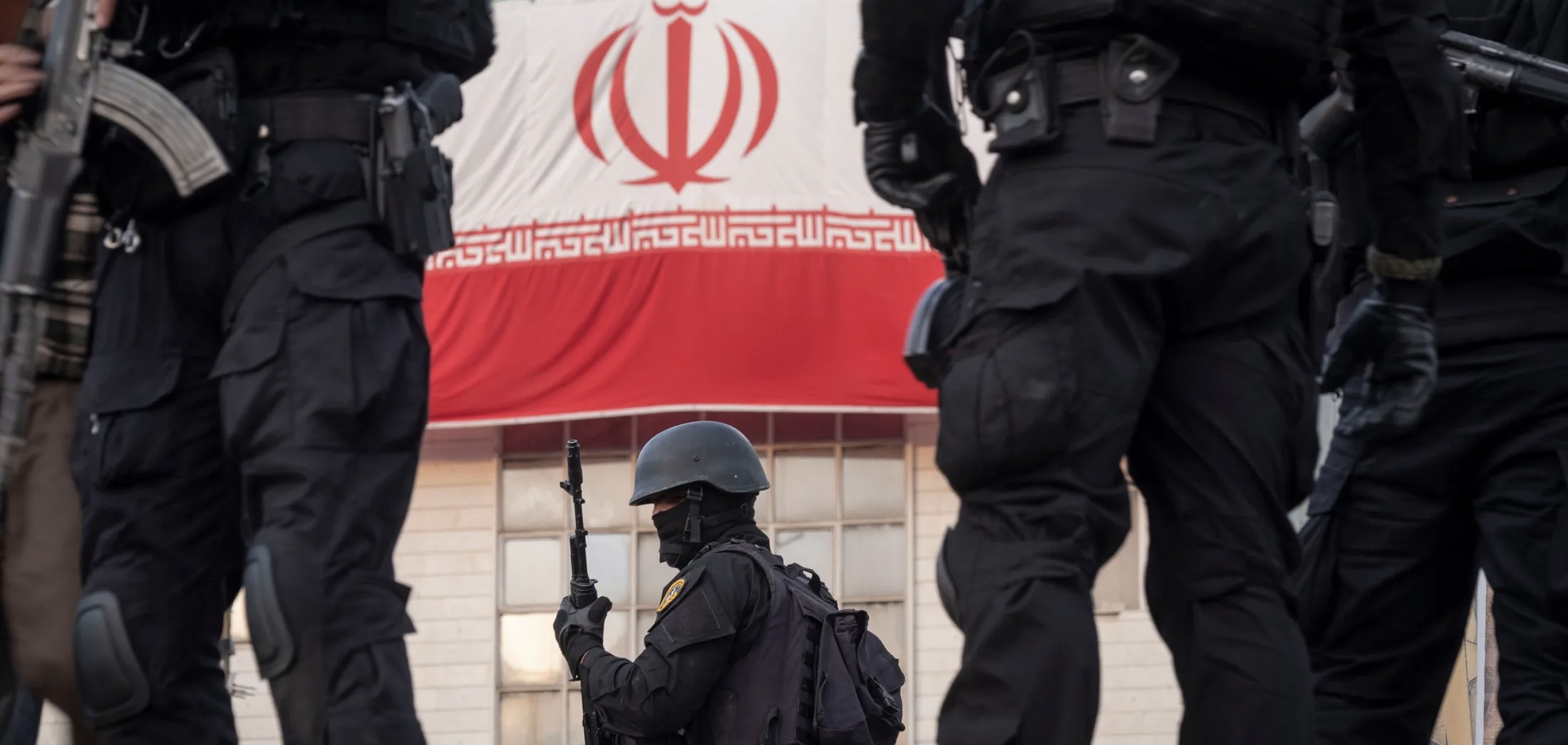 After a recent meeting with Qatar’s prime minister this week, President Trump declared that Iran no longer controls the Strait of Hormuz, and that momentum is building toward an end to the conflict. This result would mean an unfulfilled hope for millions of Iranians.
CBN News spoke with Hormuz Shariat, founder of Iran Alive Ministries, before the U.S. midterms. He told us that Iran’s leaders hoped that elections would weaken the president and bring the war to an end, adding that many Iranians wanted a different outcome.
“But the hope of the Iranian people, in any way possible, (is that) this regime falls down. They support it. Israel’s attack, they support it. The U.S. attack, they support it. Why? Because they’re hoping that the government will change.”
With the regime still in power, Iranians are struggling under a weak economy and would risk their lives in any protests.
“They were hoping that the government would collapse with the war, with the attack of Israel and Trump, but it hasn’t. So they have no other choice. If they come on the streets, they protest, they will be killed. And life is miserable,” Shariat insisted.
He notes that this includes Christians.
“Believers are not doing well,” he revealed. “The economy’s really bad. Of course, in our ministry we are helping financially. We have a campaign to help the persecuted and those who are being killed – 131 of our people that we knew, connected to our ministry – they were arrested. Thirty-one were killed in January, and fourteen of them are in jail. Most of them are on death row.”
He continued, “So Christians…have double pressure: (the) economy, but also persecution by the government, and we need to pray for them.”
Despite pressure and persecution, Shariat sees believers still sharing their faith.
He observed, “There is a supernatural grace on Iranian people. Under persecution, they don’t lose their faith, and even in danger. I’m so inspired by them.”
Shariat mentioned one believer on death row.
“We get reports by his family, who visits them,” he reported. ‘Say, how is he doing?’ ‘He could be killed any day.’ He said, ‘He is so up.’ He says, ‘If I die, I go with, to meet Jesus.’ And people around him, they say, ‘How come you have so much peace?’ He said, ‘Because of Jesus.’ So he’s leading many people on death row to the Lord.”
Day 1,134 — Friday, November 13
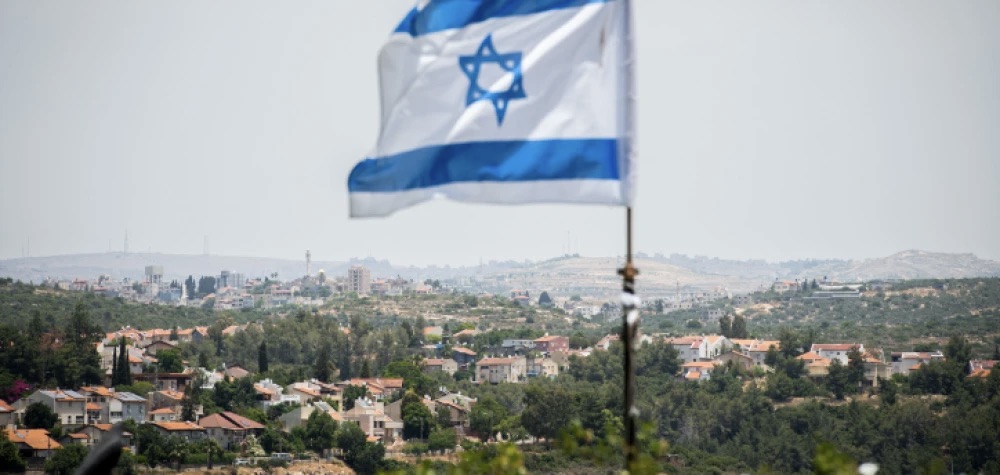 Mainstream media outlets increasingly use the term “occupied West Bank” in their coverage of Judea and Samaria, according to an analysis from the watchdog HonestReporting.
The report, shared exclusively with JNS, analyzed 5,370 articles from 17 major news outlets, including the New York Times, CNN, BBC and Guardian, between May 2025 and last month. The watchdog found that 46.3% of the articles used the term “occupied West Bank” when describing Judea and Samaria, and 62.3% used “broader and related terms” like “occupation” and “occupying.”
“The BBC used it in 71% of its West Bank articles, CNN in 68%, NBC in 64%, the Los Angeles Times in 61%, Reuters in 60% and Fox News in only 12%,” the report stated. “Reuters, the New York Times and CBS often write ‘Israeli-occupied West Bank.’”
The Associated Press, from which many other outlets run wire copy, uses the term “occupied West Bank.”
According to the HonestReporting analysis, 38.9% of articles used the term “occupied” to refer to Judea and Samaria between May and October 2025, and 52.2% did so from May to October of this year.
The report sampled 60 articles and found that 50 (83%) used the term “occupied West Bank” in a statement that wasn’t quoting or attributed to a source.
Sharon Levy, an editor at HonestReporting, told JNS that media coverage of Judea and Samaria has increased as has “more extreme language.”
“You see this increase in coverage, and you also see the increase in terms such as ‘occupation,’ which is also coupled with other extreme terms such as ‘apartheid,’ that are being used in conjunction with each other,” she said. “Those are the terms that the public is being exposed to more and more frequently.”
Day 1,134 — Friday, November 13
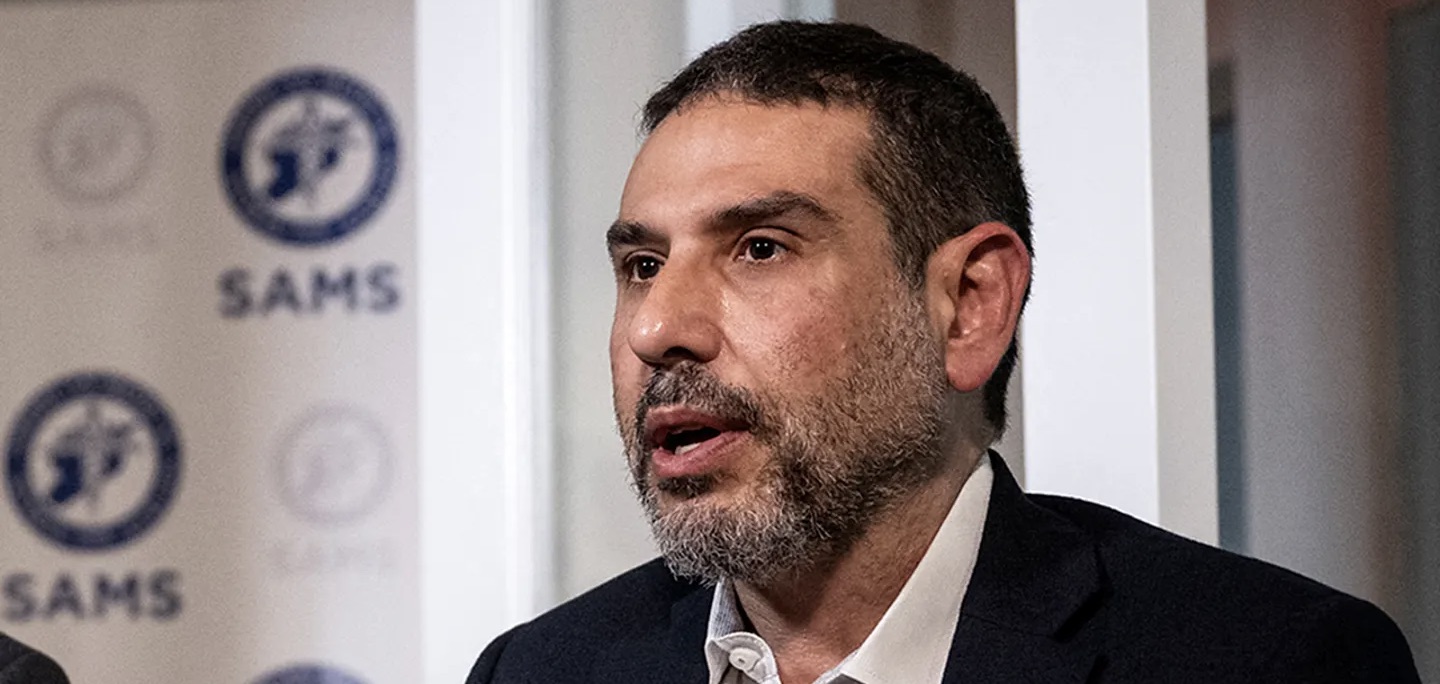 New Jersey Democratic Rep.-elect Adam Hamawy struggled to answer whether he viewed Iran as an adversary and Israel as an ally to the U.S. on Tuesday.
During an interview on CNN’s “The Situation Room,” co-host Pamela Brown repeatedly asked Hamawy about his views on both of the countries regarding his demand that the U.S. pull all military funding from Israel in the wake of the war with Iran.
“Well, now, what I see is that we were pushed into this war by Israel,” Hamawy said. “It’s not helping Americans. Americans didn’t ask for it. It’s illegal and immoral. And at this point, I think the U.S. and the Iranians want this war to end.“
“Do you see Iran as the adversary?” Brown asked.
“I see that we pushed them into a fight. And so, I think we both have to step back and say, is this helping either one of us?” Hamawy answered.
Brown repeatedly pressed Hamawy on whether he viewed Iran as an adversary, and the conressman-elect continued to avoid answering despite Brown reminding him that Iranians have chanted, “Death to America.“
“We’ve been saying ‘Death to Iran’ for decades as well,” Hamawy responded. “And so, what we need to do is use diplomacy.“
“They’ve killed a lot of Americans,” Brown said.
“And we’ve killed a lot of them as well,” Hamawy said.
Hamawy pushed for diplomacy over war, though Brown pointed out that he still refused to clarify his views on Iran or Israel.
Day 1,133 — Thursday, November 12
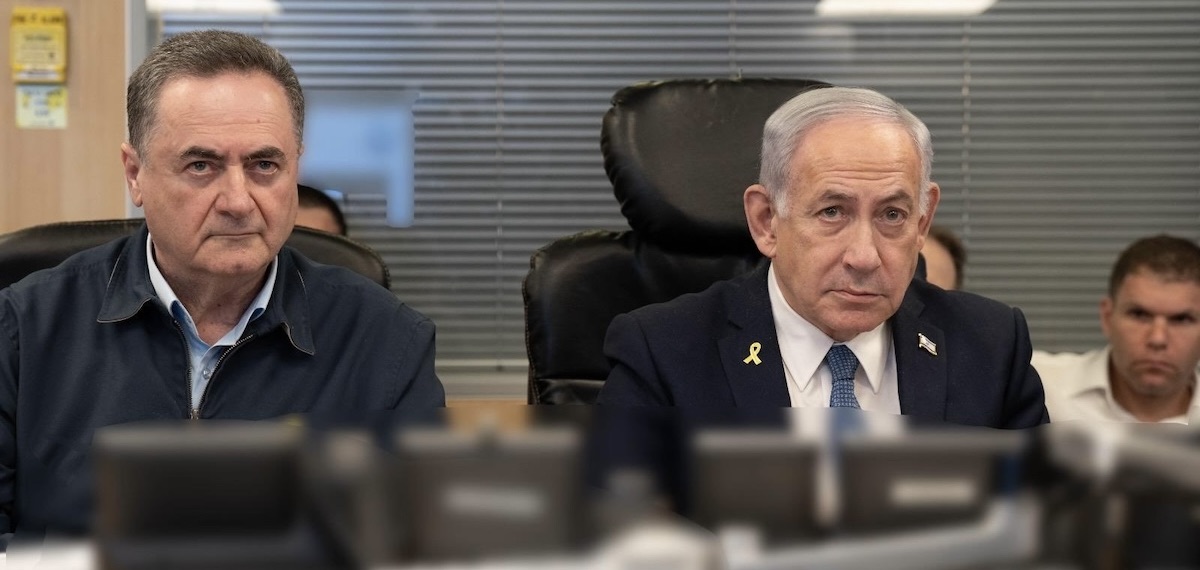 Defense Minister Israel Katz on Thursday morning criticized the bloc opposing Benjamin Netanyahu after Yashar! party chairman Gadi Eisenkot sent a security-related letter to Prime Minister Benjamin Netanyahu.
In the letter, Eisenkot demanded that Netanyahu refrain from major military operations while a caretaker government is in office.
Katz rejected the request, saying the Prime Minister, Defense Minister, and government would continue to make security decisions without requiring opposition approval.
“We do not need approval from the opposition or any legal authority to direct the IDF to carry out targeted strikes in Gaza, defensive and offensive operations in Lebanon, maintain the security zone in Syria to protect communities in the Golan, evacuate a terrorist neighborhood in Hebron – an operation that proved itself beyond expectations in creating a strong deterrent – and continue offensive operations against terrorism in Judea and Samaria,” Katz said.
Regarding the possibility of military action against the regime in Tehran, Katz added, “We have shown resolve and sound judgment in dealing with Iran as well, in full coordination with the IDF – and that is what willl be now as well, in accordance with what is needed.”
“Israel’s security is not in transition, and it does not wait for the political processes taking place in parallel. There is one prime minister, one defense minister who direct the IDF, and one government responsible for decisions on everything concerning Israel’s security and the protection of the State of Israel’s residents, subject, of course, to the existing and appropriate oversight. That is how it has been, and that is how it will continue to be in the future.”
Day 1,133 — Thursday, November 12
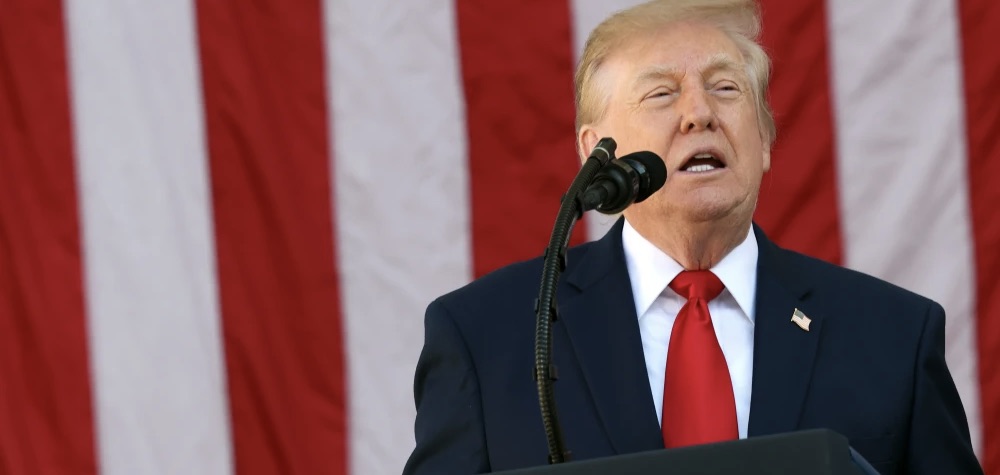 U.S. President Donald Trump said on Wednesday that Iran has been at war with the United States for decades, telling a Veterans Day audience at Arlington National Cemetery that Washington did not start the conflict.
“America did not start a war with Iran. Iran has been waging war on America since 1979,” Trump said. “We fought back, and we seriously fought back,” he added.
Trump said U.S. forces had already won militarily but that Washington wanted a decisive result. “We want to make sure we have a total victory, not a 93% victory,” he said.
He said it would take Iran 25 years to rebuild what American forces had destroyed and predicted that the conflict would end soon, leaving the world “a much safer and better place.”
Trump also thanked service members working to ensure that “the world’s number one state sponsor of terror, the Islamic Republic of Iran, will never have a nuclear weapon.”
U.S. Central Command said on Wednesday that the American naval blockade had prevented Iran’s Islamic Revolutionary Guard Corps from exporting an estimated $30 billion worth of crude oil. More than 1.7 million barrels of oil have passed through the Strait of Hormuz under U.S. protection since summer, according to the command.
“U.S. forces continue to work around the clock keeping the Strait of Hormuz open for commercial shipping, strictly enforcing the ironclad naval blockade against Iran,” CENTCOM stated.
Day 1,132 — Wednesday, November 11
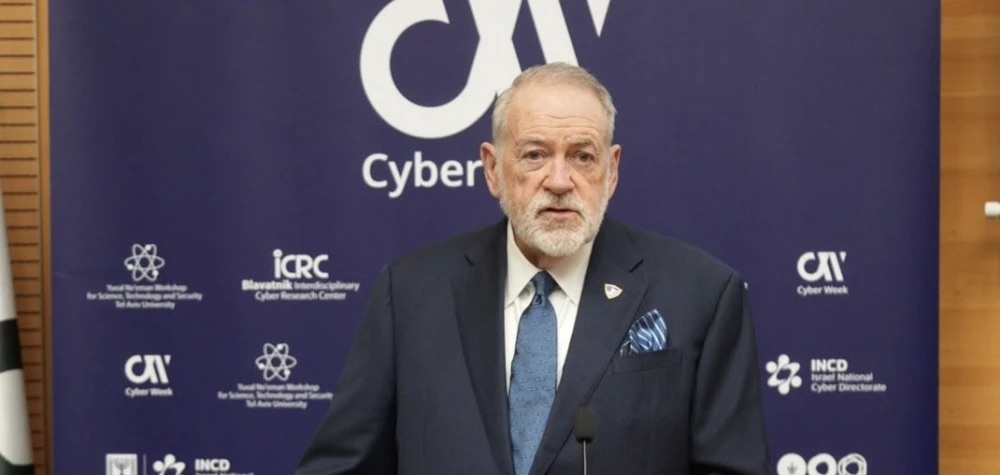 U.S. Ambassador to Israel Mike Huckabee warned on Wednesday that cyberattacks could increasingly be used to kill or injure large numbers of people, stressing the importance of cybersecurity cooperation between the United States, Israel and Taiwan.
Speaking at Tel Aviv University’s Cyber Week 2026, Huckabee said the three democracies face common adversaries and share an interest in protecting technological innovation from malicious actors.
“One of the reasons Israel matters so much to the United States is not only our partnership in things like intelligence, military hardware, technology, agriculture, but it is the specific nature of cybersecurity, because the enemies of Israel are the enemies of the United States,” he said.
“I think it would be fair to say that the enemies of Israel and the United States are also the enemies of Taiwan, because anyone who does not love democracy, freedom, the idea of free thought, free speech, equal rights; those are the people who aren’t going to care much for Taiwan,” he added.
Huckabee was addressing the Global Cooperation and Training Framework (GCTF) International Workshop, titled “Enhancing Digital Trust in the Age of AI,” which brought together senior officials, policymakers and cybersecurity experts from the three countries.
“Imagine the capacity to use technology in a way through the abuse of cyber ability that would in fact end up either injuring or killing masses of people,” Huckabee said.
“Every night when I go to sleep, there are people who are wide awake somewhere in the world trying to figure out how to use technology as a tool of destruction. That’s why what you do every day in your professional lives is a very critical part of protecting the rest of us.”
“Technology has the capacity to do amazing things. Also, it has the capacity to do malign things,” he said. “One of the hopes is that countries who value free enterprise but also freedom of thought will manage the risk in such a way so that the stage is set for responsible use of technology. But responsible use of technology absolutely requires an attention to security.”
Day 1,132 — Wednesday, November 11
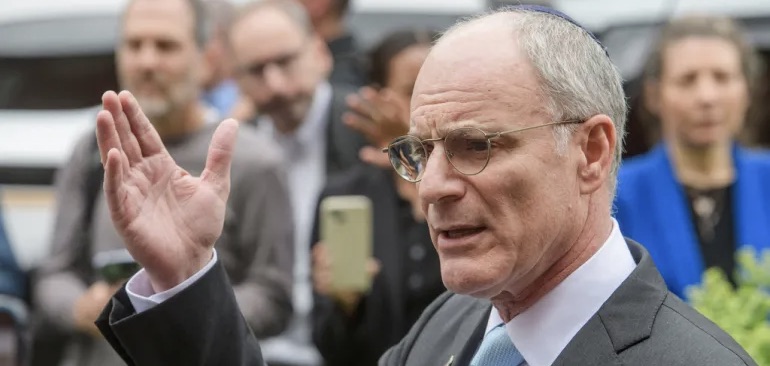 Neria Leiter, who was critically injured in a ramming attack over a month ago, has been discharged from Shaare Zedek Medical Center. He remains unconscious but is breathing on his own, a hospital spokesperson said.
Neria is the son of Israeli Ambassador to the US Yechiel Leiter.
According to Shaare Zedek, following his discharge from the hospital, he was transferred to a facility specializing in neurological and head injury rehabilitation for continued care.
Neria arrived in the trauma unit in critical condition, and his life remained in immediate danger for several days. Teams from trauma, neurosurgery, intensive care, and other departments fought to save his life and provided emergency treatment. During his hospitalization, he underwent several neurosurgical procedures and major orthopedic operations.
Neria spent several weeks in the general intensive care unit, led by Prof. Philip Levin, where he was sedated and on a ventilator. Once his condition stabilized and his life was no longer in immediate danger, he was transferred to the neurological and neurosurgical intensive care unit under the care of Dr. Yevgeny Karpov, a senior neurosurgeon specializing in trauma and intensive care.
Physicians, nurses, allied health professionals, and social workers at Shaare Zedek closely monitored Neria’s condition and provided his family with as much emotional and logistical support as possible during this difficult time.
As Neria left Shaare Zedek, the teams that cared for him and supported his family said they drew inspiration from the family’s strength and were hoping and praying for his recovery.
The Leiter family said it “thanks the medical teams at Shaare Zedek for going above and beyond in providing dedicated, professional care.” The family asked that their privacy be respected, but requested that everyone to continue praying for Neria.
Day 1,131 — Tuesday, November 10
 Israel’s Foreign Ministry took to X on Tuesday morning to admonish Europe for its lack of action in fighting the Iranian threat after a wave of cyberattacks targeted European food infrastructure last month and US aircraft were withdrawn from the UK over security concerns this week.
The Foreign Ministry said, “Anyone who thought Iran was no longer a threat needs a serious reality check,” urging European countries to act against Iran.
The post highlighted both the wave of cyberattacks and the withdrawal of aircraft from RAF Mildenhall as evidence of a serious security deterioration in Europe caused by the failure to act decisively against Iran.
“Iran remains a threat far beyond the Middle East. Ignoring that threat won’t make it disappear. It will only make it more dangerous,” the Foreign Ministry said.
France summoned Iran’s ambassador to the Foreign Ministry on Monday night after accusing the IRGC of being behind the wave of cyberattacks which targeted European food infrastructure last month.
French Foreign Minister Jean-Noël Barrot threatened further EU sanctions against Iran after the announcement.
The US, meanwhile, pulled 12 aircraft from RAF Mildenhall on Monday night, all of them cargo and refueling aircraft.
Iran appeared to threaten the base last week, on the eve of the US midterm elections, alongside several other bases across Europe.
The US Air Force claimed that the move was due to routine installation rotation, although it added: “Due to operations security, we will not provide further information on movement of assets.”
Day 1,131 — Tuesday, November 10
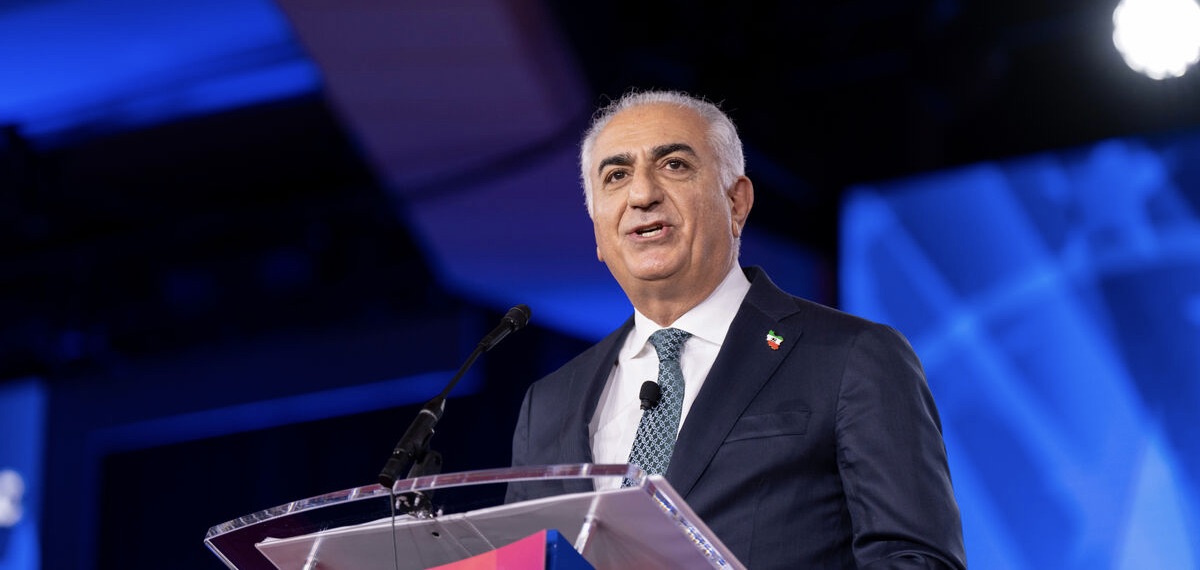 In a speech that evoked 25 centuries of shared history, Iran’s exiled crown prince Reza Pahlavi on Monday predicted the resumption of an Iranian-Jewish alliance, as he prepared to visit Auschwitz-Birkenau for the first time.
“The bond between Iranians and the Jewish people is not a matter of sentiment and is not a matter of political convenience, it is older,” Pahlavi said at a ceremony in Krakow, where he received the King Solomon Award from Rabbi Menachem Margolin, chairman of the European Jewish Association (EJA). He said the bond would resume when the regime of the Islamic Republic is toppled.
The group honored Pahlavi for his support for Israel and opposition to antisemitism, Margolin said. Pahlavi called for greater international pressure on the Islamic Republic. He advocated military intervention against Iran’s security apparatus to help protesters overthrow the regime.
In his acceptance speech, Pahlavi, who lives in the United States, invoked the biblical account of Cyrus the Great. The Persian king permitted Jews to return from exile in Babylon and rebuild the Temple in Jerusalem. Pahlavi also noted the biblical story of Esther and Mordechai, and nearly 3,000 years of Jewish life in Iran.
“It is a fundamental part of Iranian history that we are truly proud of,” he said.
Pahlavi contrasted this historical record with the antisemitism of the Islamic Republic, whose revolution in 1979 had forced Iran’s last shah, Reza Pahlavi’s father, into exile.
“In 1942 and prior to the Islamic Revolution, Tehran was a name that meant life. I want Tehran to be a name that means life again,” Pahlavi said.
The EJA ceremony took place on the anniversary of the Kristallnacht pogroms of November 1938, ahead of a visit by an EJA delegation to the former Nazi death camp of Auschwitz-Birkenau on Tuesday.
Pahlavi noted that his late father, Shah Mohammad Reza Pahlavi, had visited Auschwitz in 1966 with Reza Pahlavi’s mother, who wrote about the visit’s emotional impact on her in her memoirs.
At a press conference before the award ceremony, Pahlavi described the Islamic Republic as an “existential threat to Iranians” and Israelis alike. He accused Iran’s leaders, whom he described as an “occupation force,” of embracing an ideology reminiscent of Nazi Germany.
“When you hear ‘never again,’ this regime, in its virulent sense, wants to finish what Hitler had started, which is why we need to fight this evil,” he said.
Pahlavi argued that weakening the Iranian regime’s capacity to suppress demonstrations could create conditions for a popular uprising. “They can’t do that when the regime is willing to kill them by the thousand,” he added.
Western diplomatic efforts to change the Islamic Republic’s behavior had failed, Pahlavi said.
“For the most part, particularly in the Western free world, they were focused on a policy of appeasement with an expectation of behavior change,” he said. “Rather than wait for this regime to ever change its behavior, invest in the solution, which is the people of Iran themselves.”
“Those people did not die to keep the Strait of Hormuz open or for nuclear deals,” he said, referencing some 40,000 people whom opposition sources estimate were killed during an attempted uprising in January.
“They are fighting for liberty, and they deserve your support.”
He urged European governments to adopt tougher measures against Tehran, including closing Iranian embassies, expelling diplomats and targeting illicit funds associated with regime-linked figures.
“We are beyond resolutions. We are beyond condemnations. This is a matter of action,” he said.
Restoring internet connectivity inside Iran was key to facilitating resistance, Pahlavi said, adding that an 88-day blackout had allowed the authorities to suppress dissent without international scrutiny.
“Iran continues to be a threat regionally. It continues to be a direct existential threat to Israel, and it goes beyond Israel. It is now a direct threat to Europe’s security,” he said, urging further sanctions on Iran’s Islamic Revolutionary Guard Corps.
Rabbi Margolin condemned what he called the “hypocrisy” of “some countries in Europe that lately started legislation to boycott products produced in Israel, while their level of trade with Iran is growing.”
He referenced the Netherlands specifically, where “they can sentence to jail a Jew who consumes wine coming from Judea and Samaria, and at the same time support a regime that tortures its own people and spreads hatred across the Middle East and beyond.”
During the press conference at the Holiday Inn hotel, Pahlavi recalled his 2023 visit to Israel, where locals approached him during a visit to a Tel Aviv cafe.
“Ordinary Israeli citizens recognized me, and they came to me literally with tears in their eyes, hugging me and saying, ‘What a different world it would be once you’re able to liberate your country,’” he said.
Under a post-Islamist regime, Israel’s Abraham Accords would expand into what Pahlavi called the “Cyrus Accords,” he said. A future democratic Iran could become a central partner in regional cooperation, he added.
“We look at Israel as a very important strategic partner,” he said.
Day 1,130 — Monday, November 9
 The New York Times had helped spread a blood libel against Israel, the the motivation behind accusations of genocide against Israel “is to prepare the next genocide against us,” Israel’s Ambassador to the United States Yehiel Leiter said on Sunday.
Addressing the 43rd International Conference of Chabad-Lubavitch Emissaries in New York, Leiter recounted a meeting with the paper’s editorial board.
“Exactly one year ago, in two days, on Nov. 10, I met with the editorial board of The New York Times,” Leiter related. “I went into a room. They were the jury. They were the judge. They were the firing squad—15 editors with another six on the screen. And they were accusing me. They were accusing the government of Israel they were accusing chayalei tzahal [the soldiers of Israel] of a genocide, of starving people to death.”
Leiter presented the editors with facts, he said: the number of trucks carrying humanitarian aid entering the Gaza Strip every day; how soldiers risked their lives to protect non-combatants; and how the combatant-to-civilian ratio in the war was the lowest in modern history.
In response, he said, “they gave me feelings.”
About 45 minutes into the conversation, one editor objected by saying “everybody can’t be wrong.” Leiter replied that “not everybody is wrong. Not everybody thinks that we’re committing genocide.”
To the extent that everyone does think so, Leiter told the editor, it was the Times that was responsible.
He cited as an example a July 2025 Times report titled “Gazans Are Dying of Starvation” featuring a photo of Mohammed Zakaria al-Mutawaq, an 18-month-old Palestinian from Gaza. Mohammed was emaciated. “Anybody who saw the picture immediately thought of the Holocaust,” Leiter said. “So now we were the perpetrators of genocide. Once we were the victims, and now we’re the Nazis.”
What the Times had neglected to mention, Leiter told the editor, is that the boy suffered from a genetic disease, cerebral palsy and other illnesses. The Times also cropped from the picture the boy’s perfectly healthy brother.
“The senior editor of The New York Times said to me, ‘Ambassador, don’t you think you’re making too much of a misappropriation?’ I said ‘No, that’s not a misappropriation. That’s a blood libel.’”
The ambassador told the audience: “There is no difference between what is being done to us today and what was done to our grandparents in the ghettos of Europe 800 years ago. This is a blood libel. This is very serious. We have to know how to identify what the enemy is and who the enemy is. This is not another antisemitic rant. Please understand, this is a blood libel, and a blood libel will cost lives. And the reason why they are accusing us of genocide is to prepare the next genocide against us.
“Hitler didn’t just happen; it was decades of preparation of demonizing and delegitimizing Jews. And now through the State of Israel, through the Jewish state, there is an attempt to delegitimize and disenfranchise Jews as Jews. We have to call it for what it is. We have to identify the problem. And we have to fight it. We fight it by knowing who we are. We fight it by knowing who our friends are. And we fight this by knowing who the enemy is and by identifying them as the enemy and calling them out as the enemy,” Leiter said.
Day 1,130 — Monday, November 9
 Tensions flared in a Philadelphia neighborhood Sunday after a bike ride organized to boycott several Jewish-owned restaurants sparked overwhelming backlash from the city’s Jewish and pro-Israel communities.
The “boycott ride” targeted at least six restaurants in Philadelphia’s Rittenhouse Square, labeling them “Zionist establishments” and calling for them to leave, according to pro-Palestinian group Philly Bike On Your Left, which organized the event.
As riders cycled through the streets waving Palestinian flags, hundreds of Jewish and pro-Israel community members turned out to oppose the demonstration, with heated exchanges unfolding across several city blocks. Dozens of diners also lined up outside the targeted restaurants in a show of solidarity with the Jewish-owned businesses.
The boycott also drew sharp criticism for taking place on the eve of the anniversary of Kristallnacht, the 1938 Nazi pogrom against Jews in Germany and Austria marked by widespread anti-Jewish violence, including attacks on homes, synagogues and businesses.
Day 1,129 — Sunday, November 8
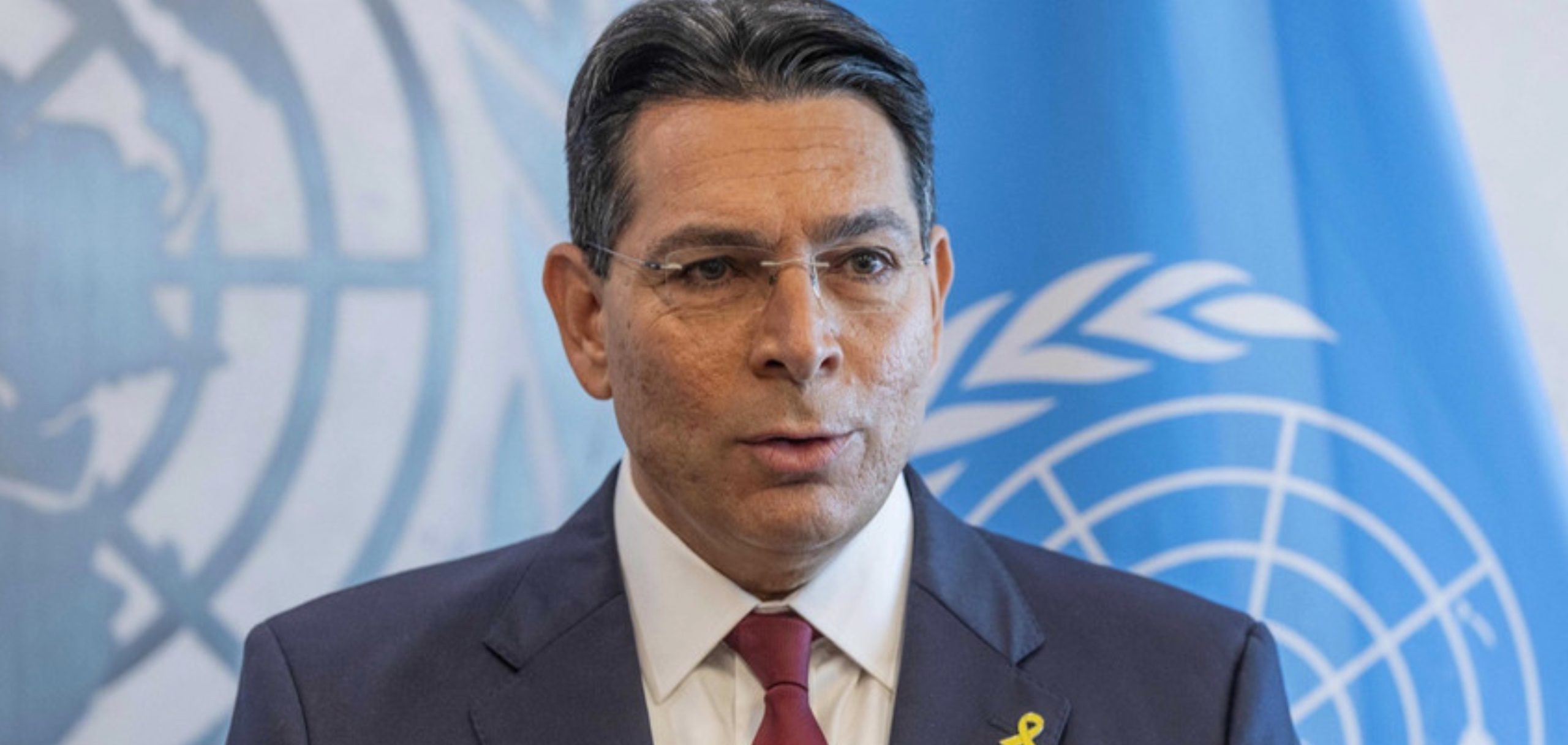 Amid Iran’s attempt to prevent Israel from leading a draft resolution in the UN Sixth Committee, Israel’s Ambassador to the United Nations, Danny Danon, sharply rebuked the Iranian representative and exposed the threat posed by the ayatollah regime to European countries and the free world.
Ambassador Danon stated, “Your regime funds terrorist proxies, rebuilds its nuclear and ballistic missile capabilities, blocks the Strait of Hormuz, and murders 50,000 innocent Iranians. First, you threatened Israel, then the United States and the Gulf states, and now Europe as well, with a map identifying dozens of targets published in Tehran.”
Addressing the Iranian representative directly, Ambassador Danon warned: “You think you can intimidate us? You are a coward, and your leaders are cowards hiding underground. Sit quietly with your head down and be grateful that you are even allowed to sit here. The price you will pay for the terrorism you spread has only begun to be exacted.”
Turning to the Iranian people, Danon declared: “Soon, you will reclaim your country and bring this evil regime to justice once and for all.”
Day 1,128 — Saturday, November 7
 An anti-Israel bicycle rally targeting Jewish-owned businesses in Philadelphia has sparked outrage, with Jewish organizations and political leaders condemning what they describe as a blatant campaign of antisemitic intimidation, disturbingly scheduled on the eve of the anniversary of Kristallnacht.
The so-called “Boycott Ride,” scheduled for Sunday, November 8, at 11:30 a.m., will begin in Rittenhouse Square in Center City before targeting several Jewish- and Israeli-owned establishments.
Promotional materials for the rally feature the slogans “No business for Zionists” and “These Zionist establishments must go,” making clear the organizers’ intention to pressure businesses they associate with Israel.
Among the targeted establishments are Dizengoff, Huda, Schlesinger’s Delicatessen, Mac Mart, K’Far Cafe and Goldie.
The rally is being organized by Philly Bike On Your Left in collaboration with Philly Writers Against the War on Gaza, Boycott CookNSolo and Philly Solidarity Calendar.
The timing has only intensified the outrage.
The demonstration is scheduled just one day before the 88th anniversary of Kristallnacht, the November 9-10, 1938 Nazi pogrom during which Jewish businesses were vandalized, synagogues were burned and Jews were assaulted across Germany and Austria.
Nearly nine decades later, Jewish businesses in an American city are once again being singled out for an organized campaign of economic exclusion, this time under the banner of anti-Zionism.
The Anti-Defamation League’s Philadelphia branch, the American Jewish Committee’s Philadelphia/Southern New Jersey chapter, the Jewish Federation of Greater Philadelphia and StandWithUs issued a joint condemnation.
“Let’s be clear: This is antisemitism. It is Jew-Hatred, plain and simple,” the organizations declared.
“We will not allow antisemitism to be disguised as activism. We will not accept efforts to intimidate Jewish businesses or drive them out of Philadelphia. And we will not remain silent.”
Pennsylvania’s two US senators, Democrat John Fetterman and Republican Dave McCormick, also condemned the planned rally.
McCormick called it a “disgusting attempt to intimidate Philadelphia’s Jewish businesses,” drawing comparisons to the historical persecution of Jews.
Pennsylvania Attorney General Dave Sunday was equally critical, describing the timing on the eve of Kristallnacht as “unsettling.”
“By explicitly targeting businesses because their owners are Jewish, the organizers are engaging in a form of discrimination that falls back on some of the oldest antisemitic tropes and tactics in history,” Sunday said.
“This is not simply a protest directed at the policies of Israel,” he added, arguing that Jewish Pennsylvanians were being singled out over policies they had no ability to influence.
Governor Josh Shapiro’s office also denounced the event.
“This bike ride, masquerading as a protest to advance the cause of justice, is nothing more than blatant antisemitism designed to intimidate and drive Jewish businesses out of our communities,” a spokesperson told Fox News.
Jewish community organizations have called for authorities to ensure the safety of the targeted businesses, their employees and customers.
Meanwhile, local supporters are organizing a community food crawl to patronize the establishments targeted by the boycott.
The controversy underscores a troubling reality: A demonstration ostensibly directed against Israeli government policies is instead targeting neighborhood restaurants and Jewish business owners in Philadelphia, reviving the ugly practice of singling out Jewish establishments for economic punishment.
Day 1,128 — Saturday, November 7
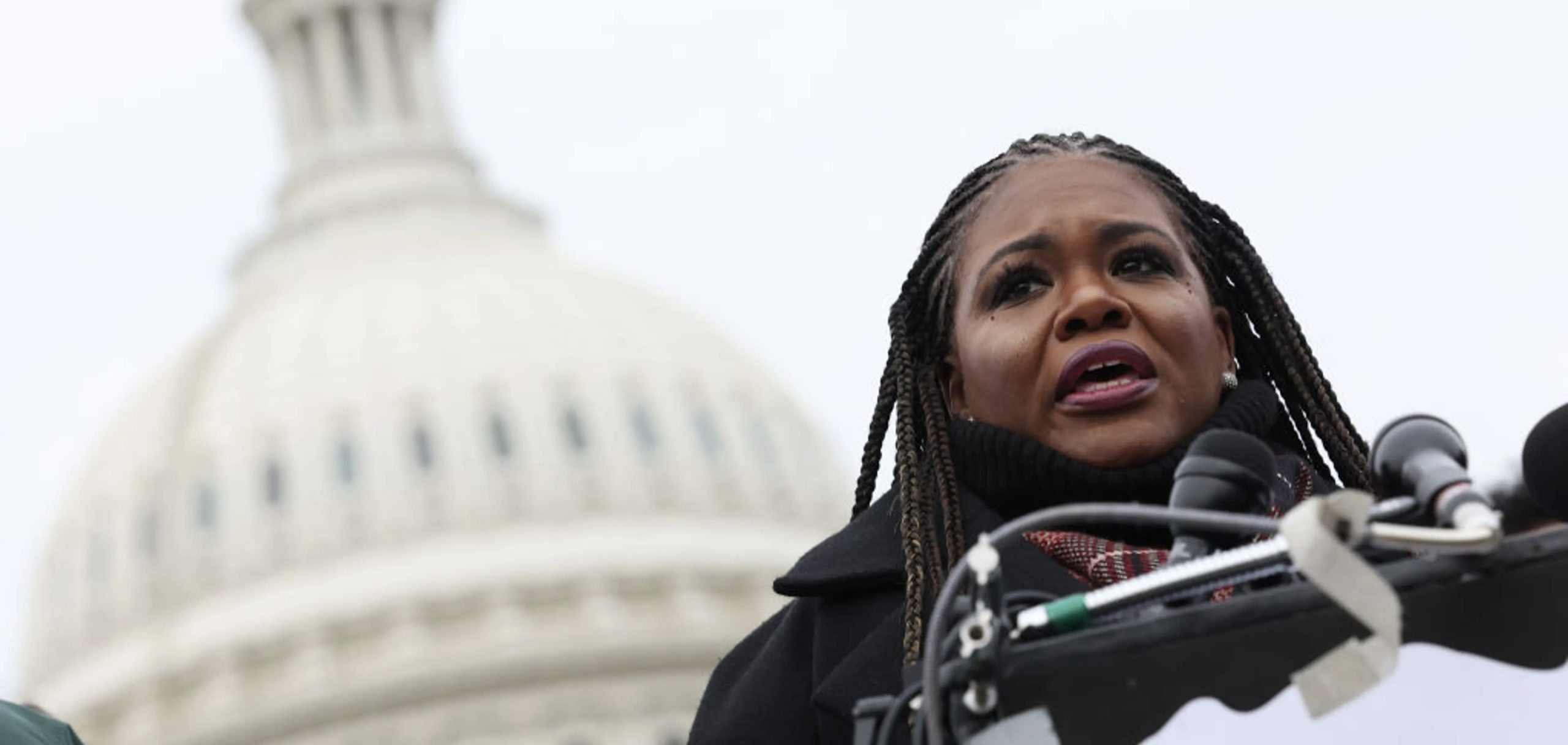 Cori Bush, a former far-left Missouri Democratic congresswoman and member of the “Squad,” registered last month under the Foreign Agents Registration Act to run “educational fact-finding missions to the West Bank” for a Belgian nonprofit, according to U.S. Justice Department filings.
The Chicago-based Truth and Conciliation Commission, the International Federation for Rights and Development and Bush filed an Oct. 26 memorandum with the Justice Department in which they said that the former congresswoman was budgeted to receive $6,000 monthly for three months.
The paperwork also allocates $5,000 for FARA registration and $2,000 for compliance reporting, for a total of $25,000. The commission plans to invoice the federation and pay Bush, contingent on grant and donor funding, and the federation would cover approved delegation travel expenses, according to the agreement.
Bush’s responsibilities, according to the paperwork filed with the federal government, include contacting at least 200 people, primarily current and former members of Congress, in November and December, coordinating visits and providing briefings.
The filing identifies Stephany Spaulding, a former Democratic political candidate, as the commission founder and Gamaal El Attar, a Sudan-born Palestinian activist, as executive director.
It says that the federation promotes human rights and sustainable development by engaging with European Union institutions. “At times, these services may include preparation and dissemination of informational materials that promote foreign principal’s interests,” according to the filed FARA document.
Bush visited Judea and Samaria in October. In a Facebook post, in which she tagged Spaulding, she wrote that she was visiting the area to “stand with the Palestinians who are being attacked by (invaders) settlers.”
Bush, who lost to Wesley Bell in Missouri’s 2024 Democratic congressional primary, and lost again in 2026, frequently denounces the American Israel Public Affairs Committee on social media and blames the pro-Israel group for her losses.
In her race against Bell, Bush, who now says that she works for Belgium, decried him for taking “AIPAC-funded trips to Israel.”
Day 1,127 — Friday, November 6
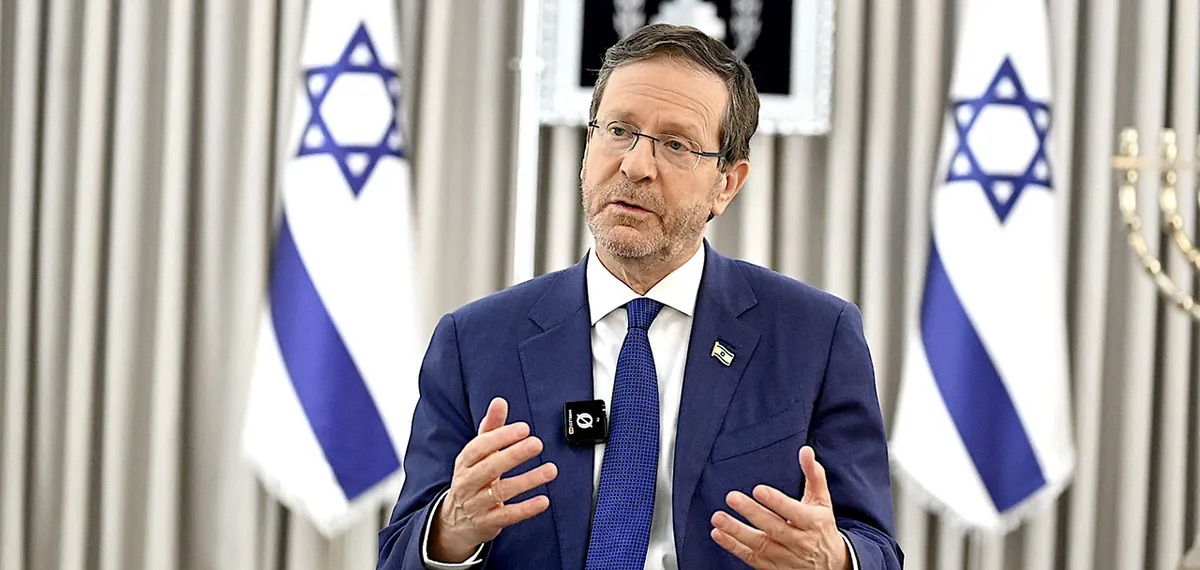 Israeli President Isaac Herzog said on Thursday that factions representing 67 Knesset members had recommended Yashar leader Gadi Eisenkot to form the next government, while factions representing 46 MKs backed Prime Minister Benjamin Netanyahu.
Herzog announced the tally after completing his consultations with all factions elected to the 26th Knesset, saying that he intends to task a Knesset member with forming a government on Sunday.
Despite Eisenkot receiving recommendations from a majority of the 120-member parliament, Herzog stressed that the numbers alone would not determine his decision.
“The results of the consultations may appear clear, but the authority vested in me by law is to determine who has the ability to form a government, and that is not entirely clear, given the mutual vetoes between the blocs and within the blocs themselves,” the president said.
He said he would seek to resolve the question “directly and quickly” through personal discussions with some party leaders before announcing his decision.
Herzog began the consultations after receiving the official results of the Oct. 27 election from Central Elections Committee Chairman Justice Noam Sohlberg on Wednesday.
“I met with the representatives of all the factions,” Herzog said at the conclusion of the process. “The discussions were open, candid, and also probing.”
The president said he had asked the faction representatives “difficult questions” in an effort to encourage them to consider alternatives to their established positions on possible coalition partners.
“I asked difficult questions in an effort to help the parties and the public to break free from set ways of thinking and open their minds to other paths,” he said.
The consultations produced 67 recommendations for Eisenkot and 46 for Netanyahu. United Torah Judaism, which won seven seats in the election, did not recommend either candidate, accounting for the remaining seats in the Knesset.
The recommendation tally differs significantly from the division of seats that emerged from the election.
The final results gave Netanyahu’s bloc 53 seats, while the parties principally opposed to him won 48 and the Arab parties secured 19.
The 67 recommendations for Eisenkot therefore include parties outside the 48-seat bloc led by Netanyahu’s principal opponents. However, Herzog indicated that recommendations do not necessarily translate into an ability to assemble a coalition commanding the support of at least 61 MKs.
His reference to “mutual vetoes between the blocs and within the blocs themselves” underscored the difficulty of converting the recommendations into a viable governing majority.
Under Israeli law, the president is required to consult representatives of the Knesset factions before assigning a lawmaker the task of forming a government. The president is not required simply to choose the candidate receiving the largest number of recommendations, but must determine which MK has the ability to form a government.
Herzog said he would use the period before Sunday to speak directly with party leaders and explore whether the political deadlock could be overcome.
“I intend to task a member of Knesset with forming the government this coming Sunday,” he said.
“In these talks, I intend to leave no stone unturned in an effort to reach out and build a stable and good government for the people of Israel.”
The lawmaker who receives the mandate will have 28 days to form a government, with the president empowered to grant an extension of up to 14 additional days.
Day 1,127 — Friday, November 6
 The Council on American-Islamic Relations (CAIR) has suspended its activities in Florida after the state’s designation of the organization as a domestic terrorist group took effect, JNS reported Thursday.
The suspension followed a ruling by Chief US District Judge Allen Winsor of the Northern District of Florida, who declined Wednesday to temporarily block the designation while CAIR challenges it in federal court.
In his November 4 order, Winsor granted CAIR limited protection, preventing the state from prosecuting the organization, its employees, or third parties providing legal services under Florida’s material-support law. The injunction is conditional on the posting of a $1,000 bond.
The judge emphasized that his decision did not address whether CAIR was a terrorist organization. Rather, he concluded that the group had failed to establish sufficient legal grounds for suspending the designation while litigation continued.
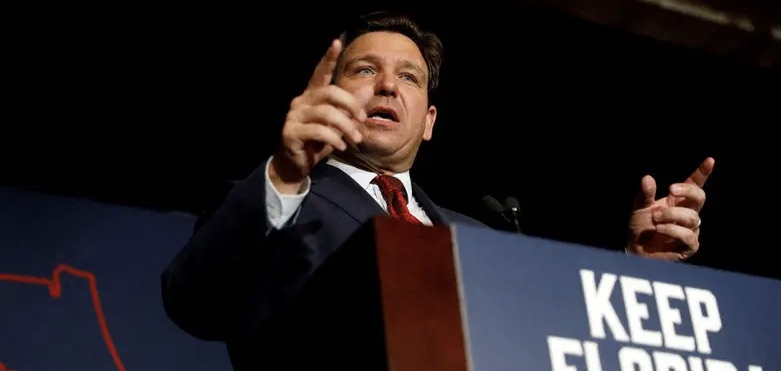
Florida Governor Ron DeSantis welcomed the development. Florida is holding CAIR accountable,” he stated.
DeSantis and the Florida Cabinet voted on September 29 to classify CAIR and the Muslim Brotherhood as domestic terrorist organizations, while designating more than 90 additional groups as foreign terrorist organizations. Florida officials accused CAIR of maintaining connections to the Hamas and Islamic Jihad terrorist organizations.
The designations were published in the Florida Administrative Register on October 6 and became effective 30 days later.
Under Florida law, designated organizations face restrictions on receiving public funds and government contracts. Public institutions are also prohibited from using their resources to support or promote such groups, while individuals who knowingly provide material support may face criminal prosecution. The legislation also allows for the possible dissolution of designated organizations.
The latest action followed legislation signed by DeSantis earlier this year granting Florida expanded authority to designate terrorist organizations.
In December, DeSantis had attempted to classify CAIR through an executive order, but a federal judge blocked the measure in March, ruling that the governor lacked the authority to impose the designation and its consequences unilaterally.
The Florida initiative followed a similar move by Texas Governor Greg Abbott, who designated CAIR and the Muslim Brotherhood as foreign terrorist organizations and transnational criminal organizations. The Texas designation authorized increased enforcement measures and prohibited the groups and their affiliates from acquiring land in the state.
At the federal level, President Donald Trump previously signed an executive order initiating the process of designating certain Muslim Brotherhood branches as Foreign Terrorist Organizations (FTOs) and Specially Designated Global Terrorists (SDGTs).
In January, the United States formally designated the Egyptian, Jordanian, and Lebanese branches of the Muslim Brotherhood as specially designated global terrorists, citing their support for Hamas.
Day 1,127 — Friday, November 6
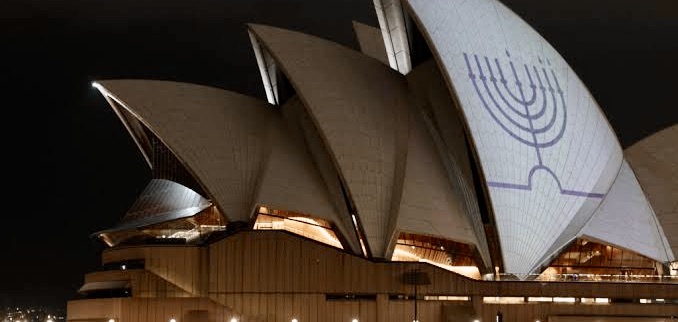 A 90-year-old woman who was seriously injured during the deadly Bondi Beach terror shooting has died while hospitalized nearly a year after the antisemitic attack, authorities said on Friday.
Eva Geller was among dozens of people wounded when two gunmen opened fire on a crowd at a Hanukkah celebration at the Sydney beach on December 14, 2025. She is now the 16th person killed in the attack.
Geller, a Holocaust survivor who fled Romania as a child, had since been “in and out of hospital” as a result of her injuries, Rabbi Aron Moss said, according to remarks reported by Australian media on Friday.
Moss, who was the rabbi at Bondi’s Nefesh Synagogue, which she attended, said Geller had a “very warm” character.
She showed “incredible strength” and a desire to survive, making it to her 90th birthday, Moss said. She died in a Sydney hospital overnight.
“She was told after being shot that she would never walk again by the doctors,” the rabbi said. “But through sheer determination, she got back up and she did walk again,” he said, adding that while she was mostly bedridden since the attack, she kept on smiling.
He added, “She was a child in the Holocaust years, she escaped, but she lost a lot of family. She lost her husband at quite an early age but, despite all that, she maintained a real positivity and happiness and a zest for life that was there right up until the end.”
“Police are now awaiting further advice and are working with the office of the coroner,” New South Wales police said.
In addition to Geller, a total of 15 people were killed in the mass shooting, Australia’s deadliest in decades, which took place at the beachside holiday celebration.
Police say the alleged gunmen, Sajid Akram and his son Naveed Akram, were inspired by the Islamic State jihadist group.
Police shot Sajid Akram dead at the scene, while Naveed Akram, who was also shot but survived, is currently facing charges including 15 counts of murder and a terror offense.
Day 1,126 — Thursday, November 5
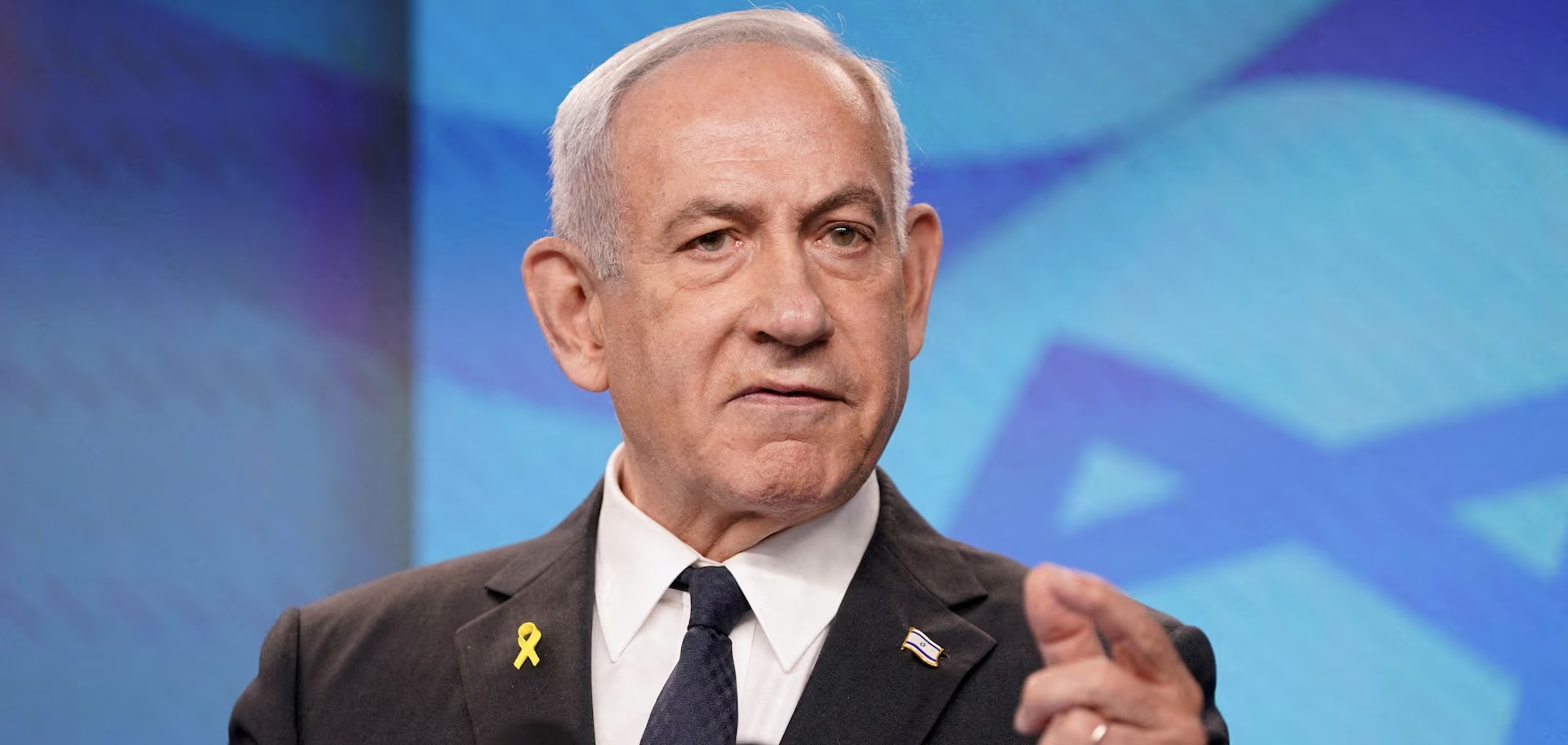 Israeli Prime Minister Benjamin Netanyahu warned on Wednesday that an Israeli government dependent on Islamist parties would be unable to confront radical Islam and would “tear us apart from within.”
Writing on X, the premier called the prospect “a matter of our very survival.”
Netanyahu renewed his call for a broad national government led by his Likud Party. It would include all members of his right-wing political bloc, as well as any Zionist parties willing to join.
He accused opposition leaders of putting political interests first by pursuing a minority government that would depend on parties he described as supporters of terrorism.
Netanyahu also demanded a full investigation into suspected foreign interference in the Oct. 27 Knesset elections, citing an inquiry by the Israeli Security Agency (Shin Bet), launched at the direction of Justice Noam Sohlberg, chairman of the Central Elections Committee.
However, Sohlberg has said the available evidence does not undermine the election results.
Netanyahu reached across the aisle on Monday evening, offering to form a unity government with himself at its head. But the chances are slim given the opposition’s continued determination to oust him from office.
“The public in Israel does not want a government that depends on Ra’am and the Joint List—parties that support terrorism and reject the existence of the Jewish state,” Netanyahu posted to X on Monday, referring to the two Arab parties.
“A clear majority in the Jewish public chose the Likud as the largest party and me, as prime minister, to lead the next government. We aspire to form a broad government with our partners and with any party that wishes to do so and does not support terrorism. I am open to holding discussions on the matter,” he said.
Opposition leaders have interpreted the results differently, insisting the Likud was handed a resounding defeat, though the result is a political stalemate as neither bloc won enough Knesset seats to form a government. Netanyahu’s coalition has 53 to the opposition’s 48. Likud remains the largest party with 27 Knesset seats to Yashar’s 21.
Day 1,126 — Thursday, November 5
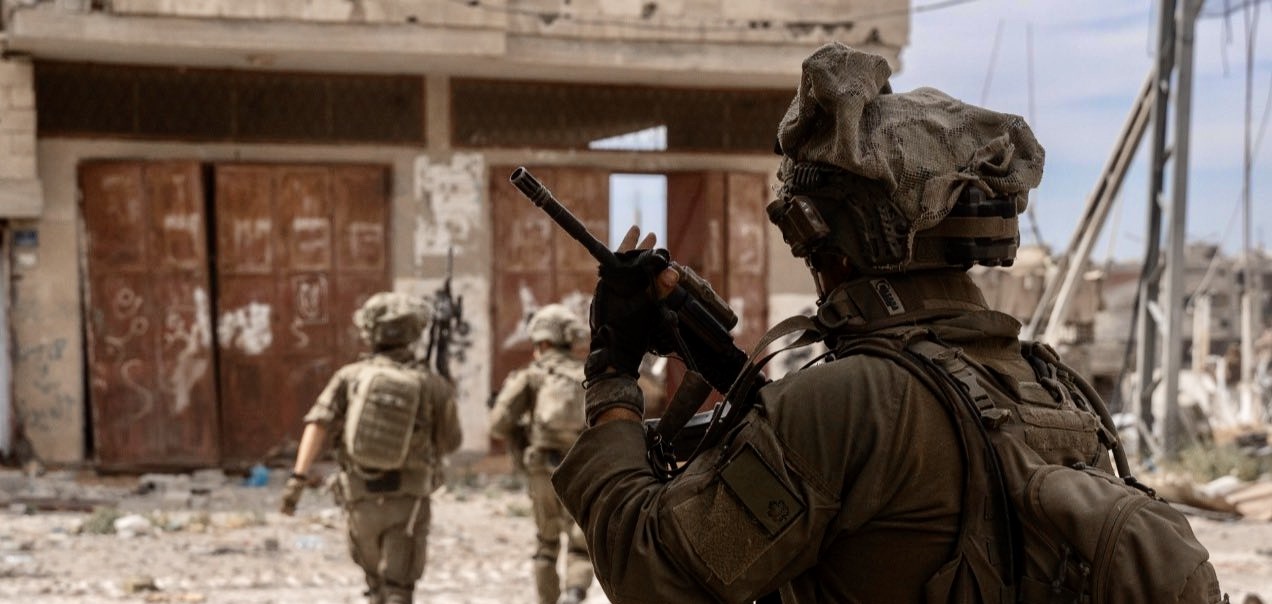 IDF Chief of Staff LTG Eyal Zamir warned Hezbollah on Wednesday that the IDF would respond immediately and forcefully to any attempt by the terrorist organization to rebuild its capabilities or threaten communities in northern Israel.
“We will not allow Hezbollah to establish terrorist infrastructure in the area. Any attempt by the enemy to entrench itself, build up its capabilities, or threaten northern communities will be met immediately and forcefully,” Zamir declared during a visit to the Northern Command and the 91st Division.
The Chief of Staff was accompanied by Northern Command Commander MG Rafi Milo, Ground Forces Commander MG Nadav Lotan, 91st Division Commander BG Yuval Gaz, and additional senior commanders.
During the visit, Zamir conducted a situational assessment at the 91st Division, toured the Khiam area, observed a demonstration of the new “Combat Robotics Team” model, and met with brigade commanders operating in the division’s sector.
Addressing the security situation along the northern border, Zamir emphasized the IDF’s commitment to protecting Israeli communities.
“The 91st Division serves as the forward defense line for northern residents. The division is advancing a forward defense posture in front of the communities,” he stated.
“The operational reality is constantly changing and evolving, but our commitment remains to establish robust border defenses and ensure the security of the residents of the north.”
Zamir also accused Hezbollah of serving Iranian interests at the expense of Lebanon and its citizens.
“Throughout the war, Hezbollah has proven once again that it is an Iranian proxy and not a ‘Lebanese patriot.’ Its actions have harmed the interests of the State of Lebanon and its citizens,” he said.
“The IDF remains alert to developments in near and distant arenas and is prepared to strike any enemy that attempts to harm us, as we have done in the past.”
Referring to the military’s achievements against Hezbollah, the Chief of Staff said the Northern Command had significantly weakened the terrorist organization throughout three years of fighting.
“Throughout three years of fighting, the Northern Command has fought, struck Hezbollah, and degraded many of its capabilities. If required, we will know how to expand our achievements,” Zamir warned.
Day 1,125 — Wednesday, November 4
 Argentine President Javier Milei delivered a forceful pro-Israel address Monday night at a ceremony in Buenos Aires, declaring that Israel’s security is inseparable from the future of the Western world.
Speaking at an event organized by the Latin Coalition for Israel, Milei invoked the Maccabees’ ancient victory over the Greek Empire and said that triumph in war depends not on numbers but on forces that come from Heaven.
The event honored Milei with the “Gratitude Award” for his support of Israel and the Jewish people.
The award was presented by Reverend Mario Bramnick, head of the coalition.
“Whoever messes with Israel messes with all of the West,” Milei declared.
Israel, he said, is not merely a country Argentina chooses to support, but a symbol of the values on which Western civilization is built.
The president then turned to history, recalling the Maccabees’ defeat of the far larger Greek imperial army.
He quoted from the Book of Maccabees: “Victory in war does not depend on the number of soldiers, but on the forces that come from Heaven.”
Milei drew a parallel to Israel today, saying it stands against forces seeking to extinguish the light it represents.
Milei addressed the global wave of antisemitism, saying Israel faces attacks not only on its existence but on its right to defend itself.
He congratulated Prime Minister Benjamin Netanyahu on the election results in Israel and said the country needs strong leadership to meet the challenges ahead.
The Argentine leader also recalled the 1992 bombing of the Israeli embassy in Buenos Aires and the 1994 attack on the AMIA Jewish community center, which together killed 114 people.
Argentina knows the price of terror well, he said, and its courts have recognized Iran and Hezbollah’s responsibility for the attacks.
He went on to attack the international left, which he said aids in undermining the legitimacy of Western states and Israel, accusing various actors of inverting reality by justifying terror organizations while condemning the countries fighting them.
He closed by declaring that Argentina has chosen to stand with Israel and with Western leaders, including US President Donald Trump and Prime Minister Netanyahu.
“Israel today holds that same light against the darkness, and Argentina has chosen to stand by its side,” Milei said, ending with a blessing for Argentina, Israel and the Western world, and the cry: “Long live freedom!”
Day 1,125 — Wednesday, November 4
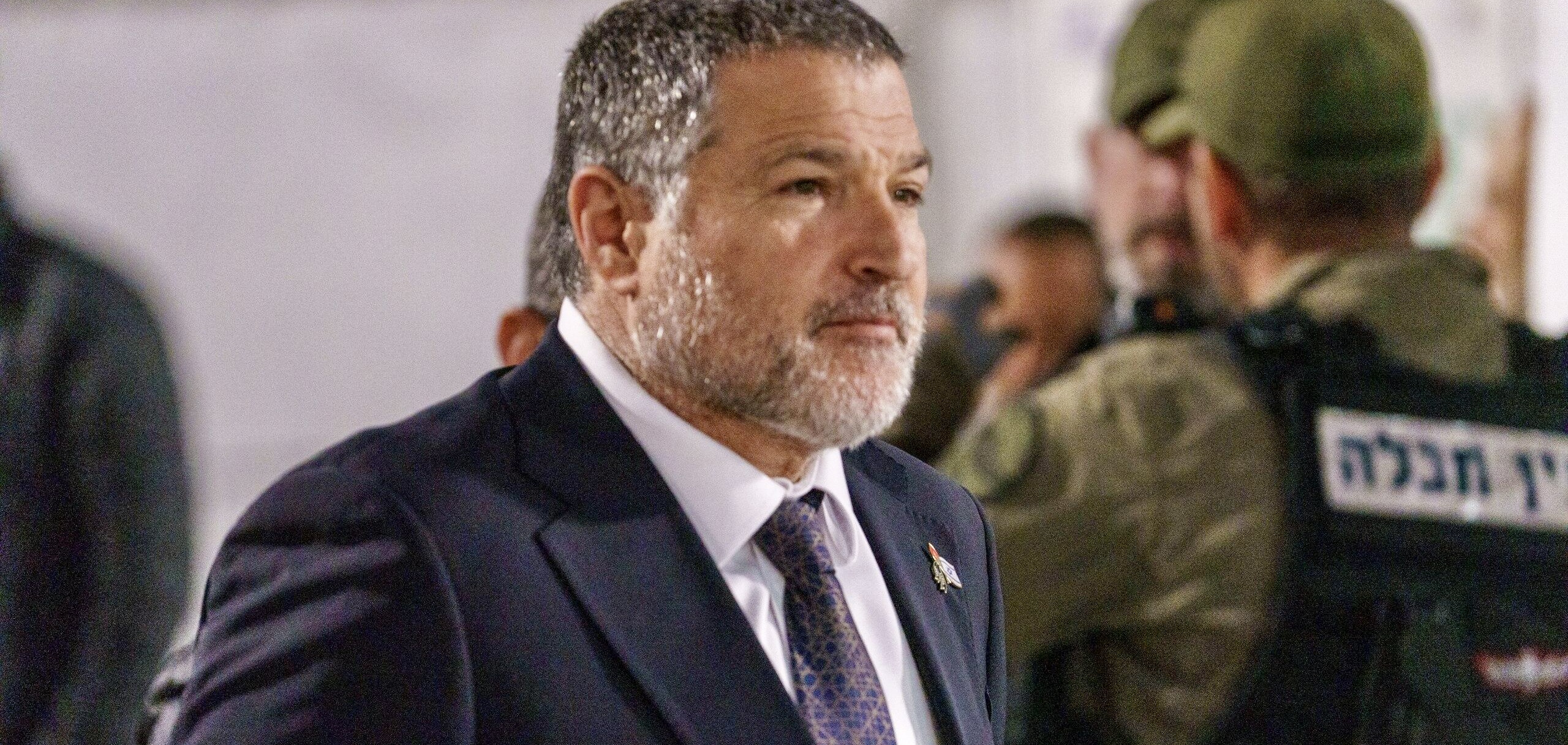 Central Elections Committee Chairman Justice Noam Sohlberg presented committee members on Wednesday with intelligence from the Shin Bet (Israel Security Agency – ISA) indicating that substantial sums of money had allegedly been transferred to Israel from foreign countries as part of efforts to exert foreign influence.
According to the intelligence assessment, the activity may involve thousands of people or more and could represent a widespread foreign funding operation.
The material presented by Sohlberg included an assessment by Shin Bet professionals pointing to suspected extensive financial transfers originating from parties with undisclosed, and potentially hostile, interests.
“The intelligence presented by the agency’s professionals appears to indicate widespread transfers of substantial funds to Israel from foreign countries, originating from parties with undisclosed and even hostile interests, intended to advance foreign influence,” the statement said.
The information collected so far suggests that the phenomenon could involve thousands of individuals and enormous sums of money.
“The information collected so far indicates that funding and foreign influence activities involving enormous sums are a widespread phenomenon involving thousands of people and possibly more,” the assessment stated.
However, the Shin Bet emphasized that the available intelligence was not yet sufficient to establish the full scope of the activity or determine who was involved.
“At this stage, we must complete additional intelligence-gathering and investigative activities to obtain intelligence that will allow us to connect the dots and establish the scope of the phenomenon with a high degree of certainty and confidence,” the agency said.
The existence of foreign influence operations does not, in itself, establish that election results were manipulated or that interference occurred on a scale that would justify invalidating the results.
The disclosure comes amid controversy surrounding the results of the election for the 26th Knesset and allegations of attempts by foreign actors to influence the electoral process.
Earlier Wednesday, the presidium of the Central Elections Committee approved the election results, with opposition representatives voting in favor while Likud and Shas abstained.
The committee also announced that it had completed a review of 9,069 polling stations, finding no evidence that the integrity of the election had been compromised or that the results had been altered.
Day 1,125 — Wednesday, November 4
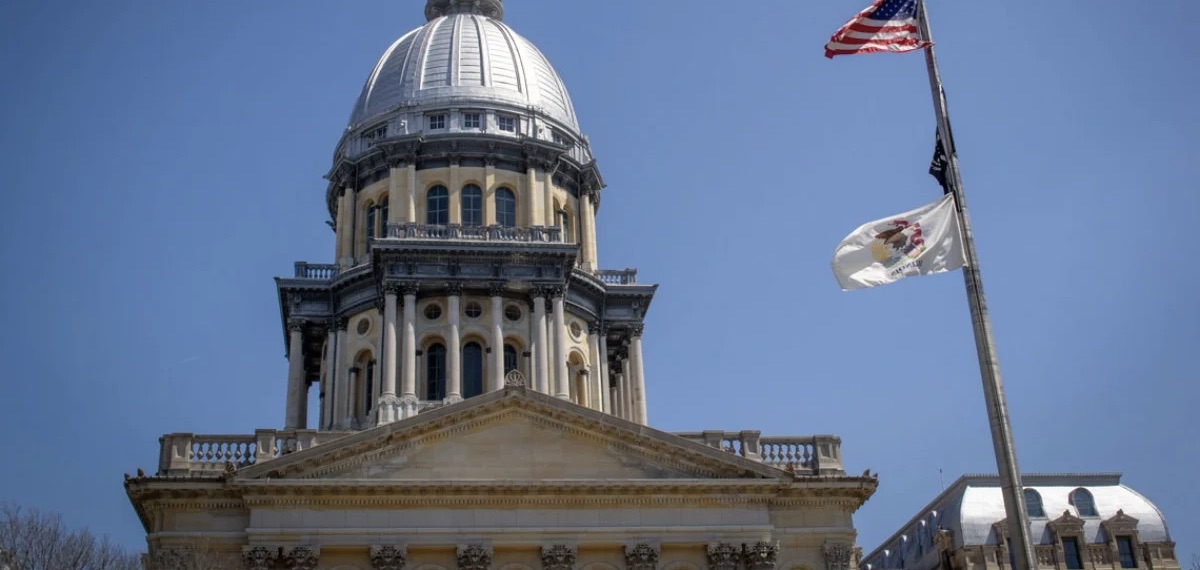 Voters in seven Illinois communities favored nonbinding measures supporting the state repealing restrictions on investing in companies that boycott Israel, according to preliminary returns from Tuesday’s election.
The measures do not repeal Illinois law, change pension investment rules or require legislators to act.
The ballot language varied. Oak Park asked if the state should repeal laws barring state investment in businesses that boycott Israel, while Champaign and Cunningham asked about repealing pension-code provisions penalizing such businesses.
Three Peoria County townships asked voters to support repeal legislation, while DuPage Township asked if individuals and businesses should be allowed to boycott and divest from Israel.
The questions received “yes” majorities in Oak Park village and Normal, Champaign, Cunningham, Peoria, Kickapoo and Medina townships. The results of a measure in DuPage township could not be verified by JNS at press time.
Joe Sabag, executive director of the Florida Israel Institute at Florida Atlantic University, whose work helped the state formulate its anti-boycott, divestment and sanctions laws, told JNS that the measures are part of a “broader effort happening at the state level” to try to repeal the anti-boycott law in Illinois.
“The fact that this is happening following a nearly successful repeal effort this past spring raises further concerns about the effort and seriousness, or lack thereof, on the part of Jewish and pro-Israel organizations in the state,” Sabag said.
Illinois law restricts state-funded retirement systems from investing in companies identified as boycotting Israel. Repealing those provisions would require action by the state government. Illinois Gov. JB Pritzker, a Democrat who is Jewish and who was reelected with about 60% of the vote, is considered a potential 2028 presidential candidate.
Day 1,124 — Tuesday, November 3
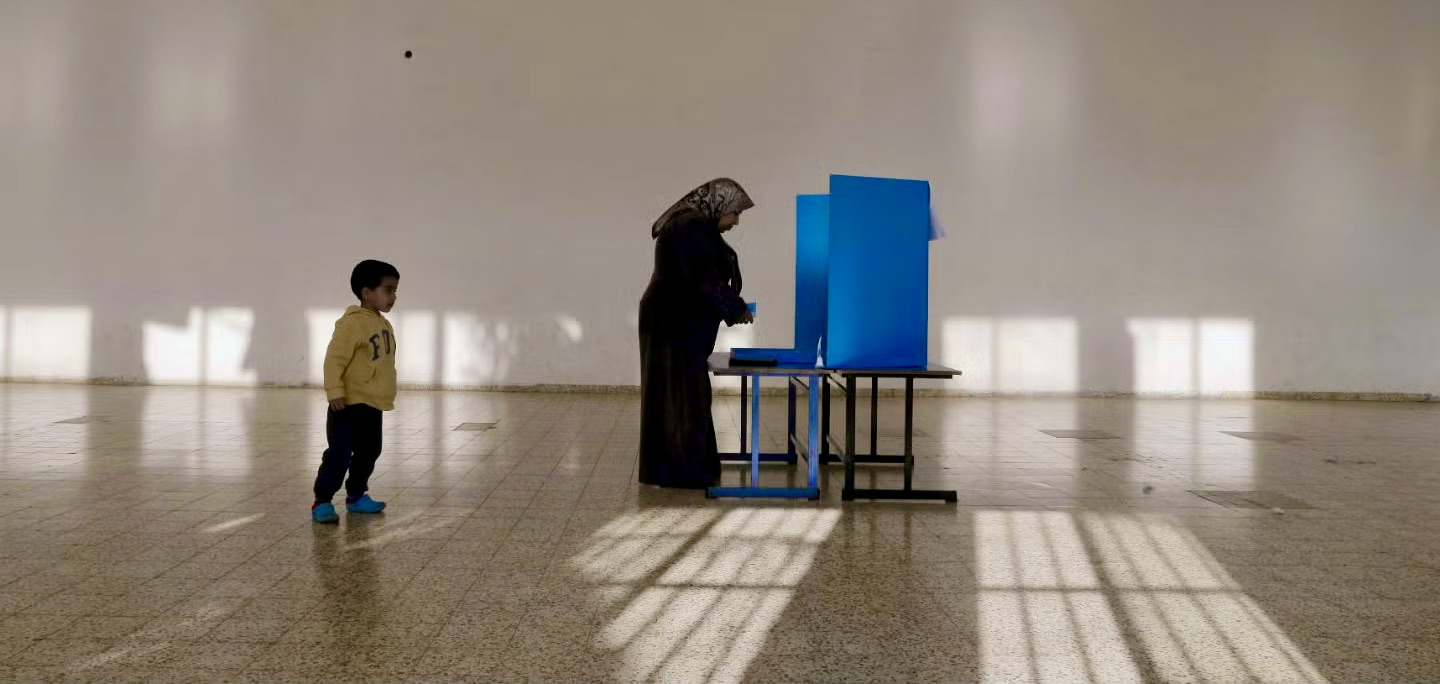 Dozens of Arab men attempted to intimidate a ballot supervisor carrying out his duties in the town of Majd al-Krum in the central Upper Galilee during Israel’s general election last week, a witness told JNS on Monday.
The incident in Majd al-Krum is one of hundreds of cases of alleged irregularities at voting stations with a sizable Arab constituency in the Oct. 27 election, in which Arab parties received a record 19 seats out of 120 in the Knesset.
Police have arrested at least four people they say are connected to the Ra’am Islamist party, keeping two of those suspects under arrest on bribery charges and foreign intervention.
In Majd al-Krum, “it looked like the whole village rose up to intimidate a regional ballot supervisor, who was just doing his job,” Aviad Menachem Libman, a local ballot supervisor in Majd al-Krum, told JNS.
The regional supervisor, who has a beard and wears a kippah, did not answer the hecklers, who shouted at him: “We’re kicking you out tonight” as they followed him throughout the school that housed the voting station, videos of the incident that surfaced on social media showed.
Several men faced off opposite the regional supervisor, prompting police officers to escort him away in an apparent attempt to avoid violence.
The regional supervisor did not reply by press time to requests by JNS for an interview.
Libman said: “The regional supervisor came to prevent election theft so they harassed and intimidated him. He did not argue, did not fight with them. Just trying to keep the election clean.”
Libman witnessed some irregularities a Majd al-Krum, he said. “We noticed there was a person at the voting station who was not part of the ballot committee, who was keeping tabs on who showed up. Marking a list. Voters gave him a serial number. We reported about it.”
He suggested that tracking the serial numbers was part of an illegal scheme meant to reward voters financially for showing up to vote.
Amit Halevi, a Likud Knesset member who serves as the party’s representative on Israel’s Central Elections Committee, said he’d seen a similar system at several voting stations in Rahat, a Bedouin city in the Negev. “It’s meant to indicate who gets paid,” he told JNS.
On Sunday, Israel’s Central Elections Committee chairman, Justice Noam Sohlberg, confirmed that serious suspicions had prompted him to order a Shin Bet investigation into foreign funding intended to influence the elections.
Speaking alongside Attorney General Gali Baharav-Miara and Israeli Security Agency (Shin Bet) Director David Zini, Sohlberg said the investigation was based on classified intelligence and remained confidential. A joint team of the Shin Bet, police and state prosecution would investigate the allegations. He said official results would be published on Wednesday as scheduled, and that they remain valid despite the suspicions.
“Serious suspicions have recently emerged that require examination, concerning funding from foreign sources intended to influence the election campaign, which may have a security dimension,” Sohlberg said. He did not identify the suspected foreign sources or implicate any political party.
Israeli Prime Minister Benjamin Netanyahu accused Arab parties of trying to “steal” the election, alleging bribery, intimidation and other irregularities. Referring to the arrest of three alleged Ra’am party activists in the Negev on suspicion of electoral bribery, he said in a video message: “It’s serious. It’s criminal.”
On Oct. 28, Likud issued a statement accusing Arab parties of stealing the election through bribery, threats, violence, forgery and illegal voter-mobilization software.
“The elections in Israel were stolen by Arab parties that support terror and the elimination of the Jewish state,” the statement read.
Halevi told JNS that Likud has flagged to the Central Elections Committee 1,200 cases, most in Arab-majority voting stations. He said Likud has identified 1,300 Arab-majority voting stations nationwide.
Halevi told Gadi Taub, an Israeli independent journalist who founded the Shomer Saf media platform, on Oct. 29 that he had learned on election night that supervisors had been offered a bribe of 400 shekels ($127), and later double that, to turn a blind eye to irregularities at the al-Khikmeh school in Rahat. The money was for voting for Ra’am, and was also offered in fuel payment cards, among other benefits, he said.
At a certain point, Halevi recalled, a power outage led to “all the ballots in Rahat going completely dark. People voted twice. Ballot supervisors sat there with flashlights, trying to locate, trying to figure out who had voted. They had no chance. It was a farce. I found two supervisors, women, in real distress. One was in tears.”
Day 1,123 — Monday, November 2
 96 bereaved family members who lost loved ones in terrorist attacks have signed a letter calling on the leaders of Zionist parties opposed to Prime Minister Benjamin Netanyahu not to form a government that includes or relies on the support of Arab parties.
The letter, initiated by the Choosing Life Forum, is addressed to several political leaders, including Yashar chairman Gadi Eisenkot, Naftali Bennett, and Yisrael Beytenu chairman Avigdor Liberman.
The appeal comes as political parties consider possible arrangements for forming Israel’s next government. The families are seeking to establish a clear red line regarding potential coalition partners, making it clear that they oppose any political cooperation with the Arab parties.
In the letter, titled “The Blood of Our Children Cries Out to Us from the Ground!”, the signatories allege that figures within the Arab parties have expressed support for acts of terrorism in which their loved ones were murdered. On that basis, they are demanding that the Zionist party leaders refrain from relying on those parties to form a government.
“You must not form a government with the help of those who supported the murder of our loved ones. We will not forgive you,” the families wrote.
The Choosing Life Forum emphasized that the signatures collected so far represent only the first stage of the initiative, with additional bereaved families continuing to join the appeal. The forum is also preparing to expand the campaign and deliver the letter directly to the party leaders to whom it is addressed.
In a statement, the forum stressed the personal tragedy behind each signature and the pain the families have endured since their loved ones were murdered.
“Behind every name on this letter is an entire world that was destroyed. A father, mother, brother, sister, son, or daughter who lost the person most precious to them in a terrorist attack. These are not numbers on a page. These are families who live with pain and loss every single day.”
“We appeal to Gadi Eisenkot, Naftali Bennett, Avigdor Liberman, and all the leaders of the Zionist parties: There are red lines that must not be crossed, even in the pursuit of forming a government. Do not take part in establishing a government that relies on those who supported the murder of our loved ones,” the statement continued.
“96 bereaved family members have already signed the appeal, and more families continue to join. The blood of our loved ones cries out from the ground, and we will not allow that cry to be silenced,” the forum said.
“Anyone who chooses to cross this red line should know that the bereaved families will neither remain silent nor forgive.”
Day 1,123 — Monday, November 2
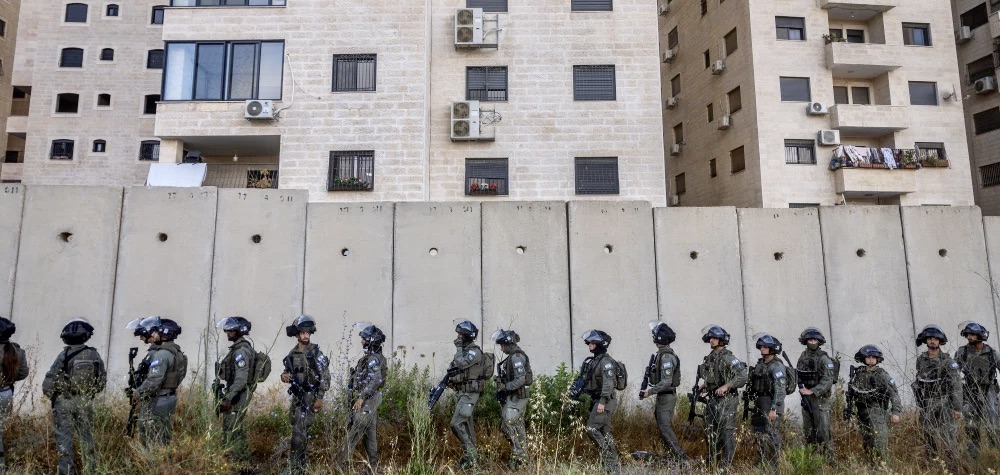 Hamas is calling for an escalation of terrorist attacks targeting Israeli civilians and security forces in Judea and Samaria, according to a social media post shared last week by the Judea and Samaria Situation Room (JSR), a centralized source for real-time updates on developments in the region.
According to JSR, a poster circulated on the Arab Telegram channel “Fida’i Filastin,” which is associated with propaganda from Hamas and other terrorist organizations, calls for increased attacks throughout Judea and Samaria and elsewhere in Israel.
The poster encourages both organized and lone-actor attacks, with the stated aim of undermining Israelis’ sense of security.
It features a quotation from Saleh al-Arouri, the former deputy head of Hamas’s political bureau who was killed in January 2024: “Strike them everywhere; they must lose their sense of security everywhere.”
The poster also depicts a terrorist holding a tactical knife alongside an inverted red triangle, a symbol used in Hamas propaganda to identify targets.
IDF Lt. Col. (res.) Maurice Hirsch, director of the Palestinian Authority Accountability Initiative at the Jerusalem Center for Security and Foreign Affairs (JCFA), told JNS that Hamas maintains an extensive, well-funded terrorist infrastructure in Judea and Samaria, with operatives continually planning additional attacks.
Hirsch pointed to dozens of Hamas-dominated organizations operating under the guise of charities that he said serve as conduits for funneling money to terrorism. He said these organizations also engage in da’wah, or Islamic religious outreach, which Hamas uses to indoctrinate Palestinians and promote its ideology.
“The Hamas infrastructure is well organized and well funded, and is constantly working and plotting to carry out additional terror attacks,” Hirsch said.
He added that the Palestinian Authority does nothing to confront Hamas, even in areas of Judea and Samaria under its security control.
Binyamin Regional Council head and Yesha Council chairman Yisrael Ganz told JNS that Hamas maintains an active terrorist presence in Judea and Samaria, challenging French President Emmanuel Macron’s Sept. 22 remarks to the United Nations General Assembly, in which he downplayed the group’s activity in the region despite its long history of deadly attacks against Israeli civilians and security personnel.
In his speech, Macron declared that “Hamas has never been active in the West Bank,” prompting criticism from Israeli officials.
More than a month after the remarks, Ganz said Macron had yet to correct his statement or apologize to the families of Israelis murdered in Hamas attacks in Judea and Samaria.
Ganz pointed to several victims of Hamas terrorism, including French citizen Netanel Shukrun, a father of six who was murdered in September 2026 when a Hamas terrorist opened fire on his vehicle as he and his eldest son were leaving the Ein Raya spring near Neve Tzuf, where they had gone to immerse ahead of Yom Kippur. Shukrun was killed while his son witnessed the murder.
Among other victims cited by Ganz were Lucy Dee and her daughters, Maia and Rina, who were murdered in a shooting by Hamas terrorists near Hamra Junction in the Jordan Valley in April 2023 while traveling to Tiberias during Passover.
He also noted that in June 2023, two Hamas terrorists opened fire at the Hummus Eliyahu restaurant and an adjacent gas station near Eli in Samaria, killing Harel Masoud, Elisha Antman, Ofer Fayerman and Nachman Mordoff.
Ganz described Macron’s continued silence as “a moral disgrace and an intolerable display of contempt for the bereaved families and the victims of terrorism,” and called on the French president to retract his remarks and apologize to the families.
“We will not allow him to erase history or the blood of those who were murdered,” Ganz said.
Dr. Yehuda Yemini, a political psychologist, Middle East expert and author of the new book It Was Never About Territory: Israel, Islam, and What Really Stands in the Way of Peace in the Middle East, told JNS that Hamas established terror cells in Judea and Samaria and eventually developed a local leadership of senior operatives that maintained contact with the group’s leadership in Gaza.
Following the 2004 death of Hamas founder Sheikh Ahmed Yassin, that local leadership became increasingly independent in its operations, Yemini explained. However, he said, the ideology remained unchanged: a total struggle against Israel.
Yemini added: “The words of French President Macron that Hamas only operates in Gaza are clearly not true. In my opinion, Macron also knows the reality; he is simply trying to flatter the Islamists who are burning his country.”
Day 1,122 — Sunday, November 1
 US President Donald Trump said Saturday night that Iran was seeking an agreement with Washington but questioned Tehran’s reliability, while warning that the United States could quickly strike the remaining Iranian nuclear facilities.
Speaking to reporters at his Mar-a-Lago estate, Trump reiterated that he would not allow Iran to acquire nuclear weapons.
“Iran will never have a nuclear weapon. They want to make a deal; we’ll find out about that,” he said.
Asked about the progress of negotiations, Trump expressed skepticism about Iran’s willingness to honor any agreement.
“They’re going fine, but they’re not very reliable. They make a deal and then they back out. They want to make a deal. We’ll see if they make a deal.”
The President also indicated that Washington was under no immediate pressure to conclude the Qatari-mediated negotiations, citing the damage already inflicted on Iran’s military capabilities.
“We’re not in very much of a hurry from the standpoint that we’ve knocked out their navy. We’ve knocked out their air force. We’ve knocked out their anti-aircraft. We’ve knocked out almost every piece of military equipment they have. We’ve knocked out their nuclear. We still have to take care of, I would say, one or two sites, but we can do that in ten minutes. You probably have to look at Pickaxe Mountain. We could do that all very quickly.”
Trump declined to disclose whether he was considering renewed military operations against Iran in the coming days.
When a New York Times reporter asked whether he expected to return to war with Iran as early as this week, Trump responded sharply.
“Why would you ask such a stupid question? Let’s say I did – would I tell you? I can’t tell you things like that.”
His remarks came hours after The Wall Street Journal reported that Trump had spoken with Prime Minister Benjamin Netanyahu on Saturday about the situation involving Iran, as the administration continued evaluating possible military action.
Meanwhile, sources involved in mediation efforts told the Qatari newspaper Al-Arabi Al-Jadeed that negotiations taking place in Qatar had made progress.
The United States has not confirmed the reported diplomatic developments.
Day 1,121 — Saturday, October 31
 Iranian state media halted its coverage of Israel’s election for several hours after early results indicated Israeli Prime Minister Benjamin Netanyahu was not headed for the crushing defeat Tehran had anticipated.
Regime media began an overnight live broadcast Tuesday by celebrating what it described as the “total defeat” of the Israeli prime minister.
[When it was apparent that Netanyahu’s Likud party would be the largest and exit poll projections would not be as expected], the election largely disappeared from state television’s news agenda for several hours.
When Iranian media resumed its election coverage, attention shifted from Netanyahu’s performance toward gains by Arab parties and the inability of either the government or opposition bloc to secure a parliamentary majority.
Radio Tehran suggested the resulting political uncertainty could provide opportunities for Iran-backed militant groups to wreak havoc.
“The current situation could lead to the overthrow of the Zionist regime and empower the axis of resistance, including in the Gaza Strip, for further operations against the Zionist occupation,” the station claimed.
Day 1,121 — Saturday, October 31
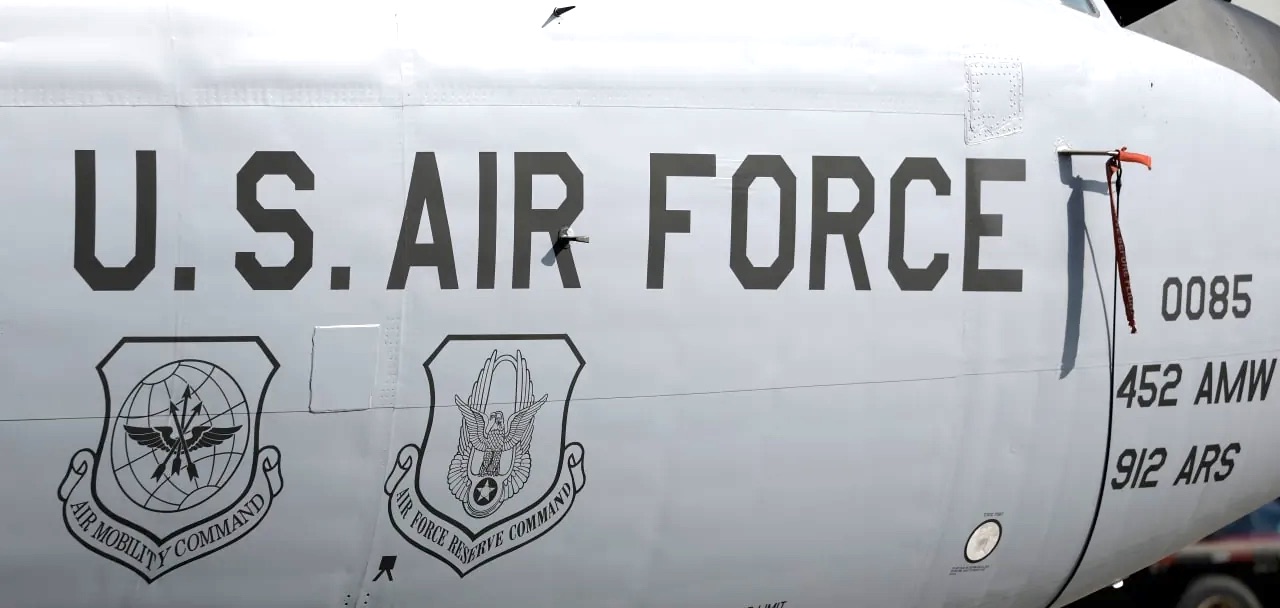 Ten US Air Force (USAF) transport aircraft arrived at IAF bases in southern Israel as part of a larger Middle East air convoy transferring military equipment across the region, KAN News reported on Thursday.
The aircraft, which came from Texas’ Fort Bliss base, are likely stocked with air defense systems intended to protect regional assets amid reported US warnings earlier this week of a potential “short, focused war with Iran,” according to KAN.
Fort Bliss base hosts one of the US military’s largest air defense stockpiles, with the report suggesting that the aircraft may be replenishing US interceptor missiles in Israel on systems like THAAD and Patriot.
Other aircraft in the air convoy landed in Jordan, Qatar, and Saudi Arabia, with the KAN report coming after an earlier report that the US had transferred an additional Patriot system to the region pending a potential escalation with Iran.
The report did not specify which transport aircraft arrived in Israel, though they are likely C-5M Super Galaxys, C-17 Globemaster IIIs, or a combination of the two, since both can lift such heavy cargo.
An Israeli source told KAN that the US and Israel are closely coordinating on Iran, with reports that an additional US naval aircraft carrier will join American forces in the region, alongside an additional Marine unit.
“Although a decision has not yet been made on the matter, the Americans and Israel are preparing for any decision that [US] President [Donald] Trump makes,” the source said.
Additional reports cited by KAN said that US forces across the Middle East are replenishing weapons stockpiles, with some American troops ordered to leave the region.
Day 1,120 — Friday, October 30
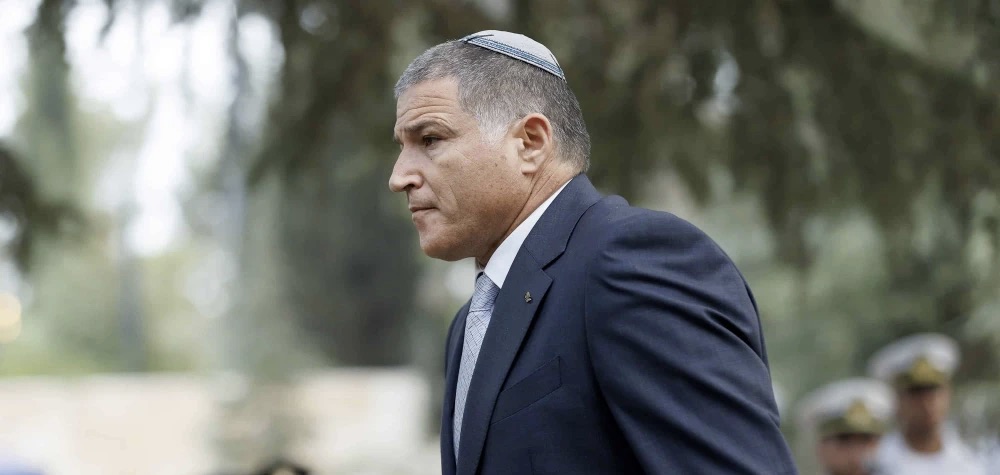 Shin Bet Director David Zini personally briefed Prime Minister Benjamin Netanyahu, Yashar party chairman Gadi Eisenkot and opposition leader Yair Lapid on suspicions of foreign interference in the elections for the 26th Knesset, N14 reported, as the agency continues investigating the allegations.
On Thursday, Judge Noam Sohlberg, the Central Elections Committee chairman, instructed Zini to investigate suspicions that foreign entities unlawfully funded efforts to increase Arab voter turnout.
The Shin Bet issued a detailed clarification Thursday evening following reports and political controversy over the investigation, stressing that the intelligence behind the inquiry was gathered independently and did not originate with a political party or other political source.
Zini briefed Netanyahu, Eisenkot and Lapid on the main suspicions under investigation.
According to the Shin Bet, those briefings were conducted with the approval and at Sohlberg’s request.
Until the elections concluded, Sohlberg was the only person outside the Shin Bet who had access to the intelligence that prompted the inquiry, the agency said.
“The information in question originated from the collection of information carried out by the Shin Bet pursuant to its statutory mission regarding the identification of foreign influence, and did not come from a party or political entity on either side of the political map,” the official statement said.
The agency also cautioned against drawing conclusions about the allegations while its investigation remains underway.
Reports and assessments concerning the extent of any foreign interference, the identities of those involved and the nature of the suspicions do not necessarily represent the Shin Bet’s findings, it said.
“Any statement concerning the content or nature of the suspicions is not made on behalf of the Shin Bet.”
Once the investigation is complete, the findings will be presented to Justice Sohlberg, who is authorized to make decisions on the matter in his capacity as chairman of the Central Elections Committee.
Day 1,120 — Friday, October 30
 A new House Committee on Education and the Workforce report on Jew-hatred in the American Psychological Association found that anti-Israel and anti-Jewish activists have “successfully co-opted” the association, which has about 190,000 members.
The report, which was released as the accreditation advisory committee of the U.S. Education Department recommended that the APA’s recognition be suspended for a year, cites internal communications showing that activists influenced the group’s response to Oct. 7 and its handling of complaints from Jewish psychologists.
It details instances in which APA leaders allegedly minimized Jew-hatred, resisted initiatives to address it and embraced political frameworks that portray Israel as a colonialist state.
“For an organization dedicated to understanding human behavior, the APA has done a remarkable job of ignoring prejudice within its own ranks,” stated Rep. Tim Walberg (R-Mich.), chair of the House Education and Workforce Committee.
“Its leaders have allowed antisemitism to fester and radical activists to turn a respected scientific institution into a platform for political agendas, while Jewish psychologists are ignored and ostracized,” he said. “The APA has a credibility problem, and its leadership has no one to blame but itself.”
According to the report, leaders of the association “caved to pressure to whitewash” the Oct. 7 attacks, “mocked and dismissed Jewish psychologists sounding the alarm on antisemitism” and “appeased radical activists who gutted protections against antisemitism and accused Jews of having white privilege.”
The then chief diversity officer of the APA “responded internally, ‘Sigh!’” when a “Jewish psychologist raised concerns about antisemitism,” the House panel said.
“Another senior official complained about ‘the Jews who are so angry at us,’ accusing them of ‘feeding hatred’ by speaking out against the association,” it said.
“The APA adopted a watered-down antisemitism resolution over the objections of a group of Jewish psychologists advising its board,” the panel said. “Meanwhile, opponents of recognizing a Jewish ethnic psychological association argued that Jews benefit from ‘white privilege’ and do not face the same discrimination as other minority groups.”
Days after Oct. 7, association leaders sought input on their public statement from the American Arab, Middle Eastern and North African Psychological Association, an affiliated group that described the attacks as a “resistance action,” according to the report.
The group’s incoming president urged the APA to remove the phrase “terrorist attacks” and argued that there was “lots of problematic and racist language” that would upset members in the Middle East and North Africa.
The final statement did not reference terrorism.
The APA described the group internally as an “antisemitism stakeholder,” according to the report, which says that the group “does not represent Jews” but instead “foments antisemitism.”
The report also details exchanges involving Lara Sheehi, a George Washington University psychologist whom Jewish students accused of discrimination.
After Sheehi emailed APA leaders accusing those reluctant to recognize Israel’s “all-out genocide” of “internalized racism,” the association’s then-president Thema Bryant praised her “heart, truth, challenge and compassion.”
In an email cited in the report, Sheehi expressed “grave concern about a Jewish psychologist’s claim that Jews are indigenous to Israel” and told association leaders “that the idea of ‘Jewish folks’ as the ‘real’ indigenous people of Palestine is dangerous, ahistorical propaganda.”
Cynthia de las Fuentes, the association president at the time, thanked Sheehi “for bringing this to our attention.”
The senior director of the association’s human rights team cautioned the association against joining the Anti-Defamation League’s workplace pledge to fight Jew-hatred, because the ADL had criticized Sheehi.
Jewish members who sought to establish their own ethnic psychological association faced objections that Jews benefited from white privilege. One opponent called the proposal “rooted in its own form of anti-black logics,” the House panel found.
The association’s ethnic minority affairs committee said that recognizing a Jewish ethnic group without “urgent, unapologetic action on Palestine” risked “reinforcing inequities and undermining solidarity across marginalized groups.”
The report describes other instances in which association leaders allegedly sought to balance discussions of Jew-hatred with concerns about Islamophobia or downplayed Jewish members’ complaints.
It criticizes the association’s embrace of “decolonial psychology,” which frames Israel as a colonialist state and, according to the report, “links mental wellness with Palestinian ‘liberation’ achieved through resistance and mental illness with Zionism.”
JNS recently spoke about Jew-hatred at the association with Miri Bar-Halpern, a psychology lecturer at Harvard Medical School who testified in September before the National Advisory Committee on Institutional Quality and Integrity, which advises the U.S. Department of Education on accreditation.
Bar-Halpern warned that Jewish patients could find themselves working with therapists who regard Zionism as something to be ashamed of and believe that healing requires abandoning Israel and Jewish beliefs.
The report cites the association’s refusal to recommend trauma psychologists for a White House screening of “Screams Before Silence,” a documentary about Hamas’s sexual violence on and after Oct. 7.
One official wrote that “I fear providing some names might insert us into the politics of the film and audience.”
The committee cited messages on an association listserv praising Hamas, a U.S.-designated terror organization since 1997.
One member argued that Hamas was “protecting civilians” and deserved “kudos.”
At a 2024 conference of the affiliated Arab, Middle Eastern and North African association, a session promised to examine “psychological warfare by Zionist agitators, police and administrators” against anti-Israel campus encampments.
The APA’s 2025 convention featured a discussion alleging that “psychological operations tactics” had been used to discredit Palestinians and student activists, according to the House report.
In February, the association’s Council of Representatives approved, by a 127-37 vote, a revised Jew-hatred resolution containing a clause about the “weaponization of antisemitism.”
The council adopted the resolution over objections from the association’s board and without approval from the Collaborative of Jewish Psychologists, a group formed to advise the board on the measure.
The House panel stated that the report’s findings would inform legislation intended to ensure accrediting organizations uphold “fairness, integrity and equal treatment.”
The association “cannot credibly set standards for the psychology profession” while failing to confront discrimination within its ranks, it said.
Day 1,119 — Thursday, October 29
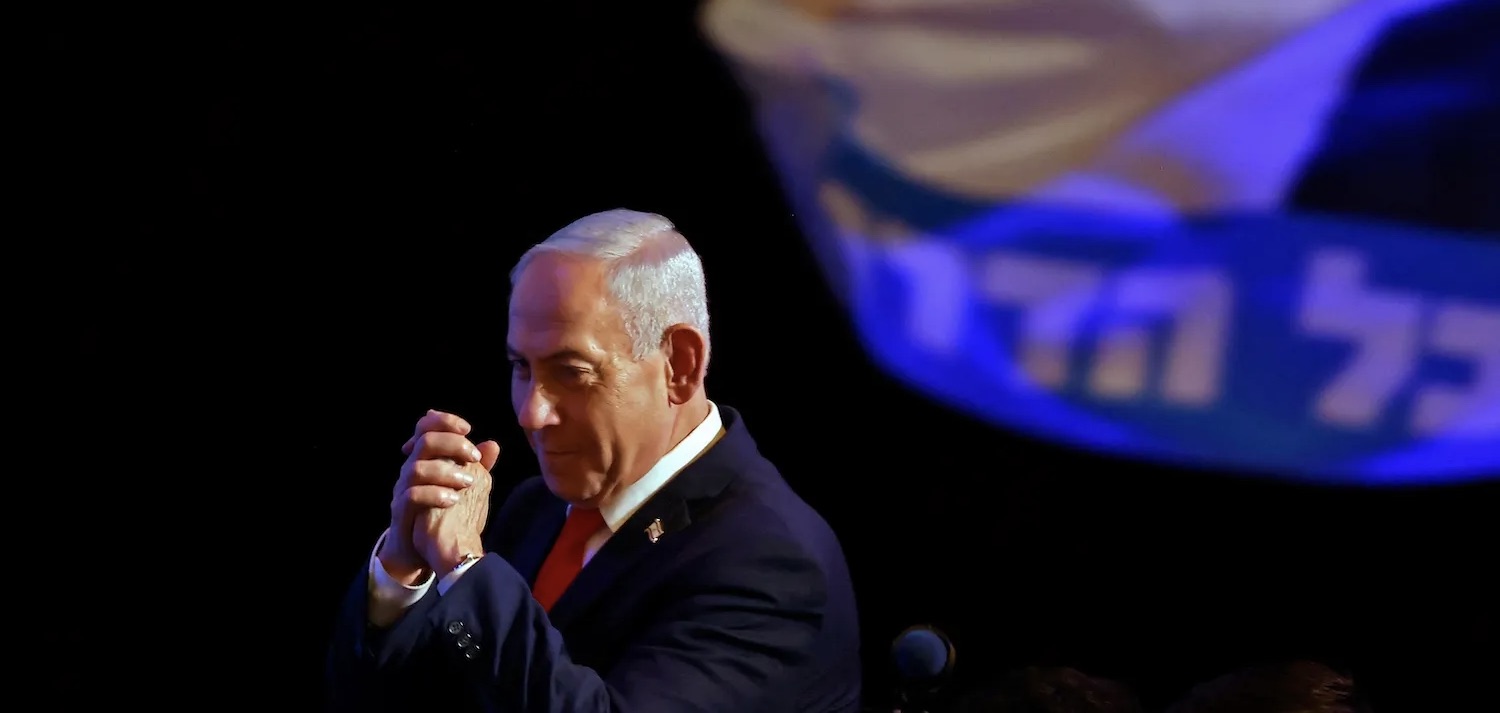 Prime Minister Benjamin Netanyahu called for a strong right-wing government and warned against forming one dependent on Arab parties early Wednesday, telling activists and journalists at Likud’s election headquarters in Jerusalem to await the final count after exit polls left the outcome unresolved.
“The Likud is the largest party in Israel,” Netanyahu said. He also stated that the right-wing bloc held a decisive majority among the Jewish and Zionist public and those who supported the Jewish state.
He warned against establishing a government reliant on what he called anti-Zionist Arab parties, accusing them of opposing Israel’s existence and attacking its soldiers.
Day 1,119 — Thursday, October 29
 Far-right podcaster and Holocaust denier Nick Fuentes reacted angrily to the results of Israel’s general election, declaring that the “Jews win again” after Prime Minister Benjamin Netanyahu’s Likud party emerged as the largest faction in the Knesset.
In a video circulated on X on Wednesday, Fuentes described the election results as a major disappointment, expressing frustration that Netanyahu appeared to have retained a path to remaining in power despite a closely contested election.
“I got to be honest, the goyim are getting killed out here,” Fuentes said. “Man, we need a win. They can’t keep getting away with it.”
“Israel held their elections today and it looks like Netanyahu has won.”
Fuentes added sarcastically, “Congratulations! All right, Jews win again.”
The remarks came after Tuesday’s Israeli election produced a political deadlock, with Netanyahu’s Likud winning more seats than any other party but neither the prime minister’s governing bloc nor the Jewish-led opposition securing the 61 Knesset seats necessary to establish a majority government.
According to results released by the Central Elections Committee on Wednesday evening, Netanyahu’s right-wing and religious bloc was projected to receive 53 seats, compared with 48 for the Jewish-led opposition and 19 for the two Arab parties.
The figures were preliminary, with hundreds of thousands of double-envelope ballots still awaiting counting.
Fuentes has repeatedly promoted antisemitic conspiracy theories, expressed admiration for Adolf Hitler and denied or minimized the Holocaust.
In a March 2023 broadcast, Fuentes declared, “I think the Holocaust is exaggerated,” before adding, “I think there’s a Jewish conspiracy.”
Day 1,119 — Thursday, October 29
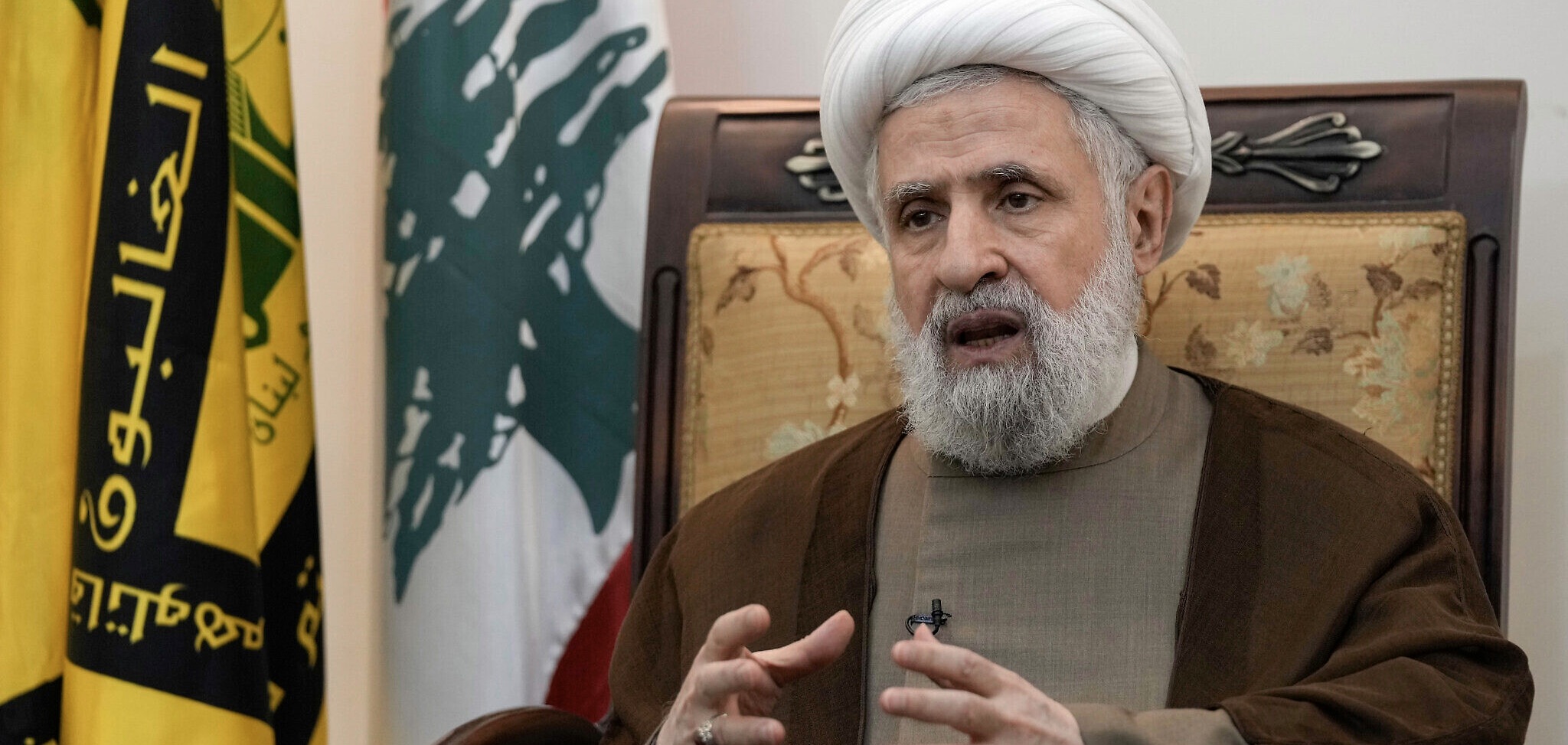 Hezbollah leader Naim Qassem said Wednesday that the outcome of Israel’s Knesset election would have no bearing on the Iran-backed terrorist organization’s activities against the Jewish state, pledging to continue its armed campaign regardless of who forms the next Israeli government.
In a written statement reported by AFP, Qassem dismissed the significance of Israel’s political leadership and demanded an Israeli withdrawal from territory claimed by Lebanon.
“We do not concern ourselves with who governs Israel, but let it be perfectly clear that it cannot continue its occupation and must leave our land,” Qassem said.
He also reiterated Hezbollah’s refusal to relinquish its weapons, insisting that the organization would continue what it describes as resistance against Israel.
“The resistance will continue… and will stand up to the aggression directed against it and against Lebanon, and there is no room to discuss the disarmament” of Hezbollah “as long as the occupation persists and its aggression continues,” he added.
Hezbollah leader Naim Qassem said Wednesday that the outcome of Israel’s Knesset election would have no bearing on the Iran-backed terrorist organization’s activities against the Jewish state, pledging to continue its armed campaign regardless of who forms the next Israeli government.
In a written statement reported by AFP, Qassem dismissed the significance of Israel’s political leadership and demanded an Israeli withdrawal from territory claimed by Lebanon.
“We do not concern ourselves with who governs Israel, but let it be perfectly clear that it cannot continue its occupation and must leave our land,” Qassem said.
He also reiterated Hezbollah’s refusal to relinquish its weapons, insisting that the organization would continue what it describes as resistance against Israel.
“The resistance will continue… and will stand up to the aggression directed against it and against Lebanon, and there is no room to discuss the disarmament” of Hezbollah “as long as the occupation persists and its aggression continues,” he added.
The terrorist organization has also rejected repeated calls to surrender its weapons and has continued violating the ceasefire, undermining efforts to put the agreement into effect.
Israel, meanwhile, has continued conducting strikes against Hezbollah positions in southern Lebanon in response to the ceasefire violations.
Day 1,118 — Wednesday, October 28
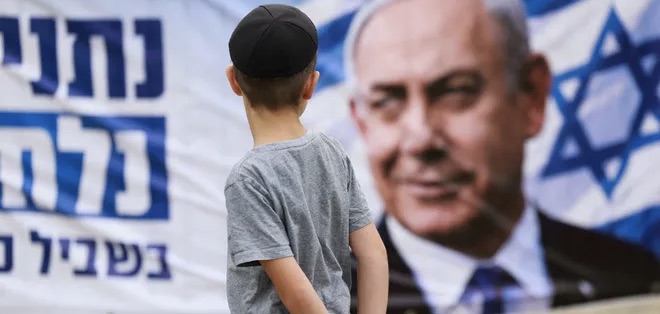 Prime Minister Benjamin Netanyahu’s bloc maintained its lead and was projected to win 53 seats in the next Knesset, while the opposition bloc was projected to win 48 seats, the Central Elections Committee reported Wednesday evening.
More than five million votes had been counted in Tuesday’s election, it said.
Both blocs fell short of the 61 seats needed for a Knesset majority without the support of the Arab parties, which at last count had won a record-breaking combined total of 19 seats.
The official vote count reached 90.2% early on Thursday and only excluded double-envelope ballots, which were set to be counted throughout the night.
Those ballots allow eligible Israelis, including soldiers, hospital patients, prisoners, and certain election workers, to vote outside their designated polling stations. They could have a significant effect on the final election results.
Day 1,118 — Wednesday, October 28
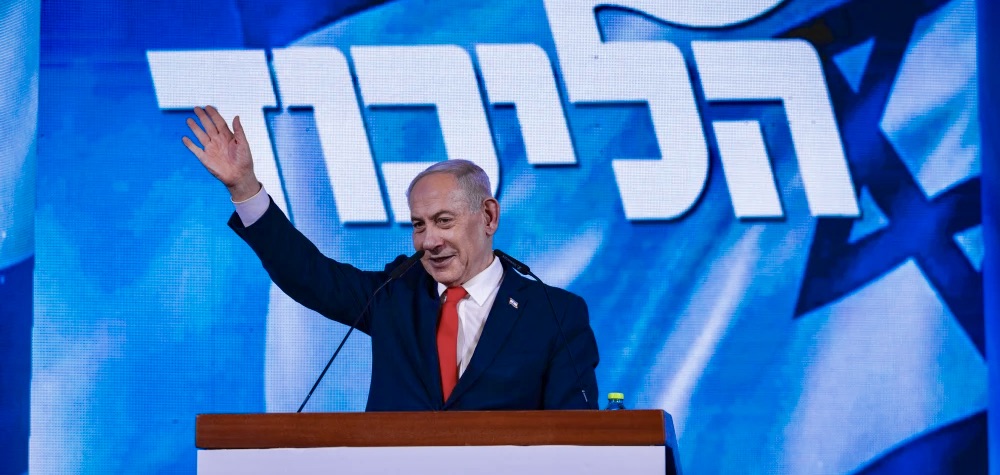 Israeli Prime Minister Benjamin Netanyahu’s right-wing bloc appeared to outperform most exit polls following Tuesday’s national election, pulling ahead of the opposition overnight, according to partial results published by Israel’s Central Elections Committee.
Based on partial results, Netanyahu’s right-wing bloc was projected to secure 56 seats, compared with 48 for the opposition and 16 for the Arab parties, though the figures remained subject to change, according to Israeli media.
While Netanyahu still lacked a clear path to the 61 seats needed to form a governing coalition, the partial results, if sustained, could put him in prime position to receive the first opportunity to form Israel’s next government.
Netanyahu on Tuesday night hailed the results of the vote, saying it showed beyond any doubt that the “Likud is the largest party in Israel.”
“Do you remember how the propaganda channels manipulated public opinion? Likud—18 seats, 19 seats—they knew all along that it was a lie,” Netanyahu said, referring to surveys published by various Israeli news channels.
“They tried to discourage you, simply discourage you, from going to the polls. That’s what happened here. Well, the first thing that has become unequivocally clear is that Likud is the largest party in Israel. There is no disputing that,” he continued.
The second thing that has become clear, according to the premier, “is that the right-wing bloc has a clear, overwhelming majority among the Zionist public, among the Jewish public, and among all those who support a Jewish state.”
Netanyahu stated, “And that is why I said, and I say again, that we must establish a strong national right-wing government … We must not, absolutely must not, put Israel at risk by forming a government that relies on anti-Zionist parties—parties that oppose our very existence.”
Israeli Foreign Minister Gideon Sa’ar said in an X post on Tuesday night that “the left’s celebration is premature.”
“The certainties of biased commentators are ludicrous,” Sa’ar, a Knesset candidate for the Likud Party, wrote in Hebrew.
“One thing is reasonably clear: Likud is the biggest party in Israel,” he added.
In his post, Sa’ar shared archival footage of Menachem Begin, Likud’s founder and its first prime minister. In it, Begin is seen urging patience with results on the eve of the party’s historic 1977 breakthrough election victory.
Day 1,118 — Wednesday, October 28
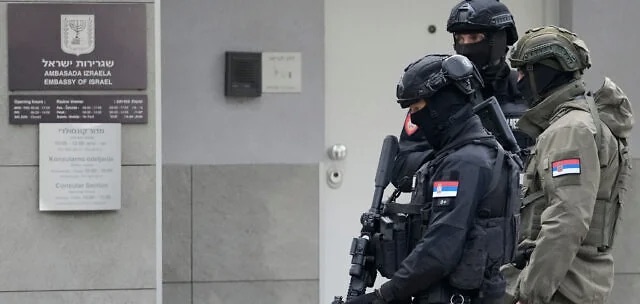 Serbian police say that an unidentified assailant attacked a guard with knives outside the Israeli Embassy in Belgrade and was killed just after midnight.
Interior Minister Ivica Dacic says that police are treating the incident as a “terrorist attack.” He raised the terror threat to the highest level and stepped up police presence at key locations.
Dacic says that “a minor, so far unidentified… shouting Allahu Akbar, attacked the member of Gendarmerie and attacked him with two knives.”
He adds that the police officer “liquidated” the assailant in “self-defense” and was lightly wounded.
Dacic says that Serbia’s security agencies had been monitoring the attacker, who he says was a supporter of the Islamic State group. Dacic says that “[the attacker] kept the black flag in support of the Islamic State on his Instagram” account.
There is no comment from the Foreign Ministry.
In June 2024, an attacker with a crossbow wounded a Serbian police officer guarding the Israeli Embassy in Belgrade. The assailant was shot and killed by a guard.
Day 1,118 — Wednesday, October 28
 The United Nations calls the current clashes in Judea and Samaria “record violence.” Jewish farmers in Judea and Samaria call it something else.
For thousands of years, Judea and Samaria have been central to the story of the Jewish people. Today, as farming families raise children and connect with their land, they claim that the international media tells a very different story.
Farmer Yehuda Twersky told CBN News, “I mean, almost every day, I open up the news, and I hear some news stories about how I’m trying to kill the Arabs here in the area or poison their water systems. And it’s just, it’s unbelievable. You can’t, I can’t connect the stories to the reality and to the facts.”
The United Nations insists that attacks by Israeli settlers against Palestinians are at unprecedented levels.
The U.N.’s Ramiz Alakbarov stated, “So far this year, the U.N. has documented more than 1,430 incidents involving Israeli settlers that resulted in casualties, property damage or both, affecting approximately 260 Palestinian communities.”
The Israeli organization Regavim challenges the classification of those incidents. After reviewing more than 8,000 cases in the U.N.’s database from 2016 to 2023, the group found that most had nothing to do with violent attacks by Jewish residents.
Meir Deutch of Regavim explained, “More than 95 percent of these cases out of the more than 8000 cases, more than 95 percent had nothing to do with settlers. And it had nothing to do with violence.”
Jewish families living in Judea and Samaria say that their side of the story is not being told.
On one cattle ranch in the Binyamin Region, a Jewish farmer and his wife are raising two young boys. Over four years, they’ve grown their herd, although their work has come with real dangers. The farmer revealed that he was attacked after rushing to help two Jewish ranchers who were being beaten.
The farmer told us, “I was sitting in my house on Shabbat in the ranch, and my shepherd told me that a few Arabs were attacking ranchers from a closer village. I called the police, the army, the security forces around here. He took a metal post, six meters, and hit me in the head.
The blow knocked him unconscious and sent him to the hospital. His wife, left at home with their children, had no idea what might happen next.
His wife recalled, “So, he called me to tell me, ‘I’m okay, but I was attacked. I’m going to the hospital. I was the only adult on the farm at this point. So it was a few hours of, I don’t know what’s happened, but I need to show to my kids that everything is okay.”
They’re not the only family with a story of violence. A 23-year-old shepherd whose face we concealed for his own safety is married and a father of two.
He grew up in Jerusalem before heading to the hills to work as a shepherd. The attack against him came just weeks after the October 7th, 2023, massacre by Hamas.
“It took over half a year, lying in a bed in the hospital, learning to do basic things from the beginning, to move my hands,” the farmer said.
He refused to let the incident drive him away despite the constant danger.
“You can never lay your head down and rest because you always have to be on guard,” he told us. “You see that no one’s penetrating your area. They aren’t trying to attack your shepherds or your sheep or your livestock. It happens all the time.”
Binyamin Regional Council Governor Yisrael Ganz reports a sharp surge in recent incidents targeting local farming communities during the critical harvest season.
“In the last week, we faced more than about, I will say, about 50 terror attacks against our farmers in compared that about 20 to the week before,” he noted.
Ganz insists that the attackers are also using images and video to portray the farmers as aggressors.
The story of settler violence here in Judea and Samaria is sometimes just that – a story.
For the family of the injured farmer, despite the danger, the mother believes that raising her children is a privilege rooted in their connection to the land and its future.
She observed, “So every time someone asks me why I live on a farm, I say that it’s for my kids. Everything that we’re doing here, the mission, the Zionism mission, is for my kids – my kids, everyone else’s kids; it’s for the next generation. So I wish for my kids to be able to feel safe in our land.”
cbn Israel
Day 1,117 — Tuesday, October 27
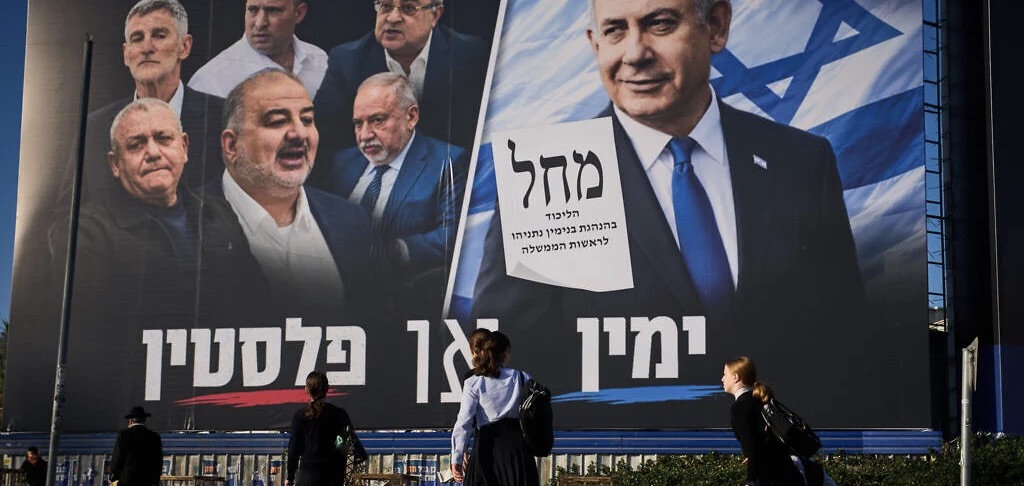 Prime Minister Benjamin Netanyahu went through Israel’s accomplishments in the wars since the Hamas-led October 7, 2023, terror onslaught in his post-election speech at Likud election headquarters in Jerusalem.
“Iran is weaker than ever, Israel is stronger than ever,” he says.
He says that along with US President Donald Trump, Israel will end the Iranian threat once and for all.
[He then thanked Likud supporters and MKs]
“We are still waiting for the true results,” he says.
“The Likud is the biggest party in Israel,” he says to cheers.
“The right-wing bloc has a clear, decisive majority among the Zionist public,” he says, “among the Jewish public and all those who support the state.”
For this reason, he says, “We need a right-wing, national, strong government. That’s what has to be done.”
It is unthinkable “to endanger Israel and set up a government that relies upon anti-Zionist Arab parties,” he says, “parties that oppose our very existence, that regard Hamas as a charitable organization, that call our soldiers war criminals.”
toi
Day 1,117 — Tuesday, October 27
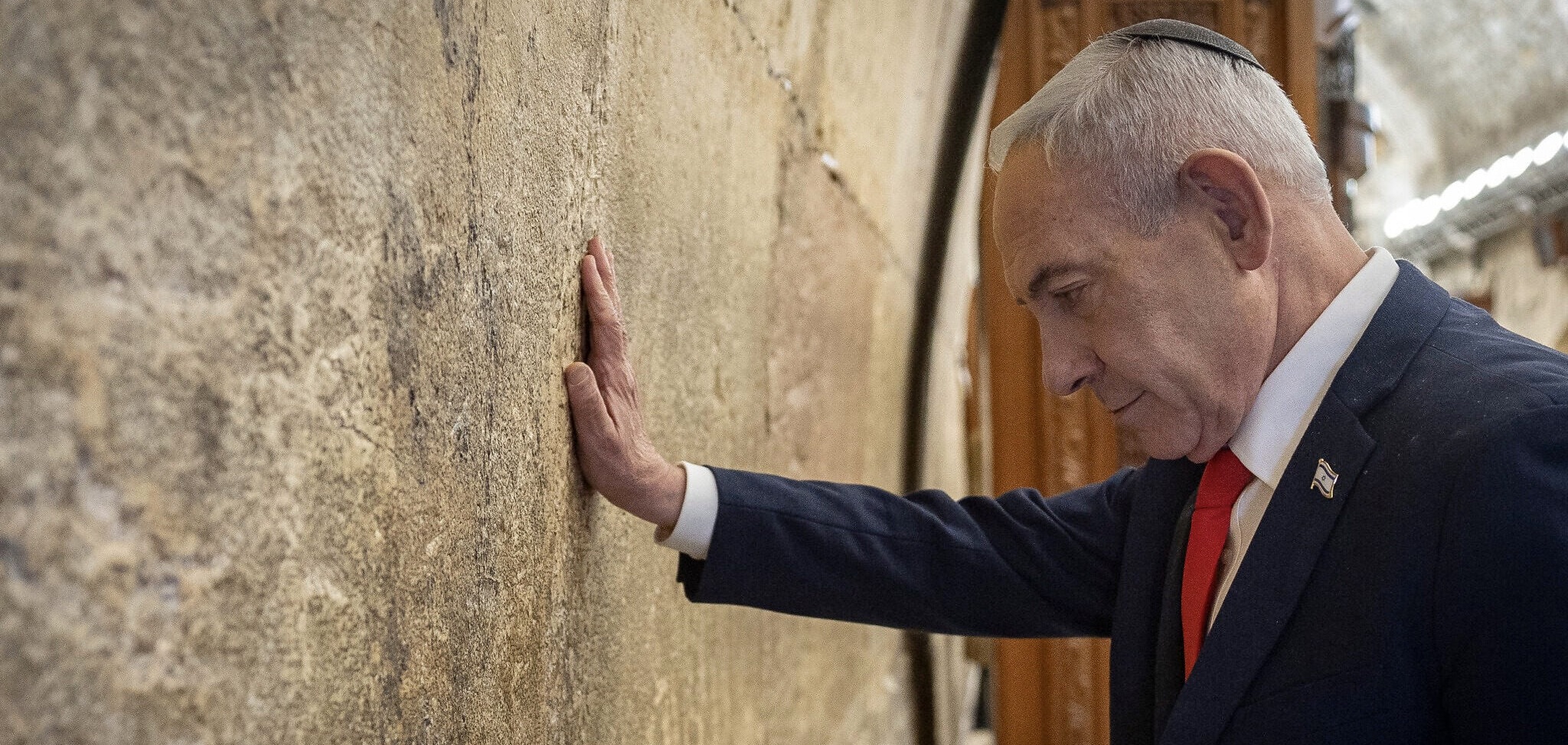 Prime Minister Benjamin Netanyahu visited the Western Wall on Monday evening, hours before polling stations opened for the Knesset elections, and placed a handwritten note between the ancient stones.
In the note, Netanyahu wrote, “For the lives of IDF soldiers, our heroes, for victory over our enemies, and for the success of our people.”
“The Eternal One of Israel does not lie,” his note concluded.
Netanyahu traditionally visits the Western Wall before every election to pray.
Ahead of the 2020 elections, he placed a note at the site that read: “I pray that with one final great effort, we will bring a good government to the people of Israel, the Land of Israel, and the State of Israel.”
Day 1,117 — Tuesday, October 27
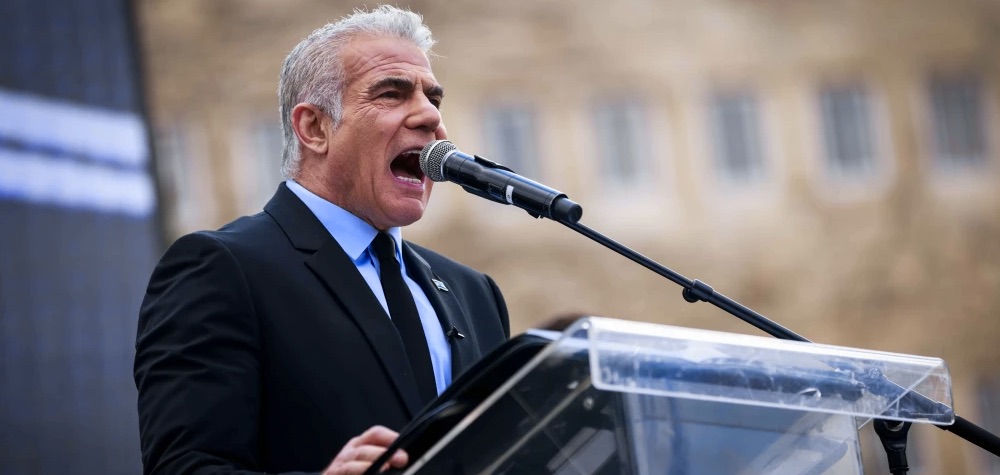 Israeli Foreign Minister Gideon Sa’ar on Monday criticized opposition leader Yair Lapid over a tweet seemingly celebrating the recent electoral losses of pro-Israel politicians in Brazil and Serbia.
For Lapid, the two “giant friends” of Israel—Brazil’s presidential candidate Flávio Bolsonaro and Serbia’s recently resigned President Aleksandar Vučić—are Israeli Prime Minister Benjamin Netanyahu’s “two associates,” Sa’ar wrote in Hebrew.
Brazilian President Luiz Inácio Lula da Silva, who defeated Bolsonaro on Sunday, has “accused Israel of committing genocide in Gaza, drawing a comparison to the murder of Jews in the Holocaust by Hitler,” said Sa’ar.
Lula “also claimed that 12.3 million (!) children were killed in the bombings during the war,” Sa’ar said in reference to the conflict sparked by the Hamas-led invasion of southern Israel on Oct. 7, 2023.
Sa’ar went on to criticize Lapid for “parroting” Lula’s campaign slogan, which translates roughly to, “We defend our sovereignty and we do not accept outside interests dictating our path.” This was stated in reference to alleged external interventions in Brazil’s politics from the likes of the United States.
Bolsonaro, by contrast, pledged to move Brazil’s embassy to Jerusalem as part of his election campaign, the foreign minister continued.
As for Vučić, whose political camp lost Sunday’s parliamentary election to a student-led opposition movement, Sa’ar noted: “I doubt whether Lapid has even the faintest idea of what Vučić did for Israel in the war.
“Turning one’s back on friends of Israel and fawning over those who act against it—this is a baseness of soul and a moral low, not to mention the level of foreign policy thinking on display here,” the Israeli minister added.
Earlier in the day, Lapid had posted a Hebrew-language message on X, saying, “Two more Netanyahu associates lost tonight in the elections due to a high voter turnout … Tomorrow the people of Israel begins the repair, returning Israel to a path of hope and success.”
Following the criticism, Lapid posted another tweet to clarify his position. He wrote, “I am very unhappy with Lula’s victory. I am always in favor of the pro-Israel candidate, that’s the most important criterion. But today, being close to Netanyahu is political damage everywhere in the world.”
Day 1,117 — Tuesday, October 27
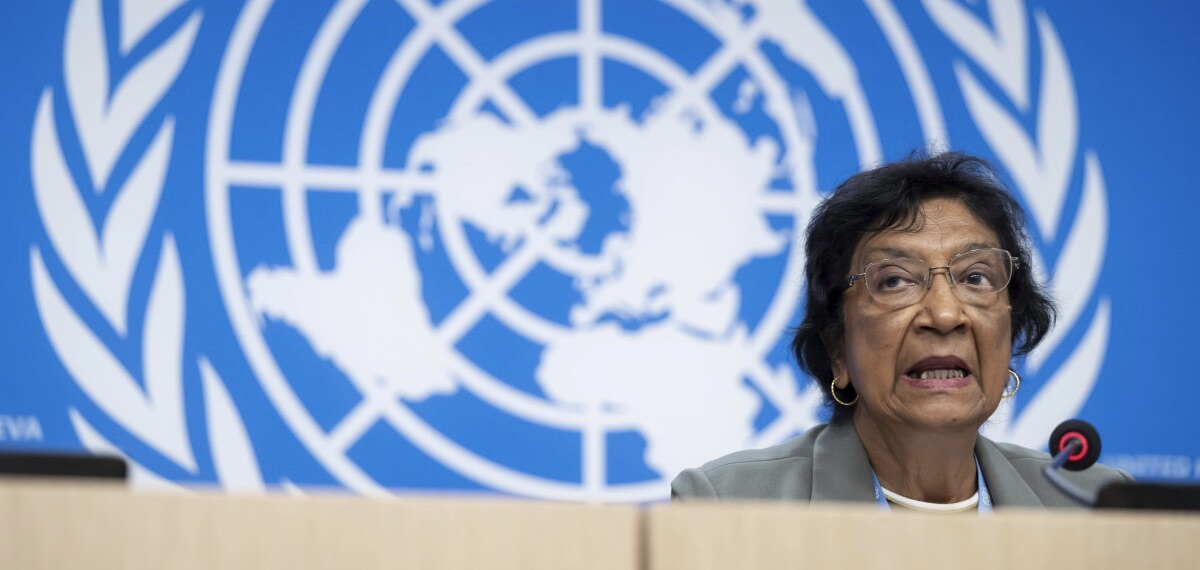 The Israeli Foreign Affairs Ministry on Monday rejected a United Nations commission report accusing Israel of genocide, war crimes and crimes against humanity, calling it a “propaganda document detached from reality, aimed at undermining Israel’s right to self-defense, delegitimizing the Jewish state, and legitimizing jihadist terrorism against its citizens.”
The UN Independent International Commission of Inquiry on the Occupied Palestinian Territory accused Israel of committing genocidal acts in Gaza during the war and following a ceasefire, as well as war crimes and crimes against humanity in Judea and Samaria.
The report cited nearly 500 Palestinian deaths annually in Judea and Samaria since 2022 and a sharp increase in deaths from Israeli airstrikes since Oct. 7, 2023, particularly during Operation Iron Wall.
It also examined statements by Finance Minister Bezalel Smotrich and IDF Central Command chief Maj.-Gen. Avi Bluth.
Commission investigators alleged that Palestinian detainees had been subjected to rape, torture and other sexual violence.
Israel has rejected previous similar allegations as unfounded.
The report also accused the Palestinian Authority of arbitrary arrests, detention and torture, as well as targeting journalists, activists and human rights defenders.
It cited deaths during October 2023 protests and the killing of a journalism student.
Critics pointed to the report’s focus on Israel while mentioning Hamas only twice and not accusing the terrorist group of wrongdoing, despite the October 7 massacre and documented abuses against Gazan civilians.
In its response, the Foreign Affairs Ministry said the commission, established in 2021, had been “flawed from the outset” and had “targeted Israel exclusively since day one.”
It accused the body of consuming extensive UN resources, funding and personnel to advance anti-Israel propaganda.
The ministry said the report reflected the commission’s political agenda rather than Israel’s conduct and accused it of parroting “the narrative of terrorist organizations word for word.”
“This is the shameful legacy of the UN Secretary-General and the High Commissioner for Human Rights,” the statement concluded.
Day 1,116 — Monday, October 26
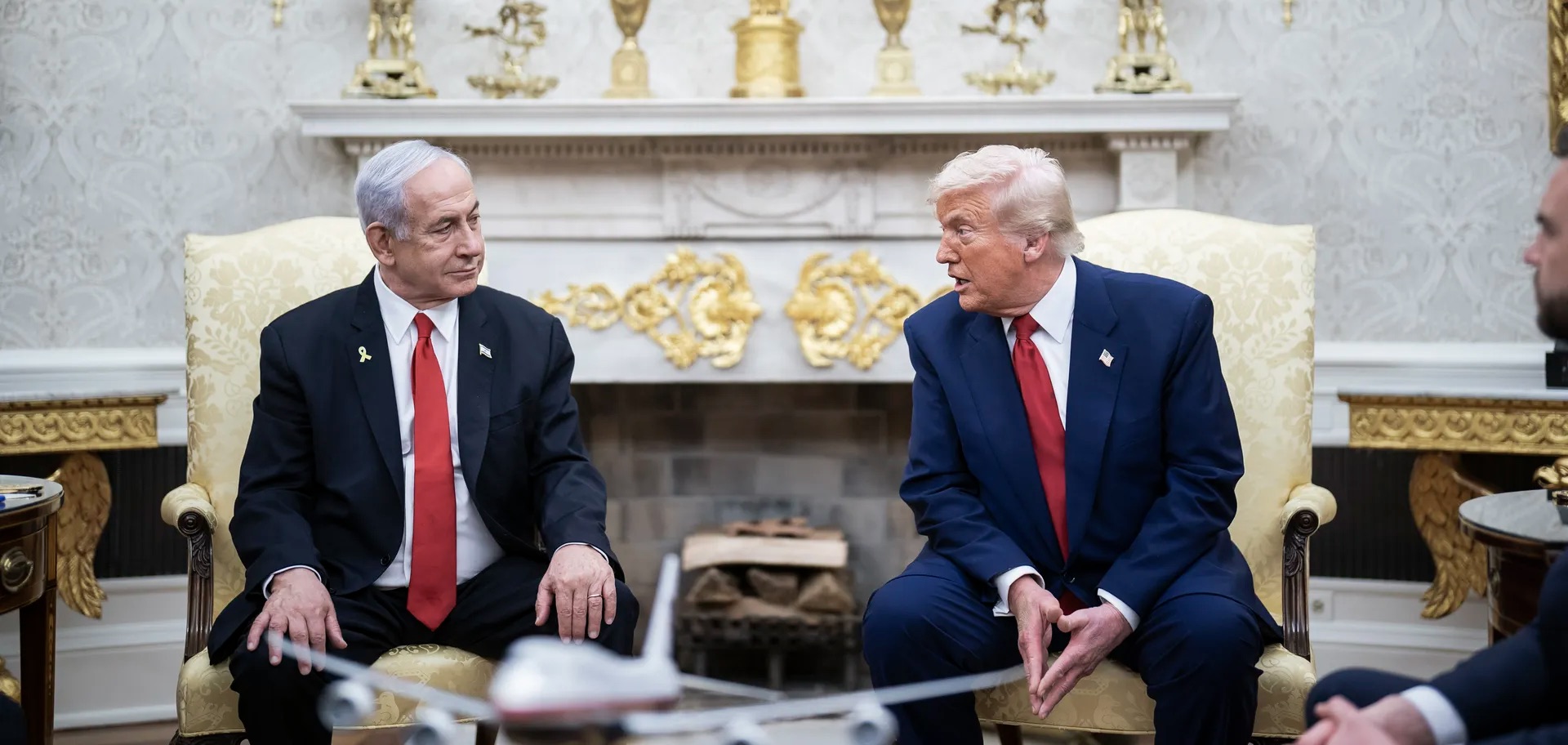 President Donald Trump renewed his endorsement of Israeli Prime Minister Benjamin Netanyahu on Sunday evening, urging Israelis to reelect him in Tuesday’s election with a renewed call to “finish the job” against Iran.
“Vote for Bibi Netanyahu for Prime Minister, we have to finish the job that we started!” Trump wrote on Truth Social.
In his renewed endorsement, Trump credited his partnership with Netanyahu for military successes against Iran, citing operations that targeted the regime’s nuclear facilities and devastated its armed forces.
“Bibi and I have had a great relationship in winning together,” Trump wrote, pointing to Operation Midnight Hammer, which targeted Iran’s nuclear facilities, and Operation Epic Fury, the broader U.S. military campaign against the regime.
“Then we did Operation Epic Fury, and Iran now has No Navy, No Air Force, and both their Military and Economy are in shambles,” he declared.
Trump also pointed to Iran’s economic devastation, claiming inflation had reached 301 percent and crediting the U.S. naval blockade with restricting its oil revenue. He cited the elimination of successive levels of the regime’s military and political leadership.
The president urged Israelis to remember Netanyahu’s record when voting Tuesday, calling him an “outstanding Warrior Prime Minister.”
Trump also invoked Iran’s longstanding threats against Israel and the United States, declaring that the chants of “Death to America, Death to Israel” could no longer be tolerated.
Day 1,116 — Monday, October 26
 The Israeli military launched large-scale domestic military exercises on Sunday to counter surprise border infiltrations and ground raids across northern and central Israel, mobilizing multiple divisions and air assets amid rising regional tensions.
The drills, set to continue over 48 hours, came as an Israeli security expert invoked the 1973 Yom Kippur War, when Egypt and Syria used exercises to disguise preparations for a surprise attack, warning that escalating tensions in the region could in fact trigger what he described as a “dangerous miscalculation.”
The large-scale maneuvers, the IDF said, involve the Northern Command’s 210th Division, the West Bank Division, and the Central Command’s 98th and 96th divisions, alongside the Israeli Air Force.
The exercise, scheduled just ahead of Israel’s elections Oct. 27, aims to “maintain the forces’ alertness and readiness, strengthen the ability to defend communities, and make full use of aerial capabilities for defense in the area,” according to the IDF.
On Friday, the IDF said troops would practice “a variety of scenarios, including a surprise attack and infiltration into Israeli territory by air and land,” incorporating lessons learned from the Oct. 7, 2023, Hamas-led attacks on Israel.
“This exercise is mostly about non-state actors with or without Iranian support,” Israeli national security analyst Dr. Ehud Eilam told Fox News Digital.
“It’s aimed at those in Syria, Lebanon, and Jordan who might try to infiltrate into Israel or send ground raids. Some are supported by Iran; others are not. It could be planned by Iran or be a local initiative.”
“This is a massive exercise, the biggest one in recent years, aimed at protecting the borders,” the former Israeli Ministry of Defense researcher added.
“It’s all about making sure that the election day on October 27 will run smoothly. It’s also a message to Iran and others: don’t try to provoke us during election day, so nothing will be disrupted.”
The Israeli drills followed a show of force by Tehran days earlier, during which the Islamic Revolutionary Guard Corps (IRGC) fired roughly 30 ballistic missiles across two distinct weapon classes, according to reports.
That live-fire display highlighted Iranian strike capabilities and sparked renewed alerts about commercial shipping in the Strait of Hormuz and prompted the Israeli military to heighten its alert level while maintaining maximum readiness for a targeted strike against Iran.
During a visit to the IDF’s Central Command on Wednesday, Chief of Staff Lt. Gen. Eyal Zamir warned that the risk of escalation was growing.
“Given the numerous warnings across all fronts and the sensitivity of the current period, the potential for escalation has increased,” Zamir said.
“To ensure better operational control on the ground, we have reinforced our troop deployments across all sectors, including moving the 98th Division into the area to strengthen security and stability.”
“Part of mutual deterrence: a few days ago, Iran had their own pretty big exercise, and that was actually more intimidating as far as Israel is concerned because they launched missiles and prepared for a war with Israel,” Eilam said.
“This exercise on Sunday and Monday is against Iran’s proxies and allies at the border of Israel.”
Sunday’s Israeli drill also followed an Oct. 19 mission in which Israeli fighter jets and aerial refueling tankers flew 800 miles across Syrian and Iraqi airspace to Iran’s border.
Washington was notified in advance and viewed the maneuver as a non-kinetic show of force following the postponement of a broader strike package earlier in the month.
Despite the deterrence signals, Eilam warned that large-scale military exercises carry the “risk of miscalculation” and particularly when troop movements could be mistaken for preparations for an attack.
“During the Cold War, every time the Soviet Union or NATO carried out a major drill, having so many troops in the field meant they might attack if that was the intention,” Eilam said.
He pointed to the 1973 Yom Kippur War, when Egypt and Syria used military exercises to help conceal troop buildups along Israel’s borders.
Israeli intelligence largely dismissed the movements as routine drills, allowing the two countries to achieve strategic surprise when they launched a coordinated, two-front attack on Yom Kippur.
“The classic example in Israel is 1973, when Egypt and Syria conducted a major exercise just before the war that turned into the actual attack,” the analyst said.
“Israel and Iran are now watching each other very closely and both sides suspect the other might strike first,” Eilam added before stating that there is the chance of what they call “miscalculation — that each side suspects the other and strikes first by mistake.”
“It’s all about sending messages to each other.”
“It remains uncertain whether there will eventually be an Israeli attack on Iran,” Eilam concluded.
“Right now, both sides are signaling: ‘We are ready, don’t mess with us, but we don’t want to start a war right now.'”
Day 1,115 — Sunday, October 25
 U.S. intelligence has concluded that Iran has “substantially increased” efforts to target American personnel abroad, with plots to kill U.S. citizens reaching “advanced stages” in the Middle East and other countries, according to an intelligence memo obtained by Fox News.
Jay Clayton, the director of national intelligence, summarized the assessment in a brief memo Friday to Secretary of State Marco Rubio.
“Specifically, through various channels, we have received intelligence that Iran has substantially increased efforts to target U.S. personnel,” the memo states.
“The lethal plotting efforts by the Iranians against U.S. citizens have reached advanced stages in both the Middle East and certain other countries.”
Intelligence officials will also seek to downgrade the classification of some intelligence so the information can be distributed and shared with State Department personnel, according to the memo.
A U.S. official told Fox News Digital that the government continually monitors and assesses changing security threats.
“When it comes to our staffing at embassies, we constantly evaluate new information about the security environment,” the official said. “The threat of Houthi attacks and of Iranian terror plots targeting U.S. officials are informing our decisions on staffing adjustments for embassies on RO Status in the region.”
Day 1,114 — Saturday, October 24
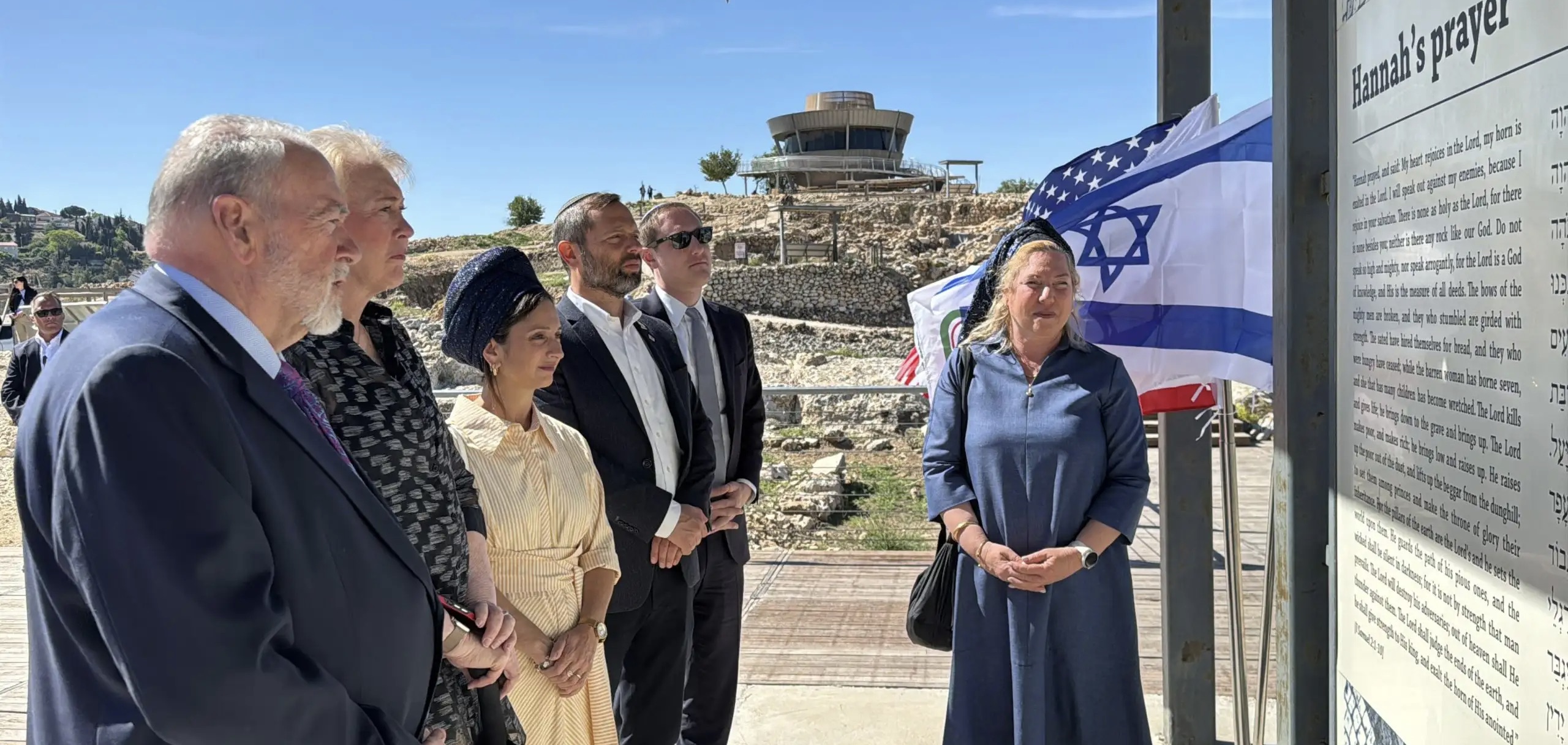 U.S. Ambassador to Israel Mike Huckabee visited Israel’s ancient Susya archeological site on Sunday in what local leaders described as a historic occasion, saying it marked the first time a sitting U.S. ambassador had visited the location.
Huckabee was in Susya to deliver the keynote address at the inaugural Judea Conference, hosted by the Hebron Hills Regional Council and its head, Eliram Azulay. The event drew government ministers, Knesset members and several hundred Israeli activists.
During his remarks the ambassador described his participation as “a great, great privilege.”
Huckabee emphasized the region’s central place in biblical history, calling Judea and Samaria “the heartland of Israel.”
“Eighty percent of the Bible took place” in Judea and Samaria, he said, adding that “it is impossible to even connect to the Scripture without connecting to Judea and Samaria.”
Huckabee added that he was particularly moved by Susya’s archaeological discoveries and biblical heritage, pointing to the ancient synagogue and a new visitor center expected to welcome thousands of guests from around the world. The site, he said, demonstrates that the region’s history stretches back some 1,500 years, with archaeological discoveries continually validating its biblical heritage.
“I love the history of it, but I love the fact that it is connected to the Bible, because I believe the Bible is the book that gives us our bearings. It points us true north,” Huckabee said, adding that the site gives Israelis reason to be grateful for their connection to the land.
During the conference, Israeli Diaspora Affairs and Combating Antisemitism Minister Amichai Chikli praised the organizers, telling JNS that Jewish residents of Judea had missed opportunities for many years to tell their story.
“So instead of our story going out, you had Masafer Yatta and all the BDS activists speaking,” he said.
He pointed to Israeli filmmaker Yuval Abraham, director of NAZA, which critics have characterized as anti-Israel propaganda, and co-director of the anti-Israel film No Other Land, noting that Abraham began his activities in the area.
Chikli described the region as a focal point for boycott activists, accusing some of orchestrating violent incidents targeting Jewish communities, particularly on weekends and during Shabbat.
The conference offered an opportunity to strengthen the public’s connection to Jewish communities across Judea by highlighting their biblical roots and introducing visitors to the communities themselves, he said. He noted that while many people are familiar with the Bible, they do not always connect its stories to the modern Jewish people and the Zionist movement.
“This is really the place where it all started,” Chikli said, pointing to the Cave of the Patriarchs in Hebron and the Kingdom of David. He said one of the conference’s most important missions was to bridge that gap while introducing visitors to the communities’ tourism, wineries, natural landscapes and archaeological sites.
Yigal Dilmoni, co-founder and CEO of American Friends of Judea and Samaria, used his remarks from the podium to describe what he sees as a shift in the relationship between Israel and its supporters in the United States. For years, he said, Israelis viewed American friends primarily as a source of financial assistance, diplomatic backing and support at the United Nations. Now, he argued, Israel has much to offer in return.
Speaking to JNS, Dilmoni elaborated that Israel, particularly Judea and Samaria, can share its biblical heritage, history and values with Americans and other supporters around the world.
“We are so powerful here in Israel, especially in Judea and Samaria, that we have a great deal to offer our friends around the world,” he said, explaining that Israel can help people better understand the Bible, learn about the biblical values that helped shape the United States, and find greater meaning in their faith.
Dilmoni added that Israel and its supporters can work together to defend Western values, which he said are challenged by radical Islamism and radical socialism.
He described the inaugural Judea Conference as an opportunity to share the Jewish people’s historical connection to Judea with an international audience.
Ayala Bar-On, director of the international desk for the Hebron Hills Regional Council and emcee of the event, told JNS that Huckabee’s visit was an important opportunity to spotlight Judea, a region many people around the world know little about. She emphasized the significance of the visit and the responsibility to raise awareness of the area.
Bar-On also spoke about the conference’s focus on combating antisemitism, saying that the suffering of Jewish communities abroad should not be viewed as a distant concern for Israelis.
“Antisemitism might sound far away, but if Jews are suffering, it’s not far away. We are all connected,” she said. “It’s our responsibility to be aware of that, and the discussion today is how do we change the paradigm and make us stronger and more helpful. Israelis are responsible for our brothers and sisters abroad.”
In addition to a roundtable on combating antisemitism, other sessions featured discussions on Zionist activism, Israeli sovereignty and efforts to strengthen Israel’s international standing. Participants also toured the ancient Susya heritage site.
Another one of the highlights was a special ceremony at ancient Susya’s approximately 1,500-year-old Byzantine-era mosaic-tiled synagogue, where Huckabee unveiled an ancient stone that once formed part of the façade of the synagogue’s Torah Ark. A choir dressed in garments modeled on ancient Levitical attire performed Psalms during the ceremony.
Inside the synagogue, Huckabee reflected on the historical connection between the United States and the Jewish people.
“America this summer celebrated 250 years of its history. We thought that was a pretty big deal. Two hundred and fifty years,” he said.
“This place [Susya] has been here nine times longer than that. And if you think about how long the nation of Israel has been here, and the city of Jerusalem—well over 3,000 years—and the Jewish people, 3,800 years, it’s a pretty extraordinary connection to the land and to God’s hand in maintaining the presence of His people in this very sacred, sacred place. Thank you for giving me the privilege of being here on this magnificent occasion. May God bless you all.”
Day 1,114 — Saturday, October 24
 US President Donald Trump said Friday that Iran has been severely weakened economically and militarily, suggesting that Washington could either intensify its campaign against the Islamic Republic or allow continued economic pressure to further undermine the regime.
Speaking to reporters, Trump stated that the United States had achieved its objectives in the conflict and was now in a position to determine how to proceed.
“They have no money. The question is, do we want to finish it off or do we just want to let it wither? Because we are getting everything we want. We have more oil coming out of the Hormuz Strait today than they did a year ago,” Trump said.
The President also asserted that American forces had established complete control over the strategically important Strait of Hormuz, while suggesting that the United States possessed the military capability to seize Iranian territory and oil resources.
“Iran is not able to do much now,” he continued. “And we could, if we wanted to, just take all of the oil. We could take the whole country. And as you know, the Hormuz Strait is totally ours, and that’s the way we’ll keep it.”
Trump further pointed to Iran’s deteriorating economic situation, citing what he described as exceptionally high inflation.
“They have no money. They have inflation that’s 301 percent, that’s the highest in the world right now. So we’ll see,” Trump stated.
His comments followed remarks Thursday in which he indicated that additional American military operations against Iran remained under consideration.
Speaking outside the White House before traveling to a campaign rally in Iowa ahead of the November 3 midterm elections, Trump defended his decision to launch the military campaign, arguing that previous administrations had failed to address the Iranian threat.
He said he is “doing what should have been done by other presidents. There’s a price to pay, which I knew immediately when I did it.”
The President acknowledged that the war had generated differing opinions but reiterated that preventing Iran from developing nuclear weapons was a central objective of his administration.
“But we can’t let Iran have a nuclear weapon. I mean, in one way, people probably don’t love it. But many people, many great patriots really love it.”
Trump then suggested that the American military campaign might not yet be over.
“This should have been done a long time ago by other presidents, the Iran war. And we’ve knocked the hell out of them. And we may do it a little bit further.”
Day 1,114 — Saturday, October 24
 Pittsburgh Public Schools, which has about 18,000 students in about 55 schools, told JNS that it stands by its ethnic studies curriculum but didn’t comment on an assigned reading comparing Gaza and Judea and Samaria to the Warsaw Ghetto.
A syllabus for a college-credit course at Pittsburgh Science and Technology Academy, a public school in the district, assigns a 20-year-old academic article that suggests that Gazans are trapped in the Strip like Jews were in the Warsaw Ghetto during the Holocaust, JNS reported on Wednesday.
The North American Values Institute, which obtained materials from the district in a records request, told JNS that it was concerned about that article and about a unit titled “whiteness, privilege and antisemitism” and an assignment that says that “antisemitism, like other forms of racial oppression, has been used to divide marginalized communities and maintain systems of power.”
The public school district told JNS in a 550-word statement that it “strongly disputes the inaccurate and misleading characterizations of its ethnic-studies curriculum presented in a recent report by the North American Values Institute.”
Steve Rosenberg, Philadelphia regional director of NAVI, told JNS that “Pittsburgh Public Schools has issued a lengthy statement defending its Ethnic Studies program,” but “remarkably, it has managed to do so without meaningfully addressing the actual curriculum documents and syllabus uncovered by the North American Values Institute.”
Day 1,113 — Friday, October 23
 (Danny Danon) — As Israel prepares for elections, Iran, Hezbollah and other extremist forces may seek to undermine the democratic process itself.
More than 7 million Israelis are preparing to cast their ballots in national elections in a process that reflects one of Israel’s greatest strengths: its democracy.
This election is an important test for Israel. It is a test of whether democracy can thrive in a region where extremist movements seek to impose their will through violence, intimidation and fear.
So, as Israelis prepare to exercise their right to vote, we must issue a direct warning to Iran, Hezbollah and other radical elements in our region. Israel is aware of the reports that these extremists may seek to exploit the election period through provocative military activity, cyberattacks or disinformation campaigns.
Israel will not allow these forces to dictate the choices of its citizens. Anyone who attempts to threaten or attack the democratic process will face very serious consequences.
We already know the consequences of allowing extremist ideology to flourish. Three years after Oct. 7, the world should have no illusions about the threat posed by Hamas. That day, Hamas terrorists murdered 1,200 people, injured thousands and abducted 251 men, women, children, babies and elderly people into Gaza. Families were slaughtered in their homes. Civilians who believed in peace and coexistence were targeted simply because they were Israeli.
This is what happens when radical ideology takes hold. Three years later, Hamas remains active in Gaza. Its weapons and tunnels remain a threat, and its leaders continue to resist disarmament.
Last week, Hamas threatened to impose taxes on private sector humanitarian aid, another clear sign that they are seeking to reconstitute themselves in the Gaza Strip. A lasting future for Gaza cannot be built while an armed terrorist organization remains committed to destroying Israel.
But radicalization is not confined to Gaza. Hezbollah continues to threaten Lebanon and Israel. The Houthis disrupt international shipping in the Red Sea. Iran supports extremist forces across the region. These are not isolated problems. They are connected manifestations of an ideology that rejects peaceful coexistence and seeks to replace stability with intimidation.
The coming Israeli elections must be understood in this broader context. Extremist forces seek to intimidate voters, spread disinformation, provoke a security crisis and exploit divisions within society. Their objective is to weaken democratic institutions and convince citizens that they cannot determine their own future.
Israel’s response must be clear: Our democratic process will continue, and our citizens will make their choices freely. We will defend our security without surrendering our democratic character.
There is also an important contrast closer to home.
The Palestinian Authority recently announced another postponement of its elections. Its nearly 91-year-old leader, Mahmoud Abbas, will continue the four-year term that began in 2005. The last Palestinian legislative elections, held in 2006, resulted in a Hamas victory in Gaza, when the terrorist organization took over the Strip. The P.A. has not held national elections since.
Even though the P.A. tries to blame the delay on Israel, the real reason is clear: It is afraid that Hamas could win again. Indeed, the P.A. understands that Hamas’s radical ideology is taught in its own schools.
Palestinian children should not be taught that Israel has no right to exist or that terrorism offers a path to victory. The P.A. cannot credibly claim to promote peace while rewarding those who murder Israeli civilians.
Postponing elections does not eliminate extremism. Avoiding a confrontation with radical ideology does not make it disappear. It only allows the problem to grow.
Israel offers a different example. Elections are not a sign that we are free of political divisions or security threats. They demonstrate that even under extraordinary pressure, democratic institutions remain standing. The ability to disagree, campaign and choose new leadership is a source of national strength.
That is the future the Middle East needs more of, not less.
The Abraham Accords have shown that cooperation between Israel and regional partners, including the United Arab Emirates, Bahrain and Morocco, is possible. These agreements offer an alternative to the extremists’ vision: a region where countries pursue shared interests, economic opportunity and stability, rather than permanent conflict.
The choice facing the region is stark. We can confront radicalization, strengthen democratic institutions and build partnerships that create a better future. Or we can allow extremists to dictate the terms of our lives.
As Israel approaches its elections, our message to Iran, Hezbollah, Hamas and every other extremist force is unequivocal: You will not decide Israel’s future. That decision belongs to the Israeli people.
Our message to the international community is just as clear: Defending democracy requires more than praising it in speeches. It requires confronting those who threaten it, refusing to normalize terrorism and demanding accountability from leaders who deny their people the right to choose.
Israel will continue to defend its citizens, protect its democracy and pursue peace with those willing to build it. The radicals may try to test our resolve. They will not be allowed to determine our future.
Day 1,113 — Friday, October 23
 The IDF reported on Friday morning that five Israelis were injured, two critically, in a shooting attack near Judea Junction.
The victims received medical treatment from Magen David Adom (MDA) teams, with two of them in critical condition and two in moderate condition.
The injured were evacuated to Hadassah Ein Kerem and Shaare Zedek hospitals in Jerusalem. The two moderately injured were treated at Shaare Zedek Medical Center, which said: “The condition of the injured is moderate, they are conscious and stable. After an initial assessment, they were transferred for imaging tests and further treatment.”
An initial investigation into the attack indicates that the terrorists’ shooting continued for a long time until they were eliminated by a military force in the area. In footage from the scene of the incident, one of the rescue workers can be heard shouting: “There has been active shooting by a terrorist for over 20 minutes.”
MDA EMT Tzuriel Edri said: “We arrived at a difficult scene while gunfire was still ongoing. We entered the area in MDA’s bulletproof ambulance and immediately began assisting in evacuating the wounded. We loaded a man in his 20s, who was unconscious with gunshot wounds and in very serious condition, into the ambulance and provided him with medical treatment. We evacuated additional wounded people to MDA ambulances that had arrived at the scene and immediately began transporting them to hospitals. Another critically injured casualty was treated by IDF medical forces in a mobile intensive care unit.”
MDA Paramedic Hanan Meir stated: “A man in his 20s was brought into our mobile intensive care unit, fully conscious, with gunshot wounds to his lower limbs. We provided medical treatment, including stopping the bleeding, and transported him to the hospital in mild and stable condition. Another mildly injured casualty was brought to us as well. He was also a man in his 20s with gunshot wounds to his lower limbs.”
MDA EMT Avraham Eitan Stern added: “A man approximately 20 years old was brought to us, fully conscious, with minor facial injuries, apparently caused by bullet fragments. We transported him to the hospital in mild condition.”
The two terrorists were neutralized by security forces at the scene.
Large numbers of IDF troops were dispatched to the scene and launched a manhunt for two terrorists who fled the area. The troops exchanged fire with the terrorists and ultimately eliminated both of them.
The IDF Spokesperson’s Unit said, “Following the report of a shooting attack in the Judea Junction area, IDF soldiers eliminated two terrorists and continue searches in the area. A cordon was imposed in the area.”
Day 1,112 — Thursday, October 22
 On Oct. 27, Israelis head to the polls in the first election following the Hamas-led terrorist attacks in southern Israel on Oct. 7, 2023 that left 1,200 people dead, 251 taken hostage into the Gaza Strip and prompted a seven-front war against the Jewish state. Three years later, Israel has achieved stunning military accomplishments against Hamas in Gaza, Hezbollah in Lebanon, the Houthis in Yemen, militias in Syria, and, most notably, against the head of the terror proxy snake: Iran.
These pivotal elections, like the five consecutive elections between April 2019 and November 2022, are again a referendum on the continued governance of Israel’s longest-serving prime minister, Benjamin Netanyahu.
Netanyahu is presenting Israelis with a stark electoral choice: Renew his mandate to capitalize on Trump’s bold endorsement this past week or risk surrendering the strategic gains of a multi-pronged war.
Netanyahu argues that the campaign remains unfinished. Even after the blows that Israel and the United States have delivered together and apart, Tehran, he warns, could restart its nuclear program. He therefore frames Trump’s endorsement as a promise to finish what was started, contingent on his remaining in the top job.
In a wide-ranging pre-election interview with JNS, Netanyahu casts his partnership with Trump as the foundation for an ambitious agenda: to bring down Iran’s regime, further weakening its regional proxies; expand the Abraham Accords normalization agreements with Muslim-majority countries in the region; and prevent the creation of a Palestinian state anywhere within Israel’s current borders.
While the most urgent issues concern the military battlefield, Israel finds itself in a complex diplomatic position. Netanyahu relates to sanctions, restrictions on arms supplies and hostile international opinion with strategies for greater domestic weapons production, alternative partnerships and retaliation against outside pressure.
Day 1,112 — Thursday, October 22
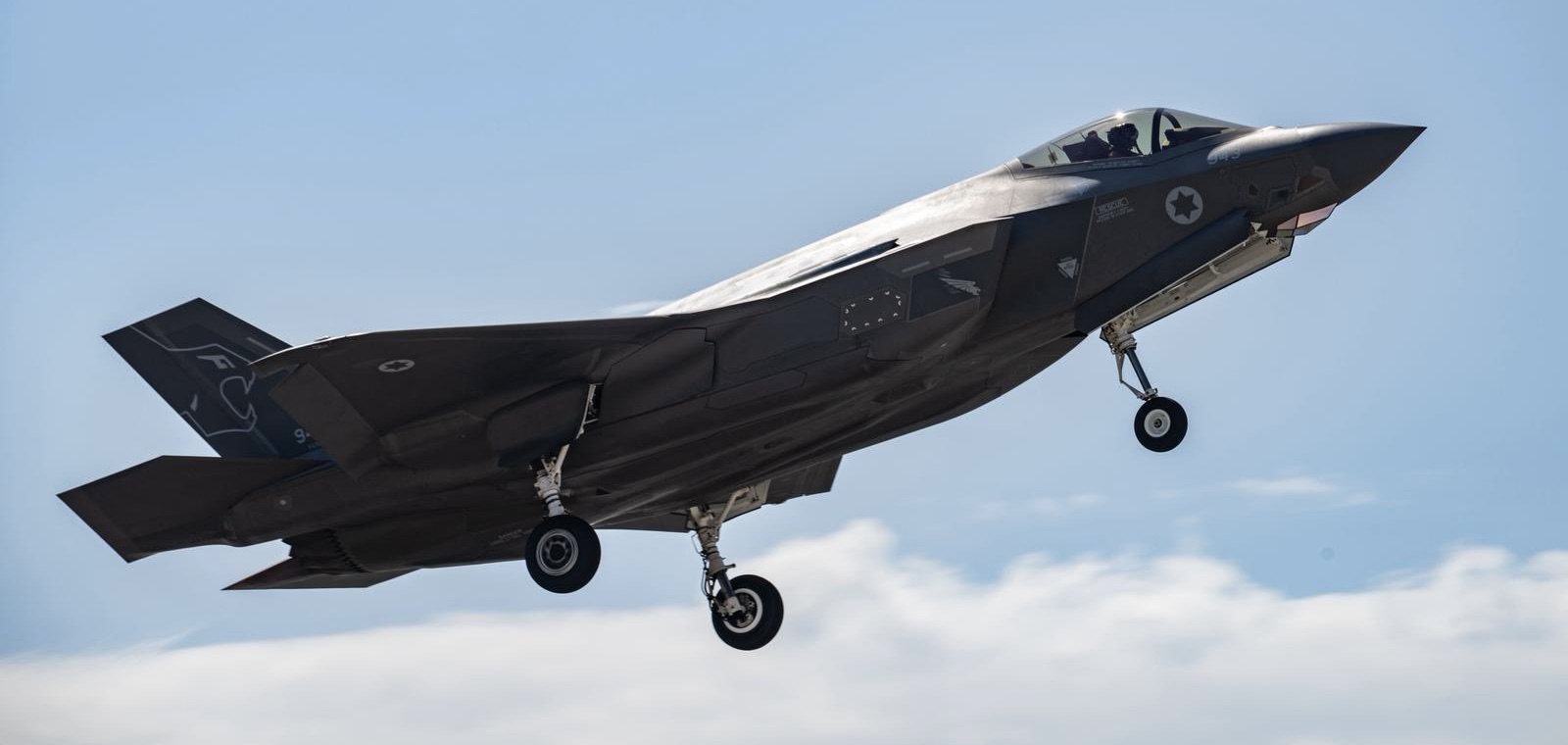 Israeli fighter jets flew toward Iran in a nighttime drill this week, Fox News reported Wednesday.
According to the report, the exercise took place overnight between Monday and Tuesday, as part of a series of drills in which Israeli warplanes were sent eastward, flying over Syria and Iraq and approaching the Iranian border.
Separately, Middle East Eye reported that Israeli fighter jets were spotted over southern and eastern Syria, as well as over the al-Muthanna province in southern Iraq.
It’s unclear whether the sightings were part of the same drill or a separate exercise.
The current reports come against the backdrop of concerns over a potential Iranian strike ahead of Israel’s Knesset elections, and amid assessments that the military confrontation between the US and Israel on one side and Iran on the other will resume soon.
Day 1,111 — Wednesday, October 21
 Secretary of State Marco Rubio called Iran’s attacks on commercial shipping in the Strait of Hormuz unseen since World War II, comparing them to “Nazi U-boats” that targeted Allied supply ships and civilians.
“What they really should be talking about is that we have a nation-state that is openly—openly—saying we are targeting commercial vessels; we are trying to kill sailors who have nothing to do with the war; we are trying to sink commercial ships,” he emphasized. “You haven’t seen that since the Second World War. They are doing Nazi U-Boat tactics. That is what the world should be rallying around and condemning.
Day 1,111 — Wednesday, October 21
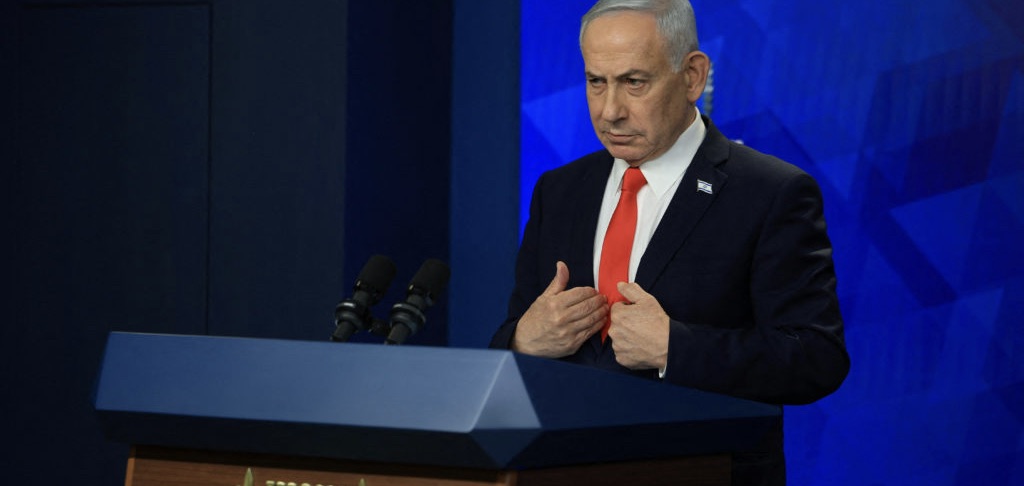 Prime Minister Benjamin Netanyahu warned Tuesday that Iran may attempt to interfere in Israel’s upcoming election through its proxy organizations, citing intelligence received by the Mossad.
In an interview with i24NEWS ahead of the October 27 election, Netanyahu addressed the Iranian threat, the political situation in Israel, and the violent unrest in France.
According to the Prime Minister, information obtained by the Mossad indicates that Tehran is likely to employ one of its proxy groups in an effort to disrupt the Israeli electoral process.
Netanyahu also accused Iran of using affiliated organizations to target Israel and spread hostile messages about the Jewish state online.
Turning to developments in France, Netanyahu expressed dismay at the widespread riots and sharply criticized French President Emmanuel Macron’s handling of radical Islam.
He described the scenes in France as “heartbreaking” and accused French authorities of failing to confront the threat.
“They didn’t prepare, and they simply gave up. They surrendered to the invasion of radical Islam.”
Netanyahu recalled a telephone conversation with Macron following the October 7 Hamas massacre, during which the French President informed him that France was pursuing a diplomatic solution.
The Prime Minister said he rejected that approach and warned Macron that Hamas posed a threat extending far beyond Israel.
“‘Emmanuel, that’s not going to happen. What you have here is ISIS. Hamas is ISIS, and in some ways, even worse. And if we don’t eliminate them here, you’ll have them in Paris.’ And that’s exactly what’s happening.”
Addressing the confrontation with Iran, Netanyahu reiterated his position that removing the Iranian regime from power is the only way to prevent the Islamic Republic from acquiring nuclear weapons.
“That’s the directive I gave to the Mossad and the IDF,” he said.
Netanyahu argued that regime change in Tehran would also have far-reaching consequences for Iranian-backed terrorist organizations, including Hezbollah and Hamas.
He predicted that both organizations would collapse following the fall of the Iranian government, “because neither of them will survive once this regime falls.”
The Prime Minister was also asked about reports that US Secretary of War Pete Hegseth had visited Israel on Monday. Netanyahu declined to confirm or discuss the reported visit.
“I didn’t say there was such a visit, and I don’t discuss visits, I’m not saying that,” he responded.
Netanyahu also addressed US President Donald Trump’s public endorsement of his reelection campaign, defending the American President’s decision to intervene in the Israeli political debate.
“At least he’s saying it honestly! What did Obama, Clinton, Biden do?” Netanyahu asked, referring to previous Democratic presidents.
Day 1,111 — Wednesday, October 21
 The Pentagon is sending the USS Theodore Roosevelt carrier strike group and the 13th Marine Expeditionary Unit to the Middle East, two US officials confirmed to Fox News on Tuesday.
This follows a US official telling The Jerusalem Post on October 1 that the aircraft carrier and a unit of US Marines would be sent to US Central Command (CENTCOM)’s sphere of operations.
The USS Makin Island amphibious ready group also departed San Diego, carrying the 13th Marine Expeditionary Unit, the Post reported at the time.
According to Fox’s report, the aircraft carrier group is due to arrive in the Middle East by the end of November.
Currently, two other US aircraft carriers are deployed in the region, namely the USS George H. W. Bush, which arrived in April, and the USS George Washington, which arrived in August to replace the USS Abraham Lincoln.
“This will provide more options for the US as President [Donald] Trump is reportedly considering ramping up strikes on Iran after the [November 3] Midterms,” Fox News’s Chief National Security Correspondent Jennifer Griffen wrote.
The Jerusalem Post also assessed on October 1 that, after this latest deployment, Trump will have significantly greater military capabilities and a wider range of options to act against Iran.
Day 1,110 — Tuesday, October 20
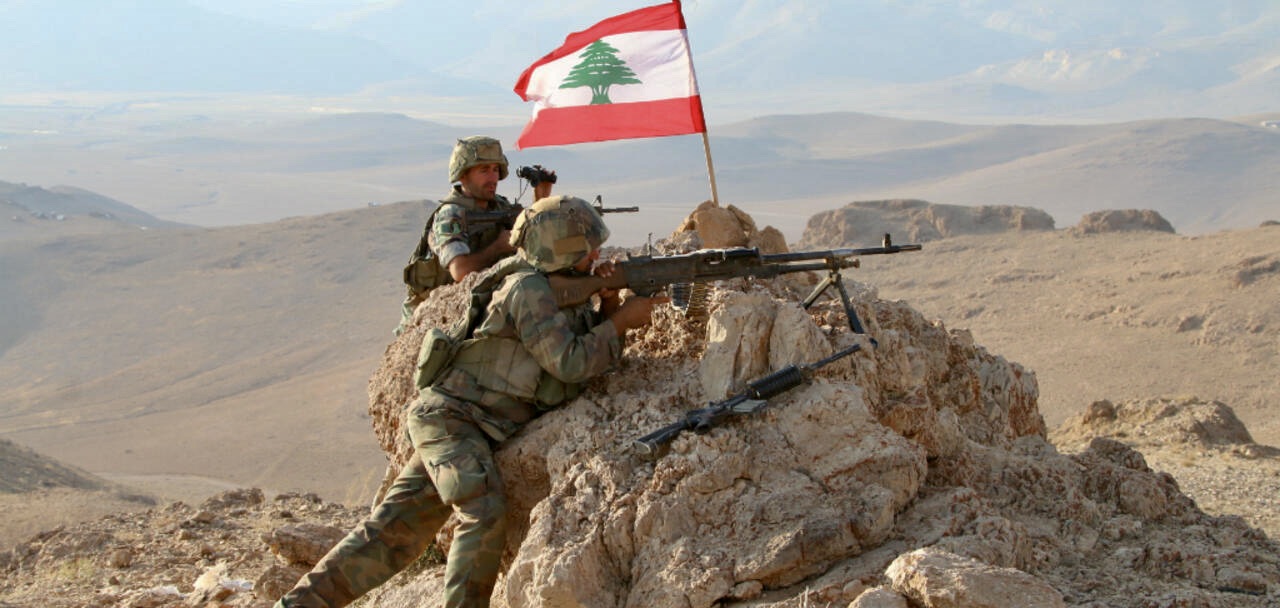 The IDF said earlier today that Hezbollah continues to operate in southern Lebanon despite the obligations of the Lebanese Army to remove them.
“Under the 2024 understandings, which guided Israeli and Lebanese actions until Operation Roaring Lion, the Lebanese Army was responsible for acting against the presence of weapons and military infrastructure belonging to the Hezbollah terrorist organization in southern Lebanon. However, this responsibility was not fulfilled as required, allowing Hezbollah to continue entrenching itself, arming itself, and building military infrastructure in the area. Even during the Lebanese Army’s 2025 Operation Homeland Shield, a significant gap remained between statements and the reality on the ground, and the operation did not dismantle the terrorist organization’s military capabilities or prevent it from continuing its activities and buildup,” the IDF stated.
“In December 2025, a military asset in the Kfarra area of southern Lebanon, which Hezbollah had used to store weapons, was referred to the Lebanese Army for handling through the U.S.-led monitoring mechanism. The Lebanese Army subsequently stated that the asset had been addressed. Several months after this statement, it was discovered that Hezbollah had continued operating at the site and had even independently removed weapons and military equipment to preserve them as part of the terrorist organization’s capabilities. Several months after the Lebanese Army had already declared that it had addressed the asset, Hezbollah was still able to use it for its own purposes.”
The IDF accompanied the statement with footage showing Hezbollah operatives loading weapons stored at the site onto a truck in an attempt to remove them and preserve them as part of the terrorist organization’s capabilities.
“After the activity was identified, IDF troops struck the truck carrying the weapons removed from the site. The footage indicates that, after the site was reported as having been addressed, Hezbollah activity was identified there in an attempt to remove and preserve weapons and military equipment.”
“The Intelligence Directorate has identified instances in which elements within the Lebanese Army coordinated with Hezbollah regarding enforcement activities. This coordination assisted efforts to prevent, delay, or thwart enforcement operations and enabled Hezbollah to prepare in advance to remove and transfer weapons from the area. The Lebanese Army is responsible for ensuring the full and thorough implementation of all tasks assigned to it.”
“The IDF emphasizes that it expects the Lebanese Army to act more decisively and effectively to fulfill its responsibilities and prevent the presence of weapons and military infrastructure belonging to the Hezbollah terrorist organization in southern Lebanon. The IDF and the Intelligence Directorate, continue to monitor Hezbollah’s attempts to rebuild and strengthen its capabilities and will not allow any violation that poses a threat to the State of Israel and its civilians.”
“The Hezbollah terrorist organization dragged Lebanon and its residents into a war in service of Iran during Operation Roaring Lion, launching thousands of rockets, including from areas south of the Litani River, where no armed elements, assets, or weapons belonging to anyone other than the Lebanese government or UNIFIL should be present.”
Day 1,110 — Tuesday, October 20
 Vice President JD Vance declined to endorse Israeli Prime Minister Benjamin Netanyahu’s reelection bid, saying he intends to stay out of Israel’s election despite President Donald Trump throwing his support behind the Israeli leader.
During an interview Monday with Mark Halperin on “2WAY Tonight,” Vance said his focus remains on U.S. candidates ahead of the midterms, Politico reported.
“The president has the most effective endorsement in American or international political history,” Vance said. “I endorse American candidates, and that’s where I’m focused on in the midterms. So I’m not getting involved in Israeli elections.”
However, Vance made clear that his decision should not be interpreted as opposition to Netanyahu.
“I’m not anti-endorsing him. I’m not pro-endorsing him. I’m not getting involved in Israeli elections,” the vice president added.
The comments come one day after Trump gave Netanyahu his “Complete and Total Endorsement” in a lengthy Truth Social post, praising the prime minister as a key U.S. ally and partner in confronting Iran.
“Bibi Netanyahu has been a Great Warrior Prime Minister, and an even greater Partner for Peace in combatting the Islamic Republic of Iran,” Trump wrote.
Day 1,110 — Tuesday, October 20
 As Americans’ favorability toward the modern state of Israel continues to wax and wane, as antisemitism swells, and as allegations of genocide ring out, author and commentator Dinesh D’Souza is making the case that history is on the side of the Jewish state.
Biblical archaeology, D’Souza recently told CBN News, “irrefutably shows the presence of the Jews in their ancient homeland.”
D’Souza’s comments, as well as the release of his new book, The Stones Cry Out: Biblical Archaeology, Prophecy, and the Last Days, come at a time when U.S. citizens are deeply divided — even in conservative and Christian circles — over Israel.
Data from the Pew Research Center shows Americans’ favorability toward both the Israeli government and its people is on the decline, with 62% holding unfavorable views toward the Jewish state’s government. Additionally, antisemitism has been on the rise in the U.S. since the Hamas-led attack against Israel in October 2023.
The Anti-Defamation League tracked a huge spike in antisemitic attacks in 2024 and, while those numbers fell somewhat in 2025, they have remained historically high. For context, the ADL recorded 6,274 incidents last year, a 33% drop from 2024 but still the third-highest total since the organization began tracking such incidents in 1979.
It’s not only an issue in America, either. Just this week, news broke of a hotel in Dublin reportedly canceling a reservation for 70 rooms for delegates attending an international conference on combating antisemitism after its administrators learned the purpose of their visit. Maurice Cohen, chairman of the Jewish Representative Council of Ireland, told The Times of Israel that Herbert Park Hotel initially green-lit the booking for delegates representing the European Union’s 27 member states but later reneged after a phone call with the hotel’s general manager.
Cohen told the outlet he noticed a “manner change” in the manager after telling her the purpose of the meeting in Dublin. He recalled a “tension that had not been there before” when, upon learning the purpose of the event, the general manager asked Cohen if the Israel Defense Forces would be involved in the gathering.
“We were talking about a conference in Dublin on antisemitism, attended by Jewish community representatives, diplomats, civil servants and government officials,” he told The Times. “Nothing I had said had anything whatsoever to do with the Israeli army, yet, somehow, that was where the conversation had gone.”
The manager then purportedly told Cohen she’d have to check with the owners to determine whether the reservation could remain. Apparently, it could not: the rooms were canceled.
Danny Danon, Israel’s ambassador to the United Nations, told Fox News the incident “is a disgraceful example of the very antisemitism the conference was organized to combat.”
Much of the hostility toward Israel centers on the claim the Jewish state is committing genocide against Palestinians, a leftist talking point becoming less defensible as new data from the Palestinian Ministry of Health shows the population in Gaza actually grew significantly in 2025. Nevertheless, as CBN News reported, Israel remains on high alert against attacks ahead of its Oct. 27 elections.
D’Souza, for his part, made the case this week that it’s “very odd” to accuse Israelis of seeking to take land that does not belong to them when there is a breadth of archaeological history proving Jewish presence in the land dating back centuries.
“It really irrefutably shows the presence of the Jews in their ancient homeland, going back 3,000, even more than 3,000 years,” he said. “And so the familiar accusation that the Jews are colonizers immediately becomes very odd, right? Because it’s like accusing the Indians of colonizing India or the Irish of colonizing Ireland. How do you colonize your own ancestral homeland?”
To make his case, D’Souza pointed to a 2,000-year-old, 25-ton Jewish ritual bath, known as a mikveh, discovered this summer by the Israel Antiquities Authority. The relic, which was excavated nearly totally intact, provides evidence of a previously unknown Jewish settlement between the Judean Lowlands and the northern Negev, according to the IAA.
“[T]hese ritual baths were used by Jews to kind of cleanse themselves before they went to the temple,” D’Souza explained. “So there is a political significance, I think, to these archaeological exhibits coming out of the ground.”
Day 1,109 — Monday, October 19
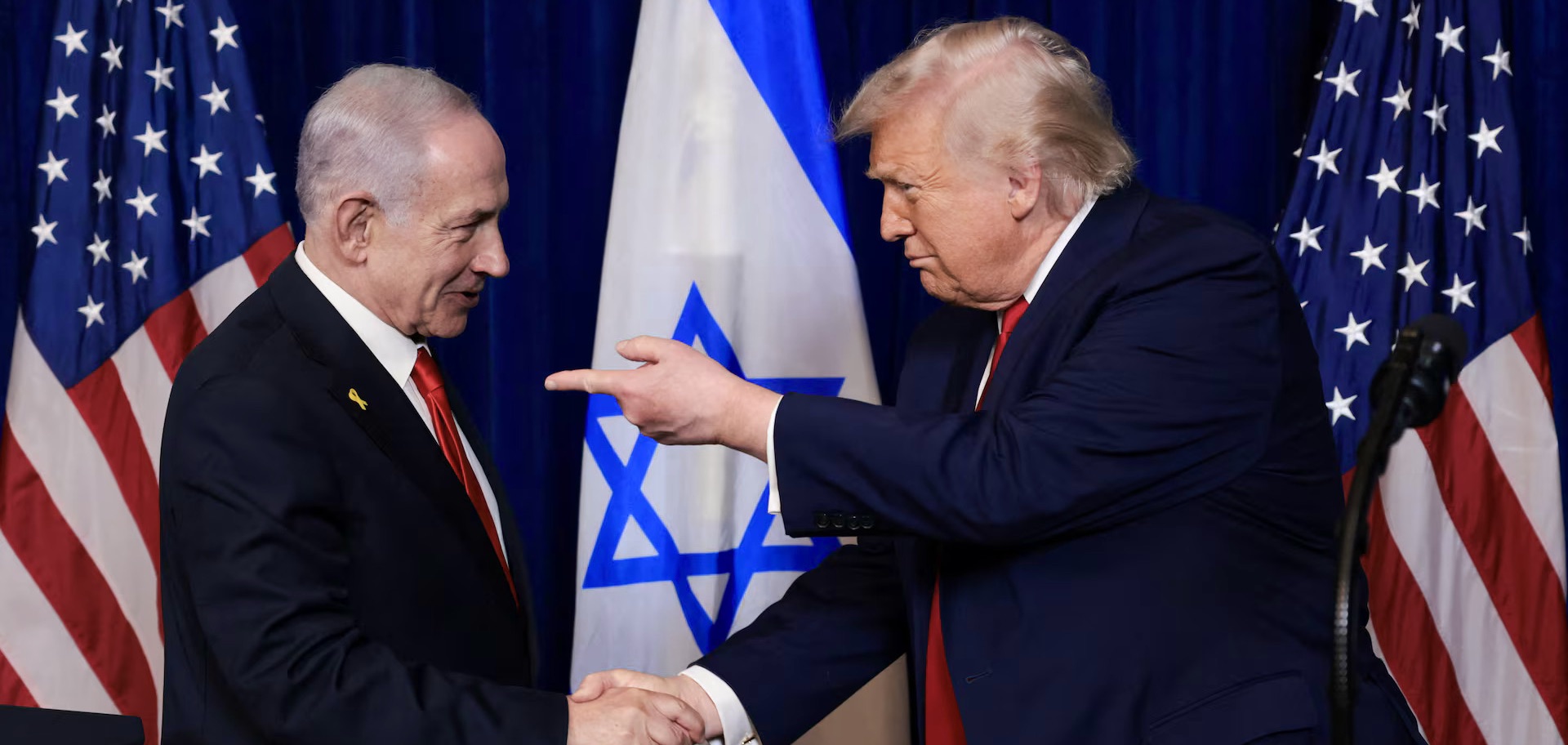 Prime Minister Benjamin Netanyahu on Sunday thanked U.S. President Donald Trump for endorsing his reelection ahead of Israel’s Oct. 27 national vote, saying Jerusalem “has never had a greater friend in the White House.”
Trump on Sunday gave Netanyahu his “complete and total endorsement,” praising his leadership against Iran in a Truth Social post.
“This is the kind of partner that the United States of America is demanding of Israel,” Trump wrote, calling Netanyahu “strong, brave, and brilliant.”
In an English-language post and accompanying video statement on X, Netanyahu thanked Trump for his “extraordinary endorsement.”
“Together we will never let Iran’s regime get nuclear weapons,” Netanyahu said.
Addressing Trump as “my friend Donald,” Netanyahu also thanked the U.S. president for his “clarity, courage and unwavering support.”
Defense Minister Israel Katz on Sunday night welcomed Trump’s endorsement.
Katz said Trump issued his “unequivocal statement of support” on the grounds that “only Netanyahu can continue the historic cooperation between them, and between the Israel Defense Forces and the U.S. military—in order to complete the goals of the campaign against Iran.
“This is an extremely important strategic message regarding Israel’s security in the future,” the defense minister added.
Finance Minister Bezalel Smotrich also welcomed Trump’s endorsement, calling him Israel’s greatest friend in the world and praising the achievements of U.S.-Israeli cooperation.
“We—the citizens of Israel—will decide Israel’s election. But we would do well to listen to the president of the world’s greatest power, simply because he is right,” Smotrich wrote on X.
“The national camp must continue to lead the State of Israel” and maintain cooperation with the United States to strengthen Israel’s security and future, he added.
A senior Israeli official highlighted the cooperation between the two leaders.
“There has never been greater cooperation and coordination between an American wartime president and an Israeli wartime prime minister,” the official told JNS. “Trump and Netanyahu are an epic tag team who have achieved unprecedented achievements in war and peace. That has, of course, translated into unprecedented cooperation between our great armed forces. Israel is America’s model ally, and America is Israel’s indispensable ally. Iran and its proxies are weaker than ever, and the American-Israeli alliance is stronger than ever.
“We have two years of Trump-Netanyahu to win the war and win the peace,” the official said.
Day 1,109 — Monday, October 19
 A wave of unrest that erupted across France over the weekend was accompanied by antisemitic incitement and conspiracy theories on X/Twitter, accusing Israel, Mossad, and Jews of responsibility for the violence and destruction in the streets, according to a report published Sunday by the Combat Antisemitism Movement (CAM).
The study, conducted by CAM’s Antisemitism Research Center (ARC), examined activity on X between October 16 and 18 and identified 1,384 posts linking the riots to Jews or Israel. According to the organization, the posts included conspiracy theories alongside calls for physical violence, expulsion, and extermination.
According to the findings, influential social media accounts spread claims that “Mossad is burning France right now” and described the unrest as a “civil war orchestrated by Jewish elites.”
Other accounts linked French President Emmanuel Macron to the Rothschild family, while far-right activists with hundreds of thousands of followers circulated the message: “The Jews did this to France. Don’t let them do it to America.”
CAM said this was the fourth time in less than three months that its research center had identified a similar pattern of antisemitic conspiracy theories spreading in response to major news events. The report cited the migrant crisis in Ceuta, the anniversary of the September 11 attacks, and an attempted hijacking of a plane bound for Ben-Gurion Airport.
The study also found that accounts subscribed to X Premium, identified by blue verification checkmarks, were among those spreading some of the most extreme messages.
According to CAM, the content received millions of views, with the organization arguing that the platform’s amplification mechanisms helped spread the messages.
CAM CEO Sacha Roytman warned of the connection between online incitement and violence in public spaces.
“Once again, we are witnessing the same distorted pattern in which hatred of Jews and Israel becomes the automatic explanation for every national crisis,” Roytman said. “Worse still, social media platforms are incentivizing those who spread hatred instead of stopping them.”
Roytman called on French authorities and social media companies to take action against violence and incitement.
“French law enforcement authorities must take firm action against the rioters, and platform executives must put an end to this lawlessness before lives are lost,” he said.
The Combat Antisemitism Movement is an international, nonpartisan coalition dedicated to combating antisemitism and protecting Jewish communities. Its work includes researching and monitoring antisemitic content online, conducting public awareness campaigns, and promoting policy initiatives with governments and international institutions.
Day 1,108 — Sunday, October 18
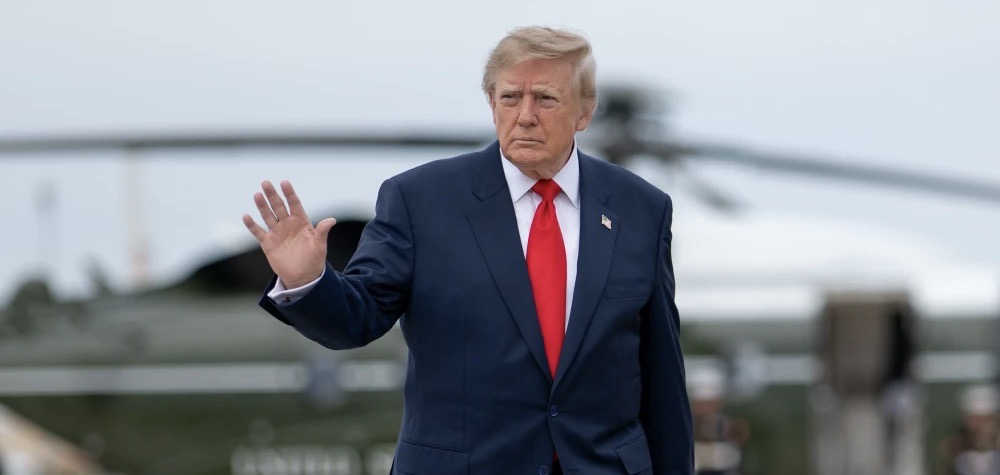 U.S. President Donald Trump expressed optimism Friday about the possible revival of talks on Saudi Arabia normalizing relations with the Jewish state.
“Israel has been very helpful to Saudi Arabia,” Trump told reporters on the White House lawn on Friday, after being asked about Riyadh’s conflict with the Iranian-backed Houthis.
A reporter asked the president whether Saudi Arabia should accept assistance from Israel in fighting Yemen’s Houthi rebels, to which Trump replied, “Yeah, I do. I think they will, sure.”
He went on to say that Jerusalem has already assisted Riyadh, without specifying how.
Trump was then asked whether the idea of Saudi Arabia joining the Abraham Accords was back on the table. He answered, “Yeah, I think so. Maybe more than ever.”
On Tuesday, Prime Minister Benjamin Netanyahu said that nearly every country in the Middle East and the West seeks Israeli assistance, including governments that publicly criticize the Jewish state.
“There is almost no country in the Middle East that doesn’t ask us for help. And I’ll surprise you: There is almost no Western country that doesn’t ask us for help,” he told Channel 14‘s “The Patriots” program on Oct. 13.
Following last week’s Houthi terrorist attack on King Khalid International Airport in Riyadh, Netanyahu condemned the assault that claimed the lives of at least 13 people and wounded 300 more.
“On behalf of the people of Israel, I extend our deepest condolences to the families of those murdered and our wishes for a full recovery to the injured,” Netanyahu said. He called for a Middle East that “stands united against threats, protects its people, and builds a future of security, cooperation and prosperity for all the peoples of our region.”
The Iranian-backed terrorist army in Yemen on Sunday claimed responsibility for the missile strike on Oct. 10.
Houthi military spokesman Yahya Saree said the group also struck the airport in Dammam, in Saudi Arabia’s Eastern Province, and two facilities belonging to oil giant Saudi Aramco.
The military confrontation between the Saudis and the Iranian-backed jihadist organization escalated after the latter took control last month of a long stretch of territory along the Red Sea coast in Yemen, including several islands in the strategic choke point of the Bab el-Mandab Strait.
The civil war in Yemen has claimed the lives of hundreds of thousands of people since 2014.
The Saudis entered the war the following year at the request of the U.N.-recognized Yemeni government, joined by forces from eight other countries from West Asia and North Africa in an attempt to repel the Houthi rebels.
A fragile ceasefire signed in 2022 began to unravel in July, with the Houthis firing missiles at Saudi airports, oil facilities and tankers in the Red Sea.
Meanwhile, Israeli President Isaac Herzog met on Wednesday with Bahraini Foreign Minister Abdullatif bin Rashid Al Zayan in Baku, Azerbaijan, to discuss strengthening the Abraham Accords and expanding regional peace and cooperation.
According to his office, Herzog emphasized the importance Israel attaches to its relations with Bahrain and praised the leadership of King Hamad bin Isa Al Khalifa and the Bahraini government. He also conveyed his best wishes to the king and the Bahraini people.
The meeting took place during Herzog’s visit to Azerbaijan for the seventh summit of the Conference on Interaction and Confidence Building Measures in Asia, known as CICA.
The Israeli president had also met with Kazakh President Kassym-Jomart Tokayev on Thursday on the sidelines of the security summit, according to the Kazakh Presidency.
The two men discussed expanding cooperation, focusing on trade, economic and investment ties, according to Astana’s readout. Tokayev said Herzog’s April visit to the Kazakh capital had given “significant impetus” to bilateral relations.
They also talked about tensions in the Middle East, with Tokayev reaffirming Kazakhstan’s “principled position on the need to de-escalate tensions and resolve conflicts exclusively through diplomatic means.”
Day 1,107 — Saturday, October 17
 Prime Minister Benjamin Netanyahu fired back at former President Barack Obama on Friday after Obama accused Israel of taking Palestinian land, declaring: “Our land is not stolen land. This is our homeland.”
“We’re not the Dutch in Indonesia. We’re not the Belgians in the Congo. We’re Jews in Judea,” Netanyahu said in a blistering video response.
The clash erupted after Obama told an audience in Northern Ireland that Israelis “took land off people and they were excessive,” arguing that Palestinians were justified in demanding their land back.
Obama made the remarks Tuesday while receiving an honorary doctorate at Queen’s University Belfast. Netanyahu called his comments “regrettable” and rejected the suggestion that the Jewish state was a colonial enterprise.
During his Belfast appearance, Obama argued that Israel’s military and technological superiority could not provide a lasting solution to the Israeli-Palestinian conflict.
He warned against an approach in which Israel relies on its strength to take whatever measures it considers necessary for its security without making concessions to Palestinians.
Such a strategy might succeed in the short term, Obama said, but would come at a moral cost.
“You have ceded moral ground if that is the position you take,” he warned.
Obama accused Netanyahu’s government of embracing that approach and argued that Israel must recognize that millions of Palestinians will remain in the region.
He specifically cited the presence of seven million Palestinians, saying they were “not going anywhere.”
Netanyahu rejected the suggestion that Israeli policies were the central barrier to resolving the conflict.
Instead, he pointed to the refusal of Israel’s enemies to recognize Jewish sovereignty, regardless of where the country’s borders might be drawn.
“The obstacle to peace is not Israel,” Netanyahu said, arguing that the fundamental problem is the rejection of the Jewish people’s right to a state of their own.
He also linked Israel’s struggle for security to the broader confrontation between the United States and hostile regimes in the Middle East.
Pointing to chants of “Death to Israel” and “Death to America,” Netanyahu said the hostility directed at the Jewish state is part of a wider campaign against the West.
“We are the ‘Little Satan,’ you are the ‘Great Satan,’” he said, referring to the labels used by Iran’s leadership for Israel and the United States.
Both countries, he argued, are defending a shared civilization against common enemies.
The prime minister concluded with a warning against diplomatic arrangements that fail to account for the threats Israel faces.
“A peace built on illusions will crash against the rocks of Middle Eastern reality,” Netanyahu said.
He insisted that Israel would not compromise its security simply to satisfy international demands or reach an agreement with adversaries unwilling to recognize its legitimacy.
“Israel will not gamble with its survival to accommodate those who refuse to accept the facts of history, to accept our right to exist, or who wish to appease terror.”
The exchange marks another public disagreement between Netanyahu and Obama, whose relationship was frequently strained during Obama’s presidency, particularly over Israeli settlements, Palestinian statehood and the 2015 Iran nuclear agreement.
- Since Oct. 7, over 1,600 Israelis (968 soldiers) have been killed, and 6,424 IDF soldiers wounded since the start of the war.
- On Oct. 7, 2023, one day after the 50th anniversary of the Yom Kippur War, thousands of Hamas gunmen invaded southern Israel, brutally murdering 1,200 Israelis and kidnapping 251 to the Gaza Strip.
- On Oct. 8, 2023, the Israel Security Cabinet voted to officially declare war for the first time since the 1973 Yom Kippur War.
- On Oct. 27, 2023, the IDF began its Ground Operation in Northern Gaza
- Between October 7th, 2023, and March 31, 2024, the IDF made approximately 100,000 phone calls, dropped 9.3 million leaflets, sent 15.5 million text messages, and 17 million voice recordings in efforts to get Gazan civilians out of harm’s way during military operations.
- Between October 7th, 2023, and August 18, 2025, Israel has allowed and facilitated the entry of over 1.9 million tons of aid into Gaza.
- On June 13th, 2025, the 12 Day War began between Israel and the Iranian regime. Israel conducted massive airstrikes targeting Iran’s military infrastructure and leadership, weapons stockpiles, and nuclear scientists— the regime rained ballistic missiles down, targeting locations of Israel’s largest civilian populations.
- On June 22, 2025, under the orders of President Trump, B2 Bombers dropped bunker-buster bombs on Iran’s nuclear facilities, thwarting the imminent danger of Iran obtaining nuclear weapons.
- On October 10th, 2025, a fragile ceasefire agreement, brokered by the Trump Administration, came into effect between Israel and Hamas.
- On January 27, 2026, after numerous delays, the body of the last remaining Israeli hostage in the Gaza Strip was returned to Israel.
- On February 28th, 2026, the United States launched a large-scale joint military operation against the Iranian Regime, beginning with the elimination of the nation’s Supreme Leader.

YOU CARE ABOUT BIBLICAL TRUTH. SO DO WE.
Together, We Can Deliver A Biblical Understanding Of News Events Around The World.
YOU CARE ABOUT BIBLICAL TRUTH. SO DO WE.
Together, We Can Deliver A Biblical Understanding Of News Events Around The World.
Day 1,137 — Monday, November 16
BBC News Arabic, already under fire for anti-Israel bias, hired a new chief to clean up its act who is herself guilty of said bias. Mayssaloun Nassar, a French-Lebanese journalist, took charge of the BBC’s Arabic language service in early October.
On Saturday, The Telegraph disclosed a series of social media posts that Nassar made at France 24 indicating she considers all of Israel “occupied.”
On Nov. 15, 2012, Nassar posted to X that Palestinian Islamic Jihad’s Al-Quds Brigades shelled “the occupied city of Beersheba.” Beersheva is a southern city located within an area universally considered part of Israel.
Six days later, on Nov. 21, 2012, Nassar again posted to X employing language used by opponents of Israel’s existence when she wrote that a rocket fired from Lebanon hit in Metulla, which she described as “inside the occupied territories.” Metulla in the Upper Galilee is Israel’s northernmost city, in part of the country not within a disputed zone.
On Nov. 15, 2012, she posted that “Israel acknowledges that 100 rockets have fallen and 28 settlers have been injured.”
“Contemporary reports placed the rocket attacks in southern Israeli towns within Israel’s pre-1967 borders, rather than in settlements in the occupied West Bank,” The Telegraph reported.
In her profile bio on X, Nassar writes: “I have opinions, I keep them to myself.”
On Nov. 13, a spokesman for media watchdog group CAMERA, the Committee for Accuracy in Middle East Reporting and Analysis, said it had “no confidence” in Nassar’s ability “to finally bring BBC Arabic under control,” The Telegraph reported.
The spokesman said the wording in Nassar’s social media posts was “false and delegitimizing,” and the kind that BBC Arabic had been obliged to correct in the past.
“BBC Arabic was forced to make 34 corrections in the first five months of the Gaza war after wrongly describing Israeli towns as ‘settlements’ or their residents as ‘settlers,’ including references to Metulla,” The Telegraph said.
The BBC defended its new appointment when asked whether it had seen her posts before giving her the position, and whether her descriptions of Israeli towns fit its editorial guidelines.
Ignoring the direct questions, a BBC spokesman told The Telegraph: “Mayssaloun Nassar was recently appointed editor of BBC News Arabic and was the outstanding candidate for the role. She brings a wealth of experience in journalism and a strong record of leadership.”
Jonathan Sacerdoti, a British broadcaster, journalist and TV producer, told JNS: “The BBC has had so many opportunities to deal with this problem. The fact that it not only does not do so but actually frequently argues to justify its journalists’ slurs against Israel or deny their relevance, often before having to admit them and apologize, makes many of us think it isn’t even trying.
“If it wanted to solve the problem it could. Why not hire the experts at CAMERA Arabic as consultants to help them detect and eliminate these failures in their content, seeing as they are doing that work anyway?” he said.
The Telegraph also revealed that Nassar, while serving as deputy editor-in-chief of France 24, introduced a September 2016 report featuring the wife of Ahed Abu Ghoulmeh, the head of the operational arm of the Popular Front for the Liberation of Palestine (PFLP), who was serving a life sentence in Israeli prison for directing the 2001 assassination of Israeli Tourism Minister Rehavam Ze’evi.
Nassar made no mention of Abu Ghoulmeh’s role in the assassination, the paper reported.
The BBC had promised to overhaul its Arabic-language service after The Telegraph reported last November on the findings of an internal memo by former BBC editorial standards adviser Michael Prescott.
Among its disclosures, the report revealed that BBC Arabic repeatedly featured antisemitic figures as on-air contributors, including Samer Elzaenen, who “called on social media for Jews to be burnt as ‘Hitler did.’” He appeared on BBC Arabic 244 times between November 2023 and April 2025, according to the memo.
The problems extend beyond its Arabic service, Sacerdoti said.
“The BBC’s English content is full of anti-Israel calumnies and deceptions as well. They literally paid a Hamas minister’s family in Gaza to feature the minister’s son as a narrator and lead character in a manipulative documentary without declaring who the child actor was,” he said, referring to the hour-long documentary film “Gaza: How to Survive a War Zone,” which was broadcast on Feb. 17, 2025.
“It also featured non-sequential editing dressed up as a chronological sequence of actuality footage telling a specific but false story attached to a single day of the war. The child in it had different length hair and different shoes in several shots. These deceptions are not explainable as accidents,” Sacerdoti added.
“Their senior reporter admitted he was wrong on a key story but also that he didn’t regret it. The list is extensive now and they never seem able to fix it. They’ve even replaced their head of news and director general over it. But nothing changes. They are a failure of a news organization,” he said.
Day 1,137 — Monday, November 16
Originally adopted by the Zionist movement, “Hatikvah” expresses the Jewish people’s enduring hope for freedom in their homeland, with references to Zion and Jerusalem.
Joint List Member of Knesset Dr. Faten Ghattas has called for reconsideration of legislation governing Israel’s national anthem, “Hatikvah,” after Arab lawmakers walked out during the opening session of the 26th Knesset on November 10, 2026.
The controversy began when several Joint List lawmakers left the parliamentary chamber as the anthem was played during the swearing-in ceremony following the October 27 election.
Their departure was a protest against the anthem’s Zionist character, which reflects the Jewish people’s historical connection to Israel.
Ghattas subsequently suggested that the legislation establishing the anthem’s status be revisited.
However, replacing “Hatikvah” would require amending Israel’s Nation-State Basic Law, which explicitly recognizes it as the national anthem. Such a change would need the backing of at least 61 members of the 120-seat Knesset.
Originally adopted by the Zionist movement, “Hatikvah” expresses the Jewish people’s enduring hope for freedom in their homeland, with references to Zion and Jerusalem.
The walkout did not include all Arab representatives. Ra’am leader Mansour Abbas remained standing throughout the anthem alongside his party colleague, Jewish lawmaker Yoav Segalovitz, although Abbas did not join in singing.
The protest drew criticism from Prime Minister Benjamin Netanyahu and National Security Minister Itamar Ben Gvir, who cited the incident in questioning whether Arab parties could serve as coalition partners.
Their criticism was directed in part at opposition figures Gadi Eisenkot and Avigdor Liberman, whose efforts to form a government have raised questions about potential cooperation with Arab factions [who oppose the very existence of Israel].
Day 1,136 — Sunday, November 15
US Secretary of State Marco Rubio issued a sharp warning to the International Criminal Court (ICC) on Friday, accusing the Hague-based tribunal of attempting to impose legal authority on the United States without its consent.
Speaking at the Federalist Society National Lawyers Convention and quoted by AFP, Rubio condemned what he described as the “weaponization of international law,” arguing that international legal institutions have become instruments for advancing the interests of global elites.
Rubio’s remarks came approximately one month after Washington announced additional sanctions targeting the ICC, intensifying the Trump administration’s campaign against the court.
The Secretary of State argued that international law had been used to challenge “nearly every major foreign policy decision” made by the administration, including American strikes against vessels in the Caribbean and the capture of Venezuelan leader Nicolas Maduro.
Rubio rejected the notion that international legal mechanisms operate impartially, describing them instead as an “instrument” used by influential international figures to advance their agendas.
Turning specifically to the ICC, Rubio accused the institution of exercising sweeping powers without democratic accountability.
He described the court as “armed with the power to investigate, to prosecute, to persecute and to jail our citizens, according to laws we neither consent nor control.“
Rubio then invoked a historical warning attributed to the Roman general Pompey to illustrate how Washington might respond to attempts to enforce ICC rulings against Americans.
“If they’re foolish enough to try to enforce their paper decrees on Americans, our answer will probably be the same as the Roman general Pompey when he said to those who were trying to invoke their city’s charters against his legions.“
“He said: ‘Stop quoting laws to men with swords.‘“
The United States signed the Rome Statute establishing the ICC but never ratified the agreement and is therefore not a member of the court. Israel, Russia and China are also outside its jurisdiction as member states.
The ICC was established to prosecute individuals accused of serious international crimes, particularly in cases where national judicial systems are unable to provide accountability.
Washington’s confrontation with the tribunal has intensified following the issuance of an arrest warrant for Prime Minister Benjamin Netanyahu over alleged crimes committed in Gaza.
The Trump administration has pledged to undermine the court’s operations, with Rubio previously announcing restrictions on financial transactions involving what he called a “rogue court.“
In February of 2025, President Donald Trump signed an executive order authorizing sanctions against the ICC.
The administration subsequently sanctioned four ICC judges in June 2025, citing what Washington characterized as the tribunal’s “illegitimate actions” against Israel and the United States.
Two of those judges had been involved in authorizing arrest warrants issued in November 2024 against Netanyahu and former Defense Minister Yoav Gallant.
The other two judges had approved an investigation into allegations involving American military personnel in Afghanistan.
Washington broadened the sanctions in August 2025, targeting four senior ICC officials connected to proceedings involving American and Israeli figures.
Further restrictions were announced in December, when Rubio imposed sanctions on two additional ICC judges over their involvement in cases concerning Israel.
Day 1,135 — Saturday, November 14
US President Donald Trump said Thursday that antisemitism in the United States was at levels “like Germany in 1938,” at the beginning of the Holocaust.
The president was asked by conservative radio host Hugh Hewitt about the recent rise in antisemitism in the US and what his administration was doing to combat it.
“I’m amazed to see it,” Trump said. “This is like Germany in 1938. It’s crazy what’s going on. When you look at the attacks on people, the racial attacks and the attacks, they’re, I guess, 57 percent on Jewish people, and you wouldn’t believe it.”
FBI statistics show that Jews were targeted in 63% of all religion-based hate crimes in the United States last year, down from 70% in 2024.
Trump spoke days after the 88th anniversary of Kristallnacht, or the “Night of Broken Glass,” the Nazi pogrom of 1938 widely seen as a turning point in the persecution of Jews and a prelude to the Holocaust. By then, Jews had already been stripped of their citizenship and subjected to severe restrictions, boycotts and discrimination by Adolf Hitler’s regime.
On the eve of the anniversary, pro-Palestinian activists in Philadelphia held a bicycle ride promoting a boycott of Jewish-owned businesses they accused of complicity in Israeli military actions. Jewish groups in the city called the event blatantly antisemitic, citing both its timing and its focus on Jewish-owned businesses.
toi
Day 1,135 — Saturday, November 14
After a recent meeting with Qatar’s prime minister this week, President Trump declared that Iran no longer controls the Strait of Hormuz, and that momentum is building toward an end to the conflict. This result would mean an unfulfilled hope for millions of Iranians.
CBN News spoke with Hormuz Shariat, founder of Iran Alive Ministries, before the U.S. midterms. He told us that Iran’s leaders hoped that elections would weaken the president and bring the war to an end, adding that many Iranians wanted a different outcome.
“But the hope of the Iranian people, in any way possible, (is that) this regime falls down. They support it. Israel’s attack, they support it. The U.S. attack, they support it. Why? Because they’re hoping that the government will change.”
With the regime still in power, Iranians are struggling under a weak economy and would risk their lives in any protests.
“They were hoping that the government would collapse with the war, with the attack of Israel and Trump, but it hasn’t. So they have no other choice. If they come on the streets, they protest, they will be killed. And life is miserable,” Shariat insisted.
He notes that this includes Christians.
“Believers are not doing well,” he revealed. “The economy’s really bad. Of course, in our ministry we are helping financially. We have a campaign to help the persecuted and those who are being killed – 131 of our people that we knew, connected to our ministry – they were arrested. Thirty-one were killed in January, and fourteen of them are in jail. Most of them are on death row.”
He continued, “So Christians…have double pressure: (the) economy, but also persecution by the government, and we need to pray for them.”
Despite pressure and persecution, Shariat sees believers still sharing their faith.
He observed, “There is a supernatural grace on Iranian people. Under persecution, they don’t lose their faith, and even in danger. I’m so inspired by them.”
Shariat mentioned one believer on death row.
“We get reports by his family, who visits them,” he reported. ‘Say, how is he doing?’ ‘He could be killed any day.’ He said, ‘He is so up.’ He says, ‘If I die, I go with, to meet Jesus.’ And people around him, they say, ‘How come you have so much peace?’ He said, ‘Because of Jesus.’ So he’s leading many people on death row to the Lord.”
Day 1,134 — Friday, November 13
Mainstream media outlets increasingly use the term “occupied West Bank” in their coverage of Judea and Samaria, according to an analysis from the watchdog HonestReporting.
The report, shared exclusively with JNS, analyzed 5,370 articles from 17 major news outlets, including the New York Times, CNN, BBC and Guardian, between May 2025 and last month. The watchdog found that 46.3% of the articles used the term “occupied West Bank” when describing Judea and Samaria, and 62.3% used “broader and related terms” like “occupation” and “occupying.”
“The BBC used it in 71% of its West Bank articles, CNN in 68%, NBC in 64%, the Los Angeles Times in 61%, Reuters in 60% and Fox News in only 12%,” the report stated. “Reuters, the New York Times and CBS often write ‘Israeli-occupied West Bank.’”
The Associated Press, from which many other outlets run wire copy, uses the term “occupied West Bank.”
According to the HonestReporting analysis, 38.9% of articles used the term “occupied” to refer to Judea and Samaria between May and October 2025, and 52.2% did so from May to October of this year.
The report sampled 60 articles and found that 50 (83%) used the term “occupied West Bank” in a statement that wasn’t quoting or attributed to a source.
Sharon Levy, an editor at HonestReporting, told JNS that media coverage of Judea and Samaria has increased as has “more extreme language.”
“You see this increase in coverage, and you also see the increase in terms such as ‘occupation,’ which is also coupled with other extreme terms such as ‘apartheid,’ that are being used in conjunction with each other,” she said. “Those are the terms that the public is being exposed to more and more frequently.”
Day 1,134 — Friday, November 13
New Jersey Democratic Rep.-elect Adam Hamawy struggled to answer whether he viewed Iran as an adversary and Israel as an ally to the U.S. on Tuesday.
During an interview on CNN’s “The Situation Room,” co-host Pamela Brown repeatedly asked Hamawy about his views on both of the countries regarding his demand that the U.S. pull all military funding from Israel in the wake of the war with Iran.
“Well, now, what I see is that we were pushed into this war by Israel,” Hamawy said. “It’s not helping Americans. Americans didn’t ask for it. It’s illegal and immoral. And at this point, I think the U.S. and the Iranians want this war to end.“
“Do you see Iran as the adversary?” Brown asked.
“I see that we pushed them into a fight. And so, I think we both have to step back and say, is this helping either one of us?” Hamawy answered.
Brown repeatedly pressed Hamawy on whether he viewed Iran as an adversary, and the conressman-elect continued to avoid answering despite Brown reminding him that Iranians have chanted, “Death to America.“
“We’ve been saying ‘Death to Iran’ for decades as well,” Hamawy responded. “And so, what we need to do is use diplomacy.“
“They’ve killed a lot of Americans,” Brown said.
“And we’ve killed a lot of them as well,” Hamawy said.
Hamawy pushed for diplomacy over war, though Brown pointed out that he still refused to clarify his views on Iran or Israel.
Day 1,133 — Thursday, November 12
Defense Minister Israel Katz on Thursday morning criticized the bloc opposing Benjamin Netanyahu after Yashar! party chairman Gadi Eisenkot sent a security-related letter to Prime Minister Benjamin Netanyahu.
In the letter, Eisenkot demanded that Netanyahu refrain from major military operations while a caretaker government is in office.
Katz rejected the request, saying the Prime Minister, Defense Minister, and government would continue to make security decisions without requiring opposition approval.
“We do not need approval from the opposition or any legal authority to direct the IDF to carry out targeted strikes in Gaza, defensive and offensive operations in Lebanon, maintain the security zone in Syria to protect communities in the Golan, evacuate a terrorist neighborhood in Hebron – an operation that proved itself beyond expectations in creating a strong deterrent – and continue offensive operations against terrorism in Judea and Samaria,” Katz said.
Regarding the possibility of military action against the regime in Tehran, Katz added, “We have shown resolve and sound judgment in dealing with Iran as well, in full coordination with the IDF – and that is what willl be now as well, in accordance with what is needed.”
“Israel’s security is not in transition, and it does not wait for the political processes taking place in parallel. There is one prime minister, one defense minister who direct the IDF, and one government responsible for decisions on everything concerning Israel’s security and the protection of the State of Israel’s residents, subject, of course, to the existing and appropriate oversight. That is how it has been, and that is how it will continue to be in the future.”
Day 1,133 — Thursday, November 12
U.S. President Donald Trump said on Wednesday that Iran has been at war with the United States for decades, telling a Veterans Day audience at Arlington National Cemetery that Washington did not start the conflict.
“America did not start a war with Iran. Iran has been waging war on America since 1979,” Trump said. “We fought back, and we seriously fought back,” he added.
Trump said U.S. forces had already won militarily but that Washington wanted a decisive result. “We want to make sure we have a total victory, not a 93% victory,” he said.
He said it would take Iran 25 years to rebuild what American forces had destroyed and predicted that the conflict would end soon, leaving the world “a much safer and better place.”
Trump also thanked service members working to ensure that “the world’s number one state sponsor of terror, the Islamic Republic of Iran, will never have a nuclear weapon.”
U.S. Central Command said on Wednesday that the American naval blockade had prevented Iran’s Islamic Revolutionary Guard Corps from exporting an estimated $30 billion worth of crude oil. More than 1.7 million barrels of oil have passed through the Strait of Hormuz under U.S. protection since summer, according to the command.
“U.S. forces continue to work around the clock keeping the Strait of Hormuz open for commercial shipping, strictly enforcing the ironclad naval blockade against Iran,” CENTCOM stated.
Day 1,132 — Wednesday, November 11
U.S. Ambassador to Israel Mike Huckabee warned on Wednesday that cyberattacks could increasingly be used to kill or injure large numbers of people, stressing the importance of cybersecurity cooperation between the United States, Israel and Taiwan.
Speaking at Tel Aviv University’s Cyber Week 2026, Huckabee said the three democracies face common adversaries and share an interest in protecting technological innovation from malicious actors.
“One of the reasons Israel matters so much to the United States is not only our partnership in things like intelligence, military hardware, technology, agriculture, but it is the specific nature of cybersecurity, because the enemies of Israel are the enemies of the United States,” he said.
“I think it would be fair to say that the enemies of Israel and the United States are also the enemies of Taiwan, because anyone who does not love democracy, freedom, the idea of free thought, free speech, equal rights; those are the people who aren’t going to care much for Taiwan,” he added.
Huckabee was addressing the Global Cooperation and Training Framework (GCTF) International Workshop, titled “Enhancing Digital Trust in the Age of AI,” which brought together senior officials, policymakers and cybersecurity experts from the three countries.
“Imagine the capacity to use technology in a way through the abuse of cyber ability that would in fact end up either injuring or killing masses of people,” Huckabee said.
“Every night when I go to sleep, there are people who are wide awake somewhere in the world trying to figure out how to use technology as a tool of destruction. That’s why what you do every day in your professional lives is a very critical part of protecting the rest of us.”
“Technology has the capacity to do amazing things. Also, it has the capacity to do malign things,” he said. “One of the hopes is that countries who value free enterprise but also freedom of thought will manage the risk in such a way so that the stage is set for responsible use of technology. But responsible use of technology absolutely requires an attention to security.”
Day 1,132 — Wednesday, November 11
Neria Leiter, who was critically injured in a ramming attack over a month ago, has been discharged from Shaare Zedek Medical Center. He remains unconscious but is breathing on his own, a hospital spokesperson said.
Neria is the son of Israeli Ambassador to the US Yechiel Leiter.
According to Shaare Zedek, following his discharge from the hospital, he was transferred to a facility specializing in neurological and head injury rehabilitation for continued care.
Neria arrived in the trauma unit in critical condition, and his life remained in immediate danger for several days. Teams from trauma, neurosurgery, intensive care, and other departments fought to save his life and provided emergency treatment. During his hospitalization, he underwent several neurosurgical procedures and major orthopedic operations.
Neria spent several weeks in the general intensive care unit, led by Prof. Philip Levin, where he was sedated and on a ventilator. Once his condition stabilized and his life was no longer in immediate danger, he was transferred to the neurological and neurosurgical intensive care unit under the care of Dr. Yevgeny Karpov, a senior neurosurgeon specializing in trauma and intensive care.
Physicians, nurses, allied health professionals, and social workers at Shaare Zedek closely monitored Neria’s condition and provided his family with as much emotional and logistical support as possible during this difficult time.
As Neria left Shaare Zedek, the teams that cared for him and supported his family said they drew inspiration from the family’s strength and were hoping and praying for his recovery.
The Leiter family said it “thanks the medical teams at Shaare Zedek for going above and beyond in providing dedicated, professional care.” The family asked that their privacy be respected, but requested that everyone to continue praying for Neria.
Day 1,131 — Tuesday, November 10
Israel’s Foreign Ministry took to X on Tuesday morning to admonish Europe for its lack of action in fighting the Iranian threat after a wave of cyberattacks targeted European food infrastructure last month and US aircraft were withdrawn from the UK over security concerns this week.
The Foreign Ministry said, “Anyone who thought Iran was no longer a threat needs a serious reality check,” urging European countries to act against Iran.
The post highlighted both the wave of cyberattacks and the withdrawal of aircraft from RAF Mildenhall as evidence of a serious security deterioration in Europe caused by the failure to act decisively against Iran.
“Iran remains a threat far beyond the Middle East. Ignoring that threat won’t make it disappear. It will only make it more dangerous,” the Foreign Ministry said.
France summoned Iran’s ambassador to the Foreign Ministry on Monday night after accusing the IRGC of being behind the wave of cyberattacks which targeted European food infrastructure last month.
French Foreign Minister Jean-Noël Barrot threatened further EU sanctions against Iran after the announcement.
The US, meanwhile, pulled 12 aircraft from RAF Mildenhall on Monday night, all of them cargo and refueling aircraft.
Iran appeared to threaten the base last week, on the eve of the US midterm elections, alongside several other bases across Europe.
The US Air Force claimed that the move was due to routine installation rotation, although it added: “Due to operations security, we will not provide further information on movement of assets.”
Day 1,131 — Tuesday, November 10
In a speech that evoked 25 centuries of shared history, Iran’s exiled crown prince Reza Pahlavi on Monday predicted the resumption of an Iranian-Jewish alliance, as he prepared to visit Auschwitz-Birkenau for the first time.
“The bond between Iranians and the Jewish people is not a matter of sentiment and is not a matter of political convenience, it is older,” Pahlavi said at a ceremony in Krakow, where he received the King Solomon Award from Rabbi Menachem Margolin, chairman of the European Jewish Association (EJA). He said the bond would resume when the regime of the Islamic Republic is toppled.
The group honored Pahlavi for his support for Israel and opposition to antisemitism, Margolin said. Pahlavi called for greater international pressure on the Islamic Republic. He advocated military intervention against Iran’s security apparatus to help protesters overthrow the regime.
In his acceptance speech, Pahlavi, who lives in the United States, invoked the biblical account of Cyrus the Great. The Persian king permitted Jews to return from exile in Babylon and rebuild the Temple in Jerusalem. Pahlavi also noted the biblical story of Esther and Mordechai, and nearly 3,000 years of Jewish life in Iran.
“It is a fundamental part of Iranian history that we are truly proud of,” he said.
Pahlavi contrasted this historical record with the antisemitism of the Islamic Republic, whose revolution in 1979 had forced Iran’s last shah, Reza Pahlavi’s father, into exile.
“In 1942 and prior to the Islamic Revolution, Tehran was a name that meant life. I want Tehran to be a name that means life again,” Pahlavi said.
The EJA ceremony took place on the anniversary of the Kristallnacht pogroms of November 1938, ahead of a visit by an EJA delegation to the former Nazi death camp of Auschwitz-Birkenau on Tuesday.
Pahlavi noted that his late father, Shah Mohammad Reza Pahlavi, had visited Auschwitz in 1966 with Reza Pahlavi’s mother, who wrote about the visit’s emotional impact on her in her memoirs.
At a press conference before the award ceremony, Pahlavi described the Islamic Republic as an “existential threat to Iranians” and Israelis alike. He accused Iran’s leaders, whom he described as an “occupation force,” of embracing an ideology reminiscent of Nazi Germany.
“When you hear ‘never again,’ this regime, in its virulent sense, wants to finish what Hitler had started, which is why we need to fight this evil,” he said.
Pahlavi argued that weakening the Iranian regime’s capacity to suppress demonstrations could create conditions for a popular uprising. “They can’t do that when the regime is willing to kill them by the thousand,” he added.
Western diplomatic efforts to change the Islamic Republic’s behavior had failed, Pahlavi said.
“For the most part, particularly in the Western free world, they were focused on a policy of appeasement with an expectation of behavior change,” he said. “Rather than wait for this regime to ever change its behavior, invest in the solution, which is the people of Iran themselves.”
“Those people did not die to keep the Strait of Hormuz open or for nuclear deals,” he said, referencing some 40,000 people whom opposition sources estimate were killed during an attempted uprising in January.
“They are fighting for liberty, and they deserve your support.”
He urged European governments to adopt tougher measures against Tehran, including closing Iranian embassies, expelling diplomats and targeting illicit funds associated with regime-linked figures.
“We are beyond resolutions. We are beyond condemnations. This is a matter of action,” he said.
Restoring internet connectivity inside Iran was key to facilitating resistance, Pahlavi said, adding that an 88-day blackout had allowed the authorities to suppress dissent without international scrutiny.
“Iran continues to be a threat regionally. It continues to be a direct existential threat to Israel, and it goes beyond Israel. It is now a direct threat to Europe’s security,” he said, urging further sanctions on Iran’s Islamic Revolutionary Guard Corps.
Rabbi Margolin condemned what he called the “hypocrisy” of “some countries in Europe that lately started legislation to boycott products produced in Israel, while their level of trade with Iran is growing.”
He referenced the Netherlands specifically, where “they can sentence to jail a Jew who consumes wine coming from Judea and Samaria, and at the same time support a regime that tortures its own people and spreads hatred across the Middle East and beyond.”
During the press conference at the Holiday Inn hotel, Pahlavi recalled his 2023 visit to Israel, where locals approached him during a visit to a Tel Aviv cafe.
“Ordinary Israeli citizens recognized me, and they came to me literally with tears in their eyes, hugging me and saying, ‘What a different world it would be once you’re able to liberate your country,’” he said.
Under a post-Islamist regime, Israel’s Abraham Accords would expand into what Pahlavi called the “Cyrus Accords,” he said. A future democratic Iran could become a central partner in regional cooperation, he added.
“We look at Israel as a very important strategic partner,” he said.
Day 1,130 — Monday, November 9
The New York Times had helped spread a blood libel against Israel, the the motivation behind accusations of genocide against Israel “is to prepare the next genocide against us,” Israel’s Ambassador to the United States Yehiel Leiter said on Sunday.
Addressing the 43rd International Conference of Chabad-Lubavitch Emissaries in New York, Leiter recounted a meeting with the paper’s editorial board.
“Exactly one year ago, in two days, on Nov. 10, I met with the editorial board of The New York Times,” Leiter related. “I went into a room. They were the jury. They were the judge. They were the firing squad—15 editors with another six on the screen. And they were accusing me. They were accusing the government of Israel they were accusing chayalei tzahal [the soldiers of Israel] of a genocide, of starving people to death.”
Leiter presented the editors with facts, he said: the number of trucks carrying humanitarian aid entering the Gaza Strip every day; how soldiers risked their lives to protect non-combatants; and how the combatant-to-civilian ratio in the war was the lowest in modern history.
In response, he said, “they gave me feelings.”
About 45 minutes into the conversation, one editor objected by saying “everybody can’t be wrong.” Leiter replied that “not everybody is wrong. Not everybody thinks that we’re committing genocide.”
To the extent that everyone does think so, Leiter told the editor, it was the Times that was responsible.
He cited as an example a July 2025 Times report titled “Gazans Are Dying of Starvation” featuring a photo of Mohammed Zakaria al-Mutawaq, an 18-month-old Palestinian from Gaza. Mohammed was emaciated. “Anybody who saw the picture immediately thought of the Holocaust,” Leiter said. “So now we were the perpetrators of genocide. Once we were the victims, and now we’re the Nazis.”
What the Times had neglected to mention, Leiter told the editor, is that the boy suffered from a genetic disease, cerebral palsy and other illnesses. The Times also cropped from the picture the boy’s perfectly healthy brother.
“The senior editor of The New York Times said to me, ‘Ambassador, don’t you think you’re making too much of a misappropriation?’ I said ‘No, that’s not a misappropriation. That’s a blood libel.’”
The ambassador told the audience: “There is no difference between what is being done to us today and what was done to our grandparents in the ghettos of Europe 800 years ago. This is a blood libel. This is very serious. We have to know how to identify what the enemy is and who the enemy is. This is not another antisemitic rant. Please understand, this is a blood libel, and a blood libel will cost lives. And the reason why they are accusing us of genocide is to prepare the next genocide against us.
“Hitler didn’t just happen; it was decades of preparation of demonizing and delegitimizing Jews. And now through the State of Israel, through the Jewish state, there is an attempt to delegitimize and disenfranchise Jews as Jews. We have to call it for what it is. We have to identify the problem. And we have to fight it. We fight it by knowing who we are. We fight it by knowing who our friends are. And we fight this by knowing who the enemy is and by identifying them as the enemy and calling them out as the enemy,” Leiter said.
Day 1,130 — Monday, November 9
Tensions flared in a Philadelphia neighborhood Sunday after a bike ride organized to boycott several Jewish-owned restaurants sparked overwhelming backlash from the city’s Jewish and pro-Israel communities.
The “boycott ride” targeted at least six restaurants in Philadelphia’s Rittenhouse Square, labeling them “Zionist establishments” and calling for them to leave, according to pro-Palestinian group Philly Bike On Your Left, which organized the event.
As riders cycled through the streets waving Palestinian flags, hundreds of Jewish and pro-Israel community members turned out to oppose the demonstration, with heated exchanges unfolding across several city blocks. Dozens of diners also lined up outside the targeted restaurants in a show of solidarity with the Jewish-owned businesses.
The boycott also drew sharp criticism for taking place on the eve of the anniversary of Kristallnacht, the 1938 Nazi pogrom against Jews in Germany and Austria marked by widespread anti-Jewish violence, including attacks on homes, synagogues and businesses.
Day 1,129 — Sunday, November 8
Amid Iran’s attempt to prevent Israel from leading a draft resolution in the UN Sixth Committee, Israel’s Ambassador to the United Nations, Danny Danon, sharply rebuked the Iranian representative and exposed the threat posed by the ayatollah regime to European countries and the free world.
Ambassador Danon stated, “Your regime funds terrorist proxies, rebuilds its nuclear and ballistic missile capabilities, blocks the Strait of Hormuz, and murders 50,000 innocent Iranians. First, you threatened Israel, then the United States and the Gulf states, and now Europe as well, with a map identifying dozens of targets published in Tehran.”
Addressing the Iranian representative directly, Ambassador Danon warned: “You think you can intimidate us? You are a coward, and your leaders are cowards hiding underground. Sit quietly with your head down and be grateful that you are even allowed to sit here. The price you will pay for the terrorism you spread has only begun to be exacted.”
Turning to the Iranian people, Danon declared: “Soon, you will reclaim your country and bring this evil regime to justice once and for all.”
Day 1,128 — Saturday, November 7
An anti-Israel bicycle rally targeting Jewish-owned businesses in Philadelphia has sparked outrage, with Jewish organizations and political leaders condemning what they describe as a blatant campaign of antisemitic intimidation, disturbingly scheduled on the eve of the anniversary of Kristallnacht.
The so-called “Boycott Ride,” scheduled for Sunday, November 8, at 11:30 a.m., will begin in Rittenhouse Square in Center City before targeting several Jewish- and Israeli-owned establishments.
Promotional materials for the rally feature the slogans “No business for Zionists” and “These Zionist establishments must go,” making clear the organizers’ intention to pressure businesses they associate with Israel.
Among the targeted establishments are Dizengoff, Huda, Schlesinger’s Delicatessen, Mac Mart, K’Far Cafe and Goldie.
The rally is being organized by Philly Bike On Your Left in collaboration with Philly Writers Against the War on Gaza, Boycott CookNSolo and Philly Solidarity Calendar.
The timing has only intensified the outrage.
The demonstration is scheduled just one day before the 88th anniversary of Kristallnacht, the November 9-10, 1938 Nazi pogrom during which Jewish businesses were vandalized, synagogues were burned and Jews were assaulted across Germany and Austria.
Nearly nine decades later, Jewish businesses in an American city are once again being singled out for an organized campaign of economic exclusion, this time under the banner of anti-Zionism.
The Anti-Defamation League’s Philadelphia branch, the American Jewish Committee’s Philadelphia/Southern New Jersey chapter, the Jewish Federation of Greater Philadelphia and StandWithUs issued a joint condemnation.
“Let’s be clear: This is antisemitism. It is Jew-Hatred, plain and simple,” the organizations declared.
“We will not allow antisemitism to be disguised as activism. We will not accept efforts to intimidate Jewish businesses or drive them out of Philadelphia. And we will not remain silent.”
Pennsylvania’s two US senators, Democrat John Fetterman and Republican Dave McCormick, also condemned the planned rally.
McCormick called it a “disgusting attempt to intimidate Philadelphia’s Jewish businesses,” drawing comparisons to the historical persecution of Jews.
Pennsylvania Attorney General Dave Sunday was equally critical, describing the timing on the eve of Kristallnacht as “unsettling.”
“By explicitly targeting businesses because their owners are Jewish, the organizers are engaging in a form of discrimination that falls back on some of the oldest antisemitic tropes and tactics in history,” Sunday said.
“This is not simply a protest directed at the policies of Israel,” he added, arguing that Jewish Pennsylvanians were being singled out over policies they had no ability to influence.
Governor Josh Shapiro’s office also denounced the event.
“This bike ride, masquerading as a protest to advance the cause of justice, is nothing more than blatant antisemitism designed to intimidate and drive Jewish businesses out of our communities,” a spokesperson told Fox News.
Jewish community organizations have called for authorities to ensure the safety of the targeted businesses, their employees and customers.
Meanwhile, local supporters are organizing a community food crawl to patronize the establishments targeted by the boycott.
The controversy underscores a troubling reality: A demonstration ostensibly directed against Israeli government policies is instead targeting neighborhood restaurants and Jewish business owners in Philadelphia, reviving the ugly practice of singling out Jewish establishments for economic punishment.
Day 1,128 — Saturday, November 7
Cori Bush, a former far-left Missouri Democratic congresswoman and member of the “Squad,” registered last month under the Foreign Agents Registration Act to run “educational fact-finding missions to the West Bank” for a Belgian nonprofit, according to U.S. Justice Department filings.
The Chicago-based Truth and Conciliation Commission, the International Federation for Rights and Development and Bush filed an Oct. 26 memorandum with the Justice Department in which they said that the former congresswoman was budgeted to receive $6,000 monthly for three months.
The paperwork also allocates $5,000 for FARA registration and $2,000 for compliance reporting, for a total of $25,000. The commission plans to invoice the federation and pay Bush, contingent on grant and donor funding, and the federation would cover approved delegation travel expenses, according to the agreement.
Bush’s responsibilities, according to the paperwork filed with the federal government, include contacting at least 200 people, primarily current and former members of Congress, in November and December, coordinating visits and providing briefings.
The filing identifies Stephany Spaulding, a former Democratic political candidate, as the commission founder and Gamaal El Attar, a Sudan-born Palestinian activist, as executive director.
It says that the federation promotes human rights and sustainable development by engaging with European Union institutions. “At times, these services may include preparation and dissemination of informational materials that promote foreign principal’s interests,” according to the filed FARA document.
Bush visited Judea and Samaria in October. In a Facebook post, in which she tagged Spaulding, she wrote that she was visiting the area to “stand with the Palestinians who are being attacked by (invaders) settlers.”
Bush, who lost to Wesley Bell in Missouri’s 2024 Democratic congressional primary, and lost again in 2026, frequently denounces the American Israel Public Affairs Committee on social media and blames the pro-Israel group for her losses.
In her race against Bell, Bush, who now says that she works for Belgium, decried him for taking “AIPAC-funded trips to Israel.”
Day 1,127 — Friday, November 6
Israeli President Isaac Herzog said on Thursday that factions representing 67 Knesset members had recommended Yashar leader Gadi Eisenkot to form the next government, while factions representing 46 MKs backed Prime Minister Benjamin Netanyahu.
Herzog announced the tally after completing his consultations with all factions elected to the 26th Knesset, saying that he intends to task a Knesset member with forming a government on Sunday.
Despite Eisenkot receiving recommendations from a majority of the 120-member parliament, Herzog stressed that the numbers alone would not determine his decision.
“The results of the consultations may appear clear, but the authority vested in me by law is to determine who has the ability to form a government, and that is not entirely clear, given the mutual vetoes between the blocs and within the blocs themselves,” the president said.
He said he would seek to resolve the question “directly and quickly” through personal discussions with some party leaders before announcing his decision.
Herzog began the consultations after receiving the official results of the Oct. 27 election from Central Elections Committee Chairman Justice Noam Sohlberg on Wednesday.
“I met with the representatives of all the factions,” Herzog said at the conclusion of the process. “The discussions were open, candid, and also probing.”
The president said he had asked the faction representatives “difficult questions” in an effort to encourage them to consider alternatives to their established positions on possible coalition partners.
“I asked difficult questions in an effort to help the parties and the public to break free from set ways of thinking and open their minds to other paths,” he said.
The consultations produced 67 recommendations for Eisenkot and 46 for Netanyahu. United Torah Judaism, which won seven seats in the election, did not recommend either candidate, accounting for the remaining seats in the Knesset.
The recommendation tally differs significantly from the division of seats that emerged from the election.
The final results gave Netanyahu’s bloc 53 seats, while the parties principally opposed to him won 48 and the Arab parties secured 19.
The 67 recommendations for Eisenkot therefore include parties outside the 48-seat bloc led by Netanyahu’s principal opponents. However, Herzog indicated that recommendations do not necessarily translate into an ability to assemble a coalition commanding the support of at least 61 MKs.
His reference to “mutual vetoes between the blocs and within the blocs themselves” underscored the difficulty of converting the recommendations into a viable governing majority.
Under Israeli law, the president is required to consult representatives of the Knesset factions before assigning a lawmaker the task of forming a government. The president is not required simply to choose the candidate receiving the largest number of recommendations, but must determine which MK has the ability to form a government.
Herzog said he would use the period before Sunday to speak directly with party leaders and explore whether the political deadlock could be overcome.
“I intend to task a member of Knesset with forming the government this coming Sunday,” he said.
“In these talks, I intend to leave no stone unturned in an effort to reach out and build a stable and good government for the people of Israel.”
The lawmaker who receives the mandate will have 28 days to form a government, with the president empowered to grant an extension of up to 14 additional days.
Day 1,127 — Friday, November 6
The Council on American-Islamic Relations (CAIR) has suspended its activities in Florida after the state’s designation of the organization as a domestic terrorist group took effect, JNS reported Thursday.
The suspension followed a ruling by Chief US District Judge Allen Winsor of the Northern District of Florida, who declined Wednesday to temporarily block the designation while CAIR challenges it in federal court.
In his November 4 order, Winsor granted CAIR limited protection, preventing the state from prosecuting the organization, its employees, or third parties providing legal services under Florida’s material-support law. The injunction is conditional on the posting of a $1,000 bond.
The judge emphasized that his decision did not address whether CAIR was a terrorist organization. Rather, he concluded that the group had failed to establish sufficient legal grounds for suspending the designation while litigation continued.
Florida Governor Ron DeSantis welcomed the development. Florida is holding CAIR accountable,” he stated.
DeSantis and the Florida Cabinet voted on September 29 to classify CAIR and the Muslim Brotherhood as domestic terrorist organizations, while designating more than 90 additional groups as foreign terrorist organizations. Florida officials accused CAIR of maintaining connections to the Hamas and Islamic Jihad terrorist organizations.
The designations were published in the Florida Administrative Register on October 6 and became effective 30 days later.
Under Florida law, designated organizations face restrictions on receiving public funds and government contracts. Public institutions are also prohibited from using their resources to support or promote such groups, while individuals who knowingly provide material support may face criminal prosecution. The legislation also allows for the possible dissolution of designated organizations.
The latest action followed legislation signed by DeSantis earlier this year granting Florida expanded authority to designate terrorist organizations.
In December, DeSantis had attempted to classify CAIR through an executive order, but a federal judge blocked the measure in March, ruling that the governor lacked the authority to impose the designation and its consequences unilaterally.
The Florida initiative followed a similar move by Texas Governor Greg Abbott, who designated CAIR and the Muslim Brotherhood as foreign terrorist organizations and transnational criminal organizations. The Texas designation authorized increased enforcement measures and prohibited the groups and their affiliates from acquiring land in the state.
At the federal level, President Donald Trump previously signed an executive order initiating the process of designating certain Muslim Brotherhood branches as Foreign Terrorist Organizations (FTOs) and Specially Designated Global Terrorists (SDGTs).
In January, the United States formally designated the Egyptian, Jordanian, and Lebanese branches of the Muslim Brotherhood as specially designated global terrorists, citing their support for Hamas.
Day 1,127 — Friday, November 6
A 90-year-old woman who was seriously injured during the deadly Bondi Beach terror shooting has died while hospitalized nearly a year after the antisemitic attack, authorities said on Friday.
Eva Geller was among dozens of people wounded when two gunmen opened fire on a crowd at a Hanukkah celebration at the Sydney beach on December 14, 2025. She is now the 16th person killed in the attack.
Geller, a Holocaust survivor who fled Romania as a child, had since been “in and out of hospital” as a result of her injuries, Rabbi Aron Moss said, according to remarks reported by Australian media on Friday.
Moss, who was the rabbi at Bondi’s Nefesh Synagogue, which she attended, said Geller had a “very warm” character.
She showed “incredible strength” and a desire to survive, making it to her 90th birthday, Moss said. She died in a Sydney hospital overnight.
“She was told after being shot that she would never walk again by the doctors,” the rabbi said. “But through sheer determination, she got back up and she did walk again,” he said, adding that while she was mostly bedridden since the attack, she kept on smiling.
He added, “She was a child in the Holocaust years, she escaped, but she lost a lot of family. She lost her husband at quite an early age but, despite all that, she maintained a real positivity and happiness and a zest for life that was there right up until the end.”
“Police are now awaiting further advice and are working with the office of the coroner,” New South Wales police said.
In addition to Geller, a total of 15 people were killed in the mass shooting, Australia’s deadliest in decades, which took place at the beachside holiday celebration.
Police say the alleged gunmen, Sajid Akram and his son Naveed Akram, were inspired by the Islamic State jihadist group.
Police shot Sajid Akram dead at the scene, while Naveed Akram, who was also shot but survived, is currently facing charges including 15 counts of murder and a terror offense.
Day 1,126 — Thursday, November 5
Israeli Prime Minister Benjamin Netanyahu warned on Wednesday that an Israeli government dependent on Islamist parties would be unable to confront radical Islam and would “tear us apart from within.”
Writing on X, the premier called the prospect “a matter of our very survival.”
Netanyahu renewed his call for a broad national government led by his Likud Party. It would include all members of his right-wing political bloc, as well as any Zionist parties willing to join.
He accused opposition leaders of putting political interests first by pursuing a minority government that would depend on parties he described as supporters of terrorism.
Netanyahu also demanded a full investigation into suspected foreign interference in the Oct. 27 Knesset elections, citing an inquiry by the Israeli Security Agency (Shin Bet), launched at the direction of Justice Noam Sohlberg, chairman of the Central Elections Committee.
However, Sohlberg has said the available evidence does not undermine the election results.
Netanyahu reached across the aisle on Monday evening, offering to form a unity government with himself at its head. But the chances are slim given the opposition’s continued determination to oust him from office.
“The public in Israel does not want a government that depends on Ra’am and the Joint List—parties that support terrorism and reject the existence of the Jewish state,” Netanyahu posted to X on Monday, referring to the two Arab parties.
“A clear majority in the Jewish public chose the Likud as the largest party and me, as prime minister, to lead the next government. We aspire to form a broad government with our partners and with any party that wishes to do so and does not support terrorism. I am open to holding discussions on the matter,” he said.
Opposition leaders have interpreted the results differently, insisting the Likud was handed a resounding defeat, though the result is a political stalemate as neither bloc won enough Knesset seats to form a government. Netanyahu’s coalition has 53 to the opposition’s 48. Likud remains the largest party with 27 Knesset seats to Yashar’s 21.
Day 1,126 — Thursday, November 5
IDF Chief of Staff LTG Eyal Zamir warned Hezbollah on Wednesday that the IDF would respond immediately and forcefully to any attempt by the terrorist organization to rebuild its capabilities or threaten communities in northern Israel.
“We will not allow Hezbollah to establish terrorist infrastructure in the area. Any attempt by the enemy to entrench itself, build up its capabilities, or threaten northern communities will be met immediately and forcefully,” Zamir declared during a visit to the Northern Command and the 91st Division.
The Chief of Staff was accompanied by Northern Command Commander MG Rafi Milo, Ground Forces Commander MG Nadav Lotan, 91st Division Commander BG Yuval Gaz, and additional senior commanders.
During the visit, Zamir conducted a situational assessment at the 91st Division, toured the Khiam area, observed a demonstration of the new “Combat Robotics Team” model, and met with brigade commanders operating in the division’s sector.
Addressing the security situation along the northern border, Zamir emphasized the IDF’s commitment to protecting Israeli communities.
“The 91st Division serves as the forward defense line for northern residents. The division is advancing a forward defense posture in front of the communities,” he stated.
“The operational reality is constantly changing and evolving, but our commitment remains to establish robust border defenses and ensure the security of the residents of the north.”
Zamir also accused Hezbollah of serving Iranian interests at the expense of Lebanon and its citizens.
“Throughout the war, Hezbollah has proven once again that it is an Iranian proxy and not a ‘Lebanese patriot.’ Its actions have harmed the interests of the State of Lebanon and its citizens,” he said.
“The IDF remains alert to developments in near and distant arenas and is prepared to strike any enemy that attempts to harm us, as we have done in the past.”
Referring to the military’s achievements against Hezbollah, the Chief of Staff said the Northern Command had significantly weakened the terrorist organization throughout three years of fighting.
“Throughout three years of fighting, the Northern Command has fought, struck Hezbollah, and degraded many of its capabilities. If required, we will know how to expand our achievements,” Zamir warned.
Day 1,125 — Wednesday, November 4
Argentine President Javier Milei delivered a forceful pro-Israel address Monday night at a ceremony in Buenos Aires, declaring that Israel’s security is inseparable from the future of the Western world.
Speaking at an event organized by the Latin Coalition for Israel, Milei invoked the Maccabees’ ancient victory over the Greek Empire and said that triumph in war depends not on numbers but on forces that come from Heaven.
The event honored Milei with the “Gratitude Award” for his support of Israel and the Jewish people.
The award was presented by Reverend Mario Bramnick, head of the coalition.
“Whoever messes with Israel messes with all of the West,” Milei declared.
Israel, he said, is not merely a country Argentina chooses to support, but a symbol of the values on which Western civilization is built.
The president then turned to history, recalling the Maccabees’ defeat of the far larger Greek imperial army.
He quoted from the Book of Maccabees: “Victory in war does not depend on the number of soldiers, but on the forces that come from Heaven.”
Milei drew a parallel to Israel today, saying it stands against forces seeking to extinguish the light it represents.
Milei addressed the global wave of antisemitism, saying Israel faces attacks not only on its existence but on its right to defend itself.
He congratulated Prime Minister Benjamin Netanyahu on the election results in Israel and said the country needs strong leadership to meet the challenges ahead.
The Argentine leader also recalled the 1992 bombing of the Israeli embassy in Buenos Aires and the 1994 attack on the AMIA Jewish community center, which together killed 114 people.
Argentina knows the price of terror well, he said, and its courts have recognized Iran and Hezbollah’s responsibility for the attacks.
He went on to attack the international left, which he said aids in undermining the legitimacy of Western states and Israel, accusing various actors of inverting reality by justifying terror organizations while condemning the countries fighting them.
He closed by declaring that Argentina has chosen to stand with Israel and with Western leaders, including US President Donald Trump and Prime Minister Netanyahu.
“Israel today holds that same light against the darkness, and Argentina has chosen to stand by its side,” Milei said, ending with a blessing for Argentina, Israel and the Western world, and the cry: “Long live freedom!”
Day 1,125 — Wednesday, November 4
Central Elections Committee Chairman Justice Noam Sohlberg presented committee members on Wednesday with intelligence from the Shin Bet (Israel Security Agency – ISA) indicating that substantial sums of money had allegedly been transferred to Israel from foreign countries as part of efforts to exert foreign influence.
According to the intelligence assessment, the activity may involve thousands of people or more and could represent a widespread foreign funding operation.
The material presented by Sohlberg included an assessment by Shin Bet professionals pointing to suspected extensive financial transfers originating from parties with undisclosed, and potentially hostile, interests.
“The intelligence presented by the agency’s professionals appears to indicate widespread transfers of substantial funds to Israel from foreign countries, originating from parties with undisclosed and even hostile interests, intended to advance foreign influence,” the statement said.
The information collected so far suggests that the phenomenon could involve thousands of individuals and enormous sums of money.
“The information collected so far indicates that funding and foreign influence activities involving enormous sums are a widespread phenomenon involving thousands of people and possibly more,” the assessment stated.
However, the Shin Bet emphasized that the available intelligence was not yet sufficient to establish the full scope of the activity or determine who was involved.
“At this stage, we must complete additional intelligence-gathering and investigative activities to obtain intelligence that will allow us to connect the dots and establish the scope of the phenomenon with a high degree of certainty and confidence,” the agency said.
The existence of foreign influence operations does not, in itself, establish that election results were manipulated or that interference occurred on a scale that would justify invalidating the results.
The disclosure comes amid controversy surrounding the results of the election for the 26th Knesset and allegations of attempts by foreign actors to influence the electoral process.
Earlier Wednesday, the presidium of the Central Elections Committee approved the election results, with opposition representatives voting in favor while Likud and Shas abstained.
The committee also announced that it had completed a review of 9,069 polling stations, finding no evidence that the integrity of the election had been compromised or that the results had been altered.
Day 1,125 — Wednesday, November 4
Voters in seven Illinois communities favored nonbinding measures supporting the state repealing restrictions on investing in companies that boycott Israel, according to preliminary returns from Tuesday’s election.
The measures do not repeal Illinois law, change pension investment rules or require legislators to act.
The ballot language varied. Oak Park asked if the state should repeal laws barring state investment in businesses that boycott Israel, while Champaign and Cunningham asked about repealing pension-code provisions penalizing such businesses.
Three Peoria County townships asked voters to support repeal legislation, while DuPage Township asked if individuals and businesses should be allowed to boycott and divest from Israel.
The questions received “yes” majorities in Oak Park village and Normal, Champaign, Cunningham, Peoria, Kickapoo and Medina townships. The results of a measure in DuPage township could not be verified by JNS at press time.
Joe Sabag, executive director of the Florida Israel Institute at Florida Atlantic University, whose work helped the state formulate its anti-boycott, divestment and sanctions laws, told JNS that the measures are part of a “broader effort happening at the state level” to try to repeal the anti-boycott law in Illinois.
“The fact that this is happening following a nearly successful repeal effort this past spring raises further concerns about the effort and seriousness, or lack thereof, on the part of Jewish and pro-Israel organizations in the state,” Sabag said.
Illinois law restricts state-funded retirement systems from investing in companies identified as boycotting Israel. Repealing those provisions would require action by the state government. Illinois Gov. JB Pritzker, a Democrat who is Jewish and who was reelected with about 60% of the vote, is considered a potential 2028 presidential candidate.
Day 1,124 — Tuesday, November 3
Dozens of Arab men attempted to intimidate a ballot supervisor carrying out his duties in the town of Majd al-Krum in the central Upper Galilee during Israel’s general election last week, a witness told JNS on Monday.
The incident in Majd al-Krum is one of hundreds of cases of alleged irregularities at voting stations with a sizable Arab constituency in the Oct. 27 election, in which Arab parties received a record 19 seats out of 120 in the Knesset.
Police have arrested at least four people they say are connected to the Ra’am Islamist party, keeping two of those suspects under arrest on bribery charges and foreign intervention.
In Majd al-Krum, “it looked like the whole village rose up to intimidate a regional ballot supervisor, who was just doing his job,” Aviad Menachem Libman, a local ballot supervisor in Majd al-Krum, told JNS.
The regional supervisor, who has a beard and wears a kippah, did not answer the hecklers, who shouted at him: “We’re kicking you out tonight” as they followed him throughout the school that housed the voting station, videos of the incident that surfaced on social media showed.
Several men faced off opposite the regional supervisor, prompting police officers to escort him away in an apparent attempt to avoid violence.
The regional supervisor did not reply by press time to requests by JNS for an interview.
Libman said: “The regional supervisor came to prevent election theft so they harassed and intimidated him. He did not argue, did not fight with them. Just trying to keep the election clean.”
Libman witnessed some irregularities a Majd al-Krum, he said. “We noticed there was a person at the voting station who was not part of the ballot committee, who was keeping tabs on who showed up. Marking a list. Voters gave him a serial number. We reported about it.”
He suggested that tracking the serial numbers was part of an illegal scheme meant to reward voters financially for showing up to vote.
Amit Halevi, a Likud Knesset member who serves as the party’s representative on Israel’s Central Elections Committee, said he’d seen a similar system at several voting stations in Rahat, a Bedouin city in the Negev. “It’s meant to indicate who gets paid,” he told JNS.
On Sunday, Israel’s Central Elections Committee chairman, Justice Noam Sohlberg, confirmed that serious suspicions had prompted him to order a Shin Bet investigation into foreign funding intended to influence the elections.
Speaking alongside Attorney General Gali Baharav-Miara and Israeli Security Agency (Shin Bet) Director David Zini, Sohlberg said the investigation was based on classified intelligence and remained confidential. A joint team of the Shin Bet, police and state prosecution would investigate the allegations. He said official results would be published on Wednesday as scheduled, and that they remain valid despite the suspicions.
“Serious suspicions have recently emerged that require examination, concerning funding from foreign sources intended to influence the election campaign, which may have a security dimension,” Sohlberg said. He did not identify the suspected foreign sources or implicate any political party.
Israeli Prime Minister Benjamin Netanyahu accused Arab parties of trying to “steal” the election, alleging bribery, intimidation and other irregularities. Referring to the arrest of three alleged Ra’am party activists in the Negev on suspicion of electoral bribery, he said in a video message: “It’s serious. It’s criminal.”
On Oct. 28, Likud issued a statement accusing Arab parties of stealing the election through bribery, threats, violence, forgery and illegal voter-mobilization software.
“The elections in Israel were stolen by Arab parties that support terror and the elimination of the Jewish state,” the statement read.
Halevi told JNS that Likud has flagged to the Central Elections Committee 1,200 cases, most in Arab-majority voting stations. He said Likud has identified 1,300 Arab-majority voting stations nationwide.
Halevi told Gadi Taub, an Israeli independent journalist who founded the Shomer Saf media platform, on Oct. 29 that he had learned on election night that supervisors had been offered a bribe of 400 shekels ($127), and later double that, to turn a blind eye to irregularities at the al-Khikmeh school in Rahat. The money was for voting for Ra’am, and was also offered in fuel payment cards, among other benefits, he said.
At a certain point, Halevi recalled, a power outage led to “all the ballots in Rahat going completely dark. People voted twice. Ballot supervisors sat there with flashlights, trying to locate, trying to figure out who had voted. They had no chance. It was a farce. I found two supervisors, women, in real distress. One was in tears.”
Day 1,123 — Monday, November 2
96 bereaved family members who lost loved ones in terrorist attacks have signed a letter calling on the leaders of Zionist parties opposed to Prime Minister Benjamin Netanyahu not to form a government that includes or relies on the support of Arab parties.
The letter, initiated by the Choosing Life Forum, is addressed to several political leaders, including Yashar chairman Gadi Eisenkot, Naftali Bennett, and Yisrael Beytenu chairman Avigdor Liberman.
The appeal comes as political parties consider possible arrangements for forming Israel’s next government. The families are seeking to establish a clear red line regarding potential coalition partners, making it clear that they oppose any political cooperation with the Arab parties.
In the letter, titled “The Blood of Our Children Cries Out to Us from the Ground!”, the signatories allege that figures within the Arab parties have expressed support for acts of terrorism in which their loved ones were murdered. On that basis, they are demanding that the Zionist party leaders refrain from relying on those parties to form a government.
“You must not form a government with the help of those who supported the murder of our loved ones. We will not forgive you,” the families wrote.
The Choosing Life Forum emphasized that the signatures collected so far represent only the first stage of the initiative, with additional bereaved families continuing to join the appeal. The forum is also preparing to expand the campaign and deliver the letter directly to the party leaders to whom it is addressed.
In a statement, the forum stressed the personal tragedy behind each signature and the pain the families have endured since their loved ones were murdered.
“Behind every name on this letter is an entire world that was destroyed. A father, mother, brother, sister, son, or daughter who lost the person most precious to them in a terrorist attack. These are not numbers on a page. These are families who live with pain and loss every single day.”
“We appeal to Gadi Eisenkot, Naftali Bennett, Avigdor Liberman, and all the leaders of the Zionist parties: There are red lines that must not be crossed, even in the pursuit of forming a government. Do not take part in establishing a government that relies on those who supported the murder of our loved ones,” the statement continued.
“96 bereaved family members have already signed the appeal, and more families continue to join. The blood of our loved ones cries out from the ground, and we will not allow that cry to be silenced,” the forum said.
“Anyone who chooses to cross this red line should know that the bereaved families will neither remain silent nor forgive.”
Day 1,123 — Monday, November 2
Hamas is calling for an escalation of terrorist attacks targeting Israeli civilians and security forces in Judea and Samaria, according to a social media post shared last week by the Judea and Samaria Situation Room (JSR), a centralized source for real-time updates on developments in the region.
According to JSR, a poster circulated on the Arab Telegram channel “Fida’i Filastin,” which is associated with propaganda from Hamas and other terrorist organizations, calls for increased attacks throughout Judea and Samaria and elsewhere in Israel.
The poster encourages both organized and lone-actor attacks, with the stated aim of undermining Israelis’ sense of security.
It features a quotation from Saleh al-Arouri, the former deputy head of Hamas’s political bureau who was killed in January 2024: “Strike them everywhere; they must lose their sense of security everywhere.”
The poster also depicts a terrorist holding a tactical knife alongside an inverted red triangle, a symbol used in Hamas propaganda to identify targets.
IDF Lt. Col. (res.) Maurice Hirsch, director of the Palestinian Authority Accountability Initiative at the Jerusalem Center for Security and Foreign Affairs (JCFA), told JNS that Hamas maintains an extensive, well-funded terrorist infrastructure in Judea and Samaria, with operatives continually planning additional attacks.
Hirsch pointed to dozens of Hamas-dominated organizations operating under the guise of charities that he said serve as conduits for funneling money to terrorism. He said these organizations also engage in da’wah, or Islamic religious outreach, which Hamas uses to indoctrinate Palestinians and promote its ideology.
“The Hamas infrastructure is well organized and well funded, and is constantly working and plotting to carry out additional terror attacks,” Hirsch said.
He added that the Palestinian Authority does nothing to confront Hamas, even in areas of Judea and Samaria under its security control.
Binyamin Regional Council head and Yesha Council chairman Yisrael Ganz told JNS that Hamas maintains an active terrorist presence in Judea and Samaria, challenging French President Emmanuel Macron’s Sept. 22 remarks to the United Nations General Assembly, in which he downplayed the group’s activity in the region despite its long history of deadly attacks against Israeli civilians and security personnel.
In his speech, Macron declared that “Hamas has never been active in the West Bank,” prompting criticism from Israeli officials.
More than a month after the remarks, Ganz said Macron had yet to correct his statement or apologize to the families of Israelis murdered in Hamas attacks in Judea and Samaria.
Ganz pointed to several victims of Hamas terrorism, including French citizen Netanel Shukrun, a father of six who was murdered in September 2026 when a Hamas terrorist opened fire on his vehicle as he and his eldest son were leaving the Ein Raya spring near Neve Tzuf, where they had gone to immerse ahead of Yom Kippur. Shukrun was killed while his son witnessed the murder.
Among other victims cited by Ganz were Lucy Dee and her daughters, Maia and Rina, who were murdered in a shooting by Hamas terrorists near Hamra Junction in the Jordan Valley in April 2023 while traveling to Tiberias during Passover.
He also noted that in June 2023, two Hamas terrorists opened fire at the Hummus Eliyahu restaurant and an adjacent gas station near Eli in Samaria, killing Harel Masoud, Elisha Antman, Ofer Fayerman and Nachman Mordoff.
Ganz described Macron’s continued silence as “a moral disgrace and an intolerable display of contempt for the bereaved families and the victims of terrorism,” and called on the French president to retract his remarks and apologize to the families.
“We will not allow him to erase history or the blood of those who were murdered,” Ganz said.
Dr. Yehuda Yemini, a political psychologist, Middle East expert and author of the new book It Was Never About Territory: Israel, Islam, and What Really Stands in the Way of Peace in the Middle East, told JNS that Hamas established terror cells in Judea and Samaria and eventually developed a local leadership of senior operatives that maintained contact with the group’s leadership in Gaza.
Following the 2004 death of Hamas founder Sheikh Ahmed Yassin, that local leadership became increasingly independent in its operations, Yemini explained. However, he said, the ideology remained unchanged: a total struggle against Israel.
Yemini added: “The words of French President Macron that Hamas only operates in Gaza are clearly not true. In my opinion, Macron also knows the reality; he is simply trying to flatter the Islamists who are burning his country.”
Day 1,122 — Sunday, November 1
US President Donald Trump said Saturday night that Iran was seeking an agreement with Washington but questioned Tehran’s reliability, while warning that the United States could quickly strike the remaining Iranian nuclear facilities.
Speaking to reporters at his Mar-a-Lago estate, Trump reiterated that he would not allow Iran to acquire nuclear weapons.
“Iran will never have a nuclear weapon. They want to make a deal; we’ll find out about that,” he said.
Asked about the progress of negotiations, Trump expressed skepticism about Iran’s willingness to honor any agreement.
“They’re going fine, but they’re not very reliable. They make a deal and then they back out. They want to make a deal. We’ll see if they make a deal.”
The President also indicated that Washington was under no immediate pressure to conclude the Qatari-mediated negotiations, citing the damage already inflicted on Iran’s military capabilities.
“We’re not in very much of a hurry from the standpoint that we’ve knocked out their navy. We’ve knocked out their air force. We’ve knocked out their anti-aircraft. We’ve knocked out almost every piece of military equipment they have. We’ve knocked out their nuclear. We still have to take care of, I would say, one or two sites, but we can do that in ten minutes. You probably have to look at Pickaxe Mountain. We could do that all very quickly.”
Trump declined to disclose whether he was considering renewed military operations against Iran in the coming days.
When a New York Times reporter asked whether he expected to return to war with Iran as early as this week, Trump responded sharply.
“Why would you ask such a stupid question? Let’s say I did – would I tell you? I can’t tell you things like that.”
His remarks came hours after The Wall Street Journal reported that Trump had spoken with Prime Minister Benjamin Netanyahu on Saturday about the situation involving Iran, as the administration continued evaluating possible military action.
Meanwhile, sources involved in mediation efforts told the Qatari newspaper Al-Arabi Al-Jadeed that negotiations taking place in Qatar had made progress.
The United States has not confirmed the reported diplomatic developments.
Day 1,121 — Saturday, October 31
Iranian state media halted its coverage of Israel’s election for several hours after early results indicated Israeli Prime Minister Benjamin Netanyahu was not headed for the crushing defeat Tehran had anticipated.
Regime media began an overnight live broadcast Tuesday by celebrating what it described as the “total defeat” of the Israeli prime minister.
[When it was apparent that Netanyahu’s Likud party would be the largest and exit poll projections would not be as expected], the election largely disappeared from state television’s news agenda for several hours.
When Iranian media resumed its election coverage, attention shifted from Netanyahu’s performance toward gains by Arab parties and the inability of either the government or opposition bloc to secure a parliamentary majority.
Radio Tehran suggested the resulting political uncertainty could provide opportunities for Iran-backed militant groups to wreak havoc.
“The current situation could lead to the overthrow of the Zionist regime and empower the axis of resistance, including in the Gaza Strip, for further operations against the Zionist occupation,” the station claimed.
Day 1,121 — Saturday, October 31
Ten US Air Force (USAF) transport aircraft arrived at IAF bases in southern Israel as part of a larger Middle East air convoy transferring military equipment across the region, KAN News reported on Thursday.
The aircraft, which came from Texas’ Fort Bliss base, are likely stocked with air defense systems intended to protect regional assets amid reported US warnings earlier this week of a potential “short, focused war with Iran,” according to KAN.
Fort Bliss base hosts one of the US military’s largest air defense stockpiles, with the report suggesting that the aircraft may be replenishing US interceptor missiles in Israel on systems like THAAD and Patriot.
Other aircraft in the air convoy landed in Jordan, Qatar, and Saudi Arabia, with the KAN report coming after an earlier report that the US had transferred an additional Patriot system to the region pending a potential escalation with Iran.
The report did not specify which transport aircraft arrived in Israel, though they are likely C-5M Super Galaxys, C-17 Globemaster IIIs, or a combination of the two, since both can lift such heavy cargo.
An Israeli source told KAN that the US and Israel are closely coordinating on Iran, with reports that an additional US naval aircraft carrier will join American forces in the region, alongside an additional Marine unit.
“Although a decision has not yet been made on the matter, the Americans and Israel are preparing for any decision that [US] President [Donald] Trump makes,” the source said.
Additional reports cited by KAN said that US forces across the Middle East are replenishing weapons stockpiles, with some American troops ordered to leave the region.
Day 1,120 — Friday, October 30
Shin Bet Director David Zini personally briefed Prime Minister Benjamin Netanyahu, Yashar party chairman Gadi Eisenkot and opposition leader Yair Lapid on suspicions of foreign interference in the elections for the 26th Knesset, N14 reported, as the agency continues investigating the allegations.
On Thursday, Judge Noam Sohlberg, the Central Elections Committee chairman, instructed Zini to investigate suspicions that foreign entities unlawfully funded efforts to increase Arab voter turnout.
The Shin Bet issued a detailed clarification Thursday evening following reports and political controversy over the investigation, stressing that the intelligence behind the inquiry was gathered independently and did not originate with a political party or other political source.
Zini briefed Netanyahu, Eisenkot and Lapid on the main suspicions under investigation.
According to the Shin Bet, those briefings were conducted with the approval and at Sohlberg’s request.
Until the elections concluded, Sohlberg was the only person outside the Shin Bet who had access to the intelligence that prompted the inquiry, the agency said.
“The information in question originated from the collection of information carried out by the Shin Bet pursuant to its statutory mission regarding the identification of foreign influence, and did not come from a party or political entity on either side of the political map,” the official statement said.
The agency also cautioned against drawing conclusions about the allegations while its investigation remains underway.
Reports and assessments concerning the extent of any foreign interference, the identities of those involved and the nature of the suspicions do not necessarily represent the Shin Bet’s findings, it said.
“Any statement concerning the content or nature of the suspicions is not made on behalf of the Shin Bet.”
Once the investigation is complete, the findings will be presented to Justice Sohlberg, who is authorized to make decisions on the matter in his capacity as chairman of the Central Elections Committee.
Day 1,120 — Friday, October 30
A new House Committee on Education and the Workforce report on Jew-hatred in the American Psychological Association found that anti-Israel and anti-Jewish activists have “successfully co-opted” the association, which has about 190,000 members.
The report, which was released as the accreditation advisory committee of the U.S. Education Department recommended that the APA’s recognition be suspended for a year, cites internal communications showing that activists influenced the group’s response to Oct. 7 and its handling of complaints from Jewish psychologists.
It details instances in which APA leaders allegedly minimized Jew-hatred, resisted initiatives to address it and embraced political frameworks that portray Israel as a colonialist state.
“For an organization dedicated to understanding human behavior, the APA has done a remarkable job of ignoring prejudice within its own ranks,” stated Rep. Tim Walberg (R-Mich.), chair of the House Education and Workforce Committee.
“Its leaders have allowed antisemitism to fester and radical activists to turn a respected scientific institution into a platform for political agendas, while Jewish psychologists are ignored and ostracized,” he said. “The APA has a credibility problem, and its leadership has no one to blame but itself.”
According to the report, leaders of the association “caved to pressure to whitewash” the Oct. 7 attacks, “mocked and dismissed Jewish psychologists sounding the alarm on antisemitism” and “appeased radical activists who gutted protections against antisemitism and accused Jews of having white privilege.”
The then chief diversity officer of the APA “responded internally, ‘Sigh!’” when a “Jewish psychologist raised concerns about antisemitism,” the House panel said.
“Another senior official complained about ‘the Jews who are so angry at us,’ accusing them of ‘feeding hatred’ by speaking out against the association,” it said.
“The APA adopted a watered-down antisemitism resolution over the objections of a group of Jewish psychologists advising its board,” the panel said. “Meanwhile, opponents of recognizing a Jewish ethnic psychological association argued that Jews benefit from ‘white privilege’ and do not face the same discrimination as other minority groups.”
Days after Oct. 7, association leaders sought input on their public statement from the American Arab, Middle Eastern and North African Psychological Association, an affiliated group that described the attacks as a “resistance action,” according to the report.
The group’s incoming president urged the APA to remove the phrase “terrorist attacks” and argued that there was “lots of problematic and racist language” that would upset members in the Middle East and North Africa.
The final statement did not reference terrorism.
The APA described the group internally as an “antisemitism stakeholder,” according to the report, which says that the group “does not represent Jews” but instead “foments antisemitism.”
The report also details exchanges involving Lara Sheehi, a George Washington University psychologist whom Jewish students accused of discrimination.
After Sheehi emailed APA leaders accusing those reluctant to recognize Israel’s “all-out genocide” of “internalized racism,” the association’s then-president Thema Bryant praised her “heart, truth, challenge and compassion.”
In an email cited in the report, Sheehi expressed “grave concern about a Jewish psychologist’s claim that Jews are indigenous to Israel” and told association leaders “that the idea of ‘Jewish folks’ as the ‘real’ indigenous people of Palestine is dangerous, ahistorical propaganda.”
Cynthia de las Fuentes, the association president at the time, thanked Sheehi “for bringing this to our attention.”
The senior director of the association’s human rights team cautioned the association against joining the Anti-Defamation League’s workplace pledge to fight Jew-hatred, because the ADL had criticized Sheehi.
Jewish members who sought to establish their own ethnic psychological association faced objections that Jews benefited from white privilege. One opponent called the proposal “rooted in its own form of anti-black logics,” the House panel found.
The association’s ethnic minority affairs committee said that recognizing a Jewish ethnic group without “urgent, unapologetic action on Palestine” risked “reinforcing inequities and undermining solidarity across marginalized groups.”
The report describes other instances in which association leaders allegedly sought to balance discussions of Jew-hatred with concerns about Islamophobia or downplayed Jewish members’ complaints.
It criticizes the association’s embrace of “decolonial psychology,” which frames Israel as a colonialist state and, according to the report, “links mental wellness with Palestinian ‘liberation’ achieved through resistance and mental illness with Zionism.”
JNS recently spoke about Jew-hatred at the association with Miri Bar-Halpern, a psychology lecturer at Harvard Medical School who testified in September before the National Advisory Committee on Institutional Quality and Integrity, which advises the U.S. Department of Education on accreditation.
Bar-Halpern warned that Jewish patients could find themselves working with therapists who regard Zionism as something to be ashamed of and believe that healing requires abandoning Israel and Jewish beliefs.
The report cites the association’s refusal to recommend trauma psychologists for a White House screening of “Screams Before Silence,” a documentary about Hamas’s sexual violence on and after Oct. 7.
One official wrote that “I fear providing some names might insert us into the politics of the film and audience.”
The committee cited messages on an association listserv praising Hamas, a U.S.-designated terror organization since 1997.
One member argued that Hamas was “protecting civilians” and deserved “kudos.”
At a 2024 conference of the affiliated Arab, Middle Eastern and North African association, a session promised to examine “psychological warfare by Zionist agitators, police and administrators” against anti-Israel campus encampments.
The APA’s 2025 convention featured a discussion alleging that “psychological operations tactics” had been used to discredit Palestinians and student activists, according to the House report.
In February, the association’s Council of Representatives approved, by a 127-37 vote, a revised Jew-hatred resolution containing a clause about the “weaponization of antisemitism.”
The council adopted the resolution over objections from the association’s board and without approval from the Collaborative of Jewish Psychologists, a group formed to advise the board on the measure.
The House panel stated that the report’s findings would inform legislation intended to ensure accrediting organizations uphold “fairness, integrity and equal treatment.”
The association “cannot credibly set standards for the psychology profession” while failing to confront discrimination within its ranks, it said.
Day 1,119 — Thursday, October 29
Prime Minister Benjamin Netanyahu called for a strong right-wing government and warned against forming one dependent on Arab parties early Wednesday, telling activists and journalists at Likud’s election headquarters in Jerusalem to await the final count after exit polls left the outcome unresolved.
“The Likud is the largest party in Israel,” Netanyahu said. He also stated that the right-wing bloc held a decisive majority among the Jewish and Zionist public and those who supported the Jewish state.
He warned against establishing a government reliant on what he called anti-Zionist Arab parties, accusing them of opposing Israel’s existence and attacking its soldiers.
Day 1,119 — Thursday, October 29
Far-right podcaster and Holocaust denier Nick Fuentes reacted angrily to the results of Israel’s general election, declaring that the “Jews win again” after Prime Minister Benjamin Netanyahu’s Likud party emerged as the largest faction in the Knesset.
In a video circulated on X on Wednesday, Fuentes described the election results as a major disappointment, expressing frustration that Netanyahu appeared to have retained a path to remaining in power despite a closely contested election.
“I got to be honest, the goyim are getting killed out here,” Fuentes said. “Man, we need a win. They can’t keep getting away with it.”
“Israel held their elections today and it looks like Netanyahu has won.”
Fuentes added sarcastically, “Congratulations! All right, Jews win again.”
The remarks came after Tuesday’s Israeli election produced a political deadlock, with Netanyahu’s Likud winning more seats than any other party but neither the prime minister’s governing bloc nor the Jewish-led opposition securing the 61 Knesset seats necessary to establish a majority government.
According to results released by the Central Elections Committee on Wednesday evening, Netanyahu’s right-wing and religious bloc was projected to receive 53 seats, compared with 48 for the Jewish-led opposition and 19 for the two Arab parties.
The figures were preliminary, with hundreds of thousands of double-envelope ballots still awaiting counting.
Fuentes has repeatedly promoted antisemitic conspiracy theories, expressed admiration for Adolf Hitler and denied or minimized the Holocaust.
In a March 2023 broadcast, Fuentes declared, “I think the Holocaust is exaggerated,” before adding, “I think there’s a Jewish conspiracy.”
Day 1,119 — Thursday, October 29
Hezbollah leader Naim Qassem said Wednesday that the outcome of Israel’s Knesset election would have no bearing on the Iran-backed terrorist organization’s activities against the Jewish state, pledging to continue its armed campaign regardless of who forms the next Israeli government.
In a written statement reported by AFP, Qassem dismissed the significance of Israel’s political leadership and demanded an Israeli withdrawal from territory claimed by Lebanon.
“We do not concern ourselves with who governs Israel, but let it be perfectly clear that it cannot continue its occupation and must leave our land,” Qassem said.
He also reiterated Hezbollah’s refusal to relinquish its weapons, insisting that the organization would continue what it describes as resistance against Israel.
“The resistance will continue… and will stand up to the aggression directed against it and against Lebanon, and there is no room to discuss the disarmament” of Hezbollah “as long as the occupation persists and its aggression continues,” he added.
The terrorist organization has also rejected repeated calls to surrender its weapons and has continued violating the ceasefire, undermining efforts to put the agreement into effect.
Israel, meanwhile, has continued conducting strikes against Hezbollah positions in southern Lebanon in response to the ceasefire violations.
Day 1,118 — Wednesday, October 28
Prime Minister Benjamin Netanyahu’s bloc maintained its lead and was projected to win 53 seats in the next Knesset, while the opposition bloc was projected to win 48 seats, the Central Elections Committee reported Wednesday evening.
More than five million votes had been counted in Tuesday’s election, it said.
Both blocs fell short of the 61 seats needed for a Knesset majority without the support of the Arab parties, which at last count had won a record-breaking combined total of 19 seats.
The official vote count reached 90.2% early on Thursday and only excluded double-envelope ballots, which were set to be counted throughout the night.
Those ballots allow eligible Israelis, including soldiers, hospital patients, prisoners, and certain election workers, to vote outside their designated polling stations. They could have a significant effect on the final election results.
Day 1,118 — Wednesday, October 28
Israeli Prime Minister Benjamin Netanyahu’s right-wing bloc appeared to outperform most exit polls following Tuesday’s national election, pulling ahead of the opposition overnight, according to partial results published by Israel’s Central Elections Committee.
Based on partial results, Netanyahu’s right-wing bloc was projected to secure 56 seats, compared with 48 for the opposition and 16 for the Arab parties, though the figures remained subject to change, according to Israeli media.
While Netanyahu still lacked a clear path to the 61 seats needed to form a governing coalition, the partial results, if sustained, could put him in prime position to receive the first opportunity to form Israel’s next government.
Netanyahu on Tuesday night hailed the results of the vote, saying it showed beyond any doubt that the “Likud is the largest party in Israel.”
“Do you remember how the propaganda channels manipulated public opinion? Likud—18 seats, 19 seats—they knew all along that it was a lie,” Netanyahu said, referring to surveys published by various Israeli news channels.
“They tried to discourage you, simply discourage you, from going to the polls. That’s what happened here. Well, the first thing that has become unequivocally clear is that Likud is the largest party in Israel. There is no disputing that,” he continued.
The second thing that has become clear, according to the premier, “is that the right-wing bloc has a clear, overwhelming majority among the Zionist public, among the Jewish public, and among all those who support a Jewish state.”
Netanyahu stated, “And that is why I said, and I say again, that we must establish a strong national right-wing government … We must not, absolutely must not, put Israel at risk by forming a government that relies on anti-Zionist parties—parties that oppose our very existence.”
Israeli Foreign Minister Gideon Sa’ar said in an X post on Tuesday night that “the left’s celebration is premature.”
“The certainties of biased commentators are ludicrous,” Sa’ar, a Knesset candidate for the Likud Party, wrote in Hebrew.
“One thing is reasonably clear: Likud is the biggest party in Israel,” he added.
In his post, Sa’ar shared archival footage of Menachem Begin, Likud’s founder and its first prime minister. In it, Begin is seen urging patience with results on the eve of the party’s historic 1977 breakthrough election victory.
Day 1,118 — Wednesday, October 28
Serbian police say that an unidentified assailant attacked a guard with knives outside the Israeli Embassy in Belgrade and was killed just after midnight.
Interior Minister Ivica Dacic says that police are treating the incident as a “terrorist attack.” He raised the terror threat to the highest level and stepped up police presence at key locations.
Dacic says that “a minor, so far unidentified… shouting Allahu Akbar, attacked the member of Gendarmerie and attacked him with two knives.”
He adds that the police officer “liquidated” the assailant in “self-defense” and was lightly wounded.
Dacic says that Serbia’s security agencies had been monitoring the attacker, who he says was a supporter of the Islamic State group. Dacic says that “[the attacker] kept the black flag in support of the Islamic State on his Instagram” account.
There is no comment from the Foreign Ministry.
In June 2024, an attacker with a crossbow wounded a Serbian police officer guarding the Israeli Embassy in Belgrade. The assailant was shot and killed by a guard.
Day 1,118 — Wednesday, October 28
The United Nations calls the current clashes in Judea and Samaria “record violence.” Jewish farmers in Judea and Samaria call it something else.
For thousands of years, Judea and Samaria have been central to the story of the Jewish people. Today, as farming families raise children and connect with their land, they claim that the international media tells a very different story.
Farmer Yehuda Twersky told CBN News, “I mean, almost every day, I open up the news, and I hear some news stories about how I’m trying to kill the Arabs here in the area or poison their water systems. And it’s just, it’s unbelievable. You can’t, I can’t connect the stories to the reality and to the facts.”
The United Nations insists that attacks by Israeli settlers against Palestinians are at unprecedented levels.
The U.N.’s Ramiz Alakbarov stated, “So far this year, the U.N. has documented more than 1,430 incidents involving Israeli settlers that resulted in casualties, property damage or both, affecting approximately 260 Palestinian communities.”
The Israeli organization Regavim challenges the classification of those incidents. After reviewing more than 8,000 cases in the U.N.’s database from 2016 to 2023, the group found that most had nothing to do with violent attacks by Jewish residents.
Meir Deutch of Regavim explained, “More than 95 percent of these cases out of the more than 8000 cases, more than 95 percent had nothing to do with settlers. And it had nothing to do with violence.”
Jewish families living in Judea and Samaria say that their side of the story is not being told.
On one cattle ranch in the Binyamin Region, a Jewish farmer and his wife are raising two young boys. Over four years, they’ve grown their herd, although their work has come with real dangers. The farmer revealed that he was attacked after rushing to help two Jewish ranchers who were being beaten.
The farmer told us, “I was sitting in my house on Shabbat in the ranch, and my shepherd told me that a few Arabs were attacking ranchers from a closer village. I called the police, the army, the security forces around here. He took a metal post, six meters, and hit me in the head.
The blow knocked him unconscious and sent him to the hospital. His wife, left at home with their children, had no idea what might happen next.
His wife recalled, “So, he called me to tell me, ‘I’m okay, but I was attacked. I’m going to the hospital. I was the only adult on the farm at this point. So it was a few hours of, I don’t know what’s happened, but I need to show to my kids that everything is okay.”
They’re not the only family with a story of violence. A 23-year-old shepherd whose face we concealed for his own safety is married and a father of two.
He grew up in Jerusalem before heading to the hills to work as a shepherd. The attack against him came just weeks after the October 7th, 2023, massacre by Hamas.
“It took over half a year, lying in a bed in the hospital, learning to do basic things from the beginning, to move my hands,” the farmer said.
He refused to let the incident drive him away despite the constant danger.
“You can never lay your head down and rest because you always have to be on guard,” he told us. “You see that no one’s penetrating your area. They aren’t trying to attack your shepherds or your sheep or your livestock. It happens all the time.”
Binyamin Regional Council Governor Yisrael Ganz reports a sharp surge in recent incidents targeting local farming communities during the critical harvest season.
“In the last week, we faced more than about, I will say, about 50 terror attacks against our farmers in compared that about 20 to the week before,” he noted.
Ganz insists that the attackers are also using images and video to portray the farmers as aggressors.
The story of settler violence here in Judea and Samaria is sometimes just that – a story.
For the family of the injured farmer, despite the danger, the mother believes that raising her children is a privilege rooted in their connection to the land and its future.
She observed, “So every time someone asks me why I live on a farm, I say that it’s for my kids. Everything that we’re doing here, the mission, the Zionism mission, is for my kids – my kids, everyone else’s kids; it’s for the next generation. So I wish for my kids to be able to feel safe in our land.”
cbn Israel
Day 1,117 — Tuesday, October 27
Prime Minister Benjamin Netanyahu went through Israel’s accomplishments in the wars since the Hamas-led October 7, 2023, terror onslaught in his post-election speech at Likud election headquarters in Jerusalem.
“Iran is weaker than ever, Israel is stronger than ever,” he says.
He says that along with US President Donald Trump, Israel will end the Iranian threat once and for all.
[He then thanked Likud supporters and MKs]
“We are still waiting for the true results,” he says.
“The Likud is the biggest party in Israel,” he says to cheers.
“The right-wing bloc has a clear, decisive majority among the Zionist public,” he says, “among the Jewish public and all those who support the state.”
For this reason, he says, “We need a right-wing, national, strong government. That’s what has to be done.”
It is unthinkable “to endanger Israel and set up a government that relies upon anti-Zionist Arab parties,” he says, “parties that oppose our very existence, that regard Hamas as a charitable organization, that call our soldiers war criminals.”
toi
Day 1,117 — Tuesday, October 27
Prime Minister Benjamin Netanyahu visited the Western Wall on Monday evening, hours before polling stations opened for the Knesset elections, and placed a handwritten note between the ancient stones.
In the note, Netanyahu wrote, “For the lives of IDF soldiers, our heroes, for victory over our enemies, and for the success of our people.”
“The Eternal One of Israel does not lie,” his note concluded.
Netanyahu traditionally visits the Western Wall before every election to pray.
Ahead of the 2020 elections, he placed a note at the site that read: “I pray that with one final great effort, we will bring a good government to the people of Israel, the Land of Israel, and the State of Israel.”
Day 1,117 — Tuesday, October 27
Israeli Foreign Minister Gideon Sa’ar on Monday criticized opposition leader Yair Lapid over a tweet seemingly celebrating the recent electoral losses of pro-Israel politicians in Brazil and Serbia.
For Lapid, the two “giant friends” of Israel—Brazil’s presidential candidate Flávio Bolsonaro and Serbia’s recently resigned President Aleksandar Vučić—are Israeli Prime Minister Benjamin Netanyahu’s “two associates,” Sa’ar wrote in Hebrew.
Brazilian President Luiz Inácio Lula da Silva, who defeated Bolsonaro on Sunday, has “accused Israel of committing genocide in Gaza, drawing a comparison to the murder of Jews in the Holocaust by Hitler,” said Sa’ar.
Lula “also claimed that 12.3 million (!) children were killed in the bombings during the war,” Sa’ar said in reference to the conflict sparked by the Hamas-led invasion of southern Israel on Oct. 7, 2023.
Sa’ar went on to criticize Lapid for “parroting” Lula’s campaign slogan, which translates roughly to, “We defend our sovereignty and we do not accept outside interests dictating our path.” This was stated in reference to alleged external interventions in Brazil’s politics from the likes of the United States.
Bolsonaro, by contrast, pledged to move Brazil’s embassy to Jerusalem as part of his election campaign, the foreign minister continued.
As for Vučić, whose political camp lost Sunday’s parliamentary election to a student-led opposition movement, Sa’ar noted: “I doubt whether Lapid has even the faintest idea of what Vučić did for Israel in the war.
“Turning one’s back on friends of Israel and fawning over those who act against it—this is a baseness of soul and a moral low, not to mention the level of foreign policy thinking on display here,” the Israeli minister added.
Earlier in the day, Lapid had posted a Hebrew-language message on X, saying, “Two more Netanyahu associates lost tonight in the elections due to a high voter turnout … Tomorrow the people of Israel begins the repair, returning Israel to a path of hope and success.”
Following the criticism, Lapid posted another tweet to clarify his position. He wrote, “I am very unhappy with Lula’s victory. I am always in favor of the pro-Israel candidate, that’s the most important criterion. But today, being close to Netanyahu is political damage everywhere in the world.”
Day 1,117 — Tuesday, October 27
The Israeli Foreign Affairs Ministry on Monday rejected a United Nations commission report accusing Israel of genocide, war crimes and crimes against humanity, calling it a “propaganda document detached from reality, aimed at undermining Israel’s right to self-defense, delegitimizing the Jewish state, and legitimizing jihadist terrorism against its citizens.”
The UN Independent International Commission of Inquiry on the Occupied Palestinian Territory accused Israel of committing genocidal acts in Gaza during the war and following a ceasefire, as well as war crimes and crimes against humanity in Judea and Samaria.
The report cited nearly 500 Palestinian deaths annually in Judea and Samaria since 2022 and a sharp increase in deaths from Israeli airstrikes since Oct. 7, 2023, particularly during Operation Iron Wall.
It also examined statements by Finance Minister Bezalel Smotrich and IDF Central Command chief Maj.-Gen. Avi Bluth.
Commission investigators alleged that Palestinian detainees had been subjected to rape, torture and other sexual violence.
Israel has rejected previous similar allegations as unfounded.
The report also accused the Palestinian Authority of arbitrary arrests, detention and torture, as well as targeting journalists, activists and human rights defenders.
It cited deaths during October 2023 protests and the killing of a journalism student.
Critics pointed to the report’s focus on Israel while mentioning Hamas only twice and not accusing the terrorist group of wrongdoing, despite the October 7 massacre and documented abuses against Gazan civilians.
In its response, the Foreign Affairs Ministry said the commission, established in 2021, had been “flawed from the outset” and had “targeted Israel exclusively since day one.”
It accused the body of consuming extensive UN resources, funding and personnel to advance anti-Israel propaganda.
The ministry said the report reflected the commission’s political agenda rather than Israel’s conduct and accused it of parroting “the narrative of terrorist organizations word for word.”
“This is the shameful legacy of the UN Secretary-General and the High Commissioner for Human Rights,” the statement concluded.
Day 1,116 — Monday, October 26
President Donald Trump renewed his endorsement of Israeli Prime Minister Benjamin Netanyahu on Sunday evening, urging Israelis to reelect him in Tuesday’s election with a renewed call to “finish the job” against Iran.
“Vote for Bibi Netanyahu for Prime Minister, we have to finish the job that we started!” Trump wrote on Truth Social.
In his renewed endorsement, Trump credited his partnership with Netanyahu for military successes against Iran, citing operations that targeted the regime’s nuclear facilities and devastated its armed forces.
“Bibi and I have had a great relationship in winning together,” Trump wrote, pointing to Operation Midnight Hammer, which targeted Iran’s nuclear facilities, and Operation Epic Fury, the broader U.S. military campaign against the regime.
“Then we did Operation Epic Fury, and Iran now has No Navy, No Air Force, and both their Military and Economy are in shambles,” he declared.
Trump also pointed to Iran’s economic devastation, claiming inflation had reached 301 percent and crediting the U.S. naval blockade with restricting its oil revenue. He cited the elimination of successive levels of the regime’s military and political leadership.
The president urged Israelis to remember Netanyahu’s record when voting Tuesday, calling him an “outstanding Warrior Prime Minister.”
Trump also invoked Iran’s longstanding threats against Israel and the United States, declaring that the chants of “Death to America, Death to Israel” could no longer be tolerated.
Day 1,116 — Monday, October 26
The Israeli military launched large-scale domestic military exercises on Sunday to counter surprise border infiltrations and ground raids across northern and central Israel, mobilizing multiple divisions and air assets amid rising regional tensions.
The drills, set to continue over 48 hours, came as an Israeli security expert invoked the 1973 Yom Kippur War, when Egypt and Syria used exercises to disguise preparations for a surprise attack, warning that escalating tensions in the region could in fact trigger what he described as a “dangerous miscalculation.”
The large-scale maneuvers, the IDF said, involve the Northern Command’s 210th Division, the West Bank Division, and the Central Command’s 98th and 96th divisions, alongside the Israeli Air Force.
The exercise, scheduled just ahead of Israel’s elections Oct. 27, aims to “maintain the forces’ alertness and readiness, strengthen the ability to defend communities, and make full use of aerial capabilities for defense in the area,” according to the IDF.
On Friday, the IDF said troops would practice “a variety of scenarios, including a surprise attack and infiltration into Israeli territory by air and land,” incorporating lessons learned from the Oct. 7, 2023, Hamas-led attacks on Israel.
“This exercise is mostly about non-state actors with or without Iranian support,” Israeli national security analyst Dr. Ehud Eilam told Fox News Digital.
“It’s aimed at those in Syria, Lebanon, and Jordan who might try to infiltrate into Israel or send ground raids. Some are supported by Iran; others are not. It could be planned by Iran or be a local initiative.”
“This is a massive exercise, the biggest one in recent years, aimed at protecting the borders,” the former Israeli Ministry of Defense researcher added.
“It’s all about making sure that the election day on October 27 will run smoothly. It’s also a message to Iran and others: don’t try to provoke us during election day, so nothing will be disrupted.”
The Israeli drills followed a show of force by Tehran days earlier, during which the Islamic Revolutionary Guard Corps (IRGC) fired roughly 30 ballistic missiles across two distinct weapon classes, according to reports.
That live-fire display highlighted Iranian strike capabilities and sparked renewed alerts about commercial shipping in the Strait of Hormuz and prompted the Israeli military to heighten its alert level while maintaining maximum readiness for a targeted strike against Iran.
During a visit to the IDF’s Central Command on Wednesday, Chief of Staff Lt. Gen. Eyal Zamir warned that the risk of escalation was growing.
“Given the numerous warnings across all fronts and the sensitivity of the current period, the potential for escalation has increased,” Zamir said.
“To ensure better operational control on the ground, we have reinforced our troop deployments across all sectors, including moving the 98th Division into the area to strengthen security and stability.”
“Part of mutual deterrence: a few days ago, Iran had their own pretty big exercise, and that was actually more intimidating as far as Israel is concerned because they launched missiles and prepared for a war with Israel,” Eilam said.
“This exercise on Sunday and Monday is against Iran’s proxies and allies at the border of Israel.”
Sunday’s Israeli drill also followed an Oct. 19 mission in which Israeli fighter jets and aerial refueling tankers flew 800 miles across Syrian and Iraqi airspace to Iran’s border.
Washington was notified in advance and viewed the maneuver as a non-kinetic show of force following the postponement of a broader strike package earlier in the month.
Despite the deterrence signals, Eilam warned that large-scale military exercises carry the “risk of miscalculation” and particularly when troop movements could be mistaken for preparations for an attack.
“During the Cold War, every time the Soviet Union or NATO carried out a major drill, having so many troops in the field meant they might attack if that was the intention,” Eilam said.
He pointed to the 1973 Yom Kippur War, when Egypt and Syria used military exercises to help conceal troop buildups along Israel’s borders.
Israeli intelligence largely dismissed the movements as routine drills, allowing the two countries to achieve strategic surprise when they launched a coordinated, two-front attack on Yom Kippur.
“The classic example in Israel is 1973, when Egypt and Syria conducted a major exercise just before the war that turned into the actual attack,” the analyst said.
“Israel and Iran are now watching each other very closely and both sides suspect the other might strike first,” Eilam added before stating that there is the chance of what they call “miscalculation — that each side suspects the other and strikes first by mistake.”
“It’s all about sending messages to each other.”
“It remains uncertain whether there will eventually be an Israeli attack on Iran,” Eilam concluded.
“Right now, both sides are signaling: ‘We are ready, don’t mess with us, but we don’t want to start a war right now.'”
Day 1,115 — Sunday, October 25
U.S. intelligence has concluded that Iran has “substantially increased” efforts to target American personnel abroad, with plots to kill U.S. citizens reaching “advanced stages” in the Middle East and other countries, according to an intelligence memo obtained by Fox News.
Jay Clayton, the director of national intelligence, summarized the assessment in a brief memo Friday to Secretary of State Marco Rubio.
“Specifically, through various channels, we have received intelligence that Iran has substantially increased efforts to target U.S. personnel,” the memo states.
“The lethal plotting efforts by the Iranians against U.S. citizens have reached advanced stages in both the Middle East and certain other countries.”
Intelligence officials will also seek to downgrade the classification of some intelligence so the information can be distributed and shared with State Department personnel, according to the memo.
A U.S. official told Fox News Digital that the government continually monitors and assesses changing security threats.
“When it comes to our staffing at embassies, we constantly evaluate new information about the security environment,” the official said. “The threat of Houthi attacks and of Iranian terror plots targeting U.S. officials are informing our decisions on staffing adjustments for embassies on RO Status in the region.”
Day 1,114 — Saturday, October 24
U.S. Ambassador to Israel Mike Huckabee visited Israel’s ancient Susya archeological site on Sunday in what local leaders described as a historic occasion, saying it marked the first time a sitting U.S. ambassador had visited the location.
Huckabee was in Susya to deliver the keynote address at the inaugural Judea Conference, hosted by the Hebron Hills Regional Council and its head, Eliram Azulay. The event drew government ministers, Knesset members and several hundred Israeli activists.
During his remarks the ambassador described his participation as “a great, great privilege.”
Huckabee emphasized the region’s central place in biblical history, calling Judea and Samaria “the heartland of Israel.”
“Eighty percent of the Bible took place” in Judea and Samaria, he said, adding that “it is impossible to even connect to the Scripture without connecting to Judea and Samaria.”
Huckabee added that he was particularly moved by Susya’s archaeological discoveries and biblical heritage, pointing to the ancient synagogue and a new visitor center expected to welcome thousands of guests from around the world. The site, he said, demonstrates that the region’s history stretches back some 1,500 years, with archaeological discoveries continually validating its biblical heritage.
“I love the history of it, but I love the fact that it is connected to the Bible, because I believe the Bible is the book that gives us our bearings. It points us true north,” Huckabee said, adding that the site gives Israelis reason to be grateful for their connection to the land.
During the conference, Israeli Diaspora Affairs and Combating Antisemitism Minister Amichai Chikli praised the organizers, telling JNS that Jewish residents of Judea had missed opportunities for many years to tell their story.
“So instead of our story going out, you had Masafer Yatta and all the BDS activists speaking,” he said.
He pointed to Israeli filmmaker Yuval Abraham, director of NAZA, which critics have characterized as anti-Israel propaganda, and co-director of the anti-Israel film No Other Land, noting that Abraham began his activities in the area.
Chikli described the region as a focal point for boycott activists, accusing some of orchestrating violent incidents targeting Jewish communities, particularly on weekends and during Shabbat.
The conference offered an opportunity to strengthen the public’s connection to Jewish communities across Judea by highlighting their biblical roots and introducing visitors to the communities themselves, he said. He noted that while many people are familiar with the Bible, they do not always connect its stories to the modern Jewish people and the Zionist movement.
“This is really the place where it all started,” Chikli said, pointing to the Cave of the Patriarchs in Hebron and the Kingdom of David. He said one of the conference’s most important missions was to bridge that gap while introducing visitors to the communities’ tourism, wineries, natural landscapes and archaeological sites.
Yigal Dilmoni, co-founder and CEO of American Friends of Judea and Samaria, used his remarks from the podium to describe what he sees as a shift in the relationship between Israel and its supporters in the United States. For years, he said, Israelis viewed American friends primarily as a source of financial assistance, diplomatic backing and support at the United Nations. Now, he argued, Israel has much to offer in return.
Speaking to JNS, Dilmoni elaborated that Israel, particularly Judea and Samaria, can share its biblical heritage, history and values with Americans and other supporters around the world.
“We are so powerful here in Israel, especially in Judea and Samaria, that we have a great deal to offer our friends around the world,” he said, explaining that Israel can help people better understand the Bible, learn about the biblical values that helped shape the United States, and find greater meaning in their faith.
Dilmoni added that Israel and its supporters can work together to defend Western values, which he said are challenged by radical Islamism and radical socialism.
He described the inaugural Judea Conference as an opportunity to share the Jewish people’s historical connection to Judea with an international audience.
Ayala Bar-On, director of the international desk for the Hebron Hills Regional Council and emcee of the event, told JNS that Huckabee’s visit was an important opportunity to spotlight Judea, a region many people around the world know little about. She emphasized the significance of the visit and the responsibility to raise awareness of the area.
Bar-On also spoke about the conference’s focus on combating antisemitism, saying that the suffering of Jewish communities abroad should not be viewed as a distant concern for Israelis.
“Antisemitism might sound far away, but if Jews are suffering, it’s not far away. We are all connected,” she said. “It’s our responsibility to be aware of that, and the discussion today is how do we change the paradigm and make us stronger and more helpful. Israelis are responsible for our brothers and sisters abroad.”
In addition to a roundtable on combating antisemitism, other sessions featured discussions on Zionist activism, Israeli sovereignty and efforts to strengthen Israel’s international standing. Participants also toured the ancient Susya heritage site.
Another one of the highlights was a special ceremony at ancient Susya’s approximately 1,500-year-old Byzantine-era mosaic-tiled synagogue, where Huckabee unveiled an ancient stone that once formed part of the façade of the synagogue’s Torah Ark. A choir dressed in garments modeled on ancient Levitical attire performed Psalms during the ceremony.
Inside the synagogue, Huckabee reflected on the historical connection between the United States and the Jewish people.
“America this summer celebrated 250 years of its history. We thought that was a pretty big deal. Two hundred and fifty years,” he said.
“This place [Susya] has been here nine times longer than that. And if you think about how long the nation of Israel has been here, and the city of Jerusalem—well over 3,000 years—and the Jewish people, 3,800 years, it’s a pretty extraordinary connection to the land and to God’s hand in maintaining the presence of His people in this very sacred, sacred place. Thank you for giving me the privilege of being here on this magnificent occasion. May God bless you all.”
Day 1,114 — Saturday, October 24
US President Donald Trump said Friday that Iran has been severely weakened economically and militarily, suggesting that Washington could either intensify its campaign against the Islamic Republic or allow continued economic pressure to further undermine the regime.
Speaking to reporters, Trump stated that the United States had achieved its objectives in the conflict and was now in a position to determine how to proceed.
“They have no money. The question is, do we want to finish it off or do we just want to let it wither? Because we are getting everything we want. We have more oil coming out of the Hormuz Strait today than they did a year ago,” Trump said.
The President also asserted that American forces had established complete control over the strategically important Strait of Hormuz, while suggesting that the United States possessed the military capability to seize Iranian territory and oil resources.
“Iran is not able to do much now,” he continued. “And we could, if we wanted to, just take all of the oil. We could take the whole country. And as you know, the Hormuz Strait is totally ours, and that’s the way we’ll keep it.”
Trump further pointed to Iran’s deteriorating economic situation, citing what he described as exceptionally high inflation.
“They have no money. They have inflation that’s 301 percent, that’s the highest in the world right now. So we’ll see,” Trump stated.
His comments followed remarks Thursday in which he indicated that additional American military operations against Iran remained under consideration.
Speaking outside the White House before traveling to a campaign rally in Iowa ahead of the November 3 midterm elections, Trump defended his decision to launch the military campaign, arguing that previous administrations had failed to address the Iranian threat.
He said he is “doing what should have been done by other presidents. There’s a price to pay, which I knew immediately when I did it.”
The President acknowledged that the war had generated differing opinions but reiterated that preventing Iran from developing nuclear weapons was a central objective of his administration.
“But we can’t let Iran have a nuclear weapon. I mean, in one way, people probably don’t love it. But many people, many great patriots really love it.”
Trump then suggested that the American military campaign might not yet be over.
“This should have been done a long time ago by other presidents, the Iran war. And we’ve knocked the hell out of them. And we may do it a little bit further.”
Day 1,114 — Saturday, October 24
Pittsburgh Public Schools, which has about 18,000 students in about 55 schools, told JNS that it stands by its ethnic studies curriculum but didn’t comment on an assigned reading comparing Gaza and Judea and Samaria to the Warsaw Ghetto.
A syllabus for a college-credit course at Pittsburgh Science and Technology Academy, a public school in the district, assigns a 20-year-old academic article that suggests that Gazans are trapped in the Strip like Jews were in the Warsaw Ghetto during the Holocaust, JNS reported on Wednesday.
The North American Values Institute, which obtained materials from the district in a records request, told JNS that it was concerned about that article and about a unit titled “whiteness, privilege and antisemitism” and an assignment that says that “antisemitism, like other forms of racial oppression, has been used to divide marginalized communities and maintain systems of power.”
The public school district told JNS in a 550-word statement that it “strongly disputes the inaccurate and misleading characterizations of its ethnic-studies curriculum presented in a recent report by the North American Values Institute.”
Steve Rosenberg, Philadelphia regional director of NAVI, told JNS that “Pittsburgh Public Schools has issued a lengthy statement defending its Ethnic Studies program,” but “remarkably, it has managed to do so without meaningfully addressing the actual curriculum documents and syllabus uncovered by the North American Values Institute.”
Day 1,113 — Friday, October 23
(Danny Danon) — As Israel prepares for elections, Iran, Hezbollah and other extremist forces may seek to undermine the democratic process itself.
More than 7 million Israelis are preparing to cast their ballots in national elections in a process that reflects one of Israel’s greatest strengths: its democracy.
This election is an important test for Israel. It is a test of whether democracy can thrive in a region where extremist movements seek to impose their will through violence, intimidation and fear.
So, as Israelis prepare to exercise their right to vote, we must issue a direct warning to Iran, Hezbollah and other radical elements in our region. Israel is aware of the reports that these extremists may seek to exploit the election period through provocative military activity, cyberattacks or disinformation campaigns.
Israel will not allow these forces to dictate the choices of its citizens. Anyone who attempts to threaten or attack the democratic process will face very serious consequences.
We already know the consequences of allowing extremist ideology to flourish. Three years after Oct. 7, the world should have no illusions about the threat posed by Hamas. That day, Hamas terrorists murdered 1,200 people, injured thousands and abducted 251 men, women, children, babies and elderly people into Gaza. Families were slaughtered in their homes. Civilians who believed in peace and coexistence were targeted simply because they were Israeli.
This is what happens when radical ideology takes hold. Three years later, Hamas remains active in Gaza. Its weapons and tunnels remain a threat, and its leaders continue to resist disarmament.
Last week, Hamas threatened to impose taxes on private sector humanitarian aid, another clear sign that they are seeking to reconstitute themselves in the Gaza Strip. A lasting future for Gaza cannot be built while an armed terrorist organization remains committed to destroying Israel.
But radicalization is not confined to Gaza. Hezbollah continues to threaten Lebanon and Israel. The Houthis disrupt international shipping in the Red Sea. Iran supports extremist forces across the region. These are not isolated problems. They are connected manifestations of an ideology that rejects peaceful coexistence and seeks to replace stability with intimidation.
The coming Israeli elections must be understood in this broader context. Extremist forces seek to intimidate voters, spread disinformation, provoke a security crisis and exploit divisions within society. Their objective is to weaken democratic institutions and convince citizens that they cannot determine their own future.
Israel’s response must be clear: Our democratic process will continue, and our citizens will make their choices freely. We will defend our security without surrendering our democratic character.
There is also an important contrast closer to home.
The Palestinian Authority recently announced another postponement of its elections. Its nearly 91-year-old leader, Mahmoud Abbas, will continue the four-year term that began in 2005. The last Palestinian legislative elections, held in 2006, resulted in a Hamas victory in Gaza, when the terrorist organization took over the Strip. The P.A. has not held national elections since.
Even though the P.A. tries to blame the delay on Israel, the real reason is clear: It is afraid that Hamas could win again. Indeed, the P.A. understands that Hamas’s radical ideology is taught in its own schools.
Palestinian children should not be taught that Israel has no right to exist or that terrorism offers a path to victory. The P.A. cannot credibly claim to promote peace while rewarding those who murder Israeli civilians.
Postponing elections does not eliminate extremism. Avoiding a confrontation with radical ideology does not make it disappear. It only allows the problem to grow.
Israel offers a different example. Elections are not a sign that we are free of political divisions or security threats. They demonstrate that even under extraordinary pressure, democratic institutions remain standing. The ability to disagree, campaign and choose new leadership is a source of national strength.
That is the future the Middle East needs more of, not less.
The Abraham Accords have shown that cooperation between Israel and regional partners, including the United Arab Emirates, Bahrain and Morocco, is possible. These agreements offer an alternative to the extremists’ vision: a region where countries pursue shared interests, economic opportunity and stability, rather than permanent conflict.
The choice facing the region is stark. We can confront radicalization, strengthen democratic institutions and build partnerships that create a better future. Or we can allow extremists to dictate the terms of our lives.
As Israel approaches its elections, our message to Iran, Hezbollah, Hamas and every other extremist force is unequivocal: You will not decide Israel’s future. That decision belongs to the Israeli people.
Our message to the international community is just as clear: Defending democracy requires more than praising it in speeches. It requires confronting those who threaten it, refusing to normalize terrorism and demanding accountability from leaders who deny their people the right to choose.
Israel will continue to defend its citizens, protect its democracy and pursue peace with those willing to build it. The radicals may try to test our resolve. They will not be allowed to determine our future.
Day 1,113 — Friday, October 23
The IDF reported on Friday morning that five Israelis were injured, two critically, in a shooting attack near Judea Junction.
The victims received medical treatment from Magen David Adom (MDA) teams, with two of them in critical condition and two in moderate condition.
The injured were evacuated to Hadassah Ein Kerem and Shaare Zedek hospitals in Jerusalem. The two moderately injured were treated at Shaare Zedek Medical Center, which said: “The condition of the injured is moderate, they are conscious and stable. After an initial assessment, they were transferred for imaging tests and further treatment.”
An initial investigation into the attack indicates that the terrorists’ shooting continued for a long time until they were eliminated by a military force in the area. In footage from the scene of the incident, one of the rescue workers can be heard shouting: “There has been active shooting by a terrorist for over 20 minutes.”
MDA EMT Tzuriel Edri said: “We arrived at a difficult scene while gunfire was still ongoing. We entered the area in MDA’s bulletproof ambulance and immediately began assisting in evacuating the wounded. We loaded a man in his 20s, who was unconscious with gunshot wounds and in very serious condition, into the ambulance and provided him with medical treatment. We evacuated additional wounded people to MDA ambulances that had arrived at the scene and immediately began transporting them to hospitals. Another critically injured casualty was treated by IDF medical forces in a mobile intensive care unit.”
MDA Paramedic Hanan Meir stated: “A man in his 20s was brought into our mobile intensive care unit, fully conscious, with gunshot wounds to his lower limbs. We provided medical treatment, including stopping the bleeding, and transported him to the hospital in mild and stable condition. Another mildly injured casualty was brought to us as well. He was also a man in his 20s with gunshot wounds to his lower limbs.”
MDA EMT Avraham Eitan Stern added: “A man approximately 20 years old was brought to us, fully conscious, with minor facial injuries, apparently caused by bullet fragments. We transported him to the hospital in mild condition.”
The two terrorists were neutralized by security forces at the scene.
Large numbers of IDF troops were dispatched to the scene and launched a manhunt for two terrorists who fled the area. The troops exchanged fire with the terrorists and ultimately eliminated both of them.
The IDF Spokesperson’s Unit said, “Following the report of a shooting attack in the Judea Junction area, IDF soldiers eliminated two terrorists and continue searches in the area. A cordon was imposed in the area.”
Day 1,112 — Thursday, October 22
On Oct. 27, Israelis head to the polls in the first election following the Hamas-led terrorist attacks in southern Israel on Oct. 7, 2023 that left 1,200 people dead, 251 taken hostage into the Gaza Strip and prompted a seven-front war against the Jewish state. Three years later, Israel has achieved stunning military accomplishments against Hamas in Gaza, Hezbollah in Lebanon, the Houthis in Yemen, militias in Syria, and, most notably, against the head of the terror proxy snake: Iran.
These pivotal elections, like the five consecutive elections between April 2019 and November 2022, are again a referendum on the continued governance of Israel’s longest-serving prime minister, Benjamin Netanyahu.
Netanyahu is presenting Israelis with a stark electoral choice: Renew his mandate to capitalize on Trump’s bold endorsement this past week or risk surrendering the strategic gains of a multi-pronged war.
Netanyahu argues that the campaign remains unfinished. Even after the blows that Israel and the United States have delivered together and apart, Tehran, he warns, could restart its nuclear program. He therefore frames Trump’s endorsement as a promise to finish what was started, contingent on his remaining in the top job.
In a wide-ranging pre-election interview with JNS, Netanyahu casts his partnership with Trump as the foundation for an ambitious agenda: to bring down Iran’s regime, further weakening its regional proxies; expand the Abraham Accords normalization agreements with Muslim-majority countries in the region; and prevent the creation of a Palestinian state anywhere within Israel’s current borders.
While the most urgent issues concern the military battlefield, Israel finds itself in a complex diplomatic position. Netanyahu relates to sanctions, restrictions on arms supplies and hostile international opinion with strategies for greater domestic weapons production, alternative partnerships and retaliation against outside pressure.
Day 1,112 — Thursday, October 22
Israeli fighter jets flew toward Iran in a nighttime drill this week, Fox News reported Wednesday.
According to the report, the exercise took place overnight between Monday and Tuesday, as part of a series of drills in which Israeli warplanes were sent eastward, flying over Syria and Iraq and approaching the Iranian border.
Separately, Middle East Eye reported that Israeli fighter jets were spotted over southern and eastern Syria, as well as over the al-Muthanna province in southern Iraq.
It’s unclear whether the sightings were part of the same drill or a separate exercise.
The current reports come against the backdrop of concerns over a potential Iranian strike ahead of Israel’s Knesset elections, and amid assessments that the military confrontation between the US and Israel on one side and Iran on the other will resume soon.
Day 1,111 — Wednesday, October 21
Secretary of State Marco Rubio called Iran’s attacks on commercial shipping in the Strait of Hormuz unseen since World War II, comparing them to “Nazi U-boats” that targeted Allied supply ships and civilians.
“What they really should be talking about is that we have a nation-state that is openly—openly—saying we are targeting commercial vessels; we are trying to kill sailors who have nothing to do with the war; we are trying to sink commercial ships,” he emphasized. “You haven’t seen that since the Second World War. They are doing Nazi U-Boat tactics. That is what the world should be rallying around and condemning.
Day 1,111 — Wednesday, October 21
Prime Minister Benjamin Netanyahu warned Tuesday that Iran may attempt to interfere in Israel’s upcoming election through its proxy organizations, citing intelligence received by the Mossad.
In an interview with i24NEWS ahead of the October 27 election, Netanyahu addressed the Iranian threat, the political situation in Israel, and the violent unrest in France.
According to the Prime Minister, information obtained by the Mossad indicates that Tehran is likely to employ one of its proxy groups in an effort to disrupt the Israeli electoral process.
Netanyahu also accused Iran of using affiliated organizations to target Israel and spread hostile messages about the Jewish state online.
Turning to developments in France, Netanyahu expressed dismay at the widespread riots and sharply criticized French President Emmanuel Macron’s handling of radical Islam.
He described the scenes in France as “heartbreaking” and accused French authorities of failing to confront the threat.
“They didn’t prepare, and they simply gave up. They surrendered to the invasion of radical Islam.”
Netanyahu recalled a telephone conversation with Macron following the October 7 Hamas massacre, during which the French President informed him that France was pursuing a diplomatic solution.
The Prime Minister said he rejected that approach and warned Macron that Hamas posed a threat extending far beyond Israel.
“‘Emmanuel, that’s not going to happen. What you have here is ISIS. Hamas is ISIS, and in some ways, even worse. And if we don’t eliminate them here, you’ll have them in Paris.’ And that’s exactly what’s happening.”
Addressing the confrontation with Iran, Netanyahu reiterated his position that removing the Iranian regime from power is the only way to prevent the Islamic Republic from acquiring nuclear weapons.
“That’s the directive I gave to the Mossad and the IDF,” he said.
Netanyahu argued that regime change in Tehran would also have far-reaching consequences for Iranian-backed terrorist organizations, including Hezbollah and Hamas.
He predicted that both organizations would collapse following the fall of the Iranian government, “because neither of them will survive once this regime falls.”
The Prime Minister was also asked about reports that US Secretary of War Pete Hegseth had visited Israel on Monday. Netanyahu declined to confirm or discuss the reported visit.
“I didn’t say there was such a visit, and I don’t discuss visits, I’m not saying that,” he responded.
Netanyahu also addressed US President Donald Trump’s public endorsement of his reelection campaign, defending the American President’s decision to intervene in the Israeli political debate.
“At least he’s saying it honestly! What did Obama, Clinton, Biden do?” Netanyahu asked, referring to previous Democratic presidents.
Day 1,111 — Wednesday, October 21
The Pentagon is sending the USS Theodore Roosevelt carrier strike group and the 13th Marine Expeditionary Unit to the Middle East, two US officials confirmed to Fox News on Tuesday.
This follows a US official telling The Jerusalem Post on October 1 that the aircraft carrier and a unit of US Marines would be sent to US Central Command (CENTCOM)’s sphere of operations.
The USS Makin Island amphibious ready group also departed San Diego, carrying the 13th Marine Expeditionary Unit, the Post reported at the time.
According to Fox’s report, the aircraft carrier group is due to arrive in the Middle East by the end of November.
Currently, two other US aircraft carriers are deployed in the region, namely the USS George H. W. Bush, which arrived in April, and the USS George Washington, which arrived in August to replace the USS Abraham Lincoln.
“This will provide more options for the US as President [Donald] Trump is reportedly considering ramping up strikes on Iran after the [November 3] Midterms,” Fox News’s Chief National Security Correspondent Jennifer Griffen wrote.
The Jerusalem Post also assessed on October 1 that, after this latest deployment, Trump will have significantly greater military capabilities and a wider range of options to act against Iran.
Day 1,110 — Tuesday, October 20
The IDF said earlier today that Hezbollah continues to operate in southern Lebanon despite the obligations of the Lebanese Army to remove them.
“Under the 2024 understandings, which guided Israeli and Lebanese actions until Operation Roaring Lion, the Lebanese Army was responsible for acting against the presence of weapons and military infrastructure belonging to the Hezbollah terrorist organization in southern Lebanon. However, this responsibility was not fulfilled as required, allowing Hezbollah to continue entrenching itself, arming itself, and building military infrastructure in the area. Even during the Lebanese Army’s 2025 Operation Homeland Shield, a significant gap remained between statements and the reality on the ground, and the operation did not dismantle the terrorist organization’s military capabilities or prevent it from continuing its activities and buildup,” the IDF stated.
“In December 2025, a military asset in the Kfarra area of southern Lebanon, which Hezbollah had used to store weapons, was referred to the Lebanese Army for handling through the U.S.-led monitoring mechanism. The Lebanese Army subsequently stated that the asset had been addressed. Several months after this statement, it was discovered that Hezbollah had continued operating at the site and had even independently removed weapons and military equipment to preserve them as part of the terrorist organization’s capabilities. Several months after the Lebanese Army had already declared that it had addressed the asset, Hezbollah was still able to use it for its own purposes.”
The IDF accompanied the statement with footage showing Hezbollah operatives loading weapons stored at the site onto a truck in an attempt to remove them and preserve them as part of the terrorist organization’s capabilities.
“After the activity was identified, IDF troops struck the truck carrying the weapons removed from the site. The footage indicates that, after the site was reported as having been addressed, Hezbollah activity was identified there in an attempt to remove and preserve weapons and military equipment.”
“The Intelligence Directorate has identified instances in which elements within the Lebanese Army coordinated with Hezbollah regarding enforcement activities. This coordination assisted efforts to prevent, delay, or thwart enforcement operations and enabled Hezbollah to prepare in advance to remove and transfer weapons from the area. The Lebanese Army is responsible for ensuring the full and thorough implementation of all tasks assigned to it.”
“The IDF emphasizes that it expects the Lebanese Army to act more decisively and effectively to fulfill its responsibilities and prevent the presence of weapons and military infrastructure belonging to the Hezbollah terrorist organization in southern Lebanon. The IDF and the Intelligence Directorate, continue to monitor Hezbollah’s attempts to rebuild and strengthen its capabilities and will not allow any violation that poses a threat to the State of Israel and its civilians.”
“The Hezbollah terrorist organization dragged Lebanon and its residents into a war in service of Iran during Operation Roaring Lion, launching thousands of rockets, including from areas south of the Litani River, where no armed elements, assets, or weapons belonging to anyone other than the Lebanese government or UNIFIL should be present.”
Day 1,110 — Tuesday, October 20
Vice President JD Vance declined to endorse Israeli Prime Minister Benjamin Netanyahu’s reelection bid, saying he intends to stay out of Israel’s election despite President Donald Trump throwing his support behind the Israeli leader.
During an interview Monday with Mark Halperin on “2WAY Tonight,” Vance said his focus remains on U.S. candidates ahead of the midterms, Politico reported.
“The president has the most effective endorsement in American or international political history,” Vance said. “I endorse American candidates, and that’s where I’m focused on in the midterms. So I’m not getting involved in Israeli elections.”
However, Vance made clear that his decision should not be interpreted as opposition to Netanyahu.
“I’m not anti-endorsing him. I’m not pro-endorsing him. I’m not getting involved in Israeli elections,” the vice president added.
The comments come one day after Trump gave Netanyahu his “Complete and Total Endorsement” in a lengthy Truth Social post, praising the prime minister as a key U.S. ally and partner in confronting Iran.
“Bibi Netanyahu has been a Great Warrior Prime Minister, and an even greater Partner for Peace in combatting the Islamic Republic of Iran,” Trump wrote.
However, Vance made clear that his decision should not be interpreted as opposition to Netanyahu.
“I’m not anti-endorsing him. I’m not pro-endorsing him. I’m not getting involved in Israeli elections,” the vice president added.
The comments come one day after Trump gave Netanyahu his “Complete and Total Endorsement” in a lengthy Truth Social post, praising the prime minister as a key U.S. ally and partner in confronting Iran.
“Bibi Netanyahu has been a Great Warrior Prime Minister, and an even greater Partner for Peace in combatting the Islamic Republic of Iran,” Trump wrote.
Day 1,110 — Tuesday, October 20
As Americans’ favorability toward the modern state of Israel continues to wax and wane, as antisemitism swells, and as allegations of genocide ring out, author and commentator Dinesh D’Souza is making the case that history is on the side of the Jewish state.
Biblical archaeology, D’Souza recently told CBN News, “irrefutably shows the presence of the Jews in their ancient homeland.”
D’Souza’s comments, as well as the release of his new book, The Stones Cry Out: Biblical Archaeology, Prophecy, and the Last Days, come at a time when U.S. citizens are deeply divided — even in conservative and Christian circles — over Israel.
Data from the Pew Research Center shows Americans’ favorability toward both the Israeli government and its people is on the decline, with 62% holding unfavorable views toward the Jewish state’s government. Additionally, antisemitism has been on the rise in the U.S. since the Hamas-led attack against Israel in October 2023.
The Anti-Defamation League tracked a huge spike in antisemitic attacks in 2024 and, while those numbers fell somewhat in 2025, they have remained historically high. For context, the ADL recorded 6,274 incidents last year, a 33% drop from 2024 but still the third-highest total since the organization began tracking such incidents in 1979.
It’s not only an issue in America, either. Just this week, news broke of a hotel in Dublin reportedly canceling a reservation for 70 rooms for delegates attending an international conference on combating antisemitism after its administrators learned the purpose of their visit. Maurice Cohen, chairman of the Jewish Representative Council of Ireland, told The Times of Israel that Herbert Park Hotel initially green-lit the booking for delegates representing the European Union’s 27 member states but later reneged after a phone call with the hotel’s general manager.
Cohen told the outlet he noticed a “manner change” in the manager after telling her the purpose of the meeting in Dublin. He recalled a “tension that had not been there before” when, upon learning the purpose of the event, the general manager asked Cohen if the Israel Defense Forces would be involved in the gathering.
“We were talking about a conference in Dublin on antisemitism, attended by Jewish community representatives, diplomats, civil servants and government officials,” he told The Times. “Nothing I had said had anything whatsoever to do with the Israeli army, yet, somehow, that was where the conversation had gone.”
The manager then purportedly told Cohen she’d have to check with the owners to determine whether the reservation could remain. Apparently, it could not: the rooms were canceled.
Danny Danon, Israel’s ambassador to the United Nations, told Fox News the incident “is a disgraceful example of the very antisemitism the conference was organized to combat.”
Much of the hostility toward Israel centers on the claim the Jewish state is committing genocide against Palestinians, a leftist talking point becoming less defensible as new data from the Palestinian Ministry of Health shows the population in Gaza actually grew significantly in 2025. Nevertheless, as CBN News reported, Israel remains on high alert against attacks ahead of its Oct. 27 elections.
D’Souza, for his part, made the case this week that it’s “very odd” to accuse Israelis of seeking to take land that does not belong to them when there is a breadth of archaeological history proving Jewish presence in the land dating back centuries.
“It really irrefutably shows the presence of the Jews in their ancient homeland, going back 3,000, even more than 3,000 years,” he said. “And so the familiar accusation that the Jews are colonizers immediately becomes very odd, right? Because it’s like accusing the Indians of colonizing India or the Irish of colonizing Ireland. How do you colonize your own ancestral homeland?”
To make his case, D’Souza pointed to a 2,000-year-old, 25-ton Jewish ritual bath, known as a mikveh, discovered this summer by the Israel Antiquities Authority. The relic, which was excavated nearly totally intact, provides evidence of a previously unknown Jewish settlement between the Judean Lowlands and the northern Negev, according to the IAA.
“[T]hese ritual baths were used by Jews to kind of cleanse themselves before they went to the temple,” D’Souza explained. “So there is a political significance, I think, to these archaeological exhibits coming out of the ground.”
Day 1,109 — Monday, October 19
Prime Minister Benjamin Netanyahu on Sunday thanked U.S. President Donald Trump for endorsing his reelection ahead of Israel’s Oct. 27 national vote, saying Jerusalem “has never had a greater friend in the White House.”
Trump on Sunday gave Netanyahu his “complete and total endorsement,” praising his leadership against Iran in a Truth Social post.
“This is the kind of partner that the United States of America is demanding of Israel,” Trump wrote, calling Netanyahu “strong, brave, and brilliant.”
In an English-language post and accompanying video statement on X, Netanyahu thanked Trump for his “extraordinary endorsement.”
“Together we will never let Iran’s regime get nuclear weapons,” Netanyahu said.
Addressing Trump as “my friend Donald,” Netanyahu also thanked the U.S. president for his “clarity, courage and unwavering support.”
Defense Minister Israel Katz on Sunday night welcomed Trump’s endorsement.
Katz said Trump issued his “unequivocal statement of support” on the grounds that “only Netanyahu can continue the historic cooperation between them, and between the Israel Defense Forces and the U.S. military—in order to complete the goals of the campaign against Iran.
“This is an extremely important strategic message regarding Israel’s security in the future,” the defense minister added.
Finance Minister Bezalel Smotrich also welcomed Trump’s endorsement, calling him Israel’s greatest friend in the world and praising the achievements of U.S.-Israeli cooperation.
“We—the citizens of Israel—will decide Israel’s election. But we would do well to listen to the president of the world’s greatest power, simply because he is right,” Smotrich wrote on X.
“The national camp must continue to lead the State of Israel” and maintain cooperation with the United States to strengthen Israel’s security and future, he added.
A senior Israeli official highlighted the cooperation between the two leaders.
“There has never been greater cooperation and coordination between an American wartime president and an Israeli wartime prime minister,” the official told JNS. “Trump and Netanyahu are an epic tag team who have achieved unprecedented achievements in war and peace. That has, of course, translated into unprecedented cooperation between our great armed forces. Israel is America’s model ally, and America is Israel’s indispensable ally. Iran and its proxies are weaker than ever, and the American-Israeli alliance is stronger than ever.
“We have two years of Trump-Netanyahu to win the war and win the peace,” the official said.
Day 1,109 — Monday, October 19
A wave of unrest that erupted across France over the weekend was accompanied by antisemitic incitement and conspiracy theories on X/Twitter, accusing Israel, Mossad, and Jews of responsibility for the violence and destruction in the streets, according to a report published Sunday by the Combat Antisemitism Movement (CAM).
The study, conducted by CAM’s Antisemitism Research Center (ARC), examined activity on X between October 16 and 18 and identified 1,384 posts linking the riots to Jews or Israel. According to the organization, the posts included conspiracy theories alongside calls for physical violence, expulsion, and extermination.
According to the findings, influential social media accounts spread claims that “Mossad is burning France right now” and described the unrest as a “civil war orchestrated by Jewish elites.”
Other accounts linked French President Emmanuel Macron to the Rothschild family, while far-right activists with hundreds of thousands of followers circulated the message: “The Jews did this to France. Don’t let them do it to America.”
CAM said this was the fourth time in less than three months that its research center had identified a similar pattern of antisemitic conspiracy theories spreading in response to major news events. The report cited the migrant crisis in Ceuta, the anniversary of the September 11 attacks, and an attempted hijacking of a plane bound for Ben-Gurion Airport.
The study also found that accounts subscribed to X Premium, identified by blue verification checkmarks, were among those spreading some of the most extreme messages.
According to CAM, the content received millions of views, with the organization arguing that the platform’s amplification mechanisms helped spread the messages.
CAM CEO Sacha Roytman warned of the connection between online incitement and violence in public spaces.
“Once again, we are witnessing the same distorted pattern in which hatred of Jews and Israel becomes the automatic explanation for every national crisis,” Roytman said. “Worse still, social media platforms are incentivizing those who spread hatred instead of stopping them.”
Roytman called on French authorities and social media companies to take action against violence and incitement.
“French law enforcement authorities must take firm action against the rioters, and platform executives must put an end to this lawlessness before lives are lost,” he said.
The Combat Antisemitism Movement is an international, nonpartisan coalition dedicated to combating antisemitism and protecting Jewish communities. Its work includes researching and monitoring antisemitic content online, conducting public awareness campaigns, and promoting policy initiatives with governments and international institutions.
Day 1,108 — Sunday, October 18
U.S. President Donald Trump expressed optimism Friday about the possible revival of talks on Saudi Arabia normalizing relations with the Jewish state.
“Israel has been very helpful to Saudi Arabia,” Trump told reporters on the White House lawn on Friday, after being asked about Riyadh’s conflict with the Iranian-backed Houthis.
A reporter asked the president whether Saudi Arabia should accept assistance from Israel in fighting Yemen’s Houthi rebels, to which Trump replied, “Yeah, I do. I think they will, sure.”
He went on to say that Jerusalem has already assisted Riyadh, without specifying how.
Trump was then asked whether the idea of Saudi Arabia joining the Abraham Accords was back on the table. He answered, “Yeah, I think so. Maybe more than ever.”
On Tuesday, Prime Minister Benjamin Netanyahu said that nearly every country in the Middle East and the West seeks Israeli assistance, including governments that publicly criticize the Jewish state.
“There is almost no country in the Middle East that doesn’t ask us for help. And I’ll surprise you: There is almost no Western country that doesn’t ask us for help,” he told Channel 14‘s “The Patriots” program on Oct. 13.
Following last week’s Houthi terrorist attack on King Khalid International Airport in Riyadh, Netanyahu condemned the assault that claimed the lives of at least 13 people and wounded 300 more.
“On behalf of the people of Israel, I extend our deepest condolences to the families of those murdered and our wishes for a full recovery to the injured,” Netanyahu said. He called for a Middle East that “stands united against threats, protects its people, and builds a future of security, cooperation and prosperity for all the peoples of our region.”
The Iranian-backed terrorist army in Yemen on Sunday claimed responsibility for the missile strike on Oct. 10.
Houthi military spokesman Yahya Saree said the group also struck the airport in Dammam, in Saudi Arabia’s Eastern Province, and two facilities belonging to oil giant Saudi Aramco.
The military confrontation between the Saudis and the Iranian-backed jihadist organization escalated after the latter took control last month of a long stretch of territory along the Red Sea coast in Yemen, including several islands in the strategic choke point of the Bab el-Mandab Strait.
The civil war in Yemen has claimed the lives of hundreds of thousands of people since 2014.
The Saudis entered the war the following year at the request of the U.N.-recognized Yemeni government, joined by forces from eight other countries from West Asia and North Africa in an attempt to repel the Houthi rebels.
A fragile ceasefire signed in 2022 began to unravel in July, with the Houthis firing missiles at Saudi airports, oil facilities and tankers in the Red Sea.
Meanwhile, Israeli President Isaac Herzog met on Wednesday with Bahraini Foreign Minister Abdullatif bin Rashid Al Zayan in Baku, Azerbaijan, to discuss strengthening the Abraham Accords and expanding regional peace and cooperation.
According to his office, Herzog emphasized the importance Israel attaches to its relations with Bahrain and praised the leadership of King Hamad bin Isa Al Khalifa and the Bahraini government. He also conveyed his best wishes to the king and the Bahraini people.
The meeting took place during Herzog’s visit to Azerbaijan for the seventh summit of the Conference on Interaction and Confidence Building Measures in Asia, known as CICA.
The Israeli president had also met with Kazakh President Kassym-Jomart Tokayev on Thursday on the sidelines of the security summit, according to the Kazakh Presidency.
The two men discussed expanding cooperation, focusing on trade, economic and investment ties, according to Astana’s readout. Tokayev said Herzog’s April visit to the Kazakh capital had given “significant impetus” to bilateral relations.
They also talked about tensions in the Middle East, with Tokayev reaffirming Kazakhstan’s “principled position on the need to de-escalate tensions and resolve conflicts exclusively through diplomatic means.”
Day 1,107 — Saturday, October 17
Prime Minister Benjamin Netanyahu fired back at former President Barack Obama on Friday after Obama accused Israel of taking Palestinian land, declaring: “Our land is not stolen land. This is our homeland.”
“We’re not the Dutch in Indonesia. We’re not the Belgians in the Congo. We’re Jews in Judea,” Netanyahu said in a blistering video response.
The clash erupted after Obama told an audience in Northern Ireland that Israelis “took land off people and they were excessive,” arguing that Palestinians were justified in demanding their land back.
Obama made the remarks Tuesday while receiving an honorary doctorate at Queen’s University Belfast. Netanyahu called his comments “regrettable” and rejected the suggestion that the Jewish state was a colonial enterprise.
During his Belfast appearance, Obama argued that Israel’s military and technological superiority could not provide a lasting solution to the Israeli-Palestinian conflict.
He warned against an approach in which Israel relies on its strength to take whatever measures it considers necessary for its security without making concessions to Palestinians.
Such a strategy might succeed in the short term, Obama said, but would come at a moral cost.
“You have ceded moral ground if that is the position you take,” he warned.
Obama accused Netanyahu’s government of embracing that approach and argued that Israel must recognize that millions of Palestinians will remain in the region.
He specifically cited the presence of seven million Palestinians, saying they were “not going anywhere.”
Netanyahu rejected the suggestion that Israeli policies were the central barrier to resolving the conflict.
Instead, he pointed to the refusal of Israel’s enemies to recognize Jewish sovereignty, regardless of where the country’s borders might be drawn.
“The obstacle to peace is not Israel,” Netanyahu said, arguing that the fundamental problem is the rejection of the Jewish people’s right to a state of their own.
He also linked Israel’s struggle for security to the broader confrontation between the United States and hostile regimes in the Middle East.
Pointing to chants of “Death to Israel” and “Death to America,” Netanyahu said the hostility directed at the Jewish state is part of a wider campaign against the West.
“We are the ‘Little Satan,’ you are the ‘Great Satan,’” he said, referring to the labels used by Iran’s leadership for Israel and the United States.
Both countries, he argued, are defending a shared civilization against common enemies.
The prime minister concluded with a warning against diplomatic arrangements that fail to account for the threats Israel faces.
“A peace built on illusions will crash against the rocks of Middle Eastern reality,” Netanyahu said.
He insisted that Israel would not compromise its security simply to satisfy international demands or reach an agreement with adversaries unwilling to recognize its legitimacy.
“Israel will not gamble with its survival to accommodate those who refuse to accept the facts of history, to accept our right to exist, or who wish to appease terror.”
The exchange marks another public disagreement between Netanyahu and Obama, whose relationship was frequently strained during Obama’s presidency, particularly over Israeli settlements, Palestinian statehood and the 2015 Iran nuclear agreement.