July 9, 2026

July, 9, 2026
July 9, 2026

give

untitled artwork

untitled artwork

World news biblically understood

TRENDING:

Post-Roe US Has Shown It’s Possible To Reverse A Culture Of Death; Now, Countries Like South Korea Must Follow Suit

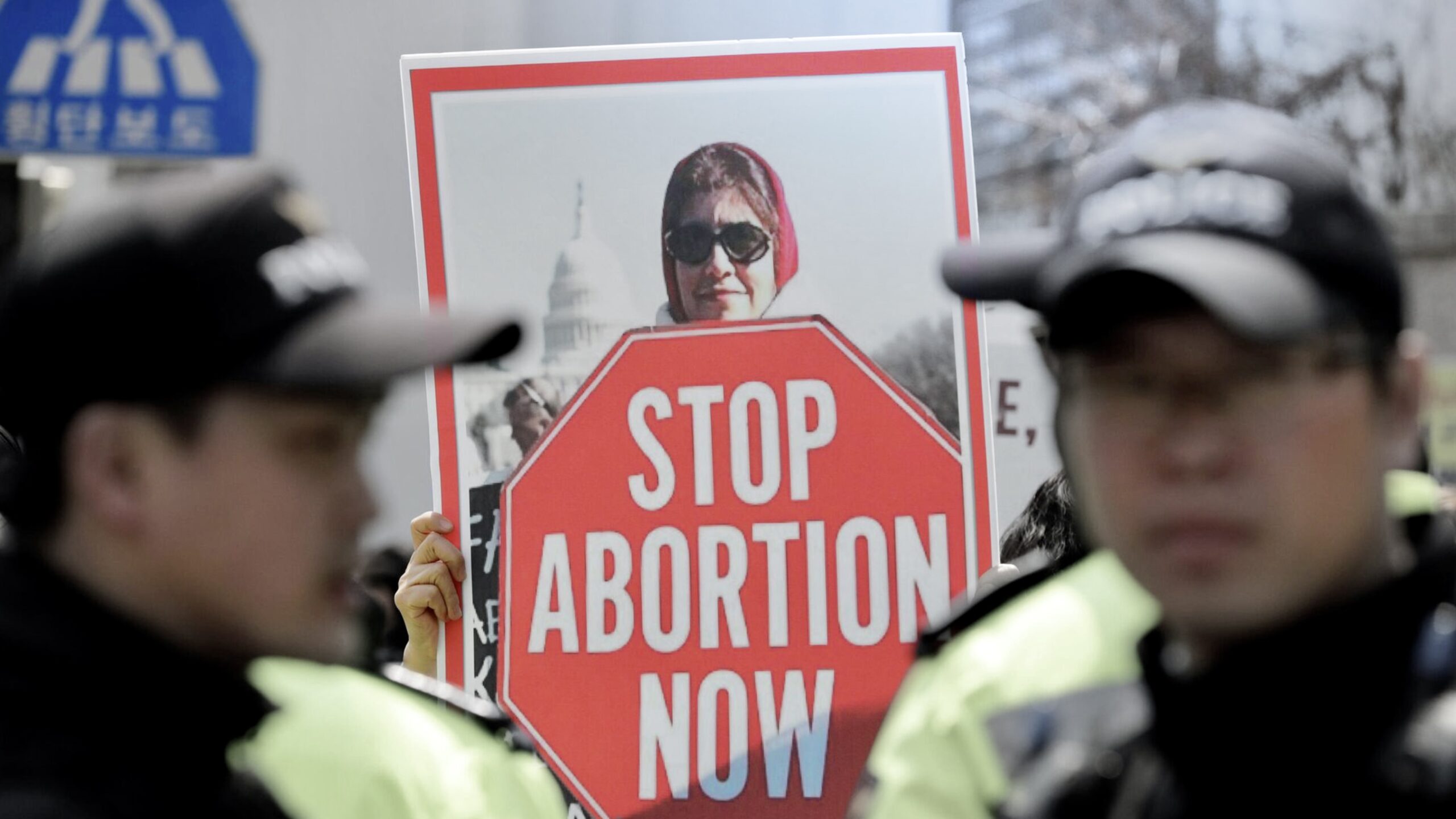
Prior to June 24, 2022, the United States was one of only six countries in the world that offered no protection for unborn children at any point in pregnancy. Today, because of the Supreme Court’s decision in Dobbs vs. Jackson Women’s Health Organization overturning Roe v. Wade, over half of the 50 states protect life in the womb. The United States has shown the world that it is possible to reverse a culture of death; now, countries like South Korea must follow suit, removing themselves from the worst offenders list where they currently reside alongside the likes of China and North Korea.

In South Korea, the recent turn toward legal abortion on demand through all nine months of pregnancy was born of court interference — just as it was in America in 1973. In 2019, the Constitutional Court ruling vacated the nation’s existing pro-life law and ordered the parliament to enact new legislation related to abortion. When the legislature failed to reach a consensus on a new gestational protection for the unborn by the end of 2020, all regulations on abortion in the country ended on January 1, 2021.

Since the first day of 2021, unborn children in South Korea have received no legal protection from abortion. Even prior to the 2020 court ruling, however, illegal abortions ran rampant in South Korea due to selective enforcement of the pro-life protection. As the Korea Herald explains, “In the 1970s and 80s, the government encouraged abortion in a campaign to lower the birth rate.” Additionally, sex-selective abortions were common in the country through the 1990s. Since the removal of laws protecting the unborn, Korea has seen a sharp increase in abortions. According to government data, there were an estimated 32,000 abortions in 2020 compared to 4,800 in 2017.

The notion that abortion is an acceptable form of population control coupled with the desire for designer families has played into the burgeoning South Korean feminist movement, which has championed abortion as a human right. It is worth noting that South Korea is a genuinely dangerous place for women; one report notes that South Korean women suffer from one of the worst gender ratios for homicide in the world. Ninety percent of victims of violent crimes in South Korea are women.

However, the solution to a society that has chronically devalued women is not abortion — a procedure that will likely traumatize a mother forever while simultaneously ending the life of her innocent child. South Korea’s pro-life movement faces the responsibility of furthering the message that being pro-life means protecting, respecting, and advocating for both babies and their mothers.

While the recent trajectory in South Korea on life has been discouraging, there are signs of hope. For example, in response to the Constitutional Court’s ruling in 2019, the nation’s pro-life movement has been more active than ever. Pro-life activists have begun hosting events, distributing literature, and producing videos. Following the U.S. Supreme Court’s Dobbs decision, South Korean Auxiliary Bishop Linus Lee Seong-hyoof Suwon called on government leaders to enact protections for unborn children. Additionally, in 2022, multiple pro-life bills were considered by the South Korean parliament, including a bill that would protect unborn children beginning at fertilization, as well as two bills that would protect unborn children from abortion after six weeks and 10 weeks of pregnancy.

Thus, while the recent spike in abortions and the current legal landscape in South Korea is discouraging, there is evidence that many in the country oppose the destruction of unborn lives. 

Contrary to what liberal interpreters claim, the Bible presents a compelling pro-life ethic, and leaders in South Korea can learn much from how the American church — once fully engaged — contributed to the pro-life movement that eventually overturned Roe.

It took 49 years for the United States to reverse the evil Roe v. Wade decision, and during that time over 60 million unborn children’s lives were lost through the tragedy of abortion. South Korea has the opportunity to learn from the United States’ mistakes — to once again become a nation that protects the weak and vulnerable. For this to be possible, every church must join the biblically based effort to defend the tiniest South Koreans.

It is never too late to reverse the culture of death and begin rebuilding a respect for life that values both unborn children and their mothers. South Koreans should not wait 49 years to protect life. They should begin today.

frc - Family Research Council - logo

Harbinger’s Daily exists through the generous support of our readers. For ways to support this ministry, click here.

Bent On Destruction: The Iranian Regime Says It Has ‘No Choice But To Build A Nuclear Bomb’

"If you (America) make the mistake of attacking us with a nuclear weapon, we have to show them that we will," Iranian economist Muhammad-Reza Yazdizadeh stated. "Talking about the range of our missiles is a joke. If we are hit, we will attack in Washington. They know that we have the missile range to do this, and we need to show them that we have the nuclear capability as well. At the very least, we can launch a dirty bomb against them."

Through Compromise, Numerous Modern Churches Are Guilty Of ‘Playing The Harlet’

The Bible uses strong language to describe any form of compromise with worldly thinking. And it doesn’t just apply to the ancient Israelites. Hosea 4:12 says, “My people ask counsel from their wooden idols, and their [wooden] staff informs them. For the spirit of harlotry has caused them to stray, and they have played the harlot against their God.” Hosea used strong language against his fellow Israelites, calling them harlots because they had violated their vows to remain faithful to the one true God. Is it possible that Christians today, and particularly Christian leaders—in their zeal to make Christianity more enticing—are actually “playing the harlot,” too?

sign up

Will America Last Another 250 Years?

Looking back, there can be no denying that God has indeed shed His grace—His unmerited favor—on our land, from sea to shining sea. But does our national “soul” encourage self-control? Do our laws champion ordered liberty? Is our success tempered with nobleness? Is brotherhood the defining characteristic of any good we aspire to reflect? By all of those measures, America seems decidedly adrift. We are drifting farther and farther from Nature’s God—the Ruler of the Universe our Founders called upon and credited with for our celebrated independence.

ABC's of Salvation

Decision

UTT

FOI

untitled artwork

Israel My Glory

Prior to June 24, 2022, the United States was one of only six countries in the world that offered no protection for unborn children at any point in pregnancy. Today, because of the Supreme Court’s decision in Dobbs vs. Jackson Women’s Health Organization overturning Roe v. Wade, over half of the 50 states protect life in the womb. The United States has shown the world that it is possible to reverse a culture of death; now, countries like South Korea must follow suit, removing themselves from the worst offenders list where they currently reside alongside the likes of China and North Korea.

In South Korea, the recent turn toward legal abortion on demand through all nine months of pregnancy was born of court interference — just as it was in America in 1973. In 2019, the Constitutional Court ruling vacated the nation’s existing pro-life law and ordered the parliament to enact new legislation related to abortion. When the legislature failed to reach a consensus on a new gestational protection for the unborn by the end of 2020, all regulations on abortion in the country ended on January 1, 2021.

Since the first day of 2021, unborn children in South Korea have received no legal protection from abortion. Even prior to the 2020 court ruling, however, illegal abortions ran rampant in South Korea due to selective enforcement of the pro-life protection. As the Korea Herald explains, “In the 1970s and 80s, the government encouraged abortion in a campaign to lower the birth rate.” Additionally, sex-selective abortions were common in the country through the 1990s. Since the removal of laws protecting the unborn, Korea has seen a sharp increase in abortions. According to government data, there were an estimated 32,000 abortions in 2020 compared to 4,800 in 2017.

The notion that abortion is an acceptable form of population control coupled with the desire for designer families has played into the burgeoning South Korean feminist movement, which has championed abortion as a human right. It is worth noting that South Korea is a genuinely dangerous place for women; one report notes that South Korean women suffer from one of the worst gender ratios for homicide in the world. Ninety percent of victims of violent crimes in South Korea are women.

However, the solution to a society that has chronically devalued women is not abortion — a procedure that will likely traumatize a mother forever while simultaneously ending the life of her innocent child. South Korea’s pro-life movement faces the responsibility of furthering the message that being pro-life means protecting, respecting, and advocating for both babies and their mothers.

While the recent trajectory in South Korea on life has been discouraging, there are signs of hope. For example, in response to the Constitutional Court’s ruling in 2019, the nation’s pro-life movement has been more active than ever. Pro-life activists have begun hosting events, distributing literature, and producing videos. Following the U.S. Supreme Court’s Dobbs decision, South Korean Auxiliary Bishop Linus Lee Seong-hyoof Suwon called on government leaders to enact protections for unborn children. Additionally, in 2022, multiple pro-life bills were considered by the South Korean parliament, including a bill that would protect unborn children beginning at fertilization, as well as two bills that would protect unborn children from abortion after six weeks and 10 weeks of pregnancy.

Thus, while the recent spike in abortions and the current legal landscape in South Korea is discouraging, there is evidence that many in the country oppose the destruction of unborn lives. 

Contrary to what liberal interpreters claim, the Bible presents a compelling pro-life ethic, and leaders in South Korea can learn much from how the American church — once fully engaged — contributed to the pro-life movement that eventually overturned Roe.

It took 49 years for the United States to reverse the evil Roe v. Wade decision, and during that time over 60 million unborn children’s lives were lost through the tragedy of abortion. South Korea has the opportunity to learn from the United States’ mistakes — to once again become a nation that protects the weak and vulnerable. For this to be possible, every church must join the biblically based effort to defend the tiniest South Koreans.

It is never too late to reverse the culture of death and begin rebuilding a respect for life that values both unborn children and their mothers. South Koreans should not wait 49 years to protect life. They should begin today.

frc - Family Research Council - logo

Trusted Analysis From A Biblical Worldview

Help reach the lost and equip the church with the living and active truth of God's Word in our world today.

YOU CARE ABOUT

BIBLICAL TRUTH. SO DO WE.


Together, We Can Deliver A Biblical Understanding

Of News Events Around The World.

Bent On Destruction: The Iranian Regime Says It Has ‘No Choice But To Build A Nuclear Bomb’

"If you (America) make the mistake of attacking us with a nuclear weapon, we have to show them that we will," Iranian economist Muhammad-Reza Yazdizadeh stated. "Talking about the range of our missiles is a joke. If we are hit, we will attack in Washington. They know that we have the missile range to do this, and we need to show them that we have the nuclear capability as well. At the very least, we can launch a dirty bomb against them."

Through Compromise, Numerous Modern Churches Are Guilty Of ‘Playing The Harlet’

The Bible uses strong language to describe any form of compromise with worldly thinking. And it doesn’t just apply to the ancient Israelites. Hosea 4:12 says, “My people ask counsel from their wooden idols, and their [wooden] staff informs them. For the spirit of harlotry has caused them to stray, and they have played the harlot against their God.” Hosea used strong language against his fellow Israelites, calling them harlots because they had violated their vows to remain faithful to the one true God. Is it possible that Christians today, and particularly Christian leaders—in their zeal to make Christianity more enticing—are actually “playing the harlot,” too?

untitled artwork 6391

Will America Last Another 250 Years?

Looking back, there can be no denying that God has indeed shed His grace—His unmerited favor—on our land, from sea to shining sea. But does our national “soul” encourage self-control? Do our laws champion ordered liberty? Is our success tempered with nobleness? Is brotherhood the defining characteristic of any good we aspire to reflect? By all of those measures, America seems decidedly adrift. We are drifting farther and farther from Nature’s God—the Ruler of the Universe our Founders called upon and credited with for our celebrated independence.

ABC's of Salvation

TV AD

worldview matters

Decision Magazine V AD

Decision

Jan Markell

Israel My Glory

Erick Stakelbeck

untitled artwork

YOU CARE ABOUT

BIBLICAL TRUTH.

SO DO WE.

Together, We Can Deliver A Biblical Understanding Of News Events Around The World And Equip The Church To Stand With A Biblical Worldview.

untitled artwork

Israel My Glory

YOU CARE ABOUT

BIBLICAL TRUTH.

SO DO WE.


Together, We Can Deliver A Biblical Understanding Of News Events Around The World And Equip The Church To Stand With A Biblical Worldview.