LIVE DEVELOPMENTS — updated Monday, April 6, 2026
Netanyahu Congratulates Trump On Rescue Of Downed Pilot, Applauds ‘Unprecedented’ US-Israeli Cooperation
WAR IN
ISRAEL
LIVE DEVELOPMENTS — updated Monday, April 6, 2026
Netanyahu Congratulates Trump On Rescue Of Downed Pilot, Applauds ‘Unprecedented’ US-Israeli Cooperation
WAR IN ISRAEL
- Since Oct. 7, over 1,600 Israelis (935 soldiers) have been killed, and 6,424 IDF soldiers wounded since the start of the war.
- On Oct. 7, 2023, one day after the 50th anniversary of the Yom Kippur War, thousands of Hamas gunmen invaded southern Israel, brutally murdering 1,200 Israelis and kidnapping 251 to the Gaza Strip.
- On Oct. 8, 2023, the Israel Security Cabinet voted to officially declare war for the first time since the 1973 Yom Kippur War.
- On Oct. 27, 2023, the IDF began its Ground Operation in Northern Gaza
- Between October 7th, 2023, and March 31, 2024, the IDF made approximately 100,000 phone calls, dropped 9.3 million leaflets, sent 15.5 million text messages, and 17 million voice recordings in efforts to get Gazan civilians out of harm’s way during military operations.
- Between October 7th, 2023, and August 18, 2025, Israel has allowed and facilitated the entry of over 1.9 million tons of aid into Gaza.
- On June 13th, 2025, the 12 Day War began between Israel and the Iranian regime. Israel conducted massive airstrikes targeting Iran’s military infrastructure and leadership, weapons stockpiles, and nuclear scientists—as the regime rained ballistic missiles down, targeting locations of Israel’s largest civilian populations.
- On June 22, 2025, under the orders of President Trump, B2 Bombers dropped bunker-buster bombs on Iran’s nuclear facilities, thwarting the imminent danger of Iran obtaining nuclear weapons.
- On October 10th, 2025, a fragile ceasefire agreement, brokered by the Trump Administration, came into effect between Israel and Hamas.
- On January 27, 2026, after numerous delays, the body of the last remaining Israeli hostage in the Gaza Strip was returned to Israel.
- On February 28th, 2026, the United States launched a large-scale joint military operation against the Iranian Regime, beginning with the elimination of the nation’s Supreme Leader.
Day 913 — Monday, April 6
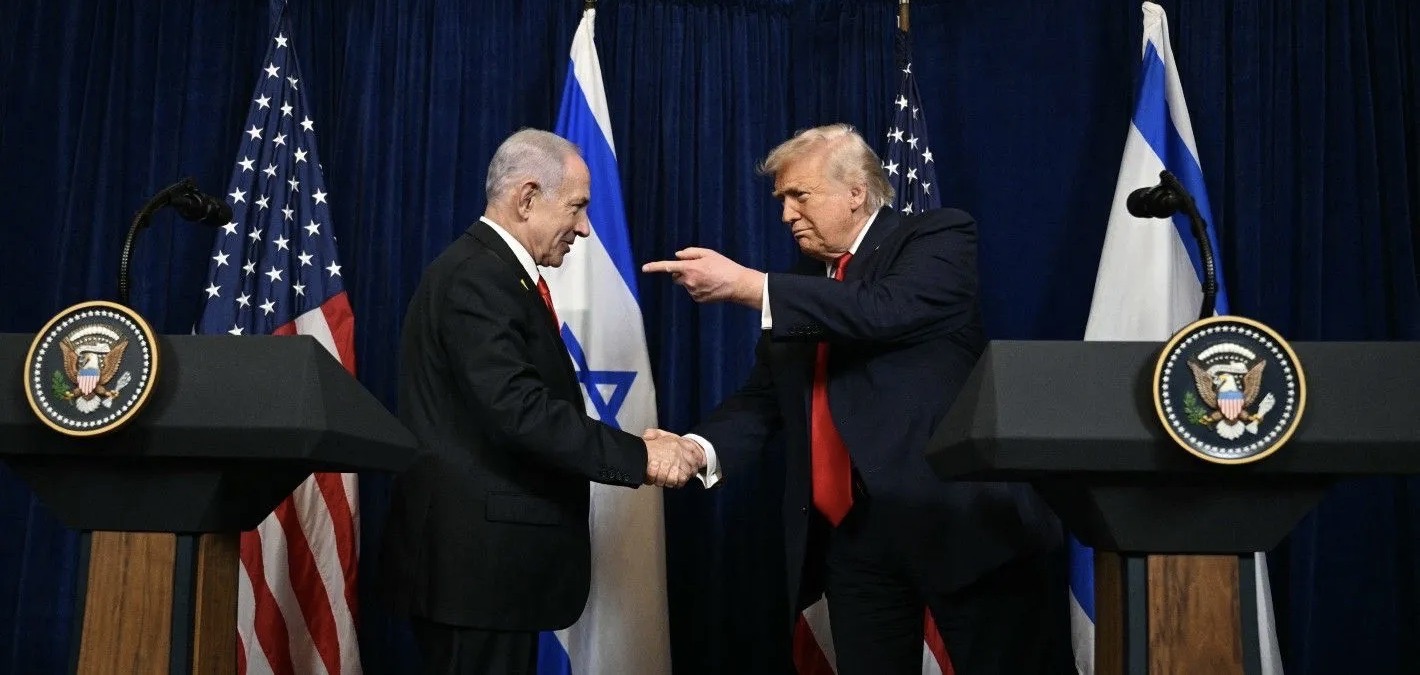 Prime Minister Benjamin Netanyahu shared on Monday morning that he spoke with U.S. President Donald Trump and was “deeply proud” that Israel could “contribute to saving a brave American warrior,” referring to the rescue mission of the downed pilot from Iranian territory.
“I spoke earlier with President Donald Trump and personally congratulated him on his bold decision and a perfectly executed American mission to rescue the downed pilot from enemy territory,” Netanyahu tweeted.
He continued, “The President expressed his appreciation for Israel’s help,” adding that the Israeli-U.S. “cooperation on and off the battlefield is unprecedented.”
On Sunday, Netanyahu released an English-language video in which he congratulated Trump on the daring rescue April 4 mission from deep in enemy territory.
The Israeli leader invoked his personal experience as a combat soldier in the IDF, as well as that of his brother Yoni, who died in the 1976 Entebbe hostage rescue operation.
“As a nation that repeatedly carried out daring rescue operations, and as someone who was wounded in such a mission and lost a brother in the Entebbe rescue, Israelis and I, we know what a bold decision you took,” said Netanyahu.
The prime minister also tweeted on Sunday night a brief, all-caps sentence accompanied by an AI-generated image of the U.S. and Israeli flags, reading: “GOD BLESS OUR TROOPS, GOD BLESS ISRAEL, AND GOD BLESS THE UNITED STATES OF AMERICA!”
Shortly after midnight on Sunday, Trump stated that the U.S. military had recovered a “highly respected colonel” from behind enemy lines in Iran.
“We got him! My fellow Americans, over the past several hours, the United States military pulled off one of the most daring search and rescue operations in U.S. history for one of our incredible crew member officers, who also happens to be a highly respected colonel,” the president wrote.
Trump said he was thrilled to announce that the colonel was “now safe and sound” and that the “brave warrior was behind enemy lines in the treacherous mountains of Iran, being hunted down by our enemies, who were getting closer and closer by the hour.”
Day 913 — Monday, April 6
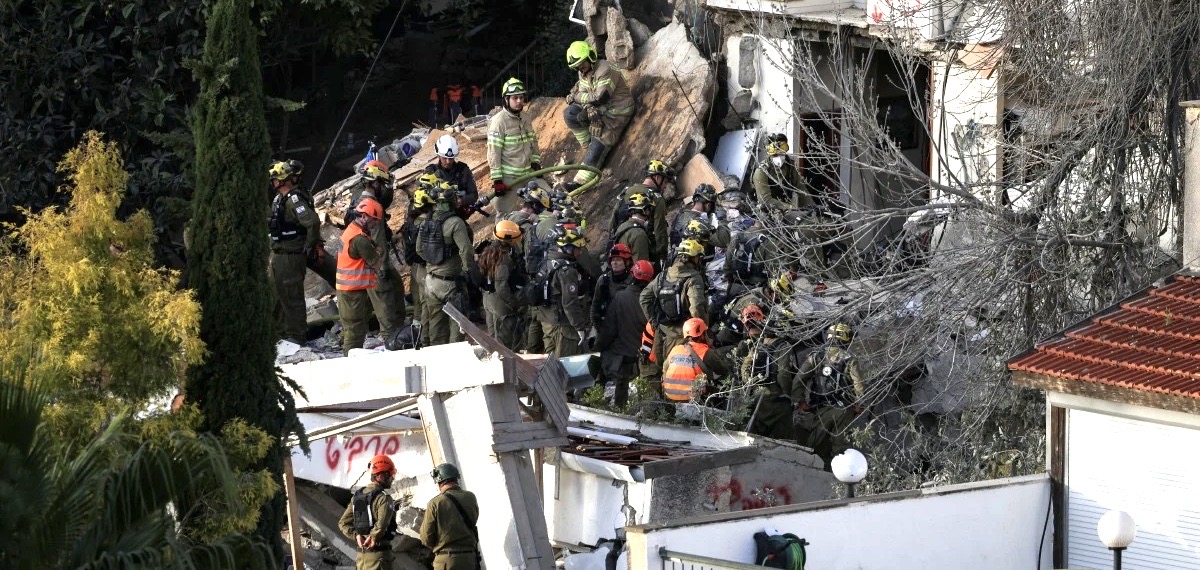 Following an Iranian ballistic missile attack on the city of Haifa on Sunday evening, Israeli Fire and Rescue teams recovered the bodies of two people who were buried under the rubble from the blast on Monday morning. Rescue operations were still ongoing at the time of publication, with two other people still missing.
The rescue operation had been ongoing since the missile struck a residential building in Haifa on Sunday, despite fresh missile barrages being launched toward Israel, including one that targeted the same area of Haifa. Four people were reported wounded from shrapnel in the later barrages.
Haifa Fire and Rescue Service said that after the hours-long rescue attempt, together with rescue teams from IDF Home Front Command, the teams “rescued two trapped individuals who were found under the rubble without signs of life.”
Four people were reported to be missing following the attack on Sunday, including an elderly couple and a child, and rescue teams worked for hours trying to locate them. Home Front Command chief, Maj.-Gen. Shai Klapper spoke at the scene of the impact, saying his teams were determined to find the trapped people.
“We intend to act with determination, professionalism, and thoroughness until the trapped are found,” Klapper said late Sunday night, as rescue efforts continued.
According to initial reports, all four of the missing people were not in the building’s bomb shelter at the time of impact.
The teams had to work carefully and also evacuated several nearby buildings, after police sappers said the missile warhead may not have exploded.
It was reported that a much larger catastrophe was narrowly avoided, as the warhead did not explode but collapsed several floors of the building by sheer force of impact. The warhead itself was not of an unusual type, the report added. Rescue forces on the scene reportedly estimate that had the warhead exploded, it would have caused much heavier damage to surrounding buildings in the area, potentially claiming many more lives.
Israeli authorities have not yet released the identities of the victims.
The Israel Air Force said it was investigating why the missile was not intercepted, despite the launch of several interceptors.
As the rescue operations in Haifa were still underway, Iran launched several more salvos of ballistic missiles at Israel, with several people reported injured from shrapnel.
Day 912 — Sunday, April 5
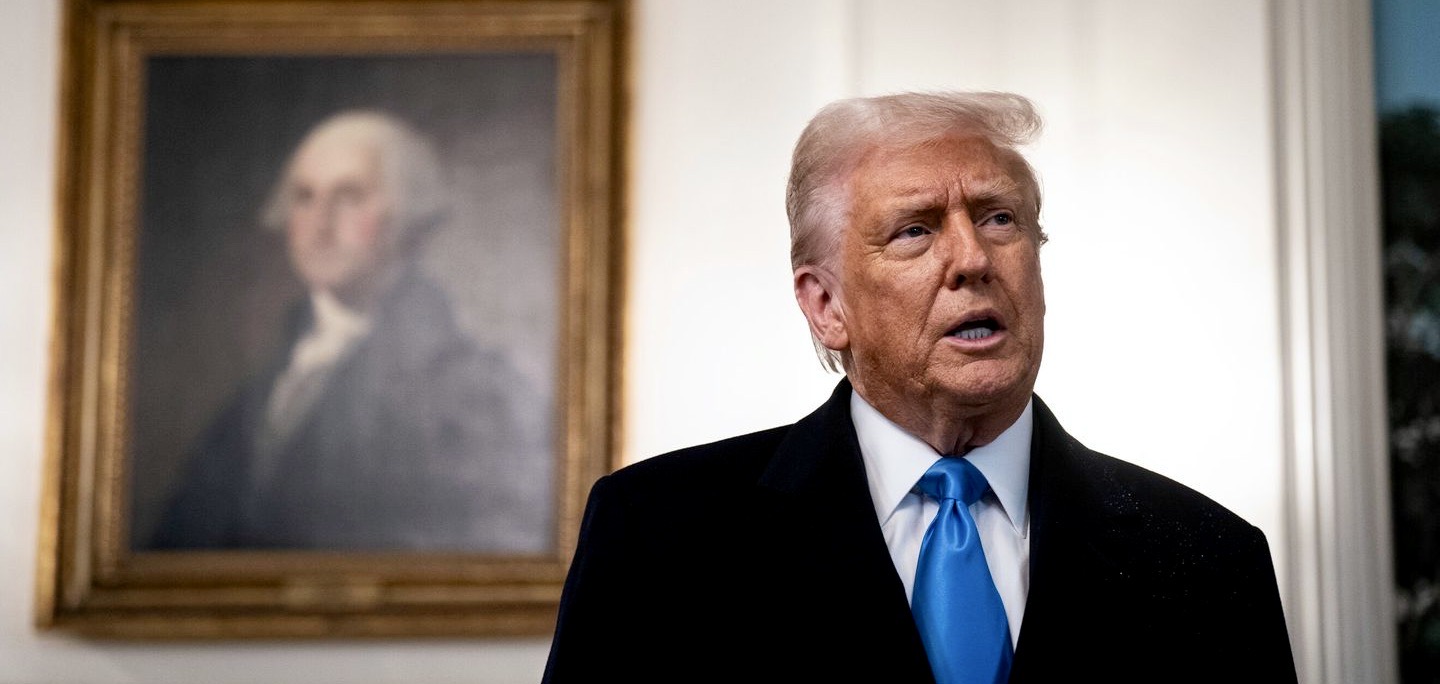 U.S. President Donald Trump on Saturday reminded the Iranians of his ultimatum to open the Strait of Hormuz by April 6, or else “all hell will reign down” on them.
“Remember when I gave Iran ten days to MAKE A DEAL or OPEN UP THE HORMUZ STRAIT. Time is running out—48 hours [are left],” Trump wrote on social media platform Truth Social.
Trump on Friday warned that U.S. forces have not yet “started destroying what’s left in Iran,” vowing more attacks on critical infrastructure following airstrikes that destroyed the country’s tallest bridge.
In a post on Truth Social, Trump wrote, “Bridges next, then Electric Power Plants! New Regime leadership knows what has to be done, and has to be done, FAST!”
Trump on Thursday again urged Iran to “make a deal before it is too late,” after the strike on a major bridge connecting Tehran to the nearby city of Karaj.
In an address to the nation on April 1, the president said that the U.S.-Israel military campaign against Iran could conclude within two to three weeks as the “core strategic objectives” are near completion.
“We are going to hit them extremely hard over the next two to three weeks; we’re going to bring them back to the Stone Age, where they belong,” he vowed.
Day 912 — Sunday, April 5
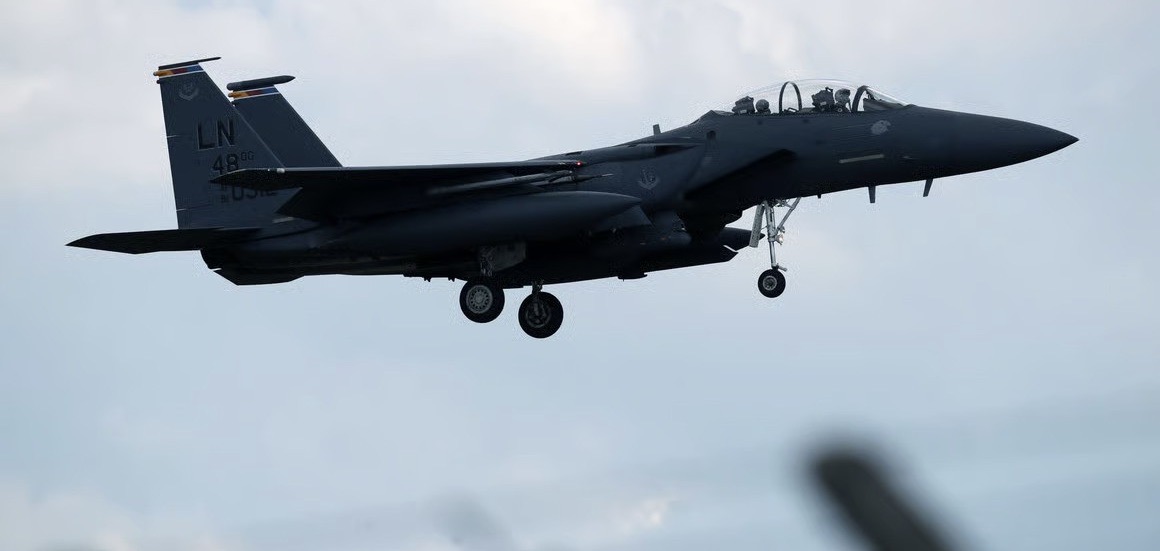 A missing U.S. weapons systems officer (WSO) downed over Iran would have received extensive survival training aimed at evading capture and aiding rescue teams, a former CENTCOM official said.
Retired Col. Joe Buccino said the airman would be trained to quickly move away from populated areas and seek terrain that offers concealment and communication advantages.
“That officer has gone through intensive training to get to a secure location that’s away from the population,” Buccino said on ‘Fox Report’ Saturday. “They know how to do this.”
Buccino said the goal is to reach high ground or an isolated area where the service member can establish contact with U.S. forces and guide search-and-rescue teams.
His comments come as the search continues for the missing crew member after an F-15E was shot down over Iran. The pilot was rescued, but the weapons systems officer remains unaccounted for.
Iranian officials have reportedly urged civilians to locate and turn in the missing airman, raising concerns about the risk of capture.
Buccino cautioned that while U.S. rescue teams are highly trained, there are still significant unknowns, including the service member’s condition.
“There’s a lot of unknowns here,” he said. “We just hope and pray that we can get that service member back.”
Day 912 — Sunday, April 5
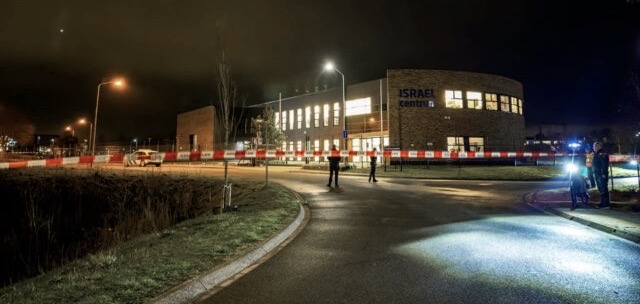 Dutch police have launched a manhunt for a suspected terrorist after the building of a Christian pro-Israel group was bombed on Friday evening.
An explosion rocked the Israel Center in the central Netherlands municipality of Nijkerk late on Friday, resulting in limited damage to the building and, fortunately, no injuries.
According to the Dutch public broadcaster, police are currently searching for a suspect who was dressed in black and was seen allegedly planting an explosive at the front of the building.
The Israel Center, run by a Christian group seeking to promote greater ties with Israel, often holds lectures concerning the Jewish state and sells products produced in Israel.
It has previously been subject to anti-Israel acts, such as vandals spraying graffiti on the building or protests being held nearby. However, director Frank Van Oordt said that the apparent bombing represented a drastic escalation.
“People who come to express their dissatisfaction fall under the right to demonstrate. That’s fine,” he said. “This is an attack. We have never experienced anything like this.”
Responding to the attack, Nijkerk Mayor Tinet de Jonge-Ruitenbeek said: “Our care and compassion goes out to the people of Christians for Israel and local residents. It is terrible that they have to experience this. I have been to the Israel Center and talked to the people there and am impressed by their resilience.”
Israeli Ambassador to the Netherlands, Zvi Vapni, added: “First, Jews were intimidated and attacked in the Netherlands. Now Christians who support Israel are being targeted too.
“This explosion at the Christenen voor Israel Center in Nijkerk is not an isolated incident: these criminals must be captured and punished. This is the only way to deal with fanatics who wants to spread fear and hate.”
Indeed, the attack follows multiple other attacks against Jewish institutions across the Netherlands in recent weeks, including a fire at a synagogue in Rotterdam and another explosion at a Jewish school in Amsterdam, in suspected acts of revenge over the conflict in Iran.
Day 911 — Saturday, April 4
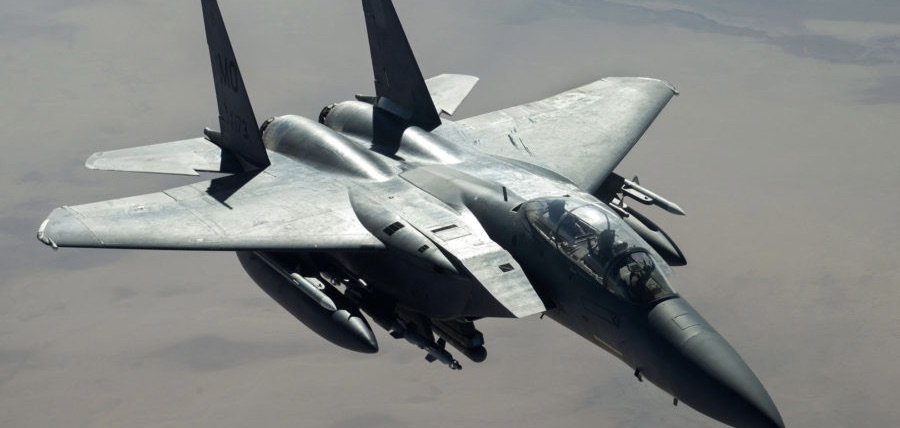 Two U.S. military helicopters, including a U.S. Air Force UH‑60 Black Hawk and a second search‑and‑rescue aircraft, were struck by Iranian fire on Friday while attempting to recover a downed F‑15E pilot.
The F‑15E was shot down by Iranian forces inside Iran, marking the first U.S. fighter lost in Iranian territory since the conflict began in late February, according to reporting from Time and Straight Arrow News.
One U.S. airman was rescued, a U.S. official said, while the status of the pilot remained unknown, the Pentagon briefed the House Armed Services Committee, a congressional aide told The Hill.
Iranian state media circulated photos of what it claimed were F‑15E debris and, according to The Daily Beast and The Guardian, encouraged civilians to shoot down U.S. aircraft and turn over any captured pilots to authorities.
U.S. President Donald Trump declined to comment on what the United States would do if the downed pilot is injured or captured, telling reporters that “we hope that’s not going to happen,” Newsmax reported.
The incident comes amid reports that Russia has provided Iran with targeting intelligence that could help Tehran strike U.S. military assets more precisely, while China is reportedly supplying satellite navigation, advanced radar, and communications technology that may indirectly enhance Iran’s strike capabilities, U.S. and European officials told Newsmax.
A second U.S. combat aircraft, an A‑10 Warthog, reportedly went down near the Strait of Hormuz around the same time as the F‑15E, but the pilot was safely rescued.
Day 911 — Saturday, April 4
 A Jewish security organization is stepping up efforts to protect communities in New York City, launching mobile patrols aimed at identifying potential threats as antisemitic incidents continue to rise.
The initiative, led by the nonprofit Community Security Service (CSS), deploys trained volunteers in vehicles across neighborhoods with large Jewish populations, according to The Times of Israel.
The patrols are part of a broader push to enhance safety around synagogues and at community institutions.
The program launched earlier this year in parts of Manhattan and the Bronx and is expected to expand to other cities, the outlet reported.
Day 910 — Friday, April 3
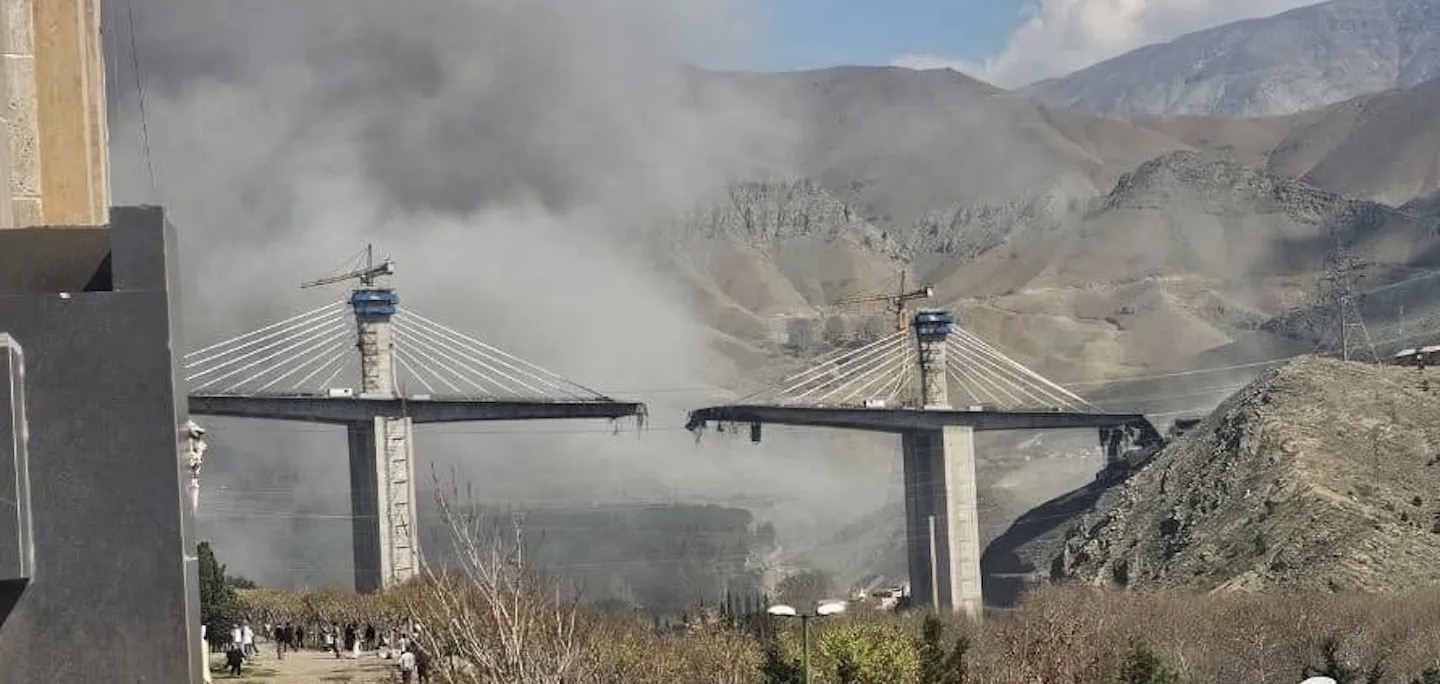 Iran’s biggest bridge near Tehran has crashed down in a stunning scene captured on camera following reports of U.S. airstrikes, President Donald Trump announced Thursday, as he pressed the regime to make a deal before tensions escalate further.
The B1 highway bridge, a key link between Iran’s capital and the western city of Karaj, is considered the tallest in the Middle East and was only inaugurated earlier this year.
Iranian state TV reportedly warned of potential retaliation, claiming the state’s military has identified multiple bridges in American-allied Middle East nations as targets, according to Iran International.
Trump posted a video on social media capturing a massive plume of smoke and debris after the bridge’s apparent collapse.
“The biggest bridge in Iran comes tumbling down, never to be used again — Much more to follow! IT IS TIME FOR IRAN TO MAKE A DEAL BEFORE IT IS TOO LATE, AND THERE IS NOTHING LEFT OF WHAT STILL COULD BECOME A GREAT COUNTRY!” Trump said in a post on Truth Social.
The strike on the bridge was aimed at cutting drone and missile supply lines to Iranian firing units targeting U.S. and Israeli forces, Middle East outlet i24NEWS reported, citing sources.
Iranian state TV also said the bridge was hit twice, roughly an hour apart, resulting in civilian casualties, Fars News reported.
“A few minutes ago, the American-Zionist enemy once again targeted the B1 bridge in Karaj,” the broadcast said, noting that the first strike killed two civilians.
Fars News also reported that other areas of Karaj were struck.
The outlet reported that Iran is considering plans to rebuild the bridge with the help of its engineers and experts.
In retaliation, Iran’s Islamic Revolutionary Guard Corps has reportedly identified several bridges in American-allied nations across the Middle East as potential targets, including infrastructure in Kuwait, Saudi Arabia, Bahrain, Abu Dhabi and the Jordan-West Bank region.
Day 910 — Friday, April 3
 Defense Minister Israel Katz vowed on Thursday to exact “a very heavy price” on Hezbollah for launching a barrage of rockets at Israeli civilians during the Passover meal the previous day.
Recording his message during a situational assessment at the Kirya military headquarters in Tel Aviv, Katz drew a parallel between Hezbollah attacking civilians as they sat down to celebrate the Seder night marking the Exodus of the people of Israel from Egypt, and the Amalekites, an ancient nomadic nation, which, according to the Bible, attacked the people of Israel when they left Egypt.
He directly addressed secretary-general of Hezbollah Naim Qassem, saying that he will not live to see Israel’s retribution, “because you will be deep at the bottom of hell together with [his predecessor] Hassan Nasrallah, [Iran’s slain supreme leader] Ali Khamenei, [Hamas late leader] Yahya Sinwar, and all those eliminated from the axis of evil.”
“But the terrorist organization Hezbollah, which you now lead, and its supporters in Lebanon, will pay an extremely heavy price. The fire will not deter us—the Israeli home front is strong, and the Israel Defense Forces is strong and determined, and there will be no return to the reality that existed before Oct. 7, [2023],” the defense minister continued, referring to the largely passive foreign policy of the Jewish state before the Hamas-led surprise attack on southern Israel, which devastated the communities along the Gaza border, claiming some 1,200 lives and kidnapping 251 more into the Strip.
“Your patrons in Iran are shattered and will not help you against the power of the IDF and the courage and commitment of our soldiers to bring security to the north. We will clear Hezbollah and its supporters from Southern Lebanon—with IDF security control throughout the Litani River area—and we will pull the fangs of the Hezbollah snake throughout Lebanon,” Katz pledged.
Day 910 — Friday, April 3
 Millions of Israelis spent the Passover holiday going back and forth to their shelters every few hours, as the Iranian regime, Hezbollah, and the Houthis markedly stepped up their attacks against Israel from Wednesday to Thursday evening.
Despite over 100 missile and rocket attacks, there were relatively few reports of injuries and no significant damage, as IDF air defenses intercepted most projectiles.
The symbolic peak of the attacks came on Thursday evening, when Iran, Hezbollah and the Houthis in Yemen launched nearly simultaneous attacks, without causing injuries or damage.
The heaviest fire over the holiday came from Lebanon, where Hezbollah launched approximately 150 rockets at Israel since Wednesday evening.
The IDF even noted that this only represented around a third of all rockets launched, with most attacks targeting the Israeli troops operating in southern Lebanon.
The rocket attacks primarily struck towns near the border. Two men were wounded when a rocket hit a building in Kiryat Shmona. An empty kindergarten was damaged in Nahariya and a McDonald’s restaurant near Kibbutz Ma’ayan Baruch was also damaged.
Israeli strikes from the air, sea and land in Lebanon have eliminated more than 40 Hezbollah terrorists. “In the past 24 hours, the Israeli Air Force struck dozens of headquarters, weapons storage facilities, launch sites, and anti-tank missile positions. The Israeli Navy also conducted a precise strike targeting a Hezbollah weapons storage facility in southern Lebanon,” the IDF reported.
“As part of the ground operations, IDF soldiers from the 91st Division identified a Hezbollah terrorist cell and eliminated it in a rapid operational response. In addition, the soldiers dismantled dozens of infrastructure sites, including observation posts and anti-tank missile launch positions.”
According to Kan News, the IDF estimated that the goal of establishing a presence on the “anti-missile line,” the area from which Hezbollah terrorists have launched hundreds of attacks with anti-tank missiles in a direct line of fire, will be completed within about a week.
However, Defense Minister Israel Katz said earlier this week that the IDF will create a “security zone” that not only reaches 8 km (about 5 miles) into Lebanon, but rather stretches all the way to the Litani River, which is around 30 km (18 miles) from the border in most areas.
Day 909 — Thursday, April 2
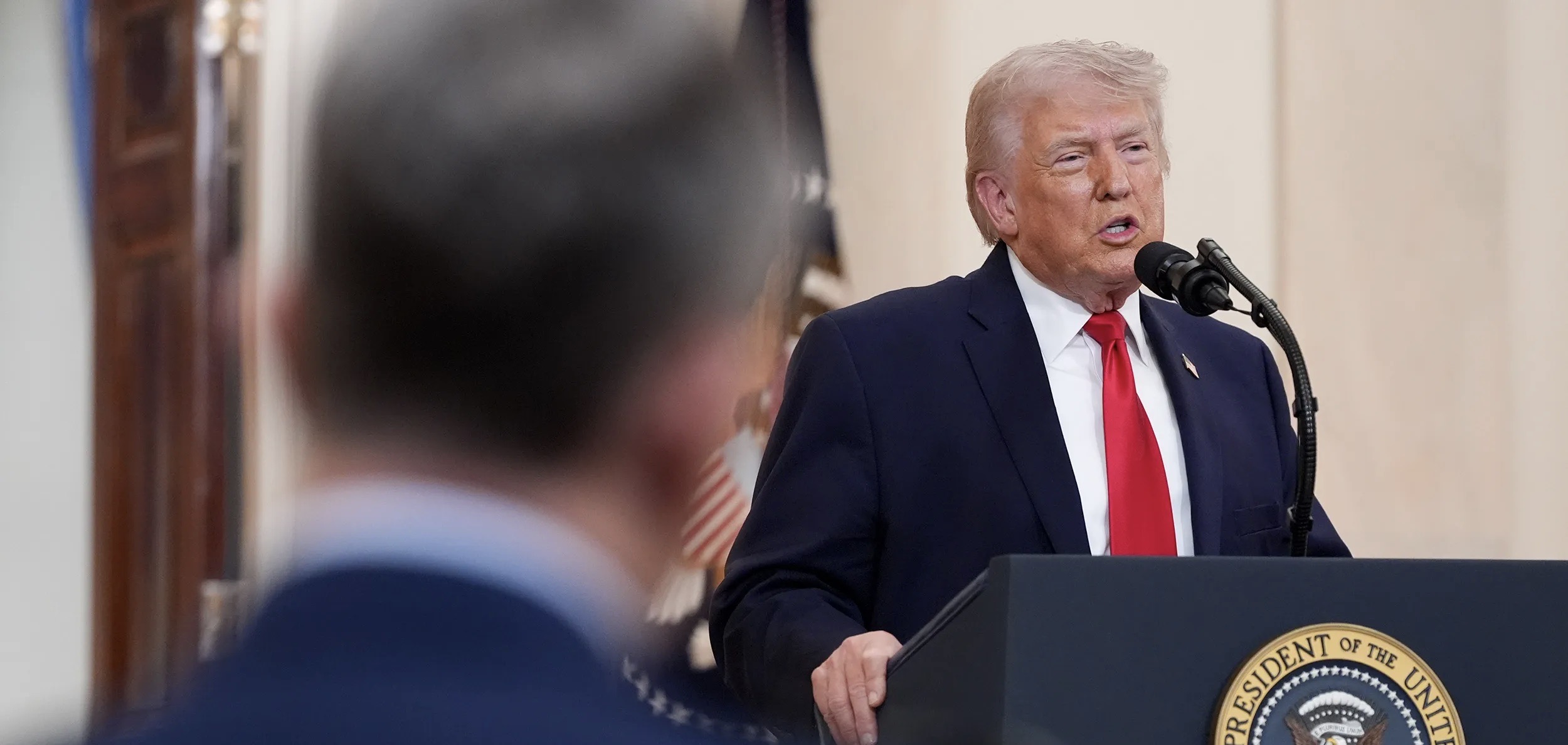 Iran’s military threatened on Thursday to launch crushing and destructive attacks on the US after President Trump declared Operation Epic Fury an “overwhelming” victory in an address to the nation.
Tehran issued its fiery response after President Trump reiterated his intentions to bomb Iran back to the Stone Age, branding the Islamic Republic “fanatical” and the “most violent and thuggish regime on Earth.”
“With trust in Allah, this war will continue until your humiliation, disgrace, permanent and certain regret,and surrender,” Khatam Al-Anbiya, the military’s operational command, said in a statement aired on state TV.
“Await our more crushing, broader and more destructive actions.”
In his primetime address, Trump hailed the Armed Forces for their “swift and decisive” wins on the battlefield.
“Tonight Iran’s Navy is gone. Their Air Force is in ruins. Their leaders, most of them – the terrorist regime they led – are dead,” he said.
“Their command and control of the Islamic Revolutionary Guard Corps is being decimated as we speak.
“Their ability to launch missiles and drones is dramatically curtailed and their weapons, factories, and rocket launchers are being blown to pieces — very few of them left.
“Never in the history of warfare has an enemy suffered such clear and devastating large-scale losses in a matter of weeks.”
Day 909 — Thursday, April 2
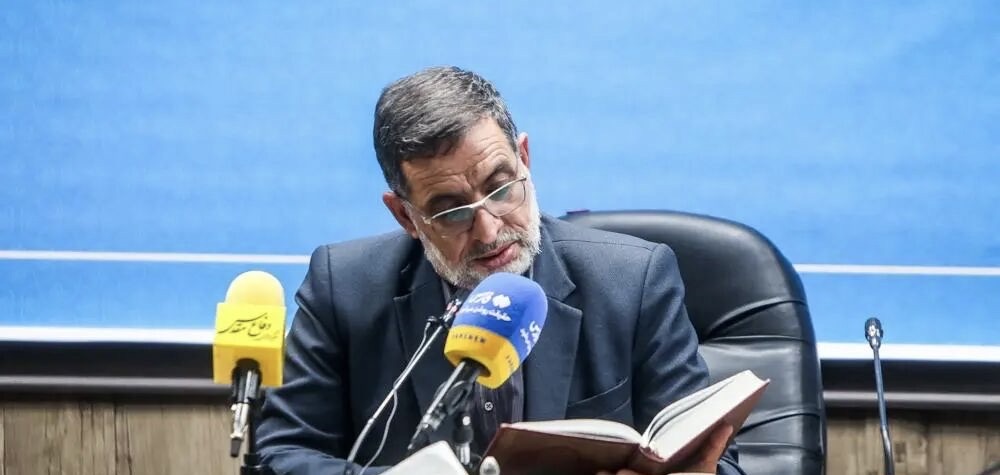 Senior Israeli security officials confirm that since the Oct. 7, 2023, Hamas attack, Israel has made it a strategic objective to target “engineers of perception” and psychological warfare operatives in the Middle East.
According to these officials, the cognitive arena has a highly dangerous potential. These actors have been inciting mass audiences, spreading false accusations and fabricating narratives. They systematically delegitimize Israel by accusing it of war crimes and crimes against humanity.
Some of these figures served as military spokespeople and were well-known media personalities, while others operated behind the scenes, often anonymously, forming the backbone of the Axis of Resistance’s propaganda machinery, led by Iran.
Their strategy was designed to influence both Iran’s adversaries and the Arab public sphere. They leveraged a wide range of media platforms and social networks to amplify their messaging across both digital and traditional media ecosystems, in service of pro-Iranian narratives.
During the war, Israel succeeded in targeting and eliminating several of the most prominent voices within Iran’s propaganda system, figures who had significant visibility across the Middle East.
Their removal has substantially reduced the impact of the disinformation campaigns they once propagated.
Ali Mohammad Naeini
On March 20, 2026, Israel eliminated Ali Mohammad Naeini, spokesperson for Iran’s Islamic Revolutionary Guard Corps. Naeini, 69, was a central figure who had served as the official spokesman and head of public relations for the IRGC since July 2024.
His role extended far beyond conventional media duties, encompassing cognitive warfare, message management and reinforcing the organization’s internal and external narratives. During the 12-day war in June 2025 and the ongoing conflict, Naeini emerged as a leading architect of Iran’s psychological warfare efforts, framing the confrontation as a multidimensional struggle, military, psychological and technological.
He emphasized the critical importance of imagery and narrative dominance. His elimination represents a significant blow to the IRGC’s messaging capabilities and psychological influence.
Abu Ali al-Askari
On March 16, 2026, Israel eliminated Abu Ali al-Askari, the spokesperson for the Hezbollah Brigades militia in Iraq. He was considered one of the senior figures responsible for shaping the militia’s central messaging on regional political struggles.
His role extended beyond military messaging into Iraqi domestic politics. The militia he represented is part of the pro-Iranian camp in Iraq, often opposing both the Iraqi government and efforts at regional normalization with Gulf states.
Al-Askari also led campaigns against the American presence in the Gulf and was viewed as a key instrument in steering political processes to entrench Iranian influence in Iraq.
Hudhaifa Al-Kahlout (“Abu Obeida”)
On Aug. 30, 2025, Israel eliminated Hudhaifa al-Kahlout, known as “Abu Obeida,” the spokesperson of Hamas’s military wing. His elimination marked a major operational and intelligence achievement, causing confusion and embarrassment within Hamas’s leadership.
Abu Obeida was not merely a spokesman; he headed Hamas’s entire propaganda and psychological influence apparatus for many years. His role was central to shaping the organization’s narrative warfare. He oversaw a vast propaganda network composed of approximately 1,500 operatives, which was gradually built over time. His removal significantly disrupted Hamas’s ability to conduct coordinated information campaigns.
Mohammad Afif
On Nov. 17, 2024, Israel eliminated Mohammad Afif, Lebanese Hezbollah’s head of communications and chief of its media apparatus. A close associate of slain Hezbollah chief Hassan Nasrallah, Afif played a critical role in managing the organization’s messaging and filled a sensitive communications gap following previous losses.
Naji Maher Abu Saif (“Abu Hamza”)
On March 18, 2025, Israel eliminated Naji Maher Abu Saif, known as “Abu Hamza,” spokesperson for Saraya al-Quds, the military wing of Palestinian Islamic Jihad. He was deeply involved in intensive propaganda and psychological warfare efforts, including messaging related to Israeli hostages.
Strategic impact
Senior security officials emphasize that these individuals significantly shaped public opinion, both in Israel and across the Arab world, as well as among decision-makers. Their elimination was therefore of critical importance.
These targeted killings have created a substantial communications vacuum within the Axis of Resistance, impairing its ability to mobilize audiences, coordinate messaging and synchronize between its military and media infrastructures.
In effect, these operations were not merely military actions. They directly degraded the narrative capabilities of the entire axis, leaving it without key figures capable of amplifying its messages. This has weakened coordination, reduced psychological influence and undermined the maintenance of internal support across the region.
According to security assessments, the cumulative impact of these eliminations is likely to diminish the Axis of Resistance’s ability to impose false narratives across the Middle East and shape the perceptions of the Arab public.
Day 908 — Wednesday, April 1
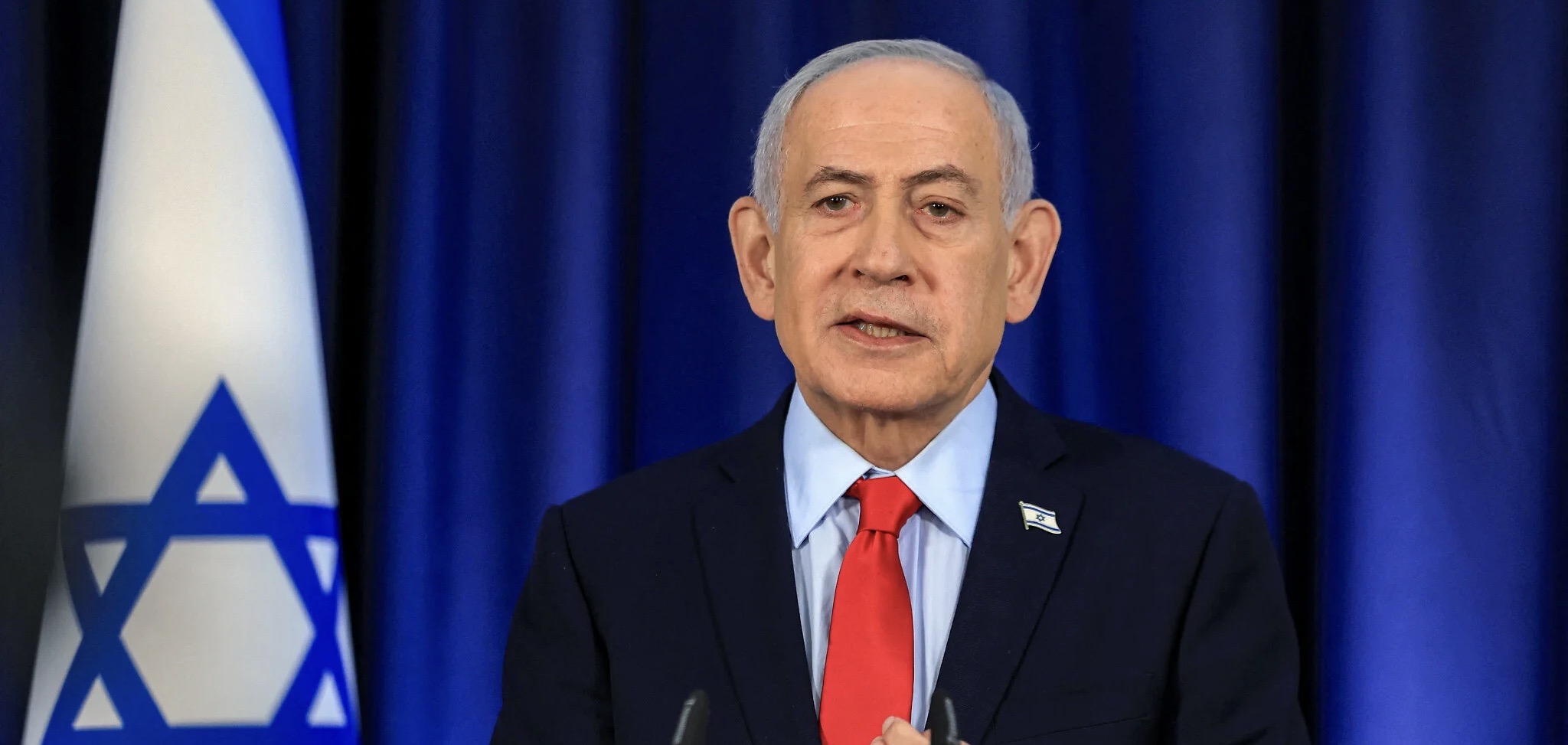 Israel has removed the dual threat of Iran’s nuclear and ballistic missile programs, Prime Minister Benjamin Netanyahu told the nation ahead of the Passover holiday, which begins on Wednesday evening.
Alongside the “ten plagues” he said Israel had brought over the regime, Netanyahu also listed ten accomplishments of the month-long campaign, including “crushing the regime’s industrial capacity to produce” nuclear weapons and missiles.
The prime minister’s listing of accomplishments comes as U.S. President Donald Trump continues to signal that he seeks to wrap up the war, even as the Strait of Hormuz remains closed and U.S. troops, along with another aircraft carrier, are being deployed to the region.
“My brothers and sisters, citizens of Israel, on the eve of this Festival of Freedom, Israel is stronger than ever,” Netanyahu declared at the start.
The regime invested “nearly a trillion dollars” to achieve its “murderous ambitions through the development of nuclear programs and ballistic missiles, the funding and arming of terror proxies around us, and by weathering the heavy sanctions imposed upon it… That trillion has gone down the drain,” said Netanyahu.
“In the spirit of the upcoming Passover holiday, since the beginning of the ‘War of Redemption,’ we have dealt ten plagues upon the Axis of Evil,” he continued.
“The blow to Hamas in Gaza, the blow to Hezbollah in Lebanon, the blow to Assad in Syria, the blow to terrorist organizations in Judea and Samaria, the blow to the Houthis in Yemen, and five more blows to Iran: The blow to their nuclear program, the blow to their missiles, the blow to the regime’s infrastructure, the blow to the forces of oppression, and the ‘Plague of the Firstborn,’ or in our case, the blow to the senior leadership.”
However, Netanyahu noted that the Pharaoh continued trying to harm the people of Israel after the plagues, “and we all know how that ended… The campaign is not yet over, but even now it can be said that against the ten plagues suffered by our enemies, we have achieved ten great accomplishments.”
Netanyahu went on to list the accomplishments, including awakening the world to the danger posed by the regime, strengthening the alliance with the U.S. and other countries, breaking the power of the Iranian proxies surrounding Israel, and establishing security zones along the borders in Gaza, Syria and Lebanon.
Day 908 — Wednesday, April 1
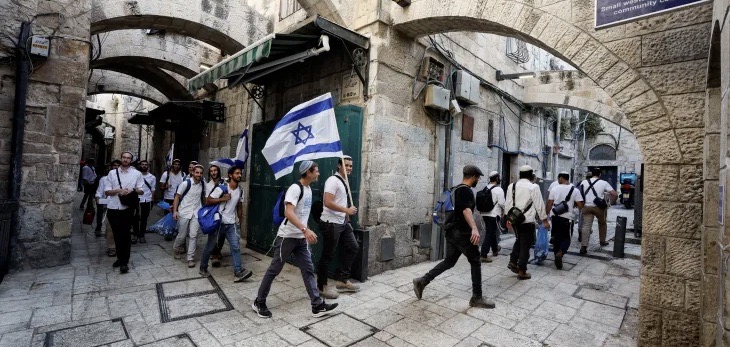 A contributing writer for the far-left publication Drop Site News called for “wiping out” Israel and urged his followers not to make Israelis “feel safe.”
Palestinian journalist Abubaker Abed, a self-described “accidental war correspondent” whose work is published by Drop Site, took to social media Monday with a post calling for the complete elimination of the Jewish state.
“Wiping out Israel off the planet is not enough revenge. Israelis mustn’t feel safe anymore. Haunt them and go after them where they go. These terrorist parasites must be removed from our planet,” Abed posted on Instagram.
Day 908 — Wednesday, April 1
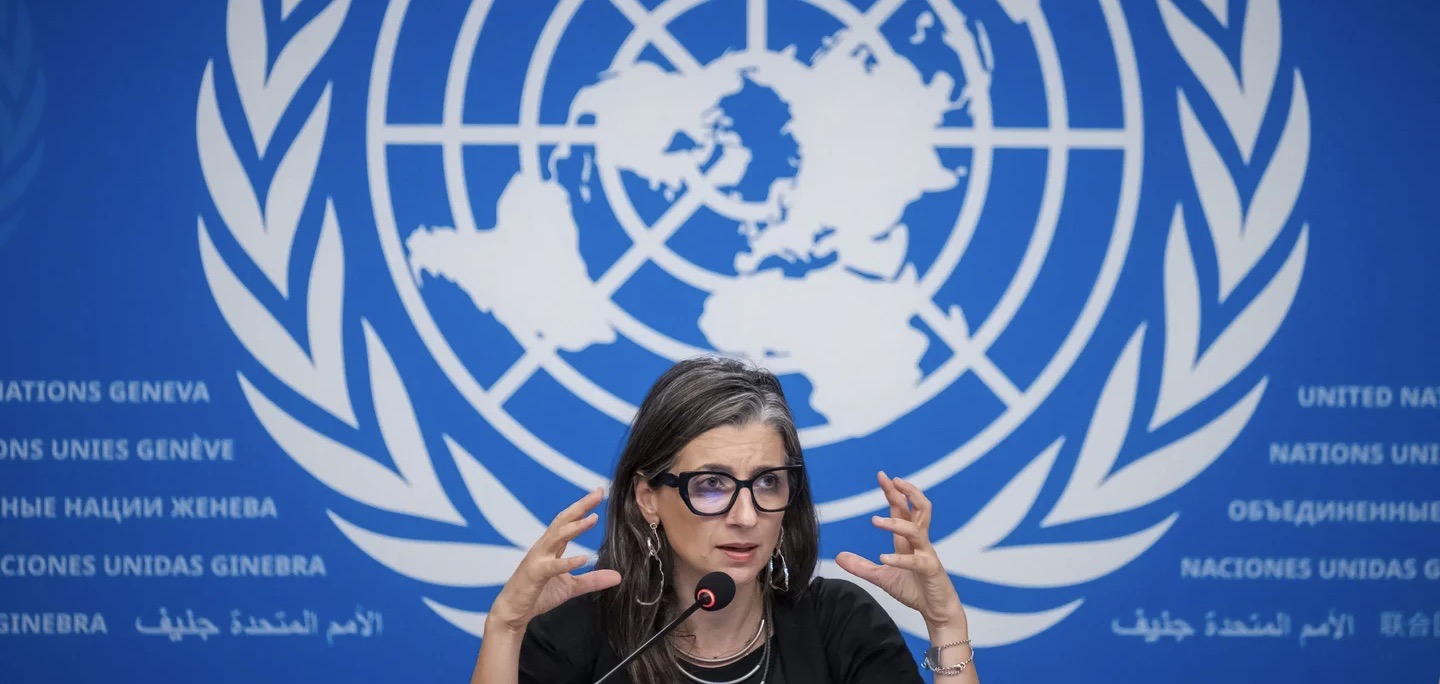 US Ambassador to the UN Mike Waltz said on Tuesday that UN Special Rapporteur Francesca Albanese had threatened American companies with “criminal liability”.
In a post on social media, Waltz wrote that Albanese, to whom he referred to as “the UN’s leading in-house Hamas propagandist”, had sent “baseless threats to American companies using UN letterhead threatening ‘criminal liability’ (as if she had that authority) for merely working with a US ally”, presumably referring to Israel.
“What an abuse of the UN’s resources that could be better spent helping people and resolving conflict. This is why she is sanctioned,” added the US Ambassador.
Albanese, who is notorious for her anti-Israel bias, last year sent letters to two pro-Israel US Christian groups in which she accused them of complicity in “gross human rights violations,” war crimes, crimes against humanity and apartheid, due to their connections to Israel. The two groups sued Albanese for defamation and libel.
Albanese has repeatedly come under fire over her anti-Israel bias. She was recently condemned by several European Union foreign ministers for comments made at an Al Jazeera conference, in which Albanese said: “The fact that instead of stopping Israel, most of the world has armed, given Israel political excuses, political sheltering, economic and financial support … We who do not control large amounts of financial capitals, algorithms and weapons, we now see that we as a humanity have a common enemy.”
Albanese later claimed in an interview that she “never, ever, ever said ‘Israel is the common enemy of humanity,'” calling the accusations “completely false accusations.”
Albanese’s history of anti-Israel statements and actions is well-documented and dates back to social media posts uncovered in 2022, in which she claimed that the “Jewish lobby” controls the US.
At the time, Albanese rejected arguments that the comments about the “Jewish lobby” were antisemitic and claimed they were “mischaracterized”, but her anti-Israel bias has continued to be exposed since.
Her criticism of Israel has grown since Hamas’s October 7, 2023 murderous attack in Israel which Albanese described as an act that must be viewed in “context” and as a response to Israeli “aggression.”
Just last week, Albanese claimed that the world has given Israel “a license to torture Palestinians”, alleging that “torture has effectively become state policy” in Israel.
Responding to the comments, Israel’s mission in Geneva said in a statement, “Francesca Albanese is not a promoter of human rights; she is an agent of chaos… and any document she produces is nothing but a politically-charged, activist rant.”
Albanese “advocates dangerous extremist narratives to undermine the very existence of the State of Israel”, it said.
Day 908 — Wednesday, April 1
 Zohran Mamdani, the mayor of New York City who is a frequent and harsh critic of the Jewish state, told a version of the Passover story that cropped out the ultimate destination of the Israelites—the Holy Land—at a “postmodern” seder at City Winery in Manhattan on Monday.
“This week across our city, Jewish New Yorkers will gather with family and friends, neighbors and strangers around the seder table. Hands will be washed in silence, karpas will be dipped and in the fourth step of the seder, the middle matzah will be broken,” he said. “The larger half, the afikomen, will be set aside for later in the evening. But over the course of the night, as voices both young and old tell the story of Passover, a story of liberation from enslavement, they will do so over the broken middle matzah, a physical reminder of the ruptures that have defined so much of Jewish history, a physical reminder of how much of our world today remains broken and incomplete.”
“For too many in our city, the dream of liberation has drifted out of reach. The affordability crisis deprives so many of dignity and possibility,” the mayor added, per a transcript that his office released. “Too many of our neighbors cannot afford a home to raise their families in, cannot keep up with the rising costs of groceries or child care and can no longer afford to stay in the city that they love. The rising tide of antisemitism has caused enormous pain for so many Jewish New Yorkers.”
The Torah repeatedly makes clear that the Exodus was about both taking the Israelites out of Egypt and directing them to the Holy Land as their final destination. But Mamdani’s telling of the story culminated in Jewish-back relations in the United States.
“Liberation was not realized when Moses demanded, ‘Let my people go,’ nor was it delivered when God intervened with the plagues,” he said. “Liberation was attained when the Jewish people came together to escape their enslavement in Egypt, neighbor helping neighbor, protecting one another and sharing what little they had.”
Phylisa Wisdom, Mamdani’s controversial pick to run the Mayor’s Office to Combat Antisemitism, also attended, as did Morris Katz, an adviser to Mamdani and former CNN host Don Lemon, who is accused of disrupting a church service during a protest against federal immigration enforcement.
Photos released by the mayor’s office and the City Council suggested that, in lieu of a traditional seder plate, guests were offered celery and carrots.
The Israeli American comedian Modi Rosenfeld posted on Instagram prior to the event that “we were not told Mamdani was participating in this event until today.” Writing on Instagram, the performer who goes by Modi wrote, “This is why we’re losing” and “Modi will no longer be attending.”
Day 907 — Tuesday, March 31
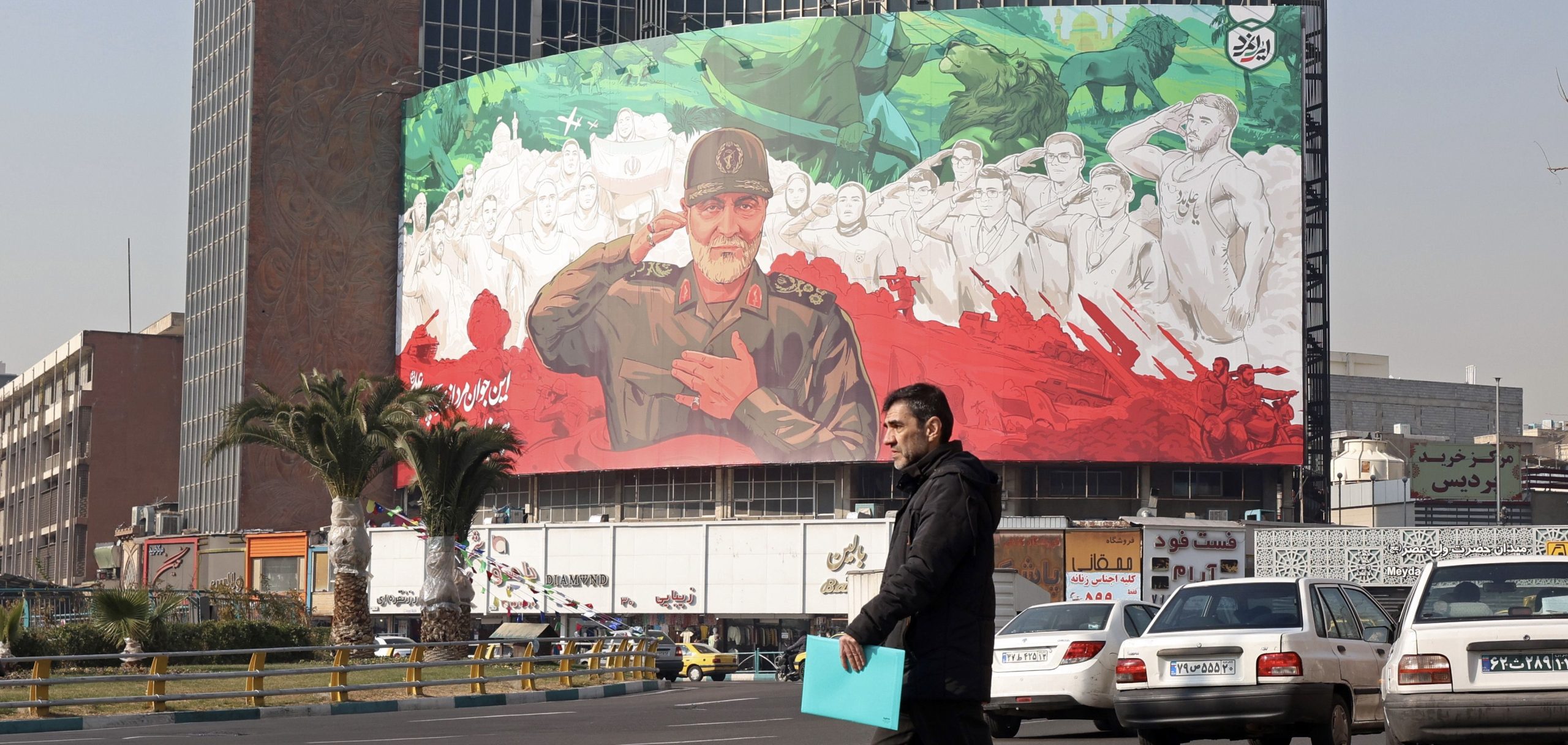 Iran’s security and military forces have moved personnel, weapons and equipment into at least 70 civilian locations during U.S.-Israeli airstrikes, according to an investigation by Iran International.
The outlet also identified what appears to be a broader pattern of using public spaces for military purposes.
The sites linked to the Islamic Revolutionary Guard Corps (IRGC) span 17 provinces, 28 cities and two villages. Nearly half of them — 34 in total — were primary or secondary schools, the report said.
Other locations identified through eyewitness accounts and documents reviewed by Iran International included hospitals, stadiums, universities, mosques, parks and government offices.
While Iran International could not independently verify every account, it geolocated visual evidence from seven reported sites, all of them schools.
The deployment of military forces at civilian sites “shifts battlefield risks onto civilians,” a regional security source who requested anonymity told the outlet, adding that using these locations for military purposes is prohibited under international law.
“When security or paramilitary forces move into schools, hospitals or mosques, they endanger civilians physically, degrade protected civilian services and may turn those sites into military objectives,” the source said.
At least three mosques were also identified in eyewitness accounts as having been used for military deployments.
Day 907 — Tuesday, March 31
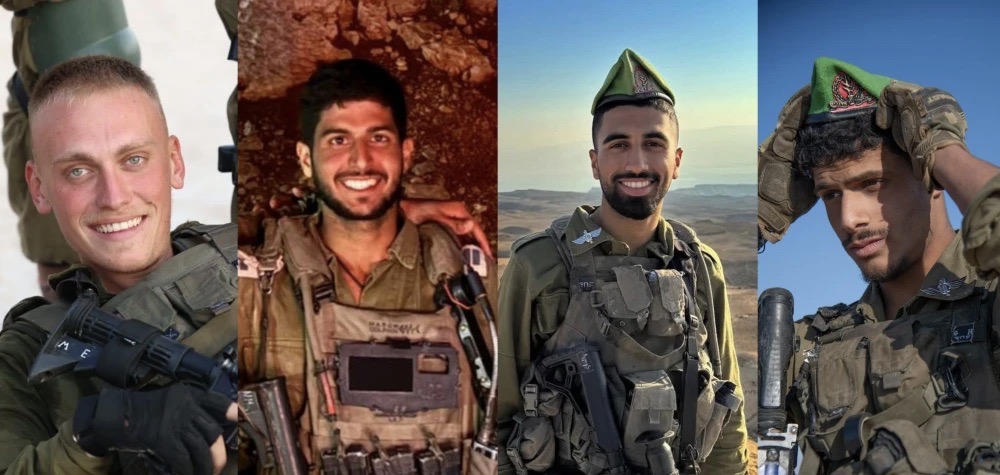 Four Israel Defense Forces soldiers have been killed battling Iranian-backed Hezbollah terrorists in Southern Lebanon, the military said on Tuesday morning.
The slain troops were named by the IDF as Capt. Noam Madmoni, 22, from Sderot; Staff-Sgt. Ben Cohen, 21, from Lehavim; Staff-Sgt. Maxsim Entis, 21, from Bat Yam; and Staff-Sgt. Gilad Harel, 21, from Modi’in-Maccabim-Re’ut. All four served in Reconnaissance Battalion 934, the Nahal Brigade’s special forces unit.
The four soldiers were reportedly killed during a close-range exchange of fire with Hezbollah terrorists in the western sector of Southern Lebanon.
Three other troops were wounded in the incident, one seriously, the military stated. They were evacuated to Israel for medical treatment and their families were informed.
The total death toll among Israeli troops since the Hamas-led Oct. 7, 2023, cross-border massacre now stands at 935. Ten soldiers have been killed since the expansion of ground operations in Southern Lebanon in early March.
On Monday, Sgt. Liran Ben-Zion, 19, from Holon in the greater Tel Aviv area, from the 9th Battalion of the 401st Brigade, was slain in Lebanon. An officer was seriously wounded in the same incident, according to the IDF.
Hezbollah began firing rockets and suicide drones at Israel on March 2, in retaliation for the Jewish state’s targeted killing of Iranian Supreme Leader Ali Khamenei, who was killed in the opening strikes of “Operation Roaring Lion/Epic Fury” against the regime on Feb. 28.
In response to the terrorist organization’s violation of the U.S.-brokered Nov. 27, 2024, truce agreement with Lebanon, Jerusalem launched an aerial campaign against Hezbollah and ordered IDF troops to advance and take control of additional areas in Southern Lebanon to halt cross-border attacks.
Day 907 — Tuesday, March 31
 The attack earlier this month on a synagogue in West Bloomfield, Michigan, was “a Hezbollah-inspired act of terrorism purposely targeting the Jewish community and the largest Jewish temple in Michigan,” the FBI said in a news conference Monday.
The assailant, Ayman Ghazali, a naturalized US citizen from Lebanon, rammed a pickup truck into the synagogue on March 12, as more than 100 children were attending school inside.
After waiting in the synagogue’s parking lot for more than two hours, authorities said, Ghazali drove the truck far into the building, hitting a security officer, before the vehicle became wedged in a hallway.
Security officers for the synagogue began exchanging gunfire with Ghazali, who eventually shot and killed himself inside the truck. During the chaos, the truck’s engine compartment caught fire and caused extensive damage to the building. The truck, officials said, was filled with explosives and flammable liquid believed to be gasoline.
No one else was killed. One of the synagogue’s lead security officers was injured after being hit by the vehicle.
In the days after the attack, US officials said Ghazali was located in federal government databases as having connections to “known or suspected terrorists” associated with Iranian-backed terrorist group Hezbollah in Lebanon.
A week prior to the attack, members of Ghazali’s family in Lebanon, including two brothers, were killed in an Israeli airstrike as the US and Israel entered its second week of conflict with Iran.
The IDF had confirmed that Ghazali’s brother, Ibrahim Muhammad Ghazali, was a Hezbollah commander who had been eliminated in strikes in Lebanon.
Planning for the attack began days beforehand, the FBI said, intensifying on March 9. A review of Ghazali’s online activity dating to January showed repeated searches for pro-Hezbollah and Iranian news outlets, as well as videos related to gunfire and ammunition.
Beginning March 9, the FBI said, he closely followed speeches and live coverage involving Hezbollah leader Naim Qassem, along with reporting about an Iranian fatwa, a religious ruling concerning Islamic law, calling for total jihad against the US military.
Day 906 — Monday, March 30
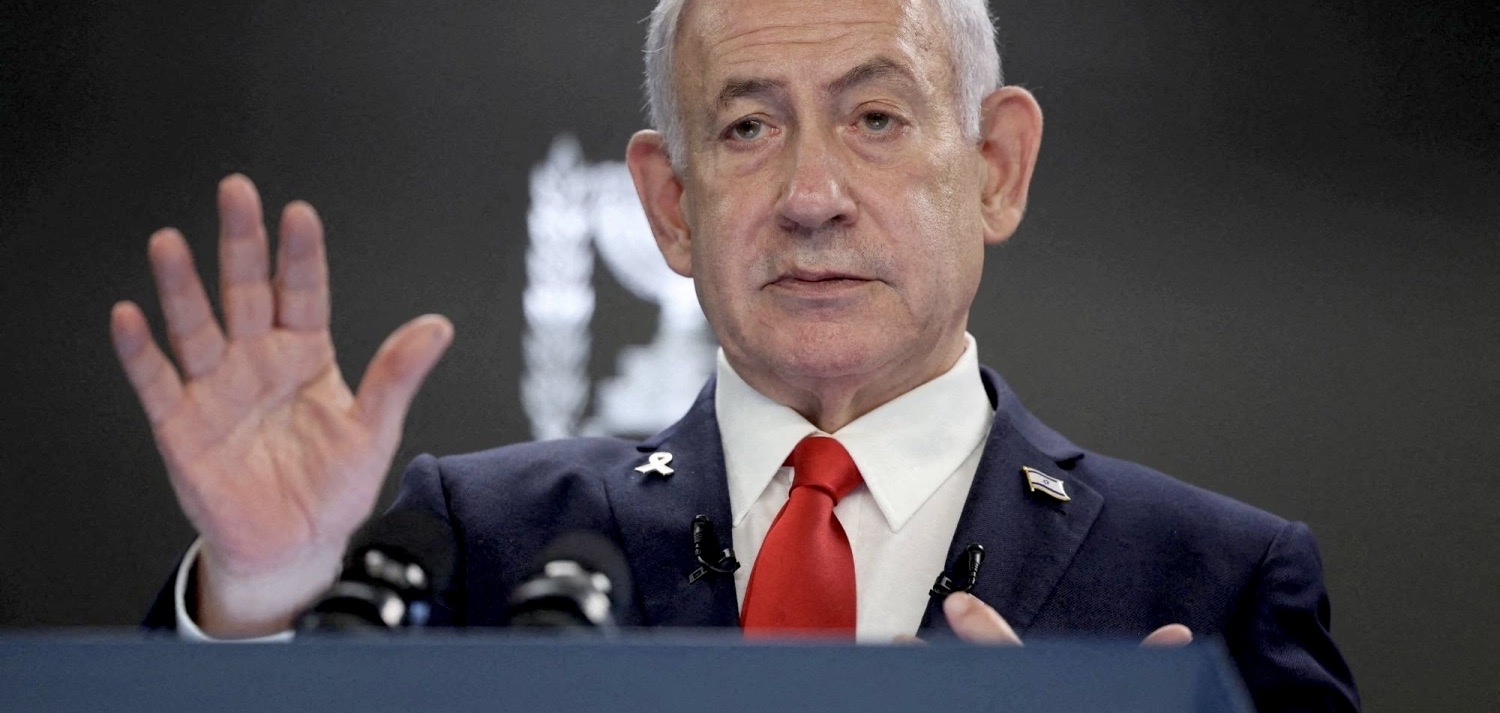 Israel will expand its buffer zone in Lebanon to “finally thwart the threat of invasion and to push the anti-tank missile fire away from our border,” Prime Minister Benjamin Netanyahu said Sunday.
Israel had undergone a paradigm shift in its latest wars against nearby countries, he said.
“I said we would change the face of the Middle East, and we have done so,” he added. “But we have also changed our security concept. We initiate, we attack, and we have created three security zones deep within enemy territory.”
Netanyahu cited the buffer zones in Lebanon, Gaza, and Syria.
“Instead of them surprising us, we are surprising them,” he said. “We are the ones taking action, we are the ones attacking, we are the ones taking the initiative, and we are deep within their territory.”
Day 906 — Monday, March 30
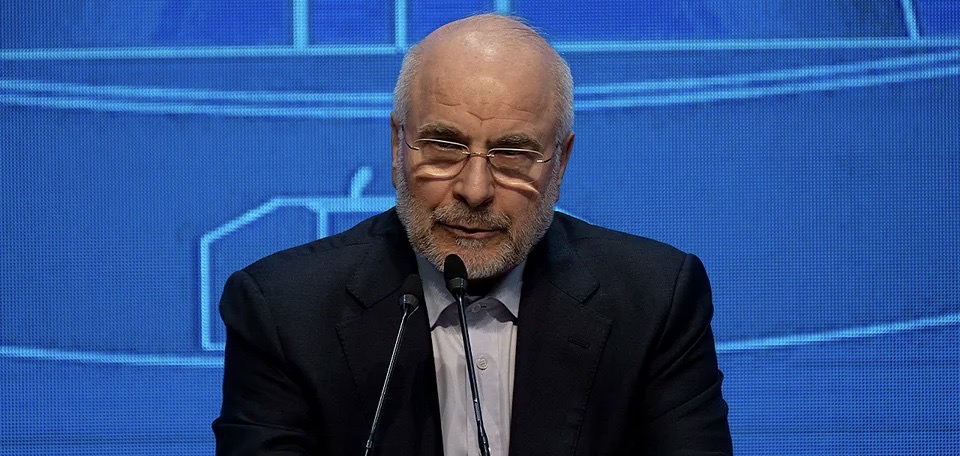 Iran is fighting what its parliament speaker calls a “major world war,” as accusations against the U.S. intensified Sunday.
Mohammad-Bagher Ghalibaf, quoted by Iranian state media, suggested Washington is publicly signaling wanting to negotiate but is privately preparing for a possible ground attack.
“Our enemy speaks publicly of negotiations while secretly planning a ground attack, without realizing our forces are waiting for the Americans to enter,” Ghalibaf said.
“We are in a major world war and must prepare ourselves for a long, difficult, and complex path,” Ghalibaf said.
Ynet reported that he emphasized Iran’s military posture and declared that its missile operations would not end.
“Our launches continue, our missiles will not stop, and our determination has only grown stronger,” he warned.
Ghalibaf, a 64-year-old hardliner, is reportedly among a small group of leaders consolidating power in the new regime.
He pointed to Iran-backed groups across the region as important parts of Iran’s campaign.
Hezbollah in Lebanon, he said, has become “an important and effective part of the resistance,” while allied forces in Iraq are “fighting bravely.”
He also claimed that the Houthis in Yemen have “breathed new life” into the campaign.
Ghalibaf also said Iran would not exit the war without asserting its strength.
“We will not allow our enemies to leave without demonstrating our power and turning this war into a lesson for any aggressor,” he said.
Day 906 — Monday, March 30
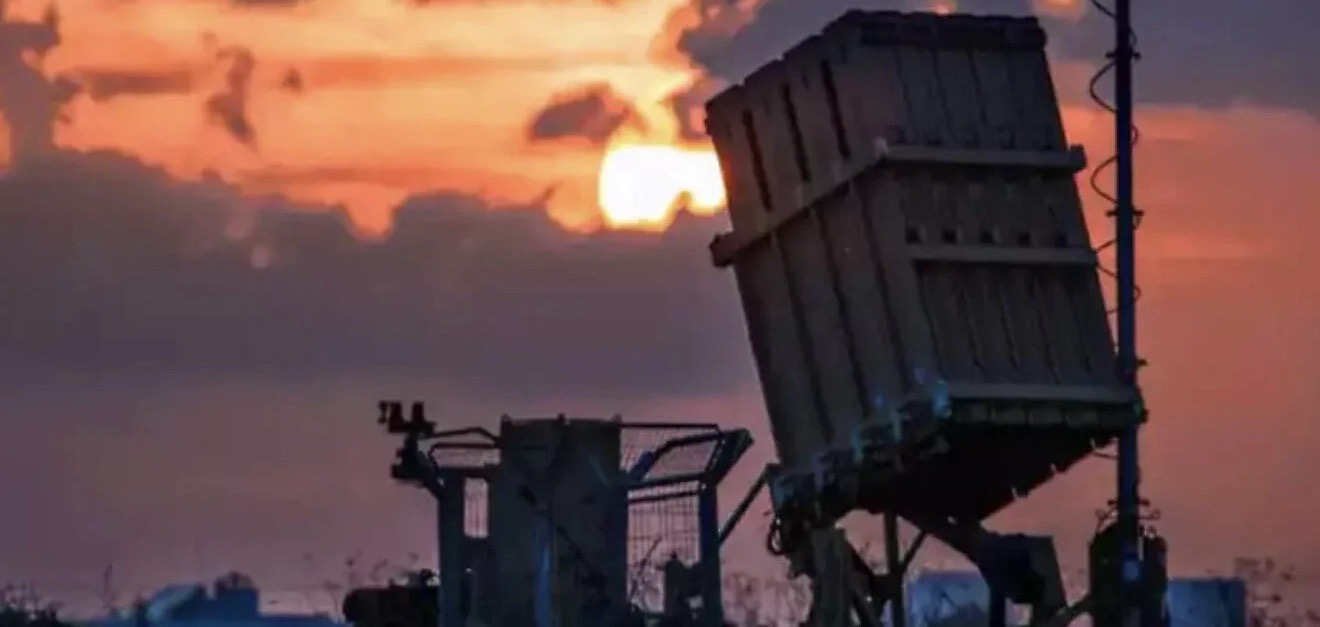 The Israel Defense Forces intercepted two drones launched overnight Sunday by Houthi terrorists in Yemen.
The Iranian-backed Houthis entered the conflict in the early hours of Saturday, firing a ballistic missile at Beersheva, exactly one month after the IDF and U.S. forces began a preemptive strike on Iran on Feb. 28.
The missile was intercepted before reaching Israeli airspace, according to Ynet, which cited the Eilat Municipality.
Hours later, the Houthis fired a cruise missile at Israel that was also downed, the report said, adding that no air-raid sirens were activated.
Since the Hamas-led Oct. 7, 2023, massacre, the Houthis have carried out repeated missile and drone attacks on Israel and targeted shipping in the Red Sea in what they describe as support for the Palestinian terror group.
In response, the IDF has conducted large-scale attacks on Houthi targets in Yemen, including strikes that significantly degraded the terror group’s leadership.
Day 905 — Sunday, March 29
 Mainstream media outlets reportedly used the phrase “war crime” nearly three dozen times in the first three weeks of the Iran conflict, but 88% of that usage was directed toward the U.S. or Israel, according to an analysis released by a U.S.-based, Mideast-focused media watchdog.
CAMERA, the Committee for Accuracy in Middle East Reporting and Analysis, and its research manager, David Litman, released a study Wednesday counting 32 uses of the term “war crime” from the BBC, CNN, NBC News, The New York Times and The Washington Post.
In his review, Litman asked readers to consider how the term “war crime” has been applied in reporting on the conflict, noting that simple internet searches return usages “almost exclusively” against the U.S. and Israel.
“CAMERA found 32 total applications of the phrase ‘war crime’ during the first three weeks of the war (Feb. 28-Mar. 21). Of those, 28 (88 percent) were directed solely toward the actions of the United States and/or Israel,” Litman wrote on CAMERA’s website.
“Zero were directed solely toward the actions of the Islamic Republic of Iran. Four (12 percent) were unattributed or directed at both sides.”
CAMERA found nearly all references stemmed from an airstrike early in the conflict that allegedly destroyed a school in Minab, Iran. The Pentagon is continuing to investigate the incident, according to CAMERA.
“Several of the other allegations refer to the sinking of an Iranian warship in the Indian Ocean in what can assuredly be classified as a lawful attack,” Litman wrote.
The analysis also contrasted that usage with events that have not been labeled “war crimes” in CAMERA’s findings.
The group cited cluster bombs fired by Iran, many of which hit populated areas in Israel and elsewhere.
“While cluster munitions are not universally banned, using them to target populated areas almost certainly constitutes a war crime,” the analysis found.
CAMERA also pointed to Iranian strikes that hit energy and other key installations in nations not officially engaged in the conflict, such as Kuwait and Bahrain.
The analysis found that, among the mainstream media sources examined, the term “war crime” was not applied to these strikes, and if Iran was cited in a war crimes discussion, it was paired with equal criticism of the West.
“This journalistic malpractice inverts reality,” Litman wrote.
George Mason law professor Adam Mossoff commented on the analysis, writing on X that “data analytics confirm huge bias in favor of pro-Islamic regime of Iran by BBC, CNN, NBC and NY Times.”
“These media orgs used ‘war crime’ 32 times in news reports in the first 3 weeks of the U.S./Israel-Iran war. Zero references solely to crimes by Islamic regime, and 88% media uses referred solely to U.S. or Israel.
“Islamic regime uses cluster bombs against Israeli civilians, shoots missiles and suicide drones at civilian targets in numerous Arab countries not involved in war, fires missiles at holy sites in Old Jerusalem, [but] zero identification of these war crimes as standalone crimes by major Western media organizations. This is shameful.”
Day 905 — Sunday, March 29
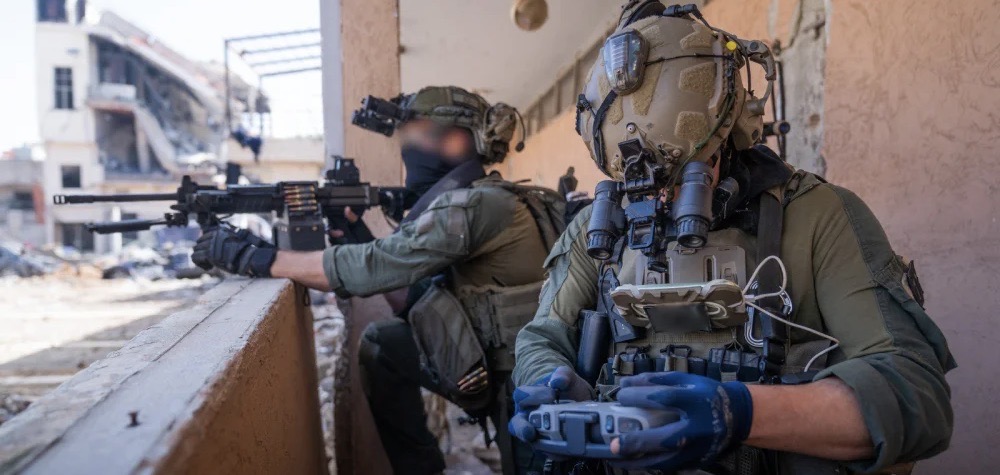 In Southern Lebanon on Saturday, the Israel Defense Forces targeted and killed Ali Hassan Shaib, a Hezbollah Radwan Force terrorist who operated for years under the guise of a journalist for the terrorist organization’s Al-Manar television network, the military said in a statement.
In his journalist role, Shaib “consistently worked to expose the locations of IDF troops operating in Southern Lebanon and along the border, and maintained continuous contact with other operatives in [Hezbollah’s elite] Radwan Force in particular and within the organization in general,” the IDF said.
In addition, he engaged in incitement against IDF troops and civilians of the State of Israel, serving as Hezbollah’s mouthpiece for distributing propaganda materials, including during the ongoing “Operation Roaring Lion,” the army continued.
“The IDF will continue to act forcefully against the terrorist organization Hezbollah, which chose to join the fighting and operate under the auspices of the Iranian terrorist regime, and will not allow harm to the civilians of the State of Israel,” the military stressed.
According to the Al-Manar website in English, Fatima Ftouni, a correspondent of the Hezbollah-affiliated Al-Mayadeen channel, was also killed in the strike.
Ftouni’s brother, a videographer, and Shaib’s relative were also killed, Lebanese media reported.
The group was struck by a drone while driving on the main road in Jezzine, located some 14 miles east to the coastal city of Sidon, reports added.
Meanwhile, IDF troops continued to press forward in Southern Lebanon over the weekend, clearing the area of terrorist elements responsible for attacks on Israelis.
As part of this effort, the Israeli Navy’s Shayetet 13 (“Flotilla 13″) commando unit carried out a targeted raid on Friday following intelligence of the presence of weapons in a school in the village of Al-Khiam in the Nabatieh Governorate, northeast of the Israeli town of Metula, the IDF Spokesperson’s Unit said on Saturday.
Hundreds of weapons were found inside the school, including anti-tank rockets, mortar shells, grenades, launchers, small arms, mines, explosive charges and detonation mechanisms.
These were uncovered alongside markings of the United Nations High Commissioner for Refugees (UNHCR), according to the army.
Day 905 — Sunday, March 29
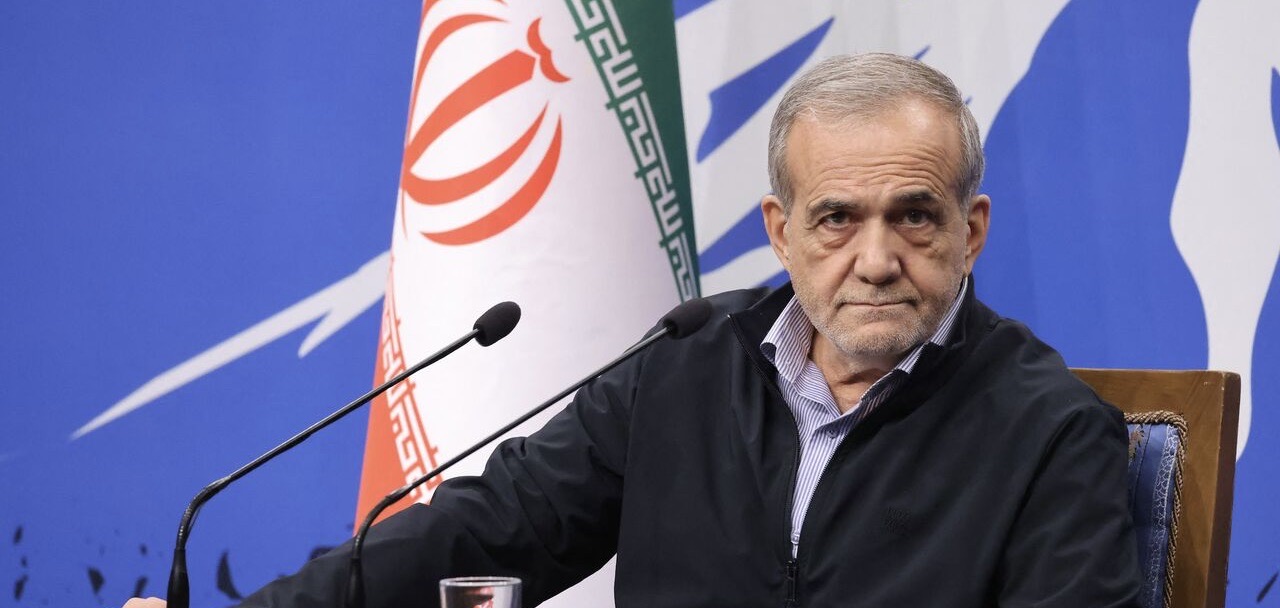 Iran’s President Masoud Pezeshkian is reportedly clashing with the Islamic Revolutionary Guard Corps (IRGC) chief Ahmad Vahidi over the economic and social impact of the war with the United States and Israel, Iran International reported on Saturday, citing Iranian sources.
According to the London-based Iranian opposition outlet, Pezeshkian criticized the IRGC’s approach of increasing tensions in the region and attacking neighbouring countries, warning of the long-term effects that these movements could cause on the Iranian economy.
The report also mentioned that Pezeshkian has been demanding that executive decisions regarding the war be made by the Iranian government rather than the IRGC, a demand Vahidi did not accept.
In response, the IRGC criticized Pezeshkian’s inability to implement structural reforms in the Islamic Republic to address several problems within the system before the current war began.
The report comes as Iran’s already dying economy keeps being pushed toward full collapse after several weeks of war.
Food prices are rising not only day by day, but hour by hour, with some staples increasing by at least 50 percent compared to pre-war levels.
At the same time, the disruption of internet access has halted many services. Factories and production facilities are facing acute shortages of raw materials, and the country’s administrative system has been severely impaired.
According to figures cited by state-affiliated institutions and some economists, more than 40% of the population now lives below the absolute poverty line, with that figure exceeding 50% in the capital.
Iran International reported, citing messages from several government employees, that the salaries and benefits of a large segment of employees have not been paid regularly over the past three months.
Day 904 — Saturday, March 28
 Iran’s foreign minister on Friday accused Israel of carrying out a series of strikes on critical infrastructure inside Iran, including major industrial and nuclear facilities.
He warned that Tehran would impose a “heavy price” in response.
In a post on X, Foreign Minister Seyed Abbas Araghchi said Israeli forces targeted two of Iran’s largest steel factories, a power plant, and what he described as civilian nuclear sites, along with other infrastructure.
He did not specify the locations of the alleged attacks or provide details on casualties or the extent of the damage.
Israel has not publicly confirmed the strikes.
However, according to Araghchi, Israeli officials have claimed that the operation was conducted in coordination with the United States — an assertion that, if verified, could significantly escalate tensions across the region.
The U.S. has not immediately responded to the allegation.
Araghchi said the reported strikes contradict a diplomatic timeline recently extended by the U.S. president, who had signaled additional time for negotiations aimed at de-escalating tensions with Iran.
The foreign minister framed the alleged attacks as undermining those efforts.
“This attack contradicts the extended deadline for diplomacy,” Araghchi wrote, suggesting that military action had overtaken ongoing political channels.
Iran has repeatedly warned it would respond to any direct attacks on its territory or strategic assets.
Araghchi reiterated that stance Friday, stating that Israel would face consequences for what he called “crimes.”
“Iran will exact a heavy price,” he said.
The claims come amid already heightened tensions in the Middle East, with ongoing concerns over Iran’s nuclear program and Israel’s long-standing opposition to it.
Israel has previously conducted covert and overt operations targeting Iranian facilities and personnel, arguing such actions are necessary to prevent Tehran from developing nuclear weapons.
Iran maintains that its nuclear program is for peaceful purposes.
There was no independent confirmation of the reported strikes as of Friday, and details remain limited.
Day 904 — Saturday, March 28
 Twelve U.S. service members were wounded in an Iranian missile and drone attack on a military base in Saudi Arabia, Fox News has confirmed.
The strike hit Prince Sultan Air Base on Friday, damaging several U.S. refueling aircraft, officials said. Two of the wounded troops were reported to be in serious condition.
At least one KC-135 air refueling aircraft was hit and caught fire during the strike, according to a senior U.S. official.
The attack comes as the monthlong conflict between the U.S., Israel and Iran continues to escalate and follows earlier reports that more than 300 U.S. service members have been wounded since the start of Operation Epic Fury.
The Pentagon is continuing to move additional forces into the region, while officials say military options remain on the table as the situation evolves.
Day 904 — Saturday, March 28
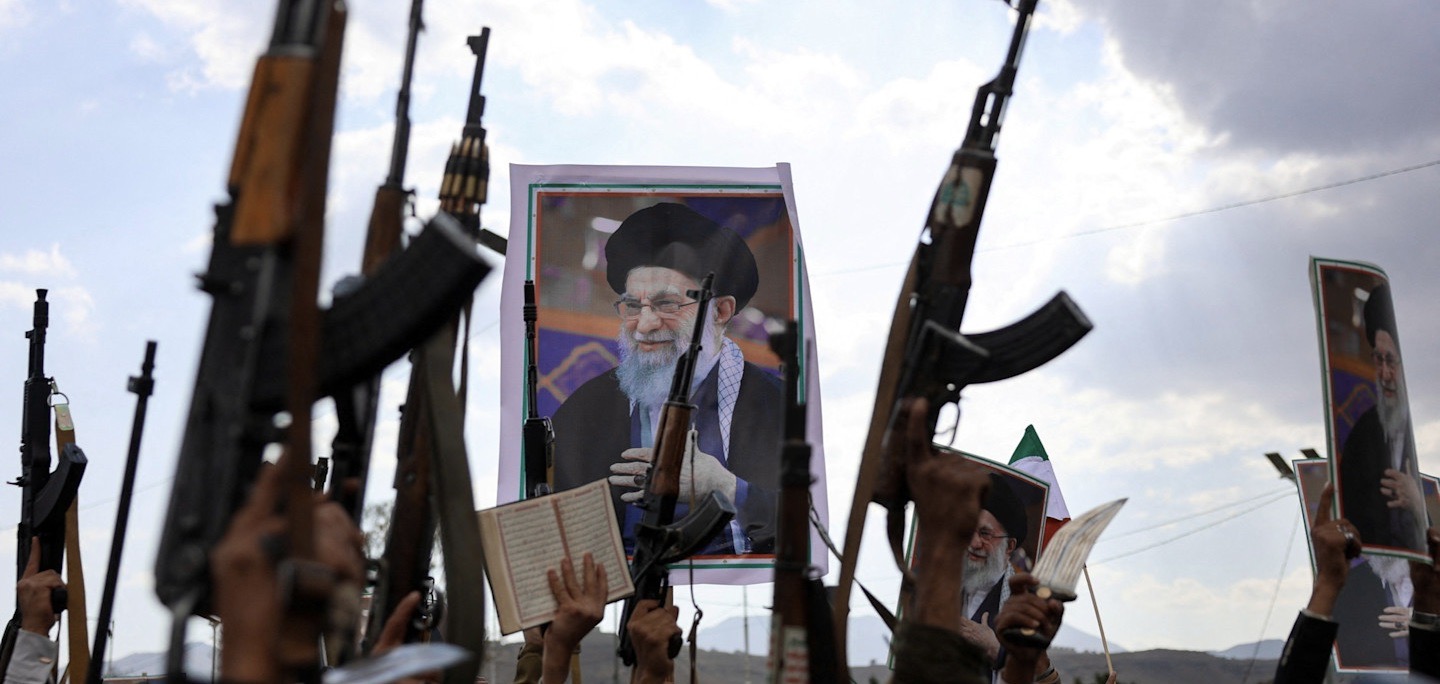 A missile was launched from Yemen toward Israeli territory on Saturday morning, marking the first such attack by the Iran-backed Houthis since Operation Roaring Lion began a month ago, the IDF has confirmed.
Air defense systems were activated to intercept the threat, the military said, as sirens sounded across Beersheba and surrounding communities in the Negev. Residents were instructed to follow Home Front Command guidelines amid the unfolding situation.
Shortly before the sirens, the IDF identified the launch originating from Yemen, with the projectile heading toward southern Israel. Alerts were subsequently triggered in Beersheba and nearby areas, while a preliminary warning was also issued regarding the possibility of sirens in Eilat.
There were no immediate reports of casualties or direct impacts at the time of writing.
The Houthis confirmed the attack several hours later, saying they had targeted Israel in response to continued Israeli strikes across Iran, Lebanon, Iraq, and the West Bank, and warned that their operations would continue until their objectives are met. It remains unclear what those objectives are.
On Friday, Israel carried out extensive strikes against Iranian infrastructure across three areas of the country. The sites struck included the Khandab heavy water reactor in Arak and a uranium enrichment facility in Ardakan.
Following Saturday’s Houthi strike, a senior Houthi advisor cited by Al-Araby TV said, “We have developed a plan to prevent the passage of Israeli ships through the Bab al-Mandab Strait.” The threat came days after Iran said it would “take action” in the vital waterway.
Day 903 — Friday, March 27
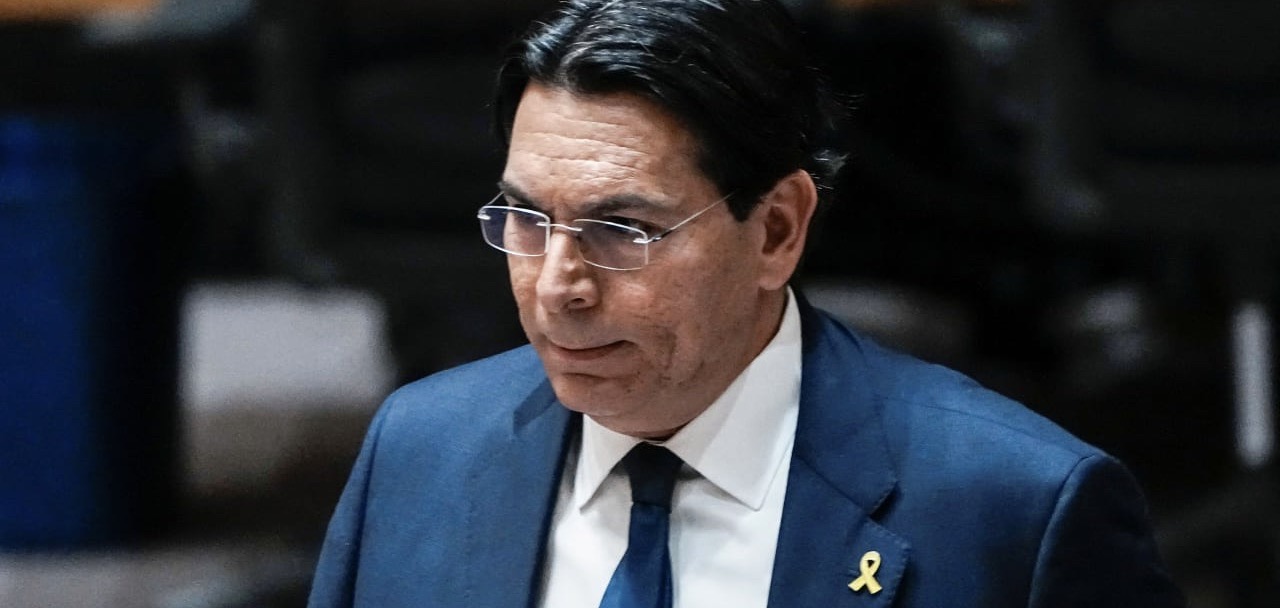 In recent weeks, one of the most striking developments at the UN has been the Gulf nations’ assertive role in curbing Iranian influence.
“I am certainly surprised by what has been happening here at the UN in recent weeks,” Israel’s UN Ambassador Danny Danon says in a conversation with The Jerusalem Post. “In the past, we had cooperation and held similar positions with the Gulf states, but it was behind the scenes. But this time, they are simply operating in an open manner, with determination and assertiveness, I would say, against Iran.”
He pointed to a recent Security Council resolution by the Gulf countries condemning Iranian attacks and a subsequent move regarding maritime freedom – a resolution put on the table of the UN Security Council by Bahrain – as evidence of this new Gulf resolve. “It has a very strong language against Iran and a threat of use of force if Tehran does not allow freedom to ships to sail in the Straits of Hormuz.”
However, he sharply criticized European countries – particularly France – for its attempts to put forward a “light resolution.”
“European countries like France are working to soften these proposals, sometimes even neutralizing them, essentially doing the work for Iran. This is a phenomenon I don’t recall ever seeing in the corridors of the UN,” he said.
Danon noted that even regional rivals have set aside their differences to face the common threat. “There was very high tension between the UAE and Saudi Arabia on many issues. They managed to set aside all disputes and unite forces right now in their struggle against Iran.”
According to the ambassador, a key part of Israel’s diplomatic mission had been to “wake up” the world, presenting hard intelligence on Iran’s capabilities. He recounted a recent briefing where he presented the exact range of Tehran’s ballistic missile arsenal.
“People were alarmed when they saw that they have thousands of missiles that can reach their homes,” he said. “Most countries in the world have no protection. Suddenly, they feel that they, too, might be harmed by Iran’s bullying.”
This realization has shifted the narrative from a localized Israel-Iran conflict to a global security issue. Danon emphasized that “it’s different when Iran attacks Israel compared to the fact that Iran is attacking 13 countries.”
Day 903 — Friday, March 27
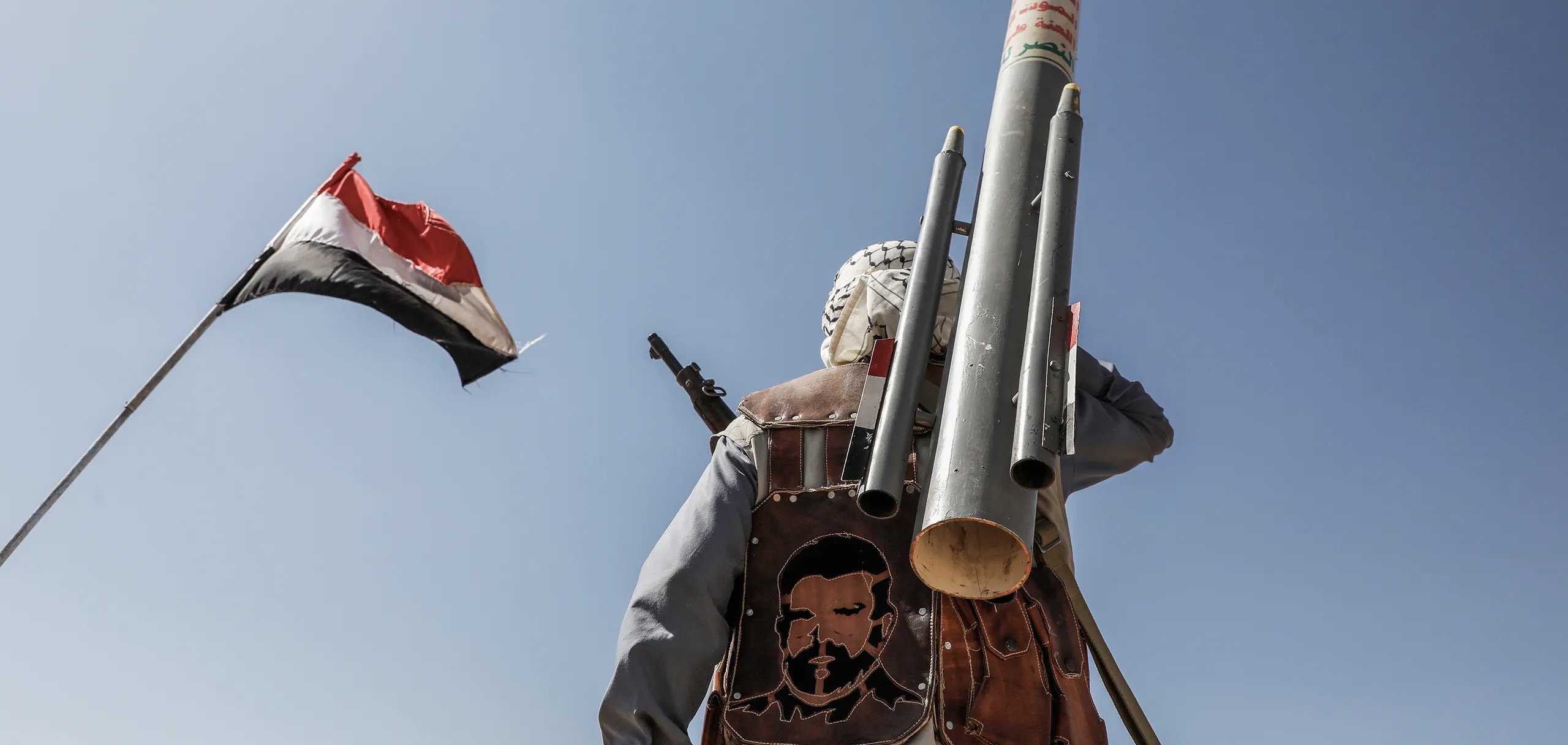 The leader of Yemen’s Iran-backed Houthi movement has warned that the group could launch a military response amid the ongoing war between Iran and the U.S./Israel.
“As the people of Yemen, we repay loyalty with loyalty,” Houthi leader Abdulmalik al-Houthi said.
“Any development in the battle that requires a military response, we will promptly undertake it — just as we did in previous rounds,” he said according to The Times of Israel.
So far, the Houthis have not entered the conflict. However, a Houthi official told Reuters Thursday that the group is prepared to resume attacks in the Red Sea.
““We stand fully militarily ready with all options. As for other details having to do with determining zero hour, they are left to leadership and we are monitoring and following up with the developments and will know when is the suitable time to move,” they said.
“Until now Iran is doing well and is defeating the enemy every day and the battle is going in its direction. If anything contrary to this happens, then we can assess,” they said.
Day 902 — Thursday, March 26
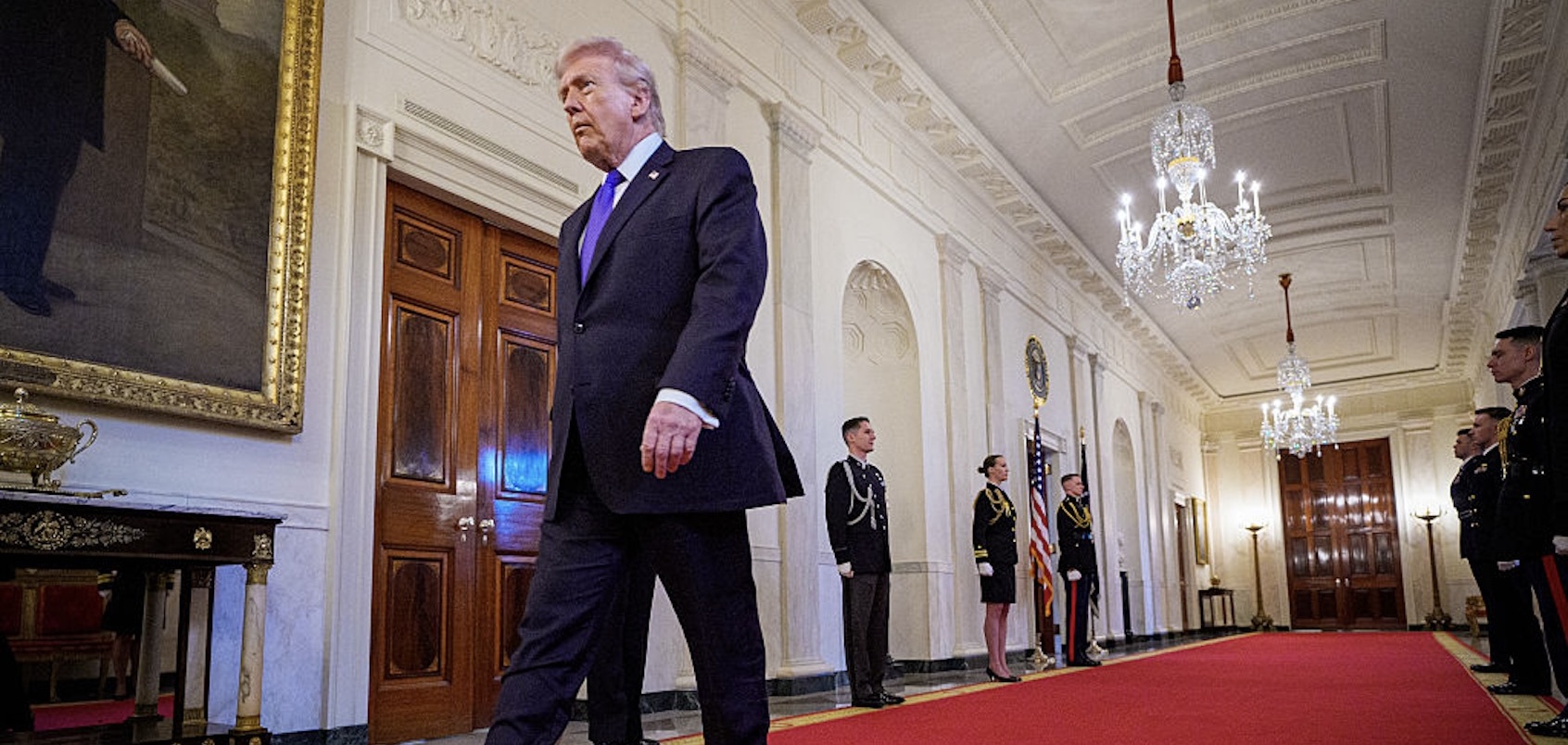 President Donald Trump is “prepared to unleash hell” if Iran refuses to “come to a deal,” the White House warned Wednesday, cautioning that the regime “should not miscalculate again” after suffering devastating battlefield losses, as U.S. forces — including Marines and elements of the 82nd Airborne Division — deploy to the Middle East to support combat operations against Iran.
Speaking at a White House briefing, press secretary Karoline Leavitt said the president remains willing to listen as talks with Tehran continue, but stressed the regime is now being given a final opportunity to accept the reality of its battlefield defeat and come to terms.
“Iran should not miscalculate again,” Leavitt warned, arguing that the regime’s last miscalculation has already cost it “their senior leadership, their navy, their air force, and their air defense system.”
She said the message from the president is clear: If Tehran refuses to accept that reality, the consequences will intensify.
“If they fail to understand that they have been defeated militarily and will continue to be, President Trump will ensure they are hit harder than they have ever been hit before,” Leavitt said, adding that “President Trump does not bluff and he is prepared to unleash hell.”
Leavitt framed the escalation as a choice now squarely in Iran’s hands, warning that any further conflict would be the result of the regime’s refusal to engage.
“Any violence beyond this point,” she said, “will be because the Iranian regime refused to understand they have already been defeated and refused to come to a deal.”
The White House framed the warning as the direct result of what it described as overwhelming U.S. and Israeli battlefield gains under Operation Epic Fury.
Day 902 — Thursday, March 26
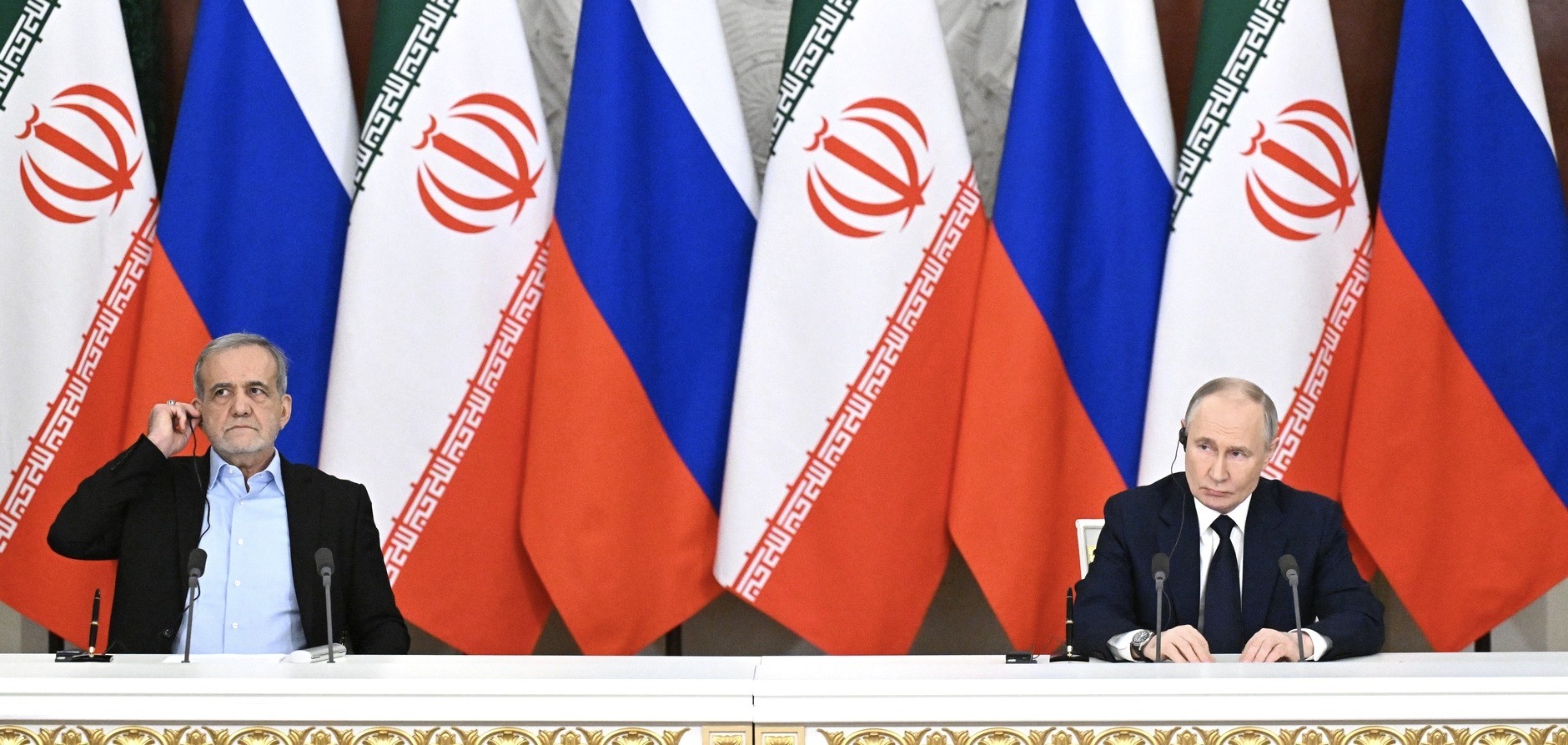 An Israeli strike on Iranian naval infrastructure at the Bandar-e Anzali port on the Caspian Sea one week ago targeted a Russian-Iranian smuggling route, The Wall Street Journal reported on Tuesday.
The supply route links Russian and Iranian ports and allows the countries to swap weapons, drones, ammunition, oil and foodstuffs, according to the report.
“The route has become especially important for transferring Iran’s Shahed drones—now made in both countries—which Russia has used to bombard Ukrainian cities and Tehran has used to strike airports, energy facilities and U.S. bases across the Persian Gulf,” the Journal said.
“The most important goal of this strike was to limit Russian smuggling and show the Iranians that they don’t have sea defenses in the Caspian,” Eliezer Marum, a former commander of the Israeli Navy, told the paper.
In a statement on March 19, the Israel Defense Forces listed the targets of the strike as Ianian Navy vessels, a port command center and infrastructure for vessel repair and maintenance.
As wheat is also supplied through the Caspian route, the attack put pressure on Iran’s food supply, the Journal said, noting the attack came the same day an attack took place in Iran’s section of the South Pars Field in the Persian Gulf. Israel has not taken credit for that attack, which hit natural gas facilities used by Iran for domestic power generation and fertilizer.
Analysts said that while the Caspian Sea attack was significant, it would only disrupt Iran-Russia trade temporarily.
Russia’s Foreign Ministry condemned the attack, saying it affected Russian economic interests.
“This largest Caspian harbor is an important trade and logistics center, which is proactively used to support Russian-Iranian trade, including in foods,” said Russian Foreign Ministry Spokeswoman Maria Zakharova.
Russia and Iran have drawn closer since the start of the Ukraine war in Feb. 2023, when Russia opened its large-scale offensive.
Day 902 — Thursday, March 26
 An Israeli soldier was killed in an exchange of fire with Hezbollah terrorists in southern Lebanon, the IDF said on Thursday morning.
St.-Sgt. Ori Greenberg, 21 years old and from Petah Tikva, served in the Golani Brigade’s Reconnaissance Battalion and was killed while operating under the 36th Division, aiming at expanding the IDF’s security zone in southern Lebanon.
At approximately 2:10 a.m. on Thursday morning, soldiers from the Golani Brigade, including Greenberg, identified a number of terrorists in their operational area.
This led to an exchange of fire during which Greenberg was killed.
Another soldier was also injured in the shooting, but was provided medical treatment at the scene and did not need to be evacuated to the hospital.
Prime Minister Benjamin Netanyahu sent his condolences to the Greenbergs and said their son fell while defending Israel’s northern border.
“My wife and I, together with all the citizens of Israel, share in the deep sorrow of the family of Golani Reconnaissance Unit fighter, Staff Sergeant Ori Greenberg, of blessed memory, who fell in battle in southern Lebanon,” read a statement issued by Netanyahu.
“We extend our heartfelt condolences to Ori’s family. He fought with bravery and courage to defend our northern border. May his memory be a blessing.”
Day 901 — Wednesday, March 25
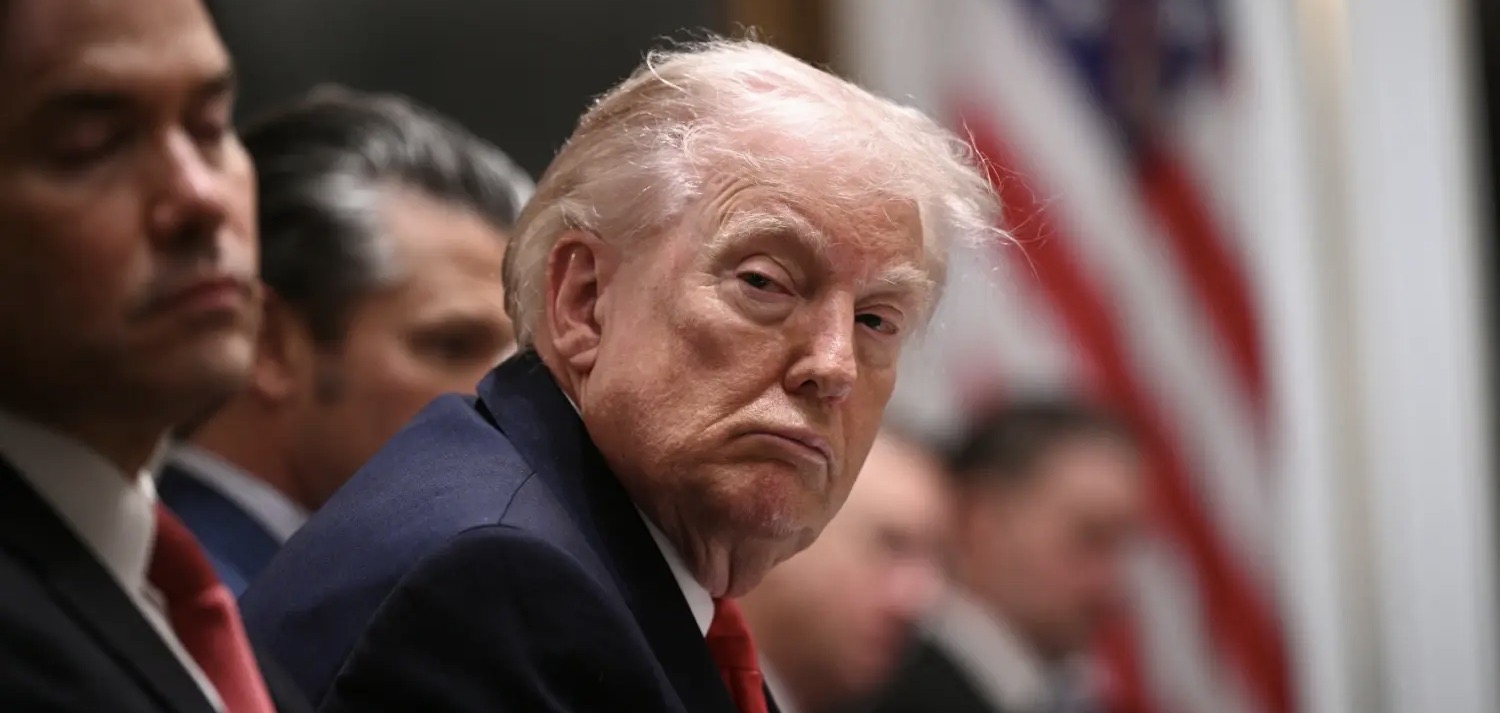 The United States is negotiating with itself, an Iranian military spokesman says, according to state media.
The taunt comes a day after US President Donald Trump said Tehran wants to make a deal to end the war in the Middle East, with a person familiar with the matter telling Reuters that a 15-point plan aimed at putting an end to the conflict was drafted by Washington and sent to Tehran.
“Has the level of your inner struggle reached the stage of you negotiating with yourself?” says Ebrahim Zolfaqari, spokesperon for the unified command of Iran’s armed forces, Khatam al-Anbiya Central Headquarters. “People like us can never get along with people like you.”
Zolfaqari also says US investments and pre-war energy prices will not return as long as Washington does not accept that regional stability is guaranteed by Iranian armed forces.
Day 901 — Wednesday, March 25
 Canada condemned an Israeli plan to occupy a defensive buffer zone in southern Lebanon, calling for Lebanon’s sovereignty not to be violated, on Tuesday.
In a post on the Canadian Foreign Policy X/Twitter, Canada announced that it “strongly condemns Israel’s plans to occupy territory in southern Lebanon,” adding that it “reiterates its solidarity with the government of Lebanon and its people.”
“We urge all parties to protect civilians, refrain from attacks on infrastructure, health workers, and peacekeepers, and act in accordance with international law,” the statement continued.
Canada also urged the Lebanese terrorist group Hezbollah to cease all attacks on Israel and disarm.
The plan, which was announced on Tuesday by Defense Minister Israel Katz, would entail Israeli forces occupying Lebanese territory between the Litani River and Israel’s northern border in an effort to reduce the threat posed by Hezbollah.
On March 2, Hezbollah attacked Israel in what it claimed was revenge for the assassination of former Iranian supreme leader Ali Khamenei and had launched daily rocket attacks targeting civilian areas in northern Israel since.
Since early March, Lebanese President Joseph Aoun and Lebanese Prime Minister Nawaf Salam have both voiced support for the disarmament of Hezbollah.
On March 22, Salam blamed Hezbollah for dragging Lebanon into war with Israel during an interview with Saudi newspaper Al-Hadath, stating that involvement in the ongoing war between Israel and Iran “is not Lebanon’s choice.”
Salam stated that he “will not yield to [Hezbollah’s] coercion,” adding that the Lebanese government “will not back down” from attempts to disarm the terror group.
On March 9, Aoun decried Hezbollah’s attack as an attempt to lure Israel into conflict with Lebanon perpetrated by those who want to “buy the fall of the Lebanese state” in a post on X/Twitter.
He additionally issued a plea for support for the Lebanese Armed Forces, promising to disarm Hezbollah and “confiscate all weapons” from the terrorist organization once support is received.
Day 901 — Wednesday, March 25
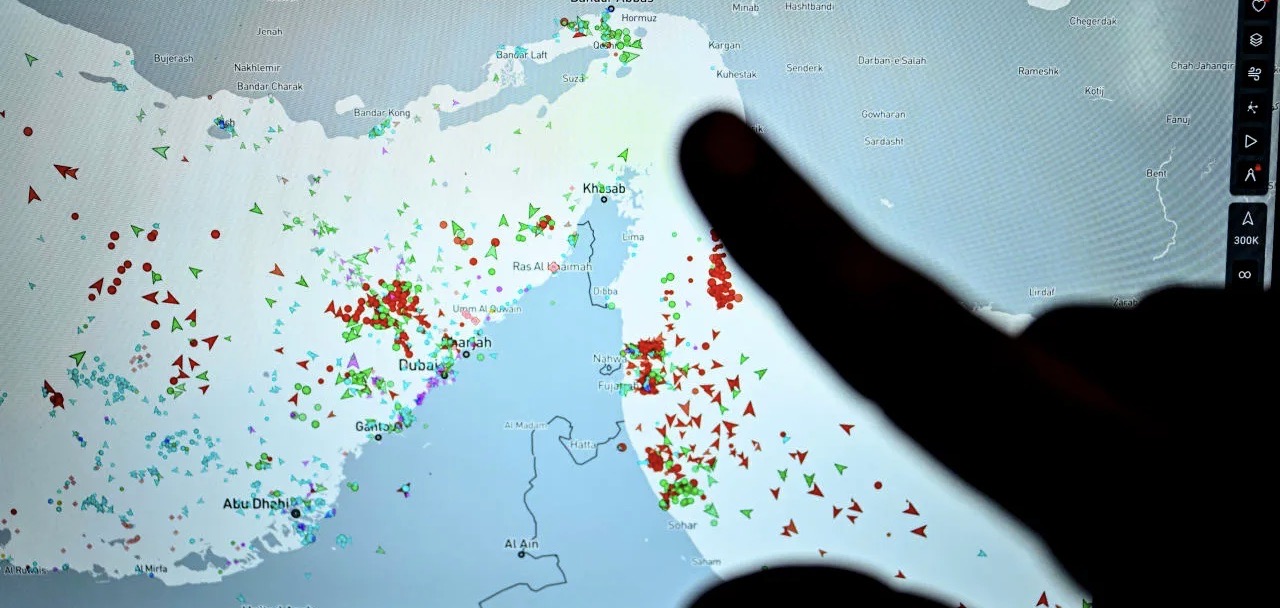 Iran has informed members of the International Maritime Organization that it will allow what it calls “non-hostile” shipping to pass through the Strait of Hormuz, the Financial Times reported on Tuesday.
In a letter circulated to the 176 member states of the United Nations body, Iran said that vessels owned by or linked to the United States, Israel and “other participants in the aggression” do not “qualify for innocent or non-hostile passage.”
Iran’s threat of missile, drone and mine attacks has effectively closed off shipping in the strait, which normally carries about 20% of the world’s oil and natural-gas supplies.
The Islamic Republic seems to have allowed a small number of ships to pass through since the United States and Israel began military operations at the end of February, though thousands remain unable to transit in the face of potential attacks and prohibitively high maritime insurance costs.
It’s unclear how many ships might be eligible for Iran’s offer of passage to “non-hostile” shipping.
Oil tankers are frequently owned and operated through complex corporate structures that might involve companies in the United States, Israel or any number of countries that Iran has accused of “aggression” since the conflict began. In previous rounds of regional conflict, the Iranian-backed Houthis in Yemen claimed that their attacks on shipping in the Red Sea targeted “Israeli” vessels that had little or no meaningful connection to Israel.
A copy of an Iranian foreign ministry communique, dated March 22 and published by Al Monitor on Tuesday, said any ships hoping to take advantage of the Iranian offer would have to do so “in coordination with the competent Iranian authorities.”
Day 900 — Tuesday, March 24
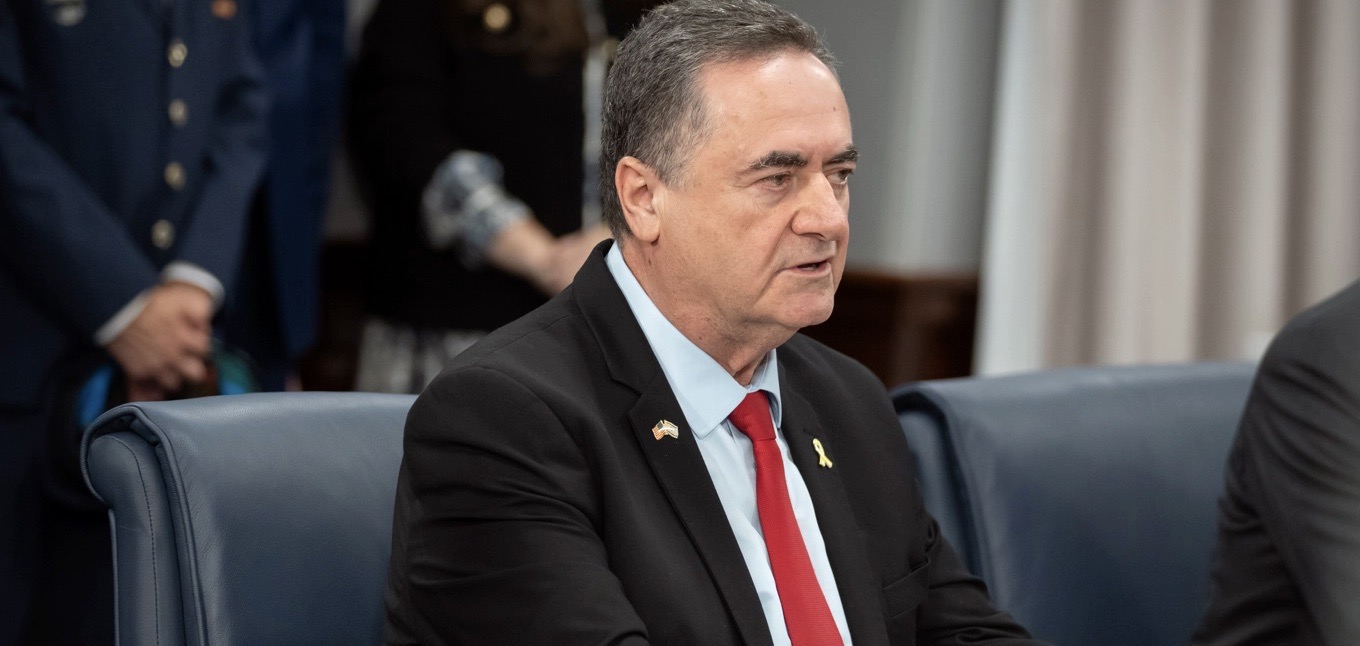 Israel will occupy southern Lebanon up to the Litani River to create a “defensive buffer,” Defense Minister Israel Katz said on Tuesday, spelling out for the first time Israel’s intent to seize territory amounting to nearly a tenth of Lebanon.
At a meeting with the military chief of staff, Katz said Israeli forces would “control the remaining bridges and the security zone up to the Litani,” a river that meets the Mediterranean about 30 km (20 miles) north of Israel’s border.
Lebanese armed terrorist group Hezbollah said it would fight to prevent Israeli troops from occupying southern Lebanon, calling such a move an “existential threat” to the Lebanese state.
Senior Hezbollah lawmaker Hassan Fadlallah said any Israeli occupation south of the Litani would be met with resistance. “We have no choice but to confront this aggression and cling to the land,” he told Reuters.
Katz has previously warned Lebanon’s government it would lose territory if it failed to disarm Hezbollah, the terrorist group backed by Tehran that drew Lebanon into the US-Israeli war on Iran when it fired into Israel on March 2.
Day 900 — Tuesday, March 24
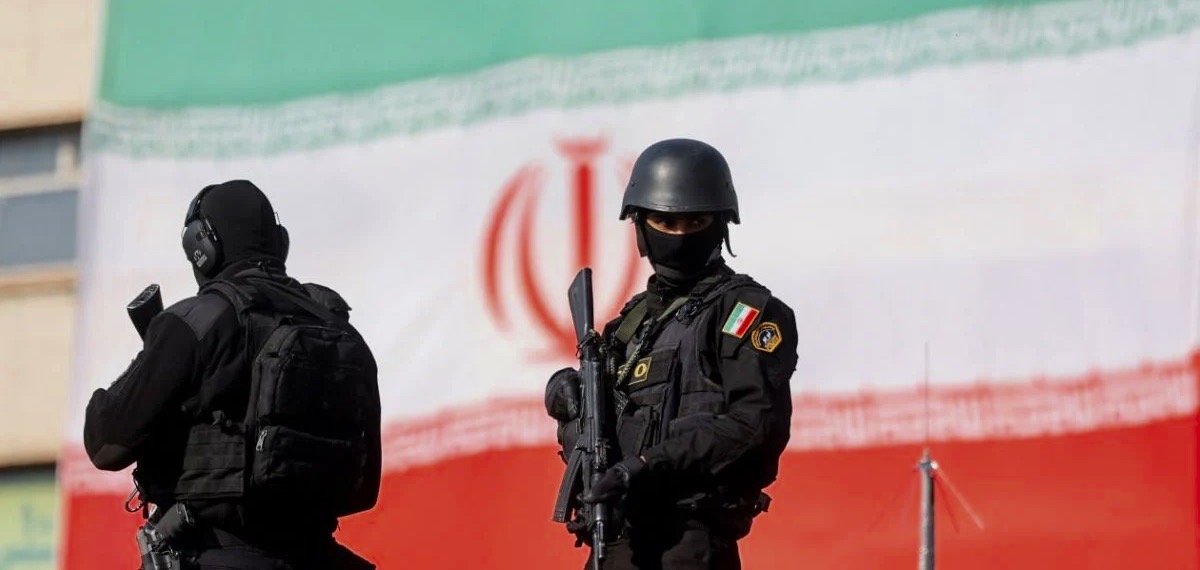 Iranian state media on Tuesday reported the arrest of 466 people for “online activities aimed at undermining national security.”
A statement from Iranian police officials said the arrests were based on “intelligence and technical monitoring” that supposedly proved the targets were linked with “enemy” networks that sought to destabilize Iran during the war.
“These individuals sought to sow confusion in public opinion, create fear and anxiety in society, promote insecurity and spread propaganda in favor of the enemy,” claimed state news agency IRNA.
Iran has imposed a near-total Internet blackout on its own citizens since the beginning of the war. Iranians are allowed to use local networks to communicate with each other, but even some of the government-approved platforms have begun to go dark over the past few days. Doug Madory, director of Internet analysis for Kentik, estimated last week that “about 99 percent of Iranians do not have regular access to the Internet.”
Hundreds of other Iranians have been arrested for offenses such as taking pictures of sensitive locations, sharing “anti-government” content, and “cooperating with the enemy.” Little in the way of specifics or evidence has been presented along with these allegations.
Last week, Iran’s intelligence ministry reportedly arrested 97 people for being “soldiers of Israel,” while local police officials announced 41 arrests for sending information to opposition news services based outside Iran, and the Islamic Revolutionary Guard Corps (IRGC) said it arrested over a hundred members of “monarchist networks.”
The International Federation of Journalists (IFJ) said on Tuesday that seven journalists have been arrested in Iran “amid escalating pressure on independent media.”
“Following nationwide protests in January 2026 and subsequent joint military attacks carried out by the US and Israel against Iran, nearly all independent media outlets in the country have either ceased operations or are restricted to publishing only state-approved information,” the IFJ noted.
The Iranian regime murdered thousands of its own citizens to suppress a massive popular uprising in January, with some dissident Iranian officials claiming the true death toll could be over 30,000, or more than ten times as many killings as the regime has admitted to.
Day 900 — Tuesday, March 24
 The World Jewish Congress released a report on Tuesday highlighting “extensive and systemic bias” in the Arabic Wikipedia in various Israel-related articles.
Yfat Barak-Cheney, executive director of the Institute for Technology and Human Rights at WJC, stated that “one of the world’s most trusted knowledge platforms is being systematically manipulated to promote extremist narratives.”
“When terrorist propaganda and hate-driven narratives are allowed to masquerade as neutral information, the consequences extend far beyond Wikipedia itself,” she said. “These distortions shape public understanding and views of Jews and Israelis across the Arabic-speaking world.” (JNS sought comment from the Wikimedia Foundation.)
The report states that it examined nine articles in the Arabic Wikipedia and found that the online encyclopedia “consistently employs politically charged terminology that adopts the framing of militant groups while delegitimizing Israeli perspectives.” Hamas and Palestinian Islamic Jihad are referred to as “resistance” in Arabic Wikipedia entries, and terrorists for each group are referred to as “martyrs,” while Israel is referred to as the “Zionist entity,” per the report.
Arabic Wikipedia entries also refer to the Hamas-led terrorist attacks on Oct. 7 as a “military operation” against “occupation forces” and the United Nations documenting rapes and sexual assault as being “Israeli propaganda,” per the report.
The report also found a disproportionate use of terror-affiliated sources and state-run sources from governments that are antagonistic to the United States and its allies. It found more than 45,000 links to Qatari state media, more than 6,300 to Russian state media and more than 3,000 to Turkish state media. It also found around 2,500 links to Hezbollah-affiliated media outlets and more than 2,000 to websites affiliated with Hamas.
Administrators in the Arabic Wikipedia maintain the biased nature of the article, the report states, citing an example of an administrator banning an editor who attempted to put in evidence of Hamas’s sexual violence. It also states that the Arabic Wikipedia currently lacks an Arbitration Committee—the site’s binding dispute resolution panel of editors—as the English Wikipedia does, and instead has only a temporary committee that does not discuss its deliberations in a public forum.
The report lists a series of recommendations for the Wikimedia Foundation, including barring any glorification or whitewashing of terrorism. It also calls on lawmakers to investigate the foundation and require more transparency from Wikipedia.
“Wikipedia has long presented itself as humanity’s shared knowledge repository,” Barak-Cheney stated. “Ensuring that this knowledge remains factual is particularly critical as emerging AI platforms increasingly rely on multilingual information sources to formulate responses to user queries.”
Day 900 — Tuesday, March 24
 The Israel Defense Forces carried out a wave of airstrikes on Iranian regime targets on Monday, targeting key Islamic Revolutionary Guard Corps sites, including its “main security headquarters.”
The headquarters was used by the IRGC “to synchronize unit activities,” the IDF stated, including of the Basij volunteer paramilitary forces, which it said “led the suppression of internal protests in Iran, including the recent protests, with the use of severe violence, arrests and physical force.”
“The strike on the headquarters is part of the current operational phase aimed at further degrading core Iranian terror regime systems and security capabilities,” it added.
Other strikes targeted headquarters of the IRGC’s aerial defense array; several structures belonging to IRGC ground forces inside a large military compound in the heart of Tehran; an IRGC Quds Force command post used to coordinate “intelligence and operational activity”; and a Quds Force intelligence headquarters.
Israeli Air Force fighter jets also targeted a naval cruise missile manufacturing site operated by Tehran’s Defense Ministry and “additional manufacturing sites and research facilities related to electronics, ballistic missiles and warheads,” according to the statement.
Day 900 — Tuesday, March 24
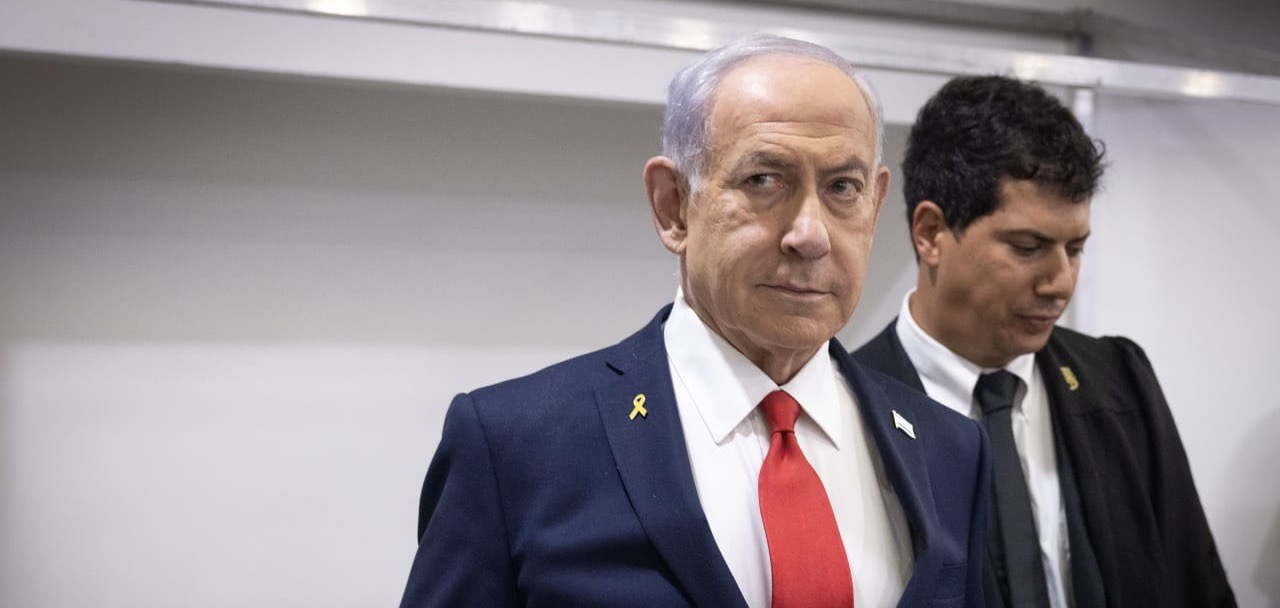 Israeli Prime Minister Benjamin Netanyahu said Monday that any potential deal with Iran would “protect our vital interests,” after speaking with President Donald Trump, who he said believes there is a chance to reach an agreement as negotiations to potentially end the conflict move forward.
In a video statement, Netanyahu said Trump believes there is “a chance to leverage the massive achievements of the IDF and the U.S. military in order to achieve the goals of the war through an agreement — an agreement that protects our vital interests.”
At the same time, Netanyahu stressed that Israel’s military campaign is continuing, saying Israel is still striking in both Iran and Lebanon while “crushing the missile program and the nuclear program” and continuing to hit Hezbollah hard.
“Only days ago, we eliminated two more nuclear scientists, and our arm is still outstretched,” he said.
Earlier Monday, Trump announced on Truth Social that the United States and Iran had held “very good and productive conversations” over the previous two days regarding what he described as a possible “complete and total resolution” of the hostilities in the Middle East.
He added that, based on the “tenor and tone” of those discussions, he had instructed the Department of War to postpone strikes on Iranian power plants and energy infrastructure for a five-day period, subject to the success of the ongoing talks.
Speaking to reporters later in the day, Trump said the discussions had been “very, very strong” and that the two sides had “major points of agreement,” while warning that, absent a deal, the bombing campaign would continue.
Day 900 — Tuesday, March 24

Soldiers were deployed on the streets of leading Belgian cities on Monday to bolster security for the Jewish community, after antisemitic attacks in Belgium and the Netherlands.
The move follows an explosion this month at a synagogue in Liege that authorities called an antisemitic act.
“From today, we’re putting soldiers back on the streets in Brussels and Antwerp because safety is a basic right,” Belgian Defence Minister Theo Francken said in a post on X on Monday.
The deployment, in collaboration with federal police, will provide security at Jewish sites including synagogues and schools, Belgian authorities said in a press release last week.
Antwerp “is again a little safer….. the Jewish community too. We say NO to antisemitism!” Francken said on Monday.
The upgrade in security also follows an arson attack on a synagogue in Rotterdam and an explosion at a Jewish school in Amsterdam in the neighboring Netherlands.
Dutch police have arrested five suspects, aged 17 to 19, over the synagogue attack in Rotterdam.
Neither attack caused injuries.
A Belgian defense ministry spokesperson said on Monday that soldiers would be deployed in three different phases: First in Brussels and Antwerp, and later in Liege.
Rights advocates have raised concerns about possible attacks against Jewish communities around the world following the launch of the US-Israeli war with Iran. Four ambulances belonging to a Jewish community organization in north London were set ablaze on Monday.
The US embassy in Oslo was also targeted in a bombing earlier this month, branded by Norwegian investigators as an act of terrorism. There were no injuries in the attack.
Day 899 — Monday, March 23
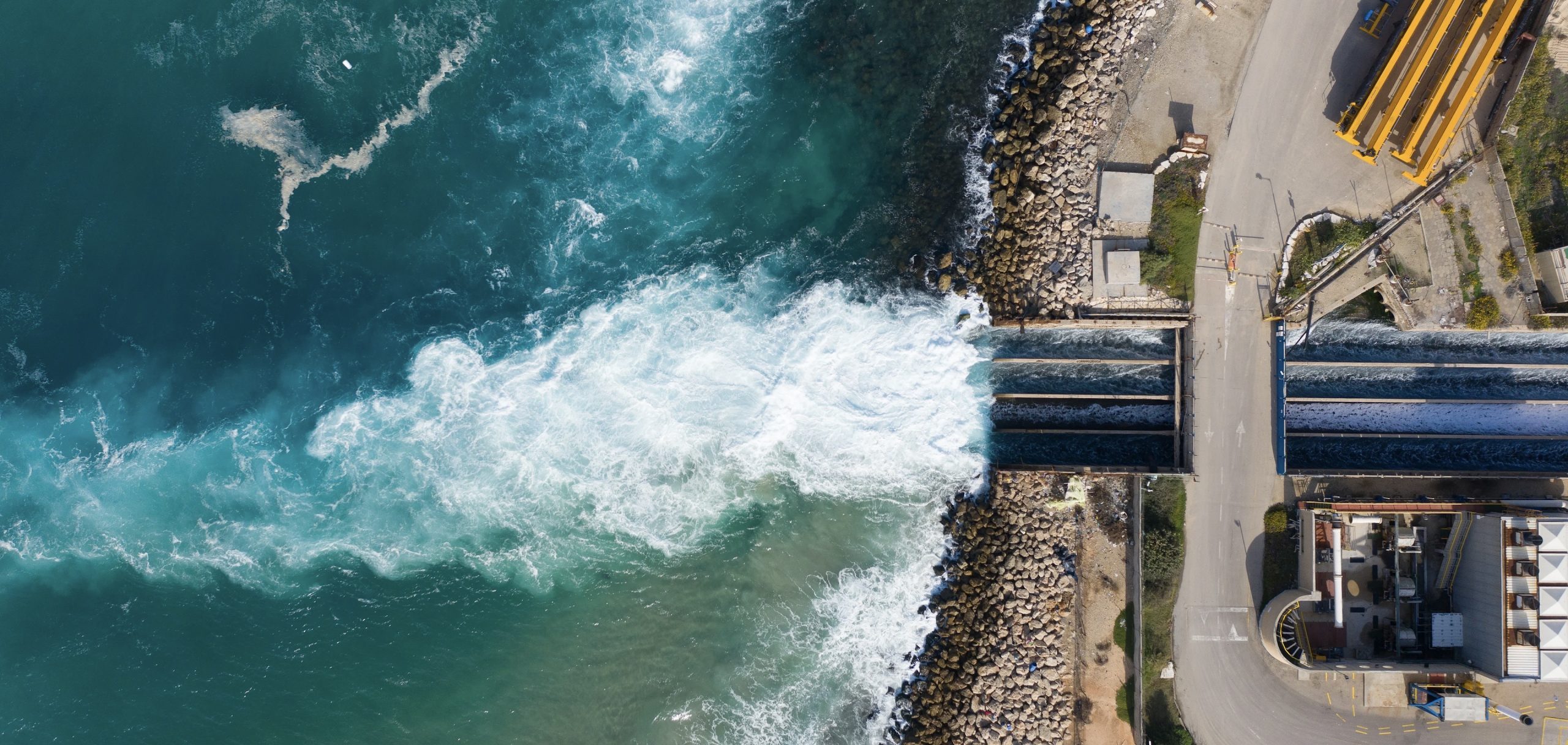 Iran is poised to strike critical desalination infrastructure across the Middle East within days, escalating tensions with the U.S. and Israel and triggering global economic fallout, a U.N. official warned Sunday.
Kaveh Madani, an Iranian scientist and U.N. official, said desalination plants across the region could be hit “within the next few days,” raising the prospect of a broader regional water crisis and affecting global markets.
The strike threats made by the regime on Sunday came in response to President Donald Trump’s warning that the U.S. would hit Iranian power infrastructure unless the Strait of Hormuz was opened within 48 hours.
A spokesperson for the Central Headquarters of Hazrat Khatam al-Anbiya (PBUH) said, “Following previous warnings, if Iran’s fuel and energy infrastructure is attacked by the enemy, all energy, information technology, and desalination infrastructure belonging to the US and the regime in the region will be targeted.”
“The desalination plants might be targeted again within the next few days,” Madani told Fox News Digital.
“The driest region of the world might see a real water war, but the knock-on effects on the world’s economy, including the U.S., will be both immediate and lasting,” Madani said, pointing to what he described as a “new phase in the conflict” involving such critical civilian infrastructure.
“Now, add the possibility of damage to the already fragile water infrastructure, including treatment plants, pumping stations, and distribution networks,” he said. “The consequences would be catastrophic and lasting.”
Kaveh’s warning comes as the conflict — now in its fourth week — has expanded beyond military targets. Desalination facilities, including a plant on Iran’s Qeshm Island and another in Bahrain, have allegedly already been struck.
Desalination, the process of creating drinkable water from seawater, is critical to supplying water across Israel and many of Iran’s Gulf neighbors, particularly in such arid regions where natural freshwater is scarce.
Day 899 — Monday, March 23
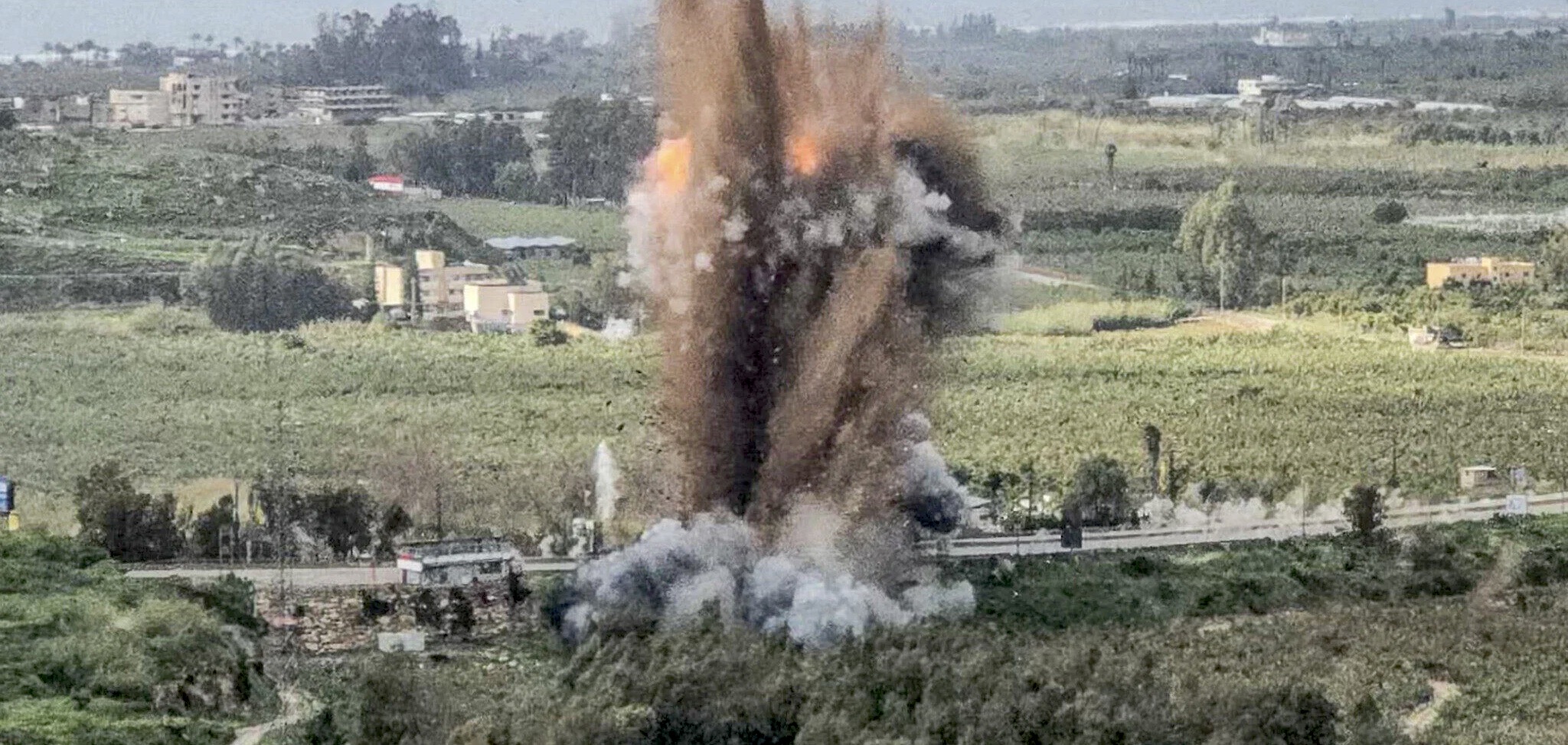 The Israel Defense Forces on Sunday struck a bridge in Southern Lebanon used by Iranian-backed Hezbollah to transfer thousands of weapons southwards, the military said.
The weapons that were transferred across the Litani River “were used to carry out terror attacks from the southern Litani area against IDF soldiers and Israeli civilians,” according to the statement.
The crossing was struck “to prevent harm to Israeli civilians, as well as to Lebanese civilians,” it added.
In a second wave of strikes in Southern Lebanon’s Nabatieh region on Sunday, around 15 command centers used by Hezbollah were targeted, the IDF stated.
“The IDF is operating decisively against the Hezbollah terrorist organization in response to its deliberate decision to attack Israel on behalf of the Iranian terror regime,” it said. “The IDF acts to remove threats to civilians of the State of Israel.”
Israeli Defense Minister Israel Katz, after an assessment of the situation in Lebanon with top-ranking IDF staff earlier on Sunday, said he and the prime minister had ordered the IDF to “immediately destroy all the bridges over the Litani River” to prevent the movement of Hezbollah terrorists and weapons to the south.
Katz also ordered the IDF to speed up the destruction of homes in southern Lebanese villages to eliminate terrorist infrastructure, following a similar model to that used by the Israeli army in Rafah and Beit Hanoun in the Gaza Strip.
“The IDF continues its ground maneuver in Lebanon to eliminate Hezbollah terrorists and reach the anti-tank [missile firing line] … in order to protect the communities,” he added.
Hezbollah began firing rockets and drones at Israel on March 2, in retaliation for the Jewish state’s targeted killing of Iranian Supreme Leader Ali Khamenei on Feb. 28 in the opening strikes of “Operation Roaring Lion/Epic Fury.”
In response to the terrorist organization’s violation of the U.S.-brokered Nov. 27, 2024, truce agreement, Jerusalem launched an aerial campaign against Hezbollah and ordered IDF troops to advance and take control of additional areas in Southern Lebanon to halt cross-border attacks.
IDF Chief of Staff Lt. Gen. Eyal Zamir on Sunday approved plans to expand the ground maneuver in Lebanon, the military said.
“The campaign against Hezbollah has only just begun—by the end of the campaign in Iran, Hezbollah will remain alone and isolated. This is a prolonged campaign, and we are prepared for it,” Zamir said following a situational assessment in the northern sector.
“We will not stop until the threat is pushed away from the border and long-term security for residents of the north is ensured. Alongside the strikes, the IDF is reinforcing the front defensive line in order to protect northern residents,” continued the chief of staff.
“We are prepared for a long campaign and will continue to act as required, both offensively and defensively, to ensure the long-term security of northern residents,” he vowed.
Day 899 — Monday, March 23
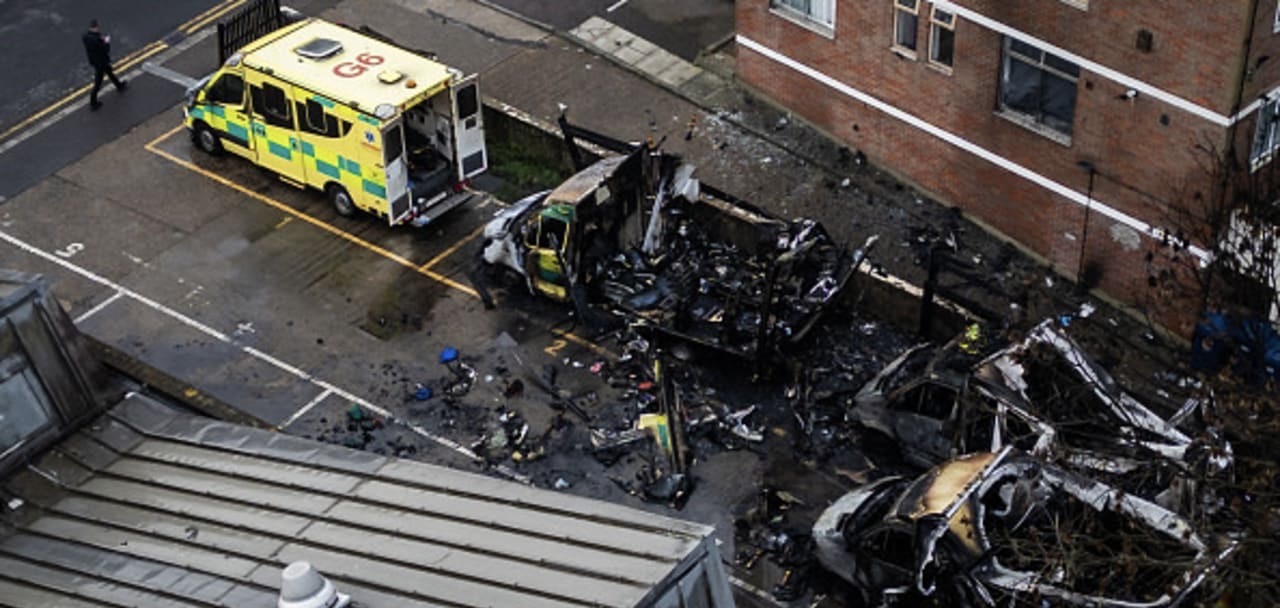 Four ambulances belonging to a Jewish community organisation in north London were set ablaze overnight in a suspected antisemitic hate crime, police said on Monday.
“An investigation has been launched after four ambulances belonging to the Jewish Community Ambulance service were set on fire in Golders Green,” the Metropolitan Police said in a statement.
“Officers remain on scene, and the arson attack is being treated as an antisemitic hate crime,” it said, adding that no injuries had been reported.
Additionally, British Prime Minister Keir Starmer said on Monday that the torching of London Jewish community ambulances overnight was a “deeply shocking antisemitic attack” and that such hatred had no place in society.
“This is a deeply shocking antisemitic arson attack,” Starmer said in a post on X.
Social media footage appears to show several hooded or masked men pouring gasoline on the vehicles before fleeing the scenes.
Day 898 — Sunday, March 22
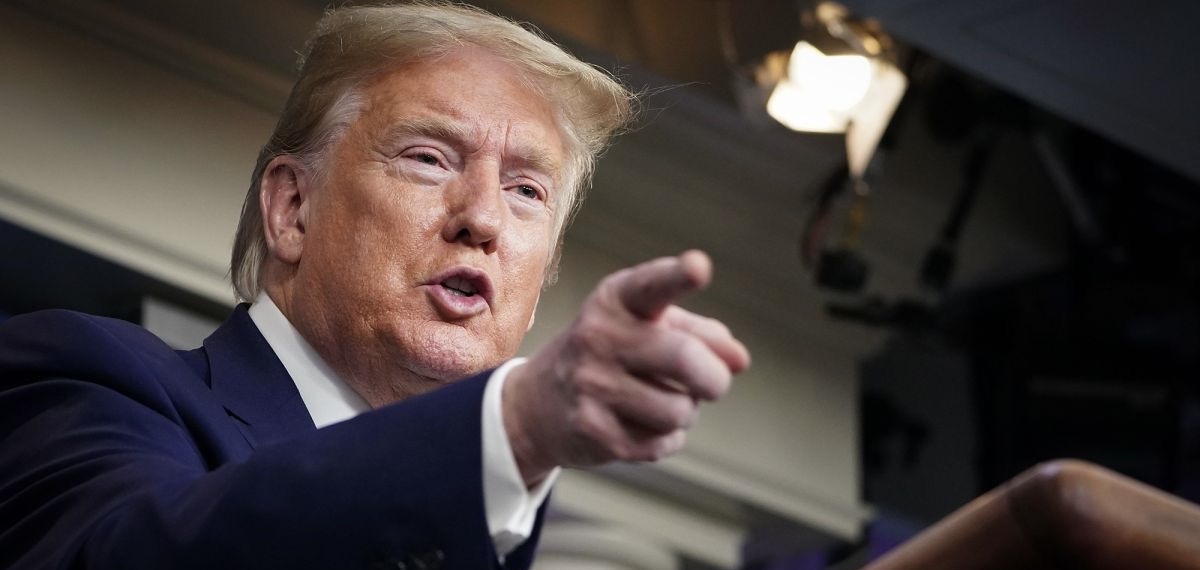 President Donald Trump on Saturday issued a stark ultimatum to Iran, warning that the United States will launch strikes on the country’s power infrastructure if the Strait of Hormuz is not reopened within 48 hours.
“If Iran doesn’t FULLY OPEN, WITHOUT THREAT, the Strait of Hormuz, within 48 HOURS from this exact point in time, the United States of America will hit and obliterate their various POWER PLANTS, STARTING WITH THE BIGGEST ONE FIRST!” Trump wrote.
The threat marks a significant escalation in rhetoric as tensions surge over the strategically vital waterway.
Trump added, “Thank you for your attention to this matter,” signing the message “President DONALD J. TRUMP.”
Day 898 — Sunday, March 22
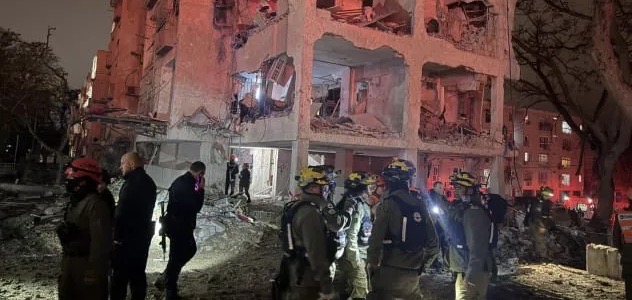 At least 84 people were wounded, including 10 in serious condition, after an Iranian ballistic missile struck a building in Israel’s southern city of Arad on Saturday night, according to Magen David Adom.
A five-year-old was among the 10 seriously wounded in the attack, MDA noted, adding that 19 were reported in moderate condition, 55 lightly wounded. Four others were treated for anxiety.
United Hatzalah added that it’s medical teams had treated over 90 individuals at the scene in Arad.
All of those wounded have been evacuated via ambulance or helicopter to Soroka Medical Center in Beersheba for further treatment, MDA said, adding that no one is currently trapped under rubble, though search efforts continue.
“This was a very serious scene,” said MDA EMT Yakir Talker. “We arrived with large numbers of ambulances, mobile intensive care units, and MDA medicycles. We saw many patients with varying degrees of injury as a result of a missile impact.”
“We immediately began establishing a casualty concentration point, triaged the patients according to the severity of their injuries, and provided life-saving medical treatment,” he said.
“There is extensive destruction and chaos. The teams are currently conducting comprehensive searches and will continue operating here as long as required.”
Day 898 — Sunday, March 22
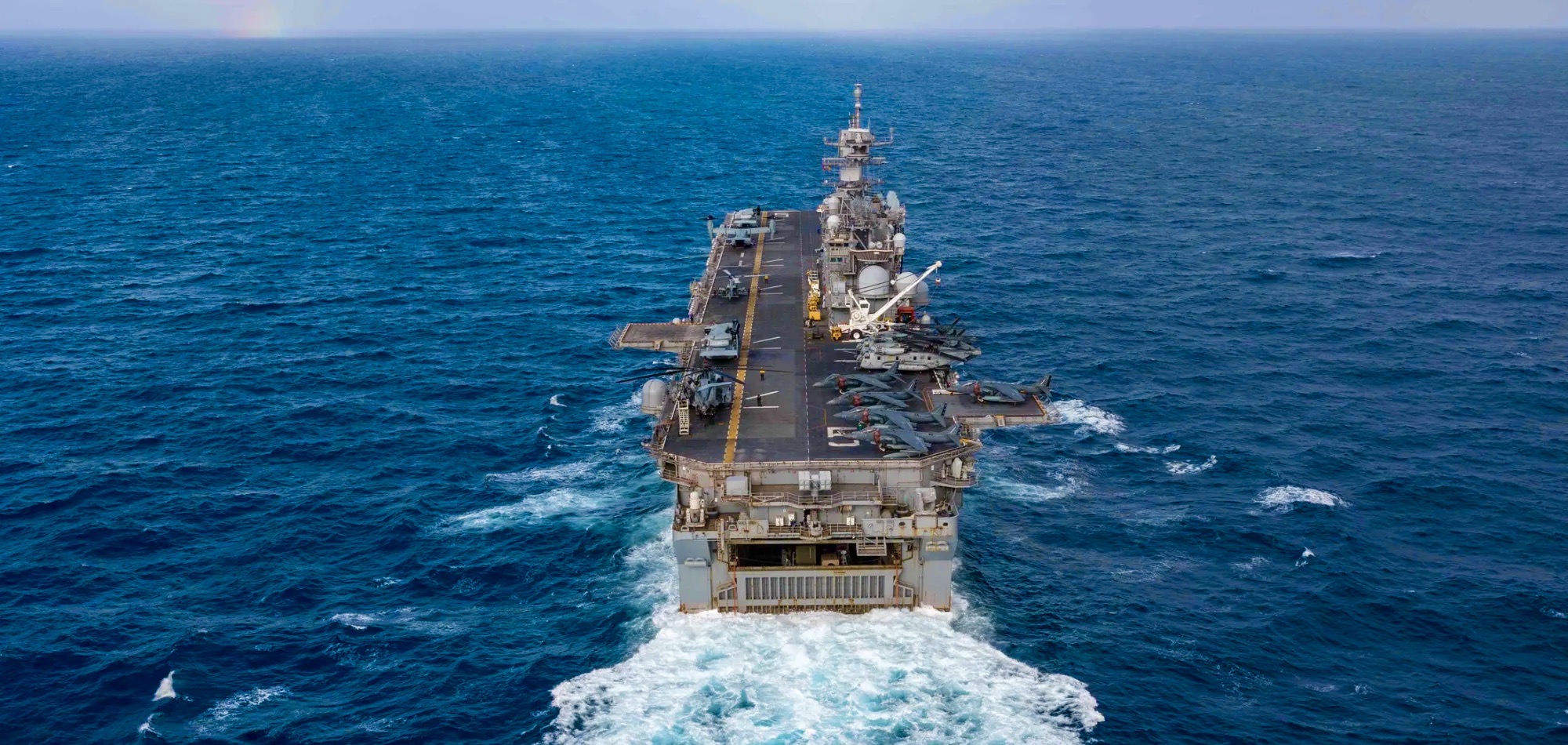 More than 20 nations spanning from Asia to Europe to the Gulf have expressed a “readiness to contribute” to the effort of opening up the Strait of Hormuz amid threats to ships by the Islamist regime in Iran.
In a joint statement released on Saturday morning, the nations of Australia, Bahrain, Canada, Czechia, Denmark, Estonia, Finland, France, Germany, Italy, Japan, Latvia, Lithuania, the Netherlands, New Zealand, Norway, Republic of Korea, Romania, Slovenia, Sweden, United Arab Emirates, and the United Kingdom condemned in the “strongest terms” the recent attacks by Iran against unarmed, civilian shipping vessels, its attacks on oil and gas infrastructure throughout the Gulf, and its move to shut down traffic in the Strait of Hormuz.
“We express our deep concern about the escalating conflict. We call on Iran to cease immediately its threats, laying of mines, drone and missile attacks and other attempts to block the Strait to commercial shipping, and to comply with UN Security Council Resolution 2817,” the group of nations said.
“Freedom of navigation is a fundamental principle of international law, including under the United Nations Convention on the Law of the Sea. The effects of Iran’s actions will be felt by people in all parts of the world, especially the most vulnerable.”
“We emphasise that such interference with international shipping and the disruption of global energy supply chains constitute a threat to international peace and security. In this regard, we call for an immediate comprehensive moratorium on attacks on civilian infrastructure, including oil and gas installations,” they continued.
“We express our readiness to contribute to appropriate efforts to ensure safe passage through the Strait. We welcome the commitment of nations who are engaging in preparatory planning.”
While the United States and Israel have destroyed much of the Iranian navy, including dozens of mine-laying vessels, most commercial ships continue to avoid the critical waterway out of concern for potential Iranian attacks from the coastline or potentially from mines previously laid by Tehran or its proxies.
Admiral Brad Cooper, commander of the U.S. Central Command, said on Saturday that Iran’s ability to threaten ships in the Strait has been “degraded” and that U.S. forces continue “to eliminate Iran’s ability to project meaningful power outside its borders.”
Adm. Cooper said that the U.S. recently dropped multiple 5,000-pound bombs on underground coastline facilities used to house various missiles and launchers “that presented a dangerous risk to international shipping.”
“We not only took out the facility but also destroyed intelligence support sites and missile radar relays that were used to monitor ship movements,” he said. “Iran’s ability to threaten freedom of navigation in and around the Strait of Hormuz is degraded as a result and we will not stop pursuing these targets.”
On Friday, President Trump said that “it would be nice” for allied nations that rely on oil flowing through the Strait of Hormuz to help keep the passage open, noting that the U.S. is mostly energy-independent and therefore less affected by its closure.
President Trump said that it would be a relatively “simple military maneuver” but said that a large “volume” of ships would be required for the effort.
Day 897 — Saturday, March 21
 US President Donald Trump told reporters on Friday afternoon that he does not want a ceasefire with Iran right now.
“I don’t want to do a ceasefire. You know you don’t do a ceasefire when you’re literally obliterating the other side,” he said.
“We’ve been hitting them awfully hard. I don’t know if you can possibly get hit harder. These are thugs, and animals, and horrible people… but I’m not surprised, they executed 3 young people for protesting,” added Trump.
Asked if he thinks Israel will be ready to end the war when he is ready, the President replied, “I think so, yes…the relationship is a very good one. We want more or less similar things. You know what we want? We want victory.”
Trump also stated, “I think we’ve won. We’ve knocked out their navy, their air force, we’ve knocked out their anti-aircraft, we’ve knocked out everything. We’re roaming free. From a military standpoint, all they’re doing is clogging up the Strait [of Hormuz]. But from a military standpoint, they’re finished.”
Day 897 — Saturday, March 21
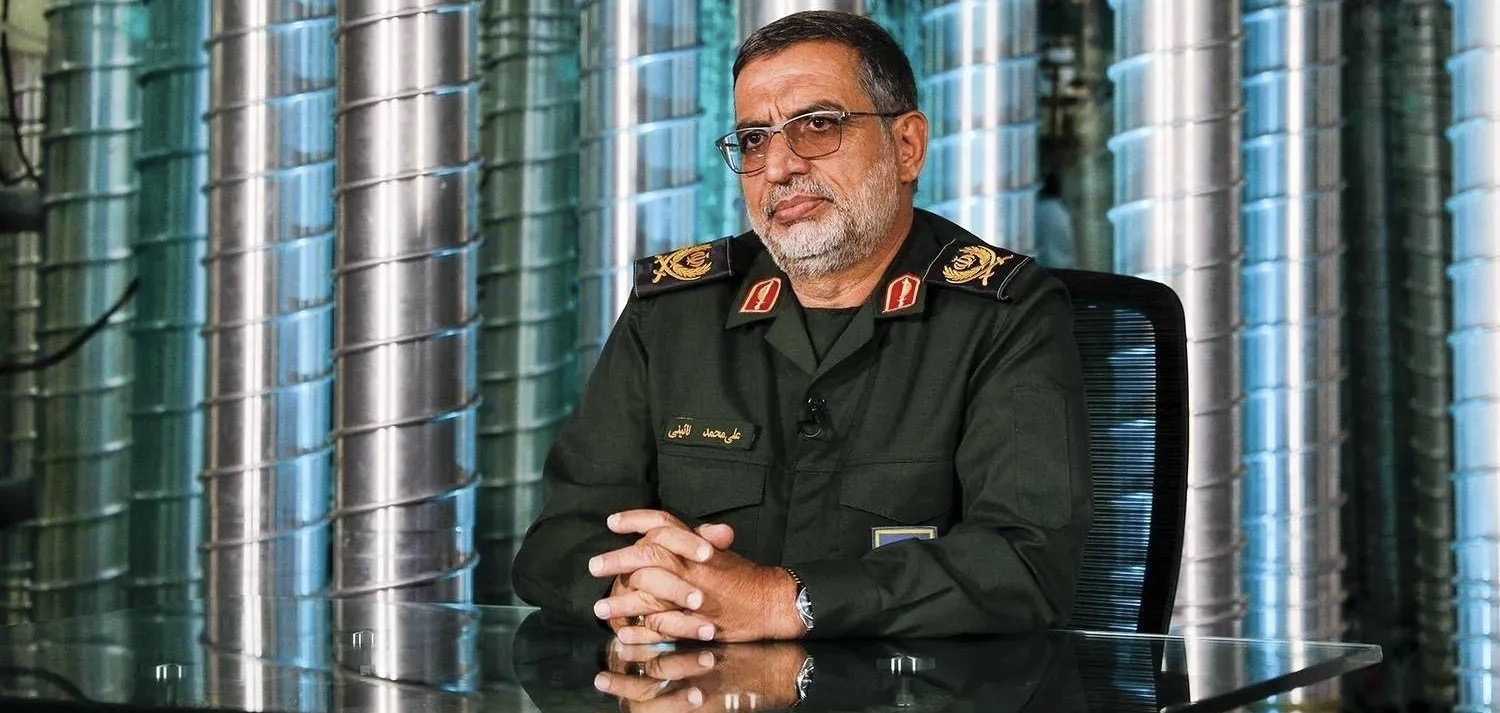 Iran’s Islamic Revolutionary Guard Corps (IRGC) announced on Friday that its spokesman, Brigadier General Ali Mohammad Naini, was killed by U.S. and Israeli air strikes during Operation Epic Fury.
The IRGC released an angry statement on Friday saying that Gen. Naini was “martyred in the criminal cowardly terrorist attack by the American-Zionist side at dawn.”
Naini was killed just a few hours after his final appearance on Iranian state television, during which he declared Iran’s missile industry “deserves a perfect score” because “even under wartime conditions, we continue missile production.” He was evidently responding to a claim by Israel Prime Minister Benjamin Netanyahu that Iran “no longer has the capacity to enrich uranium and manufacture ballistic missiles.”
Earlier in the week, Naimi insisted President Donald Trump’s claim to have wiped out most of the IRGC navy was false.
“The Strait of Hormuz is completely under the management of the IRGC navy and Iran has complete sovereignty. Doesn’t Trump say that he destroyed the Iranian navy? So if he dares, he can send his ships into the Persian Gulf region,” the IRGC spokesman said.
Naini, either 68 or 69 at the time of his death according to various reports, was appointed as the chief spokesman for the IRGC by its commander in chief, Maj.Gen. Hossein Salami, in 2024.
Naeini’s extensive background in psychological warfare was reportedly one of his top qualifications for the job. The Israel Defense Forces (IDF) referred to him as “the IRGC’s main propagandist” when announcing his death on Friday.
Before becoming IRGC spokesman, Naini served as “cultural deputy” for both the IRGC and its thuggish militia, the Basij. He was also a combat veteran of the Iran-Iraq War in the 1980s. In addition to his military career, he was a professor of social sciences at Imam Hossein University in Tehran, an institution linked to the IRGC. He was placed under sanctions by the government of the United Kingdom in October 2024, including a freeze on his assets and a travel ban, for promoting IRGC threats against Israel.
The IDF said the strike that eliminated Naini was conducted by the Israeli Air Force, using intelligence provided by Israel’s Military Intelligence Directorate.
Day 897 — Saturday, March 21
 The Federal Bureau of Investigation (FBI) warned Friday that Iran-linked cyber actors are using Telegram to deploy malware against dissidents, journalists
In a FLASH alert, the FBI said hackers tied to Iran’s Ministry of Intelligence and Security used the platform as a command-and-control system to infect targets’ devices and extract data.
The campaign has led to “intelligence collection, data leaks, and reputational harm,” the FBI said.
Hackers used social engineering, often posing as trusted contacts, to trick victims into downloading malware disguised as common programs. Once installed, it enabled remote access, including file theft and audio recording.
The FBI said the activity dates back to at least 2023 and warned the malware “could be used to target any individual of interest to Iran.”
Officials urged users to avoid downloading files from unknown sources and to enable basic cybersecurity protections.
It is unclear if the FLASH alert has any connection to the ongoing Operation Epic Fury against the Iranian regime.
Day 896 — Friday, March 20
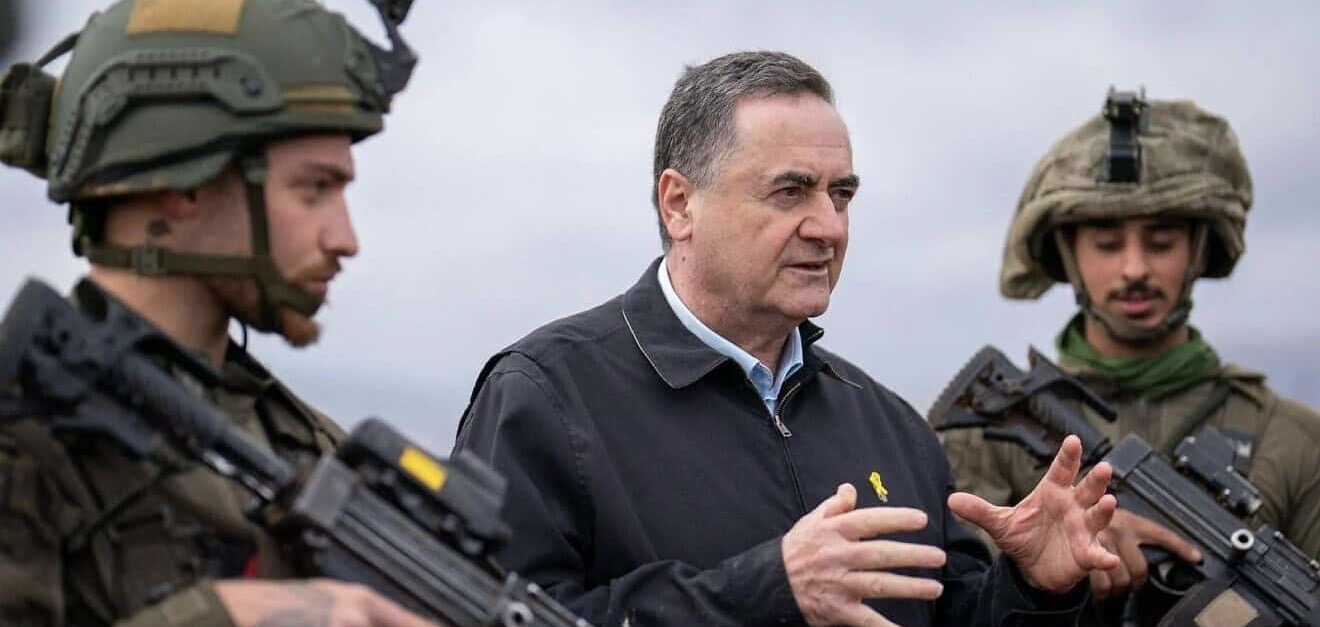
The Israeli military said it carried out strikes overnight on Syrian government targets in southern Syria in response to attacks against Druze civilians in the area of Suwayda.
According to the IDF, the strikes targeted a command center and weapons located in military compounds belonging to the Syrian government. The operation followed what the military described as attacks on Druze civilians on Thursday.
Defense Minister Israel Katz commented on the attack, saying, “We will not allow the Syrian regime to exploit our war against Iran and Hezbollah to harm the Druze. If necessary, we will attack with greater force.”
The IDF added that it is continuing to monitor developments in southern Syria and will act in accordance with directives from the political leadership.
Day 896 — Friday, March 20

The execution of Iranian wrestling star Saleh Mohammadi left the sports world mourning Thursday.
Iran’s regime executed the 19-year-old man on Thursday. Mohammadi was reportedly killed in a public hanging, according to Iranian American human rights activists and dissidents.
Iran International reported that Iran’s regime hanged Mohammadi and two additional Iranian men, Mehdi Ghasemiand and Saeed Davoudi, “after being accused of killing two police officers during nationwide protests earlier this year,” the judiciary-linked Mizan news agency reported.
Multiple Olympians have shared their reactions to the execution with Fox News Digital.
“As someone who has traveled to Iran for wrestling twice and welcomed Iranian athletes into our country, I’ve seen firsthand the dignity and heart of the Iranian people. That’s why it’s so heartbreaking to witness a terror regime execute a teenage wrestler,” Brandon Slay, Olympic gold medal wrestler at Sydney 2000, told Fox News Digital.
“My prayers are with Saleh Mohammadi’s family and all who are suffering. In the face of such oppression, I hold to the hope of the Gospel of Jesus Christ. It is the only light that overcomes darkness and only truth that proclaims justice and mercy will one day prevail.”
“As an Olympic gold medalist, I’ve spent my life around athletes who represent the very best of human discipline and freedom. What we’re seeing in Iran — the execution of a wrestler after what appears to be a sham process — is a brutal reminder of what that regime stands for. This is exactly why strong leadership matters,” Tyler Clary, US gold medal swimmer at London 2012, told Fox News Digital.
“President Trump has been clear-eyed about the nature of this regime and the need to stand up to it, and moments like this prove why that approach is necessary.”
Day 895 — Thursday, March 19
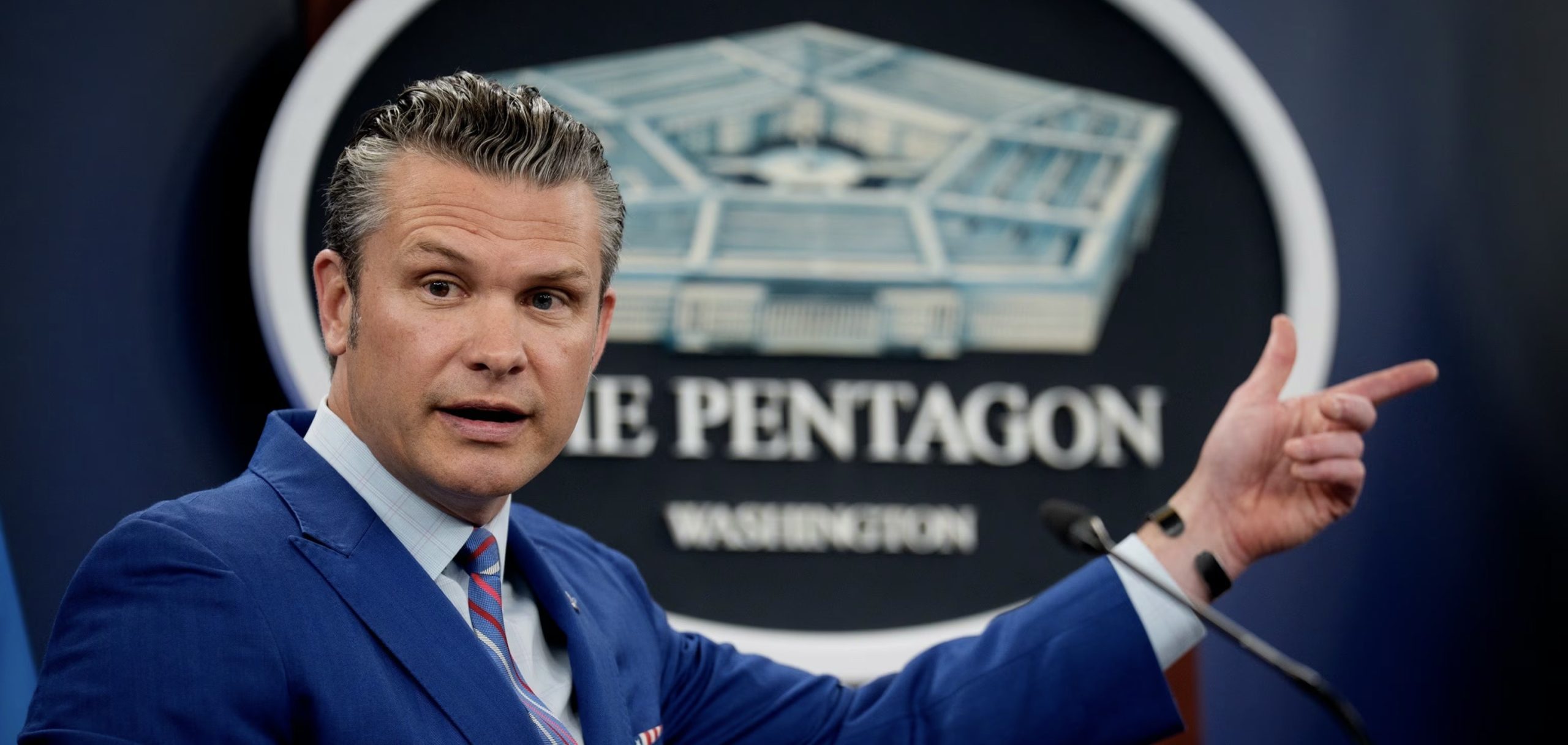
War Secretary Pete Hegseth said Thursday that the unfolding U.S. operation against Iran remains “laser-focused” and decisive in achieving its objectives, pushing back on comparisons to past prolonged conflicts while outlining a campaign he said is systematically degrading Tehran’s military capabilities.
Speaking at a Pentagon briefing on day 20 of Operation Epic Fury, Hegseth opened by directly challenging portrayals that the operation risks becoming a drawn-out war akin to Iraq or Afghanistan, arguing the mission is tightly defined and purpose-driven.
“The media here — not all of it, but much of it — wants you to think, just 19 days into this conflict, that we’re somehow spinning toward an endless abyss or a ‘forever war’ or a quagmire,” Hegseth said. “Nothing could be further from the truth.”
Drawing on his own service, he said the campaign is fundamentally different from past conflicts, emphasizing that it is not centered on nation-building but on eliminating direct threats to the United States.
“This is not those wars,” he said, describing the operation as “laser-focused” and “decisive,” with clearly defined objectives that have remained unchanged since the outset.
“Our objectives, given directly from our America First president, remain exactly what they were on day one,” Hegseth said. “Destroy missiles, launchers and Iran’s defense industrial base so they cannot rebuild, destroy their navy, and Iran never gets a nuclear weapon.”
He said the campaign is progressing according to plan, with U.S. forces applying sustained pressure across Iran’s military infrastructure.
“To the patriotic members of the press, nobody can deliver perfection in wartime,” Hegseth said, urging coverage to reflect battlefield realities. “But report the reality — we’re winning decisively and on our terms.”
Hegseth said U.S. forces have struck more than 7,000 targets across Iran and its military infrastructure, describing the campaign as the application of “overwhelming force” with precision.
“We are hunting them down — methodically, ruthlessly, overwhelmingly — delivering death and destruction from above,” he said, referring to ongoing strikes against Iranian missile systems, drone capabilities, and other military assets.
He added that the sustained pressure has sharply reduced Iran’s ability to conduct attacks, with ballistic missile launches and one-way drone strikes down roughly 90 percent since the start of the operation.
At sea, Hegseth said U.S. forces have “damaged or sunk over 120” Iranian vessels, effectively crippling key elements of the regime’s naval capabilities.
“We’ve decided to share the ocean with Iran — we’ve given them the bottom half,” he said.
Day 895 — Thursday, March 19
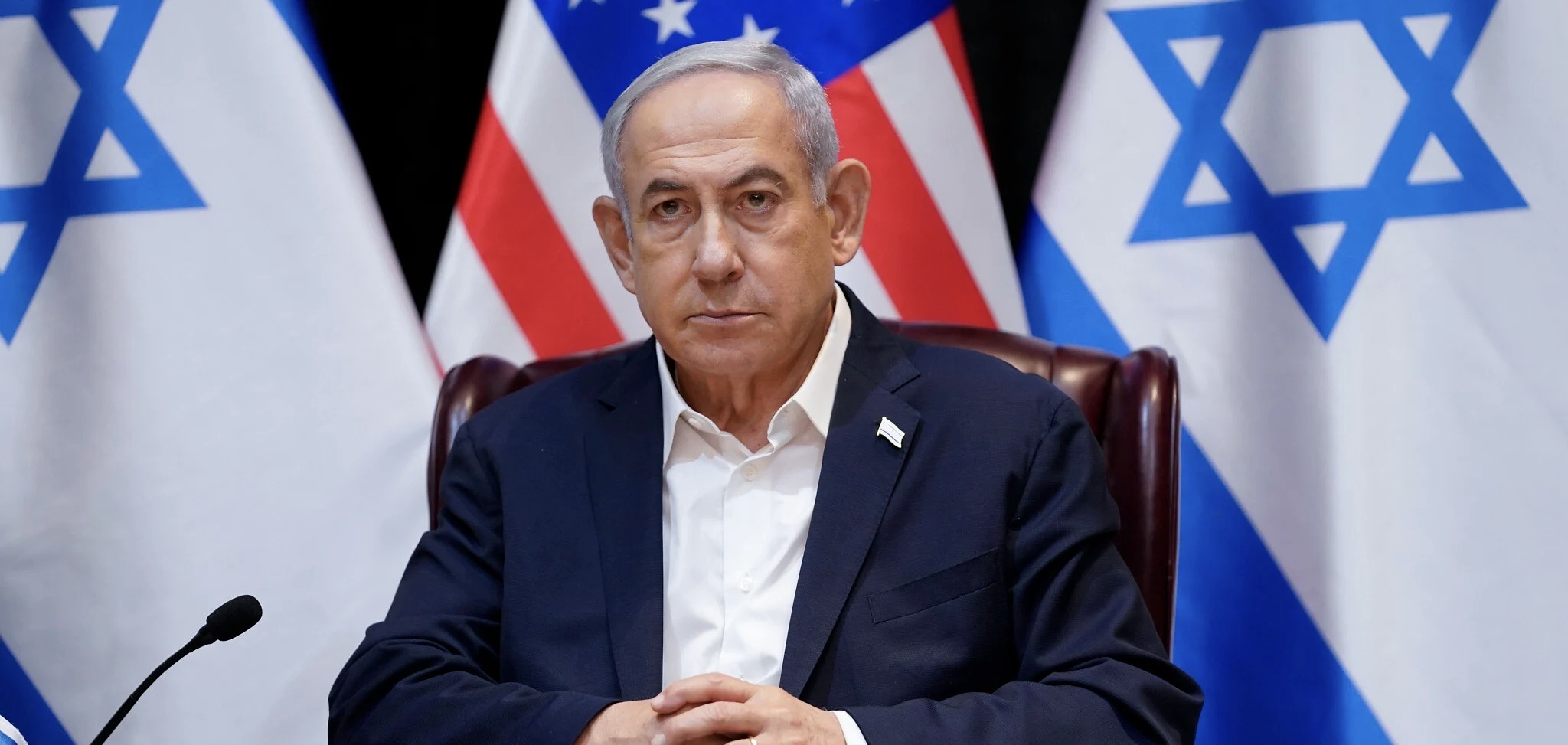
Prime Minister Benjamin Netanyahu addressed the media this evening (Thursday) on the war against the Iranian regime.
In his opening remarks, he referred to the difficulties experienced by citizens, saying, “I understand the difficulty of staying in shelters, I understand the difficulty of businesses, but your patience gives us the effort to achieve the campaign goals. Our roar echoes throughout the world.”
Netanyahu said: “We are working on gradually opening the economy and ensuring appropriate compensation. We are investing a huge amount of capital in this and we need to add more.”
He later said: “Iran can no longer enrich uranium and produce more ballistic missiles.”
Addressing the foreign press in English, Netanyahu told the gathered journalists that they are “witnesses” to the fact that he is alive.
“Under President Trump’s visionary leadership, America and Israel are acting together in Iran with great determination and unprecedented strength,” Netanyahu said. “Operation Rising Lion is designed to remove the existential threats posed by the Ayatollah regime, the regime that has waged war against America and Israel, and the people of Iran, for 47 years. It chants ‘Death to America,’ Death to Israel,’ and it delivers death to its own people.”
The Prime Minister clarified that Israel has three goals, removing the nuclear threat, removing the ballistic missile threat, and “removing both of these threats before they’re buried deep underground and become immune from aerial attack.” The third is “creating the conditions for the Iranian people to grasp their people [and] to control their destiny.”
“We are winning, and Iran is being decimated,” Netanyahu declared. “Iran’s missile and drone arsenal is being massively degraded and will be destroyed. Hundreds of their launchers have been destroyed, their stockpiles of missiles are being hit hard, and so are the industries that produce them.”
Netanyahu dismissed claims that Israel dragged the US into a war against Iran, wondering, “Does anyone really think that someone can tell President Trump what to do? Come on. President Trump always makes his decisions on what he thinks is good for America, and may I add, I think, what is also good for future generations. In this case, those interests are absolutely clear, and so is the clarity of our achievements.”
He noted that President Trump has been warning of the danger posed by the Ayatollah’s regime since the hostage crisis at the US embassy in 1979.
“Right before his second term, before he was reelected, I went to see him in Mar-a-Lago. The first thing he said to me was: ‘Bibi, we’ve got to make sure that Iran doesn’t have nuclear weapons. He said it to me, I didn’t say it to him,” he recalled.
Day 895 — Thursday, March 19
The Justice Department has seized four domains as part of an ongoing effort to disrupt hacking and transnational repression schemes conducted by the Islamic Republic of Iran’s Ministry of Intelligence and Security (MOIS).
The seized domains were identified as: Justicehomeland.org, Handala-Hack.to, Karmabelow80.org, and Handala-Redwanted.to, the Justice Department said.
They were used by Iran attempted psychological operations where it claimed credit for hacking activity, posting sensitive data stolen during hacks, and calling for the killing of journalists, regime dissidents, and Israelis.
In one incident, MOIS used the Handala-hack.to domain to claim credit for a March 2026 destructive malware attack against a U.S.-based multinational medical technologies firm.
“Terrorist propaganda online can incite real-world violence — thanks to our National Security Division and the U.S. Attorney’s Office for the District of Maryland, this network of Iranian-backed sites will no longer broadcast anti-American hate,” said Attorney General Pamela Bondi. “Our cyber assets will remain ever-vigilant to root out and deactivate networks that pose a threat to American citizens.”
Day 895 — Thursday, March 19

Germany said that it is withdrawing its backing of Israel in a genocide case that South Africa brought against the Jewish state before the International Court of Justice, as Berlin faces its own charges before the court for aiding Israel.
The court, which is based in The Hague, is the principal judicial arm of the United Nations.
Germany said in early 2024 that it would file a third-party intervention in South Africa’s case against Israel in the wake of the Hamas-led Oct. 7 terror attacks.
At the time, Berlin rejected South Africa’s claims as “baseless” and a “political instrumentalization” of the Genocide Convention, while supporting Israel’s right to self-defense.
Multiple German government officials said this week that the country is now withdrawing that support, as Berlin defends itself in a separate case that Nicaragua brought before the International Court of Justice.
Nicaragua alleges that Germany is violating international law, including the Genocide Convention, by supporting Israel politically, financially and militarially in its war against Hamas.
The court turned down Nicaragua’s request for emergency measures, but the case was allowed to proceed and remains active.
Germany has argued that the court cannot logically make a determination on its actions until it decides the case against Israel. An intervention on behalf of Israel could serve to undermine Germany’s reasoning.
“There will not be an intervention at the International Court of Justice,” stated Josef Hinterseher, deputy spokesman for the German Foreign Ministry.
“We are now part of a process at the ICJ initiated by Nicaragua, and we have decided to focus on this process,” he said.
Germany is Israel’s second-largest arms supplier and fifth-largest export partner. It has rarely exercised criticism of Israel amid the war and lifted a suspension of some arms export licences to Israel in November.
Earlier this week, Israel filed its response to South Africa’s case, following two time extensions.
South Africa is now debating whether to reply to Israel’s response or advance the case to oral hearings.
Paraguay filed an intervention last week on behalf of Israel. Eighteen countries back South Africa’s application, including the staunchly anti-Israel governments of Ireland and Spain.
Any country party to the Genocide Conention can take another to court over that subject at the ICJ.
Day 895 — Thursday, March 19
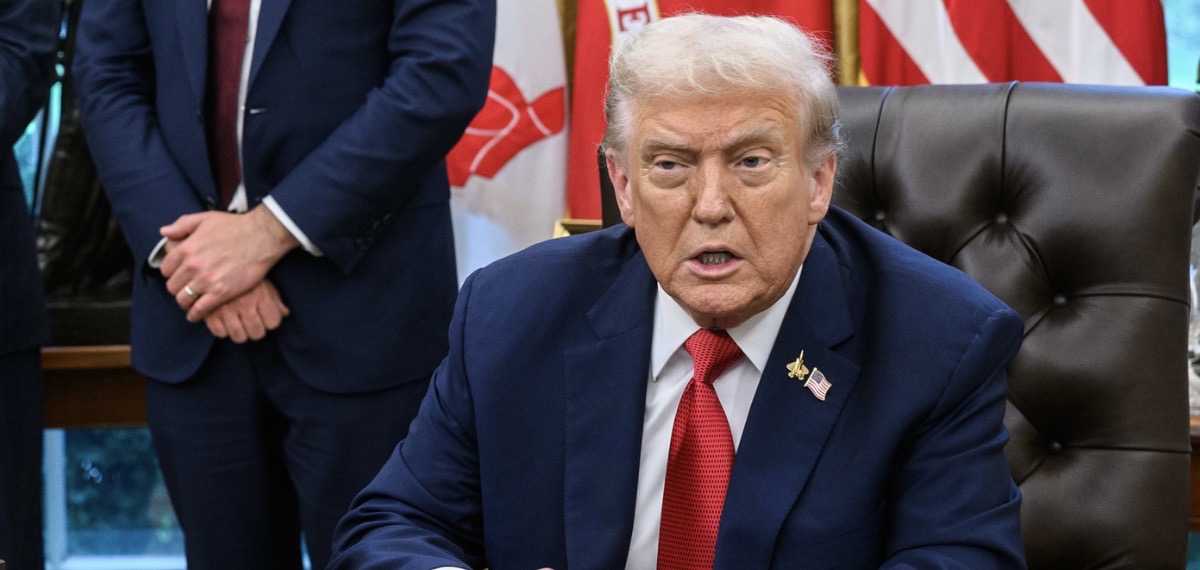
President Donald Trump said Wednesday the U.S. “knew nothing” about Israel’s strike on a major Iranian gas field, but warned the U.S. would “blow up the entirety” of the site if Iran struck Qatar’s LNG gas facility again.
“The United States knew nothing about this particular attack, and the country of Qatar was in no way, shape, or form, involved with it, nor did it have any idea that it was going to happen,” Trump said. “Unfortunately, Iran did not know this, or any of the pertinent facts pertaining to the South Pars attack, and unjustifiably and unfairly attacked a portion of Qatar’s LNG Gas facility.”
Trump said that Israel would not launch any more attacks at the gas field unless Iran struck Qatar again.
“In which instance the United States of America, with or without the help or consent of Israel, will massively blow up the entirety of the South Pars Gas Field at an amount of strength and power that Iran has never seen or witnessed before,” Trump said.
“I do not want to authorize this level of violence and destruction because of the long term implications that it will have on the future of Iran, but if Qatar’s LNG is again attacked, I will not hesitate to do so,” he added.
Day 895 — Thursday, March 19
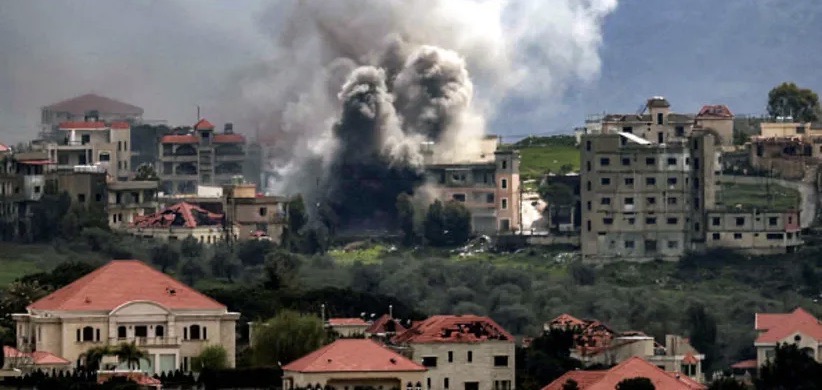
Over 20 Hezbollah terrorists were killed and dozens of the terror group’s sites were destroyed during IDF operations in southern Lebanon in the past 24 hours, the military said on Thursday morning.
In one incident on Wednesday, troops from the IDF’s Golani Brigade noticed a group of terrorists attempting to launch anti-tank missiles toward them.
The soldiers returned fire, killing five, while another three were killed in an airstrike by the Israel Air Force (IAF).
Additionally, the IDF located and confiscated several weapons, including RPGs, anti-tank rockets, ammunition, a hunting rifle, and other military equipment.
“The IDF will continue to operate with determination against the Hezbollah terrorist organization, which chose to join the war and operate under the sponsorship of the Iranian terror regime. The IDF will not allow harm to Israeli civilians,” the military said.
Earlier this week, the IDF also said it had killed the commander of the “Imam Hussein Division” in Beirut, a week after taking out his predecessor.
Day 895 — Thursday, March 19

American officials on Wednesday night identified unidentified drones or UAVs above a military base in Washington, where US Secretary of State Marco Rubio and Secretary of Defense Pete Hegseth reside, the Washington Post reported.
According to sources familiar with the details, several drones were spotted over Fort McNair base, and the incident led to an increase in security measures.
According to the report, there is growing concern within the US government and the Pentagon that an Iranian response to the fighting in the Middle East could manifest in assassination attempts or sabotage against senior officials on US soil.
Security and military forces have intensified monitoring of potential threats.
Day 894 — Wednesday, March 18
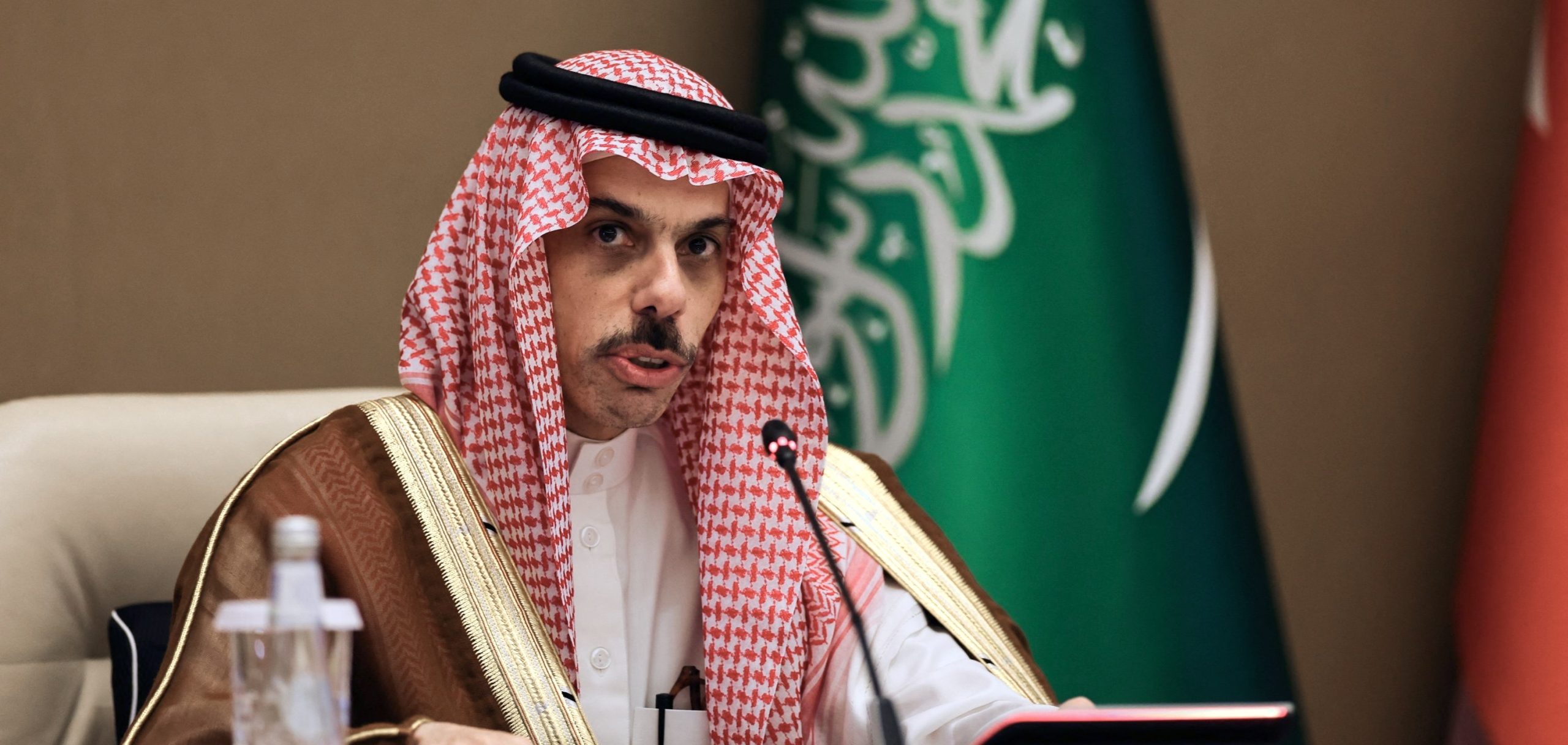
Saudi Arabia’s Foreign Minister, Prince Faisal bin Farhan Al Saud, speaking in Riyadh, stated that his country reserves the right to take military action against the Iranian regime “if deemed necessary.”
Since the beginning of the war on February 28th, Saudi Arabia has been attacked by hundreds of Iranian drones and missiles, with the regime firing thousands of projectiles toward Israel and Gulf States throughout the region.
Iran’s Revolutionary Guard continues to levy threats against Gulf nations. Most recently, the Islamic Republic warned that it intended to target energy facilities in Saudi Arabia, the UAE, and Qatar in “response” to Israeli-US strikes on its gasfield.
The Foreign Minister further cautioned that their patience with “Iranian aggression is not unlimited,” adding that any trust they once had in Tehran has “completely shattered.”
Harbinger’s Press
Day 894 — Wednesday, March 18
Iranian Intelligence Minister Killed In Precision Airstrike, While US Military Targets Missile Sites
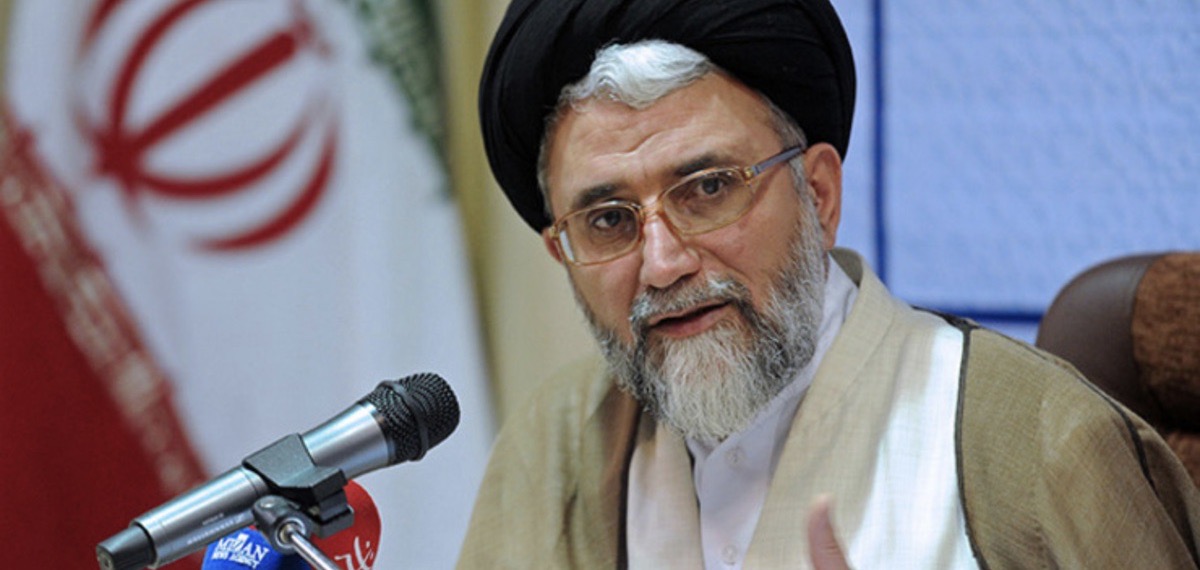
A senior Israeli official told Fox News on Wednesday that Iran’s Minister of Intelligence Esmaeil Khatib, who was killed overnight in a precision strike, previously survived an attack that eliminated dozens of Iranian leaders.
The official said the strike against Khatib was enabled by a joint U.S.-Israeli intelligence effort and described Khatib as a central player in plots targeting American officials.
“This man had American blood on his hands. His network specifically targeted current and former U.S. officials, including President Donald Trump,” the official added.
Khatib had previously survived a sweeping strike on Iran’s senior leadership at the “Defense Council” compound in Tehran during the opening phase of Operation Epic Fury, where more than 40 Iranian leaders were killed in roughly 40 seconds, according to the official.
He was reportedly the only person to survive the initial attack.
“Today, he met the fate of his combatant comrades,” the official told Fox News.
Day 894 — Wednesday, March 18
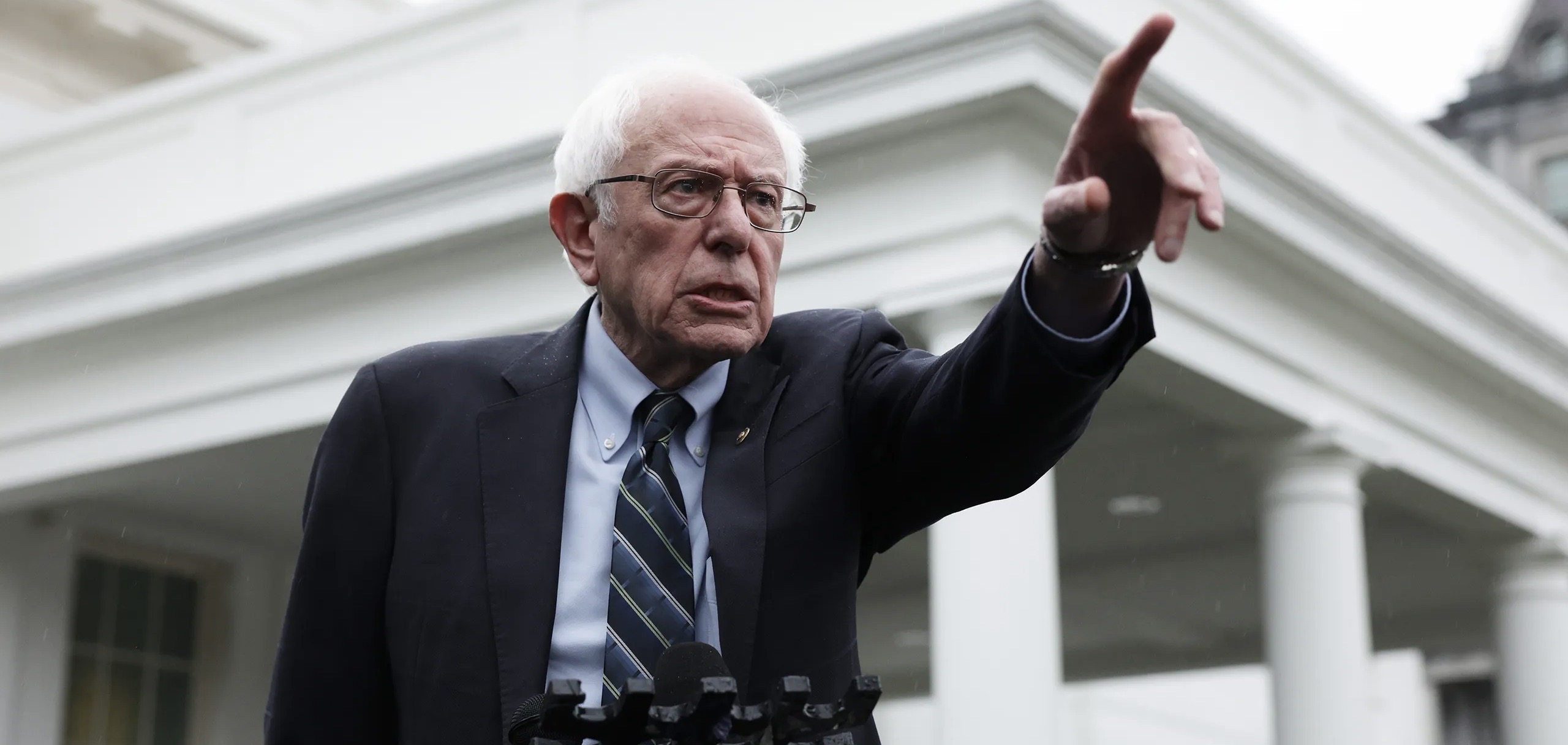
Six progressive, anti-Israel candidates running for Congress in Illinois, all of whom AIPAC reportedly sees as potential members of the “Squad,” lost their primaries in the 2nd, 7th, 8th and 9th Districts on Tuesday.
Most drew endorsements from the Democratic Socialists of America, members of the “Squad” in Congress or a combination of the two.
Marc Rod, of Jewish Insider, wrote on March 16, the day before the primaries, that “a source close to AIPAC says the group’s main goal in Chicago is stopping who it sees as six potential Squad members: Robert Peters, Kina Collins, Junaid Ahmed, Yasmeen Bankole, Kat Abughazaleh and Bushra Amiwala.”
Ahmed shared the post and wrote that it was the “best endorsement I could receive.”
Collins posted the same comment from Rod and wrote that “there is one candidate AIPAC does not want to see win tomorrow, and that’s me.”
The next day, both Ahmed—who drew endorsements from Sens. Bernie Sanders (I-Vt.) and Elizabeth Warren (D-Mass.), Rep. Alexandria Ocasio-Cortez (D-N.Y.) and a Democratic Socialists of America chapter—and Collins lost their primaries.
Ahmed lost to Melissa Bean, a former congresswoman, in the 8th District. Yasmeen Bankole, another AIPAC target, also lost to Bean in the primary.
Collins lost in the 7th District to La Shawn Ford, a state representative.
Robert Peters, a progressive state senator who drew endorsements from Sanders and Warren, placed third behind Cook County commissioner Donna Miller and former congressman Jesse Jackson Jr. in the 2nd District.
Kat Abughazaleh, who was endorsed by squad members Reps. Rashida Tlaib (D-Mich.) and Ilhan Omar (D-Minn.), lost to Evanston mayor Daniel Biss in the 9th District. Another loser in the same district was Bushra Amiwala, who was endorsed by the Democratic Socialists.
Abughazaleh is “a representative of an ascendant and vocal anti-America, anti-Israel, cognizable, pro-Hamas wing of the Democratic Party,” Sam Markstein, national political director at the Republican Jewish Coalition, told JNS.
“Being pro-America, pro-Israel is good policy and good politics, as evidenced last night in the primaries in Illinois, with anti-Israel candidates losing all six of their endorsed candidates,” he said.
“We’re encouraged by the results from last night, and we’ll continue to closely watch these primaries and engage on our side where and when necessary,” Markstein told JNS.
“It’s important that the Democratic Party push back on these voices, which they have failed to do for years, which is why you have the Squad and Alexandria Ocasio-Cortez thinking about running for Senate,” he added. “Last night was a good showing for those of us that care about this country and our alliances around the world. It was a good day.”
Day 894 — Wednesday, March 18
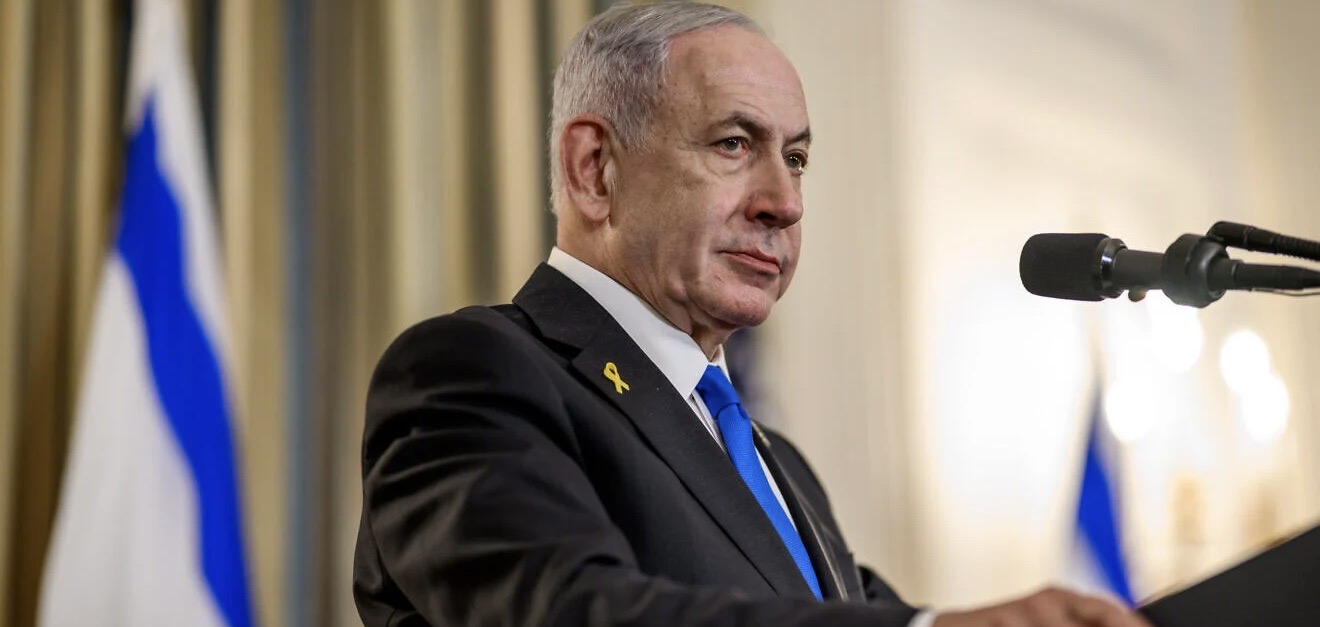
Israeli Prime Minister Benjamin Netanyahu said Israel eliminated two senior figures tied to Iran’s leadership as strikes continue across the region.
The claim appears to align with earlier reports that Israeli strikes killed senior Iranian-linked operatives, though Netanyahu did not identify them in the video.
In a video message posted online, Netanyahu said Israeli forces are continuing to target operatives across Iran.
“I’m here with Israel’s Defense Minister, our Chief of Staff, the head of the Mossad, the Chief of Air Force, our senior commanders. In the past 24 hours, we knocked out two of the terrorist chieftains, the top terrorist chieftains of this tyranny,” Netanyahu said.
“Our aircraft are hitting the terror operatives on the grounds, in the crossroads, in the city squares. This is meant to enable the brave people of Iran to celebrate the Festival of Fire,” he continued.
“So celebrate and Happy Nowruz. We’re watching from above.”
Day 894 — Wednesday, March 18
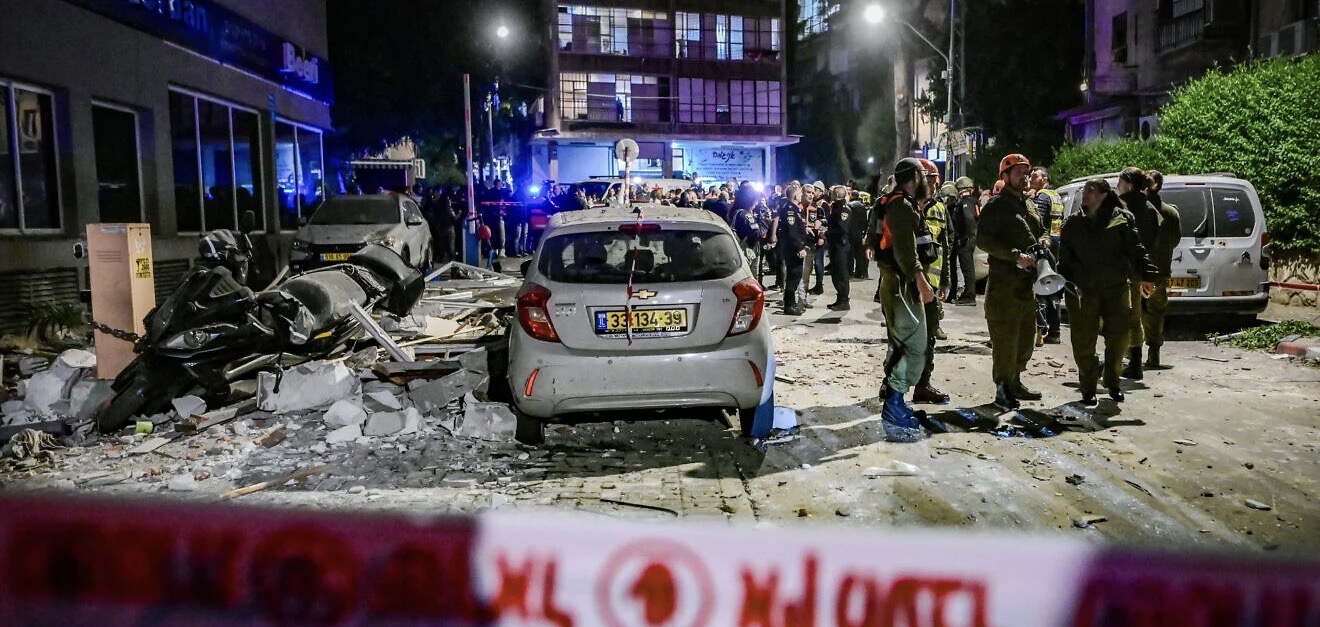
A man and woman, both in their 70s, were killed in Ramat Gan overnight Tuesday by an Iranian ballistic missile, Magen David Adom said early on Wednesday morning.
The emergency service also said that a man in his 20s was treated at a site in the adjacent city of Bnei Brak for “mild” shrapnel wounds to his hand before being evacuated to a hospital.
One of the emergency services’ vehicles was “seriously damaged” and an emergency medical technician “mildly injured” by the attack.
According to United Hatzalah, more than 15 people were treated for minor injuries and emotional shock across several locations in connection with the Ramat Gan strike.
The missile caused “severe structural damage” to an apartment building and surrounding infrastructure, according to United Hatzalah.
“Upon arrival, we encountered a scene of extensive devastation,” said United Hatzalah medics. “Tragically, two individuals were found without signs of life within the building. In addition, we provided medical treatment to several other individuals, who sustained light injuries.”
Israel Defense Forces Maj.-Gen. Shai Klapper, commander of the military’s Home Front Command, described the site of the impact as a “very difficult scene” after a visit on Thursday morning.
“Two civilians were killed in the incident and I offer sincere condolences to their families,” Klapper stated. “Home Front Command forces are operating at every site, conducting searches and providing aid to civilians in the area.”
Carmel Shama-Hacohen, mayor of Ramat Gan, told Channel 14 in Hebrew that it was a “deadly and harsh scene.”
“We’re dealing with a mad regime that attacks anything that moves,” the mayor said in Hebrew. “There’s no reason to stop, only to increase the pace.”
Simmy Allen, international spokesman for United Hatzalah, said that “this was not only a scene of physical destruction, but of profound human impact.”
Day 893 — Tuesday, March 17
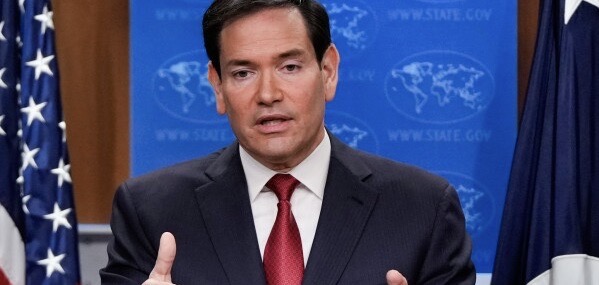
U.S. Secretary of State Marco Rubio has instructed American diplomats to urge foreign governments to take swift action against Iran and its proxy networks, citing an increased threat environment.
In a cable sent Monday to all diplomatic and consular posts, titled “Elevated Concern of IRGC Activity,” officials were directed to push their host countries to “move expeditiously to diminish the capabilities of Iran and Iran-aligned terrorist groups from attacking our respective nations and citizens” amid an “elevated risk of attack.”
The message, marked sensitive but unclassified, was to be delivered “at the highest appropriate level” by March 20, reported ABC News, which obtained a copy of the missive.
The directive emphasized coordinated international pressure, stating: “We assess that the Iranian regime is more sensitive to collective action than unilateral action, and that joint pressure is more likely to compel behavior change by the regime than unilateral actions alone.”
“We must act while international attention is focused now to end the Iranian campaign of terror in the Middle East and globally. Do not allow this critical movement to pass,” it added.
The cable further advised that “at post’s discretion, advocacy efforts should be coordinated with Israeli diplomatic counterparts,” while noting that the talking points “may not be left behind.”
Diplomats were also instructed to highlight Iran’s longstanding destabilizing activities, including support for groups such as Hezbollah, Hamas and Iraqi militias. And to explain the goals of “Operation Epic Fury,” which are to “neutralize Iran’s nuclear program, destroy its
ballistic missile program, disrupt its proxy networks, and diminish its naval capabilities.”
In addition, U.S. officials were told to press countries that have not designated the Islamic Revolutionary Guard Corps and Hezbollah as
terrorist organizations to “swiftly” do so.
“Such a designation will intensify the pressure on the Iranian regime and limit its ability to sponsor terror activities across the globe that jeopardizes the safety and security of your populations,” the cable stated.
The cable comes as U.S. President Donald Trump attempts to build a broader coalition against Iran. The Military Times reported he has requested seven countries to send warships to help open the Strait of Hormuz.
“Some are very enthusiastic, and some are less than enthusiastic,” Trump told reporters on Monday. He said he would soon release a list of countries that have agreed to do so.
“Numerous countries have told me they’re on the way,” said Trump.
Day 893 — Tuesday, March 17
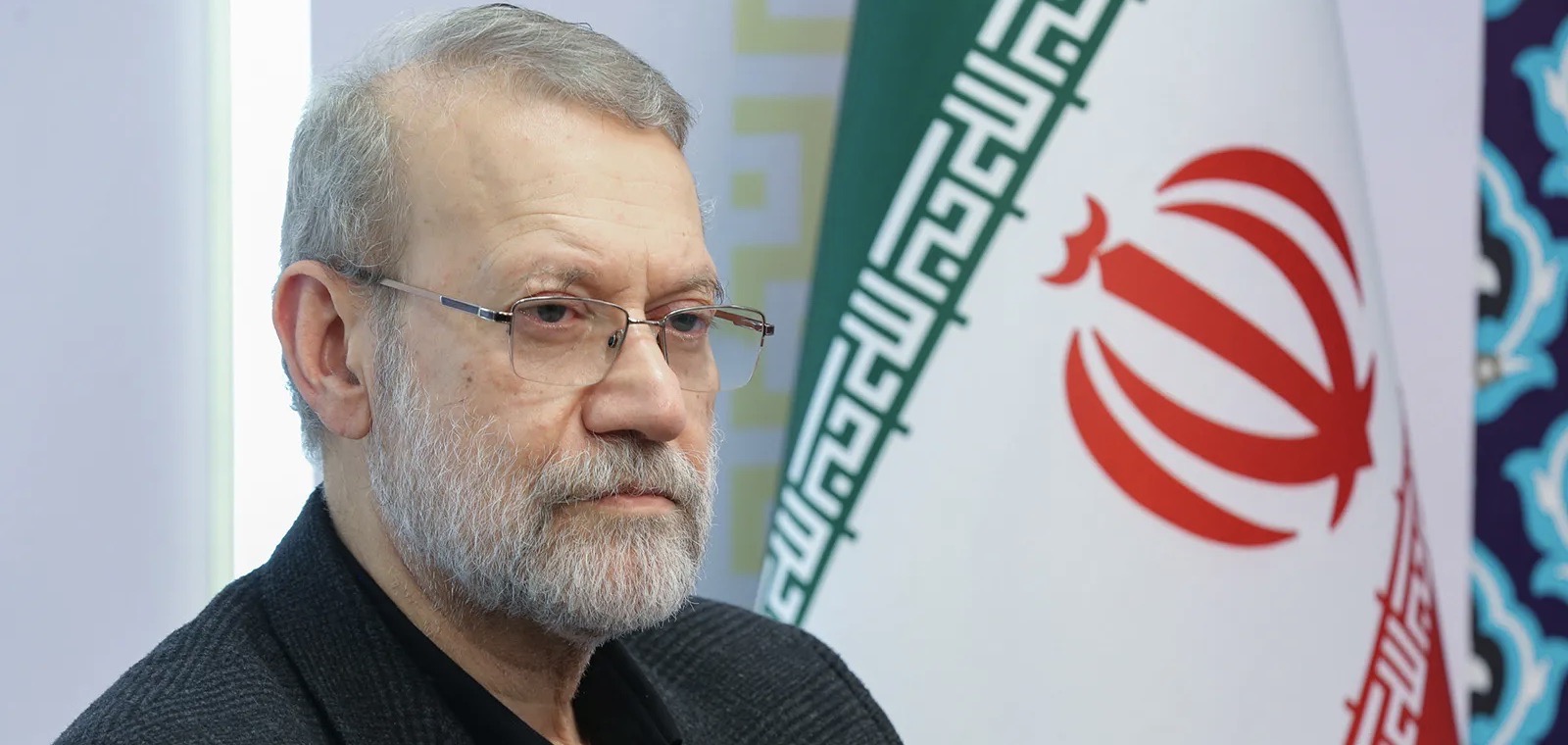
Iran’s Supreme National Security Council Secretary Ali Larijani was targeted in the single most momentous targeted killing since the beginning of the war on February 28, three separate sources confirmed to The Jerusalem Post on Tuesday. Larijani’s death was confirmed by Defense Minister Israel Katz shortly after.
The IDF also confirmed it had assassinated the head of the Islamic Revolutionary Guard Corps’ Basij paramilitary militia, Gholamreza Soleimani, and his deputy, Seyyed Karishi. The two were killed in a makeshift tent area, which had been set up to make it harder to follow them as opposed to in a known headquarters.
The military also announced that it killed the IRGC’s Aerospace Force chief.
Day 893 — Tuesday, March 17
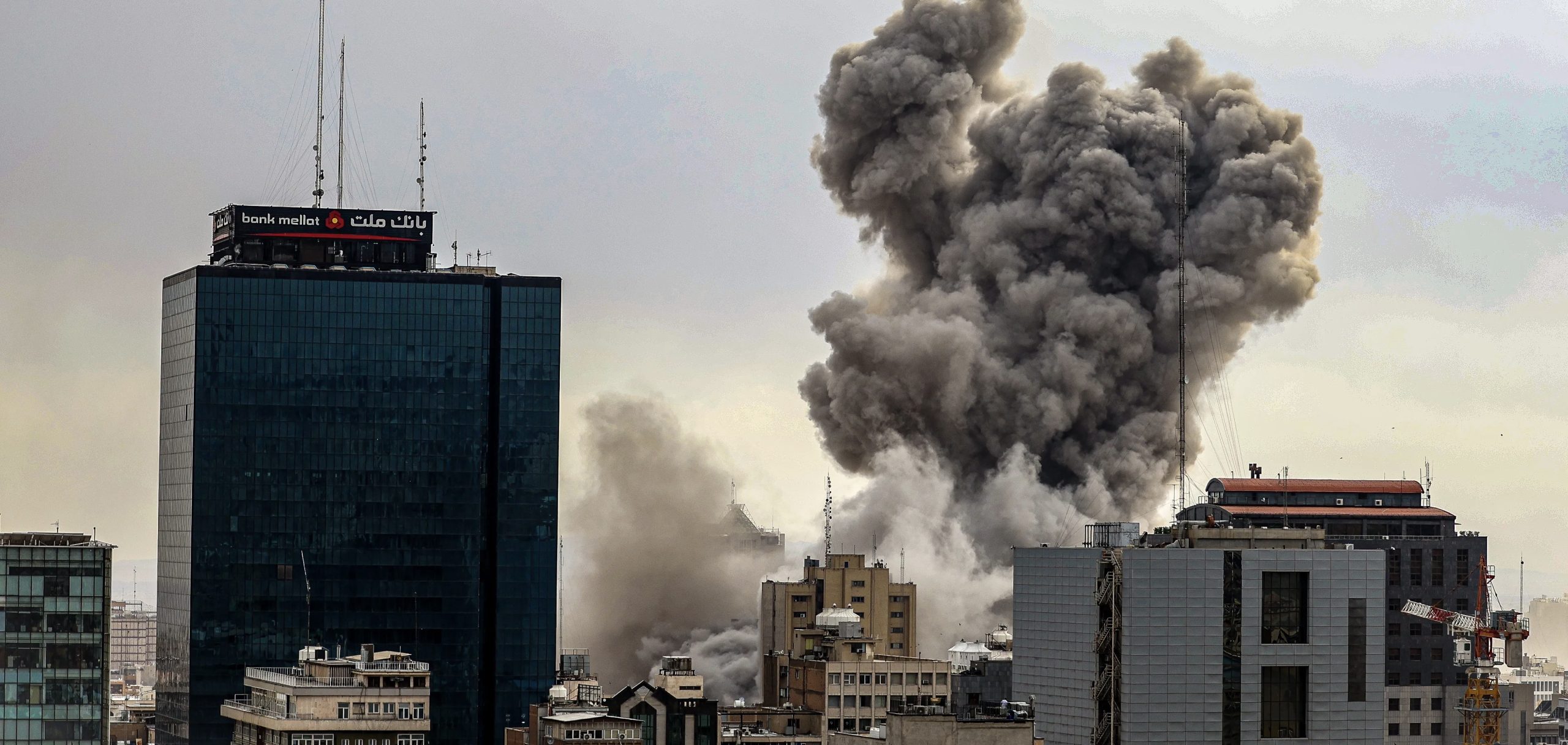
A defiant Iranian regime is reeling from U.S. and Israeli military strikes, but one American who fled Iran as a child says some citizens are thanking the U.S. as a liberator.
Iranian American Armin Assadi said Iranians are dancing near where American bombs have landed, adding that for the first time in 47 years there is hope Iran may be free.
“You can literally see people singing and dancing in the streets, mere blocks away from where the first missile struck. That’s craziness to have [to] find hope in being bombed,” Assadi said on “Fox & Friends Weekend.”
“That’s how desperate these people are, and they’re thanking America for it,” he added.
President Donald Trump said the U.S. has destroyed a majority of Iran’s missile and drone manufacturing sites as a result of Operation Epic Fury — a military campaign that has resulted in the death of Supreme Leader Ayatollah Ali Khamenei.
Assadi said that while few videos have emerged from Iran since the attacks, what he has seen suggests some people support the U.S. campaign. He said some Iranians who have never visited the United States are even doing the “Trump dance.”
Assadi added that the “underground church” is praying for America.
Day 892 — Monday, March 16

U.S. President Donald Trump described the scale of American airstrikes targeting Iran on Monday and called for more countries to assist in re-opening maritime energy supply routes through the Strait of Hormuz.
Speaking to reporters in the East Room of the White House at a meeting of the board of the Kennedy Center, Trump said that the U.S. military had carried out more than 7,000 strikes on the Islamic Republic since Operation Epic Fury began on Feb. 28.
“These have been mostly commercial and military targets,” Trump said. “We have achieved a 90% reduction in their ballistic missile launches and a 95% reduction in drone attacks. The missiles are trickling in now at very low levels, because they don’t have too many missiles left.”
The president said that the military was carrying out strikes on Monday against Iran’s missile and drone manufacturing sites and had sunk or destroyed more than 100 Iranian naval vessels.
Despite the reduction in Iranian attacks and the sinking of much of Iran’s navy, shipping through the Strait of Hormuz between Iran and the Arabian Peninsula remains largely stopped.
Oil prices declined slightly on Monday to around $100 a barrel amid signals from the Trump administration that it was increasing efforts to open the strait, which normally carries about 20% of the world’s energy supplies.
Trump pointed to the asymmetric nature of the threat, in which even the threat of inexpensive Iranian mines or anti-ship missiles can prevent the crossing of oil tankers that cost hundreds of millions of dollars.
“It’s a little unfair, you know. You win a war, but they have no right to be doing what they’re doing,” Trump said. “Today is a big day where we’re pounding a certain area that has very much to do with the strait, and I think we’ll get it going very soon.”
The president also claimed there are “numerous countries” on the way to assist in re-opening the strait but declined to name them. Other countries, he said, “weren’t that enthusiastic” about helping.
He singled out the United Kingdom as one country that has been “terrible,” while rating France’s President Emmanuel Macron an “eight” out of 10 in his handling of the conflict.
Australia and Japan, two countries that Trump has said should help with re-opening the Strait of Hormuz, have both said that they do not have plans to send naval forces to the Persian Gulf.
“We strongly encourage the other nations to get involved with us and get involved quickly and with great enthusiasm,” Trump said. “It wouldn’t matter if you’re targeted or not, because this is a paper tiger that we’re dealing with now.”
“It wasn’t a paper tiger two weeks ago,” he said. “It’s a paper tiger now.”
Day 892 — Monday, March 16
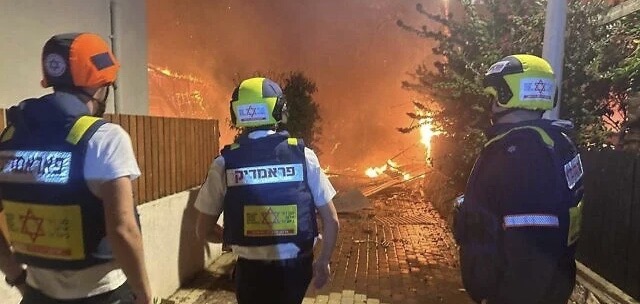
A Hezbollah rocket impacted in northern Israel on Monday evening, sparking a fire and wounding several people, hours after the IDF announced it was deploying troops further into southern Lebanon.
Rocket and drone fire from the Lebanese terror group rained down on northern Israel throughout the day, with a rocket impacting in Nahariya shortly after 6 p.m.
According to the Magen David Adom ambulance service, the rocket in Nahariya wounded six people, including two adults and four minors who were treated for signs of smoke inhalation after a fire was sparked by the impact.
All six were listed in good condition after being treated.
At another impact site, near Kibbutz Kabri, a man in his 40s was listed in light-to-moderate condition after being hit by a blast, MDA said.
Throughout Monday morning, sirens had sounded in the Galilee Panhandle and in communities near the Lebanon border, amid rocket fire by the terror group. There were no reports of injuries in those attacks.
The IDF said earlier Monday that it had begun a “targeted ground operation against key targets” in southern Lebanon, pushing more forces deeper into the area as part of an expanded buffer zone, after Hezbollah began attacking Israel earlier this month amid the US-Israeli war with Iran.
Defense Minister Israel Katz said the operation would continue until Hezbollah no longer poses a threat to the residents of northern Israel, and said displaced Lebanese would not return to their homes until then.
The 91st “Galilee” Regional Division began a raid late Saturday in the eastern sector of southern Lebanon, during which troops encountered and killed several Hezbollah operatives, according to the military.
The IDF said the operation was aimed at expanding “the forward defense area.”
“This operation is part of the effort to establish forward defense, including the destruction of terror infrastructure and the elimination of terrorists operating in the area, to remove threats and create an additional layer of security for residents of the north,” the military said.
Before the troops pushed into the area, the IDF said it carried out massive airstrikes and artillery shelling “to remove threats.”
Day 892 — Monday, March 16
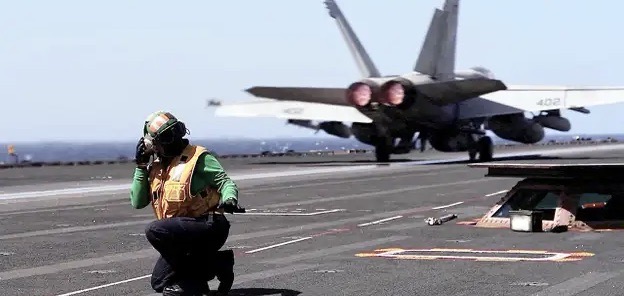
U.S. Central Command (CENTCOM) on Monday rejected claims by Iran’s Islamic Revolutionary Guard Corps that it had destroyed several American fighter jets in the region, calling the claim false.
In a post on X, CENTCOM wrote, “Iran’s IRGC claims it recently destroyed several U.S. fighter jets based in the region using missiles and drones. LIE.”
“No U.S. fighter jets have been struck by Iran,” CENTCOM added. “In fact, U.S. Navy, Air Force and Marine Corps fighter aircraft continue to demonstrate unmatched lethality and air superiority during strike waves into Iran.”
Day 892 — Monday, March 16
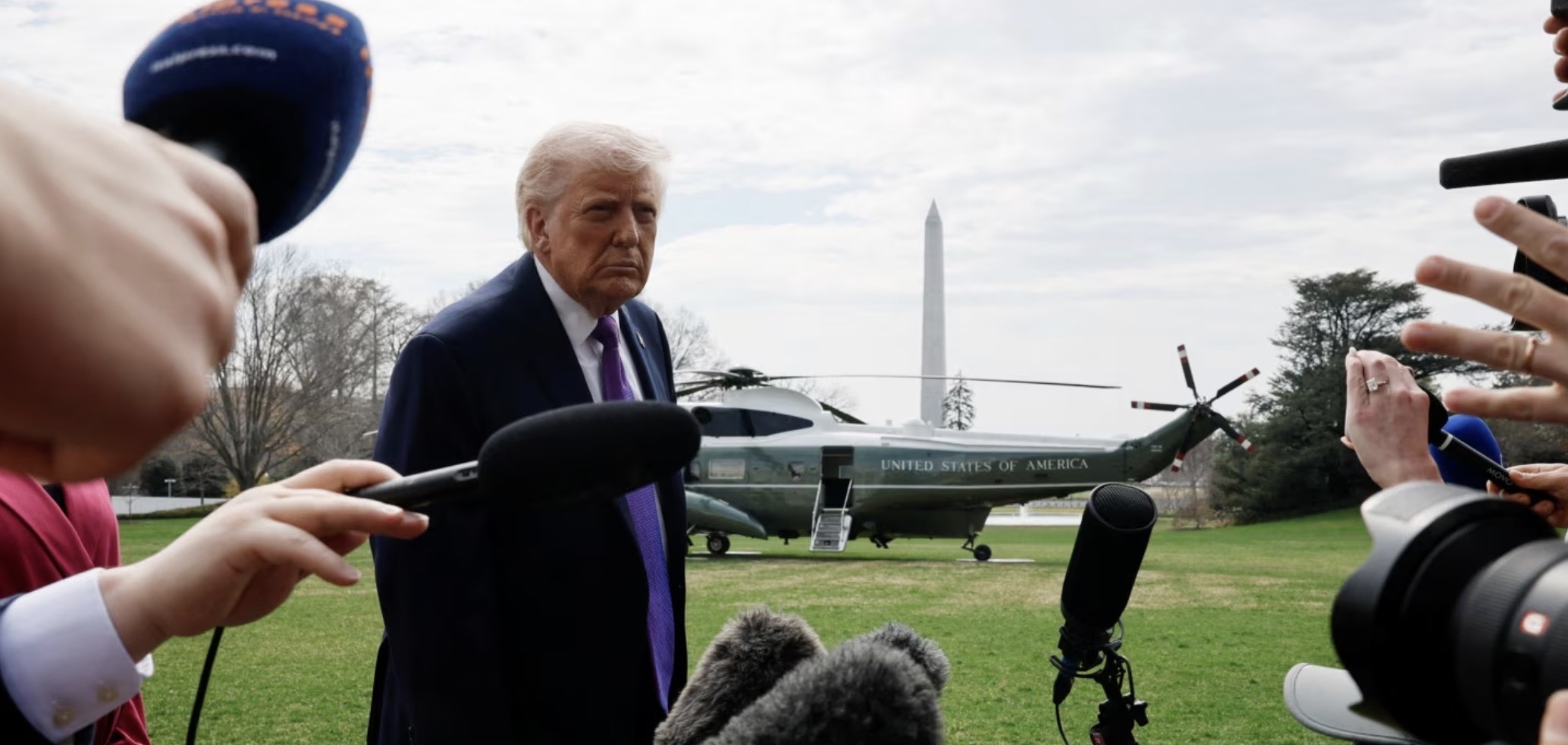
President Donald Trump accused Iran of using artificial intelligence and sympathetic “fake news” U.S. media outlets to spread disinformation about the ongoing war, claiming Tehran is circulating fabricated images and false reports to exaggerate its military success.
In a Truth Social post Sunday, Trump said Iran is trying to mask its “ineffective and weak” military by pushing fake news using what he called the regime’s best weapon — AI.
“Iran has long been known as a Master of Media Manipulation and Public Relations,” Trump wrote. “Now, A.I. has become another Disinformation weapon that Iran uses.”
Trump said some reports circulating online show supposed Iranian attacks that he claims never happened, including images of “Kamikaze Boats” firing at ships and U.S. military assets allegedly damaged or destroyed.
“They showed phony ‘Kamikaze Boats,‘ shooting at various Ships at Sea, which looks wonderful, powerful, and vicious, but these Boats don’t exist — It’s all false information,” Trump wrote.
The president also disputed reports that U.S. refueling aircraft had been damaged in Iranian attacks.
“The five U.S. Refueling Planes that were supposedly struck down and badly damaged … are all in service, with the exception of one, which will soon be flying the skies,” Trump wrote.
Trump also dismissed claims that the aircraft carrier USS Abraham Lincoln had been attacked or set ablaze, calling such reports fabricated.
“Iran, working in close coordination with the Fake News Media, shows our great USS Abraham Lincoln Aircraft Carrier, one of the largest and most prestigious Ships in the World, burning uncontrollably in the Ocean. Not only was it not burning, it was not even shot at — Iran knows better than to do that!” he wrote.
“The story was knowingly FAKE and, in a certain way, you can say that those Media Outlets that generated it should be brought up on Charges for TREASON for the dissemination of false information!”
Trump argued Iran is trying to offset battlefield losses by spreading false narratives online.
“The fact is, Iran is being decimated, and the only battles they ‘win‘ are those that they create through AI,” he wrote.
Day 892 — Monday, March 16
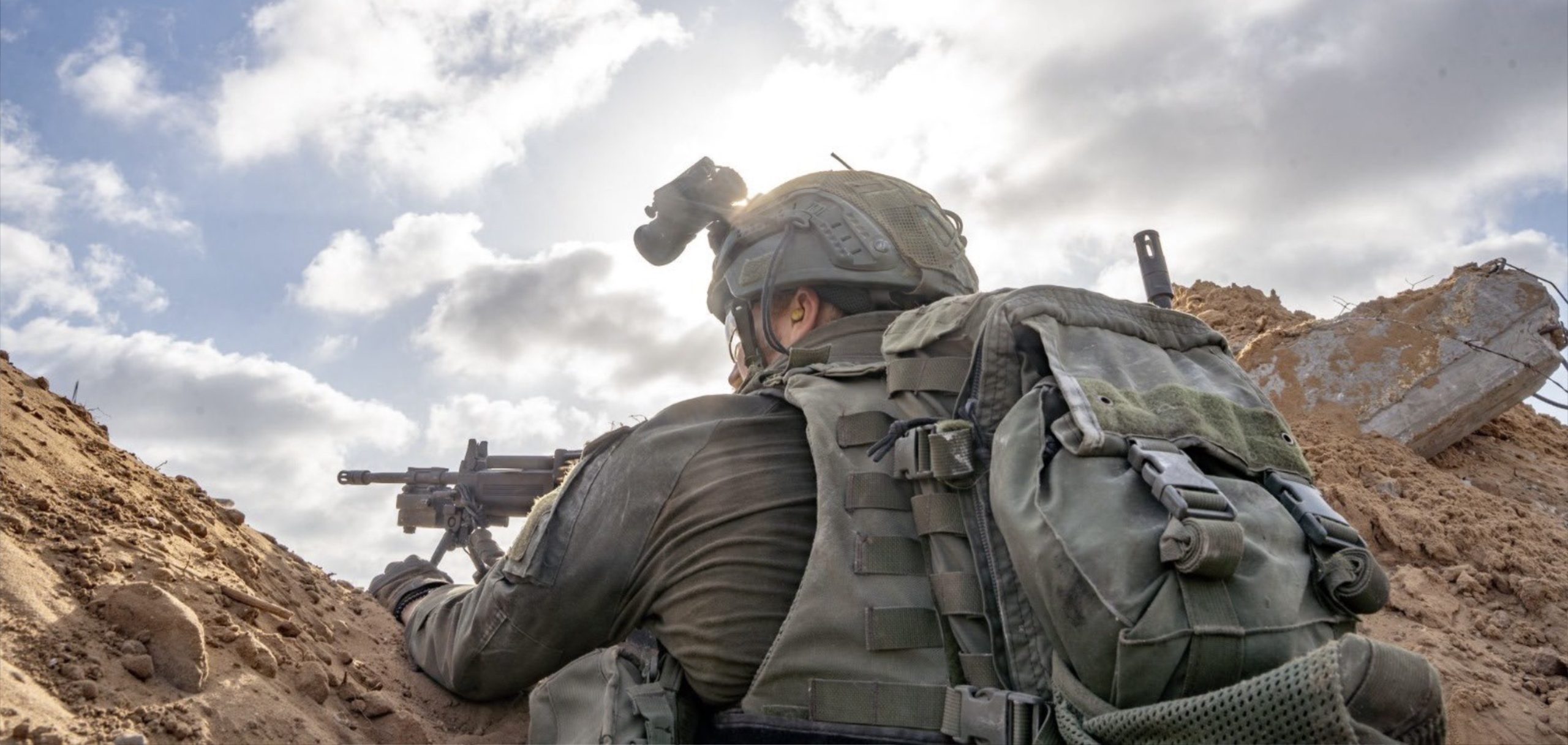
Troops from the IDF’s 91st Division on Monday carried out a dramatically deeper push into southern Lebanon against Hezbollah.
Additional troops from the four IDF divisions redeployed to the north could join the expanded operation at a later stage, depending on developments on the ground.
While the move marks a dramatic escalation, it still does not amount to a full-scale invasion along the lines of the 2024 campaign, as forces are not advancing all the way to the Litani River at this stage.
The IDF said the operations were aimed at removing threats near the border and creating “an additional layer of security” for residents of northern Israel.
Ahead of the ground operations, the IDF said it carried out artillery barrages and Air Force strikes on multiple Hezbollah targets.
The military added that troops are continuing defensive missions in the Galilee to protect nearby Israeli communities.
IDF troops are also carrying out defensive missions to protect communities in the Galilee, the military said.
The IDF added that it will continue to operate against Hezbollah, which “chose to join the hostilities and operate under the sponsorship of the Iranian terror regime,” and said it “will not allow harm to Israeli civilians.”
Day 892 — Monday, March 16
The attack on Temple Israel in West Bloomfield, Michigan, on March 12, 2026 should have been reported with moral clarity. A man drove a vehicle into a synagogue-one of the largest Reform congregations in the United States-and opened fire. The target was unmistakable: a Jewish house of worship filled with civilians, including children and educators.
Yet the coverage offered by The New York Times was striking not for the gravity with which it condemned the crime, but for the narrative contortions that followed. Instead of focusing squarely on the antisemitic nature of the attack, the newspaper chose to foreground the personal grievances of the perpetrator, Ayman Mohamad Ghazali-a 41-year-old naturalized American citizen originally from Lebanon-presenting a portrait that risked transforming a murderous terrorist into a tragic figure.
In doing so, the newspaper did not merely report a story. It constructed a framework that subtly shifted responsibility away from the attacker and toward Israel.
That framing deserves not only criticism, but deep moral scrutiny.
Central to the reporting was a statement by Mo Baydoun, the mayor of Dearborn Heights, Michigan, where Ghazali lived. According to Baydoun, Ghazali had recently lost several family members in Lebanon, including his niece and nephew, who were reportedly killed in an Israeli airstrike.
The implication was unmistakable: Ghazali’s violence might be understood-perhaps even explained-by the trauma of that loss. But omitted from this sympathetic narrative were facts that complicate the story considerably. According to reporting from other outlets, Ghazali’s family connections were not merely incidental casualties of war.
An official told NBC News that two of the individuals killed in the Israeli strike were Ghazali’s brothers-men who were known members of the Hezbollah terrorist organization. On Sunday, this was confirmed and media outlets reported one of the assailant’s brothers was a Hezbollah commander who was killed in a strike last week. In a statement, the IDF said that Ibrahim Muhammad Ghazali was in charge of managing weapons operations in Hezbollah’s Badr unit.
Hezbollah is not a humanitarian charity or a misunderstood political movement. It is an internationally designated terrorist organization responsible for decades of attacks against civilians, including bombings, kidnappings, and rocket attacks targeting Israeli population centers.
Moreover, sources told CNN that Ghazali himself had been flagged in U.S. government databases because of connections to Hezbollah members. Although authorities did not formally identify him as a member of the group, investigators reportedly questioned him multiple times during international travel, regarding potential ties.
These facts are not peripheral details. They are essential context. Yet the narrative most prominently advanced by The New York Times emphasized something else entirely: Israeli military action in Lebanon while omitting the reason for it.
The implicit argument embedded in that framing is deeply troubling. Is the Times trying to claim that If Ghazali’s relatives were killed in an Israeli strike targeting Hezbollah terrorists, and if that tragedy contributed to his rage, then perhaps Israel bears some indirect responsibility for the attack on a synagogue in Michigan?
This line of reasoning collapses the moral distinction between explanation and justification. It invites readers to see terrorism not as an act of hatred or ideological extremism, but as the predictable consequence of geopolitical grievance. In other words, the victims- children attending classes at a Jewish Day School-are subtly repositioned as participants in a cycle of violence that somehow implicates them.
Day 891 — Sunday, March 15
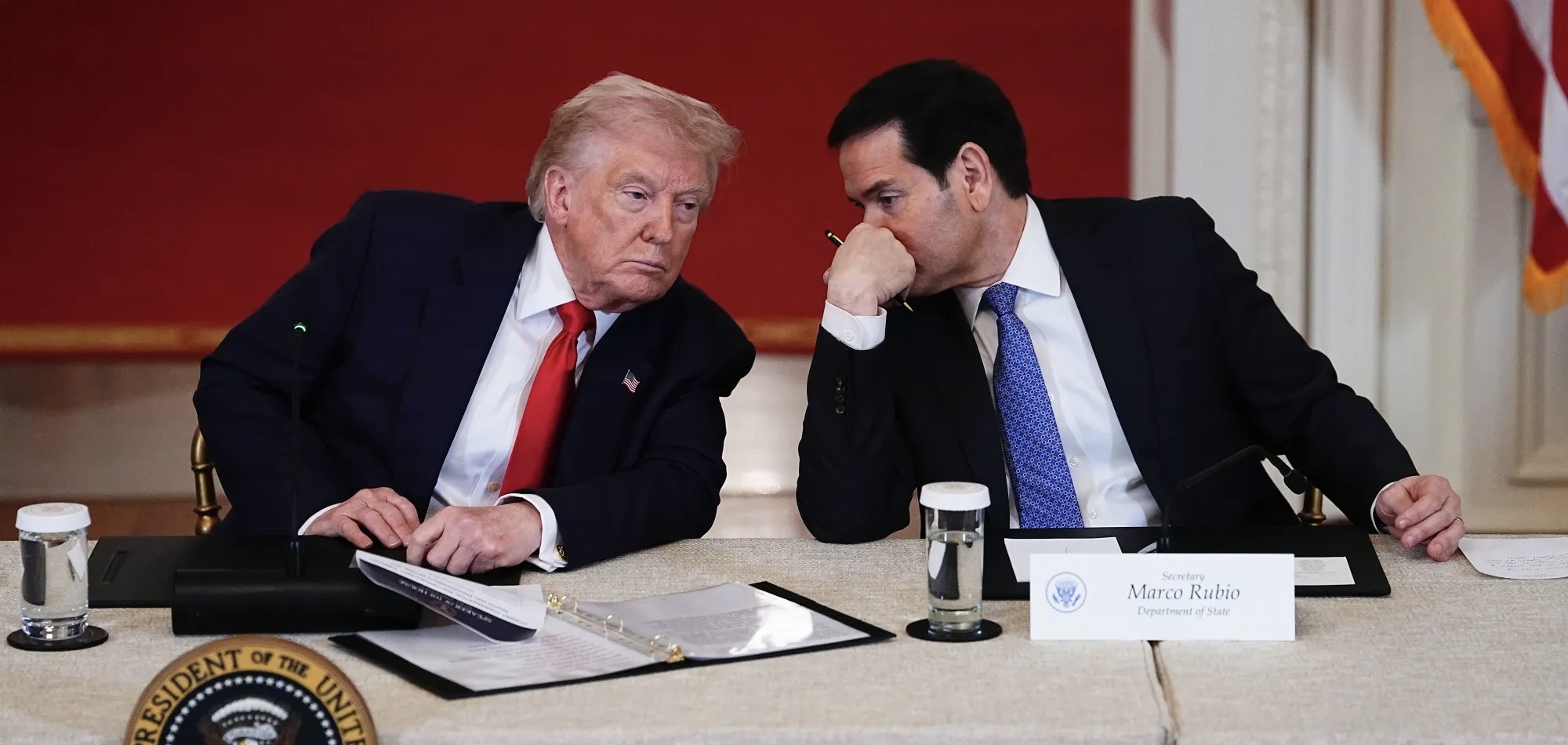
President Donald Trump said Iran must “surrender” to end the war and claimed he is hearing the country’s new supreme leader may already be dead.
“I’m hearing he’s not alive, and if he is, he should do something very smart for his country, and that’s surrender,” Trump said of Mojtaba Khamenei in a phone interview with NBC News.
Trump added he is unsure whether the Iranian leader is still living.
“I don’t know if he’s even alive. So far, nobody’s been able to show him,” he said.
The president also said Iran is seeking negotiations but that he is not ready to make a deal.
“Iran wants to make a deal, and I don’t want to make it because the terms aren’t good enough yet,” Trump said.
Day 891 — Sunday, March 15
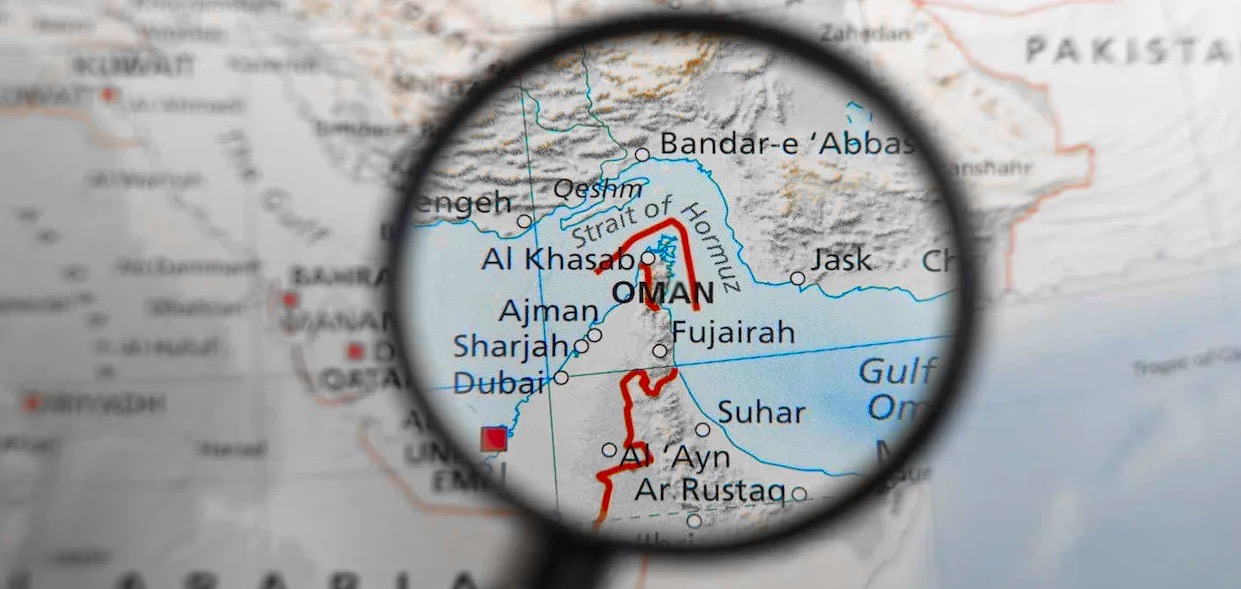
President Donald Trump announced on Saturday that “many countries” will be dispatching warships to patrol the Strait of Hormuz amid the ongoing conflict with Iran, suggesting that it is “still easy” for its military to inflict damage on vessels there “no matter how badly defeated they are.”
Writing on Truth Social, Trump stated: “Many Countries, especially those who are affected by Iran’s attempted closure of the Hormuz Strait, will be sending War Ships, in conjunction with the United States of America, to keep the Strait open and safe. We have already destroyed 100% of Iran’s Military capability, but it’s easy for them to send a drone or two, drop a mine, or deliver a close range missile somewhere along, or in, this Waterway, no matter how badly defeated they are.“
The president continued, “Hopefully China, France, Japan, South Korea, the UK, and others, that are affected by this artificial constraint, will send Ships to the area so that the Hormuz Strait will no longer be a threat by a Nation that has been totally decapitated.”
“In the meantime,” he added, “the United States will be bombing the hell out of the shoreline, and continually shooting Iranian Boats and Ships out of the water,” Trump continued. “One way or the other, we will soon get the Hormuz Strait OPEN, SAFE, and FREE!”
Treasury Secretary Scott Bessent proposed on Thursday that an “international coalition” could escort oil tankers through the strait, something he said would have a “big effect.”
Day 891 — Sunday, March 15
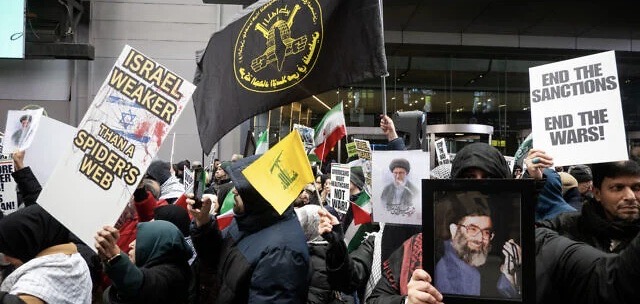
Anti-Zionist protesters chanted for terrorist groups, accused Israel’s supporters of eating babies and raping children, and chanted for death to Israel and the US at a protest for Al Quds Day in New York City on Friday.
Al Quds Day is an annual, anti-Israel event held on the last Friday of Ramadan, established by Iran in 1979. The protest this year took place during heightened tensions due to the US-Israel war with Iran.
The protest on Friday drew several hundred participants and was backed by leftist and anti-Zionist activist groups, including Pal-Awda, the Bronx Anti-War Coalition and the Workers World Party.
“This Al Quds Day holds a special significance as the United States and its puppet Zionist regime wage full-out war against the Islamic Republic of Iran. We proclaim our support for the Islamic Republic,” a speaker said, introducing the event.
“Iran is the central pillar in the struggle against US imperialism and Zionism,” he said. “A war against the Islamic Republic of Iran is a war against anti-imperialism, against anti-occupation, against anti-freedom.”
“We remind the enemies that martyrdom is our highest honor and the targeting of the leader only strengthens the resolve,” he said. “We renew our pledge to the path of the martyrs.”
The protesters held signs that said, “Victory to Palestinian and Iranian resistance,” “Free America from Israel,” and with pictures of the ayatollahs.
Several signs said, “Israel weaker than a spider’s web,” referring to threats made by Hezbollah terror chief Hassan Nasrallah before Israel killed him. A child on the stage held up a photo of Iran’s late leader Ali Khamenei.
Around a dozen pro-Israel counter-protesters, Jews and allies, gathered across the street, chanting, “USA,” and shouting, “brainwashed,” and “terrorists.”
Day 890 — Saturday, March 14
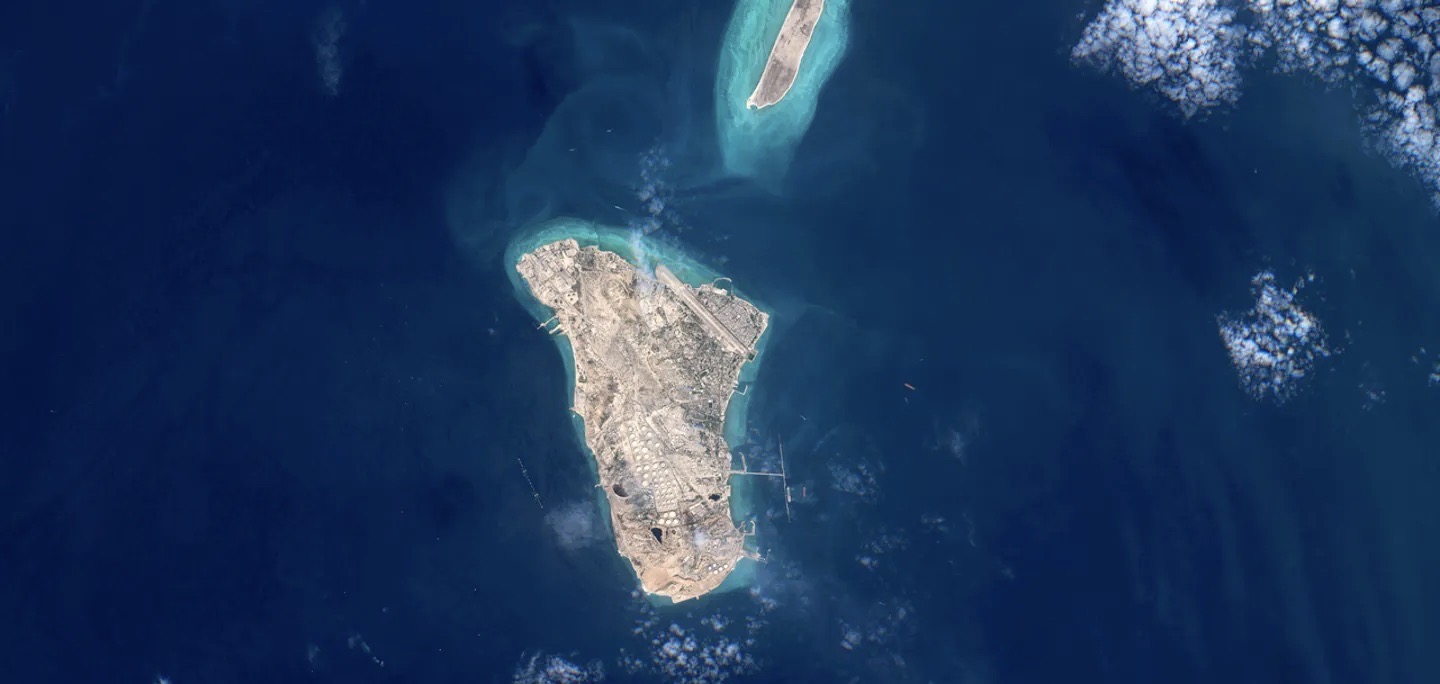
President Donald Trump said Friday that the U.S. had carried out a bombing raid on Iran’s Kharg Island, a strategically vital island in the Persian Gulf that serves as the country’s largest oil terminal and a crucial hub for its crude exports.
“Moments ago, at my direction, the United States Central Command executed one of the most powerful bombing raids in the history of the Middle East, and totally obliterated every MILITARY target in Iran’s crown jewel, Kharg Island,” Trump wrote on Truth Social.
The island, located roughly 35 miles off Iran’s Bushehr province in the country’s southwest, is about the size of New York City’s Central Park but carries huge importance for Iran’s economy.
It has a loading capacity of about 7 million barrels per day, and roughly 90% of Iran’s crude oil exports pass through it. Most of those exports are shipped to China and India, underscoring the island’s importance not only to Iran’s energy trade but also to broader global oil markets.
That makes Kharg Island one of Iran’s most sensitive and strategically important pieces of infrastructure. Any military action there could have consequences well beyond Iran, raising the risk of disruptions to crude flows, shipping traffic and energy prices across the region.
Trump said the U.S. had deliberately avoided targeting the island’s oil infrastructure, while warning that could change if Iran moved to disrupt shipping through the Strait of Hormuz.
“Our Weapons are the most powerful and sophisticated that the World has ever known but, for reasons of decency, I have chosen NOT to wipe out the Oil Infrastructure on the Island. However, should Iran, or anyone else, do anything to interfere with the Free and Safe Passage of Ships through the Strait of Hormuz, I will immediately reconsider this decision,” Trump added.
The latest revelation comes as the widening conflict in the Middle East rattles global energy markets and raises fresh fears about the security of the Strait of Hormuz, the world’s most important oil choke point.
The Strait of Hormuz, a narrow passage between Iran, the United Arab Emirates and Oman, carries roughly 20 million barrels of oil a day and about one-fifth of the global supply of liquefied natural gas (LNG). When conflict flares in the region, even the threat of disruption can rattle markets because so much of the world’s energy moves through that single corridor.
Day 890 — Saturday, March 14
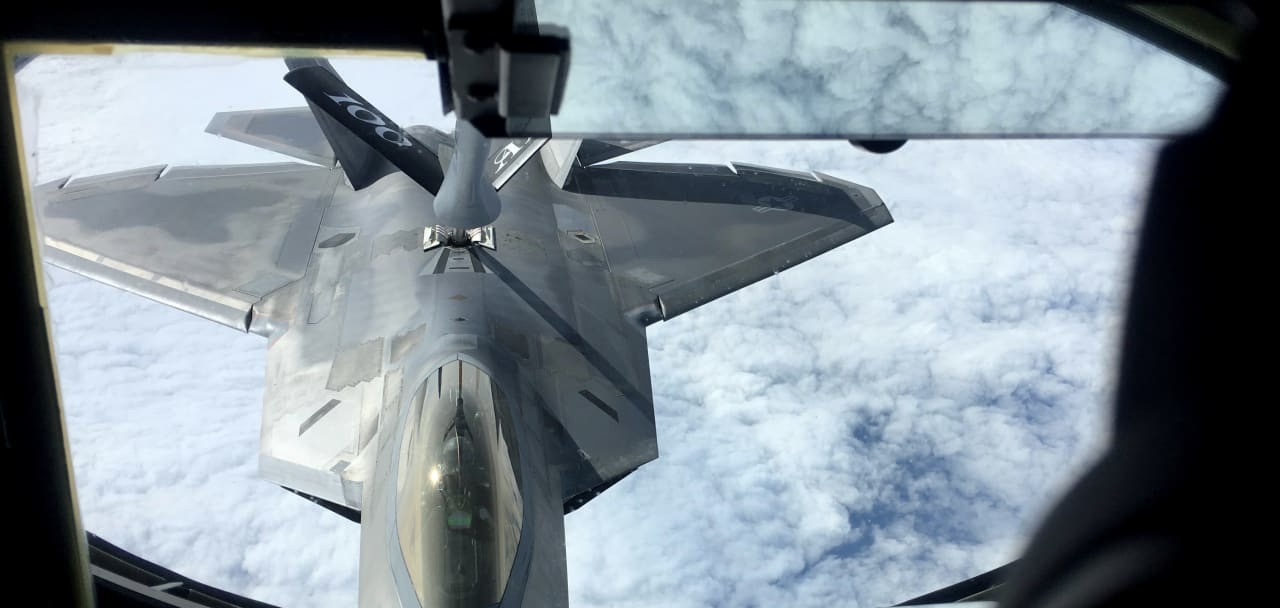
Five US Air Force refueling planes were struck and damaged on the ground at Prince Sultan air base in Saudi Arabia, the Wall Street Journal reported on Friday, citing two US officials.
The planes, which were hit during an Iranian missile strike on the Saudi base in recent days, were damaged but not fully destroyed and are being repaired, the WSJ said, adding that no one was killed in the strikes.
According to the WSJ report, this recent update indicates that at least seven US Air Force refueling planes have been damaged or destroyed in total since the begining of Operation Epic Fury.
This figure follows an incident on Thursday, where two KC-135 refueling planes collided, resulting in one aircraft crashing to the ground. All six crew members aboard the plane that crashed were killed, as confirmed by the Pentagon on Friday.
Day 890 — Saturday, March 14

The Islamic Movement of the Companions of the Right claims responsibility for this morning’s attack on a Jewish school in Amsterdam, publishing a video that appears to show the detonation of an incendiary device.
The newly formed extremist group has also been linked to several other antisemitic attacks in recent days, including a similar explosion yesterday outside a synagogue in Rotterdam that caused a brief fire and damage to the building, in which four suspects were arrested by Dutch police.
Day 889 — Friday, March 13
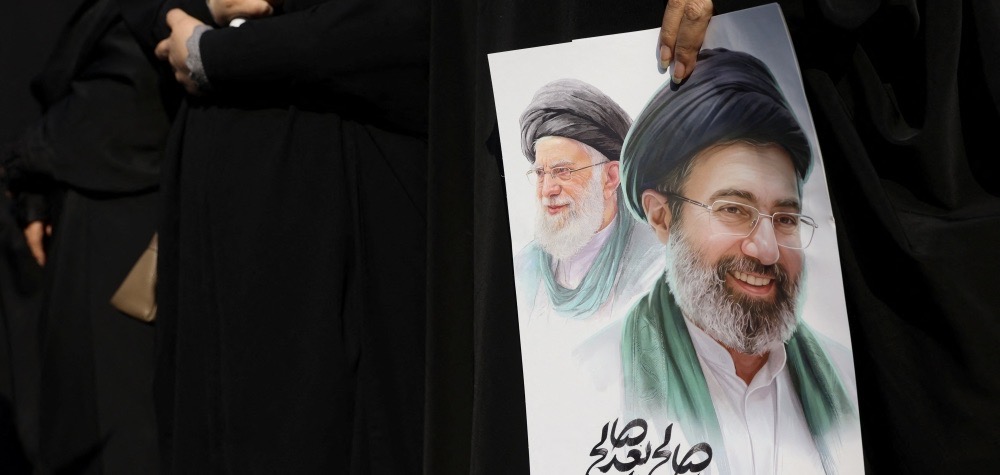
The US government on Friday announced a reward of up to $10 million for information leading to the identification or location of key Iranian officials, including the newly appointed Supreme Leader, Mojtaba Khamenei.
This bounty, issued by the State Department’s Rewards for Justice Program, is part of the ongoing US and Israeli military campaign against Iran.
The State Department said it is specifically seeking information about Khamenei and his inner circle, including his deputy chief of staff, Ali Asghar Hejazi, his military adviser, Maj. Gen. Yahya Rahim Safavi, and his advisor, Ali Larijani. The list also includes Brig. Gen. Eskandar Momeni, Minister of the Interior, and Esmail Khatib, Minister of Intelligence and Security.
In addition to these individuals, the US is seeking information on four unnamed, unpictured officials from the Iranian Revolutionary Guard Corps (IRGC). The officials include the Secretary of the Defense Council, an Advisor to the Supreme Leader, the Military Office Chief in the Supreme Leader’s office, and the IRGC Commander.
“These individuals command and direct various elements of the IRGC, which plans, organizes, and executes terrorism around the world,” the notice from the State Department read.
A similar notice posted on social media emphasizes that individuals providing valuable information could not only be eligible for a monetary reward but may also be considered for relocation.
Mojtaba Khamenei was officially named Iran’s new Supreme Leader on Sunday, replacing his father Ali Khamenei, who was eliminated on the first day of joint US-Israeli strikes on Iran.
He has not yet made a public appearance, and The New York Times reported earlier this week that he was injured on the first day of the war.
According to the report, Mojtaba Khamenei sustained injuries to his leg and is staying in a location with limited communications.
On Thursday, Iranian state media published a statement attributed to Khamenei, marking his first since taking over from his father.
The statement vowed revenge for US and Israeli actions, ordered forces to keep the Strait of Hormuz closed, and threatened to open new fronts in the war. However, the statement was not accompanied by video or audio, leading to further speculation about Khamenei’s condition.
Day 889 — Friday, March 13
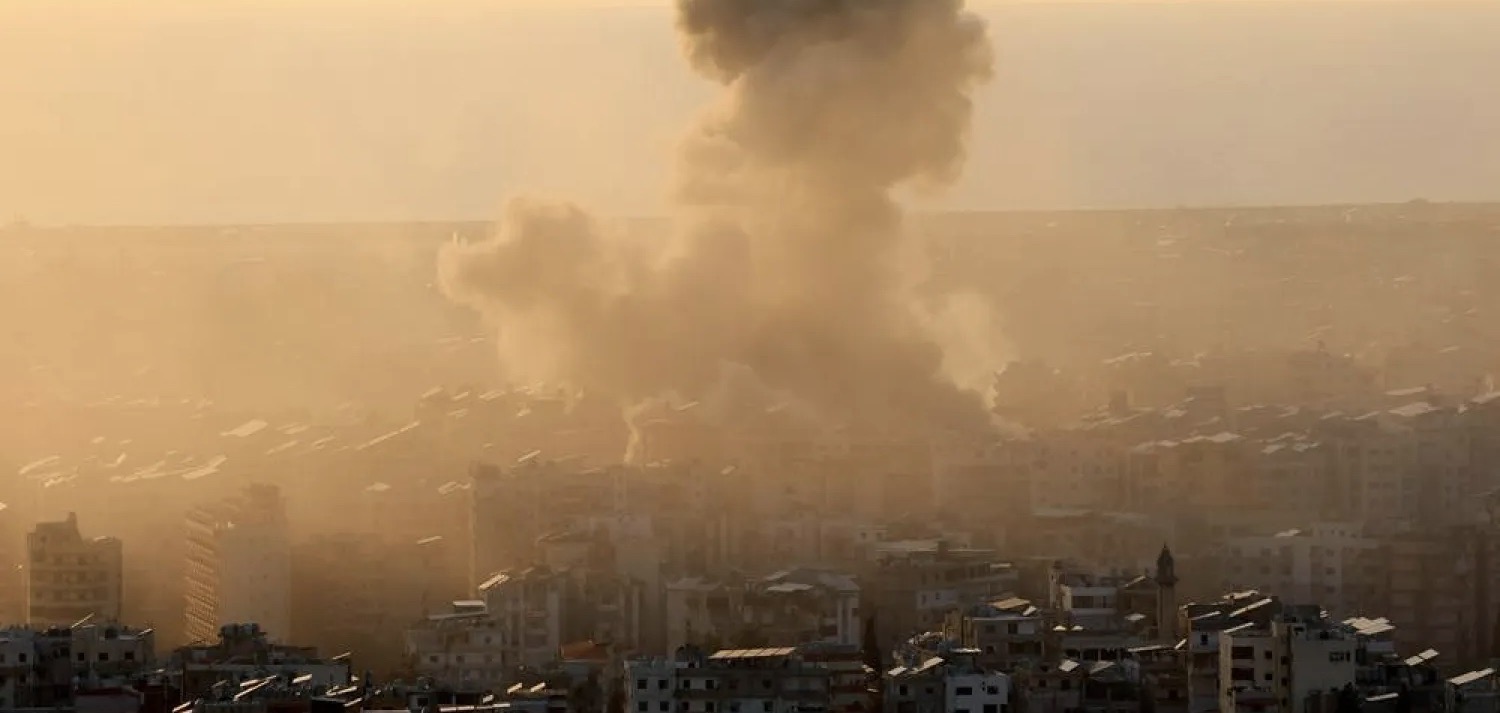
Hezbollah leader Naim Qassem says in a speech that the Israeli threats to assassinate him were “worthless.”
“We have prepared ourselves for a long confrontation, and God willing, they (Israelis) will be surprised on the battlefield,” Qassem says in a televised address, adding that “the enemy’s threats do not frighten us.”
“This is an existential battle, not a limited or simple battle.”
Day 889 — Friday, March 13
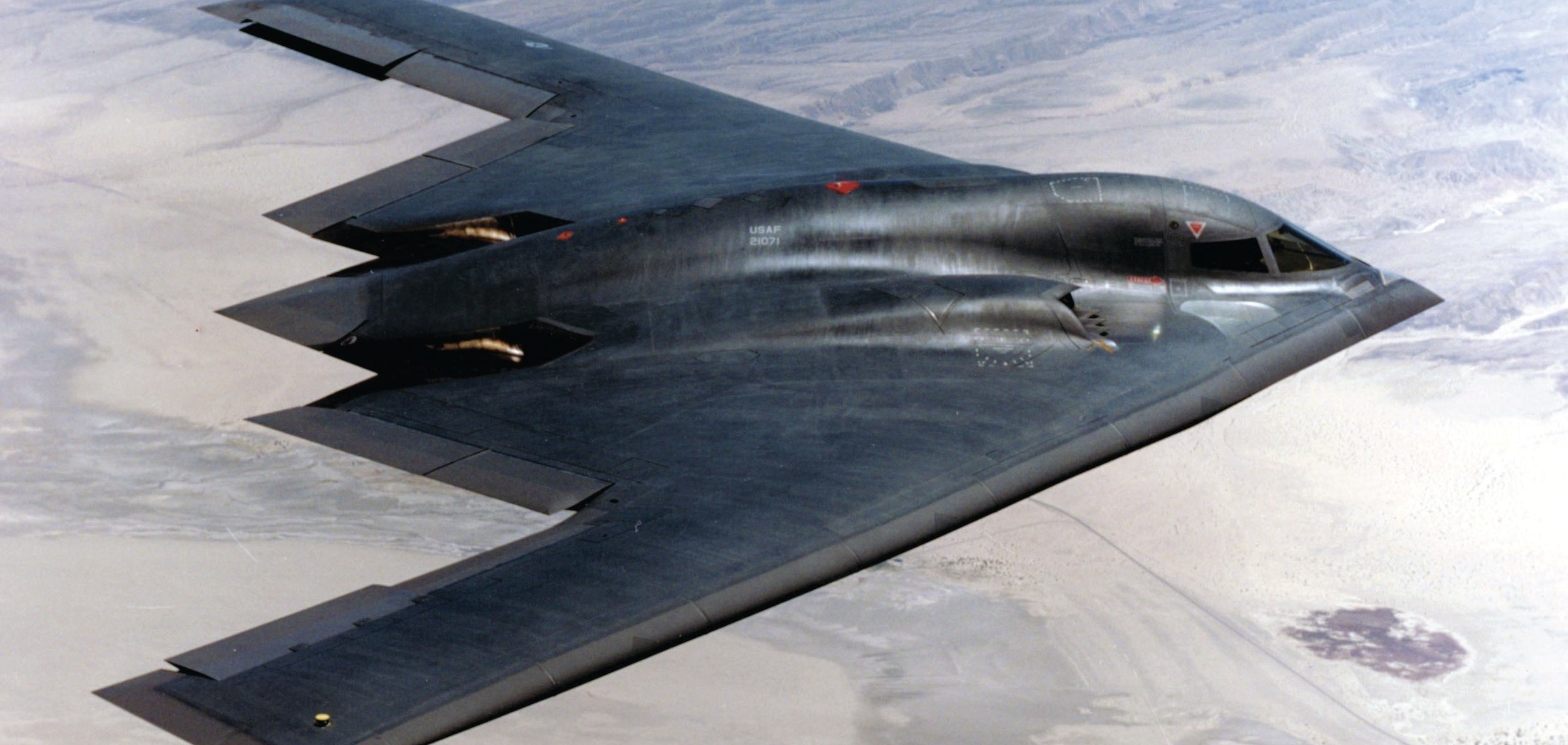
The United States has deployed B-2 stealth bombers to participate in the US’s Operation Epic Fury against the Iranian regime, US Central Command (CENTCOM) announced on Friday.
According to CENTCOM, the B-2s will be used to deliver long-range fire to “eliminate the threat from the Iranian regime today, [and] eliminate their ability to rebuild in the future.”
The US additionally dispatched the 31st Marine Expeditionary Unit to the Middle East, which includes about 2,200 Marines aboard three US Navy amphibious assault ships, according to an ABC News report on Friday.
This force includes a squadron of F‑35 fighter jets and tiltrotor MV‑22 Osprey aircraft, two US officials told ABC.
The deployment will contribute to the already heavy US military presence in the region, as the conflict with Iran continues to affect global trade routes and raise concerns over Iran’s nuclear ambitions.
Day 889 — Friday, March 13

After President Donald Trump warned recently about Iranian “sleeper cells” potentially operating in North America, Canadian opposition lawmakers are accusing their government of allowing operatives linked to Tehran’s regime to remain in the country.
Trump said Wednesday U.S. authorities were monitoring Iranian networks believed to have entered the United States in recent years.
“I have been (briefed), and a lot of people came in through Biden with his stupid open border,” Trump said in response to a question from Fox News’ Peter Doocy. “But we know where most of them are. We’ve got our eye on all of them.”
The remarks came amid growing concern among Western security officials about Iranian intelligence activities targeting critics abroad.
In Canada, senior Conservatives say the government has failed to act against Iranian regime officials despite identifying individuals linked to Tehran.
Deputy Conservative leader Melissa Lantsman, immigration shadow minister Michelle Rempel, and Pierre Paul-Hus, Conservative Québec lieutenant, called upon the Liberal government, in a statement released in Ottawa, to table a plan within one week to take immediate action to stop Iranian regime activities in Canada.
“The Liberals have known for years that there are hundreds of Iranian regime officials in Canada, 239 of whom have had their visas“ canceled, the lawmakers said.
They added that government officials told a parliamentary immigration committee recently that only one person has been deported so far, citing legal obstacles, including asylum claims, the absence of direct flights to Iran and privacy protections.
“The presence of agents of the Islamic Republic in Canada is not a new issue,” Maryam Shariatmadari told Fox News Digital.
Shariatmadari is one of the faces of the “Girls of Revolution Street” protests against Iran’s mandatory hijab laws who fled Iran after being imprisoned and now lives in exile in Canada.
“For years, the people of Iran have expressed concern about the presence of these individuals and their children in Canada,” Shariatmadari added.
“A clear example is Mahmoud Reza Khavari and Marjan Al-Agha, who are known embezzlers,” she claimed. Iran Wire reported on the case in 2022. “What is striking is that an economic magazine that introduces entrepreneurs has presented the son of Mahmoud Reza Khavari — the former CEO of Bank Melli and a convicted criminal in Iran — as an ‘inspiring businessman’ in Canada and has described him as ‘a young leader.’”
“But these days we are seeing more of these individuals,” Shariatmadari added. “Their presence has become more visible, and they are organizing gatherings under the slogan ‘No to War,’ while expressing support for Hamas and Hezbollah. Meanwhile, they remained completely silent about the killing of Iranians.”
Exiled Iranian journalist Mehdi Ghadimi, who now lives in Canada, told Fox News Digital that individuals linked to Iran’s regime often arrive in Western countries through several different channels.
“Some arrive as students, academics or ordinary immigrants but were already connected to the Islamic Revolutionary Guard Corps through family ties or ideological affiliation,” he said. “They often try to identify activists and critics, so those individuals can face legal or judicial problems either in Iran or even abroad.”
Ghadimi said another category operates primarily through financial networks tied to the regime.
“Another group includes people who used to be members of the IRGC or other state institutions and later enter countries like Canada as private investors,” he said. “When someone brings several million dollars for investment, it raises questions about where that money came from.”
He added that wealthy business figures who move capital abroad may also do so with the approval of Iran’s security establishment.
“If someone is moving large amounts of money out of Iran and investing abroad, it is very difficult to do that without the approval of the IRGC and the security institutions of the Islamic Republic,” he said.
Ghadimi also pointed to past corruption scandals involving Iranian officials who moved large sums of money overseas, including the case of Khavari, who fled Iran after a major banking scandal and later settled in Canada.
The criticism comes as Canadian police investigate the disappearance of Iranian dissident Masood Masjoody, a mathematician and critic of Iran’s clerical leadership who vanished earlier this year in Burnaby, British Columbia.
Day 889 — Friday, March 13
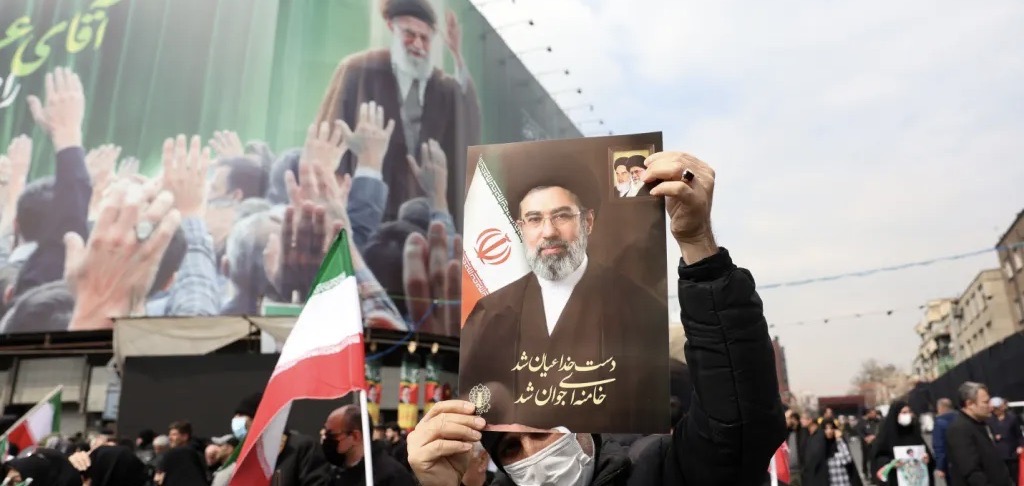
Iran’s new leader, Mojtaba Khamenei, struck a defiant tone in his first message to the Iranian people since he was announced as the successor of his father as the regime’s supreme leader.
However, the written message was only read aloud by TV presenters, meaning there has still been no visual or audio footage of the new leader since his appointment. This has fueled speculation about his condition, after he had been wounded in airstrikes earlier during the war.
On Thursday, the British daily, The Sun, cited a source who said Khamenei is in “very serious” condition, having lost one or both legs, and being treated in a closed-off hospital.
The statement read out on Thursday afternoon contained no major surprises, confirming expectations that Khamenei is not likely to be ready for concessions after losing his parents, wife, and a son during the war, after having long been described as a radical true believer in the Islamic Republic’s revolutionary ideology.
According to the statement, the people’s “servant,” Mojtaba Khamenei, learned from TV reports that he had been chosen to succeed his father.
In a section addressing the “brave fighters,” Khamenei said it is “the will of the people” to continue “the determined and punishing defense” against the “leaders of the camp of global arrogance.”
“In addition, the lever of closing the Strait of Hormuz must continue to be used,” he said, confirming that the regime wants to cut off the traffic through the strategic waterway. There have been several reports of ships being attacked near the strait over the past 24 hours.
In addition to the closure of the strait, the new leader in effect doubled down on threatening the neighboring countries, despite claiming that the regime “without seeking to establish domination or colonialism in the region, is fully prepared for unity and warm, sincere reciprocal relations with all its neighbors.”
This followed after he claimed that Iran’s neighbors had allowed the U.S. to use military bases on their territory during the war. “Therefore we attacked only those bases, without harming the countries themselves,” he claimed falsely. “If this continues – we will continue attacking the bases. I recommend that these countries close the American bases.”
Khamenei also threatened that “additional fronts where the enemy is vulnerable” could be attacked soon, without elaborating further.
He further thanked the members of the “Axis of Resistance,” including Hezbollah and the Iranian proxies in Iraq, for their assistance. Notably, he also thanked the Yemeni Houthis, who haven’t actively participated in the war so far.
“I assure everyone that we will not forgo revenge for the blood of your martyrs,” the supreme leader vowed, noting that the “crime that the enemy deliberately committed regarding the Shajareh-Tayyebeh school in Minab has a special status in this process.”
“We will take compensation from the enemy, and if it refuses, we will take from its property to the extent we deem appropriate; and if that is not possible, we will destroy its property to the same extent,” he warned.
The condition of Khamenei and, therefore, the authenticity of the statement attributed to him, remains unclear.
The Sun’s report that he was unconscious was based on information from a source in Tehran who reportedly “managed to dodge” the near‑total internet blackout to send a message to a London‑based exiled dissident.
He said his information came from a member of the trauma team treating Khamenei in intensive care in a sealed-off section at Sina University Hospital.
Day 889 — Friday, March 13
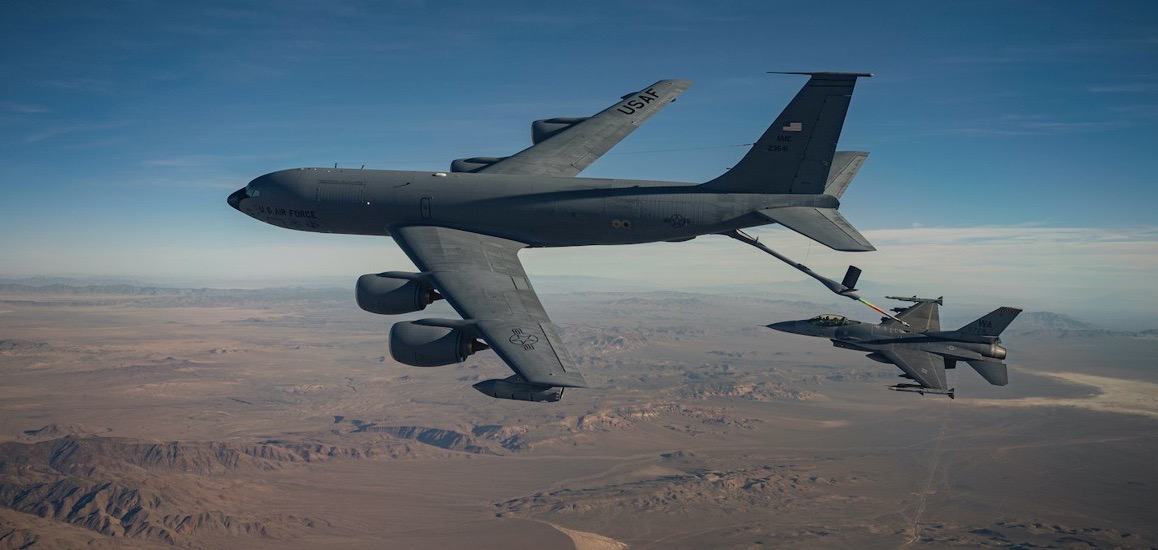
A US KC-135 refueling aircraft went down in western Iraq during a collision between it and a second aircraft during Operation Epic Fury, US Central Command (CENTCOM) said on Thursday night.
CENTCOM assured that the incident occured in friendly airspace, and was not due to hostile or friendly fire.
The refueler went down near Turaibil, along the Iraqi-Jordanian border, CBS News reported, citing an Iraqi intelligence source.
Search and rescue efforts for the missing crew are currently underway, CENTCOM said in its statement, and that the public should be patient as it “gather[s] additional details and provide clarity for the families of service members.”
Day 888 — Thursday, March 12
Benjamin Netanyahu responded to the attack at Temple Israel in West Bloomfield, Michigan, saying it reflects the global threat of antisemitism.
“Antisemitism knows no limits or boundaries,” Netanyahu wrote on X. “Israel is attacked because it is the Jewish state. Temple Israel in Detroit was attacked today because it is a Jewish house of worship.”
Netanyahu also praised the synagogue’s security personnel for stopping the attacker.
“I salute the brave security personnel at the synagogue for their swift action. It saved lives,” he said.
The Israeli leader added that he is grateful to President Donald Trump for taking a firm stance against antisemitic attacks in the United States.
The suspect in Thursday’s attack at Temple Israel in West Bloomfield, Michigan, has been preliminarily identified as Ayman Mohamad Ghazali, according to three law enforcement sources who spoke to Fox News.
U.S. Department of Homeland Security (DHS) confirmed the name to Fox News and provided details of his immigration history.
Officials said Ghazali was born in Lebanon in 1985 and entered the United States on May 10, 2011 on an IR1 immigrant visa as the spouse of a U.S. citizen.
According to DHS, Ghazali applied for naturalization on Oct. 20, 2015 and became a U.S. citizen on Feb. 5, 2016. Authorities say Ghazali lived near Dearborn, Michigan.
Law enforcement officials cautioned the identification remains preliminary as investigators continue confirming the suspect’s identity following the attack.
The FBI said it is investigating the attack at Temple Israel in West Bloomfield, Michigan, as a “targeted act of violence against the Jewish community.”
Jennifer Runyan, special agent in charge of the FBI’s Detroit Field Office, said the bureau has taken the lead in the investigation.
“I can confirm that we are leading the investigation right now as a targeted act of violence against the Jewish community,” Runyan said during the Thursday evening press conference.
Authorities said one suspect was involved and is now deceased, and confirmed no congregants or children were killed in the attack.
Oakland County Sheriff Michael Bouchard said the suspect drove a vehicle into the building, where security personnel engaged and stopped the threat.
Officials said a security guard was injured after being struck by the vehicle, and 30 responding officers were treated for smoke inhalation after the vehicle caught fire inside the building.
Runyan said the FBI deployed more than 100 agents and analysts, along with bomb technicians, SWAT teams and evidence response units to process the scene and pursue leads.
“This is an active and ongoing investigation with an active crime scene,” she said. “We ask for patience as we process the evidence and pursue every lead.”
Day 888 — Thursday, March 12

If Lebanon’s government fails to prevent Hezbollah rocket and drone attacks on Israel, Jerusalem will “take control of the territory and do it ourselves,” Israeli Defense Minister Israel Katz threatened on Thursday.
“The prime minister and I have instructed the Israel Defense Forces to prepare to expand its operations in Lebanon and to restore quiet and security to the northern communities,” the defense minister stated.
“We promised quiet and security to the northern communities, and that is exactly what we will do,” Katz added in a Hebrew-language statement.
Hezbollah overnight on Wednesday launched its largest rocket barrage at the Jewish state since the start of the current war, in what the Iranian Islamic Revolutionary Guard Corps said was a combined assault that also included several volleys of ballistic missiles launched by Iran.
According to the Magen David Adom emergency response group, two people sustained light wounds from “flying objects” during the attacks.
The two—a woman with a head injury and a man with a hand wound—were taken to Galilee Medical Center in Nahariya. In addition, several people were treated for injuries sustained while running for shelter.
Speaking during an operational briefing at IDF Northern Command on Monday morning, Katz said that the decision to advance into Lebanon following Hezbollah’s March 2 decision to join the war on Iran’s behalf was “morally and operationally correct, and enables what comes next.”
“It gives confidence to the communities that what happened will not return,” the minister stated, referencing Jerusalem’s past decision to evacuate northern communities for well over a year in response to Hezbollah’s cross-border attacks that started on Oct. 7, 2023, and paused following a U.S.-brokered ceasefire on Nov. 27, 2024.
This time, he vowed, “There will be no evacuation, no abandonment.”
“Everyone remains on their land, in their home, wherever they are. This is the number one mission—to defend the communities and give them security against raids and against anti-tank fire,” continued Katz.
The evacuation of Southern Lebanon and large parts of Beirut will allow the IDF to “thwart threats we have not yet managed to thwart previously, making this region even safer than before ‘Operation Roaring Lion.‘”
Katz added, “We certainly must not only refrain from withdrawing in the face of Hezbollah, but take advantage of the opportunity to strike it.”
Lebanon’s official government has failed to live up to its commitments under the 2024 ceasefire, which forbade the presence of terrorists in the south and tasked the Lebanese Armed Forces with disarming them.
“They allowed Hezbollah to move south,” Katz charged. “The conclusion is always that what we do not do, no one else will do. They are obligated and they must act, and we must ensure that these things happen.”
Lebanese President Joseph Aoun on Monday accused Hezbollah and Iran of working to “collapse” the Lebanese state and expressed his openness to holding “direct negotiations” with Israel, per AFP.
“Whoever launched those missiles wanted to bring about the collapse of the Lebanese state, plunging it into aggression and chaos … all for the sake of the Iranian regime’s calculations,” he told European officials.
Aoun’s proposal reportedly called for “establishing a full truce” with the Jewish state, “logistical support” for the Lebanese Armed Forces to disarm Hezbollah, and direct talks under international auspices.
Israeli Prime Minister Benjamin Netanyahu had warned Beirut over the weekend that if it fails to uphold the ceasefire deal, the Iranian-backed aggression “will bring catastrophic consequences upon Lebanon.”
“It is time for you, too, to take your destiny into your hands,” he told the Lebanese government, declaring that “in any case,” Jerusalem will do “everything necessary to protect our communities and our citizens.”
Day 888 — Thursday, March 12
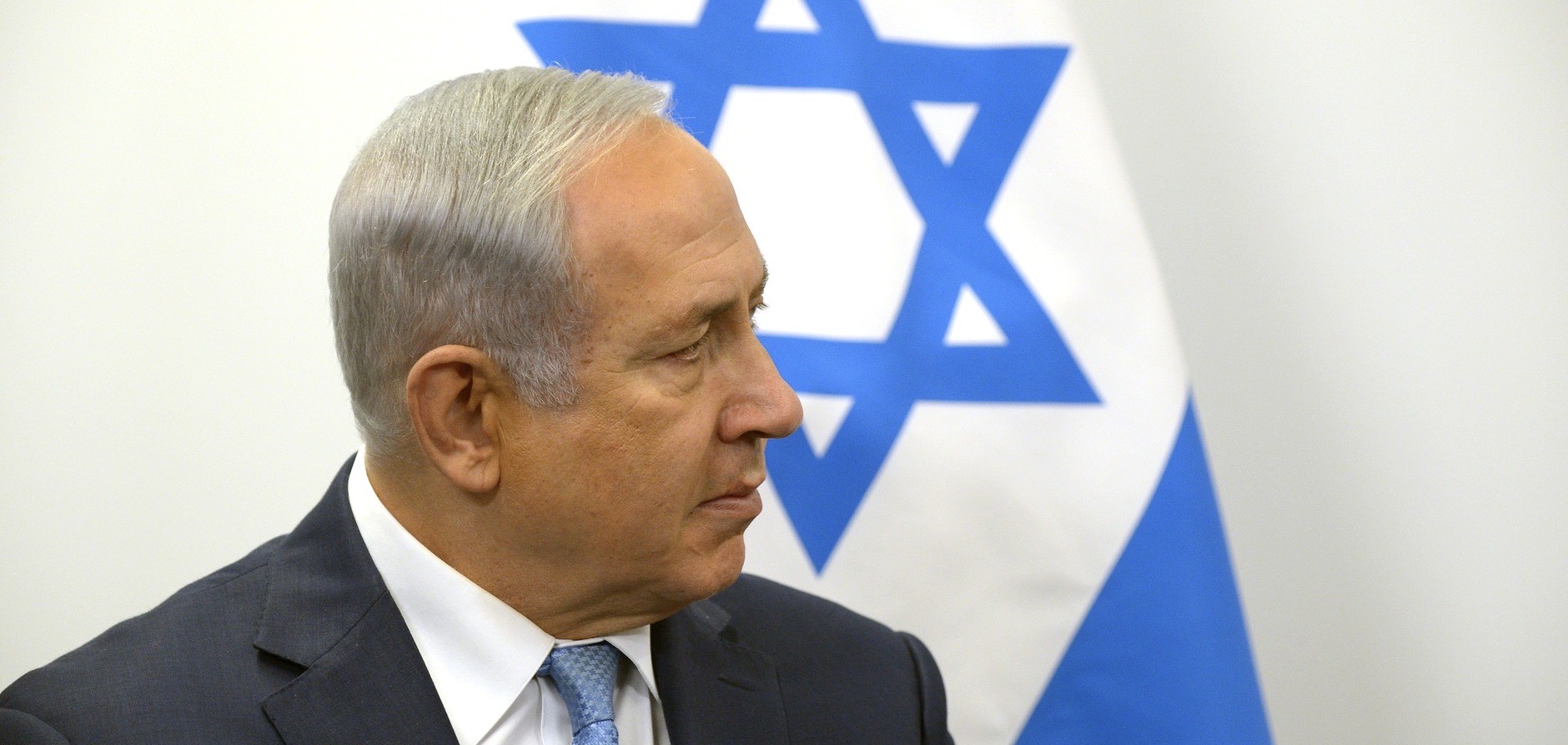
Prime Minister Benjamin Netanyahu held his first press conference since the start of the war this evening (Thursday) via video conference.
During the press conference, Netanyahu addressed Hezbollah’s attacks on Israel and stated that the Iranian proxy terror group would “pay a very heavy price.”
“This is no longer the same Iran, this is no longer the same Middle East, and this is also not the same Israel. We initiate and attack with force. Trump and I talk almost every day, exchange ideas and advice, and decide together,” Netanyahu said.
“We are crushing Iran and Hezbollah,” Netanyahu declared, adding, “We are becoming a regional power. Our roar is growing louder. We have achieved enormous achievements that are changing the balance of power beyond the Middle East.”
Regarding the campaign in the north, he said, “Hezbollah feels the comfort of our arm and will pay a very heavy price for its aggression.”
In response to a question about the threat from Lebanon and past statements that Hezbollah was defeated in the previous campaign against it, Netanyahu said: “We talked then about 150,000 rockets and missiles, about the destruction of the towers in Tel Aviv, about the eyes of ruins in the rest of the country, and about 15,000 to 20,000 dead. All of this did not materialize because we dealt them a tremendous blow, but that does not mean that they did not have any residual fire left.”
“Threats come and go, but we are strengthening our power compared to what was here,” the prime minister added. “Tomorrow they will be even weaker – both Iran and Hezbollah. We are changing the Middle East. Both against enemies and against friends. Israel is stronger than ever, the whole world understands that.”
He referred to the appointment of Ali Khamenei’s son as Iran’s supreme leader after his father’s assassination. “We have eliminated the old dictator, and the new dictator, the puppet of the Revolutionary Guards, cannot show his face in public. I say to the people of Iran: The moment is approaching when you can embark on the path of freedom. It is in your hands.”
However, he added that he cannot guarantee “that the Iranian regime will collapse, if we join forces, we will repel the enemies time and time again.”
The Prime Minister promised that “many more surprises are expected in the campaign. We have the upper hand, much more than we expected.”
Day 888 — Thursday, March 12
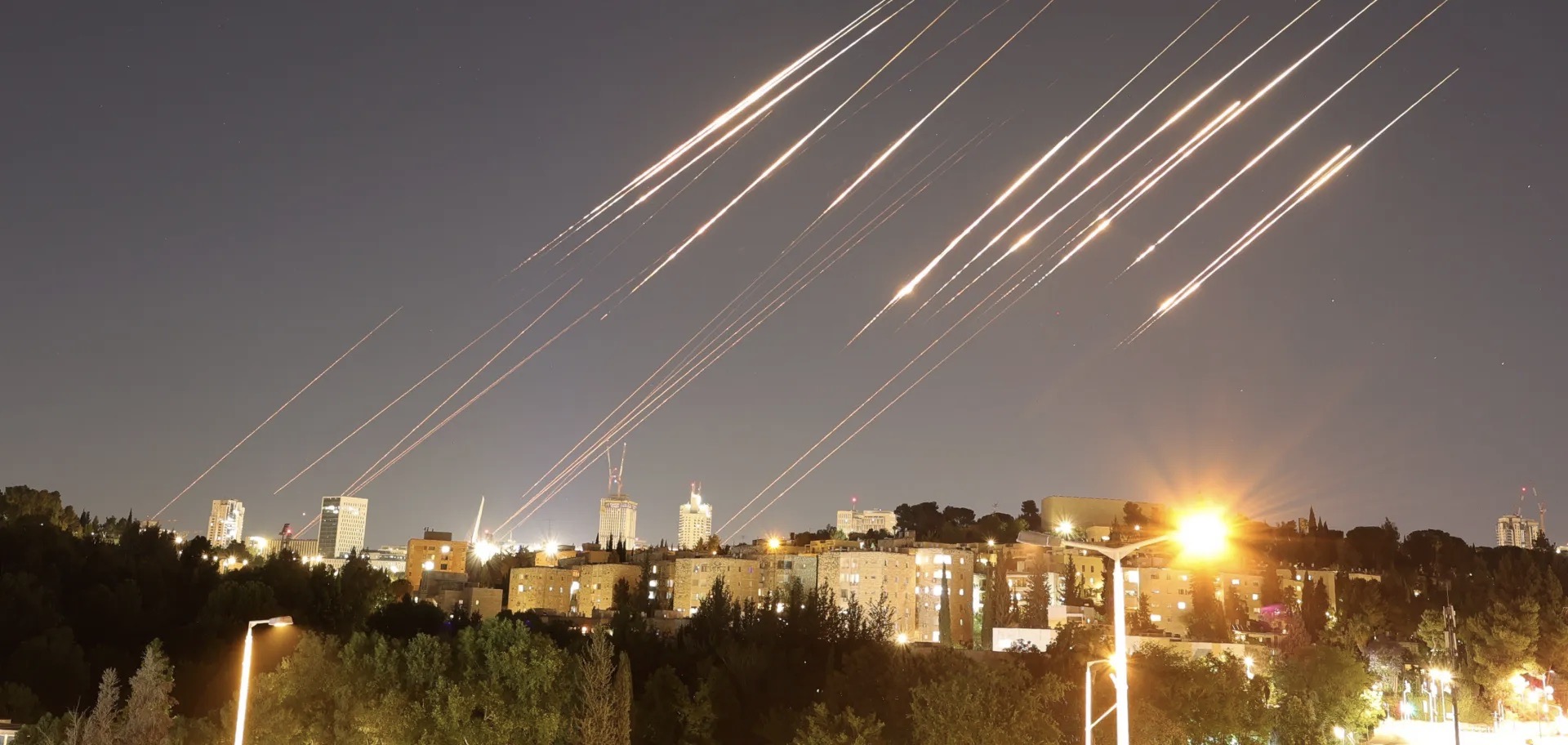
Hezbollah terrorists overnight on Wednesday launched their largest barrage of missiles and drones at Israel since the start of the current war, in what Tehran’s Islamic Revolutionary Guard Corps (IRGC) said was a combined attack from Lebanon and Iran.
Hezbollah fired approximately 200 projectiles at the Jewish state as part of what it dubbed “Operation Al-‘Asf al-Ma‘kul” (“The Eaten Chaff” or “Devoured Straw”), a Quranic reference that refers to the enemy being utterly defeated or destroyed. Around 120 missiles and drones crossed into Israel, Ynet reported.
According to Israel’s Magen David Adom emergency response organization, two people sustained light injuries when they were struck by “flying objects” during an attack on the north.
The casualties—a woman in her 30s with a head injury and a man in his 50s with a hand wound—were evacuated to Galilee Medical Center in Nahariya, MDA said. In addition, several people were treated for minor injuries sustained while running for shelter.
The Hefer Valley Regional Council, which administers a group of communities along Israel’s central coastal plain, said a rocket from Lebanon directly struck the yard of a home in the area, “severely” damaging the house. No injuries were reported.
Air-raid sirens sounded throughout the night in central Israel, warning of ballistic missiles fired by Iran. The IRGC, in a statement carried by Iran’s state-run Tasnim News Agency, confirmed the attacks were a carried out in cooperation with Hezbollah.
Hezbollah began firing rockets and UAVs at Israel on the morning of March 2, in retaliation for Israel’s targeted killing of Iranian Supreme Leader Ali Khamenei. He was killed in the opening shot of “Operation Roaring Lion/Epic Fury” against the regime on Feb. 28.
In response to the terrorist organization’s violation of the U.S.-brokered Nov. 27, 2024, ceasefire deal, Jerusalem launched an aerial campaign against Hezbollah, and ordered IDF troops to advance and take control of additional areas in Lebanon to halt cross-border fire.
IDF Spokesperson Brig. Gen. Effie Defrin told reporters at a briefing on Tuesday evening that the military was seeing attempts by Hezbollah to “increase its rocket fire toward the communities of the north while expanding the range of its attacks” to central Israel and beyond.
“Hezbollah is suffering heavy blows. We are deepening the damage to its capabilities with each passing day and increasing the pressure on it. The fire it is carrying out in order to harm Israeli civilians is a clear response to this,” said Defrin.
Day 888 — Thursday, March 12
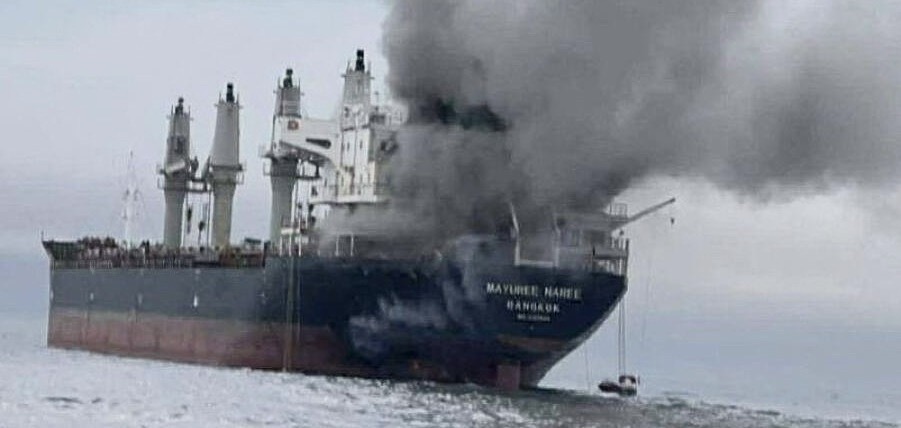
Iranian explosive-laden boats appear to have attacked two fuel tankers in Iraqi waters, setting them ablaze and killing one crew member on Wednesday, after projectiles struck three vessels in Gulf waters, said port, maritime security, and risk firms.
The latest attacks mark an escalation in the conflict between Iran and United States-Israeli forces, raising the number of ships struck in the region since fighting began to at least 16.
Shipping in the Gulf and along the narrow Strait of Hormuz, which carries around a fifth of the world’s oil, has come to a near-standstill since the US and Israel began strikes on Iran on February 28, sending global oil prices surging to highs not seen since 2022.
The ships targeted in late-night armed boat attacks in the Gulf near Iraq were the Marshall Islands-flagged Safesea Vishnu and the Zefyros, which had loaded fuel cargoes in Iraq, two Iraqi port officials said.
“We recovered the body of a foreign crew member from the water,” one port security official said, as Iraqi rescue teams continued searching for other missing seafarers. It was not immediately clear which ship the person was linked to.
Day 888 — Thursday, March 12
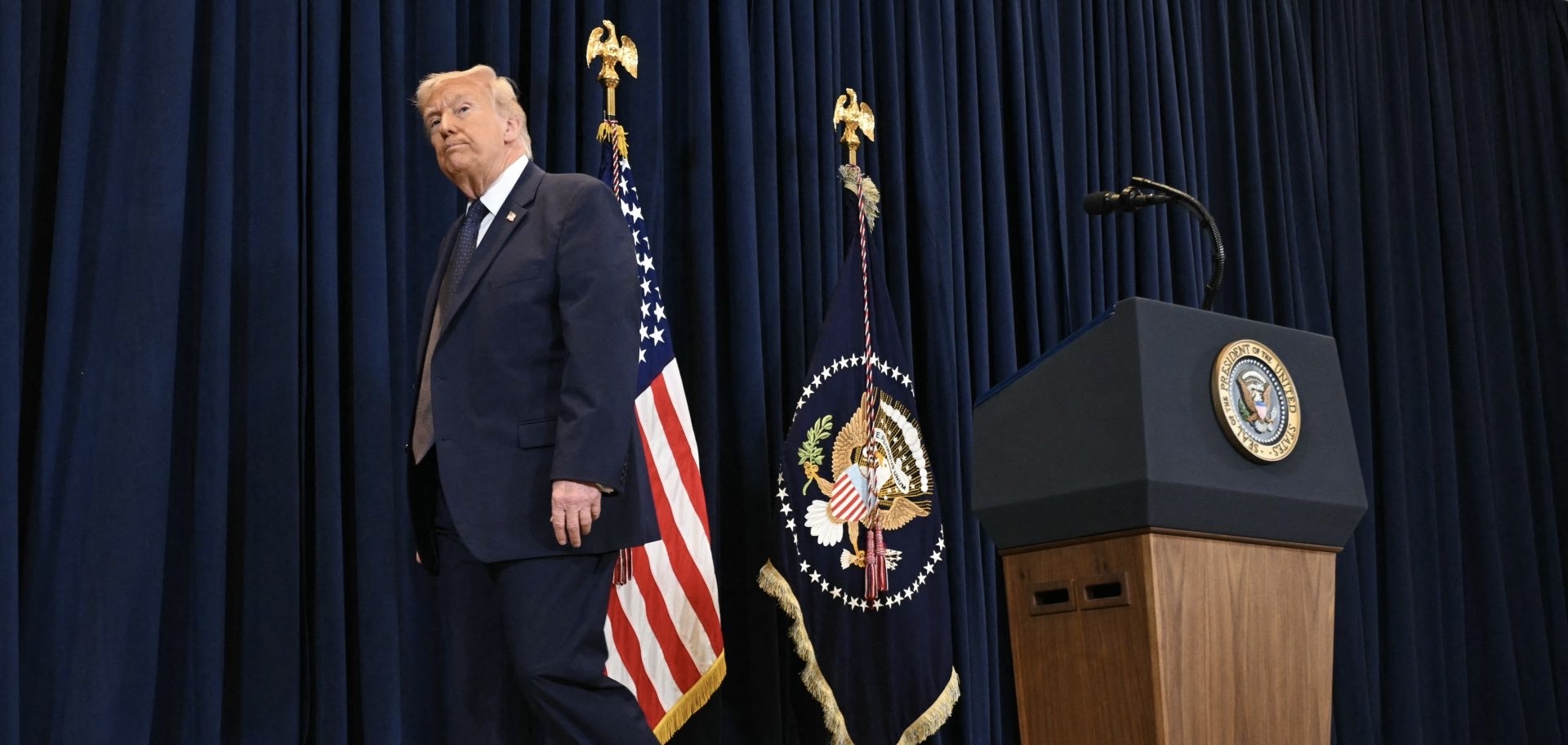
President Donald Trump said Wednesday that reports of a potential Iranian revenge plot involving drones launched from offshore targeting California are being investigated.
Speaking to reporters in an Air Force One underwing gaggle, Trump was asked by Fox News White House correspondent Peter Doocy about a law-enforcement bulletin warning of a possible Iranian drone attack scenario.
“It’s being investigated,” Trump said. “You have a lot of things happening, and all we can do is take them as they come.”
Trump also said he had been briefed about potential Iranian sleeper cells inside the United States, claiming authorities are monitoring them closely.
“We know where most of them are,” Trump said. “We’ve got our eyes on all of them.”
The president argued some entered the country during the Biden administration’s immigration policies.
Trump also said the U.S. military campaign against Iran is overwhelming Tehran’s forces.
“Iran is being absolutely decimated,” he said.Trump added that Iranian naval and air capabilities have been largely destroyed and said the U.S. is monitoring the Strait of Hormuz as the conflict continues.“
“We’ve knocked out all of their boats,” he said. “I think we’re in very good shape.”
Day 887 — Wednesday, March 11
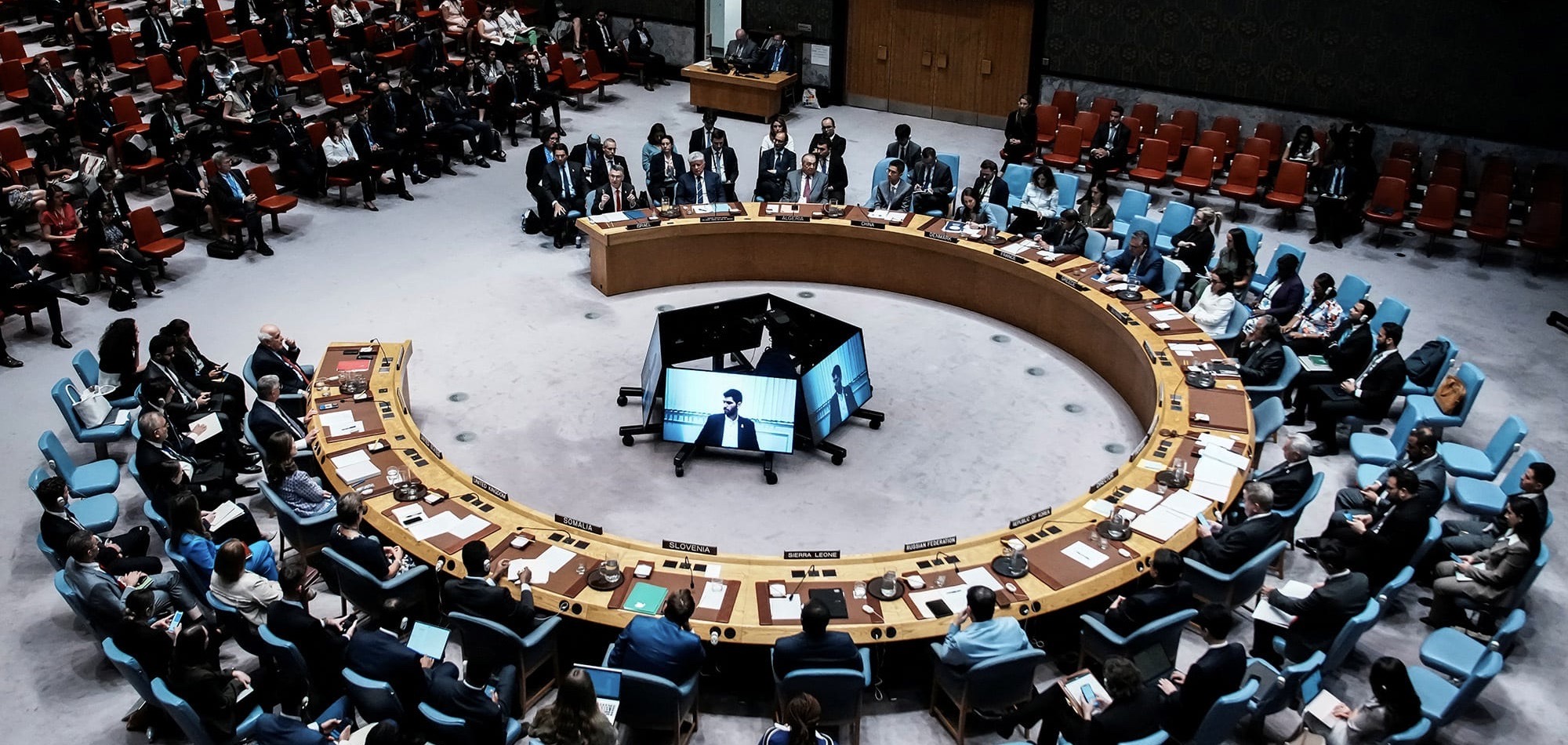
The United Nations Security Council, which includes the Arab representative Bahrain, voted 13-0 on Wednesday to condemn Iran for its strikes on its Gulf neighbors. The vote, from which Russia and China abstained, was a highly unusual rebuke of the Islamic Republic by Arab states.
Just before the vote, Mike Waltz, the U.S. ambassador to the global body, told reporters that “the atrocities that we’re seeing, the deliberate attacks on civilian infrastructure, on ports, on airports, on energy production facilities, on hotels, on resorts across the Gulf is unacceptable.”
“It’s disgusting, frankly, and I, for one, am proud to see Bahrain lead its neighbors in condemning these actions,” the U.S. envoy said.
The resolution, which the Gulf Cooperation Council drafted, won support from 135 U.N. member states—a record-high, according to Loraine Sievers, co-author of “The Procedure of the UN Security Council” and former chief of the U.N. Security Council secretariat branch.
During the Security Council meeting, Waltz said that he wanted to be “perfectly clear and polite that there has been some misrepresentation here today.”
“The accusation that this resolution put forward by the Kingdom of Bahrain, supported by every member of the GCC, and I see all of them here today, and supported by 135 countries, the most co-sponsors of a U.N. Security Council resolution ever, was somehow manipulated by one or two countries is laughable,” the U.S. envoy said.
“We urge Iran to hear the voice of the council, of this resolution that saw no opposition today and of the entire international community,” Waltz said. “But more importantly, we urge Iran to listen to its own brave people and stop the indiscriminate attacks on civilians across the Middle East.”
Day 887 — Wednesday, March 11
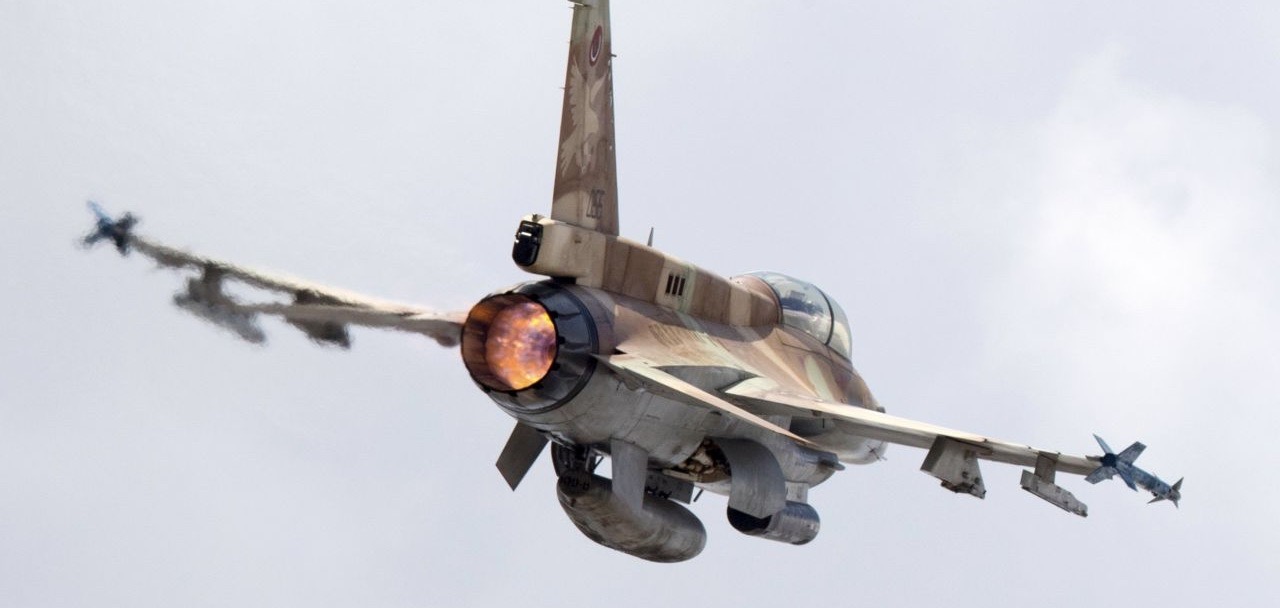
Assassinating Ayatollah Ali Khamenei and nearly all of Iran’s top military and Islamic Revolutionary Guard Corps officers on the first day of the war was an incredible turning point in which all of the IDF’s air and intelligence power combined to change the course of history, an IDF senior officer told The Jerusalem Post on Wednesday.
“Assassinating the supreme leader and all of the top echelon of the Iranian military and the IRGC in around half a minute was made possible by a giant and incredibly coordinated airstrike, which took months of planning,” the senior officer said.
In 40 seconds at around 8:15 a.m. on February 28, Khamenei, IRGC commander Mohammad Pakpour, military commander Abdolrahim Mousavi, defense minister Amir Nasirzadeh, National Defense Council secretary Ali Shamkhani, another top security aide to Khamenei for over a decade, and about 35 other top officials were killed.
Among the Israeli aircraft involved were F-16s, F-35s, and F-15s, although there were many others, including the US military’s involvement.
According to the IDF, the airpower and munitions used during the first day of attacks – both in those assassinations and in wider attacks on Iran’s air defenses and ballistic-missile apparatus – were unprecedented and far beyond any prior similar power used by Israel.
“With around 200 aircraft all carrying precision munitions and all flying 1,000 to 1,500 kilometers to strike hundreds of targets all in a short time period, the effect was to completely throw the Iranians off their game,” the senior officer said. “The total surprise we achieved was extremely deadly and effective.”
When adding in the contribution and profoundly close cooperation with the US military, some in the IDF view the assault and the current war as the most devastating short-term air war in history. The F-16s were flown back and forth to Iran in the early days of the war, essentially nonstop, and took an enormous part in the most critical missions.
By March 5, almost every aircraft had flown nine to 10 sorties back and forth to Iran, with each flight taking five to eight hours round-trip.
While the pace of the F-16s and other aircraft has remained frenetic, one change was that after the first couple of days, the IAF had achieved air supremacy. That allowed stand-in attacks in which Israeli aerial assets could strike from short range, with some even hovering over their targets.
Day 887 — Wednesday, March 11

Spain permanently withdrew its ambassador to Israel on Wednesday as a diplomatic standoff worsened between the two countries over Spain’s opposition to Israeli policies, exacerbated by the US-Israeli strikes on Iran’s regime.
Ambassador Ana Maria Salomon Perez was recalled to Spain last September amid a diplomatic row over Spanish measures banning aircraft and ships carrying weapons to Israel from its ports or airspace due to the war against Hamas in Gaza, a policy Foreign Minister Gideon Sa’ar denounced as antisemitic.
On Tuesday, Spain published an announcement in its official gazette that the ambassador’s position had been terminated. Spain’s Foreign Ministry said its embassy in Tel Aviv will be led by a charge d’affaires for the foreseeable future.
Israel’s embassy in Spain is also run by a charge d’affaires after Israel in May 2024 recalled its ambassador, Rodica Radian-Gordon, in protest of Spain’s decision to recognize a Palestinian state.
“The Foreign Ministry confirms the withdrawal of the ambassador to Tel Aviv, who was called back for consultations ‘indefinitely,’” Spanish Foreign Ministry sources told The Times of Israel, “leaving the Spanish embassy in Tel Aviv under the leadership of a chargé d’affaires, at the same level as the Israeli embassy in Madrid.”
The move marked the latest escalation in a diplomatic spat between the two countries, which have been heavily strained since the start of the Gaza war, which was triggered by the Hamas-led invasion of southern Israel on October 7, 2023.
Ties between Jerusalem and Madrid steadily deteriorated over the following two years as Spain’s government expressed increasing anger and frustration against Israel over the war in Gaza.
Madrid had prohibited sales and purchases of military equipment with Israel from the start of the war; however, last September, Spanish Prime Minister Pedro Sanchez announced measures to enshrine the prohibition in law. Sa’ar criticized Spain as leading “a hostile, anti-Israel line,” after which Madrid also recalled its ambassador.
Day 887 — Wednesday, March 11
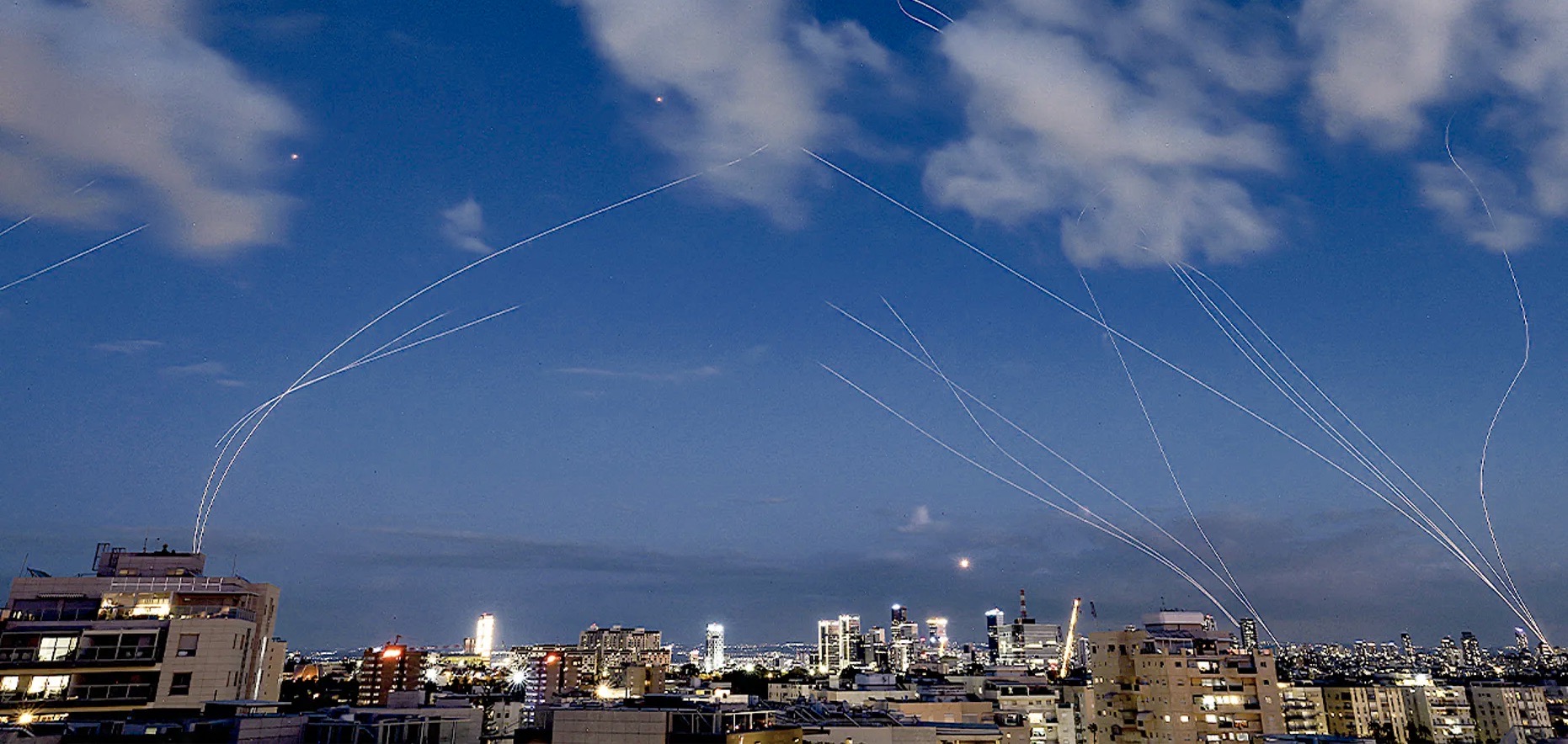
Hezbollah and Iran launched a coordinated strike strategy Tuesday, a national security expert claimed, as reports emerged that deadly cluster munitions were hitting Israel in synchronized attacks.
The developments unfolded on day 11 of Operations Epic Fury and Roaring Lion, the joint U.S.-Israeli campaign targeting Iran, marking a potential escalation in the widening regional conflict.
“Hezbollah has fully joined the war, and it looks like they are now very well coordinated with Iran,” Kobi Michael, a senior researcher at the Institute for National Security Studies and the Misgav Institute, told Fox News Digital while speaking from his bomb shelter near Tel Aviv.
“Most of Hezbollah’s rockets and drones are launched simultaneously with the Iranian missiles,” he said.
Israel confirmed Tuesday that Iran had been firing cluster munitions — adding a complicated and deadly challenge to Israel’s stretched air defenses, The Associated Press reported.
The warheads burst open at high altitudes, scattering dozens of smaller bomblets across a wide area. The smaller bombs, which at night can resemble orange fireballs, are difficult to intercept and have proven lethal.
Fox News correspondent Nate Foy also said despite Israel’s strong air defense, half of the missiles are hard to defend against because half of the missiles are cluster munitions.
“The Iranian use of cluster missiles and the idea that they deliberately target civilians and civil facilities must be considered as a use of non-conventional weapons, and the American-Israeli response must be appropriate,” Michael urged.
Banned by more than 120 nations under the 2008 Convention on Cluster Munitions, the weapons are widely condemned for their broad-area, indiscriminate effects that often result in catastrophic civilian harm.
“Israeli citizens have to spend most of the time in the shelter rooms as Hezbollah and Iran deliberately target civilians and civilian facilities,” he said.
As of Tuesday night local time, the IDF said it had launched a wave of airstrikes against Hezbollah infrastructure in Beirut’s southern suburbs.
This came after the military reiterated its warning to evacuate the area, a Hezbollah stronghold known as the Dahiyeh.
Day 887 — Wednesday, March 11
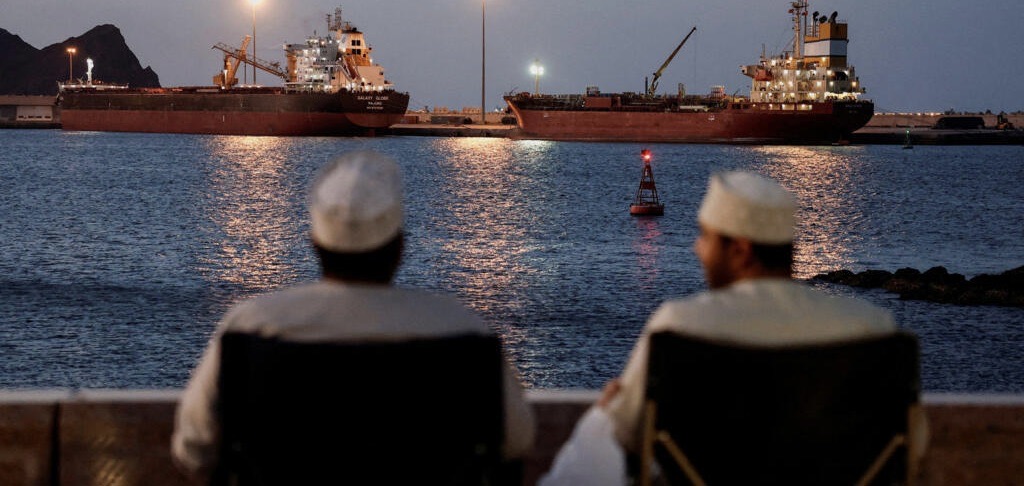
President Donald Trump warned Iran on Tuesday to remove any naval mines from the Strait of Hormuz as U.S. forces struck Iranian mine-laying vessels near the critical waterway, underscoring how control of the narrow passage has become a central flashpoint in the escalating conflict and a major concern for global oil markets.
Trump said U.S. forces had already destroyed Iranian vessels capable of laying mines in the area, part of an effort to keep the shipping lane open.
“I am pleased to report that within the last few hours, we have hit, and completely destroyed, 10 inactive mine-laying boats and/or ships, with more to follow!” Trump wrote Tuesday afternoon on Truth Social.
The U.S. military later said American forces had destroyed a total of 16 Iranian mine-laying vessels operating near the Strait of Hormuz, Reuters reported.
The strikes came as the Trump administration warned Iran that any attempt to block oil shipments through the strategic channel would bring an overwhelming military response.
Day 887 — Wednesday, March 11

Two Jewish men were beaten, and later briefly hospitalized, after they were heard speaking Hebrew in front of a restaurant in San Jose’s Santana Row in California, local media reported on Tuesday.
Footage of the incident, shot by local witnesses, shows the pair of victims attacked by three other individuals outside the Augustine restaurant, NBC Bay Area reported.
“I just turned around, and they literally started punching,” one of the victims, who wished not to be identified, told the outlet. “We got swarmed very badly. I’m in a lot of pain. I still cannot chew. My jaw hurts, my back is hurting.”
According to NBC, the victims said they did not recognize their assailants, and police are investigating the incident as a possible hate crime.
According to ABC7 News, both Jewish men were waiting to be seated at the restaurant when the incident occurred.
“One of the witnesses said that they heard them saying, ‘don’t mess with Iran‘, which we don’t know why,” one of the victims told the outlet. “We don’t have any problem with them. But, I heard at the beginning of the fight, something with, ‘F the Jews’.”
ABC7 added that one of the victims had been knocked out and needed stitches after the assault.
In a statement, the Bay Area Jewish Community Relations Council identified the pair of victims as Israeli Americans.
Day 887 — Wednesday, March 11

Sen. Ted Cruz (R-Texas) sounded the alarm on Tuesday about the rise of antisemitism in the Republican Party and the American right, warning that the tide may be turning against supporters of Jews and Israel.
Speaking to a symposium on Jew-hatred hosted by the Republican Jewish Coalition and National Review, the Texas senator cited the difference in reaction among elected Republicans to former Fox News host and current podcaster Tucker Carlson, who turned sharply against Israel and its supporters in recent years, compared to neo-Nazi influencer Nick Fuentes.
“I believe Tucker Carlson is the single most dangerous demagogue in this country,” Cruz said. “If you look at Republican politicians, Nick Fuentes is easy to denounce, and I actually think it’s a tell among the Republican politicians if they’ll denounce Fuentes but are scared to say Tucker’s name. That tells you a great deal.”
“Virtually every single one of my colleagues in the Senate on the Republican side agrees with me,” Cruz said. “Yet almost none of them will say Tucker’s name.”
Carlson hosted Fuentes on his video podcast for a friendly interview with the Holocaust denier in October.
Speaking to an audience of about 200 RJC and National Review members, administration officials, Hill staffers and Jewish leaders at the Museum of the Bible in Washington, Cruz warned that the anti-Israel and antisemitic politics of figures like Fuentes and Carlson are having a malign influence on young conservatives.
“The Christian church is asleep,” Cruz said. “I have seen more antisemitism in the last 18 months on the right than at any point in my lifetime. A year-and-a-half ago, I could not have imagined we would be here having this conversation.”
“I’m not sure it is accurate as a descriptive matter that we are winning right now,” the senator said, of philosemitic conservatives. “We’re winning with folks in this room with some gray or salt-and-pepper in their hair, but in the college classroom I’m a lot less certain.”
Cruz noted that the model of success for opponents of Israel that has flourished on the Democratic left could be replicated in the Republican Party.
“I don’t want to wake up in five years and find myself in a country where both major political parties are unambiguously anti-Israel and unapologetically antisemitic,” he said.
Cruz’s keynote speech drew the loudest applause among speakers that included fellow Sens. Tom Cotton (R-Ark.) and Jim Banks (R-Ind.) and administration officials, including Leo Terrell, chair of the Department of Justice taskforce to combat antisemitism, and Yehuda Kaploun, a rabbi and U.S. special envoy to monitor and combat antisemitism.
Cotton and Cruz both pushed back against claims from some on the right that U.S. military action against Iran primarily benefits and was at the behest of Israel.
“Before this war started, Iran had thousands and thousands of missiles, and this vast missile arsenal far, far exceeded the combined missile defenses of the United States, Israel and our Arab friends,” Cotton said. “That is an unacceptable threat to the United States.”
“If it’s an unacceptable threat to the United States, it’s an existential threat to Israel,” Cotton added.
“We are not bombing Iran for Israel,” Cruz said. “We are bombing Iran for America.”
- Since Oct. 7, over 1,600 Israelis (935 soldiers) have been killed, and 6,424 IDF soldiers wounded since the start of the war.
- On Oct. 7, 2023, one day after the 50th anniversary of the Yom Kippur War, thousands of Hamas gunmen invaded southern Israel, brutally murdering 1,200 Israelis and kidnapping 251 to the Gaza Strip.
- On Oct. 8, 2023, the Israel Security Cabinet voted to officially declare war for the first time since the 1973 Yom Kippur War.
- On Oct. 27, 2023, the IDF began its Ground Operation in Northern Gaza
- Between October 7th, 2023, and March 31, 2024, the IDF made approximately 100,000 phone calls, dropped 9.3 million leaflets, sent 15.5 million text messages, and 17 million voice recordings in efforts to get Gazan civilians out of harm’s way during military operations.
- Between October 7th, 2023, and August 18, 2025, Israel has allowed and facilitated the entry of over 1.9 million tons of aid into Gaza.
- On June 13th, 2025, the 12 Day War began between Israel and the Iranian regime. Israel conducted massive airstrikes targeting Iran’s military infrastructure and leadership, weapons stockpiles, and nuclear scientists— the regime rained ballistic missiles down, targeting locations of Israel’s largest civilian populations.
- On June 22, 2025, under the orders of President Trump, B2 Bombers dropped bunker-buster bombs on Iran’s nuclear facilities, thwarting the imminent danger of Iran obtaining nuclear weapons.
- On October 10th, 2025, a fragile ceasefire agreement, brokered by the Trump Administration, came into effect between Israel and Hamas.
- On January 27, 2026, after numerous delays, the body of the last remaining Israeli hostage in the Gaza Strip was returned to Israel.
- On February 28th, 2026, the United States launched a large-scale joint military operation against the Iranian Regime, beginning with the elimination of the nation’s Supreme Leader.

YOU CARE ABOUT BIBLICAL TRUTH. SO DO WE.
Together, We Can Deliver A Biblical Understanding Of News Events Around The World.
YOU CARE ABOUT BIBLICAL TRUTH. SO DO WE.
Together, We Can Deliver A Biblical Understanding Of News Events Around The World.
Day 913 — Monday, April 6
Prime Minister Benjamin Netanyahu shared on Monday morning that he spoke with U.S. President Donald Trump and was “deeply proud” that Israel could “contribute to saving a brave American warrior,” referring to the rescue mission of the downed pilot from Iranian territory.
“I spoke earlier with President Donald Trump and personally congratulated him on his bold decision and a perfectly executed American mission to rescue the downed pilot from enemy territory,” Netanyahu tweeted.
He continued, “The President expressed his appreciation for Israel’s help,” adding that the Israeli-U.S. “cooperation on and off the battlefield is unprecedented.”
On Sunday, Netanyahu released an English-language video in which he congratulated Trump on the daring rescue April 4 mission from deep in enemy territory.
The Israeli leader invoked his personal experience as a combat soldier in the IDF, as well as that of his brother Yoni, who died in the 1976 Entebbe hostage rescue operation.
“As a nation that repeatedly carried out daring rescue operations, and as someone who was wounded in such a mission and lost a brother in the Entebbe rescue, Israelis and I, we know what a bold decision you took,” said Netanyahu.
The prime minister also tweeted on Sunday night a brief, all-caps sentence accompanied by an AI-generated image of the U.S. and Israeli flags, reading: “GOD BLESS OUR TROOPS, GOD BLESS ISRAEL, AND GOD BLESS THE UNITED STATES OF AMERICA!”
Shortly after midnight on Sunday, Trump stated that the U.S. military had recovered a “highly respected colonel” from behind enemy lines in Iran.
“We got him! My fellow Americans, over the past several hours, the United States military pulled off one of the most daring search and rescue operations in U.S. history for one of our incredible crew member officers, who also happens to be a highly respected colonel,” the president wrote.
Trump said he was thrilled to announce that the colonel was “now safe and sound” and that the “brave warrior was behind enemy lines in the treacherous mountains of Iran, being hunted down by our enemies, who were getting closer and closer by the hour.”
Day 913 — Monday, April 6
Following an Iranian ballistic missile attack on the city of Haifa on Sunday evening, Israeli Fire and Rescue teams recovered the bodies of two people who were buried under the rubble from the blast on Monday morning. Rescue operations were still ongoing at the time of publication, with two other people still missing.
The rescue operation had been ongoing since the missile struck a residential building in Haifa on Sunday, despite fresh missile barrages being launched toward Israel, including one that targeted the same area of Haifa. Four people were reported wounded from shrapnel in the later barrages.
Haifa Fire and Rescue Service said that after the hours-long rescue attempt, together with rescue teams from IDF Home Front Command, the teams “rescued two trapped individuals who were found under the rubble without signs of life.”
Four people were reported to be missing following the attack on Sunday, including an elderly couple and a child, and rescue teams worked for hours trying to locate them. Home Front Command chief, Maj.-Gen. Shai Klapper spoke at the scene of the impact, saying his teams were determined to find the trapped people.
“We intend to act with determination, professionalism, and thoroughness until the trapped are found,” Klapper said late Sunday night, as rescue efforts continued.
According to initial reports, all four of the missing people were not in the building’s bomb shelter at the time of impact.
The teams had to work carefully and also evacuated several nearby buildings, after police sappers said the missile warhead may not have exploded.
It was reported that a much larger catastrophe was narrowly avoided, as the warhead did not explode but collapsed several floors of the building by sheer force of impact. The warhead itself was not of an unusual type, the report added. Rescue forces on the scene reportedly estimate that had the warhead exploded, it would have caused much heavier damage to surrounding buildings in the area, potentially claiming many more lives.
Israeli authorities have not yet released the identities of the victims.
The Israel Air Force said it was investigating why the missile was not intercepted, despite the launch of several interceptors.
As the rescue operations in Haifa were still underway, Iran launched several more salvos of ballistic missiles at Israel, with several people reported injured from shrapnel.
Day 912 — Sunday, April 5
U.S. President Donald Trump on Saturday reminded the Iranians of his ultimatum to open the Strait of Hormuz by April 6, or else “all hell will reign down” on them.
“Remember when I gave Iran ten days to MAKE A DEAL or OPEN UP THE HORMUZ STRAIT. Time is running out—48 hours [are left],” Trump wrote on social media platform Truth Social.
Trump on Friday warned that U.S. forces have not yet “started destroying what’s left in Iran,” vowing more attacks on critical infrastructure following airstrikes that destroyed the country’s tallest bridge.
In a post on Truth Social, Trump wrote, “Bridges next, then Electric Power Plants! New Regime leadership knows what has to be done, and has to be done, FAST!”
Trump on Thursday again urged Iran to “make a deal before it is too late,” after the strike on a major bridge connecting Tehran to the nearby city of Karaj.
In an address to the nation on April 1, the president said that the U.S.-Israel military campaign against Iran could conclude within two to three weeks as the “core strategic objectives” are near completion.
“We are going to hit them extremely hard over the next two to three weeks; we’re going to bring them back to the Stone Age, where they belong,” he vowed.
Day 912 — Sunday, April 5
A missing U.S. weapons systems officer (WSO) downed over Iran would have received extensive survival training aimed at evading capture and aiding rescue teams, a former CENTCOM official said.
Retired Col. Joe Buccino said the airman would be trained to quickly move away from populated areas and seek terrain that offers concealment and communication advantages.
“That officer has gone through intensive training to get to a secure location that’s away from the population,” Buccino said on ‘Fox Report’ Saturday. “They know how to do this.”
Buccino said the goal is to reach high ground or an isolated area where the service member can establish contact with U.S. forces and guide search-and-rescue teams.
His comments come as the search continues for the missing crew member after an F-15E was shot down over Iran. The pilot was rescued, but the weapons systems officer remains unaccounted for.
Iranian officials have reportedly urged civilians to locate and turn in the missing airman, raising concerns about the risk of capture.
Buccino cautioned that while U.S. rescue teams are highly trained, there are still significant unknowns, including the service member’s condition.
“There’s a lot of unknowns here,” he said. “We just hope and pray that we can get that service member back.”
Day 912 — Sunday, April 5
Dutch police have launched a manhunt for a suspected terrorist after the building of a Christian pro-Israel group was bombed on Friday evening.
An explosion rocked the Israel Center in the central Netherlands municipality of Nijkerk late on Friday, resulting in limited damage to the building and, fortunately, no injuries.
According to the Dutch public broadcaster, police are currently searching for a suspect who was dressed in black and was seen allegedly planting an explosive at the front of the building.
The Israel Center, run by a Christian group seeking to promote greater ties with Israel, often holds lectures concerning the Jewish state and sells products produced in Israel.
It has previously been subject to anti-Israel acts, such as vandals spraying graffiti on the building or protests being held nearby. However, director Frank Van Oordt said that the apparent bombing represented a drastic escalation.
“People who come to express their dissatisfaction fall under the right to demonstrate. That’s fine,” he said. “This is an attack. We have never experienced anything like this.”
Responding to the attack, Nijkerk Mayor Tinet de Jonge-Ruitenbeek said: “Our care and compassion goes out to the people of Christians for Israel and local residents. It is terrible that they have to experience this. I have been to the Israel Center and talked to the people there and am impressed by their resilience.”
Israeli Ambassador to the Netherlands, Zvi Vapni, added: “First, Jews were intimidated and attacked in the Netherlands. Now Christians who support Israel are being targeted too.
“This explosion at the Christenen voor Israel Center in Nijkerk is not an isolated incident: these criminals must be captured and punished. This is the only way to deal with fanatics who wants to spread fear and hate.”
Indeed, the attack follows multiple other attacks against Jewish institutions across the Netherlands in recent weeks, including a fire at a synagogue in Rotterdam and another explosion at a Jewish school in Amsterdam, in suspected acts of revenge over the conflict in Iran.
Day 911 — Saturday, April 4
Two U.S. military helicopters, including a U.S. Air Force UH‑60 Black Hawk and a second search‑and‑rescue aircraft, were struck by Iranian fire on Friday while attempting to recover a downed F‑15E pilot.
The F‑15E was shot down by Iranian forces inside Iran, marking the first U.S. fighter lost in Iranian territory since the conflict began in late February, according to reporting from Time and Straight Arrow News.
One U.S. airman was rescued, a U.S. official said, while the status of the pilot remained unknown, the Pentagon briefed the House Armed Services Committee, a congressional aide told The Hill.
Iranian state media circulated photos of what it claimed were F‑15E debris and, according to The Daily Beast and The Guardian, encouraged civilians to shoot down U.S. aircraft and turn over any captured pilots to authorities.
U.S. President Donald Trump declined to comment on what the United States would do if the downed pilot is injured or captured, telling reporters that “we hope that’s not going to happen,” Newsmax reported.
The incident comes amid reports that Russia has provided Iran with targeting intelligence that could help Tehran strike U.S. military assets more precisely, while China is reportedly supplying satellite navigation, advanced radar, and communications technology that may indirectly enhance Iran’s strike capabilities, U.S. and European officials told Newsmax.
A second U.S. combat aircraft, an A‑10 Warthog, reportedly went down near the Strait of Hormuz around the same time as the F‑15E, but the pilot was safely rescued.
Day 911 — Saturday, April 4
A Jewish security organization is stepping up efforts to protect communities in New York City, launching mobile patrols aimed at identifying potential threats as antisemitic incidents continue to rise.
The initiative, led by the nonprofit Community Security Service (CSS), deploys trained volunteers in vehicles across neighborhoods with large Jewish populations, according to The Times of Israel.
The patrols are part of a broader push to enhance safety around synagogues and at community institutions.
The program launched earlier this year in parts of Manhattan and the Bronx and is expected to expand to other cities, the outlet reported.
Day 910 — Friday, April 3
Iran’s biggest bridge near Tehran has crashed down in a stunning scene captured on camera following reports of U.S. airstrikes, President Donald Trump announced Thursday, as he pressed the regime to make a deal before tensions escalate further.
The B1 highway bridge, a key link between Iran’s capital and the western city of Karaj, is considered the tallest in the Middle East and was only inaugurated earlier this year.
Iranian state TV reportedly warned of potential retaliation, claiming the state’s military has identified multiple bridges in American-allied Middle East nations as targets, according to Iran International.
Trump posted a video on social media capturing a massive plume of smoke and debris after the bridge’s apparent collapse.
“The biggest bridge in Iran comes tumbling down, never to be used again — Much more to follow! IT IS TIME FOR IRAN TO MAKE A DEAL BEFORE IT IS TOO LATE, AND THERE IS NOTHING LEFT OF WHAT STILL COULD BECOME A GREAT COUNTRY!” Trump said in a post on Truth Social.
The strike on the bridge was aimed at cutting drone and missile supply lines to Iranian firing units targeting U.S. and Israeli forces, Middle East outlet i24NEWS reported, citing sources.
Iranian state TV also said the bridge was hit twice, roughly an hour apart, resulting in civilian casualties, Fars News reported.
“A few minutes ago, the American-Zionist enemy once again targeted the B1 bridge in Karaj,” the broadcast said, noting that the first strike killed two civilians.
Fars News also reported that other areas of Karaj were struck.
The outlet reported that Iran is considering plans to rebuild the bridge with the help of its engineers and experts.
In retaliation, Iran’s Islamic Revolutionary Guard Corps has reportedly identified several bridges in American-allied nations across the Middle East as potential targets, including infrastructure in Kuwait, Saudi Arabia, Bahrain, Abu Dhabi and the Jordan-West Bank region.
Day 910 — Friday, April 3
Defense Minister Israel Katz vowed on Thursday to exact “a very heavy price” on Hezbollah for launching a barrage of rockets at Israeli civilians during the Passover meal the previous day.
Recording his message during a situational assessment at the Kirya military headquarters in Tel Aviv, Katz drew a parallel between Hezbollah attacking civilians as they sat down to celebrate the Seder night marking the Exodus of the people of Israel from Egypt, and the Amalekites, an ancient nomadic nation, which, according to the Bible, attacked the people of Israel when they left Egypt.
He directly addressed secretary-general of Hezbollah Naim Qassem, saying that he will not live to see Israel’s retribution, “because you will be deep at the bottom of hell together with [his predecessor] Hassan Nasrallah, [Iran’s slain supreme leader] Ali Khamenei, [Hamas late leader] Yahya Sinwar, and all those eliminated from the axis of evil.”
“But the terrorist organization Hezbollah, which you now lead, and its supporters in Lebanon, will pay an extremely heavy price. The fire will not deter us—the Israeli home front is strong, and the Israel Defense Forces is strong and determined, and there will be no return to the reality that existed before Oct. 7, [2023],” the defense minister continued, referring to the largely passive foreign policy of the Jewish state before the Hamas-led surprise attack on southern Israel, which devastated the communities along the Gaza border, claiming some 1,200 lives and kidnapping 251 more into the Strip.
“Your patrons in Iran are shattered and will not help you against the power of the IDF and the courage and commitment of our soldiers to bring security to the north. We will clear Hezbollah and its supporters from Southern Lebanon—with IDF security control throughout the Litani River area—and we will pull the fangs of the Hezbollah snake throughout Lebanon,” Katz pledged.
Day 910 — Friday, April 3
Millions of Israelis spent the Passover holiday going back and forth to their shelters every few hours, as the Iranian regime, Hezbollah, and the Houthis markedly stepped up their attacks against Israel from Wednesday to Thursday evening.
Despite over 100 missile and rocket attacks, there were relatively few reports of injuries and no significant damage, as IDF air defenses intercepted most projectiles.
The symbolic peak of the attacks came on Thursday evening, when Iran, Hezbollah and the Houthis in Yemen launched nearly simultaneous attacks, without causing injuries or damage.
The heaviest fire over the holiday came from Lebanon, where Hezbollah launched approximately 150 rockets at Israel since Wednesday evening.
The IDF even noted that this only represented around a third of all rockets launched, with most attacks targeting the Israeli troops operating in southern Lebanon.
The rocket attacks primarily struck towns near the border. Two men were wounded when a rocket hit a building in Kiryat Shmona. An empty kindergarten was damaged in Nahariya and a McDonald’s restaurant near Kibbutz Ma’ayan Baruch was also damaged.
Israeli strikes from the air, sea and land in Lebanon have eliminated more than 40 Hezbollah terrorists. “In the past 24 hours, the Israeli Air Force struck dozens of headquarters, weapons storage facilities, launch sites, and anti-tank missile positions. The Israeli Navy also conducted a precise strike targeting a Hezbollah weapons storage facility in southern Lebanon,” the IDF reported.
“As part of the ground operations, IDF soldiers from the 91st Division identified a Hezbollah terrorist cell and eliminated it in a rapid operational response. In addition, the soldiers dismantled dozens of infrastructure sites, including observation posts and anti-tank missile launch positions.”
According to Kan News, the IDF estimated that the goal of establishing a presence on the “anti-missile line,” the area from which Hezbollah terrorists have launched hundreds of attacks with anti-tank missiles in a direct line of fire, will be completed within about a week.
However, Defense Minister Israel Katz said earlier this week that the IDF will create a “security zone” that not only reaches 8 km (about 5 miles) into Lebanon, but rather stretches all the way to the Litani River, which is around 30 km (18 miles) from the border in most areas.
Day 909 — Thursday, April 2
Iran’s military threatened on Thursday to launch crushing and destructive attacks on the US after President Trump declared Operation Epic Fury an “overwhelming” victory in an address to the nation.
Tehran issued its fiery response after President Trump reiterated his intentions to bomb Iran back to the Stone Age, branding the Islamic Republic “fanatical” and the “most violent and thuggish regime on Earth.”
“With trust in god, this war will continue until your humiliation, disgrace, permanent and certain regret,and surrender,” Khatam Al-Anbiya, the military’s operational command, said in a statement aired on state TV.
“Await our more crushing, broader and more destructive actions.”
In his primetime address, Trump hailed the Armed Forces for their “swift and decisive” wins on the battlefield.
“Tonight Iran’s Navy is gone. Their Air Force is in ruins. Their leaders, most of them – the terrorist regime they led – are dead,” he said.
“Their command and control of the Islamic Revolutionary Guard Corps is being decimated as we speak.
“Their ability to launch missiles and drones is dramatically curtailed and their weapons, factories, and rocket launchers are being blown to pieces — very few of them left.
“Never in the history of warfare has an enemy suffered such clear and devastating large-scale losses in a matter of weeks.”
Day 909 — Thursday, April 2
Senior Israeli security officials confirm that since the Oct. 7, 2023, Hamas attack, Israel has made it a strategic objective to target “engineers of perception” and psychological warfare operatives in the Middle East.
According to these officials, the cognitive arena has a highly dangerous potential. These actors have been inciting mass audiences, spreading false accusations and fabricating narratives. They systematically delegitimize Israel by accusing it of war crimes and crimes against humanity.
Some of these figures served as military spokespeople and were well-known media personalities, while others operated behind the scenes, often anonymously, forming the backbone of the Axis of Resistance’s propaganda machinery, led by Iran.
Their strategy was designed to influence both Iran’s adversaries and the Arab public sphere. They leveraged a wide range of media platforms and social networks to amplify their messaging across both digital and traditional media ecosystems, in service of pro-Iranian narratives.
During the war, Israel succeeded in targeting and eliminating several of the most prominent voices within Iran’s propaganda system, figures who had significant visibility across the Middle East.
Their removal has substantially reduced the impact of the disinformation campaigns they once propagated.
Ali Mohammad Naeini
On March 20, 2026, Israel eliminated Ali Mohammad Naeini, spokesperson for Iran’s Islamic Revolutionary Guard Corps. Naeini, 69, was a central figure who had served as the official spokesman and head of public relations for the IRGC since July 2024.
His role extended far beyond conventional media duties, encompassing cognitive warfare, message management and reinforcing the organization’s internal and external narratives. During the 12-day war in June 2025 and the ongoing conflict, Naeini emerged as a leading architect of Iran’s psychological warfare efforts, framing the confrontation as a multidimensional struggle, military, psychological and technological.
He emphasized the critical importance of imagery and narrative dominance. His elimination represents a significant blow to the IRGC’s messaging capabilities and psychological influence.
Abu Ali al-Askari
On March 16, 2026, Israel eliminated Abu Ali al-Askari, the spokesperson for the Hezbollah Brigades militia in Iraq. He was considered one of the senior figures responsible for shaping the militia’s central messaging on regional political struggles.
His role extended beyond military messaging into Iraqi domestic politics. The militia he represented is part of the pro-Iranian camp in Iraq, often opposing both the Iraqi government and efforts at regional normalization with Gulf states.
Al-Askari also led campaigns against the American presence in the Gulf and was viewed as a key instrument in steering political processes to entrench Iranian influence in Iraq.
Hudhaifa Al-Kahlout (“Abu Obeida”)
On Aug. 30, 2025, Israel eliminated Hudhaifa al-Kahlout, known as “Abu Obeida,” the spokesperson of Hamas’s military wing. His elimination marked a major operational and intelligence achievement, causing confusion and embarrassment within Hamas’s leadership.
Abu Obeida was not merely a spokesman; he headed Hamas’s entire propaganda and psychological influence apparatus for many years. His role was central to shaping the organization’s narrative warfare. He oversaw a vast propaganda network composed of approximately 1,500 operatives, which was gradually built over time. His removal significantly disrupted Hamas’s ability to conduct coordinated information campaigns.
Mohammad Afif
On Nov. 17, 2024, Israel eliminated Mohammad Afif, Lebanese Hezbollah’s head of communications and chief of its media apparatus. A close associate of slain Hezbollah chief Hassan Nasrallah, Afif played a critical role in managing the organization’s messaging and filled a sensitive communications gap following previous losses.
Naji Maher Abu Saif (“Abu Hamza”)
On March 18, 2025, Israel eliminated Naji Maher Abu Saif, known as “Abu Hamza,” spokesperson for Saraya al-Quds, the military wing of Palestinian Islamic Jihad. He was deeply involved in intensive propaganda and psychological warfare efforts, including messaging related to Israeli hostages.
Strategic impact
Senior security officials emphasize that these individuals significantly shaped public opinion, both in Israel and across the Arab world, as well as among decision-makers. Their elimination was therefore of critical importance.
These targeted killings have created a substantial communications vacuum within the Axis of Resistance, impairing its ability to mobilize audiences, coordinate messaging and synchronize between its military and media infrastructures.
In effect, these operations were not merely military actions. They directly degraded the narrative capabilities of the entire axis, leaving it without key figures capable of amplifying its messages. This has weakened coordination, reduced psychological influence and undermined the maintenance of internal support across the region.
According to security assessments, the cumulative impact of these eliminations is likely to diminish the Axis of Resistance’s ability to impose false narratives across the Middle East and shape the perceptions of the Arab public.
Day 908 — Wednesday, April 1
Israel has removed the dual threat of Iran’s nuclear and ballistic missile programs, Prime Minister Benjamin Netanyahu told the nation ahead of the Passover holiday, which begins on Wednesday evening.
Alongside the “ten plagues” he said Israel had brought over the regime, Netanyahu also listed ten accomplishments of the month-long campaign, including “crushing the regime’s industrial capacity to produce” nuclear weapons and missiles.
The prime minister’s listing of accomplishments comes as U.S. President Donald Trump continues to signal that he seeks to wrap up the war, even as the Strait of Hormuz remains closed and U.S. troops, along with another aircraft carrier, are being deployed to the region.
“My brothers and sisters, citizens of Israel, on the eve of this Festival of Freedom, Israel is stronger than ever,” Netanyahu declared at the start.
The regime invested “nearly a trillion dollars” to achieve its “murderous ambitions through the development of nuclear programs and ballistic missiles, the funding and arming of terror proxies around us, and by weathering the heavy sanctions imposed upon it… That trillion has gone down the drain,” said Netanyahu.
“In the spirit of the upcoming Passover holiday, since the beginning of the ‘War of Redemption,’ we have dealt ten plagues upon the Axis of Evil,” he continued.
“The blow to Hamas in Gaza, the blow to Hezbollah in Lebanon, the blow to Assad in Syria, the blow to terrorist organizations in Judea and Samaria, the blow to the Houthis in Yemen, and five more blows to Iran: The blow to their nuclear program, the blow to their missiles, the blow to the regime’s infrastructure, the blow to the forces of oppression, and the ‘Plague of the Firstborn,’ or in our case, the blow to the senior leadership.”
However, Netanyahu noted that the Pharaoh continued trying to harm the people of Israel after the plagues, “and we all know how that ended… The campaign is not yet over, but even now it can be said that against the ten plagues suffered by our enemies, we have achieved ten great accomplishments.”
Netanyahu went on to list the accomplishments, including awakening the world to the danger posed by the regime, strengthening the alliance with the U.S. and other countries, breaking the power of the Iranian proxies surrounding Israel, and establishing security zones along the borders in Gaza, Syria and Lebanon.
Day 908 — Wednesday, April 1
A contributing writer for the far-left publication Drop Site News called for “wiping out” Israel and urged his followers not to make Israelis “feel safe.”
Palestinian journalist Abubaker Abed, a self-described “accidental war correspondent” whose work is published by Drop Site, took to social media Monday with a post calling for the complete elimination of the Jewish state.
“Wiping out Israel off the planet is not enough revenge. Israelis mustn’t feel safe anymore. Haunt them and go after them where they go. These terrorist parasites must be removed from our planet,” Abed posted on Instagram.
Day 908 — Wednesday, April 1
US Ambassador to the UN Mike Waltz said on Tuesday that UN Special Rapporteur Francesca Albanese had threatened American companies with “criminal liability”.
In a post on social media, Waltz wrote that Albanese, to whom he referred to as “the UN’s leading in-house Hamas propagandist”, had sent “baseless threats to American companies using UN letterhead threatening ‘criminal liability’ (as if she had that authority) for merely working with a US ally”, presumably referring to Israel.
“What an abuse of the UN’s resources that could be better spent helping people and resolving conflict. This is why she is sanctioned,” added the US Ambassador.
Albanese, who is notorious for her anti-Israel bias, last year sent letters to two pro-Israel US Christian groups in which she accused them of complicity in “gross human rights violations,” war crimes, crimes against humanity and apartheid, due to their connections to Israel. The two groups sued Albanese for defamation and libel.
Albanese has repeatedly come under fire over her anti-Israel bias. She was recently condemned by several European Union foreign ministers for comments made at an Al Jazeera conference, in which Albanese said: “The fact that instead of stopping Israel, most of the world has armed, given Israel political excuses, political sheltering, economic and financial support … We who do not control large amounts of financial capitals, algorithms and weapons, we now see that we as a humanity have a common enemy.”
Albanese later claimed in an interview that she “never, ever, ever said ‘Israel is the common enemy of humanity,'” calling the accusations “completely false accusations.”
Albanese’s history of anti-Israel statements and actions is well-documented and dates back to social media posts uncovered in 2022, in which she claimed that the “Jewish lobby” controls the US.
At the time, Albanese rejected arguments that the comments about the “Jewish lobby” were antisemitic and claimed they were “mischaracterized”, but her anti-Israel bias has continued to be exposed since.
Her criticism of Israel has grown since Hamas’s October 7, 2023 murderous attack in Israel which Albanese described as an act that must be viewed in “context” and as a response to Israeli “aggression.”
Just last week, Albanese claimed that the world has given Israel “a license to torture Palestinians”, alleging that “torture has effectively become state policy” in Israel.
Responding to the comments, Israel’s mission in Geneva said in a statement, “Francesca Albanese is not a promoter of human rights; she is an agent of chaos… and any document she produces is nothing but a politically-charged, activist rant.”
Albanese “advocates dangerous extremist narratives to undermine the very existence of the State of Israel”, it said.
Day 908 — Wednesday, April 1
Zohran Mamdani, the mayor of New York City who is a frequent and harsh critic of the Jewish state, told a version of the Passover story that cropped out the ultimate destination of the Israelites—the Holy Land—at a “postmodern” seder at City Winery in Manhattan on Monday.
“This week across our city, Jewish New Yorkers will gather with family and friends, neighbors and strangers around the seder table. Hands will be washed in silence, karpas will be dipped and in the fourth step of the seder, the middle matzah will be broken,” he said. “The larger half, the afikomen, will be set aside for later in the evening. But over the course of the night, as voices both young and old tell the story of Passover, a story of liberation from enslavement, they will do so over the broken middle matzah, a physical reminder of the ruptures that have defined so much of Jewish history, a physical reminder of how much of our world today remains broken and incomplete.”
“For too many in our city, the dream of liberation has drifted out of reach. The affordability crisis deprives so many of dignity and possibility,” the mayor added, per a transcript that his office released. “Too many of our neighbors cannot afford a home to raise their families in, cannot keep up with the rising costs of groceries or child care and can no longer afford to stay in the city that they love. The rising tide of antisemitism has caused enormous pain for so many Jewish New Yorkers.”
The Torah repeatedly makes clear that the Exodus was about both taking the Israelites out of Egypt and directing them to the Holy Land as their final destination. But Mamdani’s telling of the story culminated in Jewish-back relations in the United States.
“Liberation was not realized when Moses demanded, ‘Let my people go,’ nor was it delivered when God intervened with the plagues,” he said. “Liberation was attained when the Jewish people came together to escape their enslavement in Egypt, neighbor helping neighbor, protecting one another and sharing what little they had.”
Phylisa Wisdom, Mamdani’s controversial pick to run the Mayor’s Office to Combat Antisemitism, also attended, as did Morris Katz, an adviser to Mamdani and former CNN host Don Lemon, who is accused of disrupting a church service during a protest against federal immigration enforcement.
Photos released by the mayor’s office and the City Council suggested that, in lieu of a traditional seder plate, guests were offered celery and carrots.
The Israeli American comedian Modi Rosenfeld posted on Instagram prior to the event that “we were not told Mamdani was participating in this event until today.” Writing on Instagram, the performer who goes by Modi wrote, “This is why we’re losing” and “Modi will no longer be attending.”
Day 907 — Tuesday, March 31
Iran’s security and military forces have moved personnel, weapons and equipment into at least 70 civilian locations during U.S.-Israeli airstrikes, according to an investigation by Iran International.
The outlet also identified what appears to be a broader pattern of using public spaces for military purposes.
The sites linked to the Islamic Revolutionary Guard Corps (IRGC) span 17 provinces, 28 cities and two villages. Nearly half of them — 34 in total — were primary or secondary schools, the report said.
Other locations identified through eyewitness accounts and documents reviewed by Iran International included hospitals, stadiums, universities, mosques, parks and government offices.
While Iran International could not independently verify every account, it geolocated visual evidence from seven reported sites, all of them schools.
The deployment of military forces at civilian sites “shifts battlefield risks onto civilians,” a regional security source who requested anonymity told the outlet, adding that using these locations for military purposes is prohibited under international law.
“When security or paramilitary forces move into schools, hospitals or mosques, they endanger civilians physically, degrade protected civilian services and may turn those sites into military objectives,” the source said.
At least three mosques were also identified in eyewitness accounts as having been used for military deployments.
Day 907 — Tuesday, March 31
Four Israel Defense Forces soldiers have been killed battling Iranian-backed Hezbollah terrorists in Southern Lebanon, the military said on Tuesday morning.
The slain troops were named by the IDF as Capt. Noam Madmoni, 22, from Sderot; Staff-Sgt. Ben Cohen, 21, from Lehavim; Staff-Sgt. Maxsim Entis, 21, from Bat Yam; and Staff-Sgt. Gilad Harel, 21, from Modi’in-Maccabim-Re’ut. All four served in Reconnaissance Battalion 934, the Nahal Brigade’s special forces unit.
The four soldiers were reportedly killed during a close-range exchange of fire with Hezbollah terrorists in the western sector of Southern Lebanon.
Three other troops were wounded in the incident, one seriously, the military stated. They were evacuated to Israel for medical treatment and their families were informed.
The total death toll among Israeli troops since the Hamas-led Oct. 7, 2023, cross-border massacre now stands at 935. Ten soldiers have been killed since the expansion of ground operations in Southern Lebanon in early March.
On Monday, Sgt. Liran Ben-Zion, 19, from Holon in the greater Tel Aviv area, from the 9th Battalion of the 401st Brigade, was slain in Lebanon. An officer was seriously wounded in the same incident, according to the IDF.
Hezbollah began firing rockets and suicide drones at Israel on March 2, in retaliation for the Jewish state’s targeted killing of Iranian Supreme Leader Ali Khamenei, who was killed in the opening strikes of “Operation Roaring Lion/Epic Fury” against the regime on Feb. 28.
In response to the terrorist organization’s violation of the U.S.-brokered Nov. 27, 2024, truce agreement with Lebanon, Jerusalem launched an aerial campaign against Hezbollah and ordered IDF troops to advance and take control of additional areas in Southern Lebanon to halt cross-border attacks.
Day 907 — Tuesday, March 31
The attack earlier this month on a synagogue in West Bloomfield, Michigan, was “a Hezbollah-inspired act of terrorism purposely targeting the Jewish community and the largest Jewish temple in Michigan,” the FBI said in a news conference Monday.
The assailant, Ayman Ghazali, a naturalized US citizen from Lebanon, rammed a pickup truck into the synagogue on March 12, as more than 100 children were attending school inside.
After waiting in the synagogue’s parking lot for more than two hours, authorities said, Ghazali drove the truck far into the building, hitting a security officer, before the vehicle became wedged in a hallway.
Security officers for the synagogue began exchanging gunfire with Ghazali, who eventually shot and killed himself inside the truck. During the chaos, the truck’s engine compartment caught fire and caused extensive damage to the building. The truck, officials said, was filled with explosives and flammable liquid believed to be gasoline.
No one else was killed. One of the synagogue’s lead security officers was injured after being hit by the vehicle.
In the days after the attack, US officials said Ghazali was located in federal government databases as having connections to “known or suspected terrorists” associated with Iranian-backed terrorist group Hezbollah in Lebanon.
A week prior to the attack, members of Ghazali’s family in Lebanon, including two brothers, were killed in an Israeli airstrike as the US and Israel entered its second week of conflict with Iran.
The IDF had confirmed that Ghazali’s brother, Ibrahim Muhammad Ghazali, was a Hezbollah commander who had been eliminated in strikes in Lebanon.
Planning for the attack began days beforehand, the FBI said, intensifying on March 9. A review of Ghazali’s online activity dating to January showed repeated searches for pro-Hezbollah and Iranian news outlets, as well as videos related to gunfire and ammunition.
Beginning March 9, the FBI said, he closely followed speeches and live coverage involving Hezbollah leader Naim Qassem, along with reporting about an Iranian fatwa, a religious ruling concerning Islamic law, calling for total jihad against the US military.
Day 906 — Monday, March 30
Israel will expand its buffer zone in Lebanon to “finally thwart the threat of invasion and to push the anti-tank missile fire away from our border,” Prime Minister Benjamin Netanyahu said Sunday.
Israel had undergone a paradigm shift in its latest wars against nearby countries, he said.
“I said we would change the face of the Middle East, and we have done so,” he added. “But we have also changed our security concept. We initiate, we attack, and we have created three security zones deep within enemy territory.”
Netanyahu cited the buffer zones in Lebanon, Gaza, and Syria.
“Instead of them surprising us, we are surprising them,” he said. “We are the ones taking action, we are the ones attacking, we are the ones taking the initiative, and we are deep within their territory.”
Day 906 — Monday, March 30
Iran is fighting what its parliament speaker calls a “major world war,” as accusations against the U.S. intensified Sunday.
Mohammad-Bagher Ghalibaf, quoted by Iranian state media, suggested Washington is publicly signaling wanting to negotiate but is privately preparing for a possible ground attack.
“Our enemy speaks publicly of negotiations while secretly planning a ground attack, without realizing our forces are waiting for the Americans to enter,” Ghalibaf said.
“We are in a major world war and must prepare ourselves for a long, difficult, and complex path,” Ghalibaf said.
Ynet reported that he emphasized Iran’s military posture and declared that its missile operations would not end.
“Our launches continue, our missiles will not stop, and our determination has only grown stronger,” he warned.
Ghalibaf, a 64-year-old hardliner, is reportedly among a small group of leaders consolidating power in the new regime.
He pointed to Iran-backed groups across the region as important parts of Iran’s campaign.
Hezbollah in Lebanon, he said, has become “an important and effective part of the resistance,” while allied forces in Iraq are “fighting bravely.”
He also claimed that the Houthis in Yemen have “breathed new life” into the campaign.
Ghalibaf also said Iran would not exit the war without asserting its strength.
“We will not allow our enemies to leave without demonstrating our power and turning this war into a lesson for any aggressor,” he said.
Day 906 — Monday, March 30
The Israel Defense Forces intercepted two drones launched overnight Sunday by Houthi terrorists in Yemen.
The Iranian-backed Houthis entered the conflict in the early hours of Saturday, firing a ballistic missile at Beersheva, exactly one month after the IDF and U.S. forces began a preemptive strike on Iran on Feb. 28.
The missile was intercepted before reaching Israeli airspace, according to Ynet, which cited the Eilat Municipality.
Hours later, the Houthis fired a cruise missile at Israel that was also downed, the report said, adding that no air-raid sirens were activated.
Since the Hamas-led Oct. 7, 2023, massacre, the Houthis have carried out repeated missile and drone attacks on Israel and targeted shipping in the Red Sea in what they describe as support for the Palestinian terror group.
In response, the IDF has conducted large-scale attacks on Houthi targets in Yemen, including strikes that significantly degraded the terror group’s leadership.
Day 905 — Sunday, March 29
Mainstream media outlets reportedly used the phrase “war crime” nearly three dozen times in the first three weeks of the Iran conflict, but 88% of that usage was directed toward the U.S. or Israel, according to an analysis released by a U.S.-based, Mideast-focused media watchdog.
CAMERA, the Committee for Accuracy in Middle East Reporting and Analysis, and its research manager, David Litman, released a study Wednesday counting 32 uses of the term “war crime” from the BBC, CNN, NBC News, The New York Times and The Washington Post.
In his review, Litman asked readers to consider how the term “war crime” has been applied in reporting on the conflict, noting that simple internet searches return usages “almost exclusively” against the U.S. and Israel.
“CAMERA found 32 total applications of the phrase ‘war crime’ during the first three weeks of the war (Feb. 28-Mar. 21). Of those, 28 (88 percent) were directed solely toward the actions of the United States and/or Israel,” Litman wrote on CAMERA’s website.
“Zero were directed solely toward the actions of the Islamic Republic of Iran. Four (12 percent) were unattributed or directed at both sides.”
CAMERA found nearly all references stemmed from an airstrike early in the conflict that allegedly destroyed a school in Minab, Iran. The Pentagon is continuing to investigate the incident, according to CAMERA.
“Several of the other allegations refer to the sinking of an Iranian warship in the Indian Ocean in what can assuredly be classified as a lawful attack,” Litman wrote.
The analysis also contrasted that usage with events that have not been labeled “war crimes” in CAMERA’s findings.
The group cited cluster bombs fired by Iran, many of which hit populated areas in Israel and elsewhere.
“While cluster munitions are not universally banned, using them to target populated areas almost certainly constitutes a war crime,” the analysis found.
CAMERA also pointed to Iranian strikes that hit energy and other key installations in nations not officially engaged in the conflict, such as Kuwait and Bahrain.
The analysis found that, among the mainstream media sources examined, the term “war crime” was not applied to these strikes, and if Iran was cited in a war crimes discussion, it was paired with equal criticism of the West.
“This journalistic malpractice inverts reality,” Litman wrote.
George Mason law professor Adam Mossoff commented on the analysis, writing on X that “data analytics confirm huge bias in favor of pro-Islamic regime of Iran by BBC, CNN, NBC and NY Times.”
“These media orgs used ‘war crime’ 32 times in news reports in the first 3 weeks of the U.S./Israel-Iran war. Zero references solely to crimes by Islamic regime, and 88% media uses referred solely to U.S. or Israel.
“Islamic regime uses cluster bombs against Israeli civilians, shoots missiles and suicide drones at civilian targets in numerous Arab countries not involved in war, fires missiles at holy sites in Old Jerusalem, [but] zero identification of these war crimes as standalone crimes by major Western media organizations. This is shameful.”
Day 905 — Sunday, March 29
In Southern Lebanon on Saturday, the Israel Defense Forces targeted and killed Ali Hassan Shaib, a Hezbollah Radwan Force terrorist who operated for years under the guise of a journalist for the terrorist organization’s Al-Manar television network, the military said in a statement.
In his journalist role, Shaib “consistently worked to expose the locations of IDF troops operating in Southern Lebanon and along the border, and maintained continuous contact with other operatives in [Hezbollah’s elite] Radwan Force in particular and within the organization in general,” the IDF said.
In addition, he engaged in incitement against IDF troops and civilians of the State of Israel, serving as Hezbollah’s mouthpiece for distributing propaganda materials, including during the ongoing “Operation Roaring Lion,” the army continued.
“The IDF will continue to act forcefully against the terrorist organization Hezbollah, which chose to join the fighting and operate under the auspices of the Iranian terrorist regime, and will not allow harm to the civilians of the State of Israel,” the military stressed.
According to the Al-Manar website in English, Fatima Ftouni, a correspondent of the Hezbollah-affiliated Al-Mayadeen channel, was also killed in the strike.
Ftouni’s brother, a videographer, and Shaib’s relative were also killed, Lebanese media reported.
The group was struck by a drone while driving on the main road in Jezzine, located some 14 miles east to the coastal city of Sidon, reports added.
Meanwhile, IDF troops continued to press forward in Southern Lebanon over the weekend, clearing the area of terrorist elements responsible for attacks on Israelis.
As part of this effort, the Israeli Navy’s Shayetet 13 (“Flotilla 13″) commando unit carried out a targeted raid on Friday following intelligence of the presence of weapons in a school in the village of Al-Khiam in the Nabatieh Governorate, northeast of the Israeli town of Metula, the IDF Spokesperson’s Unit said on Saturday.
Hundreds of weapons were found inside the school, including anti-tank rockets, mortar shells, grenades, launchers, small arms, mines, explosive charges and detonation mechanisms.
These were uncovered alongside markings of the United Nations High Commissioner for Refugees (UNHCR), according to the army.
Day 905 — Sunday, March 29
Iran’s President Masoud Pezeshkian is reportedly clashing with the Islamic Revolutionary Guard Corps (IRGC) chief Ahmad Vahidi over the economic and social impact of the war with the United States and Israel, Iran International reported on Saturday, citing Iranian sources.
According to the London-based Iranian opposition outlet, Pezeshkian criticized the IRGC’s approach of increasing tensions in the region and attacking neighbouring countries, warning of the long-term effects that these movements could cause on the Iranian economy.
The report also mentioned that Pezeshkian has been demanding that executive decisions regarding the war be made by the Iranian government rather than the IRGC, a demand Vahidi did not accept.
In response, the IRGC criticized Pezeshkian’s inability to implement structural reforms in the Islamic Republic to address several problems within the system before the current war began.
The report comes as Iran’s already dying economy keeps being pushed toward full collapse after several weeks of war.
Food prices are rising not only day by day, but hour by hour, with some staples increasing by at least 50 percent compared to pre-war levels.
At the same time, the disruption of internet access has halted many services. Factories and production facilities are facing acute shortages of raw materials, and the country’s administrative system has been severely impaired.
According to figures cited by state-affiliated institutions and some economists, more than 40% of the population now lives below the absolute poverty line, with that figure exceeding 50% in the capital.
Iran International reported, citing messages from several government employees, that the salaries and benefits of a large segment of employees have not been paid regularly over the past three months.
Day 904 — Saturday, March 28
Iran’s foreign minister on Friday accused Israel of carrying out a series of strikes on critical infrastructure inside Iran, including major industrial and nuclear facilities.
He warned that Tehran would impose a “heavy price” in response.
In a post on X, Foreign Minister Seyed Abbas Araghchi said Israeli forces targeted two of Iran’s largest steel factories, a power plant, and what he described as civilian nuclear sites, along with other infrastructure.
He did not specify the locations of the alleged attacks or provide details on casualties or the extent of the damage.
Israel has not publicly confirmed the strikes.
However, according to Araghchi, Israeli officials have claimed that the operation was conducted in coordination with the United States — an assertion that, if verified, could significantly escalate tensions across the region.
The U.S. has not immediately responded to the allegation.
Araghchi said the reported strikes contradict a diplomatic timeline recently extended by the U.S. president, who had signaled additional time for negotiations aimed at de-escalating tensions with Iran.
The foreign minister framed the alleged attacks as undermining those efforts.
“This attack contradicts the extended deadline for diplomacy,” Araghchi wrote, suggesting that military action had overtaken ongoing political channels.
Iran has repeatedly warned it would respond to any direct attacks on its territory or strategic assets.
Araghchi reiterated that stance Friday, stating that Israel would face consequences for what he called “crimes.”
“Iran will exact a heavy price,” he said.
The claims come amid already heightened tensions in the Middle East, with ongoing concerns over Iran’s nuclear program and Israel’s long-standing opposition to it.
Israel has previously conducted covert and overt operations targeting Iranian facilities and personnel, arguing such actions are necessary to prevent Tehran from developing nuclear weapons.
Iran maintains that its nuclear program is for peaceful purposes.
There was no independent confirmation of the reported strikes as of Friday, and details remain limited.
Day 904 — Saturday, March 28
Twelve U.S. service members were wounded in an Iranian missile and drone attack on a military base in Saudi Arabia, Fox News has confirmed.
The strike hit Prince Sultan Air Base on Friday, damaging several U.S. refueling aircraft, officials said. Two of the wounded troops were reported to be in serious condition.
At least one KC-135 air refueling aircraft was hit and caught fire during the strike, according to a senior U.S. official.
The attack comes as the monthlong conflict between the U.S., Israel and Iran continues to escalate and follows earlier reports that more than 300 U.S. service members have been wounded since the start of Operation Epic Fury.
The Pentagon is continuing to move additional forces into the region, while officials say military options remain on the table as the situation evolves.
Day 904 — Saturday, March 28
A missile was launched from Yemen toward Israeli territory on Saturday morning, marking the first such attack by the Iran-backed Houthis since Operation Roaring Lion began a month ago, the IDF has confirmed.
Air defense systems were activated to intercept the threat, the military said, as sirens sounded across Beersheba and surrounding communities in the Negev. Residents were instructed to follow Home Front Command guidelines amid the unfolding situation.
Shortly before the sirens, the IDF identified the launch originating from Yemen, with the projectile heading toward southern Israel. Alerts were subsequently triggered in Beersheba and nearby areas, while a preliminary warning was also issued regarding the possibility of sirens in Eilat.
There were no immediate reports of casualties or direct impacts at the time of writing.
The Houthis confirmed the attack several hours later, saying they had targeted Israel in response to continued Israeli strikes across Iran, Lebanon, Iraq, and the West Bank, and warned that their operations would continue until their objectives are met. It remains unclear what those objectives are.
On Friday, Israel carried out extensive strikes against Iranian infrastructure across three areas of the country. The sites struck included the Khandab heavy water reactor in Arak and a uranium enrichment facility in Ardakan.
Following Saturday’s Houthi strike, a senior Houthi advisor cited by Al-Araby TV said, “We have developed a plan to prevent the passage of Israeli ships through the Bab al-Mandab Strait.” The threat came days after Iran said it would “take action” in the vital waterway.
Day 903 — Friday, March 27
In recent weeks, one of the most striking developments at the UN has been the Gulf nations’ assertive role in curbing Iranian influence.
“I am certainly surprised by what has been happening here at the UN in recent weeks,” Israel’s UN Ambassador Danny Danon says in a conversation with The Jerusalem Post. “In the past, we had cooperation and held similar positions with the Gulf states, but it was behind the scenes. But this time, they are simply operating in an open manner, with determination and assertiveness, I would say, against Iran.”
He pointed to a recent Security Council resolution by the Gulf countries condemning Iranian attacks and a subsequent move regarding maritime freedom – a resolution put on the table of the UN Security Council by Bahrain – as evidence of this new Gulf resolve. “It has a very strong language against Iran and a threat of use of force if Tehran does not allow freedom to ships to sail in the Straits of Hormuz.”
However, he sharply criticized European countries – particularly France – for its attempts to put forward a “light resolution.”
“European countries like France are working to soften these proposals, sometimes even neutralizing them, essentially doing the work for Iran. This is a phenomenon I don’t recall ever seeing in the corridors of the UN,” he said.
Danon noted that even regional rivals have set aside their differences to face the common threat. “There was very high tension between the UAE and Saudi Arabia on many issues. They managed to set aside all disputes and unite forces right now in their struggle against Iran.”
According to the ambassador, a key part of Israel’s diplomatic mission had been to “wake up” the world, presenting hard intelligence on Iran’s capabilities. He recounted a recent briefing where he presented the exact range of Tehran’s ballistic missile arsenal.
“People were alarmed when they saw that they have thousands of missiles that can reach their homes,” he said. “Most countries in the world have no protection. Suddenly, they feel that they, too, might be harmed by Iran’s bullying.”
This realization has shifted the narrative from a localized Israel-Iran conflict to a global security issue. Danon emphasized that “it’s different when Iran attacks Israel compared to the fact that Iran is attacking 13 countries.”
Day 903 — Friday, March 27
The leader of Yemen’s Iran-backed Houthi movement has warned that the group could launch a military response amid the ongoing war between Iran and the U.S./Israel.
“As the people of Yemen, we repay loyalty with loyalty,” Houthi leader Abdulmalik al-Houthi said.
“Any development in the battle that requires a military response, we will promptly undertake it — just as we did in previous rounds,” he said according to The Times of Israel.
So far, the Houthis have not entered the conflict. However, a Houthi official told Reuters Thursday that the group is prepared to resume attacks in the Red Sea.
““We stand fully militarily ready with all options. As for other details having to do with determining zero hour, they are left to leadership and we are monitoring and following up with the developments and will know when is the suitable time to move,” they said.
“Until now Iran is doing well and is defeating the enemy every day and the battle is going in its direction. If anything contrary to this happens, then we can assess,” they said.
Day 902 — Thursday, March 26
President Donald Trump is “prepared to unleash hell” if Iran refuses to “come to a deal,” the White House warned Wednesday, cautioning that the regime “should not miscalculate again” after suffering devastating battlefield losses, as U.S. forces — including Marines and elements of the 82nd Airborne Division — deploy to the Middle East to support combat operations against Iran.
Speaking at a White House briefing, press secretary Karoline Leavitt said the president remains willing to listen as talks with Tehran continue, but stressed the regime is now being given a final opportunity to accept the reality of its battlefield defeat and come to terms.
“Iran should not miscalculate again,” Leavitt warned, arguing that the regime’s last miscalculation has already cost it “their senior leadership, their navy, their air force, and their air defense system.”
She said the message from the president is clear: If Tehran refuses to accept that reality, the consequences will intensify.
“If they fail to understand that they have been defeated militarily and will continue to be, President Trump will ensure they are hit harder than they have ever been hit before,” Leavitt said, adding that “President Trump does not bluff and he is prepared to unleash hell.”
Leavitt framed the escalation as a choice now squarely in Iran’s hands, warning that any further conflict would be the result of the regime’s refusal to engage.
“Any violence beyond this point,” she said, “will be because the Iranian regime refused to understand they have already been defeated and refused to come to a deal.”
The White House framed the warning as the direct result of what it described as overwhelming U.S. and Israeli battlefield gains under Operation Epic Fury.
Day 902 — Thursday, March 26
An Israeli strike on Iranian naval infrastructure at the Bandar-e Anzali port on the Caspian Sea one week ago targeted a Russian-Iranian smuggling route, The Wall Street Journal reported on Tuesday.
The supply route links Russian and Iranian ports and allows the countries to swap weapons, drones, ammunition, oil and foodstuffs, according to the report.
“The route has become especially important for transferring Iran’s Shahed drones—now made in both countries—which Russia has used to bombard Ukrainian cities and Tehran has used to strike airports, energy facilities and U.S. bases across the Persian Gulf,” the Journal said.
“The most important goal of this strike was to limit Russian smuggling and show the Iranians that they don’t have sea defenses in the Caspian,” Eliezer Marum, a former commander of the Israeli Navy, told the paper.
In a statement on March 19, the Israel Defense Forces listed the targets of the strike as Ianian Navy vessels, a port command center and infrastructure for vessel repair and maintenance.
As wheat is also supplied through the Caspian route, the attack put pressure on Iran’s food supply, the Journal said, noting the attack came the same day an attack took place in Iran’s section of the South Pars Field in the Persian Gulf. Israel has not taken credit for that attack, which hit natural gas facilities used by Iran for domestic power generation and fertilizer.
Analysts said that while the Caspian Sea attack was significant, it would only disrupt Iran-Russia trade temporarily.
Russia’s Foreign Ministry condemned the attack, saying it affected Russian economic interests.
“This largest Caspian harbor is an important trade and logistics center, which is proactively used to support Russian-Iranian trade, including in foods,” said Russian Foreign Ministry Spokeswoman Maria Zakharova.
Russia and Iran have drawn closer since the start of the Ukraine war in Feb. 2023, when Russia opened its large-scale offensive.
Day 902 — Thursday, March 26
An Israeli soldier was killed in an exchange of fire with Hezbollah terrorists in southern Lebanon, the IDF said on Thursday morning.
St.-Sgt. Ori Greenberg, 21 years old and from Petah Tikva, served in the Golani Brigade’s Reconnaissance Battalion and was killed while operating under the 36th Division, aiming at expanding the IDF’s security zone in southern Lebanon.
At approximately 2:10 a.m. on Thursday morning, soldiers from the Golani Brigade, including Greenberg, identified a number of terrorists in their operational area.
This led to an exchange of fire during which Greenberg was killed.
Another soldier was also injured in the shooting, but was provided medical treatment at the scene and did not need to be evacuated to the hospital.
Prime Minister Benjamin Netanyahu sent his condolences to the Greenbergs and said their son fell while defending Israel’s northern border.
“My wife and I, together with all the citizens of Israel, share in the deep sorrow of the family of Golani Reconnaissance Unit fighter, Staff Sergeant Ori Greenberg, of blessed memory, who fell in battle in southern Lebanon,” read a statement issued by Netanyahu.
“We extend our heartfelt condolences to Ori’s family. He fought with bravery and courage to defend our northern border. May his memory be a blessing.”
Day 901 — Wednesday, March 25
The United States is negotiating with itself, an Iranian military spokesman says, according to state media.
The taunt comes a day after US President Donald Trump said Tehran wants to make a deal to end the war in the Middle East, with a person familiar with the matter telling Reuters that a 15-point plan aimed at putting an end to the conflict was drafted by Washington and sent to Tehran.
“Has the level of your inner struggle reached the stage of you negotiating with yourself?” says Ebrahim Zolfaqari, spokesperon for the unified command of Iran’s armed forces, Khatam al-Anbiya Central Headquarters. “People like us can never get along with people like you.”
Zolfaqari also says US investments and pre-war energy prices will not return as long as Washington does not accept that regional stability is guaranteed by Iranian armed forces.
Day 901 — Wednesday, March 25
Canada condemned an Israeli plan to occupy a defensive buffer zone in southern Lebanon, calling for Lebanon’s sovereignty not to be violated, on Tuesday.
In a post on the Canadian Foreign Policy X/Twitter, Canada announced that it “strongly condemns Israel’s plans to occupy territory in southern Lebanon,” adding that it “reiterates its solidarity with the government of Lebanon and its people.”
“We urge all parties to protect civilians, refrain from attacks on infrastructure, health workers, and peacekeepers, and act in accordance with international law,” the statement continued.
Canada also urged the Lebanese terrorist group Hezbollah to cease all attacks on Israel and disarm.
The plan, which was announced on Tuesday by Defense Minister Israel Katz, would entail Israeli forces occupying Lebanese territory between the Litani River and Israel’s northern border in an effort to reduce the threat posed by Hezbollah.
On March 2, Hezbollah attacked Israel in what it claimed was revenge for the assassination of former Iranian supreme leader Ali Khamenei and had launched daily rocket attacks targeting civilian areas in northern Israel since.
Since early March, Lebanese President Joseph Aoun and Lebanese Prime Minister Nawaf Salam have both voiced support for the disarmament of Hezbollah.
On March 22, Salam blamed Hezbollah for dragging Lebanon into war with Israel during an interview with Saudi newspaper Al-Hadath, stating that involvement in the ongoing war between Israel and Iran “is not Lebanon’s choice.”
Salam stated that he “will not yield to [Hezbollah’s] coercion,” adding that the Lebanese government “will not back down” from attempts to disarm the terror group.
On March 9, Aoun decried Hezbollah’s attack as an attempt to lure Israel into conflict with Lebanon perpetrated by those who want to “buy the fall of the Lebanese state” in a post on X/Twitter.
He additionally issued a plea for support for the Lebanese Armed Forces, promising to disarm Hezbollah and “confiscate all weapons” from the terrorist organization once support is received.
Day 901 — Wednesday, March 25
Iran has informed members of the International Maritime Organization that it will allow what it calls “non-hostile” shipping to pass through the Strait of Hormuz, the Financial Times reported on Tuesday.
In a letter circulated to the 176 member states of the United Nations body, Iran said that vessels owned by or linked to the United States, Israel and “other participants in the aggression” do not “qualify for innocent or non-hostile passage.”
Iran’s threat of missile, drone and mine attacks has effectively closed off shipping in the strait, which normally carries about 20% of the world’s oil and natural-gas supplies.
The Islamic Republic seems to have allowed a small number of ships to pass through since the United States and Israel began military operations at the end of February, though thousands remain unable to transit in the face of potential attacks and prohibitively high maritime insurance costs.
It’s unclear how many ships might be eligible for Iran’s offer of passage to “non-hostile” shipping.
Oil tankers are frequently owned and operated through complex corporate structures that might involve companies in the United States, Israel or any number of countries that Iran has accused of “aggression” since the conflict began. In previous rounds of regional conflict, the Iranian-backed Houthis in Yemen claimed that their attacks on shipping in the Red Sea targeted “Israeli” vessels that had little or no meaningful connection to Israel.
A copy of an Iranian foreign ministry communique, dated March 22 and published by Al Monitor on Tuesday, said any ships hoping to take advantage of the Iranian offer would have to do so “in coordination with the competent Iranian authorities.”
Day 900 — Tuesday, March 24
Israel will occupy southern Lebanon up to the Litani River to create a “defensive buffer,” Defense Minister Israel Katz said on Tuesday, spelling out for the first time Israel’s intent to seize territory amounting to nearly a tenth of Lebanon.
At a meeting with the military chief of staff, Katz said Israeli forces would “control the remaining bridges and the security zone up to the Litani,” a river that meets the Mediterranean about 30 km (20 miles) north of Israel’s border.
Lebanese armed terrorist group Hezbollah said it would fight to prevent Israeli troops from occupying southern Lebanon, calling such a move an “existential threat” to the Lebanese state.
Senior Hezbollah lawmaker Hassan Fadlallah said any Israeli occupation south of the Litani would be met with resistance. “We have no choice but to confront this aggression and cling to the land,” he told Reuters.
Katz has previously warned Lebanon’s government it would lose territory if it failed to disarm Hezbollah, the terrorist group backed by Tehran that drew Lebanon into the US-Israeli war on Iran when it fired into Israel on March 2.
Day 900 — Tuesday, March 24
Iranian state media on Tuesday reported the arrest of 466 people for “online activities aimed at undermining national security.”
A statement from Iranian police officials said the arrests were based on “intelligence and technical monitoring” that supposedly proved the targets were linked with “enemy” networks that sought to destabilize Iran during the war.
“These individuals sought to sow confusion in public opinion, create fear and anxiety in society, promote insecurity and spread propaganda in favor of the enemy,” claimed state news agency IRNA.
Iran has imposed a near-total Internet blackout on its own citizens since the beginning of the war. Iranians are allowed to use local networks to communicate with each other, but even some of the government-approved platforms have begun to go dark over the past few days. Doug Madory, director of Internet analysis for Kentik, estimated last week that “about 99 percent of Iranians do not have regular access to the Internet.”
Hundreds of other Iranians have been arrested for offenses such as taking pictures of sensitive locations, sharing “anti-government” content, and “cooperating with the enemy.” Little in the way of specifics or evidence has been presented along with these allegations.
Last week, Iran’s intelligence ministry reportedly arrested 97 people for being “soldiers of Israel,” while local police officials announced 41 arrests for sending information to opposition news services based outside Iran, and the Islamic Revolutionary Guard Corps (IRGC) said it arrested over a hundred members of “monarchist networks.”
The International Federation of Journalists (IFJ) said on Tuesday that seven journalists have been arrested in Iran “amid escalating pressure on independent media.”
“Following nationwide protests in January 2026 and subsequent joint military attacks carried out by the US and Israel against Iran, nearly all independent media outlets in the country have either ceased operations or are restricted to publishing only state-approved information,” the IFJ noted.
The Iranian regime murdered thousands of its own citizens to suppress a massive popular uprising in January, with some dissident Iranian officials claiming the true death toll could be over 30,000, or more than ten times as many killings as the regime has admitted to.
Day 900 — Tuesday, March 24
The World Jewish Congress released a report on Tuesday highlighting “extensive and systemic bias” in the Arabic Wikipedia in various Israel-related articles.
Yfat Barak-Cheney, executive director of the Institute for Technology and Human Rights at WJC, stated that “one of the world’s most trusted knowledge platforms is being systematically manipulated to promote extremist narratives.”
“When terrorist propaganda and hate-driven narratives are allowed to masquerade as neutral information, the consequences extend far beyond Wikipedia itself,” she said. “These distortions shape public understanding and views of Jews and Israelis across the Arabic-speaking world.” (JNS sought comment from the Wikimedia Foundation.)
The report states that it examined nine articles in the Arabic Wikipedia and found that the online encyclopedia “consistently employs politically charged terminology that adopts the framing of militant groups while delegitimizing Israeli perspectives.” Hamas and Palestinian Islamic Jihad are referred to as “resistance” in Arabic Wikipedia entries, and terrorists for each group are referred to as “martyrs,” while Israel is referred to as the “Zionist entity,” per the report.
Arabic Wikipedia entries also refer to the Hamas-led terrorist attacks on Oct. 7 as a “military operation” against “occupation forces” and the United Nations documenting rapes and sexual assault as being “Israeli propaganda,” per the report.
The report also found a disproportionate use of terror-affiliated sources and state-run sources from governments that are antagonistic to the United States and its allies. It found more than 45,000 links to Qatari state media, more than 6,300 to Russian state media and more than 3,000 to Turkish state media. It also found around 2,500 links to Hezbollah-affiliated media outlets and more than 2,000 to websites affiliated with Hamas.
Administrators in the Arabic Wikipedia maintain the biased nature of the article, the report states, citing an example of an administrator banning an editor who attempted to put in evidence of Hamas’s sexual violence. It also states that the Arabic Wikipedia currently lacks an Arbitration Committee—the site’s binding dispute resolution panel of editors—as the English Wikipedia does, and instead has only a temporary committee that does not discuss its deliberations in a public forum.
The report lists a series of recommendations for the Wikimedia Foundation, including barring any glorification or whitewashing of terrorism. It also calls on lawmakers to investigate the foundation and require more transparency from Wikipedia.
“Wikipedia has long presented itself as humanity’s shared knowledge repository,” Barak-Cheney stated. “Ensuring that this knowledge remains factual is particularly critical as emerging AI platforms increasingly rely on multilingual information sources to formulate responses to user queries.”
Day 900 — Tuesday, March 24
The Israel Defense Forces carried out a wave of airstrikes on Iranian regime targets on Monday, targeting key Islamic Revolutionary Guard Corps sites, including its “main security headquarters.”
The headquarters was used by the IRGC “to synchronize unit activities,” the IDF stated, including of the Basij volunteer paramilitary forces, which it said “led the suppression of internal protests in Iran, including the recent protests, with the use of severe violence, arrests and physical force.”
“The strike on the headquarters is part of the current operational phase aimed at further degrading core Iranian terror regime systems and security capabilities,” it added.
Other strikes targeted headquarters of the IRGC’s aerial defense array; several structures belonging to IRGC ground forces inside a large military compound in the heart of Tehran; an IRGC Quds Force command post used to coordinate “intelligence and operational activity”; and a Quds Force intelligence headquarters.
Israeli Air Force fighter jets also targeted a naval cruise missile manufacturing site operated by Tehran’s Defense Ministry and “additional manufacturing sites and research facilities related to electronics, ballistic missiles and warheads,” according to the statement.
Day 900 — Tuesday, March 24
Israeli Prime Minister Benjamin Netanyahu said Monday that any potential deal with Iran would “protect our vital interests,” after speaking with President Donald Trump, who he said believes there is a chance to reach an agreement as negotiations to potentially end the conflict move forward.
In a video statement, Netanyahu said Trump believes there is “a chance to leverage the massive achievements of the IDF and the U.S. military in order to achieve the goals of the war through an agreement — an agreement that protects our vital interests.”
At the same time, Netanyahu stressed that Israel’s military campaign is continuing, saying Israel is still striking in both Iran and Lebanon while “crushing the missile program and the nuclear program” and continuing to hit Hezbollah hard.
“Only days ago, we eliminated two more nuclear scientists, and our arm is still outstretched,” he said.
Earlier Monday, Trump announced on Truth Social that the United States and Iran had held “very good and productive conversations” over the previous two days regarding what he described as a possible “complete and total resolution” of the hostilities in the Middle East.
He added that, based on the “tenor and tone” of those discussions, he had instructed the Department of War to postpone strikes on Iranian power plants and energy infrastructure for a five-day period, subject to the success of the ongoing talks.
Speaking to reporters later in the day, Trump said the discussions had been “very, very strong” and that the two sides had “major points of agreement,” while warning that, absent a deal, the bombing campaign would continue.
Day 900 — Tuesday, March 24
Soldiers were deployed on the streets of leading Belgian cities on Monday to bolster security for the Jewish community, after antisemitic attacks in Belgium and the Netherlands.
The move follows an explosion this month at a synagogue in Liege that authorities called an antisemitic act.
“From today, we’re putting soldiers back on the streets in Brussels and Antwerp because safety is a basic right,” Belgian Defence Minister Theo Francken said in a post on X on Monday.
The deployment, in collaboration with federal police, will provide security at Jewish sites including synagogues and schools, Belgian authorities said in a press release last week.
Antwerp “is again a little safer….. the Jewish community too. We say NO to antisemitism!” Francken said on Monday.
The upgrade in security also follows an arson attack on a synagogue in Rotterdam and an explosion at a Jewish school in Amsterdam in the neighboring Netherlands.
Dutch police have arrested five suspects, aged 17 to 19, over the synagogue attack in Rotterdam.
Neither attack caused injuries.
A Belgian defense ministry spokesperson said on Monday that soldiers would be deployed in three different phases: First in Brussels and Antwerp, and later in Liege.
Rights advocates have raised concerns about possible attacks against Jewish communities around the world following the launch of the US-Israeli war with Iran. Four ambulances belonging to a Jewish community organization in north London were set ablaze on Monday.
The US embassy in Oslo was also targeted in a bombing earlier this month, branded by Norwegian investigators as an act of terrorism. There were no injuries in the attack.
Day 899 — Monday, March 23
Iran is poised to strike critical desalination infrastructure across the Middle East within days, escalating tensions with the U.S. and Israel and triggering global economic fallout, a U.N. official warned Sunday.
Kaveh Madani, an Iranian scientist and U.N. official, said desalination plants across the region could be hit “within the next few days,” raising the prospect of a broader regional water crisis and affecting global markets.
The strike threats made by the regime on Sunday came in response to President Donald Trump’s warning that the U.S. would hit Iranian power infrastructure unless the Strait of Hormuz was opened within 48 hours.
A spokesperson for the Central Headquarters of Hazrat Khatam al-Anbiya (PBUH) said, “Following previous warnings, if Iran’s fuel and energy infrastructure is attacked by the enemy, all energy, information technology, and desalination infrastructure belonging to the US and the regime in the region will be targeted.”
“The desalination plants might be targeted again within the next few days,” Madani told Fox News Digital.
“The driest region of the world might see a real water war, but the knock-on effects on the world’s economy, including the U.S., will be both immediate and lasting,” Madani said, pointing to what he described as a “new phase in the conflict” involving such critical civilian infrastructure.
“Now, add the possibility of damage to the already fragile water infrastructure, including treatment plants, pumping stations, and distribution networks,” he said. “The consequences would be catastrophic and lasting.”
Kaveh’s warning comes as the conflict — now in its fourth week — has expanded beyond military targets. Desalination facilities, including a plant on Iran’s Qeshm Island and another in Bahrain, have allegedly already been struck.
Desalination, the process of creating drinkable water from seawater, is critical to supplying water across Israel and many of Iran’s Gulf neighbors, particularly in such arid regions where natural freshwater is scarce.
Day 899 — Monday, March 23
The Israel Defense Forces on Sunday struck a bridge in Southern Lebanon used by Iranian-backed Hezbollah to transfer thousands of weapons southwards, the military said.
The weapons that were transferred across the Litani River “were used to carry out terror attacks from the southern Litani area against IDF soldiers and Israeli civilians,” according to the statement.
The crossing was struck “to prevent harm to Israeli civilians, as well as to Lebanese civilians,” it added.
In a second wave of strikes in Southern Lebanon’s Nabatieh region on Sunday, around 15 command centers used by Hezbollah were targeted, the IDF stated.
“The IDF is operating decisively against the Hezbollah terrorist organization in response to its deliberate decision to attack Israel on behalf of the Iranian terror regime,” it said. “The IDF acts to remove threats to civilians of the State of Israel.”
Israeli Defense Minister Israel Katz, after an assessment of the situation in Lebanon with top-ranking IDF staff earlier on Sunday, said he and the prime minister had ordered the IDF to “immediately destroy all the bridges over the Litani River” to prevent the movement of Hezbollah terrorists and weapons to the south.
Katz also ordered the IDF to speed up the destruction of homes in southern Lebanese villages to eliminate terrorist infrastructure, following a similar model to that used by the Israeli army in Rafah and Beit Hanoun in the Gaza Strip.
“The IDF continues its ground maneuver in Lebanon to eliminate Hezbollah terrorists and reach the anti-tank [missile firing line] … in order to protect the communities,” he added.
Hezbollah began firing rockets and drones at Israel on March 2, in retaliation for the Jewish state’s targeted killing of Iranian Supreme Leader Ali Khamenei on Feb. 28 in the opening strikes of “Operation Roaring Lion/Epic Fury.”
In response to the terrorist organization’s violation of the U.S.-brokered Nov. 27, 2024, truce agreement, Jerusalem launched an aerial campaign against Hezbollah and ordered IDF troops to advance and take control of additional areas in Southern Lebanon to halt cross-border attacks.
IDF Chief of Staff Lt. Gen. Eyal Zamir on Sunday approved plans to expand the ground maneuver in Lebanon, the military said.
“The campaign against Hezbollah has only just begun—by the end of the campaign in Iran, Hezbollah will remain alone and isolated. This is a prolonged campaign, and we are prepared for it,” Zamir said following a situational assessment in the northern sector.
“We will not stop until the threat is pushed away from the border and long-term security for residents of the north is ensured. Alongside the strikes, the IDF is reinforcing the front defensive line in order to protect northern residents,” continued the chief of staff.
“We are prepared for a long campaign and will continue to act as required, both offensively and defensively, to ensure the long-term security of northern residents,” he vowed.
Day 899 — Monday, March 23
Four ambulances belonging to a Jewish community organisation in north London were set ablaze overnight in a suspected antisemitic hate crime, police said on Monday.
“An investigation has been launched after four ambulances belonging to the Jewish Community Ambulance service were set on fire in Golders Green,” the Metropolitan Police said in a statement.
“Officers remain on scene, and the arson attack is being treated as an antisemitic hate crime,” it said, adding that no injuries had been reported.
Additionally, British Prime Minister Keir Starmer said on Monday that the torching of London Jewish community ambulances overnight was a “deeply shocking antisemitic attack” and that such hatred had no place in society.
“This is a deeply shocking antisemitic arson attack,” Starmer said in a post on X.
Social media footage appears to show several hooded or masked men pouring gasoline on the vehicles before fleeing the scenes.
Day 898 — Sunday, March 22
President Donald Trump on Saturday issued a stark ultimatum to Iran, warning that the United States will launch strikes on the country’s power infrastructure if the Strait of Hormuz is not reopened within 48 hours.
“If Iran doesn’t FULLY OPEN, WITHOUT THREAT, the Strait of Hormuz, within 48 HOURS from this exact point in time, the United States of America will hit and obliterate their various POWER PLANTS, STARTING WITH THE BIGGEST ONE FIRST!” Trump wrote.
The threat marks a significant escalation in rhetoric as tensions surge over the strategically vital waterway.
Trump added, “Thank you for your attention to this matter,” signing the message “President DONALD J. TRUMP.”
Day 898 — Sunday, March 22
At least 84 people were wounded, including 10 in serious condition, after an Iranian ballistic missile struck a building in Israel’s southern city of Arad on Saturday night, according to Magen David Adom.
A five-year-old was among the 10 seriously wounded in the attack, MDA noted, adding that 19 were reported in moderate condition, 55 lightly wounded. Four others were treated for anxiety.
United Hatzalah added that it’s medical teams had treated over 90 individuals at the scene in Arad.
All of those wounded have been evacuated via ambulance or helicopter to Soroka Medical Center in Beersheba for further treatment, MDA said, adding that no one is currently trapped under rubble, though search efforts continue.
“This was a very serious scene,” said MDA EMT Yakir Talker. “We arrived with large numbers of ambulances, mobile intensive care units, and MDA medicycles. We saw many patients with varying degrees of injury as a result of a missile impact.”
“We immediately began establishing a casualty concentration point, triaged the patients according to the severity of their injuries, and provided life-saving medical treatment,” he said.
“There is extensive destruction and chaos. The teams are currently conducting comprehensive searches and will continue operating here as long as required.”
Day 898 — Sunday, March 22
More than 20 nations spanning from Asia to Europe to the Gulf have expressed a “readiness to contribute” to the effort of opening up the Strait of Hormuz amid threats to ships by the Islamist regime in Iran.
In a joint statement released on Saturday morning, the nations of Australia, Bahrain, Canada, Czechia, Denmark, Estonia, Finland, France, Germany, Italy, Japan, Latvia, Lithuania, the Netherlands, New Zealand, Norway, Republic of Korea, Romania, Slovenia, Sweden, United Arab Emirates, and the United Kingdom condemned in the “strongest terms” the recent attacks by Iran against unarmed, civilian shipping vessels, its attacks on oil and gas infrastructure throughout the Gulf, and its move to shut down traffic in the Strait of Hormuz.
“We express our deep concern about the escalating conflict. We call on Iran to cease immediately its threats, laying of mines, drone and missile attacks and other attempts to block the Strait to commercial shipping, and to comply with UN Security Council Resolution 2817,” the group of nations said.
“Freedom of navigation is a fundamental principle of international law, including under the United Nations Convention on the Law of the Sea. The effects of Iran’s actions will be felt by people in all parts of the world, especially the most vulnerable.”
“We emphasise that such interference with international shipping and the disruption of global energy supply chains constitute a threat to international peace and security. In this regard, we call for an immediate comprehensive moratorium on attacks on civilian infrastructure, including oil and gas installations,” they continued.
“We express our readiness to contribute to appropriate efforts to ensure safe passage through the Strait. We welcome the commitment of nations who are engaging in preparatory planning.”
While the United States and Israel have destroyed much of the Iranian navy, including dozens of mine-laying vessels, most commercial ships continue to avoid the critical waterway out of concern for potential Iranian attacks from the coastline or potentially from mines previously laid by Tehran or its proxies.
Admiral Brad Cooper, commander of the U.S. Central Command, said on Saturday that Iran’s ability to threaten ships in the Strait has been “degraded” and that U.S. forces continue “to eliminate Iran’s ability to project meaningful power outside its borders.”
Adm. Cooper said that the U.S. recently dropped multiple 5,000-pound bombs on underground coastline facilities used to house various missiles and launchers “that presented a dangerous risk to international shipping.”
“We not only took out the facility but also destroyed intelligence support sites and missile radar relays that were used to monitor ship movements,” he said. “Iran’s ability to threaten freedom of navigation in and around the Strait of Hormuz is degraded as a result and we will not stop pursuing these targets.”
On Friday, President Trump said that “it would be nice” for allied nations that rely on oil flowing through the Strait of Hormuz to help keep the passage open, noting that the U.S. is mostly energy-independent and therefore less affected by its closure.
President Trump said that it would be a relatively “simple military maneuver” but said that a large “volume” of ships would be required for the effort.
Day 897 — Saturday, March 21
US President Donald Trump told reporters on Friday afternoon that he does not want a ceasefire with Iran right now.
“I don’t want to do a ceasefire. You know you don’t do a ceasefire when you’re literally obliterating the other side,” he said.
“We’ve been hitting them awfully hard. I don’t know if you can possibly get hit harder. These are thugs, and animals, and horrible people… but I’m not surprised, they executed 3 young people for protesting,” added Trump.
Asked if he thinks Israel will be ready to end the war when he is ready, the President replied, “I think so, yes…the relationship is a very good one. We want more or less similar things. You know what we want? We want victory.”
Trump also stated, “I think we’ve won. We’ve knocked out their navy, their air force, we’ve knocked out their anti-aircraft, we’ve knocked out everything. We’re roaming free. From a military standpoint, all they’re doing is clogging up the Strait [of Hormuz]. But from a military standpoint, they’re finished.”
Day 897 — Saturday, March 21
Iran’s Islamic Revolutionary Guard Corps (IRGC) announced on Friday that its spokesman, Brigadier General Ali Mohammad Naini, was killed by U.S. and Israeli air strikes during Operation Epic Fury.
The IRGC released an angry statement on Friday saying that Gen. Naini was “martyred in the criminal cowardly terrorist attack by the American-Zionist side at dawn.”
Naini was killed just a few hours after his final appearance on Iranian state television, during which he declared Iran’s missile industry “deserves a perfect score” because “even under wartime conditions, we continue missile production.” He was evidently responding to a claim by Israel Prime Minister Benjamin Netanyahu that Iran “no longer has the capacity to enrich uranium and manufacture ballistic missiles.”
Earlier in the week, Naimi insisted President Donald Trump’s claim to have wiped out most of the IRGC navy was false.
“The Strait of Hormuz is completely under the management of the IRGC navy and Iran has complete sovereignty. Doesn’t Trump say that he destroyed the Iranian navy? So if he dares, he can send his ships into the Persian Gulf region,” the IRGC spokesman said.
Naini, either 68 or 69 at the time of his death according to various reports, was appointed as the chief spokesman for the IRGC by its commander in chief, Maj.Gen. Hossein Salami, in 2024.
Naeini’s extensive background in psychological warfare was reportedly one of his top qualifications for the job. The Israel Defense Forces (IDF) referred to him as “the IRGC’s main propagandist” when announcing his death on Friday.
Before becoming IRGC spokesman, Naini served as “cultural deputy” for both the IRGC and its thuggish militia, the Basij. He was also a combat veteran of the Iran-Iraq War in the 1980s. In addition to his military career, he was a professor of social sciences at Imam Hossein University in Tehran, an institution linked to the IRGC. He was placed under sanctions by the government of the United Kingdom in October 2024, including a freeze on his assets and a travel ban, for promoting IRGC threats against Israel.
The IDF said the strike that eliminated Naini was conducted by the Israeli Air Force, using intelligence provided by Israel’s Military Intelligence Directorate.
Day 897 — Saturday, March 21
The Federal Bureau of Investigation (FBI) warned Friday that Iran-linked cyber actors are using Telegram to deploy malware against dissidents, journalists
In a FLASH alert, the FBI said hackers tied to Iran’s Ministry of Intelligence and Security used the platform as a command-and-control system to infect targets’ devices and extract data.
The campaign has led to “intelligence collection, data leaks, and reputational harm,” the FBI said.
Hackers used social engineering, often posing as trusted contacts, to trick victims into downloading malware disguised as common programs. Once installed, it enabled remote access, including file theft and audio recording.
The FBI said the activity dates back to at least 2023 and warned the malware “could be used to target any individual of interest to Iran.”
Officials urged users to avoid downloading files from unknown sources and to enable basic cybersecurity protections.
It is unclear if the FLASH alert has any connection to the ongoing Operation Epic Fury against the Iranian regime.
Day 896 — Friday, March 20
The Israeli military said it carried out strikes overnight on Syrian government targets in southern Syria in response to attacks against Druze civilians in the area of Suwayda.
According to the IDF, the strikes targeted a command center and weapons located in military compounds belonging to the Syrian government. The operation followed what the military described as attacks on Druze civilians on Thursday.
Defense Minister Israel Katz commented on the attack, saying, “We will not allow the Syrian regime to exploit our war against Iran and Hezbollah to harm the Druze. If necessary, we will attack with greater force.”
The IDF added that it is continuing to monitor developments in southern Syria and will act in accordance with directives from the political leadership.
Day 896 — Friday, March 20
The execution of Iranian wrestling star Saleh Mohammadi left the sports world mourning Thursday.
Iran’s regime executed the 19-year-old man on Thursday. Mohammadi was reportedly killed in a public hanging, according to Iranian American human rights activists and dissidents.
Iran International reported that Iran’s regime hanged Mohammadi and two additional Iranian men, Mehdi Ghasemiand and Saeed Davoudi, “after being accused of killing two police officers during nationwide protests earlier this year,” the judiciary-linked Mizan news agency reported.
Multiple Olympians have shared their reactions to the execution with Fox News Digital.
“As someone who has traveled to Iran for wrestling twice and welcomed Iranian athletes into our country, I’ve seen firsthand the dignity and heart of the Iranian people. That’s why it’s so heartbreaking to witness a terror regime execute a teenage wrestler,” Brandon Slay, Olympic gold medal wrestler at Sydney 2000, told Fox News Digital.
“My prayers are with Saleh Mohammadi’s family and all who are suffering. In the face of such oppression, I hold to the hope of the Gospel of Jesus Christ. It is the only light that overcomes darkness and only truth that proclaims justice and mercy will one day prevail.”
“As an Olympic gold medalist, I’ve spent my life around athletes who represent the very best of human discipline and freedom. What we’re seeing in Iran — the execution of a wrestler after what appears to be a sham process — is a brutal reminder of what that regime stands for. This is exactly why strong leadership matters,” Tyler Clary, US gold medal swimmer at London 2012, told Fox News Digital.
“President Trump has been clear-eyed about the nature of this regime and the need to stand up to it, and moments like this prove why that approach is necessary.”
Day 895 — Thursday, March 19
War Secretary Pete Hegseth said Thursday that the unfolding U.S. operation against Iran remains “laser-focused” and decisive in achieving its objectives, pushing back on comparisons to past prolonged conflicts while outlining a campaign he said is systematically degrading Tehran’s military capabilities.
Speaking at a Pentagon briefing on day 20 of Operation Epic Fury, Hegseth opened by directly challenging portrayals that the operation risks becoming a drawn-out war akin to Iraq or Afghanistan, arguing the mission is tightly defined and purpose-driven.
“The media here — not all of it, but much of it — wants you to think, just 19 days into this conflict, that we’re somehow spinning toward an endless abyss or a ‘forever war’ or a quagmire,” Hegseth said. “Nothing could be further from the truth.”
Drawing on his own service, he said the campaign is fundamentally different from past conflicts, emphasizing that it is not centered on nation-building but on eliminating direct threats to the United States.
“This is not those wars,” he said, describing the operation as “laser-focused” and “decisive,” with clearly defined objectives that have remained unchanged since the outset.
“Our objectives, given directly from our America First president, remain exactly what they were on day one,” Hegseth said. “Destroy missiles, launchers and Iran’s defense industrial base so they cannot rebuild, destroy their navy, and Iran never gets a nuclear weapon.”
He said the campaign is progressing according to plan, with U.S. forces applying sustained pressure across Iran’s military infrastructure.
“To the patriotic members of the press, nobody can deliver perfection in wartime,” Hegseth said, urging coverage to reflect battlefield realities. “But report the reality — we’re winning decisively and on our terms.”
Hegseth said U.S. forces have struck more than 7,000 targets across Iran and its military infrastructure, describing the campaign as the application of “overwhelming force” with precision.
“We are hunting them down — methodically, ruthlessly, overwhelmingly — delivering death and destruction from above,” he said, referring to ongoing strikes against Iranian missile systems, drone capabilities, and other military assets.
He added that the sustained pressure has sharply reduced Iran’s ability to conduct attacks, with ballistic missile launches and one-way drone strikes down roughly 90 percent since the start of the operation.
At sea, Hegseth said U.S. forces have “damaged or sunk over 120” Iranian vessels, effectively crippling key elements of the regime’s naval capabilities.
“We’ve decided to share the ocean with Iran — we’ve given them the bottom half,” he said.
Day 895 — Thursday, March 19
Prime Minister Benjamin Netanyahu addressed the media this evening (Thursday) on the war against the Iranian regime.
In his opening remarks, he referred to the difficulties experienced by citizens, saying, “I understand the difficulty of staying in shelters, I understand the difficulty of businesses, but your patience gives us the effort to achieve the campaign goals. Our roar echoes throughout the world.”
Netanyahu said: “We are working on gradually opening the economy and ensuring appropriate compensation. We are investing a huge amount of capital in this and we need to add more.”
He later said: “Iran can no longer enrich uranium and produce more ballistic missiles.”
Addressing the foreign press in English, Netanyahu told the gathered journalists that they are “witnesses” to the fact that he is alive.
“Under President Trump’s visionary leadership, America and Israel are acting together in Iran with great determination and unprecedented strength,” Netanyahu said. “Operation Rising Lion is designed to remove the existential threats posed by the Ayatollah regime, the regime that has waged war against America and Israel, and the people of Iran, for 47 years. It chants ‘Death to America,’ Death to Israel,’ and it delivers death to its own people.”
The Prime Minister clarified that Israel has three goals, removing the nuclear threat, removing the ballistic missile threat, and “removing both of these threats before they’re buried deep underground and become immune from aerial attack.” The third is “creating the conditions for the Iranian people to grasp their people [and] to control their destiny.”
“We are winning, and Iran is being decimated,” Netanyahu declared. “Iran’s missile and drone arsenal is being massively degraded and will be destroyed. Hundreds of their launchers have been destroyed, their stockpiles of missiles are being hit hard, and so are the industries that produce them.”
Netanyahu dismissed claims that Israel dragged the US into a war against Iran, wondering, “Does anyone really think that someone can tell President Trump what to do? Come on. President Trump always makes his decisions on what he thinks is good for America, and may I add, I think, what is also good for future generations. In this case, those interests are absolutely clear, and so is the clarity of our achievements.”
He noted that President Trump has been warning of the danger posed by the Ayatollah’s regime since the hostage crisis at the US embassy in 1979.
“Right before his second term, before he was reelected, I went to see him in Mar-a-Lago. The first thing he said to me was: ‘Bibi, we’ve got to make sure that Iran doesn’t have nuclear weapons. He said it to me, I didn’t say it to him,” he recalled.
Day 895 — Thursday, March 19
The Justice Department has seized four domains as part of an ongoing effort to disrupt hacking and transnational repression schemes conducted by the Islamic Republic of Iran’s Ministry of Intelligence and Security (MOIS).
The seized domains were identified as: Justicehomeland.org, Handala-Hack.to, Karmabelow80.org, and Handala-Redwanted.to, the Justice Department said.
They were used by Iran attempted psychological operations where it claimed credit for hacking activity, posting sensitive data stolen during hacks, and calling for the killing of journalists, regime dissidents, and Israelis.
In one incident, MOIS used the Handala-hack.to domain to claim credit for a March 2026 destructive malware attack against a U.S.-based multinational medical technologies firm.
“Terrorist propaganda online can incite real-world violence — thanks to our National Security Division and the U.S. Attorney’s Office for the District of Maryland, this network of Iranian-backed sites will no longer broadcast anti-American hate,” said Attorney General Pamela Bondi. “Our cyber assets will remain ever-vigilant to root out and deactivate networks that pose a threat to American citizens.”
Day 895 — Thursday, March 19
Germany said that it is withdrawing its backing of Israel in a genocide case that South Africa brought against the Jewish state before the International Court of Justice, as Berlin faces its own charges before the court for aiding Israel.
The court, which is based in The Hague, is the principal judicial arm of the United Nations.
Germany said in early 2024 that it would file a third-party intervention in South Africa’s case against Israel in the wake of the Hamas-led Oct. 7 terror attacks.
At the time, Berlin rejected South Africa’s claims as “baseless” and a “political instrumentalization” of the Genocide Convention, while supporting Israel’s right to self-defense.
Multiple German government officials said this week that the country is now withdrawing that support, as Berlin defends itself in a separate case that Nicaragua brought before the International Court of Justice.
Nicaragua alleges that Germany is violating international law, including the Genocide Convention, by supporting Israel politically, financially and militarially in its war against Hamas.
The court turned down Nicaragua’s request for emergency measures, but the case was allowed to proceed and remains active.
Germany has argued that the court cannot logically make a determination on its actions until it decides the case against Israel. An intervention on behalf of Israel could serve to undermine Germany’s reasoning.
“There will not be an intervention at the International Court of Justice,” stated Josef Hinterseher, deputy spokesman for the German Foreign Ministry.
“We are now part of a process at the ICJ initiated by Nicaragua, and we have decided to focus on this process,” he said.
Germany is Israel’s second-largest arms supplier and fifth-largest export partner. It has rarely exercised criticism of Israel amid the war and lifted a suspension of some arms export licences to Israel in November.
Earlier this week, Israel filed its response to South Africa’s case, following two time extensions.
South Africa is now debating whether to reply to Israel’s response or advance the case to oral hearings.
Paraguay filed an intervention last week on behalf of Israel. Eighteen countries back South Africa’s application, including the staunchly anti-Israel governments of Ireland and Spain.
Any country party to the Genocide Conention can take another to court over that subject at the ICJ.
Day 895 — Thursday, March 19
President Donald Trump said Wednesday the U.S. “knew nothing” about Israel’s strike on a major Iranian gas field, but warned the U.S. would “blow up the entirety” of the site if Iran struck Qatar’s LNG gas facility again.
“The United States knew nothing about this particular attack, and the country of Qatar was in no way, shape, or form, involved with it, nor did it have any idea that it was going to happen,” Trump said. “Unfortunately, Iran did not know this, or any of the pertinent facts pertaining to the South Pars attack, and unjustifiably and unfairly attacked a portion of Qatar’s LNG Gas facility.”
Trump said that Israel would not launch any more attacks at the gas field unless Iran struck Qatar again.
“In which instance the United States of America, with or without the help or consent of Israel, will massively blow up the entirety of the South Pars Gas Field at an amount of strength and power that Iran has never seen or witnessed before,” Trump said.
“I do not want to authorize this level of violence and destruction because of the long term implications that it will have on the future of Iran, but if Qatar’s LNG is again attacked, I will not hesitate to do so,” he added.
Day 895 — Thursday, March 19
Over 20 Hezbollah terrorists were killed and dozens of the terror group’s sites were destroyed during IDF operations in southern Lebanon in the past 24 hours, the military said on Thursday morning.
In one incident on Wednesday, troops from the IDF’s Golani Brigade noticed a group of terrorists attempting to launch anti-tank missiles toward them.
The soldiers returned fire, killing five, while another three were killed in an airstrike by the Israel Air Force (IAF).
Additionally, the IDF located and confiscated several weapons, including RPGs, anti-tank rockets, ammunition, a hunting rifle, and other military equipment.
“The IDF will continue to operate with determination against the Hezbollah terrorist organization, which chose to join the war and operate under the sponsorship of the Iranian terror regime. The IDF will not allow harm to Israeli civilians,” the military said.
Earlier this week, the IDF also said it had killed the commander of the “Imam Hussein Division” in Beirut, a week after taking out his predecessor.
Day 895 — Thursday, March 19
American officials on Wednesday night identified unidentified drones or UAVs above a military base in Washington, where US Secretary of State Marco Rubio and Secretary of Defense Pete Hegseth reside, the Washington Post reported.
According to sources familiar with the details, several drones were spotted over Fort McNair base, and the incident led to an increase in security measures.
According to the report, there is growing concern within the US government and the Pentagon that an Iranian response to the fighting in the Middle East could manifest in assassination attempts or sabotage against senior officials on US soil.
Security and military forces have intensified monitoring of potential threats.
Day 894 — Wednesday, March 18
Saudi Arabia’s Foreign Minister, Prince Faisal bin Farhan Al Saud, speaking in Riyadh, stated that his country reserves the right to take military action against the Iranian regime “if deemed necessary.”
Since the beginning of the war on February 28th, Saudi Arabia has been attacked by hundreds of Iranian drones and missiles, with the regime firing thousands of projectiles toward Israel and Gulf States throughout the region.
Iran’s Revolutionary Guard continues to levy threats against Gulf nations. Most recently, the Islamic Republic warned that it intended to target energy facilities in Saudi Arabia, the UAE, and Qatar in “response” to Israeli-US strikes on its gasfield.
The Foreign Minister further cautioned that their patience with “Iranian aggression is not unlimited,” adding that any trust they once had in Tehran has “completely shattered.”
Harbinger’s Press
Day 894 — Wednesday, March 18
Iranian Intelligence Minister Killed In Precision Airstrike, While US Military Targets Missile Sites
A senior Israeli official told Fox News on Wednesday that Iran’s Minister of Intelligence Esmaeil Khatib, who was killed overnight in a precision strike, previously survived an attack that eliminated dozens of Iranian leaders.
The official said the strike against Khatib was enabled by a joint U.S.-Israeli intelligence effort and described Khatib as a central player in plots targeting American officials.
“This man had American blood on his hands. His network specifically targeted current and former U.S. officials, including President Donald Trump,” the official added.
Khatib had previously survived a sweeping strike on Iran’s senior leadership at the “Defense Council” compound in Tehran during the opening phase of Operation Epic Fury, where more than 40 Iranian leaders were killed in roughly 40 seconds, according to the official.
He was reportedly the only person to survive the initial attack.
“Today, he met the fate of his combatant comrades,” the official told Fox News.
Day 894 — Wednesday, March 18
Six progressive, anti-Israel candidates running for Congress in Illinois, all of whom AIPAC reportedly sees as potential members of the “Squad,” lost their primaries in the 2nd, 7th, 8th and 9th Districts on Tuesday.
Most drew endorsements from the Democratic Socialists of America, members of the “Squad” in Congress or a combination of the two.
Marc Rod, of Jewish Insider, wrote on March 16, the day before the primaries, that “a source close to AIPAC says the group’s main goal in Chicago is stopping who it sees as six potential Squad members: Robert Peters, Kina Collins, Junaid Ahmed, Yasmeen Bankole, Kat Abughazaleh and Bushra Amiwala.”
Ahmed shared the post and wrote that it was the “best endorsement I could receive.”
Collins posted the same comment from Rod and wrote that “there is one candidate AIPAC does not want to see win tomorrow, and that’s me.”
The next day, both Ahmed—who drew endorsements from Sens. Bernie Sanders (I-Vt.) and Elizabeth Warren (D-Mass.), Rep. Alexandria Ocasio-Cortez (D-N.Y.) and a Democratic Socialists of America chapter—and Collins lost their primaries.
Ahmed lost to Melissa Bean, a former congresswoman, in the 8th District. Yasmeen Bankole, another AIPAC target, also lost to Bean in the primary.
Collins lost in the 7th District to La Shawn Ford, a state representative.
Robert Peters, a progressive state senator who drew endorsements from Sanders and Warren, placed third behind Cook County commissioner Donna Miller and former congressman Jesse Jackson Jr. in the 2nd District.
Kat Abughazaleh, who was endorsed by squad members Reps. Rashida Tlaib (D-Mich.) and Ilhan Omar (D-Minn.), lost to Evanston mayor Daniel Biss in the 9th District. Another loser in the same district was Bushra Amiwala, who was endorsed by the Democratic Socialists.
Abughazaleh is “a representative of an ascendant and vocal anti-America, anti-Israel, cognizable, pro-Hamas wing of the Democratic Party,” Sam Markstein, national political director at the Republican Jewish Coalition, told JNS.
“Being pro-America, pro-Israel is good policy and good politics, as evidenced last night in the primaries in Illinois, with anti-Israel candidates losing all six of their endorsed candidates,” he said.
“We’re encouraged by the results from last night, and we’ll continue to closely watch these primaries and engage on our side where and when necessary,” Markstein told JNS.
“It’s important that the Democratic Party push back on these voices, which they have failed to do for years, which is why you have the Squad and Alexandria Ocasio-Cortez thinking about running for Senate,” he added. “Last night was a good showing for those of us that care about this country and our alliances around the world. It was a good day.”
Day 894 — Wednesday, March 18
Israeli Prime Minister Benjamin Netanyahu said Israel eliminated two senior figures tied to Iran’s leadership as strikes continue across the region.
The claim appears to align with earlier reports that Israeli strikes killed senior Iranian-linked operatives, though Netanyahu did not identify them in the video.
In a video message posted online, Netanyahu said Israeli forces are continuing to target operatives across Iran.
“I’m here with Israel’s Defense Minister, our Chief of Staff, the head of the Mossad, the Chief of Air Force, our senior commanders. In the past 24 hours, we knocked out two of the terrorist chieftains, the top terrorist chieftains of this tyranny,” Netanyahu said.
“Our aircraft are hitting the terror operatives on the grounds, in the crossroads, in the city squares. This is meant to enable the brave people of Iran to celebrate the Festival of Fire,” he continued.
“So celebrate and Happy Nowruz. We’re watching from above.”
Day 894 — Wednesday, March 18
A man and woman, both in their 70s, were killed in Ramat Gan overnight Tuesday by an Iranian ballistic missile, Magen David Adom said early on Wednesday morning.
The emergency service also said that a man in his 20s was treated at a site in the adjacent city of Bnei Brak for “mild” shrapnel wounds to his hand before being evacuated to a hospital.
One of the emergency services’ vehicles was “seriously damaged” and an emergency medical technician “mildly injured” by the attack.
According to United Hatzalah, more than 15 people were treated for minor injuries and emotional shock across several locations in connection with the Ramat Gan strike.
The missile caused “severe structural damage” to an apartment building and surrounding infrastructure, according to United Hatzalah.
“Upon arrival, we encountered a scene of extensive devastation,” said United Hatzalah medics. “Tragically, two individuals were found without signs of life within the building. In addition, we provided medical treatment to several other individuals, who sustained light injuries.”
Israel Defense Forces Maj.-Gen. Shai Klapper, commander of the military’s Home Front Command, described the site of the impact as a “very difficult scene” after a visit on Thursday morning.
“Two civilians were killed in the incident and I offer sincere condolences to their families,” Klapper stated. “Home Front Command forces are operating at every site, conducting searches and providing aid to civilians in the area.”
Carmel Shama-Hacohen, mayor of Ramat Gan, told Channel 14 in Hebrew that it was a “deadly and harsh scene.”
“We’re dealing with a mad regime that attacks anything that moves,” the mayor said in Hebrew. “There’s no reason to stop, only to increase the pace.”
Simmy Allen, international spokesman for United Hatzalah, said that “this was not only a scene of physical destruction, but of profound human impact.”
Day 893 — Tuesday, March 17
U.S. Secretary of State Marco Rubio has instructed American diplomats to urge foreign governments to take swift action against Iran and its proxy networks, citing an increased threat environment.
In a cable sent Monday to all diplomatic and consular posts, titled “Elevated Concern of IRGC Activity,” officials were directed to push their host countries to “move expeditiously to diminish the capabilities of Iran and Iran-aligned terrorist groups from attacking our respective nations and citizens” amid an “elevated risk of attack.”
The message, marked sensitive but unclassified, was to be delivered “at the highest appropriate level” by March 20, reported ABC News, which obtained a copy of the missive.
The directive emphasized coordinated international pressure, stating: “We assess that the Iranian regime is more sensitive to collective action than unilateral action, and that joint pressure is more likely to compel behavior change by the regime than unilateral actions alone.”
“We must act while international attention is focused now to end the Iranian campaign of terror in the Middle East and globally. Do not allow this critical movement to pass,” it added.
The cable further advised that “at post’s discretion, advocacy efforts should be coordinated with Israeli diplomatic counterparts,” while noting that the talking points “may not be left behind.”
Diplomats were also instructed to highlight Iran’s longstanding destabilizing activities, including support for groups such as Hezbollah, Hamas and Iraqi militias. And to explain the goals of “Operation Epic Fury,” which are to “neutralize Iran’s nuclear program, destroy its
ballistic missile program, disrupt its proxy networks, and diminish its naval capabilities.”
In addition, U.S. officials were told to press countries that have not designated the Islamic Revolutionary Guard Corps and Hezbollah as
terrorist organizations to “swiftly” do so.
“Such a designation will intensify the pressure on the Iranian regime and limit its ability to sponsor terror activities across the globe that jeopardizes the safety and security of your populations,” the cable stated.
The cable comes as U.S. President Donald Trump attempts to build a broader coalition against Iran. The Military Times reported he has requested seven countries to send warships to help open the Strait of Hormuz.
“Some are very enthusiastic, and some are less than enthusiastic,” Trump told reporters on Monday. He said he would soon release a list of countries that have agreed to do so.
“Numerous countries have told me they’re on the way,” said Trump.
Day 893 — Tuesday, March 17
Iran’s Supreme National Security Council Secretary Ali Larijani was targeted in the single most momentous targeted killing since the beginning of the war on February 28, three separate sources confirmed to The Jerusalem Post on Tuesday. Larijani’s death was confirmed by Defense Minister Israel Katz shortly after.
The IDF also confirmed it had assassinated the head of the Islamic Revolutionary Guard Corps’ Basij paramilitary militia, Gholamreza Soleimani, and his deputy, Seyyed Karishi. The two were killed in a makeshift tent area, which had been set up to make it harder to follow them as opposed to in a known headquarters.
The military also announced that it killed the IRGC’s Aerospace Force chief.
Day 893 — Tuesday, March 17
A defiant Iranian regime is reeling from U.S. and Israeli military strikes, but one American who fled Iran as a child says some citizens are thanking the U.S. as a liberator.
Iranian American Armin Assadi said Iranians are dancing near where American bombs have landed, adding that for the first time in 47 years there is hope Iran may be free.
“You can literally see people singing and dancing in the streets, mere blocks away from where the first missile struck. That’s craziness to have [to] find hope in being bombed,” Assadi said on “Fox & Friends Weekend.”
“That’s how desperate these people are, and they’re thanking America for it,” he added.
President Donald Trump said the U.S. has destroyed a majority of Iran’s missile and drone manufacturing sites as a result of Operation Epic Fury — a military campaign that has resulted in the death of Supreme Leader Ayatollah Ali Khamenei.
Assadi said that while few videos have emerged from Iran since the attacks, what he has seen suggests some people support the U.S. campaign. He said some Iranians who have never visited the United States are even doing the “Trump dance.”
Assadi added that the “underground church” is praying for America.
Day 892 — Monday, March 16
U.S. President Donald Trump described the scale of American airstrikes targeting Iran on Monday and called for more countries to assist in re-opening maritime energy supply routes through the Strait of Hormuz.
Speaking to reporters in the East Room of the White House at a meeting of the board of the Kennedy Center, Trump said that the U.S. military had carried out more than 7,000 strikes on the Islamic Republic since Operation Epic Fury began on Feb. 28.
“These have been mostly commercial and military targets,” Trump said. “We have achieved a 90% reduction in their ballistic missile launches and a 95% reduction in drone attacks. The missiles are trickling in now at very low levels, because they don’t have too many missiles left.”
The president said that the military was carrying out strikes on Monday against Iran’s missile and drone manufacturing sites and had sunk or destroyed more than 100 Iranian naval vessels.
Despite the reduction in Iranian attacks and the sinking of much of Iran’s navy, shipping through the Strait of Hormuz between Iran and the Arabian Peninsula remains largely stopped.
Oil prices declined slightly on Monday to around $100 a barrel amid signals from the Trump administration that it was increasing efforts to open the strait, which normally carries about 20% of the world’s energy supplies.
Trump pointed to the asymmetric nature of the threat, in which even the threat of inexpensive Iranian mines or anti-ship missiles can prevent the crossing of oil tankers that cost hundreds of millions of dollars.
“It’s a little unfair, you know. You win a war, but they have no right to be doing what they’re doing,” Trump said. “Today is a big day where we’re pounding a certain area that has very much to do with the strait, and I think we’ll get it going very soon.”
The president also claimed there are “numerous countries” on the way to assist in re-opening the strait but declined to name them. Other countries, he said, “weren’t that enthusiastic” about helping.
He singled out the United Kingdom as one country that has been “terrible,” while rating France’s President Emmanuel Macron an “eight” out of 10 in his handling of the conflict.
Australia and Japan, two countries that Trump has said should help with re-opening the Strait of Hormuz, have both said that they do not have plans to send naval forces to the Persian Gulf.
“We strongly encourage the other nations to get involved with us and get involved quickly and with great enthusiasm,” Trump said. “It wouldn’t matter if you’re targeted or not, because this is a paper tiger that we’re dealing with now.”
“It wasn’t a paper tiger two weeks ago,” he said. “It’s a paper tiger now.”
Day 892 — Monday, March 16
A Hezbollah rocket impacted in northern Israel on Monday evening, sparking a fire and wounding several people, hours after the IDF announced it was deploying troops further into southern Lebanon.
Rocket and drone fire from the Lebanese terror group rained down on northern Israel throughout the day, with a rocket impacting in Nahariya shortly after 6 p.m.
According to the Magen David Adom ambulance service, the rocket in Nahariya wounded six people, including two adults and four minors who were treated for signs of smoke inhalation after a fire was sparked by the impact.
All six were listed in good condition after being treated.
At another impact site, near Kibbutz Kabri, a man in his 40s was listed in light-to-moderate condition after being hit by a blast, MDA said.
Throughout Monday morning, sirens had sounded in the Galilee Panhandle and in communities near the Lebanon border, amid rocket fire by the terror group. There were no reports of injuries in those attacks.
The IDF said earlier Monday that it had begun a “targeted ground operation against key targets” in southern Lebanon, pushing more forces deeper into the area as part of an expanded buffer zone, after Hezbollah began attacking Israel earlier this month amid the US-Israeli war with Iran.
Defense Minister Israel Katz said the operation would continue until Hezbollah no longer poses a threat to the residents of northern Israel, and said displaced Lebanese would not return to their homes until then.
The 91st “Galilee” Regional Division began a raid late Saturday in the eastern sector of southern Lebanon, during which troops encountered and killed several Hezbollah operatives, according to the military.
The IDF said the operation was aimed at expanding “the forward defense area.”
“This operation is part of the effort to establish forward defense, including the destruction of terror infrastructure and the elimination of terrorists operating in the area, to remove threats and create an additional layer of security for residents of the north,” the military said.
Before the troops pushed into the area, the IDF said it carried out massive airstrikes and artillery shelling “to remove threats.”
Day 892 — Monday, March 16
U.S. Central Command (CENTCOM) on Monday rejected claims by Iran’s Islamic Revolutionary Guard Corps that it had destroyed several American fighter jets in the region, calling the claim false.
In a post on X, CENTCOM wrote, “Iran’s IRGC claims it recently destroyed several U.S. fighter jets based in the region using missiles and drones. LIE.”
“No U.S. fighter jets have been struck by Iran,” CENTCOM added. “In fact, U.S. Navy, Air Force and Marine Corps fighter aircraft continue to demonstrate unmatched lethality and air superiority during strike waves into Iran.”
Day 892 — Monday, March 16
President Donald Trump accused Iran of using artificial intelligence and sympathetic “fake news” U.S. media outlets to spread disinformation about the ongoing war, claiming Tehran is circulating fabricated images and false reports to exaggerate its military success.
In a Truth Social post Sunday, Trump said Iran is trying to mask its “ineffective and weak” military by pushing fake news using what he called the regime’s best weapon — AI.
“Iran has long been known as a Master of Media Manipulation and Public Relations,” Trump wrote. “Now, A.I. has become another Disinformation weapon that Iran uses.”
Trump said some reports circulating online show supposed Iranian attacks that he claims never happened, including images of “Kamikaze Boats” firing at ships and U.S. military assets allegedly damaged or destroyed.
“They showed phony ‘Kamikaze Boats,‘ shooting at various Ships at Sea, which looks wonderful, powerful, and vicious, but these Boats don’t exist — It’s all false information,” Trump wrote.
The president also disputed reports that U.S. refueling aircraft had been damaged in Iranian attacks.
“The five U.S. Refueling Planes that were supposedly struck down and badly damaged … are all in service, with the exception of one, which will soon be flying the skies,” Trump wrote.
Trump also dismissed claims that the aircraft carrier USS Abraham Lincoln had been attacked or set ablaze, calling such reports fabricated.
“Iran, working in close coordination with the Fake News Media, shows our great USS Abraham Lincoln Aircraft Carrier, one of the largest and most prestigious Ships in the World, burning uncontrollably in the Ocean. Not only was it not burning, it was not even shot at — Iran knows better than to do that!” he wrote.
“The story was knowingly FAKE and, in a certain way, you can say that those Media Outlets that generated it should be brought up on Charges for TREASON for the dissemination of false information!”
Trump argued Iran is trying to offset battlefield losses by spreading false narratives online.
“The fact is, Iran is being decimated, and the only battles they ‘win‘ are those that they create through AI,” he wrote.
Day 892 — Monday, March 16
Troops from the IDF’s 91st Division on Monday carried out a dramatically deeper push into southern Lebanon against Hezbollah.
Additional troops from the four IDF divisions redeployed to the north could join the expanded operation at a later stage, depending on developments on the ground.
While the move marks a dramatic escalation, it still does not amount to a full-scale invasion along the lines of the 2024 campaign, as forces are not advancing all the way to the Litani River at this stage.
The IDF said the operations were aimed at removing threats near the border and creating “an additional layer of security” for residents of northern Israel.
Ahead of the ground operations, the IDF said it carried out artillery barrages and Air Force strikes on multiple Hezbollah targets.
The military added that troops are continuing defensive missions in the Galilee to protect nearby Israeli communities.
IDF troops are also carrying out defensive missions to protect communities in the Galilee, the military said.
The IDF added that it will continue to operate against Hezbollah, which “chose to join the hostilities and operate under the sponsorship of the Iranian terror regime,” and said it “will not allow harm to Israeli civilians.”
Day 892 — Monday, March 16
The attack on Temple Israel in West Bloomfield, Michigan, on March 12, 2026 should have been reported with moral clarity. A man drove a vehicle into a synagogue-one of the largest Reform congregations in the United States-and opened fire. The target was unmistakable: a Jewish house of worship filled with civilians, including children and educators.
Yet the coverage offered by The New York Times was striking not for the gravity with which it condemned the crime, but for the narrative contortions that followed. Instead of focusing squarely on the antisemitic nature of the attack, the newspaper chose to foreground the personal grievances of the perpetrator, Ayman Mohamad Ghazali-a 41-year-old naturalized American citizen originally from Lebanon-presenting a portrait that risked transforming a murderous terrorist into a tragic figure.
In doing so, the newspaper did not merely report a story. It constructed a framework that subtly shifted responsibility away from the attacker and toward Israel.
That framing deserves not only criticism, but deep moral scrutiny.
Central to the reporting was a statement by Mo Baydoun, the mayor of Dearborn Heights, Michigan, where Ghazali lived. According to Baydoun, Ghazali had recently lost several family members in Lebanon, including his niece and nephew, who were reportedly killed in an Israeli airstrike.
The implication was unmistakable: Ghazali’s violence might be understood-perhaps even explained-by the trauma of that loss. But omitted from this sympathetic narrative were facts that complicate the story considerably. According to reporting from other outlets, Ghazali’s family connections were not merely incidental casualties of war.
An official told NBC News that two of the individuals killed in the Israeli strike were Ghazali’s brothers-men who were known members of the Hezbollah terrorist organization. On Sunday, this was confirmed and media outlets reported one of the assailant’s brothers was a Hezbollah commander who was killed in a strike last week. In a statement, the IDF said that Ibrahim Muhammad Ghazali was in charge of managing weapons operations in Hezbollah’s Badr unit.
Hezbollah is not a humanitarian charity or a misunderstood political movement. It is an internationally designated terrorist organization responsible for decades of attacks against civilians, including bombings, kidnappings, and rocket attacks targeting Israeli population centers.
Moreover, sources told CNN that Ghazali himself had been flagged in U.S. government databases because of connections to Hezbollah members. Although authorities did not formally identify him as a member of the group, investigators reportedly questioned him multiple times during international travel, regarding potential ties.
These facts are not peripheral details. They are essential context. Yet the narrative most prominently advanced by The New York Times emphasized something else entirely: Israeli military action in Lebanon while omitting the reason for it.
The implicit argument embedded in that framing is deeply troubling. Is the Times trying to claim that If Ghazali’s relatives were killed in an Israeli strike targeting Hezbollah terrorists, and if that tragedy contributed to his rage, then perhaps Israel bears some indirect responsibility for the attack on a synagogue in Michigan?
This line of reasoning collapses the moral distinction between explanation and justification. It invites readers to see terrorism not as an act of hatred or ideological extremism, but as the predictable consequence of geopolitical grievance. In other words, the victims- children attending classes at a Jewish Day School-are subtly repositioned as participants in a cycle of violence that somehow implicates them.
Day 891 — Sunday, March 15
President Donald Trump said Iran must “surrender” to end the war and claimed he is hearing the country’s new supreme leader may already be dead.
“I’m hearing he’s not alive, and if he is, he should do something very smart for his country, and that’s surrender,” Trump said of Mojtaba Khamenei in a phone interview with NBC News.
Trump added he is unsure whether the Iranian leader is still living.
“I don’t know if he’s even alive. So far, nobody’s been able to show him,” he said.
The president also said Iran is seeking negotiations but that he is not ready to make a deal.
“Iran wants to make a deal, and I don’t want to make it because the terms aren’t good enough yet,” Trump said.
Day 891 — Sunday, March 15
President Donald Trump announced on Saturday that “many countries” will be dispatching warships to patrol the Strait of Hormuz amid the ongoing conflict with Iran, suggesting that it is “still easy” for its military to inflict damage on vessels there “no matter how badly defeated they are.”
Writing on Truth Social, Trump stated: “Many Countries, especially those who are affected by Iran’s attempted closure of the Hormuz Strait, will be sending War Ships, in conjunction with the United States of America, to keep the Strait open and safe. We have already destroyed 100% of Iran’s Military capability, but it’s easy for them to send a drone or two, drop a mine, or deliver a close range missile somewhere along, or in, this Waterway, no matter how badly defeated they are.“
The president continued, “Hopefully China, France, Japan, South Korea, the UK, and others, that are affected by this artificial constraint, will send Ships to the area so that the Hormuz Strait will no longer be a threat by a Nation that has been totally decapitated.”
“In the meantime,” he added, “the United States will be bombing the hell out of the shoreline, and continually shooting Iranian Boats and Ships out of the water,” Trump continued. “One way or the other, we will soon get the Hormuz Strait OPEN, SAFE, and FREE!”
Treasury Secretary Scott Bessent proposed on Thursday that an “international coalition” could escort oil tankers through the strait, something he said would have a “big effect.”
Day 891 — Sunday, March 15
Anti-Zionist protesters chanted for terrorist groups, accused Israel’s supporters of eating babies and raping children, and chanted for death to Israel and the US at a protest for Al Quds Day in New York City on Friday.
Al Quds Day is an annual, anti-Israel event held on the last Friday of Ramadan, established by Iran in 1979. The protest this year took place during heightened tensions due to the US-Israel war with Iran.
The protest on Friday drew several hundred participants and was backed by leftist and anti-Zionist activist groups, including Pal-Awda, the Bronx Anti-War Coalition and the Workers World Party.
“This Al Quds Day holds a special significance as the United States and its puppet Zionist regime wage full-out war against the Islamic Republic of Iran. We proclaim our support for the Islamic Republic,” a speaker said, introducing the event.
“Iran is the central pillar in the struggle against US imperialism and Zionism,” he said. “A war against the Islamic Republic of Iran is a war against anti-imperialism, against anti-occupation, against anti-freedom.”
“We remind the enemies that martyrdom is our highest honor and the targeting of the leader only strengthens the resolve,” he said. “We renew our pledge to the path of the martyrs.”
The protesters held signs that said, “Victory to Palestinian and Iranian resistance,” “Free America from Israel,” and with pictures of the ayatollahs.
Several signs said, “Israel weaker than a spider’s web,” referring to threats made by Hezbollah terror chief Hassan Nasrallah before Israel killed him. A child on the stage held up a photo of Iran’s late leader Ali Khamenei.
Around a dozen pro-Israel counter-protesters, Jews and allies, gathered across the street, chanting, “USA,” and shouting, “brainwashed,” and “terrorists.”
Day 890 — Saturday, March 14
President Donald Trump said Friday that the U.S. had carried out a bombing raid on Iran’s Kharg Island, a strategically vital island in the Persian Gulf that serves as the country’s largest oil terminal and a crucial hub for its crude exports.
“Moments ago, at my direction, the United States Central Command executed one of the most powerful bombing raids in the history of the Middle East, and totally obliterated every MILITARY target in Iran’s crown jewel, Kharg Island,” Trump wrote on Truth Social.
The island, located roughly 35 miles off Iran’s Bushehr province in the country’s southwest, is about the size of New York City’s Central Park but carries huge importance for Iran’s economy.
It has a loading capacity of about 7 million barrels per day, and roughly 90% of Iran’s crude oil exports pass through it. Most of those exports are shipped to China and India, underscoring the island’s importance not only to Iran’s energy trade but also to broader global oil markets.
That makes Kharg Island one of Iran’s most sensitive and strategically important pieces of infrastructure. Any military action there could have consequences well beyond Iran, raising the risk of disruptions to crude flows, shipping traffic and energy prices across the region.
Trump said the U.S. had deliberately avoided targeting the island’s oil infrastructure, while warning that could change if Iran moved to disrupt shipping through the Strait of Hormuz.
“Our Weapons are the most powerful and sophisticated that the World has ever known but, for reasons of decency, I have chosen NOT to wipe out the Oil Infrastructure on the Island. However, should Iran, or anyone else, do anything to interfere with the Free and Safe Passage of Ships through the Strait of Hormuz, I will immediately reconsider this decision,” Trump added.
The latest revelation comes as the widening conflict in the Middle East rattles global energy markets and raises fresh fears about the security of the Strait of Hormuz, the world’s most important oil choke point.
The Strait of Hormuz, a narrow passage between Iran, the United Arab Emirates and Oman, carries roughly 20 million barrels of oil a day and about one-fifth of the global supply of liquefied natural gas (LNG). When conflict flares in the region, even the threat of disruption can rattle markets because so much of the world’s energy moves through that single corridor.
Day 890 — Saturday, March 14
Five US Air Force refueling planes were struck and damaged on the ground at Prince Sultan air base in Saudi Arabia, the Wall Street Journal reported on Friday, citing two US officials.
The planes, which were hit during an Iranian missile strike on the Saudi base in recent days, were damaged but not fully destroyed and are being repaired, the WSJ said, adding that no one was killed in the strikes.
According to the WSJ report, this recent update indicates that at least seven US Air Force refueling planes have been damaged or destroyed in total since the begining of Operation Epic Fury.
This figure follows an incident on Thursday, where two KC-135 refueling planes collided, resulting in one aircraft crashing to the ground. All six crew members aboard the plane that crashed were killed, as confirmed by the Pentagon on Friday.
Day 890 — Saturday, March 14
The Islamic Movement of the Companions of the Right claims responsibility for this morning’s attack on a Jewish school in Amsterdam, publishing a video that appears to show the detonation of an incendiary device.
The newly formed extremist group has also been linked to several other antisemitic attacks in recent days, including a similar explosion yesterday outside a synagogue in Rotterdam that caused a brief fire and damage to the building, in which four suspects were arrested by Dutch police.
Day 889 — Friday, March 13
The US government on Friday announced a reward of up to $10 million for information leading to the identification or location of key Iranian officials, including the newly appointed Supreme Leader, Mojtaba Khamenei.
This bounty, issued by the State Department’s Rewards for Justice Program, is part of the ongoing US and Israeli military campaign against Iran.
The State Department said it is specifically seeking information about Khamenei and his inner circle, including his deputy chief of staff, Ali Asghar Hejazi, his military adviser, Maj. Gen. Yahya Rahim Safavi, and his advisor, Ali Larijani. The list also includes Brig. Gen. Eskandar Momeni, Minister of the Interior, and Esmail Khatib, Minister of Intelligence and Security.
In addition to these individuals, the US is seeking information on four unnamed, unpictured officials from the Iranian Revolutionary Guard Corps (IRGC). The officials include the Secretary of the Defense Council, an Advisor to the Supreme Leader, the Military Office Chief in the Supreme Leader’s office, and the IRGC Commander.
“These individuals command and direct various elements of the IRGC, which plans, organizes, and executes terrorism around the world,” the notice from the State Department read.
A similar notice posted on social media emphasizes that individuals providing valuable information could not only be eligible for a monetary reward but may also be considered for relocation.
Mojtaba Khamenei was officially named Iran’s new Supreme Leader on Sunday, replacing his father Ali Khamenei, who was eliminated on the first day of joint US-Israeli strikes on Iran.
He has not yet made a public appearance, and The New York Times reported earlier this week that he was injured on the first day of the war.
According to the report, Mojtaba Khamenei sustained injuries to his leg and is staying in a location with limited communications.
On Thursday, Iranian state media published a statement attributed to Khamenei, marking his first since taking over from his father.
The statement vowed revenge for US and Israeli actions, ordered forces to keep the Strait of Hormuz closed, and threatened to open new fronts in the war. However, the statement was not accompanied by video or audio, leading to further speculation about Khamenei’s condition.
Day 889 — Friday, March 13
Hezbollah leader Naim Qassem says in a speech that the Israeli threats to assassinate him were “worthless.”
“We have prepared ourselves for a long confrontation, and God willing, they (Israelis) will be surprised on the battlefield,” Qassem says in a televised address, adding that “the enemy’s threats do not frighten us.”
“This is an existential battle, not a limited or simple battle.”
Day 889 — Friday, March 13
The United States has deployed B-2 stealth bombers to participate in the US’s Operation Epic Fury against the Iranian regime, US Central Command (CENTCOM) announced on Friday.
According to CENTCOM, the B-2s will be used to deliver long-range fire to “eliminate the threat from the Iranian regime today, [and] eliminate their ability to rebuild in the future.”
The US additionally dispatched the 31st Marine Expeditionary Unit to the Middle East, which includes about 2,200 Marines aboard three US Navy amphibious assault ships, according to an ABC News report on Friday.
This force includes a squadron of F‑35 fighter jets and tiltrotor MV‑22 Osprey aircraft, two US officials told ABC.
The deployment will contribute to the already heavy US military presence in the region, as the conflict with Iran continues to affect global trade routes and raise concerns over Iran’s nuclear ambitions.
Day 889 — Friday, March 13
After President Donald Trump warned recently about Iranian “sleeper cells” potentially operating in North America, Canadian opposition lawmakers are accusing their government of allowing operatives linked to Tehran’s regime to remain in the country.
Trump said Wednesday U.S. authorities were monitoring Iranian networks believed to have entered the United States in recent years.
“I have been (briefed), and a lot of people came in through Biden with his stupid open border,” Trump said in response to a question from Fox News’ Peter Doocy. “But we know where most of them are. We’ve got our eye on all of them.”
The remarks came amid growing concern among Western security officials about Iranian intelligence activities targeting critics abroad.
In Canada, senior Conservatives say the government has failed to act against Iranian regime officials despite identifying individuals linked to Tehran.
Deputy Conservative leader Melissa Lantsman, immigration shadow minister Michelle Rempel, and Pierre Paul-Hus, Conservative Québec lieutenant, called upon the Liberal government, in a statement released in Ottawa, to table a plan within one week to take immediate action to stop Iranian regime activities in Canada.
“The Liberals have known for years that there are hundreds of Iranian regime officials in Canada, 239 of whom have had their visas“ canceled, the lawmakers said.
They added that government officials told a parliamentary immigration committee recently that only one person has been deported so far, citing legal obstacles, including asylum claims, the absence of direct flights to Iran and privacy protections.
“The presence of agents of the Islamic Republic in Canada is not a new issue,” Maryam Shariatmadari told Fox News Digital.
Shariatmadari is one of the faces of the “Girls of Revolution Street” protests against Iran’s mandatory hijab laws who fled Iran after being imprisoned and now lives in exile in Canada.
“For years, the people of Iran have expressed concern about the presence of these individuals and their children in Canada,” Shariatmadari added.
“A clear example is Mahmoud Reza Khavari and Marjan Al-Agha, who are known embezzlers,” she claimed. Iran Wire reported on the case in 2022. “What is striking is that an economic magazine that introduces entrepreneurs has presented the son of Mahmoud Reza Khavari — the former CEO of Bank Melli and a convicted criminal in Iran — as an ‘inspiring businessman’ in Canada and has described him as ‘a young leader.’”
“But these days we are seeing more of these individuals,” Shariatmadari added. “Their presence has become more visible, and they are organizing gatherings under the slogan ‘No to War,’ while expressing support for Hamas and Hezbollah. Meanwhile, they remained completely silent about the killing of Iranians.”
Exiled Iranian journalist Mehdi Ghadimi, who now lives in Canada, told Fox News Digital that individuals linked to Iran’s regime often arrive in Western countries through several different channels.
“Some arrive as students, academics or ordinary immigrants but were already connected to the Islamic Revolutionary Guard Corps through family ties or ideological affiliation,” he said. “They often try to identify activists and critics, so those individuals can face legal or judicial problems either in Iran or even abroad.”
Ghadimi said another category operates primarily through financial networks tied to the regime.
“Another group includes people who used to be members of the IRGC or other state institutions and later enter countries like Canada as private investors,” he said. “When someone brings several million dollars for investment, it raises questions about where that money came from.”
He added that wealthy business figures who move capital abroad may also do so with the approval of Iran’s security establishment.
“If someone is moving large amounts of money out of Iran and investing abroad, it is very difficult to do that without the approval of the IRGC and the security institutions of the Islamic Republic,” he said.
Ghadimi also pointed to past corruption scandals involving Iranian officials who moved large sums of money overseas, including the case of Khavari, who fled Iran after a major banking scandal and later settled in Canada.
The criticism comes as Canadian police investigate the disappearance of Iranian dissident Masood Masjoody, a mathematician and critic of Iran’s clerical leadership who vanished earlier this year in Burnaby, British Columbia.
Day 889 — Friday, March 13
Iran’s new leader, Mojtaba Khamenei, struck a defiant tone in his first message to the Iranian people since he was announced as the successor of his father as the regime’s supreme leader.
However, the written message was only read aloud by TV presenters, meaning there has still been no visual or audio footage of the new leader since his appointment. This has fueled speculation about his condition, after he had been wounded in airstrikes earlier during the war.
On Thursday, the British daily, The Sun, cited a source who said Khamenei is in “very serious” condition, having lost one or both legs, and being treated in a closed-off hospital.
The statement read out on Thursday afternoon contained no major surprises, confirming expectations that Khamenei is not likely to be ready for concessions after losing his parents, wife, and a son during the war, after having long been described as a radical true believer in the Islamic Republic’s revolutionary ideology.
According to the statement, the people’s “servant,” Mojtaba Khamenei, learned from TV reports that he had been chosen to succeed his father.
In a section addressing the “brave fighters,” Khamenei said it is “the will of the people” to continue “the determined and punishing defense” against the “leaders of the camp of global arrogance.”
“In addition, the lever of closing the Strait of Hormuz must continue to be used,” he said, confirming that the regime wants to cut off the traffic through the strategic waterway. There have been several reports of ships being attacked near the strait over the past 24 hours.
In addition to the closure of the strait, the new leader in effect doubled down on threatening the neighboring countries, despite claiming that the regime “without seeking to establish domination or colonialism in the region, is fully prepared for unity and warm, sincere reciprocal relations with all its neighbors.”
This followed after he claimed that Iran’s neighbors had allowed the U.S. to use military bases on their territory during the war. “Therefore we attacked only those bases, without harming the countries themselves,” he claimed falsely. “If this continues – we will continue attacking the bases. I recommend that these countries close the American bases.”
Khamenei also threatened that “additional fronts where the enemy is vulnerable” could be attacked soon, without elaborating further.
He further thanked the members of the “Axis of Resistance,” including Hezbollah and the Iranian proxies in Iraq, for their assistance. Notably, he also thanked the Yemeni Houthis, who haven’t actively participated in the war so far.
“I assure everyone that we will not forgo revenge for the blood of your martyrs,” the supreme leader vowed, noting that the “crime that the enemy deliberately committed regarding the Shajareh-Tayyebeh school in Minab has a special status in this process.”
“We will take compensation from the enemy, and if it refuses, we will take from its property to the extent we deem appropriate; and if that is not possible, we will destroy its property to the same extent,” he warned.
The condition of Khamenei and, therefore, the authenticity of the statement attributed to him, remains unclear.
The Sun’s report that he was unconscious was based on information from a source in Tehran who reportedly “managed to dodge” the near‑total internet blackout to send a message to a London‑based exiled dissident.
He said his information came from a member of the trauma team treating Khamenei in intensive care in a sealed-off section at Sina University Hospital.
Day 889 — Friday, March 13
A US KC-135 refueling aircraft went down in western Iraq during a collision between it and a second aircraft during Operation Epic Fury, US Central Command (CENTCOM) said on Thursday night.
CENTCOM assured that the incident occured in friendly airspace, and was not due to hostile or friendly fire.
The refueler went down near Turaibil, along the Iraqi-Jordanian border, CBS News reported, citing an Iraqi intelligence source.
Search and rescue efforts for the missing crew are currently underway, CENTCOM said in its statement, and that the public should be patient as it “gather[s] additional details and provide clarity for the families of service members.”
Day 888 — Thursday, March 12
Benjamin Netanyahu responded to the attack at Temple Israel in West Bloomfield, Michigan, saying it reflects the global threat of antisemitism.
“Antisemitism knows no limits or boundaries,” Netanyahu wrote on X. “Israel is attacked because it is the Jewish state. Temple Israel in Detroit was attacked today because it is a Jewish house of worship.”
Netanyahu also praised the synagogue’s security personnel for stopping the attacker.
“I salute the brave security personnel at the synagogue for their swift action. It saved lives,” he said.
The Israeli leader added that he is grateful to President Donald Trump for taking a firm stance against antisemitic attacks in the United States.
The suspect in Thursday’s attack at Temple Israel in West Bloomfield, Michigan, has been preliminarily identified as Ayman Mohamad Ghazali, according to three law enforcement sources who spoke to Fox News.
U.S. Department of Homeland Security (DHS) confirmed the name to Fox News and provided details of his immigration history.
Officials said Ghazali was born in Lebanon in 1985 and entered the United States on May 10, 2011 on an IR1 immigrant visa as the spouse of a U.S. citizen.
According to DHS, Ghazali applied for naturalization on Oct. 20, 2015 and became a U.S. citizen on Feb. 5, 2016. Authorities say Ghazali lived near Dearborn, Michigan.
Law enforcement officials cautioned the identification remains preliminary as investigators continue confirming the suspect’s identity following the attack.
The FBI said it is investigating the attack at Temple Israel in West Bloomfield, Michigan, as a “targeted act of violence against the Jewish community.”
Jennifer Runyan, special agent in charge of the FBI’s Detroit Field Office, said the bureau has taken the lead in the investigation.
“I can confirm that we are leading the investigation right now as a targeted act of violence against the Jewish community,” Runyan said during the Thursday evening press conference.
Authorities said one suspect was involved and is now deceased, and confirmed no congregants or children were killed in the attack.
Oakland County Sheriff Michael Bouchard said the suspect drove a vehicle into the building, where security personnel engaged and stopped the threat.
Officials said a security guard was injured after being struck by the vehicle, and 30 responding officers were treated for smoke inhalation after the vehicle caught fire inside the building.
Runyan said the FBI deployed more than 100 agents and analysts, along with bomb technicians, SWAT teams and evidence response units to process the scene and pursue leads.
“This is an active and ongoing investigation with an active crime scene,” she said. “We ask for patience as we process the evidence and pursue every lead.”
Day 888 — Thursday, March 12
If Lebanon’s government fails to prevent Hezbollah rocket and drone attacks on Israel, Jerusalem will “take control of the territory and do it ourselves,” Israeli Defense Minister Israel Katz threatened on Thursday.
“The prime minister and I have instructed the Israel Defense Forces to prepare to expand its operations in Lebanon and to restore quiet and security to the northern communities,” the defense minister stated.
“We promised quiet and security to the northern communities, and that is exactly what we will do,” Katz added in a Hebrew-language statement.
Hezbollah overnight on Wednesday launched its largest rocket barrage at the Jewish state since the start of the current war, in what the Iranian Islamic Revolutionary Guard Corps said was a combined assault that also included several volleys of ballistic missiles launched by Iran.
According to the Magen David Adom emergency response group, two people sustained light wounds from “flying objects” during the attacks.
The two—a woman with a head injury and a man with a hand wound—were taken to Galilee Medical Center in Nahariya. In addition, several people were treated for injuries sustained while running for shelter.
Speaking during an operational briefing at IDF Northern Command on Monday morning, Katz said that the decision to advance into Lebanon following Hezbollah’s March 2 decision to join the war on Iran’s behalf was “morally and operationally correct, and enables what comes next.”
“It gives confidence to the communities that what happened will not return,” the minister stated, referencing Jerusalem’s past decision to evacuate northern communities for well over a year in response to Hezbollah’s cross-border attacks that started on Oct. 7, 2023, and paused following a U.S.-brokered ceasefire on Nov. 27, 2024.
This time, he vowed, “There will be no evacuation, no abandonment.”
“Everyone remains on their land, in their home, wherever they are. This is the number one mission—to defend the communities and give them security against raids and against anti-tank fire,” continued Katz.
The evacuation of Southern Lebanon and large parts of Beirut will allow the IDF to “thwart threats we have not yet managed to thwart previously, making this region even safer than before ‘Operation Roaring Lion.‘”
Katz added, “We certainly must not only refrain from withdrawing in the face of Hezbollah, but take advantage of the opportunity to strike it.”
Lebanon’s official government has failed to live up to its commitments under the 2024 ceasefire, which forbade the presence of terrorists in the south and tasked the Lebanese Armed Forces with disarming them.
“They allowed Hezbollah to move south,” Katz charged. “The conclusion is always that what we do not do, no one else will do. They are obligated and they must act, and we must ensure that these things happen.”
Lebanese President Joseph Aoun on Monday accused Hezbollah and Iran of working to “collapse” the Lebanese state and expressed his openness to holding “direct negotiations” with Israel, per AFP.
“Whoever launched those missiles wanted to bring about the collapse of the Lebanese state, plunging it into aggression and chaos … all for the sake of the Iranian regime’s calculations,” he told European officials.
Aoun’s proposal reportedly called for “establishing a full truce” with the Jewish state, “logistical support” for the Lebanese Armed Forces to disarm Hezbollah, and direct talks under international auspices.
Israeli Prime Minister Benjamin Netanyahu had warned Beirut over the weekend that if it fails to uphold the ceasefire deal, the Iranian-backed aggression “will bring catastrophic consequences upon Lebanon.”
“It is time for you, too, to take your destiny into your hands,” he told the Lebanese government, declaring that “in any case,” Jerusalem will do “everything necessary to protect our communities and our citizens.”
Day 888 — Thursday, March 12
Prime Minister Benjamin Netanyahu held his first press conference since the start of the war this evening (Thursday) via video conference.
During the press conference, Netanyahu addressed Hezbollah’s attacks on Israel and stated that the Iranian proxy terror group would “pay a very heavy price.”
“This is no longer the same Iran, this is no longer the same Middle East, and this is also not the same Israel. We initiate and attack with force. Trump and I talk almost every day, exchange ideas and advice, and decide together,” Netanyahu said.
“We are crushing Iran and Hezbollah,” Netanyahu declared, adding, “We are becoming a regional power. Our roar is growing louder. We have achieved enormous achievements that are changing the balance of power beyond the Middle East.”
Regarding the campaign in the north, he said, “Hezbollah feels the comfort of our arm and will pay a very heavy price for its aggression.”
In response to a question about the threat from Lebanon and past statements that Hezbollah was defeated in the previous campaign against it, Netanyahu said: “We talked then about 150,000 rockets and missiles, about the destruction of the towers in Tel Aviv, about the eyes of ruins in the rest of the country, and about 15,000 to 20,000 dead. All of this did not materialize because we dealt them a tremendous blow, but that does not mean that they did not have any residual fire left.”
“Threats come and go, but we are strengthening our power compared to what was here,” the prime minister added. “Tomorrow they will be even weaker – both Iran and Hezbollah. We are changing the Middle East. Both against enemies and against friends. Israel is stronger than ever, the whole world understands that.”
He referred to the appointment of Ali Khamenei’s son as Iran’s supreme leader after his father’s assassination. “We have eliminated the old dictator, and the new dictator, the puppet of the Revolutionary Guards, cannot show his face in public. I say to the people of Iran: The moment is approaching when you can embark on the path of freedom. It is in your hands.”
However, he added that he cannot guarantee “that the Iranian regime will collapse, if we join forces, we will repel the enemies time and time again.”
The Prime Minister promised that “many more surprises are expected in the campaign. We have the upper hand, much more than we expected.”
Day 888 — Thursday, March 12
Hezbollah terrorists overnight on Wednesday launched their largest barrage of missiles and drones at Israel since the start of the current war, in what Tehran’s Islamic Revolutionary Guard Corps (IRGC) said was a combined attack from Lebanon and Iran.
Hezbollah fired approximately 200 projectiles at the Jewish state as part of what it dubbed “Operation Al-‘Asf al-Ma‘kul” (“The Eaten Chaff” or “Devoured Straw”), a Quranic reference that refers to the enemy being utterly defeated or destroyed. Around 120 missiles and drones crossed into Israel, Ynet reported.
According to Israel’s Magen David Adom emergency response organization, two people sustained light injuries when they were struck by “flying objects” during an attack on the north.
The casualties—a woman in her 30s with a head injury and a man in his 50s with a hand wound—were evacuated to Galilee Medical Center in Nahariya, MDA said. In addition, several people were treated for minor injuries sustained while running for shelter.
The Hefer Valley Regional Council, which administers a group of communities along Israel’s central coastal plain, said a rocket from Lebanon directly struck the yard of a home in the area, “severely” damaging the house. No injuries were reported.
Air-raid sirens sounded throughout the night in central Israel, warning of ballistic missiles fired by Iran. The IRGC, in a statement carried by Iran’s state-run Tasnim News Agency, confirmed the attacks were a carried out in cooperation with Hezbollah.
Hezbollah began firing rockets and UAVs at Israel on the morning of March 2, in retaliation for Israel’s targeted killing of Iranian Supreme Leader Ali Khamenei. He was killed in the opening shot of “Operation Roaring Lion/Epic Fury” against the regime on Feb. 28.
In response to the terrorist organization’s violation of the U.S.-brokered Nov. 27, 2024, ceasefire deal, Jerusalem launched an aerial campaign against Hezbollah, and ordered IDF troops to advance and take control of additional areas in Lebanon to halt cross-border fire.
IDF Spokesperson Brig. Gen. Effie Defrin told reporters at a briefing on Tuesday evening that the military was seeing attempts by Hezbollah to “increase its rocket fire toward the communities of the north while expanding the range of its attacks” to central Israel and beyond.
“Hezbollah is suffering heavy blows. We are deepening the damage to its capabilities with each passing day and increasing the pressure on it. The fire it is carrying out in order to harm Israeli civilians is a clear response to this,” said Defrin.
Day 888 — Thursday, March 12
Iranian explosive-laden boats appear to have attacked two fuel tankers in Iraqi waters, setting them ablaze and killing one crew member on Wednesday, after projectiles struck three vessels in Gulf waters, said port, maritime security, and risk firms.
The latest attacks mark an escalation in the conflict between Iran and United States-Israeli forces, raising the number of ships struck in the region since fighting began to at least 16.
Shipping in the Gulf and along the narrow Strait of Hormuz, which carries around a fifth of the world’s oil, has come to a near-standstill since the US and Israel began strikes on Iran on February 28, sending global oil prices surging to highs not seen since 2022.
The ships targeted in late-night armed boat attacks in the Gulf near Iraq were the Marshall Islands-flagged Safesea Vishnu and the Zefyros, which had loaded fuel cargoes in Iraq, two Iraqi port officials said.
“We recovered the body of a foreign crew member from the water,” one port security official said, as Iraqi rescue teams continued searching for other missing seafarers. It was not immediately clear which ship the person was linked to.
Day 888 — Thursday, March 12
President Donald Trump said Wednesday that reports of a potential Iranian revenge plot involving drones launched from offshore targeting California are being investigated.
Speaking to reporters in an Air Force One underwing gaggle, Trump was asked by Fox News White House correspondent Peter Doocy about a law-enforcement bulletin warning of a possible Iranian drone attack scenario.
“It’s being investigated,” Trump said. “You have a lot of things happening, and all we can do is take them as they come.”
Trump also said he had been briefed about potential Iranian sleeper cells inside the United States, claiming authorities are monitoring them closely.
“We know where most of them are,” Trump said. “We’ve got our eyes on all of them.”
The president argued some entered the country during the Biden administration’s immigration policies.
Trump also said the U.S. military campaign against Iran is overwhelming Tehran’s forces.
“Iran is being absolutely decimated,” he said.Trump added that Iranian naval and air capabilities have been largely destroyed and said the U.S. is monitoring the Strait of Hormuz as the conflict continues.“
“We’ve knocked out all of their boats,” he said. “I think we’re in very good shape.”
Day 887 — Wednesday, March 11
The United Nations Security Council, which includes the Arab representative Bahrain, voted 13-0 on Wednesday to condemn Iran for its strikes on its Gulf neighbors. The vote, from which Russia and China abstained, was a highly unusual rebuke of the Islamic Republic by Arab states.
Just before the vote, Mike Waltz, the U.S. ambassador to the global body, told reporters that “the atrocities that we’re seeing, the deliberate attacks on civilian infrastructure, on ports, on airports, on energy production facilities, on hotels, on resorts across the Gulf is unacceptable.”
“It’s disgusting, frankly, and I, for one, am proud to see Bahrain lead its neighbors in condemning these actions,” the U.S. envoy said.
The resolution, which the Gulf Cooperation Council drafted, won support from 135 U.N. member states—a record-high, according to Loraine Sievers, co-author of “The Procedure of the UN Security Council” and former chief of the U.N. Security Council secretariat branch.
During the Security Council meeting, Waltz said that he wanted to be “perfectly clear and polite that there has been some misrepresentation here today.”
“The accusation that this resolution put forward by the Kingdom of Bahrain, supported by every member of the GCC, and I see all of them here today, and supported by 135 countries, the most co-sponsors of a U.N. Security Council resolution ever, was somehow manipulated by one or two countries is laughable,” the U.S. envoy said.
“We urge Iran to hear the voice of the council, of this resolution that saw no opposition today and of the entire international community,” Waltz said. “But more importantly, we urge Iran to listen to its own brave people and stop the indiscriminate attacks on civilians across the Middle East.”
Day 887 — Wednesday, March 11
Assassinating Ayatollah Ali Khamenei and nearly all of Iran’s top military and Islamic Revolutionary Guard Corps officers on the first day of the war was an incredible turning point in which all of the IDF’s air and intelligence power combined to change the course of history, an IDF senior officer told The Jerusalem Post on Wednesday.
“Assassinating the supreme leader and all of the top echelon of the Iranian military and the IRGC in around half a minute was made possible by a giant and incredibly coordinated airstrike, which took months of planning,” the senior officer said.
In 40 seconds at around 8:15 a.m. on February 28, Khamenei, IRGC commander Mohammad Pakpour, military commander Abdolrahim Mousavi, defense minister Amir Nasirzadeh, National Defense Council secretary Ali Shamkhani, another top security aide to Khamenei for over a decade, and about 35 other top officials were killed.
Among the Israeli aircraft involved were F-16s, F-35s, and F-15s, although there were many others, including the US military’s involvement.
According to the IDF, the airpower and munitions used during the first day of attacks – both in those assassinations and in wider attacks on Iran’s air defenses and ballistic-missile apparatus – were unprecedented and far beyond any prior similar power used by Israel.
“With around 200 aircraft all carrying precision munitions and all flying 1,000 to 1,500 kilometers to strike hundreds of targets all in a short time period, the effect was to completely throw the Iranians off their game,” the senior officer said. “The total surprise we achieved was extremely deadly and effective.”
When adding in the contribution and profoundly close cooperation with the US military, some in the IDF view the assault and the current war as the most devastating short-term air war in history. The F-16s were flown back and forth to Iran in the early days of the war, essentially nonstop, and took an enormous part in the most critical missions.
By March 5, almost every aircraft had flown nine to 10 sorties back and forth to Iran, with each flight taking five to eight hours round-trip.
While the pace of the F-16s and other aircraft has remained frenetic, one change was that after the first couple of days, the IAF had achieved air supremacy. That allowed stand-in attacks in which Israeli aerial assets could strike from short range, with some even hovering over their targets.
Day 887 — Wednesday, March 11
Spain permanently withdrew its ambassador to Israel on Wednesday as a diplomatic standoff worsened between the two countries over Spain’s opposition to Israeli policies, exacerbated by the US-Israeli strikes on Iran’s regime.
Ambassador Ana Maria Salomon Perez was recalled to Spain last September amid a diplomatic row over Spanish measures banning aircraft and ships carrying weapons to Israel from its ports or airspace due to the war against Hamas in Gaza, a policy Foreign Minister Gideon Sa’ar denounced as antisemitic.
On Tuesday, Spain published an announcement in its official gazette that the ambassador’s position had been terminated. Spain’s Foreign Ministry said its embassy in Tel Aviv will be led by a charge d’affaires for the foreseeable future.
Israel’s embassy in Spain is also run by a charge d’affaires after Israel in May 2024 recalled its ambassador, Rodica Radian-Gordon, in protest of Spain’s decision to recognize a Palestinian state.
“The Foreign Ministry confirms the withdrawal of the ambassador to Tel Aviv, who was called back for consultations ‘indefinitely,’” Spanish Foreign Ministry sources told The Times of Israel, “leaving the Spanish embassy in Tel Aviv under the leadership of a chargé d’affaires, at the same level as the Israeli embassy in Madrid.”
The move marked the latest escalation in a diplomatic spat between the two countries, which have been heavily strained since the start of the Gaza war, which was triggered by the Hamas-led invasion of southern Israel on October 7, 2023.
Ties between Jerusalem and Madrid steadily deteriorated over the following two years as Spain’s government expressed increasing anger and frustration against Israel over the war in Gaza.
Madrid had prohibited sales and purchases of military equipment with Israel from the start of the war; however, last September, Spanish Prime Minister Pedro Sanchez announced measures to enshrine the prohibition in law. Sa’ar criticized Spain as leading “a hostile, anti-Israel line,” after which Madrid also recalled its ambassador.
Day 887 — Wednesday, March 11
Hezbollah and Iran launched a coordinated strike strategy Tuesday, a national security expert claimed, as reports emerged that deadly cluster munitions were hitting Israel in synchronized attacks.
The developments unfolded on day 11 of Operations Epic Fury and Roaring Lion, the joint U.S.-Israeli campaign targeting Iran, marking a potential escalation in the widening regional conflict.
“Hezbollah has fully joined the war, and it looks like they are now very well coordinated with Iran,” Kobi Michael, a senior researcher at the Institute for National Security Studies and the Misgav Institute, told Fox News Digital while speaking from his bomb shelter near Tel Aviv.
“Most of Hezbollah’s rockets and drones are launched simultaneously with the Iranian missiles,” he said.
Israel confirmed Tuesday that Iran had been firing cluster munitions — adding a complicated and deadly challenge to Israel’s stretched air defenses, The Associated Press reported.
The warheads burst open at high altitudes, scattering dozens of smaller bomblets across a wide area. The smaller bombs, which at night can resemble orange fireballs, are difficult to intercept and have proven lethal.
Fox News correspondent Nate Foy also said despite Israel’s strong air defense, half of the missiles are hard to defend against because half of the missiles are cluster munitions.
“The Iranian use of cluster missiles and the idea that they deliberately target civilians and civil facilities must be considered as a use of non-conventional weapons, and the American-Israeli response must be appropriate,” Michael urged.
Banned by more than 120 nations under the 2008 Convention on Cluster Munitions, the weapons are widely condemned for their broad-area, indiscriminate effects that often result in catastrophic civilian harm.
“Israeli citizens have to spend most of the time in the shelter rooms as Hezbollah and Iran deliberately target civilians and civilian facilities,” he said.
As of Tuesday night local time, the IDF said it had launched a wave of airstrikes against Hezbollah infrastructure in Beirut’s southern suburbs.
This came after the military reiterated its warning to evacuate the area, a Hezbollah stronghold known as the Dahiyeh.
Day 887 — Wednesday, March 11
President Donald Trump warned Iran on Tuesday to remove any naval mines from the Strait of Hormuz as U.S. forces struck Iranian mine-laying vessels near the critical waterway, underscoring how control of the narrow passage has become a central flashpoint in the escalating conflict and a major concern for global oil markets.
Trump said U.S. forces had already destroyed Iranian vessels capable of laying mines in the area, part of an effort to keep the shipping lane open.
“I am pleased to report that within the last few hours, we have hit, and completely destroyed, 10 inactive mine-laying boats and/or ships, with more to follow!” Trump wrote Tuesday afternoon on Truth Social.
The U.S. military later said American forces had destroyed a total of 16 Iranian mine-laying vessels operating near the Strait of Hormuz, Reuters reported.
The strikes came as the Trump administration warned Iran that any attempt to block oil shipments through the strategic channel would bring an overwhelming military response.
Day 887 — Wednesday, March 11
Two Jewish men were beaten, and later briefly hospitalized, after they were heard speaking Hebrew in front of a restaurant in San Jose’s Santana Row in California, local media reported on Tuesday.
Footage of the incident, shot by local witnesses, shows the pair of victims attacked by three other individuals outside the Augustine restaurant, NBC Bay Area reported.
“I just turned around, and they literally started punching,” one of the victims, who wished not to be identified, told the outlet. “We got swarmed very badly. I’m in a lot of pain. I still cannot chew. My jaw hurts, my back is hurting.”
According to NBC, the victims said they did not recognize their assailants, and police are investigating the incident as a possible hate crime.
According to ABC7 News, both Jewish men were waiting to be seated at the restaurant when the incident occurred.
“One of the witnesses said that they heard them saying, ‘don’t mess with Iran‘, which we don’t know why,” one of the victims told the outlet. “We don’t have any problem with them. But, I heard at the beginning of the fight, something with, ‘F the Jews’.”
ABC7 added that one of the victims had been knocked out and needed stitches after the assault.
In a statement, the Bay Area Jewish Community Relations Council identified the pair of victims as Israeli Americans.
Day 887 — Wednesday, March 11
Sen. Ted Cruz (R-Texas) sounded the alarm on Tuesday about the rise of antisemitism in the Republican Party and the American right, warning that the tide may be turning against supporters of Jews and Israel.
Speaking to a symposium on Jew-hatred hosted by the Republican Jewish Coalition and National Review, the Texas senator cited the difference in reaction among elected Republicans to former Fox News host and current podcaster Tucker Carlson, who turned sharply against Israel and its supporters in recent years, compared to neo-Nazi influencer Nick Fuentes.
“I believe Tucker Carlson is the single most dangerous demagogue in this country,” Cruz said. “If you look at Republican politicians, Nick Fuentes is easy to denounce, and I actually think it’s a tell among the Republican politicians if they’ll denounce Fuentes but are scared to say Tucker’s name. That tells you a great deal.”
“Virtually every single one of my colleagues in the Senate on the Republican side agrees with me,” Cruz said. “Yet almost none of them will say Tucker’s name.”
Carlson hosted Fuentes on his video podcast for a friendly interview with the Holocaust denier in October.
Speaking to an audience of about 200 RJC and National Review members, administration officials, Hill staffers and Jewish leaders at the Museum of the Bible in Washington, Cruz warned that the anti-Israel and antisemitic politics of figures like Fuentes and Carlson are having a malign influence on young conservatives.
“The Christian church is asleep,” Cruz said. “I have seen more antisemitism in the last 18 months on the right than at any point in my lifetime. A year-and-a-half ago, I could not have imagined we would be here having this conversation.”
“I’m not sure it is accurate as a descriptive matter that we are winning right now,” the senator said, of philosemitic conservatives. “We’re winning with folks in this room with some gray or salt-and-pepper in their hair, but in the college classroom I’m a lot less certain.”
Cruz noted that the model of success for opponents of Israel that has flourished on the Democratic left could be replicated in the Republican Party.
“I don’t want to wake up in five years and find myself in a country where both major political parties are unambiguously anti-Israel and unapologetically antisemitic,” he said.
Cruz’s keynote speech drew the loudest applause among speakers that included fellow Sens. Tom Cotton (R-Ark.) and Jim Banks (R-Ind.) and administration officials, including Leo Terrell, chair of the Department of Justice taskforce to combat antisemitism, and Yehuda Kaploun, a rabbi and U.S. special envoy to monitor and combat antisemitism.
Cotton and Cruz both pushed back against claims from some on the right that U.S. military action against Iran primarily benefits and was at the behest of Israel.
“Before this war started, Iran had thousands and thousands of missiles, and this vast missile arsenal far, far exceeded the combined missile defenses of the United States, Israel and our Arab friends,” Cotton said. “That is an unacceptable threat to the United States.”
“If it’s an unacceptable threat to the United States, it’s an existential threat to Israel,” Cotton added.
“We are not bombing Iran for Israel,” Cruz said. “We are bombing Iran for America.”