
July 3, 2026

July, 3, 2026
July 3, 2026

give

untitled artwork

untitled artwork

World news biblically understood

TRENDING:

Israeli Knesset Passes Legislation Expanding The Authority Of Religious Courts—Including Sharia

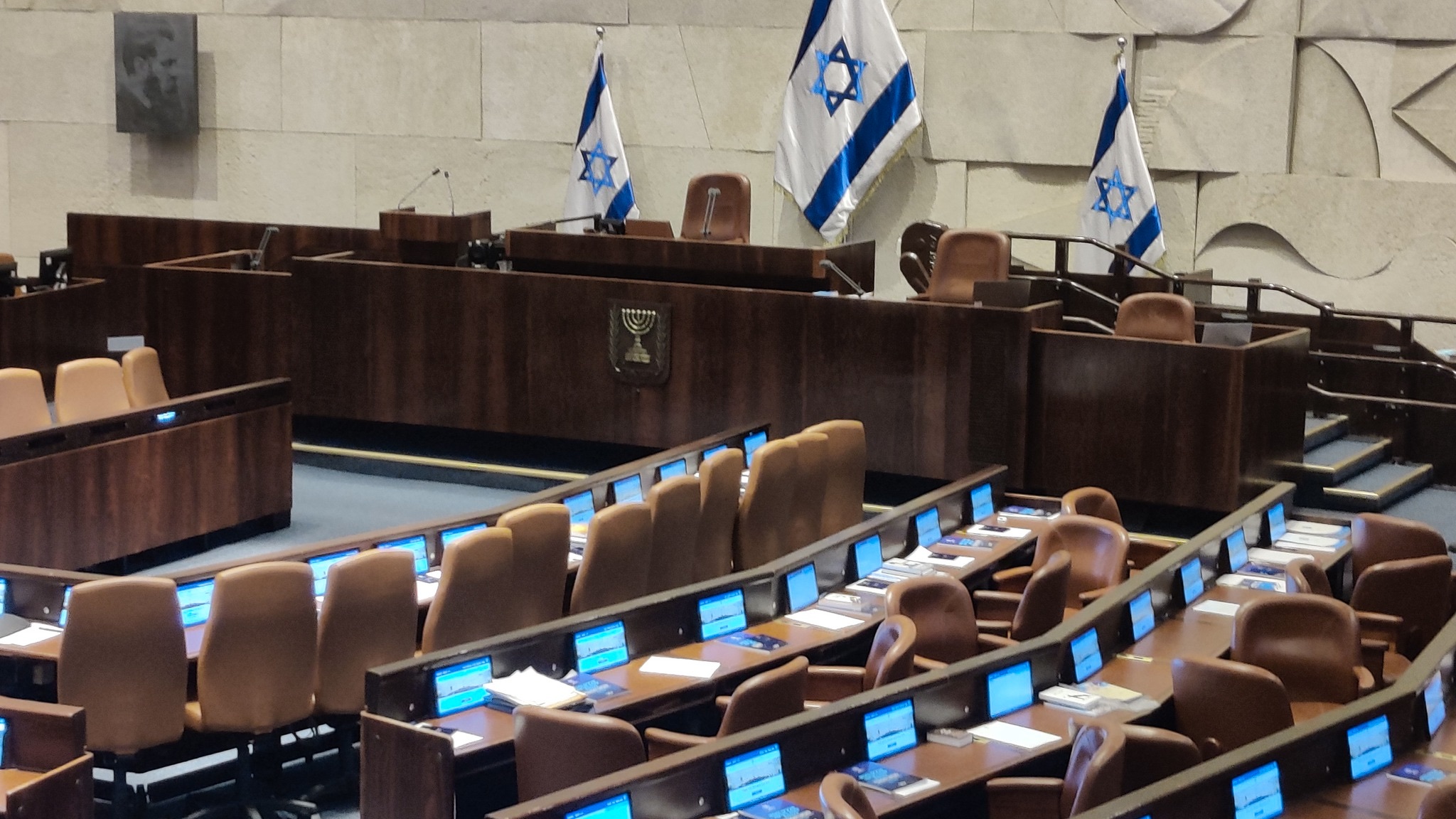
Recent reports from The Times of Israel and The Jerusalem Post reveal a development that, while subtle on the surface, could carry significant long-term implications. The Israeli Knesset has passed legislation expanding the authority of religious courts—including Sharia courts.

At present, these courts are limited to civil arbitration and require the consent of all parties involved. But the key issue is not merely what they can do now—it is what has now been officially recognized.

For the first time in a modern legislative context, the State of Israel has formally acknowledged and expanded the legal role of Sharia courts. To students of Bible prophecy, this is not just legal policy—it is a signal.

A Look Back: When Sharia Ruled the Land

To understand the weight of this moment, we must remember history. The Ottoman Empire ruled the land of Israel from 1517 to 1917. Its legal system was deeply rooted in Sharia law. During this time, the land was governed from Istanbul, a heavy taxation burdened the population, and non-Muslims were subject to special taxes. Agricultural decline and neglect spread across the region. Israel became a desolate swamp land.

Historically, Sharia courts held significant authority, often without appeal from a judge’s ruling. Their presence today is not new—but their modern expansion within a Jewish state is unprecedented in its implications.

Sharia law is derived from two primary sources: the Quran and the Sunnah (teachings and traditions of Muhammad in Hadith). These sources form a comprehensive legal and moral system governing marriage and family law, financial agreements, social conduct, and criminal justice in some nations.

In many Muslim-majority countries, Sharia influences or directly shapes national law. Even in secular systems, elements of Sharia often appear in family law or contractual agreements.

Two key concepts highlight the differences between Sharia and Western legal systems: Qisas (“An eye for an eye,” a system of retributive justice), and Diyya (Financial compensation, blood money, in place of retaliation). These principles reflect a legal worldview fundamentally different from modern Western jurisprudence, which emphasizes due process, appeals, and standardized penalties.

Sharia in the United States: A Subtle Presence

While America is governed by the United States Constitution, elements of Sharia can appear in limited ways, including marriage contracts (Mahr agreements), religious arbitration (Tahkim) when both parties consent, and financial contracts structured around Islamic principles.

In 2000, the Republican National Convention (RNC) became the first US presidential convention to open with a Muslim prayer to Allah. In 2007, the Quran was used for the first time to swear in a new US Congressman, Keith Ellison. An increasing number of America’s public schools are commemorating Muslim holidays, serving halal food, and holding Islamic prayers towards Mecca. In 2014, Rocky Mountain High School in Fort Collins, Colorado, became the first American high school to recite the Pledge of Allegiance in Arabic, replacing “One nation under God” with “One nation under Allah.” Judge Joseph Charles Jr. of New Jersey sided with a Muslim ex-husband, who had repeatedly raped his Muslim ex-wife. He denied the ex-wife’s request for a permanent restraining order against him, citing the Muslim man’s “belief.”

However, Sharia cannot override U.S. civil law. Courts may enforce agreements only if they meet constitutional standards. Several states—including Arizona, Texas, and Tennessee—have passed laws restricting the use of foreign or religious legal systems in court rulings.

Beyond legal systems, cultural shifts are also occurring. Islamic prayers have been introduced in national events. Public institutions increasingly recognize Islamic practices. Schools have accommodated Islamic traditions in various ways. These developments reflect a broader pattern: integration precedes normalization, and normalization precedes expansion.

Prophetic Implications: A World Moving Toward Convergence

The Bible warns of a coming global system—one that unifies politics, economics, and belief structures. What we are witnessing today is not isolated. It is part of a broader trajectory, where legal systems blend, religious frameworks intersect, and global governance structures expand.

The expansion of Sharia courts in Israel—even in a limited capacity—signals a legal convergence that aligns with the prophetic pattern of a world moving toward unified control.

Israel has always been central to biblical prophecy. The fact that multiple legal systems, including Sharia, are now operating within its borders under formal recognition should cause believers to pause. This is not about politics; it is about positioning.

We are living in a time where legal boundaries are shifting, cultural lines are blurring, and spiritual discernment is more critical than ever. Jesus warned: “Watch therefore, for you do not know what hour your Lord is coming” (Matthew 24:42). The question is not whether these changes will continue; the question is whether we are paying attention.

Believers must stay rooted in the Word of God, developing discernment in a rapidly changing world and understanding the times through a biblical lens. What appears small today may become significant tomorrow. And what is being normalized now may soon be foundational.



DONOR SUPPORTED: Harbinger’s Daily publishes Biblically-centered reporting in more than 125 countries every day at no cost to the reader.

Opening The Floodgates To Undermine The Sanctity Of Life: Germany’s Push To Decriminalize Abortion Faces Opposition

Germany’s Federal Constitutional Court officially ruled in 1975—and reaffirmed in 1993—that unborn children have a right to life. But since 2024, a campaign to decriminalize abortion in Germany has demanded the government reclassify the deadly procedure as a standard medical option covered by health insurance. This effort, however, has faced staunch opposition from those committed to protecting the lives of both mothers and their unborn children.

‘Male And Female’: It Took The Highest Court In The Land 45 Pages To Explain What Jesus Said In One Sentence

In Matthew 19, the Pharisees, always trying to trap Jesus, cornered Him on the subject of marriage and sexuality. He replied, “Have you never read that He who created them from the beginning made them male and female?” This week, the U.S. Supreme Court, in its majority opinion on women’s sports and the definition of sex, spent 45 pages explaining that “females and males have inherent physical differences relevant to athletic performance.” What Jesus said in one sentence took the highest court in the land 45 pages to explain.

sign up

Thomas Jefferson’s ‘Separation Of Church And State’ Never Meant Keeping God Out Of Government

In context, it’s clear this wall of separation was not created to keep religion out of the State. It was simply intended to protect religious freedom and to place boundaries on the State’s control over the Church. In fact, the United States Capitol served as a church building for seven decades and Jefferson himself was a regular attendee. He attended so faithfully that he earned a reserved seat. On the Sunday after he wrote the letter to the Danbury Baptists, he attended church services at the still-under-construction Capitol.

ABC's of Salvation

Decision

UTT

FOI

untitled artwork

Israel My Glory

Recent reports from The Times of Israel and The Jerusalem Post reveal a development that, while subtle on the surface, could carry significant long-term implications. The Israeli Knesset has passed legislation expanding the authority of religious courts—including Sharia courts.

At present, these courts are limited to civil arbitration and require the consent of all parties involved. But the key issue is not merely what they can do now—it is what has now been officially recognized.

For the first time in a modern legislative context, the State of Israel has formally acknowledged and expanded the legal role of Sharia courts. To students of Bible prophecy, this is not just legal policy—it is a signal.

A Look Back: When Sharia Ruled the Land

To understand the weight of this moment, we must remember history. The Ottoman Empire ruled the land of Israel from 1517 to 1917. Its legal system was deeply rooted in Sharia law. During this time, the land was governed from Istanbul, a heavy taxation burdened the population, and non-Muslims were subject to special taxes. Agricultural decline and neglect spread across the region. Israel became a desolate swamp land.

Historically, Sharia courts held significant authority, often without appeal from a judge’s ruling. Their presence today is not new—but their modern expansion within a Jewish state is unprecedented in its implications.

Sharia law is derived from two primary sources: the Quran and the Sunnah (teachings and traditions of Muhammad in Hadith). These sources form a comprehensive legal and moral system governing marriage and family law, financial agreements, social conduct, and criminal justice in some nations.

In many Muslim-majority countries, Sharia influences or directly shapes national law. Even in secular systems, elements of Sharia often appear in family law or contractual agreements.

Two key concepts highlight the differences between Sharia and Western legal systems: Qisas (“An eye for an eye,” a system of retributive justice), and Diyya (Financial compensation, blood money, in place of retaliation). These principles reflect a legal worldview fundamentally different from modern Western jurisprudence, which emphasizes due process, appeals, and standardized penalties.

Sharia in the United States: A Subtle Presence

While America is governed by the United States Constitution, elements of Sharia can appear in limited ways, including marriage contracts (Mahr agreements), religious arbitration (Tahkim) when both parties consent, and financial contracts structured around Islamic principles.

In 2000, the Republican National Convention (RNC) became the first US presidential convention to open with a Muslim prayer to Allah. In 2007, the Quran was used for the first time to swear in a new US Congressman, Keith Ellison. An increasing number of America’s public schools are commemorating Muslim holidays, serving halal food, and holding Islamic prayers towards Mecca. In 2014, Rocky Mountain High School in Fort Collins, Colorado, became the first American high school to recite the Pledge of Allegiance in Arabic, replacing “One nation under God” with “One nation under Allah.” Judge Joseph Charles Jr. of New Jersey sided with a Muslim ex-husband, who had repeatedly raped his Muslim ex-wife. He denied the ex-wife’s request for a permanent restraining order against him, citing the Muslim man’s “belief.”

However, Sharia cannot override U.S. civil law. Courts may enforce agreements only if they meet constitutional standards. Several states—including Arizona, Texas, and Tennessee—have passed laws restricting the use of foreign or religious legal systems in court rulings.

Beyond legal systems, cultural shifts are also occurring. Islamic prayers have been introduced in national events. Public institutions increasingly recognize Islamic practices. Schools have accommodated Islamic traditions in various ways. These developments reflect a broader pattern: integration precedes normalization, and normalization precedes expansion.

Prophetic Implications: A World Moving Toward Convergence

The Bible warns of a coming global system—one that unifies politics, economics, and belief structures. What we are witnessing today is not isolated. It is part of a broader trajectory, where legal systems blend, religious frameworks intersect, and global governance structures expand.

The expansion of Sharia courts in Israel—even in a limited capacity—signals a legal convergence that aligns with the prophetic pattern of a world moving toward unified control.

Israel has always been central to biblical prophecy. The fact that multiple legal systems, including Sharia, are now operating within its borders under formal recognition should cause believers to pause. This is not about politics; it is about positioning.

We are living in a time where legal boundaries are shifting, cultural lines are blurring, and spiritual discernment is more critical than ever. Jesus warned: “Watch therefore, for you do not know what hour your Lord is coming” (Matthew 24:42). The question is not whether these changes will continue; the question is whether we are paying attention.

Believers must stay rooted in the Word of God, developing discernment in a rapidly changing world and understanding the times through a biblical lens. What appears small today may become significant tomorrow. And what is being normalized now may soon be foundational.

Trusted Analysis From A Biblical Worldview

Help reach the lost and equip the church with the living and active truth of God's Word in our world today.

YOU CARE ABOUT

BIBLICAL TRUTH. SO DO WE.


Together, We Can Deliver A Biblical Understanding

Of News Events Around The World.

Opening The Floodgates To Undermine The Sanctity Of Life: Germany’s Push To Decriminalize Abortion Faces Opposition

Germany’s Federal Constitutional Court officially ruled in 1975—and reaffirmed in 1993—that unborn children have a right to life. But since 2024, a campaign to decriminalize abortion in Germany has demanded the government reclassify the deadly procedure as a standard medical option covered by health insurance. This effort, however, has faced staunch opposition from those committed to protecting the lives of both mothers and their unborn children.

‘Male And Female’: It Took The Highest Court In The Land 45 Pages To Explain What Jesus Said In One Sentence

In Matthew 19, the Pharisees, always trying to trap Jesus, cornered Him on the subject of marriage and sexuality. He replied, “Have you never read that He who created them from the beginning made them male and female?” This week, the U.S. Supreme Court, in its majority opinion on women’s sports and the definition of sex, spent 45 pages explaining that “females and males have inherent physical differences relevant to athletic performance.” What Jesus said in one sentence took the highest court in the land 45 pages to explain.

untitled artwork 6391

Thomas Jefferson’s ‘Separation Of Church And State’ Never Meant Keeping God Out Of Government

In context, it’s clear this wall of separation was not created to keep religion out of the State. It was simply intended to protect religious freedom and to place boundaries on the State’s control over the Church. In fact, the United States Capitol served as a church building for seven decades and Jefferson himself was a regular attendee. He attended so faithfully that he earned a reserved seat. On the Sunday after he wrote the letter to the Danbury Baptists, he attended church services at the still-under-construction Capitol.

ABC's of Salvation

TV AD

worldview matters

Decision Magazine V AD

Decision

Jan Markell

Israel My Glory

Erick Stakelbeck

untitled artwork

YOU CARE ABOUT

BIBLICAL TRUTH.

SO DO WE.

Together, We Can Deliver A Biblical Understanding Of News Events Around The World And Equip The Church To Stand With A Biblical Worldview.

untitled artwork

Israel My Glory

YOU CARE ABOUT

BIBLICAL TRUTH.

SO DO WE.


Together, We Can Deliver A Biblical Understanding Of News Events Around The World And Equip The Church To Stand With A Biblical Worldview.