
July 5, 2026

July, 5, 2026
July 5, 2026

give

untitled artwork

untitled artwork

World news biblically understood

TRENDING:

A World In Dire Straits: Iran Clings To Its Last Vestige Of Power

As the withering attacks continue against Iran by the United States and Israel, the regime in Tehran’s ability to fight is dwindling.

Iran’s nuclear megaplex is in ruins, its ballistic missile stockpiles are being systematically trashed, and its proxies are severely depleted. Though Hezbollah in Lebanon quickly joined the war alongside Iran, Israel is aggressively striking back. They, too, will likely be overpowered by the Israeli military in the not-too-distant future.

Iran’s options have been severely reduced, leaving it with one card left: blocking the Strait of Hormuz.

The regime is putting all its chips on the Strait, believing that driving up oil prices will force the world to demand an end to the warโ€”or at least give them a reprieve. This location is the last vestige of power the regime wields.

It is an eerie reminder of the Arab oil embargo of October of 1973, when the Arab nations retaliated against the countries that assisted Israel in the Yom Kippur War. Oil production was cut massively.

In the wake of that, Dr. John Walvoord wrote a book titled “Armageddon Oil and the Middle East Crisis,” discussing the oil crisis that was facing the United States. The book became a tremendous bestseller, with two or three million copies sold. I had the privilege, years later, of updating that book with his son, John E. Walvoord. We changed the title to “Armageddon, Oil, and Terror.”

I was reminded of those books as I witnessed developments surrounding the Strait of Hormuz and how oil is being cut off from much of the world.

One of the chapters in that book was called “crude awakening,” and that is truly an accurate description of what we are currently experiencing in our world. Many thought these oil crises were over, but here we are again, decades later, facing the same situation: a Middle East oil crisis.

Iran is backed into a corner, and they have demonstrated their willingness to do whatever it takes to retain control over the world’s most vital energy choke point. There are threats right now of oil reaching $200 a barrel.

According to the dictionary, “dire straits” means “a state of extreme distress,” or “a bad or difficult situation or state of affairs.” That is an apt description today of the world’s direst straitโ€”that narrow body of water situated right in Iran’s backyard: the Strait of Hormuz.

It’s one of the world’s most important and dangerous flashpoints. Just last month, Russia and Iran (two nations aligned in the Gog-Magog war in Ezekiel 38-39) held joint naval exercises in the Gulf of Oman, at the southern opening of the Strait of Hormuz.

The Strait of Hormuz is the number one shipping channel in the world, and has been a focal point of US-Iranian confrontations for more than 30 years.

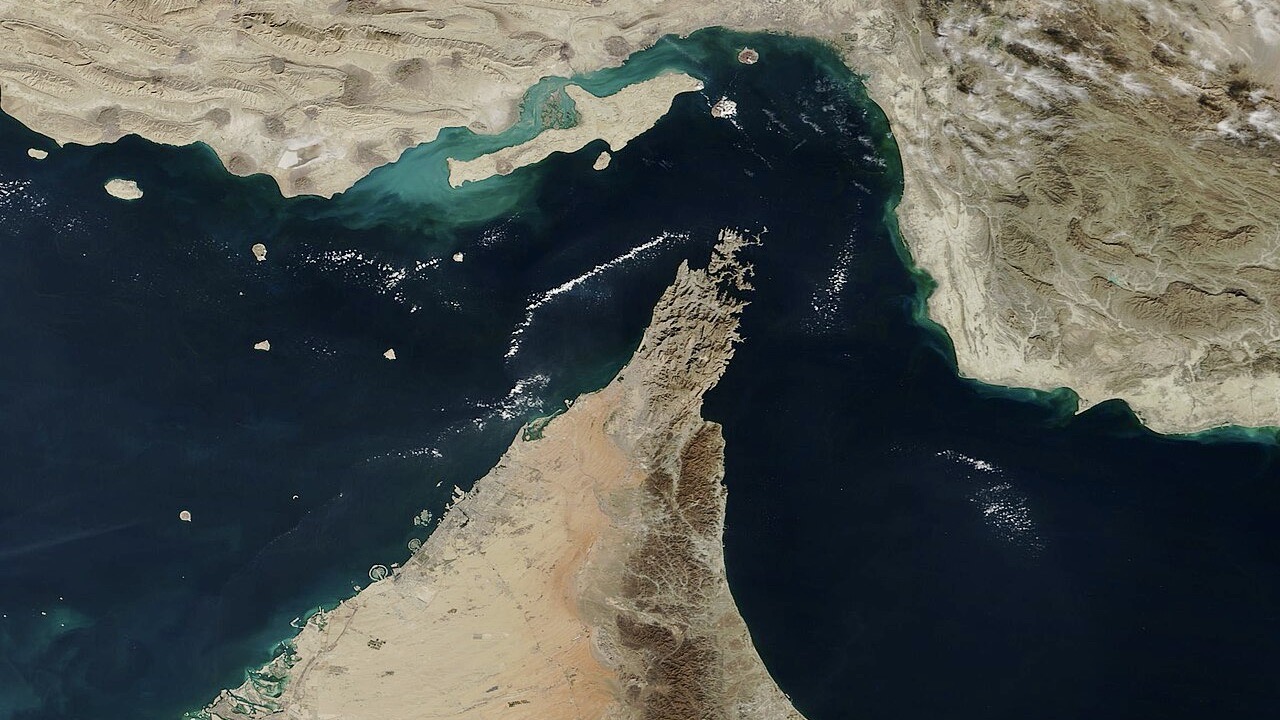
It is the only sea passage from the oil-rich Persian Gulf out to the open sea, making it a vital gateway for global oil supply. Of course, ships traversing that strait must pass through Iranian waters.

About 21 million barrels of oil go through the Strait on a daily basis, representing roughly 20% (some believ 27%) of the world’s crude oil and petroleum products. Additionally, 22% of liquefied natural gas globally passes through the Strait. These numbers are significant, and that is why Iran wants to shut off the spigot.

The Strait of Hormuz is 90 miles long and 21 miles wide at its narrowest point. The shipping lanes in each direction are just two miles wide. This narrow area of operation provides Iran a tactical advantage, making it easy to saturate with mines or swarm with speedboats.

A dark shadow right now looms over the waters of the Strait as massive tankers sit on hold.

Skirmishes in the Persian Gulf between Iran and the United States have been going on for decades. During the 1980s, 40% of the world’s oil passed through the Strait of Hormuz, so any disruption, no matter how slight, threatened to create chaos in the global oil market.

The “Tanker War” occurred between 1984 and 1988, during the Iraq-Iran War. The United States waged an intense one-day battle against Iranian forces in and around the Strait in 1988. The Iran-US shooting match resulted in the disabling of several Iranian warships. In some ways, the tanker war between the US and Iran never ended; it became indefinitely suspended. Both sides stopped shooting, but nothing was truly settled. The “Tanker War” was simply a perilous prelude to what’s happening in the Persian Gulf today and what will persist in the future.

Another conflict erupted in the summer of 2019, when six oil tankers came under attack. Explosions damaged two after leaving the strait, and four were struck within the United Arab Emirates (UAE) territorial waters.

In response to these provocations, the United States deployed an additional 14,000 troops to the region, including an aircraft carrier, promising to strike back and hit hard at any similar Iranian actions.

The Strait of Hormuz has remained at the center of escalating tensions between the United States, Israel, and Iran for decades. Right now, the Strait remains Iran’s most potent non-nuclear weapon. A desperate, weakened Iran, with fewer strategic options, sees the Strait as its last remaining leverage, a geographical choke point where it holds a strategic advantage.

The narrow waters give Iran the ability to threaten global energy supplies with relatively modest military assetsโ€”mines, swarms of fast boats, anti-ship missiles, and dronesโ€”in a confrontation where Iran is losing ground on every front. The Strait has become its last resort.

I think there will be an increasing scramble for resources in the end times. Oil is still key today. Many people believed that by now we would be beyond threats of an oil embargo or an oil crisis. But as the Middle East build-up continues to gain momentum, as prophesied by Ezekiel and other biblical prophets, the Strait of Hormuz will undoubtedly remain a significant factor.

This is not just a shipping lane, it’s a powder keg, and the fuse grows shorter with every passing confrontation.


Harbingerโ€™s Daily exists through the generous support of our readers. For ways to support this ministry, click here.

Is Destructive Socialism In Americaโ€™s Future? Not If We Reclaim Our Past

Last week, headlines were filled with reports of socialist candidates gaining ground in major American cities. Fifty years ago, that would have been almost unimaginable. Today, however, socialism is becoming an increasingly influential force within the Democratic Party. Is this Americaโ€™s future? Perhaps we can find the answer by revisiting the course set by Americaโ€™s Founders. In fact, it reaches back before the founding itself. In 1630, John Winthrop described the Massachusetts Bay Colony as โ€œa city upon a hill.โ€ He envisioned a people who understood they lived under a covenantal responsibility before God, a vision that profoundly shaped the character of the future nation.

The Real ‘American Dream’ Of George Washington Was Far More God-Honoring Than Many Have Been Led To Believe

Washington personally read the Bible and quoted the Bible. Those who deny Americaโ€™s unique Christian roots will claim that many educated people in positions of prominence in the 18th century also quoted from the Bible. However, they also quoted from Greek and Roman authors of antiquity. Washington quoted almost exclusively from the Bible and applied its teachings to his personal life and role as a leader. The real American dream is far more God-honoring than what we have today. The true American patriot is working and praying that Washingtonโ€™s vision for America will once again claim the hearts of Americans.

sign up

Will America Last Another 250 Years?

Looking back, there can be no denying that God has indeed shed His graceโ€”His unmerited favorโ€”on our land, from sea to shining sea. But does our national โ€œsoulโ€ encourage self-control? Do our laws champion ordered liberty? Is our success tempered with nobleness? Is brotherhood the defining characteristic of any good we aspire to reflect? By all of those measures, America seems decidedly adrift. We are drifting farther and farther from Natureโ€™s Godโ€”the Ruler of the Universe our Founders called upon and credited with for our celebrated independence.

ABC's of Salvation

Decision

UTT

FOI

untitled artwork

Israel My Glory

As the withering attacks continue against Iran by the United States and Israel, the regime in Tehran’s ability to fight is dwindling.

Iran’s nuclear megaplex is in ruins, its ballistic missile stockpiles are being systematically trashed, and its proxies are severely depleted. Though Hezbollah in Lebanon quickly joined the war alongside Iran, Israel is aggressively striking back. They, too, will likely be overpowered by the Israeli military in the not-too-distant future.

Iran’s options have been severely reduced, leaving it with one card left: blocking the Strait of Hormuz.

The regime is putting all its chips on the Strait, believing that driving up oil prices will force the world to demand an end to the warโ€”or at least give them a reprieve. This location is the last vestige of power the regime wields.

It is an eerie reminder of the Arab oil embargo of October of 1973, when the Arab nations retaliated against the countries that assisted Israel in the Yom Kippur War. Oil production was cut massively.

In the wake of that, Dr. John Walvoord wrote a book titled “Armageddon Oil and the Middle East Crisis,” discussing the oil crisis that was facing the United States. The book became a tremendous bestseller, with two or three million copies sold. I had the privilege, years later, of updating that book with his son, John E. Walvoord. We changed the title to “Armageddon, Oil, and Terror.”

I was reminded of those books as I witnessed developments surrounding the Strait of Hormuz and how oil is being cut off from much of the world.

One of the chapters in that book was called “crude awakening,” and that is truly an accurate description of what we are currently experiencing in our world. Many thought these oil crises were over, but here we are again, decades later, facing the same situation: a Middle East oil crisis.

Iran is backed into a corner, and they have demonstrated their willingness to do whatever it takes to retain control over the world’s most vital energy choke point. There are threats right now of oil reaching $200 a barrel.

According to the dictionary, “dire straits” means “a state of extreme distress,” or “a bad or difficult situation or state of affairs.” That is an apt description today of the world’s direst straitโ€”that narrow body of water situated right in Iran’s backyard: the Strait of Hormuz.

It’s one of the world’s most important and dangerous flashpoints. Just last month, Russia and Iran (two nations aligned in the Gog-Magog war in Ezekiel 38-39) held joint naval exercises in the Gulf of Oman, at the southern opening of the Strait of Hormuz.

The Strait of Hormuz is the number one shipping channel in the world, and has been a focal point of US-Iranian confrontations for more than 30 years.

It is the only sea passage from the oil-rich Persian Gulf out to the open sea, making it a vital gateway for global oil supply. Of course, ships traversing that strait must pass through Iranian waters.

About 21 million barrels of oil go through the Strait on a daily basis, representing roughly 20% (some believ 27%) of the world’s crude oil and petroleum products. Additionally, 22% of liquefied natural gas globally passes through the Strait. These numbers are significant, and that is why Iran wants to shut off the spigot.

The Strait of Hormuz is 90 miles long and 21 miles wide at its narrowest point. The shipping lanes in each direction are just two miles wide. This narrow area of operation provides Iran a tactical advantage, making it easy to saturate with mines or swarm with speedboats.

A dark shadow right now looms over the waters of the Strait as massive tankers sit on hold.

Skirmishes in the Persian Gulf between Iran and the United States have been going on for decades. During the 1980s, 40% of the world’s oil passed through the Strait of Hormuz, so any disruption, no matter how slight, threatened to create chaos in the global oil market.

The “Tanker War” occurred between 1984 and 1988, during the Iraq-Iran War. The United States waged an intense one-day battle against Iranian forces in and around the Strait in 1988. The Iran-US shooting match resulted in the disabling of several Iranian warships. In some ways, the tanker war between the US and Iran never ended; it became indefinitely suspended. Both sides stopped shooting, but nothing was truly settled. The “Tanker War” was simply a perilous prelude to what’s happening in the Persian Gulf today and what will persist in the future.

Another conflict erupted in the summer of 2019, when six oil tankers came under attack. Explosions damaged two after leaving the strait, and four were struck within the United Arab Emirates (UAE) territorial waters.

In response to these provocations, the United States deployed an additional 14,000 troops to the region, including an aircraft carrier, promising to strike back and hit hard at any similar Iranian actions.

The Strait of Hormuz has remained at the center of escalating tensions between the United States, Israel, and Iran for decades. Right now, the Strait remains Iran’s most potent non-nuclear weapon. A desperate, weakened Iran, with fewer strategic options, sees the Strait as its last remaining leverage, a geographical choke point where it holds a strategic advantage.

The narrow waters give Iran the ability to threaten global energy supplies with relatively modest military assetsโ€”mines, swarms of fast boats, anti-ship missiles, and dronesโ€”in a confrontation where Iran is losing ground on every front. The Strait has become its last resort.

I think there will be an increasing scramble for resources in the end times. Oil is still key today. Many people believed that by now we would be beyond threats of an oil embargo or an oil crisis. But as the Middle East build-up continues to gain momentum, as prophesied by Ezekiel and other biblical prophets, the Strait of Hormuz will undoubtedly remain a significant factor.

This is not just a shipping lane, it’s a powder keg, and the fuse grows shorter with every passing confrontation.

Trusted Analysis From A Biblical Worldview

Help reach the lost and equip the church with the living and active truth of God's Word in our world today.

YOU CARE ABOUT

BIBLICAL TRUTH. SO DO WE.

ย 

Together, We Can Deliver A Biblical Understanding

Of News Events Around The World.

Is Destructive Socialism In Americaโ€™s Future? Not If We Reclaim Our Past

Last week, headlines were filled with reports of socialist candidates gaining ground in major American cities. Fifty years ago, that would have been almost unimaginable. Today, however, socialism is becoming an increasingly influential force within the Democratic Party. Is this Americaโ€™s future? Perhaps we can find the answer by revisiting the course set by Americaโ€™s Founders. In fact, it reaches back before the founding itself. In 1630, John Winthrop described the Massachusetts Bay Colony as โ€œa city upon a hill.โ€ He envisioned a people who understood they lived under a covenantal responsibility before God, a vision that profoundly shaped the character of the future nation.

The Real ‘American Dream’ Of George Washington Was Far More God-Honoring Than Many Have Been Led To Believe

Washington personally read the Bible and quoted the Bible. Those who deny Americaโ€™s unique Christian roots will claim that many educated people in positions of prominence in the 18th century also quoted from the Bible. However, they also quoted from Greek and Roman authors of antiquity. Washington quoted almost exclusively from the Bible and applied its teachings to his personal life and role as a leader. The real American dream is far more God-honoring than what we have today. The true American patriot is working and praying that Washingtonโ€™s vision for America will once again claim the hearts of Americans.

untitled artwork 6391

Will America Last Another 250 Years?

Looking back, there can be no denying that God has indeed shed His graceโ€”His unmerited favorโ€”on our land, from sea to shining sea. But does our national โ€œsoulโ€ encourage self-control? Do our laws champion ordered liberty? Is our success tempered with nobleness? Is brotherhood the defining characteristic of any good we aspire to reflect? By all of those measures, America seems decidedly adrift. We are drifting farther and farther from Natureโ€™s Godโ€”the Ruler of the Universe our Founders called upon and credited with for our celebrated independence.

ABC's of Salvation

TV AD

worldview matters

Decision Magazine V AD

Decision

Jan Markell

Israel My Glory

Erick Stakelbeck

untitled artwork

YOU CARE ABOUT

BIBLICAL TRUTH.

SO DO WE.

Together, We Can Deliver A Biblical Understanding Of News Events Around The World And Equip The Church To Stand With A Biblical Worldview.

untitled artwork

Israel My Glory

YOU CARE ABOUT

BIBLICAL TRUTH.

SO DO WE.

ย 

Together, We Can Deliver A Biblical Understanding Of News Events Around The World And Equip The Church To Stand With A Biblical Worldview.