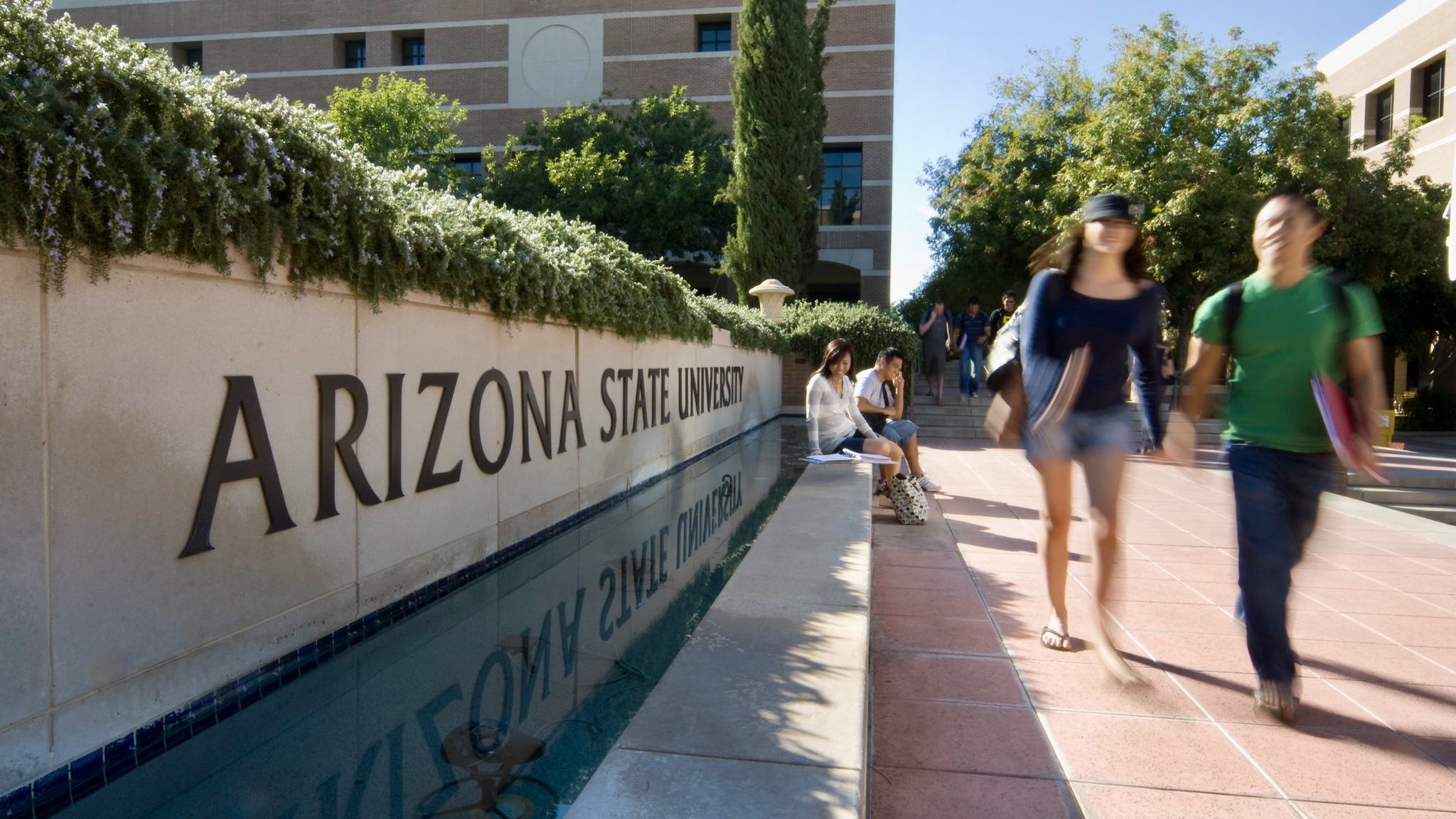
This fall, Arizona State University is offering eight courses with words like witchcraft, magic, or the occult in the title. Meanwhile, one course will cover the bedrock faith of Western Civilization.
“Think about that for a moment,” writes Owen Anderson, who teaches philosophy and religion at the university, at The Blaze. “At one of the largest public universities in the country, students can choose from a small festival of courses on witchcraft, while Christianity receives [only] a single titled course.”
A quick web search reveals other major universities across the country are offering similar classes.
ASU might argue the courses fall under the classification of history and do not promote witchcraft and the occult. But at least one course syllabus does not bear that out. For example, the syllabus for “Witchcraft and Heresy in Europe” says the class will examine how the identity of the heretic and the witch was constructed against its binary opposite, the “orthodox” Christian. It then turns to “religious Othering,” especially “the female as Other,” and asks students to explain how centuries-old witch persecutions continue to shape their own lives.
“A student scrolling through the catalog may think, Witchcraft? That sounds like an interesting history class,” Anderson says. “What the description does not announce plainly is that the course has already selected its moral and political framework before the first reading begins.”
In addition to history, courses in witchcraft approach the topic through anthropology, religion, literature, and media. The University of New Mexico offers “Legacy of Witchcraft in Popular Culture.” Duke University offers “Neopaganism and Witchcraft” as part of its religious studies. Universities in the U.K. are also offering classes on the occult. The University of Exeter features a dedicated master of arts degree program focused entirely on magic and occult sciences.
The fact that these courses are showing up in university studies is a reminder that secular is not neutral, Ken Ham of Answers in Genesis noted in a 2024 article.
“As our culture abandons its once Christianized foundation, it doesn’t become some kind of neutral space with a nebulous worldview divorced from spirituality and grounded in ‘science’ and ‘reason,’” Ham wrote. “That’s because, contrary to the naturalistic view, we are not mere biological beings. We are a body and a soul. God created us to yearn for Him and to desire meaning and purpose—things the naturalistic, atheistic worldview cannot provide.”
Jac Marino, a former self-described sorceress who practiced magic for decades until she met Jesus, says that while she doesn’t expect secular universities to hold to the same standards as Christian ones, she is concerned about the message universities are sending through these classes.
“These courses present the lure or bait (which is often that you have the power inside of you to be like God, and that this power can be unlocked through embracing forbidden knowledge) while hiding the hook (these practices that God forbids lead to our destruction),” Marino told Decision. “The Bible makes clear that ‘each person is tempted when he is lured and enticed by his own desire. Then desire when it has conceived gives birth to sin, and sin when it is fully grown brings forth death’” (James 1:14-15).
Ham refers to the things of the occult world as “broken cisterns” that don’t satisfy.
“Anyone who goes to the waters of witchcraft, shamanism, divination, psychic readings, and so on will be thirsty again,” Ham said. “Those ‘broken cisterns’ don’t satisfy. But Jesus does. He is the water of life that will never leave you thirsty. He is the bread of life that lasts forever. He gives meaning and purpose for now and eternity.”