LIVE UPDATES — FROM AUG. 3RD – 9TH
Israel At War: Week Forty-Four Coverage

Day 308 — Friday, August 9
IDF Takes Out Senior Hamas Terrorist By Airstrike In Lebanon

IAF aircraft, directed by IDF and Israel Security Agency (Shin Bet) intelligence, on Friday evening struck in the area of Sidon in Lebanon, and eliminated terrorist Samer Mahmoud al-Haj, a senior commander in the Hamas terrorist organization in Lebanon, who was responsible for advancing terror attacks and projectile launches from Lebanon toward Israeli territory.
According to the IDF Spokesperson’s Unit, Samer operated as the military forces’ commander in the Ain al-Hilweh camp located in the area of Sidon and was responsible for the recruitment and training of terrorists to attack the State of Israel.
“The IDF and ISA will continue operating against the Hamas terrorist organization and dismantling the terrorist organization’s capabilities,” the statement said.
Earlier, a Lebanese security source told AFP that an Israeli strike on a vehicle in Sidon killed a Hamas security official from the nearby Ain al-Hilweh “Palestinian refugee” camp.
“An Israeli strike targeted a Hamas movement security official from the Ain al-Hilweh camp while he was inside his vehicle in the city of Sidon,” the source said.
About 55,000 people registered as “Palestinian refugees” reside in Ain Al-Hilweh, which is notorious for its lawlessness and violence. Deadly clashes have erupted there in the past, between rival Palestinian Arab factions.
Day 308 — Friday, August 9
Iran Training Russians On Short-Range Missiles, Arms Transfer Expected Soon — Sources

Dozens of Russian military personnel are being trained in Iran to use the Fath-360 close-range ballistic missile system, two European intelligence sources tell Reuters, adding that they expect the imminent delivery of hundreds of the satellite-guided weapons to Russia for its war in Ukraine.
Russian defense ministry representatives are believed to have signed a contract on Dec. 13 in Tehran with Iranian officials for the Fath-360 and another ballistic missile system built by Iran’s government-owned Aerospace Industries Organization called the Ababil, say the two intelligence officials, who request anonymity in order to discuss sensitive matters.
Citing multiple confidential intelligence sources, the officials say that Russian personnel have visited Iran to learn how to operate the Fath-360 defense system, which launches missiles with a maximum range of 120 km (75 miles) and a warhead of 150 kg. One of the sources says that “the only next possible” step after training would be actual delivery of the missiles to Russia.
Moscow possesses its own ballistic missiles, but the supply of Fath-360s could allow Russia to use more of its arsenal for targets beyond the front line, while employing Iranian warheads for closer-range targets, a military expert says.
A spokesman for the US National Security Council said the United States and its NATO allies and G7 partners “are prepared to deliver a swift and severe response if Iran were to move forward with such transfers.”
It “would represent a dramatic escalation in Iran’s support for Russia’s war of aggression against Ukraine,” the spokesman says. “The White House has repeatedly warned of the deepening security partnership between Russia and Iran since the outset of Russia’s full-scale invasion of Ukraine.”
Russia’s defense ministry does not respond to a request for comment.
Iran’s permanent mission to the United Nations in New York said in a statement that the Islamic Republic had forged a long-term strategic partnership with Russia in various areas, including military cooperation.
“Nevertheless, from an ethical standpoint, Iran refrains from transferring any weapons, including missiles, that could potentially be used in the conflict with Ukraine until it is over,” the statement says.
The two intelligence sources gave no exact timeframe for the expected delivery of Fath-360 missiles to Russia but say it will be soon. They do not provide any intelligence on the status of the Abibal contract.
A third intelligence source from another European agency says it had also received information that Russia had sent soldiers to Iran to train in the use of Iranian ballistic missile systems, without providing further details.
Such training is standard practice for Iranian weapons supplied to Russia, says the third source, who also declined to be named because of the sensitivity of the information.
A senior Iranian official, who requested anonymity, says Iran sold missiles and drones to Russia but has not provided Fath-360 missiles. There was no legal prohibition on Tehran selling such weapons to Russia, the source added.
“Iran and Russia engage in the mutual purchase of parts and military equipment. How each country uses this equipment is entirely their decision,” the official says, adding that Iran did not sell weapons to Russia for use in the Ukraine war.
Day 308 — Friday, August 9
Rashida Tlaib Shares Fake Poll Claiming Israelis Support Raping Terrorists

Congresswoman Rashida Tlaib shared a fake poll today on the social network X, claiming that most Israelis support the rape of imprisoned terrorists. The Muslim legislator, a member of the House of Representatives, shared a satirical tweet that included a poorly edited version of an older survey published over a year ago on a different topic.
The fake poll posed the question, “Do you agree that a soldier is allowed to rape a bound terrorist?” with 47 percent of respondents supposedly answering “agree” and 43 percent “disagree.” The original survey, presented by Amit Segal of Israeli Channel 12 over a year ago, asked, “Do you agree that the government relies on supporters of terrorism?”
The fake poll was disseminated by a pro-Palestinian user named Nora Arakat, along with the caption, “When you tell a certain society that it has the right to commit genocide, of course, they will think they have the right to rape.”
Day 308 — Friday, August 9
Security Cabinet Convenes As Israel Warns Hezbollah Of ‘Destruction’ If It Attacks
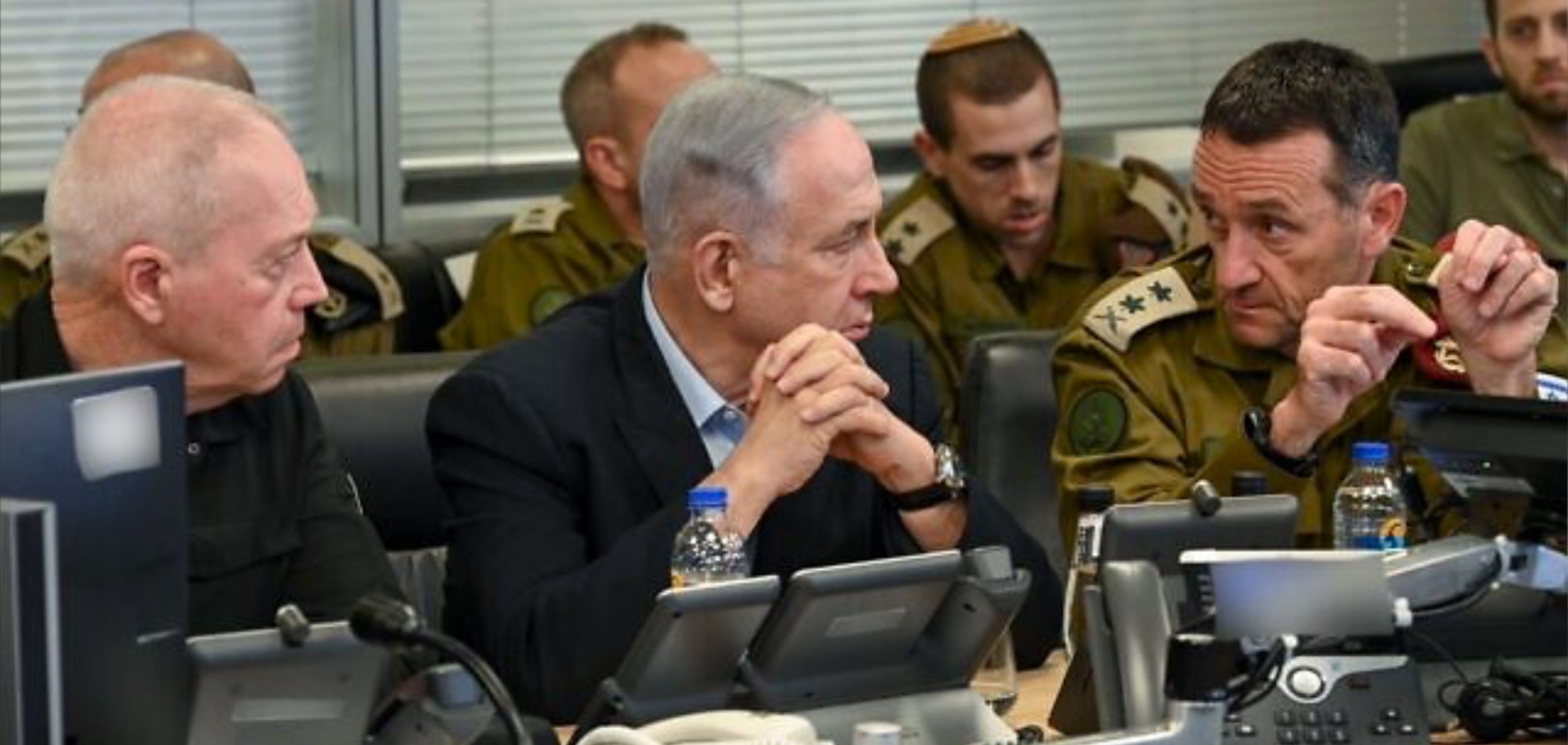
The security cabinet convened Thursday night in Tel Aviv, as the country continued to brace for a potential attack by the Hezbollah terror group in Lebanon.
The cabinet met in the underground command room of the Kirya military headquarters, Hebrew media reported, the first time such a meeting has been held there since the night of April 13-14, when Iran launched some 300 missiles and drones at Israel, almost all of which were intercepted.
The meeting was taking place in “the pit,” as the underground command room is known, but not due to immediate security concerns, but rather in order to drill for a potential emergency situation, Channel 12 news reported, as Israel was preparing for a promised attack by Iran and its terror proxies to several recent high-profile assassinations.
According to Channel 13, the Israeli assessment on Thursday was that Hezbollah would try to target a senior Israeli official in retaliation for the Israeli killing of commander Fuad Shukr on July 30, which came after a Hezbollah rocket attack killed twelve children in the Golan Heights days earlier.
Defense Minister Yoav Gallant issued an unusual missive to the Lebanese people, warning in Arabic that Israel will fight Hezbollah “with all its might” if the group continues to escalate tensions.
“The State of Israel wants peace, prosperity and stability on both sides of the northern border and therefore will in no way allow the Hezbollah militia to destabilize the border and the region. If Hezbollah continues its aggression, Israel will fight it with all its might,” Gallant wrote.
“Remember [Hezbollah leader Hassan] Nasrallah’s regret for the dangerous and uncalculated adventure of August 2006,” he said, referring to the Second Lebanon War, a 34-day conflict that erupted when Hezbollah operatives captured two Israeli soldiers and killed others.
“Those who play with fire should expect destruction,” Gallant said.
Haifa Mayor Yona Yahav also referred to the Second Lebanon War on Thursday, noting to public broadcaster Kan that Hezbollah’s arsenal is significantly more advanced than it was 18 years ago: “They are very precise missiles, and they are expected to fire 4,000 missiles at us each day,” Yahav said.
“That’s what we’re preparing [our citizens] for. In any case, we’re asking them to prepare enough food, enough water, because we’re expecting they’ll have to stay there [in shelters and safe areas] for four to six days” if Hezbollah attacks, he added.
At an assessment at the IDF Home Front Command, Gallant said Israel was working to provide an adequate warning of any expected attack, but advised citizens to go on with their lives as usual in the absence of special directions.
“The public’s resilience allows us to make the right operational decisions. In the face of the enemy’s attempt to sow fear, we must continue with normal daily life,” he said in remarks provided by his office.
Israel has been bracing for an attack since the military assassinated Shukr last week, hours before Ismail Haniyeh, the political leader of the Hamas terror group, was also killed in a blast in Tehran, for which Israel has neither claimed nor denied responsibility.
Iran, which supports both Hezbollah and Hamas, vowed to retaliate for the assassinations.
Day 307 — Thursday, August 8
Conflicting Messages In Iran Regarding Retaliatory Strike On Israel, As New President Reportedly Urges Ayatollah To Reconsider
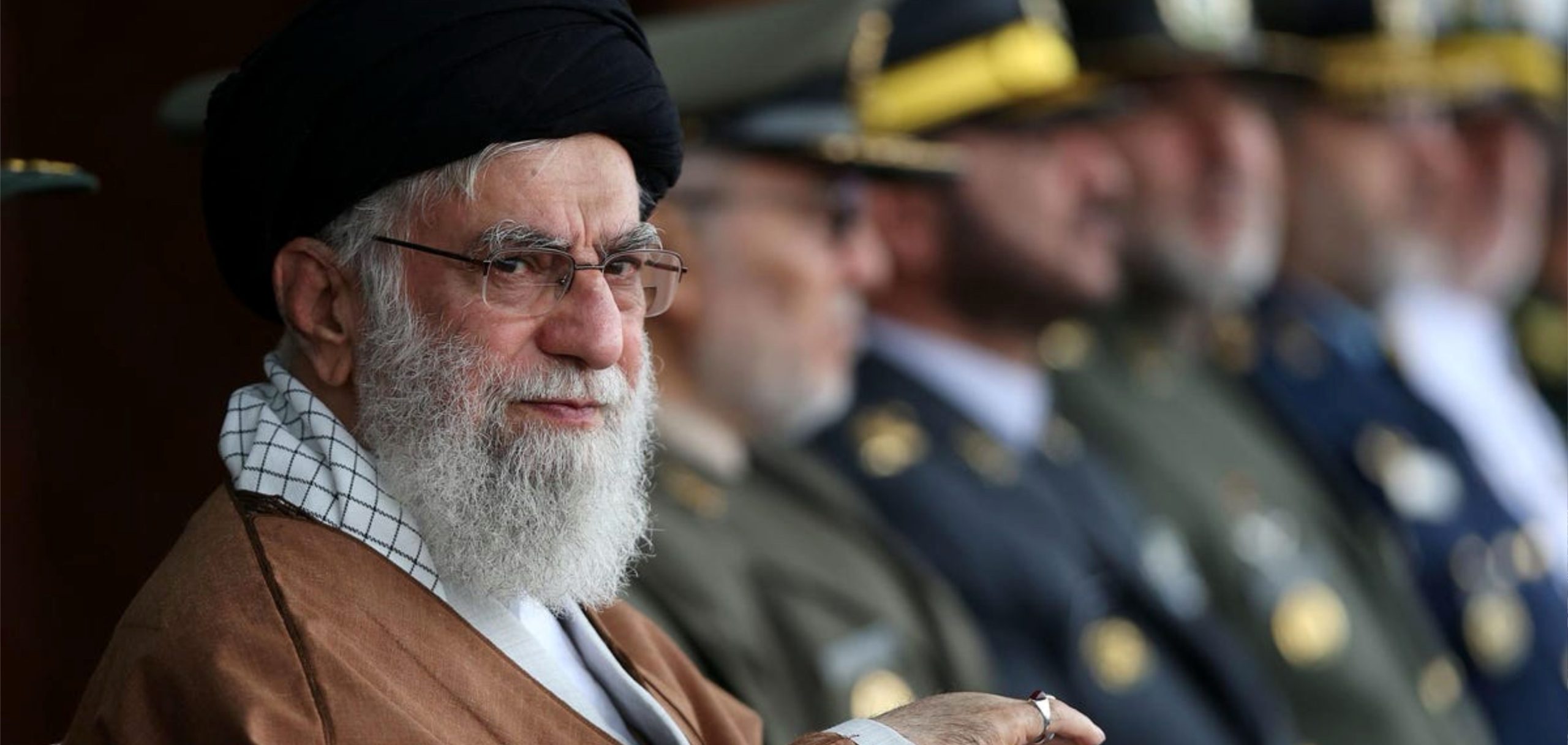
A report from Iran International, which is affiliated with Iran’s dissidents, claims that newly elected President Masoud Pezeshkian asked the Supreme Leader Ayatollah Ali Khamenei not to strike Israel, warning that an Israeli response could have a devastating effect on the country.
According to the channel, the report in Iran International is based on anonymous sources who are familiar with the details of a recent meeting between Pezeshkian and Khamenei.
According to the report, Pezeshkian warned that a decision by Israel to launch a significant response could “cripple the Iranian economy and potentially lead to the country’s collapse.”
He also is said to have warned that a war with Israel would harm Iran’s ability to rebuild its economy and deepen the rift between the regime and Iranian citizens, as well as severely damage Iran’s international standing.
Pezeshkian is seen by many as a member of Iran’s more moderate and reformist camp, while Khamenei leads the extremist camp in the regime. Pezeshkian ran on a campaign promising to restore Iran’s standing in the international arena. The supreme leader of Iran holds ultimate authority in all matters of state and the final decision regarding Iran’s response to Haniyeh’s assassination will be his.
The report in Iran International said that Khamenei did not give any indications at the meeting of his response to Pezeshkian’s concerns and did not express opposition or support for the remarks.
In apparent contrast to that report, Iran state media reported that Pezeshkian told French President Emmanuel Macron in a phone call that, “Iran will never remain silent in the face of aggression against its interests and security.”
Pezeshkian reportedly told Macron that Western countries should do more to pressure Israel.
“If the United States and the Western countries are truly seeking to prevent war in the region, they must force this regime (Israel) to stop the genocide and attacks on Gaza and accept a ceasefire,” Pezeshkian said.
Meanwhile, speaking at a ceremony in Iran’s southern port city of Bandar Abbas on Wednesday, Major General Abdolrahim Mousavi, the commander in chief of Iran’s army said that Israel “cannot save themselves from annihilation.”
“The Zionist regime will soon receive a strong and definite response, and there is no doubt about it,” Mousavi said, according to Iranian media. “It is clear that they themselves have realized the speed of their own destruction, and by doing so, they want to save themselves from the quagmire, but they definitely cannot save themselves from annihilation.”
Mousavi also praised the selection of Hamas’ Gaza leader Yahya Sinwar, to be the head of the political office.
He said the selection of Sinwar “indicates the strong determination of the brave and honorable movement for resistance and struggle.”
Day 306 — Wednesday, August 7
Analysis — A Glimpse of Gog and Magog?
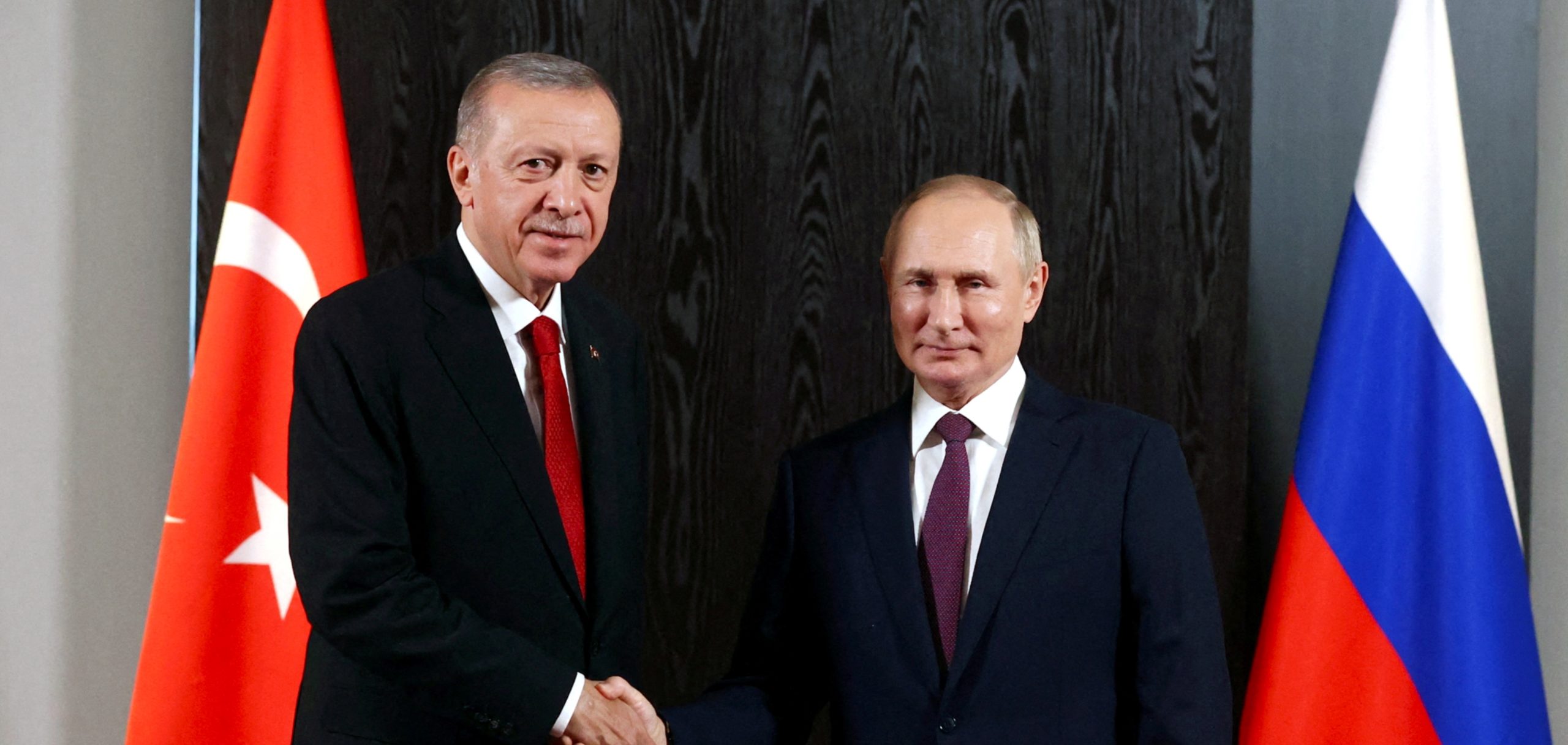
In Ezekiel 38-39 the Bible reveals a coming attack on Israel from “the north parts”(38:15). The country to the furthest north of Israel is Russia. Many Bible teachers, The Friends of Israel included, believe that this refers to Russia, including many Arab nations currently in alliance or support of Russia.
This alliance has gone by the name of The Northern Confederacy. It will come down on Israel in a concerted effort. Russia heads this coalition, followed by the second nation, Persia. Ethiopia, Libya, Sudan, and Turkey also join this alliance.
In recent days the following events have happened, giving a glimpse of this future alliance. Consider the following examples:
• Turkish President Recep Erdogan threatened to invade Israel over the war in Gaza.
• With Israel’s retaliation of killing Hezbollah’s leader following the attack that killed a dozen children in the Golan Heights, Iran has said it will bring “a strong retaliation” to Israel for his killing. Also, Iran has a meter running as to how long before Israel, the Zionist entity, will be destroyed.
• Finally, Putin has supposedly requested Iran to “avoid civilian casualties in retaliatory strike on Israel.”
With these statements, we see a glimpse of the future battle that God calls Gog and Magog. A battle that will defeat significant militaries that at this time threaten Israel, including Russia, Iran, and Turkey. Dear friends, your Bible is more up to date than your newspaper!
Day 306 — Wednesday, August 7
Analysis — Israel Sends Message In The Form Of A Sonic Boom Over Beirut, As US Pressure Emboldens Iran’s Axis Of Evil

The Times of Israel reported that earlier today, Israeli jets set off Sonic booms in Beirut just as Hezbollah leader Hassan Nasrallah was set to start delivering his fiery speech once again threatening the world’s one and only Jewish State.
“Israeli warplanes broke the sound barrier over Beirut just ahead of a pugnacious speech by Hezbollah leader Hassan Nasrallah on Tuesday afternoon, as northern residents were told to stay close to bomb shelters amid a series of cross-border attacks from Lebanon,” the Times of Israel detailed. “At the beginning of his televised address on Tuesday to mark the one-week anniversary of Shukr’s death, Nasrallah charged that the sonic booms set off by Israeli planes flying low over Beirut were intended as a provocation.”
Clearly, this was a message from Israel.
There has been talk of Hezbollah striking Israel prior to Iran’s promised attack. If Hezbollah tries to attack Israel in some major way, Beirut, the capital of Lebanon where Nashallah routinely hides, will be on the table.
Israeli leaders, both military and political, have said this for years. If Lebanon is hosting Hezbollah, if Hezbollah has essentially built a state within a state, Lebanon will also pay a price—hence, sonic booms over Beirut.
The world continues to wait for the promised Iranian axis of evil attack on Israel. It has been one week since the news broke that Israel had eliminated top Hamas Leader Ismail Haniyeh and Hezbollah commander Fuad Shukr. While Shaukr was killed in Beruit, Haniyeh was taken out in Tehran under the noses of the Iranian regime, his host. Ever since, we have been hearing threats of revenge from the Iranian axis.
There have been rumblings that Israel may strike preemptively now. If Israel does not, I believe it would be because the world will howl and blame Israel. Whereas, if Israel waits for the rockets to start flying from Iran and the Jewish State reacts overwhelmingly, they can point to Iran taking the first shot.
It’s a sad state of affairs ladies and gentlemen, but that’s where we’re at in the world right now. The world as a whole is trying to restrain Israel from taking decisive action against genocidal forces that want to wipe it off the map.
On April 13th, Joe Biden told Benjamin Netanyahu, “Take the win,” it wasn’t a successful attack, so let sleeping dogs lie. The problem with that is Iran became emboldened. April 13th, in one sense, was a resounding victory, with 99% of those projectiles being shot down, in another sense, Iran took notes. They got away with it.
We know from the public statements of the Biden Administration that they’re tying Israel’s hands and threatening them not to attack preemptively.
Though under Biden they don’t act as such, the United States remains the leader of the free world. When the United States is weak, it leaves a vacuum for the world’s worst actors to fill. Weak men create hard times, and we’re seeing this throughout the West. Iran is not frightened or nervous about the US—they’re emboldened. That’s why they’re doing this again, and they will very likely try to do it with greater force and magnitude this time around.
Day 306 — Wednesday, August 7
October 7th Terror Mastermind Yahya Sinwar Tapped To Lead Hamas Political Bureau
 Yahya Sinwar, Hamas senior leader in the Gaza Strip and the architect of the Oct. 7 massacre, has been chosen to lead the terrorist organization’s so-called political bureau, replacing Ismail Haniyeh, who was killed in Tehran on July 31.
“Hamas announces the selection of leader Yahya Sinwar as the head of the political bureau of the movement,” the Islamist terror group said in an official statement cited by Arabic media on Tuesday night.
As Hamas published the statement, air-raid sirens were activated in Israeli towns near Gaza, with the Israel Defense Forces confirming that rockets were launched from the Strip. No casualties were reported.
Sinwar, 61, is widely believed to have masterminded the Oct. 7 assault, in which Hamas terrorists murdered some 1,200 people and wounded thousands while raping, torturing, burning and mutilating their victims. Terrorists also took more than 250 hostages back to Gaza.
On Oct. 14, Israel Defense Forces Spokesperson Lt. Col. Richard Hecht told journalists that Sinwar and his command team “are in our sights.”
“Yahya Sinwar is the face of evil. He is the mastermind behind this, like [Osama] bin Laden was. He built his career on murdering Palestinians when he understood they were collaborators. That’s how he became known as the butcher of Khan Yunis [in southern Gaza],” said Hecht.
Sinwar was convicted on multiple murder counts by an Israeli court and sentenced to five life sentences, which he was supposed to serve until his death. However, in October 2011, he was released from prison—having served 22 years—as part of the Gilad Shalit prisoner exchange.
Following his release, Sinwar gained power and popularity within Hamas, becoming its Gaza leader in 2017 by defeating Haniyeh in a vote. Sinwar is now believed to be hiding in the tunnels underneath the Gaza Strip, surrounded by Israeli hostages used as human shields.
Day 305 — Tuesday, August 6
As Iran And Hezbollah Vow To Attack... Stop and Pray for Israel
 After the assassination of Hamas and Hezbollah leadership, Iran and Hezbollah have promised to strike Israel. US Secretary of State Antony Blinken told the G7 countries on a call that this could be imminent.
The purpose of Blinken’s call was allegedly to coordinate the United States’ closest allies and to put diplomatic pressure on Iran and Hezbollah to minimize their retaliatory actions. According to a report, Russian military planes have been landing in Iran regularly, while Iran has deployed Russia’s advanced systems, jamming communication at key locations.
Many are concerned Iran’s retaliation against Israel could potentially surpass the impact of the April 13th strike.
Well, here’s my take — Now more than ever, Israel needs your prayers. There’s an unholy alliance between Iran, Turkey, and Russia. An alliance that the prophet Ezekiel saw and recorded in chapters 38 and 39. Israel remains in an existential fight for its life, so please pray for the Peace of Jerusalem… now more than ever.
Our God has promised to care for Israel and the Jewish people. What a joy it is to pray for the safety of the Apple of His Eye!
Day 305 — Tuesday, August 6
'Significant Blow': Israel Takes Out Commander Of Elite Hezbollah Unit In Drone Strike
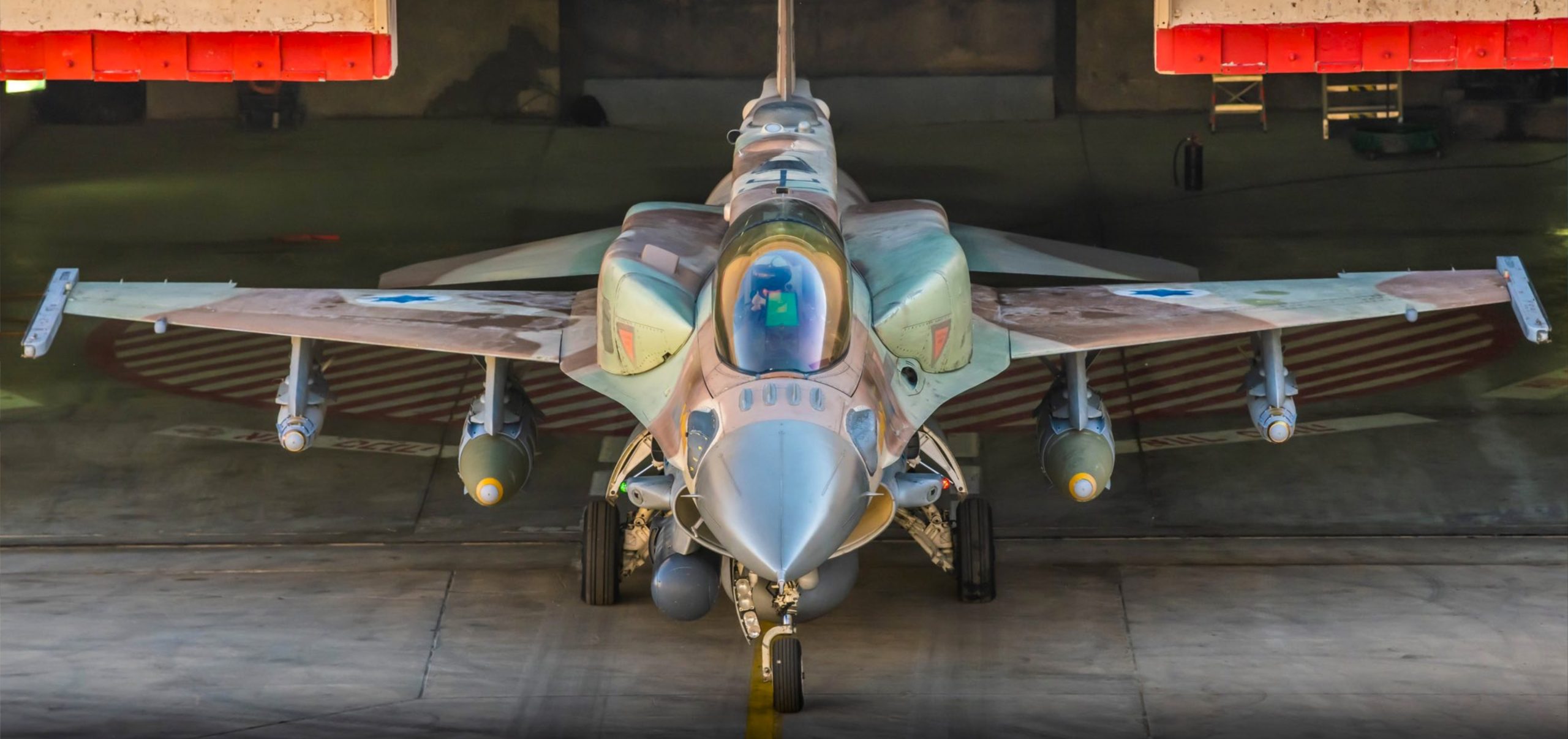
Israeli forces killed a commander of Hezbollah’s elite Radwan unit in a drone strike over southern Lebanon on Monday, officials say.
Video of the attack shows the moment the Israel Defense Force drone focuses on the car carrying Ali Jamal al-Din Jawad on a dirt road in the village of Aabba, with a missile fired within seconds to blow up the vehicle.
The car erupts into fire and smoke, leaving only debris in its wake as the blast manages to avoid the vehicles driving in front of Jawad’s.
The IDF touted his death as a “significant blow” to Hezbollah’s abilities to carry out more attacks on northern Israel after drone strikes from the terror group Monday morning.
One of the attacks left two IDF soldiers wounded and caused a blaze in northern Israel, while another was intercepted by Israel’s aerial defense system.
Along with the strike that killed Jawad, the IDF also deployed fighter jets that destroyed a Hezbollah facility in Kafr Kila.
Hezbollah confirmed Jawad’s death shortly after. The terror group has lost nearly 400 operatives since it began attacking Israel on Oct. 8 in solidarity with Hamas, which Israel has been at war with since Hamas launched its massacre against the Jewish state Oct. 7.
Hezbollah has vowed to retaliate against Israel for the death of a senior commander last week, with the threat compounding after Iran promised to do the same over the assassination of Hamas chief Ismail Haniyeh in Tehran.
The near-daily skirmishes between the IDF and Hezbollah have left tens of thousands of civilians displaced in northern Israel and southern Lebanon, with no signs of when the residents can return home as fears continue to grow over the start of a multifront war.
Day 305 — Tuesday, August 6
Israeli Finance Minister Freezes $26 Million In Palestinian Authority Funds Over ‘Incitement To Terror’
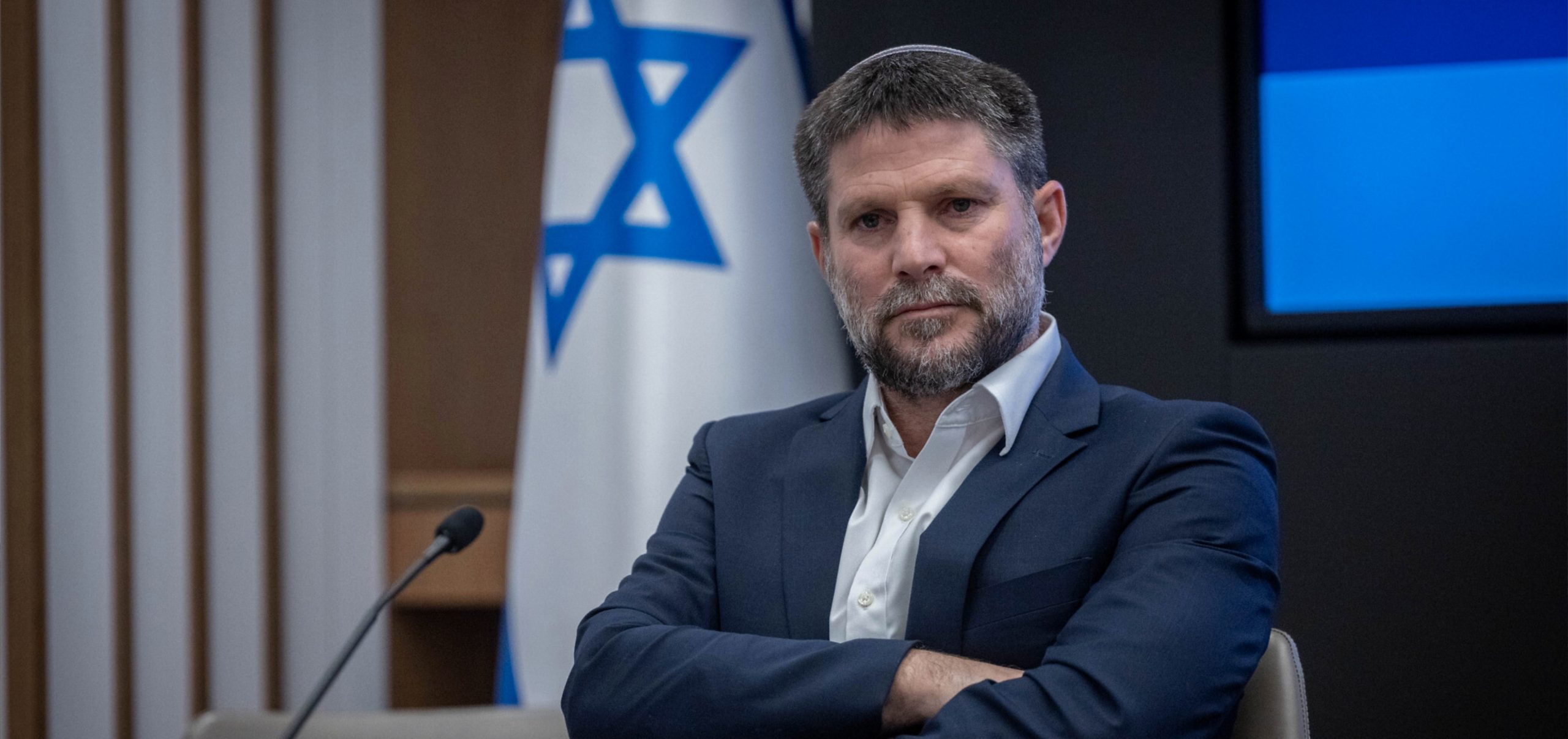
Finance Minister Bezalel Smotrich ordered the seizure on Sunday of around NIS 100 million ($26 million) of tax funds meant to be transferred to the Palestinian Authority, saying that the money would instead be given to the families of terror victims.
The move was aimed at punishing the PA for the payments it has made to families of Palestinian terrorists, Smotrich wrote in a post on X.
“The struggle against terror is not just a military struggle, but also a fight that includes a war against the wild incitement of the Palestinian Authority and the terrorist funds which it directs from its budget to the families of terrorists,” the head of the ultranationalist Religious Zionism party wrote.
“We will continue to protect the safety of Israel’s citizens and fight with all the tools available to us against terrorism and its supporters.”
Since the October 7 Hamas terror onslaught and the outbreak of war with the Gaza terror group, Israel has withheld funds from the PA that were earmarked for Gaza. The money came from the tax revenue Jerusalem collects on behalf of the PA under the 1993 Oslo Accords.
Smotrich halted the transfer, worsening the authority’s already harsh financial crisis, in light of what he said was the PA’s support for Hamas’s October 7 terror onslaught and its actions against Israel on the international stage.
In May, Smotrich suspended transfers altogether, accusing the PA of working against Israel after three countries said they would recognize an independent Palestinian state and as the International Criminal Court’s chief prosecutor said he would seek arrest warrants against Prime Minister Benjamin Netanyahu and Defense Minister Yoav Gallant.
The financial pressure on the PA comes as economic and security conditions in the West Bank have deteriorated sharply, further eroding support for Abbas’s administration, which last held parliamentary elections 18 years ago and which many Palestinians view as wholly corrupt.
Since October 7, troops have arrested some 4,400 wanted Palestinians across the West Bank, including more than 1,850 affiliated with Hamas.
According to the Palestinian Authority health ministry, more than 590 West Bank Palestinians have been killed in that time. The IDF says the vast majority of them were gunmen killed in exchanges of fire, rioters who clashed with troops or terrorists carrying out attacks.
During the same period, 25 Israelis, including security personnel, have been killed in terror attacks in Israel and the West Bank. Another five members of the security forces were killed in clashes with terror operatives in the West Bank.
Day 304 — Monday, August 5
IAF Eliminates Hamas Economy Minister Responsible For Thwarting Aid From Reaching Civilians
The IDF confirmed in a statement on Monday the targeted elimination of the Economy Minister of Hamas, Abed Al-Zeriei, by the IAF who was responsible for thwarting humanitarian aid from reaching civilians in the Gaza Strip.
“Al-Zeriei was involved in the Manufacturing Department of Hamas’ Military Wing and Hamas’ Minister of Economy in Gaza,” the IDF stated on social media.
“He had a significant role in directing Hamas’ efforts to seize control of humanitarian aid entering Gaza and in managing Hamas-controlled markets,” they detailed. “Additionally, he was responsible for the distribution of fuel, gas, and funds for terrorist purposes.”
Harbinger’s Staff
Day 304 — Monday, August 5
Netanyahu Warns: ‘We Strike In Beirut, Yemen, Wherever Necessary’

Israel will stand firm against any threat by Iran and its proxies near and far, including in Beirut and Yemen, Prime Minister Benjamin Netanyahu and Defense Minister Yoav Gallant said on Sunday as the international community scrambled to prevent an all-out Iranian-Israeli war.
“Iran and its minions are looking to surround us in a stranglehold of terrorism. We are determined to stand against them on every front and in every arena – near and far,” Netanyahu said at the state memorial ceremony for Ze’ev Jabotinsky.
“Our readiness in terms of defense is high, be it on the ground or in the air,” Gallant stated.
“Our long hand strikes in the Gaza Strip, in Yemen, in Beirut, wherever necessary,” Netanyahu stressed.
“This is our hand that will reach out ,when the time comes for peace, to whoever wants to establish peaceful relations with us. I believe that it will be so – because peace is made with the strong, not with the weak,” he stated.
Day 304 — Monday, August 5
Israel Is ‘Counting the Minutes Until an Iranian Attack’
 Israel is “counting the minutes until an Iranian attack,” according to Israel’s Army Radio, broadcasting at 7:00 a.m. Monday, local time.
For days, Iran has threatened retaliation for the killing of Hamas political chief Ismail Haniyeh last Wednesday in Tehran, where he was visiting for the inauguration of Iranian president Masoud Pezeshkian.
Reports have indicated that American efforts to convince Iran to hold off on a large attack have fallen on deaf ears.
The Iranian regime suffered a massive blow to its prestige when Haniyeh was killed, because it highlighted the fact that Iran has poor defenses against attack, even as it uses terrorist proxies abroad to attack Israel and other enemies.
The regime is also keen to reverse the humiliation it suffered in April, when it fired some 300 projectiles at Israel, nearly all of which were intercepted, including some by the Jordanian Air Force, the U.S., and other regional allies.
Life in Israel reportedly continued as usual, with civilians going about their everyday tasks, knowing that Hezbollah could attack the northern portion of the country at any moment, or that air raid sirens could sound in major cities.
In similar circumstances in the past — such as the run-up to the Six-Day War in 1967, when Arab leaders made their genocidal intentions known — Israel has launched preemptive strikes rather than waiting to be attacked first.
However, the Biden administration has reportedly indicated that Israel will be on its own if it goes on the offensive. So unless Israeli Prime Minister Benjamin Netanyahu has any surprises planned, Israel will have to brace for attack.
Monday marks the first day of the month of Av, and the start of a nine-day period of mourning, culminating next Tuesday on the Ninth of Av, which is a catch-all day on which various tragedies in Jewish history are commemorated.
It is a particularly inauspicious time on the Jewish calendar. Yet on Sunday, Israeli leaders sounded a note of resolve as they called on the nation to be prepared.
“Whoever seeks to harm us will pay a very heavy price,” Netanyahu said.
Day 304 — Monday, August 5
IDF Uncovers Massive Smuggling Tunnel For Vehicles On Gaza-Egypt Border

Israel Defense Forces discovered a large tunnel that is big enough to allow vehicles to pass through on the border between Gaza and Egypt, officials said Sunday.
The 10-foot-tall tunnel was found last week on the so-called Philadelphi Route as IDF troops were in the area to search for tunnel routes that Hamas terrorists were believed to be using to smuggle arms.
The IDF said their troops have eliminated dozens of such tunnels in the area and will continue to uncover and destroy others that they may find.
Tensions in the Middle East have soared following nearly 10 months of war in Gaza and the killing last week of a senior Hezbollah commander in Lebanon and Hamas’ top political leader in Iran.
Day 304 — Monday, August 5
Analysis — The Fuse Of The Gog-Magog War Is Beginning To Burn
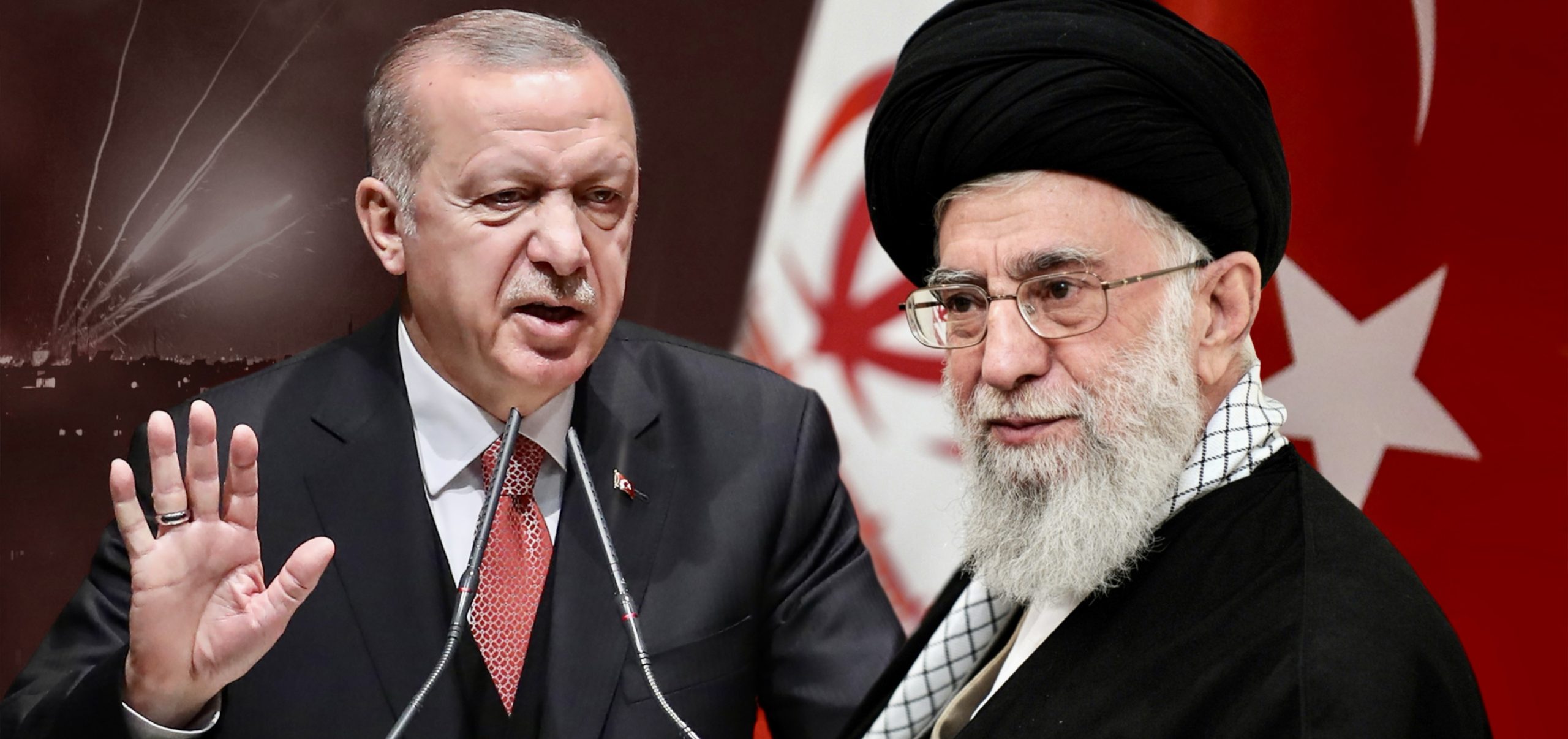
The world right now is holding its collective breath. Will Hezbollah unleash a full offensive, and what part might Iran play in this war if it breaks out? Hezbollah has at least 150,000 missiles and rockets pointing south into Israel, and many of those projectiles are locked on Tel Aviv. A war would certainly devastate Lebanon, but would also do serious damage to Israel.
Now, at the same time that Israel is facing this potential Northern Front war with Hezbollah in Lebanon, Turkey is turning up the heat on Israel in a major way. Earlier this week, they issued a threat of invading Israel. This is a stunning development. A headline from Fox News reads, “Turkey’s Erdogan Threatens To Invade Israel Over The War In Gaza, As Regional Tensions Grow.” This is a shocking and significant escalation by Turkey, which is a member of NATO.
In a statement on Monday, Turkey’s Foreign Ministry compared Prime Minister Benjamin Netanyahu to Adolf Hitler, claiming his actions in Gaza are “genocidal.”
I think we can safely say that the Middle East powder keg is being ignited like never before. The fuse of the Gog-Magog war is beginning to burn, and here we see two of the key players heating up that the Bible says will attack Israel in the end times.
In Ezekiel 38:5, we have Persia, modern-day Iran, mentioned, as well as four ancient nations that are located in modern-day Turkey. Iran and Turkey today are in the headlines with the will, the desire, the means, and the motivation to attack Israel. In addition, Hezbollah could easily be part of the “many peoples with you” mentioned in Ezekiel 38:6 that will join Russia, Iran, and Turkey to invade the Jewish State.
Iran wants to attack Israel and invade Israel. They already have, and it’s doing so through its proxy, Hezbollah, as we speak. Now, the President of Turkey is threatening to invade Israel. Russia, of course, is the other key player in all this; they are “Rosh” mentioned in Ezekiel chapter 38. It would take little convincing at this point for these nations to join together to form this coalition.
Day 303 — Sunday, August 4
Terror In Central Israel: Two Killed, Two Others Wounded In Holon Stabbing Terror Attack
 Two people were killed, and two others were wounded on Sunday morning in a terrorist stabbing attack on Moshe Dayan Street in Holon, Israel’s emergency medical service, Magen David Adom (MDA) reported.
Two victims were identified at the scene: Rina Daniv, a 66-year-old woman, and Avraham Soumichi, in his 80s, who left behind two children and five grandchildren. The MDA said Daniv’s husband, Shimon, 69, is seriously injured, and 26-year-old Yakov Levertov is in moderate condition in the attack.
A policeman who happened to be in the area shot and killed the terrorist, Amar Razak Kamal Odeh, 35, from the Palestinian town of Salfit in the West Bank. He illegally crossed into sovereign Israel three days ago through Jerusalem. IDF troops mapped out his home on Sunday afternoon for demolition.
MDA Ayalon Region Deputy Director Paramedic Rami Meushar and Medicycle Unit Senior EMT Eran Carmel said that those wounded in the attack “were in three separate locations, approximately 500 meters away from each other.”Ynet reported that Odeh began the stabbing spree in the park behind a gas station on Moshe Dayan Street. The stabbing took place in three locations: one was at the entrance to the park, the second was at a bus stop near the gas station, and the third was at the entrance to a bus parking lot on Dan Shomron Street.
Levertov, who was stabbed in the shoulder by the terrorist, told KAN “I saw the terrorist coming from an open area with an angry face. He looked at me and I ignored him. He ran in my direction, grabbed me, and stabbed me in the shoulder.”
Interim police commissioner Avshalom Peled arrived at the scene of the attackwith National Security Minister Itamar Ben-Gvir. “The war is in our streets. Let’s fight,” said Ben-Gvir.
Israel Police spokesman Eli Levy said: “I call on the public to be vigilant these days, as the State of Israel is under dozens of alerts for terrorist attacks and wild incitement to terrorism on social media.” He called on members of the public who have been permitted to carry a weapon to do so at all times.
Day 303 — Sunday, August 4
As Tensions Rise, Iran Warns Hezbollah To Deliberately Target Civilians In Response To Shukr Assassination
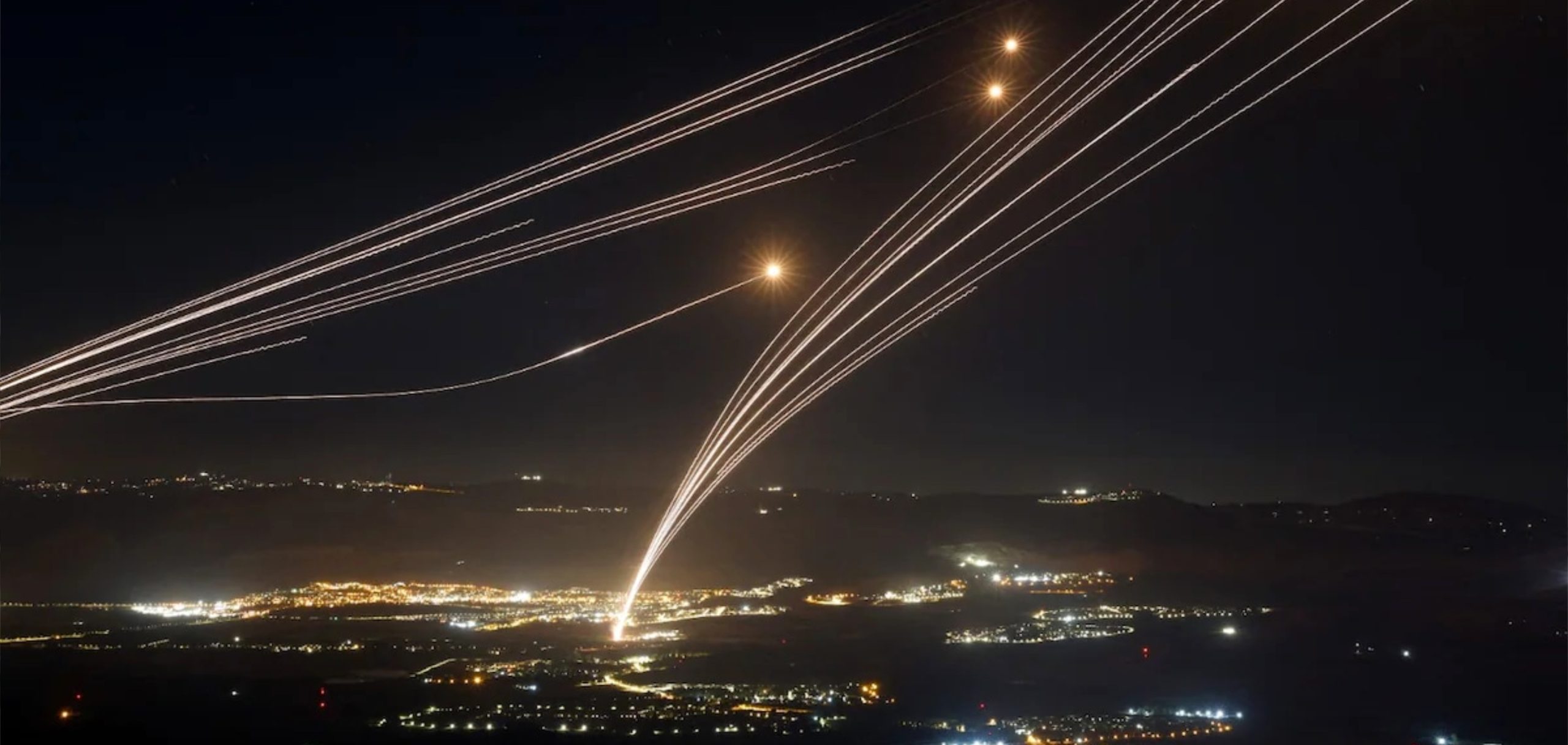
The Permanent Mission of the Islamic Republic of Iran to the United Nations told CBS News in an exclusive on Friday that the Iran-backed terror group Hezbollah would begin deliberately targeting Israeli civilians – claiming that it had not done so until now.
Hezbollah has reportedly decided to increase its targets in attacks in response to the assassination of its commander, Fuad Shukr.
“Until now, Hezbollah and the regime have, in an unwritten understanding, practically adhered to certain limits in their military operations, meaning that confining their actions to border areas and shallow zones, targeting primarily military objectives,” a spokesperson from the delegation told CBS News. “However, the regime’s attack on Dahieh in Beirut and the targeting of a residential building marked a deviation from these boundaries. We anticipate that, in its response, Hezbollah will choose both broader and deeper targets, and will not restrict itself solely to military targets and means.”
While Greek media reported on Friday that it had been warned by foreign intelligence to prepare for attacks on Israeli interests in the country, Iran’s mission told CBS News that Hezbollah would attack Israeli civilians only within Israeli territory.
Earlier this week, Hamas leader Ismail Haniyeh was eliminated in an Iranian guest house. While Israel has not claimed responsibility for the attack, Iran has threatened to retaliate. This retaliation is predicted to come alongside attacks from Iran-backed terror groups in the region.
An Israeli official confirmed to CBS News that while Iran’s April 13 attack was thwarted, Israel was anticipating a “more aggressive” retaliation this time around – a retaliation which could extend to Israeli interests abroad.
Day 303 — Sunday, August 4
Israeli Mother Confronts UNRWA Chief: ‘UNRWA Kidnapped My Son!’
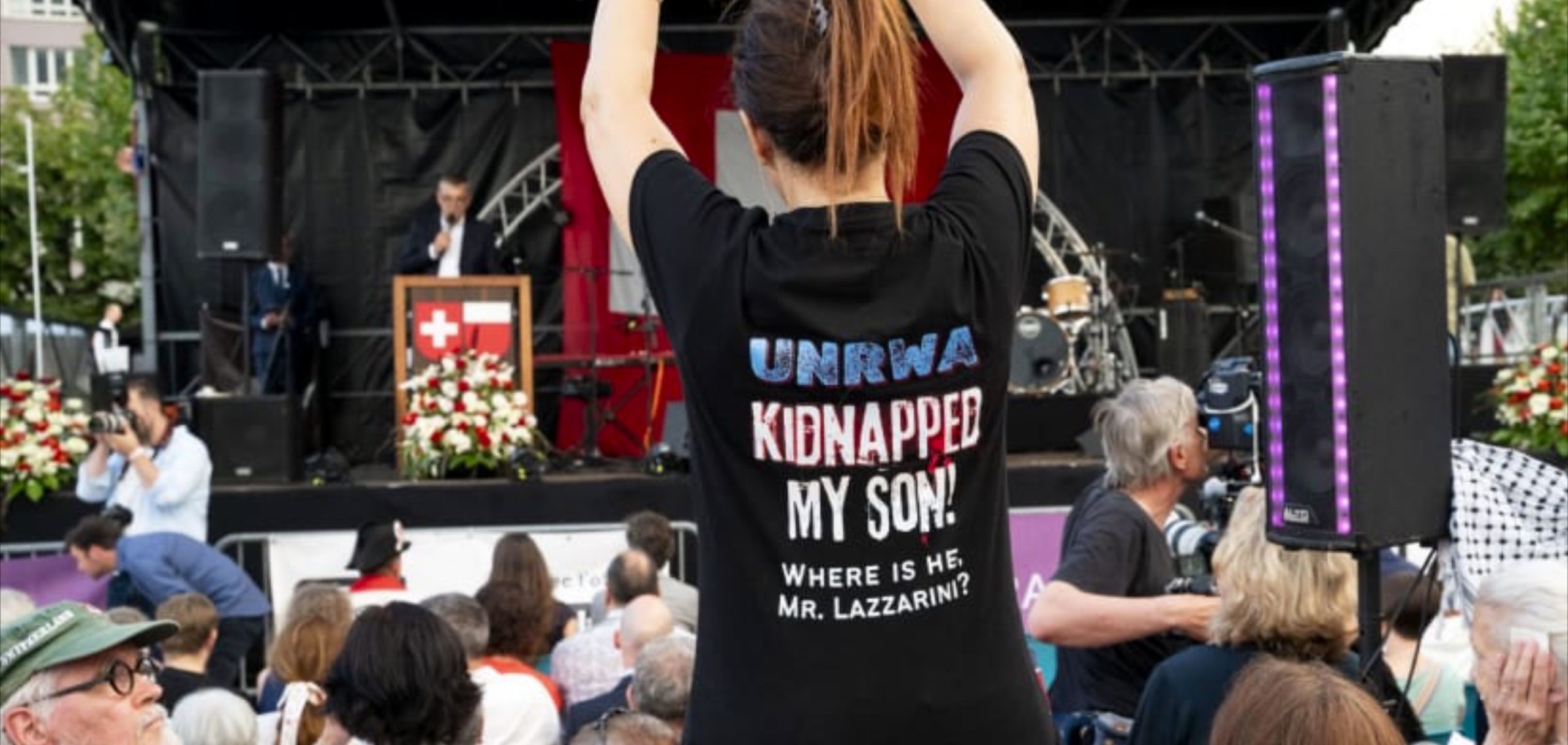
Ayelet Samerano, whose 21-year-old son was murdered by Hamas on October 7, and whose body was taken to Gaza, confronted United Nations Relief and Works Agency (UNRWA) chief Philippe Lazzarini during a speech Thursday.
Samerano’s son, Yonatan, was killed and his “body was seized and taken to the Gaza Strip by an UNRWA employee after he was killed by Hamas terrorists on October 7,” according to the Times of Israel. Israel has said that several UNRWA employees were involved in the October 7 attacks; that many belong to terrorist organizations, and that many applauded the attacks. Several countries suspended their funding as a result, though some have resumed it.
Lazzarini delivered a pro-Palestinian speech in the Swiss town of Lausanne on the occasion of Switzerland’s “National Day.”
But he was heckled mercilessly by Samerano, who stood up wearing a T-shirt with her son’s image on it, and the words: “UNRWA kidnapped my son! Where is he, Mr. Lazzarini?”
UN Watch reported:
Lazzarini delivered the keynote address for the city of Lausanne’s National Day celebrations, and on the 300th day of the captivity of Yonatan’s body in Gaza.
The decision of Lausanne’s Socialist Party mayor Grégoire Junod to invite Lazzarini sparked outrage among many in Switzerland due to UNRWA’s ties to terror.
“An UNRWA worker kidnapped my son. A social worker for a so-called humanitarian organization kidnapped my son,” said Samerano.
Israel has called on Lazzarini to be fired and has said that UNRWA will have no role in postwar Gaza.
Day 302 — Saturday, August 3
Like A Spy Thriller: Amazing Details About Assassination Of Hamas Leader In Tehran Begin To Emerge

Israelis woke up on Wednesday morning to the shocking report that not one, but two of their greatest enemies had suddenly died overnight.
Some hours after Israel struck Fuad Shukr, Hezbollah’s military chief – which would remain unconfirmed until late at night – reports of the death of Hamas leader Ismail Haniyeh in the Iranian capital of Tehran began to emerge.
The initial reports were based on statements from Iranian media citing regime officials and declarations from the Hamas terrorist organization. The reports suggested that the arch-terrorist had been killed in an Israeli airstrike, with media suggesting that a missile attack had been launched from outside the country.
Although the circumstances of Haniyeh’s assassination in a guest house belonging to the Iranian regime, in the heart of its capital, were already deeply humiliating, Thursday evening brought even more embarrassing reports from Western media.
Reports of a drone or missile attack now seem to have been disseminated by Iran’s Revolutionary Guards (IRGC), who were responsible for the security at the guest house, in an attempt to shift blame onto another security force within the country.
Instead, The New York Times reported – and other outlets like The Jerusalem Post confirmed – that Haniyeh was killed by a bomb that had been hidden, several weeks earlier, inside the room where the senior Hamas leader was staying, and that the bomb was activated remotely by Israeli Mossad agents who were on Iranian soil at the time.
Later on Thursday evening, IDF spokesman Brig.-Gen. Daniel Hagari indirectly confirmed this report when he stated that “no additional air strike” was launched by Israeli forces on the night Shukr was killed by the IDF.
There was “not a missile nor an Israeli unmanned aerial vehicle in the entire Middle East that night,” Hagari reiterated, before adding an unusual comment in which he didn’t elaborate.
“In recent years, Iran has been managing a terrorist infrastructure for the transfer of Iranian explosive devices to Israeli territory, for the purposes of terrorist attacks,” the IDF spokesman noted, possibly hinting that Israel had killed Haniyeh in the same manner.
“We will continue to act against Iranian terrorism with determination,” he added.
According to sources of the Jerusalem Post , the bomb had been smuggled into Iran and hidden in the guest house as far back as June. The house is located in an IRGC compound in a high-end suburb of northern Tehran.
During his frequent visits to Tehran over the past decade, the Hamas leader often stayed at this exact guest house, providing a clear target location for his assassination.
The explosive device and its activation utilized similar cutting-edge remote technology to that used in the assassination of Iranian nuclear chief Mohsen Fakhrizadeh several years ago, according to the Post
The device was allegedly calibrated with such precision that the leader of the Palestinian Islamic Jihad (PIJ) terror group, Ziyad al-Nakhalah, survived the blast despite be located in an apartment next door.
The Jerusalem Post report added one more highly interesting piece of information to the puzzle.
Contrary to the widely accepted and reported opinion that the main obstacle to progress in the hostage release negotiations was Hamas’ Gaza leader Yahya Sinwar, the Post reported that in recent weeks, it was often Haniyeh who, through his opposition to certain aspects of the deal, prevented an agreement.
This makes the elimination of Haniyeh, no matter how it was ultimately carried out, even more significant and potentially beneficial for Israel.
All Israel News
Day 302 — Saturday, August 3
Israel Refuses Visas Extensions For A Significant Portion Of U.N. Staff
Israel is refusing to extend visas for a significant portion of U.N. staff and other non-governmental organizations, a Jerusalem-based official with the United Nations said on Thursday.
During a briefing about the humanitarian situation in the Gaza Strip, Andrea De Domenico, head of the U.N. Office for the Coordination of Humanitarian Affairs in the Palestinian territories, told reporters that would be his final briefing, as Israeli authorities had not granted his visa extension request.
The relationship between Israel and the United Nations has spiraled since Oct. 7, with Jerusalem repeatedly accusing U.N. officials and bodies of siding with Hamas, showing little to no care for hostages held in Gaza and applying double standards to the Jewish state, as it fends off attacks and threats on multiple fronts from Iran-aligned terror groups.
De Domenico accused the Israeli military of “becoming more and more aggressive” in dealing with U.N. staff in Judea and Samaria, claiming that his colleagues have been “systematically stopped at checkpoints.”
The Israeli military “request the staff to step out of the vehicle, take out the keys, and [is] wanting to ID every single staff,” he added.
Over the last 10 months, most national U.N. staff cannot access the global body’s facilities in the eastern portion of Jerusalem because of a lack of permits, according to De Domenico.
Colleagues of international nonprofits operating in Judea and Samaria “were telling us that roughly 90% of the international staff have issues with visas,” De Domenico said. “They were saying that as we speak, basically, the visas of many of those are coming to an end, and in the coming weeks, most of them will have to leave the country, or they will not be able to operate.”
Before Oct. 7, Israel granted year-long visas to U.N. staff members. However, after Hamas’s terror attack on southern Israel, the Jewish state granted only six- or three-month visas, according to De Domenico. He told reporters on Thursday that his visa was extended for a month, and he was told it would not be renewed again.
“The reason that has been put on the table—the straw that broke the camel’s back—is the publication of the Children and Armed Conflict report,” De Domenico said. “They alluded to long-standing issues or reporting that we also have been doing, but this has been communicated verbally.”
“There is no formal communication that I received despite asking repeatedly for that,” he added. (JNS sought comment from the Israeli Foreign Ministry.)
The annual Children and Armed Conflict report, or the so-called “list of shame,” included Israel for the first time this year and accused Israeli military and security forces of grave violations against children during wartime.
JNS first reported on systematic problems with the compilation of the report, which included contributions of data from the U.N. Office for the Coordination of Humanitarian Affairs. De Domenico’s office has been criticized for publishing Gaza casualty data from Hamas offices without challenging the numbers.
At the Thursday briefing, JNS asked Stephane Dujarric, spokesman for U.N. Secretary-General António Guterres, how widespread the lack of visa extensions are for U.N. officials in Israel and Judea and Samaria.
“Let’s just say it’s spread,” Dujarric told JNS.

Day 308 — Friday, August 9
IDF Takes Out Senior Hamas Terrorist By Airstrike In Lebanon
IAF aircraft, directed by IDF and Israel Security Agency (Shin Bet) intelligence, on Friday evening struck in the area of Sidon in Lebanon, and eliminated terrorist Samer Mahmoud al-Haj, a senior commander in the Hamas terrorist organization in Lebanon, who was responsible for advancing terror attacks and projectile launches from Lebanon toward Israeli territory.
According to the IDF Spokesperson’s Unit, Samer operated as the military forces’ commander in the Ain al-Hilweh camp located in the area of Sidon and was responsible for the recruitment and training of terrorists to attack the State of Israel.
“The IDF and ISA will continue operating against the Hamas terrorist organization and dismantling the terrorist organization’s capabilities,” the statement said.
Earlier, a Lebanese security source told AFP that an Israeli strike on a vehicle in Sidon killed a Hamas security official from the nearby Ain al-Hilweh “Palestinian refugee” camp.
“An Israeli strike targeted a Hamas movement security official from the Ain al-Hilweh camp while he was inside his vehicle in the city of Sidon,” the source said.
About 55,000 people registered as “Palestinian refugees” reside in Ain Al-Hilweh, which is notorious for its lawlessness and violence. Deadly clashes have erupted there in the past, between rival Palestinian Arab factions.
Day 308 — Friday, August 9
Iran Training Russians On Short-Range Missiles, Arms Transfer Expected Soon — Sources
Dozens of Russian military personnel are being trained in Iran to use the Fath-360 close-range ballistic missile system, two European intelligence sources tell Reuters, adding that they expect the imminent delivery of hundreds of the satellite-guided weapons to Russia for its war in Ukraine.
Russian defense ministry representatives are believed to have signed a contract on Dec. 13 in Tehran with Iranian officials for the Fath-360 and another ballistic missile system built by Iran’s government-owned Aerospace Industries Organization called the Ababil, say the two intelligence officials, who request anonymity in order to discuss sensitive matters.
Citing multiple confidential intelligence sources, the officials say that Russian personnel have visited Iran to learn how to operate the Fath-360 defense system, which launches missiles with a maximum range of 120 km (75 miles) and a warhead of 150 kg. One of the sources says that “the only next possible” step after training would be actual delivery of the missiles to Russia.
Moscow possesses its own ballistic missiles, but the supply of Fath-360s could allow Russia to use more of its arsenal for targets beyond the front line, while employing Iranian warheads for closer-range targets, a military expert says.
A spokesman for the US National Security Council said the United States and its NATO allies and G7 partners “are prepared to deliver a swift and severe response if Iran were to move forward with such transfers.”
It “would represent a dramatic escalation in Iran’s support for Russia’s war of aggression against Ukraine,” the spokesman says. “The White House has repeatedly warned of the deepening security partnership between Russia and Iran since the outset of Russia’s full-scale invasion of Ukraine.”
Russia’s defense ministry does not respond to a request for comment.
Iran’s permanent mission to the United Nations in New York said in a statement that the Islamic Republic had forged a long-term strategic partnership with Russia in various areas, including military cooperation.
“Nevertheless, from an ethical standpoint, Iran refrains from transferring any weapons, including missiles, that could potentially be used in the conflict with Ukraine until it is over,” the statement says.
The two intelligence sources gave no exact timeframe for the expected delivery of Fath-360 missiles to Russia but say it will be soon. They do not provide any intelligence on the status of the Abibal contract.
A third intelligence source from another European agency says it had also received information that Russia had sent soldiers to Iran to train in the use of Iranian ballistic missile systems, without providing further details.
Such training is standard practice for Iranian weapons supplied to Russia, says the third source, who also declined to be named because of the sensitivity of the information.
A senior Iranian official, who requested anonymity, says Iran sold missiles and drones to Russia but has not provided Fath-360 missiles. There was no legal prohibition on Tehran selling such weapons to Russia, the source added.
“Iran and Russia engage in the mutual purchase of parts and military equipment. How each country uses this equipment is entirely their decision,” the official says, adding that Iran did not sell weapons to Russia for use in the Ukraine war.
Day 308 — Friday, August 9
Rashida Tlaib Shares Fake Poll Claiming Israelis Support Raping Terrorists
Congresswoman Rashida Tlaib shared a fake poll today on the social network X, claiming that most Israelis support the rape of imprisoned terrorists. The Muslim legislator, a member of the House of Representatives, shared a satirical tweet that included a poorly edited version of an older survey published over a year ago on a different topic.
The fake poll posed the question, “Do you agree that a soldier is allowed to rape a bound terrorist?” with 47 percent of respondents supposedly answering “agree” and 43 percent “disagree.” The original survey, presented by Amit Segal of Israeli Channel 12 over a year ago, asked, “Do you agree that the government relies on supporters of terrorism?”
The fake poll was disseminated by a pro-Palestinian user named Nora Arakat, along with the caption, “When you tell a certain society that it has the right to commit genocide, of course, they will think they have the right to rape.”
Day 308 — Friday, August 9
Security Cabinet Convenes As Israel Warns Hezbollah Of ‘Destruction’ If It Attacks
The security cabinet convened Thursday night in Tel Aviv, as the country continued to brace for a potential attack by the Hezbollah terror group in Lebanon.
The cabinet met in the underground command room of the Kirya military headquarters, Hebrew media reported, the first time such a meeting has been held there since the night of April 13-14, when Iran launched some 300 missiles and drones at Israel, almost all of which were intercepted.
The meeting was taking place in “the pit,” as the underground command room is known, but not due to immediate security concerns, but rather in order to drill for a potential emergency situation, Channel 12 news reported, as Israel was preparing for a promised attack by Iran and its terror proxies to several recent high-profile assassinations.
According to Channel 13, the Israeli assessment on Thursday was that Hezbollah would try to target a senior Israeli official in retaliation for the Israeli killing of commander Fuad Shukr on July 30, which came after a Hezbollah rocket attack killed twelve children in the Golan Heights days earlier.
Defense Minister Yoav Gallant issued an unusual missive to the Lebanese people, warning in Arabic that Israel will fight Hezbollah “with all its might” if the group continues to escalate tensions.
“The State of Israel wants peace, prosperity and stability on both sides of the northern border and therefore will in no way allow the Hezbollah militia to destabilize the border and the region. If Hezbollah continues its aggression, Israel will fight it with all its might,” Gallant wrote.
“Remember [Hezbollah leader Hassan] Nasrallah’s regret for the dangerous and uncalculated adventure of August 2006,” he said, referring to the Second Lebanon War, a 34-day conflict that erupted when Hezbollah operatives captured two Israeli soldiers and killed others.
“Those who play with fire should expect destruction,” Gallant said.
Haifa Mayor Yona Yahav also referred to the Second Lebanon War on Thursday, noting to public broadcaster Kan that Hezbollah’s arsenal is significantly more advanced than it was 18 years ago: “They are very precise missiles, and they are expected to fire 4,000 missiles at us each day,” Yahav said.
“That’s what we’re preparing [our citizens] for. In any case, we’re asking them to prepare enough food, enough water, because we’re expecting they’ll have to stay there [in shelters and safe areas] for four to six days” if Hezbollah attacks, he added.
At an assessment at the IDF Home Front Command, Gallant said Israel was working to provide an adequate warning of any expected attack, but advised citizens to go on with their lives as usual in the absence of special directions.
“The public’s resilience allows us to make the right operational decisions. In the face of the enemy’s attempt to sow fear, we must continue with normal daily life,” he said in remarks provided by his office.
Israel has been bracing for an attack since the military assassinated Shukr last week, hours before Ismail Haniyeh, the political leader of the Hamas terror group, was also killed in a blast in Tehran, for which Israel has neither claimed nor denied responsibility.
Iran, which supports both Hezbollah and Hamas, vowed to retaliate for the assassinations.
Day 307 — Thursday, August 8
Conflicting Messages In Iran Regarding Retaliatory Strike On Israel, As New President Reportedly Urges Ayatollah To Reconsider
A report from Iran International, which is affiliated with Iran’s dissidents, claims that newly elected President Masoud Pezeshkian asked the Supreme Leader Ayatollah Ali Khamenei not to strike Israel, warning that an Israeli response could have a devastating effect on the country.
According to the channel, the report in Iran International is based on anonymous sources who are familiar with the details of a recent meeting between Pezeshkian and Khamenei.
According to the report, Pezeshkian warned that a decision by Israel to launch a significant response could “cripple the Iranian economy and potentially lead to the country’s collapse.”
He also is said to have warned that a war with Israel would harm Iran’s ability to rebuild its economy and deepen the rift between the regime and Iranian citizens, as well as severely damage Iran’s international standing.
Pezeshkian is seen by many as a member of Iran’s more moderate and reformist camp, while Khamenei leads the extremist camp in the regime. Pezeshkian ran on a campaign promising to restore Iran’s standing in the international arena. The supreme leader of Iran holds ultimate authority in all matters of state and the final decision regarding Iran’s response to Haniyeh’s assassination will be his.
The report in Iran International said that Khamenei did not give any indications at the meeting of his response to Pezeshkian’s concerns and did not express opposition or support for the remarks.
In apparent contrast to that report, Iran state media reported that Pezeshkian told French President Emmanuel Macron in a phone call that, “Iran will never remain silent in the face of aggression against its interests and security.”
Pezeshkian reportedly told Macron that Western countries should do more to pressure Israel.
“If the United States and the Western countries are truly seeking to prevent war in the region, they must force this regime (Israel) to stop the genocide and attacks on Gaza and accept a ceasefire,” Pezeshkian said.
Meanwhile, speaking at a ceremony in Iran’s southern port city of Bandar Abbas on Wednesday, Major General Abdolrahim Mousavi, the commander in chief of Iran’s army said that Israel “cannot save themselves from annihilation.”
“The Zionist regime will soon receive a strong and definite response, and there is no doubt about it,” Mousavi said, according to Iranian media. “It is clear that they themselves have realized the speed of their own destruction, and by doing so, they want to save themselves from the quagmire, but they definitely cannot save themselves from annihilation.”
Mousavi also praised the selection of Hamas’ Gaza leader Yahya Sinwar, to be the head of the political office.
He said the selection of Sinwar “indicates the strong determination of the brave and honorable movement for resistance and struggle.”
Day 306 — Wednesday, August 7
Analysis — A Glimpse of Gog and Magog?
In Ezekiel 38-39 the Bible reveals a coming attack on Israel from “the north parts”(38:15). The country to the furthest north of Israel is Russia. Many Bible teachers, The Friends of Israel included, believe that this refers to Russia, including many Arab nations currently in alliance or support of Russia.
This alliance has gone by the name of The Northern Confederacy. It will come down on Israel in a concerted effort. Russia heads this coalition, followed by the second nation, Persia. Ethiopia, Libya, Sudan, and Turkey also join this alliance.
In recent days the following events have happened, giving a glimpse of this future alliance. Consider the following examples:
• Turkish President Recep Erdogan threatened to invade Israel over the war in Gaza.
• With Israel’s retaliation of killing Hezbollah’s leader following the attack that killed a dozen children in the Golan Heights, Iran has said it will bring “a strong retaliation” to Israel for his killing. Also, Iran has a meter running as to how long before Israel, the Zionist entity, will be destroyed.
• Finally, Putin has supposedly requested Iran to “avoid civilian casualties in retaliatory strike on Israel.”
With these statements, we see a glimpse of the future battle that God calls Gog and Magog. A battle that will defeat significant militaries that at this time threaten Israel, including Russia, Iran, and Turkey. Dear friends, your Bible is more up to date than your newspaper!
Day 306 — Wednesday, August 7
Analysis — Israel Sends Message In The Form Of A Sonic Boom Over Beirut, As US Pressure Emboldens Iran’s Axis Of Evil
The Times of Israel reported that earlier today, Israeli jets set off Sonic booms in Beirut just as Hezbollah leader Hassan Nasrallah was set to start delivering his fiery speech once again threatening the world’s one and only Jewish State.
“Israeli warplanes broke the sound barrier over Beirut just ahead of a pugnacious speech by Hezbollah leader Hassan Nasrallah on Tuesday afternoon, as northern residents were told to stay close to bomb shelters amid a series of cross-border attacks from Lebanon,” the Times of Israel detailed. “At the beginning of his televised address on Tuesday to mark the one-week anniversary of Shukr’s death, Nasrallah charged that the sonic booms set off by Israeli planes flying low over Beirut were intended as a provocation.”
Clearly, this was a message from Israel.
There has been talk of Hezbollah striking Israel prior to Iran’s promised attack. If Hezbollah tries to attack Israel in some major way, Beirut, the capital of Lebanon where Nashallah routinely hides, will be on the table.
Israeli leaders, both military and political, have said this for years. If Lebanon is hosting Hezbollah, if Hezbollah has essentially built a state within a state, Lebanon will also pay a price—hence, sonic booms over Beirut.
The world continues to wait for the promised Iranian axis of evil attack on Israel. It has been one week since the news broke that Israel had eliminated top Hamas Leader Ismail Haniyeh and Hezbollah commander Fuad Shukr. While Shaukr was killed in Beruit, Haniyeh was taken out in Tehran under the noses of the Iranian regime, his host. Ever since, we have been hearing threats of revenge from the Iranian axis.
There have been rumblings that Israel may strike preemptively now. If Israel does not, I believe it would be because the world will howl and blame Israel. Whereas, if Israel waits for the rockets to start flying from Iran and the Jewish State reacts overwhelmingly, they can point to Iran taking the first shot.
It’s a sad state of affairs ladies and gentlemen, but that’s where we’re at in the world right now. The world as a whole is trying to restrain Israel from taking decisive action against genocidal forces that want to wipe it off the map.
On April 13th, Joe Biden told Benjamin Netanyahu, “Take the win,” it wasn’t a successful attack, so let sleeping dogs lie. The problem with that is Iran became emboldened. April 13th, in one sense, was a resounding victory, with 99% of those projectiles being shot down, in another sense, Iran took notes. They got away with it.
We know from the public statements of the Biden Administration that they’re tying Israel’s hands and threatening them not to attack preemptively.
Though under Biden they don’t act as such, the United States remains the leader of the free world. When the United States is weak, it leaves a vacuum for the world’s worst actors to fill. Weak men create hard times, and we’re seeing this throughout the West. Iran is not frightened or nervous about the US—they’re emboldened. That’s why they’re doing this again, and they will very likely try to do it with greater force and magnitude this time around.
Day 306 — Wednesday, August 7
October 7th Terror Mastermind Yahya Sinwar Tapped To Lead Hamas Political Bureau
Yahya Sinwar, Hamas senior leader in the Gaza Strip and the architect of the Oct. 7 massacre, has been chosen to lead the terrorist organization’s so-called political bureau, replacing Ismail Haniyeh, who was killed in Tehran on July 31.
“Hamas announces the selection of leader Yahya Sinwar as the head of the political bureau of the movement,” the Islamist terror group said in an official statement cited by Arabic media on Tuesday night.
As Hamas published the statement, air-raid sirens were activated in Israeli towns near Gaza, with the Israel Defense Forces confirming that rockets were launched from the Strip. No casualties were reported.
Sinwar, 61, is widely believed to have masterminded the Oct. 7 assault, in which Hamas terrorists murdered some 1,200 people and wounded thousands while raping, torturing, burning and mutilating their victims. Terrorists also took more than 250 hostages back to Gaza.
On Oct. 14, Israel Defense Forces Spokesperson Lt. Col. Richard Hecht told journalists that Sinwar and his command team “are in our sights.”
“Yahya Sinwar is the face of evil. He is the mastermind behind this, like [Osama] bin Laden was. He built his career on murdering Palestinians when he understood they were collaborators. That’s how he became known as the butcher of Khan Yunis [in southern Gaza],” said Hecht.
Sinwar was convicted on multiple murder counts by an Israeli court and sentenced to five life sentences, which he was supposed to serve until his death. However, in October 2011, he was released from prison—having served 22 years—as part of the Gilad Shalit prisoner exchange.
Following his release, Sinwar gained power and popularity within Hamas, becoming its Gaza leader in 2017 by defeating Haniyeh in a vote. Sinwar is now believed to be hiding in the tunnels underneath the Gaza Strip, surrounded by Israeli hostages used as human shields.
Day 305 — Tuesday, August 6
As Iran And Hezbollah Vow To Attack... Stop and Pray for Israel
After the assassination of Hamas and Hezbollah leadership, Iran and Hezbollah have promised to strike Israel. US Secretary of State Antony Blinken told the G7 countries on a call that this could be imminent.
The purpose of Blinken’s call was allegedly to coordinate the United States’ closest allies and to put diplomatic pressure on Iran and Hezbollah to minimize their retaliatory actions. According to a report, Russian military planes have been landing in Iran regularly, while Iran has deployed Russia’s advanced systems, jamming communication at key locations.
Many are concerned Iran’s retaliation against Israel could potentially surpass the impact of the April 13th strike.
Well, here’s my take — Now more than ever, Israel needs your prayers. There’s an unholy alliance between Iran, Turkey, and Russia. An alliance that the prophet Ezekiel saw and recorded in chapters 38 and 39. Israel remains in an existential fight for its life, so please pray for the Peace of Jerusalem… now more than ever.
Our God has promised to care for Israel and the Jewish people. What a joy it is to pray for the safety of the Apple of His Eye!
Day 305 — Tuesday, August 6
'Significant Blow': Israel Takes Out Commander Of Elite Hezbollah Unit In Drone Strike
Israeli forces killed a commander of Hezbollah’s elite Radwan unit in a drone strike over southern Lebanon on Monday, officials say.
Video of the attack shows the moment the Israel Defense Force drone focuses on the car carrying Ali Jamal al-Din Jawad on a dirt road in the village of Aabba, with a missile fired within seconds to blow up the vehicle.
The car erupts into fire and smoke, leaving only debris in its wake as the blast manages to avoid the vehicles driving in front of Jawad’s.
The IDF touted his death as a “significant blow” to Hezbollah’s abilities to carry out more attacks on northern Israel after drone strikes from the terror group Monday morning.
One of the attacks left two IDF soldiers wounded and caused a blaze in northern Israel, while another was intercepted by Israel’s aerial defense system.
Along with the strike that killed Jawad, the IDF also deployed fighter jets that destroyed a Hezbollah facility in Kafr Kila.
Hezbollah confirmed Jawad’s death shortly after. The terror group has lost nearly 400 operatives since it began attacking Israel on Oct. 8 in solidarity with Hamas, which Israel has been at war with since Hamas launched its massacre against the Jewish state Oct. 7.
Hezbollah has vowed to retaliate against Israel for the death of a senior commander last week, with the threat compounding after Iran promised to do the same over the assassination of Hamas chief Ismail Haniyeh in Tehran.
The near-daily skirmishes between the IDF and Hezbollah have left tens of thousands of civilians displaced in northern Israel and southern Lebanon, with no signs of when the residents can return home as fears continue to grow over the start of a multifront war.
Day 305 — Tuesday, August 6
Israeli Finance Minister Freezes $26 Million In Palestinian Authority Funds Over ‘Incitement To Terror’
Finance Minister Bezalel Smotrich ordered the seizure on Sunday of around NIS 100 million ($26 million) of tax funds meant to be transferred to the Palestinian Authority, saying that the money would instead be given to the families of terror victims.
The move was aimed at punishing the PA for the payments it has made to families of Palestinian terrorists, Smotrich wrote in a post on X.
“The struggle against terror is not just a military struggle, but also a fight that includes a war against the wild incitement of the Palestinian Authority and the terrorist funds which it directs from its budget to the families of terrorists,” the head of the ultranationalist Religious Zionism party wrote.
“We will continue to protect the safety of Israel’s citizens and fight with all the tools available to us against terrorism and its supporters.”
Since the October 7 Hamas terror onslaught and the outbreak of war with the Gaza terror group, Israel has withheld funds from the PA that were earmarked for Gaza. The money came from the tax revenue Jerusalem collects on behalf of the PA under the 1993 Oslo Accords.
Smotrich halted the transfer, worsening the authority’s already harsh financial crisis, in light of what he said was the PA’s support for Hamas’s October 7 terror onslaught and its actions against Israel on the international stage.
In May, Smotrich suspended transfers altogether, accusing the PA of working against Israel after three countries said they would recognize an independent Palestinian state and as the International Criminal Court’s chief prosecutor said he would seek arrest warrants against Prime Minister Benjamin Netanyahu and Defense Minister Yoav Gallant.
The financial pressure on the PA comes as economic and security conditions in the West Bank have deteriorated sharply, further eroding support for Abbas’s administration, which last held parliamentary elections 18 years ago and which many Palestinians view as wholly corrupt.
Since October 7, troops have arrested some 4,400 wanted Palestinians across the West Bank, including more than 1,850 affiliated with Hamas.
According to the Palestinian Authority health ministry, more than 590 West Bank Palestinians have been killed in that time. The IDF says the vast majority of them were gunmen killed in exchanges of fire, rioters who clashed with troops or terrorists carrying out attacks.
During the same period, 25 Israelis, including security personnel, have been killed in terror attacks in Israel and the West Bank. Another five members of the security forces were killed in clashes with terror operatives in the West Bank.
Day 304 — Monday, August 5
IAF Eliminates Hamas Economy Minister Responsible For Thwarting Aid From Reaching Civilians
The IDF confirmed in a statement on Monday the targeted elimination of the Economy Minister of Hamas, Abed Al-Zeriei, by the IAF who was responsible for thwarting humanitarian aid from reaching civilians in the Gaza Strip.
“Al-Zeriei was involved in the Manufacturing Department of Hamas’ Military Wing and Hamas’ Minister of Economy in Gaza,” the IDF stated on social media.
“He had a significant role in directing Hamas’ efforts to seize control of humanitarian aid entering Gaza and in managing Hamas-controlled markets,” they detailed. “Additionally, he was responsible for the distribution of fuel, gas, and funds for terrorist purposes.”
Harbinger’s Staff
Day 304 — Monday, August 5
Netanyahu Warns: ‘We Strike In Beirut, Yemen, Wherever Necessary’
Israel will stand firm against any threat by Iran and its proxies near and far, including in Beirut and Yemen, Prime Minister Benjamin Netanyahu and Defense Minister Yoav Gallant said on Sunday as the international community scrambled to prevent an all-out Iranian-Israeli war.
“Iran and its minions are looking to surround us in a stranglehold of terrorism. We are determined to stand against them on every front and in every arena – near and far,” Netanyahu said at the state memorial ceremony for Ze’ev Jabotinsky.
“Our readiness in terms of defense is high, be it on the ground or in the air,” Gallant stated.
“Our long hand strikes in the Gaza Strip, in Yemen, in Beirut, wherever necessary,” Netanyahu stressed.
“This is our hand that will reach out, when the time comes for peace, to whoever wants to establish peaceful relations with us. I believe that it will be so – because peace is made with the strong, not with the weak,” he stated.
Day 304 — Monday, August 5
Israel Is ‘Counting the Minutes Until an Iranian Attack’
Israel is “counting the minutes until an Iranian attack,” according to Israel’s Army Radio, broadcasting at 7:00 a.m. Monday, local time.
For days, Iran has threatened retaliation for the killing of Hamas political chief Ismail Haniyeh last Wednesday in Tehran, where he was visiting for the inauguration of Iranian president Masoud Pezeshkian.
Reports have indicated that American efforts to convince Iran to hold off on a large attack have fallen on deaf ears.
The Iranian regime suffered a massive blow to its prestige when Haniyeh was killed, because it highlighted the fact that Iran has poor defenses against attack, even as it uses terrorist proxies abroad to attack Israel and other enemies.
The regime is also keen to reverse the humiliation it suffered in April, when it fired some 300 projectiles at Israel, nearly all of which were intercepted, including some by the Jordanian Air Force, the U.S., and other regional allies.
Life in Israel reportedly continued as usual, with civilians going about their everyday tasks, knowing that Hezbollah could attack the northern portion of the country at any moment, or that air raid sirens could sound in major cities.
In similar circumstances in the past — such as the run-up to the Six-Day War in 1967, when Arab leaders made their genocidal intentions known — Israel has launched preemptive strikes rather than waiting to be attacked first.
However, the Biden administration has reportedly indicated that Israel will be on its own if it goes on the offensive. So unless Israeli Prime Minister Benjamin Netanyahu has any surprises planned, Israel will have to brace for attack.
Monday marks the first day of the month of Av, and the start of a nine-day period of mourning, culminating next Tuesday on the Ninth of Av, which is a catch-all day on which various tragedies in Jewish history are commemorated.
It is a particularly inauspicious time on the Jewish calendar. Yet on Sunday, Israeli leaders sounded a note of resolve as they called on the nation to be prepared.
“Whoever seeks to harm us will pay a very heavy price,” Netanyahu said.
Day 304 — Monday, August 5
IDF Uncovers Massive Smuggling Tunnel For Vehicles On Gaza-Egypt Border
Israel Defense Forces discovered a large tunnel that is big enough to allow vehicles to pass through on the border between Gaza and Egypt, officials said Sunday.
The 10-foot-tall tunnel was found last week on the so-called Philadelphi Route as IDF troops were in the area to search for tunnel routes that Hamas terrorists were believed to be using to smuggle arms.
The IDF said their troops have eliminated dozens of such tunnels in the area and will continue to uncover and destroy others that they may find.
Tensions in the Middle East have soared following nearly 10 months of war in Gaza and the killing last week of a senior Hezbollah commander in Lebanon and Hamas’ top political leader in Iran.
Day 304 — Monday, August 5
Analysis — The Fuse Of The Gog-Magog War Is Beginning To Burn
The world right now is holding its collective breath. Will Hezbollah unleash a full offensive, and what part might Iran play in this war if it breaks out? Hezbollah has at least 150,000 missiles and rockets pointing south into Israel, and many of those projectiles are locked on Tel Aviv. A war would certainly devastate Lebanon, but would also do serious damage to Israel.
Now, at the same time that Israel is facing this potential Northern Front war with Hezbollah in Lebanon, Turkey is turning up the heat on Israel in a major way. Earlier this week, they issued a threat of invading Israel. This is a stunning development. A headline from Fox News reads, “Turkey’s Erdogan Threatens To Invade Israel Over The War In Gaza, As Regional Tensions Grow.” This is a shocking and significant escalation by Turkey, which is a member of NATO.
In a statement on Monday, Turkey’s Foreign Ministry compared Prime Minister Benjamin Netanyahu to Adolf Hitler, claiming his actions in Gaza are “genocidal.”
I think we can safely say that the Middle East powder keg is being ignited like never before. The fuse of the Gog-Magog war is beginning to burn, and here we see two of the key players heating up that the Bible says will attack Israel in the end times.
In Ezekiel 38:5, we have Persia, modern-day Iran, mentioned, as well as four ancient nations that are located in modern-day Turkey. Iran and Turkey today are in the headlines with the will, the desire, the means, and the motivation to attack Israel. In addition, Hezbollah could easily be part of the “many peoples with you” mentioned in Ezekiel 38:6 that will join Russia, Iran, and Turkey to invade the Jewish State.
Iran wants to attack Israel and invade Israel. They already have, and it’s doing so through its proxy, Hezbollah, as we speak. Now, the President of Turkey is threatening to invade Israel. Russia, of course, is the other key player in all this; they are “Rosh” mentioned in Ezekiel chapter 38. It would take little convincing at this point for these nations to join together to form this coalition.
Day 303 — Sunday, August 4
Terror In Central Israel: Two Killed, Two Others Wounded In Holon Stabbing Terror Attack
Two people were killed, and two others were wounded on Sunday morning in a terrorist stabbing attack on Moshe Dayan Street in Holon, Israel’s emergency medical service, Magen David Adom (MDA) reported.
Two victims were identified at the scene: Rina Daniv, a 66-year-old woman, and Avraham Soumichi, in his 80s, who left behind two children and five grandchildren. The MDA said Daniv’s husband, Shimon, 69, is seriously injured, and 26-year-old Yakov Levertov is in moderate condition in the attack.
A policeman who happened to be in the area shot and killed the terrorist, Amar Razak Kamal Odeh, 35, from the Palestinian town of Salfit in the West Bank. He illegally crossed into sovereign Israel three days ago through Jerusalem. IDF troops mapped out his home on Sunday afternoon for demolition.
MDA Ayalon Region Deputy Director Paramedic Rami Meushar and Medicycle Unit Senior EMT Eran Carmel said that those wounded in the attack “were in three separate locations, approximately 500 meters away from each other.”Ynet reported that Odeh began the stabbing spree in the park behind a gas station on Moshe Dayan Street. The stabbing took place in three locations: one was at the entrance to the park, the second was at a bus stop near the gas station, and the third was at the entrance to a bus parking lot on Dan Shomron Street.
Levertov, who was stabbed in the shoulder by the terrorist, told KAN “I saw the terrorist coming from an open area with an angry face. He looked at me and I ignored him. He ran in my direction, grabbed me, and stabbed me in the shoulder.”
Interim police commissioner Avshalom Peled arrived at the scene of the attackwith National Security Minister Itamar Ben-Gvir. “The war is in our streets. Let’s fight,” said Ben-Gvir.
Israel Police spokesman Eli Levy said: “I call on the public to be vigilant these days, as the State of Israel is under dozens of alerts for terrorist attacks and wild incitement to terrorism on social media.” He called on members of the public who have been permitted to carry a weapon to do so at all times.
Day 303 — Sunday, August 4
As Tensions Rise, Iran Warns Hezbollah To Deliberately Target Civilians In Response To Shukr Assassination
The Permanent Mission of the Islamic Republic of Iran to the United Nations told CBS News in an exclusive on Friday that the Iran-backed terror group Hezbollah would begin deliberately targeting Israeli civilians – claiming that it had not done so until now.
Hezbollah has reportedly decided to increase its targets in attacks in response to the assassination of its commander, Fuad Shukr.
“Until now, Hezbollah and the regime have, in an unwritten understanding, practically adhered to certain limits in their military operations, meaning that confining their actions to border areas and shallow zones, targeting primarily military objectives,” a spokesperson from the delegation told CBS News. “However, the regime’s attack on Dahieh in Beirut and the targeting of a residential building marked a deviation from these boundaries. We anticipate that, in its response, Hezbollah will choose both broader and deeper targets, and will not restrict itself solely to military targets and means.”
While Greek media reported on Friday that it had been warned by foreign intelligence to prepare for attacks on Israeli interests in the country, Iran’s mission told CBS News that Hezbollah would attack Israeli civilians only within Israeli territory.
Earlier this week, Hamas leader Ismail Haniyeh was eliminated in an Iranian guest house. While Israel has not claimed responsibility for the attack, Iran has threatened to retaliate. This retaliation is predicted to come alongside attacks from Iran-backed terror groups in the region.
An Israeli official confirmed to CBS News that while Iran’s April 13 attack was thwarted, Israel was anticipating a “more aggressive” retaliation this time around – a retaliation which could extend to Israeli interests abroad.
Day 303 — Sunday, August 4
Israeli Mother Confronts UNRWA Chief: ‘UNRWA Kidnapped My Son!’
Ayelet Samerano, whose 21-year-old son was murdered by Hamas on October 7, and whose body was taken to Gaza, confronted United Nations Relief and Works Agency (UNRWA) chief Philippe Lazzarini during a speech Thursday.
Samerano’s son, Yonatan, was killed and his “body was seized and taken to the Gaza Strip by an UNRWA employee after he was killed by Hamas terrorists on October 7,” according to the Times of Israel. Israel has said that several UNRWA employees were involved in the October 7 attacks; that many belong to terrorist organizations, and that many applauded the attacks. Several countries suspended their funding as a result, though some have resumed it.
Lazzarini delivered a pro-Palestinian speech in the Swiss town of Lausanne on the occasion of Switzerland’s “National Day.”
But he was heckled mercilessly by Samerano, who stood up wearing a T-shirt with her son’s image on it, and the words: “UNRWA kidnapped my son! Where is he, Mr. Lazzarini?”
UN Watch reported:
Lazzarini delivered the keynote address for the city of Lausanne’s National Day celebrations, and on the 300th day of the captivity of Yonatan’s body in Gaza.
The decision of Lausanne’s Socialist Party mayor Grégoire Junod to invite Lazzarini sparked outrage among many in Switzerland due to UNRWA’s ties to terror.
“An UNRWA worker kidnapped my son. A social worker for a so-called humanitarian organization kidnapped my son,” said Samerano.
Israel has called on Lazzarini to be fired and has said that UNRWA will have no role in postwar Gaza.
Day 302 — Saturday, August 3
Like A Spy Thriller: Amazing Details About Assassination Of Hamas Leader In Tehran Begin To Emerge
Israelis woke up on Wednesday morning to the shocking report that not one, but two of their greatest enemies had suddenly died overnight.
Some hours after Israel struck Fuad Shukr, Hezbollah’s military chief – which would remain unconfirmed until late at night – reports of the death of Hamas leader Ismail Haniyeh in the Iranian capital of Tehran began to emerge.
The initial reports were based on statements from Iranian media citing regime officials and declarations from the Hamas terrorist organization. The reports suggested that the arch-terrorist had been killed in an Israeli airstrike, with media suggesting that a missile attack had been launched from outside the country.
Although the circumstances of Haniyeh’s assassination in a guest house belonging to the Iranian regime, in the heart of its capital, were already deeply humiliating, Thursday evening brought even more embarrassing reports from Western media.
Reports of a drone or missile attack now seem to have been disseminated by Iran’s Revolutionary Guards (IRGC), who were responsible for the security at the guest house, in an attempt to shift blame onto another security force within the country.
Instead, The New York Times reported – and other outlets like The Jerusalem Post confirmed – that Haniyeh was killed by a bomb that had been hidden, several weeks earlier, inside the room where the senior Hamas leader was staying, and that the bomb was activated remotely by Israeli Mossad agents who were on Iranian soil at the time.
Later on Thursday evening, IDF spokesman Brig.-Gen. Daniel Hagari indirectly confirmed this report when he stated that “no additional air strike” was launched by Israeli forces on the night Shukr was killed by the IDF.
There was “not a missile nor an Israeli unmanned aerial vehicle in the entire Middle East that night,” Hagari reiterated, before adding an unusual comment in which he didn’t elaborate.
“In recent years, Iran has been managing a terrorist infrastructure for the transfer of Iranian explosive devices to Israeli territory, for the purposes of terrorist attacks,” the IDF spokesman noted, possibly hinting that Israel had killed Haniyeh in the same manner.
“We will continue to act against Iranian terrorism with determination,” he added.
According to sources of the Jerusalem Post , the bomb had been smuggled into Iran and hidden in the guest house as far back as June. The house is located in an IRGC compound in a high-end suburb of northern Tehran.
During his frequent visits to Tehran over the past decade, the Hamas leader often stayed at this exact guest house, providing a clear target location for his assassination.
The explosive device and its activation utilized similar cutting-edge remote technology to that used in the assassination of Iranian nuclear chief Mohsen Fakhrizadeh several years ago, according to the Post
The device was allegedly calibrated with such precision that the leader of the Palestinian Islamic Jihad (PIJ) terror group, Ziyad al-Nakhalah, survived the blast despite be located in an apartment next door.
The Jerusalem Post report added one more highly interesting piece of information to the puzzle.
Contrary to the widely accepted and reported opinion that the main obstacle to progress in the hostage release negotiations was Hamas’ Gaza leader Yahya Sinwar, the Post reported that in recent weeks, it was often Haniyeh who, through his opposition to certain aspects of the deal, prevented an agreement.
This makes the elimination of Haniyeh, no matter how it was ultimately carried out, even more significant and potentially beneficial for Israel.
All Israel News
Day 302 — Saturday, August 3
Israel Refuses Visas Extensions For A Significant Portion Of U.N. Staff
Israel is refusing to extend visas for a significant portion of U.N. staff and other non-governmental organizations, a Jerusalem-based official with the United Nations said on Thursday.
During a briefing about the humanitarian situation in the Gaza Strip, Andrea De Domenico, head of the U.N. Office for the Coordination of Humanitarian Affairs in the Palestinian territories, told reporters that would be his final briefing, as Israeli authorities had not granted his visa extension request.
The relationship between Israel and the United Nations has spiraled since Oct. 7, with Jerusalem repeatedly accusing U.N. officials and bodies of siding with Hamas, showing little to no care for hostages held in Gaza and applying double standards to the Jewish state, as it fends off attacks and threats on multiple fronts from Iran-aligned terror groups.
De Domenico accused the Israeli military of “becoming more and more aggressive” in dealing with U.N. staff in Judea and Samaria, claiming that his colleagues have been “systematically stopped at checkpoints.”
The Israeli military “request the staff to step out of the vehicle, take out the keys, and [is] wanting to ID every single staff,” he added.
Over the last 10 months, most national U.N. staff cannot access the global body’s facilities in the eastern portion of Jerusalem because of a lack of permits, according to De Domenico.
Colleagues of international nonprofits operating in Judea and Samaria “were telling us that roughly 90% of the international staff have issues with visas,” De Domenico said. “They were saying that as we speak, basically, the visas of many of those are coming to an end, and in the coming weeks, most of them will have to leave the country, or they will not be able to operate.”
Before Oct. 7, Israel granted year-long visas to U.N. staff members. However, after Hamas’s terror attack on southern Israel, the Jewish state granted only six- or three-month visas, according to De Domenico. He told reporters on Thursday that his visa was extended for a month, and he was told it would not be renewed again.
“The reason that has been put on the table—the straw that broke the camel’s back—is the publication of the Children and Armed Conflict report,” De Domenico said. “They alluded to long-standing issues or reporting that we also have been doing, but this has been communicated verbally.”
“There is no formal communication that I received despite asking repeatedly for that,” he added. (JNS sought comment from the Israeli Foreign Ministry.)
The annual Children and Armed Conflict report, or the so-called “list of shame,” included Israel for the first time this year and accused Israeli military and security forces of grave violations against children during wartime.
JNS first reported on systematic problems with the compilation of the report, which included contributions of data from the U.N. Office for the Coordination of Humanitarian Affairs. De Domenico’s office has been criticized for publishing Gaza casualty data from Hamas offices without challenging the numbers.
At the Thursday briefing, JNS asked Stephane Dujarric, spokesman for U.N. Secretary-General António Guterres, how widespread the lack of visa extensions are for U.N. officials in Israel and Judea and Samaria.
“Let’s just say it’s spread,” Dujarric told JNS.