
What happens when the church fails to be “salt” to the surrounding culture? The Biblical answer is straightforward. Jesus said in Matthew 5:13, “You are the salt of the earth; but if the salt loses its flavor, how shall it be seasoned? It is then good for nothing but to be thrown out and trampled underfoot by men.”
In the United States, the church once had remarkable influence. The nation was heavily shaped by Biblical values, God-given freedoms, and a government and judicial structure gleaned from God’s Word.
British evangelist George Whitefield is considered one of America’s “spiritual founding fathers.” Pastor Greg Laurie, in his article, “The Legacies of Two Georges,” emphasized the impact of the Gospel message in laying the groundwork for the nation.
“Between 1740 and 1742, before the United States was even a nation, the Great Awakening had a remarkable impact in New England,” he detailed. “Historians estimate that 25,000 to 50,000 people were added to New England church membership as a result of the revival. With New England’s population only around 300,000 at the time, that means as many as one out of every six people in the region may have been reached in some way by the revival, in which George Whitefield played a leading role. The evangelistic wildfire left in its wake fertile spiritual ground on which the nation could be built. The Christian truths and principles that guided the lives of the new converts found their way into the nation’s DNA. They formed the cornerstone of the United States government.”
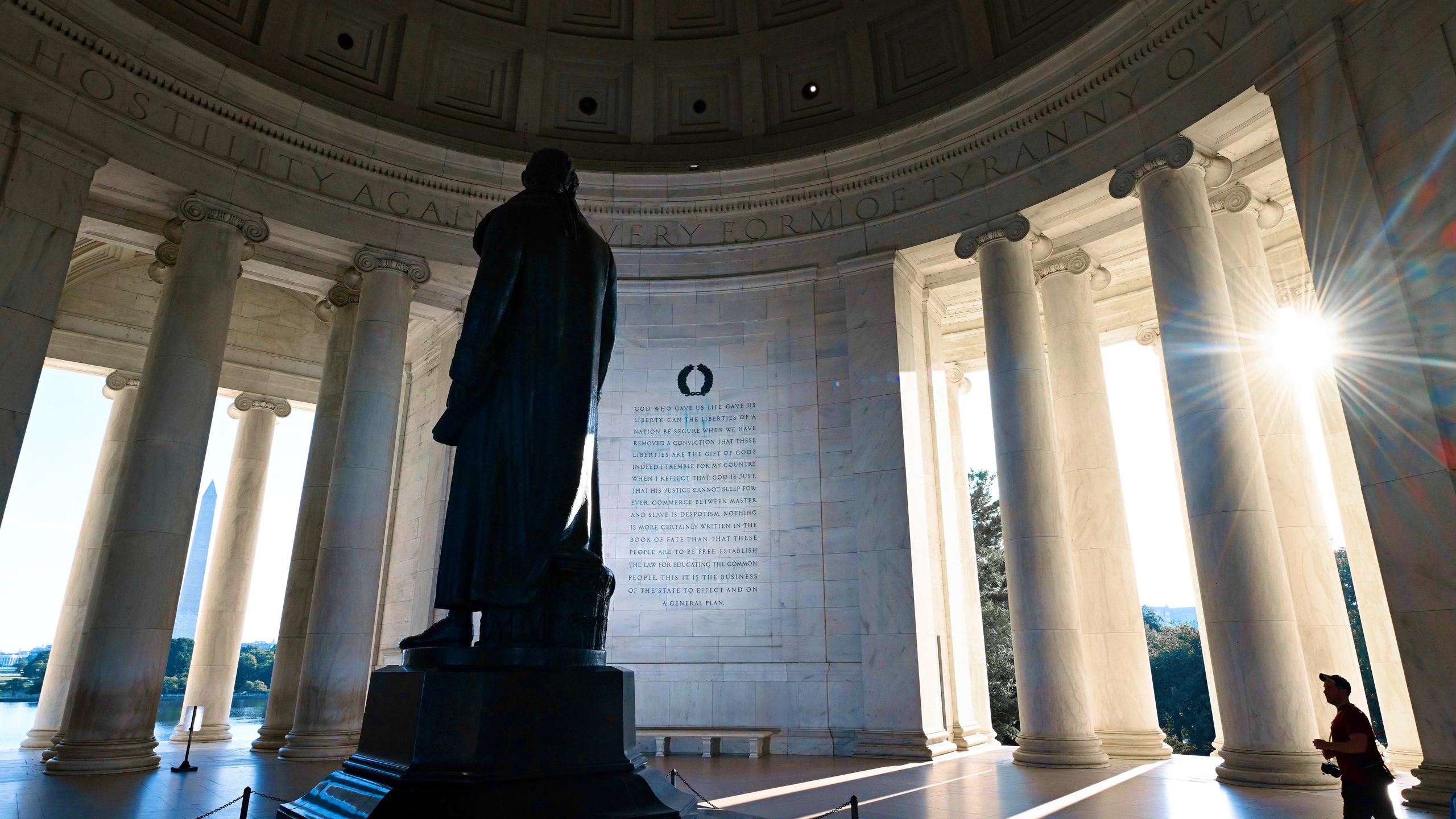
From its founding, national leadership understood the critical need to recognize God and safeguard religious liberty; it was for this reason that America’s third President, Thomas Jefferson, wrote a letter to the Danbury Baptists, who were being persecuted by the state of Connecticut. It was from this letter that the words “building a wall of separation between Church & State” were first mentioned.
As noted by the legal group First Liberty, “In context, it’s clear this wall of separation was not created to keep religion out of the State. It was simply intended to protect religious freedom and to place boundaries on the State’s control over the Church.”
Today, the words “separation between Church & State” have been stripped of all their original meaning. The phrase intended to prevent the government from stifling the church has been warped to insist that the church must be stifled from exerting any influence in government and the direction of political culture.
This twisted assertion gained steam in the 1950s when the Johnson Amendment prohibited 501(c)(3) tax-exempt nonprofit organizations, including ministries and churches, from endorsing or participating in political campaigns (a flagrant defiance of Thomas Jefferson’s words).
Seeing the effectiveness of the ruse, people wielding “separation of Church and State” banners have increasingly used the phrase to argue against any form of direct Christian involvement in government—such as prayer, Biblical references, and acknowledgment of God.
What began as a nation shaped by Biblical truth, Christian conviction, and evangelism turned into a nation that has cast aside the voice of the church.
Far from pushing back, the response of numerous Christian leaders was to willingly surrender their influence in the political sphere altogether and forgo any discussion of topics labeled as “political” by society—even deeply Biblical issues.
Many, including entire denominations, have justified their lack of societal influence, arguing that this inversion of the “separation of Church and State” is a Biblical position. “God never called us to involve ourselves in the affairs of worldly nations!” Nothing could be further from the truth.
Consider the influence God gave to:
- Joseph and Moses with the pharaohs of Egypt.
- Daniel, Hananiah, Mishael, and Azariah with the kings of Babylon.
- Esther, Mordecai, and Nehemiah with the Kings of Persia.
- Elijah, Isaiah, Jeremiah, and other prophets with the Kings of Israel and Judah.
- The apostle Paul with the leadership of the Roman Empire.
These Biblical examples, and many more, demonstrate God’s desire for His word to reach and influence the leadership of nations, and how He uses His servants to deliver the message.
Even the more-than-a-little-reluctant prophet Jonah was used to warn the city of Nineveh, resulting in a decree by “the king and his nobles,” which read: “Do not let people or animals, herds or flocks, taste anything; do not let them eat or drink. But let people and animals be covered with sackcloth. Let everyone call urgently on God. Let them give up their evil ways and their violence. Who knows? God may yet relent and with compassion turn from his fierce anger so that we will not perish.”
Because of the church’s extraordinary influence in early America, such decrees occurred frequently in the United States. President Abraham Lincoln called for a national day of “humiliation, fasting, and prayer” in response to the Civil War, as did James Buchanan in the lead-up to the Civil War, Zachary Taylor in response to a mass cholera outbreak, George Washington in response to the War of Independence, and other Presidents. Even Thomas Jefferson, the one who wrote the words “separation between Church & State,” called for a day of fasting, humiliation, and prayer during the British blockade of the Boston Harbor.
A national day of prayer in modern America was spearheaded by evangelist Billy Graham, who in 1952 pressed Congress to formally set aside a day of recognition and calling out to God.
“We are re-affirming our faith in the God of our Fathers… confessing our need of a Savior from our sin… and in humiliation and repentance beseeching Him to cleanse us from all unrighteousness,” Graham said on the east steps of the Capitol building before tens of thousands in attendance and millions more watching at home.
It was two short years later when the Johnson Amendment would be introduced, taking direct aim at the influence of churches and ministry leaders on the nation. While many maintained their boldness, others shrank back and twisted the Bible to justify their silence.
The church’s impact on America has been integral to the nation’s success.
The United States may be the most vivid example demonstrating the blessing of the church rightly taking hold of its responsibility to be “salt,” and the devastating consequence when the “salt” fails in its preserving role. As Jesus said, the consequence of the latter is to become “good for nothing”… “thrown out and trampled underfoot by men.”
Christians should care about the direction of the nation in which they live. Proverbs 14:34 states, “Righteousness exalts a nation, but sin is a reproach to any people.” In which direction should the church be drawing a nation? Will we boldly call the nation back to righteous Biblical recognition, or will we be silent as people, politicians, and leaders careen away from God?
As stated at the beginning of this article, the Biblical answer is straightforward.