November 4, 2026

November, 4, 2026
November 4, 2026

give

untitled artwork

untitled artwork

World news biblically understood

TRENDING:

Not A ‘Land Dispute’: Why Is The Media Ignoring The Systematic Killing Of Christians In Nigeria

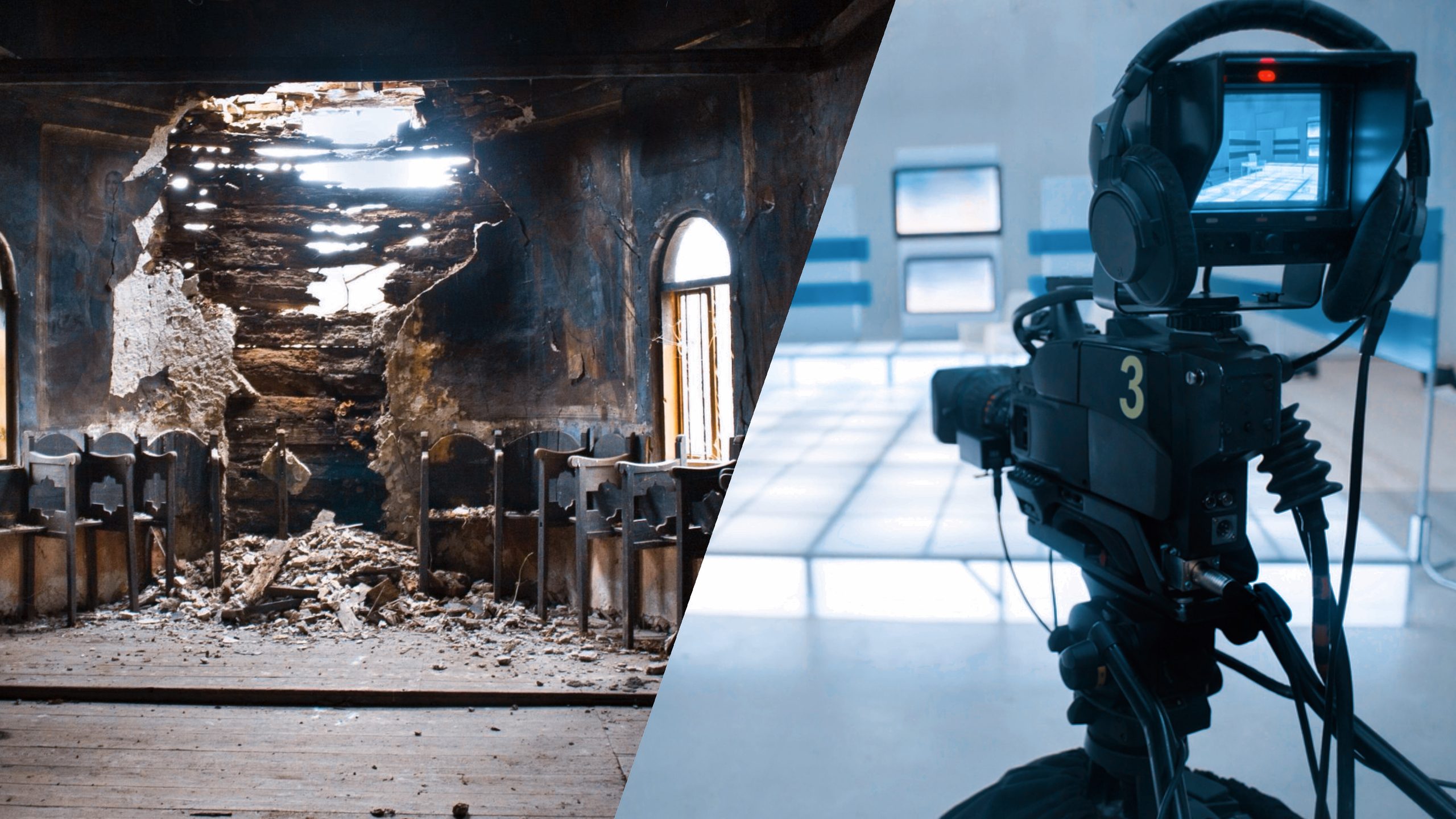
In 2002, the year Islamic terrorist group Boko Haram was founded in northeast Nigeria, a band of jihadists attacked a Christian church in the region, burning the building to the ground and murdering multiple members, including the pastor.

The attack was a shocking precursor to what’s transpired in the years since as Boko Haram, which aims to implement strict Sharia law across all of Nigeria—including in the Christian South—began to spread its murderous ideology.

More than a decade later, terrorists struck the same church, which had rebuilt and continued to meet. This time, machete-wielding jihadists beheaded the widow of the late pastor and killed the youngest of her five children.

Then last April, on Good Friday, militants hit the same church yet again, setting it ablaze as part of a larger round of deadly attacks on Easter weekend across Nigeria’s North and Middle Belt.

The pastor—who as a child had lived through his father’s murder, then his mother’s beheading and his youngest sibling’s death—survived the attack, and the congregation, with help from a Nigeria-based ministry, has been able to salvage much of the church building and reopen. But many Christians living in the Muslim-majority North, especially in rural areas, are not as fortunate.

Of the victims who survive, thousands end up in camps for internally displaced persons (IDPs) or hiding in forests, where many die from injuries, disease, lack of clean water or malnutrition.

Government narrative vs. the evidence

Multiple sources working among displaced Christians in northern Nigeria told Decision similar stories of sustained, systematic violence by jihadists toward Christian churches and communities, often while government security forces wait nearby until the attacks cease before responding. There is also a government narrative often repeated by the international community and some press agencies that the violence stems mostly from “complex” disputes between Muslim herders and Christian farmers and that no genocide exists.

In fact, the Nigerian government spent $9 million in the last year to hire Washington, D.C., lobbying firm DCI Group to help boost its image inside the Beltway. And it has been trumpeting a few instances this year where it rescued Christian captives and cooperated with U.S. military interventions, including one that eradicated the Islamic State’s global No. 2 leader.

Yet with Islamic State West Africa Province (ISWAP) operating in Nigeria’s northwest, Boko Haram in the northeast, and both groups radicalizing and arming young, uneducated Fulani herdsmen to wreak havoc, the Nigerian government’s narrative is hard to square with the statistics and reports from aid workers.

Life for the Christian minority in the North is a contrast to the Christian South. In northern Nigeria, 12 states have Sharia written into their civil codes. Muslims caught converting to Christ from Islam face possible death sentences.

Growing and underreported

Even liberal atheist comedian Bill Maher—unlike most of the American mainstream media—has noticed. “I’m not a Christian, but they are systematically killing the Christians in Nigeria,” he said on his HBO show while discussing the jihadist elements in Nigeria, adding, “They are literally attempting to wipe out the Christian population of an entire country. Where are the kids protesting this?” 

“The fact that this issue has not gotten on people’s radar, it’s pretty amazing,” Maher noted.

In just the first six months of 2026, 2,500 Nigerian Christians had been murdered, 2,800 abducted, 800 forced to convert to Islam, and 300 churches destroyed. By Sept. 8, the number of dead had swelled to more than 4,200.

“Every morning I get a report from our teams,” said Brad Brandon, a former U.S. pastor who leads a ministry called Across Nigeria. In a late September phone interview, he told Decision, “I think there were 30 people that have been killed so far this week. It’s ridiculous how many people are being slaughtered and nothing is being done.”

Since 2009, the death toll for Christians has been staggering: Estimates range from 80,000 martyrs on the low end, upward to 130,000. Another 12 million have been displaced by the violence in those 17 years, according to statistics cited by CeCe Heil, who was appointed by Senate Majority Leader John Thune in May to a term on the U.S. Commission on International Religious Freedom.

Heil, an attorney with the American Center for Law and Justice, which has long championed the plight of Nigeria’s Christians, acknowledges that land and ethnic disputes happen, but they are a fraction of the conflict.

“When you have a country where more Christians are killed for their faith than all the other countries combined,” Heil said, “when you go to areas in the North that are segregated into Christian areas and Muslim areas, and it’s only the Christian area of a community that’s hit and targeted and wiped out, you just have to look at the facts.”

Brandon echoed Heil’s assessment, as did the leader of a Nigerian-led non-governmental organization (NGO) that has been helping thousands of orphans, widows and displaced people find practical and spiritual hope for more than 17 years.

“In the large majority of attacks,” said the NGO leader, who asked that her name be withheld, “Christians are targeted, and we can prove that by data. They live in fear, but they also walk in courage. They are not prone to run away because of their faith.”

In 12 years, Brandon’s shoes have stood on dirt clods from freshly dug graves more times than he wishes to count. One recent example, he said, was an attack in June in the northwest Nigerian settlement of Larabar Zango.

“When we got there, 14 people had been massacred, two pregnant women and a 4-year-old boy among the victims. And by the way, that wasn’t a farming community.”

Brandon said many people are surprised to learn that his ministry works among both Christian communities and some Fulani clans in the North. He said while young, radicalized Fulani males commit much of the violence, especially in Nigeria’s Middle Belt, most of Nigeria’s 17 million Fulani people, who are about 95% Muslim, are largely illiterate and not ideological.

On the other hand, the radicalized Fulani responsible for much of the violence number about 30,000—fewer than half a percent of the Fulani ethnic group. But those 30,000, supplied with AK-47s and dirt bikes by Boko Haram and ISWAP, are largely undeterred by security forces and often paid for each act of terrorism.

‘Don’t be fooled’

In October 2025, the Trump State Department restored Country of Particular Concern (CPC) status to Nigeria after the Biden administration removed it in 2021. CPCs represent the world’s most severe violators of human rights. The CPC label limits Nigeria’s trade and financial transactions with U.S.-based entities. Annually, the State Department is mandated by Congress to review the status of CPC nations. Nigeria’s was due to be reviewed in October.

Brandon said he would be disappointed but not shocked “if somehow Nigeria has manipulated the situation to get off of that [CPC] list.”

Nigeria is Africa’s most populous nation and largest economy, with sizable gold and oil reserves and home to four of the continent’s largest airlines. The CPC designation matters to leaders in the capital city of Abuja.

“Don’t be fooled,” Brandon warned. “If there’s anything the Nigerian government has perfected the art of, it is to put up window dressing and make everything look like they’ve done what they’ve been asked to do.”

Brandon and the NGO leader both told Decision that the government’s efforts to quell the violence are largely a ruse.

“The security forces take the videos and show the soldiers who are on the scene dealing with the situation. But they don’t show up until hours after the attack,” Brandon said. “In my own personal experience, those security forces were just 20 minutes down the road.”

Even worse, Brandon said he has repeatedly heard of Nigerian forces watching as Boko Haram soldiers arrived to destroy Christian communities. The NGO leader corroborated Brandon’s claim.

On Capitol Hill, Rep. Riley Moore (R-W.Va.), a freshman congressman whom Trump tapped along with Oklahoma Republican Rep. Tom Cole to lead an investigation into the Nigerian genocide last October, said his Christian faith drives him to pray for Nigeria daily.

“It is an absolute human tragedy over there,” Moore told Decision. “But please keep praying. I believe in the power of prayer. And raise awareness. Talk to your members of Congress.”

If the terrorism continues unabated, Moore said, it could destabilize the entire African continent.

“Left unchecked, northern Nigeria could become a new caliphate and a major base for global terrorist operations, and that would pose direct national security risks to the United States,” he warned.

But even amid unspeakable heartbreak, the Gospel message can’t be stymied.

Brandon said Across Nigeria has led more than 7,000 Fulani to faith in Christ since 2014, often by building trust with local chieftains through digging water wells and providing education and basic medical care.

“We’re seeing God move,” he said. “There is a revival happening among the Fulani. It’s not being talked about because there’s nobody there to report it, but it’s there nonetheless. Their hearts are open.” 

We Want Politicians Who Have A Biblical Worldview… But Politics Can Never Solve Our Most Significant Problem

The Bible tells us that our ultimate problem is a spiritual problem—it’s sin! It’s a heart issue. We’re all sinners in rebellion against God, and sin nature is ultimately at the root of all of our problems. Crime, immorality, corruption, greed, poverty, disease—all of these exist because of our sin and the fallen state of creation. Because our ultimate problem is sin, politics will never ultimately solve our problems. Now, don’t misunderstand me: politics matter, certainly, and we want politicians who have a biblical worldview and will make decisions based on the truths of Scripture. But even a “best-case scenario” with politics won’t ultimately save anyone—even if it makes a difference in this life.

There Is Only One ‘Preparedness Plan’ The Unbelieving World Should Be Focusing On: Getting Right With God

I'm sure you've seen all the headlines and the news alerts: “Be prepared,” “An emergency is coming,” “Make a plan.” We are being told a global crisis is coming—and not just one in your hometown. I've read two dozen doomsday scenarios where we are to stock up on food, medicine, have a strategy to meet up with family and friends if separated, and much more because something “big” is coming. I have read the reports… but I'm sounding an even bigger warning.

sign up

The Church Cannot Remain Silent On Biblical Matters Because They Have Been Declared ‘Political’

Jesus called His followers the salt of the earth and the light of the world. Neither image suggests withdrawal. Both describe engagement that makes a difference. So the issue is not whether the church should become political. It is whether Christians will remain biblical when biblical truth has political consequences. Our calling is neither to become the mouthpiece of a party nor to retreat into silence. It is to stand on God’s word, defend what is right, confront what is wrong, and speak with courage — even when the culture would rather we remain silent.

ABC's of Salvation

Decision

christ in prophecy

christ in prophecy

Decision

untitled artwork

Israel My Glory

In 2002, the year Islamic terrorist group Boko Haram was founded in northeast Nigeria, a band of jihadists attacked a Christian church in the region, burning the building to the ground and murdering multiple members, including the pastor.

The attack was a shocking precursor to what’s transpired in the years since as Boko Haram, which aims to implement strict Sharia law across all of Nigeria—including in the Christian South—began to spread its murderous ideology.

More than a decade later, terrorists struck the same church, which had rebuilt and continued to meet. This time, machete-wielding jihadists beheaded the widow of the late pastor and killed the youngest of her five children.

Then last April, on Good Friday, militants hit the same church yet again, setting it ablaze as part of a larger round of deadly attacks on Easter weekend across Nigeria’s North and Middle Belt.

The pastor—who as a child had lived through his father’s murder, then his mother’s beheading and his youngest sibling’s death—survived the attack, and the congregation, with help from a Nigeria-based ministry, has been able to salvage much of the church building and reopen. But many Christians living in the Muslim-majority North, especially in rural areas, are not as fortunate.

Of the victims who survive, thousands end up in camps for internally displaced persons (IDPs) or hiding in forests, where many die from injuries, disease, lack of clean water or malnutrition.

Government narrative vs. the evidence

Multiple sources working among displaced Christians in northern Nigeria told Decision similar stories of sustained, systematic violence by jihadists toward Christian churches and communities, often while government security forces wait nearby until the attacks cease before responding. There is also a government narrative often repeated by the international community and some press agencies that the violence stems mostly from “complex” disputes between Muslim herders and Christian farmers and that no genocide exists.

In fact, the Nigerian government spent $9 million in the last year to hire Washington, D.C., lobbying firm DCI Group to help boost its image inside the Beltway. And it has been trumpeting a few instances this year where it rescued Christian captives and cooperated with U.S. military interventions, including one that eradicated the Islamic State’s global No. 2 leader.

Yet with Islamic State West Africa Province (ISWAP) operating in Nigeria’s northwest, Boko Haram in the northeast, and both groups radicalizing and arming young, uneducated Fulani herdsmen to wreak havoc, the Nigerian government’s narrative is hard to square with the statistics and reports from aid workers.

Life for the Christian minority in the North is a contrast to the Christian South. In northern Nigeria, 12 states have Sharia written into their civil codes. Muslims caught converting to Christ from Islam face possible death sentences.

Growing and underreported

Even liberal atheist comedian Bill Maher—unlike most of the American mainstream media—has noticed. “I’m not a Christian, but they are systematically killing the Christians in Nigeria,” he said on his HBO show while discussing the jihadist elements in Nigeria, adding, “They are literally attempting to wipe out the Christian population of an entire country. Where are the kids protesting this?” 

“The fact that this issue has not gotten on people’s radar, it’s pretty amazing,” Maher noted.

In just the first six months of 2026, 2,500 Nigerian Christians had been murdered, 2,800 abducted, 800 forced to convert to Islam, and 300 churches destroyed. By Sept. 8, the number of dead had swelled to more than 4,200.

“Every morning I get a report from our teams,” said Brad Brandon, a former U.S. pastor who leads a ministry called Across Nigeria. In a late September phone interview, he told Decision, “I think there were 30 people that have been killed so far this week. It’s ridiculous how many people are being slaughtered and nothing is being done.”

Since 2009, the death toll for Christians has been staggering: Estimates range from 80,000 martyrs on the low end, upward to 130,000. Another 12 million have been displaced by the violence in those 17 years, according to statistics cited by CeCe Heil, who was appointed by Senate Majority Leader John Thune in May to a term on the U.S. Commission on International Religious Freedom.

Heil, an attorney with the American Center for Law and Justice, which has long championed the plight of Nigeria’s Christians, acknowledges that land and ethnic disputes happen, but they are a fraction of the conflict.

“When you have a country where more Christians are killed for their faith than all the other countries combined,” Heil said, “when you go to areas in the North that are segregated into Christian areas and Muslim areas, and it’s only the Christian area of a community that’s hit and targeted and wiped out, you just have to look at the facts.”

Brandon echoed Heil’s assessment, as did the leader of a Nigerian-led non-governmental organization (NGO) that has been helping thousands of orphans, widows and displaced people find practical and spiritual hope for more than 17 years.

“In the large majority of attacks,” said the NGO leader, who asked that her name be withheld, “Christians are targeted, and we can prove that by data. They live in fear, but they also walk in courage. They are not prone to run away because of their faith.”

In 12 years, Brandon’s shoes have stood on dirt clods from freshly dug graves more times than he wishes to count. One recent example, he said, was an attack in June in the northwest Nigerian settlement of Larabar Zango.

“When we got there, 14 people had been massacred, two pregnant women and a 4-year-old boy among the victims. And by the way, that wasn’t a farming community.”

Brandon said many people are surprised to learn that his ministry works among both Christian communities and some Fulani clans in the North. He said while young, radicalized Fulani males commit much of the violence, especially in Nigeria’s Middle Belt, most of Nigeria’s 17 million Fulani people, who are about 95% Muslim, are largely illiterate and not ideological.

On the other hand, the radicalized Fulani responsible for much of the violence number about 30,000—fewer than half a percent of the Fulani ethnic group. But those 30,000, supplied with AK-47s and dirt bikes by Boko Haram and ISWAP, are largely undeterred by security forces and often paid for each act of terrorism.

‘Don’t be fooled’

In October 2025, the Trump State Department restored Country of Particular Concern (CPC) status to Nigeria after the Biden administration removed it in 2021. CPCs represent the world’s most severe violators of human rights. The CPC label limits Nigeria’s trade and financial transactions with U.S.-based entities. Annually, the State Department is mandated by Congress to review the status of CPC nations. Nigeria’s was due to be reviewed in October.

Brandon said he would be disappointed but not shocked “if somehow Nigeria has manipulated the situation to get off of that [CPC] list.”

Nigeria is Africa’s most populous nation and largest economy, with sizable gold and oil reserves and home to four of the continent’s largest airlines. The CPC designation matters to leaders in the capital city of Abuja.

“Don’t be fooled,” Brandon warned. “If there’s anything the Nigerian government has perfected the art of, it is to put up window dressing and make everything look like they’ve done what they’ve been asked to do.”

Brandon and the NGO leader both told Decision that the government’s efforts to quell the violence are largely a ruse.

“The security forces take the videos and show the soldiers who are on the scene dealing with the situation. But they don’t show up until hours after the attack,” Brandon said. “In my own personal experience, those security forces were just 20 minutes down the road.”

Even worse, Brandon said he has repeatedly heard of Nigerian forces watching as Boko Haram soldiers arrived to destroy Christian communities. The NGO leader corroborated Brandon’s claim.

On Capitol Hill, Rep. Riley Moore (R-W.Va.), a freshman congressman whom Trump tapped along with Oklahoma Republican Rep. Tom Cole to lead an investigation into the Nigerian genocide last October, said his Christian faith drives him to pray for Nigeria daily.

“It is an absolute human tragedy over there,” Moore told Decision. “But please keep praying. I believe in the power of prayer. And raise awareness. Talk to your members of Congress.”

If the terrorism continues unabated, Moore said, it could destabilize the entire African continent.

“Left unchecked, northern Nigeria could become a new caliphate and a major base for global terrorist operations, and that would pose direct national security risks to the United States,” he warned.

But even amid unspeakable heartbreak, the Gospel message can’t be stymied.

Brandon said Across Nigeria has led more than 7,000 Fulani to faith in Christ since 2014, often by building trust with local chieftains through digging water wells and providing education and basic medical care.

“We’re seeing God move,” he said. “There is a revival happening among the Fulani. It’s not being talked about because there’s nobody there to report it, but it’s there nonetheless. Their hearts are open.” 

Trusted Analysis From A Biblical Worldview

Help reach the lost and equip the church with the living and active truth of God's Word in our world today.

YOU CARE ABOUT

BIBLICAL TRUTH. SO DO WE.


Together, We Can Deliver A Biblical Understanding

Of News Events Around The World.

We Want Politicians Who Have A Biblical Worldview… But Politics Can Never Solve Our Most Significant Problem

The Bible tells us that our ultimate problem is a spiritual problem—it’s sin! It’s a heart issue. We’re all sinners in rebellion against God, and sin nature is ultimately at the root of all of our problems. Crime, immorality, corruption, greed, poverty, disease—all of these exist because of our sin and the fallen state of creation. Because our ultimate problem is sin, politics will never ultimately solve our problems. Now, don’t misunderstand me: politics matter, certainly, and we want politicians who have a biblical worldview and will make decisions based on the truths of Scripture. But even a “best-case scenario” with politics won’t ultimately save anyone—even if it makes a difference in this life.

There Is Only One ‘Preparedness Plan’ The Unbelieving World Should Be Focusing On: Getting Right With God

I'm sure you've seen all the headlines and the news alerts: “Be prepared,” “An emergency is coming,” “Make a plan.” We are being told a global crisis is coming—and not just one in your hometown. I've read two dozen doomsday scenarios where we are to stock up on food, medicine, have a strategy to meet up with family and friends if separated, and much more because something “big” is coming. I have read the reports… but I'm sounding an even bigger warning.

untitled artwork 6391

The Church Cannot Remain Silent On Biblical Matters Because They Have Been Declared ‘Political’

Jesus called His followers the salt of the earth and the light of the world. Neither image suggests withdrawal. Both describe engagement that makes a difference. So the issue is not whether the church should become political. It is whether Christians will remain biblical when biblical truth has political consequences. Our calling is neither to become the mouthpiece of a party nor to retreat into silence. It is to stand on God’s word, defend what is right, confront what is wrong, and speak with courage — even when the culture would rather we remain silent.

ABC's of Salvation

TV AD

worldview matters

Decision Magazine V AD

Decision

Jan Markell

Israel My Glory

Erick Stakelbeck

untitled artwork

YOU CARE ABOUT

BIBLICAL TRUTH.

SO DO WE.

Together, We Can Deliver A Biblical Understanding Of News Events Around The World And Equip The Church To Stand With A Biblical Worldview.

untitled artwork

Israel My Glory

YOU CARE ABOUT

BIBLICAL TRUTH.

SO DO WE.


Together, We Can Deliver A Biblical Understanding Of News Events Around The World And Equip The Church To Stand With A Biblical Worldview.