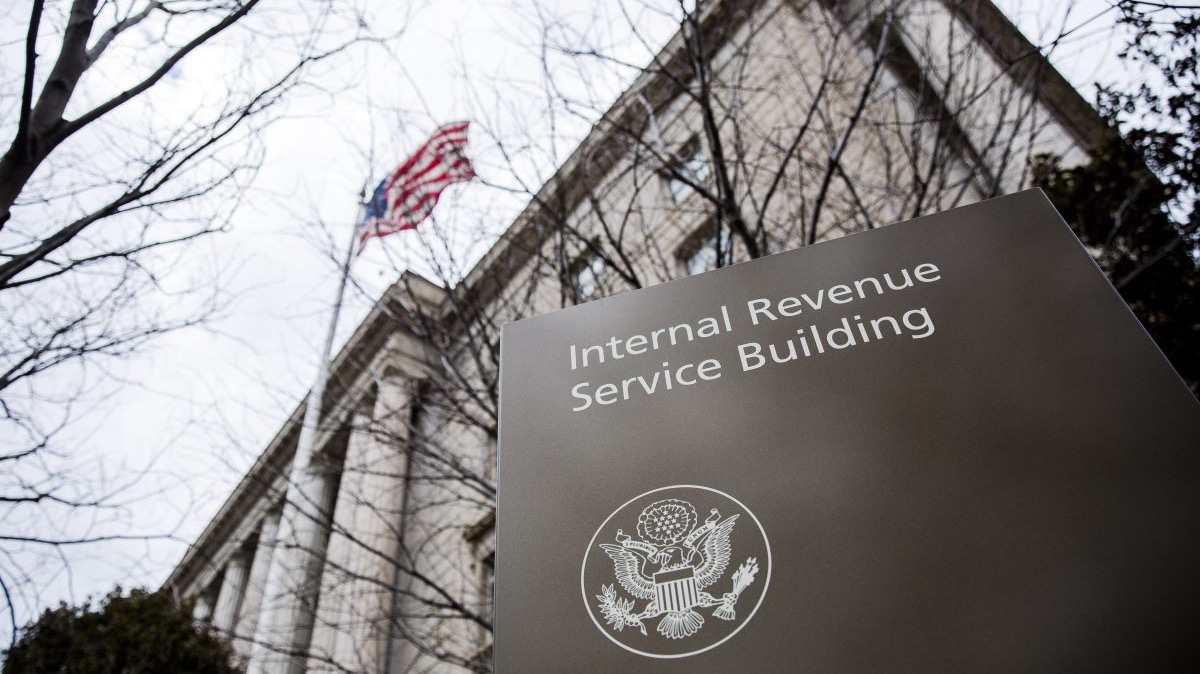
The Internal Revenue Service (IRS) will not use a third-party company to verify new accounts with facial recognition, the agency announced on Monday in a news release.
The proposed move, which would have used the company ID.me, was criticized resoundingly by privacy advocates and some members of Congress, who say the technology is flawed and would not recognize users if they experienced significant physical changes. Previously, the IRS said it would use the software to cut down on fraudulent accounts.
The IRS “will transition away from using a third-party service for facial recognition to help authenticate people creating new online accounts,” according to its news release. “The transition will occur over the coming weeks in order to prevent larger disruptions to taxpayers during filing season.”
At the same time, the agency continued, it will “bring online an additional authentication process that does not involve facial recognition.” It’s not exactly clear how that will be accomplished ahead of the tax-filing deadline in mid-April.
“The IRS takes taxpayer privacy and security seriously, and we understand the concerns that have been raised,” said IRS Commissioner Chuck Rettig in a statement.
“Everyone should feel comfortable with how their personal information is secured, and we are quickly pursuing short-term options that do not involve facial recognition.”
The IRS’s change will “not interfere” with taxpayers’ capability to file their tax returns or pay the taxes owed, the agency confirmed.
“During this period, the IRS will continue to accept tax filings, and it has no other impact on the current tax season. People should continue to file their taxes as they normally would,” said the IRS.
Some members of Congress hailed the move on Monday.
“This is big,” Sen. Ron Wyden (D-Ore.) wrote on Twitter in response to the IRS’s policy change.
“While this transition may take time, the administration recognizes that privacy and security are not mutually exclusive.”
Under the now-abandoned policy, in order to apply for the ID.me service, users would have to submit copies of bills and another form of ID, including a license, state ID, or a passport. They would also have to take a photo of themselves, or they would have to send it a recorded video of themselves if there were not enough materials available. The IRS, at the time in January, noted that people won’t have to submit to facial recognition software to file their taxes.
Security researcher Brian Krebs, who operates the blog Krebs on Security, wrote in a January post that ID.me users can delete their biometric data at any time.
“When I asked the support technician who conducted the video interview to remove my biometric data, he sent me a link to a process for deleting one’s ID.me account. So, it seems that removing one’s data from ID.me post-verification equals deleting one’s account, and potentially having to re-register at some point in the future,” he wrote.
HD Editor’s Note: Why Is This News Biblically Relevant?
Stand up for the Truth host David Fiorazo, in a recent article, questioned whether Americans could trust the IRS with facial recognition requirements.
“This sounds more like China than America,” he said at the outset of his response.
“We should be justifiably concerned about a potential new threat to our freedoms,” he wrote, pointing to the various problems that have emerged in the IRS previously.
The IRS was recently scrutinized for attempting to deny a Christian ministry tax-exempt status because the group’s Biblical belief aligned with the political policies of the Republican Party. The Texas group also encouraged Christian to vote in alignment with Scripture. After backlash, the IRS reversed its position.
The worry that Christian organizations’ tax exemption may soon be in the crosshairs of the IRS is not a new concern.
In 2014, Politico wrote an article condemning the IRS for not denying more US Christian ministries their 501(c)3 tax-exempt status. They claimed that ministries such as that of Pastor Jack Hibbs of Calvary Chapel Chino Hills have become too political to qualify.
In response, Pastor Hibbs told Politico, “I know my days are numbered. As long as I’m Biblical, I’m cool with that.”
Fiorazo, in his article about the now reversed facial recognition requirement, said the “bottom line” is that Christians need to “trust God, not government; seek first His kingdom, be discerning, test all things, and keep raising awareness, speaking the truth.”