August 5, 2026

August, 5, 2026
August 5, 2026

give

untitled artwork

untitled artwork

World news biblically understood

TRENDING:

The Confusion That Is Lebanon: A Weapon Against Israel—And A Warning To The West

Cameron Joyner

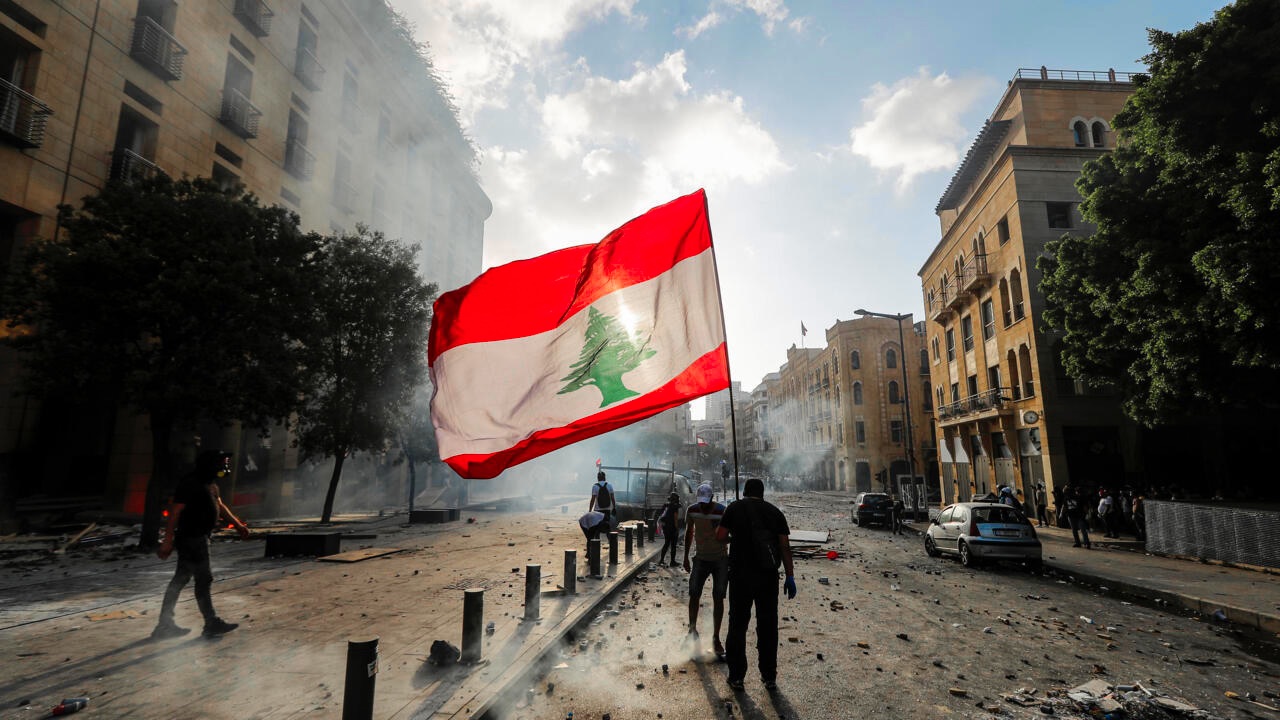
How does a country like Lebanon—once known as the Switzerland of the Middle East, with a cosmopolitan capital that rivaled Paris—become a proxy for Iran in its campaign to terrorize Israel?

While many would answer “Hezbollah,” the longer answer may surprise you. A broad review of this religiously diverse region not only explains Israel’s difficulty with its northern neighbor, but it also serves as a timely warning to Western civilization.

From Biblical to Modern Times

The name Lebanon (Hebrew: Levanon) refers to the mountain chain north of Israel and comes from the Hebrew word lavan (“white”), for the country’s snow-covered peaks. Like many high places, Mount Lebanon was linked to pagan worship and was believed to be the dwelling of Baal, the Canaanite storm god associated with fertility (scholars identify him with Rimmon in 2 Kings 5:18).

The region’s ancient influence on Israel was mixed: King Hiram of Tyre allied with King Solomon, supplying materials for the First Temple (1 Ki. 5:1–12), while Jezebel of Sidon married King Ahab, drawing the northern kingdom of Israel into Baal worship (16:30–33) during the days of the divided kingdom.

From the 1st century until 1918, Lebanon, like Israel, was ruled by virtually the same successive foreign powers. Its religious diversity and constant imperial transitions made the region turbulent, with even peaceful periods fragile. Under Ottoman rule (1516–1918), Lebanon’s communities—Maronite Catholic, Druze, Sunni and Shia Muslim, and Jewish—remained distinct, rather than assimilated.

During World War I, the Ottomans sided with Germany against Britain, France, and Czarist Russia. By late 1918, British forces had advanced into the Levant from Egypt; and Ottoman control collapsed. The Treaty of Sèvres (1920) ended Ottoman rule, placing Lebanon and Syria under the French Mandate. What are today Israel and Jordan fell under the British Mandate, as secretly arranged in the 1916 Sykes-Picot Agreement.

France created Greater Lebanon to secure a safe haven for Catholics; but by including coastal cities like Tripoli, Sidon, and Tyre, it ensured a fragile demographic balance. The French favored the Catholics, who only slightly outnumbered the Muslims.

Lebanon as a Modern State (1949–1979)

In 1943, Lebanon gained independence from France. Due to competing factions vying for power, it established a government through an unwritten agreement called the National Pact. The Pact mandated a Maronite Catholic president, a Sunni Muslim prime minister, a Shia Muslim speaker of parliament, Greek Orthodox deputies, a Druze military chief of staff, and a permanent 6-to-5 parliamentary ratio favoring Christians. What could possibly go wrong? Plenty!

The Pact, based on a 1932 census, gave Christians a slim majority. Demographic shifts favoring Muslims fomented unrest. A weak central government struggled to assert its sovereignty. Lebanon joined the Arab coalition in Israel’s 1948 War of Independence, but its involvement was minimal and symbolic due to obvious internal constraints.

After the war, Lebanon’s border with Israel remained relatively quiet, as it blocked Arab guerrilla raids in the 1950s and early 1960s. This was Lebanon’s “Golden Age” (1950s–1975), especially for Beirut, Lebanon’s capital, which became a popular tourist hub. A decline began after Israel’s Six-Day War in 1967. Though Lebanon didn’t participate, it couldn’t control Arab guerrilla groups, especially the Palestine Liberation Organization (PLO), operating from the south.

Expelled from Jordan in the 1970–71 “Black September” events, the PLO moved its base to Lebanon. South Lebanon became “Fatahland” as the organization established a state within a state. By the mid-1970s, the shifted demographics helped trigger Lebanon’s civil war (1975–1990). Israel saw southern Lebanon as a growing threat, especially after the 1978 Coastal Road massacre that killed 38 Israeli civilians. In response, Israel launched Operation Litani, pushing PLO forces north of the Litani River.

The Rise of Hezbollah

The 1979 Iranian Revolution had a ripple effect on Lebanon. Iran’s Ayatollah Khomeini exported his revolutionary ideology by backing Lebanese Shia groups, leading to the creation of Hezbollah in the early 1980s. In 1982, Israel returned to Lebanon in Operation Peace for Galilee (the First Lebanon War), aiming to expel the PLO and install a pro-Israel government. Although the PLO was expelled, Hezbollah filled the void.

From 1985 to 2000, Israel maintained a security zone in southern Lebanon, supported by the South Lebanon Army. The 1989 Taif Agreement ended Lebanon’s Civil War, revising the National Pact’s 6-to-5 parliamentary ratio to an even 1-to-1 split between Muslims and Catholics. It allowed Hezbollah to remain armed yet forced other militias to disarm.

In 2000, Israel withdrew from its widely criticized security zone. Hezbollah claimed victory and continued its anti-Israel provocation. Cross-border raids persisted, prompting Israeli airstrikes. In 2006, Hezbollah captured two Israeli soldiers, triggering the Second Lebanon War, a 34-day conflict with heavy casualties and destruction.

From 2006 to October 7, 2023, Lebanon and Israel remained technically at war, with no diplomatic ties. Hezbollah expanded its arsenal, while Israel targeted Hezbollah and Iranian assets. Lebanon’s government remained too weak to control Hezbollah, which operated autonomously within the country’s borders.

October 7 to Present

Since Hamas’s October 7, 2023, attack on Israel, Israel has faced an escalating conflict with Hezbollah along its Lebanese border. Hezbollah gradually intensified rocket, drone, and missile strikes in solidarity with Hamas, drawing Israel into a two-front war. With Iran’s blessing, Hezbollah expanded its reach deeper into Israeli cities, while Israel responded with extensive airstrikes, covert raids, and limited ground incursions into southern Lebanon.

This confrontation reflects Iran’s broader regional strategy and Hezbollah’s dual role as militia and political actor, complicating Lebanon’s fragile domestic politics. The fighting displaced thousands in northern Israel, strained military resources, and further destabilized Lebanon. The Israel Defense Forces have carried out thousands of strikes on Hezbollah targets, dismantling tunnels and weapons caches. In September 2024, Israel executed a brilliant plan to remotely detonate Hezbollah communication devices—hindering the terror group. Ten days later, Israel finally eliminated Hezbollah’s longest-serving leader, Hassan Nasrallah. Israel eventually pushed Hezbollah forces back, though sporadic clashes continue.

Early in 2026, Lebanon began to distance itself from Hezbollah, conceding Israel’s right to strike the terror organization if it continued to refuse to disarm. The shift provided hope that Lebanon may pursue self-preservation over allegiance to the fanatical terrorists who have long sabotaged the nation.

Ultimately, the war underscores Israel’s challenge of confronting multiple existential threats while securing its borders. Meanwhile, Lebanon’s governmental history should serve as a warning to Western countries experiencing Islamic growth: Islam must be treated as an oppressive political movement, not merely a religious one.


Millions Are Understanding The News Through A Biblical Worldview

THANKS TO YOUR PRAYER AND SUPPORT

Misidentifying The Enemy: What Happens When a Nation Can No Longer Recognize Its Allies?

When a nation loses the ability to distinguish between allies and adversaries, truth and propaganda, leadership and political theater, it becomes vulnerable long before the first battle is lost. The headlines may change, but the underlying challenge remains the same. As conflict intensifies in the Middle East, foreign governments expand their influence, and political narratives compete with objective reality, Americans are confronted with a pressing question: Can we still recognize the difference between those who defend freedom and those who seek to undermine it? These are not isolated controversies. They are warning signs that discernment has become one of the most important responsibilities of our time. 

A Debt We Can Never Repay: Why Israel Should Have A Place In Every Christian’s Heart

Yes, Christianity has emphasized the biblical message of grace for two thousand years, and the spread of the Church has been extraordinary. But that message is ours because it was passed down from the Jewish people. The Gospel was born in Israel. It was nursed and cradled by the Hebrew nation in the land promised to their ancestors. It was Jewish apostles who carried the Gospel to the ends of the earth. The first churches were established by Jewish missionaries. Our faith—from beginning to end—flows through Israel.

sign up

The Slippery Slope Of Australia’s Spirituality: A Deliberate Campaign Of Atheism

On 29 July 2026, the church that I pastor played host for the Brisbane leg of a tour of Australia by Amir Tsarfati and Pastor Barry Stagner. On that blessed evening, over 1,000 people gathered together for praise, powerful preaching, prayer, and of course, photos with these two beloved servants of God. Even though we hired a large venue for the evening, seating was limited. This meant that, sadly, many missed out on being able to attend. One such person who was not able to secure tickets remarked that it would be wonderful if this was the dilemma faced by every Bible-believing church in Australia on a Sunday morning. Yet Australia's overall spiritual landscape suggest a disturbing deterioration away from Biblical belief.

ABC's of Salvation

Decision

UTT

FOI

untitled artwork

Israel My Glory

Cameron Joyner

How does a country like Lebanon—once known as the Switzerland of the Middle East, with a cosmopolitan capital that rivaled Paris—become a proxy for Iran in its campaign to terrorize Israel?

While many would answer “Hezbollah,” the longer answer may surprise you. A broad review of this religiously diverse region not only explains Israel’s difficulty with its northern neighbor, but it also serves as a timely warning to Western civilization.

From Biblical to Modern Times

The name Lebanon (Hebrew: Levanon) refers to the mountain chain north of Israel and comes from the Hebrew word lavan (“white”), for the country’s snow-covered peaks. Like many high places, Mount Lebanon was linked to pagan worship and was believed to be the dwelling of Baal, the Canaanite storm god associated with fertility (scholars identify him with Rimmon in 2 Kings 5:18).

The region’s ancient influence on Israel was mixed: King Hiram of Tyre allied with King Solomon, supplying materials for the First Temple (1 Ki. 5:1–12), while Jezebel of Sidon married King Ahab, drawing the northern kingdom of Israel into Baal worship (16:30–33) during the days of the divided kingdom.

From the 1st century until 1918, Lebanon, like Israel, was ruled by virtually the same successive foreign powers. Its religious diversity and constant imperial transitions made the region turbulent, with even peaceful periods fragile. Under Ottoman rule (1516–1918), Lebanon’s communities—Maronite Catholic, Druze, Sunni and Shia Muslim, and Jewish—remained distinct, rather than assimilated.

During World War I, the Ottomans sided with Germany against Britain, France, and Czarist Russia. By late 1918, British forces had advanced into the Levant from Egypt; and Ottoman control collapsed. The Treaty of Sèvres (1920) ended Ottoman rule, placing Lebanon and Syria under the French Mandate. What are today Israel and Jordan fell under the British Mandate, as secretly arranged in the 1916 Sykes-Picot Agreement.

France created Greater Lebanon to secure a safe haven for Catholics; but by including coastal cities like Tripoli, Sidon, and Tyre, it ensured a fragile demographic balance. The French favored the Catholics, who only slightly outnumbered the Muslims.

Lebanon as a Modern State (1949–1979)

In 1943, Lebanon gained independence from France. Due to competing factions vying for power, it established a government through an unwritten agreement called the National Pact. The Pact mandated a Maronite Catholic president, a Sunni Muslim prime minister, a Shia Muslim speaker of parliament, Greek Orthodox deputies, a Druze military chief of staff, and a permanent 6-to-5 parliamentary ratio favoring Christians. What could possibly go wrong? Plenty!

The Pact, based on a 1932 census, gave Christians a slim majority. Demographic shifts favoring Muslims fomented unrest. A weak central government struggled to assert its sovereignty. Lebanon joined the Arab coalition in Israel’s 1948 War of Independence, but its involvement was minimal and symbolic due to obvious internal constraints.

After the war, Lebanon’s border with Israel remained relatively quiet, as it blocked Arab guerrilla raids in the 1950s and early 1960s. This was Lebanon’s “Golden Age” (1950s–1975), especially for Beirut, Lebanon’s capital, which became a popular tourist hub. A decline began after Israel’s Six-Day War in 1967. Though Lebanon didn’t participate, it couldn’t control Arab guerrilla groups, especially the Palestine Liberation Organization (PLO), operating from the south.

Expelled from Jordan in the 1970–71 “Black September” events, the PLO moved its base to Lebanon. South Lebanon became “Fatahland” as the organization established a state within a state. By the mid-1970s, the shifted demographics helped trigger Lebanon’s civil war (1975–1990). Israel saw southern Lebanon as a growing threat, especially after the 1978 Coastal Road massacre that killed 38 Israeli civilians. In response, Israel launched Operation Litani, pushing PLO forces north of the Litani River.

The Rise of Hezbollah

The 1979 Iranian Revolution had a ripple effect on Lebanon. Iran’s Ayatollah Khomeini exported his revolutionary ideology by backing Lebanese Shia groups, leading to the creation of Hezbollah in the early 1980s. In 1982, Israel returned to Lebanon in Operation Peace for Galilee (the First Lebanon War), aiming to expel the PLO and install a pro-Israel government. Although the PLO was expelled, Hezbollah filled the void.

From 1985 to 2000, Israel maintained a security zone in southern Lebanon, supported by the South Lebanon Army. The 1989 Taif Agreement ended Lebanon’s Civil War, revising the National Pact’s 6-to-5 parliamentary ratio to an even 1-to-1 split between Muslims and Catholics. It allowed Hezbollah to remain armed yet forced other militias to disarm.

In 2000, Israel withdrew from its widely criticized security zone. Hezbollah claimed victory and continued its anti-Israel provocation. Cross-border raids persisted, prompting Israeli airstrikes. In 2006, Hezbollah captured two Israeli soldiers, triggering the Second Lebanon War, a 34-day conflict with heavy casualties and destruction.

From 2006 to October 7, 2023, Lebanon and Israel remained technically at war, with no diplomatic ties. Hezbollah expanded its arsenal, while Israel targeted Hezbollah and Iranian assets. Lebanon’s government remained too weak to control Hezbollah, which operated autonomously within the country’s borders.

October 7 to Present

Since Hamas’s October 7, 2023, attack on Israel, Israel has faced an escalating conflict with Hezbollah along its Lebanese border. Hezbollah gradually intensified rocket, drone, and missile strikes in solidarity with Hamas, drawing Israel into a two-front war. With Iran’s blessing, Hezbollah expanded its reach deeper into Israeli cities, while Israel responded with extensive airstrikes, covert raids, and limited ground incursions into southern Lebanon.

This confrontation reflects Iran’s broader regional strategy and Hezbollah’s dual role as militia and political actor, complicating Lebanon’s fragile domestic politics. The fighting displaced thousands in northern Israel, strained military resources, and further destabilized Lebanon. The Israel Defense Forces have carried out thousands of strikes on Hezbollah targets, dismantling tunnels and weapons caches. In September 2024, Israel executed a brilliant plan to remotely detonate Hezbollah communication devices—hindering the terror group. Ten days later, Israel finally eliminated Hezbollah’s longest-serving leader, Hassan Nasrallah. Israel eventually pushed Hezbollah forces back, though sporadic clashes continue.

Early in 2026, Lebanon began to distance itself from Hezbollah, conceding Israel’s right to strike the terror organization if it continued to refuse to disarm. The shift provided hope that Lebanon may pursue self-preservation over allegiance to the fanatical terrorists who have long sabotaged the nation.

Ultimately, the war underscores Israel’s challenge of confronting multiple existential threats while securing its borders. Meanwhile, Lebanon’s governmental history should serve as a warning to Western countries experiencing Islamic growth: Islam must be treated as an oppressive political movement, not merely a religious one.

Trusted Analysis From A Biblical Worldview

Help reach the lost and equip the church with the living and active truth of God's Word in our world today.

YOU CARE ABOUT

BIBLICAL TRUTH. SO DO WE.


Together, We Can Deliver A Biblical Understanding

Of News Events Around The World.

Misidentifying The Enemy: What Happens When a Nation Can No Longer Recognize Its Allies?

When a nation loses the ability to distinguish between allies and adversaries, truth and propaganda, leadership and political theater, it becomes vulnerable long before the first battle is lost. The headlines may change, but the underlying challenge remains the same. As conflict intensifies in the Middle East, foreign governments expand their influence, and political narratives compete with objective reality, Americans are confronted with a pressing question: Can we still recognize the difference between those who defend freedom and those who seek to undermine it? These are not isolated controversies. They are warning signs that discernment has become one of the most important responsibilities of our time. 

A Debt We Can Never Repay: Why Israel Should Have A Place In Every Christian’s Heart

Yes, Christianity has emphasized the biblical message of grace for two thousand years, and the spread of the Church has been extraordinary. But that message is ours because it was passed down from the Jewish people. The Gospel was born in Israel. It was nursed and cradled by the Hebrew nation in the land promised to their ancestors. It was Jewish apostles who carried the Gospel to the ends of the earth. The first churches were established by Jewish missionaries. Our faith—from beginning to end—flows through Israel.

untitled artwork 6391

The Slippery Slope Of Australia’s Spirituality: A Deliberate Campaign Of Atheism

On 29 July 2026, the church that I pastor played host for the Brisbane leg of a tour of Australia by Amir Tsarfati and Pastor Barry Stagner. On that blessed evening, over 1,000 people gathered together for praise, powerful preaching, prayer, and of course, photos with these two beloved servants of God. Even though we hired a large venue for the evening, seating was limited. This meant that, sadly, many missed out on being able to attend. One such person who was not able to secure tickets remarked that it would be wonderful if this was the dilemma faced by every Bible-believing church in Australia on a Sunday morning. Yet Australia's overall spiritual landscape suggest a disturbing deterioration away from Biblical belief.

ABC's of Salvation

TV AD

worldview matters

Decision Magazine V AD

Decision

Jan Markell

Israel My Glory

Erick Stakelbeck

untitled artwork

YOU CARE ABOUT

BIBLICAL TRUTH.

SO DO WE.

Together, We Can Deliver A Biblical Understanding Of News Events Around The World And Equip The Church To Stand With A Biblical Worldview.

untitled artwork

Israel My Glory

YOU CARE ABOUT

BIBLICAL TRUTH.

SO DO WE.


Together, We Can Deliver A Biblical Understanding Of News Events Around The World And Equip The Church To Stand With A Biblical Worldview.