July 9, 2026

July, 9, 2026
July 9, 2026

give

untitled artwork

untitled artwork

World news biblically understood

TRENDING:

How Yemen’s Houthis’ Well-deserved Terrorist Label Gives Biden Important Leverage

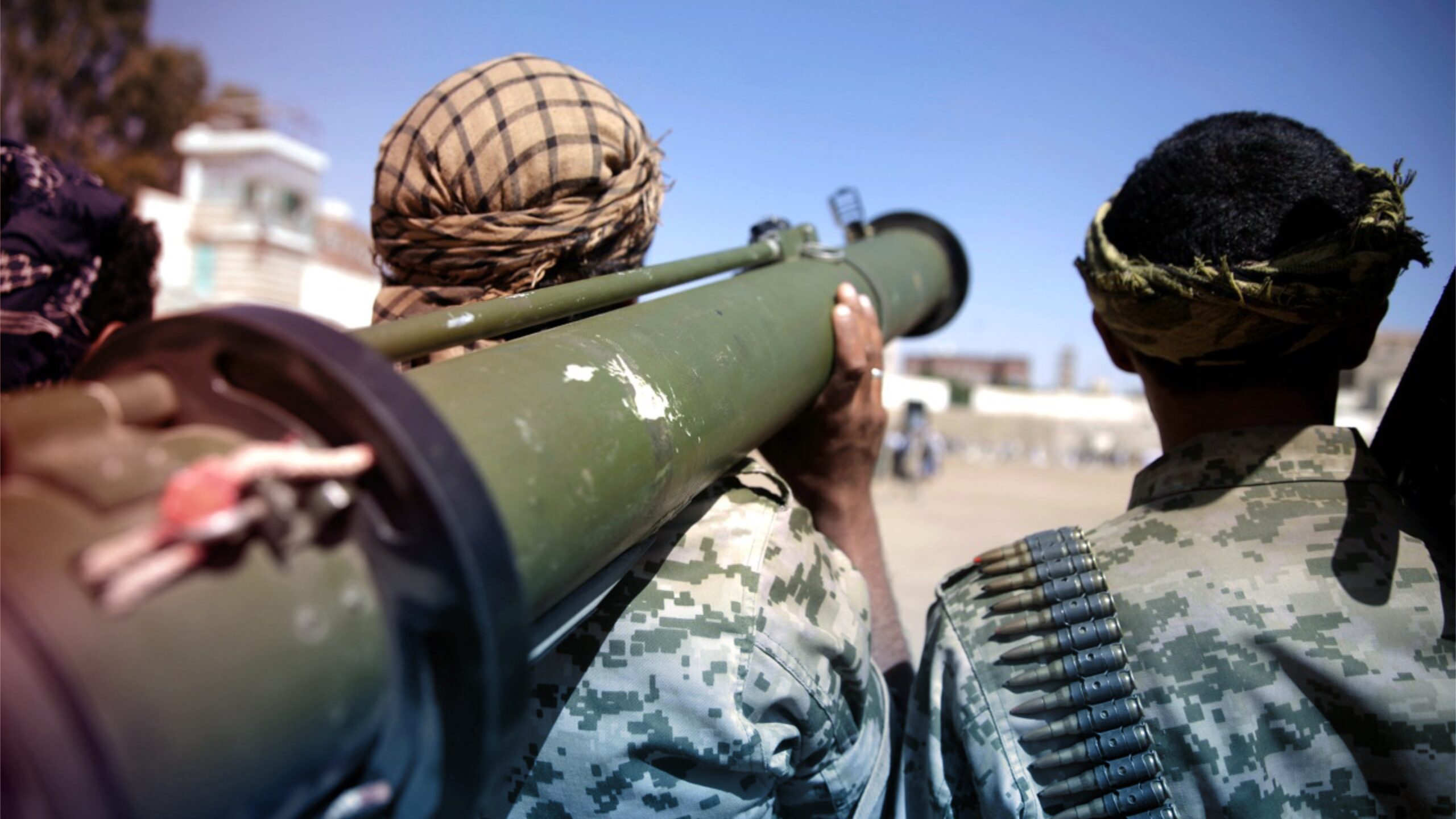
Joe Biden, the newly inaugurated US president, is using his first days in office to review many of his predecessor’s policies and executive orders. How his administration handles its strategic inheritance, particularly with regard to Iran and its proxies, notably the Yemeni Houthi militia, could well shape the Arab region’s opinion of his nascent presidency.

On Jan. 10, Mike Pompeo, the outgoing secretary of state, announced the State Department would designate the Houthis (also known as Ansar Allah) as a “Foreign Terrorist Organization.” Three Houthi leaders — Abdul Malik Al-Houthi, Abdul Khaliq Badr Al-Din Al-Houthi and Abdullah Yahya Al-Hakim — were declared Specially Designated Global Terrorists with effect from Jan. 19.

“The designations are intended to hold Ansar Allah accountable for its terrorist acts, including cross-border attacks threatening civilian populations, infrastructure, and commercial shipping,” Pompeo said.

“The designations are also intended to advance efforts to achieve a peaceful, sovereign and united Yemen that is both free from Iranian interference and at peace with its neighbors.”

One reason why the Trump administration was able to achieve a lot in the Middle East was probably its readiness to call a spade a spade. The war in Yemen escalated in 2015 when the Iran-backed Houthis overthrew the UN-recognized government of President Abed Rabbo Mansour Hadi. A coalition of Arab states, backed by the US, Britain and France, launched a military campaign to restore the legitimate government to power.

Since then, repeated attempts to reach a peace settlement have foundered, with the militia’s representatives failing to attend UN-brokered talks in Geneva in Sept. 2018 and its combatants willfully ignoring the terms of the Stockholm and Riyadh agreements.

An April 2020 ceasefire announced by the coalition at the onset of the COVID-19 pandemic quickly fell apart when the Houthis resumed cross-border drone and missile strikes targeting Saudi Arabia.

For the Yemeni government, any peace agreement with the Houthis would be contingent on the militia breaking its ties with Tehran — a development that is highly unlikely at present.

Iran’s support for the Houthis has been an open secret since long before the Houthi takeover of Sana’a in 2015. It has caused the brutal war to rage on unabated and one of the world’s worst humanitarian crises to fester.

The conflict, now in its sixth year, has left 112,000 dead and 24 million in dire need of humanitarian assistance.

The Houthis have repeatedly targeted civilian population centers in Yemen and Saudi Arabia. Most recently, 27 people were killed when a Houthi missile targeting ministers of the newly established Yemeni government struck Aden’s international airport on Dec. 30.

In April last year, five women were killed in a suspected Houthi strike on a prison in the city of Taiz — an act forcefully condemned by aid groups. Houthi missiles have even hit civilian facilities in Riyadh, including its international airport in Nov. 2017.

The group has also routinely targeted Saudi Arabia’s oil infrastructure. A July 2018 attack hit two Saudi crude carriers on the Red Sea while a May 2019 strike on two oil-pumping stations near Riyadh damaged a key pipeline.

The most damaging of all Houthi-claimed attacks was a Sept. 2019 drone and missile strike on Saudi Arabia’s Abqaiq and Khurais oil facilities, which sent shockwaves through the global crude market.

Although the Houthis claimed responsibility, investigators suggested the strike involving Iranian-supplied hardware may have originated from the north.

Biden’s foreign-policy team may also recall three attacks on the US navy in 2016 when he was Barack Obama’s vice president — by a militia whose actions matched the notorious words of its slogan “Death to America. Death to Israel. Curse on the Jews.”

The USS Mason was targeted on Oct. 9, 2016, by two missiles fired from Houthi-controlled territory while deployed near the Bab-el-Mandeb Strait off the coast of Yemen. The projectiles failed to cause any damage.

Three days later, the Mason was targeted again, with one missile falling short while the other was intercepted. USS Nitze, which was also deployed to the region, retaliated the following day, destroying three radar sites in Houthi-held territory.

On Oct. 15, the Mason was targeted a third time, this time in the Red Sea. All five anti-ship cruise missiles were neutralized or intercepted.

Given this behavior, it is surprising that the Houthis did not land the terrorist designation then, although historians would probably chalk it up to the Obama administration’s wish to preserve the 2015 Iran nuclear accord at any cost.

Foreign military vessels have not been the only targets. The Houthis have launched repeated attacks on ports and ships in recent years, routinely planting marine mines in the southern Red Sea and in the Bab Al-Mandab Strait in the path of commercial shipping.

The militia has also repeatedly rebuffed UN pleas to allow an inspection team to enter the FSO Safer, a 45-year-old oil tanker abandoned off the port of Hodeidah with 1.1 million barrels of crude on board, to conduct urgent repairs. In an extraordinary session, the UN expressed fears on July 15, 2020, of “catastrophe” if the vessel ruptured into the Red Sea.

Pompeo’s boss, Donald Trump, had pursued a policy of “maximum pressure” against Tehran, withdrawing the US from the Obama-era nuclear deal and reimposing sanctions on Iran.

The strategy was matched by a zero-tolerance approach to Iranian influence in Yemen, Iraq, Syria, Lebanon, and “Palestinian” territories, as well as to its role in harboring leaders and operatives of Al-Qaeda.

Almost all the findings of an Arab News-YouGov pan-Arab survey conducted in late 2020 suggest that Biden would be wise to shed the Obama administration baggage. The most popular response (53 percent) was that Obama left the region worse off, with another 58 percent saying Biden should distance himself from Obama-era policies.

With Houthi attacks on civilian targets triggering condemnations from inside and outside Yemen and prompting calls for more pressure on the leadership, the State Department’s “terrorist” designation gives Biden valuable leverage for future negotiations both with the Houthis and their patrons in Tehran.


Harbinger’s Daily exists through the generous support of our readers. For ways to support this ministry, click here.

An Old Method Of Anti-Jewish Propaganda: Dismantling The Big Lie Of Israeli ‘Colonization’

This accusation of colonization goes back to the 1960s, when Yasser Arafat was set up in the Middle East region by the former USSR to destabilize that very region. The Merriam-Webster definition for colonization is either A: "The establishing of a colony, subjugation of a people or area especially as an extension of state," or B: Migration to and settlement in an inhabited or uninhabited area." It is interesting to note that both French and British empires have colonized large sections of the planet over time without anyone–except possibly for the people being colonized–blinking an eye. Israel colonizes, and the whole world is up in arms! But is Israel truly colonizing?

Franklin Graham Applauds Trump Administration’s Pressure On China, Securing Release Of Jailed Pastor

In a Facebook post Tuesday, Franklin Graham thanked President Donald Trump for his role in the release of imprisoned Christian pastor Ezra Jin Mingri—founder of an underground church in China—who had been detained for 266 days. Jin, 57, was released and reunited with his wife and daughter in Los Angeles Friday, roughly two months after Trump pressed Chinese President Xi Jinping to free him during a U.S.-China summit in Beijing. Jin was arrested Oct. 11 after Chinese officials raided his home in Beihai, Guangxi Province, the previous evening and conducted an all-night search. He was charged with “illegally using information networks,” according to The New York Times.

sign up

Will America Last Another 250 Years?

Looking back, there can be no denying that God has indeed shed His grace—His unmerited favor—on our land, from sea to shining sea. But does our national “soul” encourage self-control? Do our laws champion ordered liberty? Is our success tempered with nobleness? Is brotherhood the defining characteristic of any good we aspire to reflect? By all of those measures, America seems decidedly adrift. We are drifting farther and farther from Nature’s God—the Ruler of the Universe our Founders called upon and credited with for our celebrated independence.

ABC's of Salvation

Decision

UTT

FOI

untitled artwork

Israel My Glory

Joe Biden, the newly inaugurated US president, is using his first days in office to review many of his predecessor’s policies and executive orders. How his administration handles its strategic inheritance, particularly with regard to Iran and its proxies, notably the Yemeni Houthi militia, could well shape the Arab region’s opinion of his nascent presidency.

On Jan. 10, Mike Pompeo, the outgoing secretary of state, announced the State Department would designate the Houthis (also known as Ansar Allah) as a “Foreign Terrorist Organization.” Three Houthi leaders — Abdul Malik Al-Houthi, Abdul Khaliq Badr Al-Din Al-Houthi and Abdullah Yahya Al-Hakim — were declared Specially Designated Global Terrorists with effect from Jan. 19.

“The designations are intended to hold Ansar Allah accountable for its terrorist acts, including cross-border attacks threatening civilian populations, infrastructure, and commercial shipping,” Pompeo said.

“The designations are also intended to advance efforts to achieve a peaceful, sovereign and united Yemen that is both free from Iranian interference and at peace with its neighbors.”

One reason why the Trump administration was able to achieve a lot in the Middle East was probably its readiness to call a spade a spade. The war in Yemen escalated in 2015 when the Iran-backed Houthis overthrew the UN-recognized government of President Abed Rabbo Mansour Hadi. A coalition of Arab states, backed by the US, Britain and France, launched a military campaign to restore the legitimate government to power.

Since then, repeated attempts to reach a peace settlement have foundered, with the militia’s representatives failing to attend UN-brokered talks in Geneva in Sept. 2018 and its combatants willfully ignoring the terms of the Stockholm and Riyadh agreements.

An April 2020 ceasefire announced by the coalition at the onset of the COVID-19 pandemic quickly fell apart when the Houthis resumed cross-border drone and missile strikes targeting Saudi Arabia.

For the Yemeni government, any peace agreement with the Houthis would be contingent on the militia breaking its ties with Tehran — a development that is highly unlikely at present.

Iran’s support for the Houthis has been an open secret since long before the Houthi takeover of Sana’a in 2015. It has caused the brutal war to rage on unabated and one of the world’s worst humanitarian crises to fester.

The conflict, now in its sixth year, has left 112,000 dead and 24 million in dire need of humanitarian assistance.

The Houthis have repeatedly targeted civilian population centers in Yemen and Saudi Arabia. Most recently, 27 people were killed when a Houthi missile targeting ministers of the newly established Yemeni government struck Aden’s international airport on Dec. 30.

In April last year, five women were killed in a suspected Houthi strike on a prison in the city of Taiz — an act forcefully condemned by aid groups. Houthi missiles have even hit civilian facilities in Riyadh, including its international airport in Nov. 2017.

The group has also routinely targeted Saudi Arabia’s oil infrastructure. A July 2018 attack hit two Saudi crude carriers on the Red Sea while a May 2019 strike on two oil-pumping stations near Riyadh damaged a key pipeline.

The most damaging of all Houthi-claimed attacks was a Sept. 2019 drone and missile strike on Saudi Arabia’s Abqaiq and Khurais oil facilities, which sent shockwaves through the global crude market.

Although the Houthis claimed responsibility, investigators suggested the strike involving Iranian-supplied hardware may have originated from the north.

Biden’s foreign-policy team may also recall three attacks on the US navy in 2016 when he was Barack Obama’s vice president — by a militia whose actions matched the notorious words of its slogan “Death to America. Death to Israel. Curse on the Jews.”

The USS Mason was targeted on Oct. 9, 2016, by two missiles fired from Houthi-controlled territory while deployed near the Bab-el-Mandeb Strait off the coast of Yemen. The projectiles failed to cause any damage.

Three days later, the Mason was targeted again, with one missile falling short while the other was intercepted. USS Nitze, which was also deployed to the region, retaliated the following day, destroying three radar sites in Houthi-held territory.

On Oct. 15, the Mason was targeted a third time, this time in the Red Sea. All five anti-ship cruise missiles were neutralized or intercepted.

Given this behavior, it is surprising that the Houthis did not land the terrorist designation then, although historians would probably chalk it up to the Obama administration’s wish to preserve the 2015 Iran nuclear accord at any cost.

Foreign military vessels have not been the only targets. The Houthis have launched repeated attacks on ports and ships in recent years, routinely planting marine mines in the southern Red Sea and in the Bab Al-Mandab Strait in the path of commercial shipping.

The militia has also repeatedly rebuffed UN pleas to allow an inspection team to enter the FSO Safer, a 45-year-old oil tanker abandoned off the port of Hodeidah with 1.1 million barrels of crude on board, to conduct urgent repairs. In an extraordinary session, the UN expressed fears on July 15, 2020, of “catastrophe” if the vessel ruptured into the Red Sea.

Pompeo’s boss, Donald Trump, had pursued a policy of “maximum pressure” against Tehran, withdrawing the US from the Obama-era nuclear deal and reimposing sanctions on Iran.

The strategy was matched by a zero-tolerance approach to Iranian influence in Yemen, Iraq, Syria, Lebanon, and “Palestinian” territories, as well as to its role in harboring leaders and operatives of Al-Qaeda.

Almost all the findings of an Arab News-YouGov pan-Arab survey conducted in late 2020 suggest that Biden would be wise to shed the Obama administration baggage. The most popular response (53 percent) was that Obama left the region worse off, with another 58 percent saying Biden should distance himself from Obama-era policies.

With Houthi attacks on civilian targets triggering condemnations from inside and outside Yemen and prompting calls for more pressure on the leadership, the State Department’s “terrorist” designation gives Biden valuable leverage for future negotiations both with the Houthis and their patrons in Tehran.

Trusted Analysis From A Biblical Worldview

Help reach the lost and equip the church with the living and active truth of God's Word in our world today.

YOU CARE ABOUT

BIBLICAL TRUTH. SO DO WE.


Together, We Can Deliver A Biblical Understanding

Of News Events Around The World.

An Old Method Of Anti-Jewish Propaganda: Dismantling The Big Lie Of Israeli ‘Colonization’

This accusation of colonization goes back to the 1960s, when Yasser Arafat was set up in the Middle East region by the former USSR to destabilize that very region. The Merriam-Webster definition for colonization is either A: "The establishing of a colony, subjugation of a people or area especially as an extension of state," or B: Migration to and settlement in an inhabited or uninhabited area." It is interesting to note that both French and British empires have colonized large sections of the planet over time without anyone–except possibly for the people being colonized–blinking an eye. Israel colonizes, and the whole world is up in arms! But is Israel truly colonizing?

Franklin Graham Applauds Trump Administration’s Pressure On China, Securing Release Of Jailed Pastor

In a Facebook post Tuesday, Franklin Graham thanked President Donald Trump for his role in the release of imprisoned Christian pastor Ezra Jin Mingri—founder of an underground church in China—who had been detained for 266 days. Jin, 57, was released and reunited with his wife and daughter in Los Angeles Friday, roughly two months after Trump pressed Chinese President Xi Jinping to free him during a U.S.-China summit in Beijing. Jin was arrested Oct. 11 after Chinese officials raided his home in Beihai, Guangxi Province, the previous evening and conducted an all-night search. He was charged with “illegally using information networks,” according to The New York Times.

untitled artwork 6391

Will America Last Another 250 Years?

Looking back, there can be no denying that God has indeed shed His grace—His unmerited favor—on our land, from sea to shining sea. But does our national “soul” encourage self-control? Do our laws champion ordered liberty? Is our success tempered with nobleness? Is brotherhood the defining characteristic of any good we aspire to reflect? By all of those measures, America seems decidedly adrift. We are drifting farther and farther from Nature’s God—the Ruler of the Universe our Founders called upon and credited with for our celebrated independence.

ABC's of Salvation

TV AD

worldview matters

Decision Magazine V AD

Decision

Jan Markell

Israel My Glory

Erick Stakelbeck

untitled artwork

YOU CARE ABOUT

BIBLICAL TRUTH.

SO DO WE.

Together, We Can Deliver A Biblical Understanding Of News Events Around The World And Equip The Church To Stand With A Biblical Worldview.

untitled artwork

Israel My Glory

YOU CARE ABOUT

BIBLICAL TRUTH.

SO DO WE.


Together, We Can Deliver A Biblical Understanding Of News Events Around The World And Equip The Church To Stand With A Biblical Worldview.