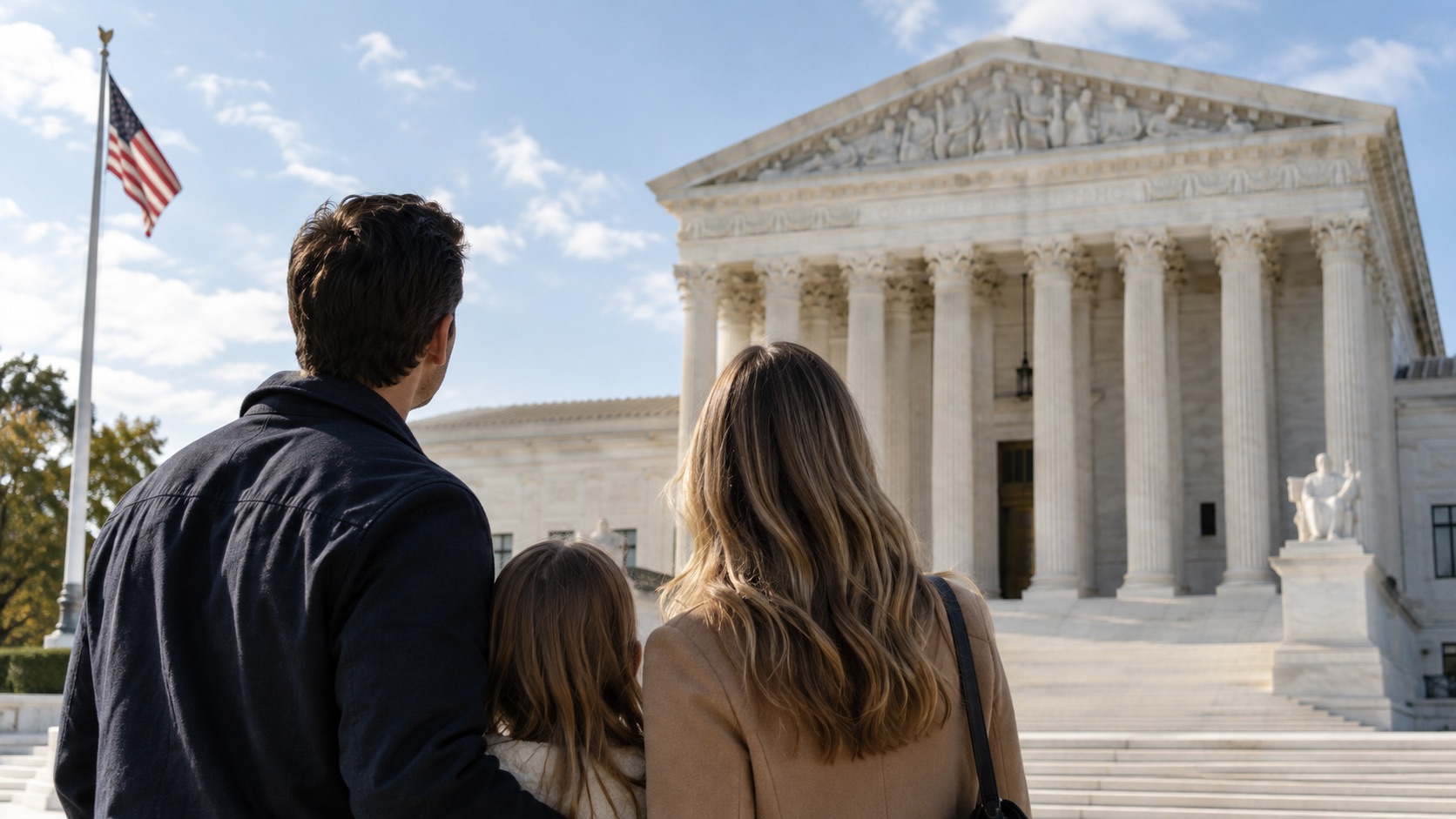

In April 2023, Washington officially declared itself a “sanctuary state” for transgender-identifying individuals—with a special emphasis on minors. Now, the U.S. Supreme Court has agreed to hear a case challenging the Evergreen State’s controversial law after concerned parents filed a legal challenge. The parents are joined by the attorneys general of 16 other states.
Oral arguments at the high court are scheduled for Dec. 7.
Critics of the law argue that it undermines the constitutional rights of parents. That concern is heightened by the fact that Washington removed an existing requirement for shelters to notify parents within 72 hours of runaway minors showing up at their facilities.
When the law was first drafted, there existed concern that some children would be fleeing abusive homes, meaning that informing a parent or guardian of the child’s whereabouts and well-being could risk putting them in further danger. Now, under the state’s expanded definition of what a “compelling reason” is for potential endangerment, children are being “protected” from parents who may simply disagree with a child who thinks they are transgender.
Rather than notifying parents directly, the law dictates that the state’s Department of Children, Youth, and Families (DCYF) is notified instead. Parents and their lawyers say that notice, if it comes at all, may omit the child’s location and condition and not disclose that the minor is seeking transgender-related treatment. A qualifying runaway may remain in a licensed shelter for up to 90 days.
If a child is seeking—or already receiving—“protected health care services” that include trans-related procedures, a majority of Washington lawmakers decided a parent’s right to intervene is questionable at best. Notably, the law also allows minors to flee there from other states to have an abortion without parental consent.
Gene Schaerr, managing partner at the law firm Schaerr Jaffe, explained how “the goal of the state should be reunification of families, not the separation of children from their parents. When governments usurp the essential role of loving parents in the lives of their children, tragedy is inevitable.”
Parents lead the charge
The parents challenging the law, alongside that 16-state coalition, warn that it permits “state-sanctioned kidnapping.”
After the law was enacted, many Washington parents found themselves fearing that one wrong move would send their children running into state custody to get affirmation and possibly even gender-transitioning treatment.
In August 2023, the same month the law took effect, the parents took legal action, backed by America First Legal and International Partners for Ethical Care.
That summer, the case International Partners for Ethical Care, Inc. v. Ferguson was formally filed. The question put forward was simple: Do parents have the right to sue over a law that takes away their power to make decisions about their children’s gender transitions and hurts their ability to raise their kids?
The suit was dismissed by a federal district judge in May 2024. Then, in July 2025, a three-judge panel of the U.S. Court of Appeals for the 9th Circuit affirmed that dismissal, holding that the parents lacked standing because, in the court’s view, their injuries were not yet concrete enough.
Several 9th Circuit judges later dissented from the court’s refusal to rehear the case, writing that Washington’s regime “empowers its state-run shelters to hide minors from parents and to encourage them to travel further down the path of gender ideology.”
In June 2026, the Supreme Court announced it would hear the case in the fall term. The question now before the justices is whether parents have standing to challenge a law that deliberately undermines their decision-making role about “gender transitions” of their children and impedes their parenting.
Conservative legal groups and the 16-state coalition argue that the stakes go well beyond one statute. They say the Constitution has long treated the care, custody and upbringing of children as a fundamental parental right—not a privilege the state may suspend because a teenager and a shelter disagree with the moral values of parents.
They warn that treating disagreement over “gender-affirming” interventions as if it were abuse invites the state to hide children, delay reunification and refer minors for behavioral-health and transition-related services before parents can intervene.
Once puberty blockers, cross-sex hormones or other steps begin, they argue, the harm cannot be walked back in court.
Democratic state Sen. Marko Liias has claimed trans-related care is “essential” and that no parent should stop a minor from “getting the care they deserve.” Democratic state Rep. Jamila Taylor went further, claiming that when “home is not safe,” it’s the government’s job to “step in. We must provide a place for this child.”
Ryan Gardner, senior counsel at First Liberty Institute, countered that thinking. “Parents should not have to wait until their children are irreparably harmed to seek protection from courts,” he asserted. “No family should face the terror of having their children run away to the state and then have those children hidden from them.”
This case is only part of an even broader fight over parental rights in Washington.
Relevant Bible passages to ponder: Exodus 20:12, Acts 5:29, Proverbs 11:3