January 16, 2026

January, 16, 2026
January 16, 2026

give

untitled artwork

untitled artwork

World news biblically understood

TRENDING:

The Trump Administration Puts Its Foot Down, Rejecting Overreaching Climate Initiatives, Other Deceptive UN Policies

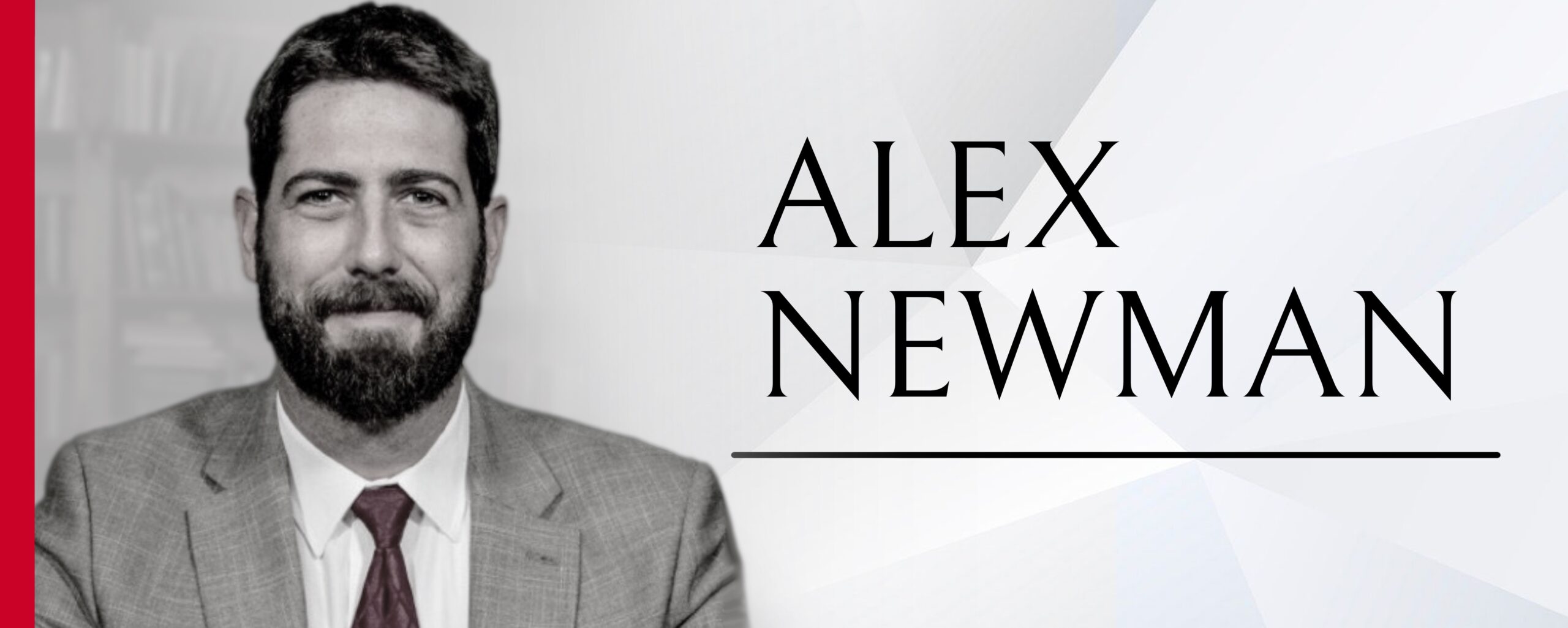
Alex Newman

President Donald Trump during last week’s address to the United Nations General Assembly expressed sharp criticism of the 80-year-old international organization.

In his address, he told the leaders of member states that the organization had failed to contribute to peace deals in recent years.

“I ended seven wars, dealt with the leaders of each and every one of these countries, and never even received a phone call from the United Nations offering to help in finalizing the deal,” he said.

“All they seem to do is write a really strongly worded letter and then never follow that letter up,” he said. “It’s empty words, and empty words don’t solve war.”

The president also criticized the U.N. for “funding an assault on Western countries and their borders” by promoting and aiding illegal immigration into the United States.

Regarding U.N. actions involving so-called climate change Trump said that, “The entire globalist concept of asking successful industrialized nations to inflict pain on themselves and radically disrupt their entire societies must be rejected completely and totally, and it must be immediate.”

Trump’s comments reflect a broader approach by his administration, which over the past eight months has taken multiple actions to move away from the United Nations.

Moving Away From Key UN Projects

The most notable sign of this is the limiting of America’s involvement in the overarching U.N. plan for human development, known as the 2030 Agenda for Sustainable Development.

Adopted in 2015 by the U.N. General Assembly, the 17 global goals in the 2030 Agenda were described as “a shared blueprint for peace and prosperity for people and the planet.”

The goals touch every part of human life from production and consumption to climate, health care, education, and the environment.

On his first day in office, Trump signed an executive order titled Putting America First in International Environmental Agreements.

Among other directives, the president ended U.S. support for all international climate agreements, including the U.N. Paris Agreement, “effective immediately.” He also ordered the defunding of financial commitments made by the United States in relation to that agreement.

U.S. envoy Edward Heartney restated the new U.S. position at a U.N. General Assembly meeting in March.

“Although framed in neutral language, Agenda 2030 and the SDGs [Sustainable Development Goals] advance a program of soft global governance that is inconsistent with U.S. sovereignty and adverse to the rights and interests of Americans,” said Heartney, then-counselor for Economic and Social Affairs at the U.S. Mission to the U.N.

“Put simply, globalist endeavors like Agenda 2030 and the SDGs lost at the ballot box,” he said. “Therefore, the United States rejects and denounces the 2030 Agenda for Sustainable Development and the Sustainable Development Goals, and it will no longer reaffirm them as a matter of course.”

Mandy Gunasekara, former chief of staff for the Environmental Protection Agency and chief architect of the U.S. withdrawal, said exiting from U.N. climate agendas was crucial for the country.

“Withdrawing from the job-killing Paris Climate Accord was a critical step in rejecting globalist frameworks that undermine U.S. prosperity,” she told The Epoch Times.

“Further decoupling from the United Nations Framework Convention on Climate Change, the foundation of these anti-American climate initiatives, would strengthen our sovereignty and unleash our economic potential,” said Gunasekara, whose efforts were praised by the president in a July Truth Social post.

Exiting From WHO, Other US Efforts

In July, the administration announced that in addition to withdrawing from the World Health Organization (WHO), it was also rejecting the organization’s proposed amendments to the International Health Regulations.

The proposed amendments “require countries to establish systems of risk communications so that the WHO can implement unified public messaging globally,” U.S. Health Secretary Robert F. Kennedy Jr. said in a video statement. “That opens the door to the kind of narrative management, and propaganda, and censorship that we saw during the COVID pandemic.”

The United States “can cooperate with other nations without jeopardizing our civil liberties, without undermining our Constitution, and without ceding away America’s treasured sovereignty.”

In late July, the State Department announced a U.S. exit from the U.N. Educational, Scientific and Cultural Organization (UNESCO).

“UNESCO works to advance divisive social and cultural causes and maintains an outsized focus on the UN’s Sustainable Development Goals, a globalist, ideological agenda for international development at odds with our America First foreign policy,” the Department of State said in a press release.

A spokesman for the State Department told The Epoch Times that the 2030 Agenda is not consistent with American sovereignty and is contrary to the rights and interests of the American people.

The spokesman said, with that in mind, the U.S. government will no longer reaffirm the goals in future U.N. resolutions and measures.

In June, the U.S. delegation withdrew from the U.N.’s Fourth International Conference on Financing for Development seeking to raise trillions of dollars for U.N. purposes.

“The United States regrets that the text before us today does not offer a path to consensus,” said Acting U.S. Representative to the Economic and Social Council Jonathan Shrier.

And in August,, the Trump administration criticized the U.N. International Maritime Organization’s efforts to impose global taxes on shipping, calling its proposed framework “a global carbon tax on Americans levied by an unaccountable U.N. organization.”

On the domestic front, the Environmental Protection Agency (EPA) announced on July 29 a plan to repeal its “endangerment finding” on certain gases, including carbon dioxide.

Under an Endangerment Finding, the EPA stated on Dec. 7, 2009, that “the current and projected concentrations of the six key well-mixed greenhouse gases … in the atmosphere threaten the public health and welfare of current and future generations.”

The Obama-era determination underpinned a wide array of subsequent federal restrictions on human activities.

The U.N. has said global warming is being caused by human emissions of carbon dioxide and other gases.

Jack McPherrin, a research fellow for the conservative-leaning Heartland Institute’s Emerging Issues Center, said the 2030 Agenda has “quietly influenced U.S. policy through sustainability mandates,” including the corporate adoption of Environmental, Social, Governance (ESG) benchmarks and “centralized economic planning mechanisms.”

The Trump administration’s rejection of the U.N.’s agenda “is more than symbolic,” McPherrin told The Epoch Times.

“It’s a reassertion of national sovereignty and a clear rebuke of the global technocratic model that prioritizes compliance over consent.”

While most of the action to remove the United States from the U.N. and its 2030 Agenda have come from the White House, Congress is also making its influence felt.

The One Big Beautiful Bill Act, which Trump signed into law on July 4, included multiple provisions undoing U.N.-backed federal programs and cutting funding to key initiatives.

Trump complained that the bill did not go far enough in rolling back “green tax credits,” which he described on social media as a “giant SCAM” benefiting China.

But the bill did roll back large swaths of the 2022 Inflation Reduction Act, touted by Democrats as the largest climate bill in history, and many other environmental and climate provisions.

“These measures reflect a growing recognition in Congress that the U.N.’s soft global governance regime is incompatible with American constitutionalism and economic freedom,” McPherrin said.

He called for more action from both the executive and legislative branches.

“For Americans, rejecting the U.N.’s Agenda 2030 isn’t just a foreign policy issue,” he said. “It’s about restoring self-governance, safeguarding both individual liberty and economic freedom, and protecting U.S. industry from ideological interference.

“It means returning to a system where markets allocate capital, voters set priorities, and government power is exercised with constitutional limits—not outsourced to global institutions or activist scoring systems.”

Craig Rucker, president of the Committee for a Constructive Tomorrow, said he expects a continued reversal of climate-related and other policies, including the abandonment of diversity, equity, and inclusion (DEI) policies and ESG policies, less funding for environmental programs, and a renewed emphasis on strengthening the U.S. energy sector.

“Agenda 2030 is a socialist dream of top down,, command and control governance tied to the priorities of the United Nations. It has its tentacles in many parts of our government at the national, state, and local levels,” Rucker told The Epoch Times.

National Security, Economy

Ambassador Kevin Moley, who served as Assistant Secretary of State for International Organization Affairs during Trump’s first term, said the administration’s efforts to push back on the U.N. and its sustainable development agenda are important for national security, too.

He pointed to the influence of the Chinese Communist Party (CCP) influence in the U.N. and in the development of its global programs.

The CCP is using the U.N. and its “pseudo-environmental agenda” to undermine U.S. economic vitality while building up its own economy, Moley told The Epoch Times.


Christian author Jonathan Brentner, in his article, “COP28 UN Climate Summit: The Ruse Behind The Elite’s Unsatiable Quest For Power,” underscored that the United Nations’ primary goal is to “gain control of all the nations.”

“Do not let the elite powerbrokers of our day deceive you; there is no climate emergency,” Brentner wrote. “This is one of many deceptions that Jesus said would characterize the last days (Matthew 24:4).”

“Politics, greed, and an unsatiable quest for power lie behind the motives of the elite now screaming for extreme and dreadful measures in order to curb the ruse of climate emergency,” he explained. “It’s the vehicle by which they intend to enslave all of humanity under a communistic world government.”

Your support helps Harbinger's Daily propel the boldest and most sound Christian voices of our day—those unwavering in their defense of the truth and passionate about reaching the unsaved world—while engaging millions to stand courageously with a worldview grounded in God's Word. 

Will you defend the truth and equip others to do the same?

Iran Is Not Simply A Political Talking Point, Its A Major Player In End Times Prophecy

We are seeing headlines of courageous men and women standing up at great personal cost to the Iranian regime. We should all be praying for the people of Iran—especially for the many Iranian Christians among them. Pray for freedom, protection, and the gospel to continue spreading. Iran is not simply a political talking point, but what many, including myself, believe is a land of biblical significance. Iran (ancient Persia) is considered a major player in end times prophecy.

Though Its Implications Are Overwhelming, The Sound Doctrine Of Hell Is Vitally Important

With that terse observation, the late church historian Martin Marty summarized our attitude toward a vanishing doctrine that received a great deal of attention in previous generations. Hell is scarcely mentioned in most evangelical churches today. I must ask: When is the last time you heard a sermon or a serious Bible lesson on the topic? Sometimes it is given a quick mention, but yes, Marty is right, hell has disappeared, and we didn’t even notice.

sign up

Wednesday, January 14th: A Call To Prayer And Repentance For America

If you think our nation is in trouble now, just wait… As our streets boil over with hate, anger, crime, drugs, and just sheer hopelessness, is there something we can do? You bet there is. I would like to call for a time of prayer and repentance this Wednesday, January 14, at 12:00 noon. As a nation our sins are so great. We have increasingly turned our backs on God and His commands, embracing godless secularism. We need to ask His forgiveness and seek His face.

ABC's of Salvation

Decision

UTT

untitled artwork

Israel My Glory

Alex Newman

President Donald Trump during last week’s address to the United Nations General Assembly expressed sharp criticism of the 80-year-old international organization.

In his address, he told the leaders of member states that the organization had failed to contribute to peace deals in recent years.

“I ended seven wars, dealt with the leaders of each and every one of these countries, and never even received a phone call from the United Nations offering to help in finalizing the deal,” he said.

“All they seem to do is write a really strongly worded letter and then never follow that letter up,” he said. “It’s empty words, and empty words don’t solve war.”

The president also criticized the U.N. for “funding an assault on Western countries and their borders” by promoting and aiding illegal immigration into the United States.

Regarding U.N. actions involving so-called climate change Trump said that, “The entire globalist concept of asking successful industrialized nations to inflict pain on themselves and radically disrupt their entire societies must be rejected completely and totally, and it must be immediate.”

Trump’s comments reflect a broader approach by his administration, which over the past eight months has taken multiple actions to move away from the United Nations.

Moving Away From Key UN Projects

The most notable sign of this is the limiting of America’s involvement in the overarching U.N. plan for human development, known as the 2030 Agenda for Sustainable Development.

Adopted in 2015 by the U.N. General Assembly, the 17 global goals in the 2030 Agenda were described as “a shared blueprint for peace and prosperity for people and the planet.”

The goals touch every part of human life from production and consumption to climate, health care, education, and the environment.

On his first day in office, Trump signed an executive order titled Putting America First in International Environmental Agreements.

Among other directives, the president ended U.S. support for all international climate agreements, including the U.N. Paris Agreement, “effective immediately.” He also ordered the defunding of financial commitments made by the United States in relation to that agreement.

U.S. envoy Edward Heartney restated the new U.S. position at a U.N. General Assembly meeting in March.

“Although framed in neutral language, Agenda 2030 and the SDGs [Sustainable Development Goals] advance a program of soft global governance that is inconsistent with U.S. sovereignty and adverse to the rights and interests of Americans,” said Heartney, then-counselor for Economic and Social Affairs at the U.S. Mission to the U.N.

“Put simply, globalist endeavors like Agenda 2030 and the SDGs lost at the ballot box,” he said. “Therefore, the United States rejects and denounces the 2030 Agenda for Sustainable Development and the Sustainable Development Goals, and it will no longer reaffirm them as a matter of course.”

Mandy Gunasekara, former chief of staff for the Environmental Protection Agency and chief architect of the U.S. withdrawal, said exiting from U.N. climate agendas was crucial for the country.

“Withdrawing from the job-killing Paris Climate Accord was a critical step in rejecting globalist frameworks that undermine U.S. prosperity,” she told The Epoch Times.

“Further decoupling from the United Nations Framework Convention on Climate Change, the foundation of these anti-American climate initiatives, would strengthen our sovereignty and unleash our economic potential,” said Gunasekara, whose efforts were praised by the president in a July Truth Social post.

Exiting From WHO, Other US Efforts

In July, the administration announced that in addition to withdrawing from the World Health Organization (WHO), it was also rejecting the organization’s proposed amendments to the International Health Regulations.

The proposed amendments “require countries to establish systems of risk communications so that the WHO can implement unified public messaging globally,” U.S. Health Secretary Robert F. Kennedy Jr. said in a video statement. “That opens the door to the kind of narrative management, and propaganda, and censorship that we saw during the COVID pandemic.”

The United States “can cooperate with other nations without jeopardizing our civil liberties, without undermining our Constitution, and without ceding away America’s treasured sovereignty.”

In late July, the State Department announced a U.S. exit from the U.N. Educational, Scientific and Cultural Organization (UNESCO).

“UNESCO works to advance divisive social and cultural causes and maintains an outsized focus on the UN’s Sustainable Development Goals, a globalist, ideological agenda for international development at odds with our America First foreign policy,” the Department of State said in a press release.

A spokesman for the State Department told The Epoch Times that the 2030 Agenda is not consistent with American sovereignty and is contrary to the rights and interests of the American people.

The spokesman said, with that in mind, the U.S. government will no longer reaffirm the goals in future U.N. resolutions and measures.

In June, the U.S. delegation withdrew from the U.N.’s Fourth International Conference on Financing for Development seeking to raise trillions of dollars for U.N. purposes.

“The United States regrets that the text before us today does not offer a path to consensus,” said Acting U.S. Representative to the Economic and Social Council Jonathan Shrier.

And in August,, the Trump administration criticized the U.N. International Maritime Organization’s efforts to impose global taxes on shipping, calling its proposed framework “a global carbon tax on Americans levied by an unaccountable U.N. organization.”

On the domestic front, the Environmental Protection Agency (EPA) announced on July 29 a plan to repeal its “endangerment finding” on certain gases, including carbon dioxide.

Under an Endangerment Finding, the EPA stated on Dec. 7, 2009, that “the current and projected concentrations of the six key well-mixed greenhouse gases … in the atmosphere threaten the public health and welfare of current and future generations.”

The Obama-era determination underpinned a wide array of subsequent federal restrictions on human activities.

The U.N. has said global warming is being caused by human emissions of carbon dioxide and other gases.

Jack McPherrin, a research fellow for the conservative-leaning Heartland Institute’s Emerging Issues Center, said the 2030 Agenda has “quietly influenced U.S. policy through sustainability mandates,” including the corporate adoption of Environmental, Social, Governance (ESG) benchmarks and “centralized economic planning mechanisms.”

The Trump administration’s rejection of the U.N.’s agenda “is more than symbolic,” McPherrin told The Epoch Times.

“It’s a reassertion of national sovereignty and a clear rebuke of the global technocratic model that prioritizes compliance over consent.”

While most of the action to remove the United States from the U.N. and its 2030 Agenda have come from the White House, Congress is also making its influence felt.

The One Big Beautiful Bill Act, which Trump signed into law on July 4, included multiple provisions undoing U.N.-backed federal programs and cutting funding to key initiatives.

Trump complained that the bill did not go far enough in rolling back “green tax credits,” which he described on social media as a “giant SCAM” benefiting China.

But the bill did roll back large swaths of the 2022 Inflation Reduction Act, touted by Democrats as the largest climate bill in history, and many other environmental and climate provisions.

“These measures reflect a growing recognition in Congress that the U.N.’s soft global governance regime is incompatible with American constitutionalism and economic freedom,” McPherrin said.

He called for more action from both the executive and legislative branches.

“For Americans, rejecting the U.N.’s Agenda 2030 isn’t just a foreign policy issue,” he said. “It’s about restoring self-governance, safeguarding both individual liberty and economic freedom, and protecting U.S. industry from ideological interference.

“It means returning to a system where markets allocate capital, voters set priorities, and government power is exercised with constitutional limits—not outsourced to global institutions or activist scoring systems.”

Craig Rucker, president of the Committee for a Constructive Tomorrow, said he expects a continued reversal of climate-related and other policies, including the abandonment of diversity, equity, and inclusion (DEI) policies and ESG policies, less funding for environmental programs, and a renewed emphasis on strengthening the U.S. energy sector.

“Agenda 2030 is a socialist dream of top down,, command and control governance tied to the priorities of the United Nations. It has its tentacles in many parts of our government at the national, state, and local levels,” Rucker told The Epoch Times.

National Security, Economy

Ambassador Kevin Moley, who served as Assistant Secretary of State for International Organization Affairs during Trump’s first term, said the administration’s efforts to push back on the U.N. and its sustainable development agenda are important for national security, too.

He pointed to the influence of the Chinese Communist Party (CCP) influence in the U.N. and in the development of its global programs.

The CCP is using the U.N. and its “pseudo-environmental agenda” to undermine U.S. economic vitality while building up its own economy, Moley told The Epoch Times.


Christian author Jonathan Brentner, in his article, “COP28 UN Climate Summit: The Ruse Behind The Elite’s Unsatiable Quest For Power,” underscored that the United Nations’ primary goal is to “gain control of all the nations.”

“Do not let the elite powerbrokers of our day deceive you; there is no climate emergency,” Brentner wrote. “This is one of many deceptions that Jesus said would characterize the last days (Matthew 24:4).”

“Politics, greed, and an unsatiable quest for power lie behind the motives of the elite now screaming for extreme and dreadful measures in order to curb the ruse of climate emergency,” he explained. “It’s the vehicle by which they intend to enslave all of humanity under a communistic world government.”

Trusted Analysis From A Biblical Worldview

Help reach the lost and equip the church with the living and active truth of God's Word in our world today.

YOU CARE ABOUT

BIBLICAL TRUTH. SO DO WE.


Together, We Can Deliver A Biblical Understanding

Of News Events Around The World.

Iran Is Not Simply A Political Talking Point, Its A Major Player In End Times Prophecy

We are seeing headlines of courageous men and women standing up at great personal cost to the Iranian regime. We should all be praying for the people of Iran—especially for the many Iranian Christians among them. Pray for freedom, protection, and the gospel to continue spreading. Iran is not simply a political talking point, but what many, including myself, believe is a land of biblical significance. Iran (ancient Persia) is considered a major player in end times prophecy.

Though Its Implications Are Overwhelming, The Sound Doctrine Of Hell Is Vitally Important

With that terse observation, the late church historian Martin Marty summarized our attitude toward a vanishing doctrine that received a great deal of attention in previous generations. Hell is scarcely mentioned in most evangelical churches today. I must ask: When is the last time you heard a sermon or a serious Bible lesson on the topic? Sometimes it is given a quick mention, but yes, Marty is right, hell has disappeared, and we didn’t even notice.

untitled artwork 6391

Wednesday, January 14th: A Call To Prayer And Repentance For America

If you think our nation is in trouble now, just wait… As our streets boil over with hate, anger, crime, drugs, and just sheer hopelessness, is there something we can do? You bet there is. I would like to call for a time of prayer and repentance this Wednesday, January 14, at 12:00 noon. As a nation our sins are so great. We have increasingly turned our backs on God and His commands, embracing godless secularism. We need to ask His forgiveness and seek His face.

ABC's of Salvation

TV AD

worldview matters

Decision Magazine V AD

Decision

Jan Markell

Israel My Glory

Erick Stakelbeck

untitled artwork

YOU CARE ABOUT

BIBLICAL TRUTH.

SO DO WE.

Together, We Can Deliver A Biblical Understanding Of News Events Around The World And Equip The Church To Stand With A Biblical Worldview.

Israel My Glory

untitled artwork

YOU CARE ABOUT

BIBLICAL TRUTH.

SO DO WE.


Together, We Can Deliver A Biblical Understanding Of News Events Around The World And Equip The Church To Stand With A Biblical Worldview.