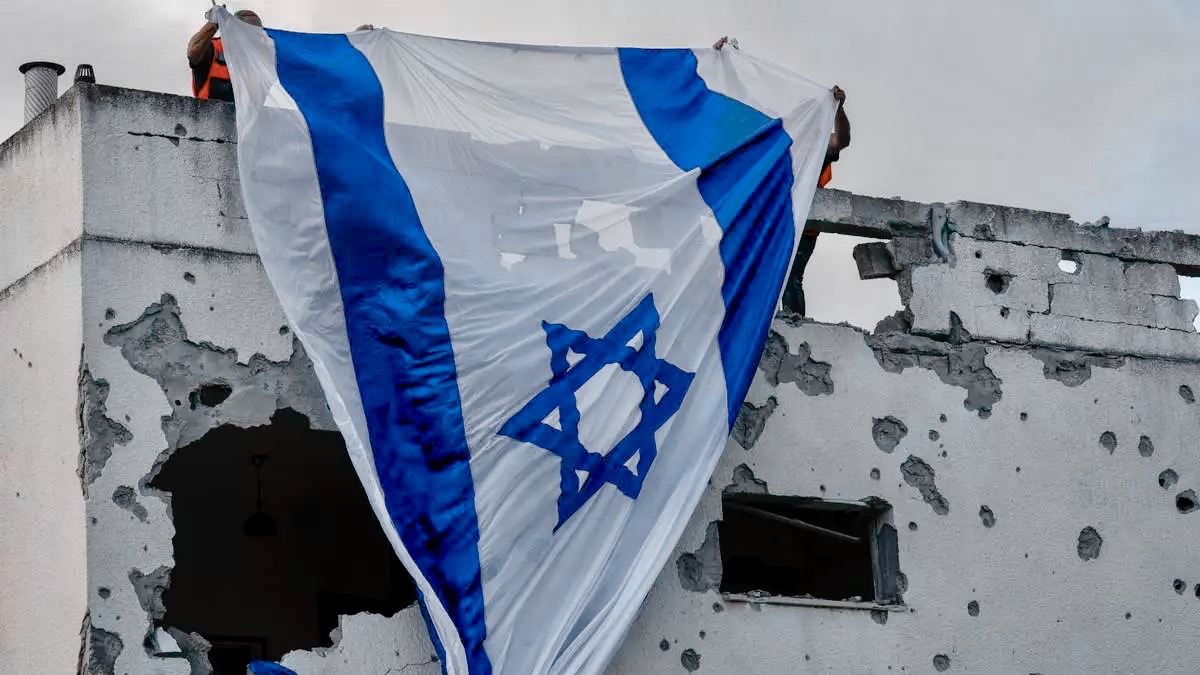

Two slogans ring across the Middle East, capturing the existential crisis that has long gripped the region: Iran’s rallying cry, “Death to Israel,” and Israel’s defiant response, Am Yisrael Chai—“The people of Israel live.”
This clash between hate and hope intensified in June after Israel launched a preemptive strike against Tehran’s nuclear sites and key Iranian military leaders, seeking to disable the regime’s capacity for mass destruction. Iran answered with volleys of ballistic missiles aimed at Tel Aviv, Haifa, and Jerusalem, causing innocent Israeli civilians to bear the brunt of an evil theocracy’s fury. Yet, Israel’s mantra of life, Am Yisrael Chai, grew louder, drowning out Iranian Ayatollah Ali Khamenei’s call for annihilation.
“Death to Israel” permeates Iran’s identity. The slogan is broadcast over state media and sung throughout the country as a Muslim ritual. Iranian funding emboldened Hamas, Hezbollah, and the Houthis to attack Israel. Iran’s national rhetoric embodies a refusal to accept the Jewish state’s right to exist, a vow to erase Jewish self-determination.
When Iran launches missiles indiscriminately at civilian neighborhoods, schoolyards, and open marketplaces, it seeks to terrorize Israeli families by shattering any sense of security. The mantra of destruction is designed to sow fear and signal to the world that Iran’s theocracy despises Jewish life. Yet, in the face of fear, Israel and its defenders answer with a different song—one of hope, resilience, and renewal.
Israel’s chant finds its roots in one of the most poignant moments of the 20th century. In April 1945, when Allied troops liberated Bergen-Belsen, a German concentration camp, a British-Jewish army chaplain overwhelmed by the emaciated Jewish survivors cried out, “Am Yisrael Chai!”
Those words—uttered amid ash, death, and shattered hope—proclaimed that a people who had suffered genocide would endure. From the smoke of that concentration camp to the rockets of today, Am Yisrael Chai has embodied the conviction that where death is threatened, life will answer. When open conflict broke out in June and Israel’s enemies terrorized the innocent and promoted death, the Jewish nation responded by preserving life, both that of their own citizens and Iranian civilians.
Israel and Iran are locked in a battle not merely of weapons or borders but of narratives. “Death to Israel” promotes an end to Jewish life. Am Yisrael Chai promotes a future—the affirmation that history is not over, that God’s covenant of protection over the Jewish people (Gen. 12:3) extends beyond the grave to the heart of God’s plan for them. It also invokes the prophet Ezekiel’s vision of dry bones coming back to life (Ezek. 37), insisting that even when the Jewish people appear most vulnerable, there remains a divine promise of restoration and renewal.
Since October 7, 2023, Israel has shifted its military strategy from a defensive to an offensive stance, largely dismantling Iran-backed proxies Hamas and Hezbollah and isolating Ayatollah Khamenei. The terror network Tehran assembled to influence the Middle East and destroy Israel appears to have toppled like dominoes in only a few months’ time.
With each day that passes since Hamas attacked Israel, the mantra Am Yisrael Chai continues to drown out the death cry of Iran’s regime. This is the power of hope in God’s promises against the hate and deception of the Devil. Israel’s mantra does not merely counter destruction; it overwhelms it.
In the end, when history records these days, it will not be the missiles that define the moment but the resolute chorus of a people who will not be extinguished because of a God who loves life more than death. Am Yisrael Chai—“the people of Israel live”—because “He who keeps Israel shall neither slumber nor sleep” (Ps. 121:4).