August 20, 2026

August, 20, 2026
August 20, 2026

give

untitled artwork

untitled artwork

World news biblically understood

TRENDING:

Israel To Proactively Confront Iran Threat

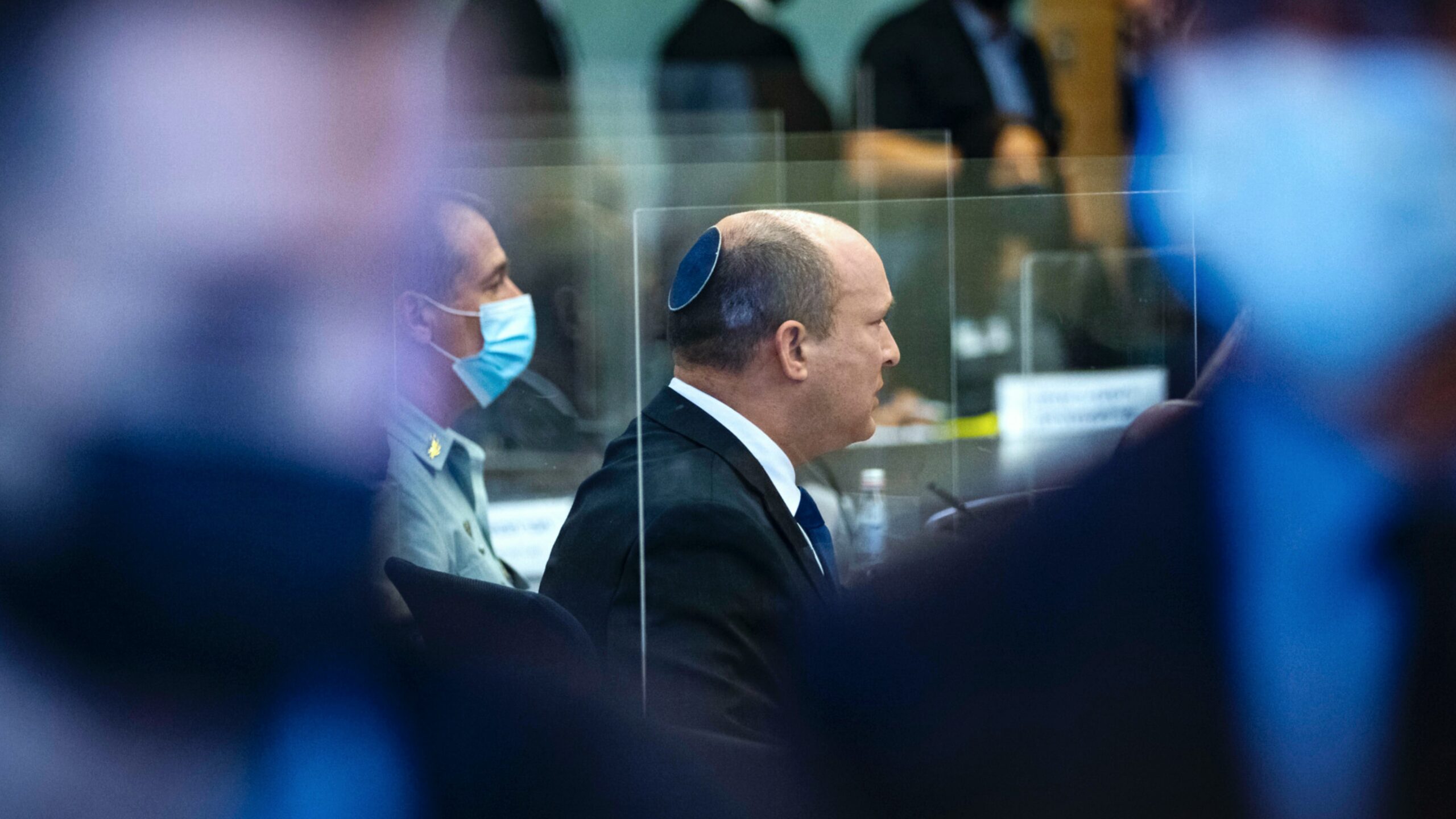
Prime Minister Naftali Bennett has reiterated that Jerusalem will not be bound by a future nuclear deal with Iran and will continue to regard itself as free to act “without constraint” against its arch-foe if necessary.

Addressing ongoing talks in Vienna between Iran and world powers to revive the 2015 Joint Comprehensive Plan of Action nuclear agreement, Bennett said his government is “certainly concerned” over potential concessions that may not be able to obstruct Tehran’s acquisition of atomic bombs.

“It is important for me to say here clearly and unequivocally: Israel is not a party to the agreements. Israel is not bound to what will be written in the agreements if they are signed. Israel will maintain unlimited and unrestricted freedom of action, everywhere and at all times,” underscored the Prime Minister.

Bennett made the assertions during his first appearance at the Knesset Foreign Affairs and Defense Committee as Prime Minister.

“I attribute great importance to the Knesset’s parliamentary oversight of the work of the government in all areas, especially the most sacred of all – the national security of Israel,” he stated.

By “stabilizing the Israeli system” with passage of a national budget and a 7% growth of the economy, Bennett praised his leading coalition for “taking quite a significant amount of money and investing in strengthening the IDF and the entire security establishment,” in a manner “not seen in years” that “is important for our existence.”

Israel has consistently called on world powers to maintain a credible military option while pursuing an agreement with Iran – which has repeatedly threatened to annihilate the Jewish State.

“We are dealing day and night with Iran and its malign activity,” said Prime Minister Bennett.

Describing the Islamic Republic as “the head of an octopus that constantly threatens Israel on all its borders via its proxies and its tentacles,” Bennett said that Jerusalem is “shifting to a concept of consistent offense and not just consistent defense.”

Knesset Foreign Affairs & Defense Committee Chairman Ram Ben Barak asserted in his opening remarks that the key challenge to the Jewish State remains Iran, while further stressing that Jerusalem is not opposed to a nuclear agreement so-long as it adequately contends with Tehran’s malign activities.

“Above all of the security challenges which Israel faces hovers Iran, similar to a dark cloud that unleashes thunders and lightnings daily over the entire Middle East” as a “radical axis of evil” that “must be stopped,” he said.

Despite not being party nor bound by a revived JCPOA, Ben Barak said that Israel should “aspire for a deal that will thwart Iran’s quest to attain nuclear capabilities” and “restrict ballistic missile development,” that can also curtail the Islamic Republic’s “export of terror” by entrenching itself in Syria and transferring arms to the Islamist Hamas rulers of Gaza and its Hezbollah proxy in Lebanon.

“Israel is committed to prepare for a contingency plan that also includes an effective military option to achieve the aims and goals of the country,” he cautioned.

In related developments, Major General Yaakov Banjo assumed command of the IDF Force Design Directorate, tasked with ensuring Israel’s qualitative military edge (QME) in the region. He replaces Major General Tomer Bar, who has been appointed as the next Commander of the Israeli Air Force (IAF).

“The IDF faces by many challenges and the (Force) Design Directorate is forced to deal with almost all of those. Security threats, near and far; opportunities that present themselves, these that exist and those that are emerging; operational activities of tomorrow and weaponry of the next decade. To withstand the returns of time, we will alter our approach in force building and adopt an updated approach,” said the incoming IDF Design Directorate chief, during a change of command ceremony.

“It is customary to describe our military superiority by the advantage or the gap that exists between the blue arrow, which represents the power-building of might of the IDF versus the red arrow that represents the capabilities of the enemy. To maintain the (necessary) gap, we will adopt an approach of strategic and operational competition. Strategic Competition is the demand to ensure the IDF’s superiority for future generations in the face of enemies and threats the take place globally. The Operational Competition is the demand to ensure its qualitative edge in every encounter – in other words, during any moment in time to subdue our enemies if war is forced upon us,” added Gen. Banjo.

It is important to explain that in practice, the IDF Force Design Directorate is tasked with implementing two significant strategic documents that were both formed and published in November of 2020 by IDF Chief of Staff Lieutenant General Aviv Kochavi, namely “Operation Concept for Victory” and the “Momentum Multi-Year Plan” which fundamentally changed the way the IDF views both itself and its adversaries.

At the heart of both strategies is the Israel military view that stop-gap reactive measures are insufficient to confront contemporary challenges, mandating that the IDF must instead undergo a fundamental change to contend with a dynamic and rapidly changing reality involving continuous adaptation to what may be regarded as somewhat ‘futuristic’ warfare.

“We are not talking about magical solutions or our hearts desires; We’re speaking of viable solutions with an outlook for the future – solutions which demand in-depth thinking and systematic work in order to achieve those (solutions). Gentlemen, we will bear every burden; we will withstand any difficulty; we will do all that is demanded of us – to ensure the security of the nation and our homeland,” said Lt. Gen. Kochavi at the hand-over, emphasizing that, “Reality in the 21st Century becomes from day-to-day, not year-to-year, more complicated and Force Building becomes more complex. Also because of threats; also because of opportunities; also because of the need to cooperate; also because of separate disciplines. It is simply more complicated. We must think of the future, of the distant future, about combat methods and perceptions that will pave the way for the Israel Defense Forces for the next 5, 10 or 20 years.”


Millions Are Understanding The News Through A Biblical Worldview

THANKS TO YOUR PRAYER AND SUPPORT

Syrian Nuclear Material, Turkish Encroachment, And The Burden Of Damascus

The aim of the Turks is to encroach toward the border with Israel, starting from the north and pushing further and further toward the center of Syria. Without intervention, before you know it, they will be on the border next to the Golan Heights. With a shared border with Israel, Turkey hopes to eventually fulfill its dreams of walking into Jerusalem to “liberate” it—a goal they discuss openly. Alongside Turkish activity in the region, the International Atomic Energy Agency (IAEA) released the information uncovering more undeclared nuclear material in Syria—tons of it.

A Race For Energy: AI Infrastructure Is Becoming Increasingly Difficult To Confine Within Traditional National Boundaries

Historically, governments could identify critical infrastructure relatively easily—power plants, factories, banks, and computer centers all had addresses. But imagine autonomous AI infrastructure scattered across international waters, connected through satellite networks. Now add space-based computing, orbital communications, global satellite internet, autonomous ships, and digital currencies. The technological world begins to look considerably different. Infrastructure is becoming increasingly global, distributed, autonomous, and difficult to confine within traditional national boundaries. That is where the Bible-prophecy discussion becomes especially interesting.

sign up

Political Division, Persecution, And War: How Bible Prophecy Changes Our Perspective On World Affairs

As history hurtles toward the Last Days, we find ourselves trying to navigate through an increasingly hostile world. Politics are dividing our country and even our churches. People are becoming more cold-hearted, selfish, and angry. We are experiencing a breakdown that feels irreversible. Our problems do not have simple solutions, but we can find guidance in Scripture.

ABC's of Salvation

Decision

UTT

FOI

untitled artwork

Israel My Glory

Prime Minister Naftali Bennett has reiterated that Jerusalem will not be bound by a future nuclear deal with Iran and will continue to regard itself as free to act “without constraint” against its arch-foe if necessary.

Addressing ongoing talks in Vienna between Iran and world powers to revive the 2015 Joint Comprehensive Plan of Action nuclear agreement, Bennett said his government is “certainly concerned” over potential concessions that may not be able to obstruct Tehran’s acquisition of atomic bombs.

“It is important for me to say here clearly and unequivocally: Israel is not a party to the agreements. Israel is not bound to what will be written in the agreements if they are signed. Israel will maintain unlimited and unrestricted freedom of action, everywhere and at all times,” underscored the Prime Minister.

Bennett made the assertions during his first appearance at the Knesset Foreign Affairs and Defense Committee as Prime Minister.

“I attribute great importance to the Knesset’s parliamentary oversight of the work of the government in all areas, especially the most sacred of all – the national security of Israel,” he stated.

By “stabilizing the Israeli system” with passage of a national budget and a 7% growth of the economy, Bennett praised his leading coalition for “taking quite a significant amount of money and investing in strengthening the IDF and the entire security establishment,” in a manner “not seen in years” that “is important for our existence.”

Israel has consistently called on world powers to maintain a credible military option while pursuing an agreement with Iran – which has repeatedly threatened to annihilate the Jewish State.

“We are dealing day and night with Iran and its malign activity,” said Prime Minister Bennett.

Describing the Islamic Republic as “the head of an octopus that constantly threatens Israel on all its borders via its proxies and its tentacles,” Bennett said that Jerusalem is “shifting to a concept of consistent offense and not just consistent defense.”

Knesset Foreign Affairs & Defense Committee Chairman Ram Ben Barak asserted in his opening remarks that the key challenge to the Jewish State remains Iran, while further stressing that Jerusalem is not opposed to a nuclear agreement so-long as it adequately contends with Tehran’s malign activities.

“Above all of the security challenges which Israel faces hovers Iran, similar to a dark cloud that unleashes thunders and lightnings daily over the entire Middle East” as a “radical axis of evil” that “must be stopped,” he said.

Despite not being party nor bound by a revived JCPOA, Ben Barak said that Israel should “aspire for a deal that will thwart Iran’s quest to attain nuclear capabilities” and “restrict ballistic missile development,” that can also curtail the Islamic Republic’s “export of terror” by entrenching itself in Syria and transferring arms to the Islamist Hamas rulers of Gaza and its Hezbollah proxy in Lebanon.

“Israel is committed to prepare for a contingency plan that also includes an effective military option to achieve the aims and goals of the country,” he cautioned.

In related developments, Major General Yaakov Banjo assumed command of the IDF Force Design Directorate, tasked with ensuring Israel’s qualitative military edge (QME) in the region. He replaces Major General Tomer Bar, who has been appointed as the next Commander of the Israeli Air Force (IAF).

“The IDF faces by many challenges and the (Force) Design Directorate is forced to deal with almost all of those. Security threats, near and far; opportunities that present themselves, these that exist and those that are emerging; operational activities of tomorrow and weaponry of the next decade. To withstand the returns of time, we will alter our approach in force building and adopt an updated approach,” said the incoming IDF Design Directorate chief, during a change of command ceremony.

“It is customary to describe our military superiority by the advantage or the gap that exists between the blue arrow, which represents the power-building of might of the IDF versus the red arrow that represents the capabilities of the enemy. To maintain the (necessary) gap, we will adopt an approach of strategic and operational competition. Strategic Competition is the demand to ensure the IDF’s superiority for future generations in the face of enemies and threats the take place globally. The Operational Competition is the demand to ensure its qualitative edge in every encounter – in other words, during any moment in time to subdue our enemies if war is forced upon us,” added Gen. Banjo.

It is important to explain that in practice, the IDF Force Design Directorate is tasked with implementing two significant strategic documents that were both formed and published in November of 2020 by IDF Chief of Staff Lieutenant General Aviv Kochavi, namely “Operation Concept for Victory” and the “Momentum Multi-Year Plan” which fundamentally changed the way the IDF views both itself and its adversaries.

At the heart of both strategies is the Israel military view that stop-gap reactive measures are insufficient to confront contemporary challenges, mandating that the IDF must instead undergo a fundamental change to contend with a dynamic and rapidly changing reality involving continuous adaptation to what may be regarded as somewhat ‘futuristic’ warfare.

“We are not talking about magical solutions or our hearts desires; We’re speaking of viable solutions with an outlook for the future – solutions which demand in-depth thinking and systematic work in order to achieve those (solutions). Gentlemen, we will bear every burden; we will withstand any difficulty; we will do all that is demanded of us – to ensure the security of the nation and our homeland,” said Lt. Gen. Kochavi at the hand-over, emphasizing that, “Reality in the 21st Century becomes from day-to-day, not year-to-year, more complicated and Force Building becomes more complex. Also because of threats; also because of opportunities; also because of the need to cooperate; also because of separate disciplines. It is simply more complicated. We must think of the future, of the distant future, about combat methods and perceptions that will pave the way for the Israel Defense Forces for the next 5, 10 or 20 years.”

Trusted Analysis From A Biblical Worldview

Help reach the lost and equip the church with the living and active truth of God's Word in our world today.

YOU CARE ABOUT

BIBLICAL TRUTH. SO DO WE.


Together, We Can Deliver A Biblical Understanding

Of News Events Around The World.

Syrian Nuclear Material, Turkish Encroachment, And The Burden Of Damascus

The aim of the Turks is to encroach toward the border with Israel, starting from the north and pushing further and further toward the center of Syria. Without intervention, before you know it, they will be on the border next to the Golan Heights. With a shared border with Israel, Turkey hopes to eventually fulfill its dreams of walking into Jerusalem to “liberate” it—a goal they discuss openly. Alongside Turkish activity in the region, the International Atomic Energy Agency (IAEA) released the information uncovering more undeclared nuclear material in Syria—tons of it.

A Race For Energy: AI Infrastructure Is Becoming Increasingly Difficult To Confine Within Traditional National Boundaries

Historically, governments could identify critical infrastructure relatively easily—power plants, factories, banks, and computer centers all had addresses. But imagine autonomous AI infrastructure scattered across international waters, connected through satellite networks. Now add space-based computing, orbital communications, global satellite internet, autonomous ships, and digital currencies. The technological world begins to look considerably different. Infrastructure is becoming increasingly global, distributed, autonomous, and difficult to confine within traditional national boundaries. That is where the Bible-prophecy discussion becomes especially interesting.

untitled artwork 6391

Political Division, Persecution, And War: How Bible Prophecy Changes Our Perspective On World Affairs

As history hurtles toward the Last Days, we find ourselves trying to navigate through an increasingly hostile world. Politics are dividing our country and even our churches. People are becoming more cold-hearted, selfish, and angry. We are experiencing a breakdown that feels irreversible. Our problems do not have simple solutions, but we can find guidance in Scripture.

ABC's of Salvation

TV AD

worldview matters

Decision Magazine V AD

Decision

Jan Markell

Israel My Glory

Erick Stakelbeck

untitled artwork

YOU CARE ABOUT

BIBLICAL TRUTH.

SO DO WE.

Together, We Can Deliver A Biblical Understanding Of News Events Around The World And Equip The Church To Stand With A Biblical Worldview.

untitled artwork

Israel My Glory

YOU CARE ABOUT

BIBLICAL TRUTH.

SO DO WE.


Together, We Can Deliver A Biblical Understanding Of News Events Around The World And Equip The Church To Stand With A Biblical Worldview.