July 12, 2026

July, 12, 2026
July 12, 2026

give

untitled artwork

untitled artwork

World news biblically understood

TRENDING:

In Our Current Culture And World, How Do We Navigate Through The Fog?

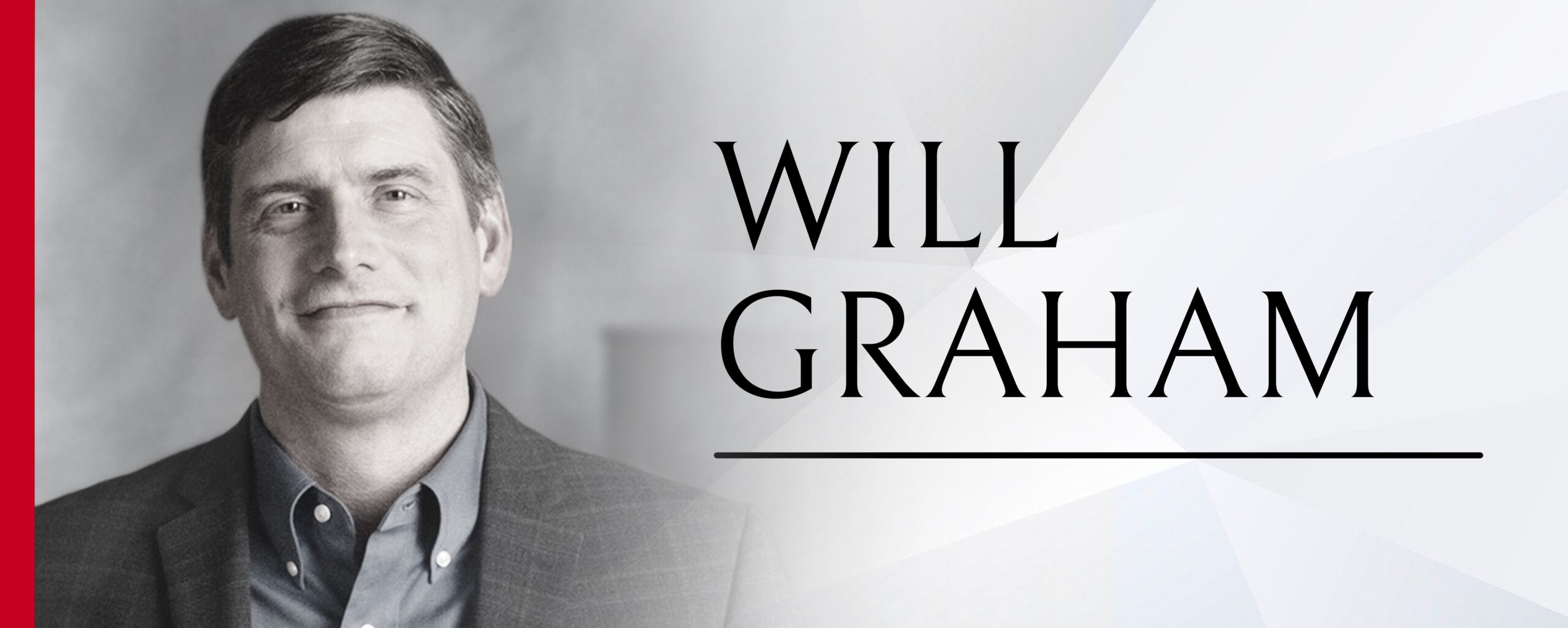
Will Graham

I slowly inched my motorcycle down the mountain road, staring into a dense blanket of fog unlike any I had ever seen.

I was in the middle of holding evangelistic meetings in multiple communities in Montana when a few of us decided to take a quick road trip to Glacier National Park. Things hadn’t gone as planned, however. Rainy weather had already obscured much of the view, and we eventually rode into a cloud that had formed around the mountain. I couldn’t see two feet in front of me.

I couldn’t keep riding. After all, I could barely see my own boots, let alone the road ahead. Further, the asphalt had recently been repaved and there were no painted lines. With absolutely zero visibility or clarity, the only option was to slowly push forward, feet on the ground, scanning for car headlights slicing through the dense fog.

At one point, I nearly bumped into the steep rock wall to my right. I didn’t see it until it was inches away. A few minutes later, I almost hit the guardrail that separated the road from the cliff on the other side. My only option was to keep walking the bike forward until the skies cleared, but I was in a tough situation.

It occurs to me that life—especially in our current culture and world—can be like that treacherous, obscured journey through the fog. As we follow God’s Word, we know that we’re ultimately on the right path, but everything around us appears sin-sick and confused.

The Prophet Isaiah once warned, “Woe to those who call evil good, and good evil; who put darkness for light, and light for darkness; who put bitter for sweet, and sweet for bitter!” (Isaiah 5:20). That certainly seems to describe the fog of our modern world.

We may even wonder why God is allowing the chaos and pain that surrounds us. What is His plan? Why is He seemingly silent as the world devolves?

We take encouragement in Isaiah 55:9, where God says, “For as the heavens are higher than the earth, so are My ways higher than your ways, and My thoughts than your thoughts”—but we long to see clearly how the plan fits; how “all things work together for good to those who love God, to those who are the called according to His purpose” (Romans 8:28).

This begs the question: How do we as Christians respond when the fog of life overtakes us?

For the answer, let’s look at the Old Testament Prophet Habakkuk. He found himself in a situation similar to many of us today. He spoke with God and knew His commands. He understood righteousness. He also knew that the culture around him in Judah had grown wicked. I imagine that his heart ached as he saw people doing what was right in their own eyes.

As a result, Habakkuk cried out to God, and frankly he didn’t hold anything back. While Habakkuk wanted his sinful neighbors to repent, God revealed a plan to punish Judah for its wicked ways, and to use the godless Chaldeans (Babylonians) to accomplish it.

Imagine Habakkuk’s dismay. A nation that was far worse, by any measure, would be used to enact God’s judgment on Judah. Evil was going to triumph. Talk about being in a fog and not having any idea of how God’s plan was being worked in the midst of chaos.

Habakkuk desperately tried to make sense of the situation. He struggled in his sorrow and prayed another strongly worded lament. What happened next is very interesting.

After he petitioned God one last time, he made a simple statement: “I will stand my watch and set myself on the rampart, and watch to see what He will say to me, and what I will answer when I am corrected” (Habakkuk 2:1).

It is in this singular sentence that we can learn lessons on how to respond to the fog that surrounds us.

First, we must live a life of commitment. Habakkuk went to the rampart—the fortified wall—of the city to wait for God’s answer. He had proposed questions to God in chapter 1, and now he waited patiently for God to respond. Similarly, when we cry out to God, we also need to put ourselves in a place to hear God speak to us. We do this not by going to a physical location necessarily, but by going to our knees, by studying His Word and by resting in His presence.

Second, we need to live a life of anticipation, expecting to hear from our Lord. The God that we serve is a God who desires to make Himself known to all people. Like Habakkuk, we should realize our own utter dependence upon God. We must cling to Him and be sensitive to His leading in answer to our prayer.

Finally, we are to live a life of correction. Habakkuk had just boldly challenged God about the injustices he saw around him. Once he had said his piece, however, he humbled himself. He recognized that God’s ways are perfect, even if he didn’t understand them, and he was ready to be set right. What a lesson for us! Rather than holding stubbornly and sinfully to our personal desires, we must let God’s response shape and correct our views.

Habakkuk’s circumstances had not changed. He was surrounded by wickedness, and judgment at the hands of the Chaldeans was on the horizon. However, in the midst of the fog, Habakkuk called upon the Lord and humbled himself, recognizing that God was truly in control.

The world may look dark, our hearts may hurt and chaos may envelop us. However, as we live a life of commitment, anticipation and correction, and as we keep a heart of worship and praise to our Heavenly Father, we can trust that He sees more clearly than we ever could and has a plan and purpose for all things.


BGEA

Harbinger’s Daily exists through the generous support of our readers. For ways to support this ministry, click here.

Demonizing The Jewish State: Why Australia’s Attempts To Tackle Antisemitism Are Falling Disturbingly Short

Many attempt to mask their antisemitism by claiming that anti-Zionism is merely impassioned criticism of a nation that just happens to be Jewish. By claiming Zionism is a “modern colonial ideology” they attempt to legitimise Palestinian ownership of the land at the expense of Jewish self-determination in the ancestral Jewish homeland. The simple equation in the anti-Zionist mind is that if Zionism is indeed colonial, then the State of Israel is illegitimate. But what most people refuse to accept is that the Jewish people do not just have a legal and historical right to the land, they have a biblical claim to it as their national homeland as well.    

The Hunt For Eichmann: Israel’s Daring Mission To Capture A Man With The Blood Of Millions On His Hands

The plan to abduct Eichmann, dubbed Operation Finale, was a complex mission involving Mossad agents and a civilian physician who entered Argentina during its 150th anniversary celebration of independence from Spain. The timing was crucial, as Israel’s airline El Al did not normally fly to South America, but a government delegation provided cover for the operation. “Dead or alive,” Prime Minister David Ben Gurion told Harel before he left on the mission, “just bring Eichmann back with you. … Preferably alive. It would be very important, morally, for the young generations of Israel.”

sign up

Will America Last Another 250 Years?

Looking back, there can be no denying that God has indeed shed His grace—His unmerited favor—on our land, from sea to shining sea. But does our national “soul” encourage self-control? Do our laws champion ordered liberty? Is our success tempered with nobleness? Is brotherhood the defining characteristic of any good we aspire to reflect? By all of those measures, America seems decidedly adrift. We are drifting farther and farther from Nature’s God—the Ruler of the Universe our Founders called upon and credited with for our celebrated independence.

ABC's of Salvation

Decision

UTT

FOI

untitled artwork

Israel My Glory

Will Graham

I slowly inched my motorcycle down the mountain road, staring into a dense blanket of fog unlike any I had ever seen.

I was in the middle of holding evangelistic meetings in multiple communities in Montana when a few of us decided to take a quick road trip to Glacier National Park. Things hadn’t gone as planned, however. Rainy weather had already obscured much of the view, and we eventually rode into a cloud that had formed around the mountain. I couldn’t see two feet in front of me.

I couldn’t keep riding. After all, I could barely see my own boots, let alone the road ahead. Further, the asphalt had recently been repaved and there were no painted lines. With absolutely zero visibility or clarity, the only option was to slowly push forward, feet on the ground, scanning for car headlights slicing through the dense fog.

At one point, I nearly bumped into the steep rock wall to my right. I didn’t see it until it was inches away. A few minutes later, I almost hit the guardrail that separated the road from the cliff on the other side. My only option was to keep walking the bike forward until the skies cleared, but I was in a tough situation.

It occurs to me that life—especially in our current culture and world—can be like that treacherous, obscured journey through the fog. As we follow God’s Word, we know that we’re ultimately on the right path, but everything around us appears sin-sick and confused.

The Prophet Isaiah once warned, “Woe to those who call evil good, and good evil; who put darkness for light, and light for darkness; who put bitter for sweet, and sweet for bitter!” (Isaiah 5:20). That certainly seems to describe the fog of our modern world.

We may even wonder why God is allowing the chaos and pain that surrounds us. What is His plan? Why is He seemingly silent as the world devolves?

We take encouragement in Isaiah 55:9, where God says, “For as the heavens are higher than the earth, so are My ways higher than your ways, and My thoughts than your thoughts”—but we long to see clearly how the plan fits; how “all things work together for good to those who love God, to those who are the called according to His purpose” (Romans 8:28).

This begs the question: How do we as Christians respond when the fog of life overtakes us?

For the answer, let’s look at the Old Testament Prophet Habakkuk. He found himself in a situation similar to many of us today. He spoke with God and knew His commands. He understood righteousness. He also knew that the culture around him in Judah had grown wicked. I imagine that his heart ached as he saw people doing what was right in their own eyes.

As a result, Habakkuk cried out to God, and frankly he didn’t hold anything back. While Habakkuk wanted his sinful neighbors to repent, God revealed a plan to punish Judah for its wicked ways, and to use the godless Chaldeans (Babylonians) to accomplish it.

Imagine Habakkuk’s dismay. A nation that was far worse, by any measure, would be used to enact God’s judgment on Judah. Evil was going to triumph. Talk about being in a fog and not having any idea of how God’s plan was being worked in the midst of chaos.

Habakkuk desperately tried to make sense of the situation. He struggled in his sorrow and prayed another strongly worded lament. What happened next is very interesting.

After he petitioned God one last time, he made a simple statement: “I will stand my watch and set myself on the rampart, and watch to see what He will say to me, and what I will answer when I am corrected” (Habakkuk 2:1).

It is in this singular sentence that we can learn lessons on how to respond to the fog that surrounds us.

First, we must live a life of commitment. Habakkuk went to the rampart—the fortified wall—of the city to wait for God’s answer. He had proposed questions to God in chapter 1, and now he waited patiently for God to respond. Similarly, when we cry out to God, we also need to put ourselves in a place to hear God speak to us. We do this not by going to a physical location necessarily, but by going to our knees, by studying His Word and by resting in His presence.

Second, we need to live a life of anticipation, expecting to hear from our Lord. The God that we serve is a God who desires to make Himself known to all people. Like Habakkuk, we should realize our own utter dependence upon God. We must cling to Him and be sensitive to His leading in answer to our prayer.

Finally, we are to live a life of correction. Habakkuk had just boldly challenged God about the injustices he saw around him. Once he had said his piece, however, he humbled himself. He recognized that God’s ways are perfect, even if he didn’t understand them, and he was ready to be set right. What a lesson for us! Rather than holding stubbornly and sinfully to our personal desires, we must let God’s response shape and correct our views.

Habakkuk’s circumstances had not changed. He was surrounded by wickedness, and judgment at the hands of the Chaldeans was on the horizon. However, in the midst of the fog, Habakkuk called upon the Lord and humbled himself, recognizing that God was truly in control.

The world may look dark, our hearts may hurt and chaos may envelop us. However, as we live a life of commitment, anticipation and correction, and as we keep a heart of worship and praise to our Heavenly Father, we can trust that He sees more clearly than we ever could and has a plan and purpose for all things.

BGEA

Trusted Analysis From A Biblical Worldview

Help reach the lost and equip the church with the living and active truth of God's Word in our world today.

YOU CARE ABOUT

BIBLICAL TRUTH. SO DO WE.


Together, We Can Deliver A Biblical Understanding

Of News Events Around The World.

Demonizing The Jewish State: Why Australia’s Attempts To Tackle Antisemitism Are Falling Disturbingly Short

Many attempt to mask their antisemitism by claiming that anti-Zionism is merely impassioned criticism of a nation that just happens to be Jewish. By claiming Zionism is a “modern colonial ideology” they attempt to legitimise Palestinian ownership of the land at the expense of Jewish self-determination in the ancestral Jewish homeland. The simple equation in the anti-Zionist mind is that if Zionism is indeed colonial, then the State of Israel is illegitimate. But what most people refuse to accept is that the Jewish people do not just have a legal and historical right to the land, they have a biblical claim to it as their national homeland as well.    

The Hunt For Eichmann: Israel’s Daring Mission To Capture A Man With The Blood Of Millions On His Hands

The plan to abduct Eichmann, dubbed Operation Finale, was a complex mission involving Mossad agents and a civilian physician who entered Argentina during its 150th anniversary celebration of independence from Spain. The timing was crucial, as Israel’s airline El Al did not normally fly to South America, but a government delegation provided cover for the operation. “Dead or alive,” Prime Minister David Ben Gurion told Harel before he left on the mission, “just bring Eichmann back with you. … Preferably alive. It would be very important, morally, for the young generations of Israel.”

untitled artwork 6391

Will America Last Another 250 Years?

Looking back, there can be no denying that God has indeed shed His grace—His unmerited favor—on our land, from sea to shining sea. But does our national “soul” encourage self-control? Do our laws champion ordered liberty? Is our success tempered with nobleness? Is brotherhood the defining characteristic of any good we aspire to reflect? By all of those measures, America seems decidedly adrift. We are drifting farther and farther from Nature’s God—the Ruler of the Universe our Founders called upon and credited with for our celebrated independence.

ABC's of Salvation

TV AD

worldview matters

Decision Magazine V AD

Decision

Jan Markell

Israel My Glory

Erick Stakelbeck

untitled artwork

YOU CARE ABOUT

BIBLICAL TRUTH.

SO DO WE.

Together, We Can Deliver A Biblical Understanding Of News Events Around The World And Equip The Church To Stand With A Biblical Worldview.

untitled artwork

Israel My Glory

YOU CARE ABOUT

BIBLICAL TRUTH.

SO DO WE.


Together, We Can Deliver A Biblical Understanding Of News Events Around The World And Equip The Church To Stand With A Biblical Worldview.