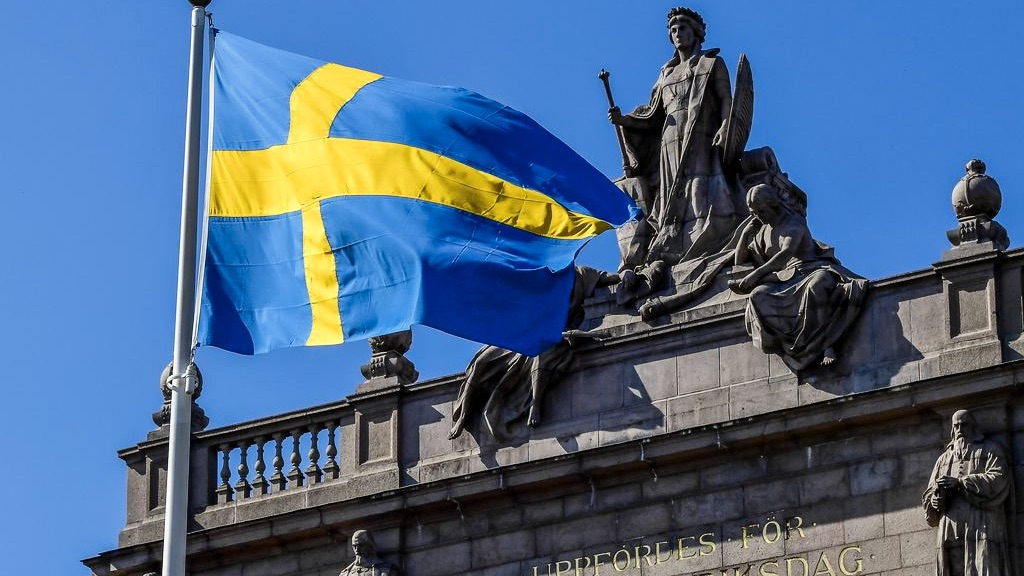
Three European countries have now written abortion into their constitutions as a fundamental “right”: France, Luxembourg and, as of this month, Sweden. The move places the intentional ending of unborn human life on the same constitutional plane as basic freedoms, while the child in the womb continues to receive no equivalent protection.
Sweden’s parliament, the Riksdag, voted 292–51 on Nov. 11, and the amendment will take effect Jan. 1. The new language states that a pregnant woman has the right to terminate a pregnancy according to rules set by ordinary law. Under Sweden’s constitutional rules, identical approval by two successive parliaments with an election between them was required, and an earlier vote had already passed in May 2026.
The change has been described as largely symbolic. Abortion on request through the end of the 18th week of pregnancy has been legal since 1975, with later procedures allowed in limited circumstances. No serious political “threat” to that existing law existed, with every major party supporting the framework. Nonetheless, lawmakers chose to go further and give the procedure constitutional status.
Abortion Over All Care—Even Cancer Treatment
Benedicta Lindberg, secretary-general of the pro-life organization Respekt, highlighted how abortion now receives the rank of a fundamental constitutional right, while the unborn child is granted no corresponding right to life. Even life-saving care such as cancer treatment, she added, has no such equivalent constitutional guarantee.
Lindberg further criticized the way the measure reached the floor. The abortion provision was bundled with unrelated changes concerning citizenship revocation for dual nationals and limits on certain criminal associations. Members could only vote the entire package up or down, making a separate decision on abortion impossible.
The deeper question remains unsettled by any vote, Lindberg said, as “a constitutional amendment cannot settle the fundamental moral question of when human life deserves protection.” Additionally, some have noted that Sweden’s persistently low birth rates form a stark backdrop to the vote.
Sweden’s decision follows France’s 2024 constitutional amendment—the world’s first—and Luxembourg’s similar step earlier this year. Supporters have presented these changes as safeguards against future political shifts. But critics, from a pro-life perspective, see this as representing a further cultural step that treats the deliberate ending of life—made in the image of God—as an untouchable right rather than a contested moral act.