September 25, 2026

September, 25, 2026
September 25, 2026

give

untitled artwork

untitled artwork

World news biblically understood

TRENDING:

Distracted World, Eternal Truth: God’s Command To Rejoice Through The Feast Of Sukkot 

Tiauna Lodewyk

Attention is precious, and focus is the ultimate commodity in a distracted world. The evil forces seeking to distract humanity away from God and lure their concentration to false heavenly pursuits, or empty earthly desires, are relentlessly pursuing the attention of each individual. For the believer, the devil’s tactic of distraction is no different. He seeks to destroy our efficacy, since he cannot touch our eternity. 

The tendency of mankind to forget God is clearly demonstrated during the 40 years of desert wanderings, when the Jewish people repeatedly forgot God’s goodness at each altercation, causing them to question His evident care and provision.

Knowing the fickle nature of our attention, and the brevity of human remembrance, God gave the Jewish people His “appointed times” in the book of Leviticus, as days set apart for the specific purpose of remembering events of God’s goodness. By celebrating these feasts, God structured observances for remembrance, worship, rest, and celebration, thus fixing the attention of the Israelites on the Law of God, and God’s forever faithfulness, year after year.

The feasts that God appointed were meant to serve as an alarm clock to the soul of spiritual things, a celebration and a foreshadowing of things to come. Each feast contains structures of remembrance, fueling the spiritual practices and pursuit of the Lord.

The Feast of Tabernacles, or Sukkot, was commanded as a core feast of celebration to remember the time of wandering after the Exodus from Egypt, when the Lord led, provided, and shaped the Jewish people into a nation that would finally enter Israel, and through which, the Messiah would be born.

Leviticus 23:33–43 outlines God’s command in keeping Sukkot. The feast was to last 7 days, beginning on the 15th day of the seventh month (Tishrei), with a distinct holy convocation on the 8th day. All native-born Israelites were required to live in temporary shelters (“booths”) for seven days to remember how they had dwelt in tents when they were brought out of Egypt.

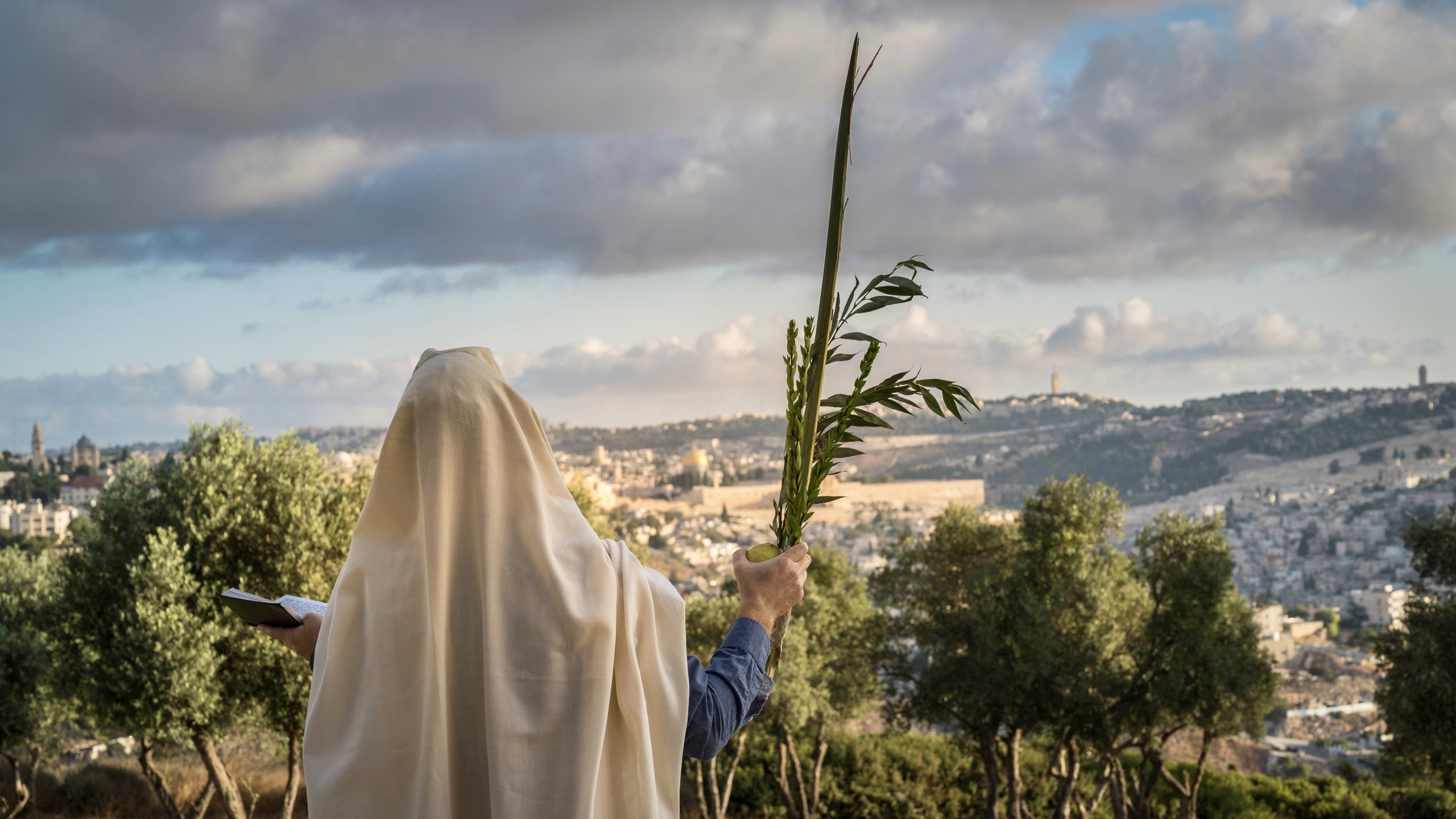
The celebration of the feast is highlighted by the command to gather four specific branches on the first day for use in rejoicing before the Lord: fruit of beautiful trees (traditionally citron), palm branches (lulav), boughs of leafy trees (traditionally myrtle), and willows of the brook.

The Lord commanded rejoicing on this feast of celebration as remembrance: “…that your generations may know that I made the children of Israel dwell in booths when I brought them out of the land of Egypt: I am the Lord your God” (Leviticus 23:43).

Deuteronomy further highlights that the Feast of Tabernacles is observed specifically “when you have gathered from your threshing floor and from your winepress” (Deuteronomy 16:13) and serves a dual purpose to rejoice that “the Lord your God will bless you in all your produce and in all the work of your hands, so that you surely rejoice” (Deuteronomy 16:15). Both the servants and the foreigner within Israel were to participate in the rejoicing and celebration of Sukkot.

Sukkot is often connected with the blessing of rain. Zechariah 14:16–18 notes that in the millennial kingdom, the nations that are left will go up to Jerusalem to worship the Lord during the Feast of Tabernacles, and any nation that refuses to go up will have no rain and the Lord will strike it with a plague. This vivid warning demonstrates both the significance of God’s appointed times in the millennial kingdom and the purpose of shared rejoicing to the Lord.

Many of the beautiful commands God established as reminders for Israel were turned into heavier designs of the Jewish leaders and tradition. While the Torah simply states, “living in booths,” the Rabbis established extensive legal definitions for what constitutes a valid “Sukkah.” Hoshanah Rabbah (the 7th day of the feast) has taken on specific rituals like beating the five willow branches on the ground to symbolize the casting away of sins, circling the synagogue 7 times while praying for rain, and studying Torah the entire final night as the last seal of God’s judgment from Yom Kippur.

Some of the additive traditions of the Rabbis on Sukkot may add depth and meaningful tradition, but as with anything else, if a man-made structure is centered around earning God’s forgiveness and favor, the focus can shift from the original intent and the beauty of celebrating our full justification through the death of Jesus Christ—which must remain the thankful source of our rejoicing.

While our salvation is secure and unearned, we so easily allow the anxieties of daily life to sidetrack our focus, forgetting to rejoice in the profound wonder of what Christ has done. If the Jewish people can rejoice in the futile hope of their redemption through keeping the law, how much more should the believer rejoice over our assured salvation through the righteousness of Jesus Christ. Since our sin debt is paid in Christ, our relationship with God restored, and our eternal hope assured, our rejoicing should surpass anything the world has to offer.

In Revelation 7:9, the same palm branches used for rejoicing during Sukkot and for Jesus’ entry into Jerusalem before His death are mentioned being used in heaven as the tribulation saints worship the Lord: “After these things I looked, and behold, a great multitude which no one could number… standing before the throne and before the Lamb, clothed with white robes, with palm branches in their hands…”

The believer’s attention must be focused on remembering the imminent return of Christ and the day when we will stand before God rejoicing for all eternity. This alignment further propels the believer into the urgency of evangelism and living a life of fervent witness. If our attention is fixed, and our hearts are abiding in Christ, the devil will fail in his attempts to make us ineffective for the kingdom of God.

Finally, Jesus said in John 15:11 that our joy is to be full! If our very being belongs to the Lord, let us give Him our most valuable commodity, not just our attention, but also our hearts, remembering that ultimately it is only Him that will sustain us until the day of Jesus Christ.



Millions Are Understanding The News Through A Biblical Worldview

THANKS TO YOUR PRAYER AND SUPPORT

The Decision On The Ballot This November: Will Americans Choose Freedom Or Slavery?

“The greatest thing that you can have in an election is high contrast,” Bachmann noted. “I have never in my lifetime seen a higher contrast than this fall with what the two different political camps in America are offering.” “Socialism has never worked anywhere. It's an abject failure. All socialism does is consume. It doesn't produce anything,” she emphasized. “Socialism is on the ballot… When you look at what it is that people have to choose from, it's freedom [vs enslaving ideologies].”

James Talarico’s ‘Pastor’ Says Christ ‘Didn’t Die To Save Our Sins,’ Questions Whether Jesus Ever Existed

Undercover footage has exposed the teachings of a lesbian minister from Texas Democratic U.S. Senate candidate—and aspiring pastor—James Talarico’s home church. The minister, who reportedly uses “they/them” pronouns, claimed Christ “didn’t die to save our sins,” condemned God as “a vengeful, killing-people kind of God,” and questioned whether Jesus ever existed. “Jesus was political,” she said. “Jesus was put on that cross, not to save us; Jesus was put on that cross because Rome hated Him and they thought He was a threat to their domination of that area. And so they killed Him. He didn’t die to save our sins. That makes a whole lot more sense to me than to say that some God would kill His Son for us. That doesn’t make sense. How does that make up for all the things I can do? No, it doesn’t.”

sign up

This Is Not Political—This Is Biblical: What’s Really At Stake In The Virginia Elections?

According to Pew Research and First Liberty, 90 million self-identified evangelical Christians in America are eligible to vote. We are the largest voting bloc in America, but tragically, of the 90 million eligible to vote, 40 million do not vote, and 15 million are not even registered. The majority of Christians sit it out, and as a result, we allow evil and are ceding ground to Satan. When evil policies are enacted and Christians sit it out, we have no one to blame but ourselves. Christians need to let their voices be heard and stand up for God's definition of marriage and sanctity of life from the womb to the tomb.

ABC's of Salvation

Decision

christ in prophecy

UTT

untitled artwork

Israel My Glory

Tiauna Lodewyk

Attention is precious, and focus is the ultimate commodity in a distracted world. The evil forces seeking to distract humanity away from God and lure their concentration to false heavenly pursuits, or empty earthly desires, are relentlessly pursuing the attention of each individual. For the believer, the devil’s tactic of distraction is no different. He seeks to destroy our efficacy, since he cannot touch our eternity. 

The tendency of mankind to forget God is clearly demonstrated during the 40 years of desert wanderings, when the Jewish people repeatedly forgot God’s goodness at each altercation, causing them to question His evident care and provision.

Knowing the fickle nature of our attention, and the brevity of human remembrance, God gave the Jewish people His “appointed times” in the book of Leviticus, as days set apart for the specific purpose of remembering events of God’s goodness. By celebrating these feasts, God structured observances for remembrance, worship, rest, and celebration, thus fixing the attention of the Israelites on the Law of God, and God’s forever faithfulness, year after year.

The feasts that God appointed were meant to serve as an alarm clock to the soul of spiritual things, a celebration and a foreshadowing of things to come. Each feast contains structures of remembrance, fueling the spiritual practices and pursuit of the Lord.

The Feast of Tabernacles, or Sukkot, was commanded as a core feast of celebration to remember the time of wandering after the Exodus from Egypt, when the Lord led, provided, and shaped the Jewish people into a nation that would finally enter Israel, and through which, the Messiah would be born.

Leviticus 23:33–43 outlines God’s command in keeping Sukkot. The feast was to last 7 days, beginning on the 15th day of the seventh month (Tishrei), with a distinct holy convocation on the 8th day. All native-born Israelites were required to live in temporary shelters (“booths”) for seven days to remember how they had dwelt in tents when they were brought out of Egypt.

The celebration of the feast is highlighted by the command to gather four specific branches on the first day for use in rejoicing before the Lord: fruit of beautiful trees (traditionally citron), palm branches (lulav), boughs of leafy trees (traditionally myrtle), and willows of the brook.

The Lord commanded rejoicing on this feast of celebration as remembrance: “…that your generations may know that I made the children of Israel dwell in booths when I brought them out of the land of Egypt: I am the Lord your God” (Leviticus 23:43).

Deuteronomy further highlights that the Feast of Tabernacles is observed specifically “when you have gathered from your threshing floor and from your winepress” (Deuteronomy 16:13) and serves a dual purpose to rejoice that “the Lord your God will bless you in all your produce and in all the work of your hands, so that you surely rejoice” (Deuteronomy 16:15). Both the servants and the foreigner within Israel were to participate in the rejoicing and celebration of Sukkot.

Sukkot is often connected with the blessing of rain. Zechariah 14:16–18 notes that in the millennial kingdom, the nations that are left will go up to Jerusalem to worship the Lord during the Feast of Tabernacles, and any nation that refuses to go up will have no rain and the Lord will strike it with a plague. This vivid warning demonstrates both the significance of God’s appointed times in the millennial kingdom and the purpose of shared rejoicing to the Lord.

Many of the beautiful commands God established as reminders for Israel were turned into heavier designs of the Jewish leaders and tradition. While the Torah simply states, “living in booths,” the Rabbis established extensive legal definitions for what constitutes a valid “Sukkah.” Hoshanah Rabbah (the 7th day of the feast) has taken on specific rituals like beating the five willow branches on the ground to symbolize the casting away of sins, circling the synagogue 7 times while praying for rain, and studying Torah the entire final night as the last seal of God’s judgment from Yom Kippur.

Some of the additive traditions of the Rabbis on Sukkot may add depth and meaningful tradition, but as with anything else, if a man-made structure is centered around earning God’s forgiveness and favor, the focus can shift from the original intent and the beauty of celebrating our full justification through the death of Jesus Christ—which must remain the thankful source of our rejoicing.

While our salvation is secure and unearned, we so easily allow the anxieties of daily life to sidetrack our focus, forgetting to rejoice in the profound wonder of what Christ has done. If the Jewish people can rejoice in the futile hope of their redemption through keeping the law, how much more should the believer rejoice over our assured salvation through the righteousness of Jesus Christ. Since our sin debt is paid in Christ, our relationship with God restored, and our eternal hope assured, our rejoicing should surpass anything the world has to offer.

In Revelation 7:9, the same palm branches used for rejoicing during Sukkot and for Jesus’ entry into Jerusalem before His death are mentioned being used in heaven as the tribulation saints worship the Lord: “After these things I looked, and behold, a great multitude which no one could number… standing before the throne and before the Lamb, clothed with white robes, with palm branches in their hands…”

The believer’s attention must be focused on remembering the imminent return of Christ and the day when we will stand before God rejoicing for all eternity. This alignment further propels the believer into the urgency of evangelism and living a life of fervent witness. If our attention is fixed, and our hearts are abiding in Christ, the devil will fail in his attempts to make us ineffective for the kingdom of God.

Finally, Jesus said in John 15:11 that our joy is to be full! If our very being belongs to the Lord, let us give Him our most valuable commodity, not just our attention, but also our hearts, remembering that ultimately it is only Him that will sustain us until the day of Jesus Christ.

Trusted Analysis From A Biblical Worldview

Help reach the lost and equip the church with the living and active truth of God's Word in our world today.

YOU CARE ABOUT

BIBLICAL TRUTH. SO DO WE.


Together, We Can Deliver A Biblical Understanding

Of News Events Around The World.

The Decision On The Ballot This November: Will Americans Choose Freedom Or Slavery?

“The greatest thing that you can have in an election is high contrast,” Bachmann noted. “I have never in my lifetime seen a higher contrast than this fall with what the two different political camps in America are offering.” “Socialism has never worked anywhere. It's an abject failure. All socialism does is consume. It doesn't produce anything,” she emphasized. “Socialism is on the ballot… When you look at what it is that people have to choose from, it's freedom [vs enslaving ideologies].”

James Talarico’s ‘Pastor’ Says Christ ‘Didn’t Die To Save Our Sins,’ Questions Whether Jesus Ever Existed

Undercover footage has exposed the teachings of a lesbian minister from Texas Democratic U.S. Senate candidate—and aspiring pastor—James Talarico’s home church. The minister, who reportedly uses “they/them” pronouns, claimed Christ “didn’t die to save our sins,” condemned God as “a vengeful, killing-people kind of God,” and questioned whether Jesus ever existed. “Jesus was political,” she said. “Jesus was put on that cross, not to save us; Jesus was put on that cross because Rome hated Him and they thought He was a threat to their domination of that area. And so they killed Him. He didn’t die to save our sins. That makes a whole lot more sense to me than to say that some God would kill His Son for us. That doesn’t make sense. How does that make up for all the things I can do? No, it doesn’t.”

untitled artwork 6391

This Is Not Political—This Is Biblical: What’s Really At Stake In The Virginia Elections?

According to Pew Research and First Liberty, 90 million self-identified evangelical Christians in America are eligible to vote. We are the largest voting bloc in America, but tragically, of the 90 million eligible to vote, 40 million do not vote, and 15 million are not even registered. The majority of Christians sit it out, and as a result, we allow evil and are ceding ground to Satan. When evil policies are enacted and Christians sit it out, we have no one to blame but ourselves. Christians need to let their voices be heard and stand up for God's definition of marriage and sanctity of life from the womb to the tomb.

ABC's of Salvation

TV AD

worldview matters

Decision Magazine V AD

Decision

Jan Markell

Israel My Glory

Erick Stakelbeck

untitled artwork

YOU CARE ABOUT

BIBLICAL TRUTH.

SO DO WE.

Together, We Can Deliver A Biblical Understanding Of News Events Around The World And Equip The Church To Stand With A Biblical Worldview.

untitled artwork

Israel My Glory

YOU CARE ABOUT

BIBLICAL TRUTH.

SO DO WE.


Together, We Can Deliver A Biblical Understanding Of News Events Around The World And Equip The Church To Stand With A Biblical Worldview.