May 22, 2026

May, 22, 2026
May 22, 2026

give

untitled artwork

untitled artwork

World news biblically understood

TRENDING:

Counterfeits: How Tyrants Use ‘godhood’ As A Means Of Propaganda And Rule

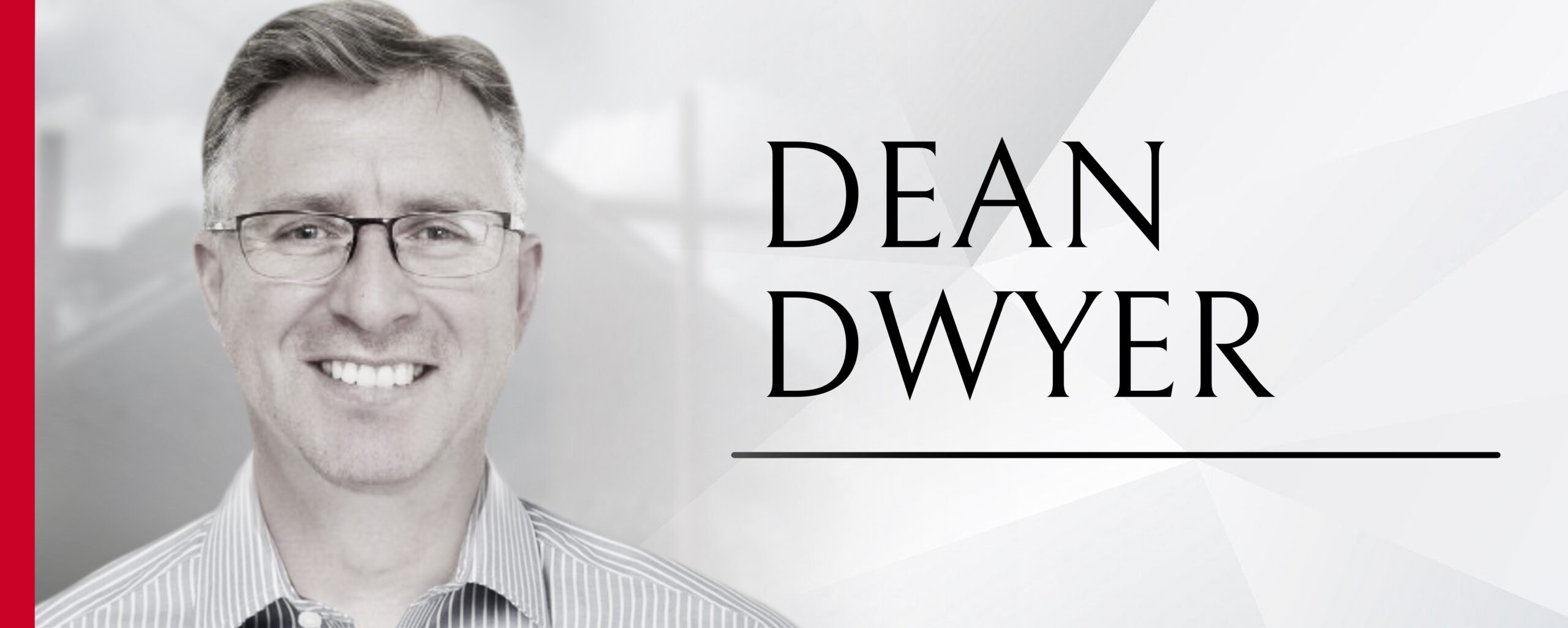
Pastor Dean Dwyer

Up from the grave He arose!  If you are like me, you have probably sung that song every time we celebrate the death, burial and resurrection of our precious Saviour, Jesus Christ.  What a blessed time of year it is to gather together and sing triumphant songs of victory.  Christ bore our sins on the tree, was buried and rose again, guaranteeing that all who have a saving faith in Him will live with Him eternally.  No wonder the gospel is called the good news!

But dear reader, although we know that Christ ascended into heaven to be seated at the right hand of the Father, history and mythology is littered with stories of others who supposedly ascended up on high. 

In this article, we will examine some of those claims, for I am reminded of Proverbs 30:4: “Who has ascended into heaven, or descended? Who has gathered the wind in His fists? Who has bound the waters in a garment? Who has established all the ends of the earth? What is His name, and what is His Son’s name, if you know?” Let us also consider the words of Jesus Himself when, in that famous exchange with Nicodemus, said: “No one has ascended to heaven but He who came down from heaven, that is, the Son of Man who is in heaven.” (John 3:13).

Rooted in mythology is the name Hercules.  I am sure most people would have heard the name.  His name is synonymous with strength.  He was not only a divinized hero to the Romans but also to the Greeks, who considered him a demi-god and knew him as Heracles, which means “glory to Hera” (his stepmother).  He was the first figure in Greco-Roman belief who had been born to a mortal mother but achieved godhood after his death.  Hercules was renowned for his intelligence, loyalty and physical strength.  Because of these qualities, many believed he ascended to Mount Olympus after his death to take his place as one of the gods.

In this way, Roman Emperors (who also set themselves up as divine figures) promoted his story to explain how they too would eventually live as gods.

Emperor Commodus (born 161AD and died 192AD) was particularly enamored with Hercules.  He was a brutal ruler and not well-liked by the Roman people.  When commissioning statues of himself, he would insist that he be depicted in a lionskin cape and holding a club, claiming to be the reincarnated Hercules.

In Roman culture, particularly amongst the emperors, their worship was not fixed upward (to the true and living God) but inward (to themselves).  Like the coins we use today, Roman coins had two sides with two different inscriptions.  At the time of Tiberius Caesar, one side bore the image of Caesar with the words “Tiberius Caesar Divi Augusti Fili Augustus”, meaning “Tiberius Caesar, worshipful son of the god, Augustus”.  On the other side appeared the words “Pontif Maxim” – an abbreviation for “Pontifex Maximus”, meaning “Chief High Priest”.

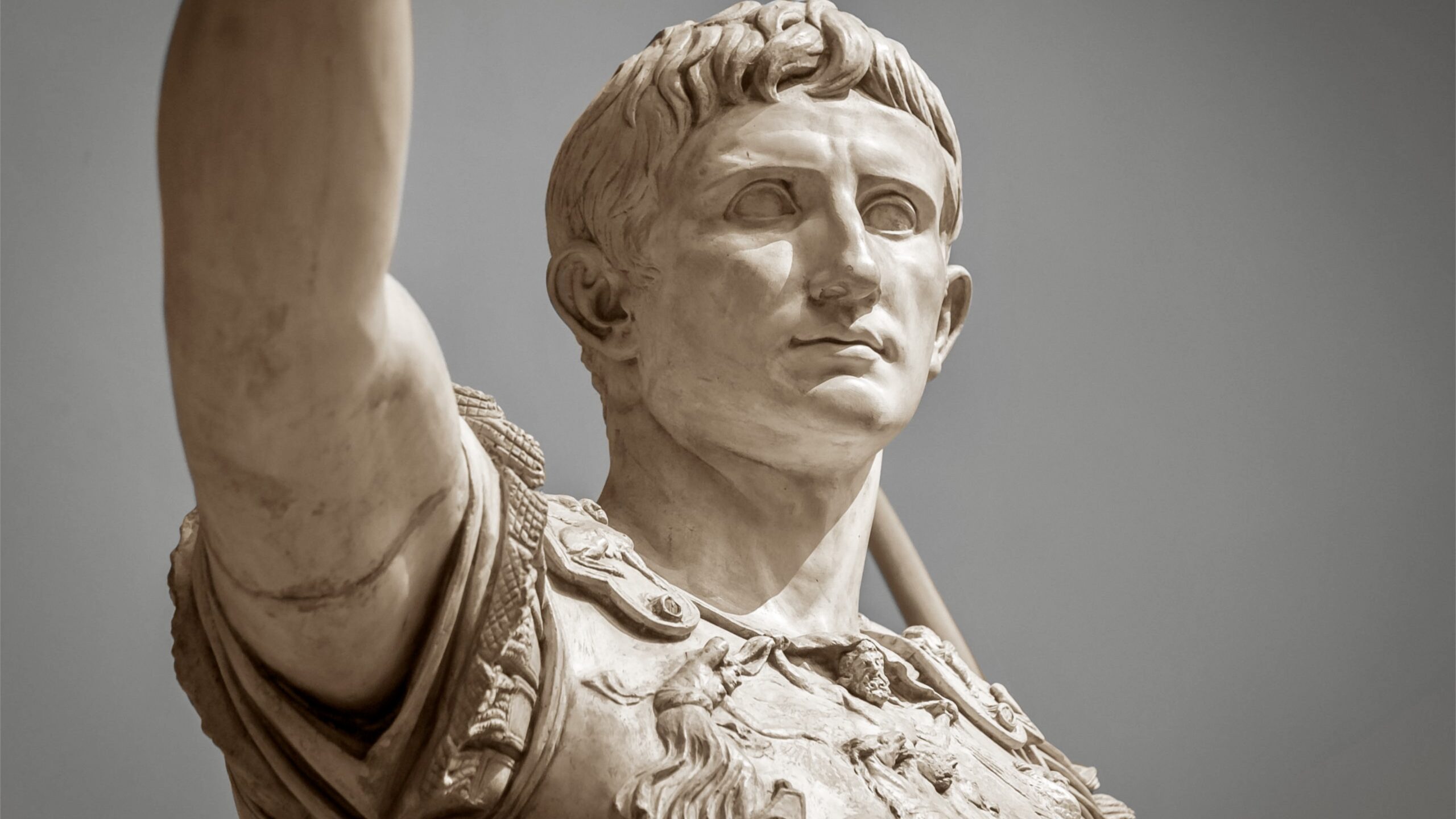
But what was so special about Augustus that Tiberius would consider himself the son of this “god”?  Well, the title “Augustus” means “exalted” and the Roman Senate gave him this title in recognition of his efforts to restore order after the Roman civil war.  And so revered was he that upon his death, the Senate declared him to be a god.

This is not without precedent, because the man who adopted him (Julius Caesar) was treated in much the same manner. In 42BC the Roman Senate formally deified Julius Caesar as divus lulius, meaning “the divine Julius”.  Augustus embraced his status as divi filius (“son of the god”) and had coins issued which bore inscriptions such as “Divine Caesar and Son of God”.  An Egyptian inscription even called him a star “shining with the brilliance of the Great Heavenly Saviour.” 

In an inscription dated to around 9BC and discovered in the Roman city of Priene in modern day Turkey, the birthday of Augustus is commemorated as being good news for all humanity.

It reads in part: “Since Providence, which has ordered all things and is deeply interested in our life, has set in most perfect order by giving us Augustus, who she filled with virtue that he might benefit mankind, sending him as a saviour, both for us and our descendants, that he might end war and arrange all things, and since he, Caesar, by his appearance (excelled even our anticipations), surpassing all previous benefactors, and not even leaving posterity any hope of surpassing what he has done, and since the birthday of the god Augustus was the beginning of the good tidings for the world that came by reason of him.”

In the last line of the inscription, we read the words “good tiding.”  That is the Greek word “euangelion.”  To the secular world of the time, “euangelion” was a political word and it often referred to an empire or kingdom and how the power and riches of the kingdom bring with it good news for those who are faithful or have allegiance to that empire.  In other words, people were directed to trust in the “good tidings” of Augustus and his kingdom.

Now, the name Caesar Augustus is mentioned only once in the Bible and that is in Luke 2.  Do you know what else is announced in Luke 2?  The birth of Jesus!  And note the language used in verse 10:  “Then the angel said to them, “Do not be afraid, for behold, I bring you good tidings of great joy which will be to all people.” There is that phrase – good tidings!  But this time, it would not refer to the benevolence of a political saviour but to the Christ who came to seek and to save the lost from their sins.

Augustus clearly didn’t possess the qualities of a deity.  Nor would have he ascended to heaven after his death to rule as a god.  Yet, he accepted divine titles as a means of propaganda and rule.

You see, the people heavily depended on the emperor and there was an expectation that he alone would be their source of victory, peace, prosperity, safety and security.  And in the context of Luke 2, although his decree of a census was his mechanism to measure the greatness of his kingdom, in reality God was using him to set the scene for the true King.

You see, Augustus and other Roman rulers thought they were building their own kingdom, but they were simply unwitting actors in God’s plan. 

Very soon another ruler will arise from the revived Roman Empire.  Thankfully, believers will not have to sit under his rule.  Yet, he will be accepted and loved by many.  Perhaps he will even turn to the old Roman Pantheon for inspiration.  But ultimately, we know he will be but one member of the unholy trinity.

Allowed to rule for a time, he will be defeated by the true King – the One who is the Son of God – who ascended up on high and is seated at the right hand of God.

When we celebrate His death, burial and resurrection, let us also celebrate His ascension.  For because He is ascended, we are promised that He will come again to rule and reign in perfect righteousness.  Then, no more will the world be subject to tyrannical rulers who claim they are gods.


Give

Give

Denying The Jewish People’s Connection To Jerusalem Would Be Laughable… If So Many Nations Didn’t Believe It

In December 2017, U.S. President Donald Trump decided to implement the Jerusalem Embassy Act of 1995. He recognized Jerusalem as the official capital of the State of Israel, which calls for Jerusalem to remain an undivided city, and ordered the federal government to relocate the U.S. embassy from Tel Aviv to Jerusalem—a move timed to help celebrate Israel’s 70th birthday. The UN General Assembly then countered with the “Status of Jerusalem” resolution—which passed 128 to 9, with 35 abstentions—denying the Jewish people’s connection to Jerusalem and the Temple Mount.

Global Tensions Expose The Vast Contrast Between Human Hope And God’s Promises

In the Bible, hope is closely connected to waiting. Not waiting in the sense that we are still uncertain about the outcome, but steadfastly waiting because we fully expect the outcome God promised in His Word. In other words, man’s definition of hope carries doubt. God’s does not. As such, Biblical hope is a sure foundation upon which we may base our lives, believing that God always keeps His promises.

sign up

Prophetic Pieces: As Putin Ups The Ante In The Arms Race, Russia Considers Providing Refuge To Top Iranian Leaders

Prophetic events in the end times right now are casting their shadows over the Middle East like never before. Preparations for the Gog Magog coalition prophesied in Ezekiel 38 and 39 are increasing and intensifying. Written 2,500 years ago by Ezekiel, these chapters prophesy an end-time invasion of Israel led by the nations of Russia, Iran, and Turkey. Two significant developments showcase that the prophetic pieces are falling perfectly into place.

ABC's of Salvation

Decision

UTT

FOI

untitled artwork

Israel My Glory

Pastor Dean Dwyer

Up from the grave He arose!  If you are like me, you have probably sung that song every time we celebrate the death, burial and resurrection of our precious Saviour, Jesus Christ.  What a blessed time of year it is to gather together and sing triumphant songs of victory.  Christ bore our sins on the tree, was buried and rose again, guaranteeing that all who have a saving faith in Him will live with Him eternally.  No wonder the gospel is called the good news!

But dear reader, although we know that Christ ascended into heaven to be seated at the right hand of the Father, history and mythology is littered with stories of others who supposedly ascended up on high. 

In this article, we will examine some of those claims, for I am reminded of Proverbs 30:4: “Who has ascended into heaven, or descended? Who has gathered the wind in His fists? Who has bound the waters in a garment? Who has established all the ends of the earth? What is His name, and what is His Son’s name, if you know?” Let us also consider the words of Jesus Himself when, in that famous exchange with Nicodemus, said: “No one has ascended to heaven but He who came down from heaven, that is, the Son of Man who is in heaven.” (John 3:13).

Rooted in mythology is the name Hercules.  I am sure most people would have heard the name.  His name is synonymous with strength.  He was not only a divinized hero to the Romans but also to the Greeks, who considered him a demi-god and knew him as Heracles, which means “glory to Hera” (his stepmother).  He was the first figure in Greco-Roman belief who had been born to a mortal mother but achieved godhood after his death.  Hercules was renowned for his intelligence, loyalty and physical strength.  Because of these qualities, many believed he ascended to Mount Olympus after his death to take his place as one of the gods.

In this way, Roman Emperors (who also set themselves up as divine figures) promoted his story to explain how they too would eventually live as gods.

Emperor Commodus (born 161AD and died 192AD) was particularly enamored with Hercules.  He was a brutal ruler and not well-liked by the Roman people.  When commissioning statues of himself, he would insist that he be depicted in a lionskin cape and holding a club, claiming to be the reincarnated Hercules.

In Roman culture, particularly amongst the emperors, their worship was not fixed upward (to the true and living God) but inward (to themselves).  Like the coins we use today, Roman coins had two sides with two different inscriptions.  At the time of Tiberius Caesar, one side bore the image of Caesar with the words “Tiberius Caesar Divi Augusti Fili Augustus”, meaning “Tiberius Caesar, worshipful son of the god, Augustus”.  On the other side appeared the words “Pontif Maxim” – an abbreviation for “Pontifex Maximus”, meaning “Chief High Priest”.

But what was so special about Augustus that Tiberius would consider himself the son of this “god”?  Well, the title “Augustus” means “exalted” and the Roman Senate gave him this title in recognition of his efforts to restore order after the Roman civil war.  And so revered was he that upon his death, the Senate declared him to be a god.

This is not without precedent, because the man who adopted him (Julius Caesar) was treated in much the same manner. In 42BC the Roman Senate formally deified Julius Caesar as divus lulius, meaning “the divine Julius”.  Augustus embraced his status as divi filius (“son of the god”) and had coins issued which bore inscriptions such as “Divine Caesar and Son of God”.  An Egyptian inscription even called him a star “shining with the brilliance of the Great Heavenly Saviour.” 

In an inscription dated to around 9BC and discovered in the Roman city of Priene in modern day Turkey, the birthday of Augustus is commemorated as being good news for all humanity.

It reads in part: “Since Providence, which has ordered all things and is deeply interested in our life, has set in most perfect order by giving us Augustus, who she filled with virtue that he might benefit mankind, sending him as a saviour, both for us and our descendants, that he might end war and arrange all things, and since he, Caesar, by his appearance (excelled even our anticipations), surpassing all previous benefactors, and not even leaving posterity any hope of surpassing what he has done, and since the birthday of the god Augustus was the beginning of the good tidings for the world that came by reason of him.”

In the last line of the inscription, we read the words “good tiding.”  That is the Greek word “euangelion.”  To the secular world of the time, “euangelion” was a political word and it often referred to an empire or kingdom and how the power and riches of the kingdom bring with it good news for those who are faithful or have allegiance to that empire.  In other words, people were directed to trust in the “good tidings” of Augustus and his kingdom.

Now, the name Caesar Augustus is mentioned only once in the Bible and that is in Luke 2.  Do you know what else is announced in Luke 2?  The birth of Jesus!  And note the language used in verse 10:  “Then the angel said to them, “Do not be afraid, for behold, I bring you good tidings of great joy which will be to all people.” There is that phrase – good tidings!  But this time, it would not refer to the benevolence of a political saviour but to the Christ who came to seek and to save the lost from their sins.

Augustus clearly didn’t possess the qualities of a deity.  Nor would have he ascended to heaven after his death to rule as a god.  Yet, he accepted divine titles as a means of propaganda and rule.

You see, the people heavily depended on the emperor and there was an expectation that he alone would be their source of victory, peace, prosperity, safety and security.  And in the context of Luke 2, although his decree of a census was his mechanism to measure the greatness of his kingdom, in reality God was using him to set the scene for the true King.

You see, Augustus and other Roman rulers thought they were building their own kingdom, but they were simply unwitting actors in God’s plan. 

Very soon another ruler will arise from the revived Roman Empire.  Thankfully, believers will not have to sit under his rule.  Yet, he will be accepted and loved by many.  Perhaps he will even turn to the old Roman Pantheon for inspiration.  But ultimately, we know he will be but one member of the unholy trinity.

Allowed to rule for a time, he will be defeated by the true King – the One who is the Son of God – who ascended up on high and is seated at the right hand of God.

When we celebrate His death, burial and resurrection, let us also celebrate His ascension.  For because He is ascended, we are promised that He will come again to rule and reign in perfect righteousness.  Then, no more will the world be subject to tyrannical rulers who claim they are gods.


Trusted Analysis From A Biblical Worldview

Help reach the lost and equip the church with the living and active truth of God's Word in our world today.

YOU CARE ABOUT

BIBLICAL TRUTH. SO DO WE.


Together, We Can Deliver A Biblical Understanding

Of News Events Around The World.

Denying The Jewish People’s Connection To Jerusalem Would Be Laughable… If So Many Nations Didn’t Believe It

In December 2017, U.S. President Donald Trump decided to implement the Jerusalem Embassy Act of 1995. He recognized Jerusalem as the official capital of the State of Israel, which calls for Jerusalem to remain an undivided city, and ordered the federal government to relocate the U.S. embassy from Tel Aviv to Jerusalem—a move timed to help celebrate Israel’s 70th birthday. The UN General Assembly then countered with the “Status of Jerusalem” resolution—which passed 128 to 9, with 35 abstentions—denying the Jewish people’s connection to Jerusalem and the Temple Mount.

Global Tensions Expose The Vast Contrast Between Human Hope And God’s Promises

In the Bible, hope is closely connected to waiting. Not waiting in the sense that we are still uncertain about the outcome, but steadfastly waiting because we fully expect the outcome God promised in His Word. In other words, man’s definition of hope carries doubt. God’s does not. As such, Biblical hope is a sure foundation upon which we may base our lives, believing that God always keeps His promises.

untitled artwork 6391

Prophetic Pieces: As Putin Ups The Ante In The Arms Race, Russia Considers Providing Refuge To Top Iranian Leaders

Prophetic events in the end times right now are casting their shadows over the Middle East like never before. Preparations for the Gog Magog coalition prophesied in Ezekiel 38 and 39 are increasing and intensifying. Written 2,500 years ago by Ezekiel, these chapters prophesy an end-time invasion of Israel led by the nations of Russia, Iran, and Turkey. Two significant developments showcase that the prophetic pieces are falling perfectly into place.

ABC's of Salvation

TV AD

worldview matters

Decision Magazine V AD

Decision

Jan Markell

Israel My Glory

Erick Stakelbeck

untitled artwork

YOU CARE ABOUT

BIBLICAL TRUTH.

SO DO WE.

Together, We Can Deliver A Biblical Understanding Of News Events Around The World And Equip The Church To Stand With A Biblical Worldview.

untitled artwork

Israel My Glory

YOU CARE ABOUT

BIBLICAL TRUTH.

SO DO WE.


Together, We Can Deliver A Biblical Understanding Of News Events Around The World And Equip The Church To Stand With A Biblical Worldview.