March 27, 2026

March, 27, 2026
March 27, 2026

give

untitled artwork

untitled artwork

World news biblically understood

TRENDING:

Almost Unanimously, 1,200 Texas School Districts Vote Against Allowing Prayer And Bible Reading Time In School

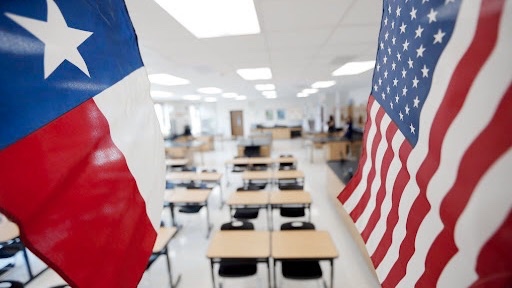
In Texas, the law allows public school districts to provide time for students and educators to pray or read the Bible or other religious texts during school.

Known as “SB11,” the statute said that school boards had to vote by March 1 whether to adopt a policy requiring schools in their district to provide a period of the school day during which students—at the direction of their parents—may pray and read their Bible or other religious text. Under the law, such religious activity would occur in a designated space, pursuant to explicit parental permission, and would never be broadcast over the school public address system.

Implementing this policy was an opportunity for school districts to show how respectful they are to the presence of religion on a public-school campus. Doing so would be a clear acknowledgement of tolerance and inclusion of religion, especially for so many students and teachers whose faith is a central part of their lives.

But most school districts missed a key opportunity to offer something of great benefit to their students and employees. The vast majority voted against implementing the measure. Only 15 out of 1,200 school districts in the Lone Star State voted in favor.

Many districts rejected the optional policy due to “data and safety concerns,” since, for accountability purposes, particularly in larger schools, there would need to be a record of the students who participated in the prayer time. Apparently, the “record” of students participating in biology class poses no threat, but students praying and reading religious texts does?

Other school districts across the state invoked the tired phrase, “separation of Church and State,” in order to scare school officials into enforcing a public-school campus entirely sanitized of religion. These vocal opponents of SB11 fret that respecting and tolerating the religious practices of public-school students would cause division, steal valuable instructional time, or even “squeeze in Christian religious opportunities and principles into the school day itself.”

That was the concern of one political scientist interviewed on the topic whose hand wringing revealed she hoped school officials would reject the tolerant-of-religion approach of SB11. After all, the “scientist” intoned these are “educational professionals, and they know what their principal task is, it’s to teach these students (to) prepare for adult life.”

Except that is emphatically not the duty of “educational professionals.” U.S. Supreme Court Justice James McReynolds said more than 100 years ago, it is “the natural duty of the parent to give his children education suitable to their station in life.” That may mean employing professional educators to do so, but, as Justice McReynolds recognized just two years later, “The child is not the mere creature of the state.” If he were, then perhaps “educational professionals” might determine their future.

Rather, Justice McReynolds continued, “those who nurture him and direct his destiny have the right, coupled with the high duty, to recognize and prepare him for additional obligations.” (To be clear, by “those who nurture him” Justice McReynolds meant the student’s parents.)

More recently, the U.S. Supreme Court reinforced the notion that parents drive the educational (and religious) upbringing of their students, declaring that “the right of parents ‘to direct the religious upbringing of their’ children would be an empty promise if it did not follow those children into the public school classroom.”

And, so, SB11 rested on the solid legal footing as one way of schools accommodating “the natural duty of the parent” in directing the religious upbringing of their children. Can we not tolerate a few moments for students to pray and read their religious text, and adopt a policy that supports it?

A state-enforced secularism lacks neutrality to one of the most central aspects of the human condition: religion. Wouldn’t a welcoming, tolerant public school recognize the important place religion holds in the lives of students across the State of Texas?

In Kennedy v. Bremerton School District, the Supreme Court further rejected the idea that the government must suppress private religious expression in public schools to avoid violating the Establishment Clause. The Court emphasized that the Constitution protects private religious exercise, even in a public setting.

Rather, the Court noted, “The Constitution and the best of our traditions counsel mutual respect and tolerance, not censorship and suppression, for religious and nonreligious views alike.”

Can school districts not muster “respect and tolerance” for religious views during a small portion of the public school day? That they must resort to “censorship and suppression” by demanding school boards reject the opportunity SB11 affords its parents and students reveals much about their opinion of freedom. To them, the State of Texas should enforce freedom for the secular, but never the religious.

“Respect for religious expressions”—yes, even of public-school students—“is indispensable to life in a free and diverse Republic,” said Justice Neil Gorsuch in Kennedy.

We hear a lot about “mutual respect and tolerance” for different points of view, often from school board officials and administrators themselves. School districts had the prime opportunity to show their resolve to tolerate the religious needs of their students by giving them a small period of the day to pray and read their Bible. They chose not to do so.

Many of the school districts that rejected the bill probably hoped to set an example of freedom and diversity for their students. But it seems they did quite the opposite.


Your support helps Harbinger's Daily propel the boldest and most sound Christian voices of our day—those unwavering in their defense of the truth and passionate about reaching the unsaved world—while engaging millions to stand courageously with a worldview grounded in God's Word. 

Will you defend the truth and equip others to do the same?

Passover: Understanding God’s Faithfulness And Prophetic Promises In A Time Of War

Passover is prophetically relevant: Perhaps more important than the biblical foundation and historical customs is the prophetic meaning that the feast of Passover holds. Each of the Levitical feasts found in Leviticus 23 has a clear prophetic meaning and fulfillment as they pertain to the redemptive ministry of Yeshua the Messiah.

The Art Of No Deal: Iran, Trump, And The Price Of Negotiating With Terrorists

Ecclesiastes says that there's a time for all things. There's a time for peace and a time for war. The Biden error was believing that you could have one without the credible threat of the other—and we saw what that produced. We saw what it did in Kabul. We saw what it did in Kyiv. We saw it in the Kibbutzim in southern Israel. Iran has been a clear and present danger for 47 years. We can't neutralize evil by signing an agreement.

sign up

Jan Markell: The Last 100 Years Of Falling For Leftists Has Prepared The Jewish People For Great Deception

More than once, I have written about the mystery of Jews who seem to support their own demise by voting with, and standing by, those who hate them. Many Jews voted for two anti-Semites – Jimmy Carter and Barack Obama. No two U.S. Presidents did more damage to Israel than these men – yet they got the Jewish vote by and large. I have watched my own Jewish family members who are unbelievers vote Democrat repeatedly and have no explanation for it.

ABC's of Salvation

Decision

UTT

FOI

untitled artwork

Israel My Glory

In Texas, the law allows public school districts to provide time for students and educators to pray or read the Bible or other religious texts during school.

Known as “SB11,” the statute said that school boards had to vote by March 1 whether to adopt a policy requiring schools in their district to provide a period of the school day during which students—at the direction of their parents—may pray and read their Bible or other religious text. Under the law, such religious activity would occur in a designated space, pursuant to explicit parental permission, and would never be broadcast over the school public address system.

Implementing this policy was an opportunity for school districts to show how respectful they are to the presence of religion on a public-school campus. Doing so would be a clear acknowledgement of tolerance and inclusion of religion, especially for so many students and teachers whose faith is a central part of their lives.

But most school districts missed a key opportunity to offer something of great benefit to their students and employees. The vast majority voted against implementing the measure. Only 15 out of 1,200 school districts in the Lone Star State voted in favor.

Many districts rejected the optional policy due to “data and safety concerns,” since, for accountability purposes, particularly in larger schools, there would need to be a record of the students who participated in the prayer time. Apparently, the “record” of students participating in biology class poses no threat, but students praying and reading religious texts does?

Other school districts across the state invoked the tired phrase, “separation of Church and State,” in order to scare school officials into enforcing a public-school campus entirely sanitized of religion. These vocal opponents of SB11 fret that respecting and tolerating the religious practices of public-school students would cause division, steal valuable instructional time, or even “squeeze in Christian religious opportunities and principles into the school day itself.”

That was the concern of one political scientist interviewed on the topic whose hand wringing revealed she hoped school officials would reject the tolerant-of-religion approach of SB11. After all, the “scientist” intoned these are “educational professionals, and they know what their principal task is, it’s to teach these students (to) prepare for adult life.”

Except that is emphatically not the duty of “educational professionals.” U.S. Supreme Court Justice James McReynolds said more than 100 years ago, it is “the natural duty of the parent to give his children education suitable to their station in life.” That may mean employing professional educators to do so, but, as Justice McReynolds recognized just two years later, “The child is not the mere creature of the state.” If he were, then perhaps “educational professionals” might determine their future.

Rather, Justice McReynolds continued, “those who nurture him and direct his destiny have the right, coupled with the high duty, to recognize and prepare him for additional obligations.” (To be clear, by “those who nurture him” Justice McReynolds meant the student’s parents.)

More recently, the U.S. Supreme Court reinforced the notion that parents drive the educational (and religious) upbringing of their students, declaring that “the right of parents ‘to direct the religious upbringing of their’ children would be an empty promise if it did not follow those children into the public school classroom.”

And, so, SB11 rested on the solid legal footing as one way of schools accommodating “the natural duty of the parent” in directing the religious upbringing of their children. Can we not tolerate a few moments for students to pray and read their religious text, and adopt a policy that supports it?

A state-enforced secularism lacks neutrality to one of the most central aspects of the human condition: religion. Wouldn’t a welcoming, tolerant public school recognize the important place religion holds in the lives of students across the State of Texas?

In Kennedy v. Bremerton School District, the Supreme Court further rejected the idea that the government must suppress private religious expression in public schools to avoid violating the Establishment Clause. The Court emphasized that the Constitution protects private religious exercise, even in a public setting.

Rather, the Court noted, “The Constitution and the best of our traditions counsel mutual respect and tolerance, not censorship and suppression, for religious and nonreligious views alike.”

Can school districts not muster “respect and tolerance” for religious views during a small portion of the public school day? That they must resort to “censorship and suppression” by demanding school boards reject the opportunity SB11 affords its parents and students reveals much about their opinion of freedom. To them, the State of Texas should enforce freedom for the secular, but never the religious.

“Respect for religious expressions”—yes, even of public-school students—“is indispensable to life in a free and diverse Republic,” said Justice Neil Gorsuch in Kennedy.

We hear a lot about “mutual respect and tolerance” for different points of view, often from school board officials and administrators themselves. School districts had the prime opportunity to show their resolve to tolerate the religious needs of their students by giving them a small period of the day to pray and read their Bible. They chose not to do so.

Many of the school districts that rejected the bill probably hoped to set an example of freedom and diversity for their students. But it seems they did quite the opposite.


Trusted Analysis From A Biblical Worldview

Help reach the lost and equip the church with the living and active truth of God's Word in our world today.

YOU CARE ABOUT

BIBLICAL TRUTH. SO DO WE.


Together, We Can Deliver A Biblical Understanding

Of News Events Around The World.

Passover: Understanding God’s Faithfulness And Prophetic Promises In A Time Of War

Passover is prophetically relevant: Perhaps more important than the biblical foundation and historical customs is the prophetic meaning that the feast of Passover holds. Each of the Levitical feasts found in Leviticus 23 has a clear prophetic meaning and fulfillment as they pertain to the redemptive ministry of Yeshua the Messiah.

The Art Of No Deal: Iran, Trump, And The Price Of Negotiating With Terrorists

Ecclesiastes says that there's a time for all things. There's a time for peace and a time for war. The Biden error was believing that you could have one without the credible threat of the other—and we saw what that produced. We saw what it did in Kabul. We saw what it did in Kyiv. We saw it in the Kibbutzim in southern Israel. Iran has been a clear and present danger for 47 years. We can't neutralize evil by signing an agreement.

untitled artwork 6391

Jan Markell: The Last 100 Years Of Falling For Leftists Has Prepared The Jewish People For Great Deception

More than once, I have written about the mystery of Jews who seem to support their own demise by voting with, and standing by, those who hate them. Many Jews voted for two anti-Semites – Jimmy Carter and Barack Obama. No two U.S. Presidents did more damage to Israel than these men – yet they got the Jewish vote by and large. I have watched my own Jewish family members who are unbelievers vote Democrat repeatedly and have no explanation for it.

ABC's of Salvation

TV AD

worldview matters

Decision Magazine V AD

Decision

Jan Markell

Israel My Glory

Erick Stakelbeck

untitled artwork

YOU CARE ABOUT

BIBLICAL TRUTH.

SO DO WE.

Together, We Can Deliver A Biblical Understanding Of News Events Around The World And Equip The Church To Stand With A Biblical Worldview.

untitled artwork

Israel My Glory

YOU CARE ABOUT

BIBLICAL TRUTH.

SO DO WE.


Together, We Can Deliver A Biblical Understanding Of News Events Around The World And Equip The Church To Stand With A Biblical Worldview.