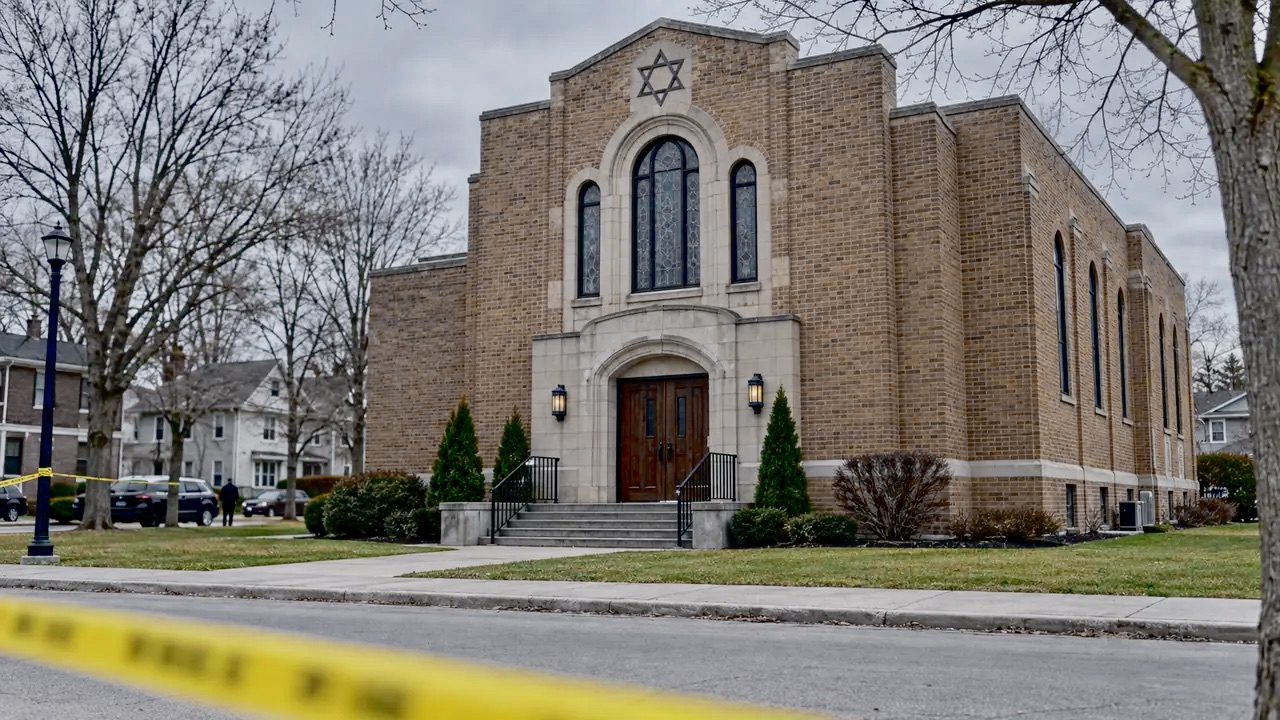

“I love you” and “be safe” may seem the more appropriate message to loved ones rather than “happy holidays” for many Jews around the world, as the surge in antisemitism casts a dark shadow over traditional observances.
The October 7th massacre in Israel on Simchat Torah, December 2025’s Hanukkah massacre on Bondi Beach in Australia, two shootings targeting synagogues in New York during Passover in 2022, and another terrorist attack causing two deaths on last year’s Yom Kippur in Manchester are only a few examples of targeted antisemitic attacks against the Jewish community on the days they celebrate as holy and set apart.
As a Christian having lived in Israel for the past several months, I spent Yom Kippur in Jerusalem watching the streets empty as time itself seemed to pause. Looking back toward my home province in Canada, and seeing that for some in the Jewish community, Yom Kippur was met with gunfire and fear, was heavy and personal.
As the sun set at the beginning of this year’s Yom Kippur, a small synagogue’s service in Belleville, Ontario, was interrupted by gunfire. A 29-year-old suspect drove to Sons of Jacob Synagogue in Belleville, Ontario, and opened fire on Jeff Smith, the stationed officer, who returned fire. Witnesses reported hearing 20-30 shots exchanged while the few dozen shul attendees inside the synagogue crouched on the floor in panic as the stained glass windows smashed overhead.
A second officer arriving on scene also discharged their weapon at the shooter before additional police responded. Constable Jeff Smith, the stationed officer, was hospitalized in critical condition while the suspect was admitted in life-threatening condition and recently died of gunshot wounds. While the attack hasn’t been officially confirmed as antisemitic, its place within a familiar pattern of Jew-hate seems clear.
On the same weekend, Alexander Parfitt, aged 19, of Whitby, Ontario, was arrested and charged with threatening to shoot a synagogue in Durham Region, while other Jewish communities attending Yom Kippur prayers were met by mobs of Palestinian protestors outside their synagogue attempting to taunt and intimidate them from entering the building.
On October 27, 2018, a similar attack was staged at the Tree of Life Synagogue in Pittsburgh; only this time, it was successful. Without a police officer stationed outside, the shooter penetrated the building and conducted a massacre, claiming the lives of 11 shul attendees and putting several others in critical condition.
As a friend of the Jewish people, I have often attended Jewish community events, synagogue services, and Jewish campus events in Ontario. Often, the security seems intense when bags are searched, visitors are wanded with metal detectors, prior sign-up is required, and security guards are stationed at the front door.
Yet, the events of the past weekend, along with so many tragedies before them, prove the necessity of these measures for Jewish safety. The Pittsburgh shooting of 2018 turned into a massacre, while the police presence at Belleville Synagogue may have prevented the same outcome.
Belleville resident and congregant Doug Lobel stated that he “almost predicted this was going to happen” due to past events in the city where antisemitic rhetoric went uncondemned. Lobel had previously sent an email to Mayor Ellis expressing concerns for the safety of the Jewish community. Lobel described the Mayor’s response as “really tone deaf,” as Ellis simply told him to contact the Belleville police if feeling unsafe.
The rise of Antisemitism in Canada and around the world is evident. With every threat and gunshot, increasing trepidation settles over each synagogue service and every evidence of Jewish identity. Yet, as Rabbi Bright succinctly put it, “we [the Jewish community] will not respond by hiding… we will respond by living.”
Dr. Yael Richler Friedman, Pedagogical director at the International Institute for Holocaust Studies at Yad Vashem, in light of the recent Belleville shooting, underscored to Harbingers Daily the need for continued holocaust and antisemitism education around the world.
“Holocaust education needs to go hand in hand with education about antisemitism itself, helping recognize prejudice and stereotypes and understand how they can take root and spread.”
While pointing out the importance of training teachers to address both the holocaust and antisemitism, Dr. Friedman continued by scoring that, “Holocaust education alone cannot prevent antisemitism. It is one component of a broader effort that includes education, legislation and social dialogue.”
For the believer in Jesus Christ, our Jewish Messiah, this antisemitism is not unexplainable hate, but spiritually motivated dark intent rooted in Satan’s hate of God and the people that He has set apart for His purposes. While antisemitism may rise and fall in waves, the spiritual nature is a consistent threat throughout history to “cut them [Israel] off from being a nation, that the name of Israel may be remembered no more” (Psalm 83:4).
The rising antisemitism only reinforces a central truth that God is not done with His people and His unconditional promises are steadfast. If God had cast away his people, and they were no longer significant in God’s plan (Zechariah 12:10, Ezekiel 37), why would Satan expend such relentless effort throughout history to destroy Israel and annihilate the Jewish people?
Holocaust and antisemitism education, as well as continual advocacy for religious freedom in Canada, are actionable steps to pursue change. And for the believer, our command is to take a decisive stance against evil, and to pray. Pray for the salvation of the lost, steadfastness for the believer, and ultimately for the final peace of Jerusalem, where Christ will reign over all the earth and true peace and safety will abound (Jeremiah 33: 15-16, Ezekiel 34: 25,28).