
February 17, 2026

February, 17, 2026
February 17, 2026

give

untitled artwork

untitled artwork

World news biblically understood

TRENDING:

Top Law Professor Calls Gov’t Education An Unconstitutional Establishment of Religion

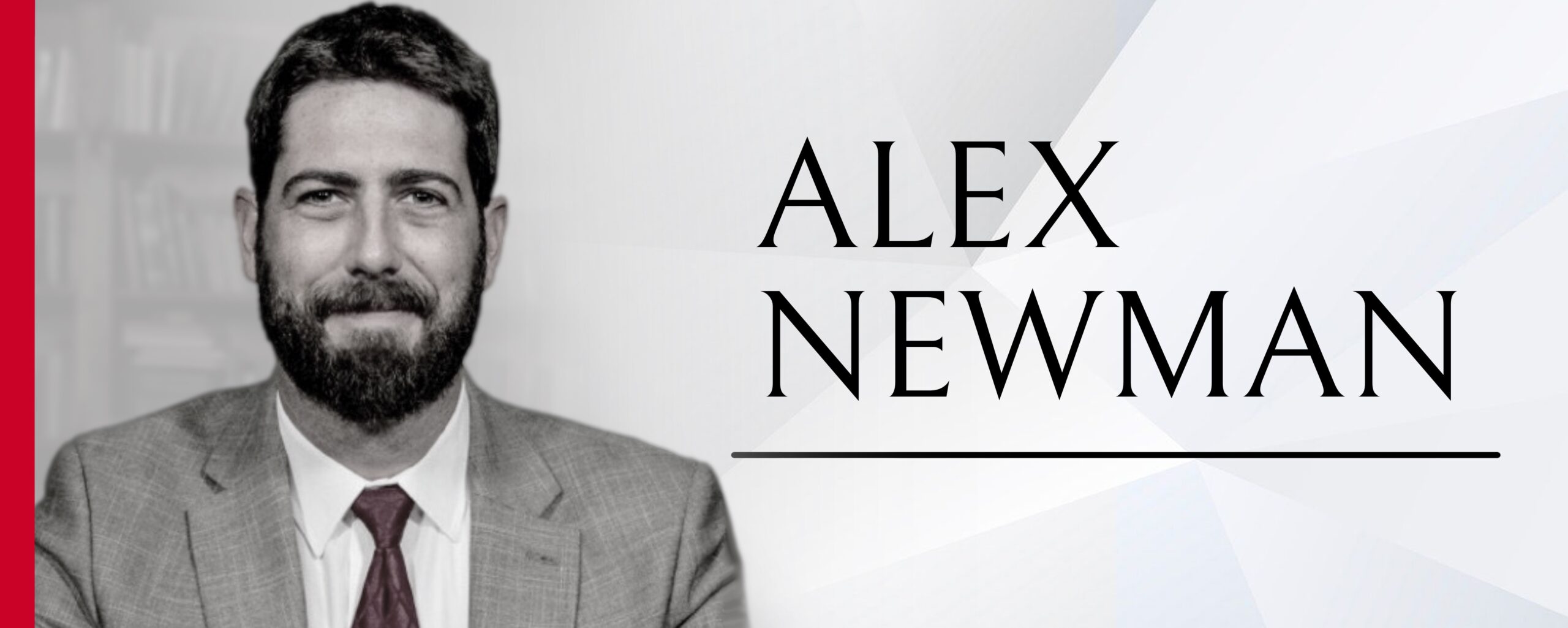
Alex Newman

Government education of children funded by taxes represents an unconstitutional establishment of religion and as such, it violates the U.S. Constitution’s First Amendment and protections for religious liberty, warns Liberty University Law Professor Jeffrey Tuomala in a powerful new paper.

Tuomala’s unequivocal conclusion that state “education” must go joins a growing chorus of legal arguments seeking to fundamentally re-think American education. Indeed, more and more prominent legal minds are now openly arguing that government schools violate the Constitution and must be shut down.   

Writing in Volume 18, Issue 4, of the Liberty University Law Review under the headline “Is Tax-Funded Education Unconstitutional?,” Tuomala takes aim at what he describes as government schools’ efforts to exert illegitimate control over the minds of students. He concludes that government schools must give way to privately funded Christian education.

The explosive paper, published last year, argues that the worldview underpinning public education falsely divides reality between “secular” and “religious.” And yet, a proper definition of religion such as those offered by some of America’s founders in the late 1700s would blow up the whole system.

“The present critique is not simply based on an originalist theory of constitutional interpretation, but rather it reflects a law-of-nature principle that civil government has no jurisdiction over the mind,” argues Tuomala in the abstract of his paper, which runs well over 100 pages.  

Part of the problem is longstanding public and judicial confusion about the meaning of the term “religion” itself. As Tuomala explains in his paper, the U.S. Supreme Court has never made a serious effort to define it, other than mentioning past sources. And so, he goes to great lengths to help properly define the term by citing legendary legal minds of the past.

Two of America’s most important Founding Fathers — Thomas Jefferson and James Madison — put a great deal of thought into the meaning of religion. Tuomala cites their views in his paper, describing in depth how Virginia, under their guidance, disestablished the official Anglican church and instituted religious freedom.

The principles articulated by those towering Founding Fathers during the critical battle in Virginia laid the foundation for the Constitution’s First Amendment. That provision, which prohibits federal laws respecting an establishment of religion or prohibiting the free exercise thereof, cannot be understood without the historical context.

In the Virginia Declaration of Rights, Madison and George Mason defined religion succinctly: “The duty which we owe to our Creator and the manner of discharging it.” Jefferson, meanwhile, blasted state efforts to interfered with one’s views. “Almighty God hath created the mind free,” he wrote in the “Statute for Establishing Religious Freedom.”

And yet, today, government is shaping the minds of over 60 million American children by “educating” them for at least five days a week for 12 years with ideas that are profoundly religious. “Public schools have become the chief means by which all levels of civil government have established religion in the United States,” explains Tuomala’s paper.

Ironically, even John Dewey, widely recognized as the architect of America’s modern government-school regime, acknowledged that his humanistic views were deeply religious. More and more, values, morals, and modes of thinking that are outright pagan are taught to children in government schools as if they were they only possible truth.  

Despite the godlessness and even pagan nature of modern government-controlled education, there are powerful similarities with what the Constitution prohibits in terms of religion. “The parallels between the forms of state-church relationships and state-school relationships—as establishments of religion—are striking,” Tuomala continues.

“Four distinct forms of school-state relations parallel four distinct forms of church-state relations that have existed in colonial Virgina or in the United States,” he adds. “Only the model of free churches and free schools (i.e., privately funded churches and schools) is consistent with the First Amendment.”

The Supreme Court must ultimately confront this issue, Tuomala continues, offering guidance. “The Court can escape the conclusion that tax-funded education constitutes an establishment of religion only by holding to a false bifurcation of reality between the ‘secular’ and the ‘religious’,” he argues.

Ultimately, the Christian legal scholar concludes that a biblical worldview is the only foundation for real education. A clear understanding of the Scriptures “precludes civil government from exercising jurisdiction over education,” he says, echoing an increasingly popular view among evangelical Christians that was once dominant in the church.

Tuomala holds that the U.S. Supreme Court will likely uphold a voucher system providing equal tax funding for private and Christian schools by government. However, going back to the principles hammered out in the Virginia establishment controversy, the Liberty law professor concludes that the state should not fund any schools.   

More and more prominent legal minds are joining the chorus against the constitutionality of coercive government-funded education. Former U.S. Attorney General Bill Barr, for example, argued that the escalating hostility to faith and values of parents—the vast majority of whom identify as Christian—makes the existing system unconstitutional.

In a 2021 speech at the Council for National Policy, the former chief law-enforcement officer for the federal government blasted what he described as the “militant and extreme secular-progressive climate of our state-run education system.” It represents the “greatest threat to religious liberty in America today,” he added.

Another related argument turns to the First Amendment’s freedom of speech provisions. According to influential Columbia Law Professor Philip Hamburger, government schools are unconstitutional because they unduly pressure parents to substitute their own speech to their children for government speech they may disagree with.

Writing in the Wall Street Journal under the headline “Is the Public School System Unconstitutional?”, Hamburger said it was time for American courts to start acknowledging that public education was a clear violation of the First Amendment. Once that happens, states and families can start working on solutions for real education.

“When religious parents claim the freedom, religious liberty seems an especially strong foundation,” argued Hamburger, who also leads the New Civil Liberties Alliance. “But the freedom of parents in educating their children belongs to all parents, not only the faithful. Freedom of speech more completely explains this educational liberty.”

Whether government education of children is unconstitutional — and it sure seems to be — it is at the very least unwise and dangerous. No institution should have the power to shape the hearts, minds, and beliefs of the next generation at taxpayer expense. It is long past time for Americans to have a broad discussion on education that gets to the root.



Your support helps Harbinger's Daily propel the boldest and most sound Christian voices of our day—those unwavering in their defense of the truth and passionate about reaching the unsaved world—while engaging millions to stand courageously with a worldview grounded in God's Word. 

Will you defend the truth and equip others to do the same?

‘We Fought Hard’: Pro-life Leaders Lament Leglization Of Assisted Suicide In New York

“For over 10 years, disability rights advocates, patients’ rights advocates, and representatives of various faith traditions banded together to stop the state of New York from passing the Orwellian legislation Gov. Kathy Hochul signed today,” the New York Alliance Against Assisted Suicide said in a Facebook post. “We fought hard, fought well, and fought for an honorable cause. While this stage of the legislative battle over assisted suicide did not end as we hoped, we are pleased to have substantially delayed the enactment of this lethal and insidious measure.”

Rise Of Humanism: The Phrase ‘Speak Your Truth’ Has Nothing To Do With Actual Truth

The rise of humanism (the idea that man is the measure of all things) has changed all of that. In today's world, the basis of truth has been moved from something that is objective—outside of us—to something that is subjective—inside of us. Everything is measured by how you feel about it. About a decade ago, I first heard the phrase: "I'm speaking my truth." Since when do you get to personalize it?

sign up

When A Nation Forgets That Liberty Is Meant For Service To God, It Loses The Purpose Of Freedom

Exodus confronts every generation with the same call. God delivers people not to independence from Him, but obedience to Him. When a nation forgets that freedom is meant for service to God, it loses the purpose of freedom — and soon, the freedom itself. The words still echo: “Let My people go, that they may serve Me.” The future of our liberty depends on whether we remember the second half of that sentence.

ABC's of Salvation

Decision

UTT

FOI

untitled artwork

Israel My Glory

Alex Newman

Government education of children funded by taxes represents an unconstitutional establishment of religion and as such, it violates the U.S. Constitution’s First Amendment and protections for religious liberty, warns Liberty University Law Professor Jeffrey Tuomala in a powerful new paper.

Tuomala’s unequivocal conclusion that state “education” must go joins a growing chorus of legal arguments seeking to fundamentally re-think American education. Indeed, more and more prominent legal minds are now openly arguing that government schools violate the Constitution and must be shut down.   

Writing in Volume 18, Issue 4, of the Liberty University Law Review under the headline “Is Tax-Funded Education Unconstitutional?,” Tuomala takes aim at what he describes as government schools’ efforts to exert illegitimate control over the minds of students. He concludes that government schools must give way to privately funded Christian education.

The explosive paper, published last year, argues that the worldview underpinning public education falsely divides reality between “secular” and “religious.” And yet, a proper definition of religion such as those offered by some of America’s founders in the late 1700s would blow up the whole system.

“The present critique is not simply based on an originalist theory of constitutional interpretation, but rather it reflects a law-of-nature principle that civil government has no jurisdiction over the mind,” argues Tuomala in the abstract of his paper, which runs well over 100 pages.  

Part of the problem is longstanding public and judicial confusion about the meaning of the term “religion” itself. As Tuomala explains in his paper, the U.S. Supreme Court has never made a serious effort to define it, other than mentioning past sources. And so, he goes to great lengths to help properly define the term by citing legendary legal minds of the past.

Two of America’s most important Founding Fathers — Thomas Jefferson and James Madison — put a great deal of thought into the meaning of religion. Tuomala cites their views in his paper, describing in depth how Virginia, under their guidance, disestablished the official Anglican church and instituted religious freedom.

The principles articulated by those towering Founding Fathers during the critical battle in Virginia laid the foundation for the Constitution’s First Amendment. That provision, which prohibits federal laws respecting an establishment of religion or prohibiting the free exercise thereof, cannot be understood without the historical context.

In the Virginia Declaration of Rights, Madison and George Mason defined religion succinctly: “The duty which we owe to our Creator and the manner of discharging it.” Jefferson, meanwhile, blasted state efforts to interfered with one’s views. “Almighty God hath created the mind free,” he wrote in the “Statute for Establishing Religious Freedom.”

And yet, today, government is shaping the minds of over 60 million American children by “educating” them for at least five days a week for 12 years with ideas that are profoundly religious. “Public schools have become the chief means by which all levels of civil government have established religion in the United States,” explains Tuomala’s paper.

Ironically, even John Dewey, widely recognized as the architect of America’s modern government-school regime, acknowledged that his humanistic views were deeply religious. More and more, values, morals, and modes of thinking that are outright pagan are taught to children in government schools as if they were they only possible truth.  

Despite the godlessness and even pagan nature of modern government-controlled education, there are powerful similarities with what the Constitution prohibits in terms of religion. “The parallels between the forms of state-church relationships and state-school relationships—as establishments of religion—are striking,” Tuomala continues.

“Four distinct forms of school-state relations parallel four distinct forms of church-state relations that have existed in colonial Virgina or in the United States,” he adds. “Only the model of free churches and free schools (i.e., privately funded churches and schools) is consistent with the First Amendment.”

The Supreme Court must ultimately confront this issue, Tuomala continues, offering guidance. “The Court can escape the conclusion that tax-funded education constitutes an establishment of religion only by holding to a false bifurcation of reality between the ‘secular’ and the ‘religious’,” he argues.

Ultimately, the Christian legal scholar concludes that a biblical worldview is the only foundation for real education. A clear understanding of the Scriptures “precludes civil government from exercising jurisdiction over education,” he says, echoing an increasingly popular view among evangelical Christians that was once dominant in the church.

Tuomala holds that the U.S. Supreme Court will likely uphold a voucher system providing equal tax funding for private and Christian schools by government. However, going back to the principles hammered out in the Virginia establishment controversy, the Liberty law professor concludes that the state should not fund any schools.   

More and more prominent legal minds are joining the chorus against the constitutionality of coercive government-funded education. Former U.S. Attorney General Bill Barr, for example, argued that the escalating hostility to faith and values of parents—the vast majority of whom identify as Christian—makes the existing system unconstitutional.

In a 2021 speech at the Council for National Policy, the former chief law-enforcement officer for the federal government blasted what he described as the “militant and extreme secular-progressive climate of our state-run education system.” It represents the “greatest threat to religious liberty in America today,” he added.

Another related argument turns to the First Amendment’s freedom of speech provisions. According to influential Columbia Law Professor Philip Hamburger, government schools are unconstitutional because they unduly pressure parents to substitute their own speech to their children for government speech they may disagree with.

Writing in the Wall Street Journal under the headline “Is the Public School System Unconstitutional?”, Hamburger said it was time for American courts to start acknowledging that public education was a clear violation of the First Amendment. Once that happens, states and families can start working on solutions for real education.

“When religious parents claim the freedom, religious liberty seems an especially strong foundation,” argued Hamburger, who also leads the New Civil Liberties Alliance. “But the freedom of parents in educating their children belongs to all parents, not only the faithful. Freedom of speech more completely explains this educational liberty.”

Whether government education of children is unconstitutional — and it sure seems to be — it is at the very least unwise and dangerous. No institution should have the power to shape the hearts, minds, and beliefs of the next generation at taxpayer expense. It is long past time for Americans to have a broad discussion on education that gets to the root.


Trusted Analysis From A Biblical Worldview

Help reach the lost and equip the church with the living and active truth of God's Word in our world today.

YOU CARE ABOUT

BIBLICAL TRUTH. SO DO WE.


Together, We Can Deliver A Biblical Understanding

Of News Events Around The World.

‘We Fought Hard’: Pro-life Leaders Lament Leglization Of Assisted Suicide In New York

“For over 10 years, disability rights advocates, patients’ rights advocates, and representatives of various faith traditions banded together to stop the state of New York from passing the Orwellian legislation Gov. Kathy Hochul signed today,” the New York Alliance Against Assisted Suicide said in a Facebook post. “We fought hard, fought well, and fought for an honorable cause. While this stage of the legislative battle over assisted suicide did not end as we hoped, we are pleased to have substantially delayed the enactment of this lethal and insidious measure.”

Rise Of Humanism: The Phrase ‘Speak Your Truth’ Has Nothing To Do With Actual Truth

The rise of humanism (the idea that man is the measure of all things) has changed all of that. In today's world, the basis of truth has been moved from something that is objective—outside of us—to something that is subjective—inside of us. Everything is measured by how you feel about it. About a decade ago, I first heard the phrase: "I'm speaking my truth." Since when do you get to personalize it?

untitled artwork 6391

When A Nation Forgets That Liberty Is Meant For Service To God, It Loses The Purpose Of Freedom

Exodus confronts every generation with the same call. God delivers people not to independence from Him, but obedience to Him. When a nation forgets that freedom is meant for service to God, it loses the purpose of freedom — and soon, the freedom itself. The words still echo: “Let My people go, that they may serve Me.” The future of our liberty depends on whether we remember the second half of that sentence.

ABC's of Salvation

TV AD

worldview matters

Decision Magazine V AD

Decision

Jan Markell

Israel My Glory

Erick Stakelbeck

untitled artwork

YOU CARE ABOUT

BIBLICAL TRUTH.

SO DO WE.

Together, We Can Deliver A Biblical Understanding Of News Events Around The World And Equip The Church To Stand With A Biblical Worldview.

untitled artwork

Israel My Glory

YOU CARE ABOUT

BIBLICAL TRUTH.

SO DO WE.


Together, We Can Deliver A Biblical Understanding Of News Events Around The World And Equip The Church To Stand With A Biblical Worldview.