January 6, 2026

January, 6, 2026
January 6, 2026

give

untitled artwork

untitled artwork

World news biblically understood

TRENDING:

A War On The Trinity: The Problem With RFK Jr’s Praise Of Psychiatrist Carl Jung

Pastor Dean Dwyer

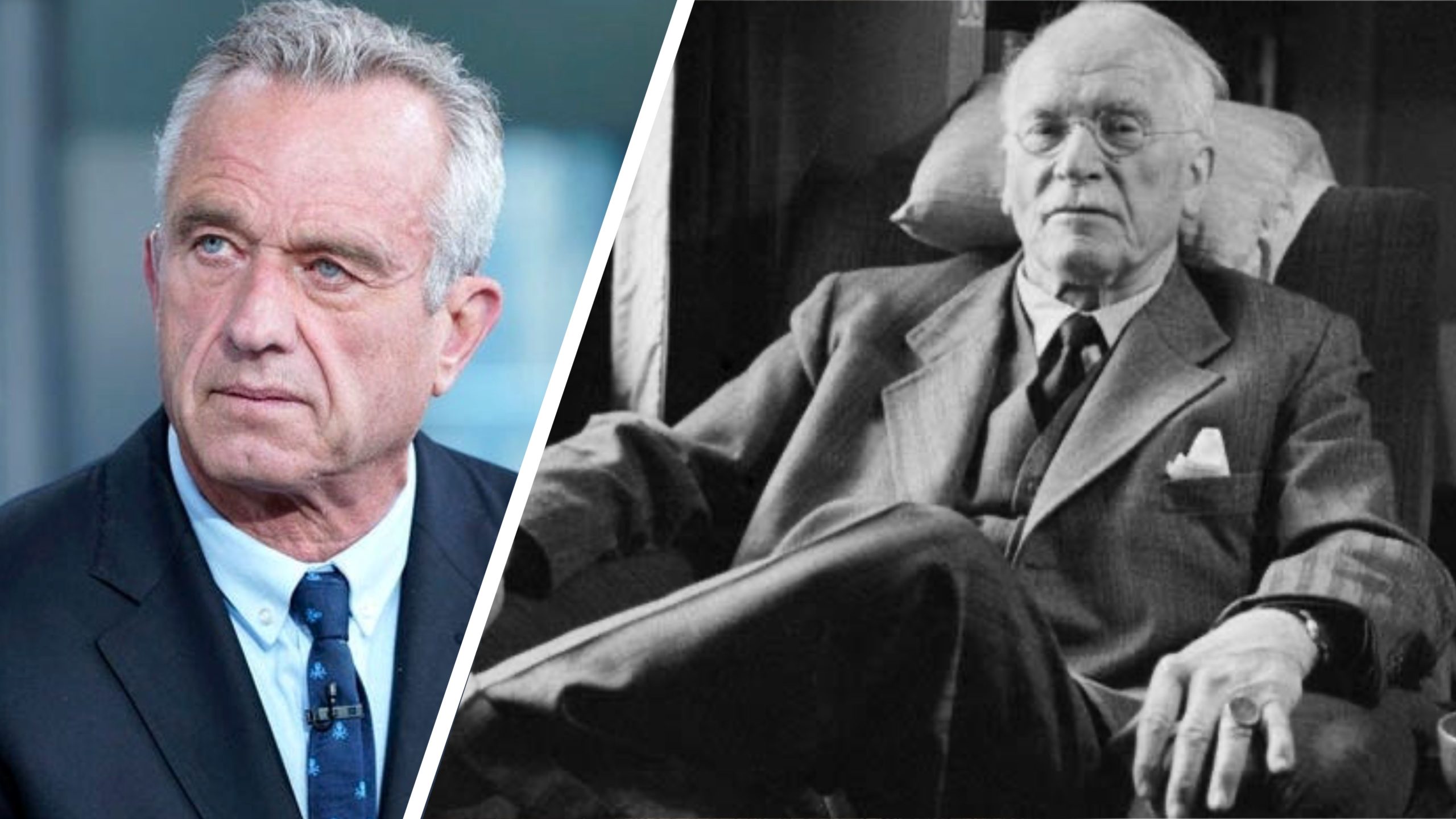
I recently saw an interview that Robert F. Kennedy Jr did wherein he spoke of the impact that Swiss psychiatrist Carl Jung’s writings had on his life, particularly as he clawed his way out of drug addiction.  That journey began in September of 1983 when, after Kennedy sobered up, he read Jung’s book called “Synchronicity”.  According to Jung, religious people had a key advantage over addiction because his research concluded that their faith led to them beating their addictions faster while ensuring their recovery was more durable.  So, because few people know of the dangers of Carl Jung’s theories, RKF Jr’s recent interview presented a good opportunity to remind people why Jungian theory and Christianity are incompatible.

In his earlier years, Jung developed a friendship with Sigmund Freud as the two collaborated on matters of psychoanalysis.  However, where the two differed greatly was Jung’s desire to embrace religion as part of his theoretical foundation.  Freud, on the other hand, dismissed God as a fantasy based on a person’s need for a dominant father figure.  But despite mentioning God, Jung’s idea of God is not the God of the Bible.  When Jung spoke of God, he saw the term as merely a psychological concept rather than a theological one. Through his exploration of psychology, Jung put forward a view of God as the central archetype of the collective unconscious (ie the universal part of the mind shared by all humans relating, in part, to spiritual beliefs). Therefore, in Jungian theory, God is not a literal deity that created mankind, but is simply a psychological reality, a symbol of the transcendent aspects of the human experience.  This is why Jungian theorists reject the true and living God of the Bible.  He has been replaced by a “god” in the human psyche who appears indistinguishable from the true “self” that mankind should supposedly seek to discover.  

When you hear Jungians speak about “wholeness” they are generally referring to wholeness within the psyche.  In this process, Jung stresses the necessary role of religion or the “god archetype” in integrating opposites, including the conscious and unconscious parts of the human psyche.  For the individual, this realisation of “self” is achieved through a process Jung referred to as “individuation.” Individuation involves accepting all parts of one’s “self” into consciousness.  In Jung’s psychology, when the individual develops this image of “self” (ie the unification of the conscious and unconscious parts) they are healed because they reach self-realisation and psychological wholeness.  Therefore, in Jungian psychology, the mantra is, “Become who you are. Become all that you are. There is still more of you – more to be discovered, forgiven, and loved.”  The trouble is, because Jung rejects the existence and authority of a personal God outside of the individual, he can only look within for redemption.  Perhaps that is what led him to formulate this quote, which is a shocking counterfeit of John 14:6: “The way is within us, but not in gods, nor in teachings, nor in laws.  Within us is the way, the truth, and the life.” 

What many overlook when it comes to Jung is that he was drawn to the occult, even writing a book called “Psychology and the Occult”.  Freud warned him against following this line of research, believing it would harm his reputation as a scientist.  Nevertheless, in a letter to Freud dated May 8, 1911, Jung wrote: “There are strange and wondrous things in these lands of darkness. Please don’t worry about my wanderings in these infinitudes. I shall return laden with rich booty for our knowledge of the human psyche. For a while longer I must intoxicate myself on magic perfumes in order to fathom the secrets that lie hidden in the abyss of the unconscious.” 

Jung claimed that he had his own spirit guide who he named “Philemon”.  Philemon is also a character named in Greek mythology but it is clear Jung did not believe them to be the same entity.  To a close colleague, Jung recalled that Philemon, “was simply a superior knowledge, and he taught me psychological objectivity and the actuality of the soul. He formulated and expressed everything which I had never thought.”  In his book, “Memories, Dreams and Reflections” Jung went on to write that, “Philemon and other figures of my fantasies brought home to me the crucial insight that there are things in the psyche which I do not produce, but which produce themselves and have their own life. Philemon represented a force which was not myself.  In my fantasies I held conversations with him, and he said things which I had not consciously thought. For I observed clearly that it was he who spoke, not I.” 

As I alluded to earlier, Jung’s entire philosophy centres around the concept of “wholeness” and the pursuit of it.  However, in Jung’s theory, wholeness is not able to be achieved unless a person is able to integrate both their conscious and unconscious mind by overcoming the fragmented human psyche which hinders personal growth.  This is the process of “individuation” I mentioned earlier.  Furthermore, in Jungian theory, a person does not reach the state of wholeness without the opposition of the “shadow”, which represents the evil which exists within them.  In other words, evil is necessary for individuation to occur.  This is a dangerous theory because it rationalises and accepts evil not only within a person, but also in the counterfeit godhead.  

You see, for Jung, this doctrine is replete with psychological (as opposed to theological) meaning.  To him, the Father symbolises the psyche in its original undifferentiated wholeness; the Son represents the human psyche and the Holy Spirit represents the state of self-critical submission to a higher reality.  But he contends that this “trinity” should in fact be a “quaternity” because it is lacking an evil aspect and a feminine aspect.  Concerning the evil aspect, in his views on man’s fall in the Garden of Eden, Jung wrote, “because He wished to evoke not only man’s bright and positive side but also his darkness and ungodliness, God in his omniscience arranged everything so that Adam and Eve would sin. God intended them to sin.”  In his blasphemous theory, Jung claims that God caused Adam and Eve to sin because God is both good and evil! 

Concerning the feminine aspect of his “quaternity”, an event which occurred in the Catholic Church also prompted Jung to claim that they had inadvertently proven his theory.  In 1950 Pope Pius XII declared the Assumption of the Blessed Virgin Mary to be official dogma of the Roman Catholic Church.  Frank McLynn, one of Jung’s biographers, notes that “Jung immediately hailed the enunciation of this dogma as the most significant religious event since the Reformation”.  Why?  To put it in Jungian terms, the Catholic Church had acceded to the demands of Jungian theory by adding a long-neglected feminine aspect to the masculine trinity and therefore had tacitly abandoned the Trinity in favour of a quaternity.  Because Jung always believed that the number four represented wholeness, the perfection of God had now been fully achieved by Mary’s elevation.

If RFK Jr is confirmed as secretary of the Department of Health and Human Services, believers should watch cautiously to ensure that he does not introduce Jungian health concepts into the public sphere.  You see, Jung once wrote, “The gods have become diseases; Zeus no longer rules Olympus but rather the solar plexus and produces curious specimens for the doctor’s consulting room.”  In other words, Jung argued that because we no longer consciously acknowledge the powerful forces we used to call gods and goddesses, they’ve gone underground and manifest in our physical and mental ailments.  This means that in Jung’s theory, not only is the emphasis on the self, but he promotes a concept of health and wholeness which is predicated on the need for the individual to go through a process of becoming his or her true self through individuation.  In fact, Jung referred to individuation as the healthiest spiritual aim.  

Carl Jung’s approach to wellness goes far beyond physical fitness and seeks to emphasise the interconnectedness of mind, body, and spirit.  As this article demonstrates, Jung’s views on matters concerning physical, psychological and spiritual fitness are somewhat dangerous and believers would be well advised to exercise discernment when approached by anyone who advocates Jung’s methods for achieving “wholeness”.  You don’t need Jungian therapy to feel whole – you need Jesus.  As Colossians 2:8-10 says (emphasis added): “Beware lest anyone cheat you through philosophy and empty deceit, according to the tradition of men, according to the basic principles of the world, and not according to Christ.  For in Him dwells all the fullness of the Godhead bodily; and you are complete in Him, who is the head of all principality and power.”



give

untitled artwork

A Foundation of Scripture: The Founding Fathers Passed A Torch; Modern Americans Would Do Well Not To Let It Go Out

To most of America’s founding fathers, the Bible was true from beginning to end, and it was the only source upon which to establish the new, independent nation. However, with the advent of conjectures and hypotheses that undermined how people viewed the Bible’s history, its moral authority began to erode. Without the Bible’s absolute moral truths guiding the American people, the institution undergirded by this authority and designed to govern them will falter.

Looking Forward To Christ’s Return: A Spiritual Litmus Test

Are you looking forward to the day when Christ returns? Does the thought of Jesus coming back at any moment cause your heart to leap with excitement? Or does it sink with dread? I think your response is a good litmus test of your spiritual character.

sign up

Prime Minister Anthony Albanese Has Been Failing Australia’s Jewish Community For 25 Years

The Australian Jewish News reported that Mr Albanese had also been at a Canberra rally in 2000, referring to him as a “pro-Palestinian Labor MP.” Sadly, as it is now, so it was then. Synagogues were vandalised in both Sydney and Canberra (the locations of the two rallies), and Jewish families were advised to avoid public displays of faith.   Where did Australia go wrong? In part, 25 years ago. Anthony Albanese failed Australia’s Jewish community in 2000, and he failed them again in 2025. By God’s mercy, may this be the last of his failures.

ABC's of Salvation

Decision

UTT

untitled artwork

Israel My Glory

Pastor Dean Dwyer

I recently saw an interview that Robert F. Kennedy Jr did wherein he spoke of the impact that Swiss psychiatrist Carl Jung’s writings had on his life, particularly as he clawed his way out of drug addiction.  That journey began in September of 1983 when, after Kennedy sobered up, he read Jung’s book called “Synchronicity”.  According to Jung, religious people had a key advantage over addiction because his research concluded that their faith led to them beating their addictions faster while ensuring their recovery was more durable.  So, because few people know of the dangers of Carl Jung’s theories, RKF Jr’s recent interview presented a good opportunity to remind people why Jungian theory and Christianity are incompatible.

In his earlier years, Jung developed a friendship with Sigmund Freud as the two collaborated on matters of psychoanalysis.  However, where the two differed greatly was Jung’s desire to embrace religion as part of his theoretical foundation.  Freud, on the other hand, dismissed God as a fantasy based on a person’s need for a dominant father figure.  But despite mentioning God, Jung’s idea of God is not the God of the Bible.  When Jung spoke of God, he saw the term as merely a psychological concept rather than a theological one. Through his exploration of psychology, Jung put forward a view of God as the central archetype of the collective unconscious (ie the universal part of the mind shared by all humans relating, in part, to spiritual beliefs). Therefore, in Jungian theory, God is not a literal deity that created mankind, but is simply a psychological reality, a symbol of the transcendent aspects of the human experience.  This is why Jungian theorists reject the true and living God of the Bible.  He has been replaced by a “god” in the human psyche who appears indistinguishable from the true “self” that mankind should supposedly seek to discover.  

When you hear Jungians speak about “wholeness” they are generally referring to wholeness within the psyche.  In this process, Jung stresses the necessary role of religion or the “god archetype” in integrating opposites, including the conscious and unconscious parts of the human psyche.  For the individual, this realisation of “self” is achieved through a process Jung referred to as “individuation.” Individuation involves accepting all parts of one’s “self” into consciousness.  In Jung’s psychology, when the individual develops this image of “self” (ie the unification of the conscious and unconscious parts) they are healed because they reach self-realisation and psychological wholeness.  Therefore, in Jungian psychology, the mantra is, “Become who you are. Become all that you are. There is still more of you – more to be discovered, forgiven, and loved.”  The trouble is, because Jung rejects the existence and authority of a personal God outside of the individual, he can only look within for redemption.  Perhaps that is what led him to formulate this quote, which is a shocking counterfeit of John 14:6: “The way is within us, but not in gods, nor in teachings, nor in laws.  Within us is the way, the truth, and the life.” 

What many overlook when it comes to Jung is that he was drawn to the occult, even writing a book called “Psychology and the Occult”.  Freud warned him against following this line of research, believing it would harm his reputation as a scientist.  Nevertheless, in a letter to Freud dated May 8, 1911, Jung wrote: “There are strange and wondrous things in these lands of darkness. Please don’t worry about my wanderings in these infinitudes. I shall return laden with rich booty for our knowledge of the human psyche. For a while longer I must intoxicate myself on magic perfumes in order to fathom the secrets that lie hidden in the abyss of the unconscious.” 

Jung claimed that he had his own spirit guide who he named “Philemon”.  Philemon is also a character named in Greek mythology but it is clear Jung did not believe them to be the same entity.  To a close colleague, Jung recalled that Philemon, “was simply a superior knowledge, and he taught me psychological objectivity and the actuality of the soul. He formulated and expressed everything which I had never thought.”  In his book, “Memories, Dreams and Reflections” Jung went on to write that, “Philemon and other figures of my fantasies brought home to me the crucial insight that there are things in the psyche which I do not produce, but which produce themselves and have their own life. Philemon represented a force which was not myself.  In my fantasies I held conversations with him, and he said things which I had not consciously thought. For I observed clearly that it was he who spoke, not I.” 

As I alluded to earlier, Jung’s entire philosophy centres around the concept of “wholeness” and the pursuit of it.  However, in Jung’s theory, wholeness is not able to be achieved unless a person is able to integrate both their conscious and unconscious mind by overcoming the fragmented human psyche which hinders personal growth.  This is the process of “individuation” I mentioned earlier.  Furthermore, in Jungian theory, a person does not reach the state of wholeness without the opposition of the “shadow”, which represents the evil which exists within them.  In other words, evil is necessary for individuation to occur.  This is a dangerous theory because it rationalises and accepts evil not only within a person, but also in the counterfeit godhead.  

You see, for Jung, this doctrine is replete with psychological (as opposed to theological) meaning.  To him, the Father symbolises the psyche in its original undifferentiated wholeness; the Son represents the human psyche and the Holy Spirit represents the state of self-critical submission to a higher reality.  But he contends that this “trinity” should in fact be a “quaternity” because it is lacking an evil aspect and a feminine aspect.  Concerning the evil aspect, in his views on man’s fall in the Garden of Eden, Jung wrote, “because He wished to evoke not only man’s bright and positive side but also his darkness and ungodliness, God in his omniscience arranged everything so that Adam and Eve would sin. God intended them to sin.”  In his blasphemous theory, Jung claims that God caused Adam and Eve to sin because God is both good and evil! 

Concerning the feminine aspect of his “quaternity”, an event which occurred in the Catholic Church also prompted Jung to claim that they had inadvertently proven his theory.  In 1950 Pope Pius XII declared the Assumption of the Blessed Virgin Mary to be official dogma of the Roman Catholic Church.  Frank McLynn, one of Jung’s biographers, notes that “Jung immediately hailed the enunciation of this dogma as the most significant religious event since the Reformation”.  Why?  To put it in Jungian terms, the Catholic Church had acceded to the demands of Jungian theory by adding a long-neglected feminine aspect to the masculine trinity and therefore had tacitly abandoned the Trinity in favour of a quaternity.  Because Jung always believed that the number four represented wholeness, the perfection of God had now been fully achieved by Mary’s elevation.

If RFK Jr is confirmed as secretary of the Department of Health and Human Services, believers should watch cautiously to ensure that he does not introduce Jungian health concepts into the public sphere.  You see, Jung once wrote, “The gods have become diseases; Zeus no longer rules Olympus but rather the solar plexus and produces curious specimens for the doctor’s consulting room.”  In other words, Jung argued that because we no longer consciously acknowledge the powerful forces we used to call gods and goddesses, they’ve gone underground and manifest in our physical and mental ailments.  This means that in Jung’s theory, not only is the emphasis on the self, but he promotes a concept of health and wholeness which is predicated on the need for the individual to go through a process of becoming his or her true self through individuation.  In fact, Jung referred to individuation as the healthiest spiritual aim.  

Carl Jung’s approach to wellness goes far beyond physical fitness and seeks to emphasise the interconnectedness of mind, body, and spirit.  As this article demonstrates, Jung’s views on matters concerning physical, psychological and spiritual fitness are somewhat dangerous and believers would be well advised to exercise discernment when approached by anyone who advocates Jung’s methods for achieving “wholeness”.  You don’t need Jungian therapy to feel whole – you need Jesus.  As Colossians 2:8-10 says (emphasis added): “Beware lest anyone cheat you through philosophy and empty deceit, according to the tradition of men, according to the basic principles of the world, and not according to Christ.  For in Him dwells all the fullness of the Godhead bodily; and you are complete in Him, who is the head of all principality and power.”


Trusted Analysis From A Biblical Worldview

Help reach the lost and equip the church with the living and active truth of God's Word in our world today.

YOU CARE ABOUT

BIBLICAL TRUTH. SO DO WE.


Together, We Can Deliver A Biblical Understanding

Of News Events Around The World.

A Foundation of Scripture: The Founding Fathers Passed A Torch; Modern Americans Would Do Well Not To Let It Go Out

To most of America’s founding fathers, the Bible was true from beginning to end, and it was the only source upon which to establish the new, independent nation. However, with the advent of conjectures and hypotheses that undermined how people viewed the Bible’s history, its moral authority began to erode. Without the Bible’s absolute moral truths guiding the American people, the institution undergirded by this authority and designed to govern them will falter.

Looking Forward To Christ’s Return: A Spiritual Litmus Test

Are you looking forward to the day when Christ returns? Does the thought of Jesus coming back at any moment cause your heart to leap with excitement? Or does it sink with dread? I think your response is a good litmus test of your spiritual character.

untitled artwork 6391

Prime Minister Anthony Albanese Has Been Failing Australia’s Jewish Community For 25 Years

The Australian Jewish News reported that Mr Albanese had also been at a Canberra rally in 2000, referring to him as a “pro-Palestinian Labor MP.” Sadly, as it is now, so it was then. Synagogues were vandalised in both Sydney and Canberra (the locations of the two rallies), and Jewish families were advised to avoid public displays of faith.   Where did Australia go wrong? In part, 25 years ago. Anthony Albanese failed Australia’s Jewish community in 2000, and he failed them again in 2025. By God’s mercy, may this be the last of his failures.

ABC's of Salvation

TV AD

worldview matters

Decision Magazine V AD

Decision

Jan Markell

Israel My Glory

Erick Stakelbeck

untitled artwork

YOU CARE ABOUT

BIBLICAL TRUTH.

SO DO WE.

Together, We Can Deliver A Biblical Understanding Of News Events Around The World And Equip The Church To Stand With A Biblical Worldview.

Israel My Glory

untitled artwork

YOU CARE ABOUT

BIBLICAL TRUTH.

SO DO WE.


Together, We Can Deliver A Biblical Understanding Of News Events Around The World And Equip The Church To Stand With A Biblical Worldview.