give

June 6, 2026

June, 6, 2026
June 6, 2026

give

untitled artwork

untitled artwork

World news biblically understood

TRENDING:

The PA, Hamas, And Hezbollah Will Always Refuse To Accept The Existence Of A Jewish State

Chris Katulka

The Arab-Israeli conflict is often perceived as a highly intricate issue involving a multitude of historical, political, and social elements. You’ll hear journalists and professors claim, “It’s a complex situation,” or “It’s extremely complicated.”

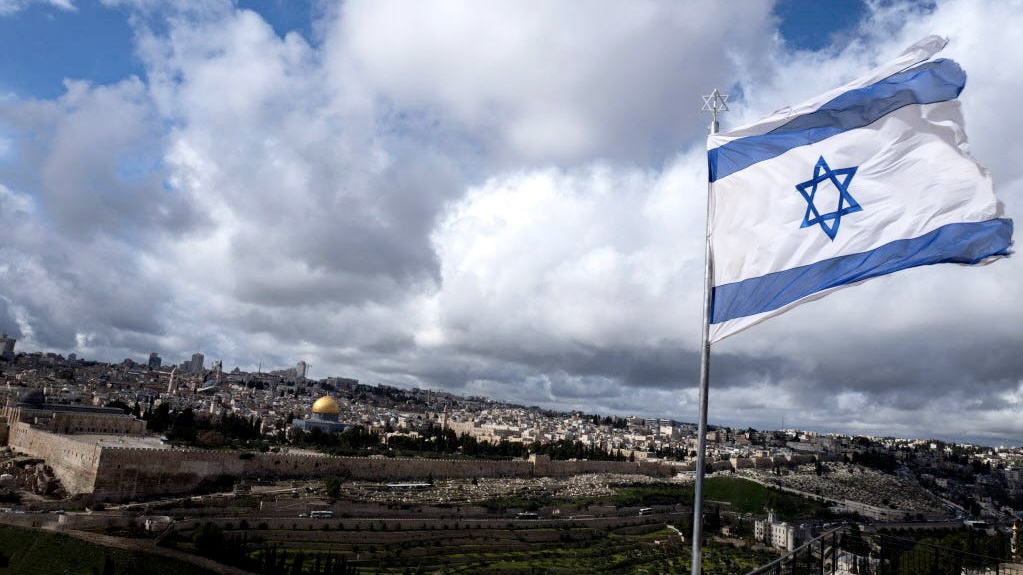
Navigating history’s ever-shifting landscape can be complex, as each day brings new developments; but the overall conflict is simple to grasp. Terrorist organizations like Hamas, Hezbollah, and factions of the Palestinian Authority (PA) refuse to accept the existence of a Jewish state. That is why tensions still exist between Israel and the Palestinians and many Arab nations.

Lebanon (established 1943), Syria (1946), Jordan (1946), and Israel (1948) were all formed within the same decade as a result of the dismantling of the Turkish Empire after World War I. However, Israel is the only country on that list whose right to exist is disputed. When Lebanon, Syria, and Jordan acquired independence, no neighboring countries stormed their borders or contested their sovereignty.

Why was Israel not afforded the same recognition? The answer is simple: Israel is a Jewish state.

Today, Israel’s neighbors no longer strategize how to use their military force to destroy the little Jewish country; but Iranian proxies occupy Lebanon, Syria, the West Bank, and Gaza to plot against Israel and execute acts of terror to remind the Jewish people they are not wanted.

Hamas

Hamas, whose name is an Arabic acronym for “Islamic Resistance Movement,” was founded in Gaza as an arm of the Muslim Brotherhood in the late 1980s. Iran has funded Hamas violence against Israel since the early 1990s.

Hamas’s sole purpose is to promote Islamic ideals of Palestinian nationalism through a policy of jihad (armed struggle). Hamas minces no words: It considers Israel to be Islamic territory. Therefore, any international policy or peace negotiations that promote Jewish sovereignty in the land will lead only to “carnage, displacement and terror,” according to Article 31 of the Hamas Charter of 1988.1

The Charter blatantly calls for Israel’s annihilation and the genocide of the Jewish people. In 2017, the terrorist organization attempted to rebrand itself by tempering some of its extremist language; but its actions speak louder than its words.

Two seismic events gave rise to Hamas’s power in Gaza. First, in September 2005, Israeli Prime Minister Ariel Sharon unilaterally gave Palestinians complete autonomy and control of the Gaza Strip by expelling all 8,000 Israelis from their homes in 21 settlements there and turning the area over to the Palestinians, per the Oslo Accords. Jews had lived in Gaza for centuries. It was part of the territory apportioned to the tribe of Judah during the days of Joshua (Josh. 15:47).

Second, with Gaza and the territories in the West Bank (Judea and Samaria) now in Palestinian hands, Hamas, for the first time, ran for election in 2006 as an official political party. It won handily. The victory led to a Palestinian civil war that divided the West Bank from Gaza, giving autonomy of the West Bank to the PA and Gaza to Hamas.

The Gaza Strip is no stranger to territorial conveyance. From 1917 to 1948 it was under British rule, followed by Egyptian rule from 1949 to 1967. Israel governed the area from 1967 to 2005, after which the Palestinians took over.

A Hamas presence still remains in the West Bank, and the Gaza Strip has become a base for terrorism. True to its Charter, Hamas has launched tens of thousands of rockets into Israel; built more than 300 miles of tunnels; and murdered thousands of innocent Israelis to fulfill its mission of “carnage, displacement and terror.”

Hezbollah

As Hamas remains an everyday threat to Israel in the south, Hezbollah (Arabic for “the Party of Allah”) does the same in the north. Its violence against Israel started during the Lebanon War in 1982.

After the Iranian Revolution in 1979 that deposed Shah Mohammad Reza Pahlavi, who was a friend of the West, Ayatollah Khomeini rose to power. He sought to spread his Islamic ideals across the Middle East. Lebanon was ripe to import Khomeini’s Revolutionary Guard Corps to develop an Islamic movement because its government was fractured, and the country was suffering a strenuous civil war. The Israel Defense Forces (IDF) partnered with Lebanese Christians to defeat the Palestinian militants in southern Lebanon.

Yet Hezbollah’s power and influence increased in Lebanon, and its military wing is said to have grown larger than the Lebanese army. Some even call Hezbollah a state within a state. Today, Hezbollah holds power in the Lebanese government and advances its message through radio, television, and social media.

After the Second Lebanon War in 2006, Tehran consolidated Hezbollah’s power under the leadership of Hassan Nasrallah. Nasrallah, educated in Iran, funds and directs Hezbollah’s hostilities toward Israel on Lebanon’s southern border.

Hezbollah embraces a religiously motivated hatred toward the Jewish people, which drives its antisemitic tropes, Holocaust denial, and terrorist activities.

Today, the Tehran-backed terrorist organization possesses 150,000 rockets to target Israel, many with guided systems to hit IDF bases and civilian targets.

The Palestinian Authority

Hezbollah and Hamas are both deemed terrorist organizations by many countries, but they are also political parties. Their elected representatives govern the Lebanese and Palestinian citizens.

The PA, however, is not a political party. It is the governing body of the Palestinian people in their territories. It was originally called the Palestine Liberation Organization and was headed by terrorist Yasser Arafat. The PA was established by the 1994 Oslo Accords that provided the framework for a two-state solution.

For two states to live side by side, each must have its own government. The Israelis have the Knesset in Jerusalem. So, Oslo created a limited self-governance for the Palestinian people in the West Bank and Gaza Strip.

On May 4, 1994, Israeli security forces started withdrawing from the newly arranged Palestinian territories, transferring authority to the PA. Today, the PA oversees the territories in the West Bank. Since no elections have been held since 2006, Palestinian President Mahmoud Abbas has remained Arafat’s successor for nearly two decades.

Abbas is now 88; and with a disapproval rating of 80%, it seems most of the Palestinians want him to resign. Then the PA would be forced to hold elections, which could lead to a Hamas victory in the West Bank and more organized terrorism in the heart of Israel.

The Oslo Accords also produced the Palestinian National Security Forces (NSF), an internal Palestinian police force. Israel and the NSF coordinate on security issues, counterterrorism operations, and intelligence sharing, primarily against Hamas and Palestinian Islamic Jihad activities in the West Bank.

The relationship has been strained for years, leading Israel to take a more active role in counterterrorism efforts in the Palestinian territories. Abbas, however, believes, “If we give up security coordination there will be chaos here. There will be rifles, and explosions and armed militants popping up everywhere and rushing at Israel. Without the coordination, a bloody intifada would break out.”

Yet the PA shells out nearly $3 million a month to Arab families of terrorists killed attacking Israelis. These payments only encourage more terrorism.

There is as much uncertainty about the future of the Palestinian territories in the West Bank as there is about the future of the Palestinians in Gaza. Whom will they elect in the coming years? Will they choose a leader who wants peace with Israel or one who will turn the West Bank into another launching pad for terrorism?

Meanwhile, tiny Israel remains surrounded by enemies in the north, south, and east. Today, Iran is Israel’s greatest threat. In Tehran they chant, “Death to Israel!” as Iran funds and trains terrorists and supplies powerful weapons to Hezbollah and Hamas on Israel’s borders.

We don’t know what Hamas will look like in the future, but it’s unlikely that its antisemitic, anti-Israel ideology will disappear. That is why we must turn to the God of Israel, who promises Israel will never be destroyed (Jer. 31:35–40).

God said, “I will bring them back to this place, and I will cause them to dwell safely. They shall be My people, and I will be their God. Yes, I will rejoice over them to do them good, and I will assuredly plant them in this land, with all My heart and with all My soul” (32:37–38, 41). To that we say amen and amen.



The Murder Of Henry Nowak: Will The World Finally Wake Up To The Danger Of Cultural Marxism?

In significant moments like this, the story often becomes larger than the facts themselves. None of us can fully know the thoughts or motivations of every person involved. But we know that in the 999 call and when the officers arrived, Vickrum Digwa weaponised claims of racism against his victim. And we know that for decades, concerns about political correctness have prevented police officers and other officials from doing the right thing, with devastating effects.

Substituting The Government For The Family: In First Set Back To Homeschooling In Decades, Connecticut Declares War

Connecticut officials just adopted the first major new restriction on homeschooling in America in decades, forcing parents to seek permission from “child welfare” authorities while imposing a slew of new regulations on families who exit government schools. Advocates for home education blasted the move. And they vowed to fight on. 

sign up

Jan Markell: Is Israel’s Spiritual Blindness A Reason For Christians To Reject Them?

Ezekiel 36 emphasizes that when the Jews return to the land, they will do so in unbelief. There will be spiritual regeneration much later! The dry bones of Ezekiel 37 reflect a lack of breath or spiritual life. God states he is gathering them back “not for your sake but for my holy name’s sake,” because their presence among the nations caused his name to be profaned. Ezekiel 36 promises that once back in the land, God will cleanse them, give them a new spirit, and cause them to walk in his statutes. But much later.

ABC's of Salvation

Decision

UTT

FOI

untitled artwork

Israel My Glory

Chris Katulka

The Arab-Israeli conflict is often perceived as a highly intricate issue involving a multitude of historical, political, and social elements. You’ll hear journalists and professors claim, “It’s a complex situation,” or “It’s extremely complicated.”

Navigating history’s ever-shifting landscape can be complex, as each day brings new developments; but the overall conflict is simple to grasp. Terrorist organizations like Hamas, Hezbollah, and factions of the Palestinian Authority (PA) refuse to accept the existence of a Jewish state. That is why tensions still exist between Israel and the Palestinians and many Arab nations.

Lebanon (established 1943), Syria (1946), Jordan (1946), and Israel (1948) were all formed within the same decade as a result of the dismantling of the Turkish Empire after World War I. However, Israel is the only country on that list whose right to exist is disputed. When Lebanon, Syria, and Jordan acquired independence, no neighboring countries stormed their borders or contested their sovereignty.

Why was Israel not afforded the same recognition? The answer is simple: Israel is a Jewish state.

Today, Israel’s neighbors no longer strategize how to use their military force to destroy the little Jewish country; but Iranian proxies occupy Lebanon, Syria, the West Bank, and Gaza to plot against Israel and execute acts of terror to remind the Jewish people they are not wanted.

Hamas

Hamas, whose name is an Arabic acronym for “Islamic Resistance Movement,” was founded in Gaza as an arm of the Muslim Brotherhood in the late 1980s. Iran has funded Hamas violence against Israel since the early 1990s.

Hamas’s sole purpose is to promote Islamic ideals of Palestinian nationalism through a policy of jihad (armed struggle). Hamas minces no words: It considers Israel to be Islamic territory. Therefore, any international policy or peace negotiations that promote Jewish sovereignty in the land will lead only to “carnage, displacement and terror,” according to Article 31 of the Hamas Charter of 1988.1

The Charter blatantly calls for Israel’s annihilation and the genocide of the Jewish people. In 2017, the terrorist organization attempted to rebrand itself by tempering some of its extremist language; but its actions speak louder than its words.

Two seismic events gave rise to Hamas’s power in Gaza. First, in September 2005, Israeli Prime Minister Ariel Sharon unilaterally gave Palestinians complete autonomy and control of the Gaza Strip by expelling all 8,000 Israelis from their homes in 21 settlements there and turning the area over to the Palestinians, per the Oslo Accords. Jews had lived in Gaza for centuries. It was part of the territory apportioned to the tribe of Judah during the days of Joshua (Josh. 15:47).

Second, with Gaza and the territories in the West Bank (Judea and Samaria) now in Palestinian hands, Hamas, for the first time, ran for election in 2006 as an official political party. It won handily. The victory led to a Palestinian civil war that divided the West Bank from Gaza, giving autonomy of the West Bank to the PA and Gaza to Hamas.

The Gaza Strip is no stranger to territorial conveyance. From 1917 to 1948 it was under British rule, followed by Egyptian rule from 1949 to 1967. Israel governed the area from 1967 to 2005, after which the Palestinians took over.

A Hamas presence still remains in the West Bank, and the Gaza Strip has become a base for terrorism. True to its Charter, Hamas has launched tens of thousands of rockets into Israel; built more than 300 miles of tunnels; and murdered thousands of innocent Israelis to fulfill its mission of “carnage, displacement and terror.”

Hezbollah

As Hamas remains an everyday threat to Israel in the south, Hezbollah (Arabic for “the Party of Allah”) does the same in the north. Its violence against Israel started during the Lebanon War in 1982.

After the Iranian Revolution in 1979 that deposed Shah Mohammad Reza Pahlavi, who was a friend of the West, Ayatollah Khomeini rose to power. He sought to spread his Islamic ideals across the Middle East. Lebanon was ripe to import Khomeini’s Revolutionary Guard Corps to develop an Islamic movement because its government was fractured, and the country was suffering a strenuous civil war. The Israel Defense Forces (IDF) partnered with Lebanese Christians to defeat the Palestinian militants in southern Lebanon.

Yet Hezbollah’s power and influence increased in Lebanon, and its military wing is said to have grown larger than the Lebanese army. Some even call Hezbollah a state within a state. Today, Hezbollah holds power in the Lebanese government and advances its message through radio, television, and social media.

After the Second Lebanon War in 2006, Tehran consolidated Hezbollah’s power under the leadership of Hassan Nasrallah. Nasrallah, educated in Iran, funds and directs Hezbollah’s hostilities toward Israel on Lebanon’s southern border.

Hezbollah embraces a religiously motivated hatred toward the Jewish people, which drives its antisemitic tropes, Holocaust denial, and terrorist activities.

Today, the Tehran-backed terrorist organization possesses 150,000 rockets to target Israel, many with guided systems to hit IDF bases and civilian targets.

The Palestinian Authority

Hezbollah and Hamas are both deemed terrorist organizations by many countries, but they are also political parties. Their elected representatives govern the Lebanese and Palestinian citizens.

The PA, however, is not a political party. It is the governing body of the Palestinian people in their territories. It was originally called the Palestine Liberation Organization and was headed by terrorist Yasser Arafat. The PA was established by the 1994 Oslo Accords that provided the framework for a two-state solution.

For two states to live side by side, each must have its own government. The Israelis have the Knesset in Jerusalem. So, Oslo created a limited self-governance for the Palestinian people in the West Bank and Gaza Strip.

On May 4, 1994, Israeli security forces started withdrawing from the newly arranged Palestinian territories, transferring authority to the PA. Today, the PA oversees the territories in the West Bank. Since no elections have been held since 2006, Palestinian President Mahmoud Abbas has remained Arafat’s successor for nearly two decades.

Abbas is now 88; and with a disapproval rating of 80%, it seems most of the Palestinians want him to resign. Then the PA would be forced to hold elections, which could lead to a Hamas victory in the West Bank and more organized terrorism in the heart of Israel.

The Oslo Accords also produced the Palestinian National Security Forces (NSF), an internal Palestinian police force. Israel and the NSF coordinate on security issues, counterterrorism operations, and intelligence sharing, primarily against Hamas and Palestinian Islamic Jihad activities in the West Bank.

The relationship has been strained for years, leading Israel to take a more active role in counterterrorism efforts in the Palestinian territories. Abbas, however, believes, “If we give up security coordination there will be chaos here. There will be rifles, and explosions and armed militants popping up everywhere and rushing at Israel. Without the coordination, a bloody intifada would break out.”

Yet the PA shells out nearly $3 million a month to Arab families of terrorists killed attacking Israelis. These payments only encourage more terrorism.

There is as much uncertainty about the future of the Palestinian territories in the West Bank as there is about the future of the Palestinians in Gaza. Whom will they elect in the coming years? Will they choose a leader who wants peace with Israel or one who will turn the West Bank into another launching pad for terrorism?

Meanwhile, tiny Israel remains surrounded by enemies in the north, south, and east. Today, Iran is Israel’s greatest threat. In Tehran they chant, “Death to Israel!” as Iran funds and trains terrorists and supplies powerful weapons to Hezbollah and Hamas on Israel’s borders.

We don’t know what Hamas will look like in the future, but it’s unlikely that its antisemitic, anti-Israel ideology will disappear. That is why we must turn to the God of Israel, who promises Israel will never be destroyed (Jer. 31:35–40).

God said, “I will bring them back to this place, and I will cause them to dwell safely. They shall be My people, and I will be their God. Yes, I will rejoice over them to do them good, and I will assuredly plant them in this land, with all My heart and with all My soul” (32:37–38, 41). To that we say amen and amen.

Trusted Analysis From A Biblical Worldview

Help reach the lost and equip the church with the living and active truth of God's Word in our world today.

YOU CARE ABOUT

BIBLICAL TRUTH. SO DO WE.


Together, We Can Deliver A Biblical Understanding

Of News Events Around The World.

The Murder Of Henry Nowak: Will The World Finally Wake Up To The Danger Of Cultural Marxism?

In significant moments like this, the story often becomes larger than the facts themselves. None of us can fully know the thoughts or motivations of every person involved. But we know that in the 999 call and when the officers arrived, Vickrum Digwa weaponised claims of racism against his victim. And we know that for decades, concerns about political correctness have prevented police officers and other officials from doing the right thing, with devastating effects.

Substituting The Government For The Family: In First Set Back To Homeschooling In Decades, Connecticut Declares War

Connecticut officials just adopted the first major new restriction on homeschooling in America in decades, forcing parents to seek permission from “child welfare” authorities while imposing a slew of new regulations on families who exit government schools. Advocates for home education blasted the move. And they vowed to fight on. 

untitled artwork 6391

Jan Markell: Is Israel’s Spiritual Blindness A Reason For Christians To Reject Them?

Ezekiel 36 emphasizes that when the Jews return to the land, they will do so in unbelief. There will be spiritual regeneration much later! The dry bones of Ezekiel 37 reflect a lack of breath or spiritual life. God states he is gathering them back “not for your sake but for my holy name’s sake,” because their presence among the nations caused his name to be profaned. Ezekiel 36 promises that once back in the land, God will cleanse them, give them a new spirit, and cause them to walk in his statutes. But much later.

ABC's of Salvation

TV AD

worldview matters

Decision Magazine V AD

Decision

Jan Markell

Israel My Glory

Erick Stakelbeck

untitled artwork

YOU CARE ABOUT

BIBLICAL TRUTH.

SO DO WE.

Together, We Can Deliver A Biblical Understanding Of News Events Around The World And Equip The Church To Stand With A Biblical Worldview.

untitled artwork

Israel My Glory

YOU CARE ABOUT

BIBLICAL TRUTH.

SO DO WE.


Together, We Can Deliver A Biblical Understanding Of News Events Around The World And Equip The Church To Stand With A Biblical Worldview.