
give

June 10, 2026

June, 10, 2026
June 10, 2026

give

untitled artwork

untitled artwork

World news biblically understood

TRENDING:

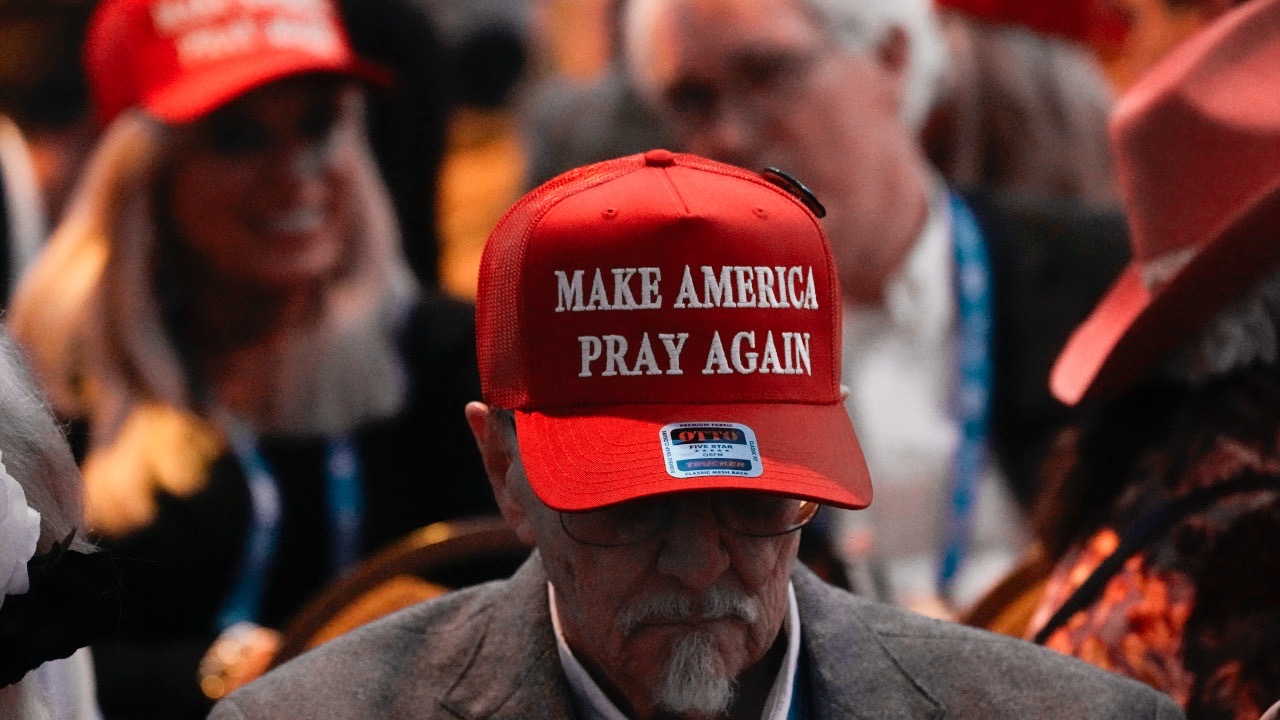
Public Square Pariahs: Why Christians Face Unique Backlash In Modern Culture

untitled artwork

On March 26, 1997, sheriff’s deputies received an anonymous call to conduct a welfare check at a mansion in Rancho Santa Fe, California. When they responded, they found a shocking scene: Thirty-nine people were dead in what turned out to be the largest mass suicide in United States history.

News of the bizarre scene spread quickly. The group had ingested a fatal mix of applesauce, sedatives, and vodka in order to facilitate a collective suicide. Why? They thought they needed to shed their earthly bodies in order to board an alien spacecraft hidden behind an approaching comet—a spacecraft that would pass them through “Heaven’s Gate” and into a higher existence.

People were enthralled with the Heaven’s Gate cult. Despite the morbid nature of what happened, the group became the subject of endless jokes. Culture clearly thought the people in this cult were delusional and outlandishly wrong.

But culture didn’t hate them.

When your doorbell rings and you discover two well-dressed people from a local church standing on your doorstep, there’s a good possibility that they’re Jehovah’s Witnesses, The internet abounds with humorous memes of people desperately searching for a way to escape from these evangelists on their doorstep. Culture widely considers Jehovah’s Witnesses to be annoyingly persistent in their door-to-door activities.

But culture doesn’t hate them.

Lancaster County, Pennsylvania, is home to the largest and most well-known settlement of Amish in America. Known for shunning modern conveniences like cars, the Amish form close-knit communities dedicated to simple living in pursuit of an undistracted devotion to God. Millions of people flock to Amish country each year to get a glimpse of their unique way of life. At the same time, the Amish are often criticized for being backward and isolated. Culture certainly thinks they’re a curiosity.

But culture doesn’t hate them.

There’s a reason culture doesn’t hate these three groups, even when it’s had an otherwise negative assessment of them: These groups haven’t attempted to influence the public square with their contrarian views.

If contrarian groups keep to themselves such that culture can forge ahead in the absence of any perceived imposition of beliefs from those groups, they’re in the clear. Culture might think you’re pitiable, annoying, or weird, but it won’t hate you.

That level of bitter resentment is reserved for groups who believe they shouldn’t keep their contrarian views to themselves. Groups whose very purpose includes a charge to influence the culture around them based on beliefs starkly opposed to those cherished by that culture.

Groups…like Christians.

Who Is Culture?

In the broadest sense, culture refers to the way of life for a society—the manners, dress, language, religion, arts, and customs generally shared by a group of people at a given time. But in everyday conversation, people typically use the word culture in reference to the people and institutions who hold the values considered to be in vogue for a given society.

Examples of key cultural institutions would include the media, entertainment, government, and academia. Individuals influence those institutions, and those institutions, in turn, influence more individuals. That cycle is ongoing and mutually reinforcing, leading over time to certain values becoming culturally acceptable or celebrated and others becoming anathema.

Culture, then, is a snapshot of the current state of society’s values. It refers to the people and institutions who hold the values widely considered to be accepted and celebrated in the United States today.

Beyond the Soup Kitchen

The significance of culture to Christians cannot be overstated, because culture functions as a gatekeeper of the ideas that fashionable society deems admissible to the public square at any given time. And if you’re a group whose values have become anathema, the gatekeepers won’t merely roll a condescending eye at you and then let you in. They’ll funnel their hatred of your contrarian values into an active campaign to keep your influence out.

It’s probably not news to you that this is increasingly the relationship between culture and Christians today.

Culture doesn’t necessarily hate everything Christians might advocate for in the public square. For example, most people consider it a good thing to volunteer at or donate to local soup kitchens. If you’re part of a Christian group passionate about that form of service, you might decide to publicly advocate for the cause in some way. In doing so, it’s likely that no one will hate you, even if they disagree on the best way to approach the issue of food insecurity.

But now let’s say you’re a group who believes humans in the womb have the same value and God-given right to life as humans who have already been born, and you decide to publicly advocate for a local pro-life pregnancy center.

I don’t have to tell you we’re out of soup kitchen territory now.

In today’s culture, the pro-life position is seen as a repulsive injustice to women. If you speak or act publicly against abortion, you’ll be morally condemned and detested for being harmful, oppressive, cruel, toxic, violent, or misogynistic.

Publicly advocating for a soup kitchen and publicly advocating for the protection of life in the womb are both outworkings of a biblical worldview. But there’s a major difference in how those two actions are perceived by culture. As Christians, therefore, we aren’t resented for everything we believe and do, but because we’re reviled for opposing some of the values most cherished by culture, we’re increasingly hated as a group.

When culture hates you—when you’re reviled for promoting your views that oppose culture’s cherished values—it takes deep conviction and courage to nonetheless persevere for the common good. 


DONOR SUPPORTED: If you have been blessed by Harbinger’s Daily, prayerfully consider donating today.

A Time To Act: Is Now The Moment For Netanyahu To Declare A New ‘Independence Day’ For Israel

President Trump says that Prime Minister Netanyahu will accept whatever deal his administration makes. Maybe, maybe not. Netanyahu could see the approaching November midterm elections in America and even Israeli elections in October, and declare that this is the moment for a new Israeli Independence Day. Netanyahu knows that there is a growing number of congressmembers who want to reduce Israel's dependence on the United States. Both the Prime Minister and Israel as a whole agree. In 1948, independence meant Israel would become a country—a new Independence Day means Israel gets to hit, and hit back hard, against any threat that thinks Israel shouldn't be one.

Protections That Exclude Evangelical Christians: City Refuses To Prosecute Protesters For Storming A Church Service

St. Paul City Attorney Irene Kao said that her office would not charge former CNN journalist Don Lemon and the protestors involved in a planned disruption at Cities Church. On Jan. 18, dozens of protestors interrupted a Sunday morning church service, stopping the pastor from opening the service with prayer while shouting anti-ICE agent chants, and screaming in church members’ faces. The protestors claimed that one of the pastors was an ICE agent. 

sign up

Jan Markell: Is Israel’s Spiritual Blindness A Reason For Christians To Reject Them?

Ezekiel 36 emphasizes that when the Jews return to the land, they will do so in unbelief. There will be spiritual regeneration much later! The dry bones of Ezekiel 37 reflect a lack of breath or spiritual life. God states he is gathering them back “not for your sake but for my holy name’s sake,” because their presence among the nations caused his name to be profaned. Ezekiel 36 promises that once back in the land, God will cleanse them, give them a new spirit, and cause them to walk in his statutes. But much later.

ABC's of Salvation

Decision

UTT

FOI

untitled artwork

Israel My Glory

untitled artwork

On March 26, 1997, sheriff’s deputies received an anonymous call to conduct a welfare check at a mansion in Rancho Santa Fe, California. When they responded, they found a shocking scene: Thirty-nine people were dead in what turned out to be the largest mass suicide in United States history.

News of the bizarre scene spread quickly. The group had ingested a fatal mix of applesauce, sedatives, and vodka in order to facilitate a collective suicide. Why? They thought they needed to shed their earthly bodies in order to board an alien spacecraft hidden behind an approaching comet—a spacecraft that would pass them through “Heaven’s Gate” and into a higher existence.

People were enthralled with the Heaven’s Gate cult. Despite the morbid nature of what happened, the group became the subject of endless jokes. Culture clearly thought the people in this cult were delusional and outlandishly wrong.

But culture didn’t hate them.

When your doorbell rings and you discover two well-dressed people from a local church standing on your doorstep, there’s a good possibility that they’re Jehovah’s Witnesses, The internet abounds with humorous memes of people desperately searching for a way to escape from these evangelists on their doorstep. Culture widely considers Jehovah’s Witnesses to be annoyingly persistent in their door-to-door activities.

But culture doesn’t hate them.

Lancaster County, Pennsylvania, is home to the largest and most well-known settlement of Amish in America. Known for shunning modern conveniences like cars, the Amish form close-knit communities dedicated to simple living in pursuit of an undistracted devotion to God. Millions of people flock to Amish country each year to get a glimpse of their unique way of life. At the same time, the Amish are often criticized for being backward and isolated. Culture certainly thinks they’re a curiosity.

But culture doesn’t hate them.

There’s a reason culture doesn’t hate these three groups, even when it’s had an otherwise negative assessment of them: These groups haven’t attempted to influence the public square with their contrarian views.

If contrarian groups keep to themselves such that culture can forge ahead in the absence of any perceived imposition of beliefs from those groups, they’re in the clear. Culture might think you’re pitiable, annoying, or weird, but it won’t hate you.

That level of bitter resentment is reserved for groups who believe they shouldn’t keep their contrarian views to themselves. Groups whose very purpose includes a charge to influence the culture around them based on beliefs starkly opposed to those cherished by that culture.

Groups…like Christians.

Who Is Culture?

In the broadest sense, culture refers to the way of life for a society—the manners, dress, language, religion, arts, and customs generally shared by a group of people at a given time. But in everyday conversation, people typically use the word culture in reference to the people and institutions who hold the values considered to be in vogue for a given society.

Examples of key cultural institutions would include the media, entertainment, government, and academia. Individuals influence those institutions, and those institutions, in turn, influence more individuals. That cycle is ongoing and mutually reinforcing, leading over time to certain values becoming culturally acceptable or celebrated and others becoming anathema.

Culture, then, is a snapshot of the current state of society’s values. It refers to the people and institutions who hold the values widely considered to be accepted and celebrated in the United States today.

Beyond the Soup Kitchen

The significance of culture to Christians cannot be overstated, because culture functions as a gatekeeper of the ideas that fashionable society deems admissible to the public square at any given time. And if you’re a group whose values have become anathema, the gatekeepers won’t merely roll a condescending eye at you and then let you in. They’ll funnel their hatred of your contrarian values into an active campaign to keep your influence out.

It’s probably not news to you that this is increasingly the relationship between culture and Christians today.

Culture doesn’t necessarily hate everything Christians might advocate for in the public square. For example, most people consider it a good thing to volunteer at or donate to local soup kitchens. If you’re part of a Christian group passionate about that form of service, you might decide to publicly advocate for the cause in some way. In doing so, it’s likely that no one will hate you, even if they disagree on the best way to approach the issue of food insecurity.

But now let’s say you’re a group who believes humans in the womb have the same value and God-given right to life as humans who have already been born, and you decide to publicly advocate for a local pro-life pregnancy center.

I don’t have to tell you we’re out of soup kitchen territory now.

In today’s culture, the pro-life position is seen as a repulsive injustice to women. If you speak or act publicly against abortion, you’ll be morally condemned and detested for being harmful, oppressive, cruel, toxic, violent, or misogynistic.

Publicly advocating for a soup kitchen and publicly advocating for the protection of life in the womb are both outworkings of a biblical worldview. But there’s a major difference in how those two actions are perceived by culture. As Christians, therefore, we aren’t resented for everything we believe and do, but because we’re reviled for opposing some of the values most cherished by culture, we’re increasingly hated as a group.

When culture hates you—when you’re reviled for promoting your views that oppose culture’s cherished values—it takes deep conviction and courage to nonetheless persevere for the common good. 


Trusted Analysis From A Biblical Worldview

Help reach the lost and equip the church with the living and active truth of God's Word in our world today.

YOU CARE ABOUT

BIBLICAL TRUTH. SO DO WE.


Together, We Can Deliver A Biblical Understanding

Of News Events Around The World.

A Time To Act: Is Now The Moment For Netanyahu To Declare A New ‘Independence Day’ For Israel

President Trump says that Prime Minister Netanyahu will accept whatever deal his administration makes. Maybe, maybe not. Netanyahu could see the approaching November midterm elections in America and even Israeli elections in October, and declare that this is the moment for a new Israeli Independence Day. Netanyahu knows that there is a growing number of congressmembers who want to reduce Israel's dependence on the United States. Both the Prime Minister and Israel as a whole agree. In 1948, independence meant Israel would become a country—a new Independence Day means Israel gets to hit, and hit back hard, against any threat that thinks Israel shouldn't be one.

Protections That Exclude Evangelical Christians: City Refuses To Prosecute Protesters For Storming A Church Service

St. Paul City Attorney Irene Kao said that her office would not charge former CNN journalist Don Lemon and the protestors involved in a planned disruption at Cities Church. On Jan. 18, dozens of protestors interrupted a Sunday morning church service, stopping the pastor from opening the service with prayer while shouting anti-ICE agent chants, and screaming in church members’ faces. The protestors claimed that one of the pastors was an ICE agent. 

untitled artwork 6391

Jan Markell: Is Israel’s Spiritual Blindness A Reason For Christians To Reject Them?

Ezekiel 36 emphasizes that when the Jews return to the land, they will do so in unbelief. There will be spiritual regeneration much later! The dry bones of Ezekiel 37 reflect a lack of breath or spiritual life. God states he is gathering them back “not for your sake but for my holy name’s sake,” because their presence among the nations caused his name to be profaned. Ezekiel 36 promises that once back in the land, God will cleanse them, give them a new spirit, and cause them to walk in his statutes. But much later.

ABC's of Salvation

TV AD

worldview matters

Decision Magazine V AD

Decision

Jan Markell

Israel My Glory

Erick Stakelbeck

untitled artwork

YOU CARE ABOUT

BIBLICAL TRUTH.

SO DO WE.

Together, We Can Deliver A Biblical Understanding Of News Events Around The World And Equip The Church To Stand With A Biblical Worldview.

untitled artwork

Israel My Glory

YOU CARE ABOUT

BIBLICAL TRUTH.

SO DO WE.


Together, We Can Deliver A Biblical Understanding Of News Events Around The World And Equip The Church To Stand With A Biblical Worldview.