February 14, 2026

February, 14, 2026
February 14, 2026

give

untitled artwork

untitled artwork

World news biblically understood

TRENDING:

Our Culture Is Tearing Itself Apart Because It Rejects Authority

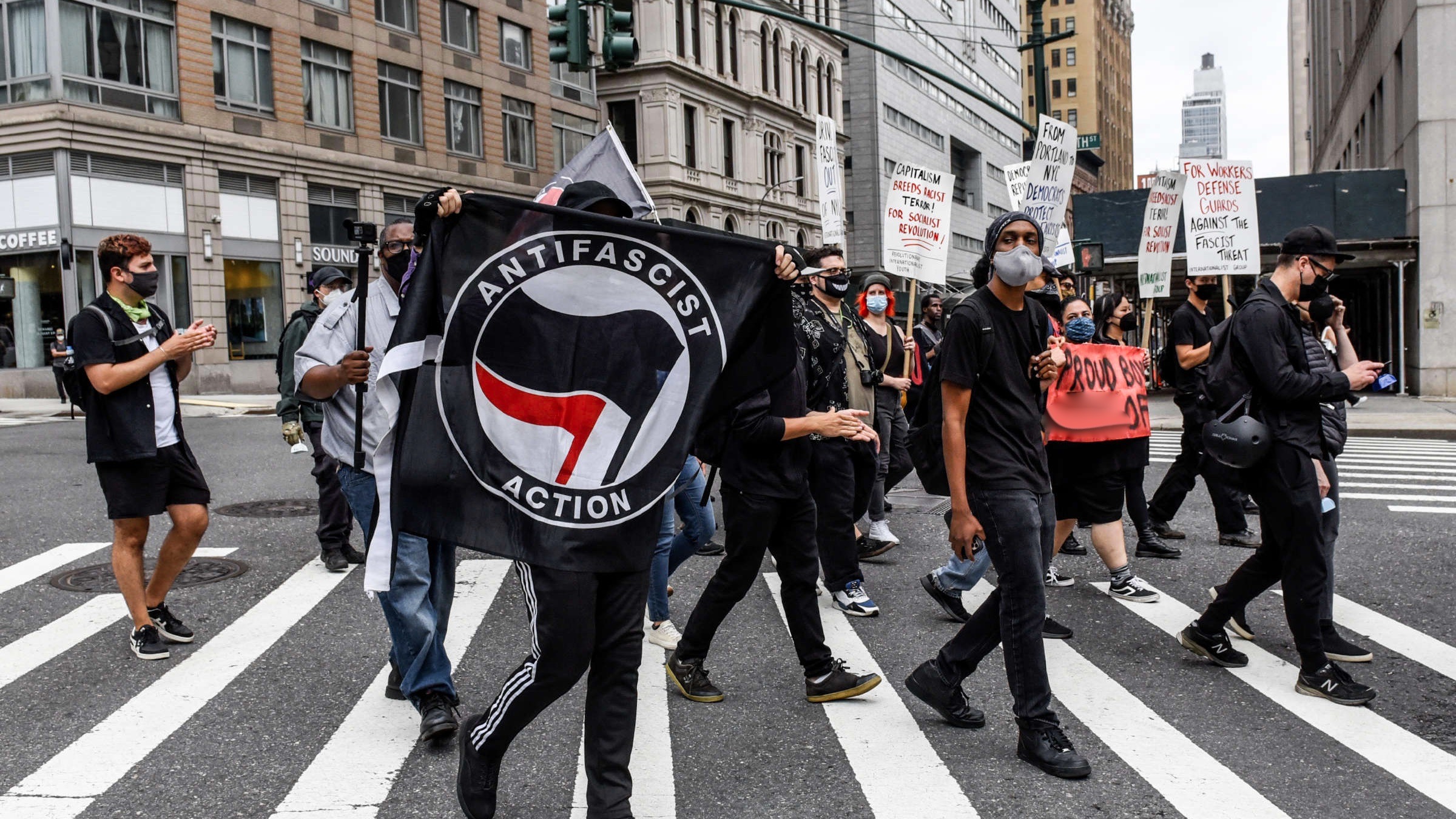
What strange days these are in American political and cultural life. Few American groups vie for the top spot in our crazy, overheated age more than the “anti-fascist” group Antifa.

Though Antifa avoids formal organization and top-down leadership, it nonetheless organizes and articulates passionately held philosophical views. According to one affiliate: “We are in direct conflict with racism, homophobia, sexism, anti-Semitism, Islamophobia, transphobia . . . [We] are anti-authoritarians and anti-nationalist.” According to a group website, one of the goals of Antifa’s violence is to shut down its opponents’ “attempts to speak in public, hold political demonstrations, or recruit openly.”

For those keeping score at home: to stop violence, it’s okay to commit violence. To prevent discrimination, it’s right to discriminate with force. To oppose authoritarianism, it’s necessary to enact a version of it. This logic is no logic at all.

It’s a schoolboy revolution, a lunchroom fight in a ski-mask that’s oh-so chic. Do Christians, who reputedly follow an outdated authority, have any chance to be heard?

How Did We Get Here?

The rise of Antifa reminds us about the crisis in modern American public life: we have no shared authority. The seeds of the Enlightenment, long spreading its tendrils throughout our society and culture, have born bitter fruit before. The anti-authority, pro-“reason” program of European thinkers of the 1700s, such as Voltaire and Rousseau, sparked the bloody French Revolution (1789) and Reign of Terror (1793–1794), leading to the death of thousands of religious leaders and innocent citizens.

The Enlightenment achieved some real gains for humanity. Its general doctrine, however, struck hard against traditional norms and a shared vision of authority, leading to power vacuums throughout Europe that totalitarian regimes eventually filled. In a bid to bring order from the chaos, Napoleon crowned himself Emperor of a secular France and plunged the continent into endless war. A century later, Germany, once the seedbed of the Protestant Reformation, became home to history’s deadliest fascist government. Italy, the heart of global Catholicism, transformed into a totalitarian police state. Anti-religious Communism seized Russia in the early twentieth century and heedlessly killed tens of millions of ordinary people to enact its programs of social justice, while similar waves of slaughter broke out in Communist China under Chairman Mao.

Many factors contributed to these awful outcomes, to be sure. But we cannot miss that secularism spread over the world at the same time totalitarian governments came to power. The twentieth century was supposed to be the age of peace, when the “superstitions” of religious belief were finally eclipsed by reason, and humanity finally agreed to a common vision of human goodness, authoritative reason, and ennobling scientific progress. Not so: the twentieth century proved to be the bloodiest in human history.

Replacing God with man did not lead to a harvest of universal happiness. As Whittaker Chambers, a former Communist, wrote in his autobiography Witness, “The crisis of the Western world exists to the degree in which it is indifferent to God.” Today, in the age of familial breakdown and political unrest, many people have little sense of what to make of authority. For the younger generation, “resistance” and “protest” are code words for coolness and authenticity. Yet most Millennials have no defined sense of what they are rebelling against; instead, they merely follow the cultural script, affecting a posture of airbrushed skepticism, artsy apartness. Cultural influences like ESPN, young women’s magazines, “elite” universities and colleges, and social-media campaigns all play a role in tricking conformist mobs into thinking they belong to a free-thinking movement.

A Biblical Response

In a culture like this, what are Christians to do, exactly? I suggest two main responses.

First, we should show that authority is good, and everyone trusts someone. Being “anti-authority” is really just mouthing an empty slogan, philosophical marketing. In truth, everyone trusts someone—or something. We all have a natural need to know what “true truth” is, as Francis Schaeffer termed it, and thus to know how to live. We are beings made by God, so we all have an innate thirst for ultimate reality, for relationship, for leadership (see Genesis 1:26–27, 2:7–24).

Because of the Fall, we do not follow God, the true authority (see Genesis 3:1–19; Romans 3:10–18). But we did not lose our yearning for trustworthy authority that will show us the right way to live. Perhaps we look to ourselves as the voice of reason. Perhaps we follow a celebrity, a big-hearted activist, or a philosopher. Or is it a sports team, a master chef, a radio personality, a religious figure, a sibling, a politician, a comic-book designer, a movie director, a scientist? Options abound and loyalties vary. But everyone follows someone. Even the nihilists look to Nietzsche to firm up their views and justify their decisions. The question before us is not whether we trust authority, but rather who or what we follow. To pretend otherwise leads to chaos in the name of freedom.

Second, we should preach and share that the Bible is our authority. Christians are fundamentally a submissive people (James 4:7). We place ourselves under the rule of God, and thus the rule of his holy Word. We receive, and in no way edit, the Bible. The Bible is not an open-source document. Composed by human authors through the Spirit’s agency, the Word is the very speech and breath of God (2 Timothy 3:16). This is the perspective—the true perspective—we offer to the outside world without apology.

Christians know that the order of biblical teaching matters greatly. We do not pick and choose which doctrines and Bible chapters we like best, and which ones we wish to revise. The Bible begins by presenting reality, and it ends by presenting reality. The doctrines of Scripture hang together or fall together. The cosmos did not emerge from a gaseous exchange; the Lord spoke it directly into existence (Genesis 1). We human beings are not cosmic accidents; we are the very image of God, made by his own hand (Genesis 1:26–27, 2:4–24). Gender is not a social invention; it owes to the Lord’s design (Matthew 19:3–6). Mankind is not basically good; our nature is corrupt as the result of an actual historical Fall in the Garden of Eden (Genesis 3:1–19; Romans 3:10–18). We cannot make ourselves right with God; we need an alien righteousness, the spotless righteousness of Christ (Romans 4–5).

But our modern culture, which has tried to dethrone God, rejects all this. Refusing to believe the biblical witness, it now pursues a “secular” public order. In doing so, it endorses and spreads evolutionary beliefs, champions transgender and homosexual identity, and declares the “right” to abortion. The lesson is clear: devaluing God’s Word and removing it from its rightful place as our absolute authority leads to the awful downward trajectory of horrific evil and untold human suffering.

We could summarize our culture’s deepest need in this way: If the Bible—and the creation account that all Scripture builds on—is a mere myth, so is human dignity.

No Time to Fear

What a strange time this is. “Fairness” begets unfairness; “progress” often means regression; “anti-authoritarian” signals weaponized (and coordinated) rebellion. Ironies abound in such an age. What is stranger than being “anti-violence” while beating people up, as Antifa does?

As Christians, we know of a greater irony. Twenty centuries ago, a group of political and religious leaders moved against Jesus, and “protected” the people by crucifying Christ. Yet his death, an event that seemed to signal hopelessness, ensured the salvation of countless sinners like us. His death became our life; his defeat became our hope; his humiliation became our cry of freedom.

In our fractured age, let’s remember the power of the Cross. This central truth of history, understood in light of the whole teaching of God’s Word, is exactly what sinners like us—hostile and angry—need. We’re made for more than turmoil and street protests. We’re made for God. We’re shaped and fashioned for eternity.


Your support helps Harbinger's Daily propel the boldest and most sound Christian voices of our day—those unwavering in their defense of the truth and passionate about reaching the unsaved world—while engaging millions to stand courageously with a worldview grounded in God's Word. 

Will you defend the truth and equip others to do the same?

Antisemitism Has Become A Feature, Not An Anomaly, Of British Society

Muslim migration to the United Kingdom (UK) has made Islam the second largest religion there. Muslims outnumber Jews 13 to 1 and now threaten the fifth largest Jewish community in the world by holding attitudes like Jihad al-Shamie, who boasted, “I have killed two Jews in the name of the Islamic State,” after he attacked a UK synagogue on October 2, 2025.

When A Nation Forgets That Liberty Is Meant For Service To God, It Loses The Purpose Of Freedom

Exodus confronts every generation with the same call. God delivers people not to independence from Him, but obedience to Him. When a nation forgets that freedom is meant for service to God, it loses the purpose of freedom — and soon, the freedom itself. The words still echo: “Let My people go, that they may serve Me.” The future of our liberty depends on whether we remember the second half of that sentence.

sign up

Markell: Why I Am Paying Close Attention To President Trump’s ‘Board Of Peace’

President Trump will serve as chairman and wield considerable overall control. It will help resolve conflicts globally. He has the sole authority to invite new members and appoint a successor.  Global peace seems to be their goal, though they will participate in other global duties as well. The immediate focus of the Board of Peace will be Gaza, though there was no word about Gaza in the charter.  A lot of Godless people seem to be in charge, such as Steve Witkoff, Jared Kushner, Tony Blair, and almost 60 more movers and shakers. Most have a worldly view of the world and of “peace.”

ABC's of Salvation

Decision

UTT

FOI

untitled artwork

Israel My Glory

What strange days these are in American political and cultural life. Few American groups vie for the top spot in our crazy, overheated age more than the “anti-fascist” group Antifa.

Though Antifa avoids formal organization and top-down leadership, it nonetheless organizes and articulates passionately held philosophical views. According to one affiliate: “We are in direct conflict with racism, homophobia, sexism, anti-Semitism, Islamophobia, transphobia . . . [We] are anti-authoritarians and anti-nationalist.” According to a group website, one of the goals of Antifa’s violence is to shut down its opponents’ “attempts to speak in public, hold political demonstrations, or recruit openly.”

For those keeping score at home: to stop violence, it’s okay to commit violence. To prevent discrimination, it’s right to discriminate with force. To oppose authoritarianism, it’s necessary to enact a version of it. This logic is no logic at all.

It’s a schoolboy revolution, a lunchroom fight in a ski-mask that’s oh-so chic. Do Christians, who reputedly follow an outdated authority, have any chance to be heard?

How Did We Get Here?

The rise of Antifa reminds us about the crisis in modern American public life: we have no shared authority. The seeds of the Enlightenment, long spreading its tendrils throughout our society and culture, have born bitter fruit before. The anti-authority, pro-“reason” program of European thinkers of the 1700s, such as Voltaire and Rousseau, sparked the bloody French Revolution (1789) and Reign of Terror (1793–1794), leading to the death of thousands of religious leaders and innocent citizens.

The Enlightenment achieved some real gains for humanity. Its general doctrine, however, struck hard against traditional norms and a shared vision of authority, leading to power vacuums throughout Europe that totalitarian regimes eventually filled. In a bid to bring order from the chaos, Napoleon crowned himself Emperor of a secular France and plunged the continent into endless war. A century later, Germany, once the seedbed of the Protestant Reformation, became home to history’s deadliest fascist government. Italy, the heart of global Catholicism, transformed into a totalitarian police state. Anti-religious Communism seized Russia in the early twentieth century and heedlessly killed tens of millions of ordinary people to enact its programs of social justice, while similar waves of slaughter broke out in Communist China under Chairman Mao.

Many factors contributed to these awful outcomes, to be sure. But we cannot miss that secularism spread over the world at the same time totalitarian governments came to power. The twentieth century was supposed to be the age of peace, when the “superstitions” of religious belief were finally eclipsed by reason, and humanity finally agreed to a common vision of human goodness, authoritative reason, and ennobling scientific progress. Not so: the twentieth century proved to be the bloodiest in human history.

Replacing God with man did not lead to a harvest of universal happiness. As Whittaker Chambers, a former Communist, wrote in his autobiography Witness, “The crisis of the Western world exists to the degree in which it is indifferent to God.” Today, in the age of familial breakdown and political unrest, many people have little sense of what to make of authority. For the younger generation, “resistance” and “protest” are code words for coolness and authenticity. Yet most Millennials have no defined sense of what they are rebelling against; instead, they merely follow the cultural script, affecting a posture of airbrushed skepticism, artsy apartness. Cultural influences like ESPN, young women’s magazines, “elite” universities and colleges, and social-media campaigns all play a role in tricking conformist mobs into thinking they belong to a free-thinking movement.

A Biblical Response

In a culture like this, what are Christians to do, exactly? I suggest two main responses.

First, we should show that authority is good, and everyone trusts someone. Being “anti-authority” is really just mouthing an empty slogan, philosophical marketing. In truth, everyone trusts someone—or something. We all have a natural need to know what “true truth” is, as Francis Schaeffer termed it, and thus to know how to live. We are beings made by God, so we all have an innate thirst for ultimate reality, for relationship, for leadership (see Genesis 1:26–27, 2:7–24).

Because of the Fall, we do not follow God, the true authority (see Genesis 3:1–19; Romans 3:10–18). But we did not lose our yearning for trustworthy authority that will show us the right way to live. Perhaps we look to ourselves as the voice of reason. Perhaps we follow a celebrity, a big-hearted activist, or a philosopher. Or is it a sports team, a master chef, a radio personality, a religious figure, a sibling, a politician, a comic-book designer, a movie director, a scientist? Options abound and loyalties vary. But everyone follows someone. Even the nihilists look to Nietzsche to firm up their views and justify their decisions. The question before us is not whether we trust authority, but rather who or what we follow. To pretend otherwise leads to chaos in the name of freedom.

Second, we should preach and share that the Bible is our authority. Christians are fundamentally a submissive people (James 4:7). We place ourselves under the rule of God, and thus the rule of his holy Word. We receive, and in no way edit, the Bible. The Bible is not an open-source document. Composed by human authors through the Spirit’s agency, the Word is the very speech and breath of God (2 Timothy 3:16). This is the perspective—the true perspective—we offer to the outside world without apology.

Christians know that the order of biblical teaching matters greatly. We do not pick and choose which doctrines and Bible chapters we like best, and which ones we wish to revise. The Bible begins by presenting reality, and it ends by presenting reality. The doctrines of Scripture hang together or fall together. The cosmos did not emerge from a gaseous exchange; the Lord spoke it directly into existence (Genesis 1). We human beings are not cosmic accidents; we are the very image of God, made by his own hand (Genesis 1:26–27, 2:4–24). Gender is not a social invention; it owes to the Lord’s design (Matthew 19:3–6). Mankind is not basically good; our nature is corrupt as the result of an actual historical Fall in the Garden of Eden (Genesis 3:1–19; Romans 3:10–18). We cannot make ourselves right with God; we need an alien righteousness, the spotless righteousness of Christ (Romans 4–5).

But our modern culture, which has tried to dethrone God, rejects all this. Refusing to believe the biblical witness, it now pursues a “secular” public order. In doing so, it endorses and spreads evolutionary beliefs, champions transgender and homosexual identity, and declares the “right” to abortion. The lesson is clear: devaluing God’s Word and removing it from its rightful place as our absolute authority leads to the awful downward trajectory of horrific evil and untold human suffering.

We could summarize our culture’s deepest need in this way: If the Bible—and the creation account that all Scripture builds on—is a mere myth, so is human dignity.

No Time to Fear

What a strange time this is. “Fairness” begets unfairness; “progress” often means regression; “anti-authoritarian” signals weaponized (and coordinated) rebellion. Ironies abound in such an age. What is stranger than being “anti-violence” while beating people up, as Antifa does?

As Christians, we know of a greater irony. Twenty centuries ago, a group of political and religious leaders moved against Jesus, and “protected” the people by crucifying Christ. Yet his death, an event that seemed to signal hopelessness, ensured the salvation of countless sinners like us. His death became our life; his defeat became our hope; his humiliation became our cry of freedom.

In our fractured age, let’s remember the power of the Cross. This central truth of history, understood in light of the whole teaching of God’s Word, is exactly what sinners like us—hostile and angry—need. We’re made for more than turmoil and street protests. We’re made for God. We’re shaped and fashioned for eternity.


Trusted Analysis From A Biblical Worldview

Help reach the lost and equip the church with the living and active truth of God's Word in our world today.

YOU CARE ABOUT

BIBLICAL TRUTH. SO DO WE.


Together, We Can Deliver A Biblical Understanding

Of News Events Around The World.

Antisemitism Has Become A Feature, Not An Anomaly, Of British Society

Muslim migration to the United Kingdom (UK) has made Islam the second largest religion there. Muslims outnumber Jews 13 to 1 and now threaten the fifth largest Jewish community in the world by holding attitudes like Jihad al-Shamie, who boasted, “I have killed two Jews in the name of the Islamic State,” after he attacked a UK synagogue on October 2, 2025.

When A Nation Forgets That Liberty Is Meant For Service To God, It Loses The Purpose Of Freedom

Exodus confronts every generation with the same call. God delivers people not to independence from Him, but obedience to Him. When a nation forgets that freedom is meant for service to God, it loses the purpose of freedom — and soon, the freedom itself. The words still echo: “Let My people go, that they may serve Me.” The future of our liberty depends on whether we remember the second half of that sentence.

untitled artwork 6391

Markell: Why I Am Paying Close Attention To President Trump’s ‘Board Of Peace’

President Trump will serve as chairman and wield considerable overall control. It will help resolve conflicts globally. He has the sole authority to invite new members and appoint a successor.  Global peace seems to be their goal, though they will participate in other global duties as well. The immediate focus of the Board of Peace will be Gaza, though there was no word about Gaza in the charter.  A lot of Godless people seem to be in charge, such as Steve Witkoff, Jared Kushner, Tony Blair, and almost 60 more movers and shakers. Most have a worldly view of the world and of “peace.”

ABC's of Salvation

TV AD

worldview matters

Decision Magazine V AD

Decision

Jan Markell

Israel My Glory

Erick Stakelbeck

untitled artwork

YOU CARE ABOUT

BIBLICAL TRUTH.

SO DO WE.

Together, We Can Deliver A Biblical Understanding Of News Events Around The World And Equip The Church To Stand With A Biblical Worldview.

untitled artwork

Israel My Glory

YOU CARE ABOUT

BIBLICAL TRUTH.

SO DO WE.


Together, We Can Deliver A Biblical Understanding Of News Events Around The World And Equip The Church To Stand With A Biblical Worldview.