January 13, 2026

January, 13, 2026
January 13, 2026

give

untitled artwork

untitled artwork

World news biblically understood

TRENDING:

Targeting Biblical Beliefs: SPLC Continues To Dodge Consequences For Its ‘Hate Map’ Designations

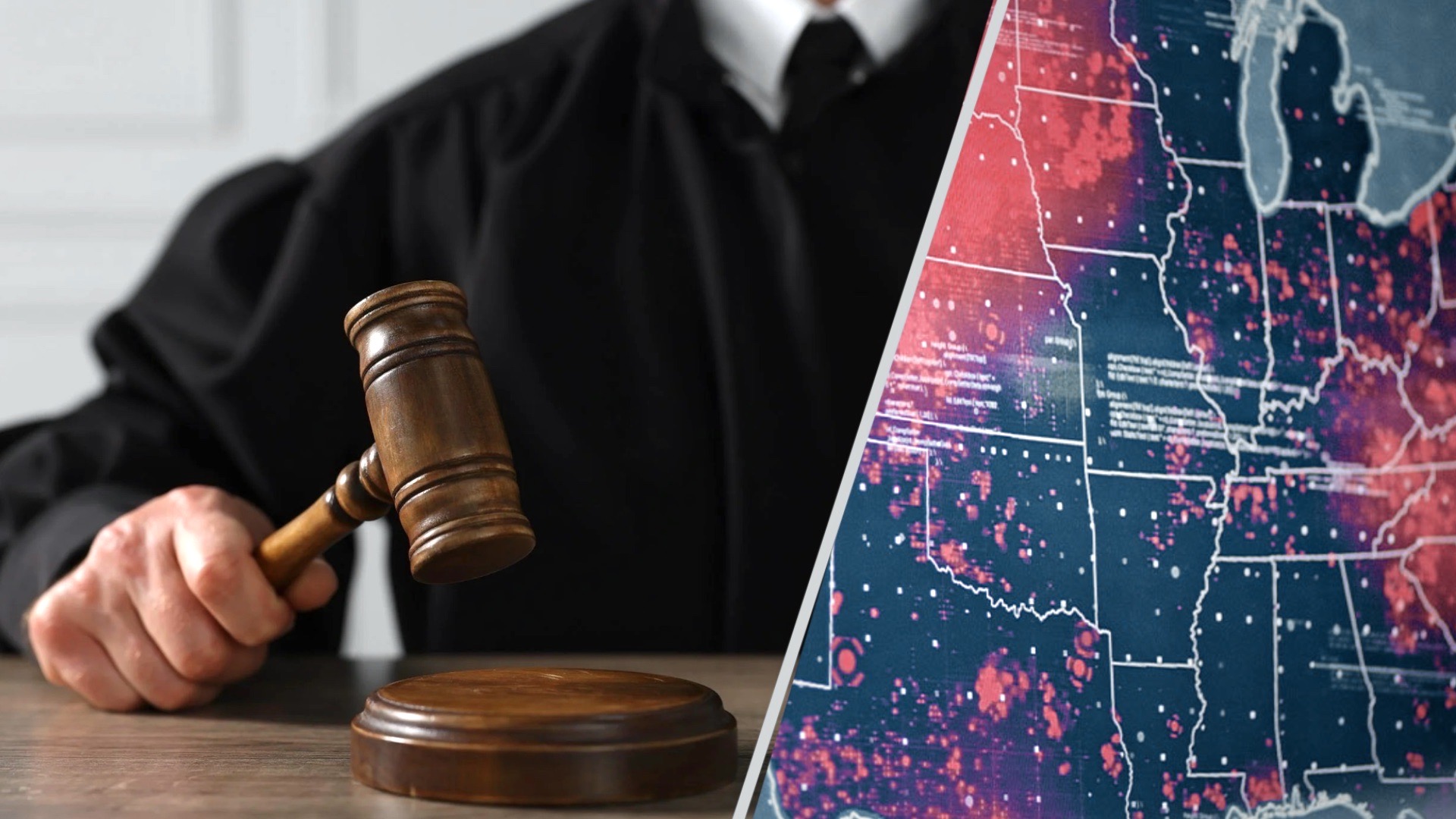
The Southern Poverty Law Center (SPLC) has dodged another legal bullet, with a federal judge dismissing a high-profile defamation challenge to its controversial “Hate Map.”

The SPLC, recognized by many as an anti-Christian and anti-conservative organization, has faced legal scrutiny for its notorious hate map — an annually updated list (published since 2000) that tracks groups that it deems as “hate” or “anti-government” organizations. In 2022, the Dustin Inman Society (DIS), initially led by D.A. King who has since passed away, filed a lawsuit against the SPLC for being targeted by the hate map.

DIS, an immigration enforcement advocacy group, was marked by the SPLC as an “anti-immigrant” and a “hate” group. King himself, defending the DIS against defamation, had previously argued that his organization was by no means “anti-immigration” as the SPLC had accused it of. Rather, DIS is against illegal immigration, with King further noting how legal immigrants made up part of the team. Even so, as The Washington Times reported, the SPLC “cited King’s comments about immigrants’ general racial makeup and struggles assimilating, some of his organization’s financing and his support for legislation to make life tougher for immigrants who are in the U.S. illegally.”

In early January 2026, a federal judge chose to dismiss the prominent legal challenge, ultimately reversing an earlier judge’s allowance for the case to advance. U.S. District Judge Corey Maze ruled that the SPLC’s labels qualify as protected opinion and rhetorical hyperbole under the First Amendment. Additionally, as Maze wrote, “Plaintiffs cannot prove actual malice when SPLC labels [the Dustin Inman Society] an ‘anti-immigrant’ hate group,” thus allowing the SPLC (for now) to continue publishing its designations without accountability.

Tyler O’Neil, author of “Making Hate Pay: The Corruption of the Southern Poverty Law Center,” responded to the SPLC’s arguments. “The whole case hinged on the SPLC’s claim that the Dustin Inman Society essentially exists to vilify all immigrants,” he said. “That statement there, that they never removed from the extremist profile, really runs in the teeth of the facts of the Dustin Inman Society.”

O’Neil also emphasized the critical distinction between verifiable fact and protected opinion. As he put it, the “SPLC’s anti-immigrant hate group designation is not capable of being proved false, but is an opinion expressed as part of a political debate” — a characterization that aligns with the SPLC’s own legal arguments in the case and reflects a broader pattern in its history of labeling conservative groups as “hate groups.”

The SPLC’s hate map has accumulated a wide range of entities over the years, from undisputed extremist groups like the Ku Klux Klan and neo-Nazis to mainstream conservative and Christian organizations such as Moms for Liberty. Family Research Council (FRC) was first added to the SPLC’s hate map in 2010, primarily due to its opposition to LGBT ideology and its support for a biblical framework on marriage, family, and related laws. But this labeling had real-world consequences. In 2012, Floyd Lee Corkins carried out an armed attack at the FRC headquarters in Washington, D.C., wounding building manager Leo Johnson.

While Corkins was ultimately stopped by Johnson, found guilty on terrorism-related charges, and given a 25-year sentence, he had confessed to FBI investigators that he selected FRC (and other groups) as a target after viewing it on the SPLC’s hate map, intending to kill as many people as he could while shoving Chick-fil-A sandwiches in their mouths.

This incident is one of many that highlights the influence the SPLC’s designations can have, often endangering those listed. And while the KKK and neo-Nazis serve as examples of what is appropriately considered “hateful,” it didn’t take long for the list to include nearly anyone who supports the biblical framework for marriage, family, and law — anyone the SPLC disagrees with, even though it continues to claim its labels are based on documented patterns of alleged defamatory or harmful rhetoric.

Concerning the recent ruling, critics are sounding the alarm, as the outcome means the SPLC has managed to avoid facing direct legal consequences for its hate map designations, even as criticism continues over the map’s weaponization of labels to target opponents, silence dissent, and create a climate of hostility. The SPLC has defended itself by claiming its work is necessary to expose extremism and protect civil rights. And yet, with over 1,300 groups listed on recent reports, the groups it continues to single out are almost exclusively Christian and/or conservative. Any skepticism toward Islamist ideology, promotion of life and family, and LGBT-related opposition (to name a few) warrants a hate designation — according to the SPLC.

In light of this, several months into President Donald Trump’s second term in October 2025, the FBI cut ties with the SPLC under Director Kash Patel’s orders. At the time, he had bluntly called out the SPLC, expressing concerns over its influence within America and likelihood of inspiring violence. “The [SPLC] long ago abandoned civil rights work and turned into a partisan smear machine,” Patel said. “Their so-called ‘hate map’ has been used to defame mainstream Americans and even inspired violence. That disgraceful record makes them unfit for any FBI partnership.”

And so, Judge Maze’s ruling shields the SPLC’s opinions, but the real-world risks remain stark. As institutional partners pull away and scrutiny grows, critics continue to emphasize how the hate map endures as a cautionary symbol: unchecked power to define “hate” can (and often does) chill free speech, endanger lives, and only deepen America’s divisions.


give

untitled artwork

Support For Israel Grows Among The People In Iran As Protesters Cry for Freedom

Interestingly, the Jerusalem Post reports that Israeli Prime Minister Benjamin Netanyahu is "currently the most popular person in Iran." One Tehran resident said that "people have fallen in love with him." Iranians were "impressed" by Israeli strikes on Iran in June as part of "Operation Rising Lion," as the air force focused only on regime infrastructure and did not harm civilians.

Wednesday, January 14th: A Call To Prayer And Repentance For America

If you think our nation is in trouble now, just wait… As our streets boil over with hate, anger, crime, drugs, and just sheer hopelessness, is there something we can do? You bet there is. I would like to call for a time of prayer and repentance this Wednesday, January 14, at 12:00 noon. As a nation our sins are so great. We have increasingly turned our backs on God and His commands, embracing godless secularism. We need to ask His forgiveness and seek His face.

sign up

Wednesday, January 14th: A Call To Prayer And Repentance For America

If you think our nation is in trouble now, just wait… As our streets boil over with hate, anger, crime, drugs, and just sheer hopelessness, is there something we can do? You bet there is. I would like to call for a time of prayer and repentance this Wednesday, January 14, at 12:00 noon. As a nation our sins are so great. We have increasingly turned our backs on God and His commands, embracing godless secularism. We need to ask His forgiveness and seek His face.

ABC's of Salvation

Decision

UTT

untitled artwork

Israel My Glory

The Southern Poverty Law Center (SPLC) has dodged another legal bullet, with a federal judge dismissing a high-profile defamation challenge to its controversial “Hate Map.”

The SPLC, recognized by many as an anti-Christian and anti-conservative organization, has faced legal scrutiny for its notorious hate map — an annually updated list (published since 2000) that tracks groups that it deems as “hate” or “anti-government” organizations. In 2022, the Dustin Inman Society (DIS), initially led by D.A. King who has since passed away, filed a lawsuit against the SPLC for being targeted by the hate map.

DIS, an immigration enforcement advocacy group, was marked by the SPLC as an “anti-immigrant” and a “hate” group. King himself, defending the DIS against defamation, had previously argued that his organization was by no means “anti-immigration” as the SPLC had accused it of. Rather, DIS is against illegal immigration, with King further noting how legal immigrants made up part of the team. Even so, as The Washington Times reported, the SPLC “cited King’s comments about immigrants’ general racial makeup and struggles assimilating, some of his organization’s financing and his support for legislation to make life tougher for immigrants who are in the U.S. illegally.”

In early January 2026, a federal judge chose to dismiss the prominent legal challenge, ultimately reversing an earlier judge’s allowance for the case to advance. U.S. District Judge Corey Maze ruled that the SPLC’s labels qualify as protected opinion and rhetorical hyperbole under the First Amendment. Additionally, as Maze wrote, “Plaintiffs cannot prove actual malice when SPLC labels [the Dustin Inman Society] an ‘anti-immigrant’ hate group,” thus allowing the SPLC (for now) to continue publishing its designations without accountability.

Tyler O’Neil, author of “Making Hate Pay: The Corruption of the Southern Poverty Law Center,” responded to the SPLC’s arguments. “The whole case hinged on the SPLC’s claim that the Dustin Inman Society essentially exists to vilify all immigrants,” he said. “That statement there, that they never removed from the extremist profile, really runs in the teeth of the facts of the Dustin Inman Society.”

O’Neil also emphasized the critical distinction between verifiable fact and protected opinion. As he put it, the “SPLC’s anti-immigrant hate group designation is not capable of being proved false, but is an opinion expressed as part of a political debate” — a characterization that aligns with the SPLC’s own legal arguments in the case and reflects a broader pattern in its history of labeling conservative groups as “hate groups.”

The SPLC’s hate map has accumulated a wide range of entities over the years, from undisputed extremist groups like the Ku Klux Klan and neo-Nazis to mainstream conservative and Christian organizations such as Moms for Liberty. Family Research Council (FRC) was first added to the SPLC’s hate map in 2010, primarily due to its opposition to LGBT ideology and its support for a biblical framework on marriage, family, and related laws. But this labeling had real-world consequences. In 2012, Floyd Lee Corkins carried out an armed attack at the FRC headquarters in Washington, D.C., wounding building manager Leo Johnson.

While Corkins was ultimately stopped by Johnson, found guilty on terrorism-related charges, and given a 25-year sentence, he had confessed to FBI investigators that he selected FRC (and other groups) as a target after viewing it on the SPLC’s hate map, intending to kill as many people as he could while shoving Chick-fil-A sandwiches in their mouths.

This incident is one of many that highlights the influence the SPLC’s designations can have, often endangering those listed. And while the KKK and neo-Nazis serve as examples of what is appropriately considered “hateful,” it didn’t take long for the list to include nearly anyone who supports the biblical framework for marriage, family, and law — anyone the SPLC disagrees with, even though it continues to claim its labels are based on documented patterns of alleged defamatory or harmful rhetoric.

Concerning the recent ruling, critics are sounding the alarm, as the outcome means the SPLC has managed to avoid facing direct legal consequences for its hate map designations, even as criticism continues over the map’s weaponization of labels to target opponents, silence dissent, and create a climate of hostility. The SPLC has defended itself by claiming its work is necessary to expose extremism and protect civil rights. And yet, with over 1,300 groups listed on recent reports, the groups it continues to single out are almost exclusively Christian and/or conservative. Any skepticism toward Islamist ideology, promotion of life and family, and LGBT-related opposition (to name a few) warrants a hate designation — according to the SPLC.

In light of this, several months into President Donald Trump’s second term in October 2025, the FBI cut ties with the SPLC under Director Kash Patel’s orders. At the time, he had bluntly called out the SPLC, expressing concerns over its influence within America and likelihood of inspiring violence. “The [SPLC] long ago abandoned civil rights work and turned into a partisan smear machine,” Patel said. “Their so-called ‘hate map’ has been used to defame mainstream Americans and even inspired violence. That disgraceful record makes them unfit for any FBI partnership.”

And so, Judge Maze’s ruling shields the SPLC’s opinions, but the real-world risks remain stark. As institutional partners pull away and scrutiny grows, critics continue to emphasize how the hate map endures as a cautionary symbol: unchecked power to define “hate” can (and often does) chill free speech, endanger lives, and only deepen America’s divisions.


Trusted Analysis From A Biblical Worldview

Help reach the lost and equip the church with the living and active truth of God's Word in our world today.

YOU CARE ABOUT

BIBLICAL TRUTH. SO DO WE.


Together, We Can Deliver A Biblical Understanding

Of News Events Around The World.

Support For Israel Grows Among The People In Iran As Protesters Cry for Freedom

Interestingly, the Jerusalem Post reports that Israeli Prime Minister Benjamin Netanyahu is "currently the most popular person in Iran." One Tehran resident said that "people have fallen in love with him." Iranians were "impressed" by Israeli strikes on Iran in June as part of "Operation Rising Lion," as the air force focused only on regime infrastructure and did not harm civilians.

Wednesday, January 14th: A Call To Prayer And Repentance For America

If you think our nation is in trouble now, just wait… As our streets boil over with hate, anger, crime, drugs, and just sheer hopelessness, is there something we can do? You bet there is. I would like to call for a time of prayer and repentance this Wednesday, January 14, at 12:00 noon. As a nation our sins are so great. We have increasingly turned our backs on God and His commands, embracing godless secularism. We need to ask His forgiveness and seek His face.

untitled artwork 6391

Wednesday, January 14th: A Call To Prayer And Repentance For America

If you think our nation is in trouble now, just wait… As our streets boil over with hate, anger, crime, drugs, and just sheer hopelessness, is there something we can do? You bet there is. I would like to call for a time of prayer and repentance this Wednesday, January 14, at 12:00 noon. As a nation our sins are so great. We have increasingly turned our backs on God and His commands, embracing godless secularism. We need to ask His forgiveness and seek His face.

ABC's of Salvation

TV AD

worldview matters

Decision Magazine V AD

Decision

Jan Markell

Israel My Glory

Erick Stakelbeck

untitled artwork

YOU CARE ABOUT

BIBLICAL TRUTH.

SO DO WE.

Together, We Can Deliver A Biblical Understanding Of News Events Around The World And Equip The Church To Stand With A Biblical Worldview.

Israel My Glory

untitled artwork

YOU CARE ABOUT

BIBLICAL TRUTH.

SO DO WE.


Together, We Can Deliver A Biblical Understanding Of News Events Around The World And Equip The Church To Stand With A Biblical Worldview.