January 8, 2026

January, 8, 2026
January 8, 2026

give

untitled artwork

untitled artwork

World news biblically understood

TRENDING:

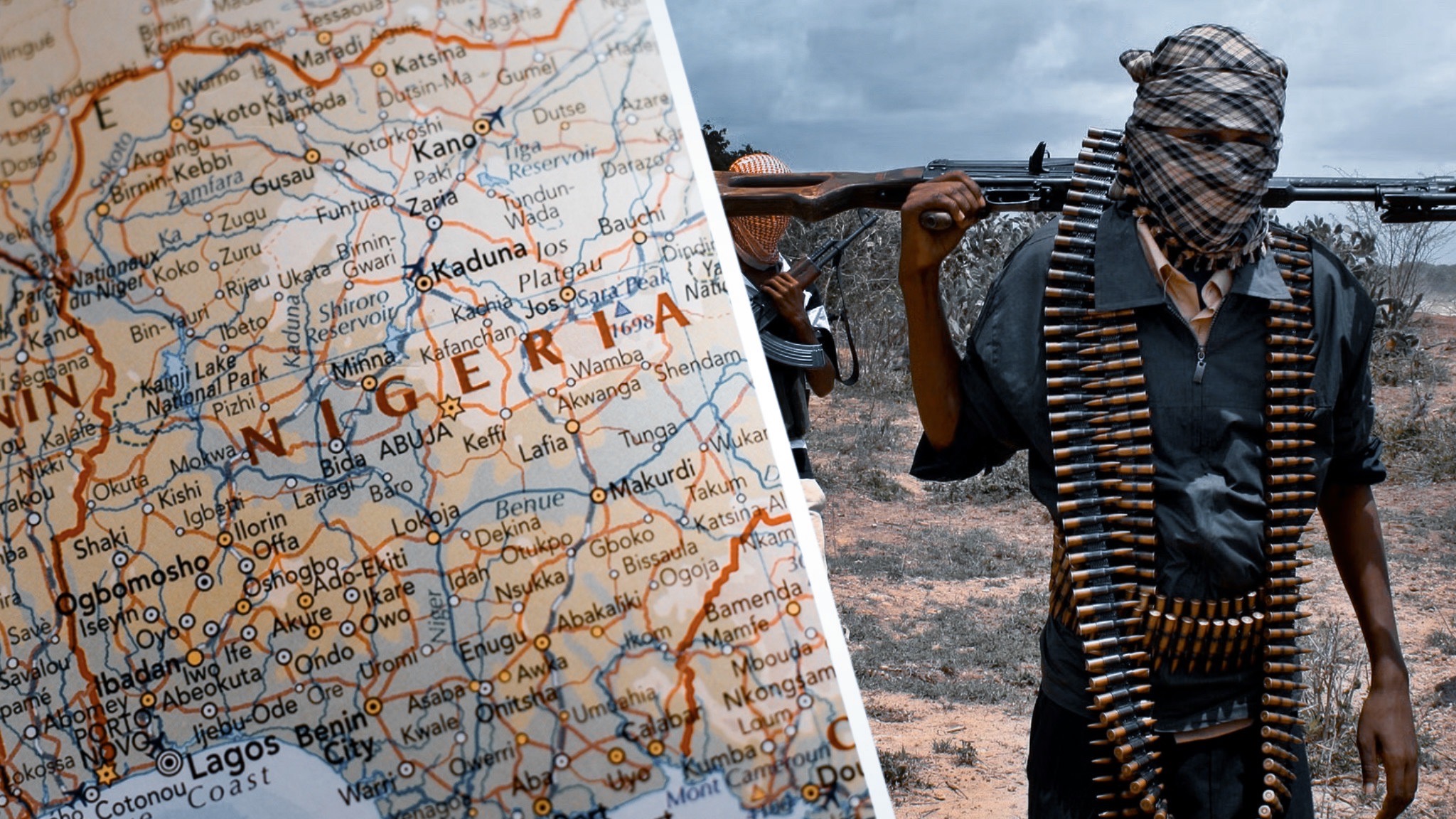
Will The World Finally Face The Truth About What’s Happening To Believers In Nigeria?

As 2025 drew to a close, global attention focused on the brutal attacks against Christian villages and churches in Nigeria, with the president of Africa’s most populous country acknowledging that his administration must do more to protect these communities.

The shift started Oct. 31, when U.S. President Donald Trump announced that his administration would reclassify Nigeria as a “Country of Particular Concern” (CPC) under the International Religious Freedom Act (IRFA) of 1998. This law requires the State Department to identify nations that engage in or tolerate “systematic, ongoing, egregious” violations of religious freedom. Nations on the CPC list can face sanctions or other diplomatic actions by the United States.

“Christianity is facing an existential threat in Nigeria,” Trump wrote. “Thousands of Christians are being killed. Radical Islamists are responsible for this mass slaughter.” Later comments mentioned possible U.S. responses to the violence, including economic sanctions and potential military strikes against militant groups.

The CPC announcement aligned with pleas from lawmakers and Christian leaders who have been calling out Nigeria’s human-rights record for years. Franklin Graham publicly thanked President Trump for the CPC designation. “It is incomprehensible that some 50,000 Christians have been killed in Nigeria in the last 15 years,” he wrote on social media, “murdered, butchered by Islamic extremists.”

Joel Veldkamp, head of international communications for Christian Solidarity International, said politics often taints the CPC list. Nigeria was on the list during Trump’s first term, but the Biden administration removed it. “It’s one of the most egregious omissions,” Veldkamp told CBN News. “More Christians are killed in Nigeria for their faith every year than in the rest of the world combined.”

With world attention on the crisis, Nigerian President Bola Tinubu declared a “nationwide security emergency” on Nov. 26. The announcement followed a series of high-profile abductions by Islamist gunmen, including the kidnapping of 315 students and staff from a Catholic boarding school in Niger state. According to Open Doors International, Nigeria leads the world in Christians abducted for their faith, in addition to having the most Christians killed for their faith.

“This is a national emergency,” Tinubu said. “We are responding by deploying more boots on the ground, especially in security-challenged areas.”

Christians in Nigeria cheered Trump’s CPC designation, and many were cautiously optimistic about Tinubu’s announcement that he would address the violence. Pastor Isaac Komolafe, of Glory Bible Church in the capital city of Abuja, told Decision that Nigerian leaders have long overlooked the security of Christians, so the pressure applied against the Nigerian government through Trump’s announcement was “a voice for the voiceless.”

He said Tinubu’s national emergency declaration may enhance security in neglected areas and improve collaboration between security agencies and church leaders, but the increased presence of military forces could also lead to rights violations and disruptions to daily life. “If the promised improvements do not materialize,” he said, “it may deepen distrust among believers.”

With the media’s renewed interest in the violence, some outlets challenged the claim that Christian communities are being targeted. Yes, Christians face danger like anyone else, commentators argued, but the violence is part of a larger picture of government dysfunction and old conflicts over land and resources. When these outlets do mention violence between Muslims and Christians, they tend to present the story as if it’s too complicated to see which side is responsible. “There are lots of victims on both sides,” the BBC stated in June 2025, after Islamist extremists killed 200 in Benue state.

The situation is less abstract for the families touched by violence, because everyone knows who is responsible. Komolafe lost his daughter to Islamist violence about five years ago. “She was about to graduate from a medical school,” he said. “Killed by Boko Haram’s bomb.”

He has since traveled across Northern Nigeria to help churches recover from attacks.

Komolafe acknowledged that Nigeria’s complex history can make it difficult for outsiders to understand the situation on the ground. There are many groups of Muslim militants operating under different names, with sometimes differing reasons for attacking Christian communities. Nevertheless, these groups share an objective. “The motive is nothing less than an Islamic expansion program,” he said. “Any community that has a growing number of Muslims, the next thing that community sees is violence from Muslims to completely take over the community, because Islam is a political religion!”

Veldkamp agrees that the Islamist groups are not exactly secretive about their ambitions. “There’s Boko Haram and the jihadists who say, ‘We target Christians; that’s our goal. Our goal is to destroy Christianity in Nigeria and set up an Islamic state,” he told CBN News. “The other group, the Fulani militias, don’t make a lot of noise on the international scene. They’re simply attacking … and it’s almost exclusively Christian villages that are being attacked.”

Komolafe said the Islamist groups target Christian worship services, clergy residences, schools, homes and church buildings. “The impact of the violence is huge on the church, especially on our churches in the rural areas,” he said. “People live in fear and uncertainty. Members run from one location to the other for safety.

“The number of pastors killed, churches destroyed and Christian families displaced is far higher than what typically reaches global news cycles,” he added. “Rural attacks often go unreported, and fatality counts vary because of limited state presence in remote areas.”

But he is proud of the Nigerian church’s resilience. “Evil will continue,” he said. “We are not afraid of death. Because of our faith in Christ Jesus, we know our destination. But we desire to snatch many more from the hands of the devil before they face their eternity.” 

give

untitled artwork

It Didn’t Take Long For Australia’s Pro-Palestine Mob Re-emerge With Violent Rhetoric

Well, that didn’t take long.  After what seemed like a millisecond of national unity against antisemitism in the wake of the Bondi massacre, people want to take to the streets again in order to “Free Palestine.” Although their usual talking points of genocide and mass starvation still remain at the core of their protests, the pro-Palestine mob seems to have become incensed at the decision by Prime Minister Anthony Albanese to invite Israeli President Isaac Herzog to visit Australia.  

Venezuela Operation: Hitting One Of The Most Strategic Footholds In The Global Communist Advance

Analysts and Trump himself suggested that the operation against Maduro also represented a dramatic reassertion of the Monroe Doctrine, the foreign policy articulated by President James Monroe. It holds that the U.S. government rejects attempts by foreign governments to impose their subversive ideologies, systems, or controls in the Western hemisphere. For nearly two centuries, that doctrine served as a clear warning that the U.S. government did not approve of foreign empires meddling in or dominating the Americas.

sign up

Prime Minister Anthony Albanese Has Been Failing Australia’s Jewish Community For 25 Years

The Australian Jewish News reported that Mr Albanese had also been at a Canberra rally in 2000, referring to him as a “pro-Palestinian Labor MP.” Sadly, as it is now, so it was then. Synagogues were vandalised in both Sydney and Canberra (the locations of the two rallies), and Jewish families were advised to avoid public displays of faith.   Where did Australia go wrong? In part, 25 years ago. Anthony Albanese failed Australia’s Jewish community in 2000, and he failed them again in 2025. By God’s mercy, may this be the last of his failures.

ABC's of Salvation

Decision

UTT

untitled artwork

Israel My Glory

As 2025 drew to a close, global attention focused on the brutal attacks against Christian villages and churches in Nigeria, with the president of Africa’s most populous country acknowledging that his administration must do more to protect these communities.

The shift started Oct. 31, when U.S. President Donald Trump announced that his administration would reclassify Nigeria as a “Country of Particular Concern” (CPC) under the International Religious Freedom Act (IRFA) of 1998. This law requires the State Department to identify nations that engage in or tolerate “systematic, ongoing, egregious” violations of religious freedom. Nations on the CPC list can face sanctions or other diplomatic actions by the United States.

“Christianity is facing an existential threat in Nigeria,” Trump wrote. “Thousands of Christians are being killed. Radical Islamists are responsible for this mass slaughter.” Later comments mentioned possible U.S. responses to the violence, including economic sanctions and potential military strikes against militant groups.

The CPC announcement aligned with pleas from lawmakers and Christian leaders who have been calling out Nigeria’s human-rights record for years. Franklin Graham publicly thanked President Trump for the CPC designation. “It is incomprehensible that some 50,000 Christians have been killed in Nigeria in the last 15 years,” he wrote on social media, “murdered, butchered by Islamic extremists.”

Joel Veldkamp, head of international communications for Christian Solidarity International, said politics often taints the CPC list. Nigeria was on the list during Trump’s first term, but the Biden administration removed it. “It’s one of the most egregious omissions,” Veldkamp told CBN News. “More Christians are killed in Nigeria for their faith every year than in the rest of the world combined.”

With world attention on the crisis, Nigerian President Bola Tinubu declared a “nationwide security emergency” on Nov. 26. The announcement followed a series of high-profile abductions by Islamist gunmen, including the kidnapping of 315 students and staff from a Catholic boarding school in Niger state. According to Open Doors International, Nigeria leads the world in Christians abducted for their faith, in addition to having the most Christians killed for their faith.

“This is a national emergency,” Tinubu said. “We are responding by deploying more boots on the ground, especially in security-challenged areas.”

Christians in Nigeria cheered Trump’s CPC designation, and many were cautiously optimistic about Tinubu’s announcement that he would address the violence. Pastor Isaac Komolafe, of Glory Bible Church in the capital city of Abuja, told Decision that Nigerian leaders have long overlooked the security of Christians, so the pressure applied against the Nigerian government through Trump’s announcement was “a voice for the voiceless.”

He said Tinubu’s national emergency declaration may enhance security in neglected areas and improve collaboration between security agencies and church leaders, but the increased presence of military forces could also lead to rights violations and disruptions to daily life. “If the promised improvements do not materialize,” he said, “it may deepen distrust among believers.”

With the media’s renewed interest in the violence, some outlets challenged the claim that Christian communities are being targeted. Yes, Christians face danger like anyone else, commentators argued, but the violence is part of a larger picture of government dysfunction and old conflicts over land and resources. When these outlets do mention violence between Muslims and Christians, they tend to present the story as if it’s too complicated to see which side is responsible. “There are lots of victims on both sides,” the BBC stated in June 2025, after Islamist extremists killed 200 in Benue state.

The situation is less abstract for the families touched by violence, because everyone knows who is responsible. Komolafe lost his daughter to Islamist violence about five years ago. “She was about to graduate from a medical school,” he said. “Killed by Boko Haram’s bomb.”

He has since traveled across Northern Nigeria to help churches recover from attacks.

Komolafe acknowledged that Nigeria’s complex history can make it difficult for outsiders to understand the situation on the ground. There are many groups of Muslim militants operating under different names, with sometimes differing reasons for attacking Christian communities. Nevertheless, these groups share an objective. “The motive is nothing less than an Islamic expansion program,” he said. “Any community that has a growing number of Muslims, the next thing that community sees is violence from Muslims to completely take over the community, because Islam is a political religion!”

Veldkamp agrees that the Islamist groups are not exactly secretive about their ambitions. “There’s Boko Haram and the jihadists who say, ‘We target Christians; that’s our goal. Our goal is to destroy Christianity in Nigeria and set up an Islamic state,” he told CBN News. “The other group, the Fulani militias, don’t make a lot of noise on the international scene. They’re simply attacking … and it’s almost exclusively Christian villages that are being attacked.”

Komolafe said the Islamist groups target Christian worship services, clergy residences, schools, homes and church buildings. “The impact of the violence is huge on the church, especially on our churches in the rural areas,” he said. “People live in fear and uncertainty. Members run from one location to the other for safety.

“The number of pastors killed, churches destroyed and Christian families displaced is far higher than what typically reaches global news cycles,” he added. “Rural attacks often go unreported, and fatality counts vary because of limited state presence in remote areas.”

But he is proud of the Nigerian church’s resilience. “Evil will continue,” he said. “We are not afraid of death. Because of our faith in Christ Jesus, we know our destination. But we desire to snatch many more from the hands of the devil before they face their eternity.” 

Trusted Analysis From A Biblical Worldview

Help reach the lost and equip the church with the living and active truth of God's Word in our world today.

YOU CARE ABOUT

BIBLICAL TRUTH. SO DO WE.


Together, We Can Deliver A Biblical Understanding

Of News Events Around The World.

It Didn’t Take Long For Australia’s Pro-Palestine Mob Re-emerge With Violent Rhetoric

Well, that didn’t take long.  After what seemed like a millisecond of national unity against antisemitism in the wake of the Bondi massacre, people want to take to the streets again in order to “Free Palestine.” Although their usual talking points of genocide and mass starvation still remain at the core of their protests, the pro-Palestine mob seems to have become incensed at the decision by Prime Minister Anthony Albanese to invite Israeli President Isaac Herzog to visit Australia.  

Venezuela Operation: Hitting One Of The Most Strategic Footholds In The Global Communist Advance

Analysts and Trump himself suggested that the operation against Maduro also represented a dramatic reassertion of the Monroe Doctrine, the foreign policy articulated by President James Monroe. It holds that the U.S. government rejects attempts by foreign governments to impose their subversive ideologies, systems, or controls in the Western hemisphere. For nearly two centuries, that doctrine served as a clear warning that the U.S. government did not approve of foreign empires meddling in or dominating the Americas.

untitled artwork 6391

Prime Minister Anthony Albanese Has Been Failing Australia’s Jewish Community For 25 Years

The Australian Jewish News reported that Mr Albanese had also been at a Canberra rally in 2000, referring to him as a “pro-Palestinian Labor MP.” Sadly, as it is now, so it was then. Synagogues were vandalised in both Sydney and Canberra (the locations of the two rallies), and Jewish families were advised to avoid public displays of faith.   Where did Australia go wrong? In part, 25 years ago. Anthony Albanese failed Australia’s Jewish community in 2000, and he failed them again in 2025. By God’s mercy, may this be the last of his failures.

ABC's of Salvation

TV AD

worldview matters

Decision Magazine V AD

Decision

Jan Markell

Israel My Glory

Erick Stakelbeck

untitled artwork

YOU CARE ABOUT

BIBLICAL TRUTH.

SO DO WE.

Together, We Can Deliver A Biblical Understanding Of News Events Around The World And Equip The Church To Stand With A Biblical Worldview.

Israel My Glory

untitled artwork

YOU CARE ABOUT

BIBLICAL TRUTH.

SO DO WE.


Together, We Can Deliver A Biblical Understanding Of News Events Around The World And Equip The Church To Stand With A Biblical Worldview.