October 27, 2026

October, 27, 2026
October 27, 2026

give

untitled artwork

untitled artwork

World news biblically understood

TRENDING:

US, Mexican presidents meet at White House to talk USMCA, without Canada

Donald Trump promised an absent Prime Minister Justin Trudeau some in-person presidential face time Wednesday as the U.S. commander-in-chief and his Mexican counterpart went ahead celebrating North America’s new trade deal without Canada.

Trudeau last week declined to join Trump and Mexico’s President Andres Manuel Lopez Obrador at the White House, citing the challenges of the ongoing COVID-19 pandemic and this week’s pressing parliamentary business — not to mention the looming threat of renewed U.S. tariffs against Canadian aluminum exports.

Trump offered no hint of any such tensions before he and Lopez Obrador signed a joint declaration of solidarity during an outdoor Rose Garden ceremony under a sweltering summer sun.

Instead, “we’ll have a separate day with Canada — they’re coming down at the appropriate time,” the president said, declaring the U.S.-Mexico-Canada Agreement, or USMCA, the “largest, fairest and most advanced” trade deal ever signed, and deriding its NAFTA predecessor as precisely the opposite.

“We want to thank Canada also; I spoke with and will be speaking to the prime minister in a little while,” Trump said. “We want to congratulate Canada, and the people of Canada, and the prime minister.”

Earlier Wednesday, Trudeau extended congratulations of his own, calling the agreement a win for all three countries at a time of serious economic uncertainty.

“I think it’s really important that at a time of economic strain and stress that we continue to have access to the world’s most important market. This is good for Canadian workers and Canadian jobs right across the country.”

The formal debut of the agreement, which took effect last week, has nonetheless been sullied by the U.S. trade representative’s claim that Canada has exceeded limits on aluminum exports to the United States established when Trump lifted national-security tariffs on Canadian-made steel and aluminum in May 2019.

Trump made no mention of the latest dispute in his Rose Garden remarks, and neither leader took questions. Trudeau, however, said the threat of renewed tariffs “is a little bit difficult to understand,” given the potential impact of such a move.

“The U.S. doesn’t make nearly enough aluminum to be able to cover its needs, particularly at a time when we want economies to get going again across North America,” he said in Ottawa. “What tariffs would do would be to raise prices for manufacturers in the United States and put extra stresses on them at a time when stresses abound.”

Higher prices may be precisely the goal: the two U.S. producers that are urging the USTR to take action have ties to a Swiss metals company that holds the exclusive rights to sell Russian-made aluminum in the United States. China, Russia, India and Canada are the four largest aluminum producers in the world.

Lopez Obrador’s visit to Washington, his first foreign trip since being elected in 2018, has prompted widespread criticism at home for a leader whose campaign trafficked heavily in criticizing Trump. Since then, the leader known in Mexico as AMLO has been pilloried for his deference to a U.S. president famous for aggressive anti-immigration policies at the southern border.

With a U.S. presidential election now just four months away, it’s Trump who stands to benefit politically from a bilateral visit, experts told a Wilson Center panel discussion Wednesday — and if Lopez Obrador hopes to secure safe harbour from Trump’s unpredictable foreign-policy whims, he may be sadly mistaken.

“If he thinks that going to Washington in this moment … is going to insulate him or protect him from future actions by this president, especially in a campaign year — against tariffs, against some kind of other punitive measure — I think he’s fooling himself,” said Roberta Jacobson, a former U.S. ambassador to Mexico under both Trump and his predecessor Barack Obama.

“Witness the fact that obviously we have the discussion of aluminum tariffs vis-a-vis Canada right now, as we’re celebrating USMCA. This is not a president who necessarily says, ‘These are my new partners, I will not penalize them no matter what.”‘

Conservative Leader Andrew Scheer made a similar point, but not without twisting the partisan knife a little.

“Usually when Justin Trudeau leaves the country, it hurts Canada’s position on the world stage, so maybe it’s a good thing he stayed home,” Scheer said. “He has a perfect losing record when it comes to Donald Trump, so maybe we’re better off that he didn’t go.”

New Democrat trade critic Daniel Blaikie, meanwhile, is urging the federal Liberal government to spell out during a House of Commons trade committee meeting Thursday how it plans to protect Canada’s aluminum sector from the threat of an “arbitrary attack.”

“A second tariff levelled at an industry that is already hurting could very well be devastating,” Blaikie wrote in a letter this week to International Trade Minister Mary Ng. “The current global pandemic only makes matters worse.”

National Post - Logo
CLICK HERE FOR
SOURCE

The Original Marxist-Islamist Test: The Ideological Engine Behind The Iranian Revolution Is Setting Europe On Fire

Although the name Ali Shariati would not be familiar to most people, he was in many ways the ideological architect of the 1979 Islamic revolution in Iran. Shariati was born in Iran but studied in Paris during the 1960s. It was during this time in a Western institution that Shariati developed a new theoretical approach to the combination of Marxism, existentialism (the philosophical belief we are each responsible for creating purpose or meaning in our own lives) and Islam. Though he did not live to see the 1979 Revolution (he died in 1977), his writings mobilized a generation of revolutionaries.

In The Last Days, Moral Depravity Will Become A Human Right

Our world has become the opposite of what it used to be. The moral and character flaws that are listed in Romans 1:28-32 have always been part of life in a fallen world, but there has long been a clearly defined line between good and evil. Even during the periods of history when evil seemed to be dominant and tyrants were brutal in their rule, people knew the difference between right and wrong, and good and evil. Good was still good, and evil was still evil. Yet Paul says in Romans 1 that when a nation (or the world) rejects God’s existence and authority, a moral perversion will spread and lead to a time when the moral and character flaws in Romans 1:28-32 will become dominant.

sign up

Franklin Graham: Jesus Is Coming Back… And It’s Not Going To Be Far Down The Road 

During a lengthy sit-down interview with Fox News Sean Hannity, evangelist Franklin Graham boldly detailed to a largely secular podcast audience the list of extraordinary evidence showcasing that our world is living in the season of Jesus’ return. “Jesus is coming back,” Graham declared. “He is going to come back, and He is going to establish His throne here. There's gonna be a new Jerusalem. He is coming down, and He is going to reign. That is going to take place. When that's gonna take place, I don't know… but it's not gonna be that far down the road. Jesus told us to look for signs. In Matthew chapter 24, He gives us great examples of what's coming and what we ought to be looking for. If you look today, [you can see] the signs.”

ABC's of Salvation

Decision

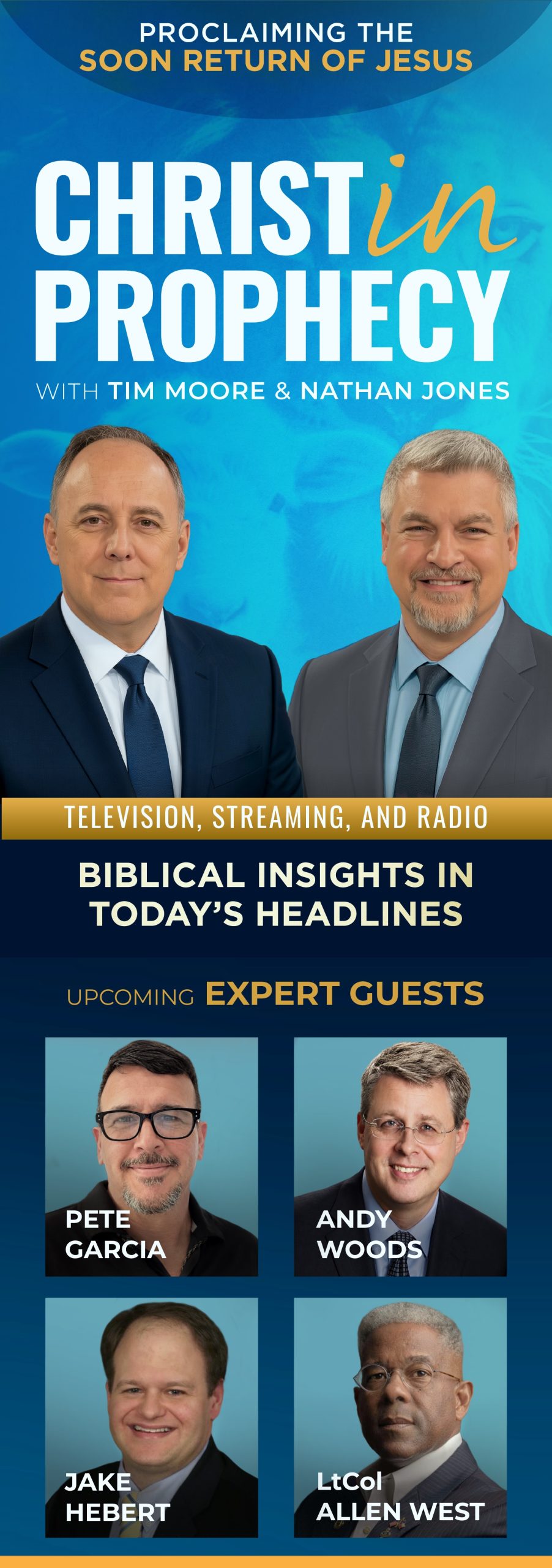
christ in prophecy

christ in prophecy

Decision

untitled artwork

Israel My Glory

Donald Trump promised an absent Prime Minister Justin Trudeau some in-person presidential face time Wednesday as the U.S. commander-in-chief and his Mexican counterpart went ahead celebrating North America’s new trade deal without Canada.

Trudeau last week declined to join Trump and Mexico’s President Andres Manuel Lopez Obrador at the White House, citing the challenges of the ongoing COVID-19 pandemic and this week’s pressing parliamentary business — not to mention the looming threat of renewed U.S. tariffs against Canadian aluminum exports.

Trump offered no hint of any such tensions before he and Lopez Obrador signed a joint declaration of solidarity during an outdoor Rose Garden ceremony under a sweltering summer sun.

Instead, “we’ll have a separate day with Canada — they’re coming down at the appropriate time,” the president said, declaring the U.S.-Mexico-Canada Agreement, or USMCA, the “largest, fairest and most advanced” trade deal ever signed, and deriding its NAFTA predecessor as precisely the opposite.

“We want to thank Canada also; I spoke with and will be speaking to the prime minister in a little while,” Trump said. “We want to congratulate Canada, and the people of Canada, and the prime minister.”

Earlier Wednesday, Trudeau extended congratulations of his own, calling the agreement a win for all three countries at a time of serious economic uncertainty.

“I think it’s really important that at a time of economic strain and stress that we continue to have access to the world’s most important market. This is good for Canadian workers and Canadian jobs right across the country.”

The formal debut of the agreement, which took effect last week, has nonetheless been sullied by the U.S. trade representative’s claim that Canada has exceeded limits on aluminum exports to the United States established when Trump lifted national-security tariffs on Canadian-made steel and aluminum in May 2019.

Trump made no mention of the latest dispute in his Rose Garden remarks, and neither leader took questions. Trudeau, however, said the threat of renewed tariffs “is a little bit difficult to understand,” given the potential impact of such a move.

“The U.S. doesn’t make nearly enough aluminum to be able to cover its needs, particularly at a time when we want economies to get going again across North America,” he said in Ottawa. “What tariffs would do would be to raise prices for manufacturers in the United States and put extra stresses on them at a time when stresses abound.”

Higher prices may be precisely the goal: the two U.S. producers that are urging the USTR to take action have ties to a Swiss metals company that holds the exclusive rights to sell Russian-made aluminum in the United States. China, Russia, India and Canada are the four largest aluminum producers in the world.

Lopez Obrador’s visit to Washington, his first foreign trip since being elected in 2018, has prompted widespread criticism at home for a leader whose campaign trafficked heavily in criticizing Trump. Since then, the leader known in Mexico as AMLO has been pilloried for his deference to a U.S. president famous for aggressive anti-immigration policies at the southern border.

With a U.S. presidential election now just four months away, it’s Trump who stands to benefit politically from a bilateral visit, experts told a Wilson Center panel discussion Wednesday — and if Lopez Obrador hopes to secure safe harbour from Trump’s unpredictable foreign-policy whims, he may be sadly mistaken.

“If he thinks that going to Washington in this moment … is going to insulate him or protect him from future actions by this president, especially in a campaign year — against tariffs, against some kind of other punitive measure — I think he’s fooling himself,” said Roberta Jacobson, a former U.S. ambassador to Mexico under both Trump and his predecessor Barack Obama.

“Witness the fact that obviously we have the discussion of aluminum tariffs vis-a-vis Canada right now, as we’re celebrating USMCA. This is not a president who necessarily says, ‘These are my new partners, I will not penalize them no matter what.”‘

Conservative Leader Andrew Scheer made a similar point, but not without twisting the partisan knife a little.

“Usually when Justin Trudeau leaves the country, it hurts Canada’s position on the world stage, so maybe it’s a good thing he stayed home,” Scheer said. “He has a perfect losing record when it comes to Donald Trump, so maybe we’re better off that he didn’t go.”

New Democrat trade critic Daniel Blaikie, meanwhile, is urging the federal Liberal government to spell out during a House of Commons trade committee meeting Thursday how it plans to protect Canada’s aluminum sector from the threat of an “arbitrary attack.”

“A second tariff levelled at an industry that is already hurting could very well be devastating,” Blaikie wrote in a letter this week to International Trade Minister Mary Ng. “The current global pandemic only makes matters worse.”

National Post - Logo
CLICK HERE FOR
SOURCE

Trusted Analysis From A Biblical Worldview

Help reach the lost and equip the church with the living and active truth of God's Word in our world today.

YOU CARE ABOUT

BIBLICAL TRUTH. SO DO WE.


Together, We Can Deliver A Biblical Understanding

Of News Events Around The World.

The Original Marxist-Islamist Test: The Ideological Engine Behind The Iranian Revolution Is Setting Europe On Fire

Although the name Ali Shariati would not be familiar to most people, he was in many ways the ideological architect of the 1979 Islamic revolution in Iran. Shariati was born in Iran but studied in Paris during the 1960s. It was during this time in a Western institution that Shariati developed a new theoretical approach to the combination of Marxism, existentialism (the philosophical belief we are each responsible for creating purpose or meaning in our own lives) and Islam. Though he did not live to see the 1979 Revolution (he died in 1977), his writings mobilized a generation of revolutionaries.

In The Last Days, Moral Depravity Will Become A Human Right

Our world has become the opposite of what it used to be. The moral and character flaws that are listed in Romans 1:28-32 have always been part of life in a fallen world, but there has long been a clearly defined line between good and evil. Even during the periods of history when evil seemed to be dominant and tyrants were brutal in their rule, people knew the difference between right and wrong, and good and evil. Good was still good, and evil was still evil. Yet Paul says in Romans 1 that when a nation (or the world) rejects God’s existence and authority, a moral perversion will spread and lead to a time when the moral and character flaws in Romans 1:28-32 will become dominant.

untitled artwork 6391

Franklin Graham: Jesus Is Coming Back… And It’s Not Going To Be Far Down The Road 

During a lengthy sit-down interview with Fox News Sean Hannity, evangelist Franklin Graham boldly detailed to a largely secular podcast audience the list of extraordinary evidence showcasing that our world is living in the season of Jesus’ return. “Jesus is coming back,” Graham declared. “He is going to come back, and He is going to establish His throne here. There's gonna be a new Jerusalem. He is coming down, and He is going to reign. That is going to take place. When that's gonna take place, I don't know… but it's not gonna be that far down the road. Jesus told us to look for signs. In Matthew chapter 24, He gives us great examples of what's coming and what we ought to be looking for. If you look today, [you can see] the signs.”

ABC's of Salvation

TV AD

worldview matters

Decision Magazine V AD

Decision

Jan Markell

Israel My Glory

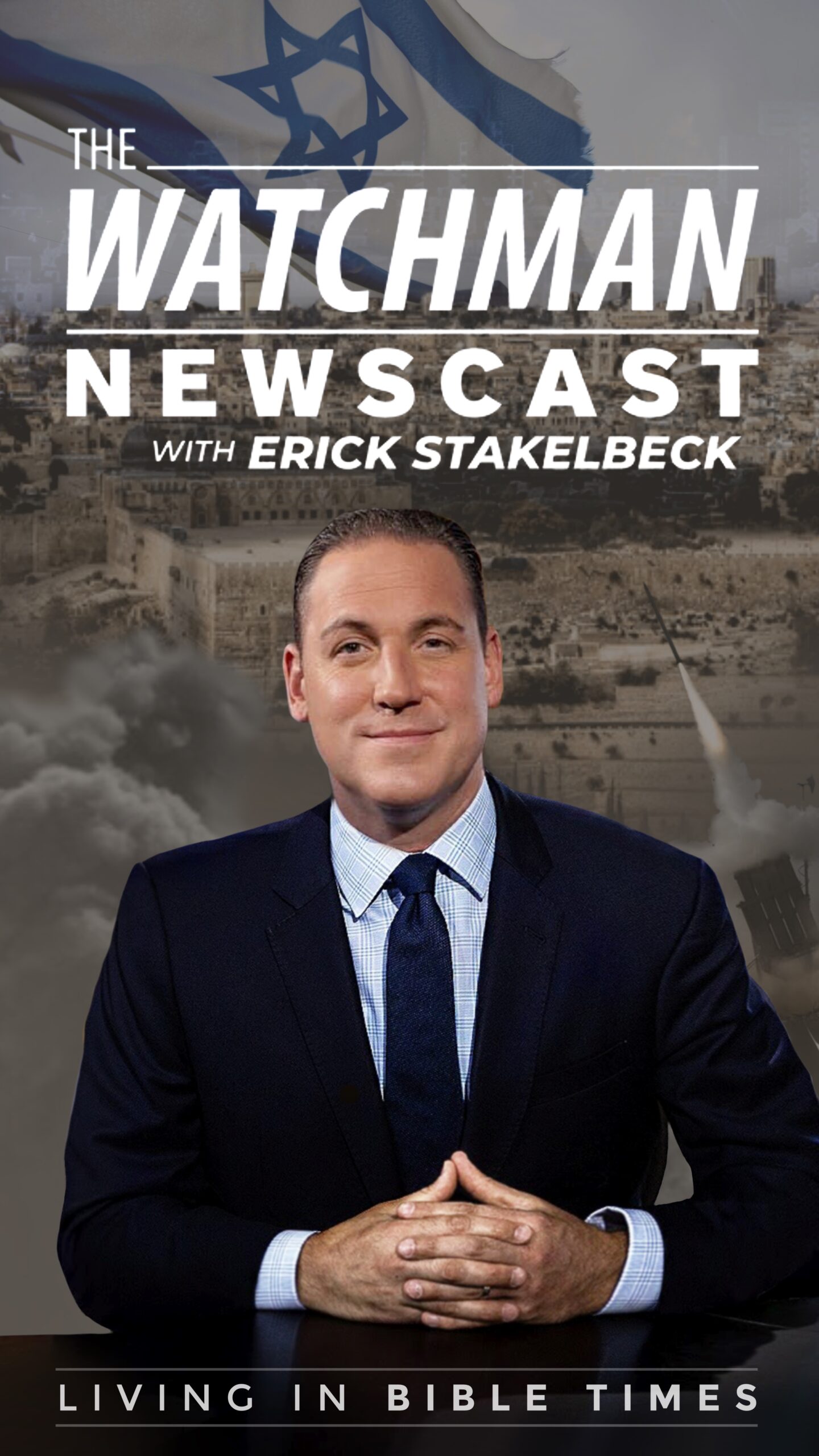
Erick Stakelbeck

untitled artwork

YOU CARE ABOUT

BIBLICAL TRUTH.

SO DO WE.

Together, We Can Deliver A Biblical Understanding Of News Events Around The World And Equip The Church To Stand With A Biblical Worldview.

untitled artwork

Israel My Glory

YOU CARE ABOUT

BIBLICAL TRUTH.

SO DO WE.


Together, We Can Deliver A Biblical Understanding Of News Events Around The World And Equip The Church To Stand With A Biblical Worldview.