June 15, 2026

June, 15, 2026
June 15, 2026

give

untitled artwork

untitled artwork

World news biblically understood

TRENDING:

Global Tensions Expose The Vast Contrast Between Human Hope And God’s Promises

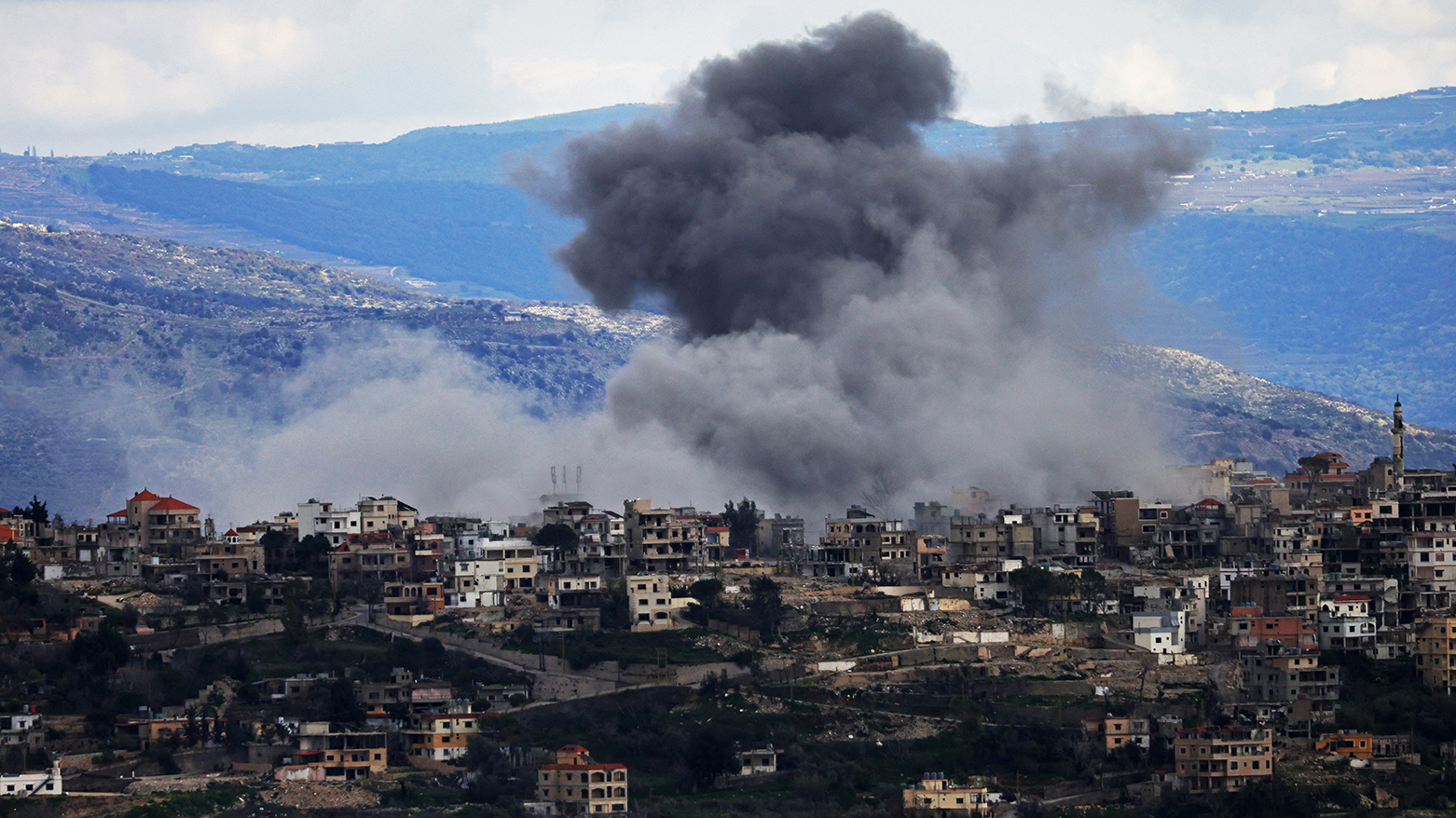
(Queensland, Australia) — An Australian research firm whose interest lies in tracking social trends recently released a report focusing on the impact of global events on Australia’s morale and behaviour. Believing that 2026 is inducing similar anxiety to the global events of 2020, the researchers were keen to explore how the unrest in Iran was affecting the Australian psyche. Overall, half of people surveyed feel anxious and frustrated over the conflict in Iran, with 43% also reporting they feel extremely/very uncertain about the future. Although much time has gone into collating the data, the analysts were not able to offer any hope to those struggling with the magnitude of global events. 

For most people, “hope” is the combined emotional and intellectual process of desiring a certain outcome while at the same time understanding that the opposite may occur. For example, if a person hopes it does not rain today, they hold onto a preferred outcome but also leave room for the possibility that their hope may fall short. Therefore, man’s view of hope is often connected to a balance of probabilities, which includes things that I may be able to control (I hope I pass an examination by studying harder) or things I may not be able to control (the weather).

However, that is not how hope is defined in the Bible. Biblical hope is an active, persevering hope that rests on the character and promises of God rather than the combined forces of human effort and wishful thinking. In fact, in the Bible, hope is closely connected to waiting. Not waiting in the sense that we are still uncertain about the outcome, but steadfastly waiting because we fully expect the outcome God promised in His Word. In other words, man’s definition of hope carries doubt. God’s does not. As such, Biblical hope is a sure foundation upon which we may base our lives, believing that God always keeps His promises.

But not all see hope as vital to the human condition. For example, German philosopher Friedrich Nietzsche viewed hope as a dangerous illusion. He was quoted as saying: “Hope, in reality, is the worst of all evils because it prolongs the torments of man.” To him, hope was a sedative that delayed acceptance of man’s true reality, leading to prolonged suffering because hope encourages passive waiting instead of action.

One of the prominent words used for “hope” in the Bible is the Hebrew word “tikvah.” If you are familiar with the Israeli national anthem, you will recognise the word immediately. While the idea of hope in our modern world is abstract, tikvah is a hope that does not disappoint. It is an expectation borne from a strong expression of faith that ultimately rests in the faithfulness of God.

To further highlight this fact, let’s look at the first use of “tikvah” in the Bible, found in Joshua chapter 2, when two men are secretly sent to Jericho and find themselves in the house of a harlot named Rahab.

In recounting her conversation with the spies, the Bible tells us that Rahab had heard of the Israelites’ miraculous Red Sea crossing and their military victories; and, consequently, she believed in Israel’s God. As a result, Joshua 2:12-13 records her plea to the spies: “Now therefore, I beg you, swear to me by the LORD, since I have shown you kindness, that you also will show kindness to my father’s house, and give me a true token, and spare my father, my mother, my brothers, my sisters, and all that they have, and deliver our lives from death.” In response, the spies answer Rahab by saying, as recorded in Joshua 2:14: “So the men answered her, ‘Our lives for yours, if none of you tell this business of ours.  And it shall be, when the LORD has given us the land, that we will deal kindly and truly with you.’”  After making this solemn promise to Rahab and her household, Joshua 2:15 says: “Then she let them down by a rope through the window, for her house was on the city wall; she dwelt on the wall.

After securing their escape Joshua 2:17-18 says: “So the men said to her: ‘We will be blameless of this oath of yours which you have made us swear, unless when we come into the land, you bind this line [tikvah] of scarlet cord in the window through which you let us down, and unless you bring your father, your mother, your brothers, and all your father’s household to your own home.” Believing in the promise made to her, Joshua 2:21 also records: “Then she said, ‘according to your words, so be it.’ And she sent them away, and they departed. And she bound the scarlet cord [tikvah] in the window.”

To Rahab, the scarlet cord was the tether of hope. A trust in a rescue which was not yet visible but which she knew to be certain because of her faith in Israel’s God. In other words, the cord signified not only hope but also expectation. In fact, “tikvah” is closely associated with the Hebrew word “qavah,” which refers to waiting actively and expectantly. Psalm 27:14 expresses “qavah” beautifully: “Wait [qavah] on the LORD; be of good courage, and He shall strengthen your heart; wait [qavah], I say, on the LORD!” You see, sometimes in our haste to relieve the plight of those who are suffering we want immediate solutions. However, ministry to the suffering should cultivate vision beyond immediate relief toward God’s appointed time.

Today, many people see hope fading. That is why we need to throw out the lifeline of true hope, which is found not in this world, but in God alone. Psalm 62:5: “My soul, wait silently for God alone, for my expectation [tikvah] is from Him.” So, if you find yourself in a sea of anxiety because of the present course of this world, remember that God doesn’t just give us hope. He is the God of hope: “Now may the God of hope fill you with all joy and peace in believing, that you may abound in hope by the power of the Holy Spirit” (Romans 15:13).



give

Jan Markell: The Questions Emerging From The UFO Files May Perplex The World, But God’s Word Holds The Simple Answer

To the believer, strange objects in the skies are secondary to Who is coming out of the sky very soon, to receive us in the clouds and to take us home. Nonetheless, there is a fever-pitched interest in aliens since President Trump released the long-awaited UFO files. Almost 2 billion people have accessed them. Stephen Spielberg wanted to make a movie that explains the unexplainable—yet the UFO phenomena is very explainable!

‘Momentous Victory’: Under DOJ Settlement, Cleveland Clinic Commits Millions to Reversing Transgender Procedures

Cleveland Clinic Foundation in Ohio, as part of a settlement with the Department of Justice (DOJ), confirmed it will not provide pediatric transgender procedures for two decades in its six medical centers. The settlement is part of an ongoing DOJ investigation into transgender procedures in health care, and Cleveland Clinic is the second major health system to comply. Cleveland Clinic has also agreed to pay $308,000 to resolve allegations of false billings. The false billings were submitted to obtain insurance coverage for pediatric transgender procedures. 

sign up

Jan Markell: Is Israel’s Spiritual Blindness A Reason For Christians To Reject Them?

Ezekiel 36 emphasizes that when the Jews return to the land, they will do so in unbelief. There will be spiritual regeneration much later! The dry bones of Ezekiel 37 reflect a lack of breath or spiritual life. God states he is gathering them back “not for your sake but for my holy name’s sake,” because their presence among the nations caused his name to be profaned. Ezekiel 36 promises that once back in the land, God will cleanse them, give them a new spirit, and cause them to walk in his statutes. But much later.

ABC's of Salvation

Decision

UTT

FOI

untitled artwork

Israel My Glory

(Queensland, Australia) — An Australian research firm whose interest lies in tracking social trends recently released a report focusing on the impact of global events on Australia’s morale and behaviour. Believing that 2026 is inducing similar anxiety to the global events of 2020, the researchers were keen to explore how the unrest in Iran was affecting the Australian psyche. Overall, half of people surveyed feel anxious and frustrated over the conflict in Iran, with 43% also reporting they feel extremely/very uncertain about the future. Although much time has gone into collating the data, the analysts were not able to offer any hope to those struggling with the magnitude of global events. 

For most people, “hope” is the combined emotional and intellectual process of desiring a certain outcome while at the same time understanding that the opposite may occur. For example, if a person hopes it does not rain today, they hold onto a preferred outcome but also leave room for the possibility that their hope may fall short. Therefore, man’s view of hope is often connected to a balance of probabilities, which includes things that I may be able to control (I hope I pass an examination by studying harder) or things I may not be able to control (the weather).

However, that is not how hope is defined in the Bible. Biblical hope is an active, persevering hope that rests on the character and promises of God rather than the combined forces of human effort and wishful thinking. In fact, in the Bible, hope is closely connected to waiting. Not waiting in the sense that we are still uncertain about the outcome, but steadfastly waiting because we fully expect the outcome God promised in His Word. In other words, man’s definition of hope carries doubt. God’s does not. As such, Biblical hope is a sure foundation upon which we may base our lives, believing that God always keeps His promises.

But not all see hope as vital to the human condition. For example, German philosopher Friedrich Nietzsche viewed hope as a dangerous illusion. He was quoted as saying: “Hope, in reality, is the worst of all evils because it prolongs the torments of man.” To him, hope was a sedative that delayed acceptance of man’s true reality, leading to prolonged suffering because hope encourages passive waiting instead of action.

One of the prominent words used for “hope” in the Bible is the Hebrew word “tikvah.” If you are familiar with the Israeli national anthem, you will recognise the word immediately. While the idea of hope in our modern world is abstract, tikvah is a hope that does not disappoint. It is an expectation borne from a strong expression of faith that ultimately rests in the faithfulness of God.

To further highlight this fact, let’s look at the first use of “tikvah” in the Bible, found in Joshua chapter 2, when two men are secretly sent to Jericho and find themselves in the house of a harlot named Rahab.

In recounting her conversation with the spies, the Bible tells us that Rahab had heard of the Israelites’ miraculous Red Sea crossing and their military victories; and, consequently, she believed in Israel’s God. As a result, Joshua 2:12-13 records her plea to the spies: “Now therefore, I beg you, swear to me by the LORD, since I have shown you kindness, that you also will show kindness to my father’s house, and give me a true token, and spare my father, my mother, my brothers, my sisters, and all that they have, and deliver our lives from death.” In response, the spies answer Rahab by saying, as recorded in Joshua 2:14: “So the men answered her, ‘Our lives for yours, if none of you tell this business of ours.  And it shall be, when the LORD has given us the land, that we will deal kindly and truly with you.’”  After making this solemn promise to Rahab and her household, Joshua 2:15 says: “Then she let them down by a rope through the window, for her house was on the city wall; she dwelt on the wall.

After securing their escape Joshua 2:17-18 says: “So the men said to her: ‘We will be blameless of this oath of yours which you have made us swear, unless when we come into the land, you bind this line [tikvah] of scarlet cord in the window through which you let us down, and unless you bring your father, your mother, your brothers, and all your father’s household to your own home.” Believing in the promise made to her, Joshua 2:21 also records: “Then she said, ‘according to your words, so be it.’ And she sent them away, and they departed. And she bound the scarlet cord [tikvah] in the window.”

To Rahab, the scarlet cord was the tether of hope. A trust in a rescue which was not yet visible but which she knew to be certain because of her faith in Israel’s God. In other words, the cord signified not only hope but also expectation. In fact, “tikvah” is closely associated with the Hebrew word “qavah,” which refers to waiting actively and expectantly. Psalm 27:14 expresses “qavah” beautifully: “Wait [qavah] on the LORD; be of good courage, and He shall strengthen your heart; wait [qavah], I say, on the LORD!” You see, sometimes in our haste to relieve the plight of those who are suffering we want immediate solutions. However, ministry to the suffering should cultivate vision beyond immediate relief toward God’s appointed time.

Today, many people see hope fading. That is why we need to throw out the lifeline of true hope, which is found not in this world, but in God alone. Psalm 62:5: “My soul, wait silently for God alone, for my expectation [tikvah] is from Him.” So, if you find yourself in a sea of anxiety because of the present course of this world, remember that God doesn’t just give us hope. He is the God of hope: “Now may the God of hope fill you with all joy and peace in believing, that you may abound in hope by the power of the Holy Spirit” (Romans 15:13).


Trusted Analysis From A Biblical Worldview

Help reach the lost and equip the church with the living and active truth of God's Word in our world today.

YOU CARE ABOUT

BIBLICAL TRUTH. SO DO WE.


Together, We Can Deliver A Biblical Understanding

Of News Events Around The World.

Jan Markell: The Questions Emerging From The UFO Files May Perplex The World, But God’s Word Holds The Simple Answer

To the believer, strange objects in the skies are secondary to Who is coming out of the sky very soon, to receive us in the clouds and to take us home. Nonetheless, there is a fever-pitched interest in aliens since President Trump released the long-awaited UFO files. Almost 2 billion people have accessed them. Stephen Spielberg wanted to make a movie that explains the unexplainable—yet the UFO phenomena is very explainable!

‘Momentous Victory’: Under DOJ Settlement, Cleveland Clinic Commits Millions to Reversing Transgender Procedures

Cleveland Clinic Foundation in Ohio, as part of a settlement with the Department of Justice (DOJ), confirmed it will not provide pediatric transgender procedures for two decades in its six medical centers. The settlement is part of an ongoing DOJ investigation into transgender procedures in health care, and Cleveland Clinic is the second major health system to comply. Cleveland Clinic has also agreed to pay $308,000 to resolve allegations of false billings. The false billings were submitted to obtain insurance coverage for pediatric transgender procedures. 

untitled artwork 6391

Jan Markell: Is Israel’s Spiritual Blindness A Reason For Christians To Reject Them?

Ezekiel 36 emphasizes that when the Jews return to the land, they will do so in unbelief. There will be spiritual regeneration much later! The dry bones of Ezekiel 37 reflect a lack of breath or spiritual life. God states he is gathering them back “not for your sake but for my holy name’s sake,” because their presence among the nations caused his name to be profaned. Ezekiel 36 promises that once back in the land, God will cleanse them, give them a new spirit, and cause them to walk in his statutes. But much later.

ABC's of Salvation

TV AD

worldview matters

Decision Magazine V AD

Decision

Jan Markell

Israel My Glory

Erick Stakelbeck

untitled artwork

YOU CARE ABOUT

BIBLICAL TRUTH.

SO DO WE.

Together, We Can Deliver A Biblical Understanding Of News Events Around The World And Equip The Church To Stand With A Biblical Worldview.

untitled artwork

Israel My Glory

YOU CARE ABOUT

BIBLICAL TRUTH.

SO DO WE.


Together, We Can Deliver A Biblical Understanding Of News Events Around The World And Equip The Church To Stand With A Biblical Worldview.