April 11, 2026

April, 11, 2026
April 11, 2026

give

untitled artwork

untitled artwork

World news biblically understood

TRENDING:

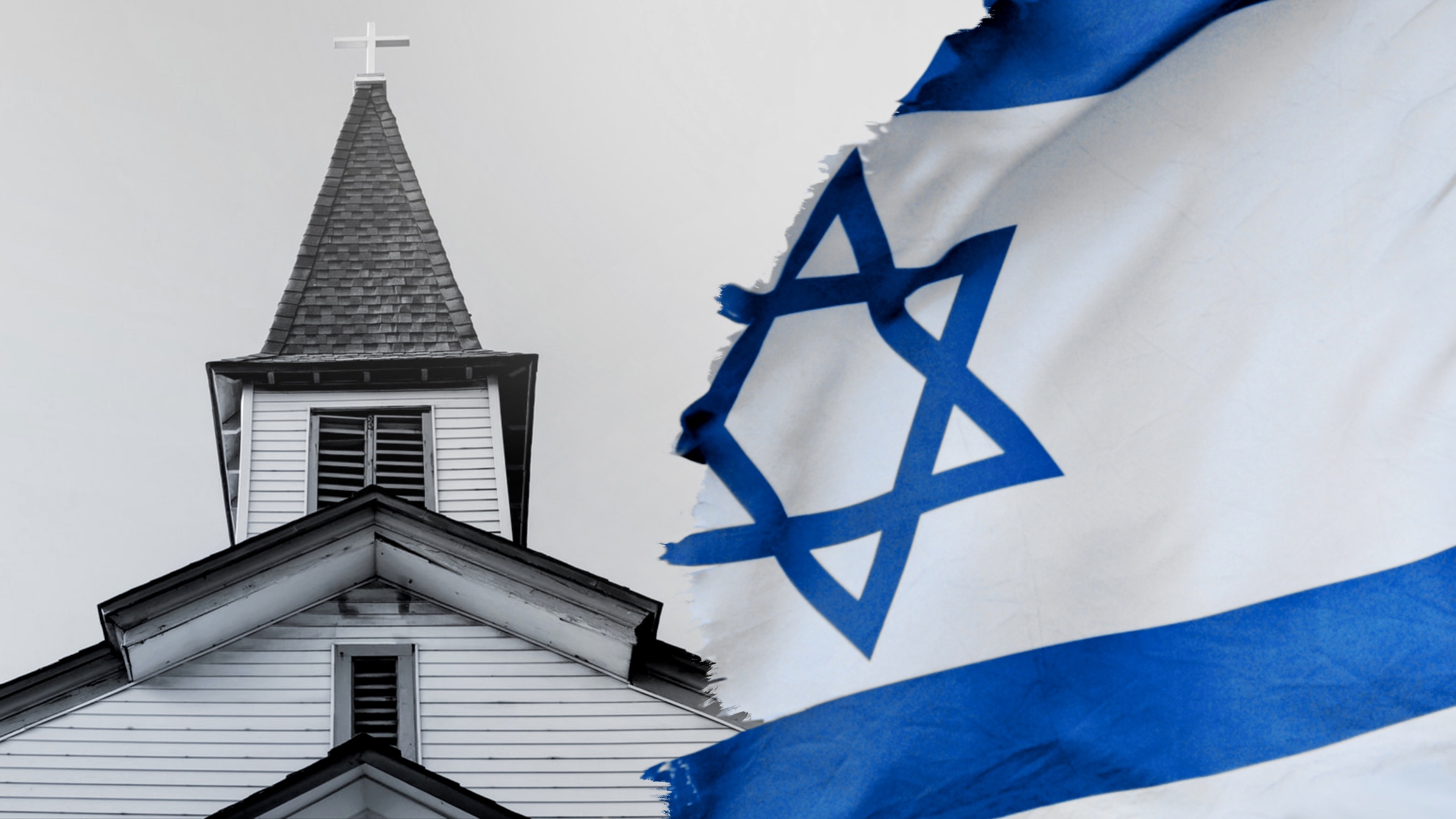
Theological Amnesia: The Danger Of The Church Forgetting Israel

Amnesia is a medical term describing a partial or total loss of memory. Derived from a Greek word meaning “to forget,” it’s a condition in which a person loses awareness of who they are and what they’ve experienced. King Nebuchadnezzar of Babylon offers us a classic illustration of this. In Daniel chapter 4, the mighty monarch temporarily loses his reason and identity, forgetting who he is and the authority he holds.

While the vast majority of evangelical Christians remain steadfast supporters of the state of Israel and defenders of the Jewish people, a small but growing segment of our tribe has developed a troubling case of theological amnesia when it comes to God’s present and future plans for Israel. This forgetfulness is especially alarming at a time when antisemitism is rising worldwide at levels not seen since the Holocaust.

Those affected by this theological amnesia often operate within a framework known as replacement theology—the belief that God has rejected the Jewish people because of their unbelief in Yeshua as Messiah, replaced them with the church and revoked His covenant promises to them. Such thinking reflects a forgetfulness of plain Scriptural teaching concerning God’s everlasting promises to His chosen people, Israel.

The end result of this toxic theology is the conclusion that Israel has no future role in God’s redemptive purposes and that the modern Jewish state holds no greater Biblical significance than any other nation. Worse still, replacement theology often produces a subtle—and sometimes overt—form of antisemitism. If God Himself has rejected the Jewish people and revoked His promises to them, the logic follows that they hold no special place in God’s unfolding plan.

When the church forgets Israel, it may justify indifference—or even hostility—toward the Jewish people. In this way, antisemitism often becomes the adopted child of replacement theology.

One of the most frequently repeated commands in the Torah is the call to remember. Again and again, God calls His covenant people to remember what He has done for them. When Joshua led Israel across the Jordan River into the Promised Land following Moses’ death, their first stop was Gilgal. There they erected memorial stones so future generations would remember “that all the peoples of the earth may know that the hand of the Lord is mighty” (Joshua 4:24).

Centuries later, King David declared, “If I forget you, O Jerusalem, let my right hand forget its skill!” (Psalm 137:5). For nearly 2,000 years of exile, scattered among often-hostile nations, the Jewish people remembered. Each Passover they retold the story of redemption and declared with faith-filled hope, “Next year in Jerusalem.” Even today, the mezuzah affixed to the doorposts of Jewish homes serves as a daily reminder of God’s promises.

Amnesia has never been an option for the Jewish people—and it must not be an option for Bible-believing Christians. History has shown tragic consequences when the church forgets God’s purposes and promises for Israel.

Replacement theology rests on what may be described as a three-legged stool with three unstable legs—three false premises rejected by Scripture. It teaches that Israel has been rejected, Israel’s purposes have been replaced, and Israel’s promises have been revoked.

Premise 1: The People of Israel Have Been Rejected

Replacement theology claims that God has rejected the Jewish people in this age of grace because they rejected Jesus as Messiah. Yet Scripture repeatedly affirms the opposite. God promised Abraham the land of Canaan as “an everlasting possession” (Genesis 17:8). Once Abraham entered the land, God reiterated the promise: “All the land that you see I will give to you and to your offspring forever” (Genesis 13:15). To Jacob, God said, “I … will give this land to your offspring after you for an everlasting possession” (Genesis 48:4). Through David, the Lord promised to plant Israel securely in the land so that they would “move no more” (1 Chronicles 17:9). Through Ezekiel, God declared that His people would dwell in the land “forever” (Ezekiel 37:25). Everlasting means everlasting. Forever still means forever.

God’s covenant promises to Israel regarding the land were not based on Israel’s obedience but on God’s faithfulness. They were unconditional. Replacement theology attempts to allegorize these promises away, but God’s spoken words retain their meaning.

Enter the Apostle Paul—a Hebrew of Hebrews, trained under Rabbi Gamaliel. In Romans 11, Paul dismantles the idea that Israel has been rejected. He asks plainly, “Has God rejected His people?” His answer is unequivocal: “By no means! God has not rejected His people whom He foreknew” (Romans 11:1-2).

In a culture where opinion often outweighs conviction, Scripture remains clear. God has not rejected Israel. Replacement theology collapses under the weight of God’s Word.

Premise 2: The Purposes of Israel Have Been Replaced

Replacement theology further claims that the church has replaced Israel in God’s redemptive plan. Paul again responds in Romans 11, using the image of an olive tree. Israel is the cultivated tree; Gentile believers are wild branches grafted in. Paul issues a stern warning: “Do not be arrogant toward the branches … It is not you who support the root, but the root that supports you” (Romans 11:18). The branch does not replace the tree.

The church does not supplant Israel; it shares in Israel’s spiritual blessings. The root represents God’s covenant with Israel. The church draws life from that root, not the other way around. Replacement theology fosters a spiritual arrogance that Scripture explicitly condemns.

Premise 3: The Promises to Israel Have Been Revoked

Finally, replacement theology claims that God has revoked His promises to Israel. This assertion challenges not only God’s faithfulness but His character.

Paul addresses this directly: “The gifts and the calling of God are irrevocable” (Romans 11:29). God’s promises to Israel remain intact. They are not canceled or transferred.

If God could revoke His promises to Israel, what confidence could believers have in the promises made to them through Christ? Scripture affirms that “it is impossible for God to lie” (Hebrews 6:18). God keeps His word.

Replacement theology swings three times—and strikes out.

Forgetting Israel and the Rise of Antisemitism

When the church forgets Israel, arrogance often follows—and arrogance breeds antisemitism. Church history bears painful witness to this. Yet antisemitism is again on the rise. Replacement theology, by denying Israel’s place in God’s plan, risks fueling this hatred anew. Antisemitism is an affront to God’s heart. His love for Israel has never expired, and Genesis 12:3 still stands: “I will bless those who bless you, and I will curse him who curses you.” Antisemites hate what God loves.

A Final Appeal

If God were to break His covenant with Israel, how could we trust Him to keep His promises to us? Silence in the face of replacement theology and antisemitism is not neutrality—it is neglect.

There is a cure for theological amnesia: Remember God’s Word. Remember His promises. Remember whom He loves.

To our Jewish friends: while some voices within Christianity have forgotten, the vast majority have not. We remember. We stand with you. As Ruth once declared, so do we: “Your people shall be my people, and your God my God” (Ruth 1:16).

Am Yisrael Chai. The people of Israel live.


Your support helps Harbinger's Daily propel the boldest and most sound Christian voices of our day—those unwavering in their defense of the truth and passionate about reaching the unsaved world—while engaging millions to stand courageously with a worldview grounded in God's Word. 

Will you defend the truth and equip others to do the same?

The Board Of Peace: Could Israel Be Walking Into Another Kind Of Hostage Crisis?

The prophet Zechariah warned of a day when the nations will gather against Jerusalem, and the Lord Himself will intervene (Zech. 14:1–4). Although we are not prophets and must be careful with our interpretations, it’s hard to ignore this prophetic imagery when so many nations are now poised to weigh in on a sliver of land located a mere 50 miles from Jerusalem. Israel has received its final hostage from Gaza. May it not walk into another hostage crisis.

The Spread Of The Gospel During The World’s Darkest Hour

For those who hold a Biblical worldview, it is obvious that mankind’s darkest hour will soon fall upon the world. I speak, of course, of the Tribulation Period. Although God’s undiluted wrath will be poured out upon the earth, what we also bear witness to in the Scriptures is the fact that He will also shine His glorious light on the world as His message of the impending Millennial Kingdom is shared to all people.

sign up

Behind The Headlines, The Gospel Is Spreading Into Every Corner Of The Earth With Its Message Of Triumph

As you know, the leaders of Iran adhere to an apocalyptic form of Islam, and they’re doing everything possible to discourage this revival. Anyone suspected of being a Christian is arrested or oppressed. But do you know what’s happening? Plans are unfolding for Billy Graham to preach in Iran! Yes, Dr. Graham’s sermons are being dubbed into Farsi and broadcast into the country. It’s believed his sermons will reach over twenty million Iranians in the safety of their own homes. 

ABC's of Salvation

Decision

UTT

FOI

untitled artwork

Israel My Glory

Amnesia is a medical term describing a partial or total loss of memory. Derived from a Greek word meaning “to forget,” it’s a condition in which a person loses awareness of who they are and what they’ve experienced. King Nebuchadnezzar of Babylon offers us a classic illustration of this. In Daniel chapter 4, the mighty monarch temporarily loses his reason and identity, forgetting who he is and the authority he holds.

While the vast majority of evangelical Christians remain steadfast supporters of the state of Israel and defenders of the Jewish people, a small but growing segment of our tribe has developed a troubling case of theological amnesia when it comes to God’s present and future plans for Israel. This forgetfulness is especially alarming at a time when antisemitism is rising worldwide at levels not seen since the Holocaust.

Those affected by this theological amnesia often operate within a framework known as replacement theology—the belief that God has rejected the Jewish people because of their unbelief in Yeshua as Messiah, replaced them with the church and revoked His covenant promises to them. Such thinking reflects a forgetfulness of plain Scriptural teaching concerning God’s everlasting promises to His chosen people, Israel.

The end result of this toxic theology is the conclusion that Israel has no future role in God’s redemptive purposes and that the modern Jewish state holds no greater Biblical significance than any other nation. Worse still, replacement theology often produces a subtle—and sometimes overt—form of antisemitism. If God Himself has rejected the Jewish people and revoked His promises to them, the logic follows that they hold no special place in God’s unfolding plan.

When the church forgets Israel, it may justify indifference—or even hostility—toward the Jewish people. In this way, antisemitism often becomes the adopted child of replacement theology.

One of the most frequently repeated commands in the Torah is the call to remember. Again and again, God calls His covenant people to remember what He has done for them. When Joshua led Israel across the Jordan River into the Promised Land following Moses’ death, their first stop was Gilgal. There they erected memorial stones so future generations would remember “that all the peoples of the earth may know that the hand of the Lord is mighty” (Joshua 4:24).

Centuries later, King David declared, “If I forget you, O Jerusalem, let my right hand forget its skill!” (Psalm 137:5). For nearly 2,000 years of exile, scattered among often-hostile nations, the Jewish people remembered. Each Passover they retold the story of redemption and declared with faith-filled hope, “Next year in Jerusalem.” Even today, the mezuzah affixed to the doorposts of Jewish homes serves as a daily reminder of God’s promises.

Amnesia has never been an option for the Jewish people—and it must not be an option for Bible-believing Christians. History has shown tragic consequences when the church forgets God’s purposes and promises for Israel.

Replacement theology rests on what may be described as a three-legged stool with three unstable legs—three false premises rejected by Scripture. It teaches that Israel has been rejected, Israel’s purposes have been replaced, and Israel’s promises have been revoked.

Premise 1: The People of Israel Have Been Rejected

Replacement theology claims that God has rejected the Jewish people in this age of grace because they rejected Jesus as Messiah. Yet Scripture repeatedly affirms the opposite. God promised Abraham the land of Canaan as “an everlasting possession” (Genesis 17:8). Once Abraham entered the land, God reiterated the promise: “All the land that you see I will give to you and to your offspring forever” (Genesis 13:15). To Jacob, God said, “I … will give this land to your offspring after you for an everlasting possession” (Genesis 48:4). Through David, the Lord promised to plant Israel securely in the land so that they would “move no more” (1 Chronicles 17:9). Through Ezekiel, God declared that His people would dwell in the land “forever” (Ezekiel 37:25). Everlasting means everlasting. Forever still means forever.

God’s covenant promises to Israel regarding the land were not based on Israel’s obedience but on God’s faithfulness. They were unconditional. Replacement theology attempts to allegorize these promises away, but God’s spoken words retain their meaning.

Enter the Apostle Paul—a Hebrew of Hebrews, trained under Rabbi Gamaliel. In Romans 11, Paul dismantles the idea that Israel has been rejected. He asks plainly, “Has God rejected His people?” His answer is unequivocal: “By no means! God has not rejected His people whom He foreknew” (Romans 11:1-2).

In a culture where opinion often outweighs conviction, Scripture remains clear. God has not rejected Israel. Replacement theology collapses under the weight of God’s Word.

Premise 2: The Purposes of Israel Have Been Replaced

Replacement theology further claims that the church has replaced Israel in God’s redemptive plan. Paul again responds in Romans 11, using the image of an olive tree. Israel is the cultivated tree; Gentile believers are wild branches grafted in. Paul issues a stern warning: “Do not be arrogant toward the branches … It is not you who support the root, but the root that supports you” (Romans 11:18). The branch does not replace the tree.

The church does not supplant Israel; it shares in Israel’s spiritual blessings. The root represents God’s covenant with Israel. The church draws life from that root, not the other way around. Replacement theology fosters a spiritual arrogance that Scripture explicitly condemns.

Premise 3: The Promises to Israel Have Been Revoked

Finally, replacement theology claims that God has revoked His promises to Israel. This assertion challenges not only God’s faithfulness but His character.

Paul addresses this directly: “The gifts and the calling of God are irrevocable” (Romans 11:29). God’s promises to Israel remain intact. They are not canceled or transferred.

If God could revoke His promises to Israel, what confidence could believers have in the promises made to them through Christ? Scripture affirms that “it is impossible for God to lie” (Hebrews 6:18). God keeps His word.

Replacement theology swings three times—and strikes out.

Forgetting Israel and the Rise of Antisemitism

When the church forgets Israel, arrogance often follows—and arrogance breeds antisemitism. Church history bears painful witness to this. Yet antisemitism is again on the rise. Replacement theology, by denying Israel’s place in God’s plan, risks fueling this hatred anew. Antisemitism is an affront to God’s heart. His love for Israel has never expired, and Genesis 12:3 still stands: “I will bless those who bless you, and I will curse him who curses you.” Antisemites hate what God loves.

A Final Appeal

If God were to break His covenant with Israel, how could we trust Him to keep His promises to us? Silence in the face of replacement theology and antisemitism is not neutrality—it is neglect.

There is a cure for theological amnesia: Remember God’s Word. Remember His promises. Remember whom He loves.

To our Jewish friends: while some voices within Christianity have forgotten, the vast majority have not. We remember. We stand with you. As Ruth once declared, so do we: “Your people shall be my people, and your God my God” (Ruth 1:16).

Am Yisrael Chai. The people of Israel live.


Trusted Analysis From A Biblical Worldview

Help reach the lost and equip the church with the living and active truth of God's Word in our world today.

YOU CARE ABOUT

BIBLICAL TRUTH. SO DO WE.


Together, We Can Deliver A Biblical Understanding

Of News Events Around The World.

The Board Of Peace: Could Israel Be Walking Into Another Kind Of Hostage Crisis?

The prophet Zechariah warned of a day when the nations will gather against Jerusalem, and the Lord Himself will intervene (Zech. 14:1–4). Although we are not prophets and must be careful with our interpretations, it’s hard to ignore this prophetic imagery when so many nations are now poised to weigh in on a sliver of land located a mere 50 miles from Jerusalem. Israel has received its final hostage from Gaza. May it not walk into another hostage crisis.

The Spread Of The Gospel During The World’s Darkest Hour

For those who hold a Biblical worldview, it is obvious that mankind’s darkest hour will soon fall upon the world. I speak, of course, of the Tribulation Period. Although God’s undiluted wrath will be poured out upon the earth, what we also bear witness to in the Scriptures is the fact that He will also shine His glorious light on the world as His message of the impending Millennial Kingdom is shared to all people.

untitled artwork 6391

Behind The Headlines, The Gospel Is Spreading Into Every Corner Of The Earth With Its Message Of Triumph

As you know, the leaders of Iran adhere to an apocalyptic form of Islam, and they’re doing everything possible to discourage this revival. Anyone suspected of being a Christian is arrested or oppressed. But do you know what’s happening? Plans are unfolding for Billy Graham to preach in Iran! Yes, Dr. Graham’s sermons are being dubbed into Farsi and broadcast into the country. It’s believed his sermons will reach over twenty million Iranians in the safety of their own homes. 

ABC's of Salvation

TV AD

worldview matters

Decision Magazine V AD

Decision

Jan Markell

Israel My Glory

Erick Stakelbeck

untitled artwork

YOU CARE ABOUT

BIBLICAL TRUTH.

SO DO WE.

Together, We Can Deliver A Biblical Understanding Of News Events Around The World And Equip The Church To Stand With A Biblical Worldview.

untitled artwork

Israel My Glory

YOU CARE ABOUT

BIBLICAL TRUTH.

SO DO WE.


Together, We Can Deliver A Biblical Understanding Of News Events Around The World And Equip The Church To Stand With A Biblical Worldview.