giv

Hal Lindsey

It’s not your imagination. Things are bad—as bad as you thought—and maybe worse. It might not be a surprise to hear me say it, but how about hearing it from the United Nations? Last week the UN Office of Disaster Risk Reduction (UNDRR) released a stunning report. According to UNDRR, “between 350 and 500 medium- to large-scale disasters took place every year over the past two decades.” That’s a mind-boggling 5-times the disaster-rate of previous decades. And, they say, it’s getting worse.

Some of those disasters were naturally occurring, such as hurricanes and earthquakes. Others came as a result of what UNDRR calls “a broken perception of risk based on optimism, underestimation and invincibility.” Mami Mizutori, the Head of UNDRR, said, “By deliberately ignoring risk and failing to integrate it in decision making, the world is effectively bankrolling its own destruction.”

Optimism can be a good thing, but not when it blinds us to danger. When I hear the words “optimism, underestimation and invincibility,” I think of world leaders ignoring what God says, and naively going their own way. In their haughtiness, they disregard right and wrong. Convinced of their own brilliance, they assure the rest of us that everything will turn out okay. Meanwhile, they willingly risk long-term catastrophe for short-term gain. 

It happens in almost every area of public life. Leaders repeatedly choose immediate political or monetary gain over what’s really best. We see it when politicians try to buy elections using deficit spending. We see it when businesses warehouse as little as possible, including food. This makes everyone vulnerable to even small supply chain disruptions. But it increases profits—at least in the short run. 

The United States government is now releasing a million barrels of oil per day from the Strategic Petroleum Reserve. The government hopes to appease angry voters by lowering the price of gasoline a few cents a gallon. Our leaders ignore the fact that in the present state of the world, the country might soon need every bit of that Reserve. It’s another case where they ignore long-term solutions in favor of quick and easy actions that turn out to be more symbolic than substantive.

There are too few Josephs among us—too few men and women with the vision to prepare nations in good times for difficulties ahead. 

If you know Christ as your Lord and Savior, the best thing you can do is get word of His wondrous salvation to as many people as possible. Those who know Jesus need not live in fear, even when the world is “bankrolling its own destruction.” But we need to spread the good news with urgency.

As for you personally, remember Psalms 91:1. “He who dwells in the shelter of the Most High will abide in the shadow of the Almighty.” In his book, Till Armageddon, Billy Graham said it like this. “The will of God will never take us where the grace of God cannot sustain us.”


The Hal Lindsey Report - Logo

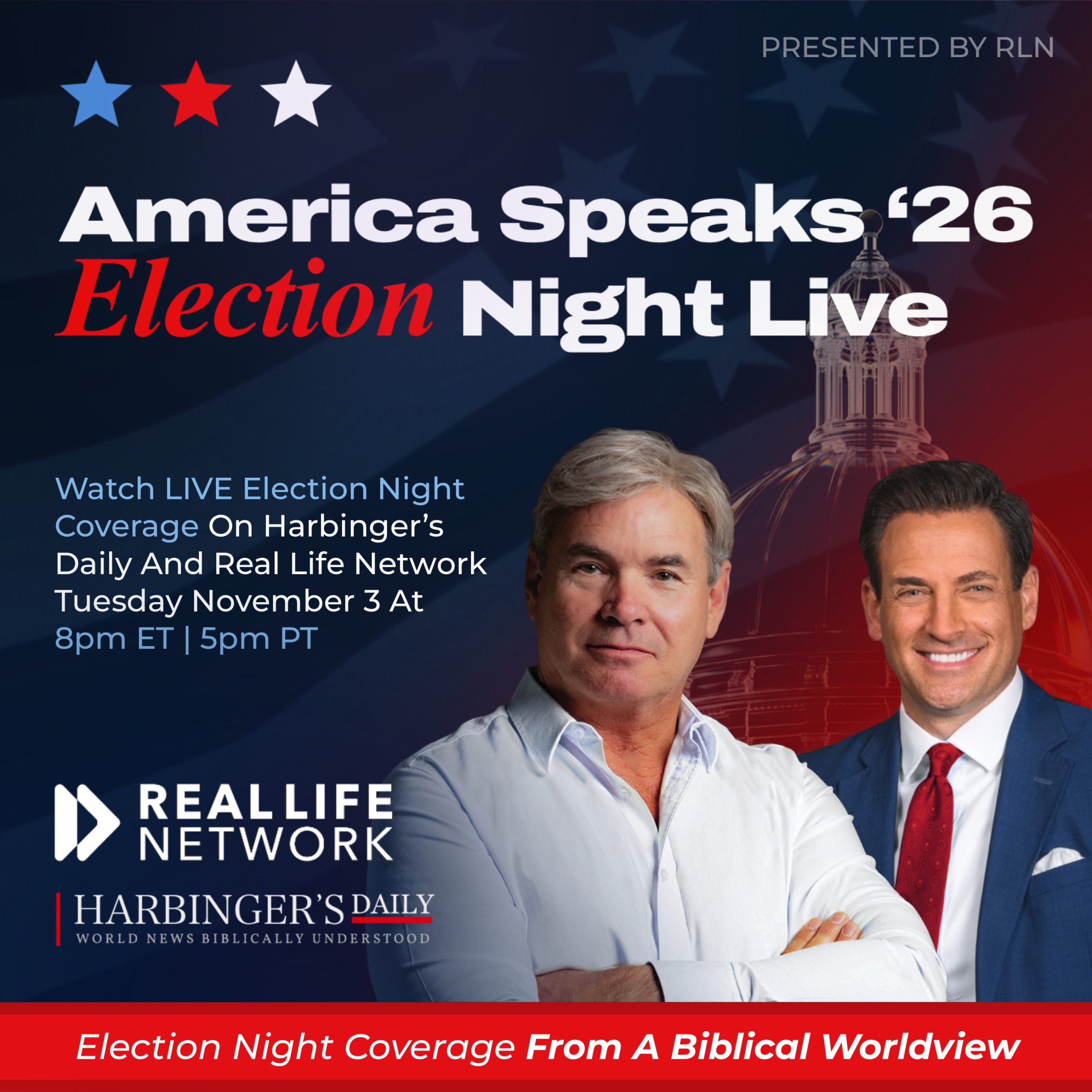
Watch LIVE Election Night Coverage Tuesday, November 3 at 8 pm ET | 5 pm PT

Election Night Coverage From A Biblical Worldview 

SIGN UP FREE FOR REAL LIFE NETWORK 

Stream Real Life Network directly from your TV. Available on all major smart TVs, mobile devices, and streaming platforms.

Stream Real Life Network directly from your TV. Available on all major smart TVs, mobile devices, and streaming platforms.

SIGN UP FREE FOR REAL LIFE NETWORK 

Stream Real Life Network directly from your TV. Available on all major smart TVs, mobile devices, and streaming platforms.

Stream Real Life Network directly from your TV. Available on all major smart TVs, mobile devices, and streaming platforms.

November 4, 2026

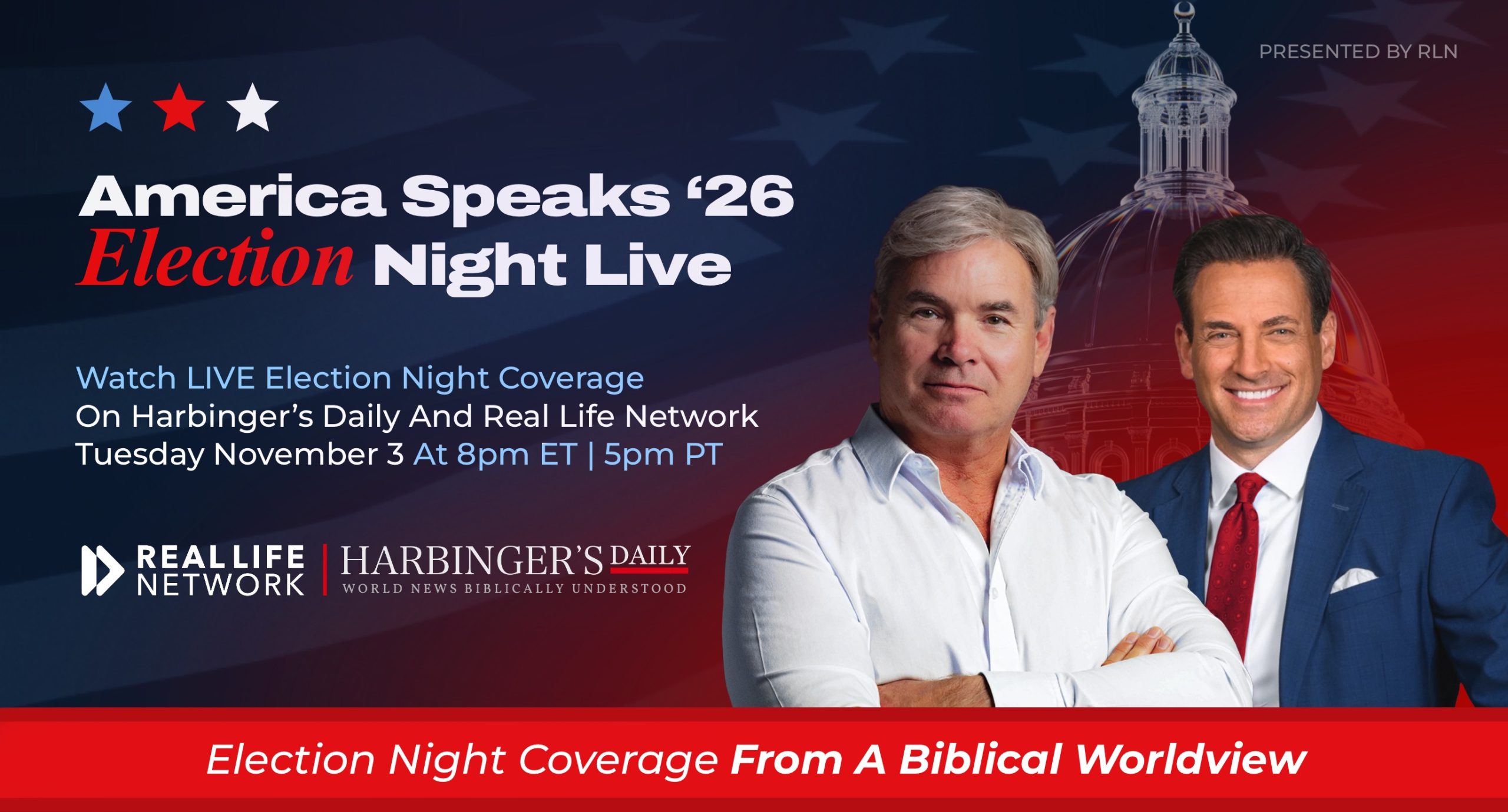
Watch LIVE Election Night Coverage Tuesday, November 3 at 8 pm ET | 5 pm PT

Election Night Coverage From A Biblical Worldview 

Stream Real Life Network for free directly on your TV. Available on all major smart TVs, mobile devices, and streaming platforms.

Stream Real Life Network directly from your TV. Available on all major smart TVs, mobile devices, and streaming platforms.

November, 4, 2026

untitled artwork

untitled artwork

World news biblically understood

TRENDING:

The World Is ‘Bankrolling Its Own Destruction’

Hal Lindsey

It’s not your imagination. Things are bad—as bad as you thought—and maybe worse. It might not be a surprise to hear me say it, but how about hearing it from the United Nations? Last week the UN Office of Disaster Risk Reduction (UNDRR) released a stunning report. According to UNDRR, “between 350 and 500 medium- to large-scale disasters took place every year over the past two decades.” That’s a mind-boggling 5-times the disaster-rate of previous decades. And, they say, it’s getting worse.

Some of those disasters were naturally occurring, such as hurricanes and earthquakes. Others came as a result of what UNDRR calls “a broken perception of risk based on optimism, underestimation and invincibility.” Mami Mizutori, the Head of UNDRR, said, “By deliberately ignoring risk and failing to integrate it in decision making, the world is effectively bankrolling its own destruction.”

Optimism can be a good thing, but not when it blinds us to danger. When I hear the words “optimism, underestimation and invincibility,” I think of world leaders ignoring what God says, and naively going their own way. In their haughtiness, they disregard right and wrong. Convinced of their own brilliance, they assure the rest of us that everything will turn out okay. Meanwhile, they willingly risk long-term catastrophe for short-term gain. 

It happens in almost every area of public life. Leaders repeatedly choose immediate political or monetary gain over what’s really best. We see it when politicians try to buy elections using deficit spending. We see it when businesses warehouse as little as possible, including food. This makes everyone vulnerable to even small supply chain disruptions. But it increases profits—at least in the short run. 

The United States government is now releasing a million barrels of oil per day from the Strategic Petroleum Reserve. The government hopes to appease angry voters by lowering the price of gasoline a few cents a gallon. Our leaders ignore the fact that in the present state of the world, the country might soon need every bit of that Reserve. It’s another case where they ignore long-term solutions in favor of quick and easy actions that turn out to be more symbolic than substantive.

There are too few Josephs among us—too few men and women with the vision to prepare nations in good times for difficulties ahead. 

If you know Christ as your Lord and Savior, the best thing you can do is get word of His wondrous salvation to as many people as possible. Those who know Jesus need not live in fear, even when the world is “bankrolling its own destruction.” But we need to spread the good news with urgency.

As for you personally, remember Psalms 91:1. “He who dwells in the shelter of the Most High will abide in the shadow of the Almighty.” In his book, Till Armageddon, Billy Graham said it like this. “The will of God will never take us where the grace of God cannot sustain us.”

The Hal Lindsey Report - Logo

Billy Graham: Voting Is A ‘God-Given Responsibility,’ And A Means To ‘Drive Back The Forces Of Evil’   

In the United States, Christians have the right to vote. “Millions [of people around] the world,” Billy Graham once reminded us, “do not know the meaning of this freedom.” At the voting booth, believers can support leaders who are committed to serving the public and standing for the unchanging truths found in God’s Word. Yet this freedom often goes unused. While turnout changes from one election to the next, research suggested that more than 40 percent of Christians did not vote in the last election. Throughout his life, Billy Graham encouraged believers to make their voices heard in politics. “The Bible plainly teaches that we are to participate in good citizenship and that we are to respect men in authority,” he said, “and we are to pray for those who govern us.” The evangelist considered voting a “God-given responsibility,” a means to “drive back the forces of evil.”

Why Christians Have A Biblical Responsibility To Participate In The Political Process

With the 2026 midterm elections just days away, millions of Americans are preparing to cast their ballots in an election that will have significant implications for the nation’s future. With control of Congress hanging in the balance, voters will help determine the legislative agenda and political trajectory of the next two years. For Christians, the election raises questions that go beyond political parties, candidates, and policy preferences. Is voting merely a civic privilege, or does Scripture provide a theological framework for understanding it as an act of stewardship and love of neighbor? And what role should pastors and churches play in equipping believers to exercise this responsibility faithfully? As Americans prepare to head to the polls next Tuesday, these questions invite us to consider a more fundamental issue: whether Christians have a Biblical responsibility to participate in the political process.

sign up

The Church Cannot Remain Silent On Biblical Matters Because They Have Been Declared ‘Political’

Jesus called His followers the salt of the earth and the light of the world. Neither image suggests withdrawal. Both describe engagement that makes a difference. So the issue is not whether the church should become political. It is whether Christians will remain biblical when biblical truth has political consequences. Our calling is neither to become the mouthpiece of a party nor to retreat into silence. It is to stand on God’s word, defend what is right, confront what is wrong, and speak with courage — even when the culture would rather we remain silent.

ABC's of Salvation

Decision

christ in prophecy

christ in prophecy

Decision

untitled artwork

Israel My Glory

Hal Lindsey

It’s not your imagination. Things are bad—as bad as you thought—and maybe worse. It might not be a surprise to hear me say it, but how about hearing it from the United Nations? Last week the UN Office of Disaster Risk Reduction (UNDRR) released a stunning report. According to UNDRR, “between 350 and 500 medium- to large-scale disasters took place every year over the past two decades.” That’s a mind-boggling 5-times the disaster-rate of previous decades. And, they say, it’s getting worse.

Some of those disasters were naturally occurring, such as hurricanes and earthquakes. Others came as a result of what UNDRR calls “a broken perception of risk based on optimism, underestimation and invincibility.” Mami Mizutori, the Head of UNDRR, said, “By deliberately ignoring risk and failing to integrate it in decision making, the world is effectively bankrolling its own destruction.”

Optimism can be a good thing, but not when it blinds us to danger. When I hear the words “optimism, underestimation and invincibility,” I think of world leaders ignoring what God says, and naively going their own way. In their haughtiness, they disregard right and wrong. Convinced of their own brilliance, they assure the rest of us that everything will turn out okay. Meanwhile, they willingly risk long-term catastrophe for short-term gain. 

It happens in almost every area of public life. Leaders repeatedly choose immediate political or monetary gain over what’s really best. We see it when politicians try to buy elections using deficit spending. We see it when businesses warehouse as little as possible, including food. This makes everyone vulnerable to even small supply chain disruptions. But it increases profits—at least in the short run. 

The United States government is now releasing a million barrels of oil per day from the Strategic Petroleum Reserve. The government hopes to appease angry voters by lowering the price of gasoline a few cents a gallon. Our leaders ignore the fact that in the present state of the world, the country might soon need every bit of that Reserve. It’s another case where they ignore long-term solutions in favor of quick and easy actions that turn out to be more symbolic than substantive.

There are too few Josephs among us—too few men and women with the vision to prepare nations in good times for difficulties ahead. 

If you know Christ as your Lord and Savior, the best thing you can do is get word of His wondrous salvation to as many people as possible. Those who know Jesus need not live in fear, even when the world is “bankrolling its own destruction.” But we need to spread the good news with urgency.

As for you personally, remember Psalms 91:1. “He who dwells in the shelter of the Most High will abide in the shadow of the Almighty.” In his book, Till Armageddon, Billy Graham said it like this. “The will of God will never take us where the grace of God cannot sustain us.”

The Hal Lindsey Report - Logo

Trusted Analysis From A Biblical Worldview

Help reach the lost and equip the church with the living and active truth of God's Word in our world today.

YOU CARE ABOUT

BIBLICAL TRUTH. SO DO WE.


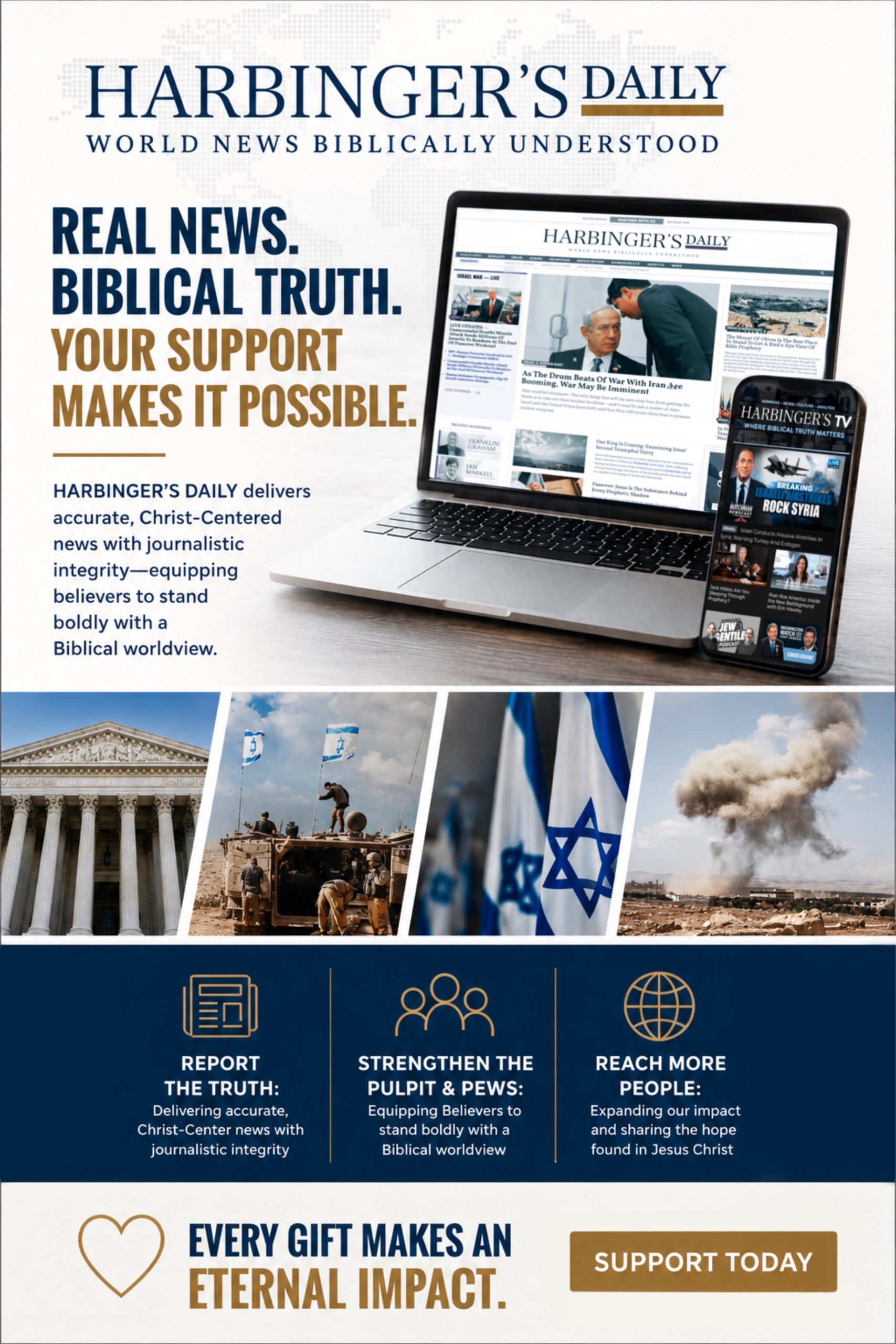
Together, We Can Deliver A Biblical Understanding

Of News Events Around The World.

Billy Graham: Voting Is A ‘God-Given Responsibility,’ And A Means To ‘Drive Back The Forces Of Evil’   

In the United States, Christians have the right to vote. “Millions [of people around] the world,” Billy Graham once reminded us, “do not know the meaning of this freedom.” At the voting booth, believers can support leaders who are committed to serving the public and standing for the unchanging truths found in God’s Word. Yet this freedom often goes unused. While turnout changes from one election to the next, research suggested that more than 40 percent of Christians did not vote in the last election. Throughout his life, Billy Graham encouraged believers to make their voices heard in politics. “The Bible plainly teaches that we are to participate in good citizenship and that we are to respect men in authority,” he said, “and we are to pray for those who govern us.” The evangelist considered voting a “God-given responsibility,” a means to “drive back the forces of evil.”

Why Christians Have A Biblical Responsibility To Participate In The Political Process

With the 2026 midterm elections just days away, millions of Americans are preparing to cast their ballots in an election that will have significant implications for the nation’s future. With control of Congress hanging in the balance, voters will help determine the legislative agenda and political trajectory of the next two years. For Christians, the election raises questions that go beyond political parties, candidates, and policy preferences. Is voting merely a civic privilege, or does Scripture provide a theological framework for understanding it as an act of stewardship and love of neighbor? And what role should pastors and churches play in equipping believers to exercise this responsibility faithfully? As Americans prepare to head to the polls next Tuesday, these questions invite us to consider a more fundamental issue: whether Christians have a Biblical responsibility to participate in the political process.

untitled artwork 6391

The Church Cannot Remain Silent On Biblical Matters Because They Have Been Declared ‘Political’

Jesus called His followers the salt of the earth and the light of the world. Neither image suggests withdrawal. Both describe engagement that makes a difference. So the issue is not whether the church should become political. It is whether Christians will remain biblical when biblical truth has political consequences. Our calling is neither to become the mouthpiece of a party nor to retreat into silence. It is to stand on God’s word, defend what is right, confront what is wrong, and speak with courage — even when the culture would rather we remain silent.

ABC's of Salvation

TV AD

worldview matters

Decision Magazine V AD

Decision

Jan Markell

Israel My Glory

Erick Stakelbeck

untitled artwork

YOU CARE ABOUT

BIBLICAL TRUTH.

SO DO WE.

Together, We Can Deliver A Biblical Understanding Of News Events Around The World And Equip The Church To Stand With A Biblical Worldview.

untitled artwork

Israel My Glory

YOU CARE ABOUT

BIBLICAL TRUTH.

SO DO WE.


Together, We Can Deliver A Biblical Understanding Of News Events Around The World And Equip The Church To Stand With A Biblical Worldview.