January 30, 2026

January, 30, 2026
January 30, 2026

give

untitled artwork

untitled artwork

World news biblically understood

TRENDING:

Passover: Jesus Is The Substance Behind Every Prophetic Shadow

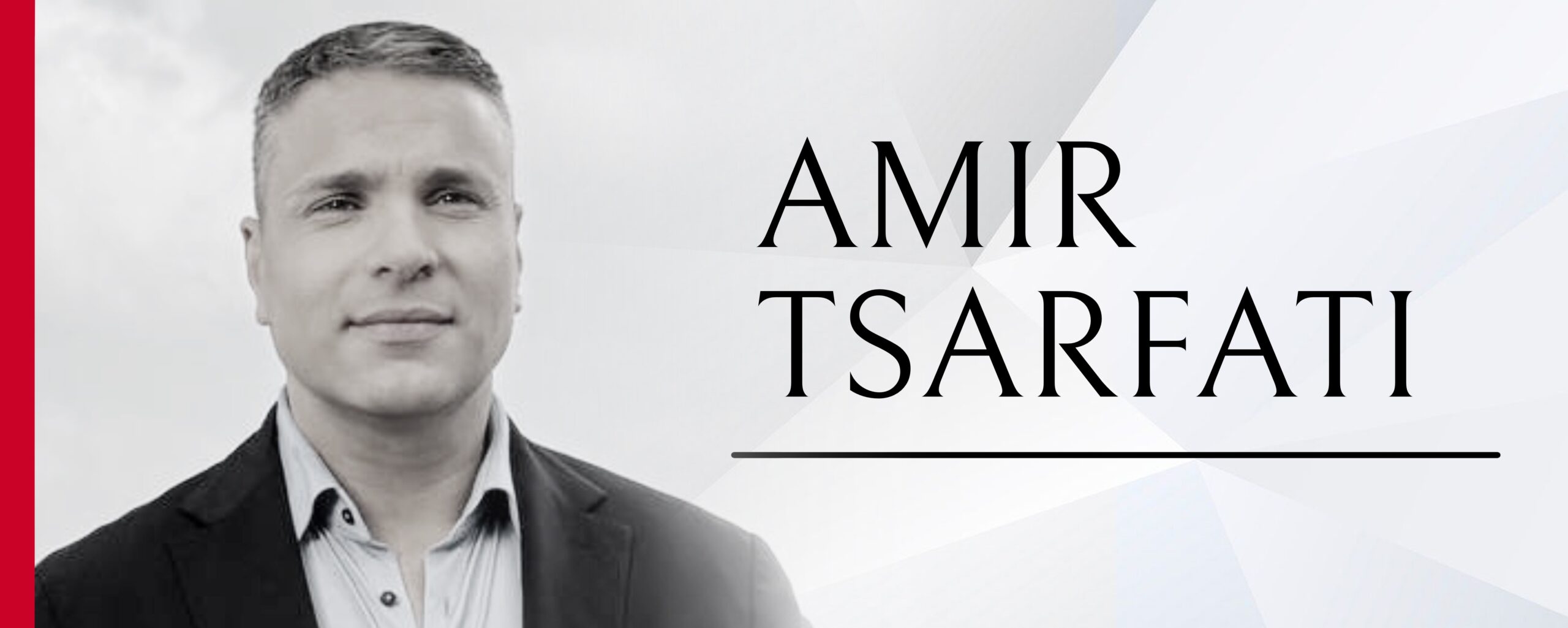
Amir Tsarfati

Did you know that God’s calendar actually begins with Passover? In Exodus 12:2, God tells Moses, “This month shall be your beginning of months.” God’s calendar could have started with the creation, the flood, Adam, or Abraham, but instead, He chose to start it with the Exodus from Egypt.

So much of Passover points to Yeshuaโ€”the lamb, the blood, the unleavened breadโ€”it would be simpler to tell you what doesn’t point to Him! Today, I want to show you how these ancient symbols reveal our Messiah.

First, let me explain what the Passover Seder is. The word “Seder” in Hebrew means “order.” It’s the traditional meal and ceremony that Jewish families have observed for thousands of years to commemorate our deliverance from Egypt. While the Passover itself is commanded in scripture, the specific seder rituals and traditions developed over time in Jewish practice. During this special evening, we eat specific symbolic foods, drink four cups of wine, and tell the story of the Exodus to our children.

Did Jesus celebrate the Passover Seder? Absolutely! In Luke 22:15, Jesus says to His disciples, “With fervent desire I have desired to eat this Passover with you before I suffer…” Jesus not only celebrated it, He was eager to do so because He knew this ancient celebration was always about Him. This wasn’t just another religious ritual for Jesus; it was the moment He would reveal Himself as the fulfillment of everything the Passover represented.

Colossians 2:16-17 tells us that the festivals, new moons, and Sabbaths are “a shadow of things to come, but the substance is Christ.”

I want to show you how the Messiah is revealed in every symbol on the Passover plate and why this feast perfectly covers the timing of His death and resurrectionโ€”distinguishing him from any false prophet, false teacher, or false messiah.

Let’s go over the traditional seder plate the Jews have on their tables to this day. I promise you you won’t be left spiritually hungry today! Each element has incredible significance that points directly to our Messiah, Yeshua.

Blood Of The Passover Lamb

Let’s start with something fascinating about the Passover lamb and the blood that caused God’s judgment to pass over.

When God instituted Passover, He didn’t say, “The angel will pass over the houses of the Jews.” No, the instruction in Exodus 12:23 was clear: “And when he sees the blood on the lintel and on the two doorposts, the Lord will pass over the door and not allow the destroyer to come into your houses to strike you.” It wasn’t about ethnic identity; it was about the blood.

What if an Egyptian family had overheard Moses’s instructions and put lamb’s blood on their doorposts? I have news for you: their firstborn would have been spared! We are not saved by our ancestry or ethnicity. It’s not about the blood that runs within your veins; it’s about the blood you sprinkle on the doorpost of your heart.

Bones Of The Passover Lamb

The shankbone is a symbol of the Passover lamb. For generations, Jewish families sacrificed an innocent, unblemished male lamb. Paul, once a persecutor of the church, wrote in 1 Corinthians 5:7, “For indeed Christ, our Passover, was sacrificed for us.” When the scales fell from his eyes, he could see who the true Passover was.

According to Exodus 12:46, not one bone of the Passover lamb was to be broken, and when they came to Jesus on the cross, John 19:33 tells us, “But when they came to Jesus and saw that he was already dead, they did not break His legs.” He fulfilled the requirements perfectly.

Matzah Bread

On matzah bread, you notice stripes and piercings marked into it. Isaiah 53:5 says, “But He was wounded for our transgressions, He was bruised for our iniquities; the chastisement for our peace was upon Him and by His stripes we are healed.” Zechariah 12:10 speaks of the One whom they pierced. This unleavened bread symbolizes the sinless life of Jesus.

Pay close attention to this: in every Passover seder, we have three matzahas placed together. The Jewish rabbis say they represent the priests, Levites, and the people (the Israelites), but why then do we take the middle one, break it, and hide half of it, this hidden piece we call the “Afikoman,” and later redeem it for a reward? If this isn’t about the Father, Son, and Holy Spiritโ€”with the Son being broken for us and hidden for a timeโ€”what is it?

The word “Afikoman” actually comes from Greek; it means “what comes after” or “that which comes later.” Jesus is still hidden from His own people, but the day will come when all Israel will recognize Him and be saved.

When rabbis are asked why they break the middle matzah, they simply say, “That’s our tradition!” But traditions always have origins and meanings. This tradition perfectly pictures our Messiah who was broken for us, hidden, buried, and then returned resurrected.

Bitter Herbs

The bitter herbs remind us of the suffering of our ancestors in Egypt, but they also remind us of the bitter cup Jesus drank in Gethsemane when He said, “My soul is exceedingly sorrowful, even to death” (Matthew 26:38). Be willingly took that bitter cup for us.

Four Cups Of Wine

The four cups of wine each represent a promise from Exodus 6:6-7. God would bring Israel out, rescue them, redeem them, and take them as His people. The cups represent sanctification, judgment, redemption, and praise.

During the last supper, something incredible happened. Jesus took the first cup as normal, but then he did something unexpected. He skipped the second cupโ€”the cup of judgment. Why? Because He was about to go to Gethsemane to drink that cup alone for us. Instead, after supper, He took the third cupโ€”the cup of redemptionโ€”saying, “This cup is the new covenant in my blood, which is shed for you” (Luke 22:20). What grace! He took the judgment so we could have redemption.

When you take communion, you’re not participating in some man-made ritual; you’re connecting to this ancient celebration of God’s redemptive plan. The cup and bread that Jesus used to institute communion were part of this Passover meal.

Here’s a thought that will blow your mind: when Jesus shed blood for the first time, it wasn’t on the cross; it was in the garden of Gethsemane, where Luke 22:44 tells us, “His sweat became like great drops of blood falling down to the ground.” The first Adam sinned in a garden, bringing death. The last Adam suffered in a garden, bringing life!

An Empty Seat For Elijah

Jewish people set an empty seat for Elijah, waiting for him to announce the Messiah. But Jesus tells us in Matthew 17 that Elijah already came through John the Baptist. The messenger has come, and so has the Messiah.

He fulfilled his role as suffering servant and will return as conquering King.

Singing ‘Dayenu’

During the seder, we sing Dayenu, meaning “It Would Have Been Enough.” Each line of the song declares, “It would have been enough,” but God gave more! As believers, we can say, “If you had only forgiven our sins, Dayenu, but He also made us children of God and co-heirs with Christ.”

Even facing crucifixion, Jesus still sang the Passover hymns in His darkest hour. Our Messiah praised God. Psalm 116:13 says, “I will take up the cup of salvation, and call upon the name of the Lord.” This is what Jesus did for you and me. He took that cup of salvation, drank the cup of judgment, and now offers us eternal life.

The Substance Behind Every Prophetic Shadow

What makes Jesus fundamentally different from any false messiah? He died as our Passover lamb, precisely on Passover day, at the exact time the temple lambs were being slaughtered. He was buried during the feast of unleavened bread, symbolizing his sinless body. He rose on the feast of first fruits. No human could orchestrate this divine timing. Only the true Messiah, who established these feasts with Moses 1,500 years earlier, could fulfill them with such precision.

Friends, the mystery of the Messiah, hidden for ages, is now revealed. He is the substance behind every prophetic shadow. These feasts were prophecies in action that only the true Messiah could fulfill to the letter.

God is not after the rituals, He wants hearts that recognize His Son. I pray that you will see through the beauty of Passover how God planned your salvation from the very beginning and how only through Him can we “Passover” from death to life.


Your support helps Harbinger's Daily propel the boldest and most sound Christian voices of our dayโ€”those unwavering in their defense of the truth and passionate about reaching the unsaved worldโ€”while engaging millions to stand courageously with a worldview grounded in God's Word.ย 

Will you defend the truth and equip others to do the same?

Are Jewish Patients Safe In Australian Hospitals?

Have you ever been in a hospital as a patient? I am sure that most of you have. When being admitted, you are required to provide important details such as your name and your chosen faith. But what if you were taken to a hospital in a democratic Western country and the hospital administrators decided to give you a different name and redact details of your faith without your consent? Would you be upset? If the answer is no, then picture this: what if you were Jewish and the hospital changed your name and redacted your Jewish identity without your consent? Now, you might be thinking that would never happen in a Western nation in the modern day. Well, it just did. In Australia.

Minnesota Is Not An Outlier; It Is A Case Study Of What Happens When Institutions Abondon Moral Restraints

Minnesota is not an outlier; it is a case study of what happens when institutions that once fostered moral restraint abandon that role. The real cause is less obvious because it is far removed from the tragic events we see today in the headlines. It can be traced back decades to what was calledย the long march through the institutionsย โ€” a phrase coined in the late 1960s by Marxist student leader Rudi Dutschke. The phrase deliberately echoed Mao Zedongโ€™s Long March, but Dutschkeโ€™s was not a military campaign. It was a cultural and ideological one, measured in decades rather than battles.

sign up

In An Ever Darkening World, We Can Find Solace In Bible Prophecy

The bright side of the growing evil in the world is that it is a sure sign that we are living in the season of the Lordโ€™s return. If you will check Genesis 6, you will find that Noahโ€™s society was characterized by violence and immorality. This is the reason that the great pastor, Adrian Rogers (1931-2005), once said, โ€œThe world is growing gloriously dark.โ€ How can the acceleration of evil be considered โ€œgloriousโ€? Because it is a sign of the imminent return of Jesus.

ABC's of Salvation

Decision

UTT

untitled artwork

Israel My Glory

Amir Tsarfati

Did you know that God’s calendar actually begins with Passover? In Exodus 12:2, God tells Moses, “This month shall be your beginning of months.” God’s calendar could have started with the creation, the flood, Adam, or Abraham, but instead, He chose to start it with the Exodus from Egypt.

So much of Passover points to Yeshuaโ€”the lamb, the blood, the unleavened breadโ€”it would be simpler to tell you what doesn’t point to Him! Today, I want to show you how these ancient symbols reveal our Messiah.

First, let me explain what the Passover Seder is. The word “Seder” in Hebrew means “order.” It’s the traditional meal and ceremony that Jewish families have observed for thousands of years to commemorate our deliverance from Egypt. While the Passover itself is commanded in scripture, the specific seder rituals and traditions developed over time in Jewish practice. During this special evening, we eat specific symbolic foods, drink four cups of wine, and tell the story of the Exodus to our children.

Did Jesus celebrate the Passover Seder? Absolutely! In Luke 22:15, Jesus says to His disciples, “With fervent desire I have desired to eat this Passover with you before I suffer…” Jesus not only celebrated it, He was eager to do so because He knew this ancient celebration was always about Him. This wasn’t just another religious ritual for Jesus; it was the moment He would reveal Himself as the fulfillment of everything the Passover represented.

Colossians 2:16-17 tells us that the festivals, new moons, and Sabbaths are “a shadow of things to come, but the substance is Christ.”

I want to show you how the Messiah is revealed in every symbol on the Passover plate and why this feast perfectly covers the timing of His death and resurrectionโ€”distinguishing him from any false prophet, false teacher, or false messiah.

Let’s go over the traditional seder plate the Jews have on their tables to this day. I promise you you won’t be left spiritually hungry today! Each element has incredible significance that points directly to our Messiah, Yeshua.

Blood Of The Passover Lamb

Let’s start with something fascinating about the Passover lamb and the blood that caused God’s judgment to pass over.

When God instituted Passover, He didn’t say, “The angel will pass over the houses of the Jews.” No, the instruction in Exodus 12:23 was clear: “And when he sees the blood on the lintel and on the two doorposts, the Lord will pass over the door and not allow the destroyer to come into your houses to strike you.” It wasn’t about ethnic identity; it was about the blood.

What if an Egyptian family had overheard Moses’s instructions and put lamb’s blood on their doorposts? I have news for you: their firstborn would have been spared! We are not saved by our ancestry or ethnicity. It’s not about the blood that runs within your veins; it’s about the blood you sprinkle on the doorpost of your heart.

Bones Of The Passover Lamb

The shankbone is a symbol of the Passover lamb. For generations, Jewish families sacrificed an innocent, unblemished male lamb. Paul, once a persecutor of the church, wrote in 1 Corinthians 5:7, “For indeed Christ, our Passover, was sacrificed for us.” When the scales fell from his eyes, he could see who the true Passover was.

According to Exodus 12:46, not one bone of the Passover lamb was to be broken, and when they came to Jesus on the cross, John 19:33 tells us, “But when they came to Jesus and saw that he was already dead, they did not break His legs.” He fulfilled the requirements perfectly.

Matzah Bread

On matzah bread, you notice stripes and piercings marked into it. Isaiah 53:5 says, “But He was wounded for our transgressions, He was bruised for our iniquities; the chastisement for our peace was upon Him and by His stripes we are healed.” Zechariah 12:10 speaks of the One whom they pierced. This unleavened bread symbolizes the sinless life of Jesus.

Pay close attention to this: in every Passover seder, we have three matzahas placed together. The Jewish rabbis say they represent the priests, Levites, and the people (the Israelites), but why then do we take the middle one, break it, and hide half of it, this hidden piece we call the “Afikoman,” and later redeem it for a reward? If this isn’t about the Father, Son, and Holy Spiritโ€”with the Son being broken for us and hidden for a timeโ€”what is it?

The word “Afikoman” actually comes from Greek; it means “what comes after” or “that which comes later.” Jesus is still hidden from His own people, but the day will come when all Israel will recognize Him and be saved.

When rabbis are asked why they break the middle matzah, they simply say, “That’s our tradition!” But traditions always have origins and meanings. This tradition perfectly pictures our Messiah who was broken for us, hidden, buried, and then returned resurrected.

Bitter Herbs

The bitter herbs remind us of the suffering of our ancestors in Egypt, but they also remind us of the bitter cup Jesus drank in Gethsemane when He said, “My soul is exceedingly sorrowful, even to death” (Matthew 26:38). Be willingly took that bitter cup for us.

Four Cups Of Wine

The four cups of wine each represent a promise from Exodus 6:6-7. God would bring Israel out, rescue them, redeem them, and take them as His people. The cups represent sanctification, judgment, redemption, and praise.

During the last supper, something incredible happened. Jesus took the first cup as normal, but then he did something unexpected. He skipped the second cupโ€”the cup of judgment. Why? Because He was about to go to Gethsemane to drink that cup alone for us. Instead, after supper, He took the third cupโ€”the cup of redemptionโ€”saying, “This cup is the new covenant in my blood, which is shed for you” (Luke 22:20). What grace! He took the judgment so we could have redemption.

When you take communion, you’re not participating in some man-made ritual; you’re connecting to this ancient celebration of God’s redemptive plan. The cup and bread that Jesus used to institute communion were part of this Passover meal.

Here’s a thought that will blow your mind: when Jesus shed blood for the first time, it wasn’t on the cross; it was in the garden of Gethsemane, where Luke 22:44 tells us, “His sweat became like great drops of blood falling down to the ground.” The first Adam sinned in a garden, bringing death. The last Adam suffered in a garden, bringing life!

An Empty Seat For Elijah

Jewish people set an empty seat for Elijah, waiting for him to announce the Messiah. But Jesus tells us in Matthew 17 that Elijah already came through John the Baptist. The messenger has come, and so has the Messiah.

He fulfilled his role as suffering servant and will return as conquering King.

Singing ‘Dayenu’

During the seder, we sing Dayenu, meaning “It Would Have Been Enough.” Each line of the song declares, “It would have been enough,” but God gave more! As believers, we can say, “If you had only forgiven our sins, Dayenu, but He also made us children of God and co-heirs with Christ.”

Even facing crucifixion, Jesus still sang the Passover hymns in His darkest hour. Our Messiah praised God. Psalm 116:13 says, “I will take up the cup of salvation, and call upon the name of the Lord.” This is what Jesus did for you and me. He took that cup of salvation, drank the cup of judgment, and now offers us eternal life.

The Substance Behind Every Prophetic Shadow

What makes Jesus fundamentally different from any false messiah? He died as our Passover lamb, precisely on Passover day, at the exact time the temple lambs were being slaughtered. He was buried during the feast of unleavened bread, symbolizing his sinless body. He rose on the feast of first fruits. No human could orchestrate this divine timing. Only the true Messiah, who established these feasts with Moses 1,500 years earlier, could fulfill them with such precision.

Friends, the mystery of the Messiah, hidden for ages, is now revealed. He is the substance behind every prophetic shadow. These feasts were prophecies in action that only the true Messiah could fulfill to the letter.

God is not after the rituals, He wants hearts that recognize His Son. I pray that you will see through the beauty of Passover how God planned your salvation from the very beginning and how only through Him can we “Passover” from death to life.


Trusted Analysis From A Biblical Worldview

Help reach the lost and equip the church with the living and active truth of God's Word in our world today.

YOU CARE ABOUT

BIBLICAL TRUTH. SO DO WE.

ย 

Together, We Can Deliver A Biblical Understanding

Of News Events Around The World.

Are Jewish Patients Safe In Australian Hospitals?

Have you ever been in a hospital as a patient? I am sure that most of you have. When being admitted, you are required to provide important details such as your name and your chosen faith. But what if you were taken to a hospital in a democratic Western country and the hospital administrators decided to give you a different name and redact details of your faith without your consent? Would you be upset? If the answer is no, then picture this: what if you were Jewish and the hospital changed your name and redacted your Jewish identity without your consent? Now, you might be thinking that would never happen in a Western nation in the modern day. Well, it just did. In Australia.

Minnesota Is Not An Outlier; It Is A Case Study Of What Happens When Institutions Abondon Moral Restraints

Minnesota is not an outlier; it is a case study of what happens when institutions that once fostered moral restraint abandon that role. The real cause is less obvious because it is far removed from the tragic events we see today in the headlines. It can be traced back decades to what was calledย the long march through the institutionsย โ€” a phrase coined in the late 1960s by Marxist student leader Rudi Dutschke. The phrase deliberately echoed Mao Zedongโ€™s Long March, but Dutschkeโ€™s was not a military campaign. It was a cultural and ideological one, measured in decades rather than battles.

untitled artwork 6391

In An Ever Darkening World, We Can Find Solace In Bible Prophecy

The bright side of the growing evil in the world is that it is a sure sign that we are living in the season of the Lordโ€™s return. If you will check Genesis 6, you will find that Noahโ€™s society was characterized by violence and immorality. This is the reason that the great pastor, Adrian Rogers (1931-2005), once said, โ€œThe world is growing gloriously dark.โ€ How can the acceleration of evil be considered โ€œgloriousโ€? Because it is a sign of the imminent return of Jesus.

ABC's of Salvation

TV AD

worldview matters

Decision Magazine V AD

Decision

Jan Markell

Israel My Glory

Erick Stakelbeck

untitled artwork

YOU CARE ABOUT

BIBLICAL TRUTH.

SO DO WE.

Together, We Can Deliver A Biblical Understanding Of News Events Around The World And Equip The Church To Stand With A Biblical Worldview.

Israel My Glory

untitled artwork

YOU CARE ABOUT

BIBLICAL TRUTH.

SO DO WE.

ย 

Together, We Can Deliver A Biblical Understanding Of News Events Around The World And Equip The Church To Stand With A Biblical Worldview.