November 4, 2026

November, 4, 2026
November 4, 2026

give

untitled artwork

untitled artwork

World news biblically understood

TRENDING:

New Report Shines Spotlight On Netflix’s Aggressive LGBT Agenda Targeting Children

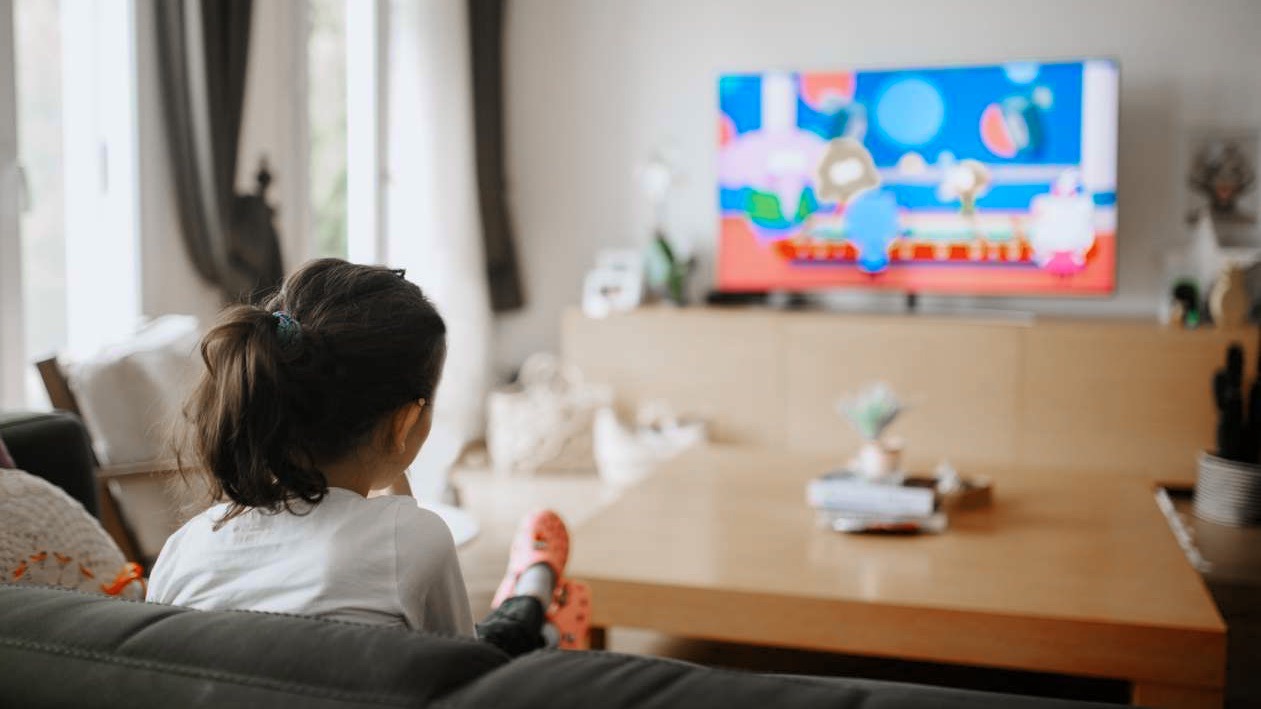
For some time now, Netflix has come under fire for pushing LGBT-related content on both adults and children. The latter category, in particular, has drawn sharp criticism from parents and child advocates who do not want ideological content being forced upon the young and vulnerable. Now, however, it’s not just talk. A new report from Concerned Women for America (CWA) showcases hard numbers that expose just how deep the entertainment company’s agenda runs.

To collect the data, the report noted how “researchers compiled references to LGBTQ+ themes, characters, storylines, and messaging across 326 Netflix series (both licensed and original) rated for young audiences (TV-G, TV-Y, or TV-Y7).” Concerning representation, it “was categorized as ‘Explicit’ (characters clearly identified as lesbian, gay, bisexual, trans, or nonbinary), ‘Implied’ (non-primary characters or ‘queer-coded’ characters), ‘Meta’ (gay families or participants in reality programming), or ‘None.’”

The key findings include:

  • 41% of TV-G series and 41% of TV-Y7 series contain LGBTQ+ content.
  • Of the TV-Y7 content, 24% was rated “Explicit.”
  • Across all three child-appropriate ratings (TV-G, TV-Y, TV-Y7), fully one-third (33%) promote LGBT characters, themes, or messaging.

Netflix pushed LGBT agendas through originals and remakes. Some examples include:

  • “The Magic School Bus” reboot, which introduced a “trans-coded” character and a lesbian couple.
  • A reimagined “Strawberry Shortcake” series that added transgender and non-binary characters.
  • Similar changes in updated versions of “Power Rangers,” “The Fairly OddParents,” and other franchises.
  • The “Anne of Green Gables” adaptation, retitled “Anne with an E,” which incorporated homosexual themes.

CWA asked a pivotal question: “Which came first: LGBTQ+ content aimed at kids, or ‘inclusive’ content that caters to kids who identify as LGBTQ+?” The report noted that studios frequently justify the material as “educational” or “affirming,” yet “we have seen enough leaked videos and internal memos to know that there is, for many working in entertainment, a desire to reshape the culture to align with their own worldview.”

Numerous creators have confirmed that intent publicly. One prominent example is the executive producer of Disney Television Animation who openly celebrated inserting a same-sex couple into “My Little Pony,” praising the showrunners who were “super welcoming … to my not-at-all-secret gay agenda.”

Despite the claim that art mirrors society, CWA fired back that, “taken together, these accounts show that content creators view children’s programming as a tool for cultural transformation, not merely a reflection of existing norms.” Or put differently, the group added, “This report’s findings suggest that Netflix is not merely reflecting social change, it is an active driver.”

The data show LGBT representation in Netflix children’s programming “far outpaces real-world demographics and accelerated dramatically after 2021.” That year, Netflix partnered with the University of Southern California Annenberg Inclusion Initiative to tout its high percentage of LGBTQ leads, while internal data revealed that upwards of 60% of new child-rated shows contained LGBT elements. By 2023, Netflix debuted more children’s shows with LGBTQ+ content (14) than without (9). As the report read, “If the goal is ‘representation,’ rather than pushing a radical sexual identity agenda, then surely the percent of LGBTQ characters on Netflix programming should be more in line with actual population data? Less than 10% of the overall population identifies as gay, trans or nonbinary.”

CWA’s report concluded: “While no single factor explains the surge in LGBTQ identification among adolescents, media exposure is a well-documented variable in shaping norms, identity exploration, and worldview formation. When representation for a small demographic reaches near-ubiquity in children’s content, it naturally raises questions about whether entertainment platforms are shaping identity rather than reflecting it. A pattern strikingly similar to what Alexander Pope described long ago: ‘Vice is a monster of so frightful mien, as to be hated needs but to be seen; yet seen too oft, familiar with her face, we first endure, then pity, then embrace.’”

This report comes alongside a fierce cultural reckoning. For those who oppose the forceful LGBT agenda, speaking out became a non-negotiable. Even Elon Musk, tech billionaire and CEO of X, spoke out on the issue on his X platform. Shortly after, Netflix lost an estimated $15 billion in stock value, “and Internet sleuths set to work exposing other examples of LGBTQ+ content on Netflix children’s programming.”

To offer his own analysis, Family Research Council’s Dr. David Closson shared a comment with The Washington Stand. “For years,” he said, “major entertainment companies have insisted that their role is simply to ‘reflect the culture,’ yet the evidence shows that many creatives inside these studios see themselves as cultural architects. They are intentionally embedding moral messages into children’s programming that align with their own worldview.”

He highlighted the double standard, stating “When companies like Netflix aggressively advance LGBT ideology but then criticize Christians for expressing their faith in the public square, it exposes that the issue is not neutrality; it is competing worldviews.”

While Closson encouraged Christians as a whole to be diligent, discerning, and even willing to use the First Amendment to promote their own biblical worldview, his main advice was for parents:

  1. Exercise vigilance and biblical conviction, recognizing that “media consumption is not a neutral activity” and that platforms contradicting Scripture on sexuality and identity should be approached with extreme caution or avoided.
  2. Actively shape their home’s spiritual environment through clear boundaries, content previewing, filtering tools, and, when necessary, alternative platforms.
  3. Embrace their primary discipleship role, teaching children God’s design for the body, sexuality, and identity “in age-appropriate, truth-filled ways” long before culture does it for them.

As Closson concluded, “When media companies work to normalize ideas that contradict God’s word, Christian parents are not helpless. They can respond with discernment, courage, and a commitment to raising children who understand that their identity is not determined by cultural trends but by the God who created them.”


We Want Politicians Who Have A Biblical Worldview… But Politics Can Never Solve Our Most Significant Problem

The Bible tells us that our ultimate problem is a spiritual problem—it’s sin! It’s a heart issue. We’re all sinners in rebellion against God, and sin nature is ultimately at the root of all of our problems. Crime, immorality, corruption, greed, poverty, disease—all of these exist because of our sin and the fallen state of creation. Because our ultimate problem is sin, politics will never ultimately solve our problems. Now, don’t misunderstand me: politics matter, certainly, and we want politicians who have a biblical worldview and will make decisions based on the truths of Scripture. But even a “best-case scenario” with politics won’t ultimately save anyone—even if it makes a difference in this life.

There Is Only One ‘Preparedness Plan’ The Unbelieving World Should Be Focusing On: Getting Right With God

I'm sure you've seen all the headlines and the news alerts: “Be prepared,” “An emergency is coming,” “Make a plan.” We are being told a global crisis is coming—and not just one in your hometown. I've read two dozen doomsday scenarios where we are to stock up on food, medicine, have a strategy to meet up with family and friends if separated, and much more because something “big” is coming. I have read the reports… but I'm sounding an even bigger warning.

sign up

The Church Cannot Remain Silent On Biblical Matters Because They Have Been Declared ‘Political’

Jesus called His followers the salt of the earth and the light of the world. Neither image suggests withdrawal. Both describe engagement that makes a difference. So the issue is not whether the church should become political. It is whether Christians will remain biblical when biblical truth has political consequences. Our calling is neither to become the mouthpiece of a party nor to retreat into silence. It is to stand on God’s word, defend what is right, confront what is wrong, and speak with courage — even when the culture would rather we remain silent.

ABC's of Salvation

Decision

christ in prophecy

christ in prophecy

Decision

untitled artwork

Israel My Glory

For some time now, Netflix has come under fire for pushing LGBT-related content on both adults and children. The latter category, in particular, has drawn sharp criticism from parents and child advocates who do not want ideological content being forced upon the young and vulnerable. Now, however, it’s not just talk. A new report from Concerned Women for America (CWA) showcases hard numbers that expose just how deep the entertainment company’s agenda runs.

To collect the data, the report noted how “researchers compiled references to LGBTQ+ themes, characters, storylines, and messaging across 326 Netflix series (both licensed and original) rated for young audiences (TV-G, TV-Y, or TV-Y7).” Concerning representation, it “was categorized as ‘Explicit’ (characters clearly identified as lesbian, gay, bisexual, trans, or nonbinary), ‘Implied’ (non-primary characters or ‘queer-coded’ characters), ‘Meta’ (gay families or participants in reality programming), or ‘None.’”

The key findings include:

  • 41% of TV-G series and 41% of TV-Y7 series contain LGBTQ+ content.
  • Of the TV-Y7 content, 24% was rated “Explicit.”
  • Across all three child-appropriate ratings (TV-G, TV-Y, TV-Y7), fully one-third (33%) promote LGBT characters, themes, or messaging.

Netflix pushed LGBT agendas through originals and remakes. Some examples include:

  • “The Magic School Bus” reboot, which introduced a “trans-coded” character and a lesbian couple.
  • A reimagined “Strawberry Shortcake” series that added transgender and non-binary characters.
  • Similar changes in updated versions of “Power Rangers,” “The Fairly OddParents,” and other franchises.
  • The “Anne of Green Gables” adaptation, retitled “Anne with an E,” which incorporated homosexual themes.

CWA asked a pivotal question: “Which came first: LGBTQ+ content aimed at kids, or ‘inclusive’ content that caters to kids who identify as LGBTQ+?” The report noted that studios frequently justify the material as “educational” or “affirming,” yet “we have seen enough leaked videos and internal memos to know that there is, for many working in entertainment, a desire to reshape the culture to align with their own worldview.”

Numerous creators have confirmed that intent publicly. One prominent example is the executive producer of Disney Television Animation who openly celebrated inserting a same-sex couple into “My Little Pony,” praising the showrunners who were “super welcoming … to my not-at-all-secret gay agenda.”

Despite the claim that art mirrors society, CWA fired back that, “taken together, these accounts show that content creators view children’s programming as a tool for cultural transformation, not merely a reflection of existing norms.” Or put differently, the group added, “This report’s findings suggest that Netflix is not merely reflecting social change, it is an active driver.”

The data show LGBT representation in Netflix children’s programming “far outpaces real-world demographics and accelerated dramatically after 2021.” That year, Netflix partnered with the University of Southern California Annenberg Inclusion Initiative to tout its high percentage of LGBTQ leads, while internal data revealed that upwards of 60% of new child-rated shows contained LGBT elements. By 2023, Netflix debuted more children’s shows with LGBTQ+ content (14) than without (9). As the report read, “If the goal is ‘representation,’ rather than pushing a radical sexual identity agenda, then surely the percent of LGBTQ characters on Netflix programming should be more in line with actual population data? Less than 10% of the overall population identifies as gay, trans or nonbinary.”

CWA’s report concluded: “While no single factor explains the surge in LGBTQ identification among adolescents, media exposure is a well-documented variable in shaping norms, identity exploration, and worldview formation. When representation for a small demographic reaches near-ubiquity in children’s content, it naturally raises questions about whether entertainment platforms are shaping identity rather than reflecting it. A pattern strikingly similar to what Alexander Pope described long ago: ‘Vice is a monster of so frightful mien, as to be hated needs but to be seen; yet seen too oft, familiar with her face, we first endure, then pity, then embrace.’”

This report comes alongside a fierce cultural reckoning. For those who oppose the forceful LGBT agenda, speaking out became a non-negotiable. Even Elon Musk, tech billionaire and CEO of X, spoke out on the issue on his X platform. Shortly after, Netflix lost an estimated $15 billion in stock value, “and Internet sleuths set to work exposing other examples of LGBTQ+ content on Netflix children’s programming.”

To offer his own analysis, Family Research Council’s Dr. David Closson shared a comment with The Washington Stand. “For years,” he said, “major entertainment companies have insisted that their role is simply to ‘reflect the culture,’ yet the evidence shows that many creatives inside these studios see themselves as cultural architects. They are intentionally embedding moral messages into children’s programming that align with their own worldview.”

He highlighted the double standard, stating “When companies like Netflix aggressively advance LGBT ideology but then criticize Christians for expressing their faith in the public square, it exposes that the issue is not neutrality; it is competing worldviews.”

While Closson encouraged Christians as a whole to be diligent, discerning, and even willing to use the First Amendment to promote their own biblical worldview, his main advice was for parents:

  1. Exercise vigilance and biblical conviction, recognizing that “media consumption is not a neutral activity” and that platforms contradicting Scripture on sexuality and identity should be approached with extreme caution or avoided.
  2. Actively shape their home’s spiritual environment through clear boundaries, content previewing, filtering tools, and, when necessary, alternative platforms.
  3. Embrace their primary discipleship role, teaching children God’s design for the body, sexuality, and identity “in age-appropriate, truth-filled ways” long before culture does it for them.

As Closson concluded, “When media companies work to normalize ideas that contradict God’s word, Christian parents are not helpless. They can respond with discernment, courage, and a commitment to raising children who understand that their identity is not determined by cultural trends but by the God who created them.”

Trusted Analysis From A Biblical Worldview

Help reach the lost and equip the church with the living and active truth of God's Word in our world today.

YOU CARE ABOUT

BIBLICAL TRUTH. SO DO WE.


Together, We Can Deliver A Biblical Understanding

Of News Events Around The World.

We Want Politicians Who Have A Biblical Worldview… But Politics Can Never Solve Our Most Significant Problem

The Bible tells us that our ultimate problem is a spiritual problem—it’s sin! It’s a heart issue. We’re all sinners in rebellion against God, and sin nature is ultimately at the root of all of our problems. Crime, immorality, corruption, greed, poverty, disease—all of these exist because of our sin and the fallen state of creation. Because our ultimate problem is sin, politics will never ultimately solve our problems. Now, don’t misunderstand me: politics matter, certainly, and we want politicians who have a biblical worldview and will make decisions based on the truths of Scripture. But even a “best-case scenario” with politics won’t ultimately save anyone—even if it makes a difference in this life.

There Is Only One ‘Preparedness Plan’ The Unbelieving World Should Be Focusing On: Getting Right With God

I'm sure you've seen all the headlines and the news alerts: “Be prepared,” “An emergency is coming,” “Make a plan.” We are being told a global crisis is coming—and not just one in your hometown. I've read two dozen doomsday scenarios where we are to stock up on food, medicine, have a strategy to meet up with family and friends if separated, and much more because something “big” is coming. I have read the reports… but I'm sounding an even bigger warning.

untitled artwork 6391

The Church Cannot Remain Silent On Biblical Matters Because They Have Been Declared ‘Political’

Jesus called His followers the salt of the earth and the light of the world. Neither image suggests withdrawal. Both describe engagement that makes a difference. So the issue is not whether the church should become political. It is whether Christians will remain biblical when biblical truth has political consequences. Our calling is neither to become the mouthpiece of a party nor to retreat into silence. It is to stand on God’s word, defend what is right, confront what is wrong, and speak with courage — even when the culture would rather we remain silent.

ABC's of Salvation

TV AD

worldview matters

Decision Magazine V AD

Decision

Jan Markell

Israel My Glory

Erick Stakelbeck

untitled artwork

YOU CARE ABOUT

BIBLICAL TRUTH.

SO DO WE.

Together, We Can Deliver A Biblical Understanding Of News Events Around The World And Equip The Church To Stand With A Biblical Worldview.

untitled artwork

Israel My Glory

YOU CARE ABOUT

BIBLICAL TRUTH.

SO DO WE.


Together, We Can Deliver A Biblical Understanding Of News Events Around The World And Equip The Church To Stand With A Biblical Worldview.