
June 18, 2026

June, 18, 2026
June 18, 2026

give

untitled artwork

untitled artwork

World news biblically understood

TRENDING:

If America Empowers A Regime That Openly Calls For Israel’s Destruction, There Will Be Significant Consequences

Brandon Holthaus

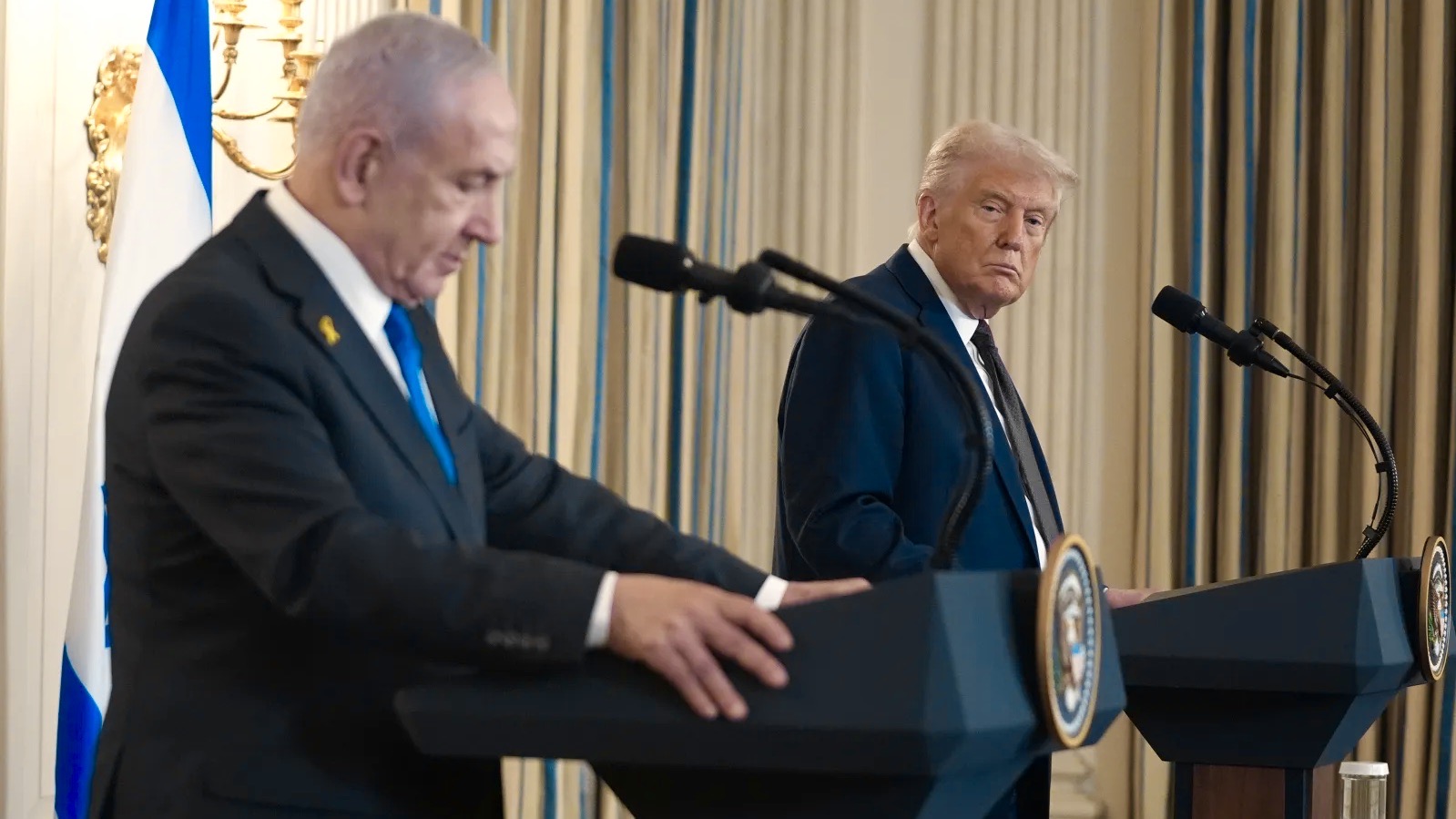
President Trump recently announced an agreement with Iran that pauses the current pressure campaign and reopens the Strait of Hormuz. While some view this as a diplomatic breakthrough, I believe it is a significant strategic error that could increase the vulnerability of both Israel and the United States.

The central question remains: What concessions has Iran made? Despite months of discussion about maximum pressure and Iran’s supposed weakening, these outcomes have not materialized. Instead, the United States has relaxed its stance, extended negotiations by sixty days, and presented this as a victory. I remain unconvinced.

This agreement resembles a temporary truce, historically known as an Islamic “hudna,” which allows them to feign peace while stalling to regroup and strengthen their position for future attacks. This pattern follows what Mohammed did with the Treaty of Hudaybiyyah in AD 628 with the Quraysh tribe of Mecca. The treaty was intended to last ten years, but lasted less than two. During this period, Muhammad used the truce to regroup and strengthen his forces. He eventually broke the truce and conquered Mecca. The Iranian Regime has gained additional time, a key objective in past negotiations. The memorandum provides two more months for talks toward a broader agreement. President Trump has suggested Iran may be permitted to enrich uranium at low levels in the future. This raises serious concerns about Iran’s intentions, given its longstanding pursuit of nuclear capabilities.

Iran’s leadership, ideology, hostility toward Israel and the United States, sponsorship of terrorism, nuclear ambitions, and revolutionary vision for the Middle East remain unchanged. Given this continuity, it is unlikely that the outcome of negotiations will differ from previous efforts.

Historically, hostile regimes have used negotiations to gain time to regroup, rebuild, and strengthen alliances. The primary concern is not only Iran’s current actions, but also how it may leverage this additional time to enhance its position in the future.

There are also concerns regarding individuals shaping U.S. Middle East policy, such as Steve Witkoff and Jared Kushner.  Steve Witkoff, now a chief negotiator, does not understand the region and has potential conflicts of interest. Before his government role, Witkoff engaged in significant business transactions with Qatari-linked entities. In 2023, Qatar’s sovereign wealth fund purchased the Park Lane Hotel from Witkoff for over $600 million. Additionally, financing from entities with substantial Qatari investment was extended to Witkoff Group projects. Reports indicate that members of the Witkoff family sought to raise significant funds from Gulf investors, with Steve Witkoff serving as a key negotiator.  That’s a problem.

Jared Kushner is another example of total ignorance of the Middle East and is in a compromised position as well. After leaving government, his investment firm received a $2 billion investment from Saudi Arabia’s sovereign wealth fund, reportedly following intervention by Crown Prince Mohammed bin Salman.  When Gulf states with significant regional interests maintain major financial relationships with U.S. negotiators, then that’s a conflict of interest.

Furthermore, the Middle East is fundamentally different from a business negotiation. It is shaped by centuries of Islamic conviction, historical grievances, Islamic ideological commitments, tribal loyalties, and geopolitical ambitions to bring in a global Caliphate by destroying Israel and the West. Negotiators who lack an understanding of these factors, including Islamic ideology and the long-term objectives of the Iranian regime, will be taken advantage of and lose at the negotiating table.  Monsters cannot be reasoned with or negotiated with.

A broader concern is that Trump, Kushner, and Witkoff view Iran mainly through economic or political perspectives. This overlooks the regime’s ideological motivations, which include revolutionary Shiite Islam, regional dominance, anti-Western sentiment, and apocalyptic beliefs. Iran has a long history of funding terrorism, destabilizing neighboring countries, threatening Israel, and seeking nuclear capabilities that could significantly alter the Middle East’s balance of power.

Trump believes that reopening the Strait of Hormuz will stabilize energy markets and provide the United States with more strategic options, including in relation to China. However, this also increases energy access for China, benefiting a key U.S. rival. As a result, the United States is easing pressure on Iran while reducing its own leverage. This approach raises questions about its strategic wisdom

This agreement does not diminish Iran’s proxy network; rather, it may strengthen it. Groups such as Hezbollah, Hamas, and the Houthis, all supported by Tehran, benefit when Iran gains additional time and resources. For these reasons, I do not view this as a landmark deal, but rather as a risky concession.

There is also a biblical dimension that many Christians will immediately recognize. Genesis 12:3 records God’s promise to Abraham: ” I will bless those who bless you, and I will curse him who curses you.” That principle has never been revoked. God’s covenant relationship with Israel remains intact. Any policy that strengthens Israel’s enemies while weakening Israel’s security should concern Christians who take Scripture seriously. This is not simply a matter of foreign policy. It is also a matter of biblical recompense for foolish actions that jeopardize Israel and the West.

If the United States empowers a regime that openly calls for Israel’s destruction, there will be significant consequences. According to Scripture, God’s Abrahamic covenant commitments are taken seriously. Policies that weaken Israel’s security could place the United States in a precarious position with the cursing effect of the Abrahamic Covenant.

From a prophetic perspective, these developments are significant. Scripture describes a future coalition against Israel in the Gog of Magog invasion, as recorded in Ezekiel 38 and 39. It appears that the players are in place and the hooks in the jaws of Gog of Magog are forming. Strengthening hostile powers in the region does not enhance Israel’s security.

History and prophecy offer little reason for optimism in this situation. Israel will continually be isolated and left on its own to defend itself. This agreement provides a dangerous regime with more time and opportunity. It is not a victory, but a risk whose consequences will come to fruition in the future.

Pray for Israel. Pray for America. Pray that God continues to show mercy to our nation despite the foolish decisions of our leaders.

give

Capitulating To A Vanquished Iranian Enemy?: The Good, The Bad, And The Unknown In The Memorandum of Understanding

Have you ever had a person in your life that you greatly admire and respect do something that completely shocks you, and not in a good way? Your heart breaks; you wonder what’s happened. How could this person do these things? It makes no sense! That is how I have felt these past few weeks as I’ve watched the actions taken by President Donald Trump. I love the man. He has done so much for my country, especially when it comes to how we’ve dealt with Gaza. But his recent decisions regarding Iran have left me baffled.

Disregarding Biblical Morality: Denomination Faces ‘Sharp Internal Backlash,’ Arguing That A Monogamy Requirement For Pastors Would Be ‘Harmful’

And this kind of moral relativism is what will happen to every denomination that abandons God’s Word as the authority and embraces man’s word instead. If God’s Word is not the authority, ultimately anything goes because morality becomes subjective and arbitrary based on human opinion (man’s word).

sign up

Jan Markell: You Can’t Have A Genuine Revival With False Doctrine Raging

I hear a dozen evangelists stating that we are on the verge of a great revival. One self-proclaimed prophet says that a billion souls will come to faith in the coming weeks and months. If my Rapture is imminent, how can there be an imminent revival? Which is it? The Bible does talk about a coming revival. The question concerns its timing. Is it in the coming days, or is it after the Rapture when the “left behind” world realizes they should have listened to believers like you and me, get a second chance, and multitudes come to faith?

ABC's of Salvation

Decision

UTT

FOI

untitled artwork

Israel My Glory

Brandon Holthaus

President Trump recently announced an agreement with Iran that pauses the current pressure campaign and reopens the Strait of Hormuz. While some view this as a diplomatic breakthrough, I believe it is a significant strategic error that could increase the vulnerability of both Israel and the United States.

The central question remains: What concessions has Iran made? Despite months of discussion about maximum pressure and Iran’s supposed weakening, these outcomes have not materialized. Instead, the United States has relaxed its stance, extended negotiations by sixty days, and presented this as a victory. I remain unconvinced.

This agreement resembles a temporary truce, historically known as an Islamic “hudna,” which allows them to feign peace while stalling to regroup and strengthen their position for future attacks. This pattern follows what Mohammed did with the Treaty of Hudaybiyyah in AD 628 with the Quraysh tribe of Mecca. The treaty was intended to last ten years, but lasted less than two. During this period, Muhammad used the truce to regroup and strengthen his forces. He eventually broke the truce and conquered Mecca. The Iranian Regime has gained additional time, a key objective in past negotiations. The memorandum provides two more months for talks toward a broader agreement. President Trump has suggested Iran may be permitted to enrich uranium at low levels in the future. This raises serious concerns about Iran’s intentions, given its longstanding pursuit of nuclear capabilities.

Iran’s leadership, ideology, hostility toward Israel and the United States, sponsorship of terrorism, nuclear ambitions, and revolutionary vision for the Middle East remain unchanged. Given this continuity, it is unlikely that the outcome of negotiations will differ from previous efforts.

Historically, hostile regimes have used negotiations to gain time to regroup, rebuild, and strengthen alliances. The primary concern is not only Iran’s current actions, but also how it may leverage this additional time to enhance its position in the future.

There are also concerns regarding individuals shaping U.S. Middle East policy, such as Steve Witkoff and Jared Kushner.  Steve Witkoff, now a chief negotiator, does not understand the region and has potential conflicts of interest. Before his government role, Witkoff engaged in significant business transactions with Qatari-linked entities. In 2023, Qatar’s sovereign wealth fund purchased the Park Lane Hotel from Witkoff for over $600 million. Additionally, financing from entities with substantial Qatari investment was extended to Witkoff Group projects. Reports indicate that members of the Witkoff family sought to raise significant funds from Gulf investors, with Steve Witkoff serving as a key negotiator.  That’s a problem.

Jared Kushner is another example of total ignorance of the Middle East and is in a compromised position as well. After leaving government, his investment firm received a $2 billion investment from Saudi Arabia’s sovereign wealth fund, reportedly following intervention by Crown Prince Mohammed bin Salman.  When Gulf states with significant regional interests maintain major financial relationships with U.S. negotiators, then that’s a conflict of interest.

Furthermore, the Middle East is fundamentally different from a business negotiation. It is shaped by centuries of Islamic conviction, historical grievances, Islamic ideological commitments, tribal loyalties, and geopolitical ambitions to bring in a global Caliphate by destroying Israel and the West. Negotiators who lack an understanding of these factors, including Islamic ideology and the long-term objectives of the Iranian regime, will be taken advantage of and lose at the negotiating table.  Monsters cannot be reasoned with or negotiated with.

A broader concern is that Trump, Kushner, and Witkoff view Iran mainly through economic or political perspectives. This overlooks the regime’s ideological motivations, which include revolutionary Shiite Islam, regional dominance, anti-Western sentiment, and apocalyptic beliefs. Iran has a long history of funding terrorism, destabilizing neighboring countries, threatening Israel, and seeking nuclear capabilities that could significantly alter the Middle East’s balance of power.

Trump believes that reopening the Strait of Hormuz will stabilize energy markets and provide the United States with more strategic options, including in relation to China. However, this also increases energy access for China, benefiting a key U.S. rival. As a result, the United States is easing pressure on Iran while reducing its own leverage. This approach raises questions about its strategic wisdom

This agreement does not diminish Iran’s proxy network; rather, it may strengthen it. Groups such as Hezbollah, Hamas, and the Houthis, all supported by Tehran, benefit when Iran gains additional time and resources. For these reasons, I do not view this as a landmark deal, but rather as a risky concession.

There is also a biblical dimension that many Christians will immediately recognize. Genesis 12:3 records God’s promise to Abraham: ” I will bless those who bless you, and I will curse him who curses you.” That principle has never been revoked. God’s covenant relationship with Israel remains intact. Any policy that strengthens Israel’s enemies while weakening Israel’s security should concern Christians who take Scripture seriously. This is not simply a matter of foreign policy. It is also a matter of biblical recompense for foolish actions that jeopardize Israel and the West.

If the United States empowers a regime that openly calls for Israel’s destruction, there will be significant consequences. According to Scripture, God’s Abrahamic covenant commitments are taken seriously. Policies that weaken Israel’s security could place the United States in a precarious position with the cursing effect of the Abrahamic Covenant.

From a prophetic perspective, these developments are significant. Scripture describes a future coalition against Israel in the Gog of Magog invasion, as recorded in Ezekiel 38 and 39. It appears that the players are in place and the hooks in the jaws of Gog of Magog are forming. Strengthening hostile powers in the region does not enhance Israel’s security.

History and prophecy offer little reason for optimism in this situation. Israel will continually be isolated and left on its own to defend itself. This agreement provides a dangerous regime with more time and opportunity. It is not a victory, but a risk whose consequences will come to fruition in the future.

Pray for Israel. Pray for America. Pray that God continues to show mercy to our nation despite the foolish decisions of our leaders.

Trusted Analysis From A Biblical Worldview

Help reach the lost and equip the church with the living and active truth of God's Word in our world today.

YOU CARE ABOUT

BIBLICAL TRUTH. SO DO WE.


Together, We Can Deliver A Biblical Understanding

Of News Events Around The World.

Capitulating To A Vanquished Iranian Enemy?: The Good, The Bad, And The Unknown In The Memorandum of Understanding

Have you ever had a person in your life that you greatly admire and respect do something that completely shocks you, and not in a good way? Your heart breaks; you wonder what’s happened. How could this person do these things? It makes no sense! That is how I have felt these past few weeks as I’ve watched the actions taken by President Donald Trump. I love the man. He has done so much for my country, especially when it comes to how we’ve dealt with Gaza. But his recent decisions regarding Iran have left me baffled.

Disregarding Biblical Morality: Denomination Faces ‘Sharp Internal Backlash,’ Arguing That A Monogamy Requirement For Pastors Would Be ‘Harmful’

And this kind of moral relativism is what will happen to every denomination that abandons God’s Word as the authority and embraces man’s word instead. If God’s Word is not the authority, ultimately anything goes because morality becomes subjective and arbitrary based on human opinion (man’s word).

untitled artwork 6391

Jan Markell: You Can’t Have A Genuine Revival With False Doctrine Raging

I hear a dozen evangelists stating that we are on the verge of a great revival. One self-proclaimed prophet says that a billion souls will come to faith in the coming weeks and months. If my Rapture is imminent, how can there be an imminent revival? Which is it? The Bible does talk about a coming revival. The question concerns its timing. Is it in the coming days, or is it after the Rapture when the “left behind” world realizes they should have listened to believers like you and me, get a second chance, and multitudes come to faith?

ABC's of Salvation

TV AD

worldview matters

Decision Magazine V AD

Decision

Jan Markell

Israel My Glory

Erick Stakelbeck

untitled artwork

YOU CARE ABOUT

BIBLICAL TRUTH.

SO DO WE.

Together, We Can Deliver A Biblical Understanding Of News Events Around The World And Equip The Church To Stand With A Biblical Worldview.

untitled artwork

Israel My Glory

YOU CARE ABOUT

BIBLICAL TRUTH.

SO DO WE.


Together, We Can Deliver A Biblical Understanding Of News Events Around The World And Equip The Church To Stand With A Biblical Worldview.