August 3, 2026

August, 3, 2026
August 3, 2026

give

untitled artwork

untitled artwork

World news biblically understood

TRENDING:

Chaos In Mexico And The Dangers To Evangalical Christians

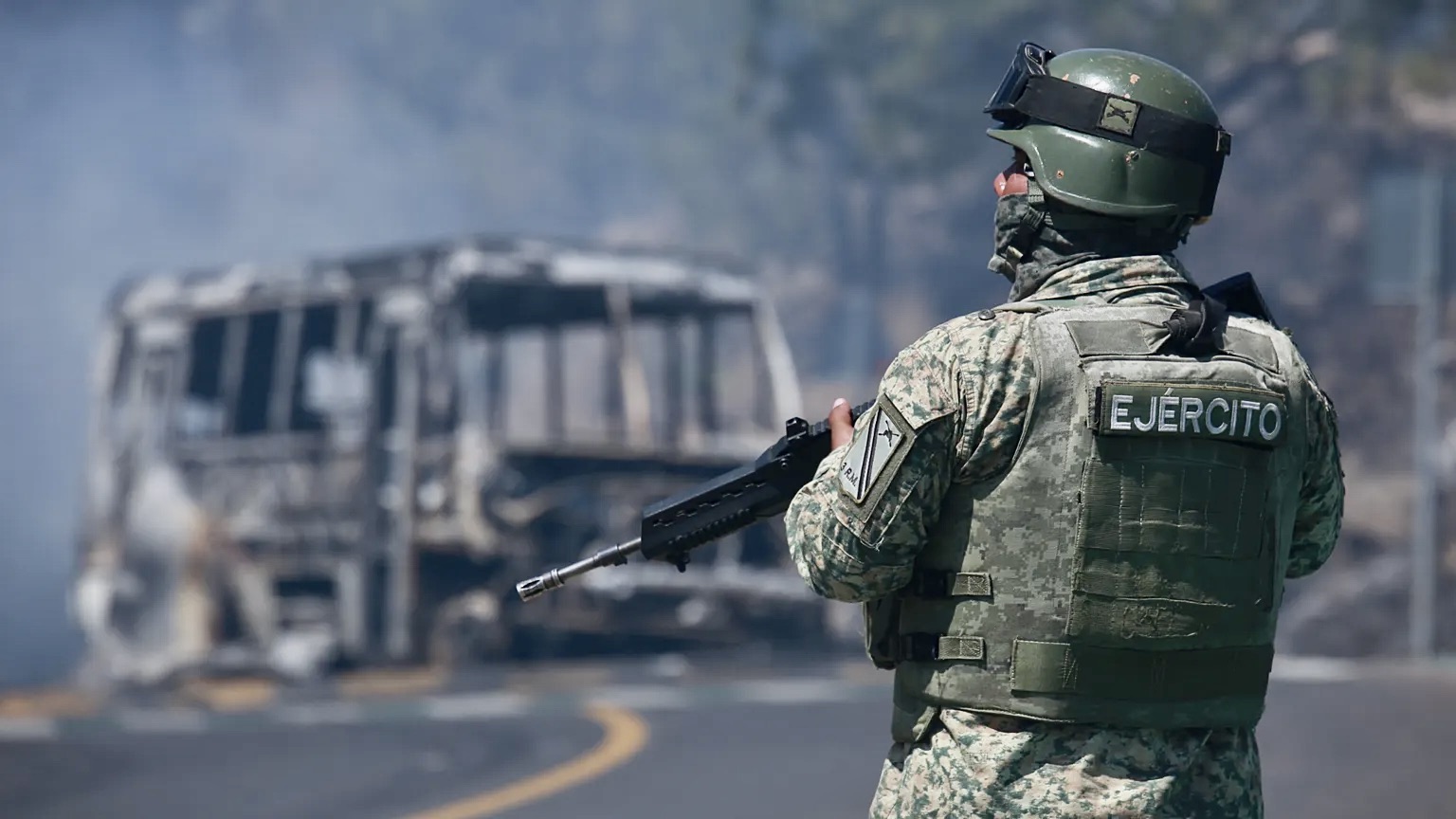
Mexico has erupted in violence and destruction in retaliation for the Feb. 22 assassination of Nemesio Ruben Osequera Cervantes, known as “El Mencho,” leader of the notorious Jalisco New Generation Cartel (CJNG).  

This cartel is considered one of the most powerful and brutal in Mexico. The assassination was carried out by the Mexican military with U.S. support. According to news reports, 37 Mexican military personnel were killed during the operation.  

The CJING has unleashed terror across Mexico, “more than 250 roadblocks, vehicle fires, attacks on gas stations and establishments in at least 20 states across the country, as well as suspended classes in eight states and a widespread climate of terror among the population, was the initial outcome” following the assassination.

We are praying for the safety of Mexican civilians, as well as the military and police who are combating the terrorists’ attacks.

For me, this is personal. In December 2025, I was with a small team ministering in and around Tehuantepec, in the southern state of Oaxaca. Our local church supports and partners with local churches and the only government-approved evangelical Christian school in the region. I had previously been there and developed relationships with pastors, the school principal, and some of the students. 

Given the current violence, as of Sunday, the churches and the school are closed until further notice. This exacerbates the isolation of evangelical Christians who already face persecution for refusing to participate in community festivities and rituals rooted in idolatry and witchcraft.

For schoolchildren who live in poverty and difficult conditions, this may mean going without lunch and escalating abuse at home, in addition to disrupted learning. According to our contacts there, bike taxis, which are a common means of transportation, are not the service leaving people stranded. Our pastor friend reported that a church member could not be located amid the violence, leading to fear among the congregation. He was later accounted for.  

Prior to these recent events, Christians, especially evangelicals, have faced persecution from multiple fronts. The Open Doors World Watch List of 2025 ranked Mexico as the 30th worst country for the persecution of Christians.  

The report states: “criminality continues to spread across Mexico, putting more Christians in danger — especially those who dare to counter evil with good. This year saw a worrying rise in serious incidents, including one of the highest numbers in recent years of Christians killed, as well as new forms of violence that had rarely been recorded before. Hostility also persists in several indigenous communities against Christians who refuse to take part in traditional or syncretistic religious practices. Meanwhile, despite being a predominantly Christian country and the constitution’s protection of religious freedom, believers are encountering growing opposition in the public sphere for their views on different issues.”

“Many people in these communities, which maintain a separate identity and language, practice ‘Christo-paganism,’ a syncretistic blend of ancient pagan practices and Roman Catholicism. In addition, there is a strong atheistic communist movement, most notably in the state of Chiapas.”  

Our contact on the ground in Mexico, whom I will not identify for safety reasons, reported to us that on Jan. 23, 11 evangelicals were beaten and arrested in the indigenous region of Alto de Chiapas for refusing to participate in local festivities celebrating an idolatrous Catholic holiday. International Christian Concern (ICC) reported a similar incident occurring in the municipality of San Juan Mazatian Mixe in the state of Oaxaca, where our team has ministered on multiple occasions.  

Pastor Mariano Velasquez Martinez refused to pray to an image of St. James during a local festival. He was reported to the authorities and arrested. After being imprisoned for five days, “officials bound him with a rope, led him out before 180 men — among whom were his uncle and cousin — and expelled him from the community. They forced him to sign a document explaining his departure. Without a copy of his own, Martinez fears the story was fabricated to portray him as having left voluntarily.” Our sources on the ground added that his status and well-being are unknown. The local Catholics reportedly want to demolish his church. 

Historically, Catholicism was recognized as the sole state-sanctioned religion in Mexico upon its independence in 1824, thereby prohibiting other religions. Reformation laws followed, and in 1917, the state recognized that other religions existed in Mexico, but they received no legal status or rights. In 1988, the new president, Carlos Salinas de Gortari, revised the laws to make them more consistent with international freedom of religion and the United Nations Universal Declaration of Human Rights (Article 19).  

The new law was founded on the principle of separation of church and state and guarantees freedom to practice one’s individual religion without “discrimination, coercion, or hostility because of one’s religious beliefs … to associate and meet together peacefully for religious purposes.”  

The law states that churches and religious groups will have legal status once they obtain approval and are registered through the Ministry of Government.  

“The Constitution provides all persons the right to religious freedom, including the right to engage in religious ceremonies and acts of worship. The constitution declares the country a secular state. Under the constitution, Indigenous communities enjoy a protected legal structure, allowing them some measure of self-governance to practice their own particular “uses and customs,” with the provision that the law must be applied in line with human rights guarantees in the constitution and in the international conventions to which the country is a party.”

The challenge and danger for evangelical Christian pastors exists predominately in such indigenous communities, where all community members must financially contribute to fund local religious festivals, which often include drunkenness, idol worship, and witchcraft.  

At best, Christians who refuse are often discriminated against, their water and utilities are shut off, and their children are ostracized. In many cases, they are threatened, driven out of town, churches are burned, and their homes are destroyed. While ministering in these areas, I spoke with many pastors who had been driven from multiple communities due to these reasons, as well as their desire to evangelize. In addition to local community pressures, the ever-present threat from the drug cartels is especially targeting Christians who oppose their criminal activities.  

Considering these ongoing dangers and recent events, I urge all believers to pray for the safety of our Mexican brothers and sisters. When we think of the persecuted, we typically think of those across the ocean, not on our own continent. My hope is to mobilize prayer for those just across the border as well.



Millions Are Understanding The News Through A Biblical Worldview

THANKS TO YOUR PRAYER AND SUPPORT

Literal, Eternal, And Unconditional: Bible Prophecy Begins And Ends With Israel

Imagine you open to the middle of a book. Immediately, you face unfamiliar names and locations. To make sense of the story, you flip to the end. But the ending seems more confusing than the middle. You slam the book shut in disgust. This analogy is about as subtle as a sledgehammer. But it illustrates why so many people have trouble with Bible prophecy. To understand prophecy, we should not start in the middle of the Book or at the end. No, we should begin at the beginning. It’s there, in Genesis 12:1-3, that God makes a startling promise to a man named Abraham. All prophecy hangs on this promise, or “covenant.”

World’s Largest Transgender Org Questions The Irreversible Effects Of Sex‑Rejecting Surgeries—But Only Behind Closed Doors

Even the world’s leading transgender organization promoting medical gender interventions recognizes, at least behind closed doors, that some patients will later need specialized medical help to live with the permanent consequences. And this despite many critics warning about such consequences from the beginning. As Miceli concluded, this “contradiction” within WPATH “cannot be brushed aside: it exposes a fundamental inconsistency in which life-altering interventions are championed for minors on the one hand while the reality of those who later seek to reverse them has unfortunately been minimized and gone unaddressed.”

sign up

The Slippery Slope Of Australia’s Spirituality: A Deliberate Campaign Of Atheism

On 29 July 2026, the church that I pastor played host for the Brisbane leg of a tour of Australia by Amir Tsarfati and Pastor Barry Stagner. On that blessed evening, over 1,000 people gathered together for praise, powerful preaching, prayer, and of course, photos with these two beloved servants of God. Even though we hired a large venue for the evening, seating was limited. This meant that, sadly, many missed out on being able to attend. One such person who was not able to secure tickets remarked that it would be wonderful if this was the dilemma faced by every Bible-believing church in Australia on a Sunday morning. Yet Australia's overall spiritual landscape suggest a disturbing deterioration away from Biblical belief.

ABC's of Salvation

Decision

UTT

FOI

untitled artwork

Israel My Glory

Mexico has erupted in violence and destruction in retaliation for the Feb. 22 assassination of Nemesio Ruben Osequera Cervantes, known as “El Mencho,” leader of the notorious Jalisco New Generation Cartel (CJNG).  

This cartel is considered one of the most powerful and brutal in Mexico. The assassination was carried out by the Mexican military with U.S. support. According to news reports, 37 Mexican military personnel were killed during the operation.  

The CJING has unleashed terror across Mexico, “more than 250 roadblocks, vehicle fires, attacks on gas stations and establishments in at least 20 states across the country, as well as suspended classes in eight states and a widespread climate of terror among the population, was the initial outcome” following the assassination.

We are praying for the safety of Mexican civilians, as well as the military and police who are combating the terrorists’ attacks.

For me, this is personal. In December 2025, I was with a small team ministering in and around Tehuantepec, in the southern state of Oaxaca. Our local church supports and partners with local churches and the only government-approved evangelical Christian school in the region. I had previously been there and developed relationships with pastors, the school principal, and some of the students. 

Given the current violence, as of Sunday, the churches and the school are closed until further notice. This exacerbates the isolation of evangelical Christians who already face persecution for refusing to participate in community festivities and rituals rooted in idolatry and witchcraft.

For schoolchildren who live in poverty and difficult conditions, this may mean going without lunch and escalating abuse at home, in addition to disrupted learning. According to our contacts there, bike taxis, which are a common means of transportation, are not the service leaving people stranded. Our pastor friend reported that a church member could not be located amid the violence, leading to fear among the congregation. He was later accounted for.  

Prior to these recent events, Christians, especially evangelicals, have faced persecution from multiple fronts. The Open Doors World Watch List of 2025 ranked Mexico as the 30th worst country for the persecution of Christians.  

The report states: “criminality continues to spread across Mexico, putting more Christians in danger — especially those who dare to counter evil with good. This year saw a worrying rise in serious incidents, including one of the highest numbers in recent years of Christians killed, as well as new forms of violence that had rarely been recorded before. Hostility also persists in several indigenous communities against Christians who refuse to take part in traditional or syncretistic religious practices. Meanwhile, despite being a predominantly Christian country and the constitution’s protection of religious freedom, believers are encountering growing opposition in the public sphere for their views on different issues.”

“Many people in these communities, which maintain a separate identity and language, practice ‘Christo-paganism,’ a syncretistic blend of ancient pagan practices and Roman Catholicism. In addition, there is a strong atheistic communist movement, most notably in the state of Chiapas.”  

Our contact on the ground in Mexico, whom I will not identify for safety reasons, reported to us that on Jan. 23, 11 evangelicals were beaten and arrested in the indigenous region of Alto de Chiapas for refusing to participate in local festivities celebrating an idolatrous Catholic holiday. International Christian Concern (ICC) reported a similar incident occurring in the municipality of San Juan Mazatian Mixe in the state of Oaxaca, where our team has ministered on multiple occasions.  

Pastor Mariano Velasquez Martinez refused to pray to an image of St. James during a local festival. He was reported to the authorities and arrested. After being imprisoned for five days, “officials bound him with a rope, led him out before 180 men — among whom were his uncle and cousin — and expelled him from the community. They forced him to sign a document explaining his departure. Without a copy of his own, Martinez fears the story was fabricated to portray him as having left voluntarily.” Our sources on the ground added that his status and well-being are unknown. The local Catholics reportedly want to demolish his church. 

Historically, Catholicism was recognized as the sole state-sanctioned religion in Mexico upon its independence in 1824, thereby prohibiting other religions. Reformation laws followed, and in 1917, the state recognized that other religions existed in Mexico, but they received no legal status or rights. In 1988, the new president, Carlos Salinas de Gortari, revised the laws to make them more consistent with international freedom of religion and the United Nations Universal Declaration of Human Rights (Article 19).  

The new law was founded on the principle of separation of church and state and guarantees freedom to practice one’s individual religion without “discrimination, coercion, or hostility because of one’s religious beliefs … to associate and meet together peacefully for religious purposes.”  

The law states that churches and religious groups will have legal status once they obtain approval and are registered through the Ministry of Government.  

“The Constitution provides all persons the right to religious freedom, including the right to engage in religious ceremonies and acts of worship. The constitution declares the country a secular state. Under the constitution, Indigenous communities enjoy a protected legal structure, allowing them some measure of self-governance to practice their own particular “uses and customs,” with the provision that the law must be applied in line with human rights guarantees in the constitution and in the international conventions to which the country is a party.”

The challenge and danger for evangelical Christian pastors exists predominately in such indigenous communities, where all community members must financially contribute to fund local religious festivals, which often include drunkenness, idol worship, and witchcraft.  

At best, Christians who refuse are often discriminated against, their water and utilities are shut off, and their children are ostracized. In many cases, they are threatened, driven out of town, churches are burned, and their homes are destroyed. While ministering in these areas, I spoke with many pastors who had been driven from multiple communities due to these reasons, as well as their desire to evangelize. In addition to local community pressures, the ever-present threat from the drug cartels is especially targeting Christians who oppose their criminal activities.  

Considering these ongoing dangers and recent events, I urge all believers to pray for the safety of our Mexican brothers and sisters. When we think of the persecuted, we typically think of those across the ocean, not on our own continent. My hope is to mobilize prayer for those just across the border as well.

Trusted Analysis From A Biblical Worldview

Help reach the lost and equip the church with the living and active truth of God's Word in our world today.

YOU CARE ABOUT

BIBLICAL TRUTH. SO DO WE.


Together, We Can Deliver A Biblical Understanding

Of News Events Around The World.

Literal, Eternal, And Unconditional: Bible Prophecy Begins And Ends With Israel

Imagine you open to the middle of a book. Immediately, you face unfamiliar names and locations. To make sense of the story, you flip to the end. But the ending seems more confusing than the middle. You slam the book shut in disgust. This analogy is about as subtle as a sledgehammer. But it illustrates why so many people have trouble with Bible prophecy. To understand prophecy, we should not start in the middle of the Book or at the end. No, we should begin at the beginning. It’s there, in Genesis 12:1-3, that God makes a startling promise to a man named Abraham. All prophecy hangs on this promise, or “covenant.”

World’s Largest Transgender Org Questions The Irreversible Effects Of Sex‑Rejecting Surgeries—But Only Behind Closed Doors

Even the world’s leading transgender organization promoting medical gender interventions recognizes, at least behind closed doors, that some patients will later need specialized medical help to live with the permanent consequences. And this despite many critics warning about such consequences from the beginning. As Miceli concluded, this “contradiction” within WPATH “cannot be brushed aside: it exposes a fundamental inconsistency in which life-altering interventions are championed for minors on the one hand while the reality of those who later seek to reverse them has unfortunately been minimized and gone unaddressed.”

untitled artwork 6391

The Slippery Slope Of Australia’s Spirituality: A Deliberate Campaign Of Atheism

On 29 July 2026, the church that I pastor played host for the Brisbane leg of a tour of Australia by Amir Tsarfati and Pastor Barry Stagner. On that blessed evening, over 1,000 people gathered together for praise, powerful preaching, prayer, and of course, photos with these two beloved servants of God. Even though we hired a large venue for the evening, seating was limited. This meant that, sadly, many missed out on being able to attend. One such person who was not able to secure tickets remarked that it would be wonderful if this was the dilemma faced by every Bible-believing church in Australia on a Sunday morning. Yet Australia's overall spiritual landscape suggest a disturbing deterioration away from Biblical belief.

ABC's of Salvation

TV AD

worldview matters

Decision Magazine V AD

Decision

Jan Markell

Israel My Glory

Erick Stakelbeck

untitled artwork

YOU CARE ABOUT

BIBLICAL TRUTH.

SO DO WE.

Together, We Can Deliver A Biblical Understanding Of News Events Around The World And Equip The Church To Stand With A Biblical Worldview.

untitled artwork

Israel My Glory

YOU CARE ABOUT

BIBLICAL TRUTH.

SO DO WE.


Together, We Can Deliver A Biblical Understanding Of News Events Around The World And Equip The Church To Stand With A Biblical Worldview.