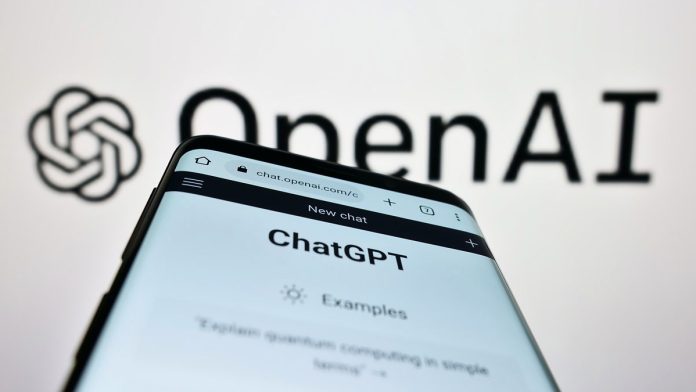
In what some might find surprising, Christians are tapping into artificial intelligence (AI) more than other Americans, with many even trusting it to foster “spiritual growth” within their lives, according to new data from Barna Research.
The Big Picture
Barna’s latest research on faith and AI found that “practicing Christians are outpacing nearly every population segment on AI adoption, including pastors.” Yet even within Christian circles, a clear contrast exists between how the average Christian uses AI compared to pastors.
“Pastors understand that AI is out there,” said Daniel Copeland, Barna’s vice president of research, “but they’re not immersed in it the way their engaged congregants may be. The danger for pastors is underestimating just how normal AI is for the people around them. For most practicing Christians, AI isn’t for occasional use. It’s already woven into how they work, learn and make decisions.”
Zoom out and “ask people yes-or-no whether they use AI, and the average pastor and the average American look about the same,” Copeland added. “It’s frequency of use [is] where the difference actually shows up.”
The data shows that 44% of practicing Christians say they use AI “very often” or “often” in their personal lives. Among U.S. adults as a whole, that figure drops to 31%, with only 29% of non-practicing Christians reporting the same. And it’s not just for personal use—26% of U.S. adults across the nation and 39% of practicing Christians use AI often or very often at work.
How Christians Are Using AI
While many practicing Christians say they trust AI to support spiritual growth, most turn to it for far more ordinary purposes. As the researchers put it, “everyday tasks: look something up, learn how to complete a task, get advice on a decision, catch up on the news, sharpen a piece of writing.” Questions related to faith, “like interpreting Scripture or seeking spiritual guidance, show up much further down the list.”
Still, nearly half of the practicing Christian participants said they would trust AI to help with spiritual growth. Approximately one-third report having “turned to AI for spiritual guidance or Bible-related questions in the past month.” Even among those who have sought their pastors’ help in navigating AI, only 12% of pastors believe they are equipped to offer such guidance.
Barna’s own report asked pressing questions: “Where does that leave church leaders, when one-third of practicing Christians want their pastor’s perspective on AI yet most pastors don’t yet feel prepared to give it? Do pastors need to become technology experts to keep up with their congregants?”
The Barna Group determined that “pastors don’t need to become AI experts” in order to tend to their flock. “The questions people already bring to AI, about Scripture, relationships, their own struggles, often surface before they ever reach a pastor. Christian leaders who pay attention gain a clearer view of where people are stuck, and one more reason to keep showing up in person for exactly those moments.”
And as Copeland put it, “the better move is for pastors to double down on what they already do well: teaching people how to engage Scripture, building real relationships, making space for analog discipleship. That’s what people can lean on when AI gives them an answer that’s incomplete, misleading or just wrong.”
A Soft Warning
Robert Maginnis, retired U.S. Army lieutenant colonel, author of 15 books and senior fellow for National Security at the Family Research Council, has written extensively on the topic of AI as it pertains to Christians. Referring to Barna’s latest data, Maginnis told Decision that “the numbers describe a church that has outrun its shepherds.”
He explained how the research reveals an “inversion” of how many practicing Christians are reportedly using AI for personal use versus the number of pastors—which is a much smaller percentage. “That inversion,” Maginnis argued, “is a discipleship problem before it is a technology problem. Christians are not primarily consulting AI about Scripture or theology. The danger is quieter: AI is becoming the first place they turn to gather information, learn a skill, make a decision, or sharpen an argument. Those daily habits shape the mind long before anyone labels the question ‘spiritual.’”
But there remain a large number of Christians who do trust AI with their spiritual development. And yet, Maginnis warned, “AI is ultimately someone else’s understanding … packaged as an immediate and authoritative answer. Scripture warns, ‘Trust in the LORD with all thine heart; and lean not unto thine own understanding’ (Proverbs 3:5).”
In an ever-technologically advanced world, Maginnis is less concerned about Christians and pastors utilizing tools such as AI and more concerned about allowing those tools to be used without discernment. As he argues in his book AI for Mankind’s Future, “the church does not need to master every new technology before its members do. It must form Christians who can test what technology tells them. A congregation fluent in AI but untrained in Biblical discernment is not prepared for the world now taking shape.”
An Ongoing Trend, Not a New One
In related research released in May, Barna found that among practicing Christians, AI was increasingly becoming a “spiritual authority.” At the same time, the research noted that “the Christians most open to AI are often the same ones most unsettled by it.”
That data showed roughly 61% of respondents would “completely or somewhat” trust AI with achieving financial stability, while 56% said the same for mental and physical well-being. Additionally, 56% said “they would trust AI with feeling happy and content with life,” 54% with “understanding and expressing one’s true self” and “having a sense of meaning or purpose,” and 53% with “building meaningful relationships with others.”
Many of those same respondents viewed AI advice as just as credible as guidance from a pastor. Copeland described the findings as “confounding” data. “Christians say they trust AI with spiritual growth, and a meaningful share say its spiritual guidance is as trustworthy as a pastor’s—yet large majorities are simultaneously concerned about AI misinterpreting Scripture, replacing God, or undermining the role of spiritual leaders,” he said.
“The use case and the underlying fear are both present, and they’re pointing in different directions.”
Barna researchers had concluded in May that Christians’ rapid embrace of AI has outpaced any settled conviction about its proper place in the life of faith. Many are “extending trust and registering fear in the same breath.” Fast forward to July, and that tension is not something the latest data resolves. Rather, it confirms how widespread it has become.
Relevant Bible passages to ponder: Proverbs 9:10, Philippians 1:9-11