
November 16, 2026

November, 16, 2026
November 16, 2026

give

untitled artwork

untitled artwork

World news biblically understood

TRENDING:

Are You Concerned About The Implementation Of AI Facial Recognition?

David Bowen

This week, I read an article about how the National Football League plans to roll out a new system that uses facial recognition in all 30 stadiums for the 2024 season. It caused me to remember an article from a few months ago about the Carolina Panthers launching an AI facial recognition ticket entry. Both articles highlight how some AI startups use the motto, โ€œYour face is your credential.โ€ These vendors sell facial recognition technology to sports stadiums nationwide, including college sports venues, to admit fans into the game.

How do you feel about this new structure? Are you concerned about the implementation of facial recognition? Do you see this as another invasion of your privacy? Do we even have any privacy left?

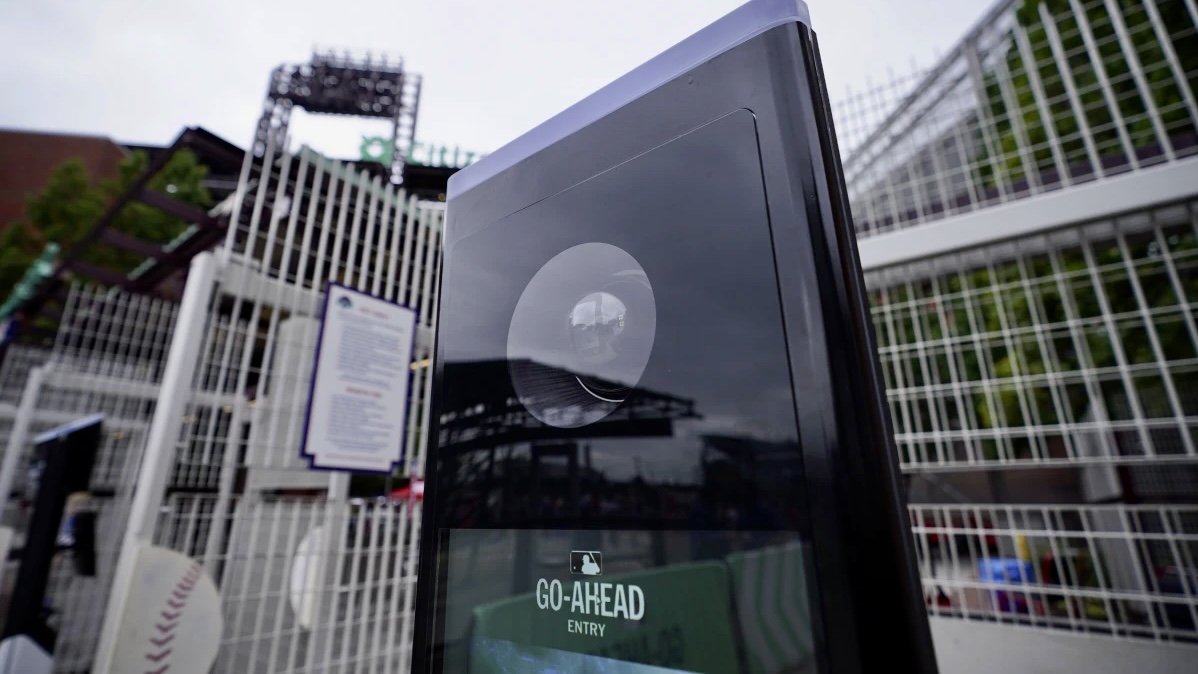
  • Citi Field, home of the New York Mets, plans to add facial recognition, called Face-ID ticket kiosks, to all stadium gates.
  • In August 2022, Mercedes-Benz Stadium in Atlanta announced that it was testing facial recognition technology for gates and concession stands.
  • FirstEnergy Stadium in Cleveland offers โ€œExpress Accessโ€ with facial recognition technology.
  • Save Mart Center at California State University, Fresno, enables entry and payment with facial recognition technology.
  • Lower.com Field in Columbus, Ohio, has an express entry with face-ID ticketing.
  • FedEx Field in Landover, Maryland, uses facial recognition for entry.
  • Caesars Superdome in New Orleans uses facial recognition to enter training facilities.
  • In 2022, Toyota Arena installed facial recognition for ticketing and concessions in Ontario, California.
  • Hard Rock Stadium in Miami Gardens, Florida, uses facial recognition for ticketing.
  • Sun Devil Stadium at Arizona State University in Tempe, Arizona, is using a โ€œliving labโ€ to employ facial recognition technology that will analyze how fans feel โ€œbased on their facial expressions.โ€
  • In 2020, the Rose Bowl in Pasadena, California, supposedly used facial recognition on 30,000 attendees without their knowledge.

The owner of the New York Knicks and Rangers and CEO of the company that operates Madison Square Garden has publicly said his company used facial recognition software to scan for attorneys from 90 law firms who, at the time, had active litigation against the company. Why do they have this? To ban those attorneys from entering Madison Square Garden for any event.

Facial recognition technology is in high demand by sports teams. A 2021 study of 40 venue directors representing teams from Major League Baseball, the NBA, the NFL, the NHL, and Major League Soccer indicated that facial recognition software is at the top of the wish list for all their venues. The Wall Street Journal reported that sports stadiums plan to move everything to facial recognition. The most recent World Cup in Qatar had 15,000 facial recognition cameras across all eight stadiums. If you wanted to watch the World Cup, the cost was your consent to be on camera and your face placed in a data bank.

Once inside the stadium, people will have even more AI facial recognition opportunities. Software such as TendedBar, an โ€œautomated cocktail bar,โ€ is currently used in ten stadiums nationwide. If someone wants to order a drink, they can approach a TendedBar machine and be served without cash or human contact. The company that developed this software explains scanning someoneโ€™s face is better than checking someoneโ€™s ID. A patron uses this cashless dispensary to purchase and receive alcoholic drinks. The company says once a customer signs up at one location and their age is verified, they can access the machines in all other stadiums.

Companies such as Trueface, which claims to be the โ€œfastest face recognition in the world,โ€ have taken facial recognition into the retail market. For example, a chicken restaurant in Pasadena, California, has installed facial recognition payments at self-order kiosks. So, if you are in Pasadena and you want some chicken, you wonโ€™t need any money, just your face.

Because of facial recognition technology, retail stores can now watch and follow their customers. Digital signage will be used to recognize your face and market to you. The demographic information they collect will be used for marketing and maintaining inventory, but more concerning is that they will now have a personal record of what you like, what you have purchased, and how often you made that purchase. According to Verified Market Research, the facial recognition retail market is projected to reach $10.2 billion by 2028.

Facial recognition technology from California-based Alcatraz AI has developed a system called the โ€œRock.โ€ It is designed to replace access cards and keypads and will be used to decide whether certain people should be allowed to enter specific spaces, such as offices, schools, or medical facilities.

Reagan International Airport in Washington was one of the first airports to get TSA facial recognition. Facial recognition is now at TSA checkpoints at 25 US and Puerto Rico airports, and the program is expanding. Surveys reveal that what has made this new technology acceptable is how comfortable people have become with unlocking their iPhones with their faces. Again, people seem willing to hand over personal data all in the name of convenience.

People have become accustomed to the idea that you can look at a phone and it will unlock. Itโ€™s easy and convenient. So, now, at the airport, instead of having to present a ticket, you just present your face, and you walk through security to your gate.

Do these systems have a database of a lot of peopleโ€™s photos? Yes, they do, and that database is growing. Rapidly. Realize that you give the government your photo when you get a passport or enroll in programs such as TSA precheck. If you have a driverโ€™s license, the government has your photo. The government has your photo if you have a school ID, especially a state-sponsored school. It is anticipated that in the future, airlines will ask for your picture when you travel. No, theyโ€™re going to require your photo.

They say these facial recognition systems can handle changes in appearance, such as losing or gaining weight or growing facial hair. The day may be coming, and coming quickly, when you wonโ€™t even need to interact with a human being. Youโ€™ll go straight to your seat in the stadium, exit the store with your merchandise or groceries, or go straight to your airport gate, all by just smiling into a camera.

We all have been helping corporations and the government secure all this personal data. Millions of Americans have installed cameras in their own homes. Technology such as Ring doorbells constantly collects data, not only of the people who come to the door, but also of people who pass by on the street. Your neighbor may be adding to your digital profile. Once somebody else has your data, they can do whatever they want with it.

Currently, only Illinois, Texas, and Washington have enacted laws that regulate the use of facial recognition technology, and only the Illinois law gives the right for a private person to bring a claim against a violation. In the future, if not already, there is little we will be able to do without someone knowing what we are doing or where we are going. Scripture told us this day was coming (Revelation 13:16-18). The good news is Scripture has told us that Jesus is also coming.



give

give

Salt And Light In A Corrupt World: The Churchโ€™s Greatest Victory Will Never Be Won At The Ballot Boxโ€”It’s In The Salvation Of Souls

The dramatic shift in the political landscape means the agenda of evil will continue to advance. The LGBTQ agenda will press forward, the killing of unborn children through abortion will continue, open-border policies will bring further dangers, and the influence of Islam will continue to grow within our nation. But none of this should surprise those who know their Bibles.

A Fight That Will Only Intensify: In Texas, Opponents Are Wasting No Time in Attacking Religious Freedom

Shortly after the midterm elections, newly elected Democrat Maggie Ellis, the next Chief Justice of the Texas Supreme Court, stated her intention to eliminate a religious accommodation that allows judges to publicly refrain from performing a marriage that conflicts with his or her sincerely held religious beliefs. Chief Justice Ellisโ€™s position would require that a judge perform all marriage ceremonies or none at all. โ€œItโ€™s sad that an incoming Justiceโ€™s first public statement is one against religious freedom,โ€ said First Liberty President, CEO & Chief Counsel Kelly Shackelford.

sign up

โ€˜Unwavering Voice For The Voicelessโ€™: Cissie Graham Lynch Sits for Senate Confirmation Hearing for Religious Freedom Ambassador

The lessons that have shaped her most deeply, she said, came from โ€œsitting with mothers whoโ€™ve lost sons and daughters to persecution, listening to pastors whoโ€™ve rebuilt their congregations after their churches have been burned, and meeting families driven from their homes because of their beliefs.โ€ Those encounters remain vivid. โ€œIโ€™ve stood in the mass graveyards in northern Iraq,โ€ Lynch said. โ€œIโ€™ve spoken with displaced women in Sudan hiding in the mountains. Iโ€™ve met with family members of the 21 Coptic Christians who have been beheaded by ISIS on the shores of Libya. They are not statistics. They have faces, names, and families, and I will carry their stories with me into this role.โ€

ABC's of Salvation

Decision

christ in prophecy

christ in prophecy

Decision

untitled artwork

Israel My Glory

David Bowen

This week, I read an article about how the National Football League plans to roll out a new system that uses facial recognition in all 30 stadiums for the 2024 season. It caused me to remember an article from a few months ago about the Carolina Panthers launching an AI facial recognition ticket entry. Both articles highlight how some AI startups use the motto, โ€œYour face is your credential.โ€ These vendors sell facial recognition technology to sports stadiums nationwide, including college sports venues, to admit fans into the game.

How do you feel about this new structure? Are you concerned about the implementation of facial recognition? Do you see this as another invasion of your privacy? Do we even have any privacy left?

  • Citi Field, home of the New York Mets, plans to add facial recognition, called Face-ID ticket kiosks, to all stadium gates.
  • In August 2022, Mercedes-Benz Stadium in Atlanta announced that it was testing facial recognition technology for gates and concession stands.
  • FirstEnergy Stadium in Cleveland offers โ€œExpress Accessโ€ with facial recognition technology.
  • Save Mart Center at California State University, Fresno, enables entry and payment with facial recognition technology.
  • Lower.com Field in Columbus, Ohio, has an express entry with face-ID ticketing.
  • FedEx Field in Landover, Maryland, uses facial recognition for entry.
  • Caesars Superdome in New Orleans uses facial recognition to enter training facilities.
  • In 2022, Toyota Arena installed facial recognition for ticketing and concessions in Ontario, California.
  • Hard Rock Stadium in Miami Gardens, Florida, uses facial recognition for ticketing.
  • Sun Devil Stadium at Arizona State University in Tempe, Arizona, is using a โ€œliving labโ€ to employ facial recognition technology that will analyze how fans feel โ€œbased on their facial expressions.โ€
  • In 2020, the Rose Bowl in Pasadena, California, supposedly used facial recognition on 30,000 attendees without their knowledge.

The owner of the New York Knicks and Rangers and CEO of the company that operates Madison Square Garden has publicly said his company used facial recognition software to scan for attorneys from 90 law firms who, at the time, had active litigation against the company. Why do they have this? To ban those attorneys from entering Madison Square Garden for any event.

Facial recognition technology is in high demand by sports teams. A 2021 study of 40 venue directors representing teams from Major League Baseball, the NBA, the NFL, the NHL, and Major League Soccer indicated that facial recognition software is at the top of the wish list for all their venues. The Wall Street Journal reported that sports stadiums plan to move everything to facial recognition. The most recent World Cup in Qatar had 15,000 facial recognition cameras across all eight stadiums. If you wanted to watch the World Cup, the cost was your consent to be on camera and your face placed in a data bank.

Once inside the stadium, people will have even more AI facial recognition opportunities. Software such as TendedBar, an โ€œautomated cocktail bar,โ€ is currently used in ten stadiums nationwide. If someone wants to order a drink, they can approach a TendedBar machine and be served without cash or human contact. The company that developed this software explains scanning someoneโ€™s face is better than checking someoneโ€™s ID. A patron uses this cashless dispensary to purchase and receive alcoholic drinks. The company says once a customer signs up at one location and their age is verified, they can access the machines in all other stadiums.

Companies such as Trueface, which claims to be the โ€œfastest face recognition in the world,โ€ have taken facial recognition into the retail market. For example, a chicken restaurant in Pasadena, California, has installed facial recognition payments at self-order kiosks. So, if you are in Pasadena and you want some chicken, you wonโ€™t need any money, just your face.

Because of facial recognition technology, retail stores can now watch and follow their customers. Digital signage will be used to recognize your face and market to you. The demographic information they collect will be used for marketing and maintaining inventory, but more concerning is that they will now have a personal record of what you like, what you have purchased, and how often you made that purchase. According to Verified Market Research, the facial recognition retail market is projected to reach $10.2 billion by 2028.

Facial recognition technology from California-based Alcatraz AI has developed a system called the โ€œRock.โ€ It is designed to replace access cards and keypads and will be used to decide whether certain people should be allowed to enter specific spaces, such as offices, schools, or medical facilities.

Reagan International Airport in Washington was one of the first airports to get TSA facial recognition. Facial recognition is now at TSA checkpoints at 25 US and Puerto Rico airports, and the program is expanding. Surveys reveal that what has made this new technology acceptable is how comfortable people have become with unlocking their iPhones with their faces. Again, people seem willing to hand over personal data all in the name of convenience.

People have become accustomed to the idea that you can look at a phone and it will unlock. Itโ€™s easy and convenient. So, now, at the airport, instead of having to present a ticket, you just present your face, and you walk through security to your gate.

Do these systems have a database of a lot of peopleโ€™s photos? Yes, they do, and that database is growing. Rapidly. Realize that you give the government your photo when you get a passport or enroll in programs such as TSA precheck. If you have a driverโ€™s license, the government has your photo. The government has your photo if you have a school ID, especially a state-sponsored school. It is anticipated that in the future, airlines will ask for your picture when you travel. No, theyโ€™re going to require your photo.

They say these facial recognition systems can handle changes in appearance, such as losing or gaining weight or growing facial hair. The day may be coming, and coming quickly, when you wonโ€™t even need to interact with a human being. Youโ€™ll go straight to your seat in the stadium, exit the store with your merchandise or groceries, or go straight to your airport gate, all by just smiling into a camera.

We all have been helping corporations and the government secure all this personal data. Millions of Americans have installed cameras in their own homes. Technology such as Ring doorbells constantly collects data, not only of the people who come to the door, but also of people who pass by on the street. Your neighbor may be adding to your digital profile. Once somebody else has your data, they can do whatever they want with it.

Currently, only Illinois, Texas, and Washington have enacted laws that regulate the use of facial recognition technology, and only the Illinois law gives the right for a private person to bring a claim against a violation. In the future, if not already, there is little we will be able to do without someone knowing what we are doing or where we are going. Scripture told us this day was coming (Revelation 13:16-18). The good news is Scripture has told us that Jesus is also coming.


Trusted Analysis From A Biblical Worldview

Help reach the lost and equip the church with the living and active truth of God's Word in our world today.

YOU CARE ABOUT

BIBLICAL TRUTH. SO DO WE.

ย 

Together, We Can Deliver A Biblical Understanding

Of News Events Around The World.

Salt And Light In A Corrupt World: The Churchโ€™s Greatest Victory Will Never Be Won At The Ballot Boxโ€”It’s In The Salvation Of Souls

The dramatic shift in the political landscape means the agenda of evil will continue to advance. The LGBTQ agenda will press forward, the killing of unborn children through abortion will continue, open-border policies will bring further dangers, and the influence of Islam will continue to grow within our nation. But none of this should surprise those who know their Bibles.

A Fight That Will Only Intensify: In Texas, Opponents Are Wasting No Time in Attacking Religious Freedom

Shortly after the midterm elections, newly elected Democrat Maggie Ellis, the next Chief Justice of the Texas Supreme Court, stated her intention to eliminate a religious accommodation that allows judges to publicly refrain from performing a marriage that conflicts with his or her sincerely held religious beliefs. Chief Justice Ellisโ€™s position would require that a judge perform all marriage ceremonies or none at all. โ€œItโ€™s sad that an incoming Justiceโ€™s first public statement is one against religious freedom,โ€ said First Liberty President, CEO & Chief Counsel Kelly Shackelford.

untitled artwork 6391

โ€˜Unwavering Voice For The Voicelessโ€™: Cissie Graham Lynch Sits for Senate Confirmation Hearing for Religious Freedom Ambassador

The lessons that have shaped her most deeply, she said, came from โ€œsitting with mothers whoโ€™ve lost sons and daughters to persecution, listening to pastors whoโ€™ve rebuilt their congregations after their churches have been burned, and meeting families driven from their homes because of their beliefs.โ€ Those encounters remain vivid. โ€œIโ€™ve stood in the mass graveyards in northern Iraq,โ€ Lynch said. โ€œIโ€™ve spoken with displaced women in Sudan hiding in the mountains. Iโ€™ve met with family members of the 21 Coptic Christians who have been beheaded by ISIS on the shores of Libya. They are not statistics. They have faces, names, and families, and I will carry their stories with me into this role.โ€

ABC's of Salvation

TV AD

worldview matters

Decision Magazine V AD

Decision

Jan Markell

Israel My Glory

Erick Stakelbeck

untitled artwork

YOU CARE ABOUT

BIBLICAL TRUTH.

SO DO WE.

Together, We Can Deliver A Biblical Understanding Of News Events Around The World And Equip The Church To Stand With A Biblical Worldview.

untitled artwork

Israel My Glory

YOU CARE ABOUT

BIBLICAL TRUTH.

SO DO WE.

ย 

Together, We Can Deliver A Biblical Understanding Of News Events Around The World And Equip The Church To Stand With A Biblical Worldview.