October 23, 2026

October, 23, 2026
October 23, 2026

give

untitled artwork

untitled artwork

World news biblically understood

TRENDING:

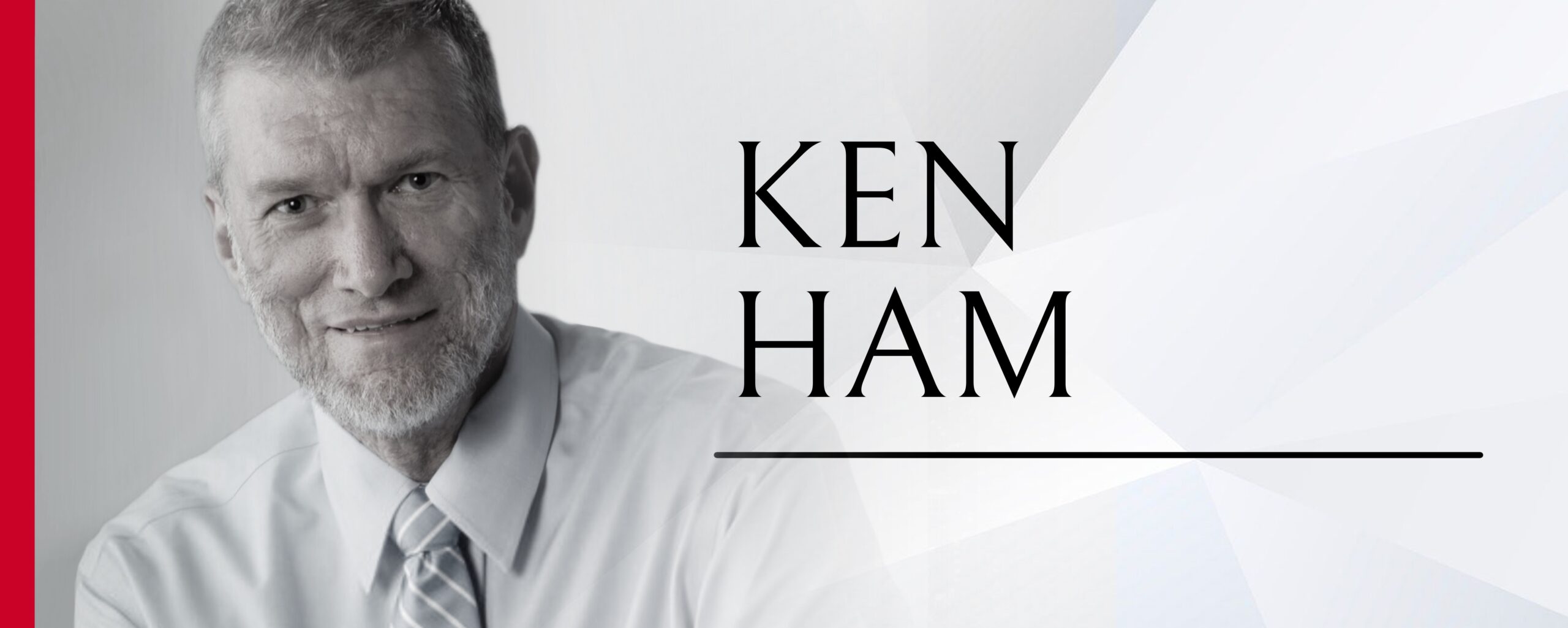
Are Christians Against Abortion Because of an ‘Ancient Mistranslation’?

Ken Ham,Exodus 21,bible abortion

It’s amazing the way that those who want to justify immorality will use the Bible to do so! Often such people will take a passage that teaches one thing and twist it to “mean” the opposite of what the text clearly teaches. And a recent commentary in The Washington Post is a perfect example of such twisting of the Scriptures.

The authors argue that Christians are against “abortion rights” (there is no such thing—rights are endowed by our Creator, who said, “Thou shalt not murder,” Exodus 20:13) because of two verses from the Law (Exodus 21:22–23), which they believe are often mistranslated.

How absurd. Christians who believe the Bible are against abortion because of the totality of Scripture, which teaches that (1) humans are fearfully and wonderfully made (Psalm 139:14) in God’s image (Genesis 1:27); (2) murder is wrong (Genesis 9:6); (3) we’re to speak up for those who have no voice (Proverbs 31:8); (4) God hates those who shed innocent blood (Proverbs 6:16–17); (5) human life in the womb is described with the same terminology as children already born (Luke 1:41, 18:15); and (6) a human life has so much value that the Creator of the world stepped into history to pay the price for our sin so we might be saved from its consequences! While abortion advocates say we should sacrifice the life of a child for the desires of the mother, father, or others, the gospel says lay down your life for the good of another. That’s just the short version of why so many Christians are (or should be!) vehemently opposed to the slaughter of unborn children in their mother’s wombs!

But what about their argument that there’s a mistranslation in Exodus 21? AiG’s Tim Chaffey, the content manager for our attractions, thoroughly debunks that claim:

Put simply, The Washington Post commentary focuses on the wrong word in Exodus 21:22–23 and betrays an ignorance of Christianity. Since it’s in The Washington Post, we can have little doubt that they aren’t going to handle Scripture faithfully. In fact, I would go so far as to say that this paper wouldn’t publish a commentary supportive of pro-life using Scripture!

So, the argument in the article is that Christians cite only these two verses in Exodus to make a case against abortion:

When men strive together and hit a pregnant woman, so that her children come out, but there is no harm, the one who hit her shall surely be fined, as the woman’s husband shall impose on him, and he shall pay as the judges determine. But if there is harm, then you shall pay life for life.

Apparently, they’ve never heard of Genesis 1:27, Psalm 139, Luke 1, etc. Never mind the biological fact that the baby is a living human being from fertilization!

Back to the commentary: the authors claim that the keyword in Exodus 21:22–23 is the Hebrew ‘ason, translated as “serious injury” (NET), “harm” (NKJV, ESV), “injury” (NASB), etc. The LXX (Greek Old Testament) translators, who were generally very good in the Pentateuch, chose the word exeikonizomai, which The Washington Post authors say should be translated as “from the image” (ek as “out of, from” and eikon as “image”). While, as they say, that is a literal rendering, we need to look at the context to see what it means. The various LXX versions in English that I have each translate it as “not fully formed” or “imperfectly formed.” In other words, the idea is that the child who is born has some sort of deformity (“not in the form of”). This is obvious given the imposition of the lex talionis (law of retribution, i.e., eye for an eye, tooth for a tooth, etc.) in the following verses.

There really is no difference in meaning between the Hebrew and Greek. The Hebrew says that if the mother gives birth and the child has been seriously harmed, then the man who hit her shall pay eye for an eye, limb for limb, etc. The LXX says that if the mother gives birth and the child is deformed (meaning not fully formed), then the man who hit her will pay eye for an eye, limb for limb.

The real mistranslation in this verse occurs just a couple words earlier. (This is what I focused on in a 2011 article I wrote.) Some English translations (RSV, NRSV, and Amplified are the only ones I found) use the word “miscarriage” instead of referring to premature birth. By doing this, they make it seem as if it’s the mother’s injuries or life that are in view in the following verses. But this is not the meaning of the word or the point of the passage. It all has to do with what happens to the child. If there is no injury, then the man pays a fine. If the child is injured or dies, then the attacker pays eye for eye, life for life. You will notice that The Washington Post piece uses “miscarriage” in both “translations” of the passage, even though the word does not refer to miscarriage. The Hebrew and Greek both have a meaning of something like “the child(ren) go out.”

Think about how foolish the argument is in their article. The authors claim that Exodus 21:22 states either of the following:

Hebrew: If a man hits a pregnant woman so that she miscarries but there is no further harm (to the mother), then the man pays a fine imposed by the judges. (My 2011 article rebuts this view.)

Greek: If a man hits a pregnant woman so that she miscarries but the child is not deformed, then the man pays a fine. But if the (dead) child is deformed, then the man dies.

What? How ridiculous is that argument? If the child is already dead, why would it matter if the child is deformed or not? Obviously, the verse is not talking about a dead child (unless caused by the attacker). It is talking about a child who is born prematurely and may or may not be injured/fully formed as a result. Rather than being a verse that could be used in favor of abortion, this passage teaches that the unborn has identical value to the one already born.

The writers of the article make other egregious errors. For example, they write:

Theology, based on that translation, soon followed. It’s easy to see how Saint Augustine, working out of the Septuagint, could develop his theory of ensoulment from here; a fetus early in formation, or in the early stages of gestation, did not have a soul, and thus it was not considered manslaughter to cause its accidental miscarriage. A fetus that was more “formed” did have a soul, so a person who caused its miscarriage would be, indeed, liable as though they had killed a fully formed person. Saint Thomas Aquinas, too, pointed to the moment of “quickening” — the moment at which fetal movement could be detected by the pregnant person — as the point of ensoulment.

Sorry, but Augustine wasn’t “working out of the Septuagint.” He struggled with Greek and didn’t know Hebrew. He may have been commenting on the LXX here, but he certainly wasn’t “working out of it” as his preferred translation. Later in life, he became a little better with Greek, but it is well known that he worked out of the Vetus Latina (the Old Latin prior to the Vulgate). The Vetus Latina was based on the LXX, so the statement isn’t necessarily 100% wrong, but notice how they are trying to connect a supposed mistranslation in the LXX (when really it means the same thing) to Christian theology, as though the church is basing its views on Augustine. In the Fearfully and Wonderfully Made exhibit at the Creation Museum, which makes a biblical and scientific case for the sanctity of unborn life from the moment of fertilization, we don’t ever cite Augustine or Aquinas. We cite Psalm 139; Genesis 1:26–27 and 9:6; Luke 1:43–44; Matthew 1:23; and Exodus 21:22–25.

Christians are supposedly against abortion, the columnists argue, because Augustine supposedly relied upon a supposedly unreliable translation of Exodus 21:22, and if we were to just listen to the liberal theologians’ non-sensical understanding of the passage, then we would “see” that the Bible doesn’t speak against abortion at all.

It’s so sad that people are so willing to twist Scripture in a way that leads to the murder of babies.

God’s Word is clear—unborn persons are persons, made in God’s image, with equal value to persons who are further along in their development.

You can discover more about the sanctity of each and every human life in our phenomenal pro-life exhibit at the Creation Museum, Fearfully and Wonderfully Made, or in our new book based on that exhibit (featuring stunning photographs of our beautiful models of babies at various stages of development), Fearfully and Wonderfully Made.
A War Weary World: As Nation Rises Against Nation, The World Is Ripe For A Peacemaker

Israel, of course, is at the epicenter—with Palestinian terrorists in Gaza, with Hezbollah in Lebanon, and the ongoing threat from Iran. The United States is also facing off against Iran in the Strait of Hormuz, with this global oil chokepoint still being restrained and escalation ready to break out at any moment. Iran is preparing for all-out war. Iranian leaders are making all kinds of bombastic threats, trying to deter a renewed large-scale assault by the United States. Meanwhile, the Trump administration is threatening to use the “mother of all bombs” (MOAB) against the regime. Then you have all the crisis and chaos in Europe. It's being described as “horror.”

The Upheaval In France Is Knocking On America’s Door—The Midterms Determine Whether It’s Welcomed In

When political grievances become an excuse for destruction, Constitutional government must stand firm — or risk surrendering the streets to the mob. The scenes unfolding in France should serve as a warning to every American who values liberty, public order, and constitutional government. When thousands of demonstrators take to the streets, when political protests descend into looting and arson, and when historic public buildings become targets of mob violence, a nation must ask itself a fundamental question: Who is really in charge? The rule of law, the citizens and their elected representatives? Or the most aggressive factions willing to intimidate everyone else?

sign up

Franklin Graham: Jesus Is Coming Back… And It’s Not Going To Be Far Down The Road 

During a lengthy sit-down interview with Fox News Sean Hannity, evangelist Franklin Graham boldly detailed to a largely secular podcast audience the list of extraordinary evidence showcasing that our world is living in the season of Jesus’ return. “Jesus is coming back,” Graham declared. “He is going to come back, and He is going to establish His throne here. There's gonna be a new Jerusalem. He is coming down, and He is going to reign. That is going to take place. When that's gonna take place, I don't know… but it's not gonna be that far down the road. Jesus told us to look for signs. In Matthew chapter 24, He gives us great examples of what's coming and what we ought to be looking for. If you look today, [you can see] the signs.”

ABC's of Salvation

Decision

christ in prophecy

christ in prophecy

Decision

untitled artwork

Israel My Glory

Ken Ham,Exodus 21,bible abortion

It’s amazing the way that those who want to justify immorality will use the Bible to do so! Often such people will take a passage that teaches one thing and twist it to “mean” the opposite of what the text clearly teaches. And a recent commentary in The Washington Post is a perfect example of such twisting of the Scriptures.

The authors argue that Christians are against “abortion rights” (there is no such thing—rights are endowed by our Creator, who said, “Thou shalt not murder,” Exodus 20:13) because of two verses from the Law (Exodus 21:22–23), which they believe are often mistranslated.

How absurd. Christians who believe the Bible are against abortion because of the totality of Scripture, which teaches that (1) humans are fearfully and wonderfully made (Psalm 139:14) in God’s image (Genesis 1:27); (2) murder is wrong (Genesis 9:6); (3) we’re to speak up for those who have no voice (Proverbs 31:8); (4) God hates those who shed innocent blood (Proverbs 6:16–17); (5) human life in the womb is described with the same terminology as children already born (Luke 1:41, 18:15); and (6) a human life has so much value that the Creator of the world stepped into history to pay the price for our sin so we might be saved from its consequences! While abortion advocates say we should sacrifice the life of a child for the desires of the mother, father, or others, the gospel says lay down your life for the good of another. That’s just the short version of why so many Christians are (or should be!) vehemently opposed to the slaughter of unborn children in their mother’s wombs!

But what about their argument that there’s a mistranslation in Exodus 21? AiG’s Tim Chaffey, the content manager for our attractions, thoroughly debunks that claim:

Put simply, The Washington Post commentary focuses on the wrong word in Exodus 21:22–23 and betrays an ignorance of Christianity. Since it’s in The Washington Post, we can have little doubt that they aren’t going to handle Scripture faithfully. In fact, I would go so far as to say that this paper wouldn’t publish a commentary supportive of pro-life using Scripture!

So, the argument in the article is that Christians cite only these two verses in Exodus to make a case against abortion:

When men strive together and hit a pregnant woman, so that her children come out, but there is no harm, the one who hit her shall surely be fined, as the woman’s husband shall impose on him, and he shall pay as the judges determine. But if there is harm, then you shall pay life for life.

Apparently, they’ve never heard of Genesis 1:27, Psalm 139, Luke 1, etc. Never mind the biological fact that the baby is a living human being from fertilization!

Back to the commentary: the authors claim that the keyword in Exodus 21:22–23 is the Hebrew ‘ason, translated as “serious injury” (NET), “harm” (NKJV, ESV), “injury” (NASB), etc. The LXX (Greek Old Testament) translators, who were generally very good in the Pentateuch, chose the word exeikonizomai, which The Washington Post authors say should be translated as “from the image” (ek as “out of, from” and eikon as “image”). While, as they say, that is a literal rendering, we need to look at the context to see what it means. The various LXX versions in English that I have each translate it as “not fully formed” or “imperfectly formed.” In other words, the idea is that the child who is born has some sort of deformity (“not in the form of”). This is obvious given the imposition of the lex talionis (law of retribution, i.e., eye for an eye, tooth for a tooth, etc.) in the following verses.

There really is no difference in meaning between the Hebrew and Greek. The Hebrew says that if the mother gives birth and the child has been seriously harmed, then the man who hit her shall pay eye for an eye, limb for limb, etc. The LXX says that if the mother gives birth and the child is deformed (meaning not fully formed), then the man who hit her will pay eye for an eye, limb for limb.

The real mistranslation in this verse occurs just a couple words earlier. (This is what I focused on in a 2011 article I wrote.) Some English translations (RSV, NRSV, and Amplified are the only ones I found) use the word “miscarriage” instead of referring to premature birth. By doing this, they make it seem as if it’s the mother’s injuries or life that are in view in the following verses. But this is not the meaning of the word or the point of the passage. It all has to do with what happens to the child. If there is no injury, then the man pays a fine. If the child is injured or dies, then the attacker pays eye for eye, life for life. You will notice that The Washington Post piece uses “miscarriage” in both “translations” of the passage, even though the word does not refer to miscarriage. The Hebrew and Greek both have a meaning of something like “the child(ren) go out.”

Think about how foolish the argument is in their article. The authors claim that Exodus 21:22 states either of the following:

Hebrew: If a man hits a pregnant woman so that she miscarries but there is no further harm (to the mother), then the man pays a fine imposed by the judges. (My 2011 article rebuts this view.)

Greek: If a man hits a pregnant woman so that she miscarries but the child is not deformed, then the man pays a fine. But if the (dead) child is deformed, then the man dies.

What? How ridiculous is that argument? If the child is already dead, why would it matter if the child is deformed or not? Obviously, the verse is not talking about a dead child (unless caused by the attacker). It is talking about a child who is born prematurely and may or may not be injured/fully formed as a result. Rather than being a verse that could be used in favor of abortion, this passage teaches that the unborn has identical value to the one already born.

The writers of the article make other egregious errors. For example, they write:

Theology, based on that translation, soon followed. It’s easy to see how Saint Augustine, working out of the Septuagint, could develop his theory of ensoulment from here; a fetus early in formation, or in the early stages of gestation, did not have a soul, and thus it was not considered manslaughter to cause its accidental miscarriage. A fetus that was more “formed” did have a soul, so a person who caused its miscarriage would be, indeed, liable as though they had killed a fully formed person. Saint Thomas Aquinas, too, pointed to the moment of “quickening” — the moment at which fetal movement could be detected by the pregnant person — as the point of ensoulment.

Sorry, but Augustine wasn’t “working out of the Septuagint.” He struggled with Greek and didn’t know Hebrew. He may have been commenting on the LXX here, but he certainly wasn’t “working out of it” as his preferred translation. Later in life, he became a little better with Greek, but it is well known that he worked out of the Vetus Latina (the Old Latin prior to the Vulgate). The Vetus Latina was based on the LXX, so the statement isn’t necessarily 100% wrong, but notice how they are trying to connect a supposed mistranslation in the LXX (when really it means the same thing) to Christian theology, as though the church is basing its views on Augustine. In the Fearfully and Wonderfully Made exhibit at the Creation Museum, which makes a biblical and scientific case for the sanctity of unborn life from the moment of fertilization, we don’t ever cite Augustine or Aquinas. We cite Psalm 139; Genesis 1:26–27 and 9:6; Luke 1:43–44; Matthew 1:23; and Exodus 21:22–25.

Christians are supposedly against abortion, the columnists argue, because Augustine supposedly relied upon a supposedly unreliable translation of Exodus 21:22, and if we were to just listen to the liberal theologians’ non-sensical understanding of the passage, then we would “see” that the Bible doesn’t speak against abortion at all.

It’s so sad that people are so willing to twist Scripture in a way that leads to the murder of babies.

God’s Word is clear—unborn persons are persons, made in God’s image, with equal value to persons who are further along in their development.

You can discover more about the sanctity of each and every human life in our phenomenal pro-life exhibit at the Creation Museum, Fearfully and Wonderfully Made, or in our new book based on that exhibit (featuring stunning photographs of our beautiful models of babies at various stages of development), Fearfully and Wonderfully Made.
Trusted Analysis From A Biblical Worldview

Help reach the lost and equip the church with the living and active truth of God's Word in our world today.

YOU CARE ABOUT

BIBLICAL TRUTH. SO DO WE.


Together, We Can Deliver A Biblical Understanding

Of News Events Around The World.

A War Weary World: As Nation Rises Against Nation, The World Is Ripe For A Peacemaker

Israel, of course, is at the epicenter—with Palestinian terrorists in Gaza, with Hezbollah in Lebanon, and the ongoing threat from Iran. The United States is also facing off against Iran in the Strait of Hormuz, with this global oil chokepoint still being restrained and escalation ready to break out at any moment. Iran is preparing for all-out war. Iranian leaders are making all kinds of bombastic threats, trying to deter a renewed large-scale assault by the United States. Meanwhile, the Trump administration is threatening to use the “mother of all bombs” (MOAB) against the regime. Then you have all the crisis and chaos in Europe. It's being described as “horror.”

The Upheaval In France Is Knocking On America’s Door—The Midterms Determine Whether It’s Welcomed In

When political grievances become an excuse for destruction, Constitutional government must stand firm — or risk surrendering the streets to the mob. The scenes unfolding in France should serve as a warning to every American who values liberty, public order, and constitutional government. When thousands of demonstrators take to the streets, when political protests descend into looting and arson, and when historic public buildings become targets of mob violence, a nation must ask itself a fundamental question: Who is really in charge? The rule of law, the citizens and their elected representatives? Or the most aggressive factions willing to intimidate everyone else?

untitled artwork 6391

Franklin Graham: Jesus Is Coming Back… And It’s Not Going To Be Far Down The Road 

During a lengthy sit-down interview with Fox News Sean Hannity, evangelist Franklin Graham boldly detailed to a largely secular podcast audience the list of extraordinary evidence showcasing that our world is living in the season of Jesus’ return. “Jesus is coming back,” Graham declared. “He is going to come back, and He is going to establish His throne here. There's gonna be a new Jerusalem. He is coming down, and He is going to reign. That is going to take place. When that's gonna take place, I don't know… but it's not gonna be that far down the road. Jesus told us to look for signs. In Matthew chapter 24, He gives us great examples of what's coming and what we ought to be looking for. If you look today, [you can see] the signs.”

ABC's of Salvation

TV AD

worldview matters

Decision Magazine V AD

Decision

Jan Markell

Israel My Glory

Erick Stakelbeck

untitled artwork

YOU CARE ABOUT

BIBLICAL TRUTH.

SO DO WE.

Together, We Can Deliver A Biblical Understanding Of News Events Around The World And Equip The Church To Stand With A Biblical Worldview.

untitled artwork

Israel My Glory

YOU CARE ABOUT

BIBLICAL TRUTH.

SO DO WE.


Together, We Can Deliver A Biblical Understanding Of News Events Around The World And Equip The Church To Stand With A Biblical Worldview.