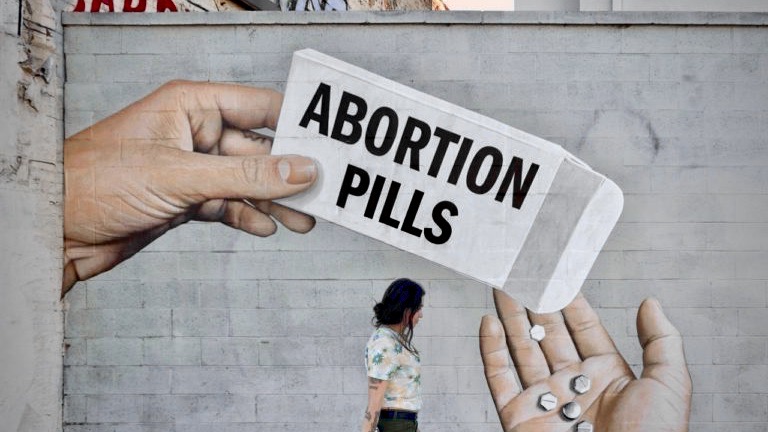
Over three years have passed since Roe v. Wade’s overturning, and yet, abortion pill usage has surged in the U.S.
Despite the mounting data revealing the life-threatening risks abortion drugs pose to women, more than 60% percent of abortions in the U.S. are executed via medication, a 53% increase since 2020. Meanwhile, abortion bans are enforced across 13 states, and early gestational limits have been adopted in six. Analysts identify a shift toward telehealth appointments and drug shipments via mail as the catalyst for greater access to abortion pills following the FDA’s removal in 2021 of the requirement for in-person doctor appointments. Beyond telehealth, drugs can be ordered through online websites without the provider or patient seeing each other.
Hidden Medical Risks
Dr. Christina Francis, a practicing OB/GYN hospitalist and CEO of the American Association of Pro-Life Obstetricians and Gynecologists, says the most common complications she sees in her practice are hemorrhaging and incomplete abortions.
“We know that nearly one in nine women who take these drugs will have a serious complication,” Francis told Decision, “whether that be a visit to the emergency room requiring treatment or significant hemorrhage or blood loss, blood transfusion, emergency surgery, infection.”
According to that statistic, about 100,000 women would have suffered a severe complication in just one year, Francis said.
“And honestly, this is not surprising to those of us that are actually taking care of these women because we’re seeing these complications so frequently.”
Excessive bleeding often requires blood transfusion, and women who have not expelled all of the baby parts or the placental tissues can get infections and require emergency surgeries. Infections can lead to the scarring of a woman’s uterus, threatening her future fertility.
The FDA’s own drug label indicates that about 3-7% of women experience an incomplete abortion, and one in 25 women go to an emergency room after taking abortion drugs. In comparison to surgical abortions, drug induced abortions have four times the complication rate.
In 2016, the FDA halted its requirement for reporting abortion drug complications, with the exception of deaths—thus skewing FDA data on how many women experience adverse effects. A recent analysis of insurance claims found that nearly 11% of women who have an abortion by medication experience serious adverse effects, although the FDA claims only .05%.
Dr. Ingrid Skop, vice president and director of medical affairs for Charlotte Lozier Institute, says the FDA’s statistics are often inaccurate because women often go to an emergency room rather than return to the abortionist. Charlotte Lozier Institute’s study on ER visits related to abortion pills found that in a five-year period, nearly 84% of those visits were miscoded as miscarriages. Skop, a practicing obstetric hospitalist, also says that in some studies, half or more of the women are lost to follow-up.
“Even an observer without scientific training can recognize you really can’t draw a conclusion if you don’t know what happened to half of the women who you sold the drugs to.”
The Dangers of Telehealth Access
The adverse effects unveiled by studies call attention to another reality the abortion industry shrouds—the danger telehealth abortion pill access poses.
By the end of 2024, one in four abortions were provided by telehealth. Telehealth orders, which are typically shipped to homes or distributed through pharmacies, have doubled since the overturning of Roe v. Wade. And these shipments disproportionately affect pro-life states. The Journal of the American Medical Association discovered that during a 15-month period in 2023-2024, 84% of mailed abortion pills were sent into states with strong pro-life laws. Meanwhile, pro-abortion states have passed laws protecting such doctors from prosecution and criminalization.
Such mailings increase the risk of medical complications for women, as no in-person evaluations, ultrasounds or lab works are required. Therefore, doctors do not examine the exact gestational age, health risks of the mother, anemia levels, and whether the pregnancy is ectopic. Because abortion pills do not treat ectopic pregnancies, women may experience fallopian tube ruptures, hemorrhage, infertility or death if left untreated.
Abby Johnson, a former clinic director of Planned Parenthood, says the drug shipments to homes offer a way for women to kill the unborn without accountability.
“You don’t have to see anybody,” Johnson said. “It kind of takes away that component of shame. You’re not having to walk into a building. Everything’s very discreet.”
Johnson, founder of the ministry And Then There Were None, which helps abortion workers transition out of the industry, believes that just as the lives of children are of no value to the abortion industry, neither is the life of the mother.
“The abortion industry is drenched in deceit—it’s what they’re about. It’s who they are. They’re about killing children. And so they’re going to try to find a way to continue to sacrifice human beings, to continue to deceive people, to continue to kill children with ease. They’re going to try to make it as easy as possible for women to kill their children. And I think the chemical abortion pill was just another way.”
A Spiritual Battle
The pro-life cause is on the move, drawing in voices who’ve never before taken a public stand. That energy will intensify at the March for Life in Washington, D.C., on Jan. 23. As the pendulum of policies sways back and forth in the battle for life and truth, Francis says Christians are “absolutely called to be involved in our nation’s policies.”
“As Christians, our place is not only to be living out our faith in the circles around us by loving the most vulnerable around us, taking care of the most vulnerable, taking care of the orphans as we’re instructed to do in the Bible,” Francis said, “but also to be voices in our local, state and national governments for life-affirming policies.”