
July 15, 2026

July, 15, 2026
July 15, 2026

give

untitled artwork

untitled artwork

World news biblically understood

TRENDING:

America’s Greatest Need Has Never Rested In Politics Alone—It Has Always Been Spiritual

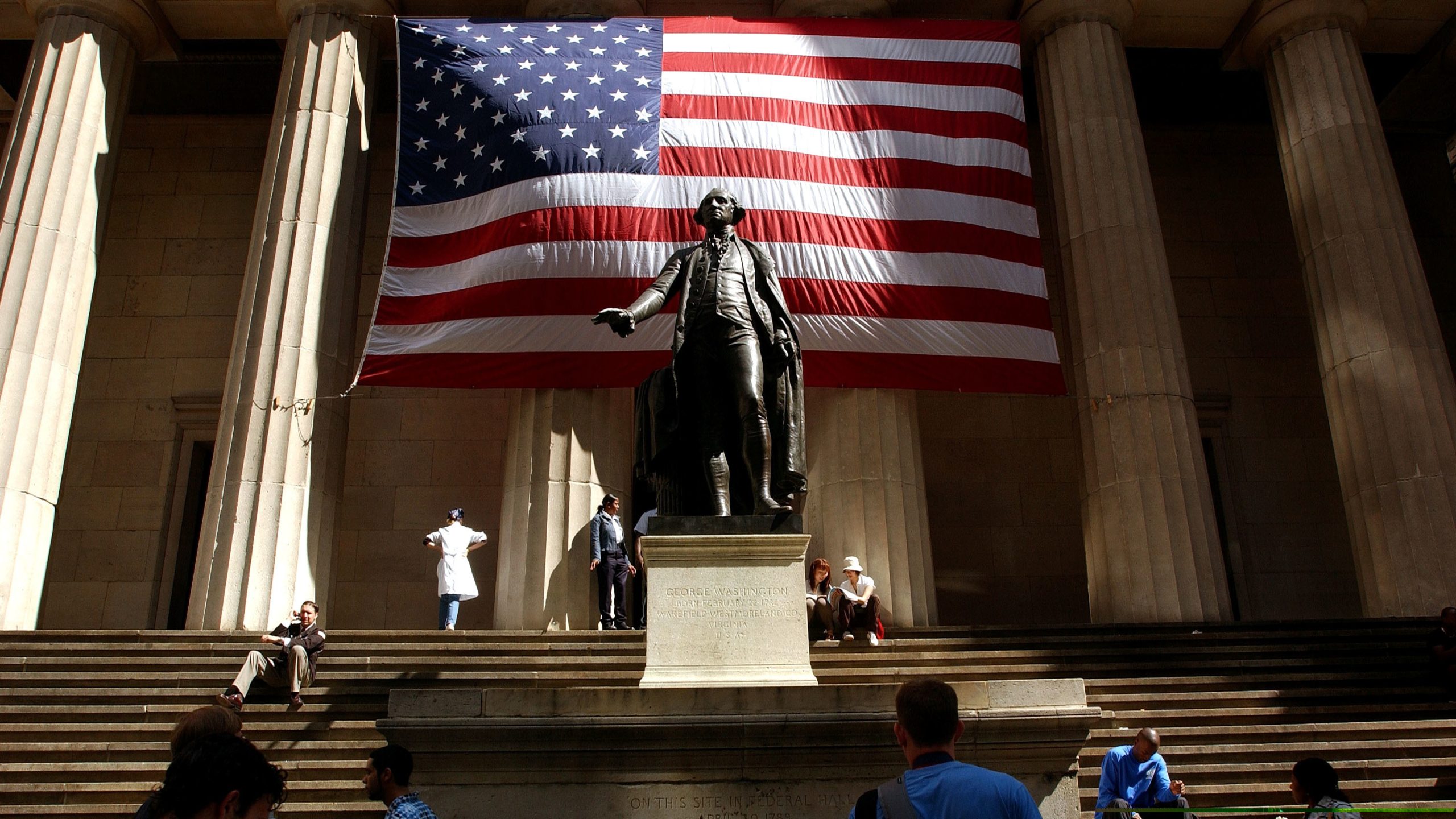
As America passed the 250th anniversary of the Declaration of Independence, many were asking an important question: What has become of the American Dream?

To mark this historic milestone, Elon University in North Carolina conducted a nationwide survey examining how Americans view their nation, its government, and its future. Polls can fluctuate with current events and political climates, but they often reveal something deeper: the hopes, fears, and convictions of ordinary citizens.

This survey paints a sobering picture. Nearly 69% of Americans believe the signers of the Declaration of Independence would feel more disappointment than pride in modern American democracy. Likewise, 68% believe today’s elected officials compare unfavorably with the leaders of earlier generations. Those are striking numbers, not surprising but still eye-opening.

The Declaration’s signers established a constitutional republic grounded in the conviction that government exists to protect God-given rights. Whether one agrees with every aspect of America’s history or not, it is difficult to ignore the growing dissatisfaction many Americans feel toward their institutions.

A Crisis of Confidence

Perhaps the survey’s most revealing finding is the widespread loss of trust.

Nearly 80% of respondents said they sometimes feel that no political party or movement truly represents their views. Seven in ten described the nation as more turbulent than in previous eras of American history.

That comparison is remarkable when one considers that the United States has endured the Revolutionary War, the Civil War, two World Wars, the Great Depression, and numerous national crises. Yet many Americans perceive today’s divisions as uniquely unsettling.

The reasons are varied. Confidence in government has eroded. Trust in major media organizations has declined. Large corporations increasingly wield enormous influence, often extending well beyond commerce into politics and culture. Political gridlock has become routine, government shutdowns have become familiar, and many citizens feel disconnected from those elected to represent them.

Whether every perception is accurate is almost beside the point. Public confidence has been damaged, and rebuilding it is proving increasingly difficult.

Looking Toward an Uncertain Future

The survey also explored how Americans view the nation’s future. Nearly 64% expressed little or no confidence that America’s political institutions will make mostly good decisions over the next fifty years. Even more striking, 68% believe America will become even more politically divided by 2076.

From a biblical prophecy perspective, these responses are not surprising.

Scripture repeatedly teaches that the world will experience increasing instability before the return of Christ. Jesus warned of deception, conflict, lawlessness, and growing fear among the nations (Matthew 24; Luke 21). While the Bible does not specifically predict the future of the United States, it clearly portrays a world moving toward unprecedented global political, economic, and spiritual consolidation before Christ establishes His kingdom.

Whether America remains a dominant power or gradually declines, believers recognize that no earthly nation represents our ultimate hope.

Without God There Is No Lasting Hope

Former President Dwight D. Eisenhower once said, “Without God, there could be no American form of government, nor an American way of life.”

Interestingly, 53% of Americans agreed with that statement, while 29% disagreed.

Regardless of one’s political affiliation, Christians understand that genuine hope is never found merely in better legislation, stronger economies, or more capable leaders. Psalm 33:12 reminds us: “Blessed is the nation whose God is the LORD.”

America’s greatest need has never been political alone. It has always been spiritual.

Is the American Dream Changing?

More than half of respondents (52%) believe America is no longer living up to its founding ideals. Only 17% believe the American Dream is still alive. That naturally raises another question: What exactly is the American Dream?

For generations, it represented the belief that success should depend primarily upon hard work, personal responsibility, perseverance, and opportunity rather than privilege or government control.

• It included the freedom to worship according to one’s conscience.
• The freedom to speak openly.
• The freedom to start a business.
• The opportunity to raise children in safe communities.
• Strong marriages.
• Healthy families.
• Neighbors serving neighbors.

Those ideals remain deeply meaningful to many Americans, even as public debate continues over how fully they have been realized throughout the nation’s history and how they should be pursued today.

Today’s headlines often tell a different story. Many communities struggle with crime, family instability, political polarization, and growing distrust. Public conversations frequently become hostile, and disagreements are increasingly viewed through moral rather than merely political lenses. Many Americans worry that civil discourse itself is becoming more difficult.

A Nation That Senses Something Is Coming

One of the most fascinating questions in the survey asked respondents how often they feel the United States is on the brink of a major crisis. The answers were revealing.

• 25% said daily.
• 15% said weekly.
• 24% said monthly.

Remember, this survey included people from many different religious backgrounds, and many with no religious commitment at all. Yet millions of Americans share a growing sense that history is accelerating. Many cannot explain why. Christians can.

The Bible teaches that history is moving toward a divinely appointed conclusion. Jesus described a world increasingly characterized by instability, fear, deception, and spiritual confusion prior to His return.

The uneasiness many people feel may simply reflect living in a world that is becoming increasingly unstable. Scripture tells us that this instability will ultimately culminate in the period the Bible calls the Tribulation, followed by the glorious return of Jesus Christ.

Those without a biblical worldview often sense that something significant is approaching, even if they cannot identify its source. Believers are called not to fear, but to remain watchful, discerning, and faithful.

Where Would Americans Go?

When asked whether they were proud to be Americans, 48% answered yes. Those who answered no were asked what country they would prefer to live in. Canada received the largest share of responses, followed by the United Kingdom.

The survey also asked Americans what they expect the nation to look like by 2076. Many anticipate greater political division, reduced global influence, a lower standard of living, less personal freedom, greater economic inequality, and technology causing more harm than good.

Polls measure expectations, not certainties. Still, they reveal a population increasingly uncertain about the future. The survey also found substantial differences among respondents based on political affiliation regarding pride in the nation, illustrating how differently Americans now perceive the country’s present condition and future direction.

The Church Must Offer More Than Political Solutions

The survey confirms something Christians have long understood. Political systems cannot solve humanity’s deepest problem. Our greatest need is not simply better leadership. It is reconciliation with God.

The gospel addresses the human heart, where every lasting transformation begins.

As followers of Christ, we should pray for our leaders (1 Timothy 2:1–2), engage our communities with truth and grace, defend religious liberty, and faithfully proclaim the good news of Jesus Christ. At the same time, we must remember that no political movement, nation, or ideology can usher in God’s kingdom.

Only King Jesus can do that.

America has had 250 years of independence; Christians should certainly give thanks for the blessings God has bestowed upon this nation. Yet we should also recognize that our ultimate citizenship is in heaven (Philippians 3:20).

America needs more than economic recovery. More than political reform. More than technological innovation. America needs God. And so does every nation on earth. “Even so, come, Lord Jesus.” (Revelation 22:20)



Millions Are Understanding The News Through A Biblical Worldview

THANKS TO YOUR PRAYER AND SUPPORT

Is Genesis Too Controversial To Preach From The Pulpit? Too Many Pastors Say ‘Yes’

Over the years, I’ve had so many pastors tell me that they avoid preaching the early chapters of Genesis in their churches because it’s just too controversial and can cause division. To avoid ruffling feathers, many pastors avoid it, or if they must teach those early chapters, they are often very vague, not taking a position on Genesis or presenting all the positions and letting their congregation choose for themselves. But this approach has had major negative consequences!

Christian Parents In Europe Seek Help From Washington After Swedish Gov’t Seizes Their Children, Calls Church Attendance ‘Religious Extremism’

The child protection services called the couple “religious extremists,” citing the family’s church attendance, which was three times a week, and their refusal to allow the girls to wear make-up. The Samsons fought for custody of their children 14 times in court. They said prosecuting attorneys cited their lack of a television in the home and their reading of Bible stories as “violent” and grounds for the religious extremist accusations. The case reached the European Court of Human Rights (ECtHR), which ruled on March 10 that the case was “inadmissible,” a final decision that cannot be appealed.

sign up

Called Out From The Culture: The Hope For America Is The Church

I believe that the hope for America is the church—God working through his church. Christians need to live up to their name. As Christ followers, we need to be Christlike. And if the church would be what it was meant to be, then it would change our nation. But let’s localize it. If your church would be what it ought to be, it could change your city. It could change your county, and it could change your state. Let’s localize it even more. If you would be what you ought to be as a follower of Jesus Christ and as a part of the church, then what a difference it could make in your church.

ABC's of Salvation

Decision

UTT

FOI

untitled artwork

Israel My Glory

As America passed the 250th anniversary of the Declaration of Independence, many were asking an important question: What has become of the American Dream?

To mark this historic milestone, Elon University in North Carolina conducted a nationwide survey examining how Americans view their nation, its government, and its future. Polls can fluctuate with current events and political climates, but they often reveal something deeper: the hopes, fears, and convictions of ordinary citizens.

This survey paints a sobering picture. Nearly 69% of Americans believe the signers of the Declaration of Independence would feel more disappointment than pride in modern American democracy. Likewise, 68% believe today’s elected officials compare unfavorably with the leaders of earlier generations. Those are striking numbers, not surprising but still eye-opening.

The Declaration’s signers established a constitutional republic grounded in the conviction that government exists to protect God-given rights. Whether one agrees with every aspect of America’s history or not, it is difficult to ignore the growing dissatisfaction many Americans feel toward their institutions.

A Crisis of Confidence

Perhaps the survey’s most revealing finding is the widespread loss of trust.

Nearly 80% of respondents said they sometimes feel that no political party or movement truly represents their views. Seven in ten described the nation as more turbulent than in previous eras of American history.

That comparison is remarkable when one considers that the United States has endured the Revolutionary War, the Civil War, two World Wars, the Great Depression, and numerous national crises. Yet many Americans perceive today’s divisions as uniquely unsettling.

The reasons are varied. Confidence in government has eroded. Trust in major media organizations has declined. Large corporations increasingly wield enormous influence, often extending well beyond commerce into politics and culture. Political gridlock has become routine, government shutdowns have become familiar, and many citizens feel disconnected from those elected to represent them.

Whether every perception is accurate is almost beside the point. Public confidence has been damaged, and rebuilding it is proving increasingly difficult.

Looking Toward an Uncertain Future

The survey also explored how Americans view the nation’s future. Nearly 64% expressed little or no confidence that America’s political institutions will make mostly good decisions over the next fifty years. Even more striking, 68% believe America will become even more politically divided by 2076.

From a biblical prophecy perspective, these responses are not surprising.

Scripture repeatedly teaches that the world will experience increasing instability before the return of Christ. Jesus warned of deception, conflict, lawlessness, and growing fear among the nations (Matthew 24; Luke 21). While the Bible does not specifically predict the future of the United States, it clearly portrays a world moving toward unprecedented global political, economic, and spiritual consolidation before Christ establishes His kingdom.

Whether America remains a dominant power or gradually declines, believers recognize that no earthly nation represents our ultimate hope.

Without God There Is No Lasting Hope

Former President Dwight D. Eisenhower once said, “Without God, there could be no American form of government, nor an American way of life.”

Interestingly, 53% of Americans agreed with that statement, while 29% disagreed.

Regardless of one’s political affiliation, Christians understand that genuine hope is never found merely in better legislation, stronger economies, or more capable leaders. Psalm 33:12 reminds us: “Blessed is the nation whose God is the LORD.”

America’s greatest need has never been political alone. It has always been spiritual.

Is the American Dream Changing?

More than half of respondents (52%) believe America is no longer living up to its founding ideals. Only 17% believe the American Dream is still alive. That naturally raises another question: What exactly is the American Dream?

For generations, it represented the belief that success should depend primarily upon hard work, personal responsibility, perseverance, and opportunity rather than privilege or government control.

• It included the freedom to worship according to one’s conscience.
• The freedom to speak openly.
• The freedom to start a business.
• The opportunity to raise children in safe communities.
• Strong marriages.
• Healthy families.
• Neighbors serving neighbors.

Those ideals remain deeply meaningful to many Americans, even as public debate continues over how fully they have been realized throughout the nation’s history and how they should be pursued today.

Today’s headlines often tell a different story. Many communities struggle with crime, family instability, political polarization, and growing distrust. Public conversations frequently become hostile, and disagreements are increasingly viewed through moral rather than merely political lenses. Many Americans worry that civil discourse itself is becoming more difficult.

A Nation That Senses Something Is Coming

One of the most fascinating questions in the survey asked respondents how often they feel the United States is on the brink of a major crisis. The answers were revealing.

• 25% said daily.
• 15% said weekly.
• 24% said monthly.

Remember, this survey included people from many different religious backgrounds, and many with no religious commitment at all. Yet millions of Americans share a growing sense that history is accelerating. Many cannot explain why. Christians can.

The Bible teaches that history is moving toward a divinely appointed conclusion. Jesus described a world increasingly characterized by instability, fear, deception, and spiritual confusion prior to His return.

The uneasiness many people feel may simply reflect living in a world that is becoming increasingly unstable. Scripture tells us that this instability will ultimately culminate in the period the Bible calls the Tribulation, followed by the glorious return of Jesus Christ.

Those without a biblical worldview often sense that something significant is approaching, even if they cannot identify its source. Believers are called not to fear, but to remain watchful, discerning, and faithful.

Where Would Americans Go?

When asked whether they were proud to be Americans, 48% answered yes. Those who answered no were asked what country they would prefer to live in. Canada received the largest share of responses, followed by the United Kingdom.

The survey also asked Americans what they expect the nation to look like by 2076. Many anticipate greater political division, reduced global influence, a lower standard of living, less personal freedom, greater economic inequality, and technology causing more harm than good.

Polls measure expectations, not certainties. Still, they reveal a population increasingly uncertain about the future. The survey also found substantial differences among respondents based on political affiliation regarding pride in the nation, illustrating how differently Americans now perceive the country’s present condition and future direction.

The Church Must Offer More Than Political Solutions

The survey confirms something Christians have long understood. Political systems cannot solve humanity’s deepest problem. Our greatest need is not simply better leadership. It is reconciliation with God.

The gospel addresses the human heart, where every lasting transformation begins.

As followers of Christ, we should pray for our leaders (1 Timothy 2:1–2), engage our communities with truth and grace, defend religious liberty, and faithfully proclaim the good news of Jesus Christ. At the same time, we must remember that no political movement, nation, or ideology can usher in God’s kingdom.

Only King Jesus can do that.

America has had 250 years of independence; Christians should certainly give thanks for the blessings God has bestowed upon this nation. Yet we should also recognize that our ultimate citizenship is in heaven (Philippians 3:20).

America needs more than economic recovery. More than political reform. More than technological innovation. America needs God. And so does every nation on earth. “Even so, come, Lord Jesus.” (Revelation 22:20)

Trusted Analysis From A Biblical Worldview

Help reach the lost and equip the church with the living and active truth of God's Word in our world today.

YOU CARE ABOUT

BIBLICAL TRUTH. SO DO WE.


Together, We Can Deliver A Biblical Understanding

Of News Events Around The World.

Is Genesis Too Controversial To Preach From The Pulpit? Too Many Pastors Say ‘Yes’

Over the years, I’ve had so many pastors tell me that they avoid preaching the early chapters of Genesis in their churches because it’s just too controversial and can cause division. To avoid ruffling feathers, many pastors avoid it, or if they must teach those early chapters, they are often very vague, not taking a position on Genesis or presenting all the positions and letting their congregation choose for themselves. But this approach has had major negative consequences!

Christian Parents In Europe Seek Help From Washington After Swedish Gov’t Seizes Their Children, Calls Church Attendance ‘Religious Extremism’

The child protection services called the couple “religious extremists,” citing the family’s church attendance, which was three times a week, and their refusal to allow the girls to wear make-up. The Samsons fought for custody of their children 14 times in court. They said prosecuting attorneys cited their lack of a television in the home and their reading of Bible stories as “violent” and grounds for the religious extremist accusations. The case reached the European Court of Human Rights (ECtHR), which ruled on March 10 that the case was “inadmissible,” a final decision that cannot be appealed.

untitled artwork 6391

Called Out From The Culture: The Hope For America Is The Church

I believe that the hope for America is the church—God working through his church. Christians need to live up to their name. As Christ followers, we need to be Christlike. And if the church would be what it was meant to be, then it would change our nation. But let’s localize it. If your church would be what it ought to be, it could change your city. It could change your county, and it could change your state. Let’s localize it even more. If you would be what you ought to be as a follower of Jesus Christ and as a part of the church, then what a difference it could make in your church.

ABC's of Salvation

TV AD

worldview matters

Decision Magazine V AD

Decision

Jan Markell

Israel My Glory

Erick Stakelbeck

untitled artwork

YOU CARE ABOUT

BIBLICAL TRUTH.

SO DO WE.

Together, We Can Deliver A Biblical Understanding Of News Events Around The World And Equip The Church To Stand With A Biblical Worldview.

untitled artwork

Israel My Glory

YOU CARE ABOUT

BIBLICAL TRUTH.

SO DO WE.


Together, We Can Deliver A Biblical Understanding Of News Events Around The World And Equip The Church To Stand With A Biblical Worldview.