LIVE UPDATES — FROM Jan. 18th – 24th
Israel At War: Week Sixty-Eight Coverage
TRUSTED ANALYSIS

Day 476 — Friday, January 24
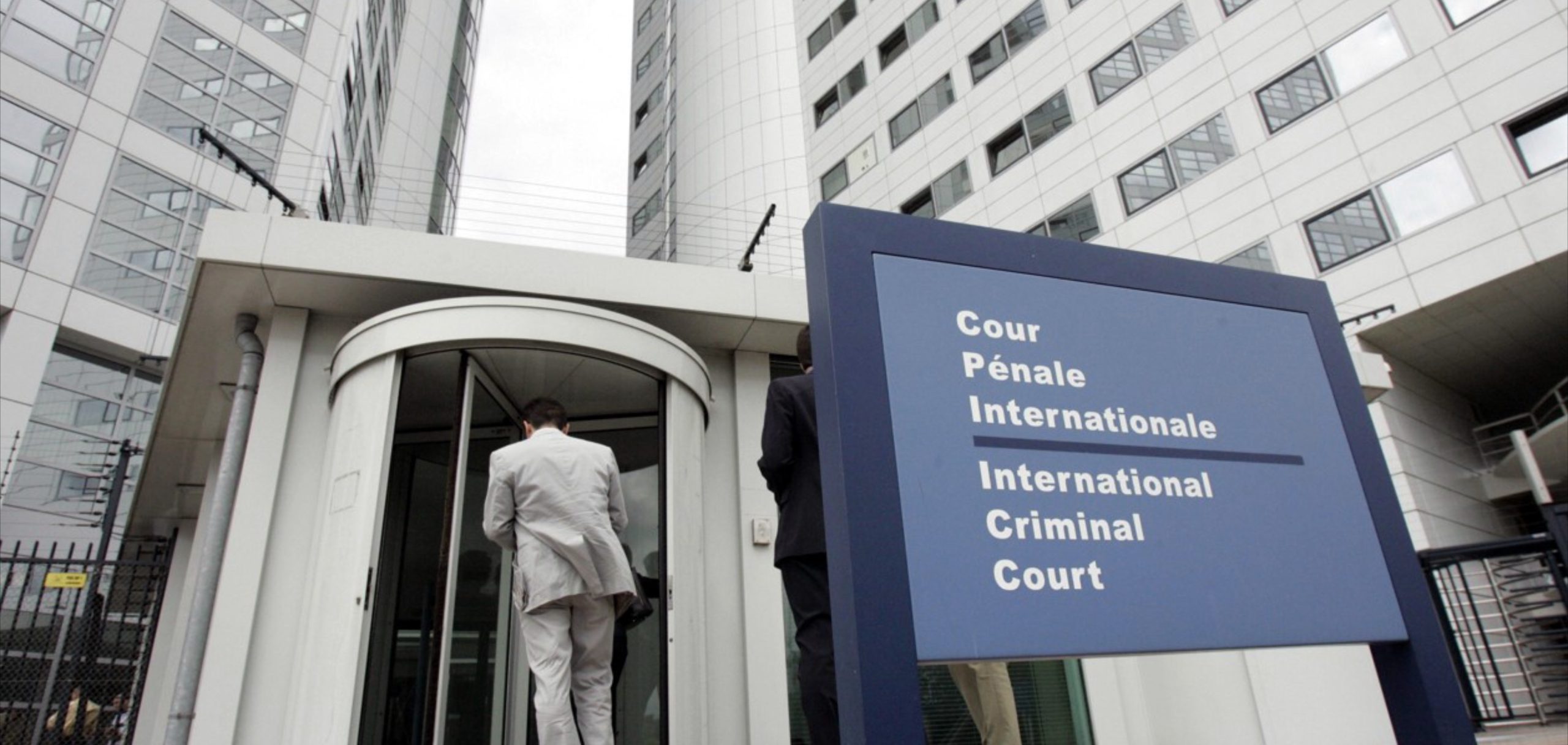
The governing body of the International Criminal Court on Thursday expressed “its deep concern over sanctions measures against the International Criminal Court (“the Court”) and its personnel, as well as individuals and entities who assist it in investigating, arresting, detaining, or prosecuting certain individuals.”
“Sanctions can severely hamper ongoing investigations in all situations and other activities of the Court and affect the safety of victims, witnesses and sanctioned individuals,” the Assembly of States Parties said.
Although the statement did not mention the US or Israel, it came after US President Donald Trump issued executive order sanctions against the ICC and the ICC Office of the Prosecutor for issuing arrest warrants against Prime Minister Benjamin Netanyahu and former defense minister Yoav Gallant on November 21 as part of its war-crimes probe into the Israel-Hamas War.
In addition, the US House of Representatives voted for sanctions against the ICC. The US Senate, which is now controlled by Republicans, [will undoubtedly] follow suit.
The arrest warrants constitute the darkest legal crisis Israel has ever encountered. They have led to diplomatic bouts between Israel and other states, including several countries being more aggressive about seeking to arrest Israeli soldiers, even though the ICC itself has not gone after soldiers yet.
The Assembly of States Parties said it “regrets any attempts to undermine the Court’s independence, integrity and impartiality. We reiterate our firm commitment to uphold and defend the principles and values enshrined in the Rome Statute and to preserve its integrity undeterred by any threats or measures against the Court, its officials, its personnel and those cooperating with it.”
On January 13, ICC Prosecutor Karim Khan filed an objection to Israel’s appeal of the war-crimes arrest warrants.
On November 21, the ICC’s Pre-Trial Chamber, or lower court, approved the warrants. In mid-December, Israel appealed to the ICC Appeals Court, the institution’s top court, to reverse the decision.
Israel’s appeal rested mainly on Articles 18 and 19 of the Rome Statute, raising both directly and indirectly a plethora of errors it said the lower court had committed in its decision.
Day 476 — Friday, January 24
Analysis — There Is No Gratitude Felt Toward Hamas For Giving Us Back What Rightly Belongs To Our Nation
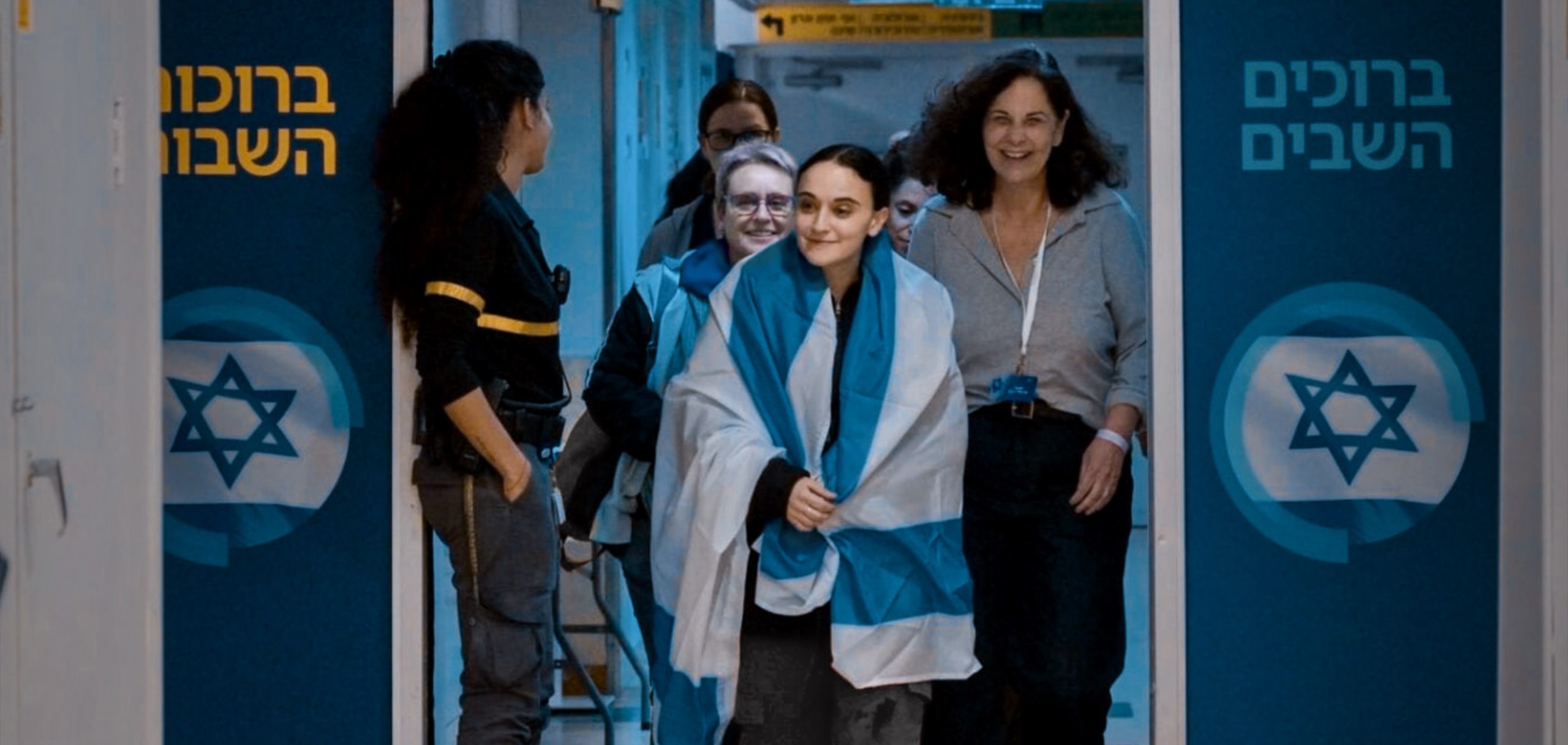
Sunday saw the return of the first of the October 7 hostages who were promised to be released under the new ceasefire agreement. It was a time for joy and celebration, which was felt through all the cities and towns of Israel. However, it was a muted rejoicing for a couple of reasons. First, there are dozens more who are still being held captive by the Gazan terrorists. Second, we haven’t forgotten what started this whole horror. There is no gratitude felt toward Hamas for giving us back what rightly belongs to our nation. There is no recognition of mercy, no outpouring of thanksgiving. If someone steals my car, should I be thankful when they return it, dented and chipped? How much less so when we’re talking about the theft of people?
Yesterday on the Anchor Podcast, I spoke with Rafaela Treistman, a young survivor of the October 7 Nova festival. Her experience sheltering in a bunker while 30 of the 40 people around her were slaughtered is one that must be heard. It serves as the balance to the happiness of the returned hostages. It represents the tainted soil from which all ceasefire emotions must grow. It is reality. And it must be heard, because too many people are forgetting the depth of the murderous depravity that Hamas meted out on innocents that infamous fall morning.
What you’ll see in Rafaela’s story is a woman who was deeply wounded by what she experienced and who she lost. But she was not broken. Her tale is an Israeli tale; one that’s been told over and over from early in our people’s existence. You may try to take us out, but you will only succeed in knocking us down. We will get up back up wiser and stronger. And when we do, it’s best you run and hide, because Israel never forgets.
There were tears in the eyes of most Israelis on Sunday as we watched the return of three of our daughters. Four-hundred-and-seventy-one days ago, Romi Gonen (24) was shot and kidnapped from the Nova festival, Doron Steinbrecher (31) was snatched away from her home in Kfar Aza, and Emily Damari (28) was also stolen from her home in Kfar Aza, having two of her fingers blown off by a terrorist bullet in the process. Let that number sink in – 471 days. Picture where you were back in October 2023 and what all has happened since then. For these women, and for all the hostages, life was put on hold as they were transferred from one location to another by people who hated their very existence. Two of them spent time stashed away under guard in an apartment and another was hidden deep in the tunnels. Now begins their journey of healing, which will likely be a life-long process.
In return for our three hostages, Israel transferred 90 Palestinian prisoners. Make sure you recognize the two differing descriptors. In return for our three stolen innocent civilians, we released 90 criminals. Those are the kinds of bargains you are forced to swallow once you begin making deals with terrorists. This Saturday, four more hostages will be turned over, along with the full list on Friday of the 33 names who will be part of the first phase of returns. Over the course of this ceasefire and hostage exchange, this twisted math will continue until freedom reaches nearly 1900 Palestinian criminals in return for just 33 of our kidnapping victims. Yes, we rejoice in the homecoming of our people, but we are appalled at the price that we are forced to pay.
As far as the ceasefire, it has begun and the IDF is slowly pulling out. However, there are few who expect Hamas to be able to control themselves over the six weeks of this first phase. If and when Hamas breaks the treaty, they will experience the full and final wrath of the IDF. President Donald Trump has promised that the United States will support whatever measures Israel takes, one hundred percent.
Day 475 — Thursday, January 23
Trump Signs Executive Order Calling For Houthis To Be Relisted As Terror Group
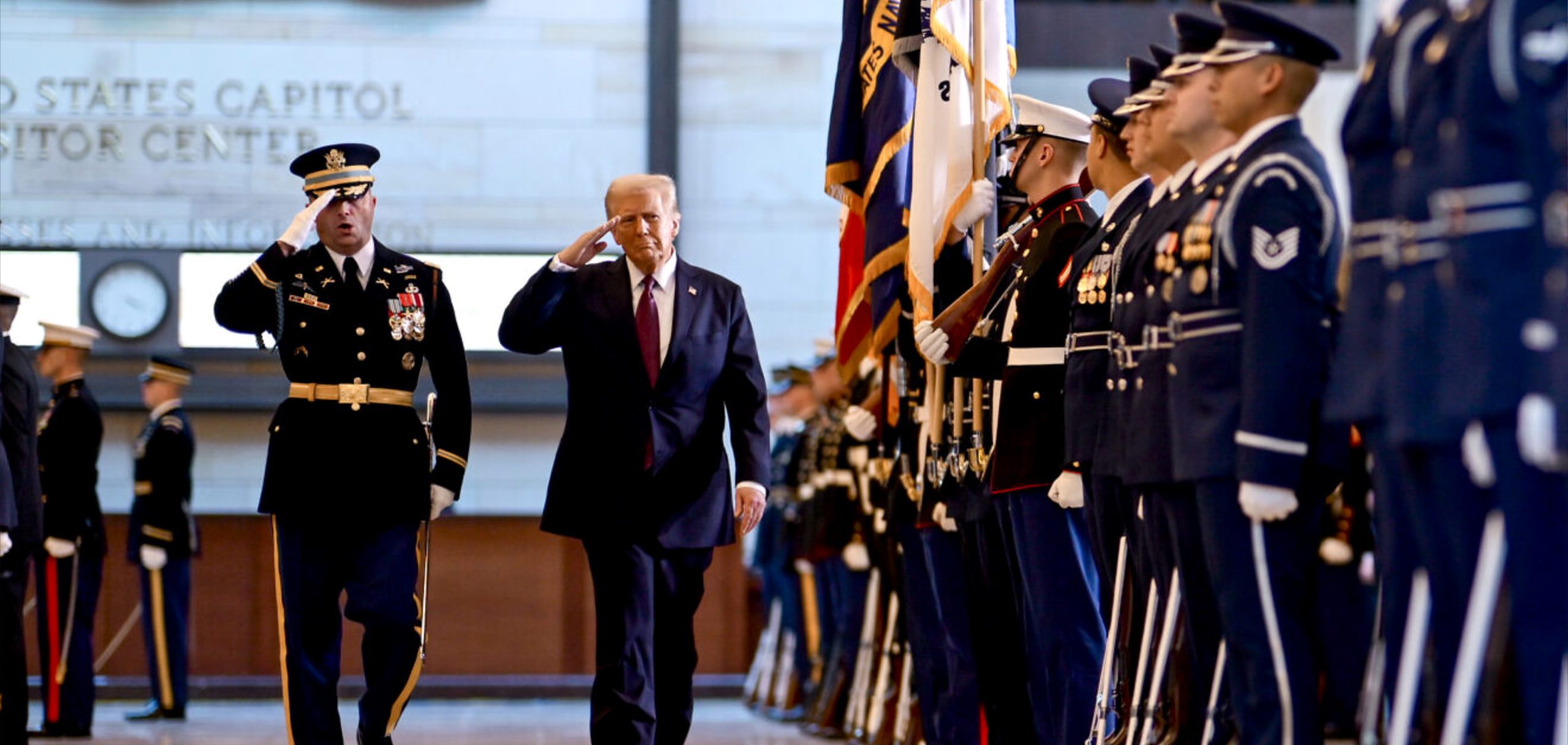
U.S. President Donald Trump signed an executive order on Wednesday calling on the U.S. secretary of state to designate the Houthis as a terror group within the next 30 days.
Trump designated the Iranian-backed group—which is also known as Ansar Allah—as a foreign terrorist organization in January 2021, during his first term.
“Within one month of taking office, the Biden administration reversed the Houthis’ designation,” per a White House fact sheet. “As a result of the Biden administration’s weak policy, the Houthis have fired at U.S. Navy warships dozens of times, launched numerous attacks on civilian infrastructure in partner nations and attacked commercial vessels transiting” between Yemen and the Horn of Africa “more than 100 times.”
“Under President Trump, it is now the policy of the United States to cooperate with its regional partners to eliminate the Houthis’ capabilities and operations, deprive them of resources and thereby end their attacks on U.S. personnel and civilians, U.S. partners and maritime shipping in the Red Sea,” the White House stated.
In the executive order, Trump stated that the Houthis, which are supported by Iran’s Islamic Revolutionary Guard Corps Quds Force, “have fired at U.S. Navy warships dozens of times since 2023, endangering American men and women in uniform.”
“Since seizing most Yemeni population centers by force from the legitimate Yemeni government in 2014-15, the Houthis have launched numerous attacks on civilian infrastructure, including multiple attacks on civilian airports in Saudi Arabia, the deadly January 2022 attacks on the United Arab Emirates and more than 300 projectiles fired at Israel since October 2023,” Trump stated.
“The Houthis have also attacked commercial vessels transiting Bab al-Mandeb more than 100 times, killing at least four civilian sailors and forcing some Red Sea maritime commercial traffic to reroute, which has contributed to global inflation,” he added.
Once the U.S. secretary of state, in consultation with the U.S. attorney general and the U.S. treasury secretary, determines that an entity ought to be designated as a terror group, “Congress is notified of the secretary’s intent to designate the organization and given seven days to review the designation, as the Immigration and Nationality Act requires,” per the State Department.
If Congress doesn’t block the designation during a seven-day waiting period, “notice of the designation is published in the Federal Register, at which point the designation takes effect,” per the department. The designated entity then has 30 days to seek judicial review in the U.S. Court of Appeals for the District of Columbia Circuit, it adds.
The new executive order calls for the U.S. Agency for International Development administrator and the secretary of state, after the Houthis are redesignated, to “jointly review United Nations partners, nongovernmental organizations and contractors operating in Yemen.”
“Following this review, the president will direct USAID to end its relationship with entities that have made payments to the Houthis, or which have opposed international efforts to counter the Houthis while turning a blind eye towards the Houthis’ terrorism and abuses,” the White House said.
“Thank you, President Trump,” wrote Sen. Thom Tillis (R-N.C.). “They should never have been removed in the first place. Designating the Houthis as a foreign terrorist organization sends a powerful message that America views this group as a clear threat to our allies and partners and to regional stability in the Middle East.”
“Promises made, promises kept,” stated the Republican Jewish Coalition. “Thank you President Trump for correcting the disastrously wrong-headed decision by the Biden administration to de-list the Houthis as a foreign terrorist organization.”
Day 475 — Thursday, January 23
Two Terrorists Responsible For Recent Terror Attack Eliminated In Samaria: 'Our Blood Is Not Free For The Taking'
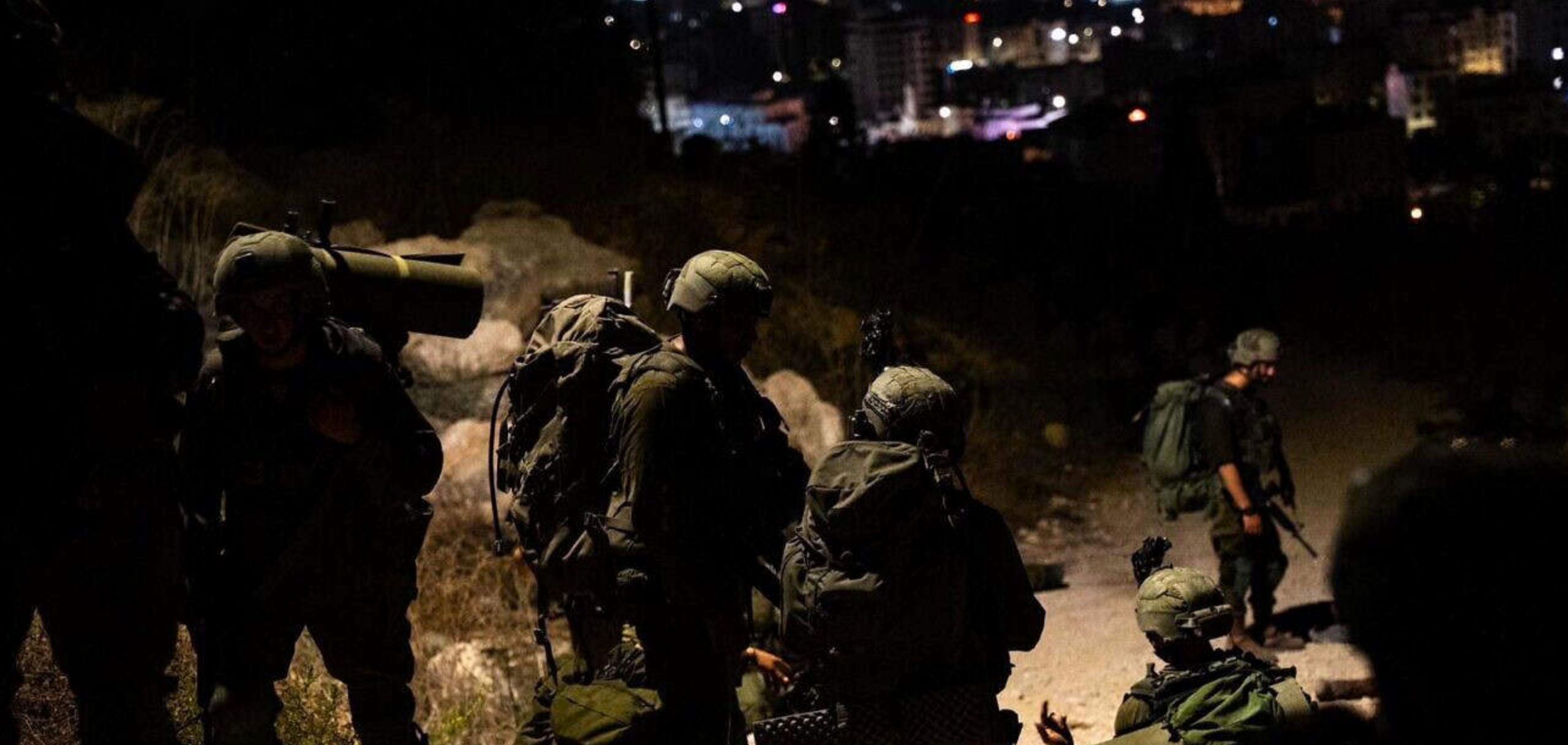
Two of the terrorists responsible for a shooting attack in Funduq were eliminated Wednesday night in Jenin, the IDF and ISA confirmed in a joint statement.
The pursuit lasted two-and-a-half weeks; security forces are still pursuing the third terrorist.
“On Wednesday night, during an intelligence-based Israel security forces counterterrorism operation in the area of Jenin, the forces arrived at a structure in Burqin in which two armed terrorists barricaded themselves,” the statement read.
“The terrorists were wanted for the murder of three Israelis. After an exchange of fire, they were eliminated by the forces.”
The eliminated terrorists are Mohamad Nazzal and Katiba Shalabi, residents of Qabatiya who were affiliated with Islamic Jihad. Nazzal and Shalabi carried out the shooting attack in Funduq on January 6, 2025, murdering three Israeli citizens and injuring six others.
During the operation to eliminate Nazzal and Shalabi, several other terrorists who assisted in carrying out the murderous attack were detained for ISA questioning.
The statement added that during the counterterror operation, “an IDF soldier was moderately injured and was evacuated to the hospital to receive medical treatment. His family has been notified.”
“The Israeli security Forces are continuing to operate to thwart terror attacks in the area.”
In the Funduq shooting attack earlier this month, terrorists opened fire at a bus and vehicles traveling on Highway 55. Police investigator Sgt. Elad Winklestein was murdered in front of his eight-year-old son, and good friends Rachel Cohen and Aliza Rize, both residents of Kedumim, were murdered while traveling together. A bus driver sustained serious injuries, and multiple others were lightly injured.
Following the terror attack, Kedumim Council chief Ozel Vatik announced to residents of the town that the stores in the village of Al Funduq would not open the next day.
In a message to local residents, Vatik explained, “The stores in Al Funduq will not open tomorrow. Period. In the past few days, I have been incessantly pressuring the political, military, and police echelon with one clear goal: The security situation will not return to being what it was. We will not get used to going back to routine until the next terror attack!”
“At the same time, I am pressuring all echelons to immediately destroy the illegal stores in the village, and we will not stop until this comes to pass. They are illegal, they create a safety and security danger, and destroying them must send a clear message to our enemies, but to us also, that our blood is not free for the taking. I also told the heads of the systems: If need be, we as a public will go out to fight to close the illegal stores. We are trusting you to act to ensure that what was – will not happen again.”
On Thursday, following the two terrorists’ elimination, he said, “Overnight, we announced – the Efraim Brigade chief Colonel Netanel Shamka and myself – to the families of the three people murdered in the Funduq terror attack, that two of the terrorists were eliminated in a professional military operation by the IDF and ISA in Kafr Burqin in northern Samaria, in the Menasheh Brigade area,” Vatik said. “With God’s help, the days of the third terrorist are also numbered.”
“This was amazing and awe-inspiring work by our forces – heroic soldiers and ISA personnel! The families of the murdered, and all residents of Kedumim, thank you and wish you continued success in your task of providing full security to the citizens of Israel. During the operation, one IDF soldier was injured, and we pray for his recovery.”
Day 474 — Wednesday, January 22
IDF Chief Resigns Over Oct. 7: ‘This Terrible Failure Remains With Me Every Day, Every Hour’

IDF Chief of Staff Lieutenant General Herzi Halevi announced Tuesday his resignation following the military’s failures on Hamas’ deadly Oct. 7, 2023 attack, in which over 1,200 Israelis – mostly civilians – were killed, and 250 were taken hostage.
“I notified the Defense Minister today (Tuesday) that in acknowledgment of my responsibility for the IDF’s failure on Oct. 7 and at this juncture when the IDF has recorded significant achievements and is implementing a hostage release agreement, I am requesting to conclude my tenure on March 6, 2025,” he wrote in an official statement. “During the remaining period, I will complete all investigations and reinforce the IDF’s operational capabilities to meet security challenges,” he added.
“Throughout the past four decades, protecting Israel’s security has been the mission that defined my life,” Halevi wrote. “On the morning of Oct. 7, the IDF under my command failed to fulfill its fundamental mission of protecting Israeli citizens. The State of Israel has endured a devastating and painful toll – in lives lost, in hostages taken, and in both physical and psychological trauma. Despite countless acts of valor from many – our security forces, IDF soldiers and commanders, and brave civilians – these heroic efforts could not prevent the catastrophic outcome. The weight of my responsibility for this terrible failure remains with me every day, every hour, and will continue to do so for the remainder of my life,” he emphasized.
Lieutenant General Halevi assumed the role as the IDF’s 23rd chief of staff in January 2023, following a career that included serving in crucial leadership positions such as director of Military Intelligence, commander of the Southern Command, and deputy chief of staff.
Major General Yaron Finkelman, commander of the Southern Command who took office in July 2023, has also announced the conclusion of his tenure. Finkelman stated in his resignation letter: “Guided by my conscience and the values I hold, I have made the decision to conclude my position as Southern Command commander and my service in the IDF. On Oct. 7, I failed to defend the western Negev and its beloved and heroic residents. This failure will remain etched within me for the rest of my life.”
Day 474 — Wednesday, January 22
5 Wounded In Tel Aviv Stabbing Attack; Passerby Kills Terrorist

At least five people were wounded in a stabbing attack in Tel Aviv on Tuesday evening.
A passerby who was carrying a firearm shot at the terrorist, killing him. An American passport was found on the terrorist’s body showing that he entered Israel three days ago as a tourist.
Magen David Adom (MDA) reported that as many as eight people have been injured in a stabbing incident at two locations on Nahalat Binyamin Street and Kalisher Street in Tel Aviv. Medics and paramedics are providing medical treatment to four injured people, including two 24-year-olds, who are in moderate and light condition. The terrorist was eliminated.
MDA paramedic Shlomo Levi said, “At the scene we arrived at in Nahalat Binyamin, we saw two young men, about 24 years old, fully conscious, one with a penetration wound to his upper body and the other in his hand. We provided them with initial medical treatment, which included stopping life-threatening bleeding, and evacuated them in ambulances and intensive care vehicles to the hospital.”
MDA paramedic Dor Kaufman added: “We noticed a 28-year-old man with stab wounds to his upper body near Shalom Meir Tower. We provided him with initial medical treatment to stabilize his condition and evacuated him to the hospital in moderate and stable condition.
An eyewitness who was in the area of the shooting told Channel 12 News: “We heard a burst of gunfire, we saw people running, and then we ran into the bathroom. We went out for a moment to make sure it wasn’t a motorcycle noise, we heard another bang – and we ran to the nearby shelter. In the meantime, we heard a lot of vehicles.”
The police have called on people not to approach the scene of the attack, in order to conduct searches and ensure that there were no accomplices or another terrorist in the area.
Interior Minister Moshe Arbel later revealed that the Population and Immigration Authority identified the terrorist who committed the stabbing attack in real-time and sought to prevent his entry into Israel upon his arrival at Ben Gurion Airport, and transferred him for questioning by security officials who decided to allow his entry into Israel.
“I call on Shin Bet Chief Ronen Bar to investigate the serious incident and draw lessons from it as soon as possible,” said Arbel.
Day 474 — Wednesday, January 22
Pending US Ambassador To The UN: Israel Has Biblical Right To Judea, Samaria
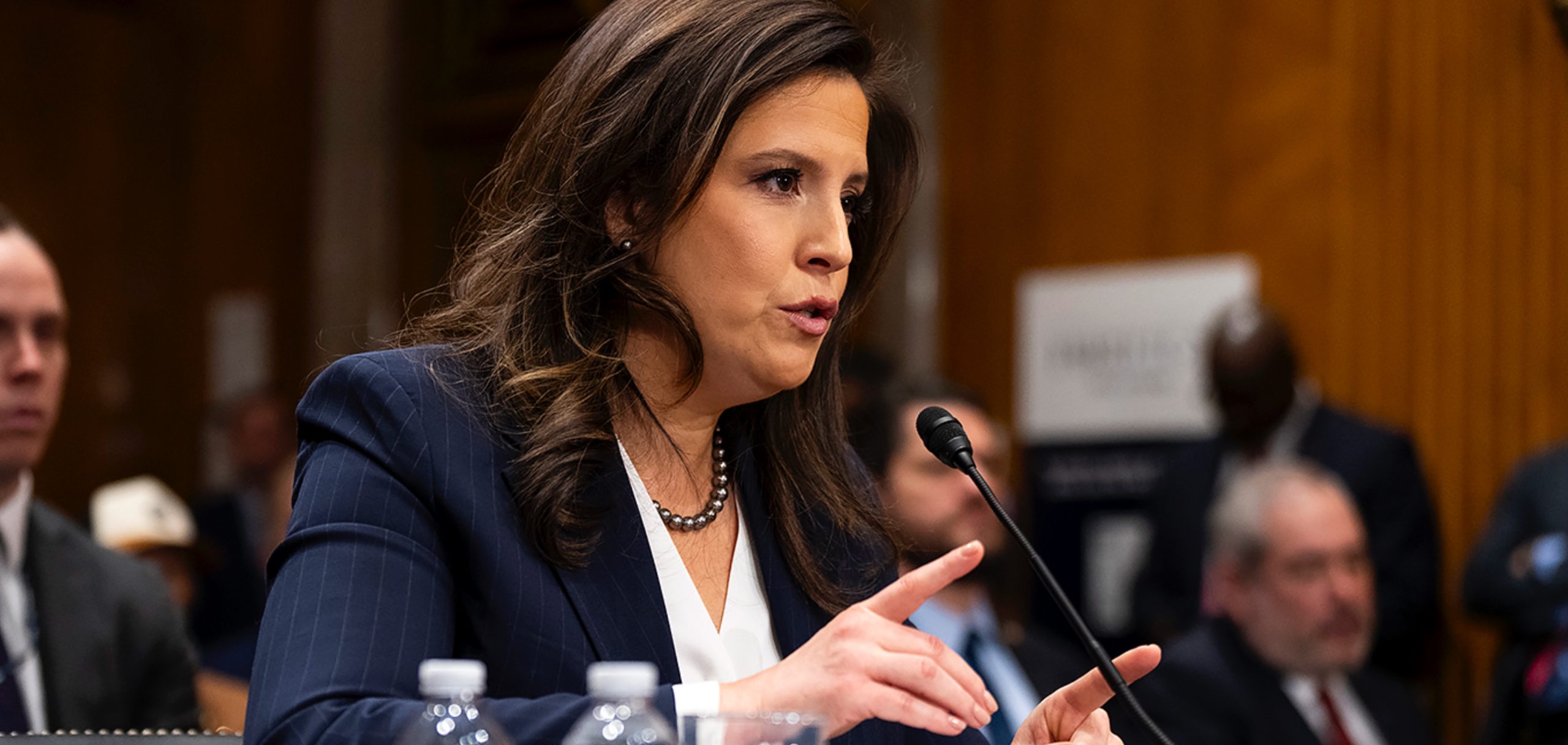
Israel-related issues dominated the Senate confirmation hearing of Rep. Elise Stefanik (R-N.Y.) on Tuesday to become the U.S. ambassador to the United Nations. Nearly every senator on the Foreign Relations Committee probed her views on the Jewish state and the region.
The congresswoman vowed to use her seat in Turtle Bay to combat antisemitism just as she had done in Congress.
“If you look at the antisemitic rot within the United Nations, there are more resolutions targeting Israel than any other country, any other crisis, combined,” Stefanik said. “We need to be a voice of moral clarity on the U.N. Security Council and at the United Nations at large for the world to hear the importance of standing with Israel and I intend to do that.”
Stefanik said that she would like to emulate Daniel Patrick Moynihan, who as U.S. ambassador to the global body in 1975 spoke out forcefully against a General Assembly resolution that determined that “Zionism is a form of racism.”
Stefanik’s nomination was greeted warmly by Republicans but met with greater skepticism from Democrats, who questioned her about what the “America First” agenda would mean for engagement with multilateral institutions during U.S. President Donald Trump’s second term.
“We want to do a full assessment of all the U.N. sub-agencies and make sure that every dollar goes to support our American interests,” Stefanik said. “I clearly think there are certain programs that are not meeting the mission of the U.N.”
Stefanik said she believed that the U.N. Palestinian aid agency UNRWA should be “at the bottom of the list” of agencies to receive U.S. financial contributions.
Former U.S. President Joe Biden paused funding to UNRWA in January 2024 amid Israeli allegations that UNRWA staff directly participated in the Oct. 7 Hamas attacks in southern Israel and that hundreds of UNRWA employees in Gaza had ties to terrorist groups.
In March, Biden signed a spending bill that barred U.S. funding to UNRWA for one year.
Stefanik noted at the hearing on Tuesday that she had voted to defund UNRWA as a member of Congress.
Some of the most intense scrutiny of Stefanik came under questioning from Sen. Chris Van Hollen (D-Md.) about her views on Israeli sovereignty and the rights of Palestinians.
“I asked you in my office also about whether Palestinians have the right of self-determination. My understanding was you said, ‘Yes.’ You have a different answer today?” Van Hollen asked.
“That was not the direct question that we discussed,” Stefanik replied. “I believe the Palestinian people deserve so much better than the failures that they’ve had.”
Stefanik did not say that she believed Palestinians have a right to self-determination.
Van Hollen said he was “surprised” to learn in his one-on-one meeting with Stefanik before the hearing that she believes “that Israel has a biblical right to the entire West Bank.”
Asked to confirm that that was her belief, Stefanik said, “Yes.”
Day 473 — Tuesday, January 21
Hours After Inauguration, Trump Cancels Biden Sanctions Targeting Jewish Residents Of Judea And Samaria

US President Donald Trump on Monday revoked the Biden administration’s Executive Order which applied sanctions on Jewish residents of Judea and Samaria.
The rescinded orders were part of a mass reversal of Biden-era policies that Trump signed in the hours following his inauguration.
Last February, then-President Joe Biden signed an executive order declaring a national emergency to deal with the “threat posed by the situation in the West Bank, including in particular high levels of extremist settler violence, forced displacement of people and villages, and property destruction,” imposing sanctions on those who were considered to be involved in such actions.
Last week, days before the end of his term, Biden extended the order declaring a state of emergency in Judea and Samaria by another year, allowing for sanctions to be imposed on residents of the area.
Trump’s pick for Secretary of State, Marco Rubio, stated during his confirmation hearing last week that the incoming administration plans to end the sanctions imposed by the Biden administration on Jewish residents of Judea and Samaria.
“Yes,” Rubio replied when asked whether the new administration would overturn the sanctions, before adding, “Without speaking out of turn, I’m confident in saying that President Trump’s administration will continue to be perhaps the most pro-Israel administration in American history.”
The US Senate confirmed Rubio as Secretary of State on Monday, in a unanimous 99-0 vote.
Day 473 — Tuesday, January 21
‘I Thought I’d Die In Gaza’: First Testimonies From Freed Hostages Released
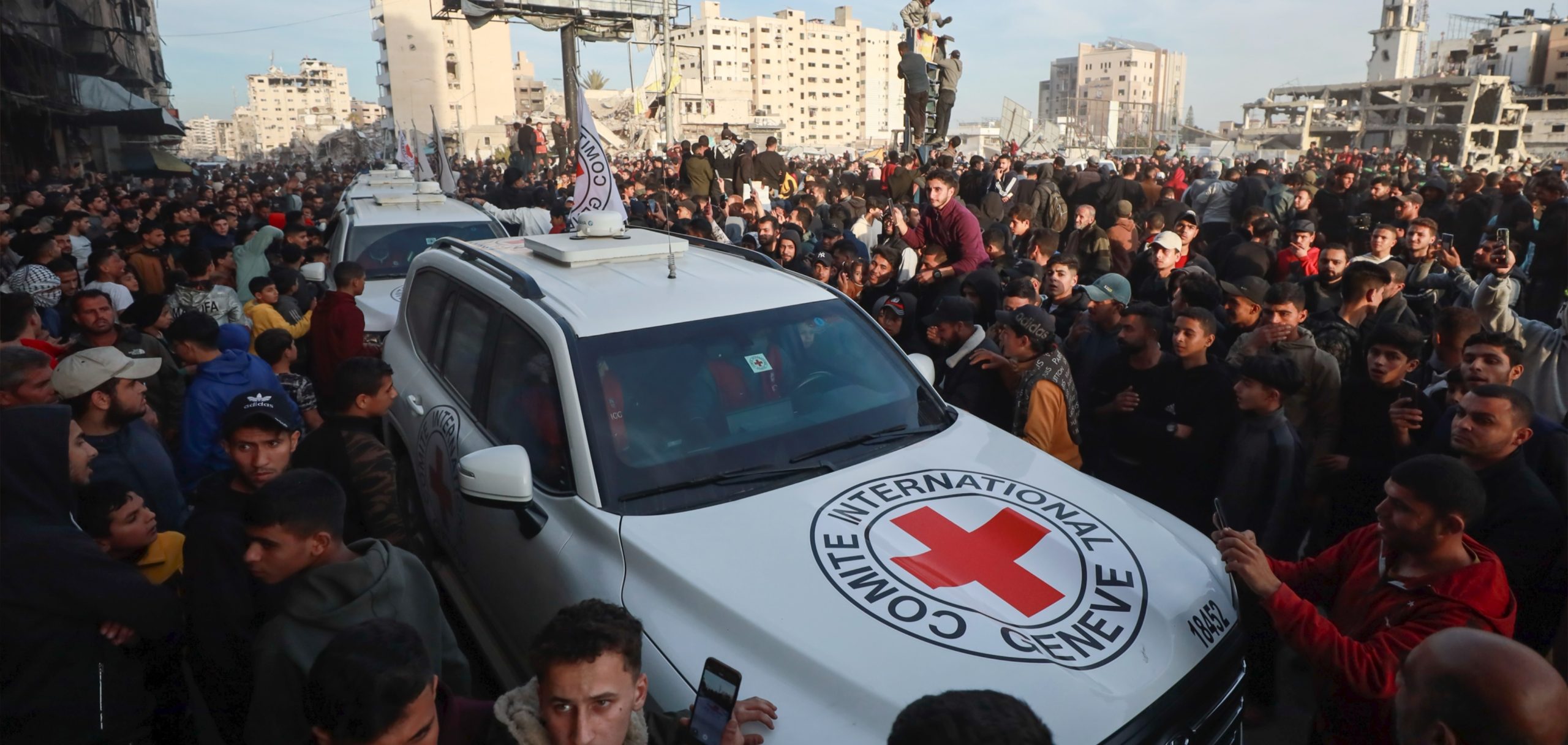
After 471 days in captivity at the hands of Hamas terrorists in Gaza, three Israeli women who were released on the first day of a hostage release-ceasefire deal with the terror group have begun to share details of their ordeal, according to reports in Hebrew media on Monday.
Romi Gonen, 24, Emily Damari, 28, and Doron Steinbrecher, 31, were handed over to the Red Cross by masked Hamas gunmen in Gaza City on Sunday afternoon, surrounded by what appeared to be a chaotic crowd of mainly young men, many of them in Hamas uniforms and masked.
“We were scared to death at the transfer point, from the combination of the armed terrorists and the Gazan crowd,” one of the women was quoted as saying by Channel 12 news, in comments approved for publication by the Israeli military censor.
The former hostages said that they were only told they were set to be released from Gaza hours before they were handed over.
The three were the first hostages to be released in the initial stage of the three-phase accord, which provides for a total of 33 captives to be freed over 42 days in exchange for nearly 2,000 Palestinian prisoners.
Gonen was kidnapped from the Supernova rave near Kibbutz Re’im on October 7, 2023, when thousands of Hamas-led terrorists burst across the border into Israel, killing some 1,200 people and seizing 251 hostages, mostly civilians. Damari and Steinbrecher were both kidnapped from their homes at nearby Kibbutz Kfar Aza during the terror rampage.
Channel 12 reported that the women said they were not held alone during their time in captivity, and that they were moved to various places in Gaza, including the designated “humanitarian zone” in the south of the Strip.
Some of the hostages said that they hardly saw the light of day over the past 15 months, spending most of their time in captivity underground.
They were also said to have pieced together the details of the brutal Hamas attack that sparked the war, and they knew that their families had survived, though many of their friends were killed during the assault.
“I didn’t think I would come back. I thought I’d die in Gaza,” one of the hostages was quoted by Channel 12 as saying.
The report added that while the women sometimes received medicines they required, one of them underwent a medical procedure without anesthesia during her captivity.
Both Damari and Gonen were shot during the terror attack in which they were kidnapped. Damari lost two fingers as a result of her injury.
Other former hostages who were released in a weeklong truce in November 2023 said they underwent surgery without anesthesia.
Also on Monday, parents and siblings of the three released hostages held a press conference at the Sheba Medical Center, where the women were airlifted on Sunday evening, and said that they were all doing well. They also expressed their gratitude to the government, the negotiators, US President Donald Trump, and the Israeli people for their support and assistance in bringing their loved ones home.
Times Of Israel
Day 472 — Monday, January 20
IDF Reservist Killed, Two Others Wounded By Roadside Bomb In West Bank Overnight

An IDF reservist was killed and two others were wounded, including a senior officer in serious condition, after being hit by a roadside bomb in the West Bank overnight.
The slain soldier is named by the military as Sgt. First Class (res.) Eviatar Ben Yehuda, 31, of the Ephraim Regional Brigade’s 8211th Reserve Battalion, from Nitzan.
According to an initial IDF probe, the soldiers were in a David light armored vehicle during a patrol in the town of Tamun, when a bomb was detonated against their vehicle.
The explosion killed Ben Yehuda and seriously wounded the reservist battalion commander. Another soldier was moderately hurt.
Day 472 — Monday, January 20
Tehran Unveils Images Of An Underground Naval Base Ahead Of Trump’s Inauguration

The Iranian ayatollah regime released footage on Saturday that it claims shows a covert Iranian subterranean naval base. The released images were reportedly taken in a secret location around 500 meters below the ground close to the Persian Gulf.
The Iranian regime, which frequently and excessively boasts about its military capabilities, claimed that the speedboats in the images are radar-evading Taregh-class models that are capable of launching cruise missiles.
The disclosed footage showed Islamic Revolutionary Guard Corps (IRGC) chief General Hossein Salami inspecting the base together with the Iranian naval arm commander Rear Admiral Alireza Tangsiri in the footage.
“The massive amount (of equipment) we saw today is a small portion of the power of the revolutionary guard’s naval force, developed over the past years,” Gen Salami stated.
“We assure the great nation of Iran that their young people are capable of coming out honorable and victorious from a battle on the seas against enemies big and small,” the top Iranian general added in a thinly veiled threat to Israel and the United States, ahead of President-elect Donald Trump’s inauguration on Monday.
It is the second time in January that Tehran has publicly displayed its alleged military capabilities. Earlier this month, Iran showcased an underground arms storage facility where the regime claims it stores “new special missiles.”
“The enemy thought that our production capacity had been cut off, but the growth rate of our missile capacity is up to date; missiles are really increasing and upgrading their capacity and capabilities every day in terms of quantity, quality, skill, and design,” IRGC Commander Maj.-Gen. Hossein Salami said, referring to the large Israeli aerial strike on Iran’s missile production facilities on Oct. 26.
Many pundits believe that the Iranian regime’s recent display of military power is a sign of growing concern among the ayatollahs of the incoming Trump administration, which is expected to embrace hawkish policies against Tehran.
Trump’s incoming National Security Advisor, Mike Waltz, vowed in December that the Trump administration’s Iran policy would be dramatically different than the one embraced by the outgoing Biden administration.
“You’re going to see a huge shift on Iran,” Waltz told Fox News. “We have to constrain their cash. We have to constrain their oil. We have to go back to maximum pressure, number one, which was working under the first Trump administration,” he added.
Like Israel, the incoming Trump administration is reportedly concerned that the Iranian regime is dangerously close to acquiring nuclear weapons.
In a recent interview with Dan Senor who heads the popular podcast Call Me Back, Waltz presented nuclear weapons at the hands of the ayatollahs as an intolerable threat to the Middle East and global peace.
“If you think the region is unstable, violent, and at war now, imagine it under a nuclear umbrella controlled by Iran,” Waltz warned.
The ayatollah regime openly calls for the Jewish state’s destruction.
“We must take this very seriously,” the senior Trump official continued. “Every American should understand that any kind of nuclear confrontation in the region would be catastrophic for the entire world.” He warned.
It is currently unclear whether President-elect Trump would consider using military force against Iran. However, the ayatollahs fear that Trump would likely greenlight an Israeli strike on Iran’s nuclear facilities if deemed necessary and all other options have been exhausted.
Day 471 — Sunday, January 19
Hostages Romi Gonen, Emily Damari, Doron Steinbrecher Return To Israel After 471 Days

For the first time since November 2023, three hostages taken during the October 7, 2023, attack on Israel were released by Hamas on Sunday under a ceasefire deal, returning to Israel after 471 days in captivity in Gaza and being reunited with their families.
The first three hostages freed under the deal were civilians Romi Gonen, 24, Emily Damari, 28, and Doron Steinbrecher, 31. Gonen was abducted from the Supernova music festival, while Damari and Steinbrecher were taken from their homes in Kibbutz Kfar Aza.
The three women were said to be in relatively good physical condition.
On Sunday evening masked Hamas gunmen handed the three women to the Red Cross at Saraya Square in central Gaza City, where a large rowdy crowd of mainly young men gathered, waving flags of the Palestinian terror group and holding cellphones in the air to film the event.
Looking thin and frightened, the hostages disembarked from a Hamas military vehicle, surrounded by armed men struggling to hold back the crowd, and quickly boarded the Red Cross SUVs.
An AFP journalist on-site said the Hamas gunman initially tried to keep the public away from the ICRC cars. But when another convoy of white vehicles arrived in the square carrying the three women to be handed over, the crowd of several thousand surged forward to surround them. Footage showed armed and balaclava-wearing gunmen stationed around the van containing the three women, as others stood on top of it.
Many of those in the crowd chanted “Allahu Akbar.”
Hamas released a propaganda video showing the release of the hostages, with gunmen from the Palestinian terror group giving the women “gift bags” and “certificates” before they were freed. The bags reportedly included photos of them in captivity.
In the video, a Red Cross representative wearing a red vest could be seen signing a document provided by Hamas operatives in the terror group’s distinctive green headbands, before the hostages were handed over.
Around half an hour later, the Red Cross handed the hostages over to elite Israeli troops and Shin Bet agents inside Gaza.
They were then transferred to Israel to a complex set up by the IDF near the Gaza border at Re’im Base, where they met their mothers for the first time in over 15 months.
They also met with IDF representatives, doctors, psychologists, and mental health officers, and received initial treatment at the facility.
The IDF released footage showing the moment the Red Cross handed over the former hostages to special forces in the Gaza Strip, along with the moment they crossed the border back into Israel.
The IDF also published footage of the mothers of the three former hostages at the facility near the border, watching their daughters return to Israel, along with clips of the families celebrating during the moments when they were handed over to troops in the Gaza Strip.
Images released by the families showed the young women embracing their mothers as they met for the first time in 471 days.
Several photos showed Emily Damari on a video call with her family after meeting with her mother. In one, she held up a bandaged hand. Her family told reporters that she lost two of her fingers on the day of her kidnapping on Oct. 7, 2023, after she was shot in the hand during the Hamas onslaught.
From the IDF facility, the three were flown by military chopper to the Safra Children’s Hospital at Sheba Medical Center in Tel Hashomer, Ramat Gan, where they reunited with the rest of their families.
From the IDF facility, the three were flown by military chopper to the Safra Children’s Hospital at Sheba Medical Center in Tel Hashomer, Ramat Gan, where they reunited with the rest of their families.
When the ambulances reached the plaza at the entrance of the hospital there was a loud cheer, and the young women burst into song: “Am Israel Chai” – the people of Israel live.
Tel Hashomer Hospital Director Dr. Yael Frankel-Nir said that the physical condition of the released hostages was good enough to allow them “to focus on the important thing, which is reuniting with their families, and to postpone delving into medical issues for a few hours.”
“We are closely accompanying them and their families,” she added.
The three were released hours after a long-elusive ceasefire went into effect Sunday morning, after a brief delay.
Roughly 2,000 people crowded into the so-called Hostages Square in Tel Aviv on Sunday afternoon to watch as the first images of the returning hostages were broadcast.
Israel’s confirmation that the three were in Israeli hands was met with several waves of applause.
“They are in our hands. They are coming home,” IDF Spokesman Rear Adm. Daniel Hagari said in a press conference.
A strand of yellow balloons representing solidarity with the hostages was released into the air, where it curled into the shape of the ubiquitous yellow ribbon.
Day 471 — Sunday, January 19
PM Netanyahu: 'We Will Meet All The War’s Goals, We Will Bring Everyone Home'
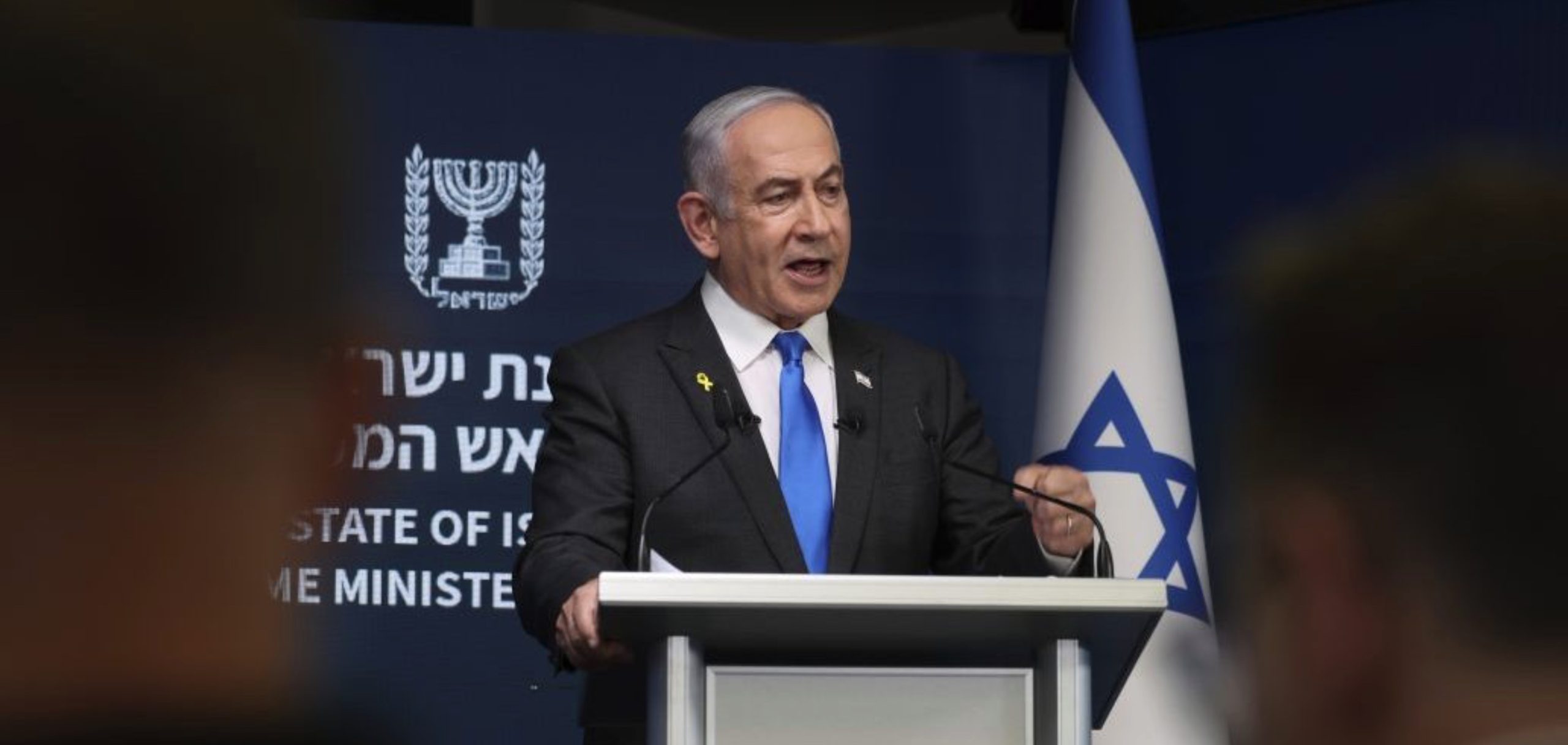
Netanyahu delivered a statement to the nation on Saturday night, before Israel begins implementation of the hostage deal’s first phase.
“Out of this terrible disaster, the tremendous strength of the Israeli people’s spirit was revealed, as was the supreme heroism of our soldiers, and it’s this that leads us with a fierce determination to achieve all the goals of the war: to return all our hostages, to eliminate Hamas’s governing capabilities, and to ensure that Gaza will no longer pose a threat to our country.
“The security cabinet and the government approved the deal’s outline,” the prime minister said. “The mission of freeing the hostages has stuck with me the entire time. Together with the citizens of Israel and many around the world, my wife, Sara, and I pray for the return of all our hostages. I promise you, we will meet all the war’s goals; we will bring everyone home.
Netanyahu continued that “to date, we have brought home 157 of our hostages, 117 of whom are alive. In the agreement that has now been ratified, we will bring home another 33 of our brothers and sisters, most of whom are alive.”
“As soon as he was elected, President-elect [Donald] Trump mobilized himself to free the hostages. He spoke to me on Wednesday evening. He welcomed the agreement, and he rightly emphasized that the first phase of the agreement is a temporary ceasefire. That’s what he said – a ‘temporary ceasefire,’” Netanyahu emphasized, stating that [Trump has] given full backing to Israel’s right to return to resuming the war if Israel concludes that the negotiations of the deal’s second phase are futile.
“I also appreciate President Trump’s decision to lift all remaining restrictions on the supply of essential weapons and ammunition to the State of Israel,” he added.
In his speech, the prime minister also established a few principles, including the ability to return to fighting if necessary. There will be a significant increase in the number of live hostages who will be returned in the first phase. Netanyahu said that contrary to Hamas’s position in May, the number of live hostages who were supposed to be released in phase one has almost doubled. Additionally, Israeli forces will continue maintaining their position at the Philadelphi Corridor. The premier said that he even plans to increase the amount of troops stationed there.
Netanyahu has also emphasized that the terrorists who are to be released from prisons in the deal [who have committed murder] will be sent to the Gaza Strip or abroad and not to the West Bank. He also added that the security cabinet has decided to reinforce Israeli forces in the West Bank “in order to protect our citizens.”
The prime minister then noted Israel’s achievements in the war in the Gaza Strip with the weakening of Hamas and the elimination of many of their leaders, including Yahya Sinwar, Mohammed Deif, and Ismail Haniyeh, as well as the elimination of Hezbollah’s Hassan Nasrallah. Other goals he mentioned were destroying most of the Syrian military’s weapons and fighting Iran and the Houthis in Yemen.
“We have changed the face of the Middle East,” he said.
Day 470 — Saturday, January 18
These Are The 33 Hostages Set To Be Returned In Phase One Of The Gaza Ceasefire

The government’s hostages and missing persons coordination unit on Friday notified the families of the 33 Israeli hostages expected to be set free in the first phase of the Gaza ceasefire deal.
Those on the list, to be returned over a period of 42 days, are so-called “humanitarian” cases: women, children, elderly individuals and the infirm.
Notably, Israel has not been told how many of the 33 are alive, though it expects the majority are. Israel will receive a full status report on all those on the list seven days into the ceasefire. Some unconfirmed media reports have said Israel has insisted on first receiving the living among the 33, with bodies returned at the end.
The order of release is not yet known. The identities of those set to return are expected to be provided 24 hours before each release.
The schedule for the release will see three hostages returned on the first day of the ceasefire and four more returned on the seventh day. Subsequently, three hostages will be returned every week for a period of four weeks. Finally, 14 hostages will be returned on the final, sixth week of phase one.
The list is nearly identical to one published by a Saudi news outlet earlier this month, after Hamas apparently leaked a document with the names as negotiators moved closer to sealing the agreement.
The list includes 12 women and children:
- Romi Gonen, 23
- Emily Damari, 27
- Arbel Yehud, 29
- Doron Steinbrecher, 31
- Ariel Bibas, 5
- Kfir Bibas, 2
- Shiri Silberman Bibas, 33
- Liri Albag, 19
- Karina Ariev, 20
- Agam Berger, 21
- Danielle Gilboa, 20
- Naama Levy, 20
It also includes 10 older men:
- Ohad Ben-Ami, 58
- Gadi Moshe Moses, 80
- Keith Siegel, 65
- Ofer Calderon, 54
- Eli Sharabi, 52
- Itzik Elgarat, 70
- Shlomo Mansour, 86
- Ohad Yahalomi, 50
- Oded Lifshitz, 84
- Tsahi Idan, 50
And another 11 men under 50:
- Hisham al-Sayed, 36
- Yarden Bibas, 35
- Sagui Dekel-Chen, 36
- Yair Horn, 46
- Omer Wenkert, 23
- Sasha Trufanov, 28
- Eliya Cohen, 27
- Or Levy, 34
- Avera Mengistu, 38
- Tal Shoham, 39
- Omer Shem-Tov, 22
The one person who was on the Saudi outlet’s list and who is not on the release list is Youssef Hamis Ziyadne, 54, who was confirmed last week to have been killed in captivity, and whose body was recovered by the IDF.
Beyond the 33 on the list, 65 more people are held by Hamas, many of them no longer alive. These are to be returned as part of a second phase of a deal, if it comes to pass, that would also see a permanent ceasefire in Gaza.
Day 470 — Saturday, January 18
Israeli Cabinet To Vote On New War Objective On Judea And Samaria Terror

Following security warnings about escalation in Judea and Samaria due to the release of hundreds of terrorists into the area, the Security Cabinet is expected to approve on Friday a comprehensive decision to address this front.
This is one of the demands that Finance Minister and Religious Zionism Party chairman Bezalel Smotrich presented in his discussions with Prime Minister Benjamin Netanyahu, prompted by numerous warnings about increased terrorist attacks in Judea and Samaria following the ceasefire deal with Hamas.
The decision is expected to establish a new war objective focused on Judea and Samaria that will address all required aspects of the war: prevention, thwarting celebration of terrorist releases, offense and deterrence.
To implement these measures, expanded forces will be deployed to the Judea and Samaria area. The matter was agreed upon between Netanyahu and Smotrich on Thursday evening.
During a discussion held over the weekend, a security source warned that the release of hundreds of terrorists to Judea and Samaria—out of approximately 1,000 to be released in total—raises serious concerns about security escalation.
“Hundreds of prisoners are expected to arrive in Judea and Samaria. This release will serve as an encouragement for terrorism as a large portion of them will certainly return to terrorist activities,” the source said, adding that the released terrorists will also “try to inflame the region in the long term.”
Settlement umbrella group Yesha Council chairman and Binyamin Regional Council head Israel Ganz sent a letter to the prime minister this week stating: “Releasing terrorists into Judea and Samaria areas poses a direct and tangible danger to the lives of hundreds of thousands of Israelis. Additionally, releasing terrorists to the region will constitute a strategic mistake that will allow Iran to continue establishing itself in the heart of Israel and advance the next massacre, this time within central Israeli cities.”


 Eli Sharabi, who was released on Saturday morning after 491 days in Hamas captivity, was reportedly unaware that his wife and two daughters were murdered by Hamas terrorists on October 7 upon his release from Gaza.
Furthermore, Hamas informed Sharabi of the death of his brother, Yossi, as he was being paraded on stage in Deir el-Baleh in central Gaza. His brother’s body is still being held in Gaza.
A report from Channel 12’s Almog Boker indicated that Sharabi told IDF soldiers he was looking forward to meeting his wife, Leanne, and daughters Noya, 16, and Yahel, 13, unaware that they had been tragically murdered in their home in Be’eri in the October 7 massacre, as Hamas terrorists dragged him to the Gaza Strip.
“Eli is returning from an impossible reality in captivity to a very difficult reality in Israel,” Kibbutz Be’eri said in a statement.
“A reality in which those dearest to him are no longer alive. On October 7, Eli lost his daughters, Noya and Yahel, and his wife, Leanne, who were murdered in their house in Be’eri in the terrible massacre. His brother, the late Yossi Sharabi, was murdered in captivity, and his body is still being held in Gaza. We will embrace him and give him the best possible support.”
Day 492 — Sunday, February 9
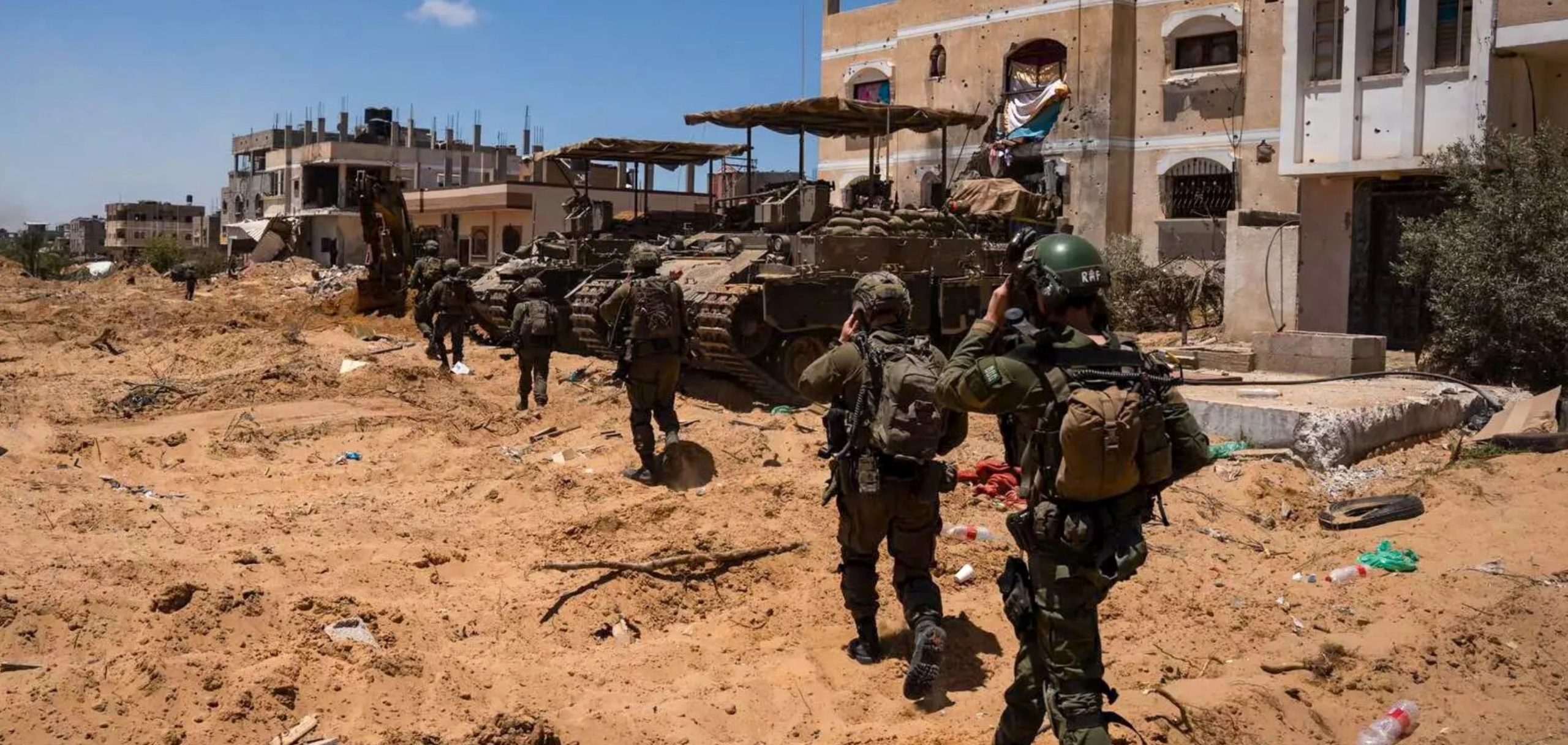 The Israel Defense Forces redeployed from the Netzarim Corridor in central Gaza to outposts along the perimeter of the Strip as part of the implementation of the hostages-terrorists swap agreement with Hamas.
“Forces from 162nd Division, 143rd Division and 99th Division under the Southern Command have been deployed at several points in the Gaza Strip region to strengthen the defensive layer for the residents of the western Negev and the State of Israel,” the IDF Spokesperson’s Unit said on Friday.
Senior officers of the IDF’s Southern Command held a field assessment along with fighters on the ground in anticipation of the next phase of the release of the Israeli captives held in the Gaza Strip, the military said.
The IDF began to withdraw from the Netzarim Corridor in late January, enabling the return of displaced Gaza residents to the northern Strip.
Defense Minister Israel Katz emphasized that Israel will continue to strictly enforce the ceasefires, both with Hamas in Gaza and Hezbollah in Lebanon, warning that any violation will be met with a strong response. Meanwhile, Gazan residents have been cautioned against approaching IDF troops, including near the Rafah Crossing and the Philadelphi Corridor along the Egyptian border.
Day 491 — Saturday, February 8
 The Health Ministry says that the three hostages who were freed from Gaza this morning are suffering from severe malnutrition and lost significant body weight during their 491 days in captivity, after initial medical checks in the hours following their release.
“These are difficult scenes,” Health Ministry representative Dr. Hagar Mizrahi says in a press conference from Ichilov Hospital in Tel Aviv, where two of the released hostages are beginning their recovery.
The three hostages freed by Hamas this morning — Eli Sharabi, 52, Or Levy, 34, and Ohad Ben Ami, 56 — looked gaunt and unsteady on their feet as they were released by the terror group, 16 months after they were kidnapped from Kibbutz Be’eri and the Nova music festival.
But doctors were also “excited to see them walking on their own two feet, upright and proud,” the Health Ministry representative adds.
Day 491 — Saturday, February 8
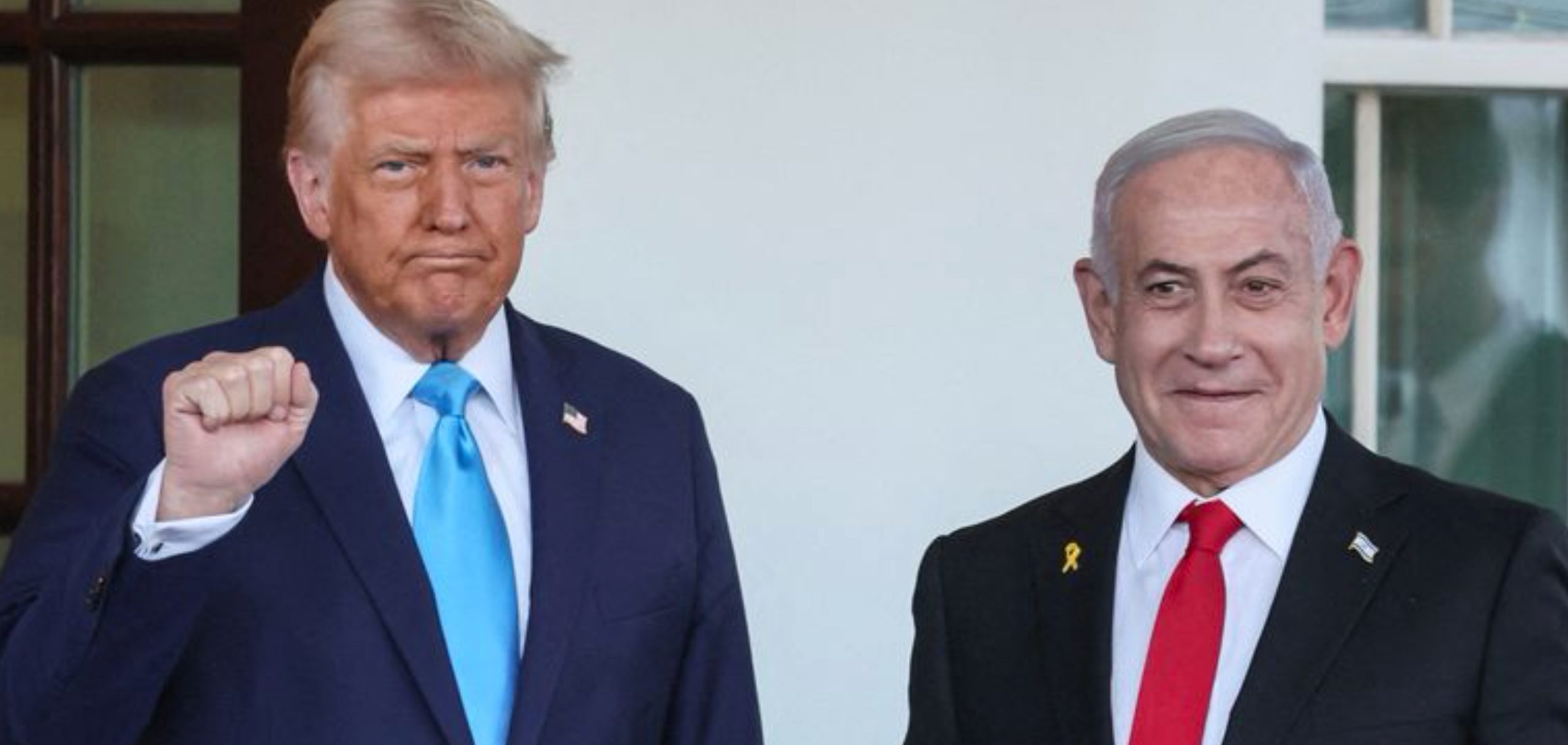 Israeli Prime Minister Benjamin Netanyahu gave President Donald Trump an unusual gift during his most recent trip to Washington, D.C., this week — a gold-plated pager.
The present was a nod to the controversial mass attack believed to have been carried out by Israel’s Mossad intelligence agency against Hezbollah Sept. 17, 2024, in which thousands of pagers, walkie-talkie-like devices and radios simultaneously exploded across Lebanon and Syria around 3:30 p.m.
A statement from Netanyahu’s office to Fox News Digital said, “The pager symbolizes the prime minister’s decision that led to a turning point in the war and marked the beginning of Hezbollah’s strategic collapse.
“This strategic operation reflects Israel’s strength, technological superiority and tactical ingenuity in confronting its adversaries.”
An image obtained by Fox News Digital showed the pager mounted to a wooden plaque with a message on the device that said, “Press with both hands,” accompanied by a double downward arrow sign, the same message that reportedly showed moments before the devices detonated.
The plaque also came with a message to Trump calling him Israel’s “greatest friend and ally.”
The statement appears to be the first time Netanyahu’s office has publicly commented on the strike against the terrorist network in the summer.
Day 490 — Friday, February 7
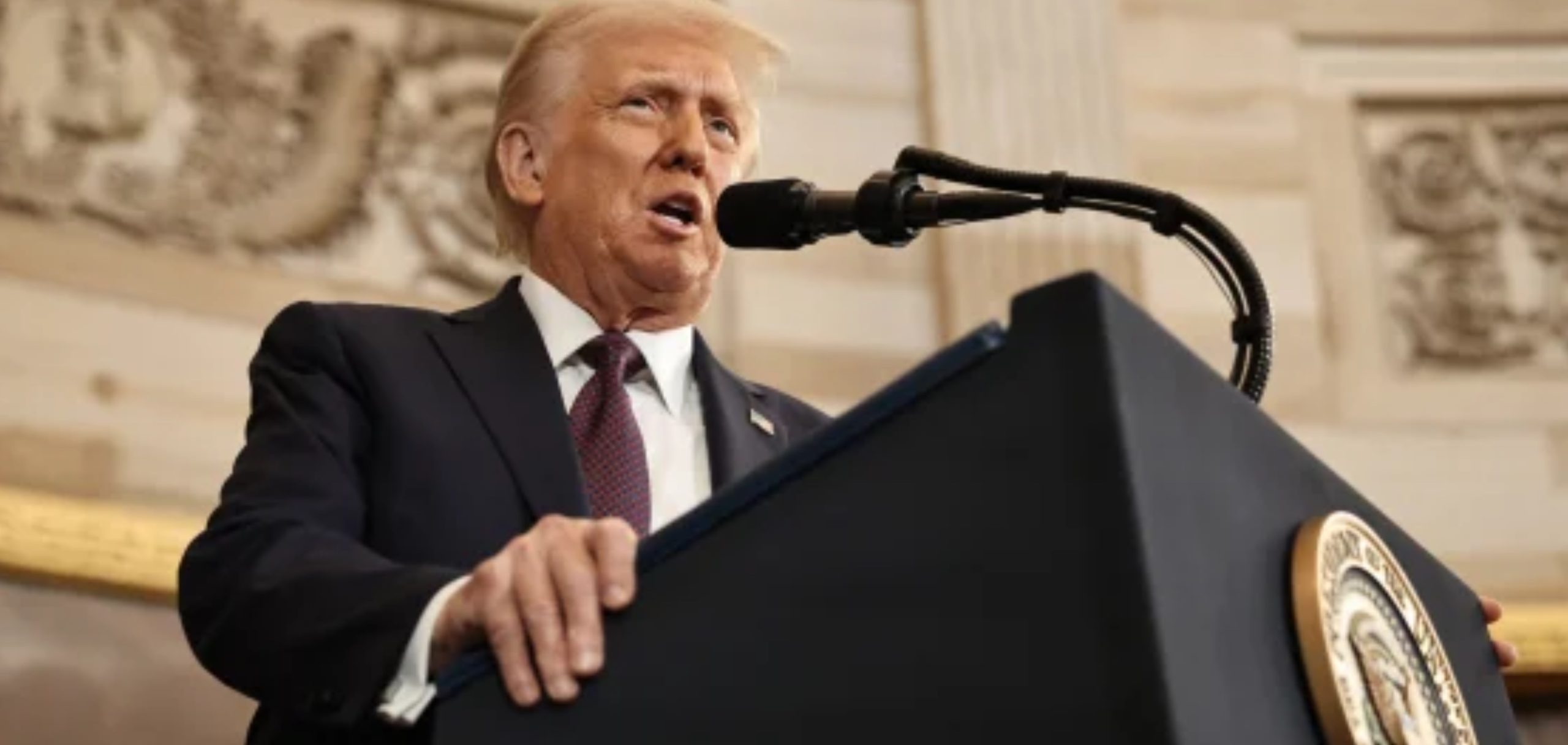 US President Donald Trump is set to issue an executive order Thursday for sanctions against the International Criminal Court (ICC), Reuters reported.
Trump previously indicated he would consider how to approach the issue, following arrest warrants against Prime Minister Benjamin Netanyahu and former defense minister Yoav Gallant.
The sanctions will target individuals who assist in investigations against citizens of the US or its allies, as well as their family members.
Karim Khan, the chief prosecutor of the court, issued warrants last year against Netanyahu and Gallant, as well as major Hamas leaders. Since Israel has eliminated the Hamas leaders in targeted killings, the Israeli leaders are the only ones whose warrants Khan pursued.
Khan previously said he would be unfazed by any sanctions imposed against him.
Day 490 — Friday, February 7
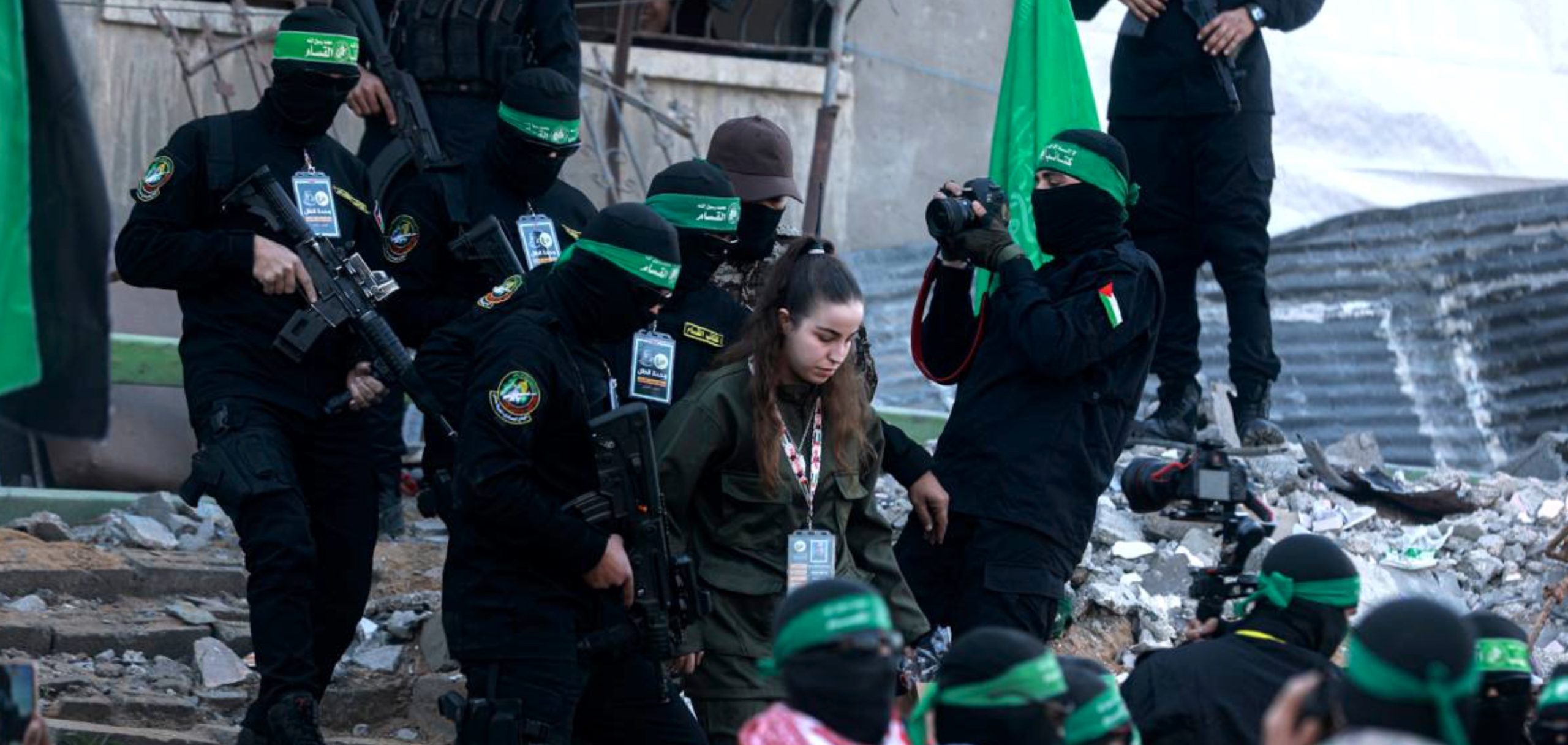 The hostages who were released from Hamas captivity and returned home have shared the harsh experiences of their captivity, which attest to the extent of their abuse by the terrorists.
Kan News reported that the stories the hostages have told indicate that they were physically assaulted, with the most severe violence afflicted on the young men. Some hostages have scars and burns on their bodies that testify to this.
In some cases, the hostages were beaten by the terrorists’ gun squad, and in other cases, they were abused by the families who imprisoned them, including young children.
The released hostages said that they fell ill many times because they were given rotten or expired food.
In addition, psychological terrorism was used against them, they were told about the deaths of their family members and received frequent threats of being executed.
It was also reported that during initial interrogations, the released hostages told of other hostages who had been held captive together with them. Signs of life were also received from hostages who will be released in the second phase of the deal.
When Yarden Bibas, Keith Siegel, and Ofer Calderon were released they testified that in the last days before their release, the terrorists began to increase their food rations, apparently so that they would look healthier when they arrived in Israel.
The hostages were forced to sign documents thanking their captors, while the entire process was documented by Hamas. In addition, once every few weeks, they were forced to participate in the filming of videos that had not yet been published, in which they were made to talk to their families. In some cases, as part of the psychological abuse, the hostages were even forced to bid their families farewell in these videos.
Day 489 — Thursday, February 6
 Two Israeli soldiers were killed and eight others were wounded in an accident in the Gaza Strip late last night, the military announces.
One of the soldiers is named as Sgt. First Class (res.) Nadav Cohen, 21, of the Golani Brigade’s 51st Battalion, from Beit Hanan.
The IDF says the name of the second soldier will be released later.
Of the eight wounded soldiers, one is listed in serious condition.
According to an initial IDF probe, due to harsh winds, a crane collapsed, crashing down on the soldiers.
Day 489 — Thursday, February 6
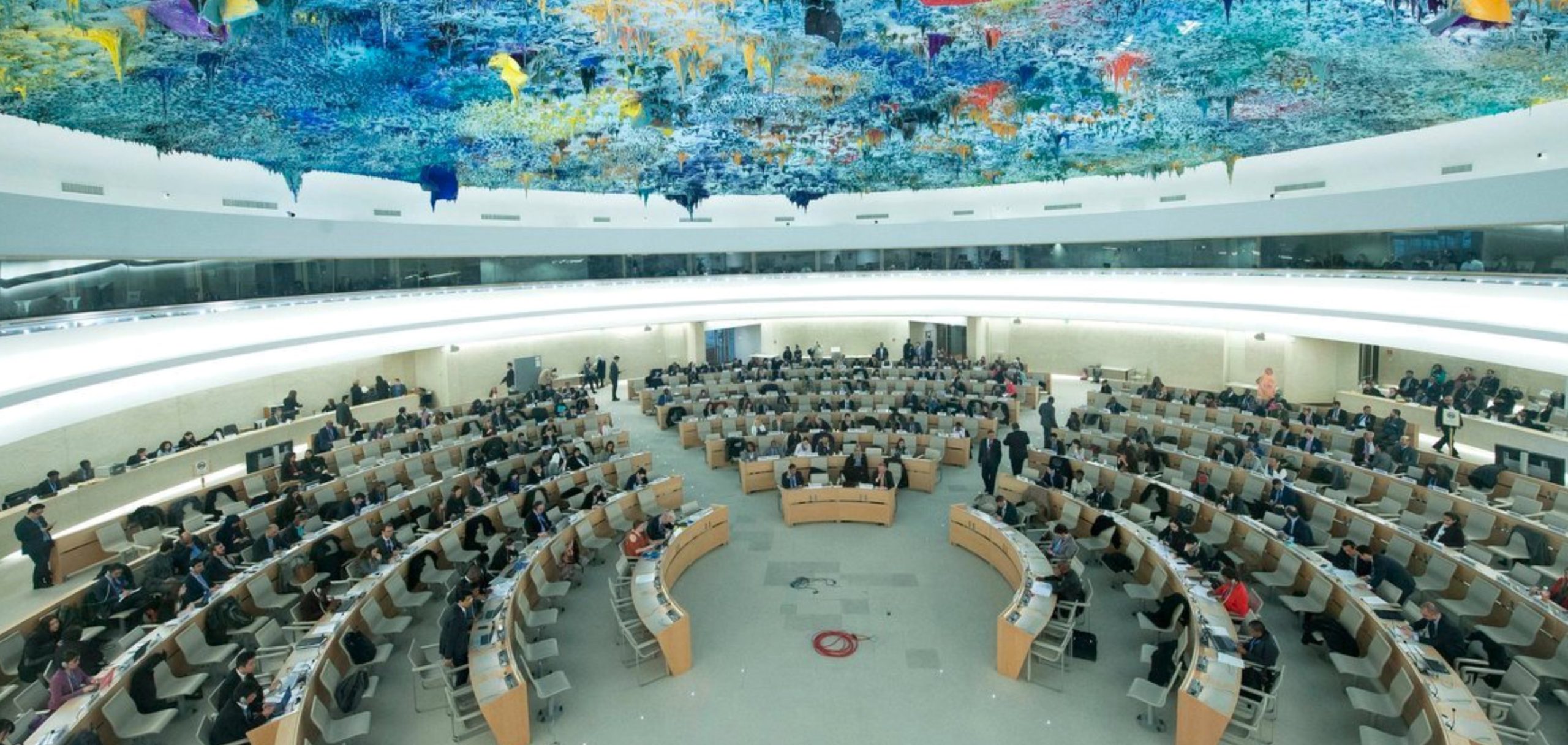
Israeli Foreign Minister Gideon Sa’ar announced on Wednesday that Israel would no longer participate in the UN Human Rights Council (UNHRC) after the US announced it would be leaving the council as well.
“Israel welcomes President Trump’s decision not to participate in the UN Human Rights Council (UNHRC). Israel joins the United States and will not participate in the UNHRC,” Sa’ar wrote in a statement.
He explained the move, stating: “The UNHRC has traditionally protected human rights abusers by allowing them to hide from scrutiny, and instead obsessively demonizes the one democracy in the Middle East – Israel.
“This body has focused on attacking a democratic country and propagating antisemitism, instead of promoting human rights.”
Sa’ar noted: “The discrimination against us is clear: In the UNHRC, Israel is the only country with an agenda item dedicated solely to it. Israel has been subjected to over 100 condemnatory resolutions, over 20% of all resolutions ever passed in the Council – more than against Iran, Cuba, North Korea, and Venezuela combined.
“Israel will not accept this discrimination any longer!” he concluded.
Day 489 — Thursday, February 6
 The Nebraska Legislature Education Committee held a hearing on Monday regarding LB 538, a bill aimed at combating antisemitism in public schools and universities.
Introduced by state senator Brian Hardin, the legislation adopts the International Holocaust Remembrance Alliance (IHRA)’s working definition of antisemitism, mandates anti-discrimination policies and establishes a Title VI coordinator to address incidents.
“LB 538 takes a firm and necessary stand against discrimination, including antisemitism, in our public schools and universities,” Hardin said in his testimony on Monday. “This is not just about one group, or one issue. This is about ensuring that all students and educators in Nebraska have the right to learn and work in an environment free from hatred, harassment, and prejudice.”
He continued: “This bill ensures that antisemitism is recognized, addressed and treated just as seriously as any other form of hate or bigotry. This is not a partisan issue; it’s a matter of fundamental fairness and decency. Just as we would not tolerate racism or sexism in our schools, we cannot turn a blind eye to antisemitism, which is often ignored or dismissed.”
Supporters include the Combat Antisemitism Movement (CAM), the Jewish Community Relations Council and the Anti-Defamation League.
Adam Beren, founder of CAM, emphasized the bill’s importance in ensuring safe learning environments.
“LB 538 is a timely and critical bill that responds to the current needs of K-20 students, especially Jewish students facing an unprecedented situation,” he stated. “Passage will demonstrate that Nebraska is taking a significant step toward affirming its commitment to combating hatred in all forms while ensuring the safety and dignity of its Jewish community.”
He added, “Let’s be proactive, and keep antisemitism out of Nebraska and the Midwest, and send a clear message to the rest of the country that antisemitism will not be tolerated.”
The bill now advances in the legislative process as part of broader efforts to address antisemitism nationwide.
Day 488 — Wednesday, February 5
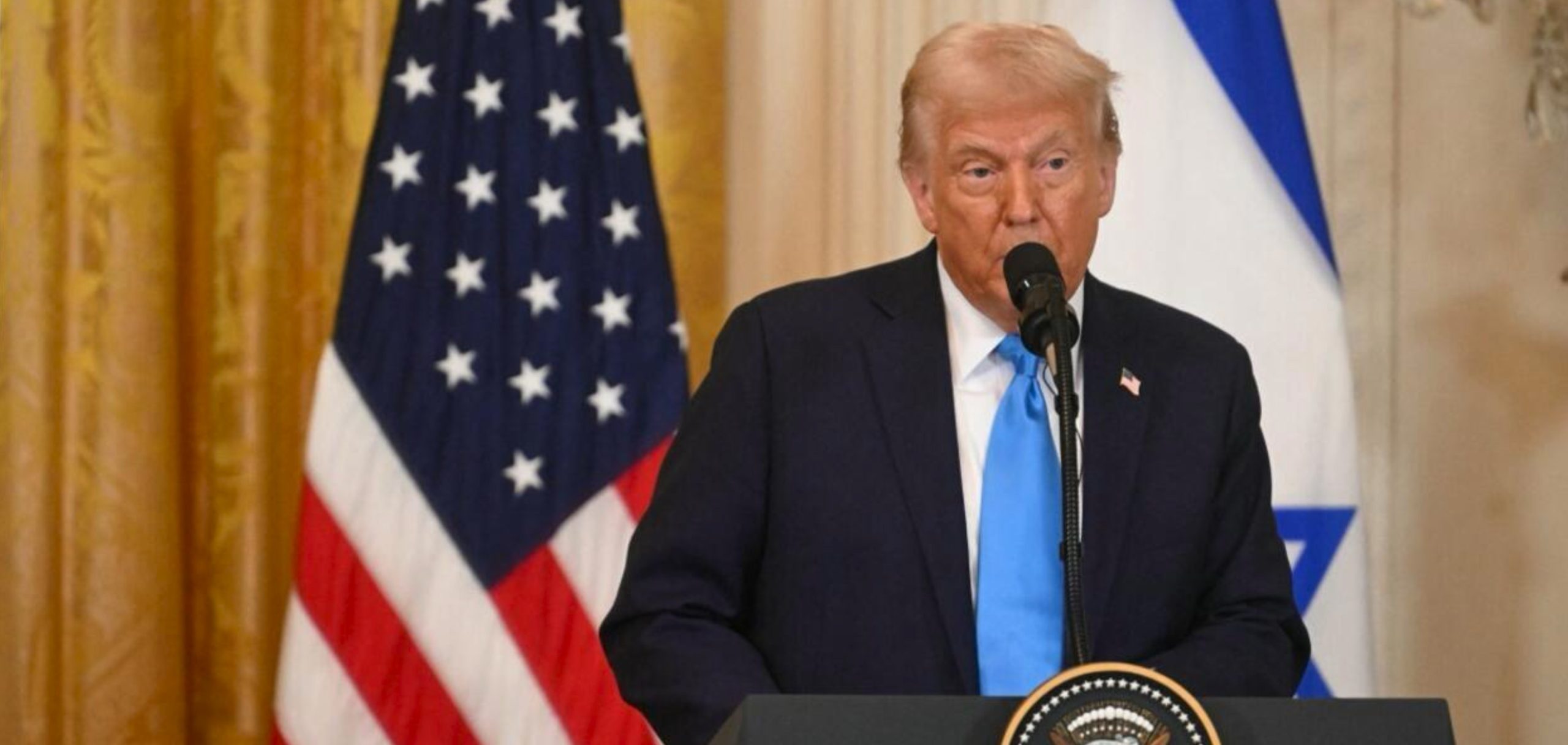 Trump said: “The US will take over the Gaza Strip, and we will do a job with it too. We’ll love it and be responsible for dismantling all of the dangerous bombs and other weapons on the site… and get rid of the destroyed buildings [and] create an economic development that will supply unlimited numbers of jobs and housing.”
The surprise announcement came as the president spoke alongside Israeli Prime Minister Benjamin Netanyahu, the first foreign leader to visit Trump since his Inauguration last month.
Trump had previously said that he would like to see most, or all, of the Palestinian population of Gaza moved to another Arab or Muslim country.
The idea of actually taking over Gaza, and establishing a U.S. presence, was both unexpected and completely new.
Trump added that the U.S. would develop Gaza economically, sending troops if necessary and making investments.
He called the potential of Gaza “unbelieveable,” but said that Palesitnian control of Gaza “will never work.” He added: “You have to learn from history … We have an opportunity to do something phenomenal … the Riviera of the Middle East.”
He said that he envisioned “the world’s people” living there, adding: “I think you’ll make [Gaza] into an international. unbelievable place. I think the potential in the Gaza Strip is unbelievable. And I think the entire world, representatives from all over the world will be there.”
A reporter asked Trump what right the U.S. had to take over Gaza, calling it, inaccurately, “sovereign territory” (there is no Palestinian state and no sovereign power in the territory).
Trump did not reply directly but said that American control of Gaza would increase “stability” in the region as the various nations pursued peace together.
Netanyahu, who had never publicly advocated for anything like what Trump proposed, said that the idea was “something that could change history” and that it was “worth considering.”
It is considered taboo, even in Israel, to advocate for the “transfer” of Palestinians from Gaza or from Judea and Samaria (also known as the West Bank).
Trump has previously proposed buying Greenland, so he is not averse to the idea of America taking over territory abroad. However, the idea of taking over war-torn Gaza is completely unique and quite possibly revolutionary.
Day 488 — Wednesday, February 5
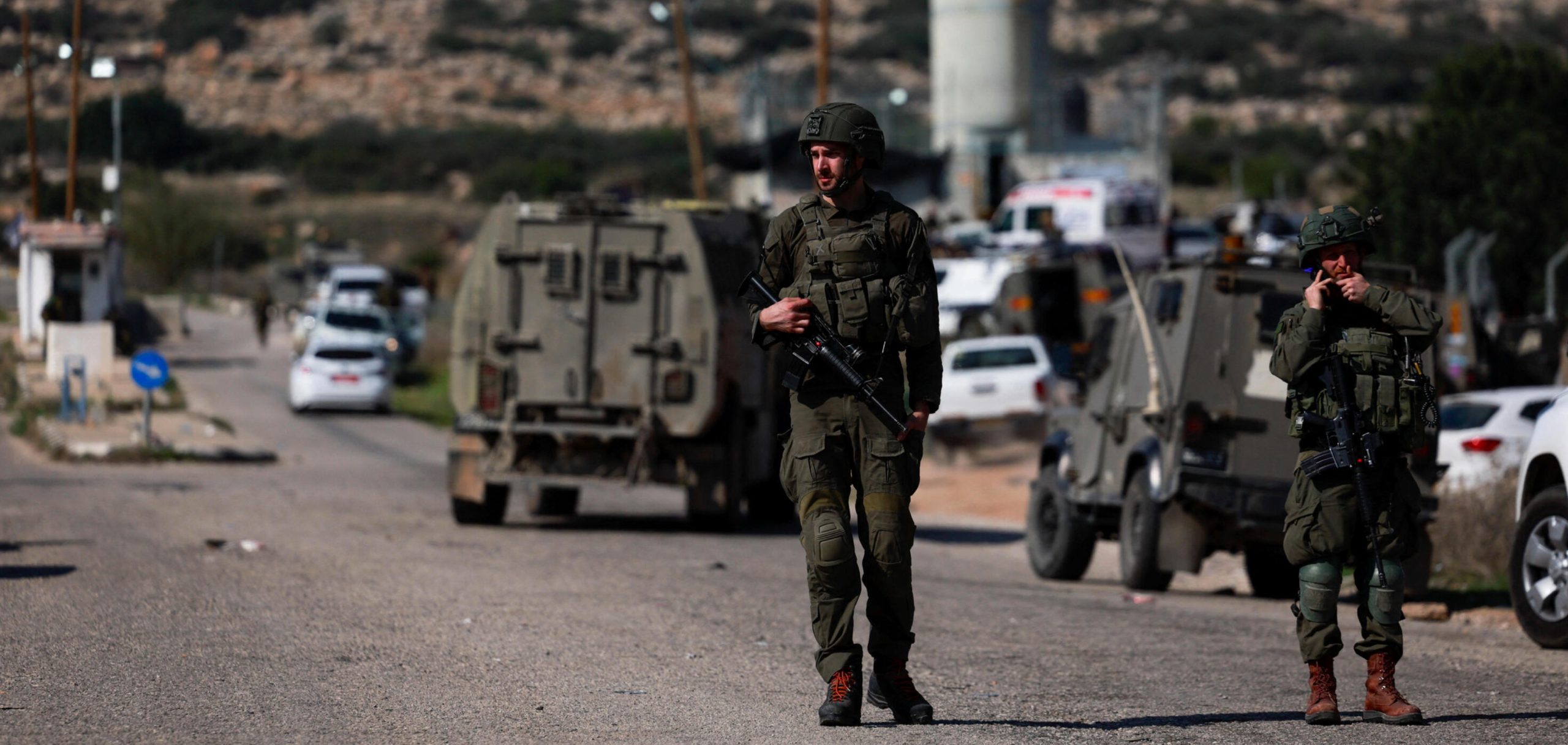 Two Israel Defense Forces soldiers were killed and eight more were wounded when a terrorist opened fire at a military post near the village of Tayasir in northern Samaria on Tuesday morning.
The slain troops were identified by the military as IDF Sgt. Maj. (res.) Ofer Yung, 39, a squad commander in the Ephraim Regional Brigade’s 8211th Reserve Battalion, from Tel Aviv, and Sgt. Maj. (res.) Avraham Tzvi Tzivka Friedman, 43, a soldier in the battalion, from Ein Hanatziv.
According to an initial IDF probe, the terrorist managed to take up a position near the entrance of the military post and fired on troops as they exited. The terrorist was said to have exchanged fire with troops inside the post for several minutes before being killed.
The terrorist, who reportedly had been waiting in the area for hours before carrying out the attack, was said to have been armed with an M-16 rifle and two magazines, and was wearing a tactical vest.
According to the IDF, two of the wounded soldiers were listed as being in serious condition, while the other six victims sustained light wounds.
The death toll among Israeli troops on all fronts since the Hamas-led terror attacks in southern Israel on Oct. 7, 2023 now stands at 844.
The village of Tayasir is located near Tammun, an area where Israeli forces have been conducting a major counter-terrorism operation since Jan. 31, dubbed “Operation Iron Wall.”
On Thursday, IDF Staff Sgt. Liam Hazi, 20, of the Kfir Brigade’s Haruv reconnaissance unit became the operation’s first casualty. Hazi was killed in a firefight with terrorists in Jenin, the military said.
The IDF expanded the operation on Monday and plans to form a new battalion that will remain in northern Samaria once the operation ends.
The IDF has killed more than 50 Palestinian terrorists since the start of the operation on Jan. 21, the military announced on Sunday evening.
At least 35 gunmen were killed during ground operations in the Jenin and Tulkarem areas, while another 15 were killed in airstrikes, according to the IDF. More than 100 wanted terrorists have been detained thus far.
Israeli forces “located and confiscated dozens of weapons, destroyed hundreds of explosive devices and dozens of additional charges that were planted on roads to harm our forces,” the military stated.
Day 488 — Wednesday, February 5
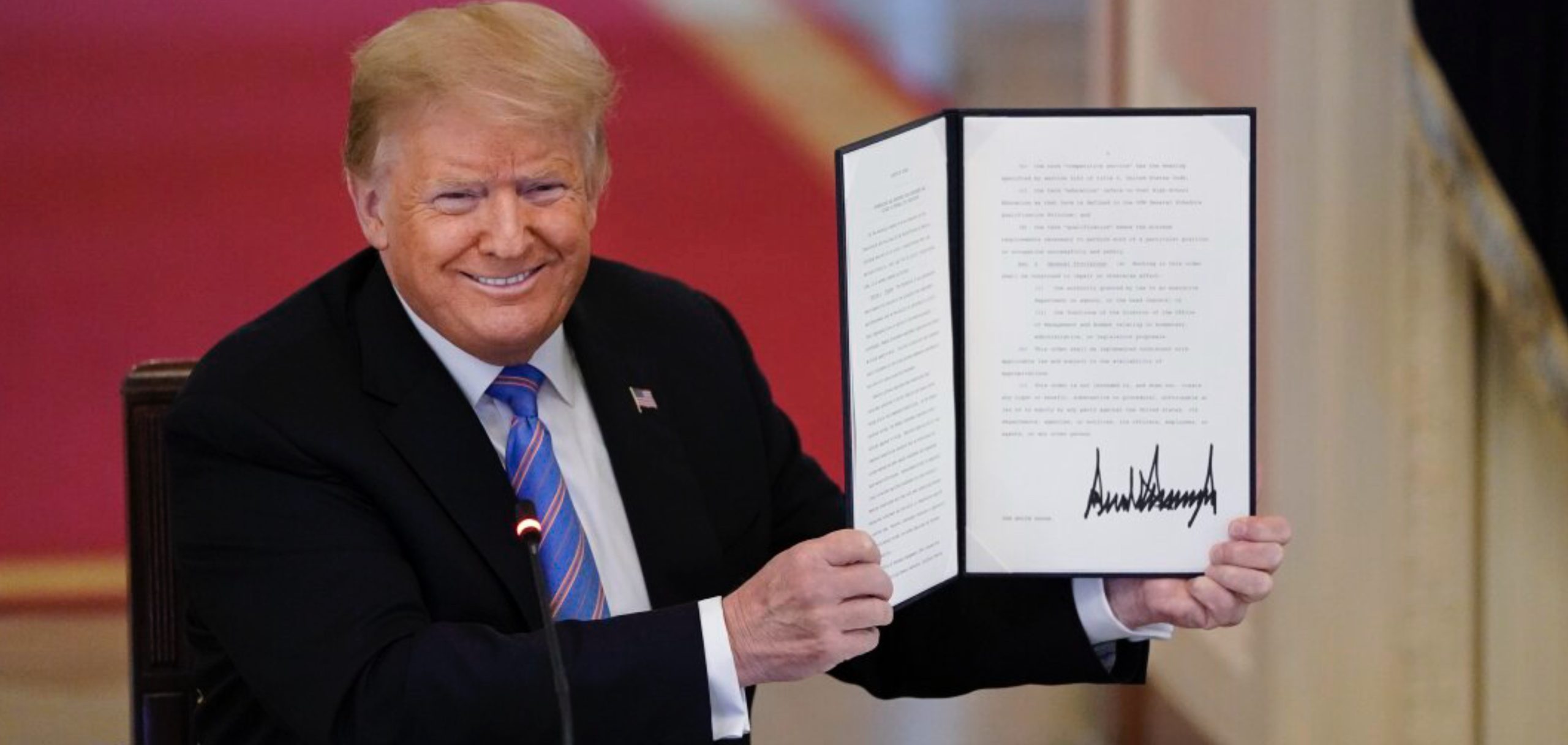 US President Donald Trump announced on Tuesday that he will reimpose ‘maximum pressure’ on Iran, aimed at preventing it from obtaining nuclear weapons and reducing its regional influence.
Trump’s declaration includes additional economic sanctions and increased diplomatic pressure on Tehran. The move follows reports of an acceleration of Iran’s nuclear program and increased military activity in the Middle East.
“I hope to succeed and reach an agreement with Iran – I would be happy to talk to the leadership there, which is too close to possessing nuclear weapons, and that is an intolerable situation,” Trump said.
He added, “If Iran tries to eliminate me in response, it will be annihilated.”
Trump also signed orders to stop funding for UNRWA and for the US to leave the UN Human Rights Council.
Senior US administration officials noted that the new sanctions on Iran are aimed at key sectors of the Iranian economy, including the oil and finance industries. They stressed that the goal is to bring Iran to the negotiating table for a new nuclear agreement, which will include stricter restrictions on the development of nuclear weapons.
Day 487 — Tuesday, February 4
 Israel’s Prime Minister Benjamin Netanyahu has arrived in Washington D.C. for a high stakes visit with U.S. President Donald Trump and his new administration to discuss a series of critical issues surrounding the Gaza War and regional diplomacy.
Before boarding the plane, Netanyahu said Israel’s actions in the war “already changed the face of the Middle East.”
“I believe that working closely with President Trump, we can redraw it even further and for the better. I believe that we can strengthen security, broaden the circle of peace and achieve a remarkable era of peace through strength.”
After a flight of 13 and a half hours, Netanyahu’s office said he was “welcomed at Blair House, the official and historic guest residence of the White House, by its director, who told him that this was Prime Minister Netanyahu’s 14th visit to Blair House – much more than any other foreign leader in its history since it was built in the 19th century.”
The most important part of the four-day visit will be the meeting with President Trump on Tuesday afternoon, Washington time. The pressing issue at the moment is the negotiations over the second stage of the ceasefire in Gaza, which are set to begin this week.
Trump told reporters on Monday that the “discussions on the Middle East with Israel and various and sundry other countries are progressing.”
Netanyahu had boasted about being the first foreign leader to be invited to the White House, calling it “a testimony to the strength of the Israeli-American alliance,” as well as “to the strength of our personal friendship.”
Netanyahu said he and Trump would talk about “Victory over Hamas, achieving the release of all our hostages and dealing with the Iranian terror axis in all its components – an axis that threatens the peace of Israel, the Middle East and the entire world.”
Under the terms of the ceasefire agreement, Israel and Hamas would start negotiations over the second phase sixteen days after the start of phase one.
However, Israeli media reported that Netanyahu is considering not to extend the ceasefire after the 42 days of the first stage and plans to restart the war with the goal of fully destroying Hamas’ military and governmental capabilities, as he had vowed.
Netanyahu hopes to convince Trump to support him if the decides to restart the war, three Israeli officials told Axios.
Netanyahu’s meeting with Trump’s Middle East envoy Steve Witkoff on Monday will be the official start of the negotiations. Witkoff was instrumental in finalizing the ceasefire talks and just finished a visit to the Middle East.
The Prime Minister’s Office (PMO) said on Saturday that Netanyahu and Witkoff would “discuss the Israeli positions” in the meeting.
However, “The real serious negotiations over phase two will only begin after Bibi meets Trump,” another senior Israeli official told Axios. “Nothing meaningful will happen before that.”
The PMO added that “Later in the week, Witkoff will speak with the Prime Minister of Qatar and senior Egyptian representatives. He will then discuss with the Prime Minister steps to advance the negotiations, including dates for the departure of delegations to the talks.”
Israeli media citing sources close to Witkoff said the envoy was deeply impacted by watching the Oct. 7 “atrocity film” during his visit in Israel and is committed to continuing the ceasefire until all hostages are released.
Several family members of the current hostages, including Einav Tsangauker, one of the most vocal critics of the government’s policy regarding the hostage deal, also flew to Washington, where some of them are set to meet Netanyahu.
If the ceasefire is extended to its second and third phases, it will mark the end of the war. This would shift the focus to the ongoing discussions about the “day after,” which received renewed attention last week after Trump suggested Egypt and Jordan take in Palestinians from Gaza while the enclave is being “cleaned out.”
Despite vocal opposition by Egyptian and Jordanian leaders, who were supported by a joint statement by Saudi Arabia, the United Arab Emirates, Qatar, the Palestinian Authority and the Arab League, Trump doubled down on his conviction that in the end, Egypt and Jordan would agree to receive Gazans.
After Trump talked to Jordan’s King Abdullah II on the phone last week, Jordan announced that the King accepted an invitation for a personal meeting in the White House later this month.
After the meetings with Witkoff and Trump, Netanyahu will meet new Defense Secretary Pete Hegseth at the Pentagon on Wednesday, and House and Senate leaders on Thursday.
Israeli media also reported that Netanyahu plans to meet evangelical leaders, as well as the designated U.S. ambassador to Israel, Mike Huckabee.
Day 487 — Tuesday, February 4
 The 769th and 7th brigades are continuing defensive activities in southern Lebanon, in accordance with the understandings between Israel and Lebanon, and to preserve operational achievements in the area.
In recent days, IDF troops have conducted searches to remove threats in the area and destroy Hezbollah buildings.
During one of the searches, troops from the 769th Brigade located several weapons storage facilities containing mortar shells, missiles, rockets, explosives, firearms, and a large amount of military equipment. All weapons were confiscated, and the storage facilities were destroyed.
In another activity, the soldiers killed several Hezbollah terrorists in the area and distanced and detained suspects who posed a threat to the troops.
Day 486 — Monday, February 3
 Defense Minister Israel Katz and Prime Minister Benjamin Netanyahu on Saturday announced Defense Ministry Director-General Maj.-Gen. (res.) Eyal Zamir as their pick to replace IDF Chief of Staff Lt.-Gen. Herzi Halevi.
Besides having the number one non-political role at the Defense Ministry, which has put him in control of much of Israel’s international defense relations and force buildup over the last two years, Zamir has been deputy IDF chief, Southern Command chief, and military secretary of the prime minister, three of the most prominent positions in the IDF high command.
Zamir came a close second to Halevi in the race for IDF chief in January 2023, but that pick was made by then-defense minister Benny Gantz toward the end of an 18-month period when Prime Minister Benjamin Netanyahu was out of power.
This time, Zamir beat out outgoing IDF Deputy Chief Maj.-Gen. Amir Baram, who may be the lead candidate to replace Zamir after his term ends, and Maj.-Gen. Tamir Yadai, who recently retired but could also be called back at some point to become IDF deputy chief or fill another key role.
Already back in December, there were not only larger calls for Halevi to step down but specifically for Zamir to replace him, both from political officials and senior defense officials.
“Fourteen months have passed… the IDF chief needs to take the decision [to resign] relatively soon, and it needs to be a rapid process to replace him because of the continuing war and because of the broader situation,” senior defense officials told The Jerusalem Post in December.
They added that “The October 7 probes must be published soon… and there must be a proper transition period” to allow the incoming chief to get used to the role before Halevi leaves, even if the process will need to be shorter than the several months normally allocated for the transition.
They also cited Zamir’s current role as the top non-political official of the Defense Ministry, his former role as deputy IDF chief, his experience in a range of other top military roles, and the fact that he managed to work as Netanyahu’s military secretary without becoming enveloped politically.
Possibly the only issue that could have derailed Zamir was the fact that he was also a Southern Command chief, which could allow some to try to tar him with the October 7 failure. However, Zamir was in that role from 2015 to 2018 – five years before the Hamas invasion – and with the three other commanders who successively filled the position, separating him from the failure.
Sources further noted that when Zamir finished his term as deputy IDF chief, he warned that the military was too small to handle its full defense roles and that the infantry was too small within the military.
Sources said, “We saw parts of this and the results on October 7,” when only 600 soldiers were guarding the border with Gaza from an onslaught of 6,000 Hamas and other terrorist invaders.
Zamir is somewhat unusual for an IDF chief given that his earlier military background is more in tank command than in traditional paratrooper and special forces infantry units, but his top posts in the later years of his resume made him a favorite from the start of the race.
Day 486 — Monday, February 3
 Israeli Defense Minister Israel Katz escalated his threats to Lebanon on Sunday, after Hezbollah attempted to launch multiple drones in recent days, prompting the IDF to carry out strikes deep inside Lebanon.
During a visit to some of the remaining IDF positions in southern Lebanon, Katz declared, “I want to send a clear message from here to Hezbollah and the Lebanese government: Israel will not accept the launching of drones from Lebanon.”
Last Thursday, the IDF intercepted a Hezbollah reconnaissance drone for the first time since the war began. The next day, the IDF shot down another “suspicious aerial target” near Zar’it in the Upper Galilee.
“We will not allow a return to the situation of October 7. We will thwart threats and respond with full force. Either there will be no drones or there will be no Hezbollah,” Katz warned.
“I suggest that the successor of Nasrallah’s successor not make a mistake about Israel’s determination as his predecessors did – lest he pay a very heavy price.”
Within the span of a week, at the end of September and the start of October 2024, Israel eliminated Hezbollah leader Hassan Nasrallah and his successor Hashem Safi al-Din. Hezbollah announced on Sunday that Nasrallah would be buried on Feb. 23.
Katz said that his visit to southern Lebanon was intended to monitor the implementation of the ceasefire arrangement. The original agreement envisioned the withdrawal of Israeli forces to be completed by Jan. 26.
However, the U.S. announced an extension of the deadline until Feb. 18 after Israel stated it would not complete the withdrawal due to the slow deployment of the Lebanese Armed Forces (LAF) and continued violations by Hezbollah.
Last Wednesday, the Israeli Air Force (IAF) struck an engineering vehicle in southern Lebanon that “was used for attempts to restore terrorist infrastructure.”
After intercepting two drones, the IDF announced on Friday morning that it had struck several Hezbollah targets in the Bekaa Valley – one of Hezbollah’s main strongholds deep inside Lebanon – which was repeatedly targeted by Israel during the war.
“Among the targets attacked: A military site with underground infrastructure for the development and production of weapons, and transit infrastructure on the Syrian-Lebanon border through which the terror group Hezbollah is trying to transfer weapons,” the IDF stated.
On Sunday morning, IDF Arabic Spokesman Col. Avichay Adraee reiterated warnings to residents of southern Lebanon not to approach the IDF’s positions.
“As you know, the IDF has recently redeployed to various locations in southern Lebanon, in accordance with the ceasefire agreement, with the aim of gradually enabling the effective deployment of the Lebanese army, and dismantling and removing Hezbollah,” Adraee stated.
“I remind you that the agreement period has been extended and IDF forces are still deployed in the field… We ask you to wait, and not allow Hezbollah to exploit you again,” he wrote on 𝕏.
Despite the IDF’s calls, there were several reports of “return marches” in different villages of southern Lebanon, with hundreds again waving Hezbollah flags and approaching Israeli-held positions while chanting slogans.
Lebanese media outlets reported that Israeli soldiers opened fire on civilians. Other reports stated that the IDF detained a fisherman off the Lebanese coast near a-Naqoura, close to the Israeli border. The IDF didn’t comment on the allegations.
Day 485 — Sunday, February 2
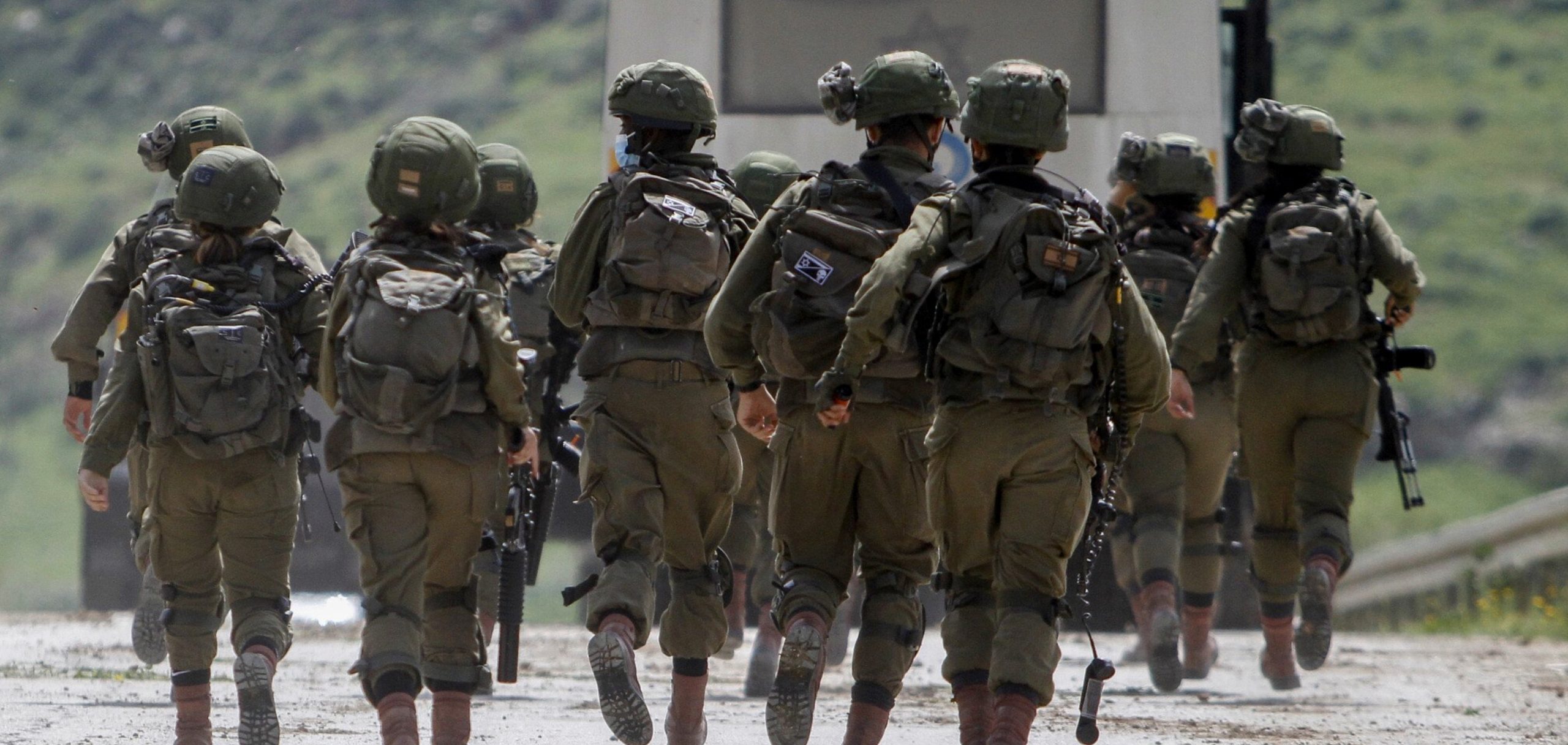 Security forces in the West Bank are on high alert on Saturday after the IDF’s West Bank division and the Civil Administration conducted an operation to disperse celebratory gatherings for the released Palestinian prisoners.
The IDF’s West Bank division and the Civil Administration conducted a joint operation with the Shin Bet, Israel Prison Service, and the Border Police to disperse celebratory gatherings for the Palestinian prisoners who are being released as part of the hostage, ceasefire agreement, the IDF announced in a joint Saturday statement.
On Thursday, violent riots erupted in the Binyamin Brigade region, where rioters threw Molotov cocktails and stones at Israeli security forces. The troops responded with warning shots, and the rioters dispersed.
The IDF said that they will “maintain zero tolerance for disturbances and expressions of support for Hamas.”
Zakaria Zubeidi, a former commander of the Fatah-aligned Al-Aqsa Martyrs’ Brigades in Jenin, received a hero’s welcome in Ramallah on Thursday night after he was released with 109 other Palestinian prisoners as part of phase one of Israel’s ceasefire agreement with Hamas.
And on Tuesdsay night, Israel Police arrested 12 suspects in the Binyamina area of the West Bank, north of Jerusalem, after they displayed their support for the Hamas terror organization with flags and cheered for the release of a recently released terrorist, the Israel Police said Wednesday.
Footage of the displays went viral on social media, showing the suspects participating in a celebration, waving Hamas flags, and firing weapons into the air.
During the joint operation with Border Police and the IDF, they searched through the suspects’ belongings and found Hamas flags, banners, fireworks, guns, money and more. Their vehicle was also confiscated by the security forces.
The suspects were brought into the Jerusalem District Police’s Serious Crimes Unit for further questioning.
Day 485 — Sunday, February 2
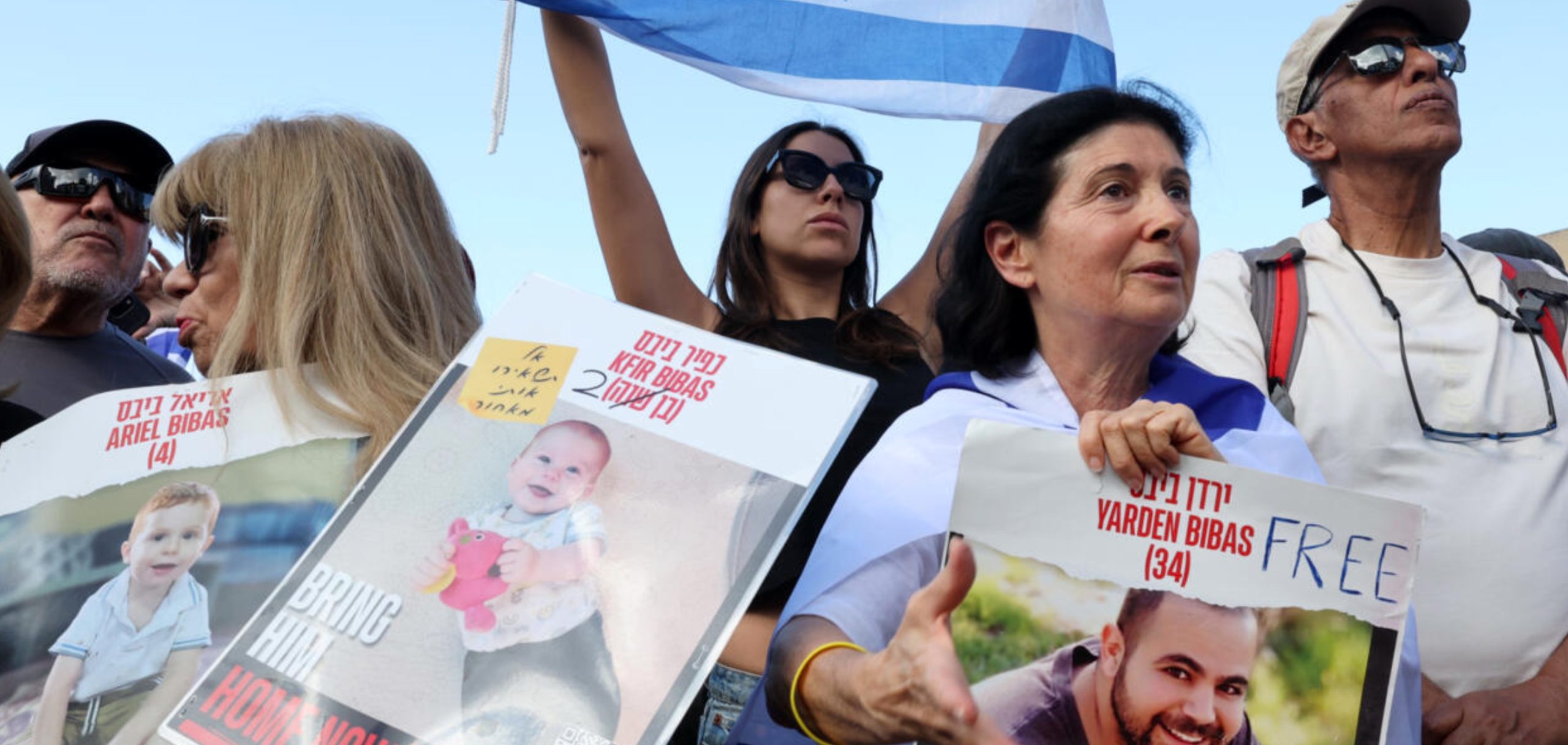 Yarden Bibas is back in Israel more than 480 days after Hamas terrorists ripped him from his home in Kibbutz Nir Oz and dragged him to the Gaza Strip. Bibas’ return, however, is bittersweet as his wife, Shiri, and their two young children, Ariel and Kfir, remain in Gaza. Their fate is unknown, and the Israel Defense Forces (IDF) has made it clear that there are “grave concerns about their wellbeing.”
Israeli Prime Minister Benjamin Netanyahu celebrated Yarden Bibas’ return, while saying the nation’s thoughts are with Shiri, Ariel and Kfir Bibas.
Day 484 — Saturday, February 1
 Three hostages abducted during the October 7, 2023, attack were released by Hamas on Saturday under an ongoing ceasefire deal with the terror group, returning to Israel 484 days after they were taken from their communities near the Gaza border and kidnapped to the Strip.
Ofer Calderon, 54, and Yarden Bibas, 35, were released to the International Red Cross in south Gaza’s Khan Younis on Saturday morning, and Keith Siegel, 65, was handed over almost two hours later at the Gaza City port.
The releases were far more controlled than the chaos surrounding the Thursday release of three Israelis and five Thai nationals.
The terror group set up stages at both locations, with Calderon and Bibas freed soon after 8:30 a.m. and Siegel after 10 a.m.
Representatives of the International Red Cross sat at desks on the stages to sign the so-called handover documents produced by the terror group.
Calderon and Bibas were released first, taken onto the stage set up by Hamas in the southern Gaza town, holding the now ubiquitous certificates issued by the terror group.
Dual US-Israeli national Siegel was handed over at Gaza City’s port, paraded on a stage overlooking the sea as he carried two of the “gift bags” forced on the hostages by the terror group. According to the Walla news site, the second bag was for his wife Aviva, freed by Hamas in November 2023.
He appeared thin and pale but was able to walk, aided by masked and armed Hamas fighters.
Day 484 — Saturday, February 1
 A notable increase in discussions advocating for the recognition of Jordan as a Palestinian state has emerged over recent days. This resurgence follows President Trump’s Saturday proposal to relocate residents from the Gaza Strip to neighboring countries, specifically Jordan and Egypt.
The president’s plan for those states to play a central role in resolving the decades-long Israeli-Palestinian conflict by absorbing refugees from war-torn Gaza, aims to provide Gazans with a safer living environment.
The proposal has rekindled discussions about Jordan’s role as a de facto Palestinian state.
“Jordan IS Palestine,” wrote former U.S. Ambassador to Israel David Friedman. “It was formed from 72% of the land constituting Mandatory Palestine and most of its people are Palestinians.”
“The problem is that Jordan is ‘Palestine’ — it has a majority Palestinian population and consists of land meant for that purpose during the mandate,” noted conservative writer David Harsanyi. “Why are Westerns the only people who can take refugees from the Islamic world? Let people return to their historic homelands.”
“We already have a two state solution,” wrote researcher Dr. Eli David, noting that Israel is a Jewish-majority state while Jordan is a Palestinian-majority state.
“Like Israel welcomes all Jews, Jordan should welcome all Palestinians,” he added.
“The truth is a Palestinian state already exists!” wrote prominent speaker, influencer and human rights activist Hananya Naftali.
“In 1921, more than 75% of Britain’s Palestine Mandate was cut off and renamed ‘Trans-Jordan.’ In 1946 it became a nation. Today it is simply called Jordan, with the majority of its people being Palestinian,” he added.
“Jordan is already majority Palestinian. Let the Hashemite King have the rest…,” wrote conservative commentator Dave Rubin.
“It’s worth noting that about 70% of Jordan’s population is of Palestinian descent,” wrote author and speaker Aviva Klompas.
“Over 75% of Jordan’s population is Palestinian—sharing the same culture, religion, and Arab dialect as West Bank Palestinians. It’s time to remove the Hashemite monarchy and free Palestine,” wrote Roma-Israeli peace activist Shay Szabo.
The concept of Jordan as a Palestinian state is not new. Historically, various proposals have suggested Jordan’s involvement in resolving the Israeli-Palestinian conflict, with the argument that “Jordan is Palestine” being a recurring topic primarily based on historical, geographical, and political perspectives.
Historically, the British Mandate for Palestine, established after World War I, originally included the territory of both modern-day Israel and Jordan. The mandate incorporated the Balfour Declaration of 1917, which expressed Britain’s support for a “national home for the Jewish people” in Palestine.
In 1922, the British divided the mandate into two administrative areas: west of the Jordan River, which became the Jewish national home (later, Israel); and east of the Jordan River, which eventually became the Hashemite Kingdom of Jordan. Those on the east bank, just as the Jews and Arabs on the west bank, were considered Palestinians, subject to British control and carriers of Palestinian passports.
In 1946, Britain established the Kingdom of Transjordan, with Abdullah as king, effectively turning a significant part of the Palestine Mandate into an Arab nation and leaving a much smaller portion, including the West Bank and Gaza, for Jewish statehood. The move marked a significant shift from the original mandate’s intent to create a Jewish homeland in Palestine.
In 1948, Jordan (then Transjordan) participated in the 1948 Arab-Israeli War. Following the war, King Abdullah annexed the West Bank and East Jerusalem, renaming the country the Kingdom of Jordan — not “Palestine.”
More than a decade later, in 1964, the Arab League held a summit in Jordan and the Hashemite Kingdom of Jordan produced a stamp including Jordan and Israel, both parts of territory it regarded as part of the Kingdom of Jordan.
After Israel reunified Jerusalem and captured the West Bank in the 1967 Six-Day War, King Hussein of Jordan insisted that “Jordan is Palestine and Palestine is Jordan.”
Demographically, Jordan has a significant Palestinian population, with a majority of Jordanians ethnically Palestinian. Many Palestinians either fled or were expelled from their homes during the 1948 Arab-Israeli War and the Six-Day War in 1967, and they, along with their descendants, have since lived in Jordan. In addition, most are fully naturalized, making Jordan the only Arab country to fully integrate the Palestinian refugees of 1948.
Many over the years have insisted that Jordan should be considered the true national homeland for the Palestinian people given the country’s majority Palestinian population, with a successful integration leading to a more stable regional situation.
Day 484 — Saturday, February 1
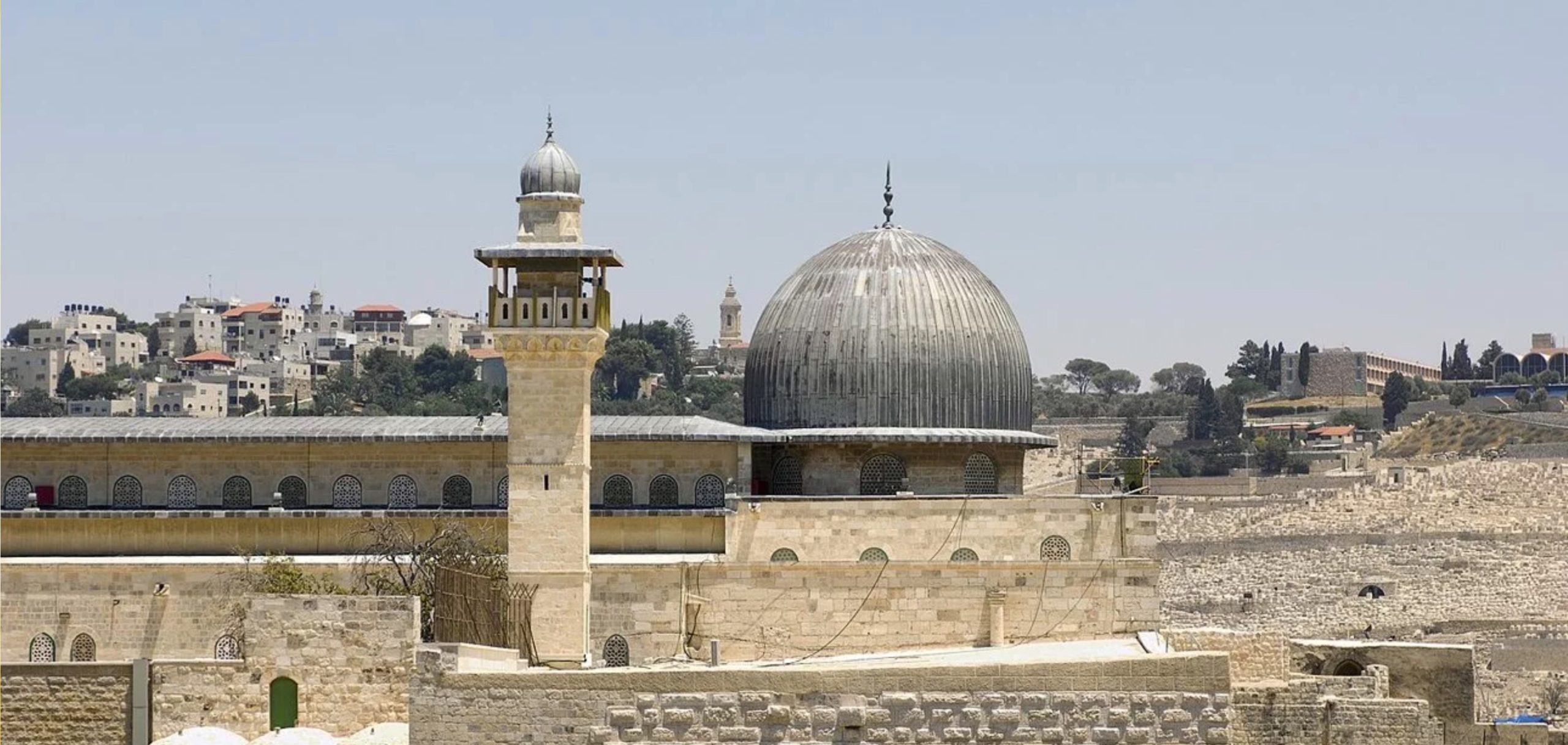
Special prayers were held at the Al-Aqsa Mosque in memory of Muhammad Deif, the former commander of Hamas’s military department, and other senior Hamas figures who were eliminated in the war.
Yasin Iz al-Din reports that similar prayers were held in other mosques across Judea and Samaria despite directions from the Ministry of Religious Affairs to focus on prayers for rain.
Last night, the Hamas movement officially announced the death of Muhammad Deif and other leaders in the war and called for special prayers in their memory in mosques throughout Palestine and worldwide. Hamas had denied his death for several months previously.
The list published by Hamas includes Hamas’s international leader Ismail Haniyeh, Hamas’s Gaza leader, Yahya Sinwar, and more than a dozen other senior figures in the organization.
Day 483 — Friday, January 31

Israel’s aerial defense intercepted a drone over Lebanon that was making its way to Israeli airspace on Thursday, a major violation of the ceasefire agreement.
While the 60-day truce was supposed to expire on Monday, it was extended with the agreement of the US and Lebanon after the IDF asserted that the Lebanese armed forces had not complied with the deal in taking over positions Israel had vacated.
The Upper Galilee Regional Council said that no sirens went off.
Hezbollah has threatened to respond if any IDF soldiers remain in Lebanon after the 60 days. Meanwhile, Israel has struck Hezbollah operatives violating the ceasefire, as per the terms agreed upon.
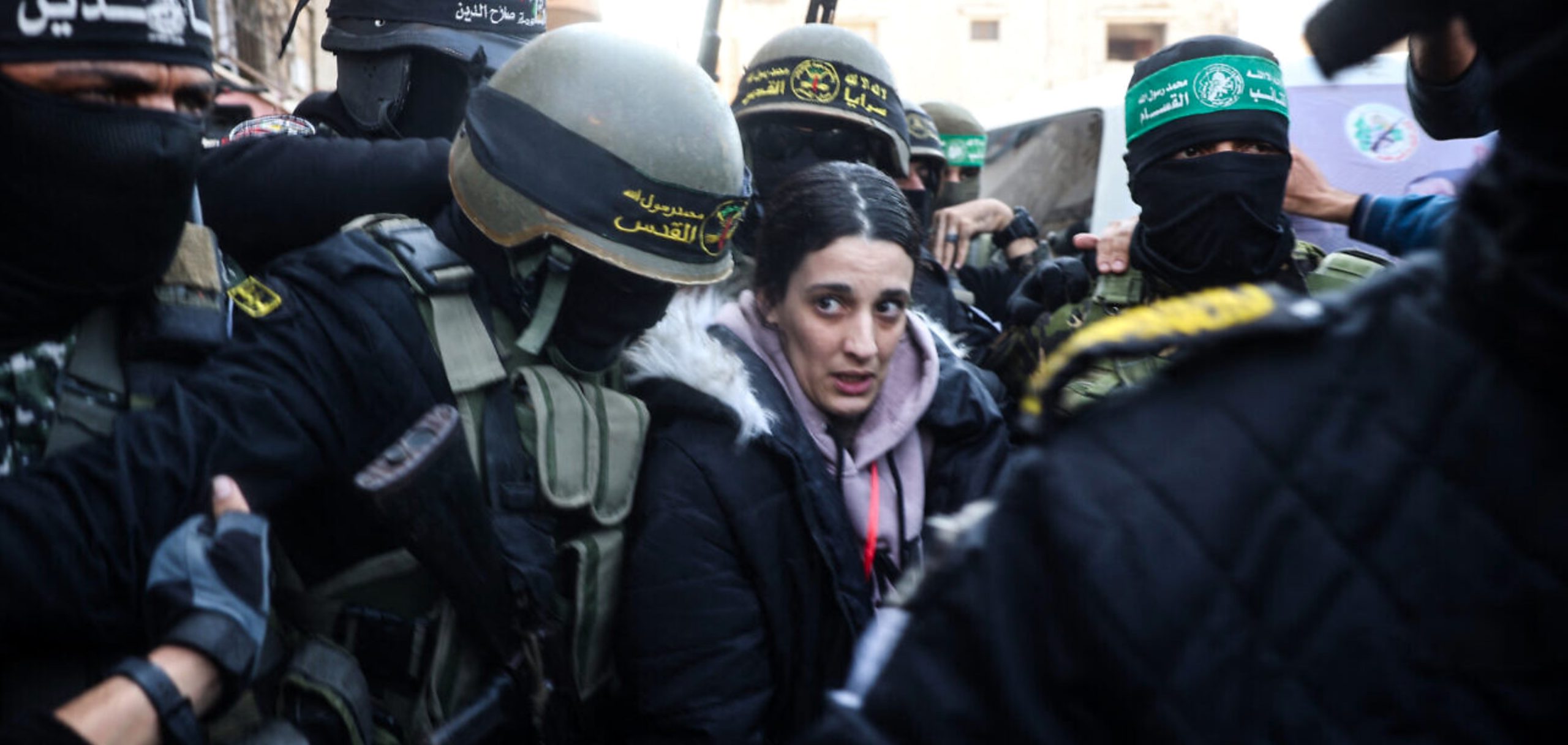
Eight hostages abducted during the October 7, 2023, attack on Israel were released by Palestinian terror groups on Thursday under an ongoing ceasefire deal with Hamas, returning to Israel after 482 days in captivity in Gaza. Seven of them were freed in a long, chaotic process in southern Gaza’s Khan Younis that prompted fury in Israel.
The three Israelis are IDF surveillance soldier Agam Berger, 20, and civilians Arbel Yehoud, 29, and Gadi Mozes, 80. The Thai nationals are Thenna Pongsak, Sathian Suwannakham, Sriaoun Watchara, Seathao Bannawat, and Rumnao Surasak.
Yehoud, Mozes and the five Thais were released in an uncontrolled and dangerous handover early Thursday afternoon, outside the destroyed home of slain Hamas leader Yahya Sinwar, surrounded by hundreds of masked gunmen and large, seething crowds.
The two Israeli civilians were forced to walk through the crowds, with gunmen at their side, from the vehicles that delivered them and, later, to the Red Cross vehicles, in chaotic scenes that lasted for well over an hour.
Prime Minister Benjamin Netanyahu said the chaotic handover was unacceptable, in a statement immediately after the release. “I view with great severity the shocking scenes during the release of our hostages,” said Netanyahu. “This is further proof of the unimaginable cruelty of the Hamas terrorist organization.”
Israel delayed the slated release of Palestinian prisoners in protest of the chaotic handover, with Netanyahu’s office saying it would not proceed “until the safe passage of our hostages can be guaranteed in the next releases.”
It later said it had received a guarantee from mediators that the scenes of chaos would not be repeated, and reports indicated that the Palestinian prisoner release would proceed in late afternoon.
Berger and the Thai hostages were held by the Hamas terror group, while Yehoud and Mozes were held by Palestinian Islamic Jihad.
Berger, an Israel Defense Forces surveillance soldier, was abducted from the military’s Nahal Oz base, while Yehoud and Mozes were both taken from their homes in Kibbutz Nir Oz.
Mozes is the first male Israeli hostage to be freed in the current deal, which provides for 33 hostages to be released in exchange for up to 2,000 Palestinian prisoners. Living hostages are being released first. Eight of the 33 are understood by Israel to be dead.
The Thai hostages were among 31 foreign nationals kidnapped in the Hamas attack who were working in Israel, many of them as farmhands in Israel’s agricultural heartland near the Gaza border, reportedly including some on Nir Oz.
Report: Trump To Sign Executive Order For Deportation Of Antisemites
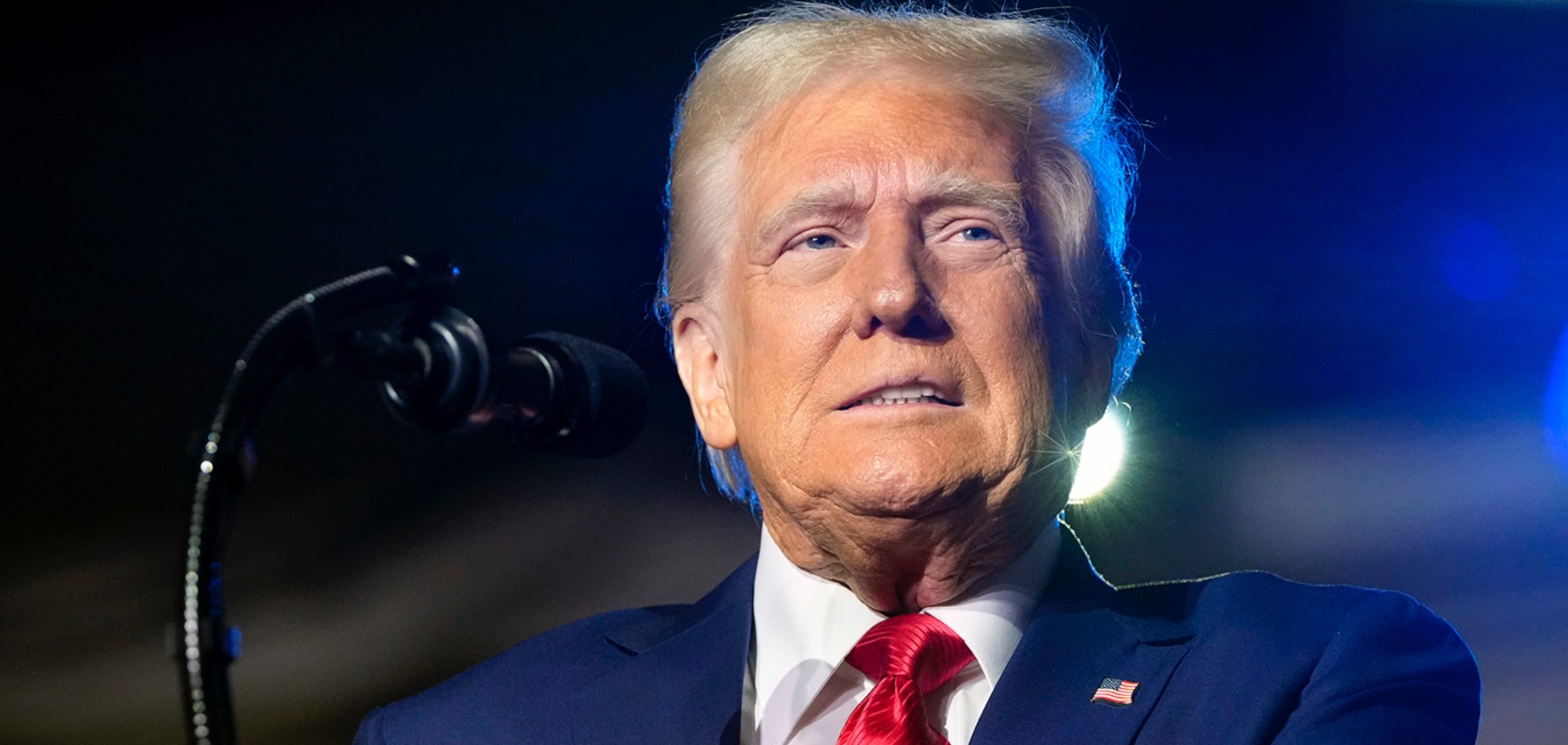
US President Donald Trump is expected to sign an executive order today (Wednesday) instructing federal authorities to act to combat antisemitism, including by deporting antisemites who commit criminal acts, the New York Post reported.
According to the report, the order will give federal agencies 60 days to present plans to deal with antisemitism in places such as college campuses. It also calls for the deportation on non-citizens who commit illegal acts while protesting against Israel in the aftermath of the Hamas massacre of October 7, even if they have student visas.
“To all the resident aliens who joined in the pro-jihadist protests, we put you on notice: come 2025, we will find you, and we will deport you,” Trump stated in a fact sheet on the executive order. “I will also quickly cancel the student visas of all Hamas sympathizers on college campuses, which have been infested with radicalism like never before.”
President Trump issued a proclamation on Monday marking the 80th anniversary of the liberation of the Auschwitz-Birkenau concentration camp in which he vowed to fight antisemitism.
In his proclamation, Trump stated, He noted: “Sadly, despite decades of wisdom shared by survivors, years of reflection on the depravities committed, and decades of progress towards peace, the poison of antisemitism still courses through the veins of cowards in dark corners of the world. So today, we renew our promise that antisemitism has no place in a civilized society, no place in our foreign policy, and no place in the United States of America.”
The President stated, “In the years since the liberation of Auschwitz on this day eight decades ago, the grave offenses that took place during the Holocaust and the cries of the Jewish people have echoed throughout the halls of history. In the wake of the oppression, persecution, and injustice committed at Auschwitz and elsewhere in Europe, the Jewish people gallantly persevered to re-found their homeland in the modern State of Israel — our mighty friend. To this day, the Jewish people proudly represent the peak of human tenacity and the pinnacle of human triumph.
“As we commemorate this somber occasion, we pay tribute to the undying spirit of the Jewish community. We reaffirm our commitment to educating our children and every future generation about the horrors that took place within the confines of Auschwitz and other concentration and death camps. We renew our resolve to end antisemitism and religious bigotry of all forms. We proudly reassert our strong bonds of friendship with the State of Israel. And we declare the timeless truth that every human being is a child of God and inherently worthy of dignity and respect,” Trump said.
Day 482 — Thursday, January 30
Amit Soussana Recounts Story Of Her Life Saved By Fellow Hostage During Captivity
 Freed hostage Amit Soussana, who was released in the first hostage-truce deal with Hamas in November 2023, shared Tuesday that Liri Albag, who was among four hostages released on Saturday, saved her life in captivity.
Her comments came as freed hostage Naama Levy made her first public statements since her own release on Saturday, and Romi Gonen, released 10 days ago, dedicated a song on the radio to her family, and as more details began to emerge about returning captives’ recovery process.
The current hostage-ceasefire deal went into effect a week and a half ago.
In an interview aired Tuesday evening, Soussana said she owes Albag her life, after Albag convinced their terrorist captors in Gaza that Soussana was not an IDF officer.
Speaking with Channel 12’s “Uvda” investigative program, Soussana, 40, said her captors bound her arms and legs together, beat her with a stick and threatened her with a sharp metal object, and demanded that she admit to being in the military, claiming they had learned from TV that she was.
She said Albag talked to the guard and managed to persuade the captors that Soussana wasn’t in the military.
“I told her when she came back: ‘I don’t know if they would have killed me or not; as far as I’m concerned, you saved my life,” Soussana recalled.
Soussana also said that in the first three weeks of her captivity, she was kept alone in an apartment with two guards who bound her legs with a metal chain and with two locks to a window, “like an animal.”
She also recounted the sexual assault she endured by one of the captors, a story she first revealed in an interview with The New York Times last year.
Day 481 — Wednesday, January 29
Trump Calls Relocation Of Gazans The 'Most Realistic Solution'
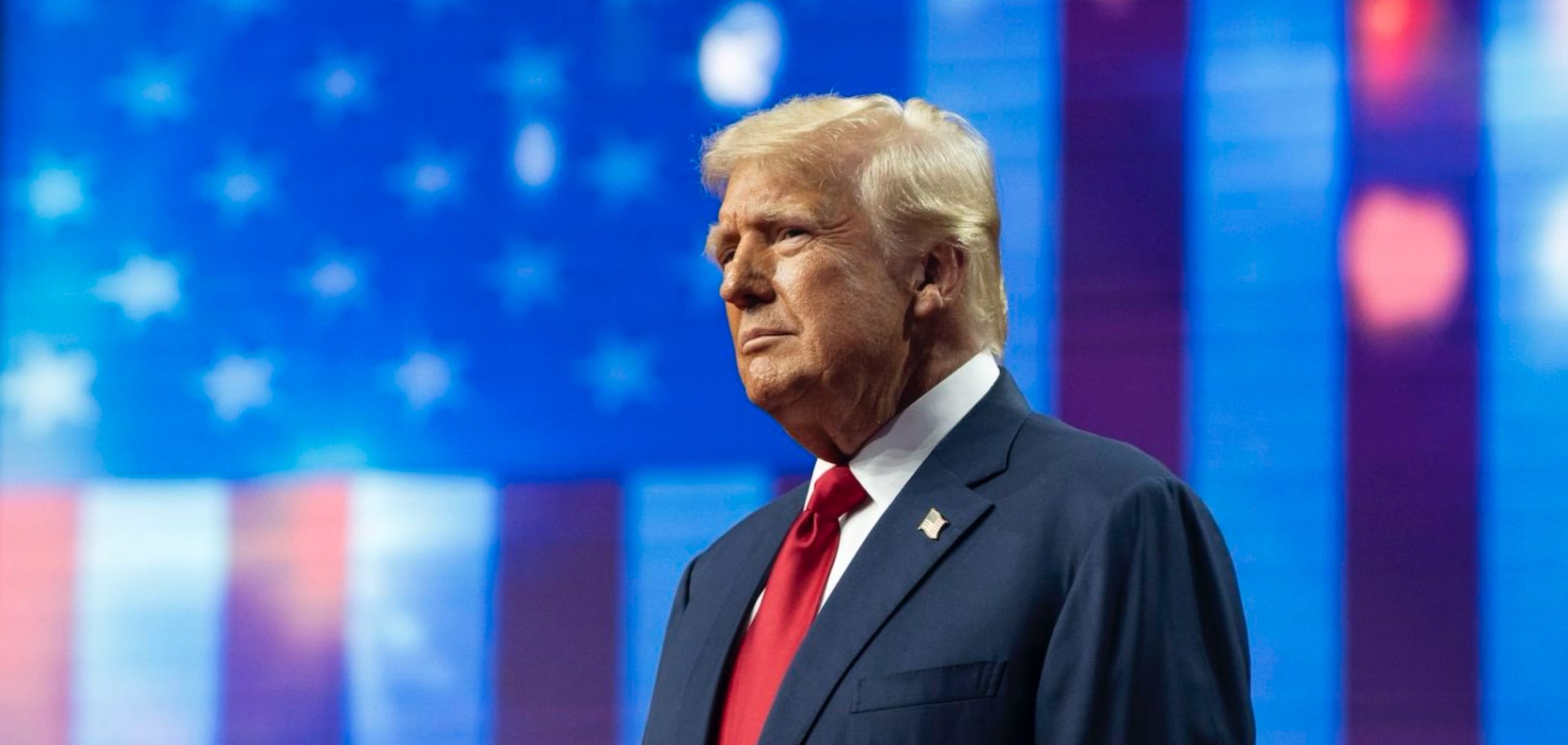
Israeli Finance Minister Bezalel Smotrich on Monday applauded U.S. President Donald Trump’s suggestion that Gazans be offered residency in Arab nations as the “most realistic solution.”
“For 76 years, they have been held in Gaza—on purpose—in poverty, in destitution, in overcrowding,” the finance minister told JNS following a faction meeting at the Knesset in Jerusalem on Monday afternoon.
“Instead of helping them start a new life,” the United Nations kept the Palestinians “in very difficult situations on purpose, so that they would suffer,” he said. “Why? To maintain their desire to destroy the State of Israel.”
“They told them: You will suffer. Do you know why? Because of the Jews. Do you know what the solution to your suffering is? To return to Safed, Haifa, Acre, Jaffa,” Smotrich continued, naming cities in Israel.
The Gaza Strip “is a time bomb that the Arab world for years kept as it was, precisely to get to Oct. 7,” the minister stated, referring to the 2023 Hamas massacre in which some 1,200 people, primarily Jews, were murdered.
While the attack was led by Hamas’s Nukhba force, they were followed by “ordinary civilians, women, men, children, who slaughtered, raped, burned,” said Smotrich.
“Do you know where this hatred comes from? For 76 years, they were kept like this, in refugee camps, with nothing. They were told that this suffering was because of the Jews. So there are more than 1.5 million people who have grown up for generations with hate for Israel and antisemitism,” he continued.
According to the Religious Zionism Party leader, Trump’s proposal to allow Gazans to leave the Strip “is the most realistic solution in the world. “
“Do you know what isn’t realistic? What we’ve been trying to do for a hundred years and haven’t succeeded in: To divide the land [of Israel],” he added, listing the 1947 U.N. Partition Plan, the Oslo Accords, Camp David and the Annapolis Conference as examples of failures.
“It is nonsense to do the same thing over and over again and to expect a different response every time,” he added, paraphrasing Albert Einstein.
“We’ve been attempting peace, co-existence, two countries, but what we don’t understand is that the other side doesn’t want to live next to us,” he told JNS. “They want to live in our place. Only someone like that is able to get to these levels of cruelty that we saw on Oct. 7.”
The only solution, he continued, “is to take all these refugees and, after 76 years, help them start a new life and really allow them to improve their lives and build their families. It would be good for them, for us, for the Middle East and for the world.”
On Saturday, Trump called on Arab countries that have come out in support of the Palestinians, singling out Egypt and Jordan, to take in more Palestinians from Gaza, which has suffered extensive damage during Israel’s 15-month war against the Hamas terrorist group.
“I’d like Egypt to take people,” Trump said, according to an Associated Press report. “You’re talking about probably a million and a half people, and we just clean out that whole thing and say, ‘You know, it’s over.’
Trump on Monday doubled down on the proposal, saying he would like to see Gazans “living in an area where they can live without disruption and revolution and violence so much,” Agence France-Presse reported.
“When you look at the Gaza Strip, it’s been hell for so many years,” Trump told reporters aboard Air Force One, according to the AFP report. He added, “There’s always been violence associated with it.”
Day 480 — Tuesday, January 28
Eight Declared Dead: Hamas Reveals Status Of First Phase Hostages To Be Released
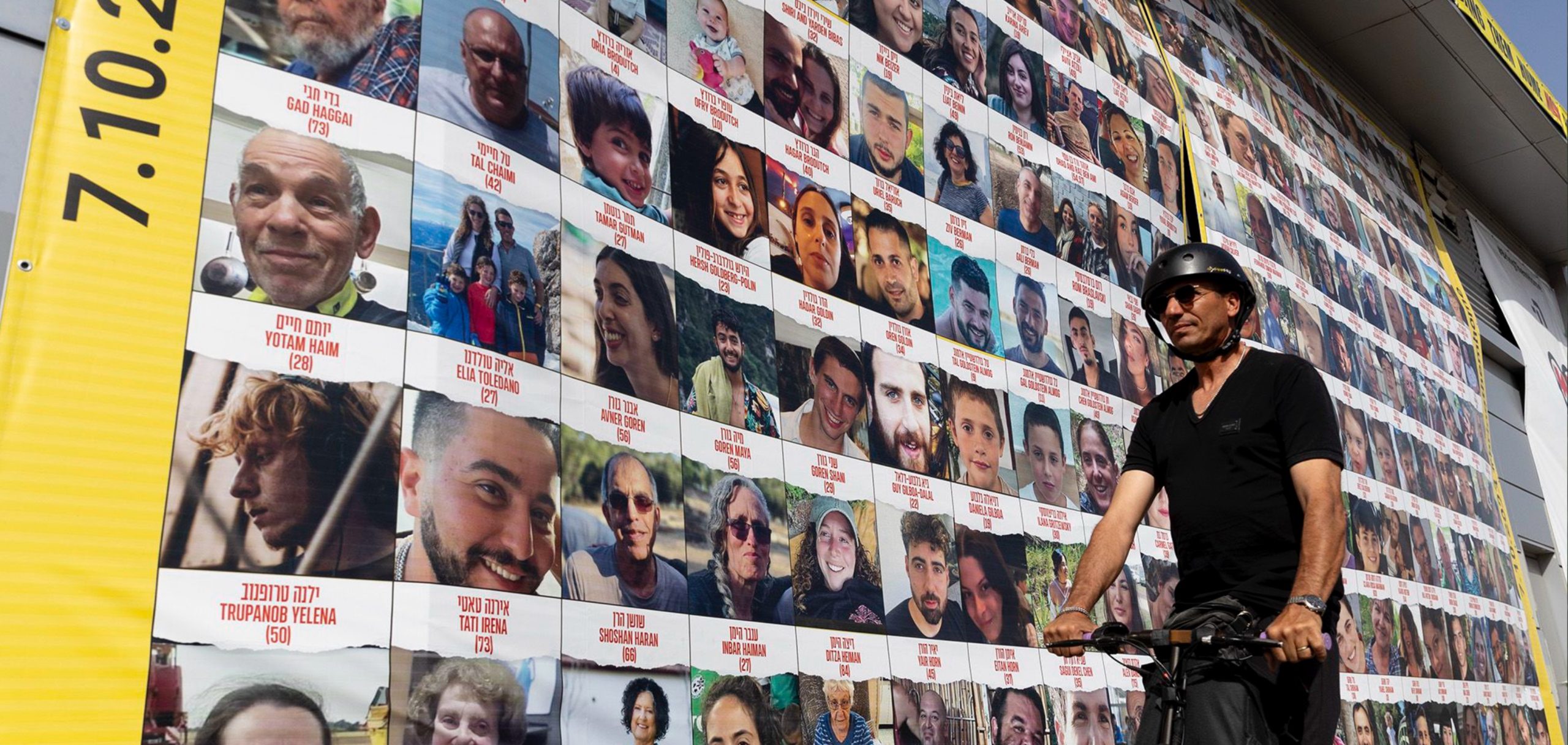
Eight of the 33 hostages intended for release during the first phase of the ceasefire-hostage deal with Hamas in the Gaza Strip are dead, according to a list provided by Hamas.
Israeli government spokesman David Mencer confirmed that the terrorist group stated the remaining 25 hostages are alive. The list was delivered to Israel overnight on Sunday.
After repeatedly violating the truce deal with Israel, Hamas is to release three additional captives on Thursday, the Prime Minister’s Office in Jerusalem announced on Sunday night.
The hostages to be released are civilian Arbel Yehud, Israel Defense Forces soldier Agam Berger and an unidentified man. Three more abductees are to be freed on Saturday, per the terms of the ceasefire.
So far, seven hostages have been freed. Yet 87 of the 251 individuals taken by Hamas during the terrorist attacks on Oct. 7, 2023, are still in Gaza. This includes the remains of at least 34 hostages, confirmed dead by the IDF. Hamas is also holding two Israeli civilians who entered Gaza in 2014 and 2015, as well as the body of an IDF soldier killed in 2014. Another soldier’s remains were recovered earlier this month.
Hamas failed to provide the list on Saturday, as required by the terms of the ceasefire, prompting Jerusalem to postpone the return of displaced Palestinians to northern Gaza.
On Monday, Palestinians began crossing on foot via a coastal road through the Netzarim Corridor south of Gaza City. Vehicle crossings via a parallel highway inland followed, leading to heavy traffic. While vehicles are subject to inspection under the ceasefire agreement, the details of the inspection process remain unclear.
Israeli Defense Minister Israel Katz on Sunday reaffirmed Israel’s commitment to the truce and warned of severe consequences for violations, stating, “We will not allow a return to the reality of Oct. 7, [2023].”
In the first phase of the ceasefire, Hamas is to release 33 hostages in exchange for nearly 2,000 Palestinian terrorists, including many convicted of deadly attacks. So far, seven hostages have been released in exchange for more than 300 terrorists.
The next two projected phases present greater challenges. Hamas has stated that it will not release the remaining 60 hostages unless Israel ends the war, while Israeli Prime Minister Benjamin Netanyahu remains committed to dismantling Hamas and ending its 18-year rule over Gaza. The future of negotiations remains uncertain as both sides prepare for difficult talks.
Day 480 — Tuesday, January 28
International Community Chided For 'Manipulating The Definition of Genocide' In Holocaust Remembrance Day Speech

Israeli President Isaac Herzog spoke at a ceremony marking International Holocaust Remembrance Day in New York City at the UN Headquarters on Monday. The event commemorated 80 years since the liberation of Auschwitz.
Herzog began his speech by noting the yellow ribbon pin on his lapel, and said, “I stand before you as president of a nation that is determined and proud, and yet – anguished and incomplete.”
He continued by making his appeal to the international community saying, “I call on all representatives in this General Assembly, all who consider themselves part of the civilized world, to throw your weight to ensure our hostages return to their homes – every single one of them. Bring them home now!”
Herzog presented a challenge to the global community by asking a few questions:
“How is it possible that the moral compass of so many in the family of nations has become so disoriented, that they no longer recognize the clear truth: That just as terrorists use civilians as human shields, they also weaponize the international institutions, undermining the most basic, fundamental reason for their establishment? How is it possible that the same institutions established in the wake of the greatest genocide in history – the Holocaust – are manipulating the definition of genocide for the sole purpose of attacking Israel and the Jewish people?”
Herzog told those in attendance that “the international courts and institutions set up in the wake of the Holocaust have since become distorted and hypocritical in their attacks on Israel.”
Herzog shared that his great uncle, Hersch Lauterpacht, – a Holocaust survivor – “served as a prosecutor in the Nuremberg trials and went on to help establish the International Court of Justice, later serving on the court as a judge” according to the Times of Israel.
“He did so out of deep faith – and hope, that the international institutions [including the UN, ICJ and ICC] would forever be committed to preventing these heinous crimes from ever happening again – to the Jewish people or any other people,” remarked the president.
Herzog noted that Hamas terrorists who carried out the atrocities of Oct.7, 2023, “took their inspiration from Nazism and Hitler.”
The president highlighted that, 80 years after the liberation of Auschwitz, antisemitism continues to exist, now growing more intense and manifesting in new ways. He stated, “This serves as an urgent reminder to all of humanity: antisemitism, brutality, cruelty, and racism are still alive and well in our world.”
Lebanon Truce Extended To Feb. 18, White House Says

The U.S.-monitored arrangement between Lebanon and Israel will carry on until Feb. 18, the White House stated on Sunday evening—the day the prior agreement, struck on Nov. 26, was slated to end.
“The government of Lebanon, the government of Israel and the government of the United States will also begin negotiations for the return of Lebanese prisoners captured after Oct. 7, 2023,” the White House stated.
Brian Hughes, the spokesman for the National Security Council of the White House, said on Friday that a “short, temporary ceasefire extension” was “urgently needed.”
U.S. President Donald Trump “is committed to ensuring Israeli citizens can safely return to their homes in northern Israel,” while also supporting Lebanese President Joseph Aoun and the new Lebanese government, Hughes stated.
Israel announced on Friday that it would not withdraw all of its forces from Southern Lebanon by Sunday. Hezbollah warned that it would consider the truce terminated, and the Lebanese government urged the Trump administration to intervene.
The Israeli Prime Minister’s Office stated on Friday that the Israeli military’s “withdrawal process is conditional on the Lebanese Army deploying in Southern Lebanon and fully and effectively enforcing the agreement, while Hezbollah withdraws beyond the Litani,” the river in the southern part of the country.
“Since the ceasefire agreement has not yet been fully enforced by the State of Lebanon, the phased withdrawal process will continue, in full coordination with the United States,” the Israeli government said.
Israel “will not endanger its communities and citizens and will insist on the full implementation of the objective of the fighting in the north, which is the safe return of residents to their homes,” it added.
The 60-day ceasefire went into effect on Nov. 27 and was slated to expire on Sunday. Hostilities began on Oct. 8, 2023, when Hezbollah began firing rockets into Israel in solidarity, it said, with Hamas in Gaza.
In a deliberation held at the Knesset Foreign Affairs and Defense Committee three weeks ago, Maj. Gen. Uri Gordin, the head of the Israeli Defense Forces Northern Command, said that Hezbollah has committed hundreds of violations of the ceasefire terms, Israel’s public broadcaster Kan News reported recently.
Gordin added that the Lebanese Armed Forces are aiding the Shi’ite terrorist organization in locations where the Lebanese army is manned by Shi’ite commanders and companies.
Day 479 — Monday, January 27
After Hamas Plays Games, Netanyahu Confirms Terror Group Will Had Over Three Civilian Hostages On Thursday

Hamas will hand over Arbel Yehoud, Agam Berger, and an additional male hostage on Thursday, the Prime Minister’s Office confirmed shortly after Qatar’s Foreign Ministry announced Sunday.
Additionally, the Qatari ministry said Hamas will hand over three more hostages on Saturday as per the ceasefire agreement.
The PMO also confirmed it had received the list Hamas provided mediators with all required information on the remaining hostages set to be released in the first phase of the agreement, which was initially meant to be provided last week.
In return, the Qatari ministry said Israel will allow displaced Palestinians to return to northern Gaza starting Monday morning.
Sources present in the negotiations told Israel’s public broadcaster KAN that Palestinian Islamic Jihad withdrew its demand to define Arbel Yehoud as a member of the security forces and that she would be considered a civilian.
Previous discussions about the possible date for the return of Gaza residents to the northern Strip via the Netzarim depended on Arbel’s release, with negotiations revolving around the question of whether to allow the return upon her arrival in Israeli hands or after the agreement of her release was reached.
Day 478 — Sunday, January 26
Due to Hamas Breach Of Deal, Israel Halts Movement Of Gazans North
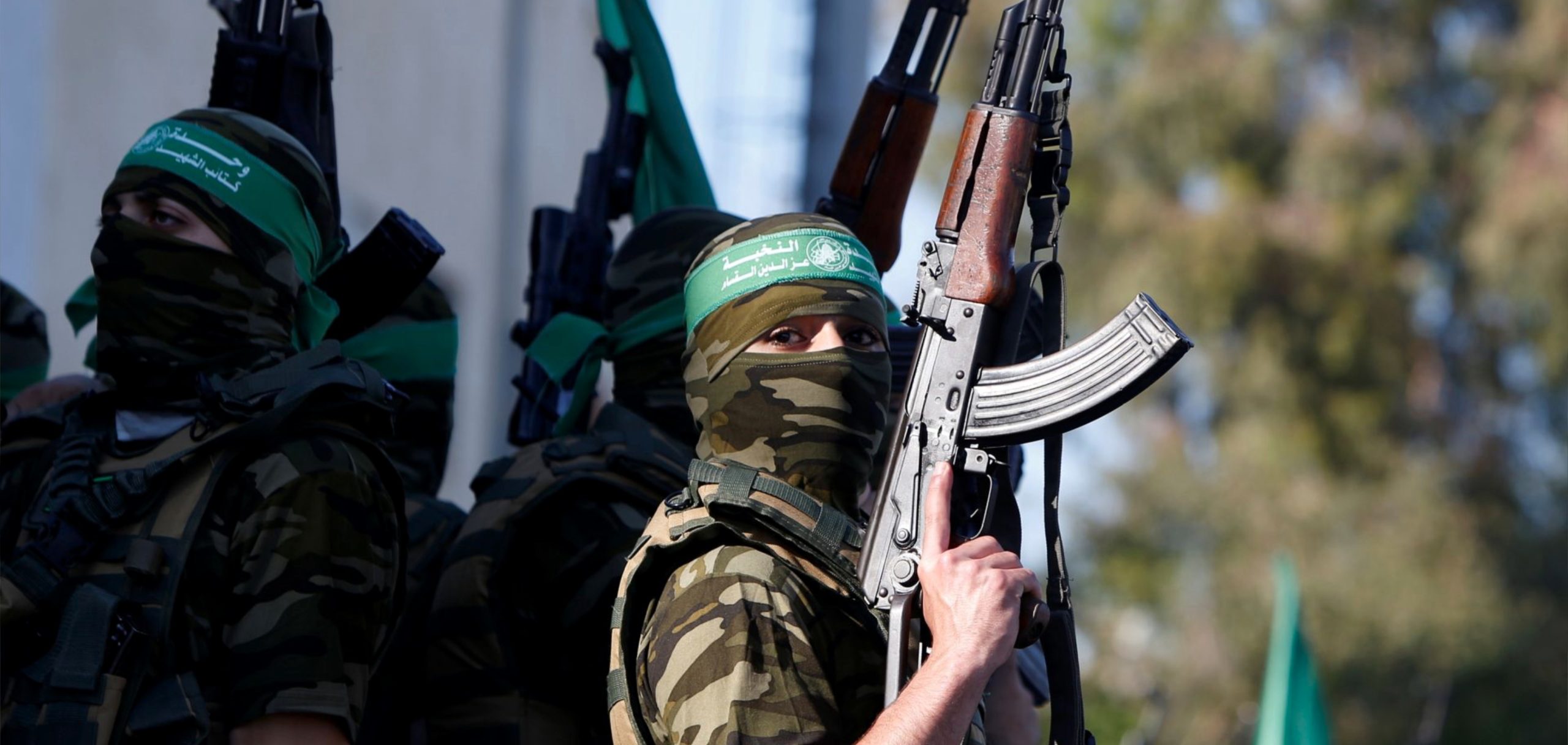
Under the terms of the ceasefire agreement with Israel that took effect on Jan. 19, Hamas is obligated to release civilian women and children hostages before freeing female soldiers. But on Saturday, the terrorist organization released four female soldiers in the Israeli Defense Forces while keeping civilian Arbel Yehud in captivity.
Hamas was also supposed to say on Saturday how many of the 33 hostages to be released in the first stage of the ceasefire are alive. It has not done so. It did claim that Yehud is alive and well, and will freed as part of the next batch of captives on Feb. 1.
Israel postponed its response to Hamas’s breach of the agreement until the safe return of the four hostages. Now that they are in Israeli custody, discussions took place, leading to the decision to suspend the return of displaced Palestinians from southern Gaza to the northern Strip until Yehud is back in Israel.
On Friday, discussions revolved around whether to reopen strategic routes, including the Netzarim Corridor that runs east to west south of Gaza City and the coastal and Tantar routes, to allow the movement of Gazans. Israel has decided to freeze all Palestinian movement north until compliance with the agreement is restored.
Despite Hamas’s breach of the terms, Israel has maintained the agreed ratio of prisoners to be released, even though the composition of released hostages has shifted. The initial agreement stipulated that more terrorists would be released in exchange for soldiers than for civilians.
Hamas has attempted to shift responsibility for the failure to release Yehud onto Palestinian Islamic Jihad and a Salafi group aligned with that holds the hostage from Kibbutz Nir Oz.
According to both Palestinian and Israeli sources, the Salafi group has issued demands for Arbel’s release, including fuel and supplies from incoming shipments, names of specific terrorists to be freed, and assurances of continued independent operations in Gaza.
An Israeli official said that Hamas is trying to avoid accountability and avert an Israeli response to the agreement’s breach.
“Hamas has the capacity to exert control over the Salafi group, and a firm Israeli demand could compel them to ensure Arbel Yehud’s release,” the official said.
Israel’s leadership remains adamant about adhering to the agreement and holding Hamas responsible for fulfilling its terms, including the immediate release of all remaining hostages.
Day 478 — Sunday, January 26
Donald Trump Releases Bomb Shipments Frozen By Joe Biden To Israel

The White House released 1,800 one-ton bomb shipments previously frozen by former US president Joe Biden, an Israeli official told The Jerusalem Post on Saturday.
The delivery was frozen back in May of last year due to the Israeli operation in Rafah.
Later on Saturday, US President Donald Trump wrote that “a lot of things” were on their way to Israel in a post on the social media platform Truth Social.
“A lot of things that were ordered and paid for by Israel but have not been sent by Biden are now on their way!” the post said.
In May, Biden warned Israel that he’d halt US weapons shipments earmarked for Gaza if the IDF embarked on a major military operation against Hamas in Rafah.
“I‘ve made it clear that if they [Israel] go into Rafah…I’m not supplying the weapons that have historically been used to deal with Rafah,” Biden told CNN while campaigning in Wisconsin for reelection.
Day 477 — Saturday, January 25
Four Female IDF Hostages Return Home To Israel After 477 Days In Hamas Captivity
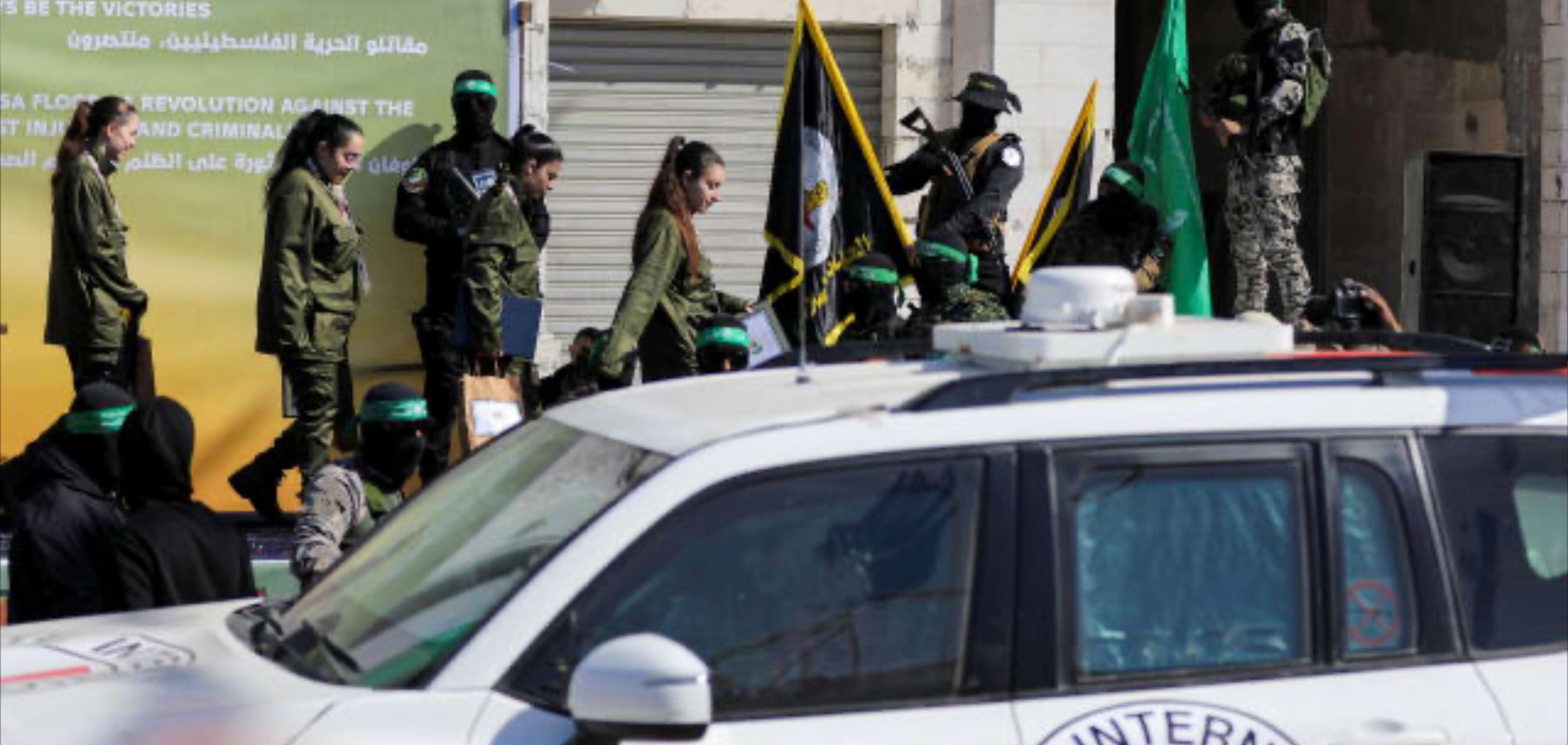
The IDF confirmed that the four hostages [Karina Ariev, Daniella Gilboa, Naama Levy and Liri Albag] returned to Israeli territory after being transferred from Hamas captivity to the Red Cross on Saturday.
The four female IDF soldiers taken hostage by Hamas were transferred, in military uniform, to the Red Cross in Gaza City on Saturday.
The hostages were seen holding bags similar to the ones given to the three hostages released last week. Last week, the bag included Arabic language completion certificates and photos of the hostages’ time in captivity.
Ahead of the hostage transfer, Hamas and Palestinian Islamic Jihad terrorists, along with Gazan civilians, congregated in Palestine Square of Gaza City.
The Prime Minister’s Office issued a statement Saturday morning in response to released hostages Karina Ariev, Naama Levy, Daniella Gilboa, and Liri Albag being transferred to IDF custody.
“The Israeli government embraces the four returning IDF soldiers. Their families have been informed by the designated authorities that they have been transferred to the IDF.
“The Israeli government is committed to the return of all the remaining hostages.”
Day 477 — Saturday, January 25
Danon To UN: UNRWA Must Cease Its Operations, 'Evacuate All Premises' In Jerusalem By January 30
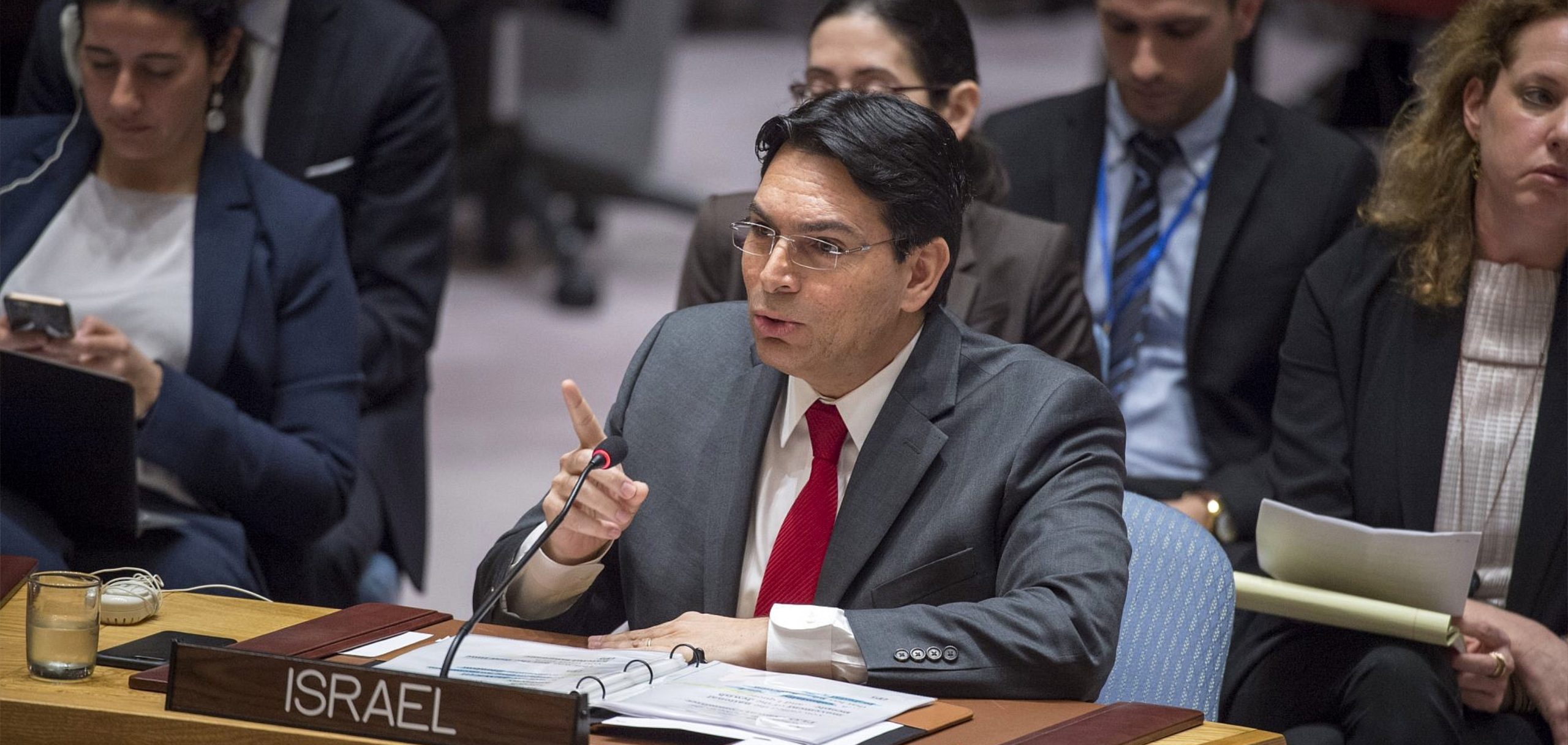
Israel’s Ambassador to the UN, Danny Danon, on Friday informed UN Secretary-General Antonio Guterres in a letter that the “Palestinian refugee” agency UNRWA must “cease its operations in Jerusalem, and evacuate all premises in which it operates in the city” by January 30.
The notification follows the law which was passed by the Knesset in October banning UNRWA’s operation on Israeli land, and which takes effect on January 30.
A week after the Knesset passed the legislation, then-Foreign Minister Israel Katz officially announced the cancellation of the 1967 agreement between Israel and UNRWA which formed the legal basis for relations between the State of Israel and UNRWA.
UNRWA, which has long been criticized for cooperating with Hamas, has come under increased scrutiny as its workers have been found to have been directly involved in Hamas’ October 7, 2023 attack on Israel.
Israel revealed a year ago of this year that UNRWA staff participated in the October 7 Hamas attacks.
It then presented a dossier showing that the UNRWA workers who participated in the Hamas massacre kidnapped a woman, handed out ammunition and actively took part in the massacre at Kibbutz Be’eri, where 97 people were murdered.
Day 477 — Saturday, January 25

Emily Damari, a British-Israeli hostage recently released by Hamas, reportedly requested her captors release Keith Siegel, another hostage, in her place.
According to N12, Emily was informed of her release but learned that Keith, a 65-year-old American-Israeli, would remain in captivity due to his deteriorating condition.
Her plea was ultimately denied, as such decisions were made by higher-ranking members of the terrorist organization.
Fresh evidence, including Emily’s account, confirms Keith’s survival as recently as her time in captivity. Previously, the last known evidence of Keith being alive was a Hamas propaganda video from April.
Keith Siegel was abducted alongside his wife, Aviva, during the October 7 attack on Kfar Aza and transported to Gaza in their hijacked car. Aviva was released in November during the first phase of a hostage deal. She later recounted the harsh conditions they endured, including starvation, dehydration, and physical abuse—Keith’s ribs were broken during the kidnapping.
Keith is among two American-Israeli hostages reportedly included in the next phase of ongoing negotiations for their release.
Day 476 — Friday, January 24
The governing body of the International Criminal Court on Thursday expressed “its deep concern over sanctions measures against the International Criminal Court (“the Court”) and its personnel, as well as individuals and entities who assist it in investigating, arresting, detaining, or prosecuting certain individuals.”
“Sanctions can severely hamper ongoing investigations in all situations and other activities of the Court and affect the safety of victims, witnesses and sanctioned individuals,” the Assembly of States Parties said.
Although the statement did not mention the US or Israel, it came after US President Donald Trump issued executive order sanctions against the ICC and the ICC Office of the Prosecutor for issuing arrest warrants against Prime Minister Benjamin Netanyahu and former defense minister Yoav Gallant on November 21 as part of its war-crimes probe into the Israel-Hamas War.
In addition, the US House of Representatives voted for sanctions against the ICC. The US Senate, which is now controlled by Republicans, [will undoubtedly] follow suit.
The arrest warrants constitute the darkest legal crisis Israel has ever encountered. They have led to diplomatic bouts between Israel and other states, including several countries being more aggressive about seeking to arrest Israeli soldiers, even though the ICC itself has not gone after soldiers yet.
The Assembly of States Parties said it “regrets any attempts to undermine the Court’s independence, integrity and impartiality. We reiterate our firm commitment to uphold and defend the principles and values enshrined in the Rome Statute and to preserve its integrity undeterred by any threats or measures against the Court, its officials, its personnel and those cooperating with it.”
On January 13, ICC Prosecutor Karim Khan filed an objection to Israel’s appeal of the war-crimes arrest warrants.
On November 21, the ICC’s Pre-Trial Chamber, or lower court, approved the warrants. In mid-December, Israel appealed to the ICC Appeals Court, the institution’s top court, to reverse the decision.
Israel’s appeal rested mainly on Articles 18 and 19 of the Rome Statute, raising both directly and indirectly a plethora of errors it said the lower court had committed in its decision.
Day 476 — Friday, January 24
Analysis — There Is No Gratitude Felt Toward Hamas For Giving Us Back What Rightly Belongs To Our Nation
Sunday saw the return of the first of the October 7 hostages who were promised to be released under the new ceasefire agreement. It was a time for joy and celebration, which was felt through all the cities and towns of Israel. However, it was a muted rejoicing for a couple of reasons. First, there are dozens more who are still being held captive by the Gazan terrorists. Second, we haven’t forgotten what started this whole horror. There is no gratitude felt toward Hamas for giving us back what rightly belongs to our nation. There is no recognition of mercy, no outpouring of thanksgiving. If someone steals my car, should I be thankful when they return it, dented and chipped? How much less so when we’re talking about the theft of people?
Yesterday on the Anchor Podcast, I spoke with Rafaela Treistman, a young survivor of the October 7 Nova festival. Her experience sheltering in a bunker while 30 of the 40 people around her were slaughtered is one that must be heard. It serves as the balance to the happiness of the returned hostages. It represents the tainted soil from which all ceasefire emotions must grow. It is reality. And it must be heard, because too many people are forgetting the depth of the murderous depravity that Hamas meted out on innocents that infamous fall morning.
What you’ll see in Rafaela’s story is a woman who was deeply wounded by what she experienced and who she lost. But she was not broken. Her tale is an Israeli tale; one that’s been told over and over from early in our people’s existence. You may try to take us out, but you will only succeed in knocking us down. We will get up back up wiser and stronger. And when we do, it’s best you run and hide, because Israel never forgets.
There were tears in the eyes of most Israelis on Sunday as we watched the return of three of our daughters. Four-hundred-and-seventy-one days ago, Romi Gonen (24) was shot and kidnapped from the Nova festival, Doron Steinbrecher (31) was snatched away from her home in Kfar Aza, and Emily Damari (28) was also stolen from her home in Kfar Aza, having two of her fingers blown off by a terrorist bullet in the process. Let that number sink in – 471 days. Picture where you were back in October 2023 and what all has happened since then. For these women, and for all the hostages, life was put on hold as they were transferred from one location to another by people who hated their very existence. Two of them spent time stashed away under guard in an apartment and another was hidden deep in the tunnels. Now begins their journey of healing, which will likely be a life-long process.
In return for our three hostages, Israel transferred 90 Palestinian prisoners. Make sure you recognize the two differing descriptors. In return for our three stolen innocent civilians, we released 90 criminals. Those are the kinds of bargains you are forced to swallow once you begin making deals with terrorists. This Saturday, four more hostages will be turned over, along with the full list on Friday of the 33 names who will be part of the first phase of returns. Over the course of this ceasefire and hostage exchange, this twisted math will continue until freedom reaches nearly 1900 Palestinian criminals in return for just 33 of our kidnapping victims. Yes, we rejoice in the homecoming of our people, but we are appalled at the price that we are forced to pay.
As far as the ceasefire, it has begun and the IDF is slowly pulling out. However, there are few who expect Hamas to be able to control themselves over the six weeks of this first phase. If and when Hamas breaks the treaty, they will experience the full and final wrath of the IDF. President Donald Trump has promised that the United States will support whatever measures Israel takes, one hundred percent.
Day 475 — Thursday, January 23
Trump Signs Executive Order Calling For Houthis To Be Relisted As Terror Group
U.S. President Donald Trump signed an executive order on Wednesday calling on the U.S. secretary of state to designate the Houthis as a terror group within the next 30 days.
Trump designated the Iranian-backed group—which is also known as Ansar Allah—as a foreign terrorist organization in January 2021, during his first term.
“Within one month of taking office, the Biden administration reversed the Houthis’ designation,” per a White House fact sheet. “As a result of the Biden administration’s weak policy, the Houthis have fired at U.S. Navy warships dozens of times, launched numerous attacks on civilian infrastructure in partner nations and attacked commercial vessels transiting” between Yemen and the Horn of Africa “more than 100 times.”
“Under President Trump, it is now the policy of the United States to cooperate with its regional partners to eliminate the Houthis’ capabilities and operations, deprive them of resources and thereby end their attacks on U.S. personnel and civilians, U.S. partners and maritime shipping in the Red Sea,” the White House stated.
In the executive order, Trump stated that the Houthis, which are supported by Iran’s Islamic Revolutionary Guard Corps Quds Force, “have fired at U.S. Navy warships dozens of times since 2023, endangering American men and women in uniform.”
“Since seizing most Yemeni population centers by force from the legitimate Yemeni government in 2014-15, the Houthis have launched numerous attacks on civilian infrastructure, including multiple attacks on civilian airports in Saudi Arabia, the deadly January 2022 attacks on the United Arab Emirates and more than 300 projectiles fired at Israel since October 2023,” Trump stated.
“The Houthis have also attacked commercial vessels transiting Bab al-Mandeb more than 100 times, killing at least four civilian sailors and forcing some Red Sea maritime commercial traffic to reroute, which has contributed to global inflation,” he added.
Once the U.S. secretary of state, in consultation with the U.S. attorney general and the U.S. treasury secretary, determines that an entity ought to be designated as a terror group, “Congress is notified of the secretary’s intent to designate the organization and given seven days to review the designation, as the Immigration and Nationality Act requires,” per the State Department.
If Congress doesn’t block the designation during a seven-day waiting period, “notice of the designation is published in the Federal Register, at which point the designation takes effect,” per the department. The designated entity then has 30 days to seek judicial review in the U.S. Court of Appeals for the District of Columbia Circuit, it adds.
The new executive order calls for the U.S. Agency for International Development administrator and the secretary of state, after the Houthis are redesignated, to “jointly review United Nations partners, nongovernmental organizations and contractors operating in Yemen.”
“Following this review, the president will direct USAID to end its relationship with entities that have made payments to the Houthis, or which have opposed international efforts to counter the Houthis while turning a blind eye towards the Houthis’ terrorism and abuses,” the White House said.
“Thank you, President Trump,” wrote Sen. Thom Tillis (R-N.C.). “They should never have been removed in the first place. Designating the Houthis as a foreign terrorist organization sends a powerful message that America views this group as a clear threat to our allies and partners and to regional stability in the Middle East.”
“Promises made, promises kept,” stated the Republican Jewish Coalition. “Thank you President Trump for correcting the disastrously wrong-headed decision by the Biden administration to de-list the Houthis as a foreign terrorist organization.”
Day 475 — Thursday, January 23
Two Terrorists Responsible For Recent Terror Attack Eliminated In Samaria: 'Our Blood Is Not Free For The Taking'
Two of the terrorists responsible for a shooting attack in Funduq were eliminated Wednesday night in Jenin, the IDF and ISA confirmed in a joint statement.
The pursuit lasted two-and-a-half weeks; security forces are still pursuing the third terrorist.
“On Wednesday night, during an intelligence-based Israel security forces counterterrorism operation in the area of Jenin, the forces arrived at a structure in Burqin in which two armed terrorists barricaded themselves,” the statement read.
“The terrorists were wanted for the murder of three Israelis. After an exchange of fire, they were eliminated by the forces.”
The eliminated terrorists are Mohamad Nazzal and Katiba Shalabi, residents of Qabatiya who were affiliated with Islamic Jihad. Nazzal and Shalabi carried out the shooting attack in Funduq on January 6, 2025, murdering three Israeli citizens and injuring six others.
During the operation to eliminate Nazzal and Shalabi, several other terrorists who assisted in carrying out the murderous attack were detained for ISA questioning.
The statement added that during the counterterror operation, “an IDF soldier was moderately injured and was evacuated to the hospital to receive medical treatment. His family has been notified.”
“The Israeli security Forces are continuing to operate to thwart terror attacks in the area.”
In the Funduq shooting attack earlier this month, terrorists opened fire at a bus and vehicles traveling on Highway 55. Police investigator Sgt. Elad Winklestein was murdered in front of his eight-year-old son, and good friends Rachel Cohen and Aliza Rize, both residents of Kedumim, were murdered while traveling together. A bus driver sustained serious injuries, and multiple others were lightly injured.
Following the terror attack, Kedumim Council chief Ozel Vatik announced to residents of the town that the stores in the village of Al Funduq would not open the next day.
In a message to local residents, Vatik explained, “The stores in Al Funduq will not open tomorrow. Period. In the past few days, I have been incessantly pressuring the political, military, and police echelon with one clear goal: The security situation will not return to being what it was. We will not get used to going back to routine until the next terror attack!”
“At the same time, I am pressuring all echelons to immediately destroy the illegal stores in the village, and we will not stop until this comes to pass. They are illegal, they create a safety and security danger, and destroying them must send a clear message to our enemies, but to us also, that our blood is not free for the taking. I also told the heads of the systems: If need be, we as a public will go out to fight to close the illegal stores. We are trusting you to act to ensure that what was – will not happen again.”
On Thursday, following the two terrorists’ elimination, he said, “Overnight, we announced – the Efraim Brigade chief Colonel Netanel Shamka and myself – to the families of the three people murdered in the Funduq terror attack, that two of the terrorists were eliminated in a professional military operation by the IDF and ISA in Kafr Burqin in northern Samaria, in the Menasheh Brigade area,” Vatik said. “With God’s help, the days of the third terrorist are also numbered.”
“This was amazing and awe-inspiring work by our forces – heroic soldiers and ISA personnel! The families of the murdered, and all residents of Kedumim, thank you and wish you continued success in your task of providing full security to the citizens of Israel. During the operation, one IDF soldier was injured, and we pray for his recovery.”
Day 474 — Wednesday, January 22
IDF Chief Resigns Over Oct. 7: ‘This Terrible Failure Remains With Me Every Day, Every Hour’
IDF Chief of Staff Lieutenant General Herzi Halevi announced Tuesday his resignation following the military’s failures on Hamas’ deadly Oct. 7, 2023 attack, in which over 1,200 Israelis – mostly civilians – were killed, and 250 were taken hostage.
“I notified the Defense Minister today (Tuesday) that in acknowledgment of my responsibility for the IDF’s failure on Oct. 7 and at this juncture when the IDF has recorded significant achievements and is implementing a hostage release agreement, I am requesting to conclude my tenure on March 6, 2025,” he wrote in an official statement. “During the remaining period, I will complete all investigations and reinforce the IDF’s operational capabilities to meet security challenges,” he added.
“Throughout the past four decades, protecting Israel’s security has been the mission that defined my life,” Halevi wrote. “On the morning of Oct. 7, the IDF under my command failed to fulfill its fundamental mission of protecting Israeli citizens. The State of Israel has endured a devastating and painful toll – in lives lost, in hostages taken, and in both physical and psychological trauma. Despite countless acts of valor from many – our security forces, IDF soldiers and commanders, and brave civilians – these heroic efforts could not prevent the catastrophic outcome. The weight of my responsibility for this terrible failure remains with me every day, every hour, and will continue to do so for the remainder of my life,” he emphasized.
Lieutenant General Halevi assumed the role as the IDF’s 23rd chief of staff in January 2023, following a career that included serving in crucial leadership positions such as director of Military Intelligence, commander of the Southern Command, and deputy chief of staff.
Major General Yaron Finkelman, commander of the Southern Command who took office in July 2023, has also announced the conclusion of his tenure. Finkelman stated in his resignation letter: “Guided by my conscience and the values I hold, I have made the decision to conclude my position as Southern Command commander and my service in the IDF. On Oct. 7, I failed to defend the western Negev and its beloved and heroic residents. This failure will remain etched within me for the rest of my life.”
Day 474 — Wednesday, January 22
5 Wounded In Tel Aviv Stabbing Attack; Passerby Kills Terrorist
At least five people were wounded in a stabbing attack in Tel Aviv on Tuesday evening.
A passerby who was carrying a firearm shot at the terrorist, killing him. An American passport was found on the terrorist’s body showing that he entered Israel three days ago as a tourist.
Magen David Adom (MDA) reported that as many as eight people have been injured in a stabbing incident at two locations on Nahalat Binyamin Street and Kalisher Street in Tel Aviv. Medics and paramedics are providing medical treatment to four injured people, including two 24-year-olds, who are in moderate and light condition. The terrorist was eliminated.
MDA paramedic Shlomo Levi said, “At the scene we arrived at in Nahalat Binyamin, we saw two young men, about 24 years old, fully conscious, one with a penetration wound to his upper body and the other in his hand. We provided them with initial medical treatment, which included stopping life-threatening bleeding, and evacuated them in ambulances and intensive care vehicles to the hospital.”
MDA paramedic Dor Kaufman added: “We noticed a 28-year-old man with stab wounds to his upper body near Shalom Meir Tower. We provided him with initial medical treatment to stabilize his condition and evacuated him to the hospital in moderate and stable condition.
An eyewitness who was in the area of the shooting told Channel 12 News: “We heard a burst of gunfire, we saw people running, and then we ran into the bathroom. We went out for a moment to make sure it wasn’t a motorcycle noise, we heard another bang – and we ran to the nearby shelter. In the meantime, we heard a lot of vehicles.”
The police have called on people not to approach the scene of the attack, in order to conduct searches and ensure that there were no accomplices or another terrorist in the area.
Interior Minister Moshe Arbel later revealed that the Population and Immigration Authority identified the terrorist who committed the stabbing attack in real-time and sought to prevent his entry into Israel upon his arrival at Ben Gurion Airport, and transferred him for questioning by security officials who decided to allow his entry into Israel.
“I call on Shin Bet Chief Ronen Bar to investigate the serious incident and draw lessons from it as soon as possible,” said Arbel.
Day 474 — Wednesday, January 22
Pending US Ambassador To The UN: Israel Has Biblical Right To Judea, Samaria
Israel-related issues dominated the Senate confirmation hearing of Rep. Elise Stefanik (R-N.Y.) on Tuesday to become the U.S. ambassador to the United Nations. Nearly every senator on the Foreign Relations Committee probed her views on the Jewish state and the region.
The congresswoman vowed to use her seat in Turtle Bay to combat antisemitism just as she had done in Congress.
“If you look at the antisemitic rot within the United Nations, there are more resolutions targeting Israel than any other country, any other crisis, combined,” Stefanik said. “We need to be a voice of moral clarity on the U.N. Security Council and at the United Nations at large for the world to hear the importance of standing with Israel and I intend to do that.”
Stefanik said that she would like to emulate Daniel Patrick Moynihan, who as U.S. ambassador to the global body in 1975 spoke out forcefully against a General Assembly resolution that determined that “Zionism is a form of racism.”
Stefanik’s nomination was greeted warmly by Republicans but met with greater skepticism from Democrats, who questioned her about what the “America First” agenda would mean for engagement with multilateral institutions during U.S. President Donald Trump’s second term.
“We want to do a full assessment of all the U.N. sub-agencies and make sure that every dollar goes to support our American interests,” Stefanik said. “I clearly think there are certain programs that are not meeting the mission of the U.N.”
Stefanik said she believed that the U.N. Palestinian aid agency UNRWA should be “at the bottom of the list” of agencies to receive U.S. financial contributions.
Former U.S. President Joe Biden paused funding to UNRWA in January 2024 amid Israeli allegations that UNRWA staff directly participated in the Oct. 7 Hamas attacks in southern Israel and that hundreds of UNRWA employees in Gaza had ties to terrorist groups.
In March, Biden signed a spending bill that barred U.S. funding to UNRWA for one year.
Stefanik noted at the hearing on Tuesday that she had voted to defund UNRWA as a member of Congress.
Some of the most intense scrutiny of Stefanik came under questioning from Sen. Chris Van Hollen (D-Md.) about her views on Israeli sovereignty and the rights of Palestinians.
“I asked you in my office also about whether Palestinians have the right of self-determination. My understanding was you said, ‘Yes.’ You have a different answer today?” Van Hollen asked.
“That was not the direct question that we discussed,” Stefanik replied. “I believe the Palestinian people deserve so much better than the failures that they’ve had.”
Stefanik did not say that she believed Palestinians have a right to self-determination.
Van Hollen said he was “surprised” to learn in his one-on-one meeting with Stefanik before the hearing that she believes “that Israel has a biblical right to the entire West Bank.”
Asked to confirm that that was her belief, Stefanik said, “Yes.”
Day 473 — Tuesday, January 21
Hours After Inauguration, Trump Cancels Biden Sanctions Targeting Jewish Residents Of Judea And Samaria
US President Donald Trump on Monday revoked the Biden administration’s Executive Order which applied sanctions on Jewish residents of Judea and Samaria.
The rescinded orders were part of a mass reversal of Biden-era policies that Trump signed in the hours following his inauguration.
Last February, then-President Joe Biden signed an executive order declaring a national emergency to deal with the “threat posed by the situation in the West Bank, including in particular high levels of extremist settler violence, forced displacement of people and villages, and property destruction,” imposing sanctions on those who were considered to be involved in such actions.
Last week, days before the end of his term, Biden extended the order declaring a state of emergency in Judea and Samaria by another year, allowing for sanctions to be imposed on residents of the area.
Trump’s pick for Secretary of State, Marco Rubio, stated during his confirmation hearing last week that the incoming administration plans to end the sanctions imposed by the Biden administration on Jewish residents of Judea and Samaria.
“Yes,” Rubio replied when asked whether the new administration would overturn the sanctions, before adding, “Without speaking out of turn, I’m confident in saying that President Trump’s administration will continue to be perhaps the most pro-Israel administration in American history.”
The US Senate confirmed Rubio as Secretary of State on Monday, in a unanimous 99-0 vote.
Day 473 — Tuesday, January 21
‘I Thought I’d Die In Gaza’: First Testimonies From Freed Hostages Released
After 471 days in captivity at the hands of Hamas terrorists in Gaza, three Israeli women who were released on the first day of a hostage release-ceasefire deal with the terror group have begun to share details of their ordeal, according to reports in Hebrew media on Monday.
Romi Gonen, 24, Emily Damari, 28, and Doron Steinbrecher, 31, were handed over to the Red Cross by masked Hamas gunmen in Gaza City on Sunday afternoon, surrounded by what appeared to be a chaotic crowd of mainly young men, many of them in Hamas uniforms and masked.
“We were scared to death at the transfer point, from the combination of the armed terrorists and the Gazan crowd,” one of the women was quoted as saying by Channel 12 news, in comments approved for publication by the Israeli military censor.
The former hostages said that they were only told they were set to be released from Gaza hours before they were handed over.
The three were the first hostages to be released in the initial stage of the three-phase accord, which provides for a total of 33 captives to be freed over 42 days in exchange for nearly 2,000 Palestinian prisoners.
Gonen was kidnapped from the Supernova rave near Kibbutz Re’im on October 7, 2023, when thousands of Hamas-led terrorists burst across the border into Israel, killing some 1,200 people and seizing 251 hostages, mostly civilians. Damari and Steinbrecher were both kidnapped from their homes at nearby Kibbutz Kfar Aza during the terror rampage.
Channel 12 reported that the women said they were not held alone during their time in captivity, and that they were moved to various places in Gaza, including the designated “humanitarian zone” in the south of the Strip.
Some of the hostages said that they hardly saw the light of day over the past 15 months, spending most of their time in captivity underground.
They were also said to have pieced together the details of the brutal Hamas attack that sparked the war, and they knew that their families had survived, though many of their friends were killed during the assault.
“I didn’t think I would come back. I thought I’d die in Gaza,” one of the hostages was quoted by Channel 12 as saying.
The report added that while the women sometimes received medicines they required, one of them underwent a medical procedure without anesthesia during her captivity.
Both Damari and Gonen were shot during the terror attack in which they were kidnapped. Damari lost two fingers as a result of her injury.
Other former hostages who were released in a weeklong truce in November 2023 said they underwent surgery without anesthesia.
Also on Monday, parents and siblings of the three released hostages held a press conference at the Sheba Medical Center, where the women were airlifted on Sunday evening, and said that they were all doing well. They also expressed their gratitude to the government, the negotiators, US President Donald Trump, and the Israeli people for their support and assistance in bringing their loved ones home.
Times Of Israel
Day 472 — Monday, January 20
IDF Reservist Killed, Two Others Wounded By Roadside Bomb In Judea And Samaria Overnight
An IDF reservist was killed and two others were wounded, including a senior officer in serious condition, after being hit by a roadside bomb in the West Bank overnight.
The slain soldier is named by the military as Sgt. First Class (res.) Eviatar Ben Yehuda, 31, of the Ephraim Regional Brigade’s 8211th Reserve Battalion, from Nitzan.
According to an initial IDF probe, the soldiers were in a David light armored vehicle during a patrol in the town of Tamun, when a bomb was detonated against their vehicle.
The explosion killed Ben Yehuda and seriously wounded the reservist battalion commander. Another soldier was moderately hurt.
Day 472 — Monday, January 20
Tehran Unveils Images Of An Underground Naval Base Ahead Of Trump’s Inauguration
The Iranian ayatollah regime released footage on Saturday that it claims shows a covert Iranian subterranean naval base. The released images were reportedly taken in a secret location around 500 meters below the ground close to the Persian Gulf.
The Iranian regime, which frequently and excessively boasts about its military capabilities, claimed that the speedboats in the images are radar-evading Taregh-class models that are capable of launching cruise missiles.
The disclosed footage showed Islamic Revolutionary Guard Corps (IRGC) chief General Hossein Salami inspecting the base together with the Iranian naval arm commander Rear Admiral Alireza Tangsiri in the footage.
“The massive amount (of equipment) we saw today is a small portion of the power of the revolutionary guard’s naval force, developed over the past years,” Gen Salami stated.
“We assure the great nation of Iran that their young people are capable of coming out honorable and victorious from a battle on the seas against enemies big and small,” the top Iranian general added in a thinly veiled threat to Israel and the United States, ahead of President-elect Donald Trump’s inauguration on Monday.
It is the second time in January that Tehran has publicly displayed its alleged military capabilities. Earlier this month, Iran showcased an underground arms storage facility where the regime claims it stores “new special missiles.”
“The enemy thought that our production capacity had been cut off, but the growth rate of our missile capacity is up to date; missiles are really increasing and upgrading their capacity and capabilities every day in terms of quantity, quality, skill, and design,” IRGC Commander Maj.-Gen. Hossein Salami said, referring to the large Israeli aerial strike on Iran’s missile production facilities on Oct. 26.
Many pundits believe that the Iranian regime’s recent display of military power is a sign of growing concern among the ayatollahs of the incoming Trump administration, which is expected to embrace hawkish policies against Tehran.
Trump’s incoming National Security Advisor, Mike Waltz, vowed in December that the Trump administration’s Iran policy would be dramatically different than the one embraced by the outgoing Biden administration.
“You’re going to see a huge shift on Iran,” Waltz told Fox News. “We have to constrain their cash. We have to constrain their oil. We have to go back to maximum pressure, number one, which was working under the first Trump administration,” he added.
Like Israel, the incoming Trump administration is reportedly concerned that the Iranian regime is dangerously close to acquiring nuclear weapons.
In a recent interview with Dan Senor who heads the popular podcast Call Me Back, Waltz presented nuclear weapons at the hands of the ayatollahs as an intolerable threat to the Middle East and global peace.
“If you think the region is unstable, violent, and at war now, imagine it under a nuclear umbrella controlled by Iran,” Waltz warned.
The ayatollah regime openly calls for the Jewish state’s destruction.
“We must take this very seriously,” the senior Trump official continued. “Every American should understand that any kind of nuclear confrontation in the region would be catastrophic for the entire world.” He warned.
It is currently unclear whether President-elect Trump would consider using military force against Iran. However, the ayatollahs fear that Trump would likely greenlight an Israeli strike on Iran’s nuclear facilities if deemed necessary and all other options have been exhausted.
Day 471 — Sunday, January 19
Hostages Romi Gonen, Emily Damari, Doron Steinbrecher Return To Israel After 471 Days
For the first time since November 2023, three hostages taken during the October 7, 2023, attack on Israel were released by Hamas on Sunday under a ceasefire deal, returning to Israel after 471 days in captivity in Gaza and being reunited with their families.
The first three hostages freed under the deal were civilians Romi Gonen, 24, Emily Damari, 28, and Doron Steinbrecher, 31. Gonen was abducted from the Supernova music festival, while Damari and Steinbrecher were taken from their homes in Kibbutz Kfar Aza.
The three women were said to be in relatively good physical condition.
On Sunday evening masked Hamas gunmen handed the three women to the Red Cross at Saraya Square in central Gaza City, where a large rowdy crowd of mainly young men gathered, waving flags of the Palestinian terror group and holding cellphones in the air to film the event.
Looking thin and frightened, the hostages disembarked from a Hamas military vehicle, surrounded by armed men struggling to hold back the crowd, and quickly boarded the Red Cross SUVs.
An AFP journalist on-site said the Hamas gunman initially tried to keep the public away from the ICRC cars. But when another convoy of white vehicles arrived in the square carrying the three women to be handed over, the crowd of several thousand surged forward to surround them. Footage showed armed and balaclava-wearing gunmen stationed around the van containing the three women, as others stood on top of it.
Many of those in the crowd chanted “Allahu Akbar.”
Hamas released a propaganda video showing the release of the hostages, with gunmen from the Palestinian terror group giving the women “gift bags” and “certificates” before they were freed. The bags reportedly included photos of them in captivity.
In the video, a Red Cross representative wearing a red vest could be seen signing a document provided by Hamas operatives in the terror group’s distinctive green headbands, before the hostages were handed over.
Around half an hour later, the Red Cross handed the hostages over to elite Israeli troops and Shin Bet agents inside Gaza.
They were then transferred to Israel to a complex set up by the IDF near the Gaza border at Re’im Base, where they met their mothers for the first time in over 15 months.
They also met with IDF representatives, doctors, psychologists, and mental health officers, and received initial treatment at the facility.
The IDF released footage showing the moment the Red Cross handed over the former hostages to special forces in the Gaza Strip, along with the moment they crossed the border back into Israel.
The IDF also published footage of the mothers of the three former hostages at the facility near the border, watching their daughters return to Israel, along with clips of the families celebrating during the moments when they were handed over to troops in the Gaza Strip.
Images released by the families showed the young women embracing their mothers as they met for the first time in 471 days.
Several photos showed Emily Damari on a video call with her family after meeting with her mother. In one, she held up a bandaged hand. Her family told reporters that she lost two of her fingers on the day of her kidnapping on Oct. 7, 2023, after she was shot in the hand during the Hamas onslaught.
From the IDF facility, the three were flown by military chopper to the Safra Children’s Hospital at Sheba Medical Center in Tel Hashomer, Ramat Gan, where they reunited with the rest of their families.
From the IDF facility, the three were flown by military chopper to the Safra Children’s Hospital at Sheba Medical Center in Tel Hashomer, Ramat Gan, where they reunited with the rest of their families.
When the ambulances reached the plaza at the entrance of the hospital there was a loud cheer, and the young women burst into song: “Am Israel Chai” – the people of Israel live.
Tel Hashomer Hospital Director Dr. Yael Frankel-Nir said that the physical condition of the released hostages was good enough to allow them “to focus on the important thing, which is reuniting with their families, and to postpone delving into medical issues for a few hours.”
“We are closely accompanying them and their families,” she added.
The three were released hours after a long-elusive ceasefire went into effect Sunday morning, after a brief delay.
Roughly 2,000 people crowded into the so-called Hostages Square in Tel Aviv on Sunday afternoon to watch as the first images of the returning hostages were broadcast.
Israel’s confirmation that the three were in Israeli hands was met with several waves of applause.
“They are in our hands. They are coming home,” IDF Spokesman Rear Adm. Daniel Hagari said in a press conference.
A strand of yellow balloons representing solidarity with the hostages was released into the air, where it curled into the shape of the ubiquitous yellow ribbon.
Day 471 — Sunday, January 19
PM Netanyahu: 'We Will Meet All The War’s Goals, We Will Bring Everyone Home'
Netanyahu delivered a statement to the nation on Saturday night, before Israel begins implementation of the hostage deal’s first phase.
“Out of this terrible disaster, the tremendous strength of the Israeli people’s spirit was revealed, as was the supreme heroism of our soldiers, and it’s this that leads us with a fierce determination to achieve all the goals of the war: to return all our hostages, to eliminate Hamas’s governing capabilities, and to ensure that Gaza will no longer pose a threat to our country.
“The security cabinet and the government approved the deal’s outline,” the prime minister said. “The mission of freeing the hostages has stuck with me the entire time. Together with the citizens of Israel and many around the world, my wife, Sara, and I pray for the return of all our hostages. I promise you, we will meet all the war’s goals; we will bring everyone home.
Netanyahu continued that “to date, we have brought home 157 of our hostages, 117 of whom are alive. In the agreement that has now been ratified, we will bring home another 33 of our brothers and sisters, most of whom are alive.”
“As soon as he was elected, President-elect [Donald] Trump mobilized himself to free the hostages. He spoke to me on Wednesday evening. He welcomed the agreement, and he rightly emphasized that the first phase of the agreement is a temporary ceasefire. That’s what he said – a ‘temporary ceasefire,’” Netanyahu emphasized, stating that [Trump has] given full backing to Israel’s right to return to resuming the war if Israel concludes that the negotiations of the deal’s second phase are futile.
“I also appreciate President Trump’s decision to lift all remaining restrictions on the supply of essential weapons and ammunition to the State of Israel,” he added.
In his speech, the prime minister also established a few principles, including the ability to return to fighting if necessary. There will be a significant increase in the number of live hostages who will be returned in the first phase. Netanyahu said that contrary to Hamas’s position in May, the number of live hostages who were supposed to be released in phase one has almost doubled. Additionally, Israeli forces will continue maintaining their position at the Philadelphi Corridor. The premier said that he even plans to increase the amount of troops stationed there.
Netanyahu has also emphasized that the terrorists who are to be released from prisons in the deal [who have committed murder] will be sent to the Gaza Strip or abroad and not to the West Bank. He also added that the security cabinet has decided to reinforce Israeli forces in the West Bank “in order to protect our citizens.”
The prime minister then noted Israel’s achievements in the war in the Gaza Strip with the weakening of Hamas and the elimination of many of their leaders, including Yahya Sinwar, Mohammed Deif, and Ismail Haniyeh, as well as the elimination of Hezbollah’s Hassan Nasrallah. Other goals he mentioned were destroying most of the Syrian military’s weapons and fighting Iran and the Houthis in Yemen.
“We have changed the face of the Middle East,” he said.
Day 470 — Saturday, January 18
These Are The 33 Hostages Set To Be Returned In Phase One Of The Gaza Ceasefire
The government’s hostages and missing persons coordination unit on Friday notified the families of the 33 Israeli hostages expected to be set free in the first phase of the Gaza ceasefire deal.
Those on the list, to be returned over a period of 42 days, are so-called “humanitarian” cases: women, children, elderly individuals and the infirm.
Notably, Israel has not been told how many of the 33 are alive, though it expects the majority are. Israel will receive a full status report on all those on the list seven days into the ceasefire. Some unconfirmed media reports have said Israel has insisted on first receiving the living among the 33, with bodies returned at the end.
The order of release is not yet known. The identities of those set to return are expected to be provided 24 hours before each release.
The schedule for the release will see three hostages returned on the first day of the ceasefire and four more returned on the seventh day. Subsequently, three hostages will be returned every week for a period of four weeks. Finally, 14 hostages will be returned on the final, sixth week of phase one.
The list is nearly identical to one published by a Saudi news outlet earlier this month, after Hamas apparently leaked a document with the names as negotiators moved closer to sealing the agreement.
The list includes 12 women and children:
- Romi Gonen, 23
- Emily Damari, 27
- Arbel Yehud, 29
- Doron Steinbrecher, 31
- Ariel Bibas, 5
- Kfir Bibas, 2
- Shiri Silberman Bibas, 33
- Liri Albag, 19
- Karina Ariev, 20
- Agam Berger, 21
- Danielle Gilboa, 20
- Naama Levy, 20
It also includes 10 older men:
- Ohad Ben-Ami, 58
- Gadi Moshe Moses, 80
- Keith Siegel, 65
- Ofer Calderon, 54
- Eli Sharabi, 52
- Itzik Elgarat, 70
- Shlomo Mansour, 86
- Ohad Yahalomi, 50
- Oded Lifshitz, 84
- Tsahi Idan, 50
And another 11 men under 50:
- Hisham al-Sayed, 36
- Yarden Bibas, 35
- Sagui Dekel-Chen, 36
- Yair Horn, 46
- Omer Wenkert, 23
- Sasha Trufanov, 28
- Eliya Cohen, 27
- Or Levy, 34
- Avera Mengistu, 38
- Tal Shoham, 39
- Omer Shem-Tov, 22
The one person who was on the Saudi outlet’s list and who is not on the release list is Youssef Hamis Ziyadne, 54, who was confirmed last week to have been killed in captivity, and whose body was recovered by the IDF.
Beyond the 33 on the list, 65 more people are held by Hamas, many of them no longer alive. These are to be returned as part of a second phase of a deal, if it comes to pass, that would also see a permanent ceasefire in Gaza.
Day 470 — Saturday, January 18
Israeli Cabinet To Vote On New War Objective On Judea And Samaria Terror
Following security warnings about escalation in Judea and Samaria due to the release of hundreds of terrorists into the area, the Security Cabinet is expected to approve on Friday a comprehensive decision to address this front.
This is one of the demands that Finance Minister and Religious Zionism Party chairman Bezalel Smotrich presented in his discussions with Prime Minister Benjamin Netanyahu, prompted by numerous warnings about increased terrorist attacks in Judea and Samaria following the ceasefire deal with Hamas.
The decision is expected to establish a new war objective focused on Judea and Samaria that will address all required aspects of the war: prevention, thwarting celebration of terrorist releases, offense and deterrence.
To implement these measures, expanded forces will be deployed to the Judea and Samaria area. The matter was agreed upon between Netanyahu and Smotrich on Thursday evening.
During a discussion held over the weekend, a security source warned that the release of hundreds of terrorists to Judea and Samaria—out of approximately 1,000 to be released in total—raises serious concerns about security escalation.
“Hundreds of prisoners are expected to arrive in Judea and Samaria. This release will serve as an encouragement for terrorism as a large portion of them will certainly return to terrorist activities,” the source said, adding that the released terrorists will also “try to inflame the region in the long term.”
Settlement umbrella group Yesha Council chairman and Binyamin Regional Council head Israel Ganz sent a letter to the prime minister this week stating: “Releasing terrorists into Judea and Samaria areas poses a direct and tangible danger to the lives of hundreds of thousands of Israelis. Additionally, releasing terrorists to the region will constitute a strategic mistake that will allow Iran to continue establishing itself in the heart of Israel and advance the next massacre, this time within central Israeli cities.”