April 16, 2026

April, 16, 2026
April 16, 2026

give

untitled artwork

untitled artwork

World news biblically understood

TRENDING:

US Navy Blockade Successfully Takes Control Of Iranian Ports In Another Effective Blow To Tehran’s Crumbling Regime

untitled artwork

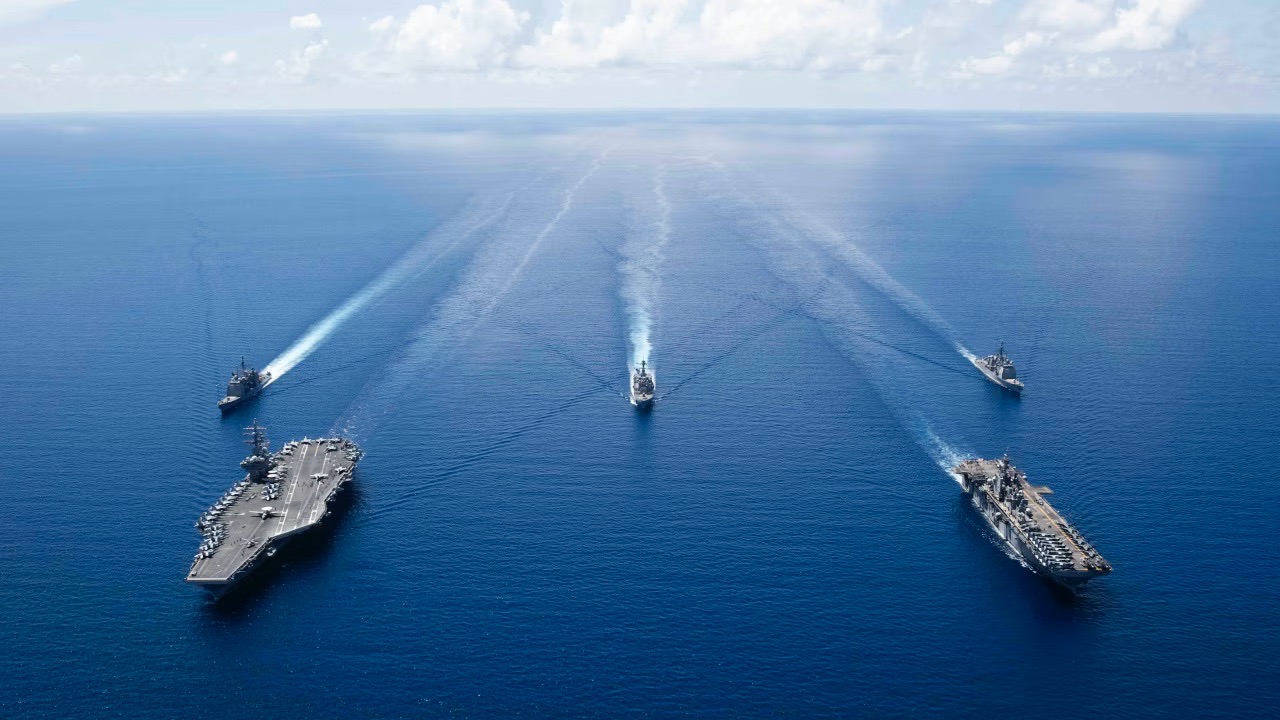
“A blockade of Iranian ports has been fully implemented as U.S. forces maintain maritime superiority in the Middle East,” announced Admiral Brad Cooper, commander of U.S. Central Command (CENTCOM), on Wednesday. “U.S. forces have completely halted economic trade going in and out of Iran by sea.” After Iran illegally threatened commercial traffic through one of the world’s busiest maritime throughfares, the U.S. military is finally giving Iran a taste of its own medicine — and the early results are splendid.

President Donald Trump ordered the naval blockade after negotiations in Pakistan fell apart late Saturday. Iranian officials absolutely refused to halt uranium enrichment for 20 years, which was reportedly a non-negotiable requirement in the final American offer.

Within 36 hours of Trump’s order, more than 15 American naval vessels positioned themselves outside the Strait of Hormuz to prevent any ships from leaving or entering Iranian ports. Since the blockade began on Monday at 10 a.m. EST not one ship connected with Iran has run the blockade over the first 72 hours, according to CENTCOM.

At least 14 ships have tried to exit the Strait of Hormuz, but then turned around to comply with American instructions.

Peter Doran, adjunct senior fellow at the Foundation for Defense of Democracies, was asked on Thursday’s “Washington Watch” if Trump’s strategy was working. His response? “It’s absolutely working. And let’s recall [that] what President Trump is doing is nothing new,” he pointed out. “Abraham Lincoln deployed the exact same strategy against the South during the Civil War, and putting a blockade on an enemy, seizing or threatening to seize their ships, [and] their cargo [is] within maintaining freedom of the seas. All of this is very old in American military strategy. Frankly, it predates our revolution. So, 250 years of American experience has shown us these kinds of strategies work.”

And right now, he continued, “all of the commercial vessels operated by China, for example, have been very wise and not attempting to challenge the U.S. Navy. They’ve been making U-turns and going back into Iranian ports. Meanwhile, everyone who’s not stopping in an Iranian port is allowed to sail freely past the U.S. Navy.”

The Chinese-owned oil tanker Rich Starry, sailing under the flag of Malawi and sanctioned for carrying Iranian products, serves as an example. On April 13, tracking data showed the ship traveling eastward through the Strait of Hormuz, executing a large horseshoe curve to hug the Iranian coast (Iran reportedly threw mines in the strait’s central travel channels). On April 14, the ship emerged south from the Strait into the Gulf of Oman. However, without proceeding further, it immediately made a 180-degree turn, back into the Strait, and was located on April 15 near Iran’s Qeshm Island.

General Dan Caine, chairman of the U.S. Joint Chiefs of Staff, promised that the U.S. Navy “will actively pursue any Iranian-flagged vessel or any vessel attempting to provide material support to Iran.” This includes a total “blockade of Iran’s ports and coastline” with enforcement “inside Iran’s territorial seas and in international waters,” as well as a promise that the U.S. Navy will pursue ships linked to Iran even in other areas of the world.

Caine’s instructions to any would-be blockade runners were clear: “Turn around or prepare to be boarded. … We will use force.”

While every ship linked to Iran was stopped, a trickle of non-Iranian ships did slip through the Strait of Hormuz. Approximately 20 commercial vessels stayed close to the Omani shore after U.S. destroyers passed through the Strait sweeping for mines.

Thus, the U.S. Navy has now performed a bit of a judo move on the Iranian regime in the Strait of Hormuz. Taking advantage of its narrow breadth, Iran initially seized control of the international waterway to snarl shipping and raise global oil prices, while its own cargo continued to pass freely. Now, the U.S. Navy, predominantly located outside the Strait in the Gulf of Oman, is taking advantage of the same narrowness to corral any Iran-linked ships that emerge from the Strait.

This move hits the remnants of the regime right where it hurts. The economic damage is estimated at approximately $435 million per day. Due to Trump’s reinvigorated sanctions, Iran is already broke. The government’s own internet blackout is harming the economy. And Iranian state media estimate it will take $270 billion to rebuild after the damage caused by American and Israeli bombing.

The U.S. Navy now effectively controls the gates of Iran — or at least its ports — yet the Iranian regime refuses to acknowledge defeat.

In fact, Iranian officials are mocking the U.S. blockade on state TV, claiming, “These ships of yours will be sunk by our first missiles.” Iran may still possess a number of missiles, and it is conceivably possible that America could suffer naval losses if Iran were to launch them.

Yet such bravado is out of place from a regime that has already seen its entire navy, air force, and most of its visible military assets destroyed over the past six weeks. Iranian leaders ought to remember the wisest thing King Ahab ever said, “Let not him who straps on his armor boast himself as he who takes it off” (1 Kings 20:11).

It’s unclear when Iran will finally surrender. But it is notable that even its ally China — which relies on oil imports from the Persian Gulf — is now demanding that Iran reopen the Strait of Hormuz. The U.S. blockade is so successful that it pinches China, too.



Your support helps Harbinger's Daily propel the boldest and most sound Christian voices of our day—those unwavering in their defense of the truth and passionate about reaching the unsaved world—while engaging millions to stand courageously with a worldview grounded in God's Word. 

Will you defend the truth and equip others to do the same?

How Antisemites Are Weaponizing ‘Christ’ To Ostracize Israel And The Jewish People

"Christ is King" is not a misnomer; it is an accurate title, but it has recently been distorted and hijacked for a different purpose. The phrase is being used wrongly, ignoring all historical and biblical contexts. Even though it is not said, when the phrase "Christ is King" is uttered by those people who have weaponized it, more is implied. It is akin to saying, "Christ is King, we [the Christians] are in, and you are out, you worthless Jew!"

No Global Flood?: Influential Voices Are Leading Many To Abandon The Authority Of God’s Word

And yet despite the absolute clarity of Scripture, so many scholars, Christian leaders, and others still insist the flood could have been local. That’s not because of the text—it’s because they have already adopted the idea of millions of years of slow and gradual processes. Man’s interpretation of geology is now the authority, not the Word of God. It’s so discouraging to see men like Dr. Ross and Eric Metaxas influencing so many people to abandon the authority of God’s Word and instead adopt man’s word as they reinterpret the clear teaching of Scripture. It’s an attack on biblical authority.

sign up

The Confusion That Is Lebanon: A Weapon Against Israel—And A Warning To The West

How does a country like Lebanon—once known as the Switzerland of the Middle East, with a cosmopolitan capital that rivaled Paris—become a proxy for Iran in its campaign to terrorize Israel? While many would answer “Hezbollah,” the longer answer may surprise you. A broad review of this religiously diverse region not only explains Israel’s difficulty with its northern neighbor, but it also serves as a timely warning to Western civilization.

ABC's of Salvation

Decision

UTT

FOI

untitled artwork

Israel My Glory

untitled artwork

“A blockade of Iranian ports has been fully implemented as U.S. forces maintain maritime superiority in the Middle East,” announced Admiral Brad Cooper, commander of U.S. Central Command (CENTCOM), on Wednesday. “U.S. forces have completely halted economic trade going in and out of Iran by sea.” After Iran illegally threatened commercial traffic through one of the world’s busiest maritime throughfares, the U.S. military is finally giving Iran a taste of its own medicine — and the early results are splendid.

President Donald Trump ordered the naval blockade after negotiations in Pakistan fell apart late Saturday. Iranian officials absolutely refused to halt uranium enrichment for 20 years, which was reportedly a non-negotiable requirement in the final American offer.

Within 36 hours of Trump’s order, more than 15 American naval vessels positioned themselves outside the Strait of Hormuz to prevent any ships from leaving or entering Iranian ports. Since the blockade began on Monday at 10 a.m. EST not one ship connected with Iran has run the blockade over the first 72 hours, according to CENTCOM.

At least 14 ships have tried to exit the Strait of Hormuz, but then turned around to comply with American instructions.

Peter Doran, adjunct senior fellow at the Foundation for Defense of Democracies, was asked on Thursday’s “Washington Watch” if Trump’s strategy was working. His response? “It’s absolutely working. And let’s recall [that] what President Trump is doing is nothing new,” he pointed out. “Abraham Lincoln deployed the exact same strategy against the South during the Civil War, and putting a blockade on an enemy, seizing or threatening to seize their ships, [and] their cargo [is] within maintaining freedom of the seas. All of this is very old in American military strategy. Frankly, it predates our revolution. So, 250 years of American experience has shown us these kinds of strategies work.”

And right now, he continued, “all of the commercial vessels operated by China, for example, have been very wise and not attempting to challenge the U.S. Navy. They’ve been making U-turns and going back into Iranian ports. Meanwhile, everyone who’s not stopping in an Iranian port is allowed to sail freely past the U.S. Navy.”

The Chinese-owned oil tanker Rich Starry, sailing under the flag of Malawi and sanctioned for carrying Iranian products, serves as an example. On April 13, tracking data showed the ship traveling eastward through the Strait of Hormuz, executing a large horseshoe curve to hug the Iranian coast (Iran reportedly threw mines in the strait’s central travel channels). On April 14, the ship emerged south from the Strait into the Gulf of Oman. However, without proceeding further, it immediately made a 180-degree turn, back into the Strait, and was located on April 15 near Iran’s Qeshm Island.

General Dan Caine, chairman of the U.S. Joint Chiefs of Staff, promised that the U.S. Navy “will actively pursue any Iranian-flagged vessel or any vessel attempting to provide material support to Iran.” This includes a total “blockade of Iran’s ports and coastline” with enforcement “inside Iran’s territorial seas and in international waters,” as well as a promise that the U.S. Navy will pursue ships linked to Iran even in other areas of the world.

Caine’s instructions to any would-be blockade runners were clear: “Turn around or prepare to be boarded. … We will use force.”

While every ship linked to Iran was stopped, a trickle of non-Iranian ships did slip through the Strait of Hormuz. Approximately 20 commercial vessels stayed close to the Omani shore after U.S. destroyers passed through the Strait sweeping for mines.

Thus, the U.S. Navy has now performed a bit of a judo move on the Iranian regime in the Strait of Hormuz. Taking advantage of its narrow breadth, Iran initially seized control of the international waterway to snarl shipping and raise global oil prices, while its own cargo continued to pass freely. Now, the U.S. Navy, predominantly located outside the Strait in the Gulf of Oman, is taking advantage of the same narrowness to corral any Iran-linked ships that emerge from the Strait.

This move hits the remnants of the regime right where it hurts. The economic damage is estimated at approximately $435 million per day. Due to Trump’s reinvigorated sanctions, Iran is already broke. The government’s own internet blackout is harming the economy. And Iranian state media estimate it will take $270 billion to rebuild after the damage caused by American and Israeli bombing.

The U.S. Navy now effectively controls the gates of Iran — or at least its ports — yet the Iranian regime refuses to acknowledge defeat.

In fact, Iranian officials are mocking the U.S. blockade on state TV, claiming, “These ships of yours will be sunk by our first missiles.” Iran may still possess a number of missiles, and it is conceivably possible that America could suffer naval losses if Iran were to launch them.

Yet such bravado is out of place from a regime that has already seen its entire navy, air force, and most of its visible military assets destroyed over the past six weeks. Iranian leaders ought to remember the wisest thing King Ahab ever said, “Let not him who straps on his armor boast himself as he who takes it off” (1 Kings 20:11).

It’s unclear when Iran will finally surrender. But it is notable that even its ally China — which relies on oil imports from the Persian Gulf — is now demanding that Iran reopen the Strait of Hormuz. The U.S. blockade is so successful that it pinches China, too.

Trusted Analysis From A Biblical Worldview

Help reach the lost and equip the church with the living and active truth of God's Word in our world today.

YOU CARE ABOUT

BIBLICAL TRUTH. SO DO WE.


Together, We Can Deliver A Biblical Understanding

Of News Events Around The World.

How Antisemites Are Weaponizing ‘Christ’ To Ostracize Israel And The Jewish People

"Christ is King" is not a misnomer; it is an accurate title, but it has recently been distorted and hijacked for a different purpose. The phrase is being used wrongly, ignoring all historical and biblical contexts. Even though it is not said, when the phrase "Christ is King" is uttered by those people who have weaponized it, more is implied. It is akin to saying, "Christ is King, we [the Christians] are in, and you are out, you worthless Jew!"

No Global Flood?: Influential Voices Are Leading Many To Abandon The Authority Of God’s Word

And yet despite the absolute clarity of Scripture, so many scholars, Christian leaders, and others still insist the flood could have been local. That’s not because of the text—it’s because they have already adopted the idea of millions of years of slow and gradual processes. Man’s interpretation of geology is now the authority, not the Word of God. It’s so discouraging to see men like Dr. Ross and Eric Metaxas influencing so many people to abandon the authority of God’s Word and instead adopt man’s word as they reinterpret the clear teaching of Scripture. It’s an attack on biblical authority.

untitled artwork 6391

The Confusion That Is Lebanon: A Weapon Against Israel—And A Warning To The West

How does a country like Lebanon—once known as the Switzerland of the Middle East, with a cosmopolitan capital that rivaled Paris—become a proxy for Iran in its campaign to terrorize Israel? While many would answer “Hezbollah,” the longer answer may surprise you. A broad review of this religiously diverse region not only explains Israel’s difficulty with its northern neighbor, but it also serves as a timely warning to Western civilization.

ABC's of Salvation

TV AD

worldview matters

Decision Magazine V AD

Decision

Jan Markell

Israel My Glory

Erick Stakelbeck

untitled artwork

YOU CARE ABOUT

BIBLICAL TRUTH.

SO DO WE.

Together, We Can Deliver A Biblical Understanding Of News Events Around The World And Equip The Church To Stand With A Biblical Worldview.

untitled artwork

Israel My Glory

YOU CARE ABOUT

BIBLICAL TRUTH.

SO DO WE.


Together, We Can Deliver A Biblical Understanding Of News Events Around The World And Equip The Church To Stand With A Biblical Worldview.